
One Design, Many Chassis – Pt. 3: Variation as Identity
The deeper you explore Italy’s coachbuilding history, the more familiar shapes begin to appear in unexpected places. After examining the better-known cases in Parts 1 and 2, this continuation brings together another set of examples where the same body language crossed marques, markets, or even countries.
Part 2 focused on how Pininfarina refined the art of repetition — turning design consistency into brand identity and, eventually, exclusivity. But Pininfarina wasn’t alone in revisiting its own forms. Across Italy, other coachbuilders sought the same balance between artistry, efficiency, and recognition, often with results that were less restrained but no less compelling.
🔗 Read more: One Design, Many Chassis – Pt. 2: When Pininfarina Repeats Itself
These stories show how adaptable a successful design could be. Sometimes the repetition came from a single designer working for multiple clients in quick succession; sometimes a coachbuilder re-used an existing form to save time or meet a new commission quickly. In other cases, the similarities were almost incidental—shared suppliers, proportions, or the gradual evolution of a studio’s “house hand.”
From Frua’s mirrored Maseratis and ACs to Ghia’s transatlantic twins, from Boneschi’s tailored berlinetta’s to Allemano’s modular coupés, each pairing reveals a different reason why two cars could look nearly identical yet belong to different worlds. Together, they extend the map drawn in the earlier parts: evidence that in mid-century Italy, design ideas travelled easily between badges—sometimes by contract, sometimes by coincidence, and sometimes simply because they were too good to leave behind.
What follows is a series of concise case studies—car by car, coachbuilder by coachbuilder—showing how one good shape could live more than one life.
Frua’s Double Life: Maserati’s Grace, AC’s Muscle
Few examples illustrate design reuse as clearly as Pietro Frua’s work for Maserati and AC. The Maserati Mistral, introduced in 1963 as the successor to the 3500 GT, marked a turning point for the marque. Frua’s crisp, modern fastback replaced the softer curves of earlier models with a tighter, more athletic stance. Built by Maggiora in Turin, it debuted at the Turin Motor Show and was soon offered as both coupé and spider. Underneath lay Maserati’s proven twin-cam straight-six—an engine that could trace its lineage back to the 250 F Grand Prix car. Offered in 3.5-, 3.7-, and 4-litre forms, it gave the Mistral the blend of refinement and performance expected of a proper Italian GT.
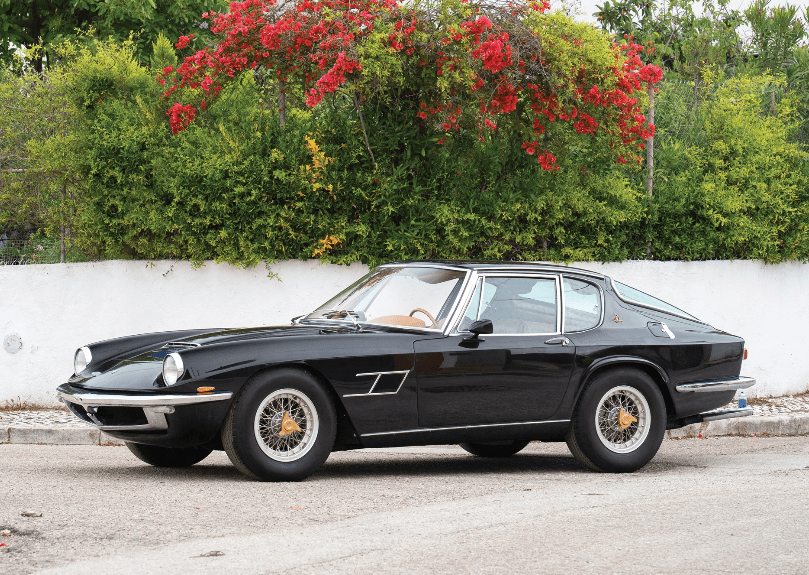
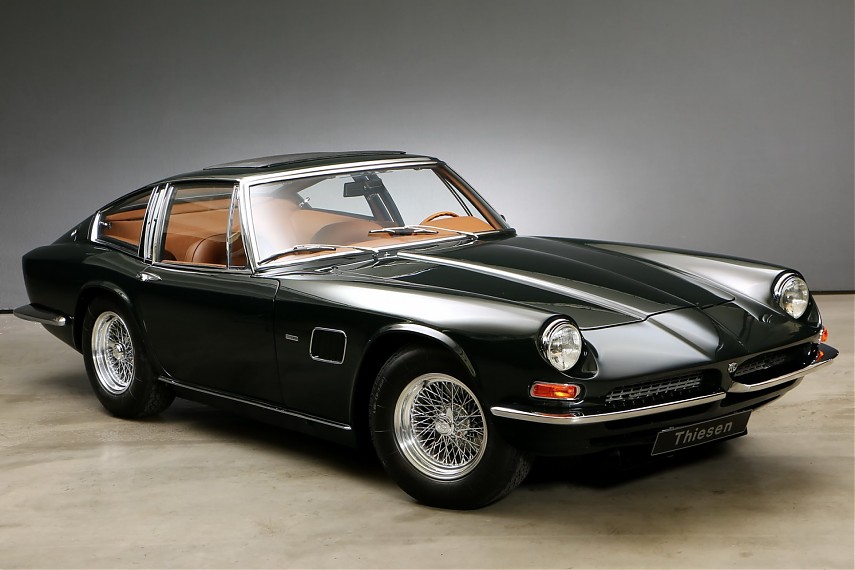
When AC Cars sought to follow its Cobra with a grand-touring coupé, Frua was the natural choice. Derek Hurlock wanted a civilised counterpart to Shelby’s brutal roadster, and Frua simply reached for a shape he already knew by heart. The AC 428 (CFX series), unveiled in 1967, was in essence the Mistral’s broader, longer relative—its glasshouse, proportions, and surface language almost identical, only scaled up to accommodate the Ford 7-litre V8 under the bonnet.
What had been a delicate Italian six-cylinder became an Anglo-American heavyweight, yet the family resemblance was unmistakable: the same low nose and rising waistline, the same slim pillars and rear quarter-light treatment, even the same door pressings reworked for a wider track. Frua had repurposed his Maserati blueprint for a new client, bridging Modena and Thames Ditton in aluminium.
🔗 Read more: Pietro Frua: Mastering the Art of Automotive Elegance
Critics noted the resemblance immediately, but few objected. The AC 428’s appeal lay in precisely that combination—the grace of the Mistral with the muscle of the Cobra. For Frua, it was an efficient and elegant solution: one well-resolved design that could serve two very different marques, each claiming it as its own.
From the Longchamp to the Kyalami: The Corporate Chameleon
The De Tomaso Longchamp, first shown at the 1972 Turin Motor Show, marked a rare front-engined chapter in a company better known for mid-engined exotics. Using a shortened version of the Deauville saloon’s chassis, it carried the same Ford-sourced 5.8-litre V8, automatic transmission, and independent suspension. Tom Tjaarda’s design for Ghia gave the Longchamp a taut, angular form—low bonnet, crisp shoulder line, broad glasshouse—echoing his earlier Lancia Marica prototype. Parts-bin practicality added charm: rear lamps from the Alfa 1750/2000, headlights from the Ford Granada. The result was both elegant and pragmatic, a high-speed GT with Italian tailoring and American muscle. Around four hundred examples were built, including a handful of open Longchamp Spiders converted by Carrozzeria Pavesi.
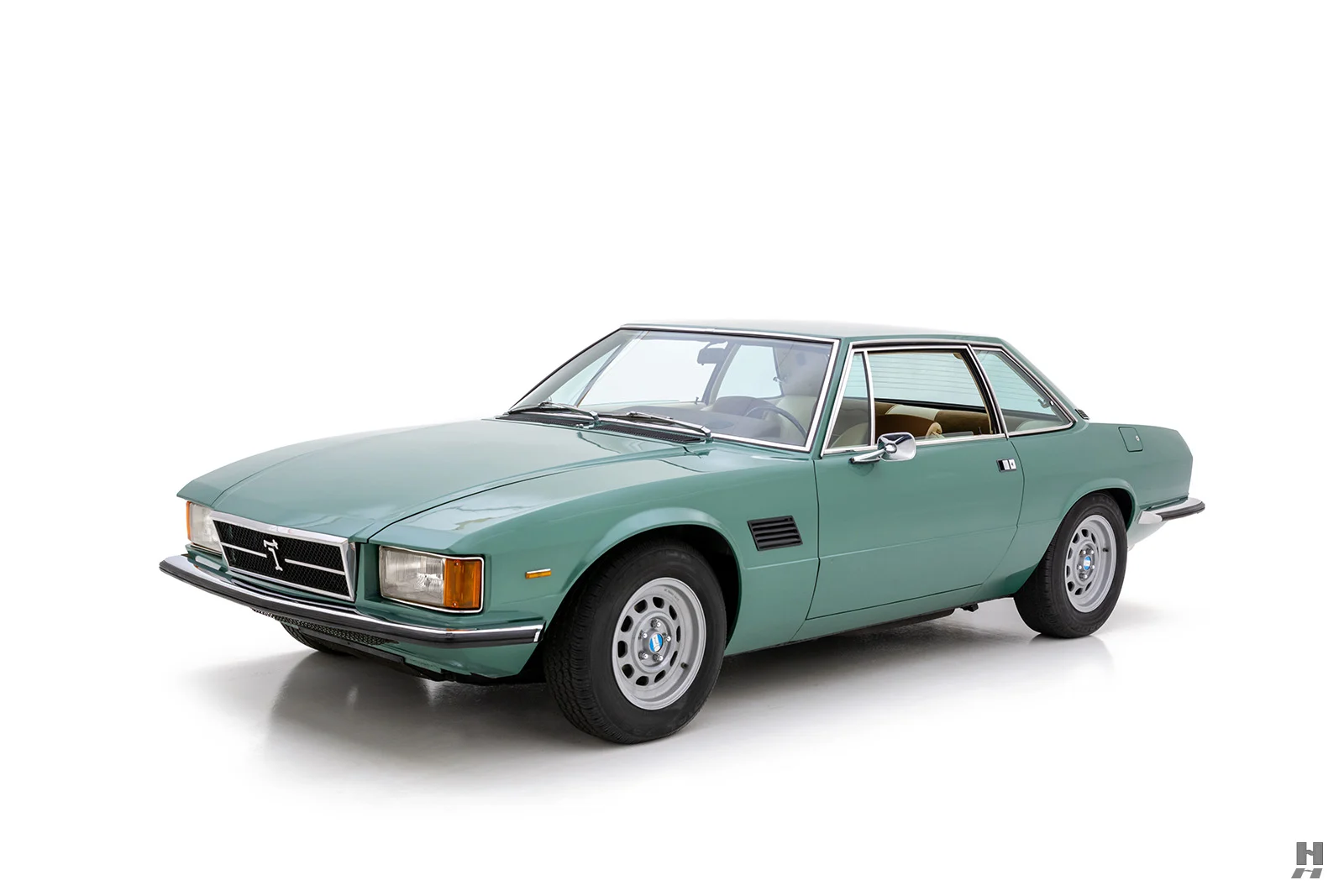
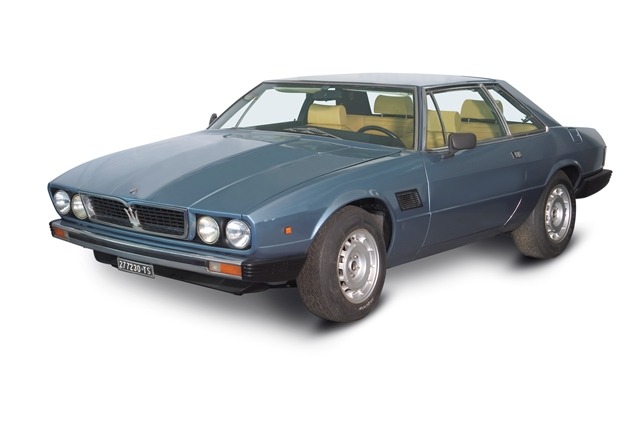
When Alejandro de Tomaso acquired Maserati from Citroën in 1975, he faced a thin budget and an urgent need for a new model. His solution was simple: adapt what he already had. The Longchamp’s chassis and basic structure were re-worked into the Maserati Kyalami, named after the South African Grand Prix circuit. Pietro Frua — long associated with Maserati—was brought in to restyle Tjaarda’s design. The proportions remained, but the detailing changed: four round headlamps replaced the rectangular units, the flanks gained subtler curvature, and the interior was retrimmed in Maserati’s traditional Connolly leather and wood veneer. Under the bonnet, the Ford V8 gave way to Maserati’s own 4.2- and 4.9-litre quad-cam V8s.
Despite its stronger pedigree, the Kyalami never achieved commercial success—just over 200 cars left Modena before production ended in 1983. Yet the pairing illustrates how design economies reached even the upper echelons of Italian craftsmanship: the same body geometry could serve two marques, one American-backed and brash, the other aristocratic and refined. In Frua’s hands, the Longchamp’s angular shell gained just enough Maserati poise to become its own car—proof that even corporate pragmatism could produce unexpected elegance.
When an Aprilia Spoke German: Frua’s Universal Grammar
By 1949, Pietro Frua had established a distinct visual language—compact, fluid, and quietly modern. His Lancia Aprilia Cabriolet, built in that year, distilled those ideas into one of the most graceful small convertibles of Italy’s postwar recovery. The Aprilia’s advanced chassis and independent suspension provided the perfect foundation for Frua’s light, flowing bodywork. The car’s clean curvature, low waistline, and finely drawn grille captured the optimism of the moment: a balance between technical ingenuity and sculptural calm.
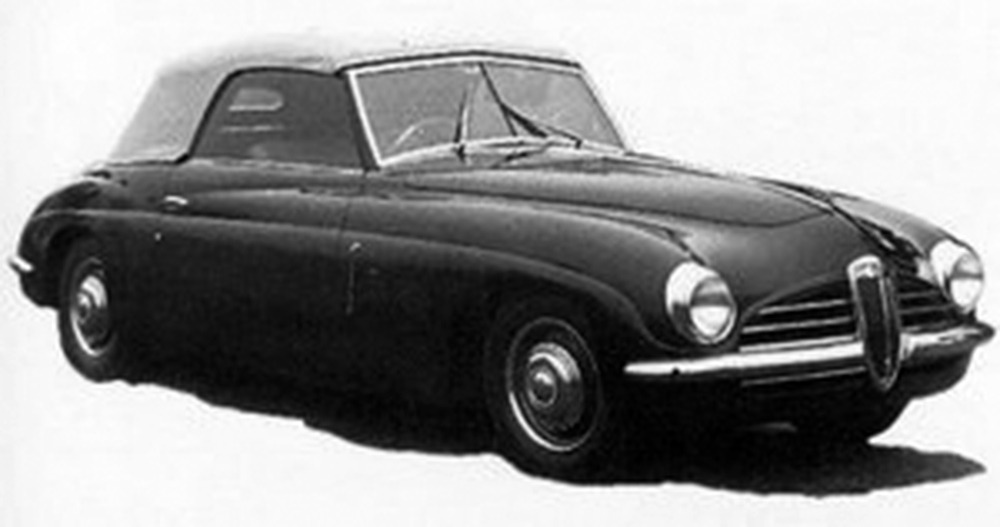
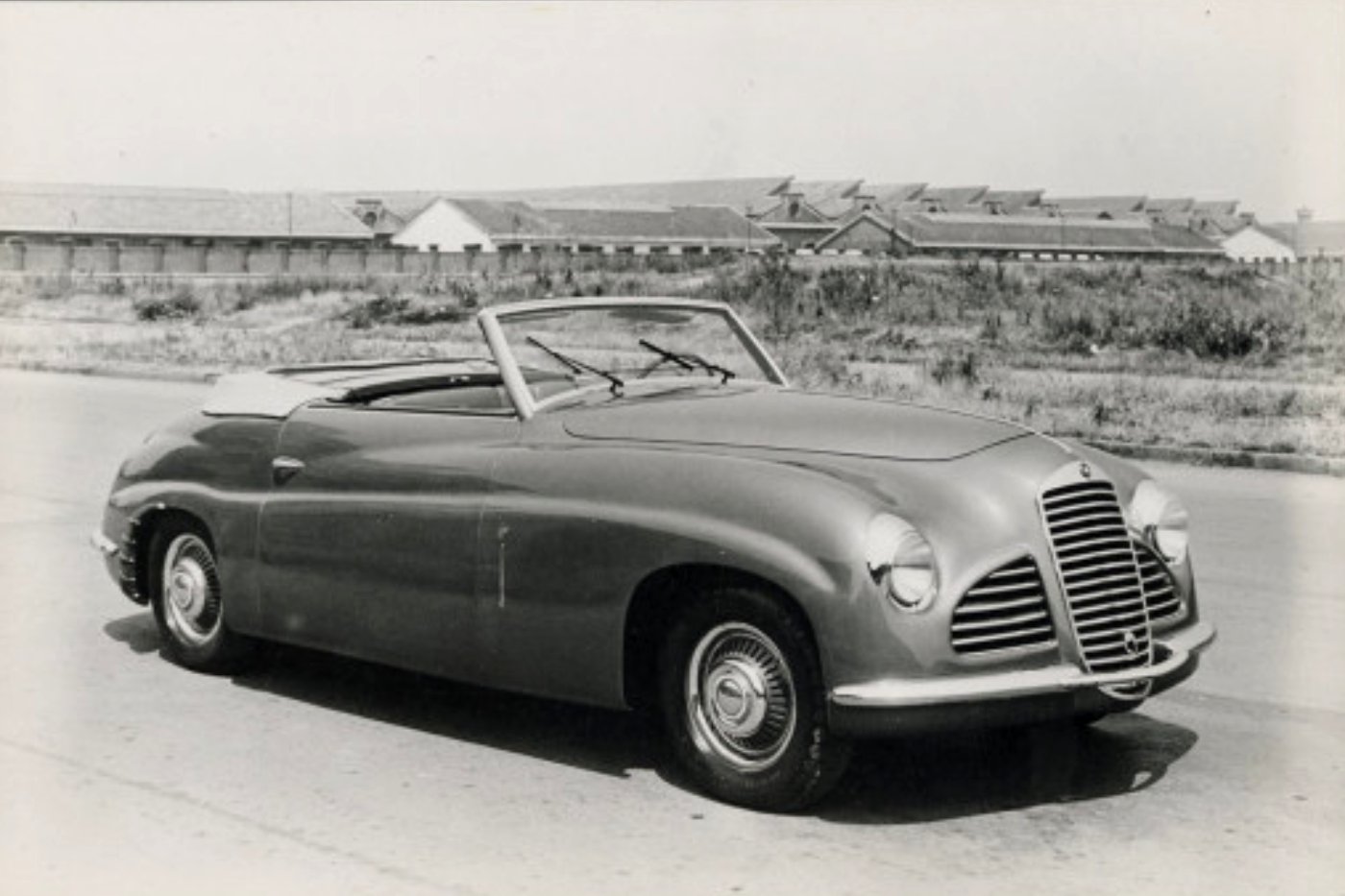
That same year, Frua applied an almost identical design vocabulary to a very different client—the Mercedes-Benz 170 V Spider Frua. Based on the solid German saloon chassis, the car was transformed in Frua’s Turin workshop into a low, rounded two-seater with unmistakably Italian poise. The long bonnet, softly integrated fenders, and abbreviated tail echoed the Aprilia’s proportions so closely that the two could almost be mistaken for siblings. Only one example of the Mercedes is known to have been built, likely as a showcase of Frua’s ability to blend German engineering with Italian form.
Seen side by side, the pair reveals how easily Frua’s design ideas crossed borders in the fragile years after the war. Both cars embody the same pursuit of aerodynamic grace and human-scale elegance, yet one carries Lancia’s advanced mechanics and the other Mercedes’ reputation for solidity. The similarity was no accident: Frua was refining a personal style that could transcend national identity. In an era when Italy was rebuilding its industrial confidence, Frua proved that good design—clean, rational, and quietly sensual—spoke an international language.
One Line, Two Leagues: Michelotti’s Scaled Elegance
In mid-1950s Turin, Giovanni Michelotti’s pen was in constant motion, sketching forms that could slip easily between marques. One of his most refined was the Fiat 1100 TV Sport Coupé “Filante”, bodied by Allemano and unveiled in 1954. Built on Fiat’s lively Turismo Veloce chassis, the Filante distilled Michelotti’s fascination with flow—its roofline stretched like a single curve from windscreen to tail, its fenders gently sculpted rather than separated. The car’s ovoid grille, fine chrome edgework, and tight stance gave it a cosmopolitan polish rare for its modest mechanical base. It was shown at major concours from San Remo to Cortina and became a showcase for Allemano’s precision and Michelotti’s aerodynamic poise.
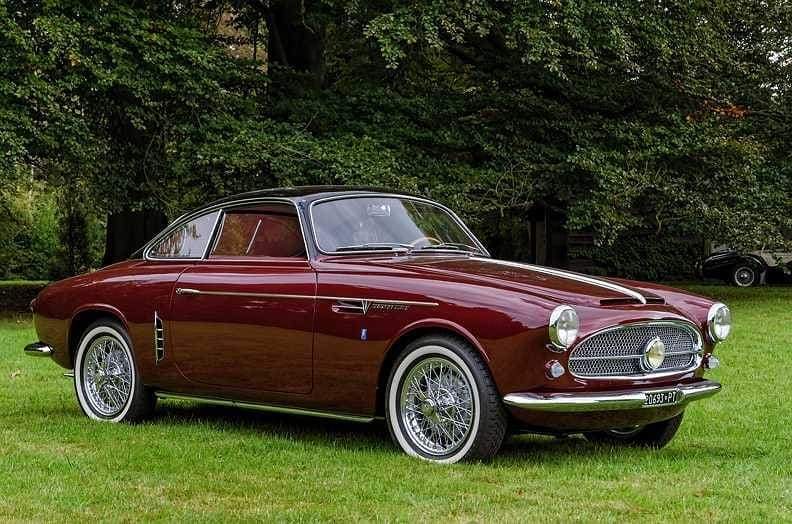
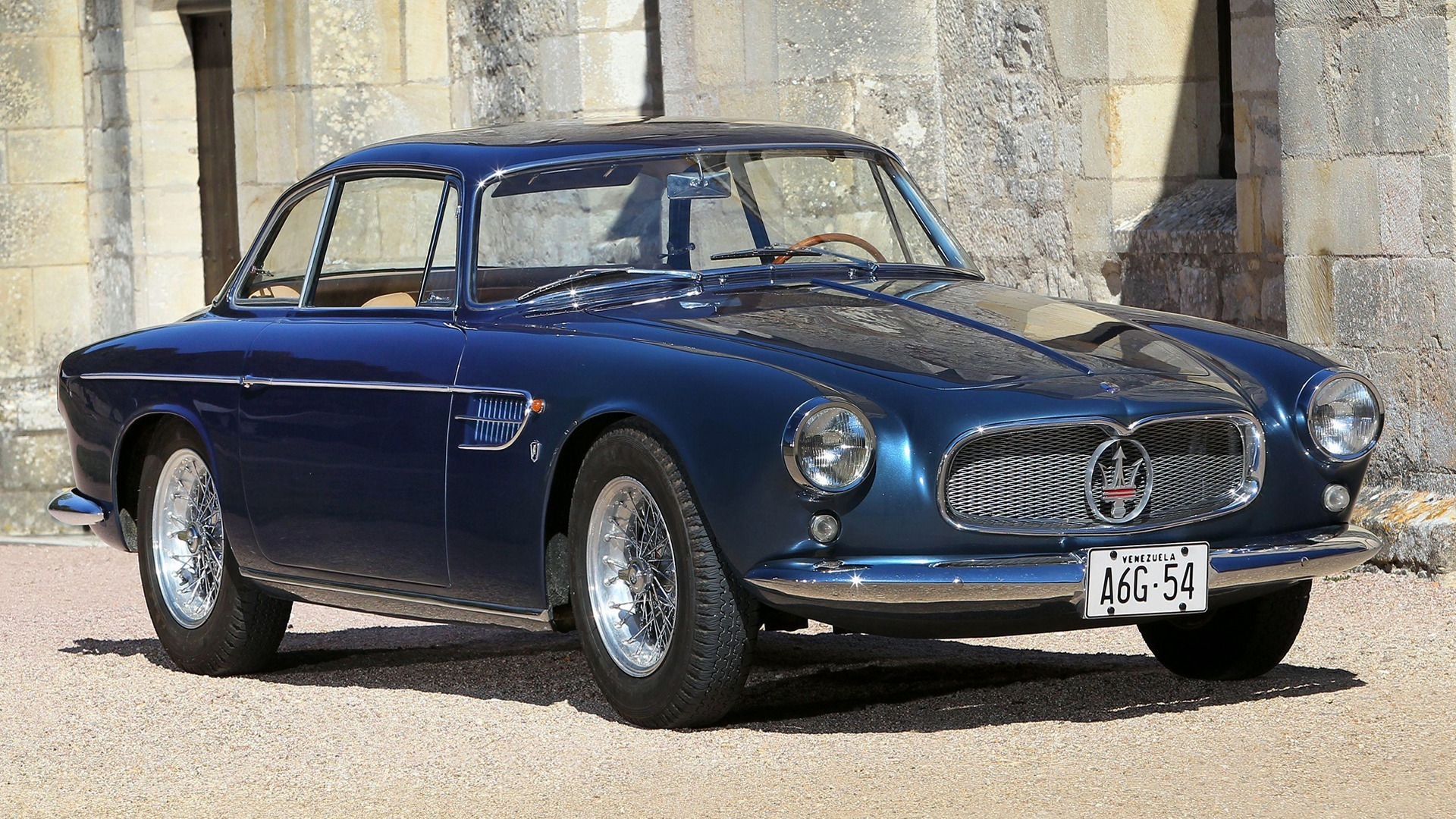
That same set of forms would reappear—larger, more powerful, and infinitely more exclusive—on the Maserati A6G/54 Allemano introduced a year later. Under its elegant coupé body sat Maserati’s race-bred twin-cam inline-six, delivering around 150 horsepower through a five-speed gearbox. Yet its lines were unmistakably familiar: the same soft shoulders, long bonnet, and balanced cabin placement that defined the Fiat. Michelotti’s front fascia, originally conceived for the 1100 TV, evolved into Maserati’s now-signature oval grille, while the cabin proportions were refined into a true 2+2 grand tourer. Allemano’s crisp metalwork and restrained ornamentation made the A6G/54 one of the era’s most sophisticated GTs—21 built, each subtly different.
From Fiat’s Lightness to Lancia’s Lineage: Boneschi’s Subtle Signature
Carrozzeria Boneschi’s work in the early 1950s occupied a rare space between classical tailoring and emerging modernism. The Fiat 1400 “Gazzella”, unveiled in 1950 at the Venice Concours d’Elegance and the Turin Auto Salon, captured that balance with quiet confidence. Compact yet stately, it translated Boneschi’s restrained, architectural style into a smaller scale. The body’s smooth volumes, low beltline, and gently tapering tail suggested movement without aggression. Chrome was used sparingly; proportion did the talking. Beneath the show-car glamour lay something subtler—the imprint of a designer who treated surfaces like tailored fabric, folding light rather than ornament into elegance.
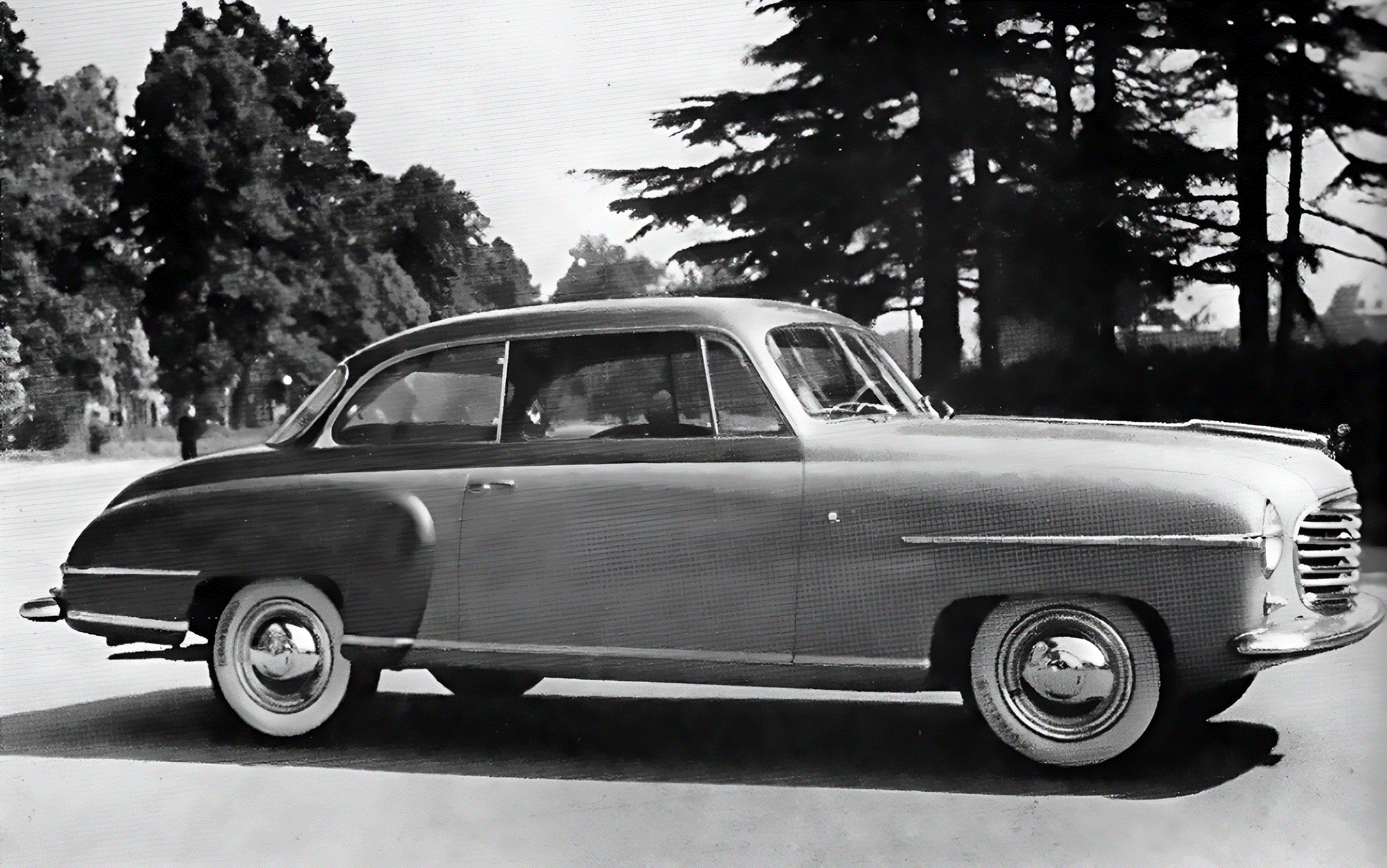
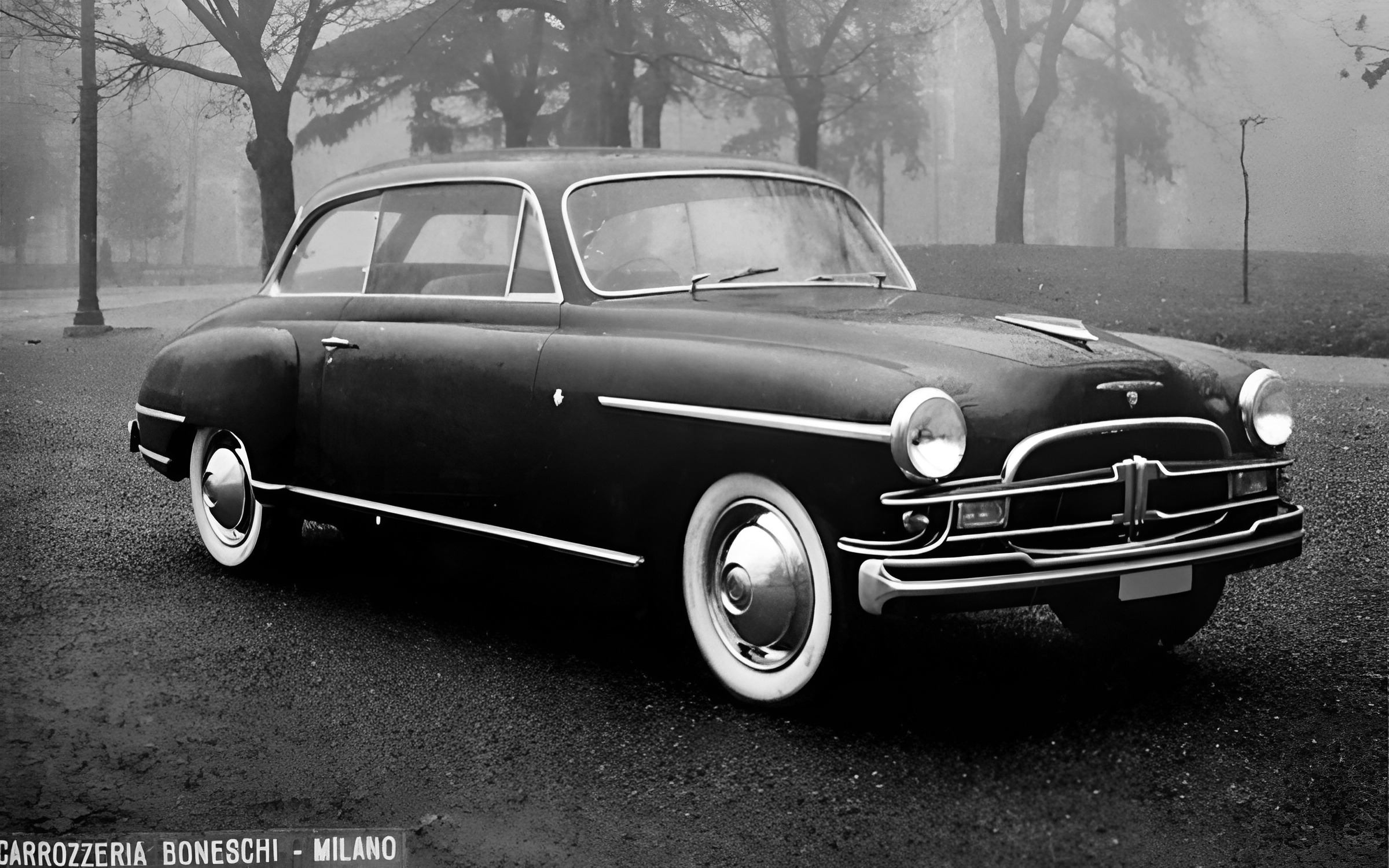
A telling detail defined the look: the divided rear window, a motif Boneschi used to preserve rearward visibility while keeping the roof’s sculptural flow intact. The twin panes formed a soft “V” at the C-pillars, visually extending the curve of the roof into the deck. It appeared again the following year on Boneschi’s Lancia Aurelia B50, shown at the 1951 Turin Salon, establishing a distinct house signature. On the Lancia, this detail anchored a more formal composition—smooth flanks, horizontal lines, and important front. The illusion was both nostalgic and forward-looking: recalling prewar formality while embracing postwar streamlining.
The Shape That Wouldn’t Fade: Farina’s Transatlantic Twin
Few postwar designs proved as contagious as the Cisitalia 202, whose compact, flowing shape became a template for the modern sports coupé. Pinin Farina’s 1947 berlinetta is now canonical, but other interpretations emerged at the same time—among them, Stabilimenti Farina’s own version, built in small numbers between 1947 and 1949. Its bodywork was more conservative than the famous Pinin Farina car: separate wings, a taller roof, and a more upright grille aligned it with late prewar luxury forms. Yet even in this traditional idiom, the underlying proportions—long bonnet, set-back cabin, integrated fenders—hinted at the aerodynamic logic that would define Italy’s next decade. The Stabilimenti Farina 202 thus occupies a transitional space, poised between handcrafted classicism and the abstraction of industrial modernity.
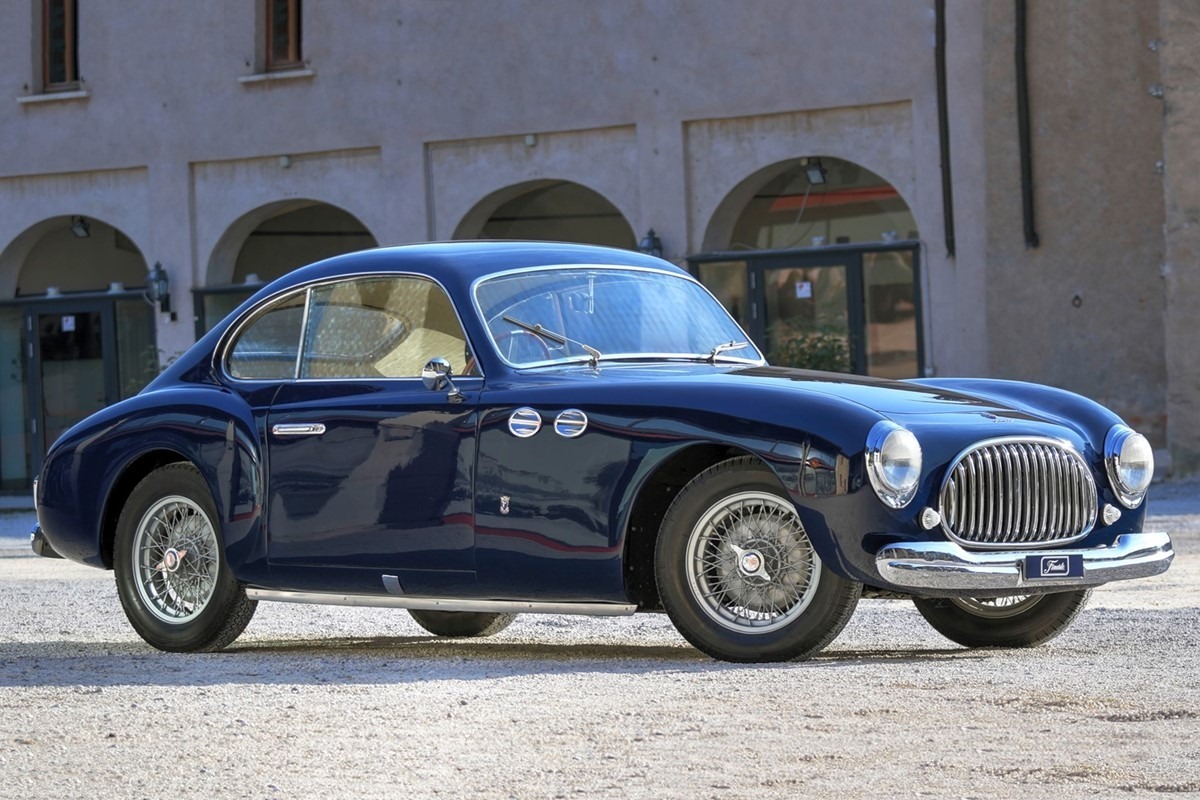
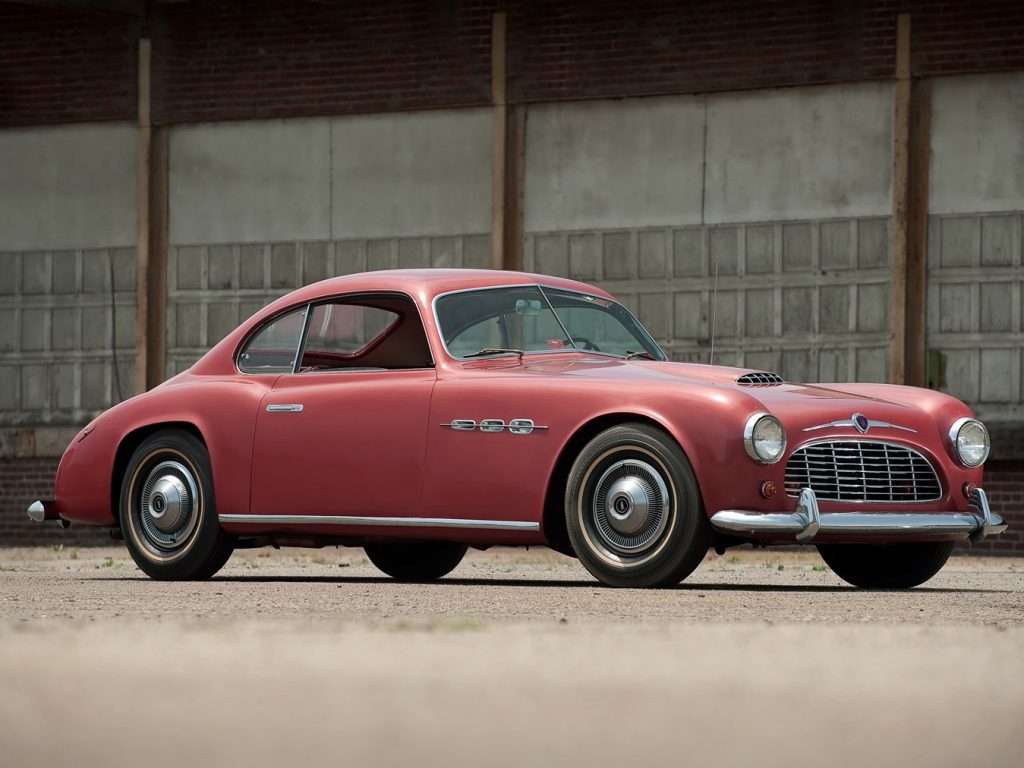
That form—and the fascination it generated—soon found an unlikely echo across the Atlantic. In 1952, Stabilimenti Farina was again called upon, this time by Italmeccanica, a small Turin engineering firm backed by American investor Richard Adams, to create the IT160 Coupé. Mechanically it was an American-European hybrid: Ford flathead V8 engine, tubular chassis, European suspension. Visually, it was almost a reprise of the earlier Cisitalia shape—fastback profile, three side vents, and rounded fenders softened into a single envelope. Adams promoted it as a “sports car combining the luxury of Europe with the simplicity of America,” but its styling leaned unmistakably on Farina’s earlier masterpiece.
From Ferrari’s Vision to Alfa’s Voice: Pininfarina’s Aerodynamic Dream
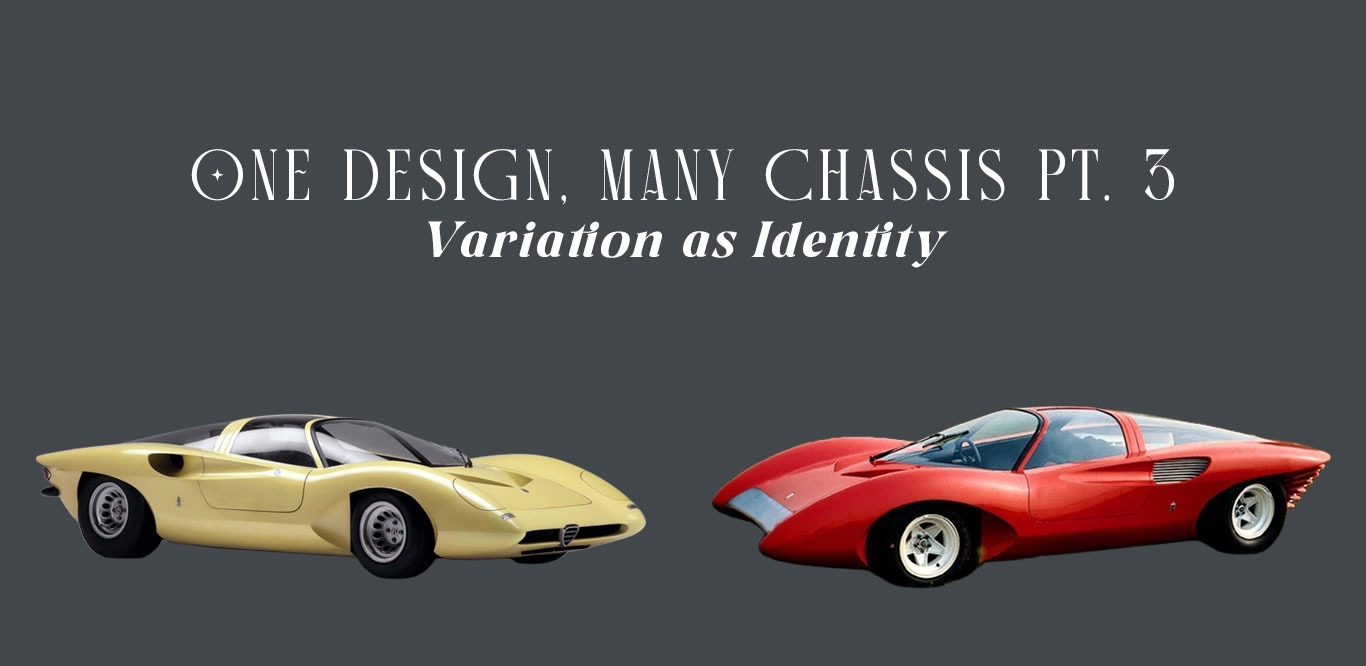
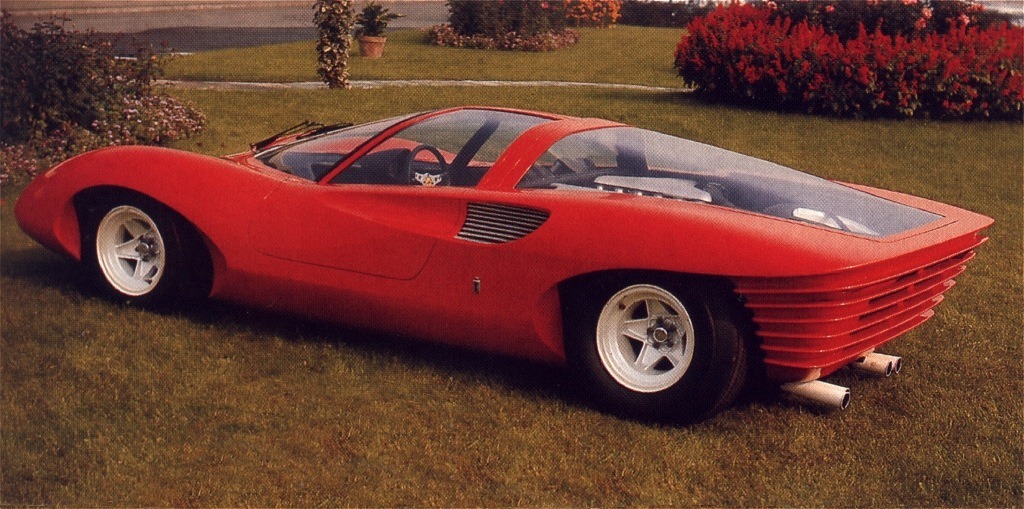
By the late 1960s, Pininfarina’s design language had become both experimental and architectural—no longer content to sculpt curves, but intent on shaping airflow and transparency. The Ferrari 250 P5 Berlinetta Speciale, first shown at the 1968 Geneva Motor Show, embodied that shift. Built on a 330 P4 chassis and powered by a mid-mounted V12, it was conceived not as a road car but as a design hypothesis: how to integrate mechanical drama and aerodynamic purity into a single gesture. Its teardrop canopy, vast glass panels, and tapering tail made it look more like a concept from another discipline—part architecture, part aeronautical study. Most radical of all was the clear rear engine cover, exposing Ferrari’s V12 like a mechanical jewel under glass. The effect was theatrical yet rational: engineering turned into spectacle.
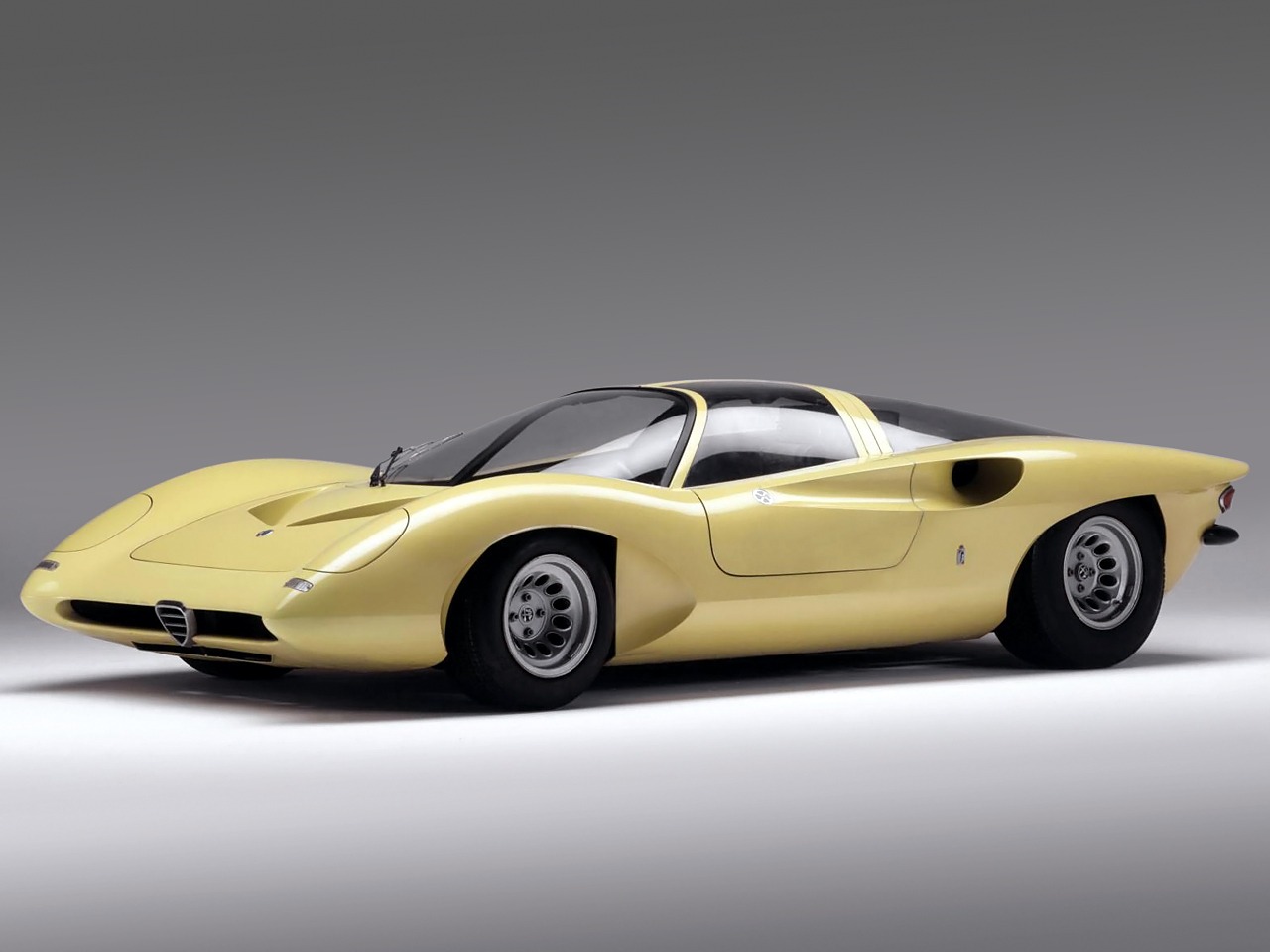
When the prototype’s reception in Maranello cooled, Pininfarina reinterpreted the same idea a year later under a new emblem. The Alfa Romeo 33/2 Coupé Speciale, presented at the 1969 Paris Motor Show, translated the P5’s themes onto the smaller, lighter 33 Stradale chassis. The proportions softened, the nose became lower and cleaner, and the tail gained new coherence with horizontal lamps and a simpler grille. Where the Ferrari had been a provocation, the Alfa was a resolution—less aggressive, more lyrical. Its yellow body glowed like an artifact of optimism, still crowned by the near-continuous glass canopy and twin roll-bars that defined the earlier car. Inside, brown leather and tartan cloth grounded the futurism in unmistakable Italian warmth.
🔗 Read more: Pininfarina Through the Ages: The Complete History
Together, the P5 and the 33/2 form a diptych: two iterations of the same aerodynamic dream, tuned to different corporate sensibilities. The Ferrari spoke in the language of power and spectacle; the Alfa, of balance and grace. Both distilled the late ’60s moment when design and engineering briefly aligned in pursuit of beauty as a measurable value. And in that symmetry—one car rejected, one celebrated—Pininfarina revealed the essence of Italian design’s endurance: ideas outlive their first commission.
The Beauty of Repetition
Looking across these mirrored bodies and borrowed lines, a pattern emerges — not of imitation, but of evolution. The same proportions travel from marque to marque, reshaped by circumstance, budget, or ambition, yet always recognizably Italian. Each coachbuilder spoke with a dialect of the same language: Frua’s fluidity, Boneschi’s composure, Allemano’s precision, Pininfarina’s restraint. Their cars reveal how repetition can become a form of authorship — how an idea, once proven, earns the right to reappear.
In these re-used silhouettes lies something deeper than efficiency: a belief that design is never finished, only refined. The beauty of Italian coachbuilding is not that it invented endlessly, but that it remembered — and made memory itself a material.

ABOUT THE AUTHOR
Andreas Scheidl
Italian classic car enthusiast with German roots. Renowned as a respected figure in the classic car community, he serves as a jury member at various international concours d'elegance, including the Classic Gala Schwetzingen and Mantova. As a content creator, Andreas passionately shares his profound knowledge and appreciation for vintage automobiles. His heart beats for cars designed by Giovanni Michelotti, showcasing his discerning taste and dedication to preserving the timeless elegance of automotive history.
More stories by Andreas Scheidl ↗CONTINUE READING
Posts You Might Like
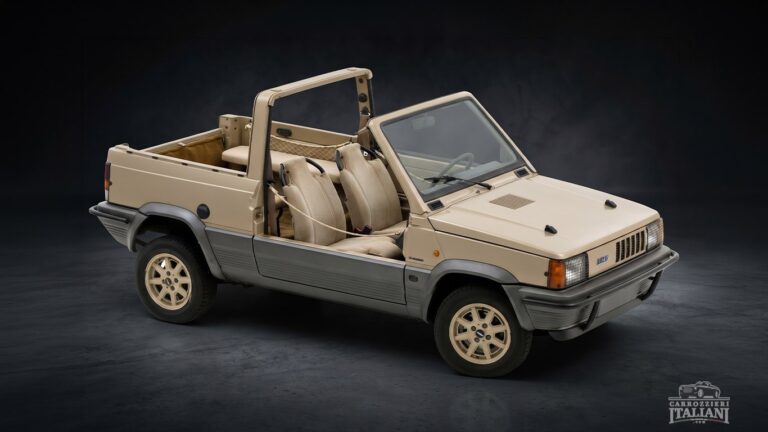
Fiat Panda Cabrio: The Italian Coachbuilders Who Opened Giugiaro’s Box
From Moretti’s Panda Rock to Italdesign’s experimental Strip, Maggiora’s four-wheel-drive convertible and Stola’s remarkable Destriero, the history of the open-top Panda reveals an unexpected chapter in Italian coachbuilding. When Giorgetto Giugiaro designed…
Read story
Gabriele d’Annunzio and the Cult of the Automobile
There was a time when the automobile had not yet become part of the landscape. It announced itself from afar through the beating of an engine, the smell of petrol and hot…
Read story
Fiat 1400: The Last Great Playground of the Carrozzieri
From Touring and Abarth to Farina, Ghia, Vignale, Boneschi, Bertone, Viotti and the smaller carrozzerie, the new Fiat quickly became one of the richest bases for Italian special bodies in the early…
Read story
How a Swiss Dealer Challenged Ferrari: The Story of Monteverdi
How Peter Monteverdi went from Swiss Ferrari dealer to creator of rare Frua and Fissore-bodied GTs, the Hai supercar and luxury off-roaders.
Read story
THE CONVERSATION
Comments 0
Share a memory, a period photograph or a documented detail about this story.