
One Design, Many Chassis – Pt. 2: When Pininfarina Repeats Itself
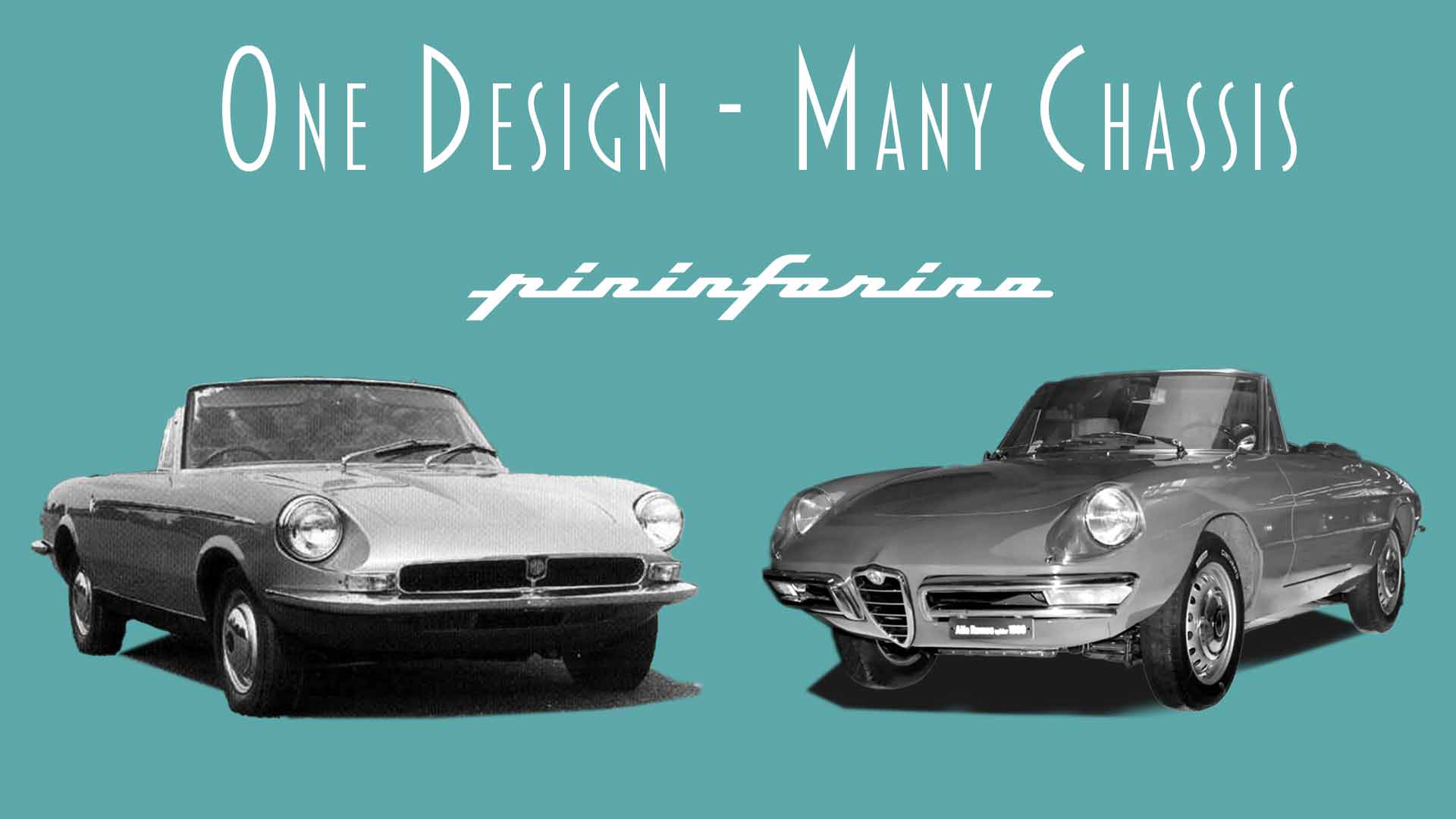
In Part 1, we explored how Italian design houses quietly repurposed and reshaped their best ideas across multiple marques—sometimes with fanfare, more often behind the curtain. Now, in Part 2, the spotlight narrows to the master of subtle reinvention: Pininfarina.
No other coachbuilder navigated the delicate balance between art and commerce with such elegance. Whether crafting a one-off Ferrari for Ingrid Bergman or cloaking a Fiat 130 in architectural modernism, Pininfarina displayed an uncanny ability to adapt form to function, budget, and brand identity—without diluting the core design language.
🔗 Read more: One Design, Many Chassis: How Italian Coachbuilders Recycled Designs Pt.1
This chapter is a deep dive into the coachbuilder’s most intriguing visual echoes: a British concept that influenced both the Duetto and the Fiat Spider, a jet-age dream spun across a Lancia and a Cadillac, and Agnelli’s insistence on design over badge, realized through nearly identical Ferrari and Maserati coupes. Here, design isn’t reused—it’s refined, repurposed, and quietly revolutionary.
The MG That Dreamed in Italian: From British Concept to Alfa Icon
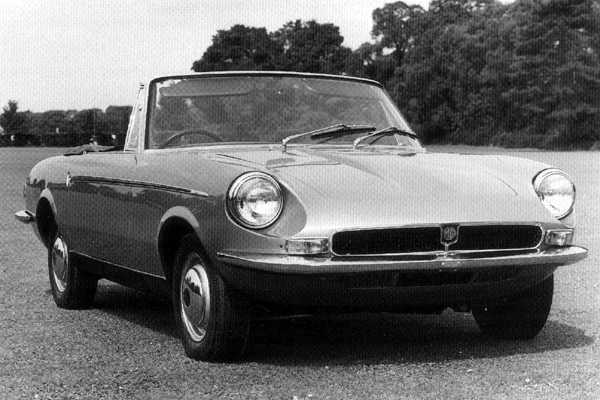
In the early 1960s, the British Motor Corporation (BMC) was seeking fresh ideas for a potential MG B successor. Their trusted partner Pininfarina delivered a design proposal in 1964: the MG B GT concept, a sleek coupe blending British pragmatism with Italian elegance. The result was a compact, balanced shape with a smoothed nose and a subtly truncated tail—what Italian designers would call a “coda tronca.” Though never put into production, the concept captured a moment of forward-thinking design.
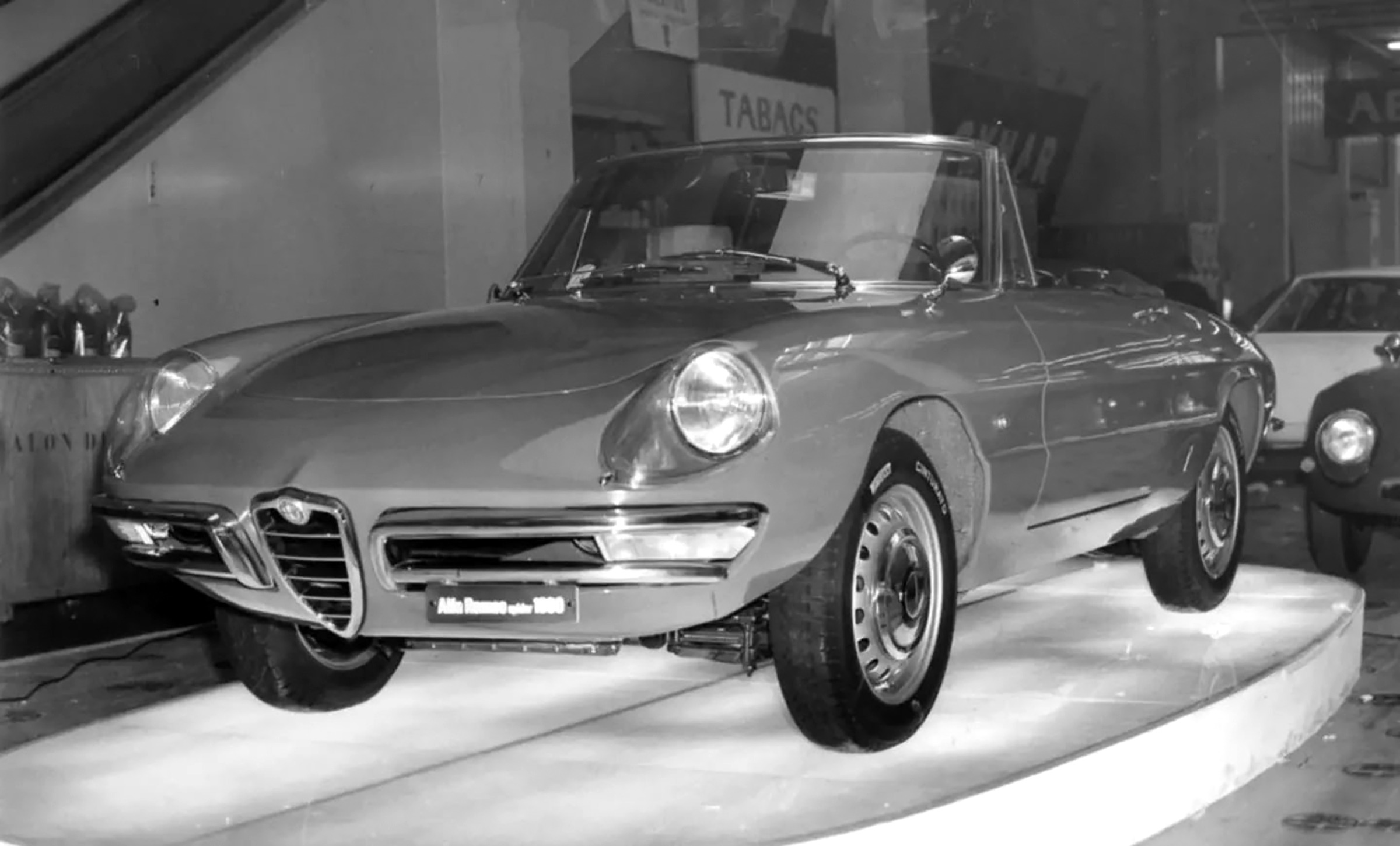
Two years later, Pininfarina unveiled the Alfa Romeo Duetto Spider (1966)—a roadster that would become one of the most beloved shapes in Alfa history. It featured a curvaceous, flowing body with minimal ornamentation, and most famously, a unique boat-tail rear—a rounded, tapering form that gave the car its nickname (Osso di Seppia in italian – cuttlefish bone) and set it apart from everything else on the road. That boat-tail silhouette was a direct descendant of Pininfarina’s earlier Superflow concept series and marked the final project overseen by Battista “Pinin” Farina himself before his passing.
🔗 Read more: The Alfa Romeo Duetto Design Story
While the Duetto of 1966 adopted this fluid, almost sculptural rear treatment, the coda tronca idea seen on the MG concept found its way onto another Pininfarina project: the Fiat 124 Sport Spider, launched the same year. The Fiat’s design—more angular and compact—echoed the MG’s proportions and rear-end treatment more directly. And a few years later, that same philosophy circled back: the second-series Alfa Spider, introduced in 1969 as the 1750 Spider Veloce, featured its own take on the Kamm tail, replacing the original boat-tail with a sharper, more modern line—closing the loop on a quiet design evolution.
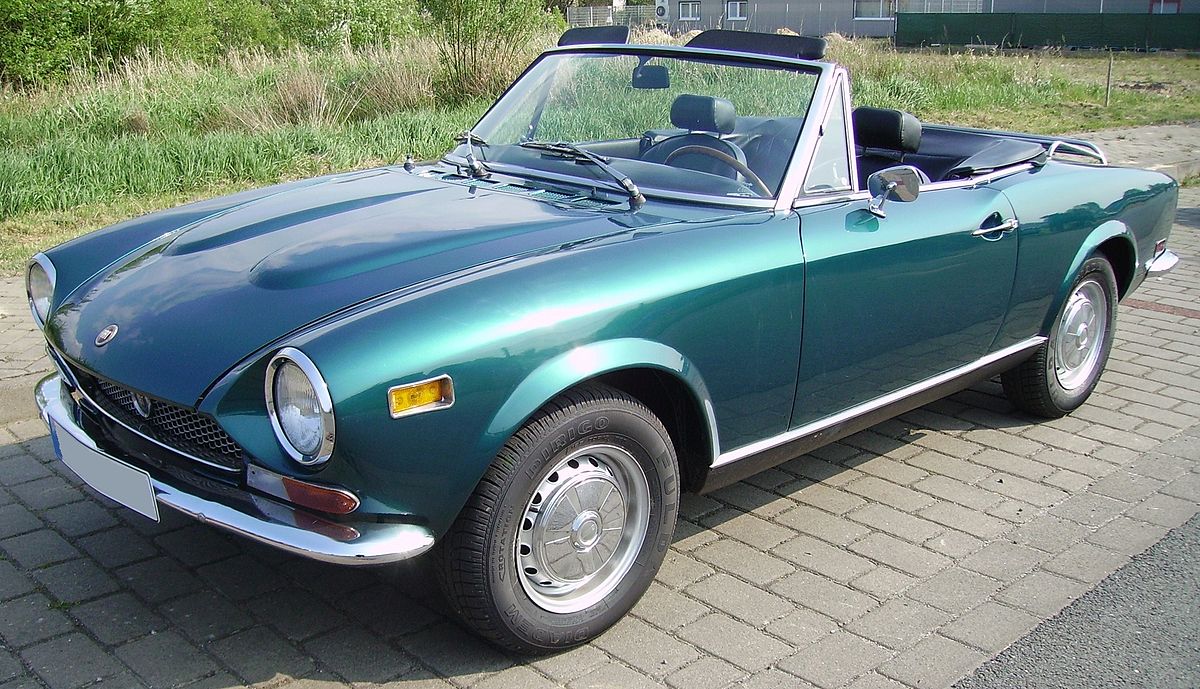
In this case, a single discarded British concept sparked a ripple effect. It didn’t just influence one car—it helped shape the design lineage of two Italian icons. The MG B GT may never have turned a wheel, but its silhouette certainly did.
PF200 x2: Space-Age Styling for Both Lancia and Cadillac
In the early 1950s, Pininfarina was reaching for the stratosphere—literally. With jet planes dominating the public imagination and the automotive world flirting with space-age shapes, Battista “Pinin” Farina and his son Sergio launched the PF200 series, a bold design experiment that looked more like a rolling concept from Popular Mechanics than a traditional Italian roadster.
The original Lancia Aurelia PF200 Cabriolet, built on the rare B52 chassis, was anything but ordinary. Flaring fenders, a dramatic oval grille, and fuselage-like bodywork drew direct inspiration from American aviation and Detroit’s Harley Earl–era design language. But under its flashy surface was substance: Lancia’s groundbreaking 2.0-liter V6 engine and a rear-mounted transaxle—advanced engineering clothed in fantasy.
Pininfarina didn’t stop at one example. A handful of PF200-bodied Lancias were built, both as roadsters and coupés, each slightly different in detail but sharing the same visual DNA: sculpted sides, cut-down doors, and that unmistakable front grille that looked more intake scoop than bumper.
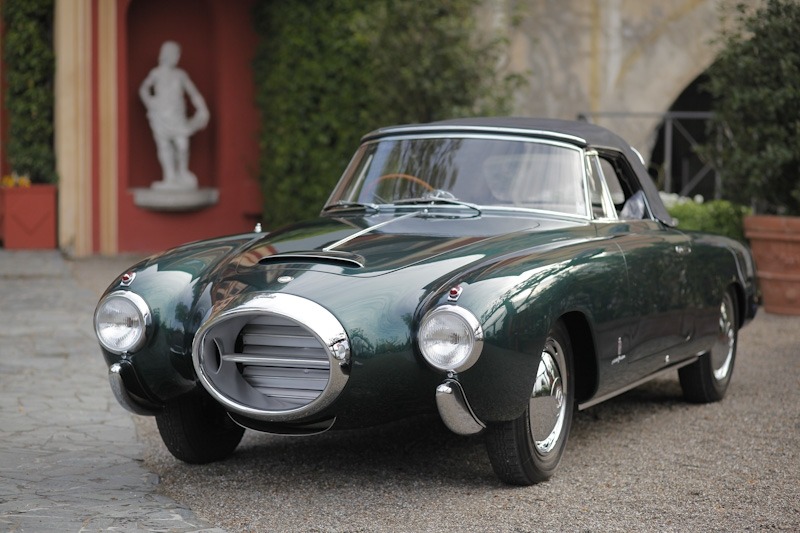
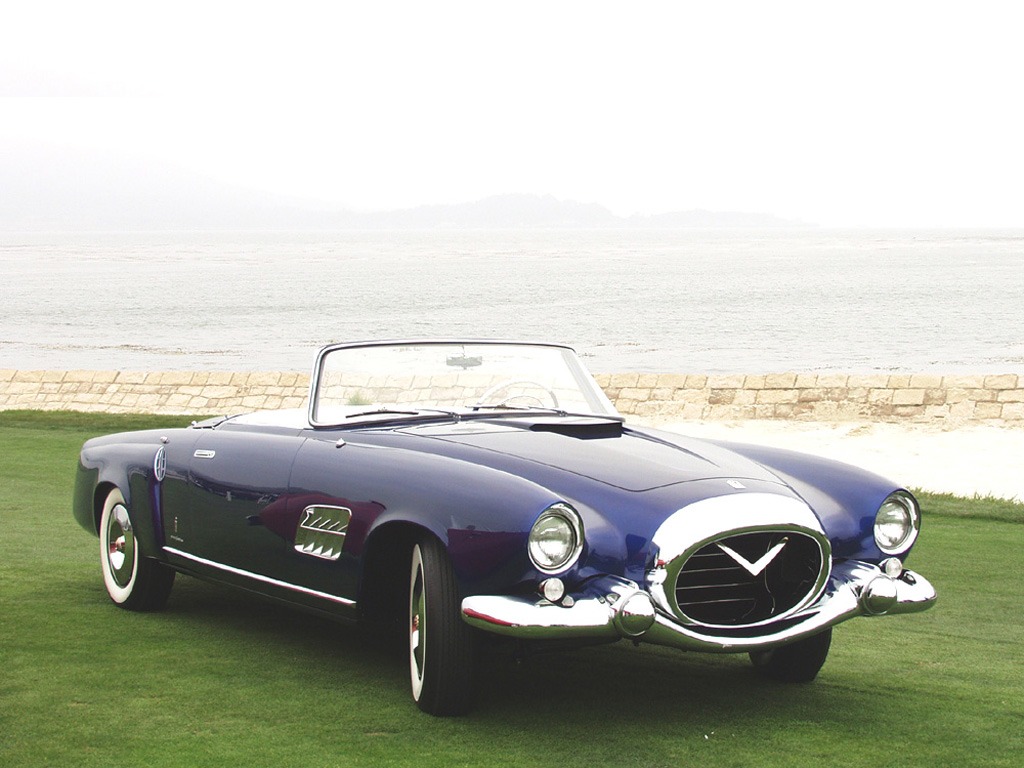
And then—across the Atlantic—a surprise: a nearly identical PF200 body appeared on a Cadillac Series 62 chassis. Painted in a striking silver-blue and fitted with Cadillac’s signature chrome-laden grille (complete with a “V” crest), the PF200 Cadillac looked like a design transplant: Detroit size, Torino style. It shared not only the same spirit but most of the same styling cues—right down to the torpedo bumper guards.
This wasn’t a coincidence. It was a transatlantic styling experiment—a demonstration of how a radical design concept could be adapted to wildly different platforms. If the Lancia was a high-tech concept car for the discerning European enthusiast, the Cadillac version was a boulevard cruiser for the American elite
The PF200’s look was part of a broader phenomenon: the space era’s influence on car design. With rockets launching and satellites circling overhead, the automotive world responded with chrome, curves, and imagination. From “afterburner” tailpipes to rocket-inspired grilles, the PF200 sat at the very heart of this trend.
🔗 Read more: How the Space Age Shaped 50s-60s Italian Car Design
The design earned accolades too. Shown at the 1957 Concorso d’Eleganza Roma, the Cadillac PF200 won the Gran Premio d’Onore, a testament to Pininfarina’s ability to blend Italian creativity with global luxury appeal.
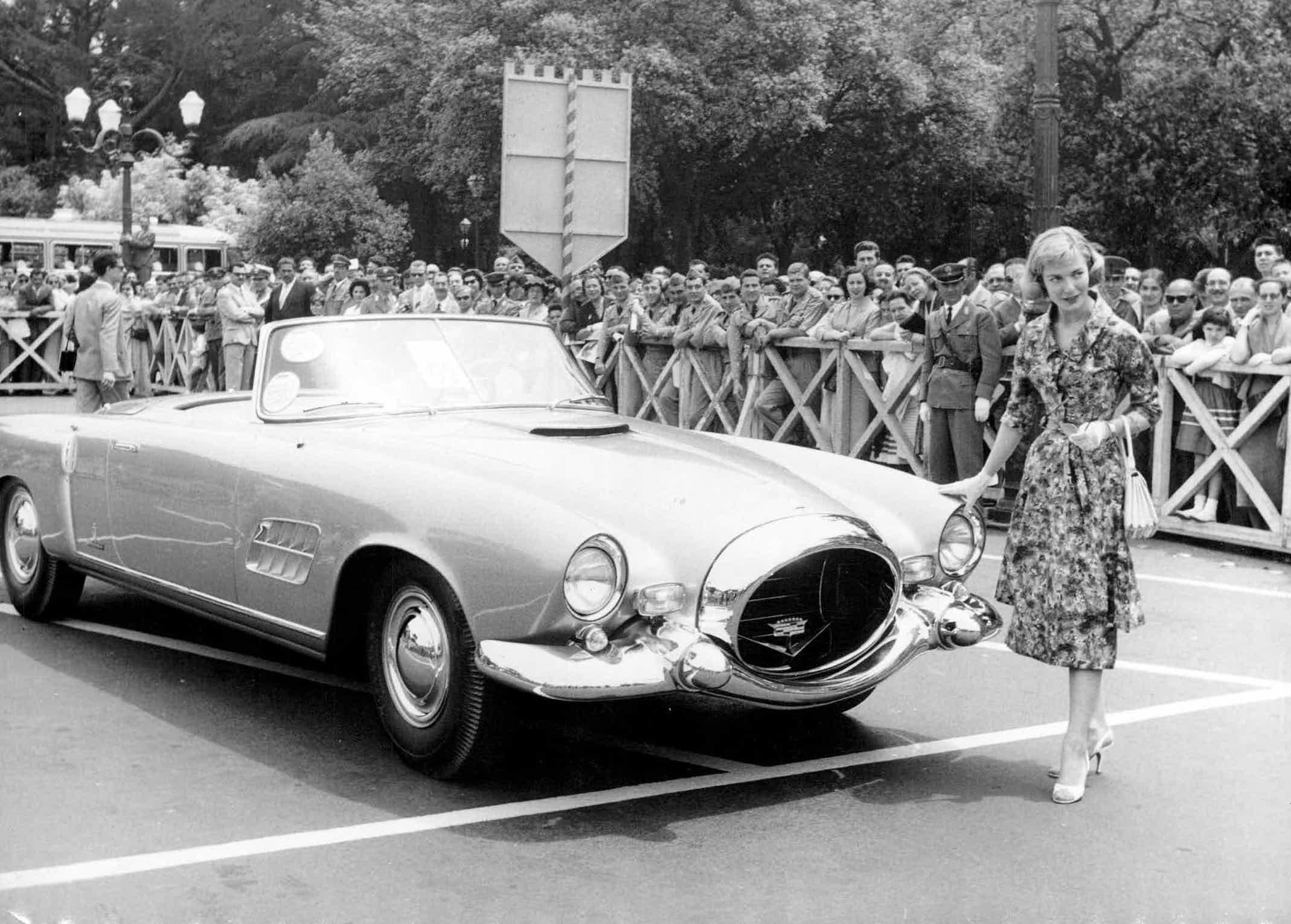
In both cases, the PF200 design wasn’t just reused—it was reinterpreted, reimagined for different cultures and mechanical platforms. Whether on a Lancia V6 or a Cadillac V8, the PF200 proved that a strong, visionary shape could transcend its origin—a jet-age fantasy that looked equally at home in Turin or Detroit.
From Bergman’s Ferrari to Fiat’s Hidden Jewel: A Case of Quiet Elegance
When Roberto Rossellini commissioned a Ferrari for his wife, legendary actress Ingrid Bergman, the result was anything but ordinary. The Ferrari 375 MM “Bergman” Coupé, chassis 0456AM, debuted at the 1954 Paris Salon as a rolling sculpture by Pinin Farina—a perfect fusion of racing pedigree and cinematic glamour. Clad in a unique color created for the actress—Grigio Ingrid—the car featured powerful proportions, flared haunches, and distinctive rear buttresses that flowed seamlessly into the hatch, adding both elegance and aerodynamic intent.
The 375 MM was no regular road car—its chassis was derived from Ferrari’s endurance racers, adapted by Pinin Farina into a luxurious yet aggressive coupé that looked like it belonged on both the Mille Miglia and the red carpet. But what made it even more intriguing was that this iconic Ferrari would become the styling muse for something far more accessible—though no less beautiful.
Just a year later, at the 1955 Turin Motor Show, Fiat unveiled a one-off 8V Berlinetta Speciale bodied by Pinin Farina. Its profile bore unmistakable echoes of the Bergman Ferrari: long nose, muscular rear arches, and most strikingly, the same rear buttress design—a sculpted C-pillar that gave the car a sense of motion and balance. Beneath that glamorous skin, though, was a very different heart: Fiat’s small-displacement but highly sophisticated 2.0-liter V8, known as the “Otto Vu.”
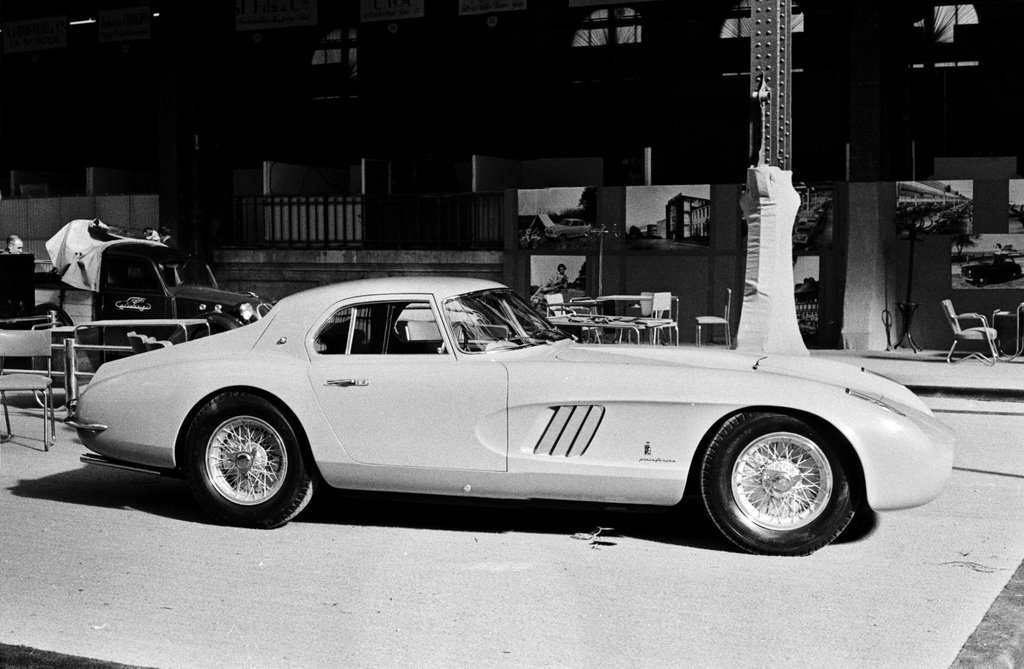
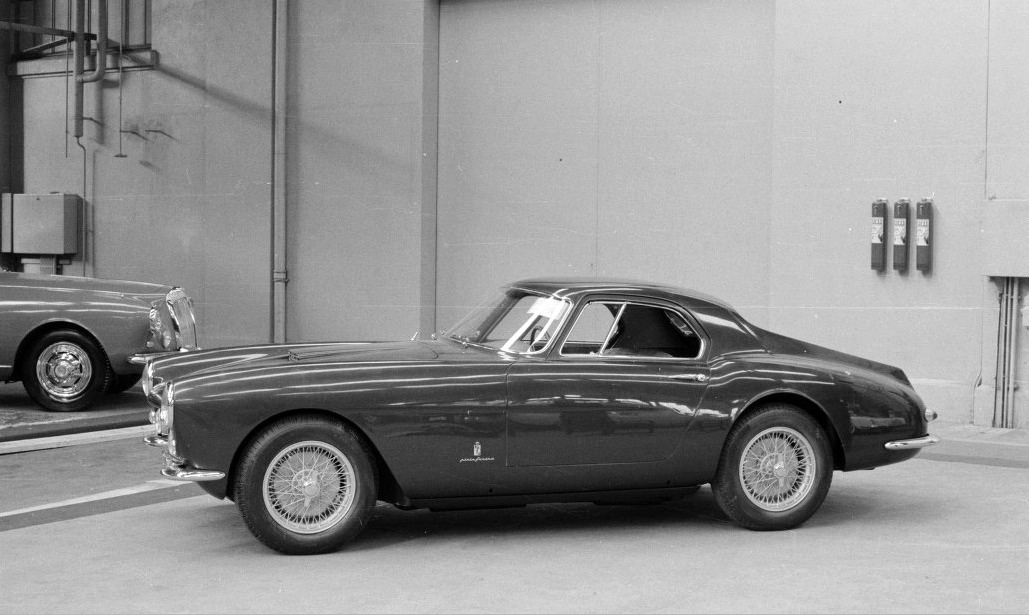
Commissioned by Giovanni Nasi, Fiat’s vice president, the 8V Berlinetta was both a design statement and a power move—Fiat proving it could wear haute couture just like Ferrari. Its design quietly linked Maranello’s exclusivity with Turin’s accessibility. Today, this one-off lives in the Righini Collection, a hidden jewel of Italian coachbuilding.
This pairing is a testament to Pinin Farina’s modular artistry. The same visual language—elegant lines, dynamic stance, dramatic taper—graced both a 4.5-liter V12 Ferrari and a 2.0-liter Fiat coupe. It wasn’t a copy-paste job, but rather a reinterpretation of ideas across classes. The Bergman Ferrari was glamorous excess; the Fiat 8V Speciale, refined expression.
Together, they form a quiet conversation between power and poise, Hollywood and homestead, competition and comfort. It’s one of the purest examples of how great design—when guided by a true artist—can be tailored to suit vastly different clients without losing its soul.
One Design for the King: Agnelli’s Ferrari and Maserati Wear the Same Suit
When Gianni Agnelli, head of Fiat and arbiter of Italian style, wanted a car, he didn’t just pick from a brochure—he created one. The Ferrari 400 Superamerica Coupé Speciale (chassis 1517SA) and the Maserati 5000 GT Pininfarina (chassis 103.008) are among the most extraordinary examples of this philosophy: two different cars, one shared vision, and an unmistakable Agnelli fingerprint.
The Ferrari 400 Superamerica Coupé Speciale debuted at the 1959 Torino Motor Show, cloaked in Moon Silver with a dramatic Aerlux glass roof and a wraparound windshield. Beneath the elegant surface was a competition-derived Tipo 163 V12, mounted to a short-wheelbase chassis built for exclusivity and speed. But the real story was above the sheet metal—Agnelli had Pininfarina shape a clean, formal coupe that was neither classically Ferrari nor overtly sporting. This was design for the man who made the rules.
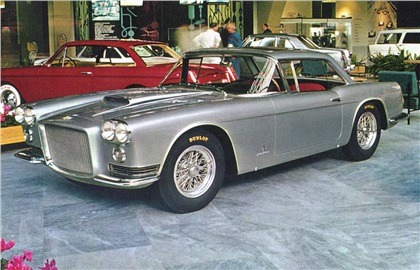
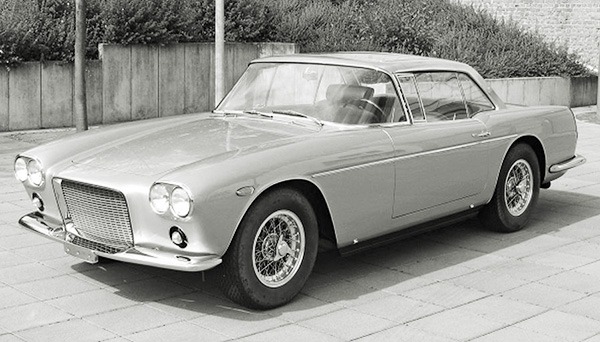
That same body—upright grille, twin headlamps in chrome bezels, angular roofline, panoramic glass, and flush flanks—appeared again two years later. But this time, it wrapped the mighty Maserati 5000 GT, specifically chassis 008, the only example bodied by Pininfarina. And the client? Gianni Agnelli again.
Agnelli had a habit: his personal cars bore no emblems—no Ferrari, no Maserati, no Fiat. This wasn’t just elegance; it was practical. Fiat executives weren’t allowed to bring non-Fiat cars into company grounds, so Agnelli had his “foreign” cars de-badged, letting the design speak for itself. In the case of these two masterpieces, the badge truly didn’t matter—the silhouette was unmistakable.
The similarities went beyond the skin. Both interiors featured curved instrument panels, dashboard-mounted clocks, and flowing center consoles. Both cars had subtle stainless-steel trim, minimalist detailing, and that cool modernist restraint that defined early 1960s Italian industrial design.
🔗 Read more: The Maserati 5000 GT
Mechanically, they diverged: the Ferrari had a short-wheelbase V12 chassis (2420 mm), the Maserati a longer V8 platform (2600 mm) with nearly 100 more horsepower. But aesthetically, they were cut from the same cloth. Agnelli didn’t want just another Ferrari or Maserati—he wanted Agnelli’s Ferrari and Agnelli’s Maserati.
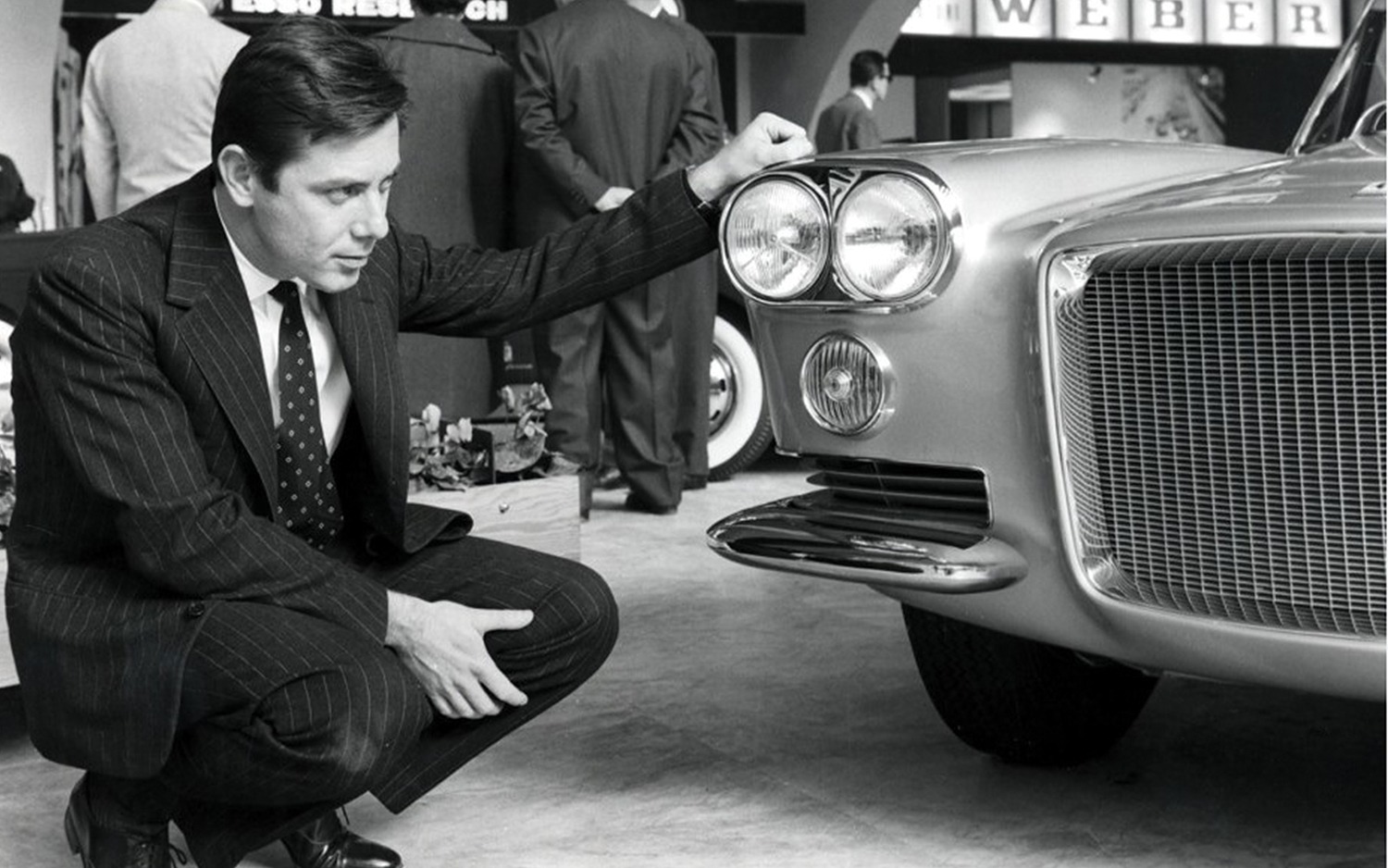
This is perhaps the most refined example in this entire series of “design doubling.” It wasn’t a case of reuse for economy—it was a case of one visionary man asking the same designer to dress two different souls in the same suit. And the result? Two cars, one identity, and a reminder that in Agnelli’s world, design came first—badge second.
Executive Geometry: Mercedes-Benz 300SEL Coupé, Fiat 130 Coupé, and Rolls-Royce Camargue
In 1969, a wealthy Dutch industrialist approached both Mercedes-Benz and Pininfarina with a singular request: a coupé version of the Mercedes 300SEL 6.3. Mercedes declined, unwilling to supply a chassis or entertain one-off commissions. But Pininfarina relented—on the condition that the car be delivered complete to their Turin facility. The resulting Mercedes-Benz 300SEL Coupé was a bespoke, angular grand tourer that debuted at the 1970 Paris Motor Show, designed by Jorge Acuri under Pininfarina’s banner. It bore little of the original sedan’s visual mass, replacing Teutonic gravitas with Italian sharpness. With a high seating position, minimalist glazing, and reduced brightwork, it became a uniquely quiet statement of power and restraint.
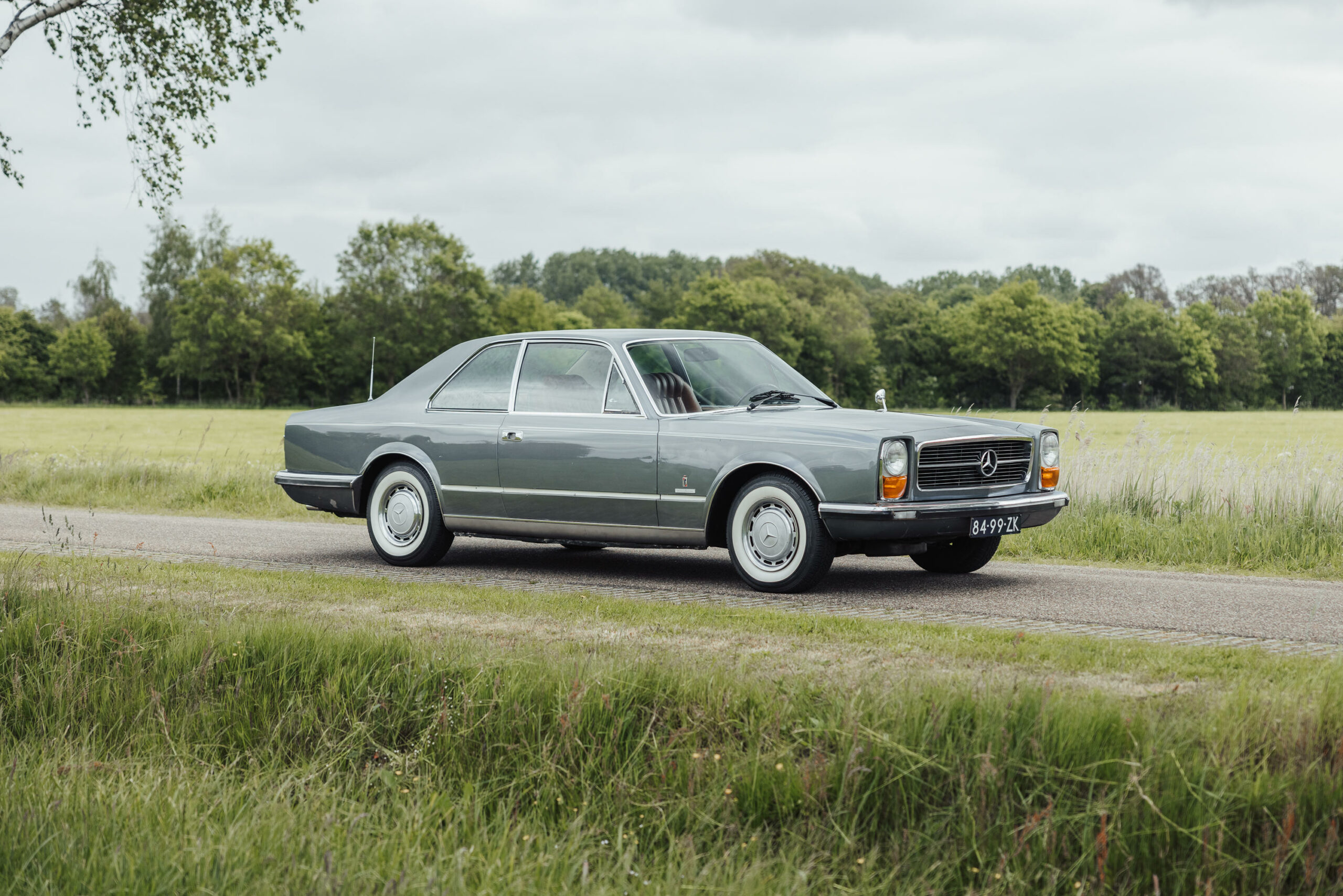
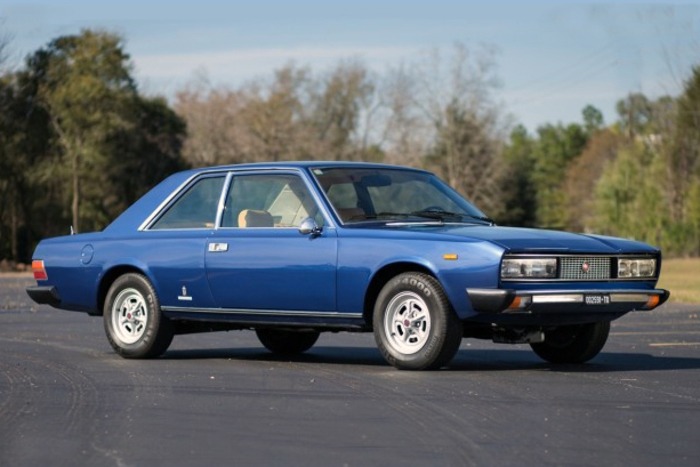
The same design logic—crisp lines, formal symmetry, and a floating roofline—surfaced again just a year later on a car from a very different brand and purpose: the Fiat 130 Coupé. Designed by Paolo Martin during his time at Pininfarina, the Fiat 130 Coupé (1971) shared the same design bones: flush surfaces, clean horizontal tension, a pillar-box greenhouse, and squared proportions. This was not merely coincidence—it was the first of a new Pininfarina trilogy (followed by the Ferrari 365 GT4 2+2 and Lancia Gamma), all executed in the same restrained architectural modernism.
Martin’s aesthetic matured into yet another luxury coupe just a few years later: the Rolls-Royce Camargue. Unveiled in 1975, the Camargue shocked traditionalists with its angular, formal design—a drastic departure from the rounded opulence of earlier Rolls-Royce models. Its notched rear pillar, wide grille, and taut body echoed the Fiat 130 Coupé almost line for line, and for good reason: Paolo Martin designed both, under Pininfarina’s guidance. The Camargue became the most expensive production car in the world at its launch, embodying British luxury filtered through Italian minimalism.
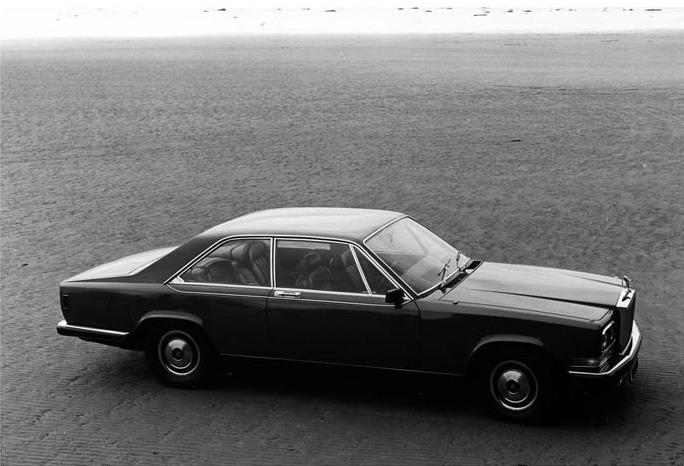
In this trio, we see Pininfarina’s angular modernism traverse three radically different brands—Mercedes-Benz, Fiat, and Rolls-Royce—adapting the same architectural vocabulary to varying degrees of prestige and power. Where the 300SEL Coupé was a discreet one-off, the Fiat 130 Coupé democratized the design for a broader audience, and the Camargue elevated it into the realm of opulence. It’s a study not only in form, but in versatility—the same pen, drawing three different worlds.
A Singular Vision, Repeated with Purpose
In tracing these forgotten twins and unexpected clones, one truth becomes clear: Pininfarina didn’t just design cars—it designed ideas. And those ideas traveled. From experimental showpieces to discreet executive commissions, Pininfarina’s design language transcended brand and borders, adapting with uncanny ease from high-performance Ferraris to boulevard Cadillacs and minimalist Fiats.
What might seem like repetition is, in truth, evolution. A concept tested on one chassis is refined on another, made iconic on a third. Pininfarina’s genius wasn’t just in drawing beautiful lines—it was in knowing where those lines could go next.
As we close this second chapter, the game of design déjà vu continues. Because when a form is strong enough, timeless enough, and thoughtful enough—it doesn’t matter what badge it wears. It’s still unmistakably Pininfarina.

ABOUT THE AUTHOR
Andreas Scheidl
Italian classic car enthusiast with German roots. Renowned as a respected figure in the classic car community, he serves as a jury member at various international concours d'elegance, including the Classic Gala Schwetzingen and Mantova. As a content creator, Andreas passionately shares his profound knowledge and appreciation for vintage automobiles. His heart beats for cars designed by Giovanni Michelotti, showcasing his discerning taste and dedication to preserving the timeless elegance of automotive history.
More stories by Andreas Scheidl ↗CONTINUE READING
Posts You Might Like
Fiat Panda Cabrio: The Italian Coachbuilders Who Opened Giugiaro’s Box
From Moretti’s Panda Rock to Italdesign’s experimental Strip, Maggiora’s four-wheel-drive convertible and Stola’s remarkable Destriero, the history of the open-top Panda reveals an unexpected chapter in Italian coachbuilding. When Giorgetto Giugiaro designed…
Read story
Gabriele d’Annunzio and the Cult of the Automobile
There was a time when the automobile had not yet become part of the landscape. It announced itself from afar through the beating of an engine, the smell of petrol and hot…
Read story
Fiat 1400: The Last Great Playground of the Carrozzieri
From Touring and Abarth to Farina, Ghia, Vignale, Boneschi, Bertone, Viotti and the smaller carrozzerie, the new Fiat quickly became one of the richest bases for Italian special bodies in the early…
Read story
How a Swiss Dealer Challenged Ferrari: The Story of Monteverdi
How Peter Monteverdi went from Swiss Ferrari dealer to creator of rare Frua and Fissore-bodied GTs, the Hai supercar and luxury off-roaders.
Read story
THE CONVERSATION
Comments 0
Share a memory, a period photograph or a documented detail about this story.