
The Maserati 5000 GT: From Racing Tragedy to the “Shah of Persia” Supercar

At the end of the 1957 sports car season, motorsport was forced to go on a bit of a diet. The FIA, reeling from the shock of the infamous “Guidizzolo tragedy” at that year’s Mille Miglia, decided that for the sake of safety no racing sports car could have an engine larger than 3.0 liters. This rule change was well-intentioned, but it left Maserati in a bind. You see, Maserati’s competition department had just poured substantial resources into developing the monstrous 5.0-liter 450S race car, and the project was still in full swing. With the new regulations, their fire-breathing V8 “Sport 5000” was suddenly a dinosaur before it even had a chance to properly roar. Talk about bad timing!
Maserati’s owner Adolfo Orsi wasn’t about to let his company’s hard work go completely to waste. Frustrated by the rule change, he withdrew Maserati from official factory racing in 1957. Instead, the company shifted focus to supporting privateer customers. Many independent racers who had placed orders for the now-banned 450S had to sadly cancel them, leaving Maserati with dozens of completed or partially-built Tipo 54 V8 engines with nothing to do. What does one do with surplus race engines lying around? Maserati got creative. Some of those spare V8s were further modified – enlarged to 5.7 and even 6.4 liters – and repurposed to power speedboats in competition. Yes, Maserati boat engines were a thing (the Italian approach to “when life gives you lemons…” is apparently “build a powerboat”).
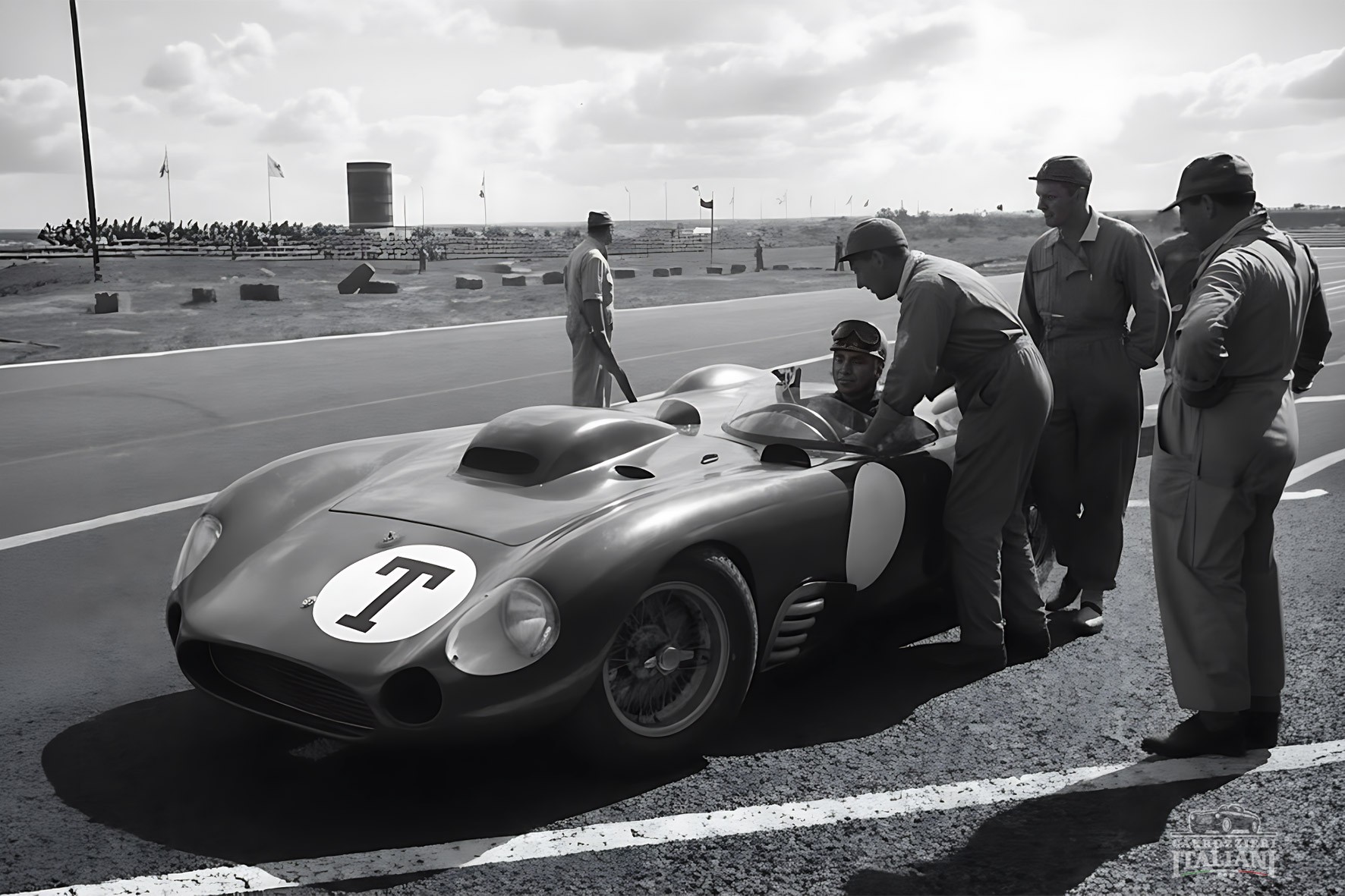
Still, there was the question of what to do with a 5.0-liter racing engine that had been developed but now had no road to race on. Engineer Giulio Alfieri had an idea: why not tame this beast for the road and create an ultra-exclusive grand tourer? Thus was born the concept of the Maserati 5000 GT (internal code “Tipo 103”) as a road car. Alfieri took the chassis of the successful Maserati 3500 GT and stretched it – making it longer and wider to accommodate the bulky V8. The goal was to fit the giant engine up front and still have a cockpit fit for a king (literally, as it would turn out), with a spacious interior and an imposing presence. The racing V8 itself was slightly domesticated for road manners: the cylinders were re-bored, nudging displacement up a hair to 4,937 cc, and the compression ratio was lowered. These tweaks smoothed out the engine’s temper at lower revs – you don’t want a peaky race engine in traffic – at the cost of about 20% of its peak power. Even with the detune, it was still an immensely potent powerplant for a street car of the late 1950s. Maserati had effectively turned a wild racing heart into a (somewhat) civilized soul, like putting a tiger on a leash.
🔗 Read more: The History of Carrozzeria Touring: From Superleggera Origins to Modern Revival
The first 5000 GT chassis was built in 1958, and it needed a body. Maserati turned to Carrozzeria Touring of Milan to craft an aluminum coupe body worthy of this grand machine. Touring was known for their Superleggera (super light) construction technique and elegant designs, and they delivered in spades. The car was finished in a striking metallic bright blue paint, with a sumptuous beige leather interior featuring plush carpeting and trim pieces made of real gold. If that isn’t opulence, what is? Perhaps the most whimsical detail was at the rear: the taillight assembly featured two vertical rows of three round lenses, each row tapering in size toward the outer edges of the car. Uniquely, the outermost lights could be turned on by a separate switch to signal “royalty on board”. In other words, if the King was riding in the car, you could literally flip a switch and let the world know via a special light – a regal touch, indeed. This first 5000 GT was truly a bespoke creation fit for a monarch.
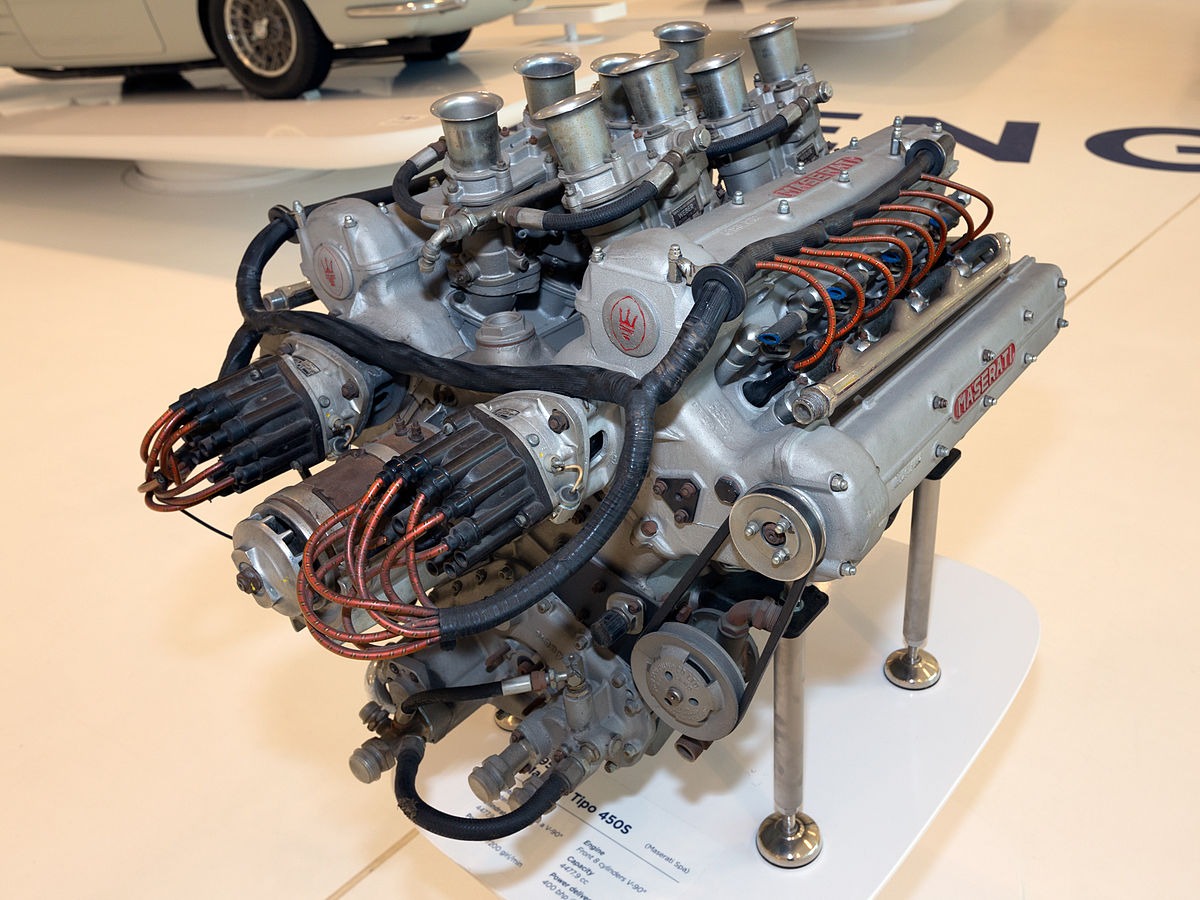
Mechanically, the Maserati 5000 GT was as exotic as you’d expect from its racing roots. Under the hood lurked that detuned 4.9-liter V8 derived from the 450S racer, now making a hearty 340 horsepower at 5,500 rpm – an astronomical figure for a street machine in 1959. It had competition-grade features like dual overhead camshafts for each cylinder bank and a quartet of Weber 45 DCOE carburetors gulping in air and fuel. Ignition was a dual setup by Magneti Marelli to ensure reliable sparks, and dual fuel pumps fed this thirsty engine. All that power was sent to the rear wheels (of course it was rear-wheel drive – this was a classic Italian GT) through a 4-speed manual gearbox. In an era when many cars were happy with 100 hp and drum brakes, the 5000 GT was on another planet. Appropriately, it featured front disc brakes (a cutting-edge feature at the time) to help rein it in, though curiously rear drums were retained. One can imagine that with a car capable of 270+ km/h, those drum brakes had their work cut out for them. Nevertheless, the 5000 GT was the ultimate blend of a racing heart with grand touring luxury – the kind of car that could blast past you on the autostrada and you’d only catch a glimpse of blue and gold flash by.
Touring Superleggera
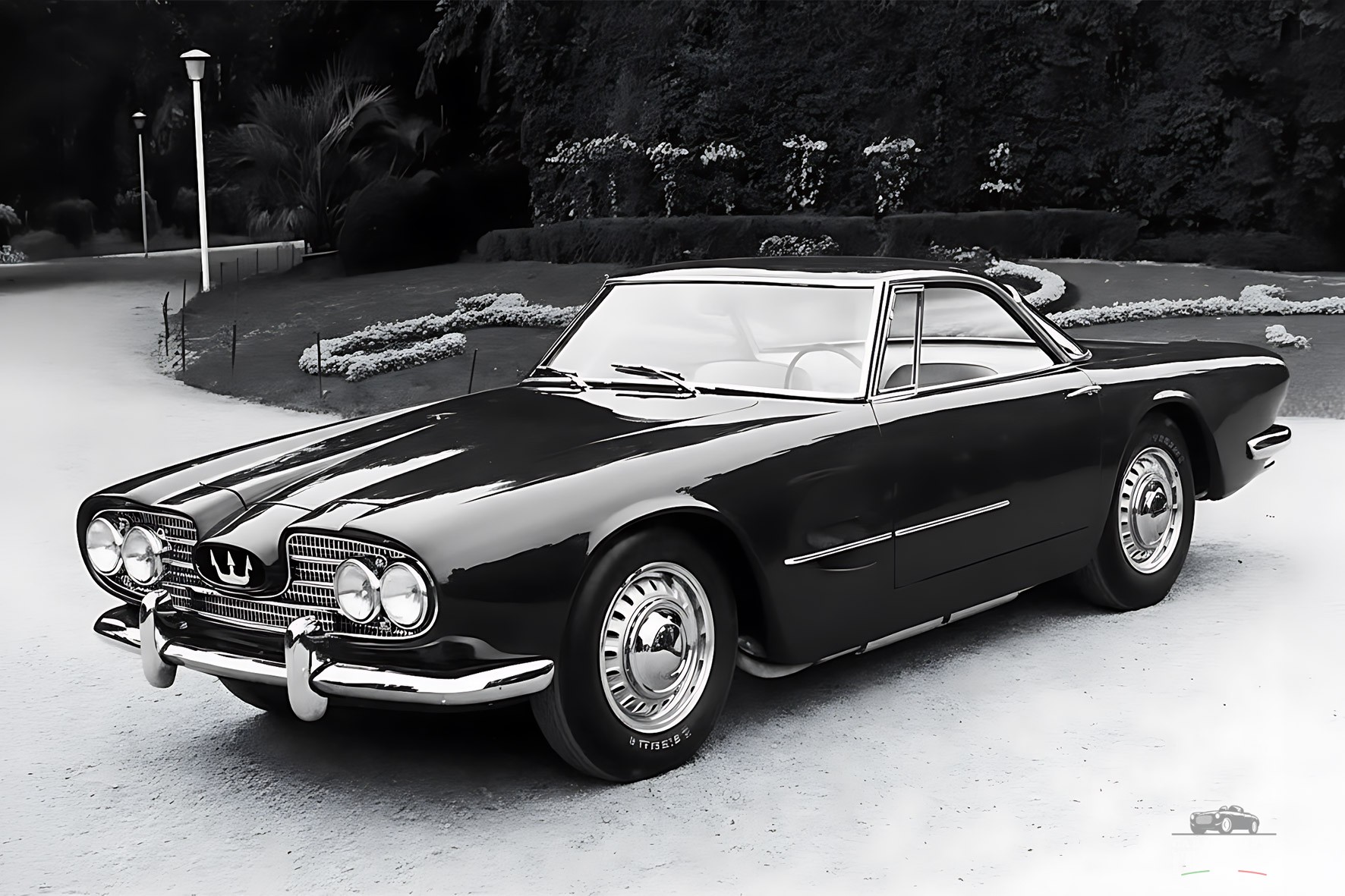
The Maserati 5000 GT project might never have taken off beyond a one-off were it not for a well-timed visit by a very special customer. In 1958, Mohammad Reza Pahlavi, the Shah of Persia (Iran), visited the Maserati factory. The Shah was an avid car enthusiast with a taste for fast and exclusive machines. Legend has it he had test-driven a Maserati 3500 GT and was impressed, but he wanted something even more special for himself – something no one else had. Maserati’s Adolfo Orsi and engineer Alfieri saw an opportunity. They pitched the Shah on the idea of a bespoke grand tourer built on a modified 3500 GT chassis but equipped with their brawny 5-liter racing V8. Essentially, “We’ll build you a road car with a race engine, Your Majesty, how about that?” The Shah, being a man who could have anything, promptly said yes. It was the perfect match: Maserati had a great concept looking for a patron, and the Shah had the desire (and means) to commission a dream car.
Chassis AM103.002 was the very first Maserati 5000 GT built – the Shah’s car. Completed toward the end of 1958, it was delivered to Mohammad Reza Pahlavi and immediately caused a sensation. This was the “Shah of Persia” Maserati, the one that gave the model its famous nickname Scià di Persia. The press around the world latched onto the story, helped in no small part by the Shah’s own celebrity status at the time – his high-profile divorce from Princess Soraya had made him a staple of international headlines. So here was a king going through a breakup and buying a flashy sports car – the tabloids couldn’t have scripted it better. The 5000 GT instantly became part of the Shah’s glamorous narrative. Painted royal blue with those gold accents and special “king aboard” taillights, it was a rolling symbol of prestige. Under the hood, Maserati had shoehorned in the modified 5-liter V8 as promised, and Touring’s Superleggera body turned it into a piece of art on wheels. The Shah was so pleased that he reportedly said it was the only car worthy of a king. Hard to argue with him on that point.
Maserati soon realized they might be onto something bigger than a one-off. As the Shah showed off his unique Maserati, other wealthy enthusiasts in high society started inquiring how they could get one. Orsi decided to green-light a very limited production run of the 5000 GT – effectively a series of made-to-order supercars for the world’s elite. Each would be as exclusive as it gets, often with custom coachbuilt bodies by Italy’s top design houses. In total, Maserati built just 32 chassis for the 5000 GT between 1959 and 1966, and only 34 cars if you count a couple that were rebuilt and renumbered later. That’s right, 34 cars in total – making the 5000 GT one of the rarest Maseratis ever. And perhaps the most fascinating part: those 34 cars were clothed by eight different Italian coachbuilders. Practically every major carrozzeria of the era got a crack at shaping a 5000 GT, resulting in a family of cars that share the same mechanical DNA but each with a unique style. It was like a coachbuilt car showcase, all under the 5000 GT banner.
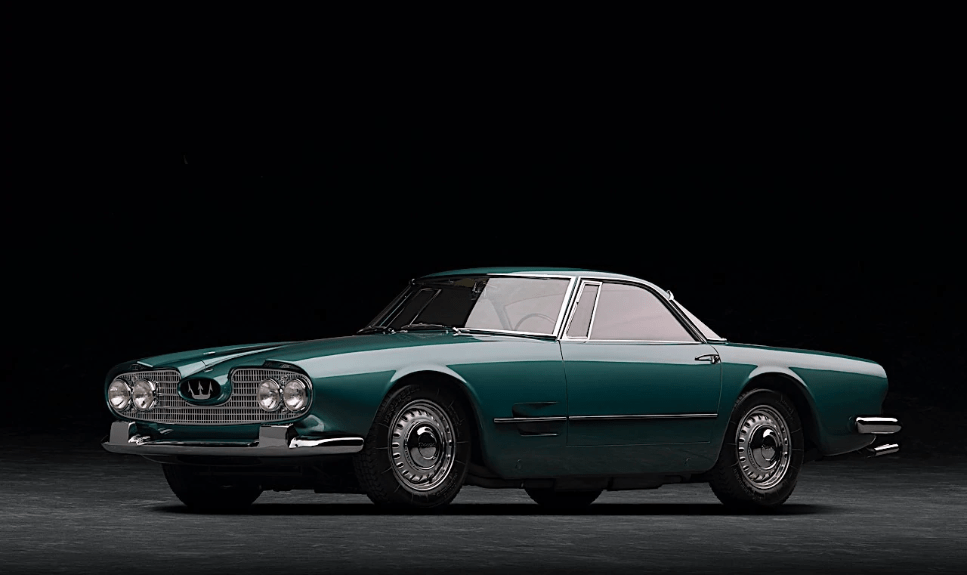
Carrozzeria Touring Superleggera was responsible for the first examples, including the Shah’s car, and they built a total of three 5000 GT bodies. These Touring-bodied cars are often collectively referred to by the nickname “Scià di Persia” in honor of the first client. Each of the three has its own story:Still, there was the question of what to do with a 5.0-liter racing engine that had been developed but now had no road to race on. Engineer Giulio Alfieri had an idea: why not tame this beast for the road and create an ultra-exclusive grand tourer? Thus was born the concept of the Maserati 5000 GT (internal code “Tipo 103”) as a road car. Alfieri took the chassis of the successful Maserati 3500 GT and stretched it – making it longer and wider to accommodate the bulky V8.
Chassis AM103.002: The Shah of Persia’s car described above – the original 5000 GT. Powered by the Maserati 450S-derived V8 in a stretched 3500GT chassis, with Touring’s gorgeous aluminum coachwork. This two-seater coupé set the template and standard for all that followed. It was exclusive, outrageously expensive, and intended for royal taste. Not a bad way to kick off a model lineup.
Chassis AM103.004: The second Touring-bodied 5000 GT was first shown to the public at the 1959 Turin Motor Show. Imagine the scene: amidst all the new Fiats and Lancias, there’s this glittering blue Maserati supercar drawing crowds three-deep. After its show debut, chassis 103.004 was sold to Basil Read, a wealthy South African businessman who notably owned the Kyalami Grand Prix Circuit in South Africa. Owning a racetrack and buying a one-of-a-kind Maserati from a European motor show – talk about living the car enthusiast’s dream! One can only guess that 103.004 enjoyed a very fast life under Mr. Read’s care, possibly stretching its V8’s legs on the Kyalami track on weekends.
Chassis AM103.010 (later 103.090): This third example has perhaps the strangest journey. It was originally built in 1961 and first wore a body by Carrozzeria Frua, not Touring. Why Frua? It could be that a customer commissioned Frua to design it, or Maserati was experimenting. However, a few years later in 1965, that same chassis was re-stamped with a new number (AM103.090) and rebodied by Touring for a member of the Saudi royal family. In essence, Maserati recycled the car into a “new” 5000 GT to fulfill another bespoke order. The Frua body was out, a fresh Touring body was in, and the car got a second life. It’s not every day a car gets a do-over like that, but such was the demand for the 5000 GT among the world’s wealthy – if you had connections at Maserati, even a used chassis could be reborn to create another one-off supercar. Talk about an extreme makeover!
With these three, Touring set the bar high for style. Their design for the 5000 GT was relatively restrained and elegant, in line with Touring’s philosophy, yet undeniably regal in stance. The term “Superleggera” means super-light, referring to Touring’s construction method of wrapping lightweight alloy panels over a tube frame. Even with a giant V8 and luxury appointments, the Touring 5000 GTs remained fairly trim, which certainly helped them achieve their impressive performance. The Scià di Persia Maserati established the 5000 GT as the ultimate status symbol on wheels at the dawn of the 1960s.
Allemano
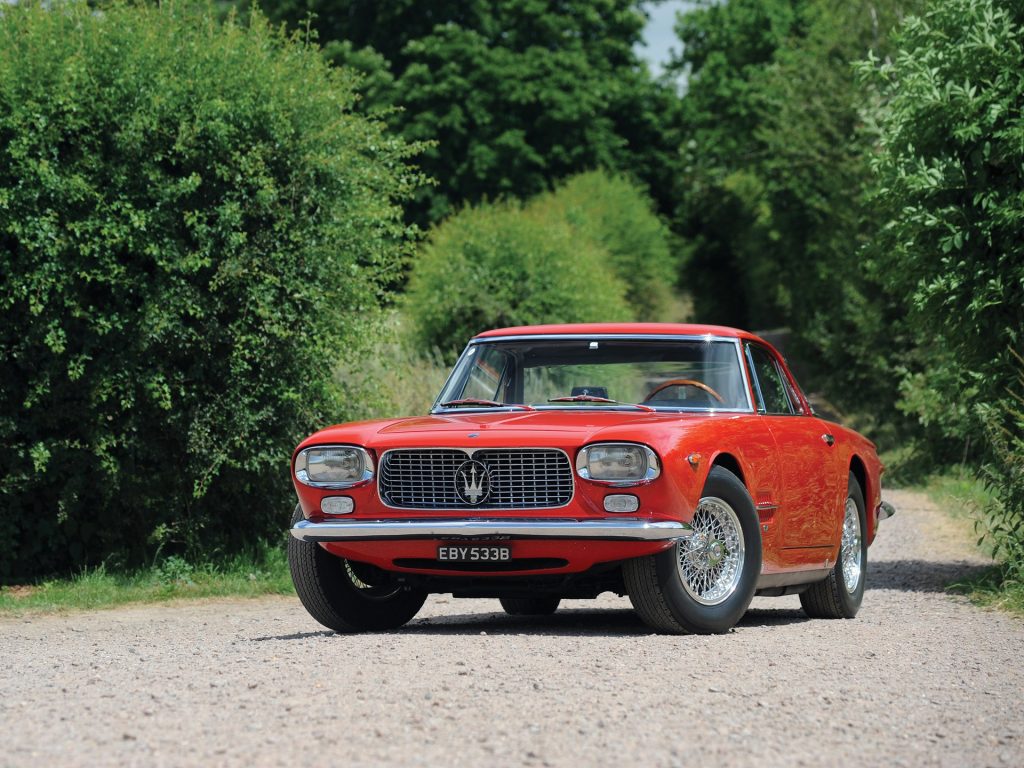
After the initial Touring cars grabbed the world’s attention, Maserati needed someone to build the 5000 GT in slightly larger numbers (we’re still talking very small numbers, but more than a one-off). The coachbuilder Allemano stepped up to become the closest thing to a “production” manufacturer for the 5000 GT. In total, Carrozzeria Allemano bodied 22 examples of the 5000 GT – by far the most of any coachbuilder involved. If 34 cars were made in all, Allemano’s share (22 cars) was the majority, which means when most people saw a 5000 GT back in the day (if they ever saw one at all), chances are it was an Allemano-bodied car.
🔗 Read more: Carrozzeria Allemano: The Coachbuilder That Redefined Elegance
After the initial Touring cars grabbed the world’s attention, Maserati needed someone to build the 5000 GT in slightly larger numbers (we’re still talking very small numbers, but more than a one-off). The coachbuilder Allemano stepped up to become the closest thing to a “production” manufacturer for the 5000 GT. In total, Carrozzeria Allemano bodied 22 examples of the 5000 GT – by far the most of any coachbuilder involved. If 34 cars were made in all, Allemano’s share (22 cars) was the majority, which means when most people saw a 5000 GT back in the day (if they ever saw one at all), chances are it was an Allemano-bodied car.
Production of Allemano-bodied 5000 GTs trickled out in tiny batches. Maserati built four in 1961 (including the show car), followed by twelve in 1962 – which was the busiest year for the 5000 GT. Those twelve in 1962 really underline how exclusive this car was; even at its peak production, only about one car per month was completed. In 1963, four more Allemano cars were built, and finally two in 1964. After that, the 5000 GT’s time was nearly up as Maserati shifted focus to newer models. In total, the 22 Allemano cars made each year from 1961 to 1964 comprised the main body of 5000 GTs delivered to customers.
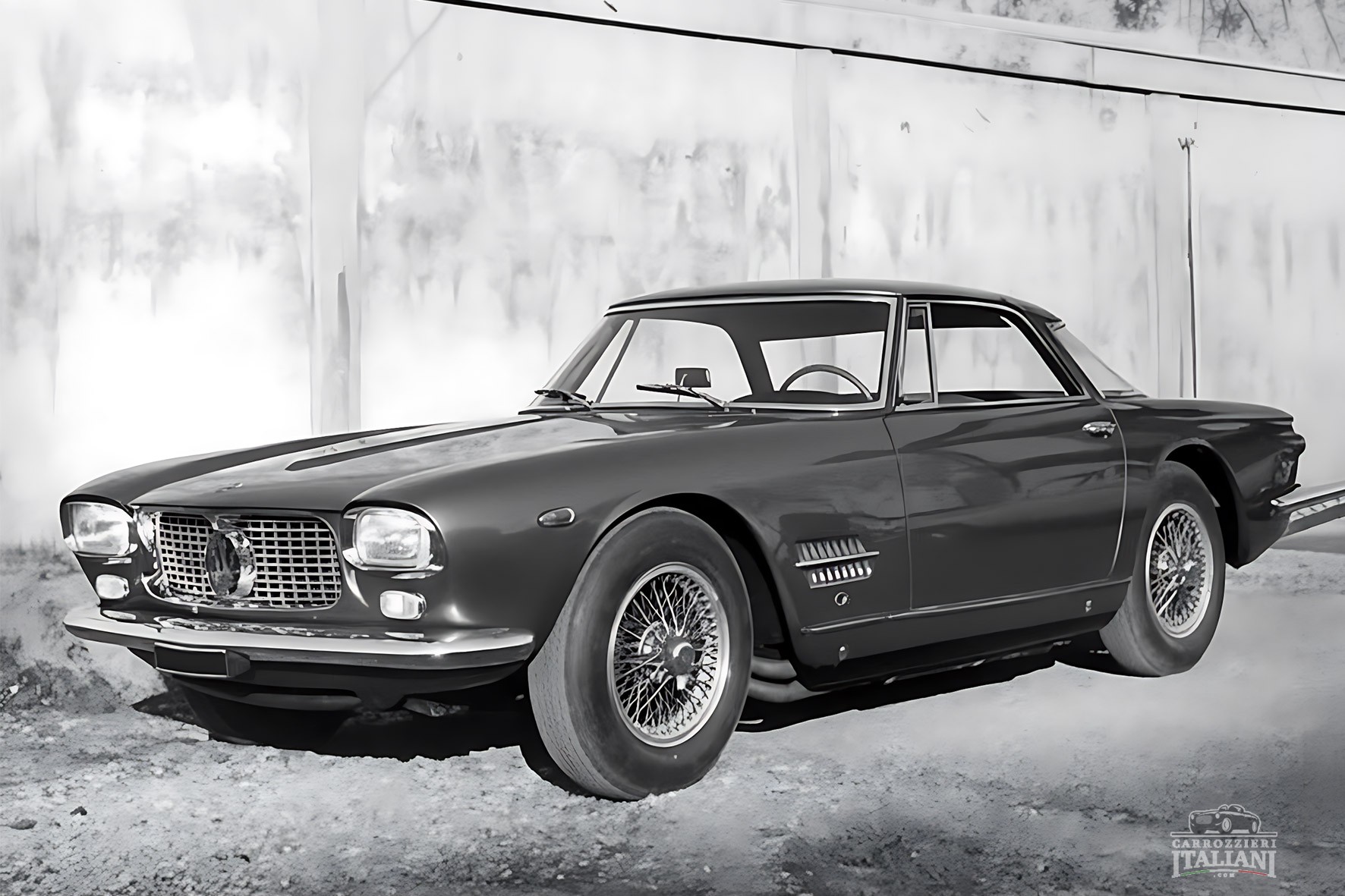
Despite being the most “common” version, an Allemano 5000 GT was still the sort of car bought by royalty, industrialists, and VIPs – literally, the only people who knew about these cars were those special enough to get on Maserati’s list. Each car was bespoke to some degree (paint, interior, and minor details tailored to the buyer). The Allemano-bodied 5000 GT had a crisp, formal coupe silhouette with a long hood and neatly integrated headlights and grille. If the Touring Scià di Persia was flashy with its royal blue and gold, the Allemanos were perhaps a tad more conservative Italian suits. But under the skin they were all the same ferocious 5-liter Maserati. Buyers adored them for the same reason the Shah did – they combined race car performance with grand tourer comfort, and no two were exactly alike.
Pininfarina
One-off built for Gianni Agnelli
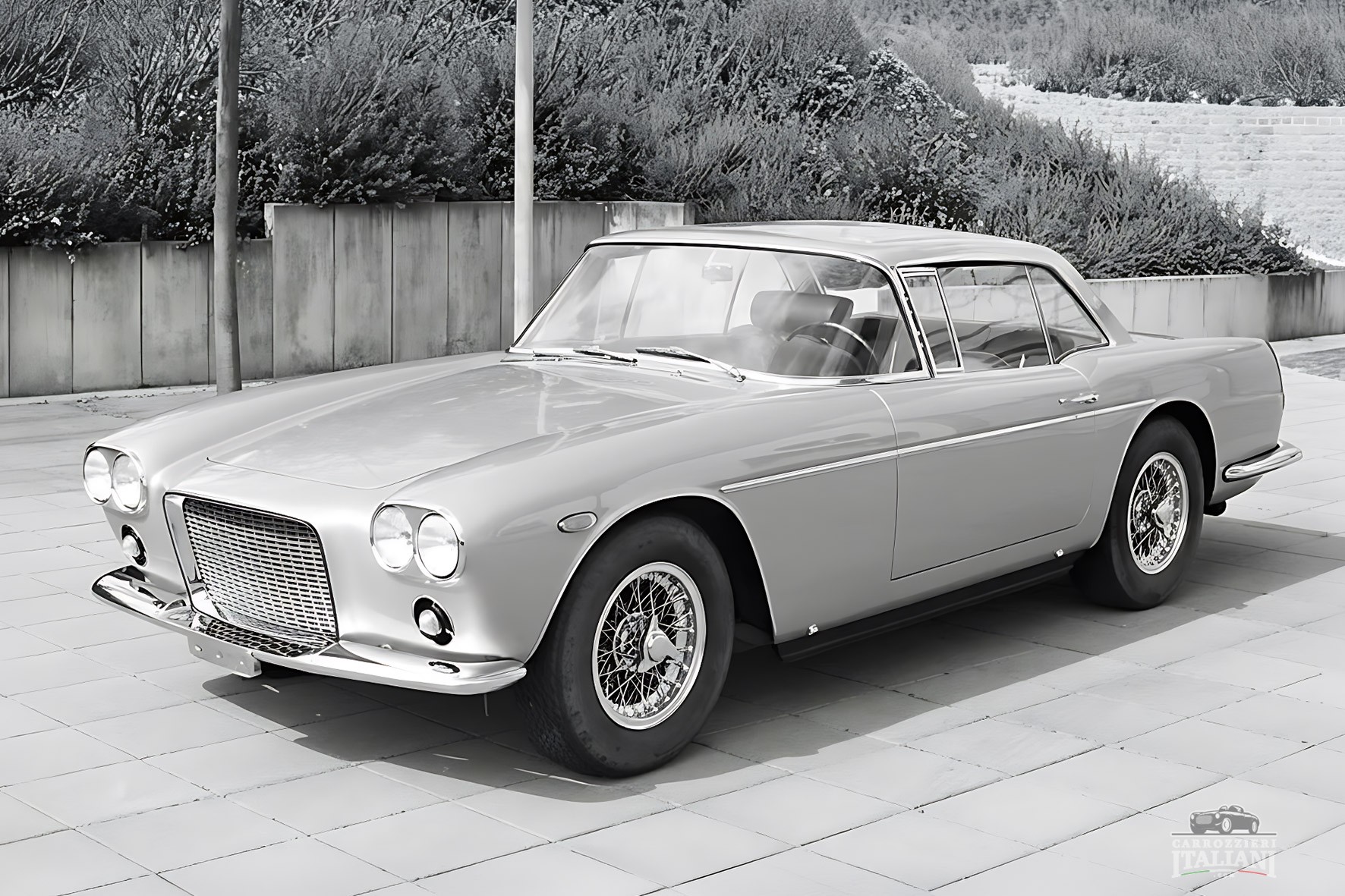
Even in the rarefied world of the 5000 GT, some owners wanted something truly unique. One such person was Gianni Agnelli, the jet-setting heir to the Fiat empire and a trendsetter of Italian style. Agnelli commissioned Pininfarina to body a Maserati 5000 GT just for him – and the result was one of the most elegant cars of the series. Completed in 1961, Agnelli’s car (chassis AM103.008) was the only 5000 GT bodied by Carrozzeria Pininfarina.
Leave it to Pininfarina to create a design that was both understated and utterly striking. Agnelli’s 5000 GT had a distinctive look that it actually shared with another of his custom cars – a Ferrari 400 Superamerica Coupé Speciale built around the same time. Both the Maserati and the Ferrari for Agnelli featured a clean, unadorned nose with an upright grille, flowing into a wraparound windshield, and most notably a panoramic glass roof. This large glass roof made the cabin airy and gave the car a very jet-age, almost concept-car vibe. In profile, the car was sleek and refined rather than aggressive. And in Agnelli fashion, the exterior was devoid of any Maserati badging or logos. Why no badges? Because at the time, Fiat had a policy barring non-Fiat cars from using the company parking or facilities – a rule aimed at keeping rival brands off their turf. Agnelli, being the boss, famously got around this by ensuring his special cars (even Ferraris and Maseratis he owned) wore no brand emblems. If there’s no trident badge, is it really a Maserati? Loophole found and exploited!
Agnelli’s 5000 GT was finished in a subtle silver (Argento) over a black (Nero) interior – a very refined combo, almost the opposite of the Shah’s flashy blue-and-gold Touring car. But don’t let the restrained appearance fool you: under the hood it was still a 340 hp brute with the racing-bred V8. Imagine the surprise of a Ferrari owner when this “mystery” silver coupe with no badges blew past them on the autostrada, only to later discover it’s a Maserati commissioned by Mr. Fiat himself. We can assume Agnelli didn’t keep the car for very long (he tended to enjoy his toys briefly before moving on), and it eventually passed through the hands of collectors including renowned Maserati enthusiast Alfredo Brener in later years. Today, that Pininfarina-bodied 5000 GT stands as a one-off masterpiece – a fusion of Maserati power with Pininfarina elegance, made for the ultimate car connoisseur of the day. It’s also a fascinating what-if: had Maserati decided to do a series with Pininfarina, this could have been a very pretty “alternative” look for the 5000 GT. But as it stands, it’s one of one.
Monterosa
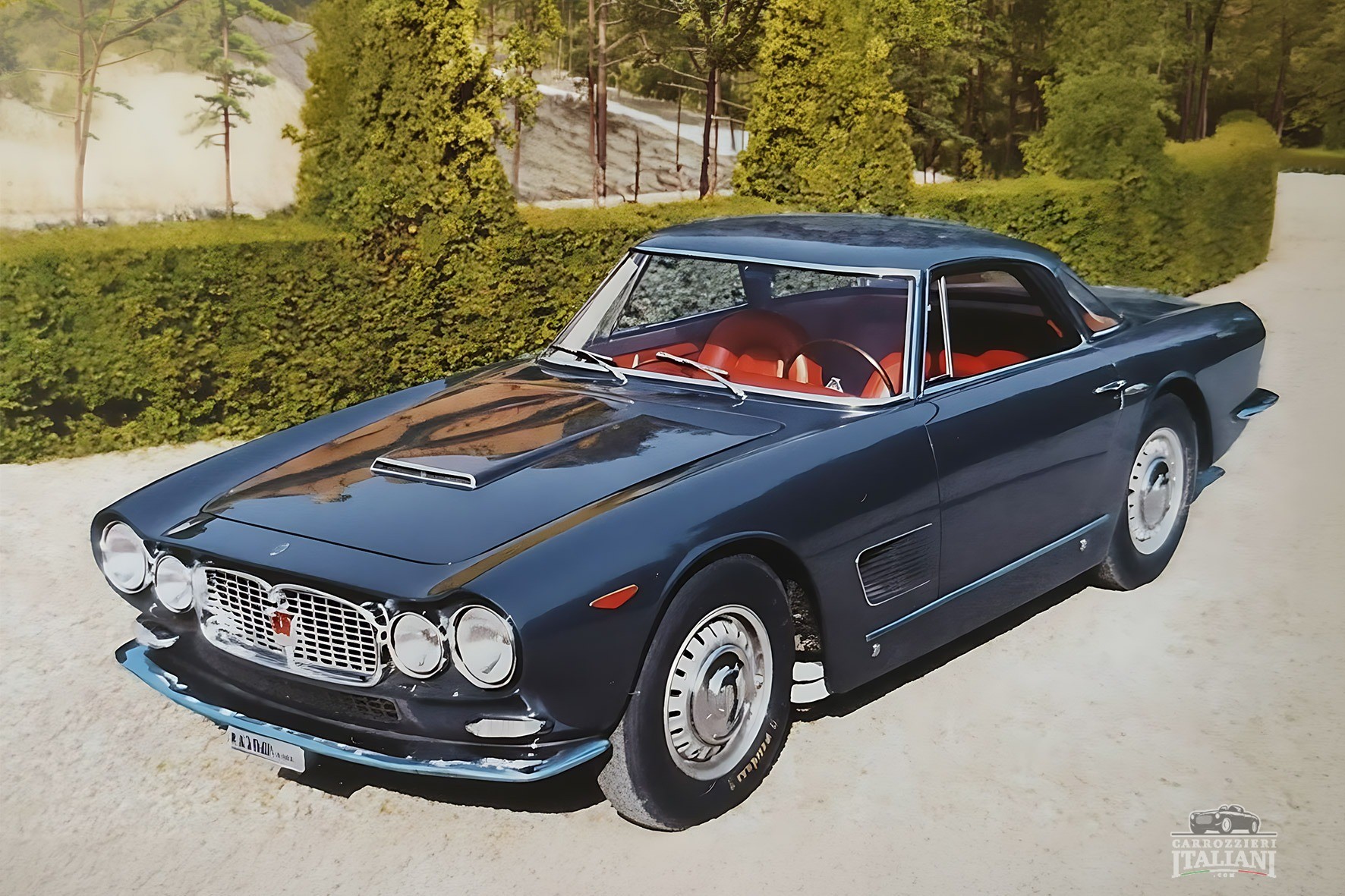
Not every coachbuilder involved with the 5000 GT was a household name. One of the more obscure companies to dress the Maserati 5000 GT was Carrozzeria Monterosa. Monterosa produced just two examples of the 5000 GT, making them extremely rare and a bit mysterious. Despite their low profile, the Monterosa cars had some pretty high-profile owners, showing that even lesser-known coachbuilders could attract elite clientele with the 5000 GT program.
Chassis AM103.006 was one of the Monterosa-bodied cars, finished in a vivid red and delivered in 1960 to a Formula One racing driver named Cesare Perdisa. Perdisa was a talented Italian driver in the 1950s who had raced Maseratis, among other marques. It’s fitting that a Maserati racing alumnus would end up with a 5000 GT – maybe it was a retirement gift to himself. One can imagine Perdisa appreciating the car’s race-derived performance. After all, who better to exploit a detuned 450S V8 on the street than someone who’d handled a race car? Chassis 103.006 has since made its way into the hands of an American collector, meaning this Italian exotic likely roams U.S. roads (or collections) these days.
🔗 Read more: The story of Carrozzeria Monterosa
Chassis AM103.012 was the second Monterosa-bodied 5000 GT, originally painted gray and sold to Italian tennis champion Filippo Montanari. While Montanari might not be as internationally known as, say, a Pancho Gonzales or a Rod Laver, he evidently had the taste (and means) for a top-of-the-line Maserati. It’s fun to picture him arriving at a tennis club in this sleek grey Maserati – surely turning more heads than any tennis trophy would. Not much is widely published about the specifics of the Monterosa design; however, photos show a clean and stately coupe, perhaps a bit more conservative in styling. The fact that only two were made suggests Monterosa did these as special orders and then bowed out, possibly due to the immense cost of producing even one-off bodies.
In the grand scheme, the Monterosa 5000 GTs add an intriguing footnote to the model’s history. They demonstrate that the 5000 GT was such a status symbol that it attracted not just kings and industrialists, but also sportsmen like racers and tennis players. And they highlight how many coachbuilding firms – big and small – were eager to put their stamp on this Maserati, each hoping to create the ultimate grand tourer.
Michelotti
One-off built for Briggs Cunningham
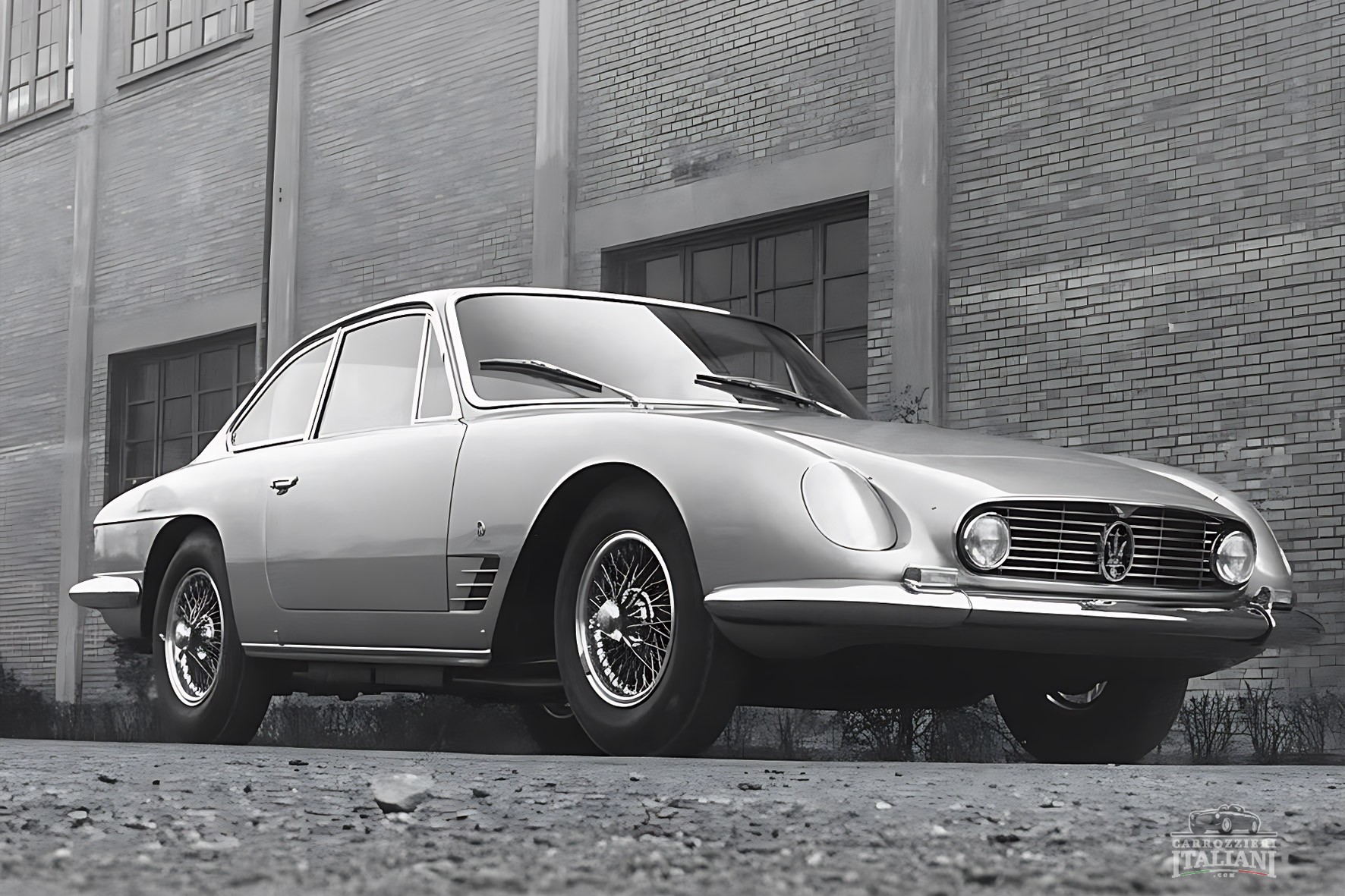
The name Michelotti in this context refers to Giovanni Michelotti, the prolific Italian designer. Michelotti didn’t run a large coachbuilding factory under his own name (he usually collaborated with others for the actual building), but one particular 5000 GT design is attributed to him – and it was made for American racing royalty. We’re talking about Briggs Cunningham, the wealthy sportsman, Le Mans team owner, and racer who famously fielded American cars at Le Mans in the 1950s. Cunningham was a man who knew exactly what he wanted in a car, and for his Maserati 5000 GT, he requested that it resemble the Maserati 450S race car as much as possible. After all, the 5000 GT’s engineering was based on that very racer, so why not make it look the part?
In practice, translating a raw race car design to a road-legal GT results in something rather different, but the outcome was spectacular in its own right. Michelotti’s design for Cunningham’s car (chassis AM103.016) ended up being remarkably modern and sleek. There were indeed a few nods to the 450S – for instance, the rounded curves over the fenders hinted at the voluptuous shape of the old race car’s body. But beyond that, this 5000 GT had its own identity. It featured hidden headlamps behind covers, flanking a petite oval grille opening, giving the front a clean and aerodynamic look (no big chrome grille mustache here). The sides had bold ventilation scoops with decorative chrome strakes just behind the front wheel arches – a very sporty touch. The greenhouse (the roof and window area) was low and almost entirely glass, with thin pillars, which was quite avant-garde; it gave the car a “glassy” look and likely great visibility. The tail was semi-tapered, with a neat rear deck – some have compared the overall vibe to a Ferrari 330 GTC, which is high praise for a design of that era.
This Michelotti-bodied 5000 GT was not just about looks; it was about aerodynamics and performance. Reportedly, Michelotti even had the car’s shape refined in a wind tunnel at the University of Turin, resulting in what was likely the most aerodynamically efficient 5000 GT ever built. With less drag, theoretically this car could achieve a higher top speed than its siblings – and some enthusiasts indeed suspect it was the fastest of all the 5000 GTs. Briggs Cunningham was certainly not going to take that on faith; being the racer he was, he insisted on test driving the car at Monza before final delivery. Picture that: an American millionaire racer, blasting around Monza in his brand-new one-of-a-kind Maserati to make sure it met his standards. It must have been quite the sight! Satisfied with its performance (who wouldn’t be, with a 5-liter V8 and improved aero?), Cunningham took delivery. He then used this Maserati as his personal Europe tourer, reportedly commuting between European racetracks where his team was competing. It was essentially his street-legal race car for jaunts between races. How cool is that?
The Michelotti 5000 GT stands out for its single-minded performance focus. It may not visually scream “Le Mans racer” like Cunningham initially wanted, but it ended up as a beautifully balanced design – equal parts sophistication and aggression. With its unique features and backstory, this car is a treasure in the 5000 GT lineage. It’s currently believed to survive in the hands of collectors, often seen in vintage Maserati discussions as the 5000 GT that married style with wind-cheating purpose. If the Shah’s Touring was the most regal and Pininfarina’s was the most elegant, Cunningham’s Michelotti-bodied 5000 GT was arguably the most sporting.
Ghia
One-off displayed at the 1961 Turin Auto Show
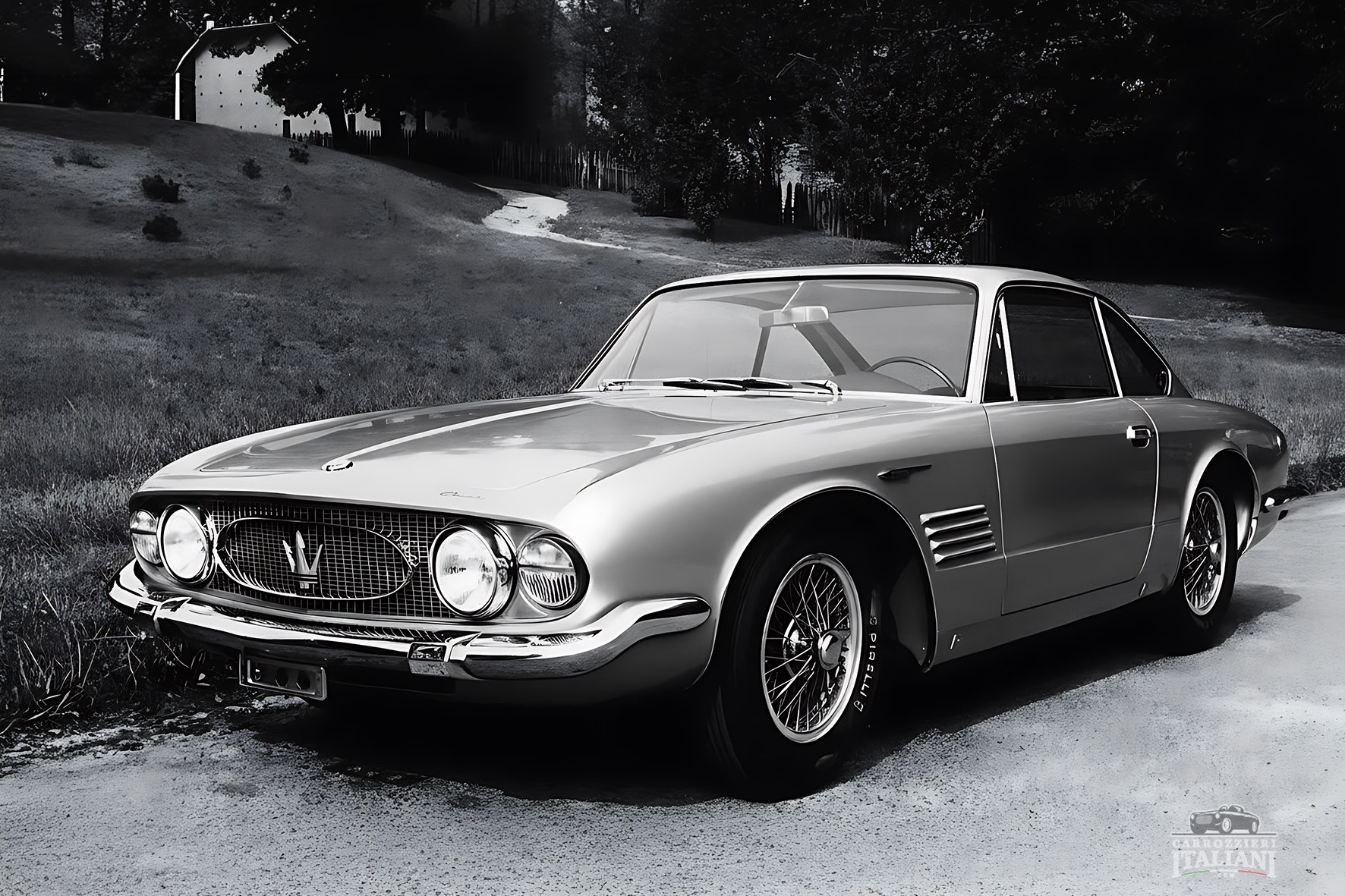
By the early 1960s, Ghia was one of Italy’s leading car design studios, known for pushing the stylistic envelope. So it’s only natural that Carrozzeria Ghia tried its hand at the 5000 GT, resulting in a singular, head-turning creation. The Ghia-bodied Maserati 5000 GT (chassis AM103.018) was completed in July 1961 for Italian industrialist Ferdinando Innocenti. If the name Innocenti rings a bell, yes, he was the founder of Lambretta scooters and a major player in Italian industry – clearly a man with the means to commission a very special car.
Ghia’s design, penned by Sergio Sartorelli, was nothing short of futuristic for its time. This one-off 5000 GT incorporated cutting-edge styling cues of the early ’60s – the kind of details that would show up on concept cars and later production cars. It had a bold presence with perhaps a bit more flamboyance than the more traditional Allemano or Touring designs. Unfortunately, detailed photos are relatively scarce, but period descriptions and later findings note features like sleek, angular lines and perhaps some daring elements (one could speculate fins or unique light treatments, given Ghia’s other work of that era). In fact, many styling ideas seen on this Maserati were later evident on other Ghia designs of the 1960s. In a way, the 5000 GT by Ghia was a trendsetter, a showcase of what Ghia could do when given a blank canvas and an audacious client.
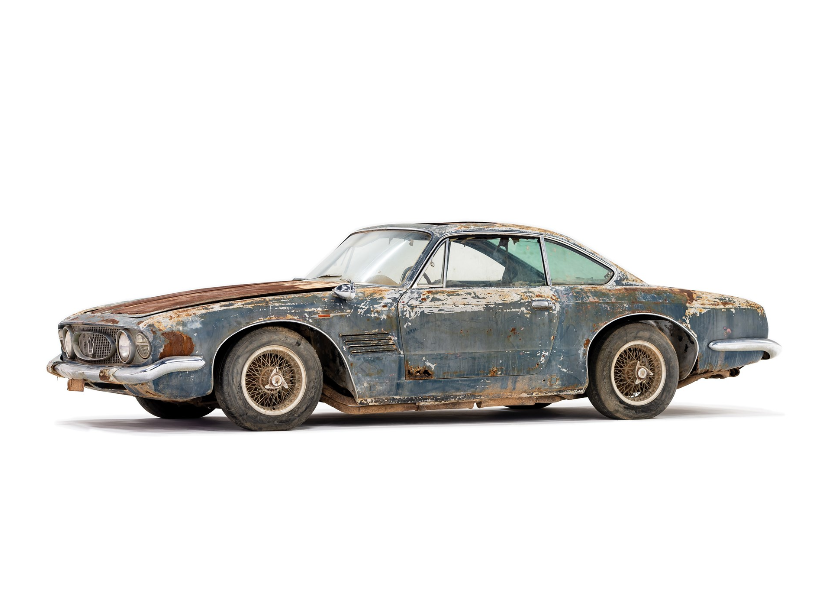
Ghia displayed Innocenti’s finished Maserati on their stand at the 1961 Turin Auto Show, finished in an elegant combination of silver over black (silver exterior, black interior). It must have been a stunner under the spotlights – a silver bullet representing the peak of Italian automotive tailor-made luxury. After the show, Signor Innocenti enjoyed the car for some time, but like many of these ultra-rare beauties, it eventually changed hands. The car spent part of its life in Italy and then somewhat mysteriously ended up in the Middle East, specifically in Saudi Arabia. For years, enthusiasts weren’t sure where this Ghia 5000 GT had gone – it was often referred to as the “lost” 5000 GT. That is, until it resurfaced in recent years. In 2019, this car was finally sold at an RM Sotheby’s auction for around $533,000. While that sum might seem low given the rarity, it likely reflects the car’s condition – by the time it was found and put on sale, it was in rough shape, awaiting a full restoration. But fret not: a car this special will surely get the royal restoration it deserves. Once brought back to its former glory, the Ghia-bodied 5000 GT will remain an important piece of Maserati history, representing a bold stylistic departure that still managed to be undeniably beautiful.
Bertone
One-off displayed at the 1961 Turin Auto Show
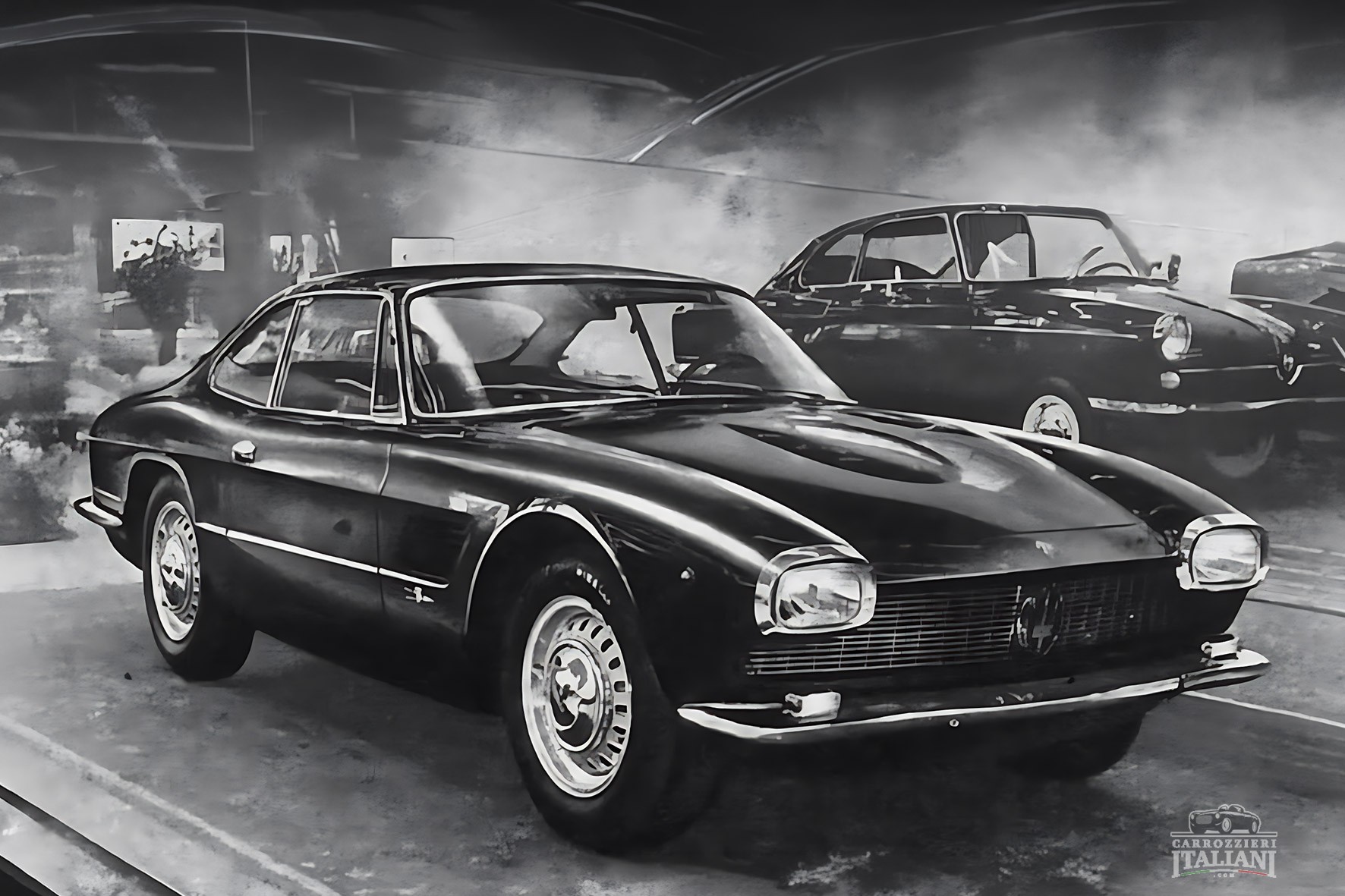
When you combine the Maserati 5000 GT with the creative genius of a young Giorgetto Giugiaro working at Bertone, you know you’re in for something extraordinary. Indeed, Bertone produced a one-off 5000 GT that many aficionados consider the most beautiful of them all. This special Maserati (often referred to by its Bertone job number or simply as the Bertone 5000 GT) debuted at the 1961 Turin Auto Show, alongside the Ghia and others.
Giugiaro, who would later become a legend in car design (think Ferrari 250 GT SWB, Lamborghini Miura, DeLorean, VW Golf… the list goes on), was in his early twenties when he styled the 5000 GT for Bertone. And yet, his work was incredibly mature. The Bertone-bodied 5000 GT (chassis likely AM103.004, though the numbering is a bit confusing as it may have been designated “104.004” in some records) had an exquisite form. It was a sleek 2+2 coupe with perfect proportions – long hood, fastback rear, and minimal ornamentation. Giugiaro gave it a low, aggressive nose, quad headlights subtly integrated, and a distinctive sharp character line down the side. The overall effect was a car that looked both athletic and elegant, very much a precursor to some of the great GT designs of the mid-60s.
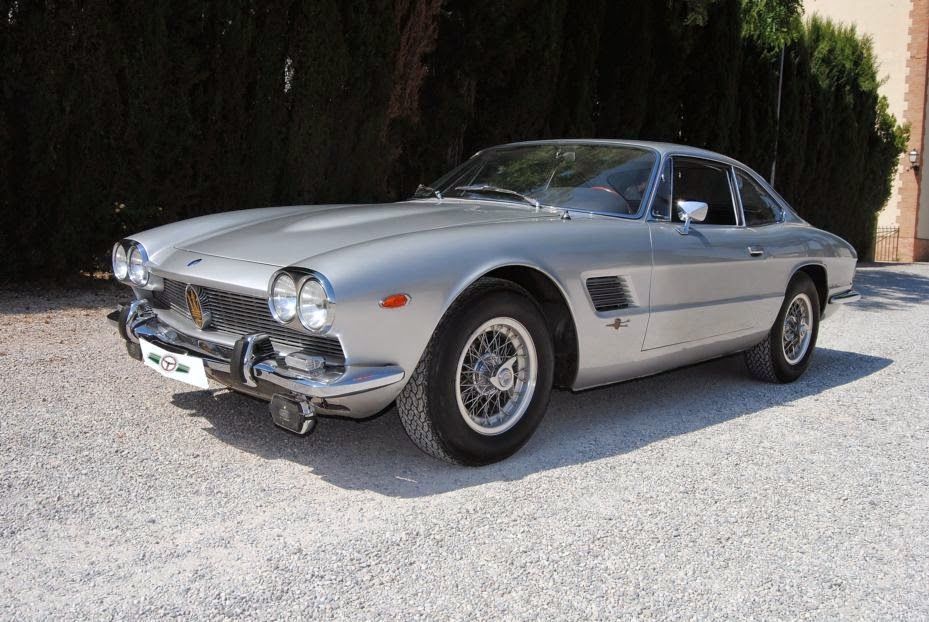
What truly sets the Bertone 5000 GT apart is how well it balanced exotic flair with refined simplicity. There were no exaggerated fins or unnecessary chrome gimmicks; it was a lesson in “less is more,” letting the pure shape do the talking. Many who have seen the car in person or in photos comment that it has a presence that even the other 5000 GTs can’t match. Not to mention, with Giugiaro’s later fame, this Maserati has the cachet of being an early Giugiaro creation.
Today, the Bertone-bodied 5000 GT is a prized jewel in a private collection in the Netherlands. It doesn’t appear in public often, but when it does, it leaves onlookers swooning. It’s the kind of car that wins “best of show” awards for its design. If we were to award a “Miss Congeniality” or rather “Miss Elegance” among the coachbuilt Maserati 5000 GTs, the Bertone/Giugiaro car might just take the crown. It is the embodiment of 1960s Italian automotive artistry – a one-off dream car that somehow escaped the museum and actually hit the road.
Frua
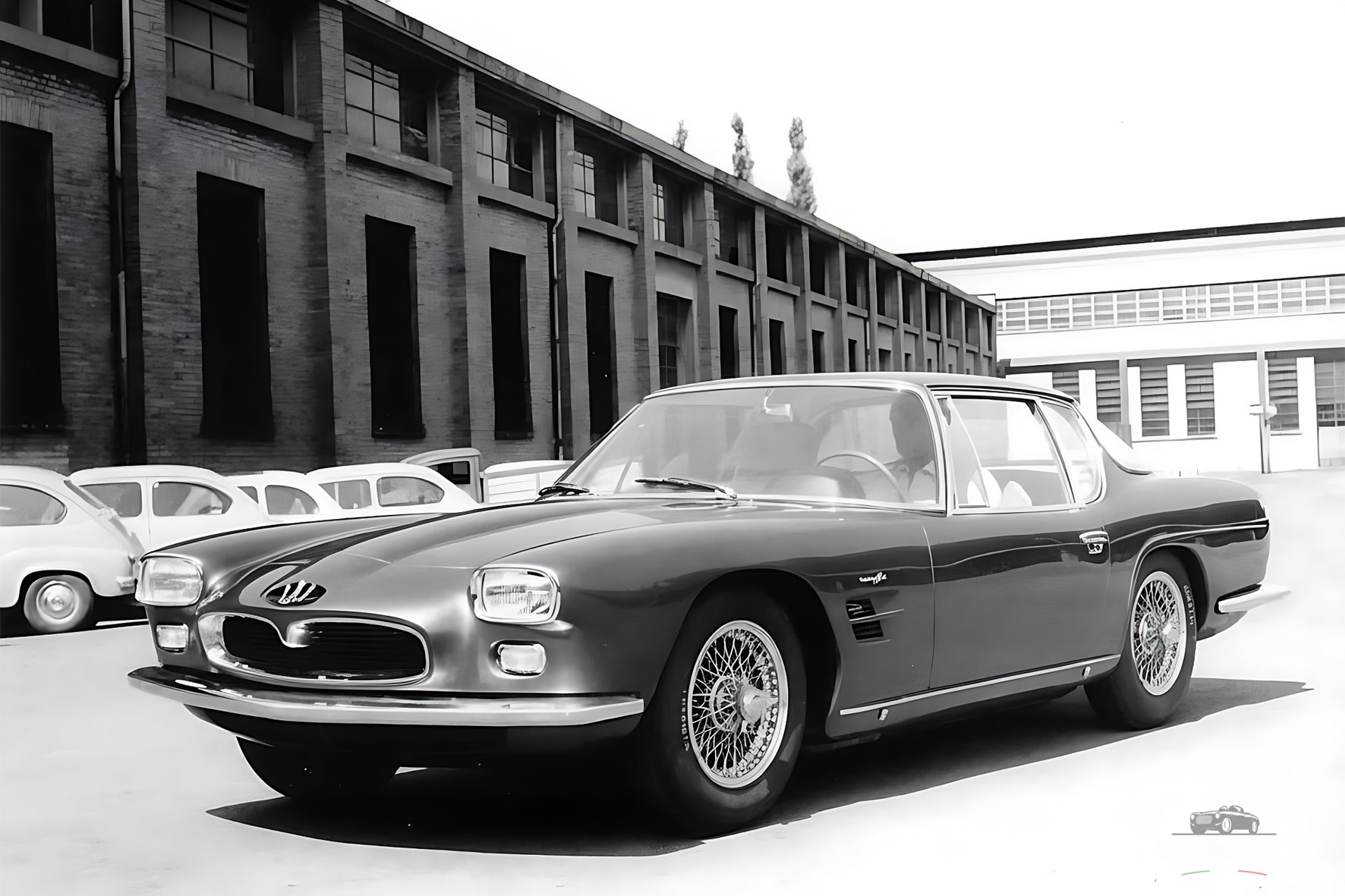
Last but certainly not least in the Maserati 5000 GT saga, we have the contributions of Carrozzeria Frua. Pietro Frua was a talented designer and coachbuilder, and he ended up producing three 5000 GTs. Frua’s cars tend to be very distinctive, and his 5000 GT creations were no exception – each had a slightly different story and style, often built for some very blue-blooded clients.
One of Frua’s 5000 GTs was built for Prince Karim Aga Khan (the Aga Khan IV), a man who practically had a fleet of bespoke Italian sports cars at his beck and call. Chassis AM103.060 was ordered through Maserati’s French importer in 1962 for the Aga Khan and delivered in a stunning form. Frua’s design for the Aga Khan was a bit more curvaceous and ornate compared to the taut lines of the Allemano cars. The front end featured a bold grille and usually covered headlamps, and the interior was ultra-luxurious as you’d expect for a prince. This car went on to have its moment of fame by winning 2nd in class at the Pebble Beach Concours d’Elegance in later years – a testament to its beauty and the quality of its restoration. If you impress the judges at Pebble, you know you’ve got a special car on your hands.
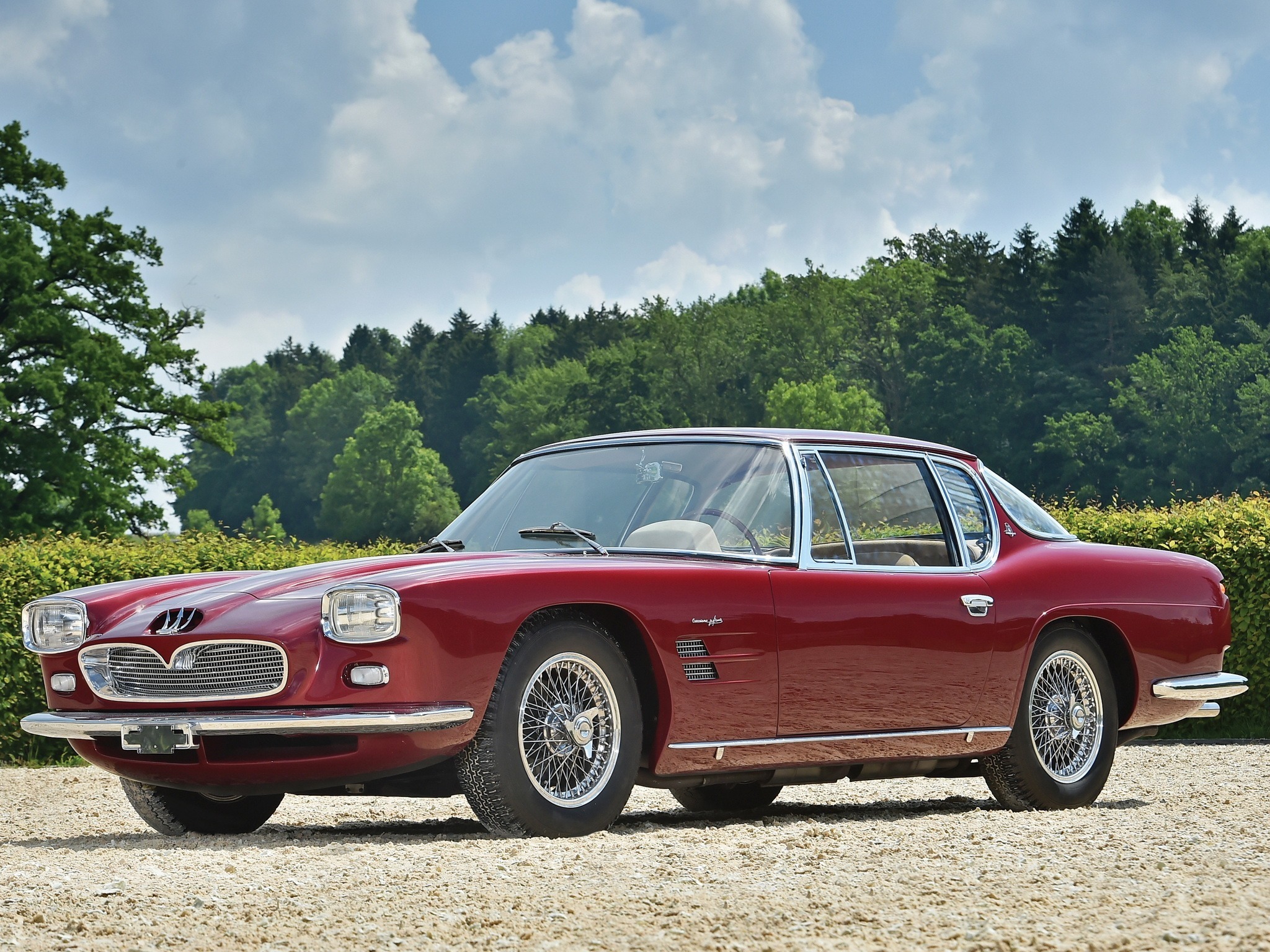
Another Frua-bodied 5000 GT started out somewhat clandestinely. Chassis AM103.048 was delivered to Prince Majid bin Saud of the Saudi royal family. Prince Majid apparently intended the car as a gift for his father, the former King Saud, who was living in exile in Egypt. Now, importing a car into certain countries can come with heavy taxes or red tape, but being a prince has its perks. The story goes that this Maserati was brought into Egypt as “diplomatic baggage” to avoid customs procedures. Yes, you read that right – diplomatic baggage, as if it were a suitcase or a diplomatic pouch. It’s not every day you hear of a whole grand touring car being effectively smuggled in under diplomatic immunity! One imagines customs officers just shrugging as a shiny Maserati on a pallet rolls through with a diplomatic tag. The things you can get away with when you’re royalty… In any case, that car was even assigned a new chassis number (AM103.064, renumbered from 103.048) by Maserati at one point, likely related to its rebuild or some paperwork sleight-of-hand. It survives as a unique piece with a truly James Bond-like importation story.
The third Frua-bodied car was chassis AM103.100, which interestingly was one of the last 5000 GTs built, delivered in 1966. By this time, the 5000 GT era was winding down. Chassis 103.100 went to Auto König, a luxury car dealer in Munich, and was then sold to a German architect named Engelhardt. Rumor has it that this architect may have been working for the Aga Khan, or at least had connections – which suggests even this car might have some indirect royal link. The Frua design for 103.100 featured a prominent hood scoop and a more squared-off rear end, showing a bit of the mid-60s design trends creeping in (it almost presaged some of Frua’s later work with Monteverdi and others).
🔗 Read more: Pietro Frua: Mastering the Art of Automotive Elegance
Frua’s trio of 5000 GTs highlight how each coachbuilder brought their own flavor to the model. Frua’s cars were perhaps the most lavishly detailed, with lots of chrome accents and personal touches for their princely owners. They’re also among the last 5000 GTs built, meaning by the mid-1960s, while the world’s attention was shifting to the new era of supercars (like the Lamborghini Miura in 1966), Maserati was quietly still crafting old-school opulence for those who wanted it. The 5000 GT truly was a car that straddled two epochs: born from 1950s racing glory, dressed by bespoke coachbuilders in the early 60s, and bowing out just as the late 60s revolution in car design and performance began. Frua’s contributions were a fitting send-off – extravagant and one-of-a-kind.
Touring Superleggera Sciàdipersia
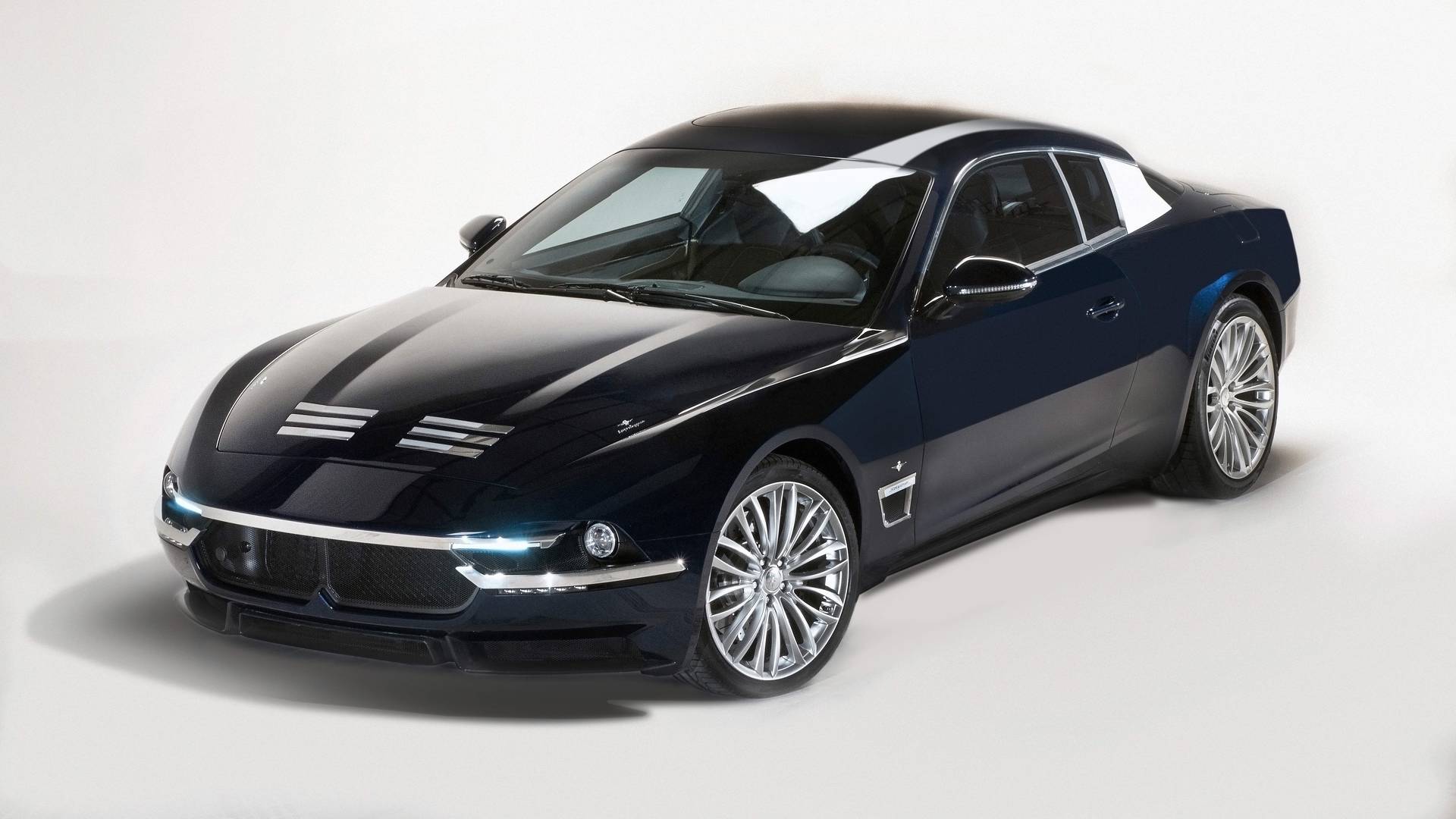
The Maserati 5000 GT’s legacy as the ultimate bespoke Maserati has endured in enthusiast circles, and its legend was compelling enough to inspire a 21st-century tribute. In 2018 at the Geneva Motor Show, none other than Touring Superleggera – the same firm that bodied the first Shah of Persia car – unveiled a modern limited-production coupe called the Touring Sciàdipersia (which literally means “Shah of Persia”). This coachbuilt special, based on the contemporary Maserati GranTurismo platform, was a nod to the original 5000 GT commissioned by the Shah 60 years prior. With only a handful to be made, the Sciàdipersia brought the concept of an ultra-exclusive, coachbuilt Maserati into the new millennium. It features a uniquely sleek body by Touring and a beautifully finished interior, proving that the allure of a custom grand tourer for the ultra-rich never really went away.
In many ways, the Maserati 5000 GT was a car ahead of its time. It pioneered the idea of the “supercar” before the term was even coined – a road car with a detuned race engine, produced in scant numbers for an elite clientele, each styled to the customer’s wishes. It was the Bugatti Veyron or Pagani Huayra of its era, if you will. Through the 5000 GT, Maserati demonstrated not just engineering prowess but also a willingness to bend to creativity and personalization in a way few manufacturers ever have. From Touring to Allemano, Pininfarina to Ghia, each coachbuilder’s version was like a different dialect of the same language – all speaking of speed, luxury, and exclusivity, but each with its own accent. Today, the surviving 5000 GTs are highly coveted crown jewels of collections, seldom seen but universally admired. And if you ever find yourself lucky enough to see one in person, remember the story behind it: born from a racing tragedy, saved by a king’s whim, and crafted by Italy’s finest artisans – the Maserati 5000 GT truly is the stuff of automotive legend.

ABOUT THE AUTHOR
Andreas Scheidl
Italian classic car enthusiast with German roots. Renowned as a respected figure in the classic car community, he serves as a jury member at various international concours d'elegance, including the Classic Gala Schwetzingen and Mantova. As a content creator, Andreas passionately shares his profound knowledge and appreciation for vintage automobiles. His heart beats for cars designed by Giovanni Michelotti, showcasing his discerning taste and dedication to preserving the timeless elegance of automotive history.
More stories by Andreas Scheidl ↗CONTINUE READING
Posts You Might Like
A Central Driving Position, a Rear-Mounted V8. Was This Really a Lancia?
In 1948, visitors to the Turin Motor Show could see an unusual Lancia on the stand of Carrozzeria Ghia. It was a large two-door coupé with a two-litre V8 mounted behind the…
Read story
Fioravanti F100: The Ferrari He Was Allowed to Imagine
Enzo Ferrari’s centenary, Leonardo Fioravanti’s independent studio and a supercar that explored air brakes, steel wheels and a new way of driving—without ever wearing the Cavallino.
Read story
Michelotti Shellette: When the Fiat 850 Became a Yacht
The yacht designer, the Turin stylist and the tiny coachbuilt car that crossed between the quay, the royal holiday house and the auction room. Some automobiles were conceived for the open road,…
Read story
Maserati A6 1500: A New Road for the Trident
When the doors of the Geneva Motor Show opened in March 1947, Maserati was a name that required little introduction to anyone who followed motor racing. What it did not yet possess…
Read story
THE CONVERSATION
Comments 0
Share a memory, a period photograph or a documented detail about this story.