
The Alfa Romeo 412 Spider Vignale
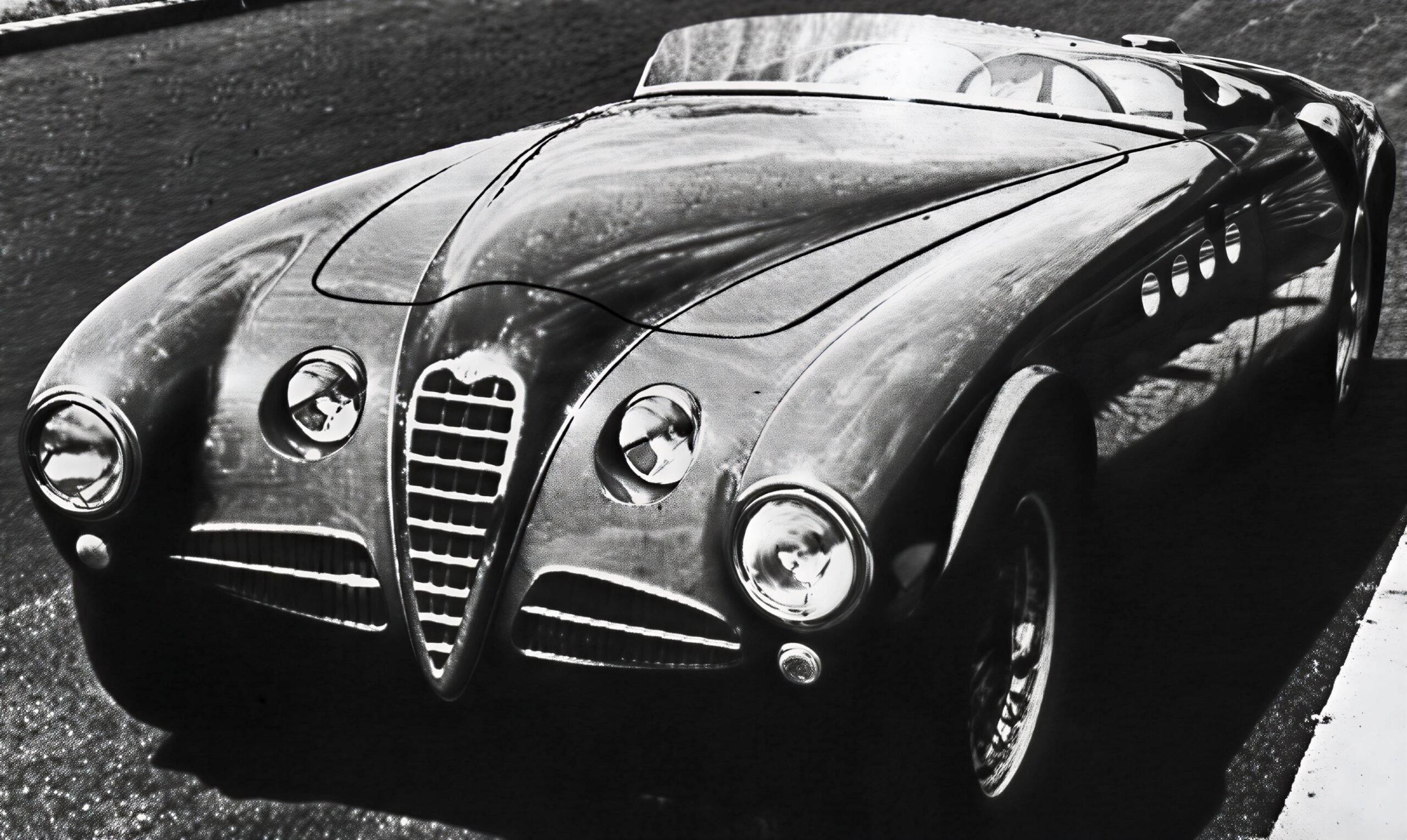
What do you get when you cross a pre-war Grand Prix car with a post-war Italian coachbuilder’s flair? You get one of the most fascinating one-offs in automotive history: the Alfa Romeo 412 Spider Vignale. This unique sports car started life in 1939 as a factory racing machine, survived World War II hidden away, then was reborn in 1951 with a stylish new body by Carrozzeria Vignale. The result was a quirky yet charismatic hybrid – part vintage race car, part modern (for the 1950s) roadster – that dazzled on both the track and the street. In this chronologically driven narrative, aimed at classic car enthusiasts, we’ll dive into the full story of the 412 Spider Vignale, from its Grand Prix origins to its mysterious fate, with a light-hearted yet professional tone.
Origins of a Grand Prix Survivor
The story begins in the late 1930s at Alfa Romeo’s famous Portello works in Milan. Back then, Alfa’s racing department was experimenting with a mighty 4.5-liter V12 engine for Grand Prix racing. This engine, designed by the legendary Vittorio Jano, was essentially two 6-cylinder blocks merged into a single V12 and force-fed by twin superchargers, capable of pumping out around 430 horsepower. Codenamed “12C-37,” this V12-powered racer showed promise – but fate had other plans. Formula rules changed for 1938, capping GP engines at 3.0 liters, which suddenly rendered Alfa’s big 4.5L twelve-cylinder obsolete. Not ones to waste a good engine, the Alfa engineers decided to repurpose it for sports car racing. They mated the brawny V12 to the proven chassis of the Alfa 8C 2900A, a sports car platform, creating a new Frankenstein’s monster of speed: the Alfa Romeo 412.
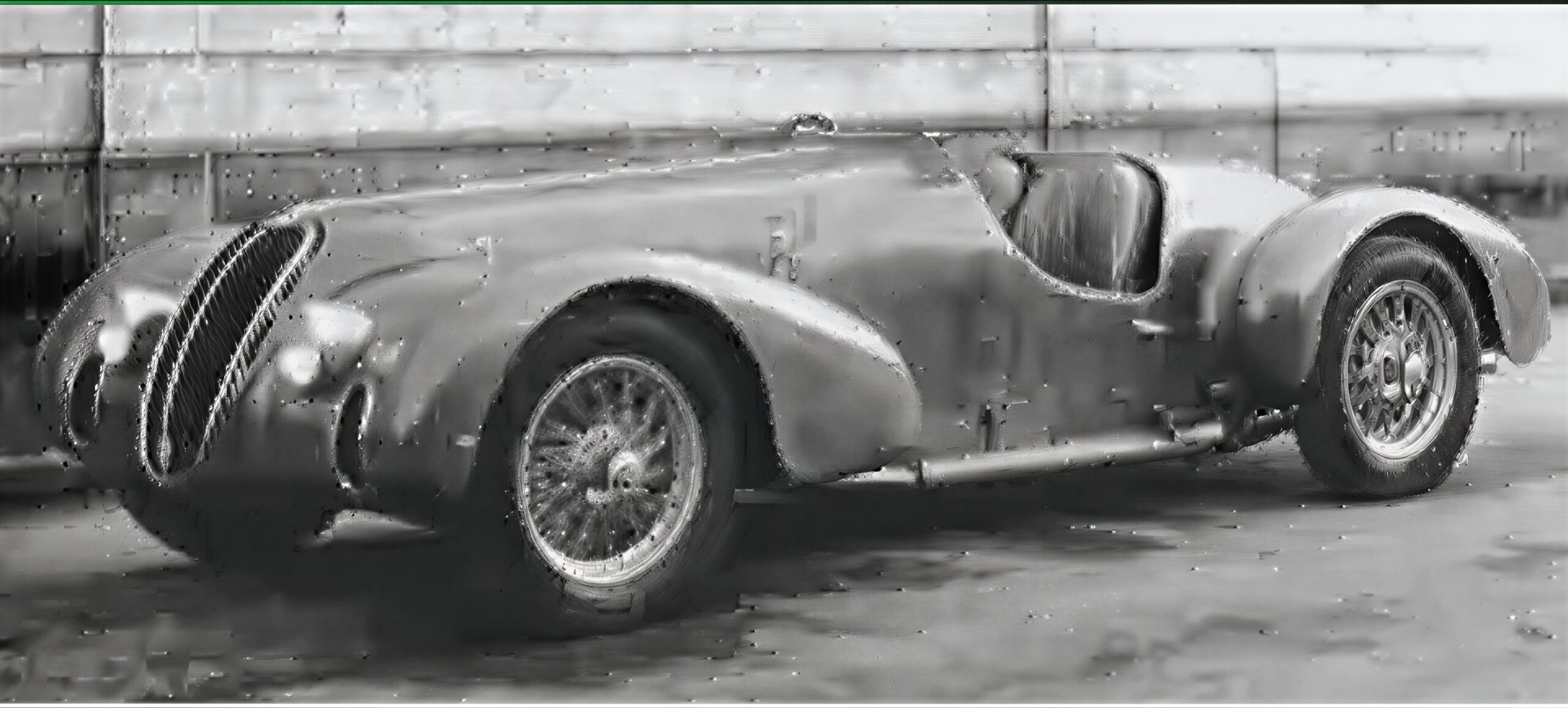
According to Alfa Romeo historian Luigi Fusi, four examples of the 412 were built (or at least four chassis were laid down), though not all were fully assembled initially. One chassis in particular, numbered 412151, would become the star of our story. It was clothed in a sleek open-top body by Carrozzeria Touring of Milan – the same coachbuilder famed for gorgeous Alfa 8C models. This 1939-spec Alfa 412 Spider (often also called “8C 2900B 412” in some records) was essentially a Grand Prix car in sports car clothing. And it didn’t take long to prove its mettle.
A Promising Debut in 1939
The freshly built Alfa 412 made its racing debut on May 21, 1939, at the Grand Prix of Antwerp in Belgium. In a stunning show of force, Alfa Romeo’s team drivers Giuseppe “Nino” Farina and Raymond Sommer drove two 412s to first and second place, respectively, sweeping the podium in that sports car race. Not a bad start for a car born from “spare parts”! A few weeks later, the 412 scored another podium with Clemente Biondetti taking second place at the Grand Prix of Luxembourg in 1939. These early successes demonstrated that, even if the 412 was a bit of an oddball (a sports car with a Grand Prix heart), it had serious speed and durability. With a booming V12 under the hood, the 412 could outrun many contemporary rivals – it was Alfa’s secret weapon for sports car events on the eve of World War II.
🔗 Read more: The story of Touring Superleggera
However, the outbreak of the war in 1939 put an abrupt halt to motor racing in Europe. Like many other racing machines, the Alfa 412s were tucked away for safekeeping. Alfa Romeo hid its precious cars and parts in various warehouses around northern Italy to prevent them from being seized or destroyed. Elvira Ruocco, an Alfa Romeo archivist (years later head of Alfa’s Historical Archive), recalled seeing an inventory list from late 1945 that showed two complete 412 cars survived the war, along with a spare chassis and engine, all stored in different locations. In other words, the 412 might have been down, but it was not out.
Post-War Revival: Willy Daetwyler’s Mountain Climber
After WWII, racing slowly resumed, and those dormant Alfa 412s were given a second chance at life. One of the four examples – very likely the same chassis 412151 – was sold to Willy Daetwyler, a wealthy Swiss gentleman driver known for his hillclimb exploits and love of powerful cars. Daetwyler acquired the aging Alfa in the late 1940s, probably drawn by its massive V12 engine. Despite the car’s pre-war roots, he put it to very good use in the burgeoning post-war racing scene.
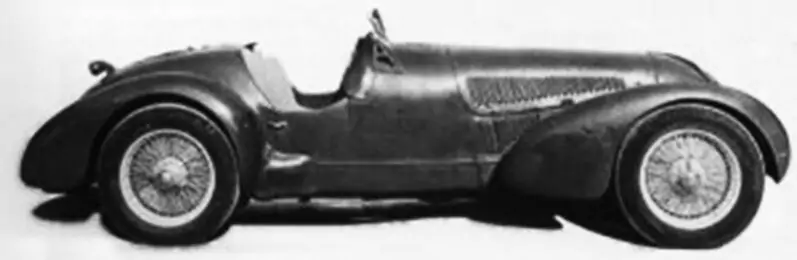
Daetwyler entered the 412 in various Swiss hillclimbs and circuit races, where its raw power gave it a competitive edge. Imagine the sight (and sound) of this thundering 4.5-liter V12 roadster charging up Alpine roads, echoing off the mountainsides! In 1948, Daetwyler and the 412 achieved a major victory at the Grand Prix des Nations in Geneva (Bremgarten circuit), a race for sports cars. This win at Bremgarten, a fast and notoriously dangerous forest track, cemented the 412’s reputation as a fearsome racing machine. It was quite an achievement for a car design that was essentially a decade old at that point. The old Alfa proved it still had plenty of life – and speed – left in it.
Felice Bonetto and the 1950 Season
By 1950, the 412 had made its way into the hands of Felice Bonetto, an Italian racing driver who was a rising star in sports car racing (and would later compete in Formula 1 as well). How Bonetto acquired the car isn’t crystal clear – he may have bought it from Daetwyler or through Alfa Romeo connections – but what matters is that he continued to race this singular Alfa with gusto. In April 1950, Bonetto (together with co-driver Luigi Casnaghi) entered the 412 in Italy’s most famous road race, the Mille Miglia. Picture the scene: hundreds of cars bombing through public roads from Brescia to Rome and back, and among them this one-of-a-kind Alfa 412 with its enormous V12 bellowing like an angry god of thunder. Bonetto managed to finish the 1950 Mille Miglia (quite an accomplishment in itself, given many cars didn’t survive the 1000+ mile ordeal), though he didn’t contend for the win that year. He also took the 412 to Sicily for the Targa Florio in 1950, another grueling open-road race, further proving the car’s endurance.
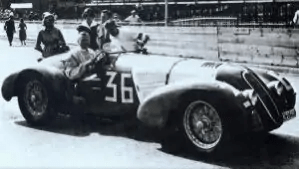
The year 1950 was something of a last hurrah for the 412 in its original configuration. By then, newer sports cars from Ferrari, Jaguar, and others were emerging, and the Alfa’s pre-war Touring body was starting to look and feel outdated. But Bonetto clearly had a soft spot for the old beast and wasn’t done with it yet. He would soon give the 412 a new lease on life – and a new look.
Reborn by Vignale: A New Body for 1951
Early in 1951, Bonetto entered the Alfa 412 in the Giro di Sicilia (the around-the-island race in Sicily, related to the Targa Florio). During that event, disaster struck: Bonetto had an off-road excursion that wrecked the car’s bodywork. The damage was bad enough that the Touring-built body could not be easily repaired. But the underlying chassis and the precious V12 mechanicals were still intact – so rather than scrapping the car, Bonetto decided to have it rebuilt. For this task, he turned to the famed coachbuilder Carrozzeria Vignale in Turin.
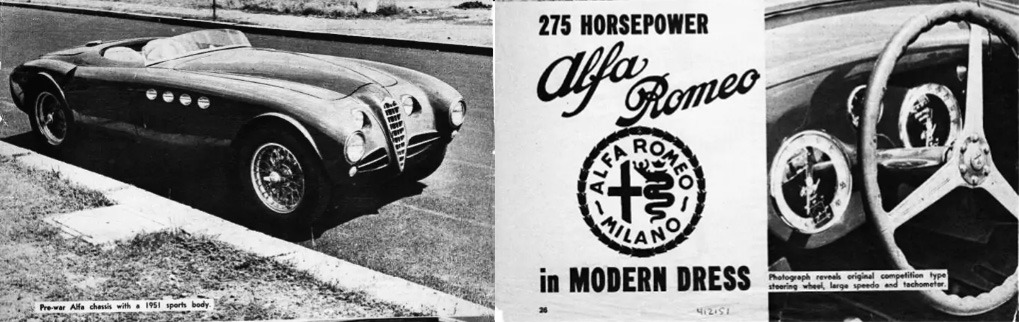
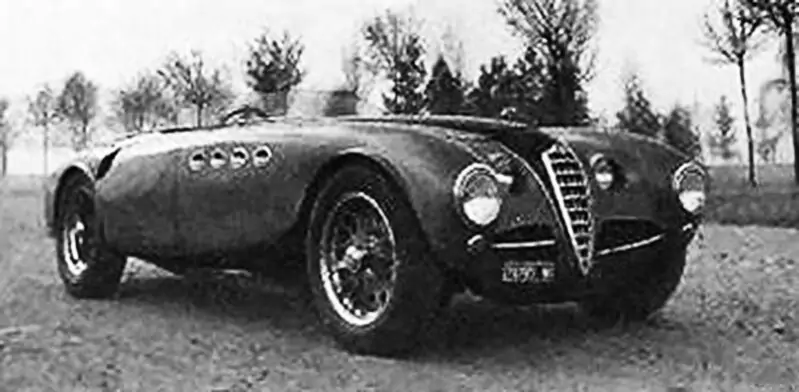
Vignale, with designer Giovanni Michelotti likely involved in the styling, created an all-new open-top spider body for the Alfa 412 in the spring of 1951. This “second dress,” as the Italians might say, was much more modern and aerodynamic, reflecting Alfa Romeo’s contemporary design language of the early 1950s. Gone were the flowing pre-war fenders and heavy grille; in their place came a sleeker, more integrated shape. The new body was very light and minimalist – perfect for a competition car. It featured a long, elegant hood (needed to cover that giant V12), a small two-seat cockpit, and a short rear deck.
Notably, the front end of the rebodied 412 sported Alfa Romeo’s hallmark “Scudetto” grille – the shield-shaped grille – in full form. This grille shape had made its debut in production Alfas only a year earlier on the 1950 Alfa 1900 sedan, and Vignale incorporated it into the 412’s nose, giving the car a true Alfa family resemblance. On the Vignale 412, the scudetto was tall and narrow, similar to the grille on the Villa d’Este special edition of the 6C 2500 from a few years prior. The grille sat atop a prominent central hood bulge that ran from the nose, up the middle of the hood, all the way to the base of the windshield – a design flourish also seen on the Villa d’Este and other Touring-bodied Alfas, though Vignale executed it in a smoother, race-oriented fashion without extra chrome trim. This combination of styling cues made the 412 Spider Vignale a fascinating blend of old and new: one could see hints of the elegant pre-war Alfa 6C line and hints of the new 1900, all wrapped around a fire-breathing pre-war V12. It was as if the car had one foot in 1939 and one foot in 1951.
🔗 Read more: The story of Carrozzeria Vignale
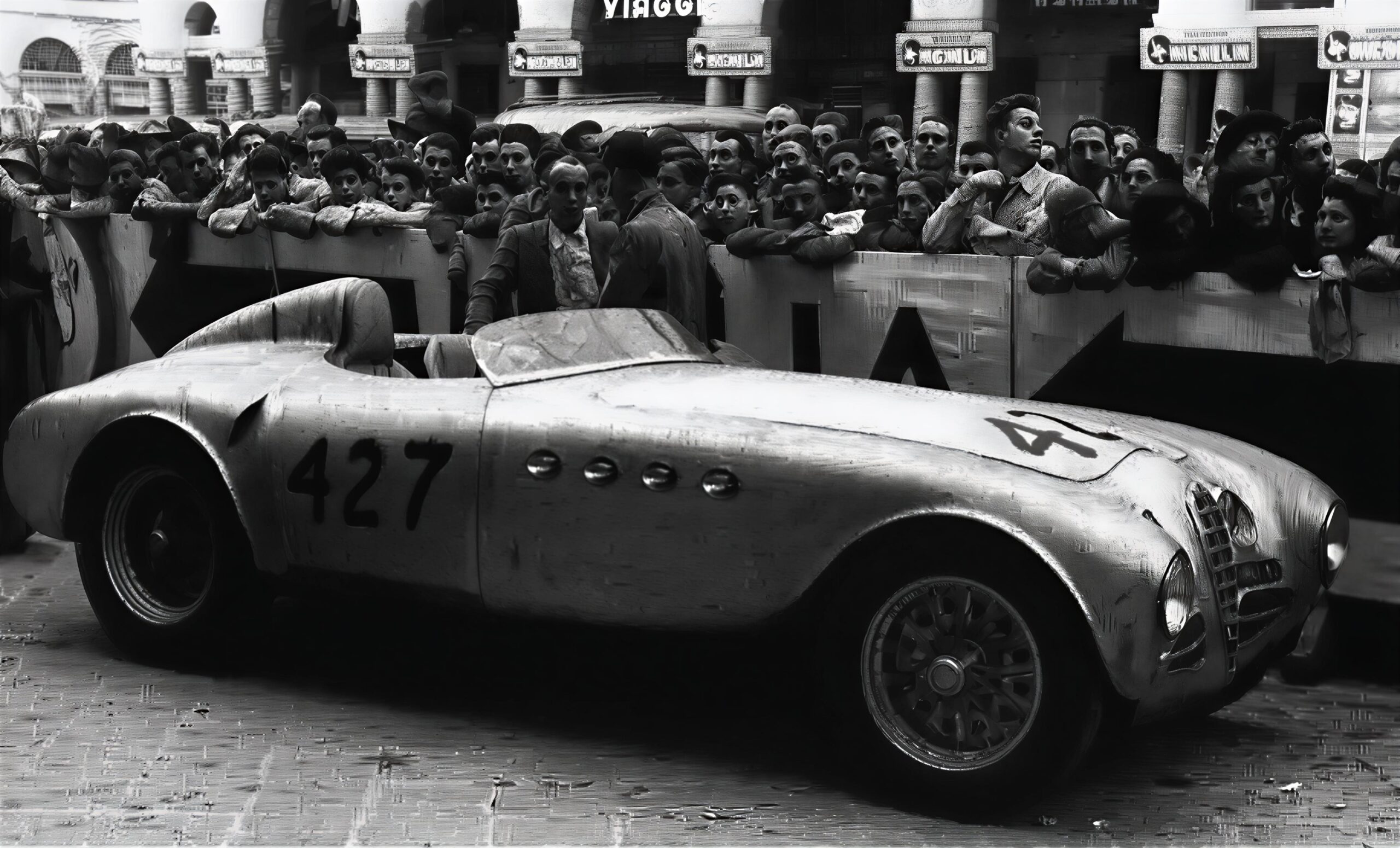
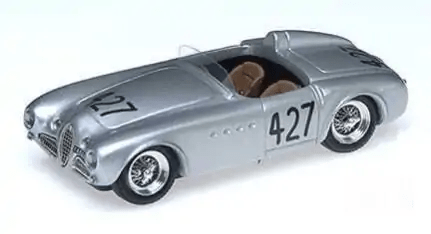
Bonetto’s “new” Alfa debuted at the 1951 Mille Miglia at the end of April, now officially entered as the Alfa Romeo 412 Spider Vignale. The car appeared at scrutineering unpainted – its aluminum body in bare metal, likely to save every ounce of weight – with the race number 427 hand-painted on its sides. Despite being up against a field of much newer machinery, Bonetto drove a stellar race. He and the 412 Vignale finished 6th overall in the 1951 Mille Miglia (and 3rd in its class), a remarkable result considering the car’s convoluted lineage and one-off nature. In fact, Bonetto beat many drivers in contemporary Ferraris and Maseratis, proving that the old Alfa still had what it takes. The Mille Miglia success was the high point for the 412 Spider Vignale’s racing career, but it wasn’t quite the end yet.
Racing Highlights and Final Competition Glory
Following the Mille Miglia, the Alfa received a proper paint job (accounts suggest it was painted red, possibly with a subtle two-tone scheme where the central hood bulge was a slightly darker shade or even a different color like dark red or blue). Vignale also made a few tweaks to the body based on Mille Miglia experience: notably, an aerodynamic headrest fairing that had been fitted behind the driver’s seat for the race was removed afterwards. That fairing had been intended to smooth airflow behind Bonetto’s helmet (since the car’s tiny windshield only came up to shoulder height), but perhaps it proved unnecessary or cumbersome. Photographs from later in 1951 show the car without the headrest bump, and with the addition of some delicate chrome strips highlighting the edges of the central hood bulge. These details gave the 412 Spider Vignale an even more refined appearance – as if it were evolving from pure racer into a road-going show car.
In the summer of 1951, Bonetto took the freshly painted 412 Spider Vignale to Portugal for a race in Oporto. There, it achieved what would be its final competition triumph. The Alfa won the race in Oporto, reportedly outpacing a fleet of Ferrari 166s and Maseratis that were its competitors. One can only imagine the astonishment of onlookers as this singular Alfa, with its thundering pre-war V12, showed a clean pair of heels to the latest sports cars from Maranello and Modena. It was like a veteran warrior coming out of retirement and beating the young guns one last time. This victory proved that Vignale’s sleek coachwork hadn’t just made the car prettier – it was still every bit a performance machine.
After Oporto 1951, however, the 412 Spider Vignale’s racing days were essentially over. The car was now a few years old and Bonetto had access to newer racers for major events. Rather than continue flogging the one-off Alfa in competition, it appears Bonetto semi-retired the car and converted it for road use. The Alfa was registered for street driving (no small feat for a former Grand Prix monster!) and received a few comfort touches to make it suitable for la strada. In doing so, Bonetto ensured that the 412 Spider Vignale would not languish in a garage – he could now enjoy it on Sunday drives or demonstrations, and boy, did he!
From Track to Street: The Showstopper of San Siro
In 1952, an American journalist named Burton Harrison wrote an article for Road & Track magazine about an unforgettable ride he took in Milan with Felice Bonetto in the Alfa 412 Spider Vignale. By this time, the car was tuned more for the road, but it still had the heart of a racer. Harrison’s account is the stuff of car enthusiast dreams: Bonetto, grinning with pride, takes him for a spin around the streets near the San Siro stadium. The big V12 roars through the city avenues, startling pedestrians and drawing a growing crowd of wide-eyed spectators at every stoplight. With each blip of the throttle, the 412’s exhaust note ricochets off the buildings – a metallic symphony unlike anything the locals in their Fiat 500s had ever heard. Harrison described how an “increasingly large crowd” gathered to watch Bonetto demonstrate the car’s prowess, everyone enthralled by the sights and sounds of this exotic machine in their midst. It must have felt like seeing a Le Mans racer unleashed on your neighborhood streets.
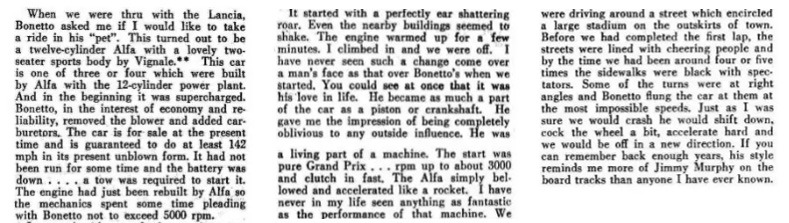
At the time, the Alfa was maintained at the Scuderia Volpini workshop in Milan. Bonetto had recently had the engine overhauled by Alfa Romeo’s own mechanics, who – perhaps remembering the finicky nature of 1930s racing engines – sternly advised him not to exceed 5,000 rpm on the rebuilt V12. (Whether Bonetto kept to that limit during his spirited drives is anyone’s guess; a race driver known for his daring likely pushed the car as he saw fit, at least when no engineers were watching!) Despite the unwieldy powertrain and the car’s racing pedigree, Bonetto evidently handled the 412 with masterful skill, as Harrison’s white-knuckled but exhilarated prose attested.
Ironically, even as Bonetto was enjoying his road-legal racer, he was already looking to part ways with it. Perhaps he needed funds for other racing endeavors, or maybe he acknowledged that the 412’s era had passed. In January 1953, a classified advertisement appeared in Road & Track offering the Alfa Romeo 412 Spider (Vignale bodied, 12-cylinder) for sale. It seems Bonetto had put his beloved one-off up on the market. He truly adored the car – calling it his “true love” – but being a practical man, he knew someone else might cherish it (and maintain it) going forward.
Changing Hands and a Fateful Farewell
Before any sale could be finalized, tragedy struck. Felice Bonetto died in a crash on November 21, 1953, while racing a Lancia sports car during the Carrera Panamericana in Mexico. He was at the peak of his career, and his death shook the motorsport world. Bonetto’s passing also left the fate of the 412 Spider Vignale somewhat in limbo. The car did not have a chance to go to a new owner under Bonetto’s arrangement, but shortly thereafter it found its way into the hands of an Italian dealer or intermediary named Cortese. By late 1954, Cortese was actively shopping the car around to potential buyers.
Before any sale could be finalized, tragedy struck. Felice Bonetto died in a crash on November 21, 1953, while racing a Lancia sports car during the Carrera Panamericana in Mexico. He was at the peak of his career, and his death shook the motorsport world. Bonetto’s passing also left the fate of the 412 Spider Vignale somewhat in limbo. The car did not have a chance to go to a new owner under Bonetto’s arrangement, but shortly thereafter it found its way into the hands of an Italian dealer or intermediary named Cortese. By late 1954, Cortese was actively shopping the car around to potential buyers.
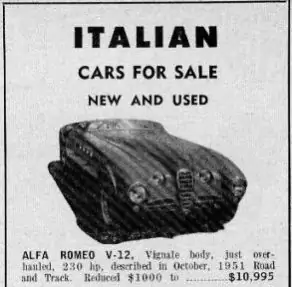
On December 4, 1954, Cortese wrote to American collector Henry Wessells (a well-known aficionado of Alfa Romeos in the USA) and offered to sell the 412 for the princely sum of 20 million Italian lire – a very hefty price at the time. Wessells was interested but wanted more information. Correspondence continued into early 1955. However, by January 12, 1955, Cortese sent another letter to Wessells with disappointing news: the Alfa was no longer available. According to Cortese, the car had been sold to someone in Spain (possibly through the Italian branch of a Spanish car dealer). It’s a bit of a mystery who this Spanish buyer was; documentation is sparse. Some speculate the car was bought by a Spanish noble or an entrepreneur who admired it, but to this day we don’t have concrete evidence of the new owner’s identity. The 412 Spider Vignale essentially vanished from public view for a few years, its trail going cold after the mid-1950s.
A Glimpse in 1958: Enter Enrico Nardi
The next time the Alfa 412 Spider Vignale surfaced, it was quite by chance. In 1958, American sports car enthusiast Marc Wallach was visiting the workshop of Enrico Nardi in Turin. Nardi was a former racing driver and talented engineer known for his own small sports car projects (and for the famous Nardi steering wheels).
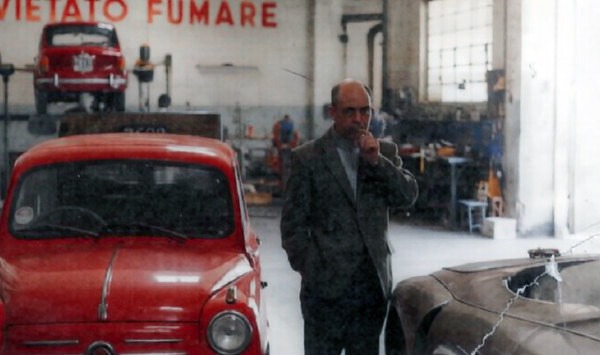
In Nardi’s shop, Wallach was astonished to find “a wonderful Alfa Romeo V12 Grand Prix (12C) car with a 2-seat body by Vignale” tucked away in a corner. It was unmistakably the long-lost Bonetto Alfa 412. Wallach even snapped a photograph, later published in a letter to Forza magazine decades on. In the grainy black-and-white photo, one can see Wallach standing next to the car – and the distinctive rear air intake and fender lines of the Vignale body are clearly visible. How did the 412 end up there? It appears that Enrico Nardi himself had acquired the car at some point in the 1950s, perhaps via the Spanish connection or another sale, and had brought it back to Italy. Nardi was likely interested in the chassis and mechanicals for his own experiments.
The End of the 412: A Car in Pieces
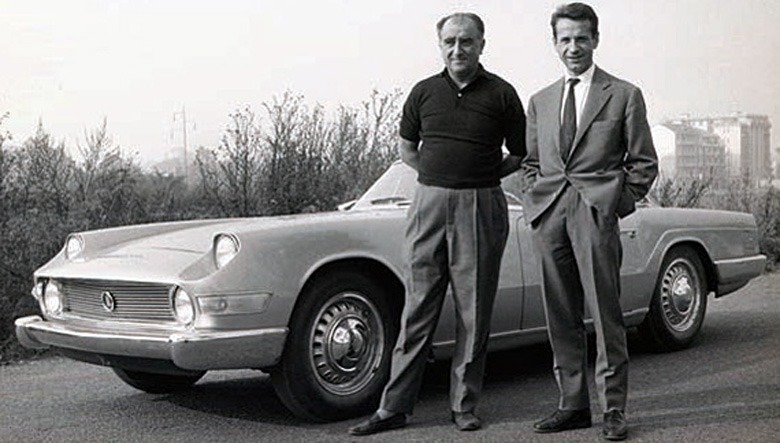
Around 1960, the tale of the Alfa 412 Spider Vignale took a final, poignant turn. Enrico Nardi decided to dismantle the car – separating its chassis, engine, and body – and repurpose what he could. This might sound like automotive sacrilege today, but back then, the 412 wasn’t yet seen as a priceless historic gem; it was an old racing oddity, and Nardi had a project in mind. He took the stout ladder-frame chassis (or at least a large portion of it) and used it as the basis for a new one-off car called the Nardi Silver Ray. Designed by Giovanni Michelotti and built in 1960, the Silver Ray was a sleek two-seater coupe with an American V8 engine under the hood. In fact, it’s often cited as the first Italian sports car to use an American V8 drivetrain. To create this Italo-American hybrid, Nardi needed a suitable chassis – and the Alfa 412’s frame, with its competition pedigree, fit the bill. The 412’s chassis was shortened and modified for the Silver Ray project (which is why some sources say the Silver Ray used “part of” the Alfa 412 chassis). The resulting car, sometimes also called the Plymouth Silver Ray, was a curious blend of Italian style and Detroit muscle. It may have been a brilliant engineering improvisation, but it also meant the end of the road for the 412 Spider as an intact automobile.
What about the other pieces? The glorious 4.5L V12 engine from the 412 sat idle in Nardi’s workshop for many years after 1960, a silent reminder of the car’s racing days. Fast forward to 1998 – long after Nardi’s passing – when his daughter decided to auction off some of the remaining treasures from the workshop. The Alfa 412’s engine was put on the block and caught the attention of yet another American Alfa enthusiast: collector Lawrence “Larry” Auriana. Auriana purchased the V12 and had it meticulously restored by Epifani Restorations in California. Now, think about that: an engine that had first roared to life in 1937, powered Grand Prix cars, then sports cars, and had slept through the latter half of the 20th century, was brought back to running condition in the 21st century. By all accounts, Auriana still owns this piece of Alfa Romeo history – it’s the last tangible, functional piece of the 412 Spider Vignale.
🔗 Read more: The Mystery of the Nardi Silver Ray finally solved?
And the Vignale body? Here the trail goes completely cold. No records or accounts definitively tell us what became of the aluminum roadster body that Vignale crafted. The logical assumption is that it was scrapped once Nardi stripped the chassis, especially if it suffered any deterioration. Unlike today – where even a battered body of a famous car might be saved and restored – in 1960 an old, custom body without a chassis would have had little value. If it was scrapped, that beautiful design has been lost forever. It’s a sad thought for Alfa aficionados, as that unique blend of Villa d’Este and 1900 styling was truly a one-of-a-kind creation.
Legacy and Lasting Fascination
Although the Alfa Romeo 412 Spider Vignale no longer exists as a complete car, its legacy lives on in various ways. For one, it has inspired at least one replica attempt. An enthusiast in recent years built a reproduction of the 412 Spider Vignale (painted red) on another vintage Alfa chassis. While this replica isn’t 100% accurate to the original – certain proportions and details are a bit off – it speaks to the allure that the 412 holds over collectors even today. The fact that someone would invest time and money to recreate this obscure racer shows how legendary it has become among classic car circles.
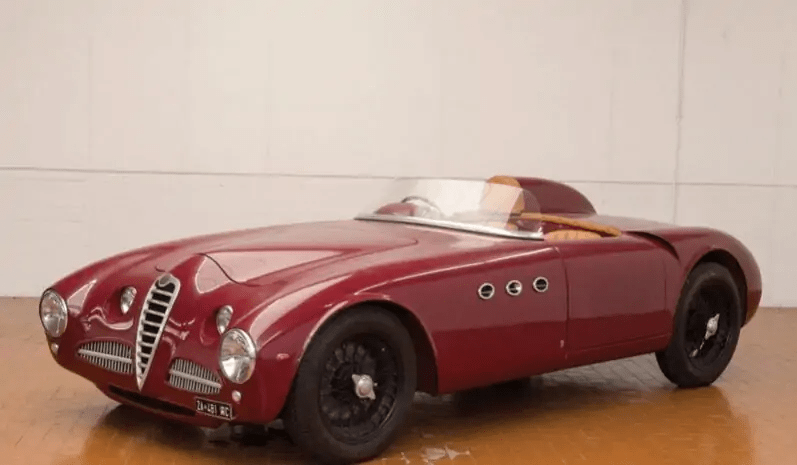
The 412 Spider Vignale also remains popular in scale. Numerous scale models have been produced by model car companies, depicting the car either in its bare-metal Mille Miglia 1951 guise with #427, or in various imaginative colors. These models are cherished by Alfa Romeo collectors who likely will never see the real car, but can at least admire a miniature on their shelf. Do an internet search and you’ll find photos of these models – further proof that the 412’s mix of beauty and brawn captivates people over 70 years later.
In the grand tapestry of Alfa Romeo’s history, the 412 Spider Vignale might seem like a footnote – a one-off oddity from a transitional era. Yet, in many ways it embodies the very spirit that makes Alfa Romeo special. It’s a story of passion and ingenuity: talented engineers and racers taking what they have and pushing it to the limit, creative artisans reimagining an old warhorse with a new face, and enthusiasts refusing to let its memory fade. The car had more lives than a cat – a true survivor that kept adapting to the times. And though its final fate was to be parted out, it indirectly gave birth to another unique car (the Nardi Silver Ray) and its heart still beats in the hands of a collector.
Many years have passed since the powerful metallic song of that Alfa V12 echoed through the streets of Milan and the Italian countryside. Since then, Alfa Romeo went on to build new legends in the 1950s and beyond – from the 1900, to the Giulietta, to the exotic 33 Stradale – sometimes soaring to great heights, sometimes enduring dark times. The tale of the 412 Spider Vignale slots right into this rich history, a bridge between pre-war and post-war eras. It reminds us that behind every great car there are passionate people: drivers like Bonetto who raced with a cuore sportivo (sports heart), designers like Vignale and Michelotti who sculpted rolling art, and aficionados who keep these memories alive. The Alfa 412 Spider Vignale may be gone, but its story continues to enchant automotive enthusiasts – a charming chapter in the never-ending book of Alfa Romeo.

ABOUT THE AUTHOR
Andreas Scheidl
Italian classic car enthusiast with German roots. Renowned as a respected figure in the classic car community, he serves as a jury member at various international concours d'elegance, including the Classic Gala Schwetzingen and Mantova. As a content creator, Andreas passionately shares his profound knowledge and appreciation for vintage automobiles. His heart beats for cars designed by Giovanni Michelotti, showcasing his discerning taste and dedication to preserving the timeless elegance of automotive history.
More stories by Andreas Scheidl ↗CONTINUE READING
Posts You Might Like
A Central Driving Position, a Rear-Mounted V8. Was This Really a Lancia?
In 1948, visitors to the Turin Motor Show could see an unusual Lancia on the stand of Carrozzeria Ghia. It was a large two-door coupé with a two-litre V8 mounted behind the…
Read story
Fioravanti F100: The Ferrari He Was Allowed to Imagine
Enzo Ferrari’s centenary, Leonardo Fioravanti’s independent studio and a supercar that explored air brakes, steel wheels and a new way of driving—without ever wearing the Cavallino.
Read story
Michelotti Shellette: When the Fiat 850 Became a Yacht
The yacht designer, the Turin stylist and the tiny coachbuilt car that crossed between the quay, the royal holiday house and the auction room. Some automobiles were conceived for the open road,…
Read story
Maserati A6 1500: A New Road for the Trident
When the doors of the Geneva Motor Show opened in March 1947, Maserati was a name that required little introduction to anyone who followed motor racing. What it did not yet possess…
Read story
THE CONVERSATION
Comments 0
Share a memory, a period photograph or a documented detail about this story.