
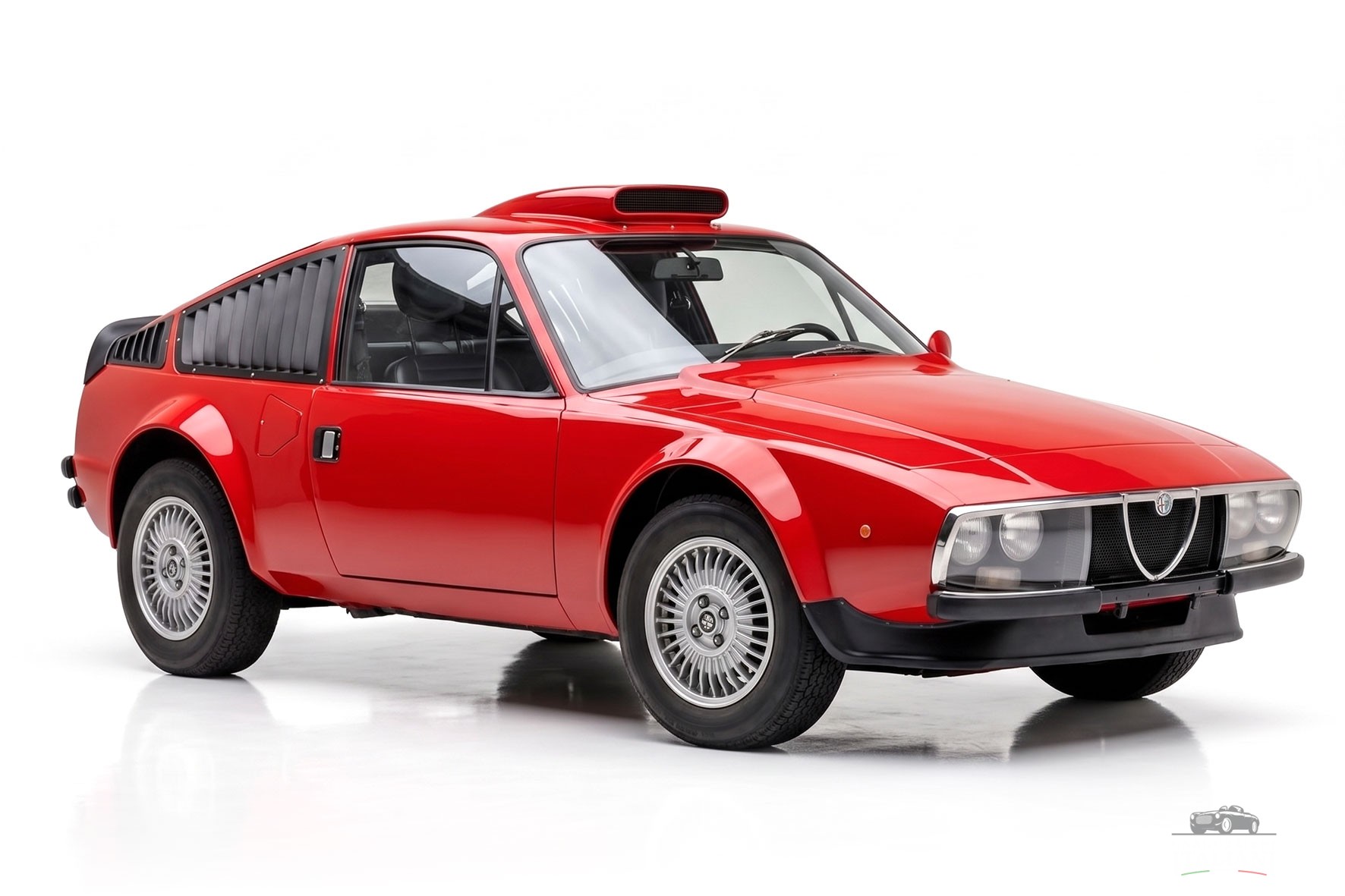
THE VEHICLE AT A GLANCE
Model dossier
- Manufacturer
- Alfa Romeo
- Base model
- Giulia 2.0 GT Zagato
- Coachbuilt version
- Periscopio prototype
- Coachbuilder
- Zagato
- Production period
- 1972
- Body style
- Coupé
- Engine
- Inline-4
- Type
- Prototype
- Production
- 1
THE PEOPLE BEHIND THE CAR
Coachbuilding, design & conversions

PRICE & SALES RECORD
Vehicle value
- Original price
- Not documented
- Latest recorded sale
- Not documented
01 / THE STORY
History & context
The Alfa Romeo Junior Zagato Periscopica is a prototype sports car developed in 1972 as a collaboration between Alfa Romeo and the Italian coachbuilder Zagato. Conceived as an experimental vehicle, the Periscopica explored advanced engineering solutions and distinctive design elements within the context of a compact sports coupe. The vehicle’s design was overseen by Ercole Spada, then head of Zagato’s design department. The body was constructed from aluminum, exhibiting the characteristic aerodynamic styling typical of Zagato’s work during this period. Notable features include the “double bubble” roof design and the absence of chrome trim, reflecting the minimalist and functional design ethos. Unlike the production Alfa Romeo Junior Zagato, which was based on the Giulia platform, the Periscopica utilized a semi-monocoque tubular chassis. The front section of the chassis was rigid, while the rear employed a truss structure to accommodate a centrally mounted transverse engine. The powertrain consisted of a 1,962 cc inline four-cylinder engine derived from the Alfa Romeo 2000 GT Veloce. This engine produced approximately 132 horsepower and was installed in a mid-engine, transverse layout. The combination of lightweight aluminum bodywork and the compact chassis resulted in an approximate vehicle weight of 900 kilograms, contributing to enhanced handling characteristics and performance. The vehicle was capable of reaching a top speed near 220 kilometers per hour. The Periscopica remained at the prototype stage and was not developed into a production model. The project was discontinued without further iterations or commercial release. The sole known example is preserved in the Alfa Romeo Historical Museum in Arese, where it serves as a representation of experimental design and engineering efforts undertaken by Alfa Romeo and Zagato during the early 1970s. No specific chassis number or ownership history for the Alfa Romeo Junior Zagato Periscopica is publicly documented. The vehicle’s significance lies primarily in its role as a technical and stylistic exercise, illustrating mid-20th-century trends in Italian automotive innovation and coachbuilding.
IN THE ARCHIVE
Coachbuilders & design studios
02 / TECHNICAL IDENTITY
Specifications & construction
Production & construction
- Production
- 1
- Production type
- Prototype
Engine & performance
- Engine configuration
- Inline-4
Dimensions & accommodation
- Length
- 3,900 mm
Design & manufacture
- Manufacturer · Documented
- Alfa Romeo
- Coachbuilder / Body Builder · Documented
- Zagato
- Designer · Documented
- Ercole Spada
- Design features · Legacy attribution
- Coda Tronca
06 / EVENTS & AWARDS
Events & awards
No events or documented awards are currently recorded for this vehicle.
04 / INDIVIDUAL HISTORY
Chassis & provenance
Ownership & provenance
- Ownership & history · Legacy attribution
- Museum Car
07 / THE VEHICLE IN DETAIL
Photo gallery 3 photographs
08 / FROM THE ARCHIVE
Archive
References held in the vehicle dossier. Their inclusion does not establish that every historical claim has been independently verified.
| Reference | Source type |
|---|---|
| Zagato Atelier — 1972 Alfa Romeo Giulia 2.0 GT Zagato Periscopio www.zagato.it | Coachbuilder official archive |
| Carrozzieri Italiani — Alfa Romeo Junior Zagato Periscopica www.carrozzieri-italiani.com | Coachbuilding specialist archive |
THE CONVERSATION
Comments 0
Share a memory, a period photograph or a documented detail about this car.