
Ferrari F90: The Secret Pininfarina Ferrari That Brunei Kept Hidden
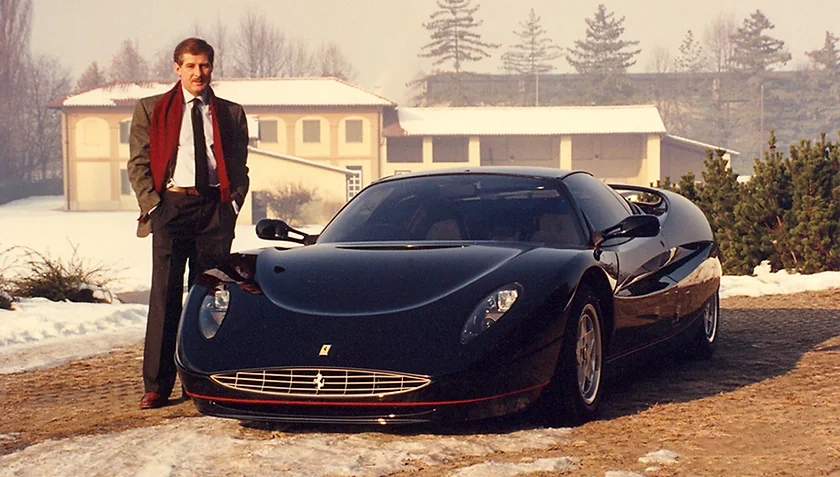
For years, the Ferrari F90 existed at the edge of Ferrari history: a name, a handful of photographs and a story so improbable that it seemed almost designed to become legend. Six radically rebodied Testarossas had been created by Pininfarina for the Brunei royal family, developed away from Ferrari’s normal programme and then effectively disappeared into the private garages of one of the world’s most extraordinary car collections.
Carrozzieri-Italiani first reconstructed the story in 2024. Since then, more first-hand testimony from Enrico Fumia and a broader body of material around the Brunei programmes have made it possible to separate several facts that had become entangled in repeated online accounts. The result is more interesting than the familiar story of a “secret Ferrari”. The F90 shows Pininfarina operating as designer, engineer, prototype department and micro-series manufacturer, and it reveals how different the Brunei commissions could be even when they shared the same client and the same Ferrari mechanical base.
The central figure is Enrico Fumia. An aeronautical engineer as well as a designer, Fumia had joined Pininfarina in 1976 after completing his degree work around the company’s wind tunnel. By the 1980s he had become responsible for projects that ranged from the Audi Quartz to the Alfa Romeo 164. The F90 belongs to this same period, but it was unlike almost anything else he had done: a private programme whose existence had to remain concealed even while the cars were being developed on public roads.
Not simply a rejected Mythos
One of the most repeated explanations of the F90 says that it began as Fumia’s rejected proposal for the 1989 Tokyo Motor Show competition that ultimately produced Pietro Camardella’s Ferrari Mythos. That connection has appeared in Carrozzieri-Italiani’s earlier article and in later descriptions of both cars, but it needs to be handled more carefully than a simple cause-and-effect narrative.
The Mythos and the F90 certainly belong to the same extraordinarily fertile Pininfarina environment and both exploit Ferrari Testarossa mechanical architecture. The Mythos, however, was an official public concept: a dramatic open barchetta designed by Pietro Camardella and unveiled at Tokyo in 1989. The F90 was a private Brunei commission conceived as a usable, repeatable series of six road cars. Their functions, development paths and visibility were fundamentally different.Led by the visionary minds at Pininfarina, the designer team set out to push the boundaries of automotive aesthetics and performance. Each designer poured their creativity and expertise into crafting their interpretation of the Ferrari Testarossa supercar concept. Among them, also Enrico Fumia.
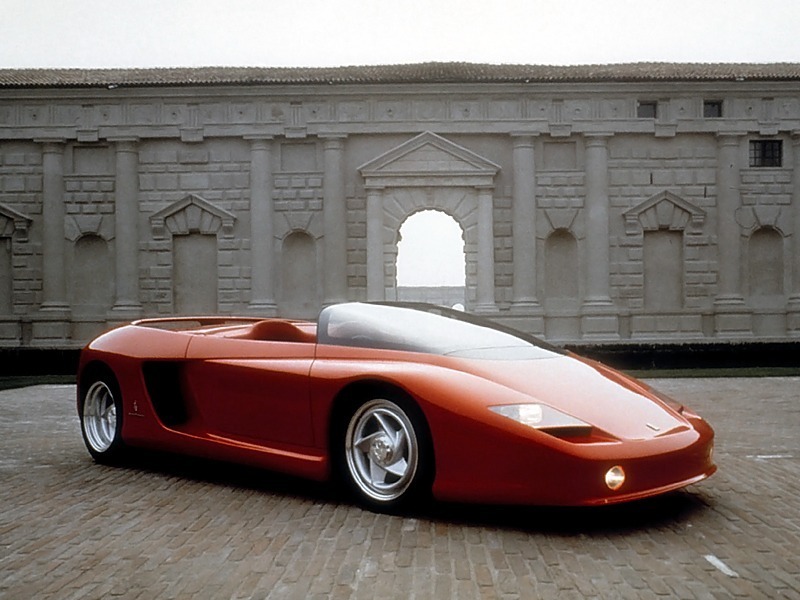
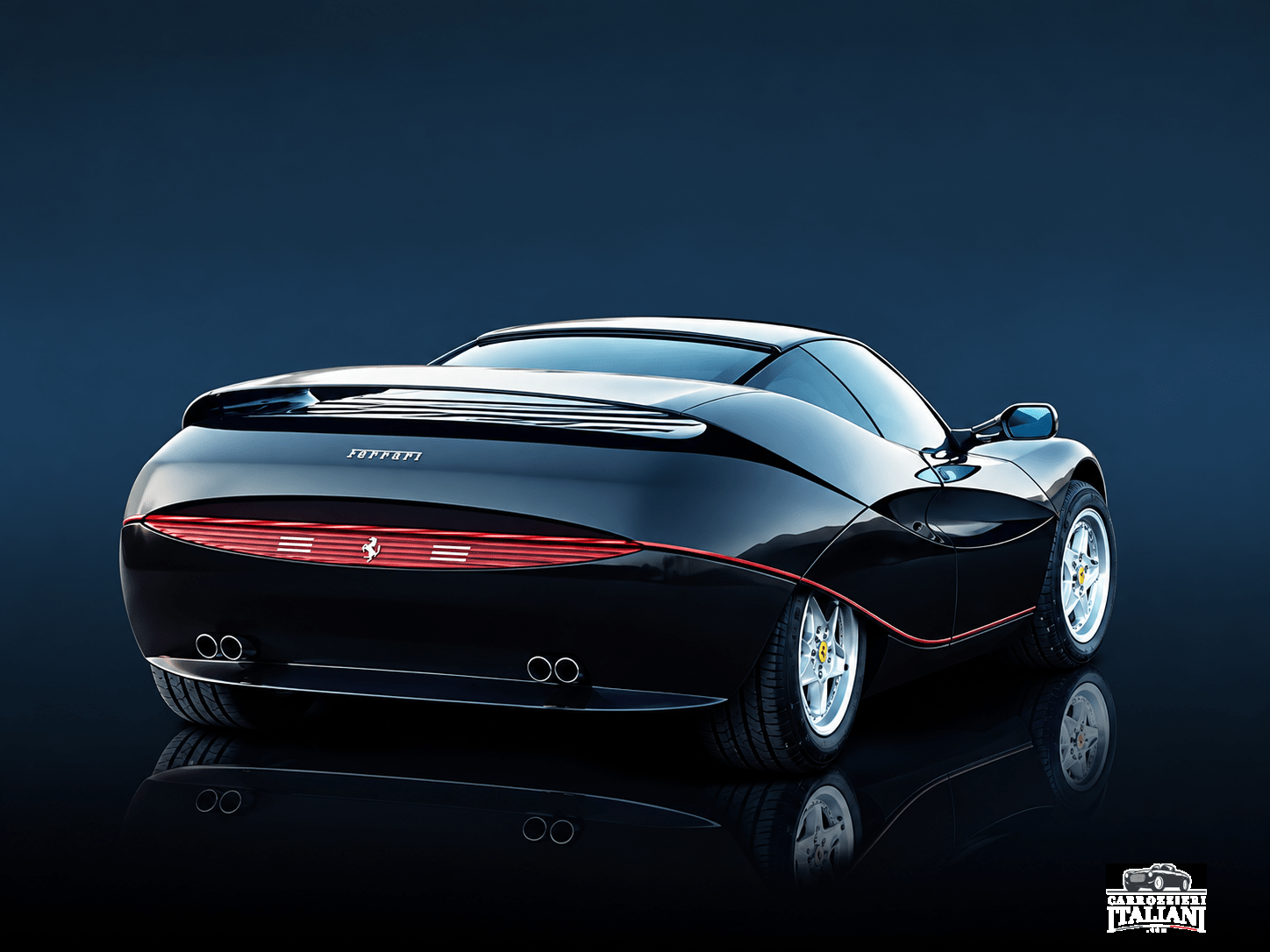
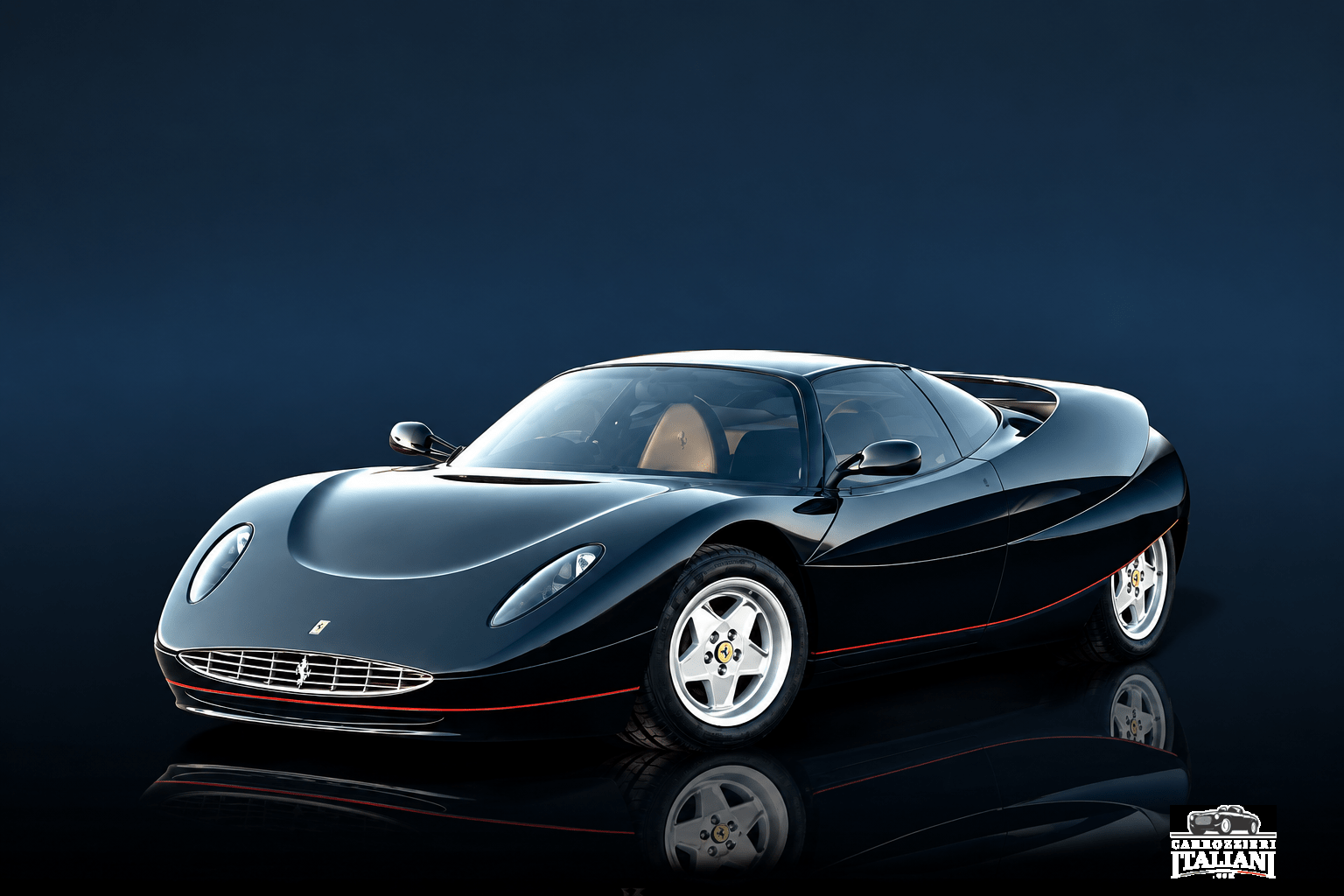
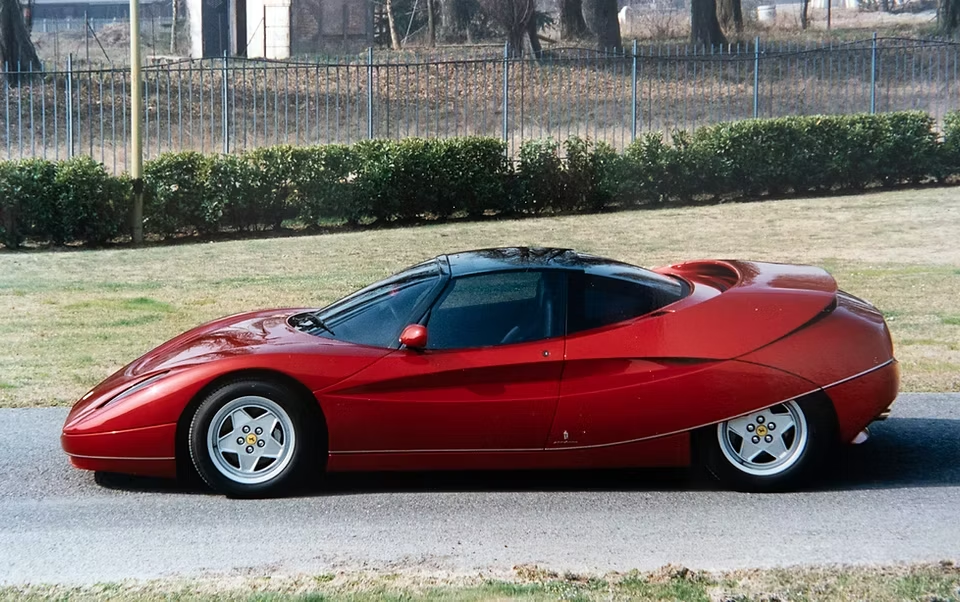
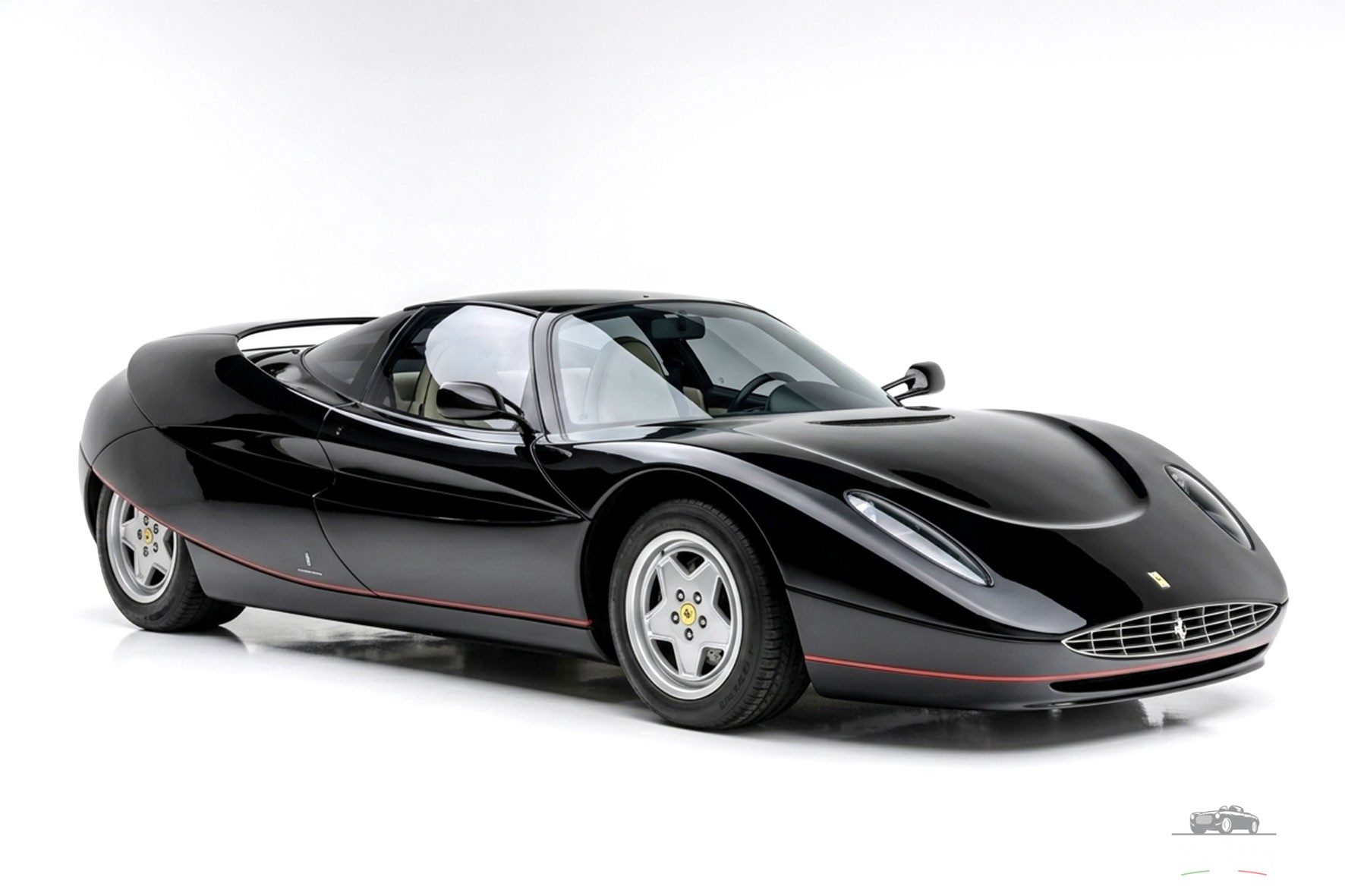
Fumia described the name F90 as “Ferrari for the ’90s”, an indication that the project was intended as a forward-looking interpretation of Ferrari rather than a cosmetic conversion of the Testarossa. The visual language supports that reading. Where the production Testarossa was defined by its strong horizontal side strakes and rear-mounted visual mass, the F90 used cleaner body sides and a repeated elliptical theme. Fumia referred to a “four-side look” or quadrifrontal idea: graphic elements were intended to give front, rear and sides a coherent identity.
The safer historical position is therefore not to claim that the F90 was merely the losing Mythos proposal recycled for Brunei. There was a design relationship and a shared Testarossa context, but the F90 developed into its own engineering and production programme. Until primary Pininfarina drawings establish the exact sequence between the internal proposals, the distinction should remain visible.
A Testarossa underneath, almost nothing like one outside
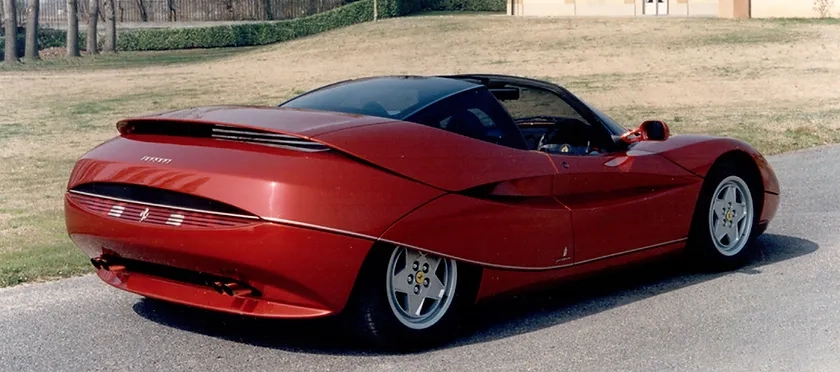
Mechanically, the F90 began with the Ferrari Testarossa. Its 4.9-litre flat-twelve, five-speed manual transmission and fundamental chassis architecture provided a proven high-performance foundation. Visually, however, Pininfarina deliberately removed most of what made a Testarossa instantly recognisable.
The most important packaging change concerned cooling. The production Testarossa carried radiators in the sides, a decision that had helped generate the enormous rear quarters and the famous lateral strakes. On the F90, the cooling arrangement was moved forward. That gave Fumia freedom to redraw the flanks without the Testarossa’s signature intake treatment and allowed the new body to become more continuous and elliptical.
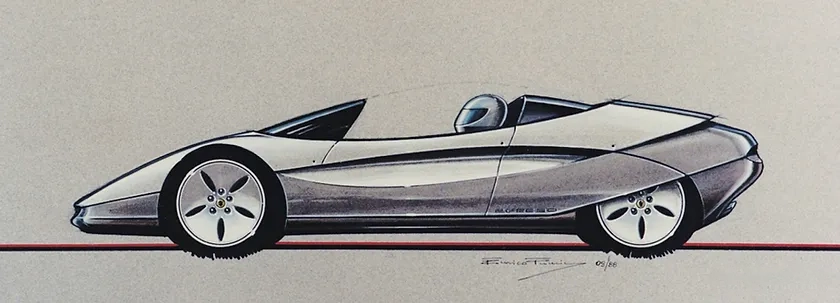
Only selected donor elements remained visibly recognisable. Period and later accounts repeatedly identify the wheels and mirrors among the obvious Testarossa carry-over components. Around them, Pininfarina produced an entirely new body and interior. The result was not a conventional facelift but a comprehensive rebody around an existing mechanical platform.
That distinction is important when placing the F90 within the history of Italian coachbuilding. By the late 1980s, a Ferrari was no longer a separate rolling chassis that could easily be clothed by whichever carrozzeria a client preferred. Modern structures, cooling systems, electronics, glazing and crash requirements tied body and engineering together far more closely. Creating the F90 therefore required Pininfarina to recreate some of the freedom of traditional coachbuilding through modern prototype engineering.
The roof was the real challenge
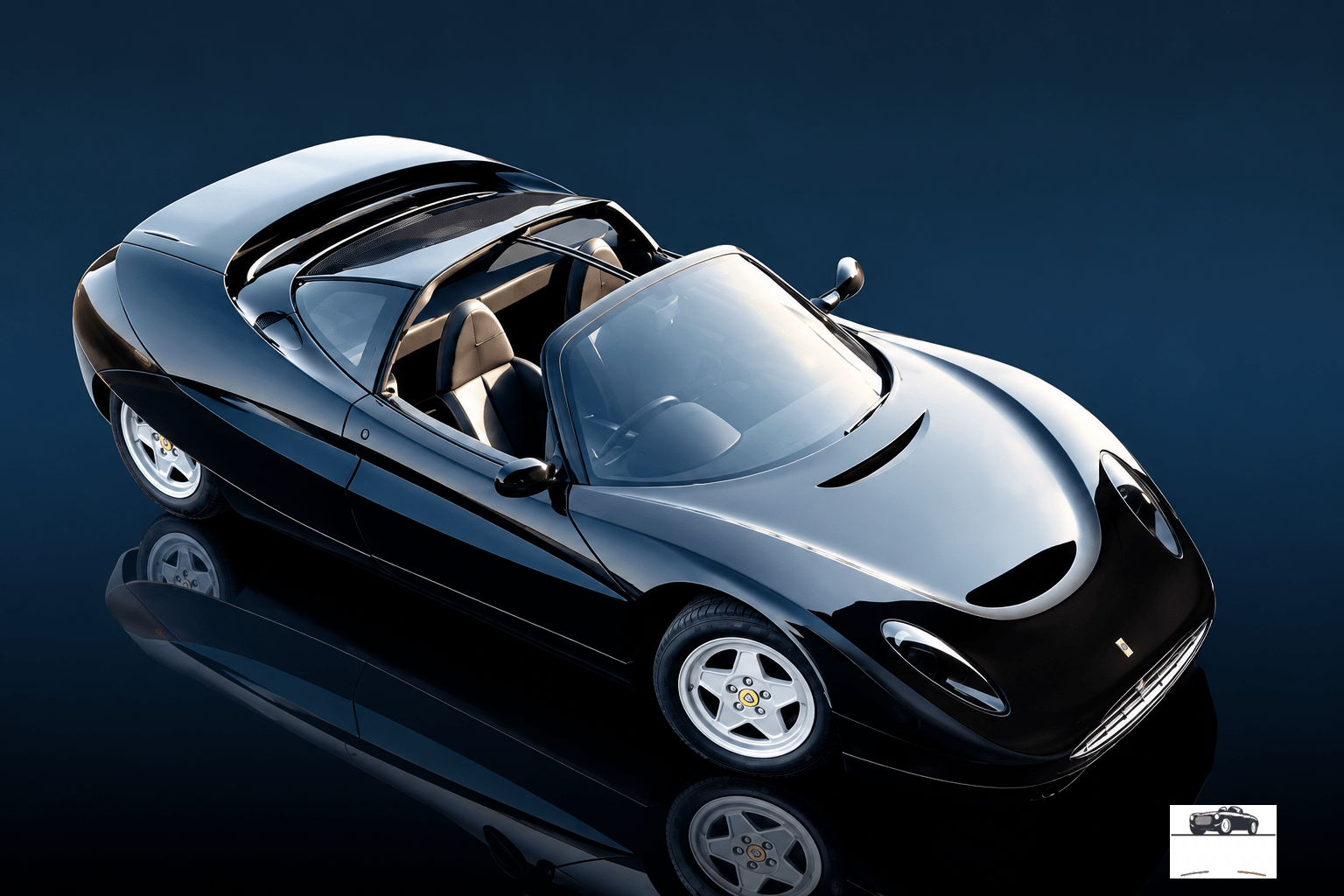
The F90’s most memorable feature is its sliding targa roof. Rather than using a simple removable panel, Pininfarina engineered the roof section to move rearwards and overlap the rear glass. In profile, the mechanism preserved the purity of the greenhouse while giving the car an open configuration that looked unlike the Testarossa Spider conversions already associated with Brunei.
Fumia later identified this system as one of the most difficult parts of the project. It demanded much more than styling. The moving panel had to seal, drain water, clear the glazing and function repeatedly while the modified structure retained sufficient rigidity. The rear glass, roof rails and panel trajectory became a single engineered system.Fumia reveals the creative link between the F90’s design and Ferrari’s stylistic past. Drawing inspiration from the brand’s heritage, he employed a method he calls Recognisability or Identity Cycle, comprising the reinterpretation of the brand’s stylistic past, selection of consolidated features, and historization through the introduction of new elements.
This is one of the clearest reasons to describe the F90 as a Pininfarina programme rather than simply a Fumia design. Fumia was the stylist and project-driving creative figure, but a functioning roof, revised cooling system and road-ready six-car run required engineers, prototype specialists, craftsmen and test drivers. The historical record should distinguish those roles rather than compressing them all into the word “designer”.
This is one of the clearest reasons to describe the F90 as a Pininfarina programme rather than simply a Fumia design. Fumia was the stylist and project-driving creative figure, but a functioning roof, revised cooling system and road-ready six-car run required engineers, prototype specialists, craftsmen and test drivers. The historical record should distinguish those roles rather than compressing them all into the word “designer”.
Renzo Trivero enters the story
First-hand testimony adds an important name that was missing from many earlier accounts: engineer Renzo Trivero. Fumia remembered Trivero as both a first-class engineer and an excellent driver, and recalled participating in road testing with him.
The detail is unusually valuable because it moves the F90 story away from anonymous “Pininfarina engineers”. According to Fumia, the cars were right-hand drive and the development team carried out its own road tests. When Fumia drove, another person sometimes had to occupy the passenger side to deal with motorway toll booths; he specifically remembered Trivero in connection with the programme.
Fumia also stated that Trivero developed the final three examples after Fumia’s departure from Pininfarina. That testimony is particularly important for authorship. Fumia’s styling authorship is clear, but the later cars also embody engineering and development work performed after his direct day-to-day involvement had ended. A rigorous history should therefore credit Fumia for the design while recognising Trivero’s documented engineering and testing role rather than treating all six cars as the work of a single individual.
Night testing without the Cavallino
The secrecy surrounding the F90 was not merely a marketing anecdote. It changed how the prototypes were tested.
Fumia has recalled that the cars were driven mostly at night, with the bodywork camouflaged and Ferrari emblems removed. The objective was simple: Pininfarina needed real road mileage, but the unusual Ferrari could not be allowed to attract the attention that an unidentified prototype carrying a Prancing Horse inevitably would have generated around Turin.
The image is striking: a right-hand-drive, Testarossa-powered prototype circulating after dark, its new body disguised and its Ferrari identity deliberately erased. Yet it also illustrates the practical reality of prototype development. Cooling, roof sealing, drivability and general durability cannot be validated on a styling buck. However private the commission, the cars still had to work.
This is also where the F90 must be separated from another Brunei programme that is often folded into the same narrative: the Testarossa Spiders. Fumia stated that Ferrari was fully aware of the twelve Testarossa Spiders produced for Prince Jefri and that those cars were even tested by Maranello. The F90 was different. Pininfarina carried out the testing itself and Ferrari was not to know about the project.
That contrast is more revealing than the generic claim that “Ferrari knew nothing about Brunei specials”. Some Brunei commissions existed with Ferrari’s knowledge; the F90 did not. The level of secrecy was programme-specific
Six cars make a series
Calling the F90 a one-off is simply wrong. Six examples were built.
That number changes the nature of the project. A single prototype can tolerate unique solutions, hand adjustment and components that exist only once. Six cars demand a degree of repeatability. Body panels, glazing, roof mechanisms, interior components and cooling installations must be reproduced with sufficient consistency for each finished automobile to function.
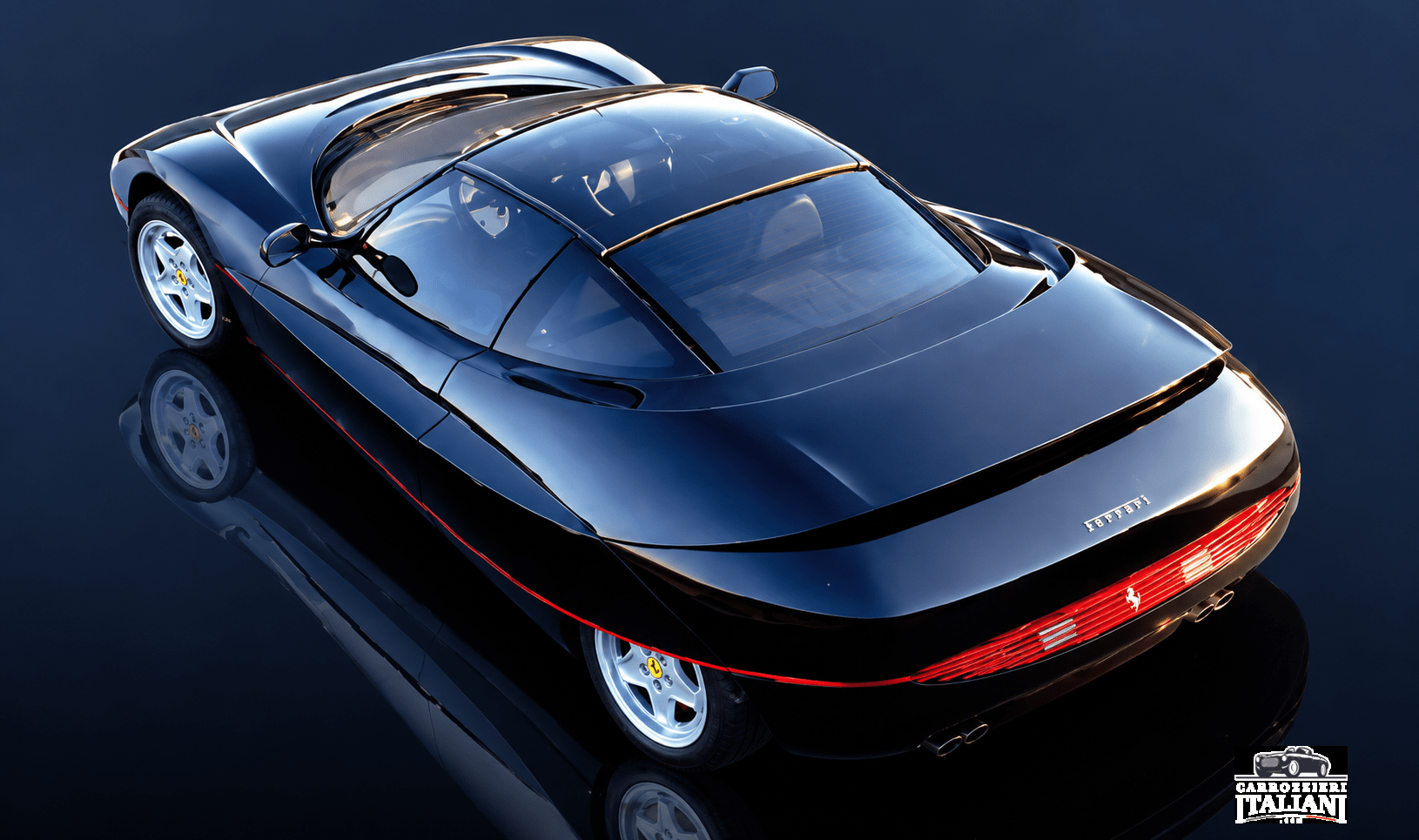
Pininfarina was therefore acting as a micro-series manufacturer. The bodies were produced in aluminium around the modified Testarossa bases, while the company’s prototype and engineering departments transformed Fumia’s surfaces into buildable automobiles. The distinction echoes the older carrozzeria tradition but under late-twentieth-century conditions.
The six cars also explain why individual histories now matter. They should no longer be discussed as if “the F90” were one physical object photographed from different angles. They are six separate automobiles, potentially with different production dates, colours, details and later histories. Public documentation has not yet reached the point where every car can be given a secure chassis-by-chassis biography, so Carrozzieri-Italiani will keep the family history separate from claims about individual examples until stronger evidence appears.
When were the six F90s actually built?
This is the most important correction to the older Carrozzieri-Italiani account and to the current listing.
The project is commonly dated 1988, and numerous secondary sources state that all six F90s were built in that year. The CI listing currently repeats that chronology. Fumia’s later first-hand recollections, however, indicate a longer development and delivery sequence extending into the early 1990s. His testimony also says that the last three cars were developed by Renzo Trivero after Fumia had left Pininfarina.
Those statements cannot comfortably coexist with the claim that six completed cars were all delivered in 1988. The most defensible solution is to separate the date of the design/project origin from the construction and completion chronology.
The F90 concept can still be associated with the late 1980s, but “1988” should not automatically be used as the completion date for all six cars. Until factory production sheets or chassis records settle the matter, CI should present the six-car build chronology as extending beyond the project’s initial design phase and flag the conflict explicitly.
This is precisely the kind of correction that becomes possible when a historical database evolves. A repeated date is not strengthened simply because many websites copy it. Direct testimony from the person responsible for the project has greater evidentiary weight, while still requiring us to acknowledge that memories recorded decades later are not the same thing as contemporary build sheets.
F90 and the twelve Testarossa Spiders
The distinction between the F90 and the Testarossa Spider programme deserves its own place in the chronology.
Prince Jefri’s appetite for open Ferraris produced a group of twelve Testarossa Spiders. These were not the same exercise as the famous single Testarossa Spider built for Gianni Agnelli, nor were they F90 derivatives. They represented another Brunei-specific programme built around the Testarossa platform.
Fumia’s testimony provides the key institutional difference: Ferrari knew about the twelve Spiders and participated in their testing. With the F90, Pininfarina deliberately kept Maranello outside the programme. That means the two projects demonstrate different relationships between client, coachbuilder and manufacturer even though they shared Ferrari hardware and the same royal environment.
For the history of Pininfarina, this is valuable evidence of how broad its role could become. In one programme it could operate alongside Ferrari on an authorised transformation; in another it could undertake a confidential rebody and development programme directly for the client.
Before the great Brunei programmes
The F90 is often viewed retrospectively through the spectacular Brunei commissions of the 1990s: Ferrari 456 Venice estates, saloons and convertibles, the Ferrari FX, right-hand-drive conversions and numerous bespoke projects from Pininfarina and other specialists.
Chronology matters here. Paolo Garella joined Pininfarina in 1992 and later became a central engineering and programme-management figure in the Brunei work. His responsibilities included prototype engineering and manufacturing, and the later projects demonstrate the increasingly organised special-project capability that the royal commissions demanded.
The F90 sits at the threshold of that era. Its development began before Garella’s Brunei role and belongs primarily to the Fumia/Trivero chapter. It should therefore not be retroactively attributed to the later Pininfarina Special Projects structure. At the same time, the F90 foreshadowed the working model that would become so important: a wealthy client commissioning not merely trim or colour changes but an entire alternative automobile around established mechanical architecture.
The later Ferrari 456 GT Venice programme makes the contrast especially clear. There, Pietro Camardella’s production 456 design became the base for multiple body configurations while engineering and prototype teams had to make those transformations repeatable. The F90 had already demonstrated the same essential possibility on a smaller and far more secret scale.
The public discovery
For years the F90 remained almost entirely outside public Ferrari history. Photographs from Brunei eventually began to circulate, and around 2002 an image showing one of the cars in the collection gave enthusiasts tangible evidence of what had previously sounded like an improbable rumour.
The project then entered the official historical conversation. Ferrari’s 2005 Yearbook included the F90, a moment Fumia has described with understandable satisfaction. The significance was symbolic rather than bureaucratic: a car programme developed without Ferrari’s knowledge had finally been acknowledged within Ferrari’s own historical orbit.
That later recognition should not be rewritten into retroactive factory authorship. The F90 remained a Pininfarina-designed and Pininfarina-developed special series based on Ferrari mechanicals. Its fascination comes from precisely that unusual boundary.
What the F90 tells us about Pininfarina
The easiest way to tell the F90 story is to focus on secrecy, royalty and six exotic Ferraris hidden in Brunei. The more important story is industrial.
Pininfarina could receive an existing high-performance automobile, redesign its packaging, create a new body and interior, engineer an unconventional roof, develop the prototype on the road and then reproduce the result in a six-car series. Styling was only one layer of the work.
The programme also demonstrates why attribution needs precision. Enrico Fumia deserves clear credit for the design. Renzo Trivero now deserves a visible place in the engineering and testing history. Pininfarina’s craftsmen and prototype departments were responsible for turning the design into physical cars. Ferrari supplied the mechanical identity but, according to Fumia’s testimony, was not involved in the F90 development in the way it was with the twelve Brunei Testarossa Spiders.
These are not semantic distinctions. They describe how a special car actually came into existence.
Six cars still waiting for six histories
Much remains unresolved. Secure public chassis numbers for all six cars have not been established to CI’s evidentiary standard. Colour sequences and completion dates circulate in specialist accounts, but they need to be reconciled with factory or period documentation before being treated as definitive chassis-level facts. The later lives of the cars are even less transparent.
Fumia himself has expressed uncertainty about their condition after delivery. That is preferable to the often-repeated assertion that the six cars simply “remain in the Sultan’s garage”. Photographs can establish that examples were present in Brunei at particular moments; they do not automatically prove uninterrupted location or current condition decades later.
A Ferrari for the ’90s, finally seen clearly
The F90 is more compelling once some of the mythology is removed.
It was not simply a rejected show-car sketch that happened to find a buyer. It was not a single eccentric rebody. It was not representative of every Brunei Ferrari programme, and its engineering cannot be credited to one designer alone.
It was a six-car Pininfarina special series conceived around Ferrari Testarossa mechanicals and Enrico Fumia’s vision of a “Ferrari for the ’90s”. Its new cooling layout made the radical body possible. Its sliding targa roof forced styling and engineering to meet. Renzo Trivero played a documented role in testing and in the development of later examples. The cars were tested in secrecy because, unlike the twelve Brunei Testarossa Spiders, Ferrari was not part of the programme.
Most importantly, the chronology is more complex than the convenient date “1988” suggests. The late-1980s origin of the project and the later construction/development sequence must be distinguished until contemporary Pininfarina records allow the six cars to be dated individually.
That uncertainty does not weaken the F90 story. It makes it more historically credible. The car sits at a moment when the traditional Italian carrozzeria was adapting its old ability to create private bodies to the far more integrated automobile of the modern era. Six cars, built for one client and hidden from the manufacturer whose mechanical identity they carried, could hardly illustrate that transition more vividly.
Buy Enrico Fumia’s book “AUTOritratto” here on Amazon.

ABOUT THE AUTHOR
Andreas Scheidl
Italian classic car enthusiast with German roots. Renowned as a respected figure in the classic car community, he serves as a jury member at various international concours d'elegance, including the Classic Gala Schwetzingen and Mantova. As a content creator, Andreas passionately shares his profound knowledge and appreciation for vintage automobiles. His heart beats for cars designed by Giovanni Michelotti, showcasing his discerning taste and dedication to preserving the timeless elegance of automotive history.
More stories by Andreas Scheidl ↗CONTINUE READING
Posts You Might Like

A Central Driving Position, a Rear-Mounted V8. Was This Really a Lancia?
In 1948, visitors to the Turin Motor Show could see an unusual Lancia on the stand of Carrozzeria Ghia. It was a large two-door coupé with a two-litre V8 mounted behind the…
Read story
Fioravanti F100: The Ferrari He Was Allowed to Imagine
Enzo Ferrari’s centenary, Leonardo Fioravanti’s independent studio and a supercar that explored air brakes, steel wheels and a new way of driving—without ever wearing the Cavallino.
Read story
Michelotti Shellette: When the Fiat 850 Became a Yacht
The yacht designer, the Turin stylist and the tiny coachbuilt car that crossed between the quay, the royal holiday house and the auction room. Some automobiles were conceived for the open road,…
Read story
Maserati A6 1500: A New Road for the Trident
When the doors of the Geneva Motor Show opened in March 1947, Maserati was a name that required little introduction to anyone who followed motor racing. What it did not yet possess…
Read story
THE CONVERSATION
Comments 0
Share a memory, a period photograph or a documented detail about this story.