
Ferrari 456 GT Venice: The Brunei Special Programme at Pininfarina
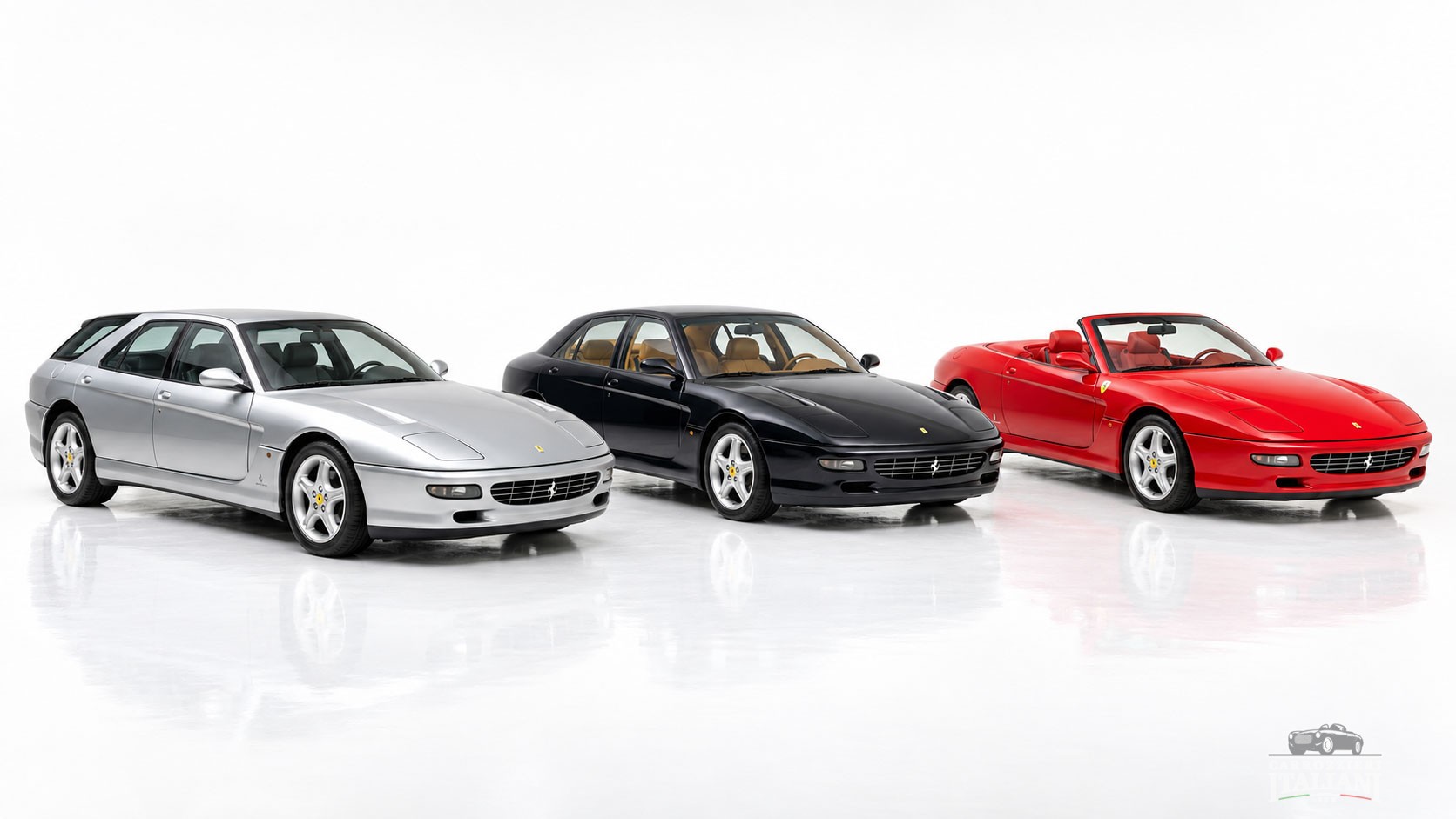
The Ferrari 456 GT was conceived as a modern return to Ferrari’s front-engined V12 2+2 tradition. Within only a few years, however, the same F116 platform became the basis of a much less conventional programme at Pininfarina: four-door saloons, five-door estates, open cars and heavily personalised two-door 456s for the Brunei royal family. The cars are generally grouped under the Venice or Venezia name, although period Ferrari historian Keith Bluemel already noted in 2002 that the origin of that designation was uncertain.
The story is often reduced to a simple sentence: the Sultan of Brunei ordered a Ferrari station wagon. That description misses the scale of the work carried out in Turin. The programme involved structural changes, new body systems, special transmissions, climate-specific development, prototype construction and limited-series manufacturing. It also places engineer Paolo Garella in a central role. Garella was not the stylist of the 456; that distinction belongs to Pietro Camardella under Lorenzo Ramaciotti. His responsibility at Pininfarina was on the engineering and manufacturing side, exactly where the Brunei projects became unusually ambitious.
The F116 and the production 456 GT
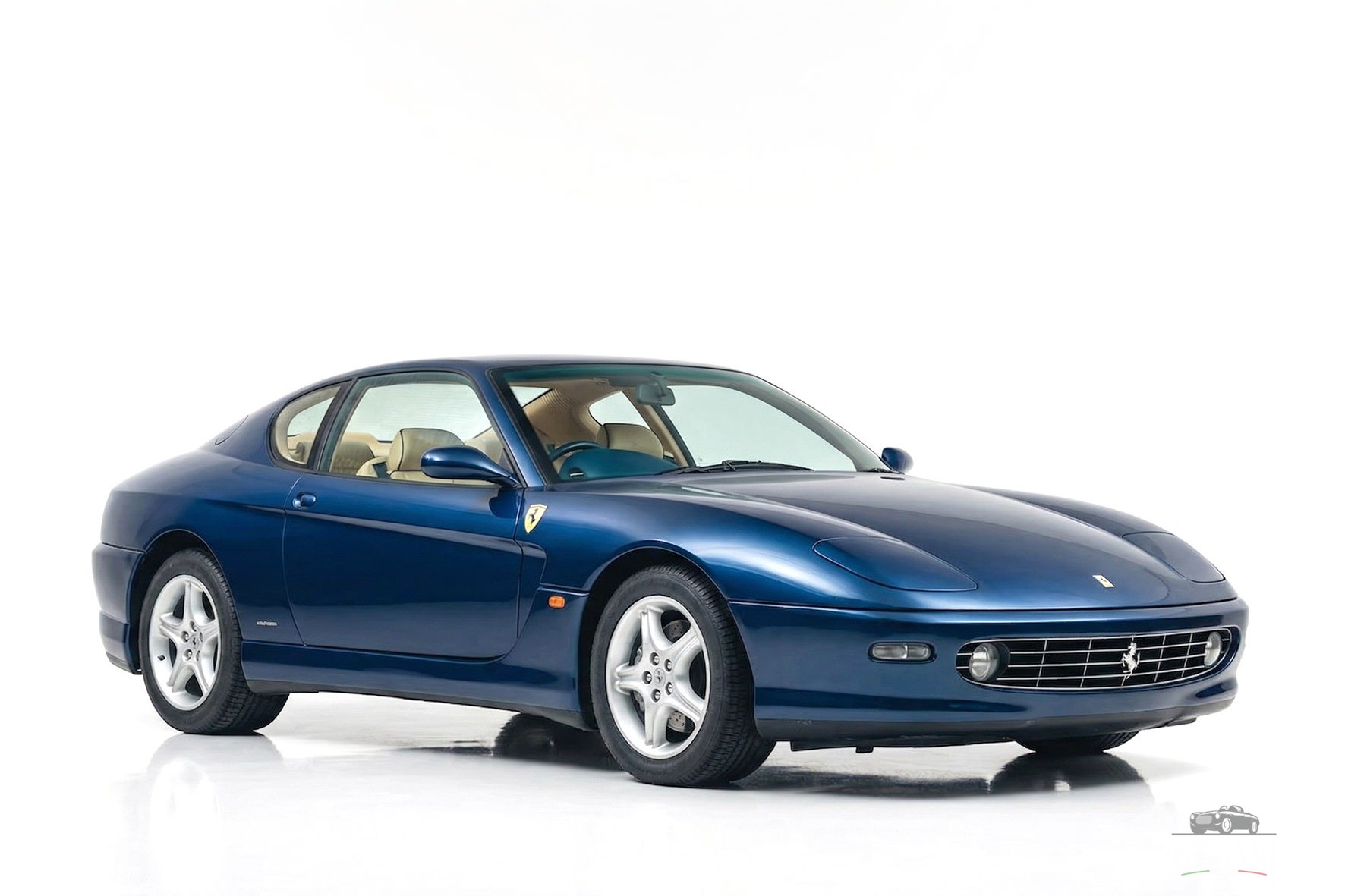
Ferrari announced the 456 GT in September 1992 during the fortieth-anniversary celebrations of Belgian importer Jacques Swaters, before showing it publicly in Paris the following month. The model filled the gap left by the 412 and restored a V12 2+2 to the range after three years. Ferrari described the car as the culmination of the traditional 2+2 coupé theme: a front-engined grand tourer rather than a derivative of the contemporary mid-engined Testarossa family.
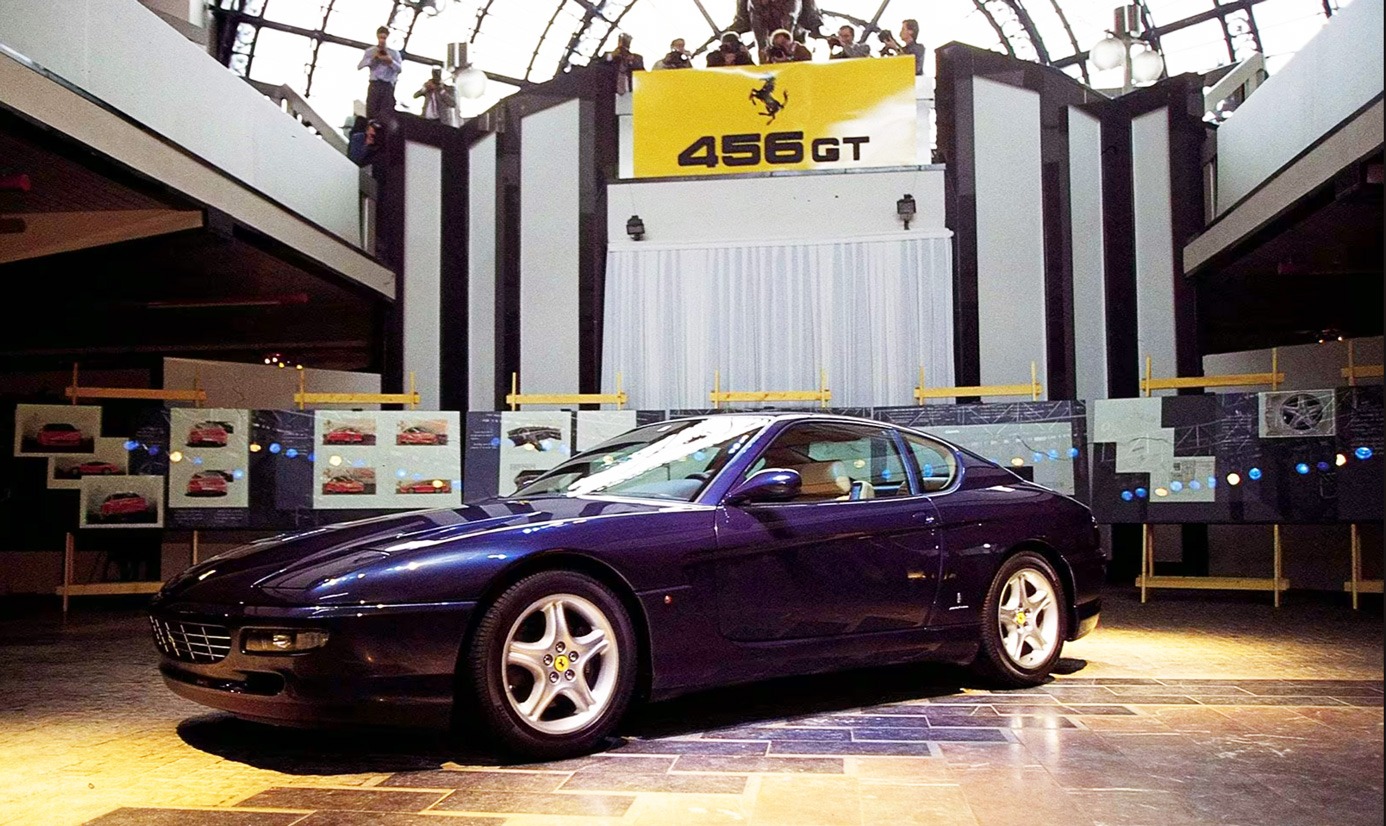
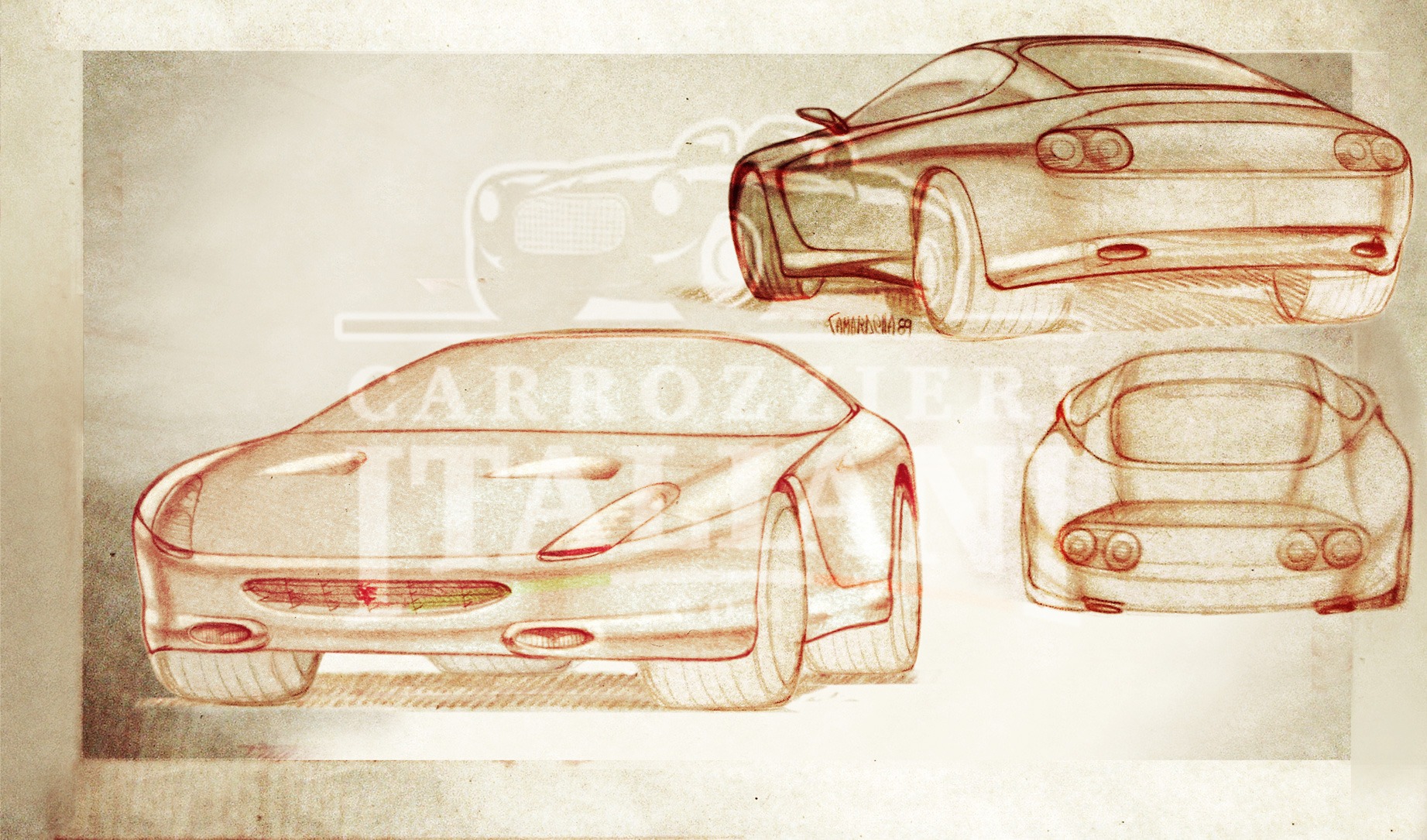
The exterior was developed at Pininfarina. In his interview with Carrozzieri-Italiani, Pietro Camardella explained how the original F116 direction was reconsidered after the appearance of the BMW 8 Series, leading to an internal competition and a new proposal. Camardella pushed the windscreen rearward to emphasise the bonnet, used a broken shoulder line to reduce visual mass and referenced the classical proportions of front-engined Ferraris without copying one model literally. Lorenzo Ramaciotti, then responsible for Pininfarina design, supervised the programme. The full design history is covered separately in Carrozzieri-Italiani’s interview-based 456 article.
The mechanical package also suited later transformation. The 5,473.91 cc F116 V12 produced 442 hp in the original GT and was coupled to a rear-mounted transaxle. With a 2,600 mm wheelbase and a body whose surfaces were comparatively restrained, the 456 offered Pininfarina a strong base from which to alter the passenger compartment without having to redesign the entire identity of the car.
There is another important point. By the early 1990s Pininfarina was no longer simply a design studio producing occasional hand-built bodies. Its own corporate history describes the period as one of industrial expansion, with the 456 GT among the new models added to its production activities between 1992 and 1994. The Venice programme therefore emerged inside a company that combined styling, engineering, prototypes and series manufacture under one roof.
The Brunei commissions
The Brunei royal collection generated an unusual stream of projects during the first half of the 1990s. Ferrari, Pininfarina, Bentley, Aston Martin, Rolls-Royce and other manufacturers were asked for colours, configurations, transmissions and complete body styles unavailable to ordinary customers. The 456 became one of the family’s preferred Ferraris.
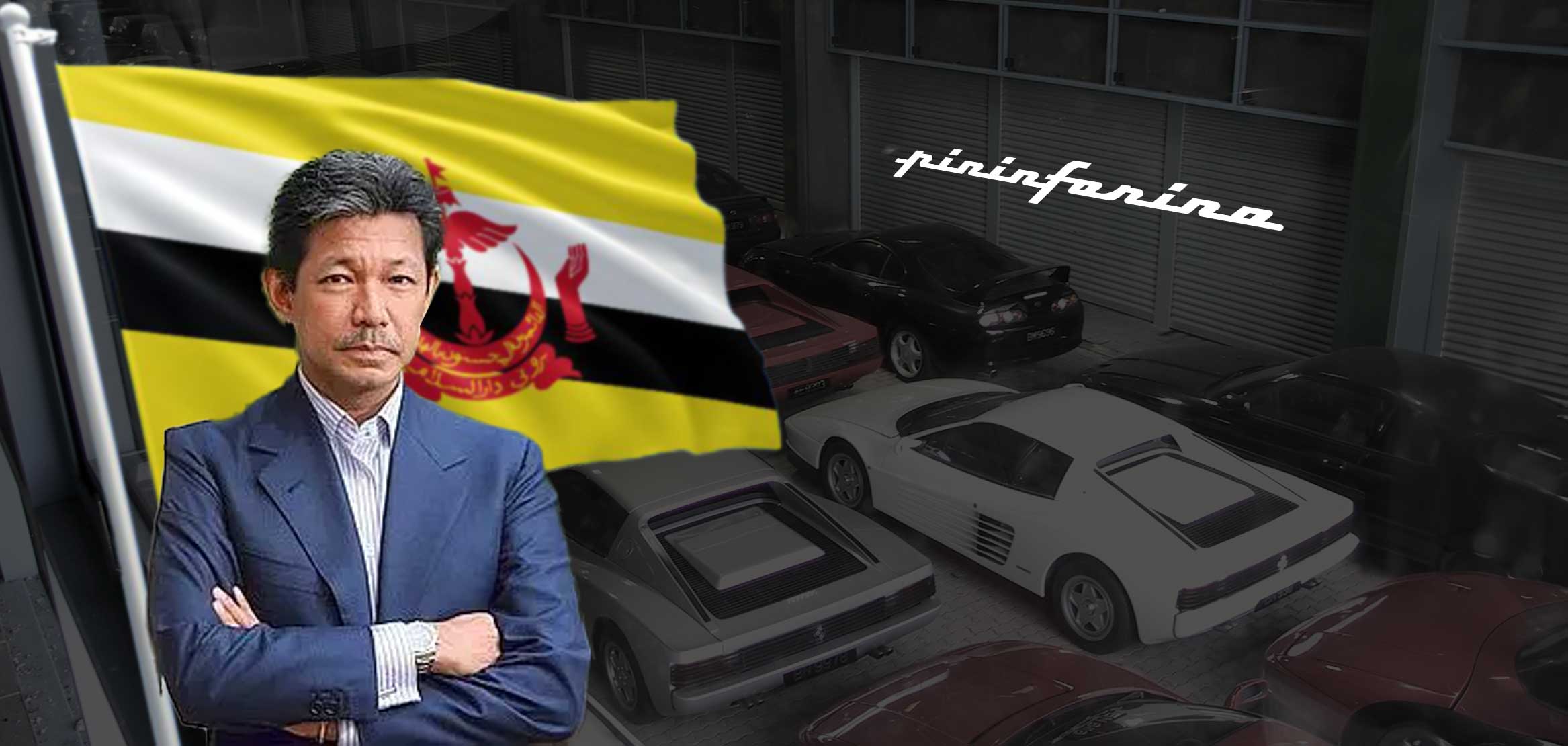
Later reporting often attributes every commission simply to Sultan Hassanal Bolkiah. The 456 Venice Estate, however, is particularly associated with Prince Jefri Bolkiah, the Sultan’s brother and one of the main figures behind the expansion of the royal garage in this period. The safest description is therefore “Brunei royal-family programme” unless a specific chassis can be tied to a named commissioner.
The chronology is useful. Paolo Garella’s own archive lists a Brunei Ferrari 456 GT project in 1994 and the Venice project in 1996. That suggests that the better-known estates, saloons and Spiders formed part of a broader 456 development programme rather than appearing as a single isolated order.
Paolo Garella and Pininfarina Prototype Engineering
Paolo Garella joined Pininfarina in 1992 to manage the Prototype Engineering and Manufacturing Department. His background was mechanical engineering, vehicle testing and competition engineering, not styling. During the Brunei years that distinction became important: once a body proposal had been approved, someone had to make a four-door Ferrari behave, seal, cool and operate like a finished car rather than a show prototype.
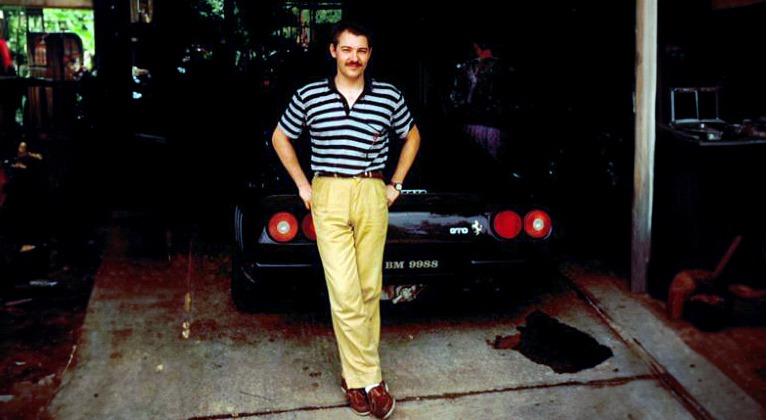
Garella later described the Venice as one of the most significant projects of his career. In interviews he has emphasised not its visual novelty but the way it forced Pininfarina to raise the quality, industrialisation and validation standards of very small production runs. He recalled a development process that included benchmarking, substantial changes to the doors and chassis, transmission work, hot-weather requirements and durability testing. For a client ordering only a handful of cars per configuration, the effort was closer to an OEM development programme than to a conventional one-off conversion.
This is the correct way to position Garella in the history of the 456 Venice. Pietro Camardella created the production 456 form and Lorenzo Ramaciotti directed the design organisation; Garella led the engineering/prototype-manufacturing environment in which the Brunei specials were made viable as functioning cars and repeatable limited-series products.
Garella’s later career gives the Venice an additional historical connection. After leaving Pininfarina he would eventually found Manifattura Automobili Torino, a company built around the same ability to take low-volume projects from engineering through testing and final manufacture. Projects such as the New Stratos continued a method of working that had already been tested on the Brunei commissions.
Forty-two 456s and the transmission programme
One of the most useful figures comes directly from Garella. In a later interview he recalled that Pininfarina delivered 42 Ferrari 456s to the royal family in various forms. This number should not be read as “42 Venice estates” or even “42 special bodies”. It refers to the wider Brunei 456 programme, which included conventional two-door cars as well as convertibles, saloons and estates.
The transmission work is equally revealing. Early in the programme Ferrari had not yet introduced the 456 GTA. Garella recalled that Pininfarina therefore adapted an automatic transmission from the Porsche 928, modified it for the Ferrari application and continued supplying that solution even after Ferrari offered its own automatic because the Brunei customers preferred the Pininfarina-developed system. This was not a cosmetic request; it required integration of a non-standard transmission with the Ferrari V12, controls and driveline.
The open cars show that the engineering specification was not necessarily identical across every special. The green Venice Cabriolet later documented outside Brunei used a Mercedes-derived four-speed automatic because the roof mechanism occupied space required by the normal driveline layout. It is therefore safer to treat “Brunei automatic transmission” as a programme-level requirement with more than one technical solution rather than assuming that every chassis used the same gearbox.
From the order to the prototype shop
The Brunei commissions also differed from a normal Ferrari purchase in the way requests moved through the industry. Contemporary accounts of other royal-family Ferraris describe Alfred Tan of Hong Seh Motors in Singapore acting as an intermediary between Brunei and Maranello during the early phase of the programme. Paolo Garella later recalled that from around 1994 Pininfarina began receiving Brunei orders directly. That timing corresponds closely with his own archive, which dates the broader Ferrari 456 GT special-project work to 1994 and the Venice programme to 1996.
Once a standard car reached Turin, the process was closer to redevelopment than trimming. Garella has described the Brunei work as using the full chain available inside Pininfarina: engineering, prototype construction, validation and limited production. A customer could ask for right-hand drive, a different transmission, stronger climate control, a new body style or a combination of all of them. Each request then had consequences for packaging, structure, cooling, suspension and homologation practice.
This also explains why the word “coachbuilt” needs some precision here. The Venice cars were coachbuilt in the sense that a production Ferrari received a new body and configuration outside the normal catalogue, but the work was not a return to the pre-war method of placing an artisanal body on a rolling chassis. Pininfarina was using modern CAD, prototype engineering, test procedures and repeatable manufacturing methods to produce a handful of cars that still had to function like road-going Ferraris.
Who designed the Venice bodies?
The authorship of the production 456 is clear: Pietro Camardella created the exterior proposal under Lorenzo Ramaciotti. The authorship of the Estate, Saloon and Spider bodies is less clearly documented in the sources assembled so far. Pininfarina is the responsible design and manufacturing organisation, but a named individual stylist for each Venice derivative has not yet been established to the same standard as Camardella’s authorship of the original coupé.
That is another reason not to describe Paolo Garella as the “designer” of the Venice. His own biography and interviews identify him with prototype engineering, manufacturing and programme execution. His contribution was no less important, but it was different: the challenge was to turn unusual body concepts into cars that could be driven, repeated and delivered.
Stylistically, the special bodies remained disciplined around the original 456 identity. The front end, windscreen relationship and principal side surfaces were retained wherever possible, while the new volume was developed behind them. On the Estate, the roof extension and nearly vertical tail were balanced by the existing round rear lamps and a strong horizontal side treatment. On the Saloon, the same stretched centre section terminated in a separate boot. The result in both cases was deliberately closer to a factory derivative than to a flamboyant show car.
A longer chassis and new door architecture
Keith Bluemel’s period account provides one of the clearest descriptions of the four-door construction. The cars left Maranello as standard right-hand-drive 456 GTs and were converted at Pininfarina in Turin. For the four-door bodies, 200 mm was inserted into the chassis rails to create the additional cabin length needed for rear doors. The doors themselves were not simple cut-down coupé components; the entire door system had to be re-engineered.
Garella’s later recollection fits that description closely. He specifically identified the four-door and estate 456s as genuine development programmes involving changes to the chassis, doors and gearbox. Pininfarina also had to meet the Brunei requirement for very strong air-conditioning, a recurring issue on special cars that had originally been conceived for European conditions. Test procedures included hot-weather work and water-durability checks.
This engineering context explains why the finished estates and saloons appear more coherent than a normal post-production conversion. The front of the car remained unmistakably 456, while the centre and rear sections were redesigned around new proportions instead of merely grafting extra doors or a taller roof onto the original shell.
456 GT Venice Estate
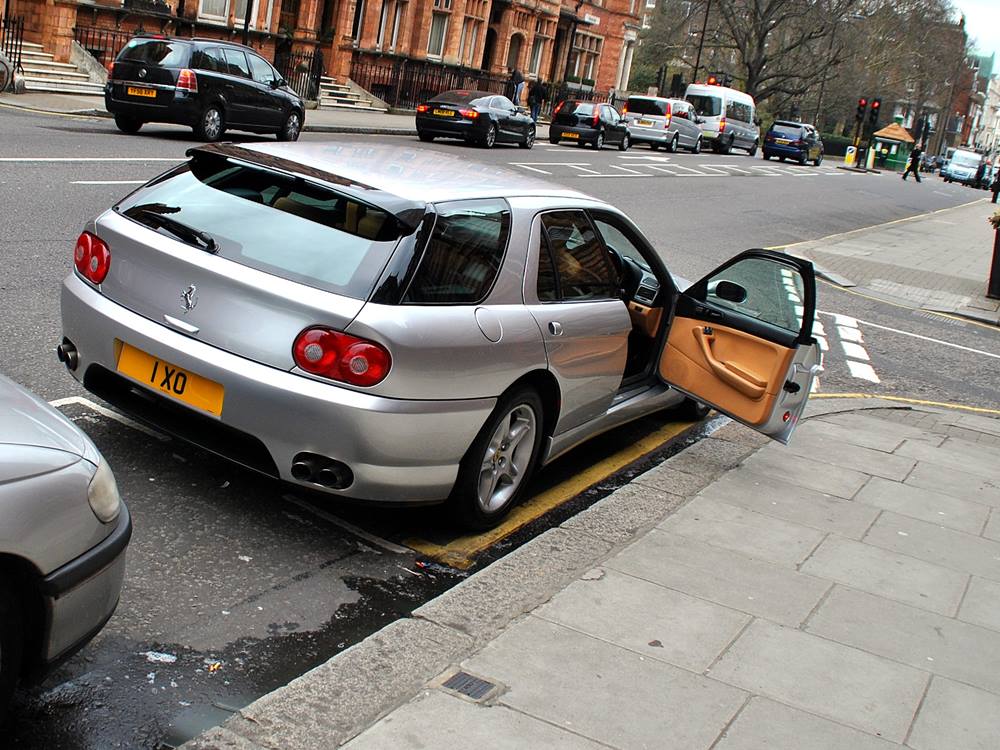
The best-known body is the Ferrari 456 GT Venice Estate, a five-door wagon with two rear passenger doors, a long roof and a top-hinged tailgate. Pininfarina retained the standard circular rear lamp units and much of the coupé’s front-end vocabulary, while the roof and rear quarters were completely new. A deep body-side treatment helped visually connect the extended passenger compartment to the original front wings.
Chassis 103190 remains the most securely documented example. Bluemel identified it as a 1995-model 456 GT whose Pininfarina conversion was carried out during 1996. It was delivered directly to England and later appeared publicly at the Bagatelle concours in 1999. The Carrozzieri-Italiani register currently identifies four Estate chassis: 103190, 103261, 105382 and 107636.
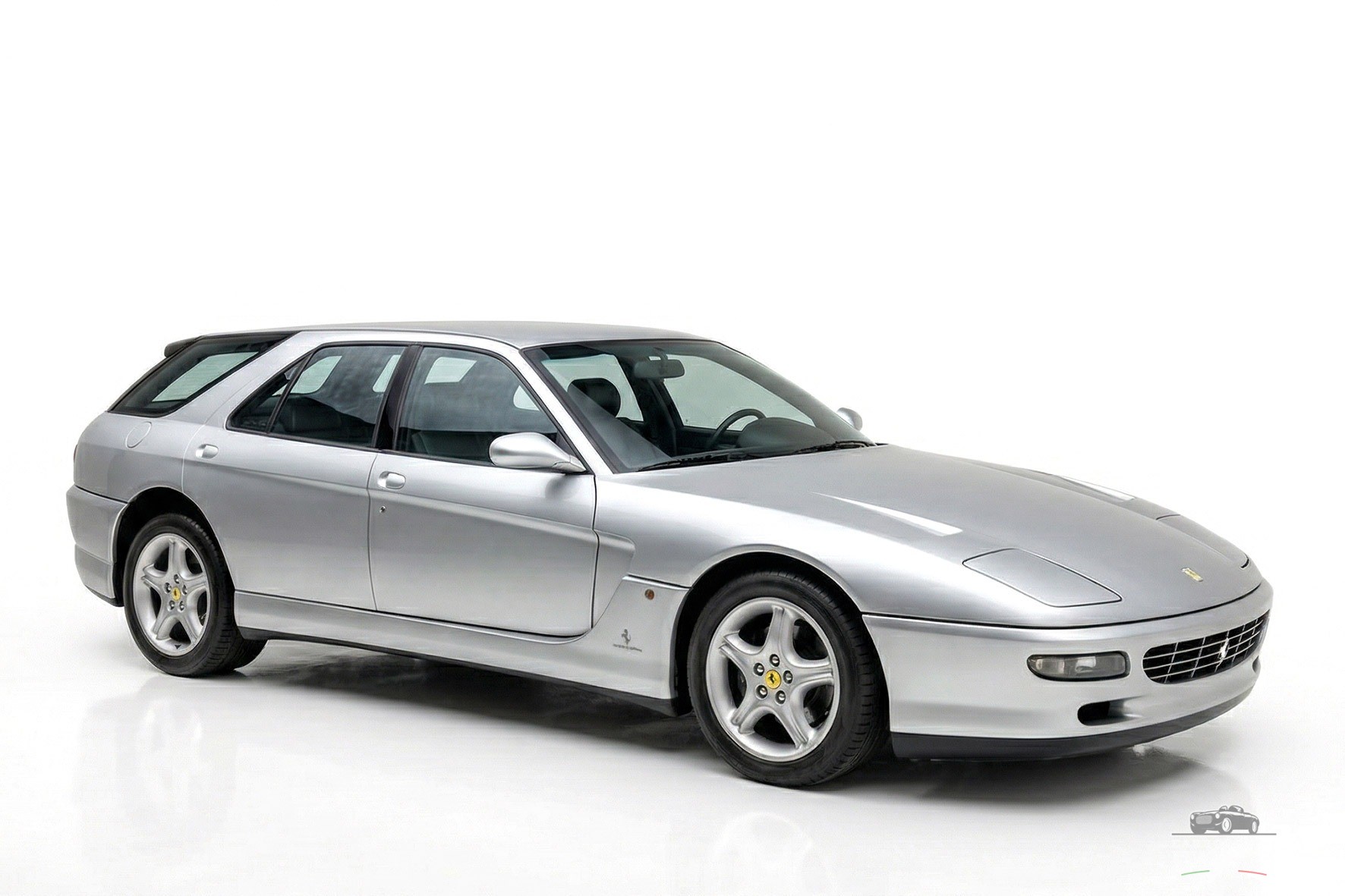
The total number is less straightforward. Coachbuild and many later sources state that seven estates were completed, six being taken by Prince Jefri and one remaining outside the Brunei collection. Quattroruote instead gives six station wagons. The disagreement is old enough that it should be preserved as a source conflict rather than “resolved” by repetition. At present the four chassis in the CI register are a documented minimum, not a claim that only four were made.
The silver/green car associated with chassis 103190 is also important because it escaped the secrecy that surrounded most of the royal collection. Its delivery to England and later concours appearances provided enthusiasts with one of the first opportunities to study a Venice in public. Period photographs make clear that the transformation involved substantially more than a longer roof: the rear doors, quarter glass, tailgate aperture, roof structure and side surfacing were all integrated as one design.
The Estate therefore became the public face of the Venice programme largely by accident. The saloons and many of the other Brunei 456s remained almost invisible, whereas an estate circulating in Europe could be photographed, registered and discussed. That imbalance in surviving documentation is one reason modern accounts often use “456 Venice” as if it meant only the wagon.
456 GT Venice Saloon
The 456 GT Venice Saloon is less frequently photographed but technically just as interesting. Instead of continuing the roof into a tailgate, Pininfarina created a formal three-box body with a separate boot. The stretched wheelbase and new rear doors were shared in concept with the Estate, but the roof, rear quarters and deck were shaped as a conventional saloon rather than a wagon.
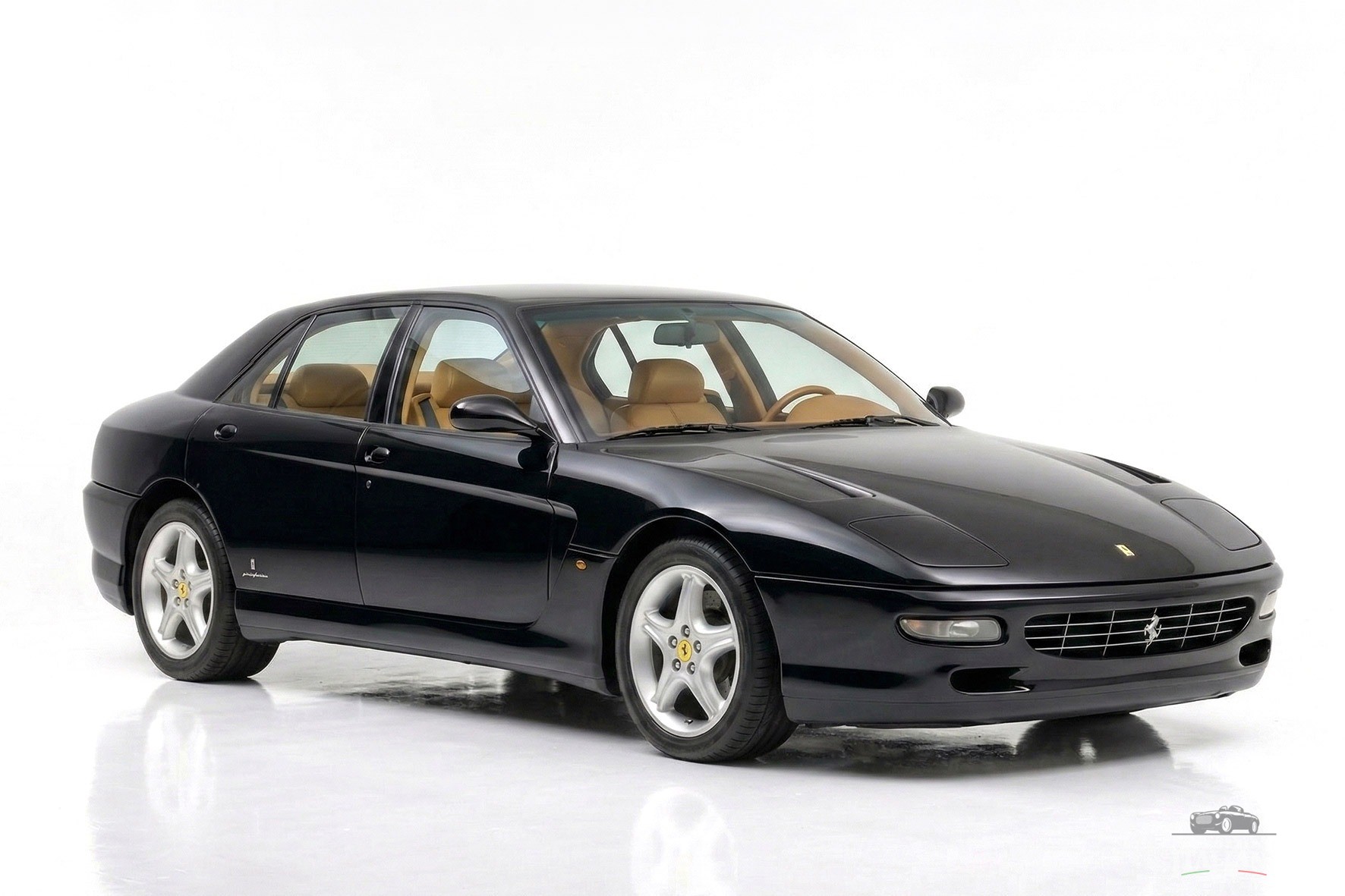
Carrozzieri-Italiani currently records three chassis: 103219, 105543 and 107639. Larger production totals are quoted in secondary literature, but a complete chassis sequence has not yet been assembled. The article therefore treats three as the present documented minimum.
456 GT Venice Spider
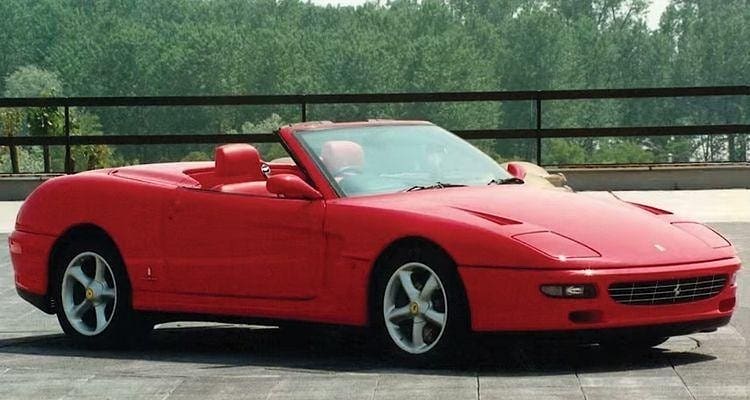
The 456 GT Venice Spider presents a different engineering problem because removing the roof affected both body stiffness and the packaging behind the seats. The two-car production figure is the one most often repeated for Pininfarina’s Brunei open cars, usually referring to red and green examples. The current CI register, however, associates four chassis with open 456s: 101396, 103292, 104626 and 104723. That conflict remains unresolved and should not be hidden.
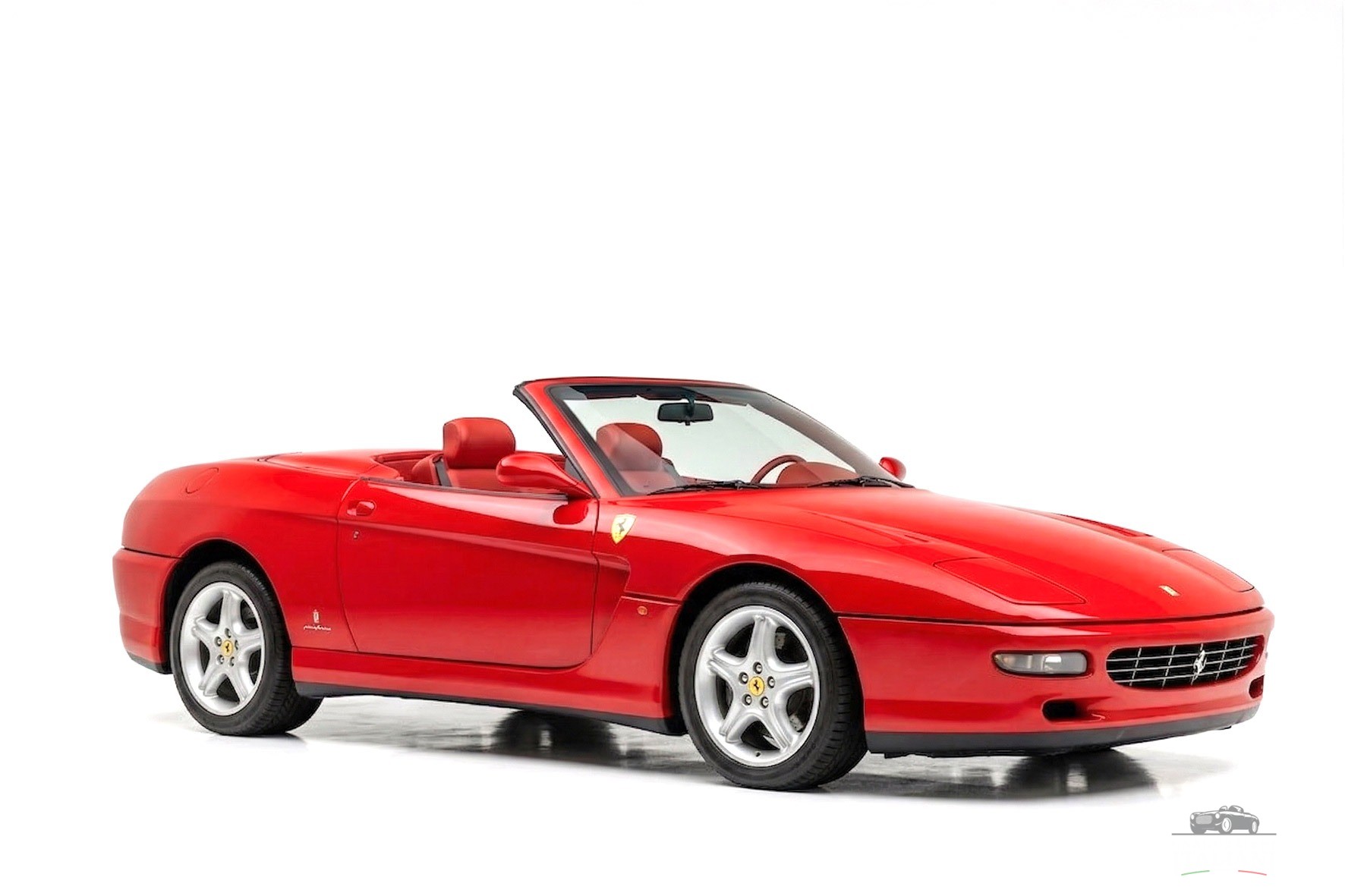
The green car later documented by Classic Driver demonstrates how extensive the conversion could become. Its folding roof was adapted from a Mercedes-Benz SL. Packaging the mechanism required a different automatic transmission, also Mercedes-derived, and the rear suspension was modified with a self-levelling hydraulic system to cope with the added weight. The seats were sourced from the contemporary BMW 8 Series. These details are well documented for that particular car, but they should not automatically be assigned to every open 456 without chassis-specific evidence.
That green Spider is now associated with the Marconi Automotive Museum in California, providing a rare opportunity to inspect one of the Brunei-era Pininfarina conversions outside the original collection.
The open car also illustrates the difficulty of writing this history from photographs alone. A different roof mechanism or transmission can turn two outwardly similar Spiders into substantially different engineering packages. The CI chassis register therefore keeps the four associated chassis visible while the two-car production claim remains separately recorded as a source statement. Resolving the discrepancy requires build sheets, Pininfarina job records or chassis-specific period correspondence rather than another secondary summary.
The three Straman Cabriolets
A separate group of open 456s is frequently mixed into the Venice story. R. Straman Company in California converted three customer 456 GTs: chassis 100281, 100890 and 101250. These were aftermarket conversions for private customers and were not part of Pininfarina’s Brunei programme.
The third car, chassis 101250, has an unusually detailed history. Ferraris Online records the car as a January 1995 build, delivered to its first owner that June and converted by Straman between December 1996 and June 1997. The quoted conversion cost was $50,000. Keeping these three cars separate from the Pininfarina Spiders is essential when comparing photographs, chassis lists and production totals.
Production figures and known chassis
There are three different numerical questions in the 456 Brunei story and they should not be merged. First, Garella’s recollection of 42 cars refers to the wider royal-family 456 programme. Second, the number of Pininfarina special-bodied Venice cars varies by body style and remains partly disputed. Third, the number of chassis currently identified in the CI database is only the documented subset assembled so far.
|
Body style |
Builder |
Chassis in CI |
CI status |
Production note |
|
Estate / station wagon |
Pininfarina |
103190, 103261, 105382, 107636 |
4 documented |
Published total: 6 or 7 |
|
Saloon / sedan |
Pininfarina |
103219, 105543, 107639 |
3 documented |
Larger totals reported; chassis sequence incomplete |
|
Spider / convertible |
Pininfarina |
101396, 103292, 104626, 104723 |
4 associated in CI |
Common published total: 2; requires reconciliation |
|
Cabriolet |
R. Straman Company |
100281, 100890, 101250 |
3 documented |
Separate aftermarket programme |
The table is intentionally conservative. A historical register is more useful when it distinguishes an established chassis from a repeated production number than when it presents a clean total unsupported by the surviving evidence.
Documentation, survivors and the Brunei photographs
For many years the Brunei cars were known through fragments: a few cars that left the collection, occasional European photographs, specialist registries and recollections from people who had worked on the programme. The secrecy around the royal garages encouraged production figures and model names to migrate from one article to another without chassis-level checks.
The emergence of additional photographs from the Brunei collection has improved visual identification but does not automatically solve the historical record. A photograph can establish that a body style, colour or configuration existed; it cannot by itself prove a chassis number, build date or total production. For CI, the useful next step is therefore to match each newly visible car to chassis evidence, period registration, Pininfarina records or sale documentation.
Garella’s testimony is especially valuable in this context because it describes the programme from inside Pininfarina and explains why so many configurations existed. His figure of 42 456s gives the wider scale, while the individual chassis registers define the cars that can currently be identified. Those two forms of evidence answer different questions and should remain separate.
Pininfarina between coachbuilding and special-series production
The 456 Venice belongs to a transitional period in Italian coachbuilding. Traditional fuoriserie work had declined sharply by the 1980s, while modern manufacturer special-project departments had not yet taken their present form. Pininfarina still possessed the unusual combination of styling authority, prototype shops, engineering departments and manufacturing capacity needed to execute a private commission at near-production standards.
For that reason the Venice should not be treated simply as a curious Ferrari wagon. The project shows how a modern production GT could be taken back through the coachbuilding process: cut and lengthened, given new doors and bodies, fitted with different transmissions, validated for a tropical client and then repeated in very small numbers. Garella’s role makes the point especially clear. The visual identity began with Camardella’s 456; the Venice programme depended on the engineering organisation that could turn that identity into several entirely different cars.
Pininfarina’s 1990s Brunei work also anticipated a business model that would later become familiar again: wealthy clients commissioning one-offs or tightly limited series from specialist engineering and manufacturing teams. Garella subsequently carried that experience into Manifattura Automobili Torino, while Ferrari and Pininfarina themselves would formalise increasingly sophisticated special-project programmes in the following decades.

ABOUT THE AUTHOR
Andreas Scheidl
Italian classic car enthusiast with German roots. Renowned as a respected figure in the classic car community, he serves as a jury member at various international concours d'elegance, including the Classic Gala Schwetzingen and Mantova. As a content creator, Andreas passionately shares his profound knowledge and appreciation for vintage automobiles. His heart beats for cars designed by Giovanni Michelotti, showcasing his discerning taste and dedication to preserving the timeless elegance of automotive history.
More stories by Andreas Scheidl ↗CONTINUE READING
Posts You Might Like
A Central Driving Position, a Rear-Mounted V8. Was This Really a Lancia?
In 1948, visitors to the Turin Motor Show could see an unusual Lancia on the stand of Carrozzeria Ghia. It was a large two-door coupé with a two-litre V8 mounted behind the…
Read story
Fioravanti F100: The Ferrari He Was Allowed to Imagine
Enzo Ferrari’s centenary, Leonardo Fioravanti’s independent studio and a supercar that explored air brakes, steel wheels and a new way of driving—without ever wearing the Cavallino.
Read story
Michelotti Shellette: When the Fiat 850 Became a Yacht
The yacht designer, the Turin stylist and the tiny coachbuilt car that crossed between the quay, the royal holiday house and the auction room. Some automobiles were conceived for the open road,…
Read story
Maserati A6 1500: A New Road for the Trident
When the doors of the Geneva Motor Show opened in March 1947, Maserati was a name that required little introduction to anyone who followed motor racing. What it did not yet possess…
Read story
THE CONVERSATION
Comments 0
Share a memory, a period photograph or a documented detail about this story.