
THE VEHICLE AT A GLANCE
Model dossier
THE PEOPLE BEHIND THE CAR
Coachbuilding, design & conversions

PRICE & SALES RECORD
Vehicle value
- Original price
- Not documented
- Latest recorded sale
- Not documented
01 / THE STORY
History & context
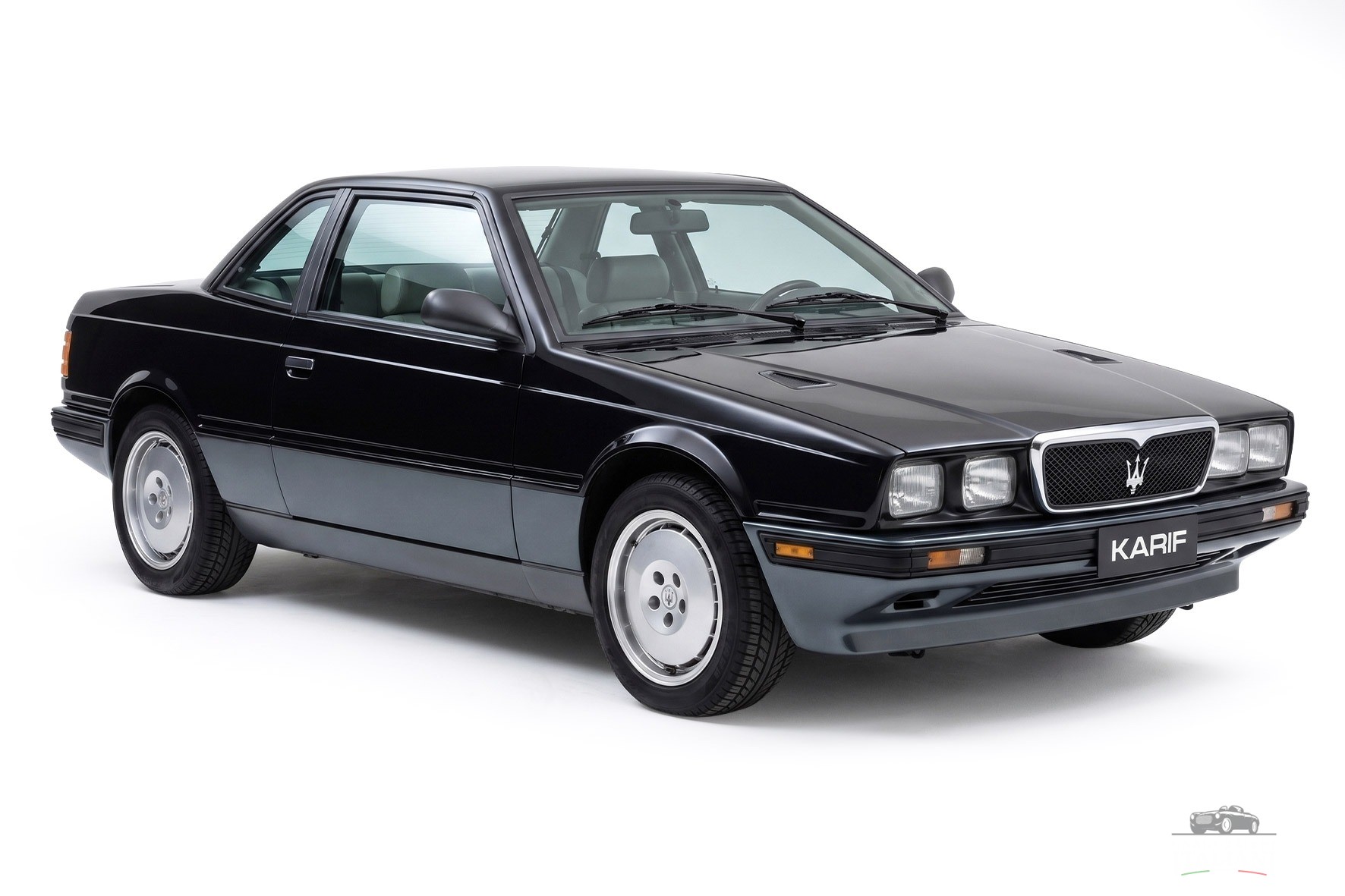
The Maserati Karif is one of those cars that quietly slipped into automotive history, yet it carries a distinct charm that only a handful of enthusiasts truly appreciate. Introduced in 1988, it was Maserati’s attempt to create a more aggressive, driver-focused version of their Biturbo lineup. The Karif wasn’t just another coupe; it was a collaboration between Maserati and the legendary Italian coachbuilder Zagato, known for crafting sleek, sporty cars with a touch of elegance. The idea behind the Karif was pretty straightforward: take the Biturbo Spyder‘s chassis, shorten it, strengthen it, and top it off with a fixed hard-top. It was a compact, lightweight coupe designed to offer a more spirited drive compared to its siblings. The result? A two-door sports car that looked purposeful and had a bit of that Zagato flair, yet didn’t stray too far from Maserati’s signature style. One of the coolest things about the Karif was its engine. Under the hood sat a 2.8-liter twin-turbo V6, cranking out around 280 horsepower though if you were in the U.S., you had to settle for a slightly tamer 225 hp. Still, for a car this size, that was plenty to have some fun. The Karif was all about raw, unfiltered driving, with rear-wheel drive and a manual transmission giving it a proper old-school sports car vibe. Styling-wise, it wasn’t a showstopper, but it had character. The fixed hard-top gave it a unique look compared to the convertible Spyder, and the shortened body made it feel more compact and agile. Zagato managed to keep it subtle yet distinct, with just enough flair to make you take a second glance. Inside, it was classic Maserati plush leather, wood trim, and enough luxury to remind you that you weren’t just driving any sports car. Despite its sporty aspirations, the Karif still had that touch of Italian elegance. It wasn’t trying to be a track monster; it was more of a refined, spirited GT with a rebellious side. They didn’t make many just over 200 in total which only adds to its appeal today. It wasn’t the most popular Maserati, but it’s one of those quirky, lesser-known gems that real enthusiasts love to talk about. It’s rare, it’s interesting, and it’s got that Zagato touch that sets it apart from the crowd.
02 / TECHNICAL IDENTITY
Specifications & construction
Production & construction
- Production
- 221
- Production type
- Limited
- Production from
- 1988
- Production to
- 1991
- Construction system
- steel monocoque
Engine & performance
- Displacement
- 2,790 cc
- Specification notes
- Official family-level shared values: 2790 cc, steel monocoque, 1281 kg dry weight, 2-door 2+2 coupé, 1988–1991. Power and top speed are deliberately blank at family level because Maserati gives different values for catalyst and non-catalyst variants.
Dimensions & accommodation
- Weight
- 1,281 kg
- Doors
- 2
- Weight
- 1281 kg
- Doors
- 2
03 / DESIGN, BODY & SUPPLIERS
Design, body & suppliers
Design & manufacture
- Manufacturer · Documented
- Maserati
- Coachbuilder / Body Builder · Documented
- Zagato
Body form & construction
- Body style
- Coupé
- Construction system
- steel monocoque
04 / EVENTS & CHRONOLOGY
Events & chronology
No events or documented awards are currently recorded for this vehicle.
08 / GALLERY
Photo gallery 5 photographs
09 / PERIOD ARCHIVE
Period photographs & advertising
The period archive gallery will show historical photographs, advertisements, brochures and press images once assets, provenance and usage rights have been recorded in the masterfile.
THE CONVERSATION
Comments 0
Share a memory, a period photograph or a documented detail about this car.