
Ferrari’s Secret Cars for Kings & Royal Families
Ferrari’s road cars have long been symbols of prestige, performance, and exclusivity. It’s no surprise that even royal families – more accustomed to stately limousines and horse-drawn carriages of tradition – were seduced by the prancing horse. From the 1950s through the late 1960s, a number of one-off Ferraris found their way into palaces and private collections of kings and princes. In a time when many monarchs stuck to local luxury brands (Britain’s King George VI, for example, preferred classic British marques for official transport), a few trailblazing royals bucked tradition to acquire bespoke Italian sports cars. What follows is a chronological journey through some notable Ferraris made for royalty, each with its own coachbuilt flair and unique chassis number, showcasing how Ferrari earned its place in the royal garages of Europe and beyond.
Early 1950s: A Prince Among Ferrari’s First Clients
Ferrari built its first road cars in the late 1940s, and by 1951 it already had a royal customer. Prince Bernhard of the Netherlands – consort to Queen Juliana – was an avid motorsport enthusiast and became one of Ferrari’s very first royal clients. In 1951 he took delivery of a dark green Ferrari 212 Inter Coupé (chassis 0139E).
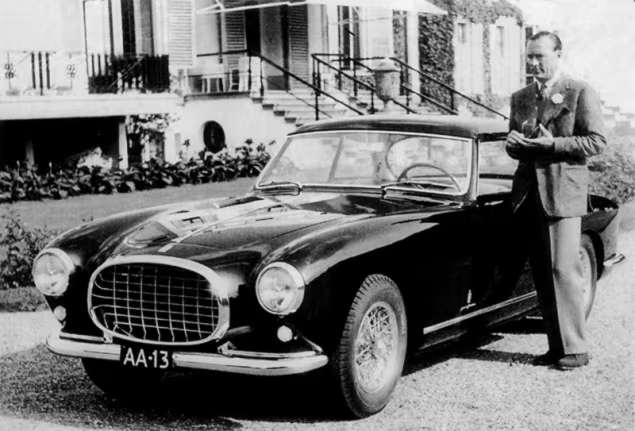
This sleek V12 grand tourer was among the earliest Ferraris sold, and it set a pattern for Bernhard: he would go on to own at least eleven Ferraris over his lifetime. Prince Bernhard’s love for fast cars was no secret – he even reused the license plate and chassis numbers from one Ferrari to the next in a peculiar bit of royal whimsy, as Ferrari let him trade in and transfer identities between his cars. His early patronage signaled that Ferrari’s allure had reached the highest echelons of society. While young King Baudouin of Belgium (Bernhard’s nephew-in-law) was ordering a custom-bodied Aston Martin in the mid-19500s, it was Bernhard who quietly put Ferrari on the royal map by parking Maranello’s finest in a palace garage.
Mid-1950s: King Leopold’s Bespoke Ferraris
If one man could be credited with introducing Ferraris to royalty, it was King Leopold III of Belgium – father of King Baudouin. Leopold had a passion for sports cars and, despite having abdicated his throne in 1951, his enthusiasm (and wealth) remained king-sized. In 1953 he special-ordered a Ferrari 342 America (chassis 0234AL) with elegant Pinin Farina coachwork, becoming one of Ferrari’s first royal patrons. This 342 America was an ultra-rare V12 grand tourer, and Leopold was just getting started. Two years later, in early 1955, he took delivery of an even more spectacular machine – a Ferrari 375 Plus Cabriolet by Pinin Farina, chassis 0488AM.
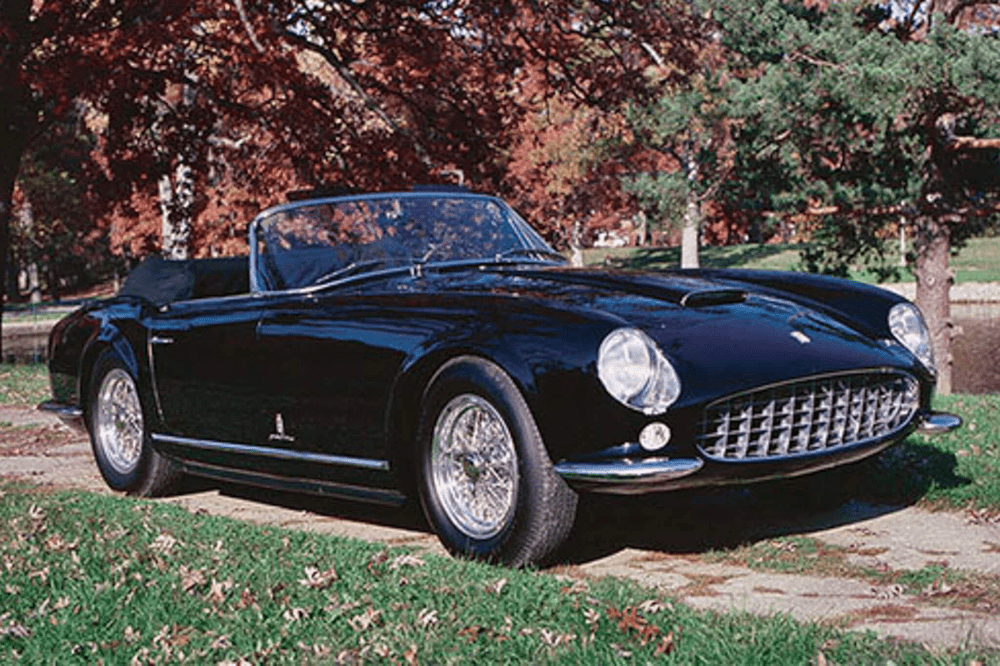
The 375 Plus was essentially a racing model (Ferrari’s Le Mans contender) but an exception was made for Leopold: Ferrari adapted the final 375 Plus chassis into a fully road-going two-seater cabriolet for the ex-King. Painted black with an ivory leather interior, it was a truly regal grand tourer, sporting a large egg-crate grille and covered headlamps that set it apart from its competition brethren. Enzo Ferrari himself noted Leopold’s technical acumen and courage behind the wheel, remarking that the monarch “would have made a good engineer” and was able to confront a car’s performance “with resolution and skill”. The black 375 Plus Cabriolet became one of the most famous royal Ferraris – a one-off masterpiece fit for a king. (In later years it even spent time painted Ferrari red with a green interior, before being restored to its original elegant black/ivory form.)
🔗 Read more: The Legend of Ferrari and Pininfarina’s Partnership: When Enzo Met “Pinin”
Leopold’s Ferrari infatuation was shared by his second wife, Princess Lilian de Réthy. In fact, Princess Lilian played a behind-the-scenes role in Ferrari history: when Ferrari’s tire supplier dropped out during the 1955 racing season, Lilian phoned a Belgian tire company (Englebert) and secured new tires overnight. Grateful, Enzo Ferrari offered her a privilege no ordinary client could get – the chance to commission a truly unique car as her next Ferrari. She had already owned a Ferrari 250 Europa GT with a Vignale body, but now something even more exclusive was in store. Instead of the standard production coupe body by Boano that most 250 GTs received in 1956, one special chassis was set aside for Princess Lilian: a 1957 Ferrari 250 GT Coupé Speciale by Pinin Farina, chassis 0751GT.
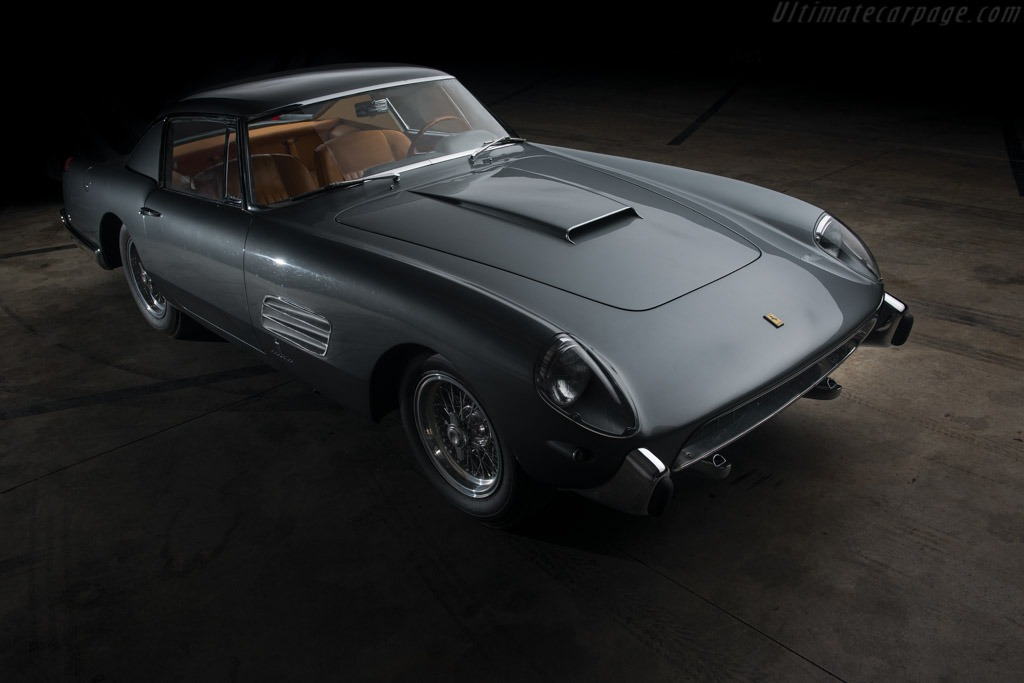
This car was one of only a few custom “Speciale” coupés built. Finished in Grigio Fumo (smoke grey) with natural beige leather, it blended styling cues from various Ferrari models – a long nose with covered headlights like the racing 250 GT Tour de France, fender vents reminiscent of the California Spyder, and elegant bumperettes and a hood scoop foreshadowing the Series I Cabriolet. Completed in January 1958, Lilian’s one-off 250 GT Speciale was delivered to the royal residence in Waterloo, and the Princess and King Leopold proudly drove it on diplomatic plates for the next decade. This bespoke Ferrari (chassis 0751GT) was so cherished that when the time finally came to replace it, Princess Lilian commissioned yet another custom Ferrari – but more on that later. As Ferrari’s own records note, by the mid-1960s “the Princess Liliane was no stranger to personalised Ferraris,” and her husband Leopold “was also a good Ferrari client” with two bespoke cabriolets to his name (the 342 America and the 375 Plus).
Bespoke Grand Tourers for Kings and Princes in the Late 1950s
Leopold’s patronage opened the door for other royals to acquire one-off Ferraris. The mid-to-late 1950s saw a flurry of special coachbuilt Ferraris ordered by kings and princes. In 1956, the ruler of Morocco, King Mohammed V, received a unique Pinin Farina-bodied Ferrari as well. It was a 1956 Ferrari 250 GT Coupé Speciale (chassis 0469GT), one of a very limited series of four custom-bodied 250 GTs built that year. Mohammed V’s car was finished in an eye-catching light blue with a black roof – a striking combination for the North African monarch. This Speciale was the final one produced in that 1956 series, and it stood out with its elegant proportions and bespoke details. After several years in royal service, the Moroccan Speciale eventually made its way overseas (it was sold to an owner in Florida in 1962) and survived into the modern era, albeit in rough condition. In fact, decades later in 2023, the weathered remains of chassis 0469GT were auctioned at Monterey, fetching over $1.6 million despite needing full restoration – a testament to its rarity and royal provenance.
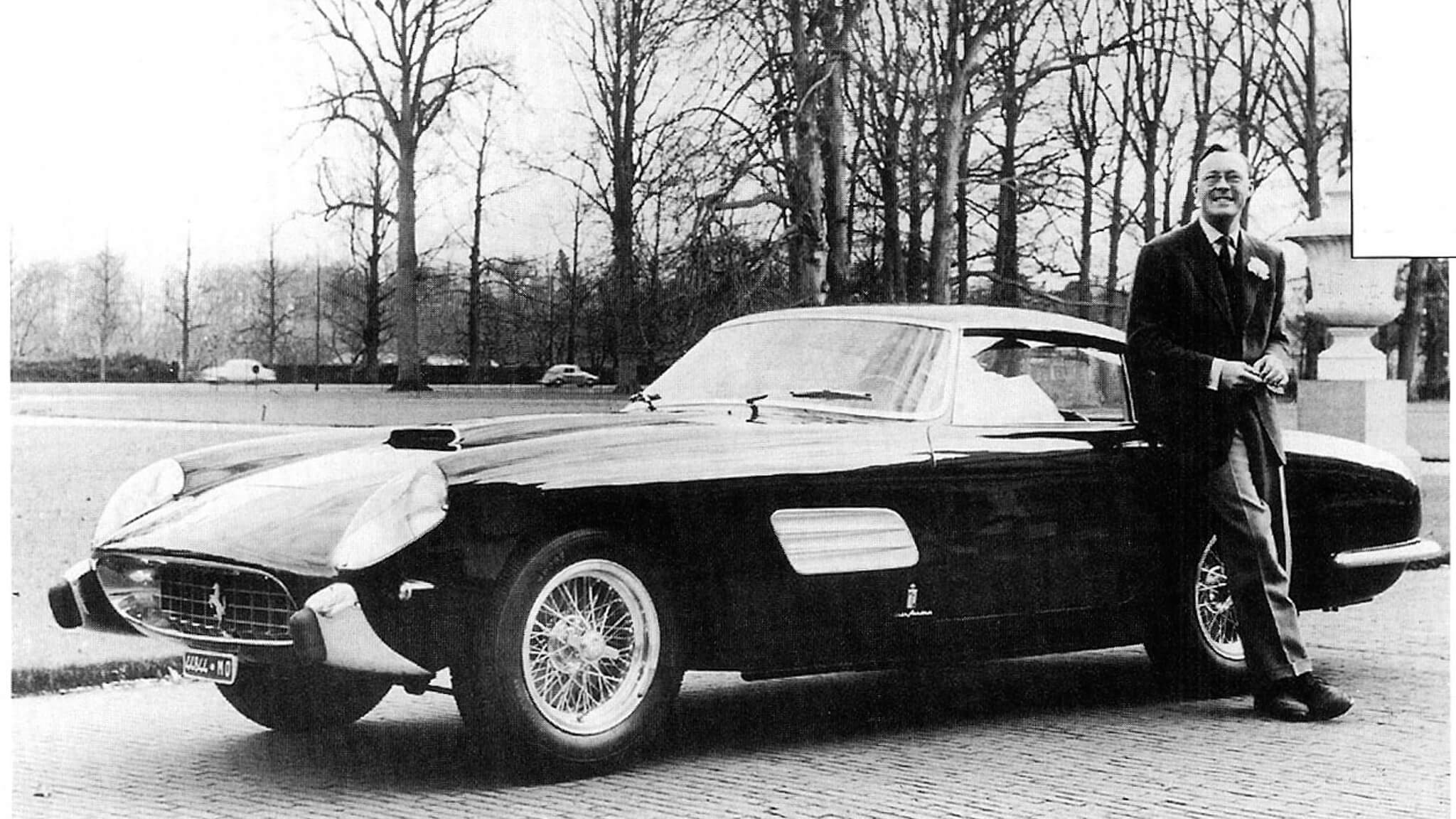
Meanwhile in Europe, Ferrari was becoming the toy of choice for certain car-crazy princes. We’ve already met Prince Bernhard of the Netherlands as an early Ferrari adopter; by 1957 he decided he wanted something truly unique from Maranello. The result was another 250 GT Coupé Speciale, tailored to his tastes. His car (chassis 0725GT) was completed in 1957 by Pinin Farina and delivered to the Prince – a sleek black coupe accented by a green leather interior, departing from his usual preference for British racing green paint. Prince Bernhard loved this 250 GT Speciale and kept it for a few years before it eventually found its way to the United States in the 1960s. (It spent some time painted red in America, but has since been restored back to the original black/green livery, winning awards on the concours circuit.) This was not Bernhard’s last Ferrari by any means – in 1964 he even acquired a Ferrari 500 Superfast (chassis 6267SF, the 13th made) specially fitted with a different 4.0-liter engine at his request. Clearly, the Dutch prince’s relationship with Ferrari was one of unabashed enthusiasm and deep pockets; he continued buying Ferraris into the 1970s and 1980s, ultimately owning models ranging from a 365 GT 2+2 (chassis 11699) in 1969 up to a 1993 456 GT, many of them ordered in his signature dark green hue.
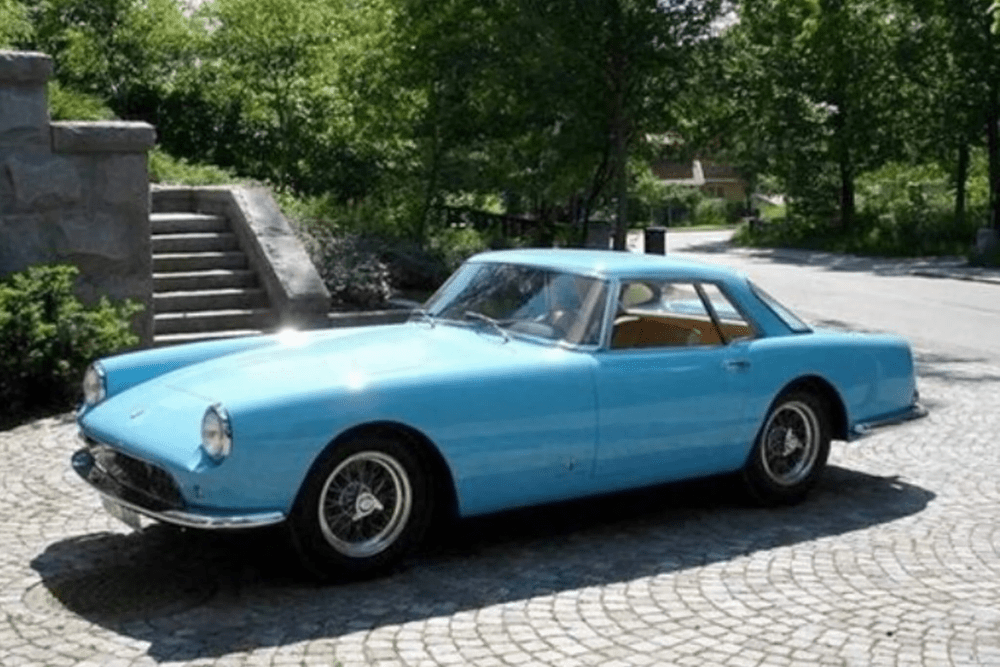
Another royal Ferrari aficionado in the late ’50s was Prince Bertil of Sweden. Prince Bertil, a son of the Swedish king, was known as “motorprinsen” (the motor prince) for his love of automobiles. In 1958, he obtained a custom Ferrari of his own: a 1958 Ferrari 250 GT Coupé Speciale by Pinin Farina (chassis 0853GT) built uniquely for him. Painted a light metallic blue with a luxurious tan interior, Bertil’s Ferrari had some distinctive design tweaks. Pinin Farina added an extra rear quarter window, turning it into a five-window coupé with a more panoramic rear glass – a feature that gave the car a notably airy cabin and a sleeker roofline. The tail was accented by horizontally mounted tail lights, differentiating it from the standard 250 GTs. Prince Bertil kept this Ferrari mostly at his summer residence in the south of France, enjoying it on Mediterranean holiday drives. However, by the early 1960s, as his royal duties increased, the Prince put the car into storage rather than sell it. Astonishingly, chassis 0853GT then sat hidden in storage for the next 40 years – a royal time capsule on wheels, eventually rediscovered and returned to the spotlight in the 21st century.
Prince Bertil’s fondness for Ferrari didn’t stop with that one-off Speciale. In 1959 he also acquired a standard Ferrari 250 GT Pininfarina Coupe (chassis 1471GT) – though “standard” is relative when you’re a prince. The car had a two-tone paint scheme (silver over white) with a red leather interior, and it actually came to him through an interesting connection. The Ferrari had been exhibited at the 1959 Frankfurt Motor Show by a European Ferrari distributor, and Prince Bertil purchased it from a close friend of Enzo Ferrari who ran the German Ferrari agency. It seems Enzo’s personal relationships with royal clients (or their associates) often helped facilitate these deliveries. Prince Bertil’s 250 GT Coupe changed hands a few times after his ownership and was eventually sold at a U.S. auction in 2019 for around $800,000 – not bad for a “regular” Ferrari coupe once graced by royal ownership.
Rounding out the 1950s, even dethroned royalty got in on the Ferrari action. One remarkable example was Princess Soraya of Afghanistan (also known as Princess Soraya Tarzi). Soraya had been the Queen consort of Afghanistan in the 1920s, celebrated for her role in modernizing women’s rights under King Amanullah. After the Afghan monarchy was exiled, Soraya lived in Europe – and by the late 1950s she apparently developed a taste for Italian sports cars. In 1959, a stunning sky-blue Ferrari 250 GT LWB California Spider (chassis 1575GT) was delivered to Princess Soraya in Paris.
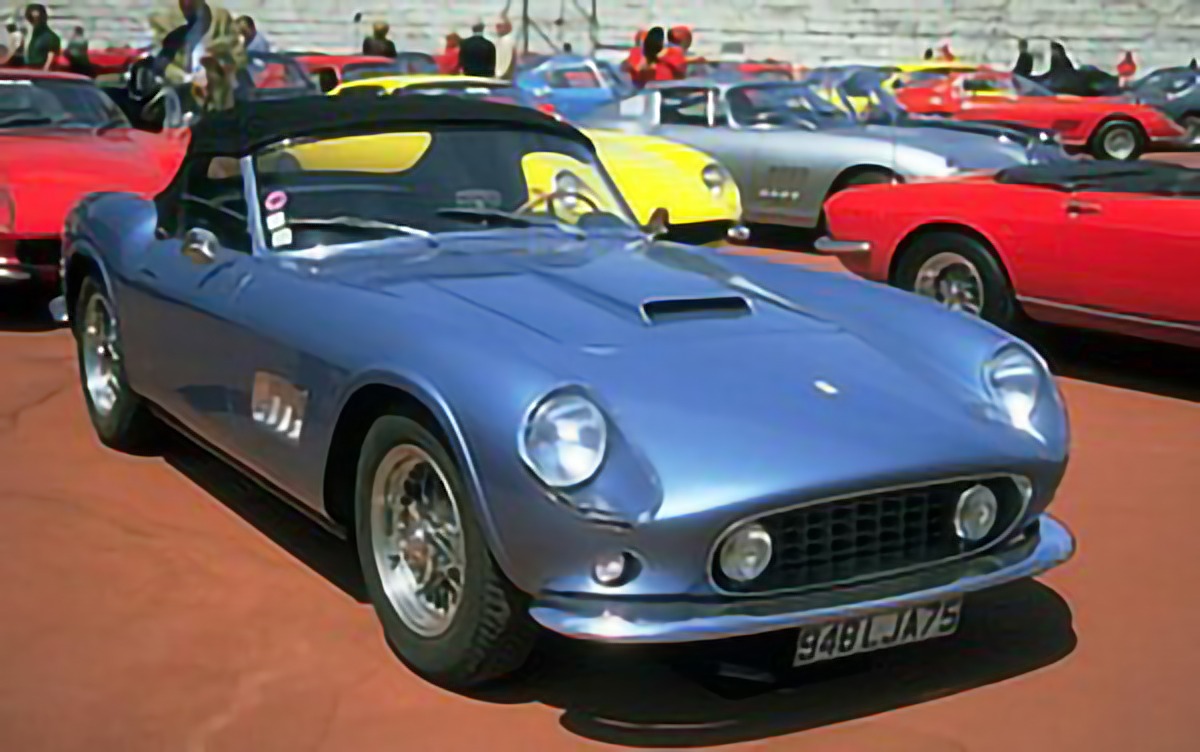
The California Spider, with its graceful open-top body by Scaglietti, was one of Ferrari’s most coveted models. Soraya’s example was finished in a delicate light blue, a color as chic as the princess herself. She kept the car for over a decade, reportedly driving it around the French Riviera. By 1970 she sold the California Spider – and the buyer was none other than Jean Todt (future Ferrari F1 team boss), who was a young enthusiast at the time! It’s a small Ferrari world indeed. The ex-Queen’s California went on to have a storied life of its own, but its first owner being a trailblazing princess adds an extra layer of intrigue to its history.
The 1960s: Ferrari Fever Spreads Through Royal Ranks
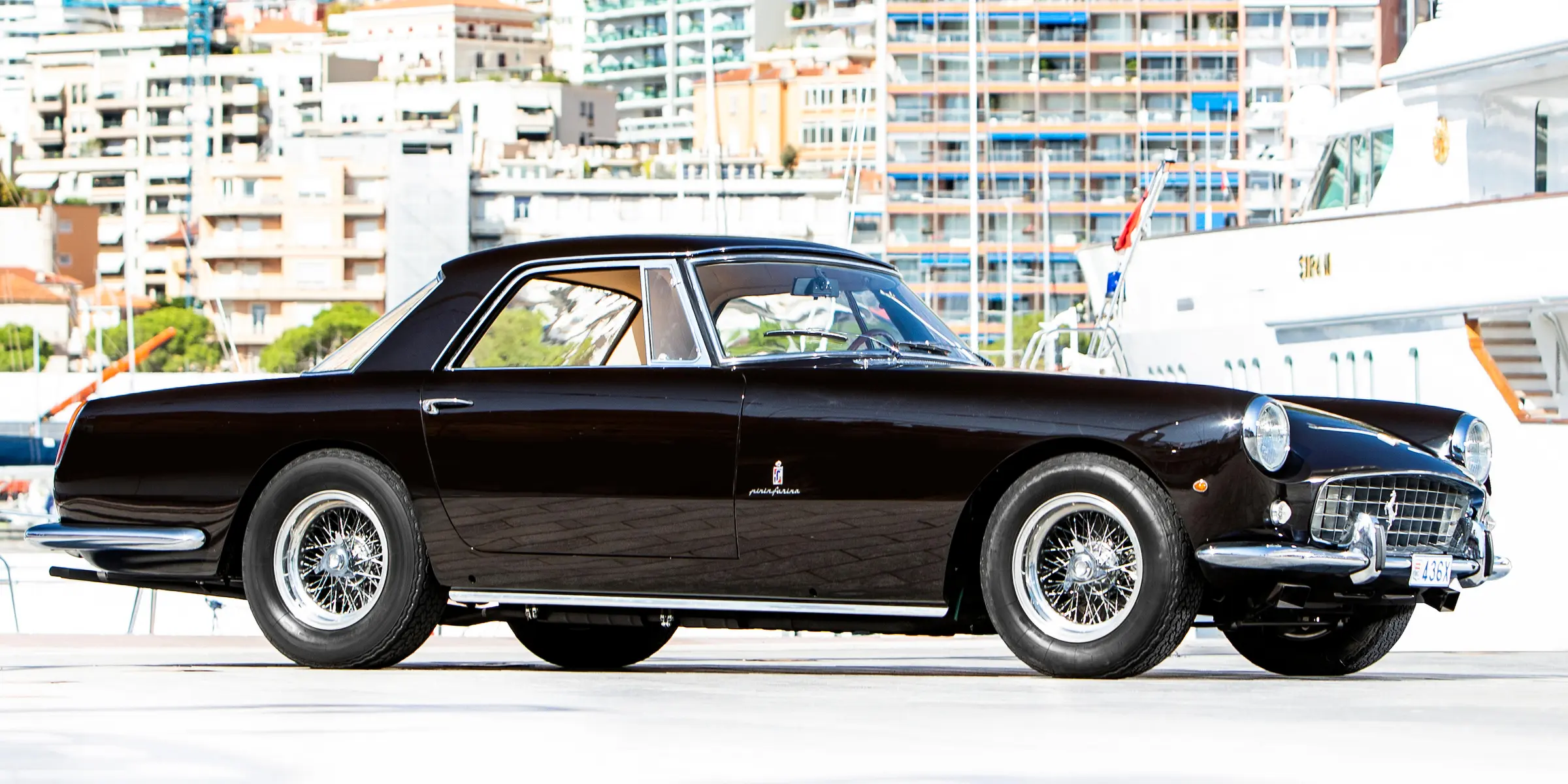
Entering the 1960s, Ferrari continued to find favor with royal customers, and not just in Europe. In October 1960, Prince Charles of Belgium, Count of Flanders (the younger brother of King Leopold III), special-ordered a Ferrari to suit his formal needs. This was a 1960 Ferrari 250 GT Coupé by Pininfarina (chassis 1823GT), painted in a stately shade of Marrone Testa di Moro (dark chestnut brown). While the body was the standard Pininfarina coupe design for that era, Prince Charles personalized the details: he requested a flag holder be fitted on the front bumper for ceremonial use, a grab-handle on the passenger side of the dashboard, black headliner upholstery, and other custom interior trim to fit his taste. In essence, it was a dignified grand touring car that could double as a semi-official state vehicle when needed. Prince Charles kept chassis 1823GT for some years; it passed through a few owners afterward and even appeared at a Bonhams auction in 2019, though it failed to meet its reserve price. Even unsold, the car stood as a handsome example of how a royal buyer could blend Ferrari performance with diplomatic decorum – complete with royal flag fluttering on the front.
By the mid-1960s, Ferrari’s reputation as the pinnacle of grand tourers meant that any autophile royal worth his salt wanted one. The Ferrari 500 Superfast, built from 1964 to 1966 in a limited run of 36 units, became the car for princes and kings who desired the fastest, most exclusive coupe of the day. We’ve seen that Prince Bernhard bought one (and even had Ferrari swap in a different engine for him), but he was in good company. The Shah of Iran, Mohammad Reza Pahlavi, owned two 500 Superfasts; Prince Sadruddin Aga Khan ordered one; and other aristocrats from Europe to the Middle East were on the client list. Ferrari essentially reserved the Superfast for VIPs – in the words of one journalist, it was a model “priced for elite clientele” and aimed at those for whom cost was no object. King Faisal II of Iraq reportedly had interest in Ferraris before his untimely demise in 1958, and King Hussein of Jordan would later become a Ferrari owner (albeit in the 1980s). Even so, another Middle Eastern royal did acquire a Ferrari in the 1960s: Prince Moulay Abdallah of Morocco (the brother of King Hassan II, and son of the aforementioned Mohammed V). In 1965, Prince Abdallah ordered a Ferrari 275 GTS convertible (chassis 08015). He specified it in an elegant Verde Pino (pine green) exterior with a crème interior – a fittingly lush combo for a summer cruiser in the Moroccan sun. The 275 GTS was Ferrari’s top-of-the-line convertible at the time, and Prince Abdallah’s car was one of only 200 built. Decades later, that very car ended up in the collection of an American Ferrari connoisseur, but its royal origin gives it a special distinction among 275s.
Back in Belgium, Princess Lilian de Réthy was ready for her next Ferrari by the late 1960s. Having enjoyed her 1957 250 GT Speciale for ten years, she commissioned a new bespoke car – this time based on Ferrari’s latest chassis. In 1967 Pininfarina built the Ferrari 330 GTC Speciale (chassis 09439) for Princess Lilian. Debuted at the Brussels Motor Show in 1967, this was an exclusive series – only five 330 GTC “Speciales” were ever made, all for VIP clients. Chassis 09439 was finished in Azzurro Aurora (a pale metallic blue) with a black leather interior, a color scheme far more subdued and elegant than the bright reds of Ferrari’s racing cars. Its bodywork was subtly altered from the standard 330 GTC: the nose had a sharper profile with pop-up foglamps set into the grille, and the tail was reworked with a concave rear window and buttressed pillars, presaging some cues of the upcoming 365 GT 2+2. Essentially, the Speciale was a tailored suit on the 330 GTC chassis. Princess Lilian adored this car and held onto it for 35 years – she kept the 330 GTC Speciale in her ownership until her passing in 2002. Her loyalty to Ferrari had spanned three distinct models and nearly two decades, marking her as one of Maranello’s most devoted royal customers. It’s poetic that the very last Ferrari she owned, that sky-blue 330 GTC Speciale, was displayed at the Museo Enzo Ferrari in a 2018 exhibition called “One of a Kind” – a nod to the uniqueness of her car and her patronage.
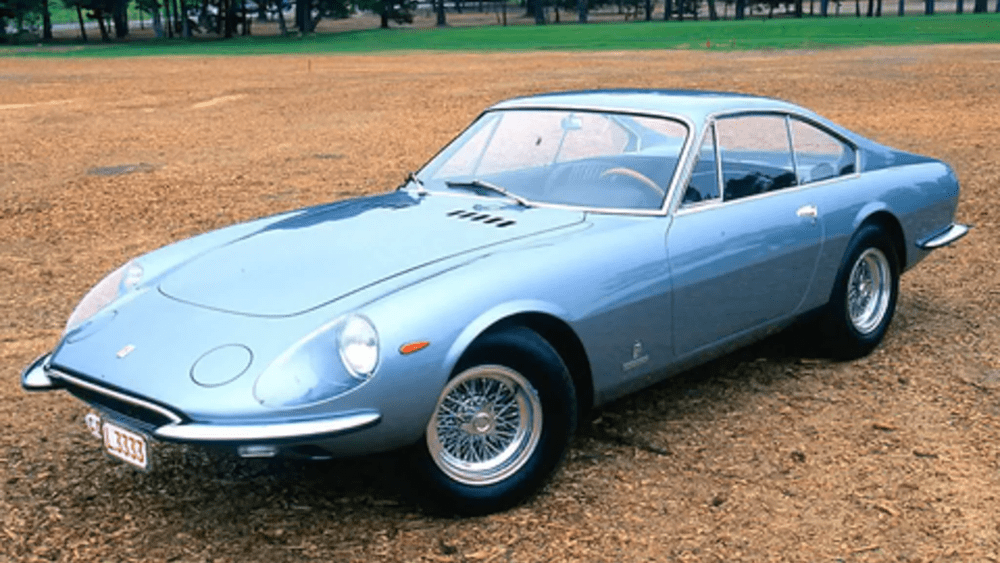
As the 1960s closed, Ferrari had firmly established itself as a purveyor of automotive royalty – both figuratively and literally. From Belgium to Morocco, Sweden to Afghanistan, a select group of royal enthusiasts had made Ferraris their personal chariots. Some, like Prince Bernhard and Princess Lilian, amassed collections and continuously custom-ordered new models. Others, like King Leopold, King Mohammed V, and Prince Bertil, obtained just one or two prize Ferraris that became legendary over time. By around 1970, nearly every Ferrari model had seen royal ownership in one form or another, whether it was a full bespoke one-off or a limited-series supercar.
Epilogue: The Legacy of Royal Ferraris
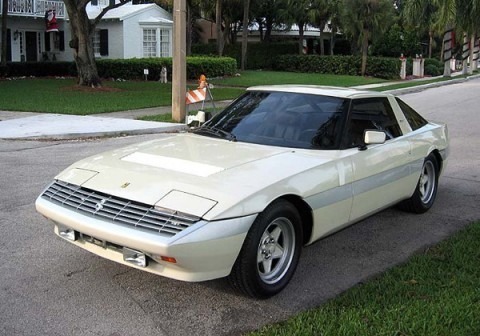
Our narrative stops before the 1970s go into full swing, but it’s worth noting that the trend of royal Ferraris certainly didn’t end there. In the decades that followed, the torch was picked up by a new generation of monarchs and princelings. The oil-rich rulers of the Middle East in particular emerged as some of Ferrari’s most extravagant clients. Saudi Arabia’s King Saud had sons who were early Ferrari importers, and by the 1980s his successors King Khalid and King Fahd oversaw a royal family fleet that included bespoke Ferraris. One striking example was the 1983 Ferrari Meera S, a unique one-off based on a Ferrari 400i and designed by Giovanni Michelotti for a Saudi prince. The Meera S – with its radical wraparound glass and stretched body panels – was the last Ferrari ever penned by Michelotti, built explicitly for Saudi royalty. And in the tiny Sultanate of Brunei, the Sultan’s family amassed a hoard of custom Ferraris in the 1980s and ’90s that could fill an entire article on its own.
Looking back to the 1950s and ’60s, however, there is a special charm to those early royal Ferraris. Each was a bespoke creation with a story, a chassis number, and a distinguished owner’s name attached. They weren’t just status symbols; often they reflected a genuine passion for automobiles in people who just happened to be princes and kings. Enzo Ferrari, ever the showman, certainly appreciated the cachet that came with royal clientele – but he also understood that a king behind the wheel of a Ferrari was the ultimate endorsement of the marque’s mystique.
🔗 Read more: The Sultan of Brunei’s Special Car Collection
In the end, these Ferrari tales from royal courts remind us that driving excitement knows no social class. Be it a young Belgian king sneaking a spin in his father’s 160-mph convertible, or a Swedish prince motoring through Nice in a sky-blue coupé, the thrill of a Ferrari was a great equalizer between royalty and the rest of us. Decades later, many of these very cars have been restored and displayed for new generations to admire, often with their royal provenance proudly noted. They stand as glittering jewels in Ferrari’s history – Ferraris truly fit for a king, and proof that the passion for the prancing horse can unite monarchs and commoners alike under the banner of pure automotive enthusiasm.

ABOUT THE AUTHOR
Andreas Scheidl
Italian classic car enthusiast with German roots. Renowned as a respected figure in the classic car community, he serves as a jury member at various international concours d'elegance, including the Classic Gala Schwetzingen and Mantova. As a content creator, Andreas passionately shares his profound knowledge and appreciation for vintage automobiles. His heart beats for cars designed by Giovanni Michelotti, showcasing his discerning taste and dedication to preserving the timeless elegance of automotive history.
More stories by Andreas Scheidl ↗CONTINUE READING
Posts You Might Like
Fiat Panda Cabrio: The Italian Coachbuilders Who Opened Giugiaro’s Box
From Moretti’s Panda Rock to Italdesign’s experimental Strip, Maggiora’s four-wheel-drive convertible and Stola’s remarkable Destriero, the history of the open-top Panda reveals an unexpected chapter in Italian coachbuilding. When Giorgetto Giugiaro designed…
Read story
Gabriele d’Annunzio and the Cult of the Automobile
There was a time when the automobile had not yet become part of the landscape. It announced itself from afar through the beating of an engine, the smell of petrol and hot…
Read story
Fiat 1400: The Last Great Playground of the Carrozzieri
From Touring and Abarth to Farina, Ghia, Vignale, Boneschi, Bertone, Viotti and the smaller carrozzerie, the new Fiat quickly became one of the richest bases for Italian special bodies in the early…
Read story
How a Swiss Dealer Challenged Ferrari: The Story of Monteverdi
How Peter Monteverdi went from Swiss Ferrari dealer to creator of rare Frua and Fissore-bodied GTs, the Hai supercar and luxury off-roaders.
Read story
THE CONVERSATION
Comments 0
Share a memory, a period photograph or a documented detail about this story.