
Rolls-Royce Camargue: The History Told by Paolo Martin and Giuseppe Agostini
There are cars that become famous because everybody agrees on them. Then there are cars like the Rolls-Royce Camargue.
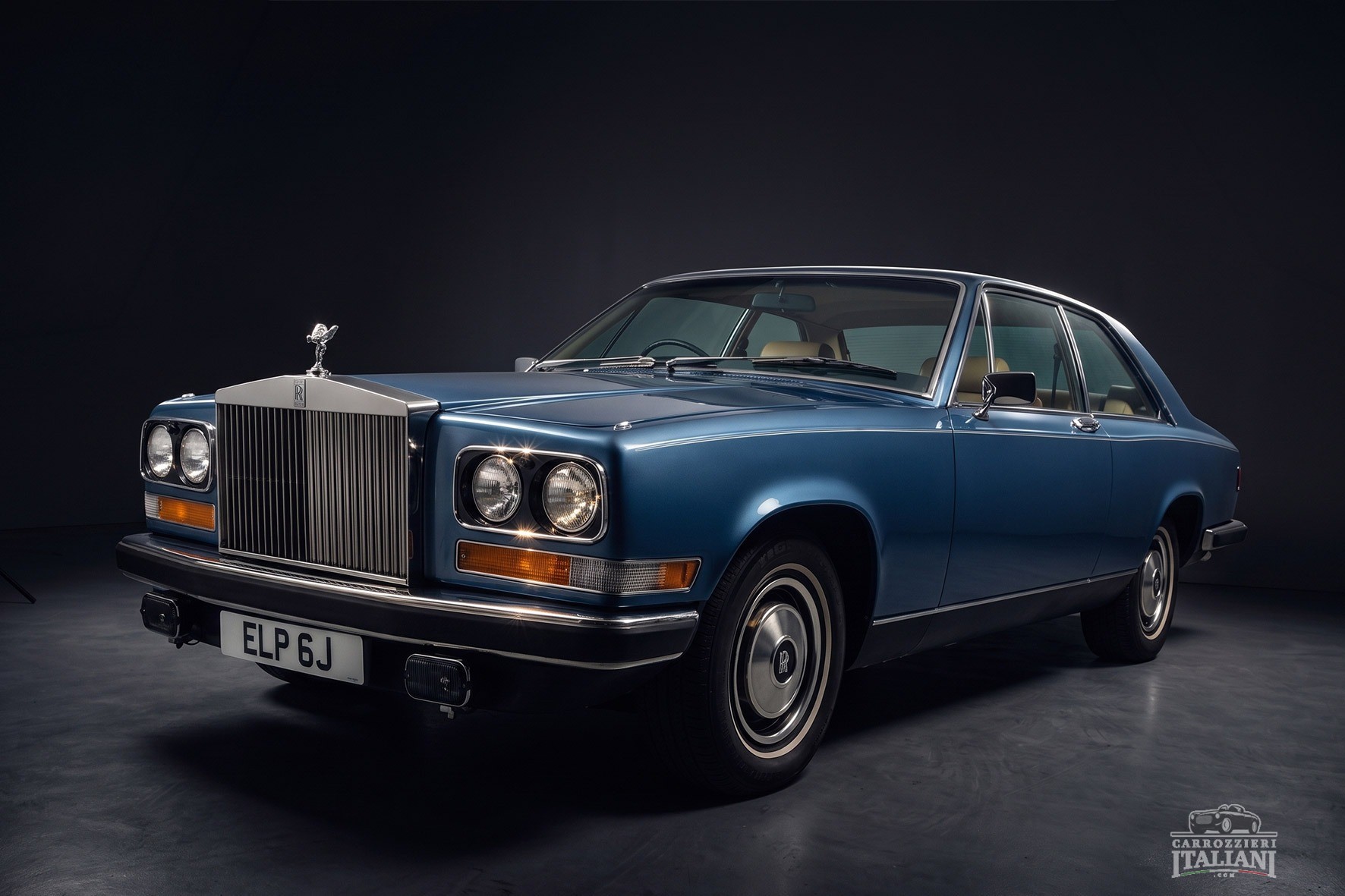
Launched in 1975, designed by Paolo Martin at Pininfarina and manufactured by Rolls-Royce Motors until the mid-1980s, the Camargue has always occupied a complicated corner of automotive history. It was rare, extremely expensive, technically ambitious and visually impossible to ignore. It was also the first post-war production Rolls-Royce not designed in-house, excluding the traditional coachbuilt derivatives that had always formed part of the marque’s history.
That alone would make it important. But the Camargue is more than an unusual Rolls-Royce with an Italian signature. It is the story of two worlds meeting at a difficult moment: Crewe, with its ceremonial idea of luxury, and Pininfarina, with its modern, clean and architectural approach to form.
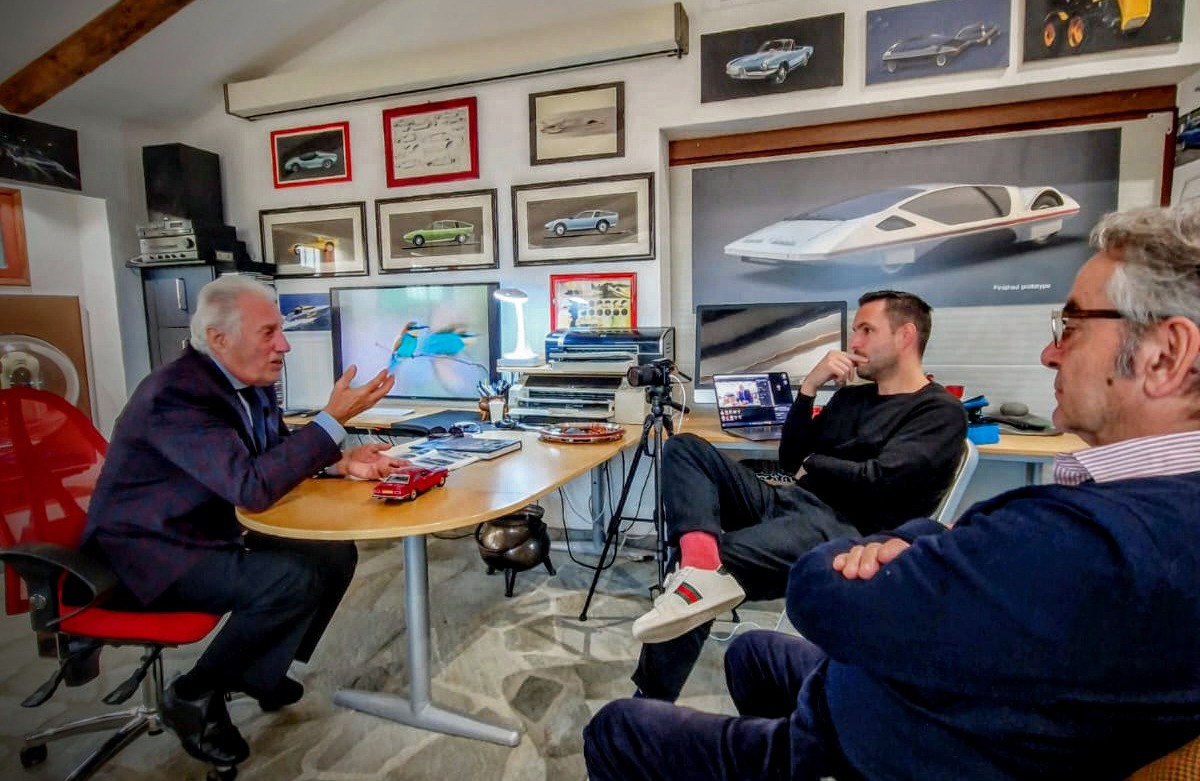
It is also a car best understood through two direct voices. Paolo Martin explains how the shape was born inside Pininfarina. Giuseppe Agostini of British Motors brings the perspective of the Rolls-Royce world: the clients, the technical reality, the restoration work and the way such a car is understood by people who have lived with these machines for decades.
One tells the story of the pencil. The other tells the story of the car after the pencil had done its work.
A Rolls-Royce Looking for Italy
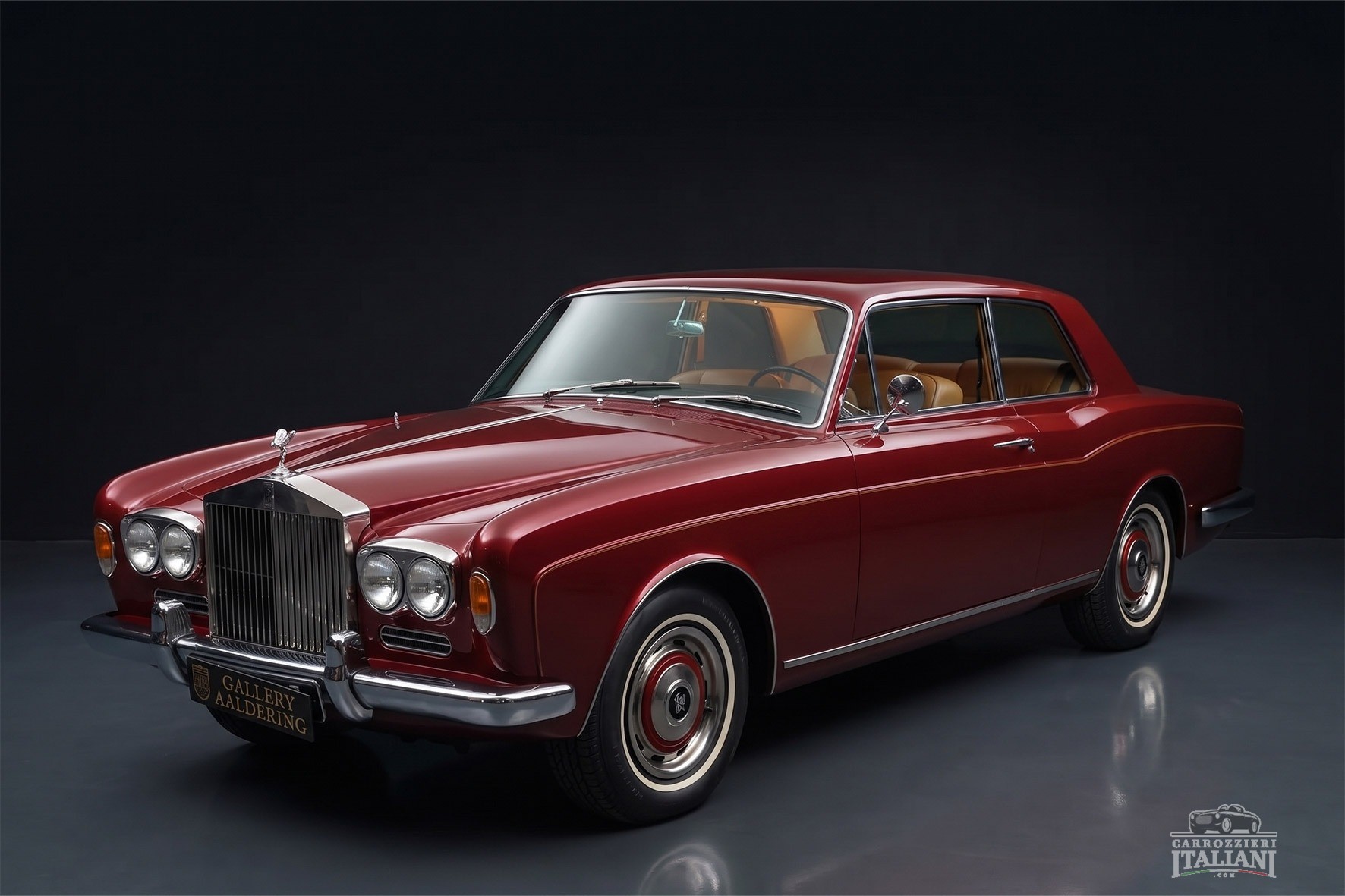
By the end of the 1960s, Rolls-Royce already had a strong two-door tradition. The Silver Shadow had modernised the marque, while the Mulliner Park Ward two-door saloon and the Corniche continued the idea of elegant, expensive motoring for a very specific clientele.
But the car that would become the Camargue had to be different.
Rolls-Royce wanted a model that would stand apart from the existing range. Not a revolution in the loud sense of the word, because Rolls-Royce does not really do noisy revolutions, but something dramatically different from the usual product line.
That decision was not without risk. Rolls-Royce customers were not buying fashion. They were buying permanence, dignity and reassurance. A new flagship coupé with a foreign design identity could attract attention, but it could also disturb the faithful.
This is where Pininfarina entered the story.
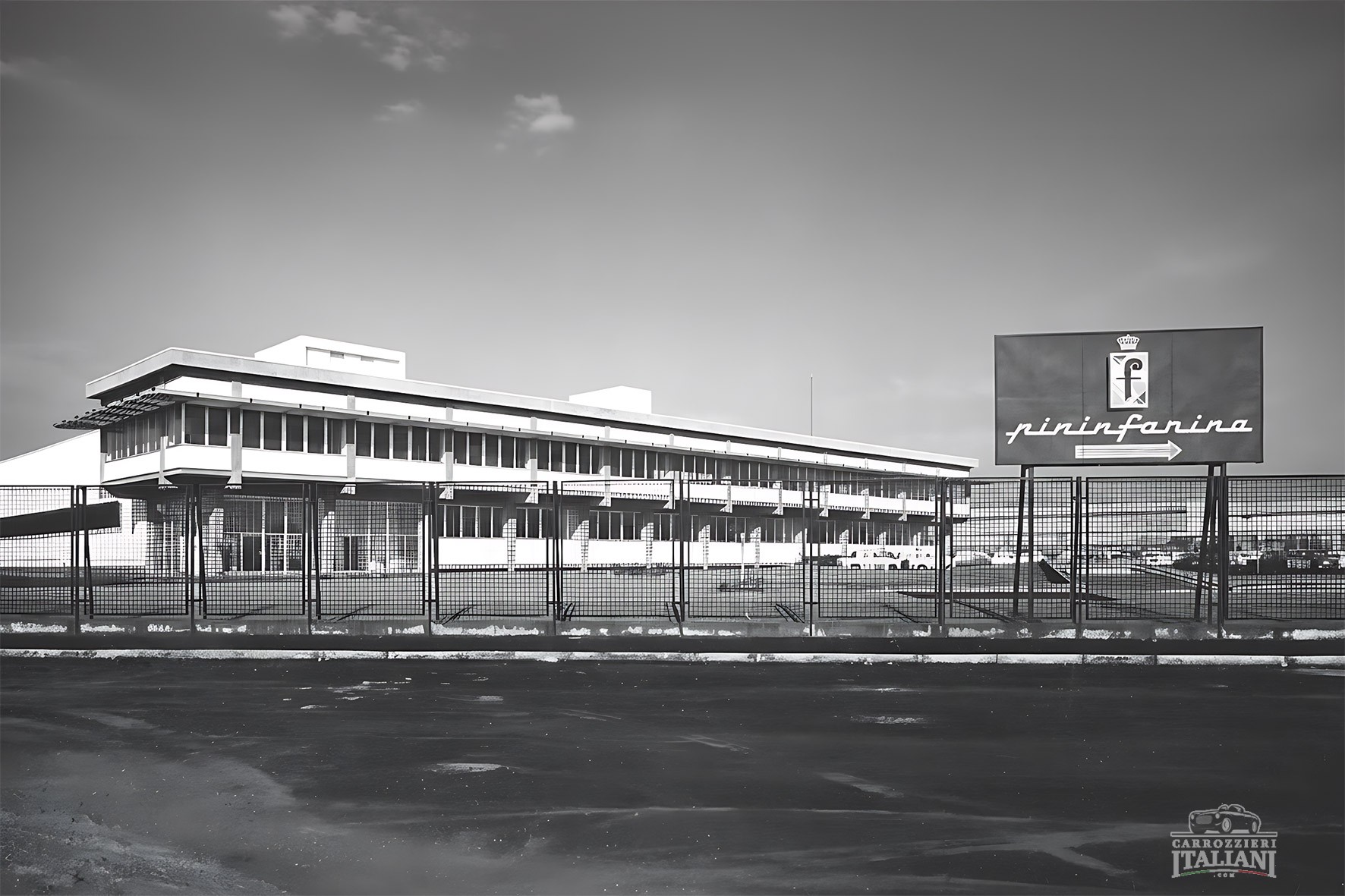
Rolls-Royce was not simply asking an Italian studio to make a prettier version of an existing car. It was asking Pininfarina to imagine how a modern, owner-driver Rolls-Royce could look without losing the authority of the marque.
In other words, the Camargue was not born because Rolls-Royce wanted to become Italian. It was born because, for one very expensive coupé, Crewe wanted to see what British luxury might look like through Italian eyes.
Paolo Martin and the Freedom of Pininfarina
As Paolo Martin told Carrozzieri Italiani, the atmosphere at Pininfarina in those years was very different from the highly structured design processes we know today. Projects did not always begin with long presentations, marketing committees or carefully prepared documents. Sometimes they arrived almost naturally.
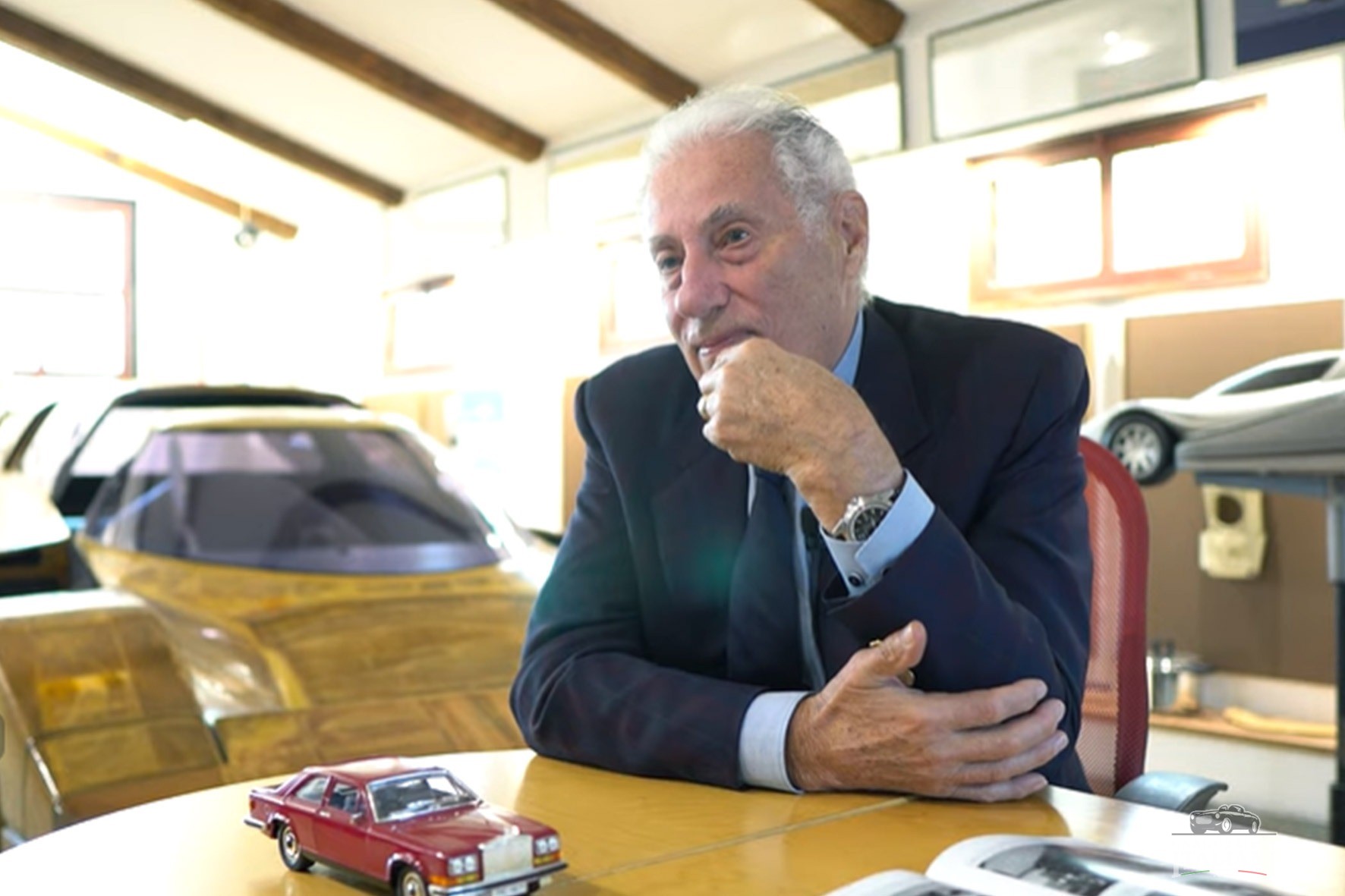
“In Pininfarina, projects arrived a bit like when it starts to rain,” Martin recalls.
It is a beautiful image, and it says a lot about that period. According to Martin, there was not always a formal briefing in the modern sense. Often it was a question of intuition. Martinengo would move through the studio, look at the designers, and assign the work to the person he felt was best suited to that particular project.
🔗 Read more: Paolo Martin: A Design Maestro’s Journey Through Automotive History
The instruction could be very simple. Almost dangerously simple.
Do this. Do what you want.
For Martin, that was not a lack of organisation. It was one of the reasons why Pininfarina produced so many new models between 1967 and 1970. There was trust, speed and freedom. Designers could move from the drawing board to the workshop without being trapped inside layers of corporate ritual.
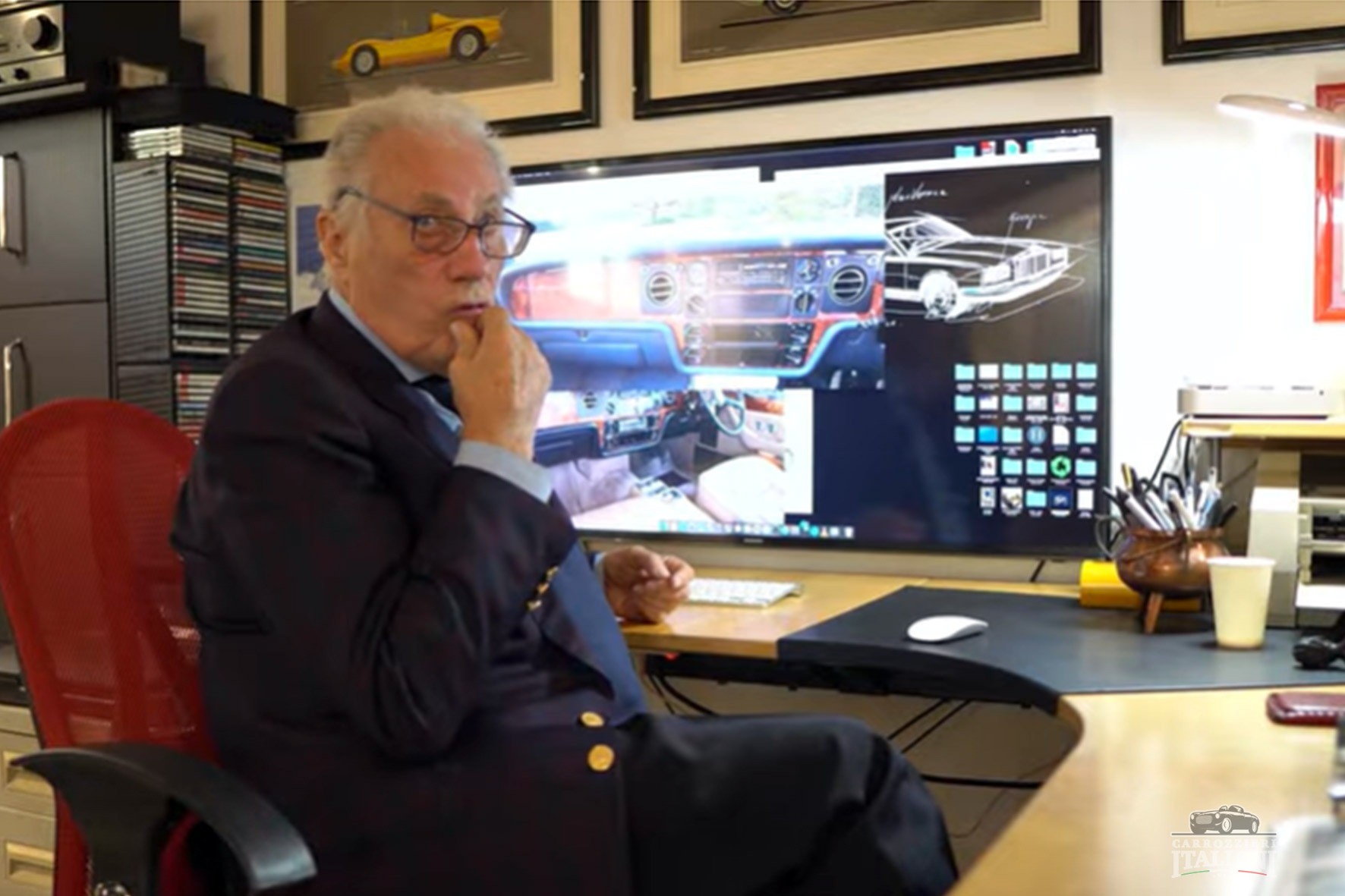
The Camargue belongs to that world.
It did not come from a cold committee exercise. It came from a creative culture in which responsibility was placed directly in the hands of the designer. And Martin was exactly the right kind of designer for such a challenge: rational, elegant, precise, and uninterested in decoration for decoration’s sake.
The Brief That Was Almost Not a Brief
Martin’s memory of the Camargue project removes some of the mythology that normally surrounds such an important car.
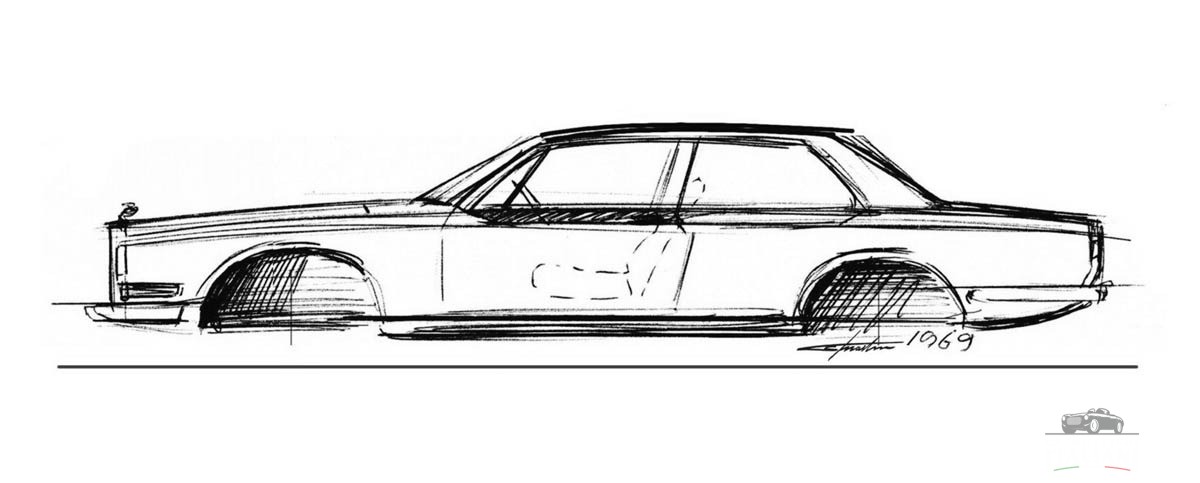
Rolls-Royce sent Pininfarina a base car, chassis information and technical drawings. Everything was naturally tied to British engineering and, as Martin remembers, the measurements were in the Anglo-Saxon system. For an Italian design studio, this meant translating not only numbers, but also a whole way of thinking.
The request was clear in spirit: Rolls-Royce wanted an exclusive high-end coupé with an Italian design identity.
But Martin insists on an important point. The design could not start from a fantasy shape. It had to start from the real car. A designer could not create a beautiful form in isolation and then hope to force it onto the chassis later. That, he explains, would risk damaging the whole project.
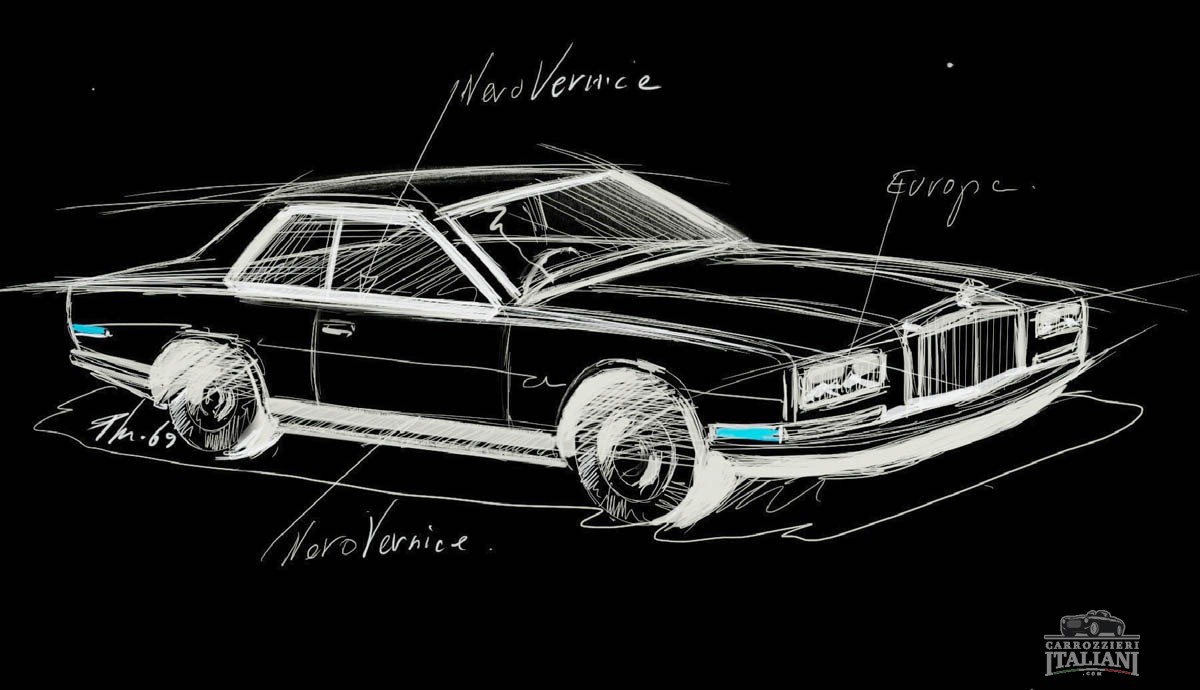
This is one of the keys to understanding the Camargue. It was not a dream car drawn without limits. It was a Pininfarina design built around Rolls-Royce proportions, Rolls-Royce engineering and Rolls-Royce expectations.
And those expectations were heavy.
A Rolls-Royce must have presence. It must have dignity. It must not look nervous, fragile or temporary. Martin had to introduce Italian modernity without making the car appear less like a Rolls-Royce.
That is much harder than simply drawing a beautiful coupé.
Born in a Dark Moment
Giuseppe Agostini of British Motors places the Camargue in a much wider historical frame.
British Motors, based in Villafranca, has worked for around forty years almost exclusively on Rolls-Royce and Bentley motor cars. Agostini describes the company as a specialist reality with deep ties to the Rolls-Royce world, particularly with older models rather than the more recent cars. His perspective is therefore not that of a casual observer, but of someone used to dismantling, restoring, studying and understanding these cars in detail.
For Agostini, the Camargue was born in a “dark moment” for Rolls-Royce.
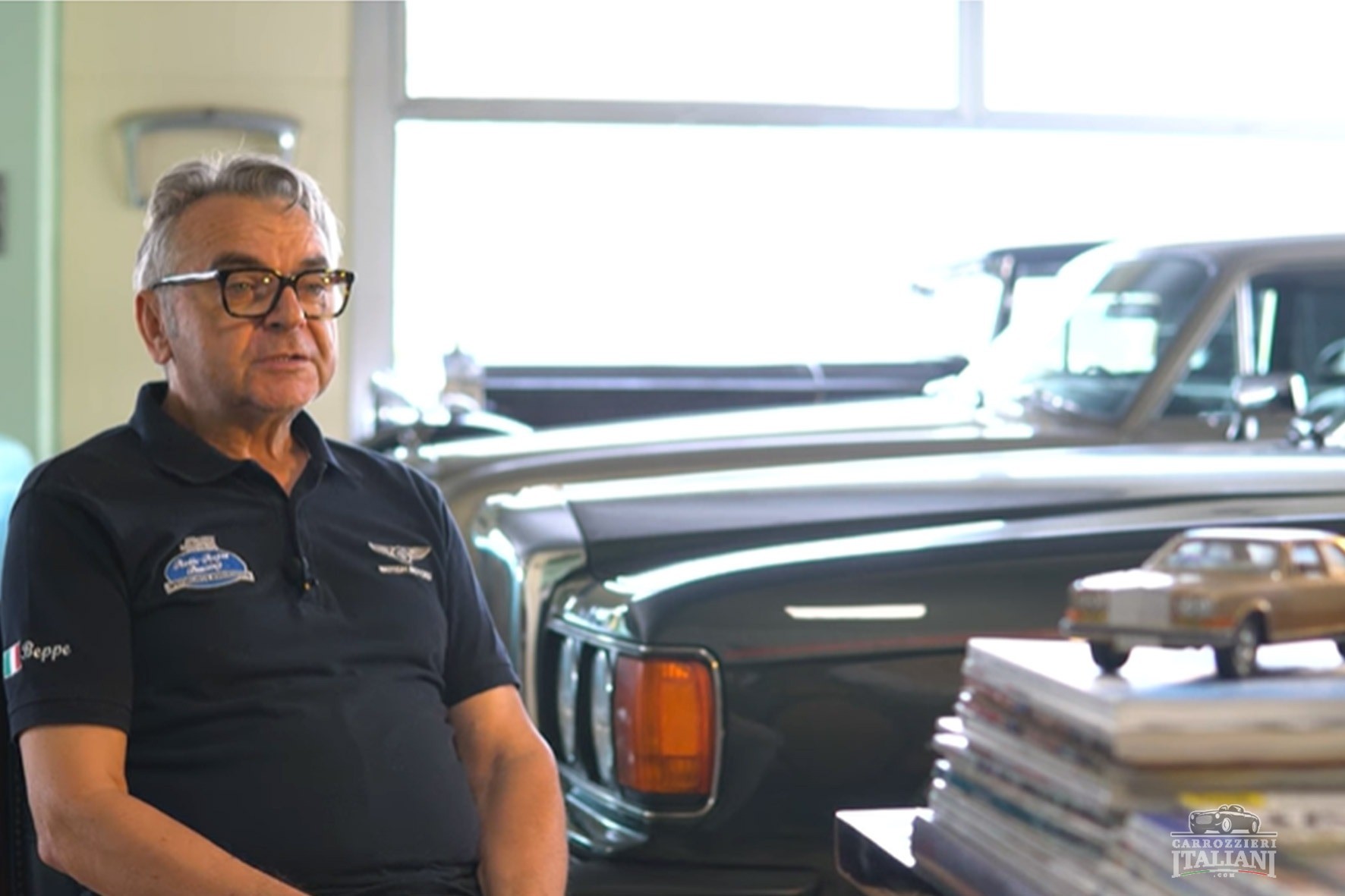
The early 1970s were deeply complicated for the company. The crisis linked to the RB211 aircraft engine pushed Rolls-Royce into one of the most difficult phases of its history. The aerospace side was nationalised, while the motor car division continued separately as Rolls-Royce Motors. It was a corporate trauma that would have long consequences, including the complex question of the marque’s name, symbols and rights that would return decades later during the Volkswagen and BMW chapter. Then came the oil crisis.
🔗 Read more: The Italian Job: When Rolls-Royce Let Italy Do the Talking
Agostini remembers the period with a simple and powerful image: in Italy, on Sundays, people were riding bicycles because of the fuel restrictions. It is hard to imagine a worse atmosphere in which to launch one of the richest, most expensive and most luxurious cars in the world.
That is what makes the Camargue so fascinating. It was conceived as a statement of abundance at the very moment when abundance had become more complicated.
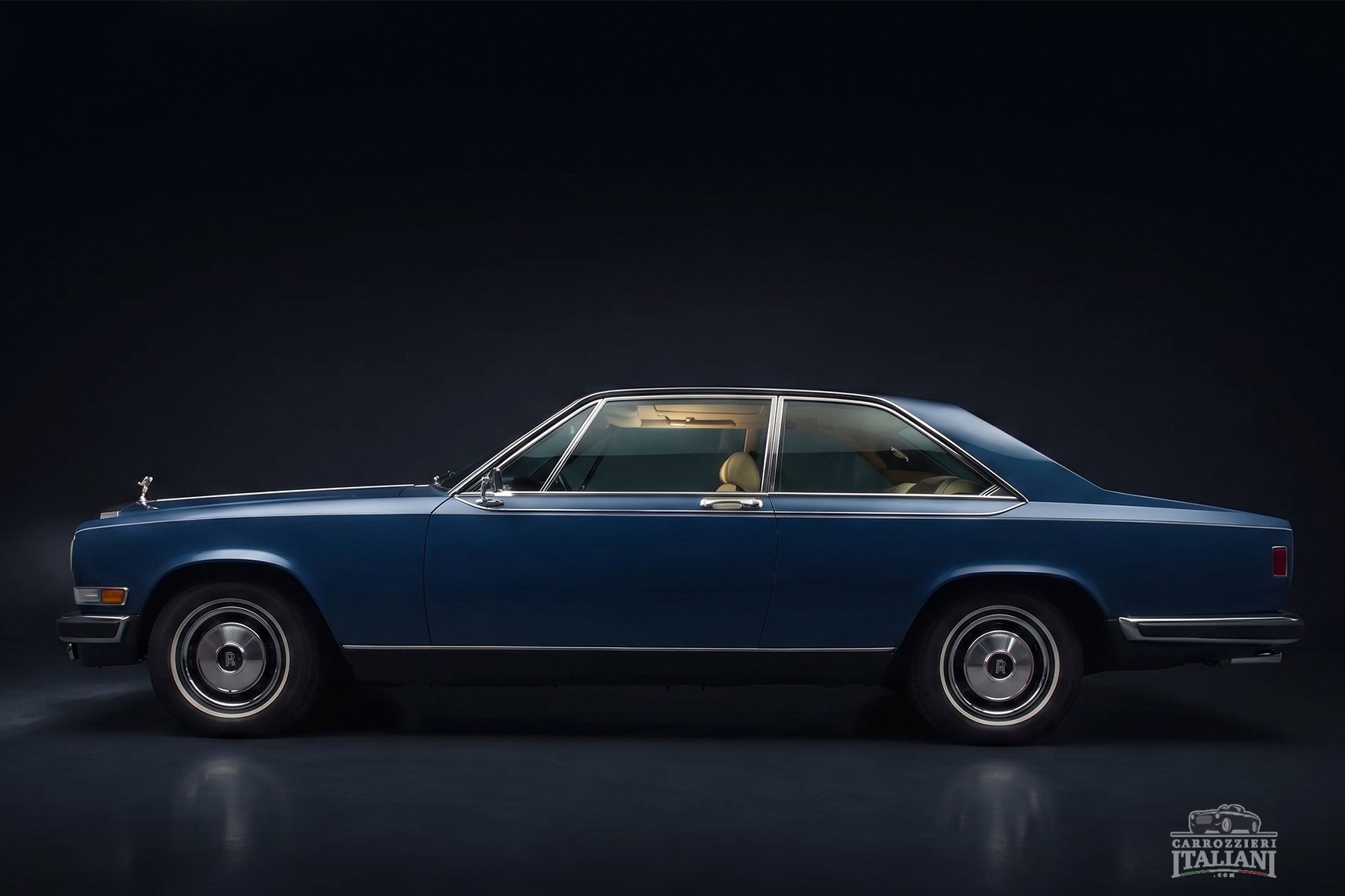
According to Agostini, strikes, industrial problems and the wider crisis helped delay the car’s presentation from the early 1970s to 1975, when it was shown to journalists in Sicily and at the Geneva Motor Show.
This connects perfectly with Martin’s memory. The design itself moved quickly. The world around it did not.
Three Months of Design, Six Years of History
One of the most surprising elements in Martin’s recollection is the speed of the creative process. He remembers that the model phase took around two and a half to three months.
By today’s standards, that sounds almost impossible. A modern luxury car project passes through years of digital modelling, customer clinics, brand committees, safety reviews, aerodynamic analysis and internal politics. At Pininfarina in that period, the process could still be more direct, more physical and more instinctive.
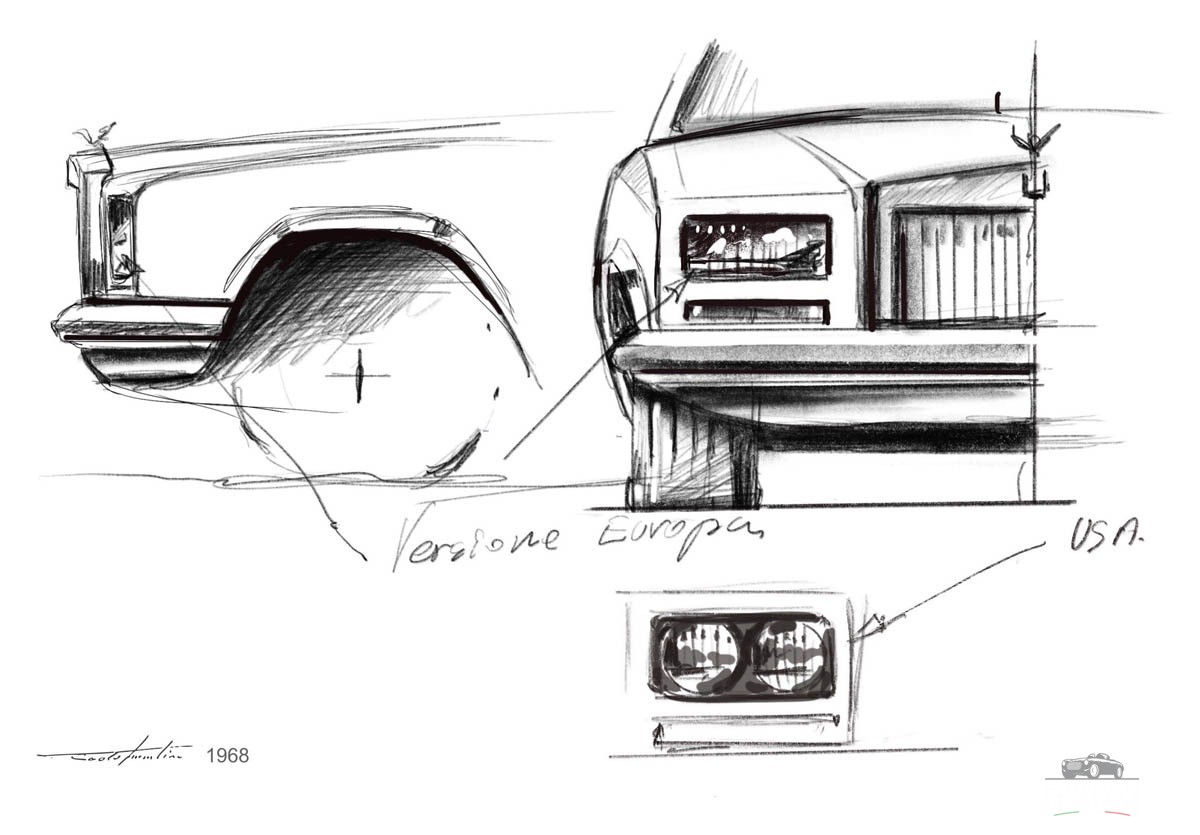
So the Camargue contains a strange contradiction. In Martin’s memory, the design was created quickly. But the car itself took years to reach the public.
The first prototype, known as Delta, was already on the road in the early 1970s. Yet the production Camargue was only presented in March 1975. The Camargue was conceived in one world and launched into another.
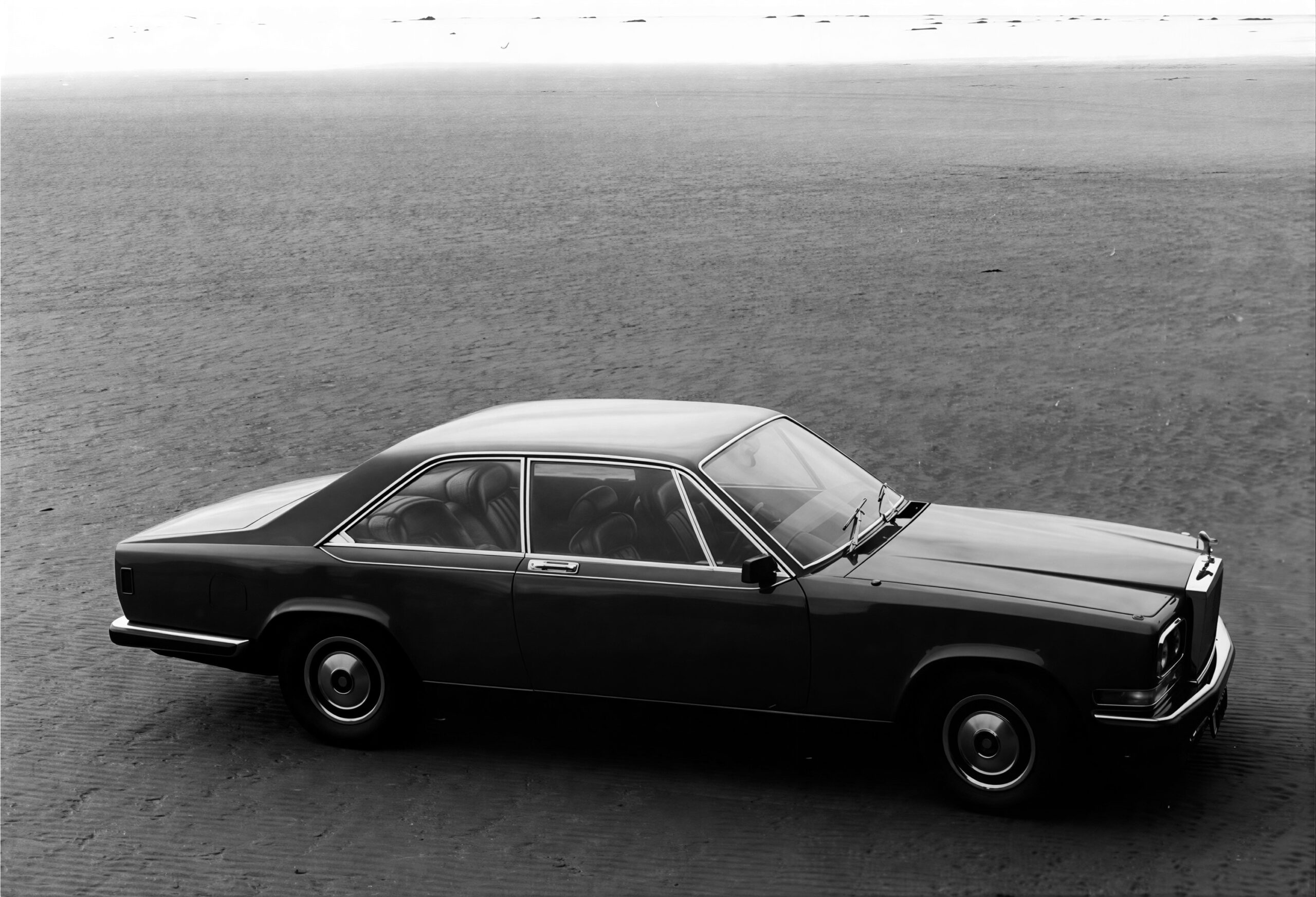
By the time it reached the market, the idea of a vast, extremely expensive V8 coupé had become more complicated. Luxury was still desirable, of course. It always is. But in the mid-1970s, it had to carry more cultural weight.
The Shape: Sharp, Formal and Unapologetic
The Camargue’s shape has always divided opinion because it refuses to behave like people expect either a Rolls-Royce or a Pininfarina car to behave.
It is not softly aristocratic like a Silver Cloud. It is not delicate like many Italian coupés of the period. It is wide, formal, angular and almost architectural. The surfaces are clean, the glasshouse is crisp, the waistline is strong and the front end is dominated by the unmistakable Rolls-Royce Pantheon grille, here inclined by seven degrees rather than standing perfectly vertical as tradition demanded. It was a subtle change, but enough to give the Camargue one of its most recognisable visual signatures.
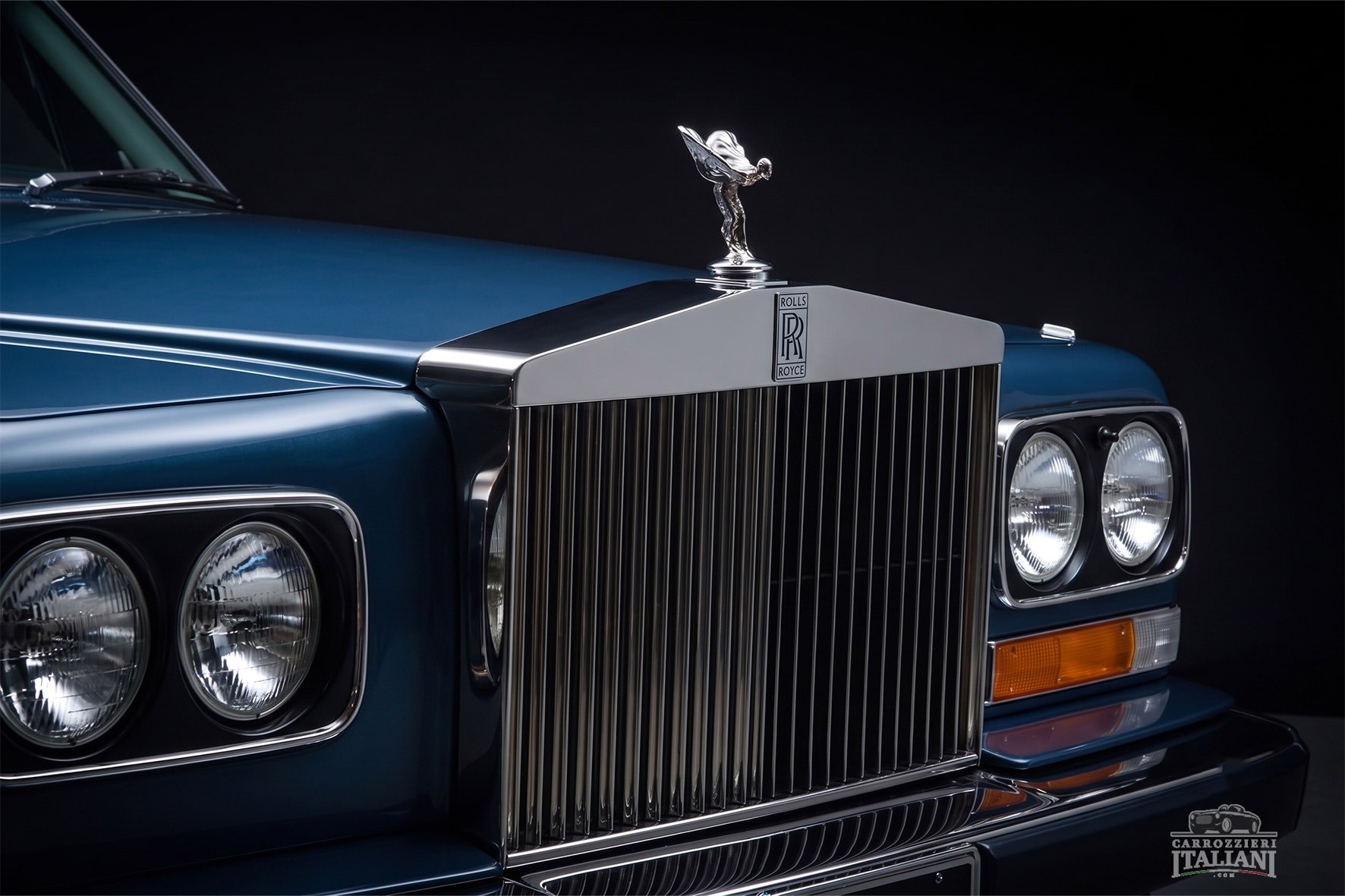
Agostini also highlights the proportional work carried out around the car: the widening of the body, the lowering of the grille and the attempt to give the Camargue a presence different from the Silver Shadow. In his view, some of those ideas would later be echoed in the Rolls-Royce Spirit generation more than in the Silver Shadow itself.
This is an important point. The Camargue should not be seen only as an isolated oddity. It was also, in some ways, a preview of a later Rolls-Royce visual language: lower, wider, more formal, more horizontal. Then there were the details.
Agostini points to one of those small Rolls-Royce touches that says a lot about the car’s intended clientele: the exterior door handle. Its movement was effectively reversed compared with a conventional handle, a pull-down action designed not only as a detail of refinement, but also to avoid scraping the painted bodywork with rings.
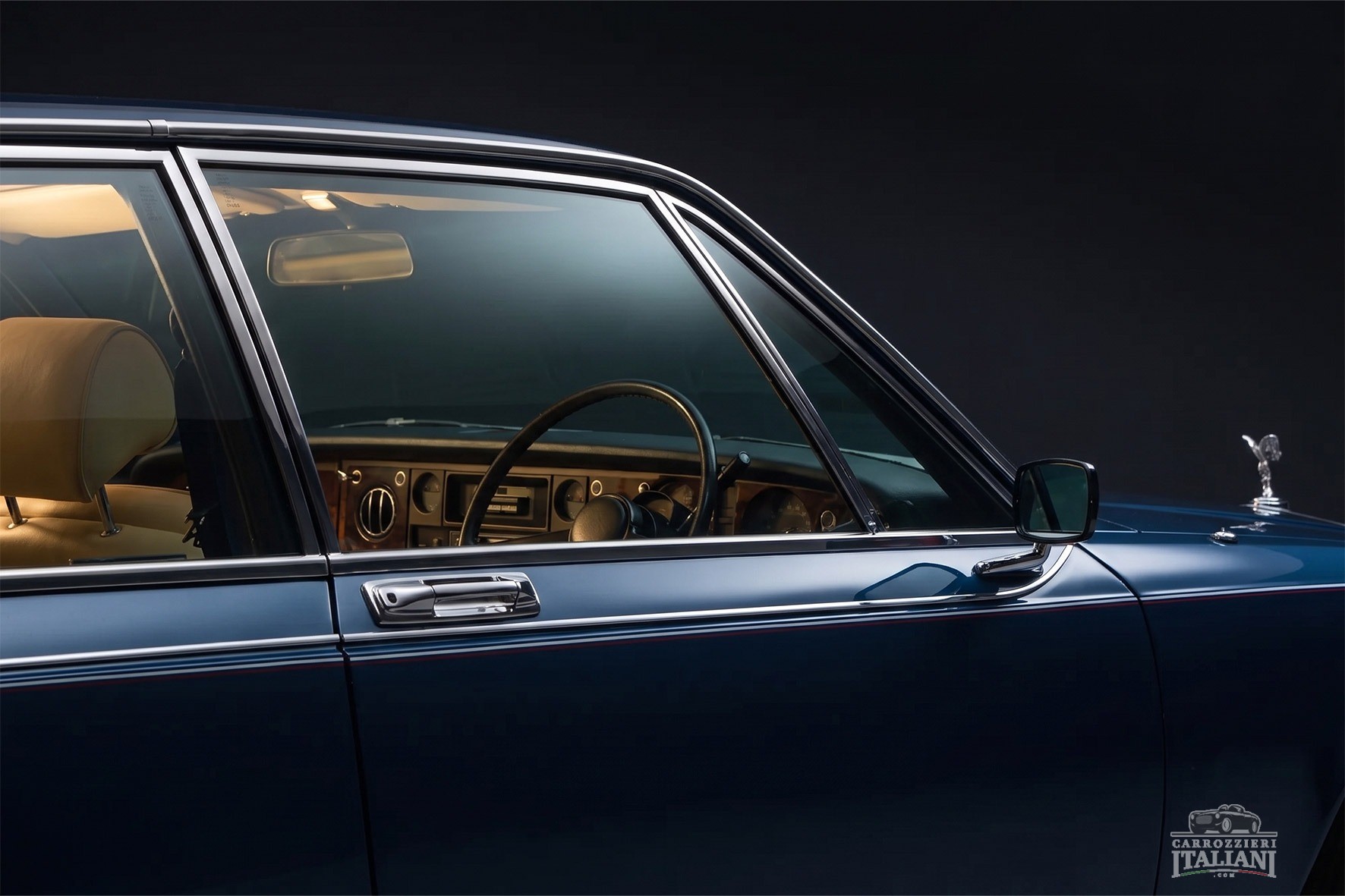
This was not a car for someone worried about finding a parking space at the supermarket. It was a car for a customer wearing jewellery while opening the door of one of the most expensive automobiles in the world. That small handle tells us almost as much as the grille.
Silver Shadow Bones, Camargue Ambition
Mechanically, the Camargue was related to the Silver Shadow and Corniche. It used the familiar 6.75-litre Rolls-Royce V8 and automatic transmission, with the refinement expected from the marque.
But Agostini is clear: the Camargue should not be treated as a simple Silver Shadow with a different body.
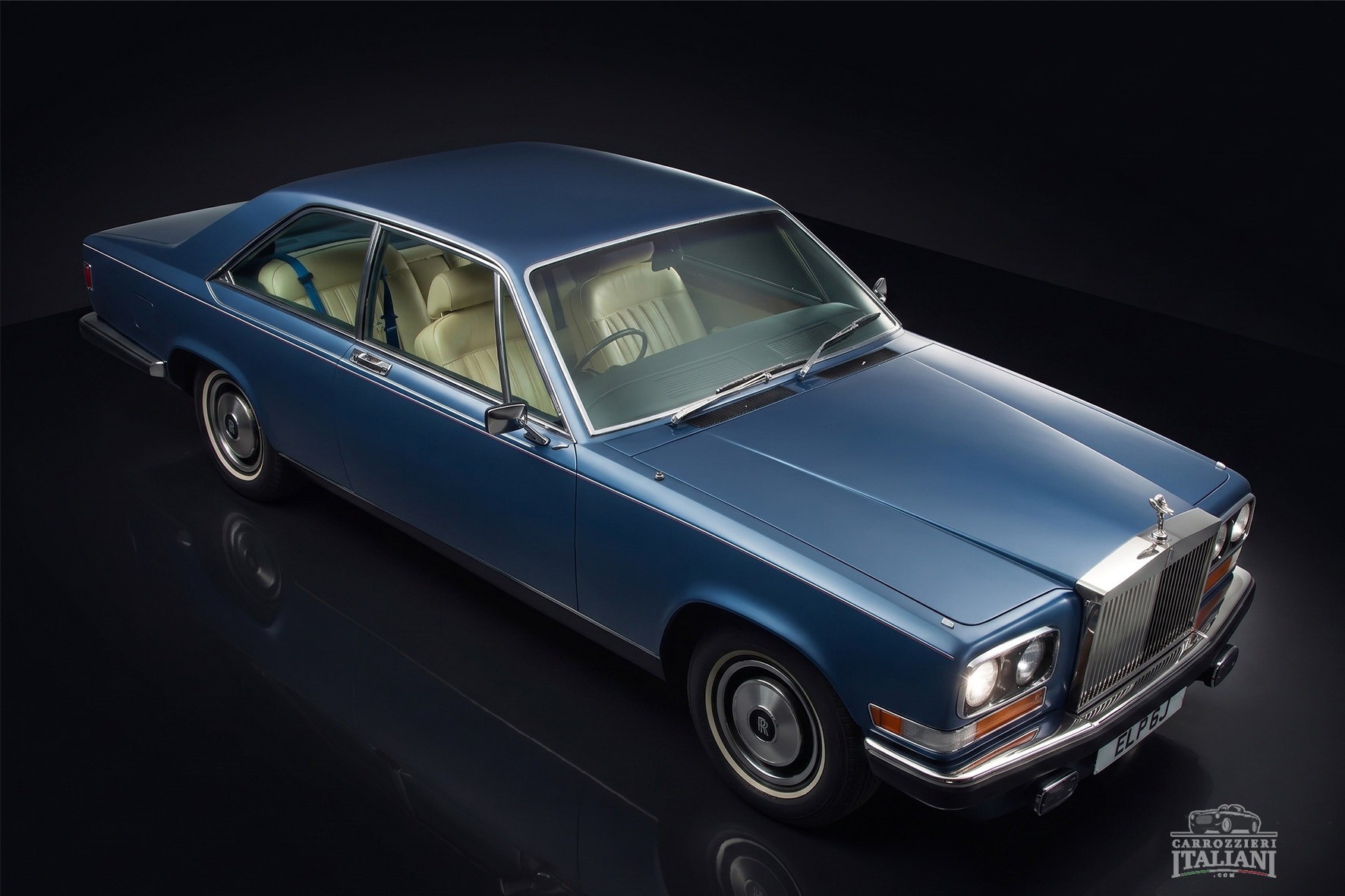
He explains that the car was more complex, richer and built to a higher level than the Corniche Coupé. Working on one today reveals more components, more complicated construction and a general sense of a car positioned in a higher category. It cost much more than the Corniche Coupé, and that extra cost was not simply about exclusivity. It was built into the car.
Over its production life, the Camargue quietly absorbed updates from the wider Rolls-Royce range. As the Silver Shadow evolved into Shadow II and later as the Silver Spirit generation arrived, the Camargue received related technical improvements while keeping essentially the same body and interior concept.
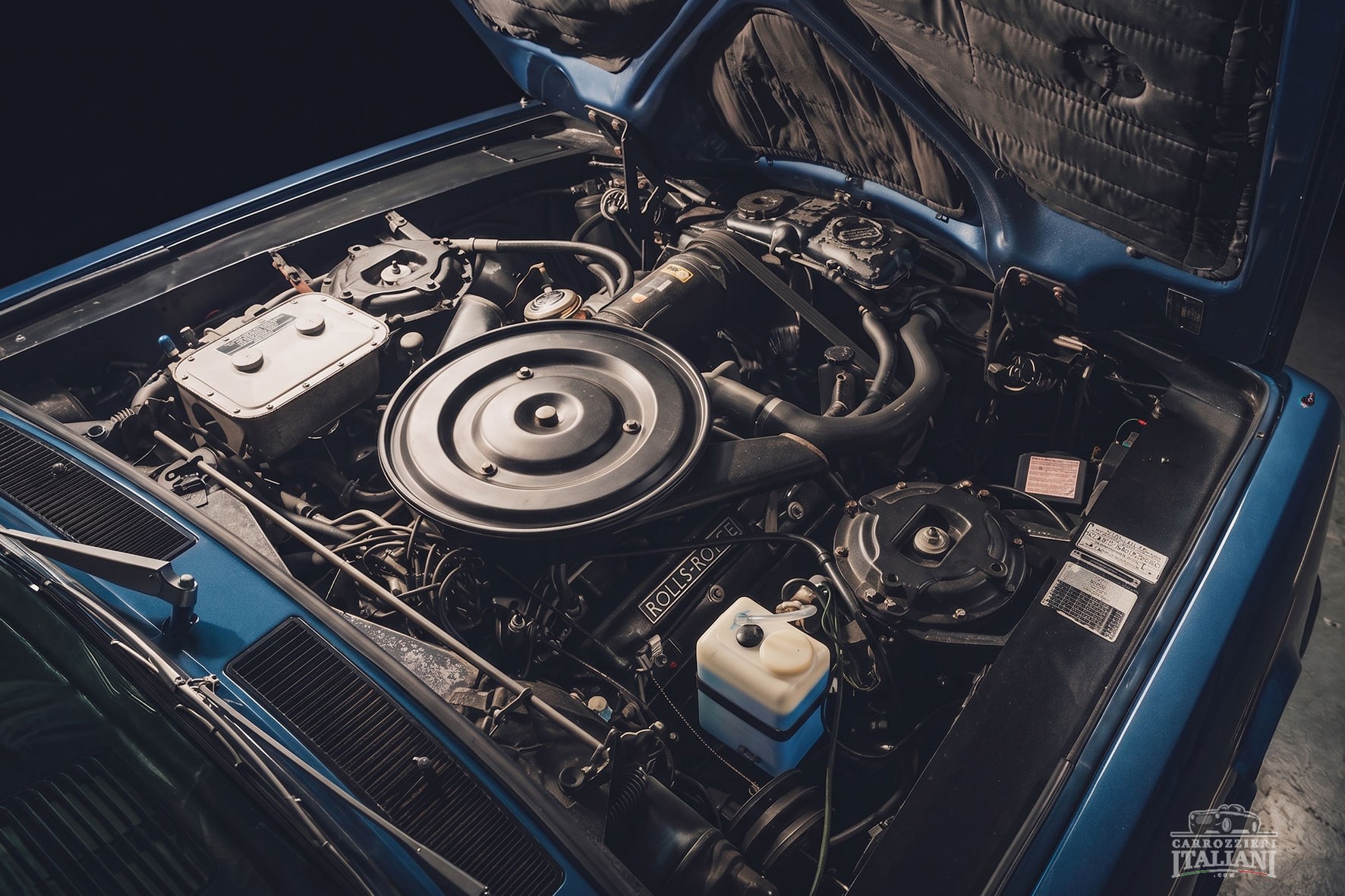
Early cars used SU carburettors; later versions changed specification, and American-market cars would eventually use fuel injection. Steering, suspension and hydraulic details also evolved. The shell remained visually consistent, but underneath, the car followed the slow and careful evolution typical of Rolls-Royce.
That is another reason why the Camargue is difficult to summarise. It looks like one fixed object from 1975, but technically it moved with the marque through a decade of change.
The Most Expensive Production Car in the World
At launch, the Camargue was positioned as the Rolls-Royce flagship and was widely described as the most expensive production car in the world. In the United Kingdom, its recommended price in March 1975 was £29,250 including taxes, making it dramatically more expensive than the Silver Shadow and even above the Corniche.
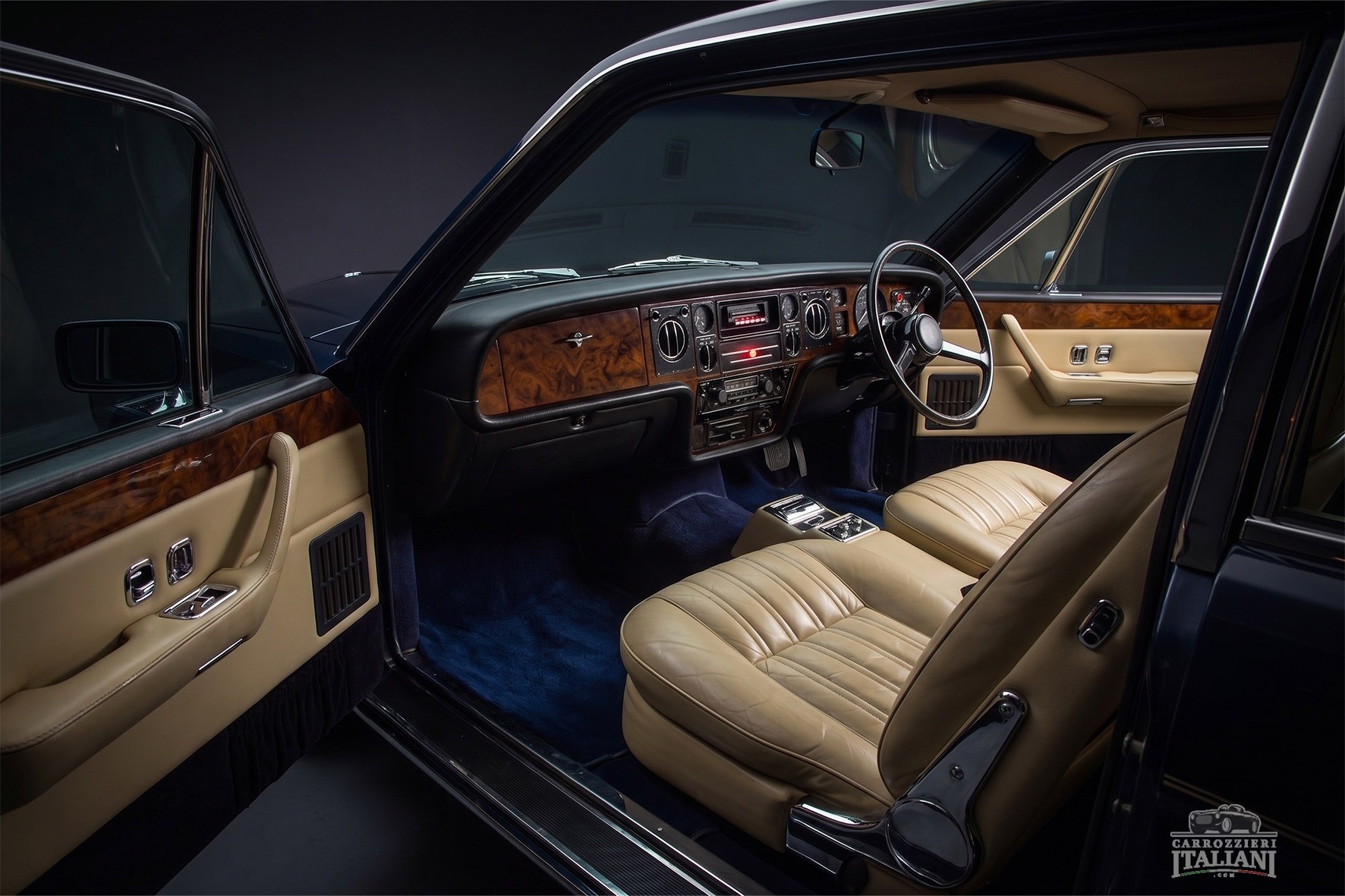
That was not an accident. Rolls-Royce understood very well that the Camargue had to sit at the top of the range. It was not there to be rational. It was there to be a statement.
One of its most famous features was the automatic split-level climate control system, the first comprehensive system of its kind fitted to a Rolls-Royce. The system had reportedly taken years of development, and Rolls-Royce was proud of it.
Agostini remembers the famous period claim attached to it: one could leave England, set the desired temperature, drive all the way to Nairobi and never touch the control again.
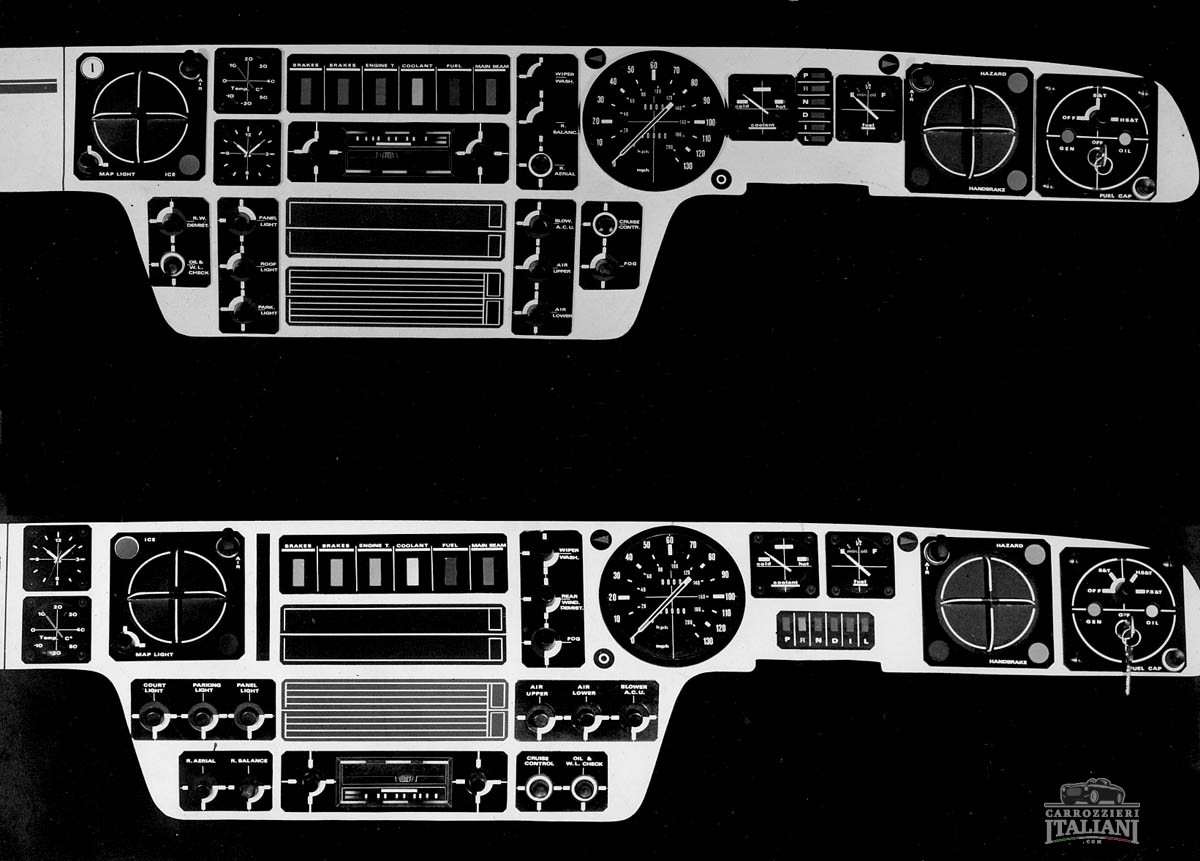
It is a wonderful detail because it is technical, luxurious and slightly theatrical, exactly in the Rolls-Royce spirit. This was not just air conditioning. This was Rolls-Royce air conditioning: the sort of system that seemed designed to remind the weather that it was not in charge.
The Camargue was also the first Rolls-Royce to be designed entirely using metric dimensions, another quiet but important sign of change inside a company deeply rooted in British tradition.
There is something symbolic in that. The most traditional luxury car maker in Britain creating its new flagship with an Italian designer, on metric measurements, during a period of industrial crisis. The Camargue was never going to be a normal Rolls-Royce.
Built Slowly, Sold Rarely
The Camargue was not produced in large numbers. Around 530 examples were sold or built, depending on how one counts production cars, prototypes and special examples.
For the first years, production was handled by Mulliner Park Ward in north London. Later, the work moved to Crewe, where the model continued into the 198
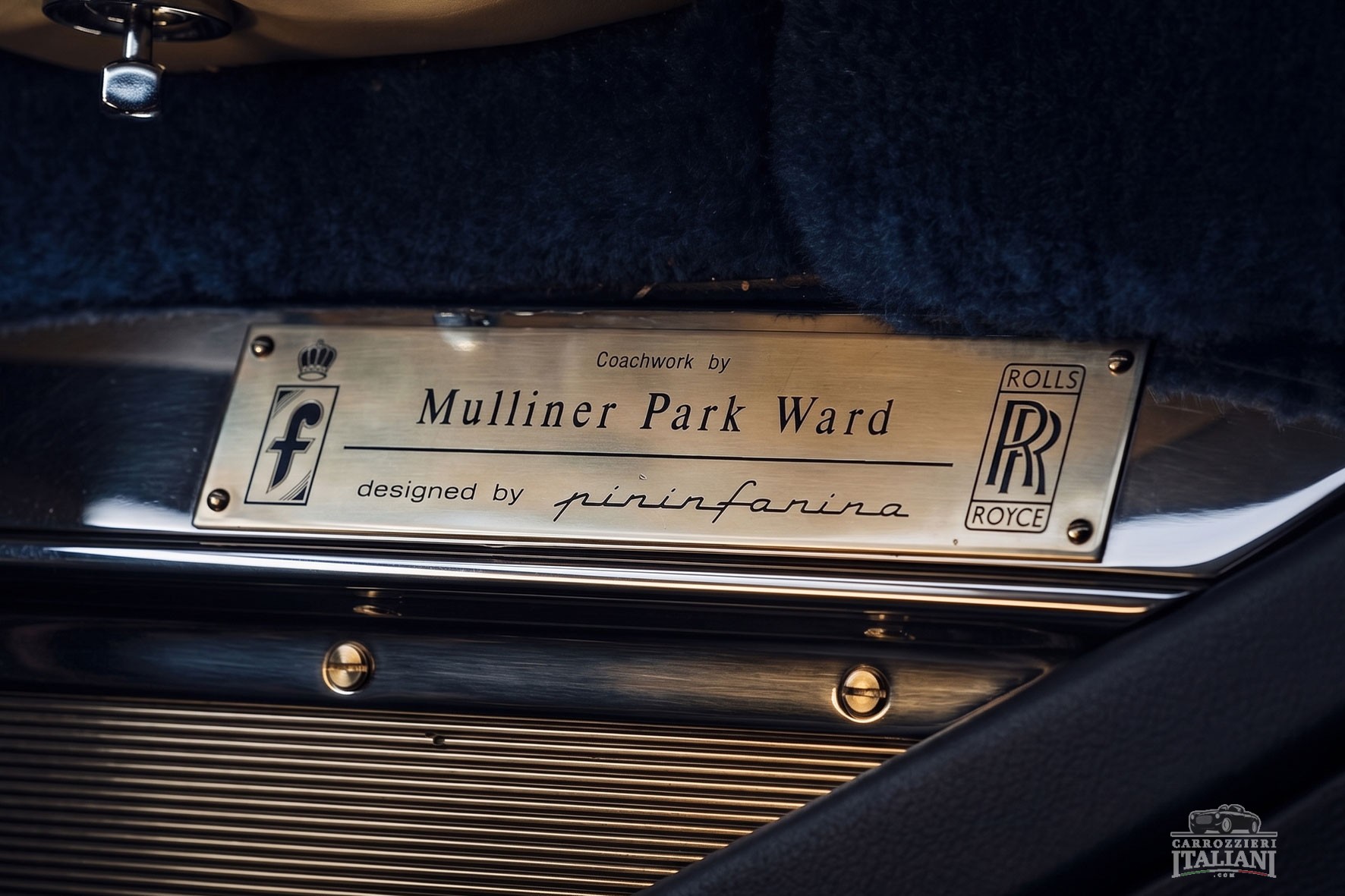
Its construction was complex and expensive. The large flat panels, long doors, high standards of finish and Rolls-Royce expectations made it a difficult car to build. This was not mass production in any ordinary sense. This was slow, costly, hand-finished manufacture for a clientele that expected perfection and, ideally, silence while perfection was being achieved.
The car was sold in very limited numbers across Europe, North America, Australia, Asia and the Middle East. The United States became especially important. In fact, the Camargue worked as a kind of halo car before the term became fashionable. It pulled attention into showrooms and made the relatively more affordable Silver Shadow look almost reasonable.
That is perhaps one of the great ironies of the Camargue. Even people who did not buy one could still be drawn in by the spectacle of it.
A Sicilian Presentation Car Reborn
This is where the story becomes very real.
At the time of the interview, British Motors was restoring a historically significant Camargue. According to Agostini, it is one of the very few cars, he mentions nine, that took part in the official presentation in Sicily in 1975.
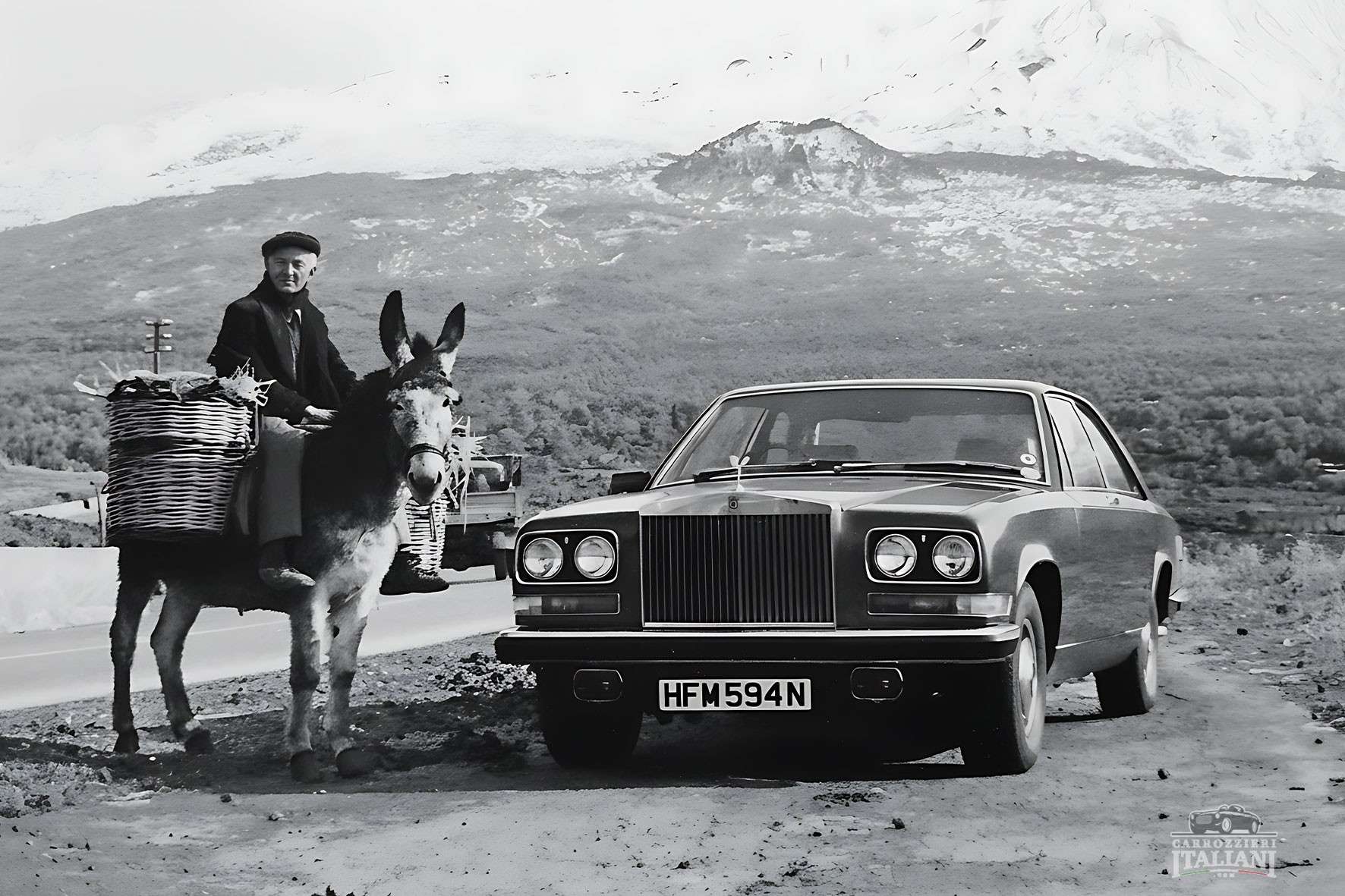
That detail changes the weight of the car completely. It is not just another Camargue. It is one of the cars connected to the model’s public birth.
British Motors recovered the car in Holland. It was no longer in its original colour, and the company is now returning it to the way it was born, including its original identity and old registration plate. Agostini adds a charming detail: the plate is the same one many enthusiasts may remember from the Bburago model.
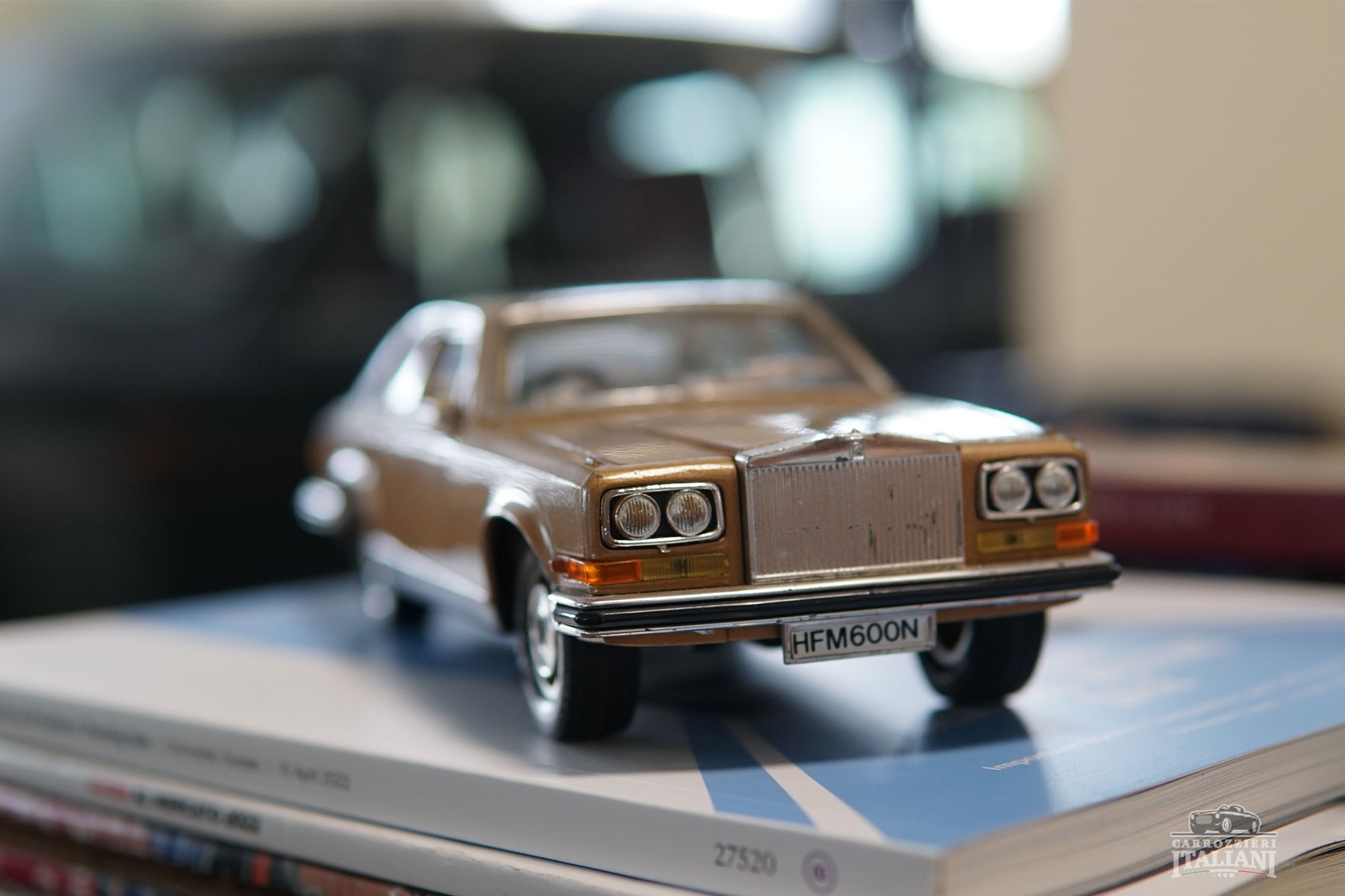
This is exactly the kind of story that makes old cars more than objects. A real Camargue, a presentation car, recovered in Holland, returned to its original configuration, and linked to the childhood memory of a scale model seen by generations of enthusiasts.
Agostini says people have already shown interest in preserving it once the restoration is complete, because it is “a great piece of history.” And he is right.
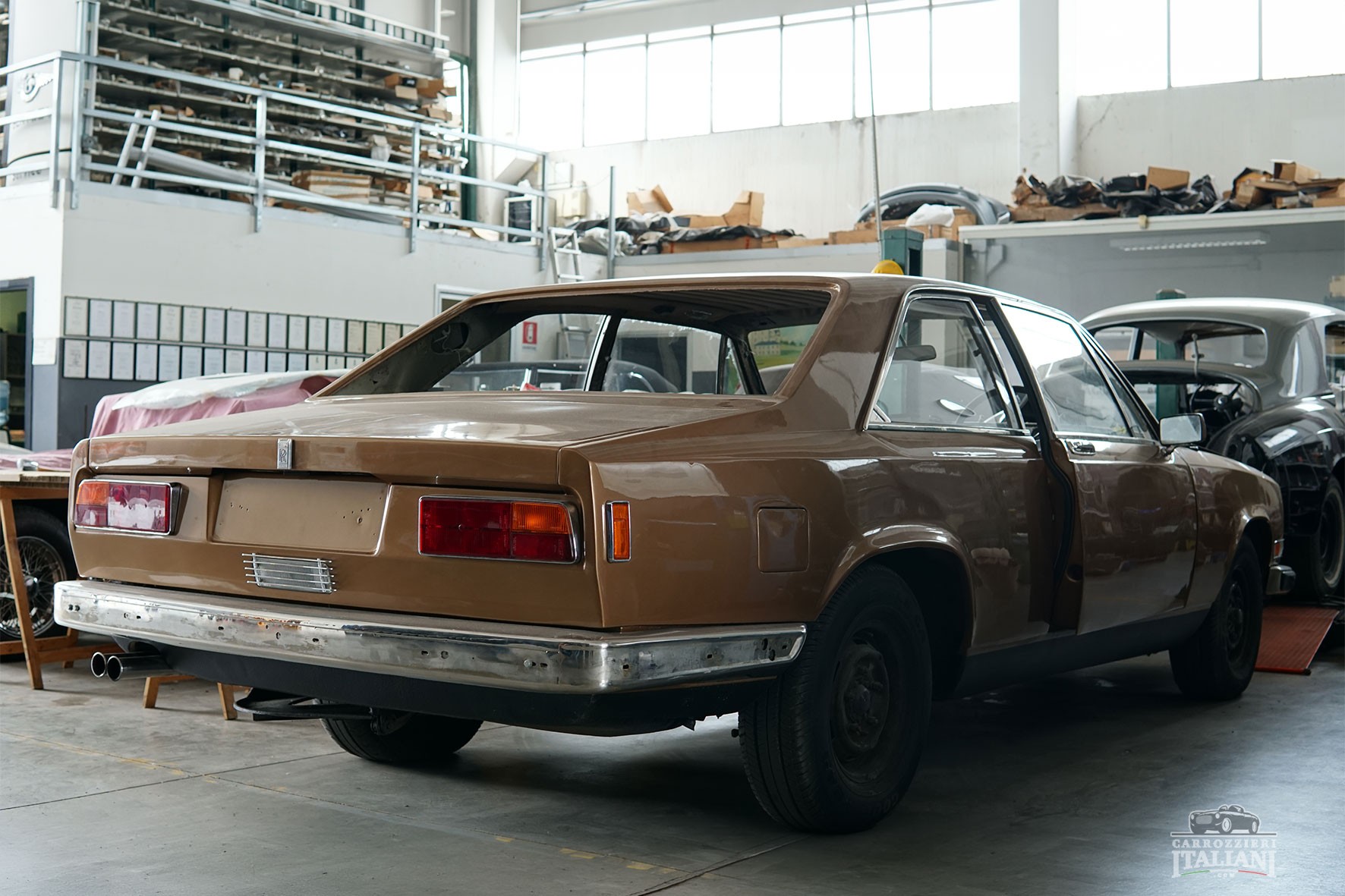
The Camargue has spent many years being treated as the difficult Rolls-Royce, the controversial Rolls-Royce, the odd Pininfarina Rolls-Royce. But a car like this reminds us that it is also a piece of industrial, cultural and design history. Especially when it is one of the cars that introduced the model to the world.
The Fiat 130 Coupé Connection
Martin himself makes an important comparison with another of his most famous designs: the Fiat 130 Coupé.
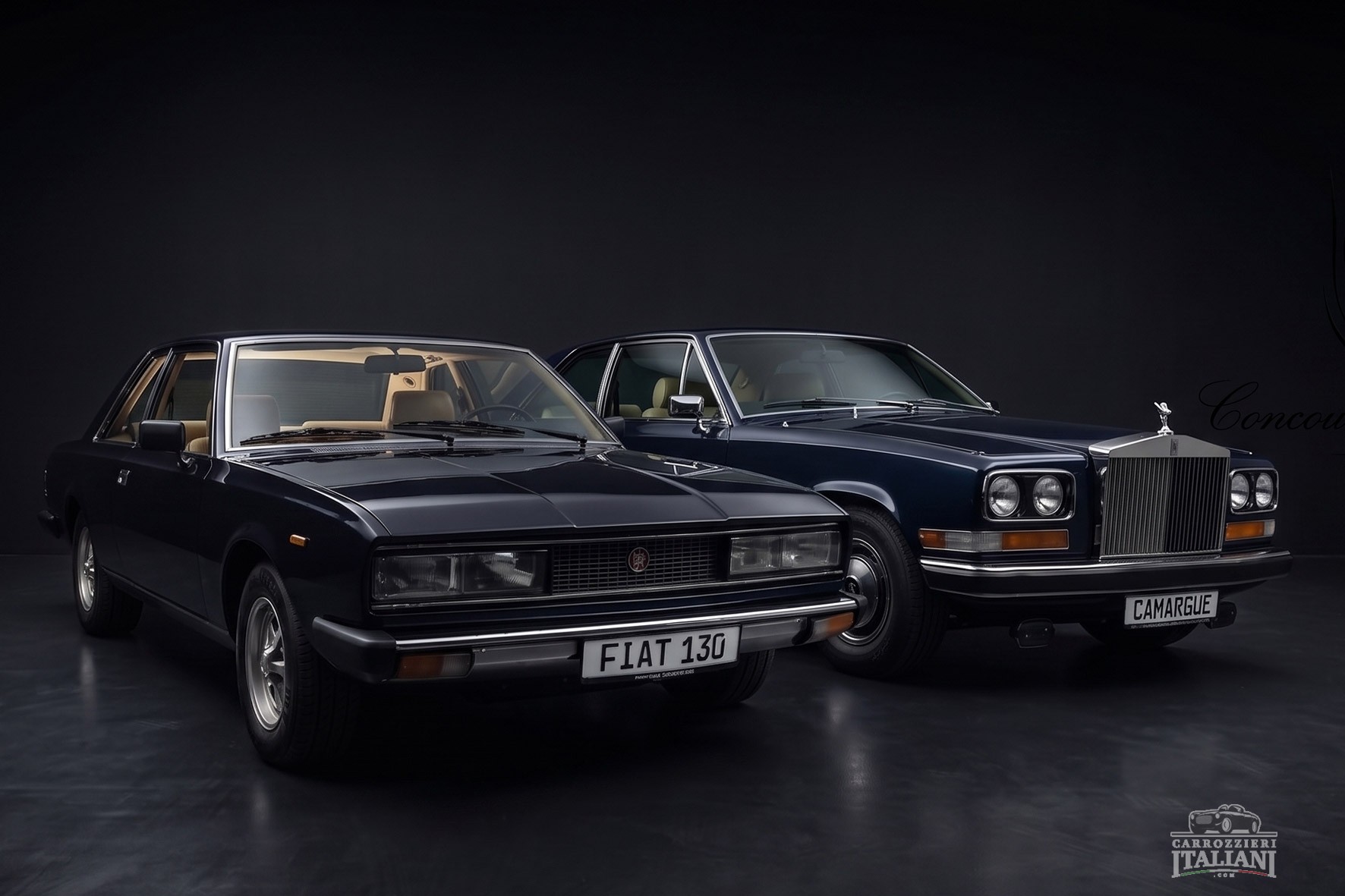
At first glance, the Fiat and the Rolls-Royce belong to completely different worlds. One was a large Italian coupé from a mass manufacturer trying to move into a more sophisticated segment. The other was a flagship from one of the most prestigious marques on earth.
And yet the connection is visible.
🔗 Read more: Why the Fiat 130 Coupé Is the Connoisseur’s Italian Grand Tourer
Both cars share Martin’s taste for clean surfaces, strong horizontal lines and a calm, architectural elegance. Neither depends on excessive decoration. Neither is shaped by fashion in the obvious sense. Both are formal, mature and confident.
But the Camargue is not a Fiat 130 Coupé in a dinner jacket. That would be too easy, and unfair to both cars.
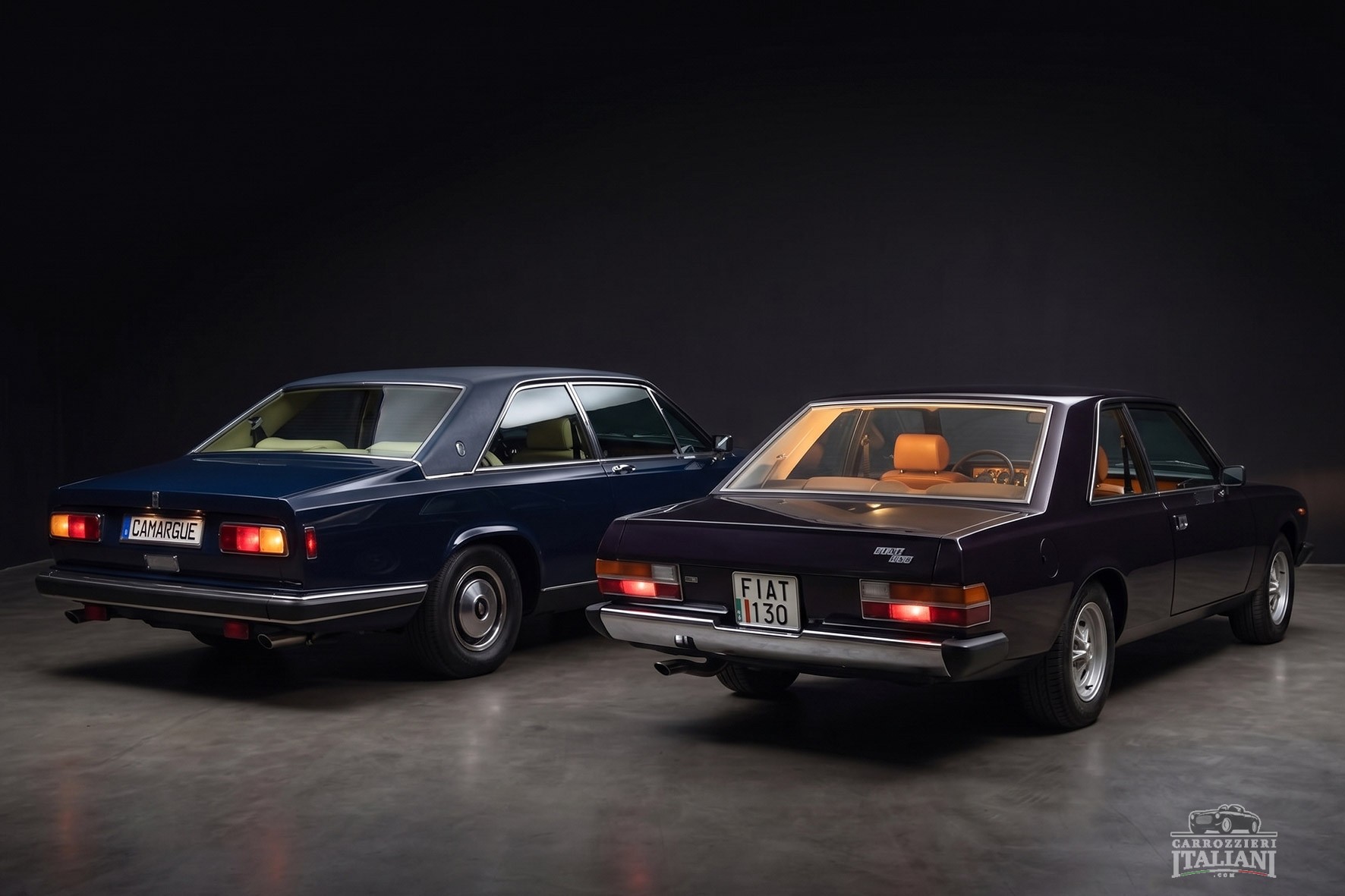
The Fiat 130 Coupé has a lighter and more balanced Italian proportion. The Camargue is more monumental because the Rolls-Royce base demanded a different kind of presence. It had to carry the size, the grille, the weight and the almost institutional dignity of the marque.
Still formal. Still imposing. But now with sharper edges.
Agostini also makes a personal comparison. He says he appreciates very much the front, the interior and the general presence of the Camargue, but he is less convinced by the rear. Looking at other Paolo Martin-related designs, such as the Fiat 130 Coupé and Ferrari 400, he finds those rear treatments more convincing.
That kind of judgement is useful because it is not blind praise. It is the opinion of someone who understands Rolls-Royce deeply, admires the car, but still sees it with honesty.
Corniche or Camargue?
Agostini admits that, as an Anglophile and a lover of the Silver Cloud, he would personally prefer a Corniche Coupé to a Camargue. That may sound like a criticism, but it actually helps explain the car perfectly. The Corniche is the easier Rolls-Royce to understand. It is elegant, traditional, graceful and reassuring. It speaks the language many Rolls-Royce clients already knew.
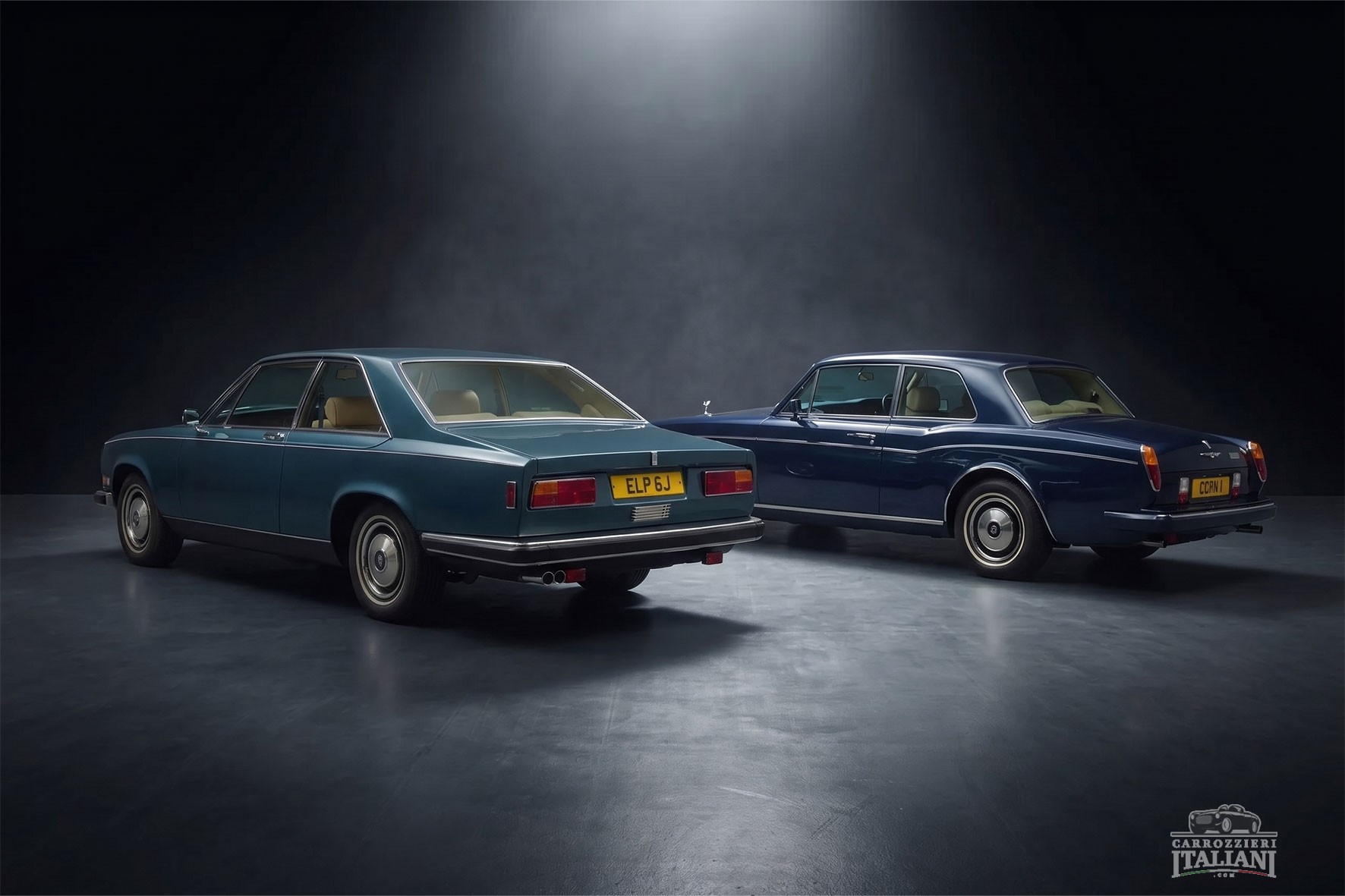
The Camargue is different. It is more prestigious, rarer, richer and more expensive, as Agostini himself points out. But it is also less immediate. It asks more from the viewer.
For Italians looking at the English world, Agostini suggests, a more classically British design may feel more appropriate. Yet in other markets, the Camargue could be appreciated precisely because it had Italian design. This is perhaps the whole Camargue story in one observation. It was a Rolls-Royce that could be too Italian for those who wanted England, and too British for those who expected Italy.
The Camargue was not produced in large numbers. Around 530 examples were sold or built, depending on how one counts production cars, prototypes and special examples.
The Bentley Camargue: The One-Off Shadow
There is another curious chapter in the story: the Bentley Camargue.
Although the production model was sold as a Rolls-Royce, one factory Bentley Camargue was built in 1985 as a special request. It was essentially the same car, but badged as a Bentley and allocated a Bentley chassis number.
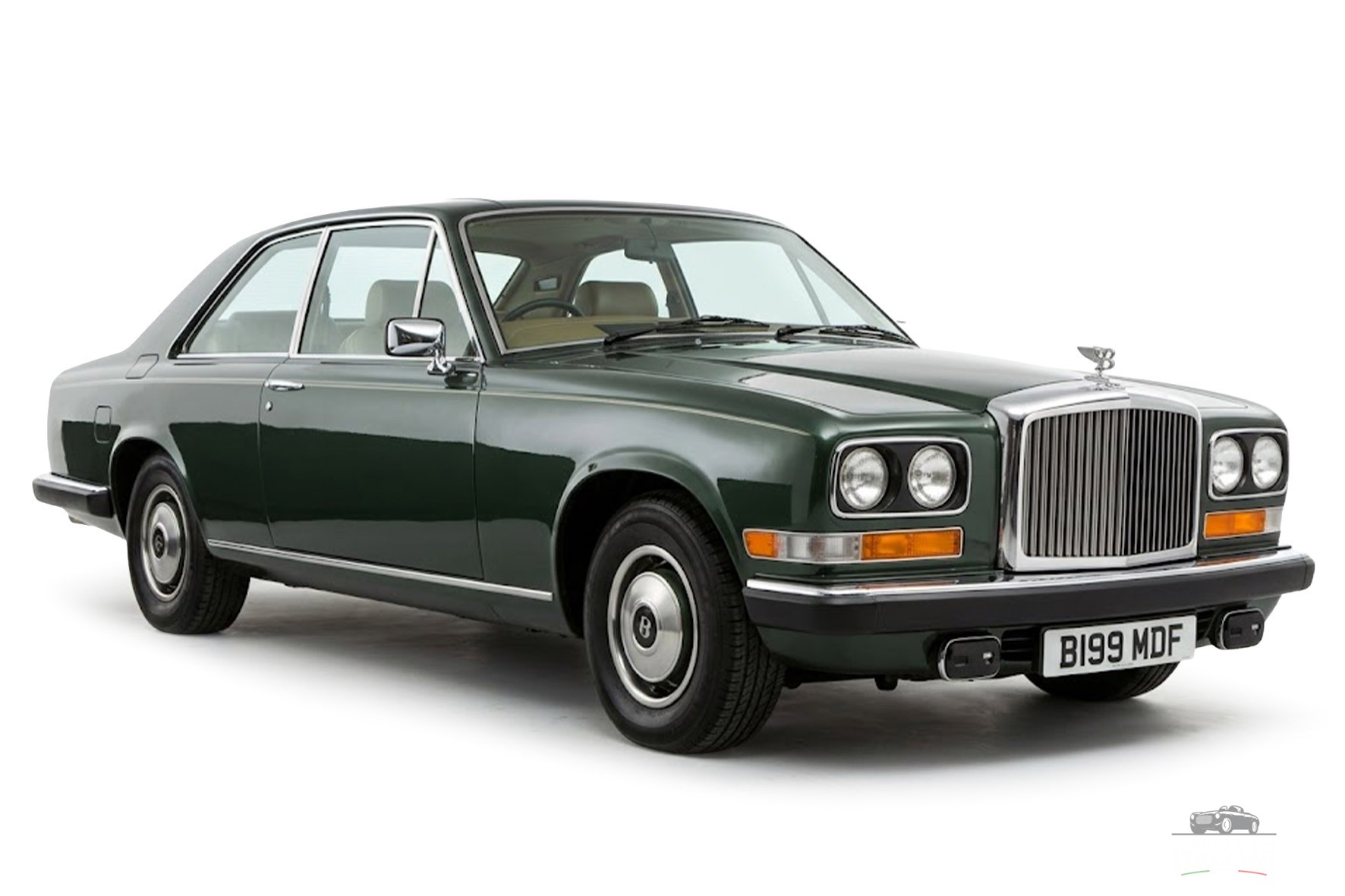
This detail is more than a footnote. It reminds us that the Camargue lived in a period when the identity of Bentley was still closely tied to Rolls-Royce, before the great revival of the Bentley performance image in the Turbo R and later Continental R era.
🔗 Read more: Why the Fiat 130 Coupé Is the Connoisseur’s Italian Grand Tourer
The idea of a Bentley Camargue makes perfect sense and no sense at the same time. Its shape is formal enough for Rolls-Royce, but its personal coupé character could also have supported a Bentley interpretation. In another timeline, perhaps the Camargue might have become a bridge toward a more modern Bentley coupé.
Instead, it remained a one-off, which is probably exactly why it is so fascinating. As if the normal Camargue were not rare enough.
A Car People Loved to Hate
No discussion of the Camargue can avoid its reception.As if the normal Camargue were not rare enough.
Over the decades, it has appeared in lists of ugly cars, worst cars and automotive oddities. Some critics treated it almost as a punchline: the strange Rolls-Royce designed by Pininfarina that somehow managed to offend both sides of the Channel.
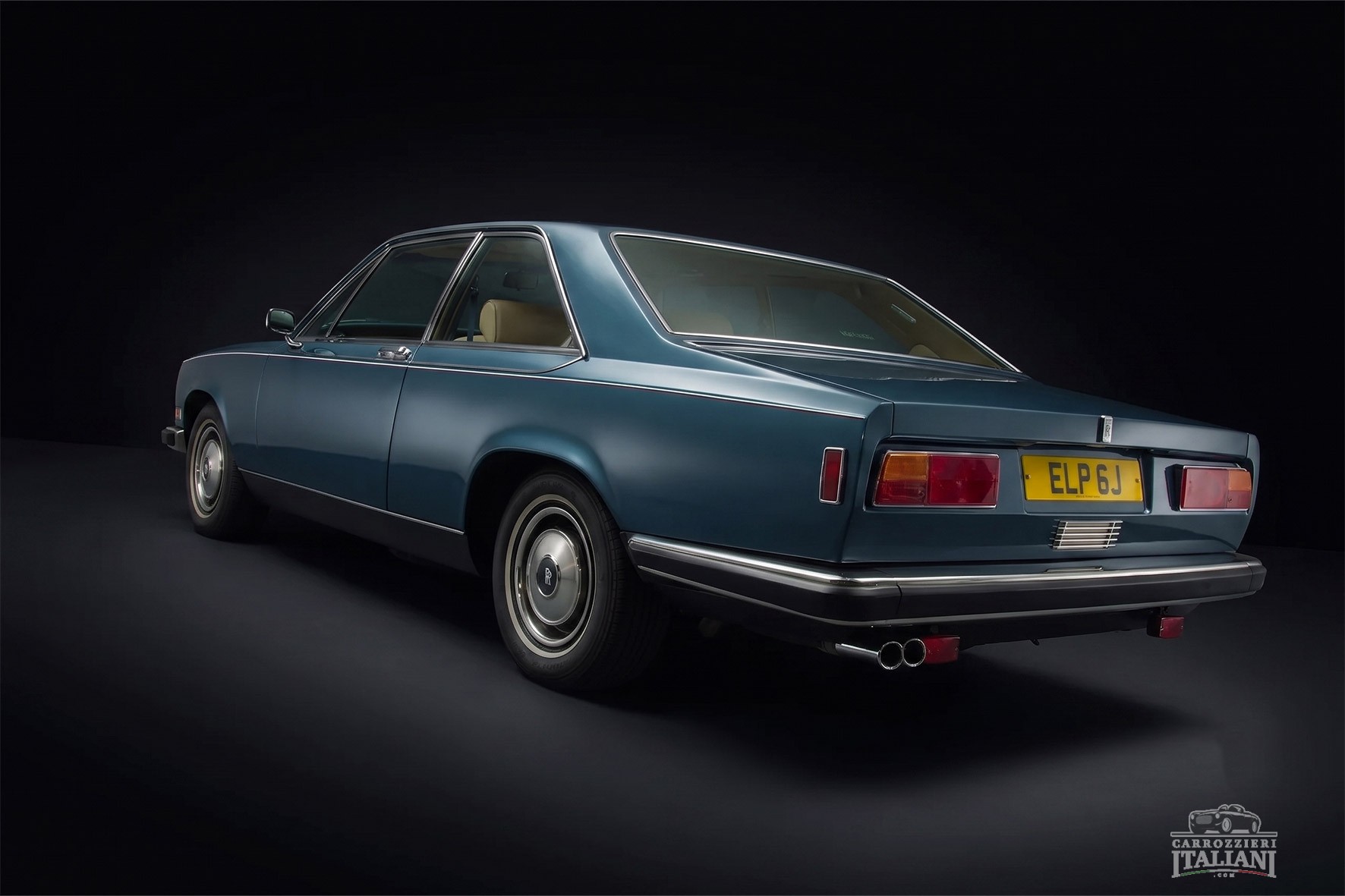
But this is too easy. James May once defended it with a typically British kind of compliment, saying the Camargue was not ugly, but had presence, “like that pug-faced but well-dressed bloke down the pub.” It is a perfect description because it does not pretend the car is classically pretty. It suggests something more interesting: character.
And character is what the Camargue has in abundance.
The Camargue is not beautiful in the easy sense. It does not seduce with lightness. It does not have the obvious elegance of the Fiat 130 Coupé or the sensual drama of an Italian gran turismo. It is heavy, formal and slightly severe. But it is also unforgettable.
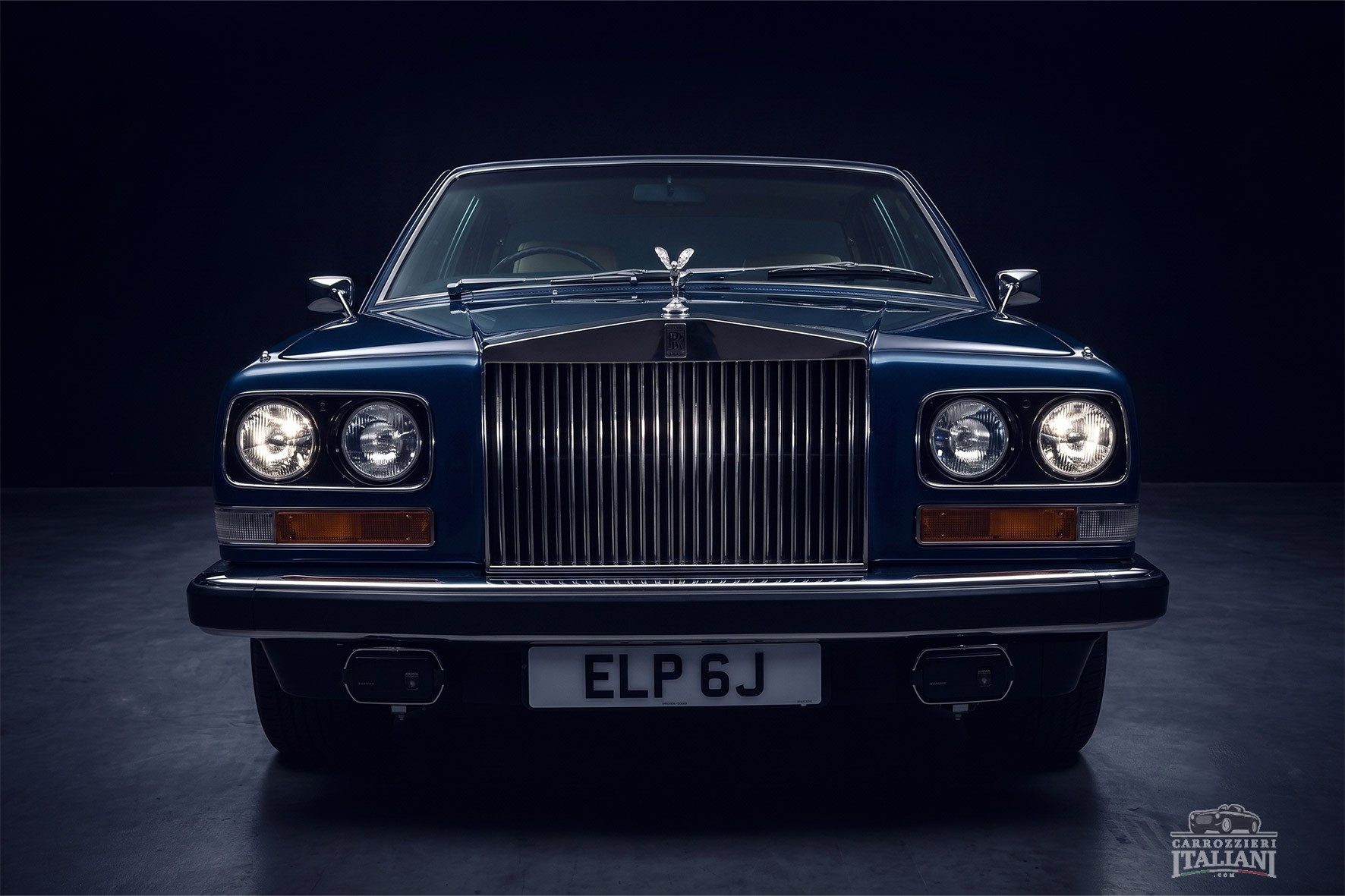
Its lines are not confused. Its surfaces are not weak. Its stance is aristocratic, even when awkward. It has the confidence of a car that knows it is expensive and does not feel the need to apologise.
That may be why it has aged better than many expected. In an era when modern luxury cars often scream for attention with enormous grilles, aggressive bodywork and unnecessary visual drama, the Camargue’s clean severity feels almost calm. Not pretty, perhaps. But present.
Why the Camargue Was Difficult
The Camargue’s difficulty lies in identity. It was too Italian for some traditional Rolls-Royce customers, yet too British and monumental for those expecting the usual lightness associated with Pininfarina. It was also too expensive to be treated as an experiment, and too experimental to be easily accepted by conservative buyers.
Timing did not help. A very expensive V8 coupé was a bold idea after the oil crisis, when the way people displayed wealth had become more complicated, especially in Europe. In the United States and the Middle East, the Camargue found a more natural audience, but even there it remained a rare object.
And yet, looking back, this is exactly what makes it important. The Camargue was not simply an awkward Rolls-Royce; it was a statement car before the term became fashionable. After the crisis and separation from the aerospace division, it showed that Rolls-Royce Motors could still bring a new, expensive and highly visible product to market. It generated attention, brought people into showrooms and reminded the world that Rolls-Royce was still capable of surprise.
Its problem was not that it lacked character. If anything, it may have had too much character for a clientele trained to expect discretion. The Camargue becomes far more interesting when we stop asking whether it is the prettiest Rolls-Royce and start asking what Rolls-Royce was brave enough to attempt.
Seen through Paolo Martin’s memories, it was born from the freedom of an extraordinary Pininfarina season. Seen through Giuseppe Agostini’s British Motors perspective, it becomes clear why the car could be both fascinating and difficult inside the Rolls-Royce world.
It was not a mistake, nor a conventional success, but an ambitious meeting between two ideas of elegance: a Rolls-Royce designed in Italy, but not an Italian car; a Pininfarina design, but not a typical Pininfarina coupé. Rare, controversial and completely unmistakable, the Camargue confused many people when it was new. That may be exactly why, today, it finally deserves another look.

ABOUT THE AUTHOR
Andreas Scheidl
Italian classic car enthusiast with German roots. Renowned as a respected figure in the classic car community, he serves as a jury member at various international concours d'elegance, including the Classic Gala Schwetzingen and Mantova. As a content creator, Andreas passionately shares his profound knowledge and appreciation for vintage automobiles. His heart beats for cars designed by Giovanni Michelotti, showcasing his discerning taste and dedication to preserving the timeless elegance of automotive history.
More stories by Andreas Scheidl ↗CONTINUE READING
Posts You Might Like

A Central Driving Position, a Rear-Mounted V8. Was This Really a Lancia?
In 1948, visitors to the Turin Motor Show could see an unusual Lancia on the stand of Carrozzeria Ghia. It was a large two-door coupé with a two-litre V8 mounted behind the…
Read story
Fioravanti F100: The Ferrari He Was Allowed to Imagine
Enzo Ferrari’s centenary, Leonardo Fioravanti’s independent studio and a supercar that explored air brakes, steel wheels and a new way of driving—without ever wearing the Cavallino.
Read story
Michelotti Shellette: When the Fiat 850 Became a Yacht
The yacht designer, the Turin stylist and the tiny coachbuilt car that crossed between the quay, the royal holiday house and the auction room. Some automobiles were conceived for the open road,…
Read story
Maserati A6 1500: A New Road for the Trident
When the doors of the Geneva Motor Show opened in March 1947, Maserati was a name that required little introduction to anyone who followed motor racing. What it did not yet possess…
Read story
THE CONVERSATION
Comments 0
Share a memory, a period photograph or a documented detail about this story.