
The Electric Vehicle Pioneer: Officine Meccaniche Stigler
In the early decades of the 20th century, Italy witnessed bold experiments in electric mobility led by innovative firms. One such trailblazer was Officine Meccaniche Stigler S.A. of Turin – a subsidiary of a prominent Milan-based elevator manufacturer – which produced some of Italy’s first electric automobiles. Stigler’s ventures spanned from pre-World War I hybrid prototypes to a short-lived line of electric cars in the 1920s, and later to wartime electric vehicle collaborations with renowned coachbuilders. This article traces the history of Stigler’s automotive activities through the world wars and into the postwar era, highlighting the technical features of its electric vehicles and its work with Italian design houses like Stabilimenti Farina, Touring, and others. Stigler’s story offers a fascinating case study of early electric vehicle innovation, its challenges, and its legacy in Italy’s industrial history.
Origins and Early Electric Ambitions
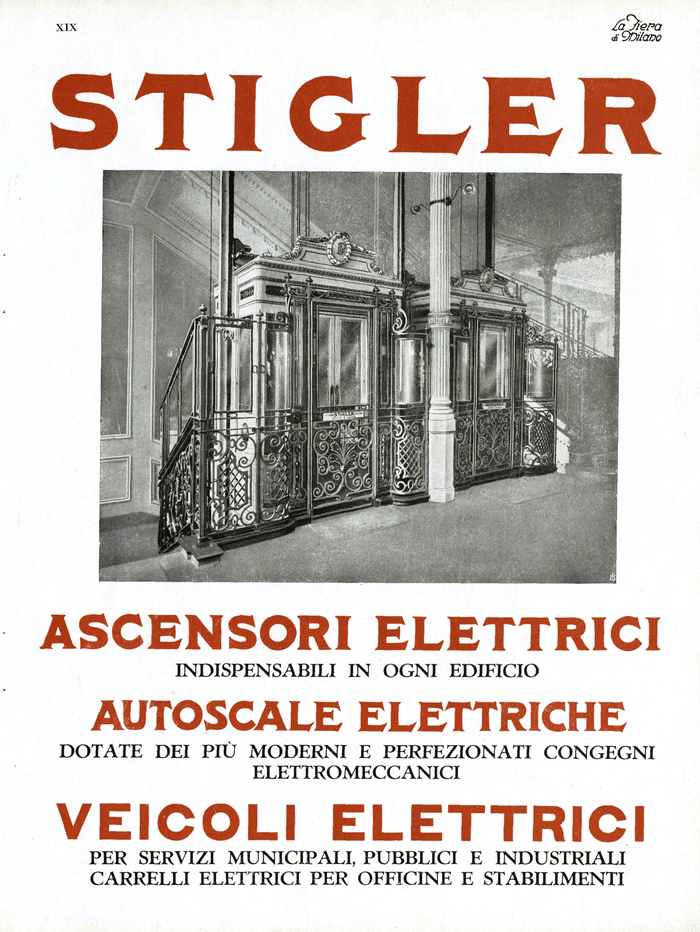
Officine Meccaniche Stigler was originally founded in 1859 by engineer Augusto Stigler in Milan as Italy’s first elevator and mechanical equipment manufacturer. By the early 1900s the company had become Europe’s largest elevator producer, famed for technological prowess in electric motors and lifting machinery. Leveraging this expertise, Stigler turned its attention to the nascent automobile industry. As early as 1907, historical accounts suggest that Officine Stigler experimented with hybrid-electric vehicles. (In fact, Stigler was reportedly one of two Italian firms to dabble in hybrids at that time, the other being a Turin-based electric car company building landaulette models under French Kriéger license.) These early forays set the stage for Stigler’s more formal entry into automobile manufacturing after World War I.
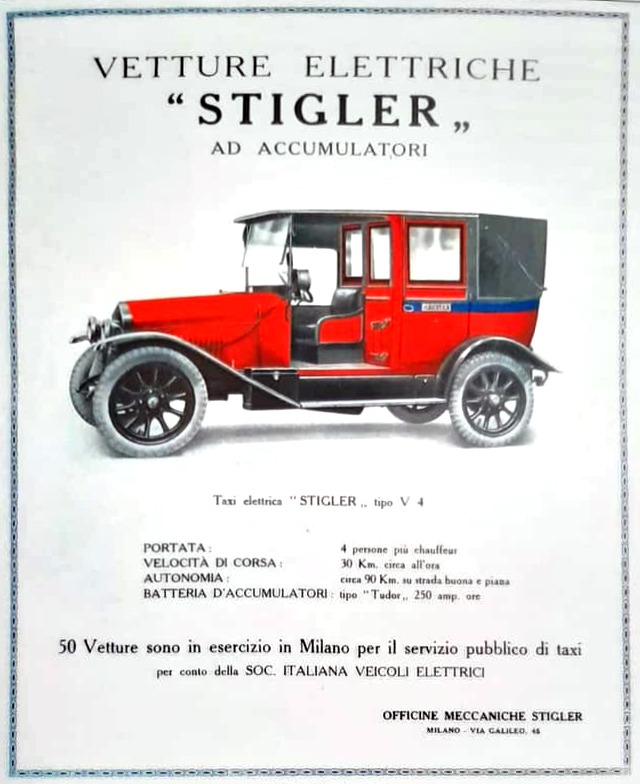
In 1921, Officine Meccaniche Stigler S.A. was established in Turin as a dedicated automotive division of the Stigler enterprise. The timing was bold: electric vehicles (EVs) had enjoyed a heyday in the 1890s–1900s, but by the 1920s they were rapidly falling out of favor as gasoline cars became cheaper and more capable. Nonetheless, Stigler aimed to capitalize on its electric motor expertise to offer a modern electric car. At the 1922 Milan Trade Fair, Stigler unveiled an autovettura elettrica (electric car) boasting a then-impressive 100 km driving range and a top speed of about 35 km/h. This vehicle – essentially a small electric torpedo-bodied car – was offered in two configurations: a 2-seater and a 4-seater, available with either two or four doors. Notably, Stigler also planned electric delivery vans, indicating an ambition to serve both private motorists and commercial users.
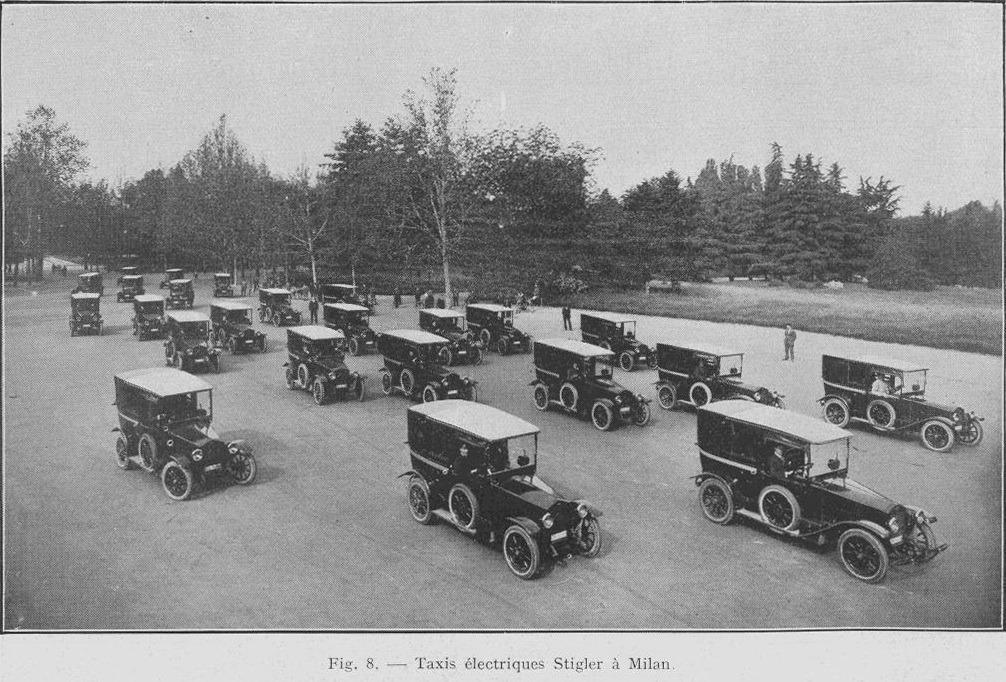
Technically, Stigler’s 1922 car was designed to resemble a conventional gasoline automobile of the era. Its sizeable lead-acid battery pack was installed under a hood up front that mimicked a normal engine bonnet, complete with a fake radiator grille for aesthetics. This design choice underscored Stigler’s strategy of easing customer acceptance by making the electric car look familiar. The car’s electric drive likely used a DC motor (specific power output was modest – on the order of only a few horsepower, similar to other period EVs). As published, the range could reach 100 km per charge if the driver kept speed below 35 km/h. Such performance was adequate for city travel and reflected the limitations of early 1920s battery technology. Still, a 100 km range was competitive with other contemporary electrics and testified to Stigler’s sound engineering.
Being a small manufacturer, Stigler did not mass-produce complete car bodies; instead, chassis and electric powertrains were likely built in-house while external coachbuilders crafted the bodywork. Turin in the 1920s was home to many skilled carrozzieri. It is known, for example, that Stabilimenti Farina (Turin’s premier coachbuilder, established 1906) and the young Carrozzeria Bertone (founded 1912 in Turin) were active in building custom bodies for limited-production cars of that era. While documentation on specific bodies for Stigler’s 1922 cars is sparse, it is very plausible that firms like Stabilimenti Farina or Bertone provided the open-top torpedo coachwork for Stigler’s 2-seat and 4-seat models. These bodies would have been lightweight open tourers consistent with the style of the early 1920s, allowing Stigler’s electric drivetrain to propel the car within its performance envelope. In any case, period photos and descriptions indicate the Stigler cars outwardly “looked much like the gasoline-powered cars of the period” despite being electric. This marriage of traditional styling with electric propulsion was a defining feature of Stigler’s approach.
🔗 Read more: The story of Carrozzeria Bertone
Unfortunately for Stigler, the venture proved to be short-lived. By the mid-1920s, improved roads and abundant cheap fuel were accelerating the dominance of gasoline automobiles, making the market environment unfavorable for electrics. After producing only a handful of vehicles (likely only a few prototype and customer units in total), Stigler ceased automobile production in 1925. Contemporary analysts noted that Stigler’s car was “too late” compared to earlier electric autos and yet “too early” for what would come during wartime. In other words, the Stigler electric car found itself out of step with consumer demand: it arrived after the first wave of veteran EVs, and decades before the revival of interest driven by fuel crises. The company quietly abandoned its vetturetta Stigler after 1925. Electric cars, in general, virtually disappeared by the 1930s as internal combustion technology advanced.
Between the Wars: Pivot to Public Transport
Although the Stigler electric car failed to achieve commercial success, Officine Meccaniche Stigler’s core strength in electric traction found renewed relevance during the interwar period—particularly in urban transportation. In 1933, the Turin-based company collaborated with British and Italian partners to build an electric trolleybus for the city of Milan. This vehicle, essentially a bus powered by overhead electric lines, was the product of a joint effort: Stigler provided the electrical and motor systems; Ransomes, the well-known British engineering firm, contributed trolleybus expertise; and Carrozzeria Macchi of Varese constructed the body. The resulting vehicle—a robust three-axle trolleybus nearly 10 meters long with seating for 27 passengers—entered service with Milan’s transit authority (A.T.M.) as fleet number 301 on route 82. Remarkably, it remained in operation until 1966, a testament to the durability of its electrical systems and thoughtful engineering.
This trolleybus initiative underscored Stigler’s continued investment in electric transport solutions, even after abandoning its passenger car program. It also reflected a broader European trend of the 1930s, when cities were turning to trolleybuses as a cleaner, modern alternative to combustion-powered public transit. Stigler’s role in one of Italy’s early trolleybus projects demonstrated its ability to adapt electric drive technology to viable applications—specifically in settings where the constant availability of power from overhead lines eliminated the limitations of battery-powered vehicles. While the Milan trolleybus appears to have been a limited production or prototype effort, it kept the company actively engaged in vehicle electrification and laid the groundwork for its eventual return to battery-electric vehicles during the wartime fuel shortages of the 1940s.
Stigler Bertone electric delivery van
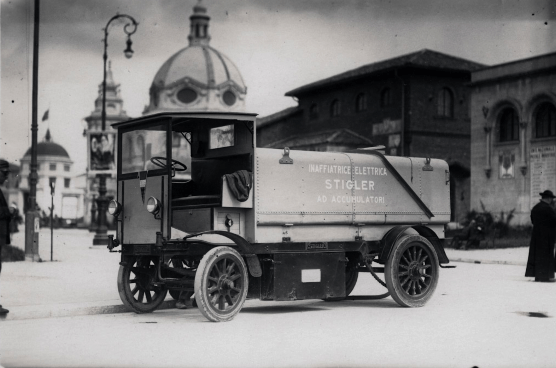
A further example of Stigler’s innovative use of electric propulsion emerged in 1935 with the production of an electric delivery van bodied by Carrozzeria Bertone. Built on a proprietary Stigler electric chassis, this vehicle represents a rare pre-war application of electric power in commercial transportation. Designed specifically for urban use, the van balanced modest speed and range with mechanical simplicity and low operating costs. Typical Stigler vans of the era used a direct-drive electric motor powered by lead-acid batteries, producing around 4 to 5 horsepower. Performance was modest, with a top speed of approximately 50 km/h and an estimated range of 80 to 100 kilometers depending on conditions.
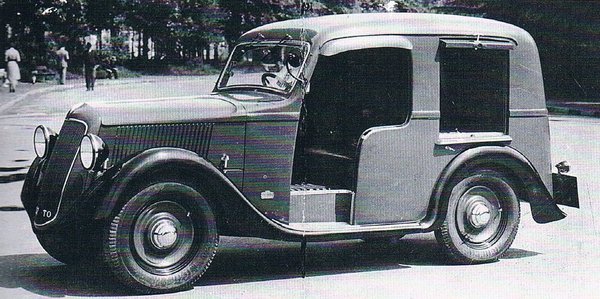
The van’s bodywork, commissioned from Bertone—then expanding into light commercial design—prioritized functionality: a compact, upright cab with sliding side doors and a paneled rear cargo area with vertical access. The vehicle’s austere form reflected both the utilitarian purpose and the economic constraints of the mid-1930s. While the Bertone-bodied variant likely belonged to a very limited production run, possibly even a one-off, it exemplifies Stigler’s strategic focus on electric utility vehicles for municipal and industrial clients. Unfortunately, no confirmed production figures or surviving examples of this model have been documented, and the company’s overall output of electric vehicles remains modest and poorly recorded.
Throughout the 1920s and 1930s, Stigler’s primary business remained in elevators and industrial electrical systems. By 1930, the company had installed an estimated 35,000 elevators worldwide. Its identity remained rooted in electrical engineering rather than automobile manufacturing, with vehicle production functioning as a specialized sideline. However, this electrical expertise proved invaluable when wartime shortages in the 1940s revived interest in electric propulsion, positioning Stigler to re-enter the vehicle market under extraordinary historical circumstances.
World War II: Wartime Electric Vehicle Projects
During World War II, widespread gasoline shortages and strict rationing across Europe prompted a brief but notable resurgence in electric vehicle development. Engineers across both occupied and Axis-aligned nations revisited electric propulsion as a practical solution to wartime fuel scarcity. In Italy, under the constraints of wartime autarky, several ambitious EV projects emerged—among them, those led by Officine Meccaniche Stigler.
Primarily known for its electric motors and industrial equipment, Stigler collaborated with some of Italy’s most prestigious coachbuilders to produce a handful of experimental, fully electric vehicles in the early 1940s. These one-off projects showcased both the ingenuity and the limitations of electric propulsion in a time of material shortages and technological constraint.
One distinctive wartime detail common to these vehicles was the use of white-painted fender bands, a feature mandated for nighttime driving during wartime blackouts. These high-contrast markings enhanced vehicle visibility under restricted lighting conditions—a small but telling example of how the war shaped even the visual language of design.
The 1941 Stigler–Touring 4EC “Berlinetta” Electric Coupé
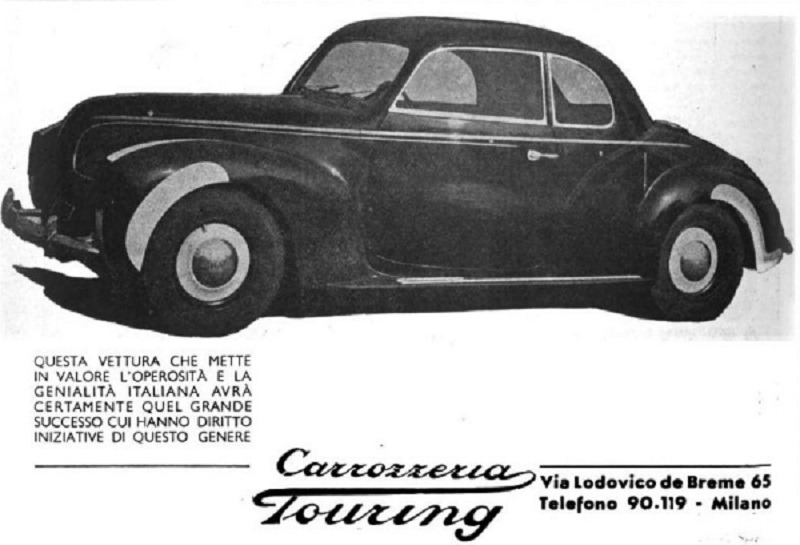
Among the more technically ambitious wartime automotive projects in Fascist Italy, the Stigler 4EC Berlinetta represented a rare attempt to apply electric propulsion to a full-bodied touring car. Designed and built by Carrozzeria Touring of Milan in 1941, it was commissioned by Count Franco Mazzotti—aviator, Mille Miglia co-founder, and figure of the regime’s sporting elite. The car was conceived as a demonstration model to highlight domestic innovation in the context of fuel shortages and wartime restrictions. Notably, the vehicle was formally presented to Benito Mussolini as a symbol of national technical self-reliance.
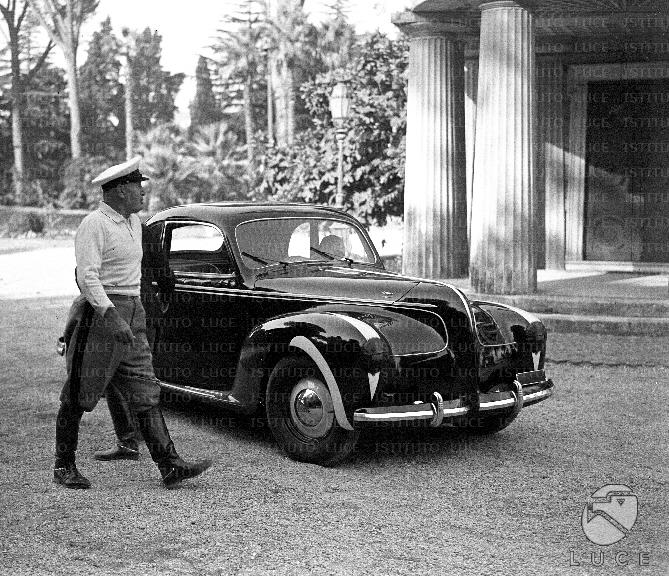
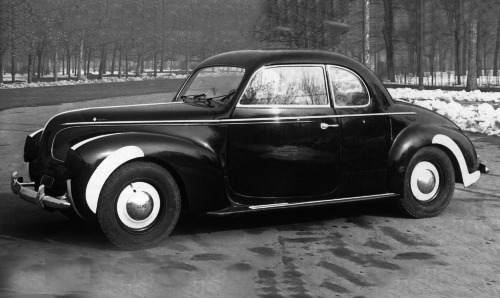
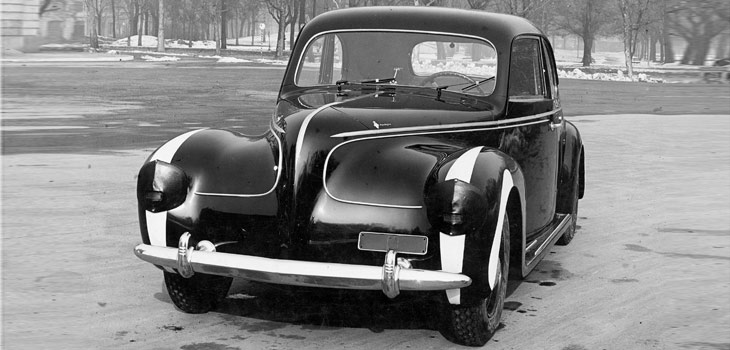
Touring developed the body using its patented Superleggera system: aluminum panels mounted over a tubular steel frame, a solution that kept structural weight low while accommodating the considerable mass of the propulsion system. The chassis was derived from a Fiat 1100 Lungo van, modified to house a Tudor lead-acid battery unit weighing approximately 550 kilograms, with an energy capacity of roughly 15 kWh. This battery powered a 4.5 bhp (3.3 kW) Stigler electric motor, paired to a four-speed manual gearbox—an unusual but effective measure to optimize torque and efficiency at low speeds. The car reached a maximum velocity of nearly 50 km/h and achieved a usable range in excess of 80 kilometers.
🔗 Read more: Italian Coachbuilders Under Fascism and Beyond
Recharging was facilitated by an integrated 3.5 kW rectifier supplied by the Milanese firm Antonio Gommi. Designed to connect directly to standard industrial three-phase AC outlets (150–275 V), the system enabled full recharging in around five hours. Partial recharging could be completed more quickly, depending on operational needs.
Visually, the coupé adopted a streamlined berlinetta silhouette with enclosed rear wheels and contrasting fenders, enhancing visibility under blackout conditions. Though only a single example was built, the 4EC Berlinetta stood as a technologically coherent prototype, serving both propaganda and experimental roles within the broader wartime industrial strategy of the regime.
The 1941 Fiat 1100 Stigler Electric Coupé by Carrozzeria Touring
In the same year, Carrozzeria Touring and Stigler collaborated again, producing an additional electric coupé on the Fiat 1100 chassis, distinct from the Lungo-based 4EC. This sleek vehicle combined Touring’s signature design language with Stigler’s electric propulsion expertise. The result was a compact, streamlined car that embodied modernist aesthetics and forward-looking engineering.
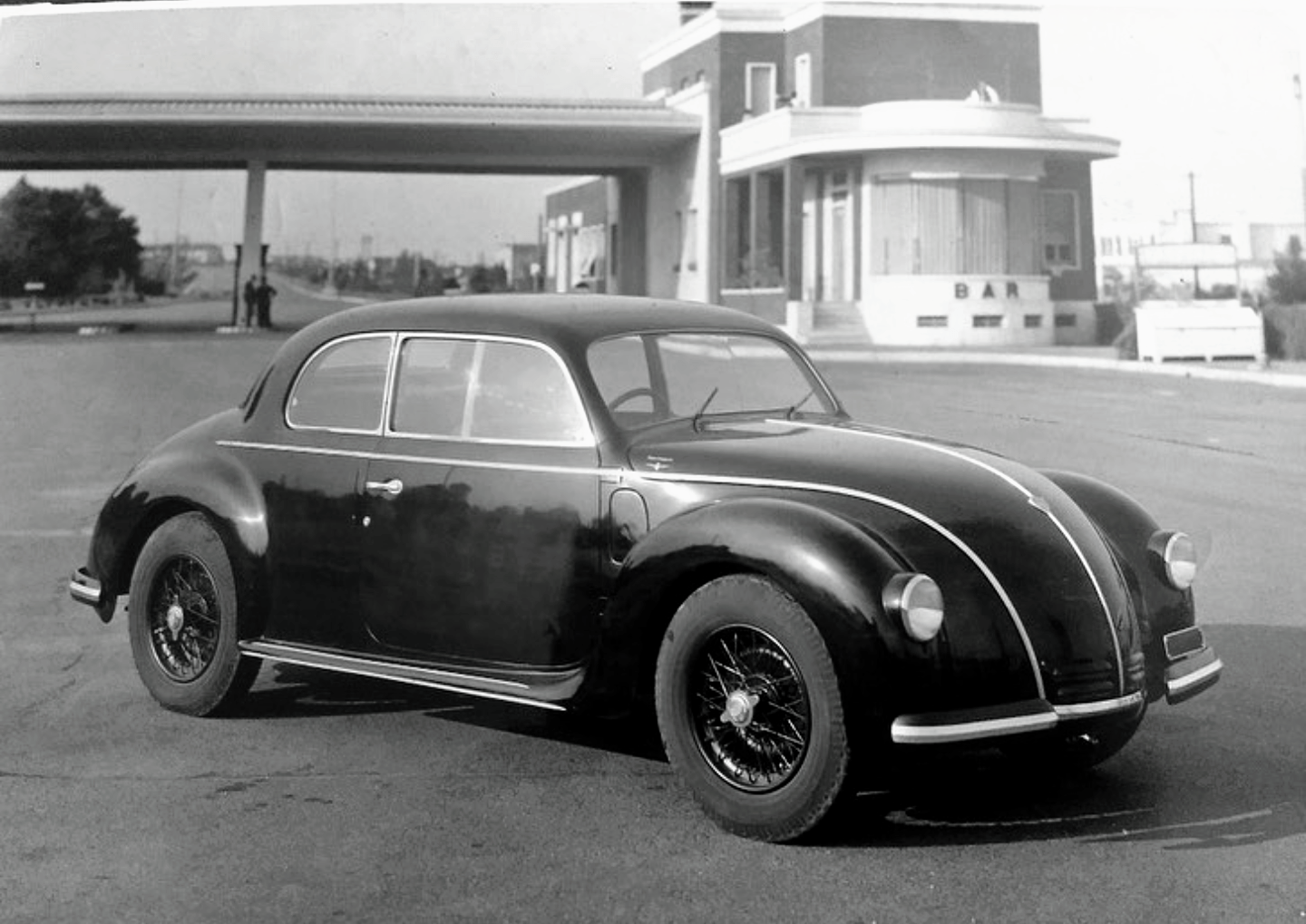
This one was also commissioned by Franco Mazzotti, making it likely he had direct involvement in both projects. The Fiat 1100-based electric cars featured Touring’s Superleggera construction and a rounded front-end design that bore similarities to the contemporary Volkswagen Beetle, reflecting the aerodynamic tastes of the era. Stigler’s electric system—likely similar in output to the 4.5 bhp unit used in the Berlinetta—powered the vehicle, paired with lead-acid batteries integrated into the chassis.
While detailed technical records of this version are limited, the design intent was clear: to offer a practical, lightweight urban electric car during a period when gasoline was scarce and EVs offered a temporary, if limited, alternative. The death of Mazzotti in aerial combat shortly thereafter imbues the project with historical poignancy, turning the vehicle into a quiet memorial to his dual legacy in motorsport and aviation.
The 1941 Stabilimenti Farina Electric Fiat Ardita
In 1941, Officine Meccaniche Stigler partnered with Stabilimenti Farina to produce an experimental electric limousine based on the Fiat Ardita 2500 chassis. Unlike the lightweight coupés developed with Touring, the Ardita Elettrica was a full-size, chauffeur-driven sedan—an early attempt to apply electric propulsion to a luxury format.
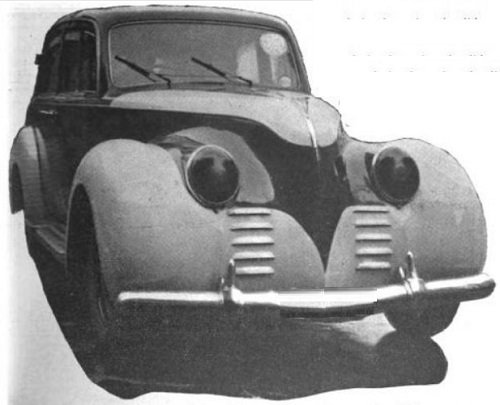
The petrol engine was replaced with a Stigler electric motor and lead-acid battery pack, though specifications remain unknown. Likely designed for low-speed, urban use, the car featured formal six-passenger coachwork with a divider, front-hinged doors up front, and rear-hinged “suicide” doors in the rear. Farina’s steel bodywork was described as luxuriously finished, with understated styling typical of wartime restraint.
🔗 Read more: Unveiling the Storied Legacy of Stabilimenti Farina
Commissioned by Alfonso Stigler, the car was built as a one-off prototype and never entered production. Its fate is unknown, but the project highlights how even traditional coachbuilders explored electric alternatives under wartime pressures—melding classic design with emerging technology.
Postwar Decline and Legacy
When World War II ended in 1945, the conditions that had made electric vehicles desirable abruptly changed. Gasoline became readily available again, and the few wartime EV projects were mostly shelved as industry and consumers returned to conventional cars. Stigler did not attempt to commercialize any electric car in the immediate postwar period. The company’s focus returned entirely to its core business of elevators and industrial electrical systems. In 1947, a major corporate change marked the end of Stigler’s independent operations: Officine Meccaniche Stigler was acquired by the American Otis Elevator Company. The firm was merged into “Stigler–OTIS” and ceased to exist as a separate entity after 1947. At the time of this acquisition, Stigler had an extraordinary record of approximately 45,000 elevator installations worldwide – a clear indicator that its global reputation rested on vertical transportation, not automobiles.
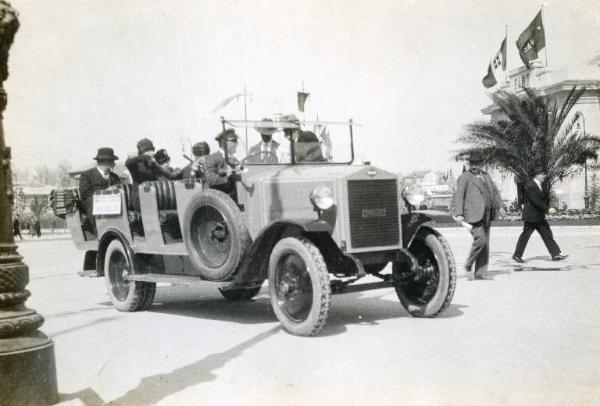
With the dissolution of its automotive arm, Stigler’s ventures into electric vehicles receded into obscurity. No known original Stigler electric car survives today, and only scant records and a few photographs document those pioneering efforts. Yet, the historical significance of Stigler’s work is considerable. The 1920s Stigler car was among the earliest Italian electric cars, coming on the heels of earlier experiments like SGES’s “Società Milanese” electrics and preceding the better-known post-war electric microcars by decades. Stigler’s 1933 trolleybus was one of the first electric trolley coaches in Italy, foreshadowing the expansion of electric transit in Italian cities. And the 1941 projects with Touring and Farina produced two of the most technologically advanced electric automobiles of their time, anywhere in the world – integrating high-capacity batteries, lightweight construction, and stylish design in an era when EV development had largely stagnated elsewhere.
In retrospect, Stigler’s foray into vehicle manufacturing can be seen as a bold attempt to bridge two eras of electric vehicle interest. The company’s 1921–25 production came just as the first age of EVs was ending, and its 1940s collaborations anticipated the kind of innovation that wouldn’t reappear until the 1970s energy crises. Stigler encountered the classic challenges that plagued early EVs: limited range and performance, high cost, and competition from rapidly improving gasoline cars. However, its creative solutions – such as the use of Superleggera bodywork to offset battery weight, or onboard fast-charging equipment – were ahead of their time and mirror approaches used in modern EV engineering.
In conclusion, the history of Officine Meccaniche Stigler’s automotive endeavors is a tale of innovation meeting adversity. From its ambitious electric cars of the 1920s, through a pivot to trolleybus technology in the 1930s, to the remarkable coachbuilt electric prototypes during World War II, Stigler continually pushed the boundaries of what electric propulsion could achieve in an era dominated by combustion engines. Although the company’s car-making chapter was fleeting and ultimately unprofitable, Stigler’s projects left behind a rich technical heritage. They demonstrated that even in the early 20th century, viable electric vehicles were conceived and built with the resources and knowledge available – presaging many concepts of today’s EVs. The Stigler cars, created in Turin’s workshops a century ago, stand as early milestones in the long journey of electric vehicle development,

ABOUT THE AUTHOR
Andreas Scheidl
Italian classic car enthusiast with German roots. Renowned as a respected figure in the classic car community, he serves as a jury member at various international concours d'elegance, including the Classic Gala Schwetzingen and Mantova. As a content creator, Andreas passionately shares his profound knowledge and appreciation for vintage automobiles. His heart beats for cars designed by Giovanni Michelotti, showcasing his discerning taste and dedication to preserving the timeless elegance of automotive history.
More stories by Andreas Scheidl ↗CONTINUE READING
Posts You Might Like
Fiat Panda Cabrio: The Italian Coachbuilders Who Opened Giugiaro’s Box
From Moretti’s Panda Rock to Italdesign’s experimental Strip, Maggiora’s four-wheel-drive convertible and Stola’s remarkable Destriero, the history of the open-top Panda reveals an unexpected chapter in Italian coachbuilding. When Giorgetto Giugiaro designed…
Read story
Gabriele d’Annunzio and the Cult of the Automobile
There was a time when the automobile had not yet become part of the landscape. It announced itself from afar through the beating of an engine, the smell of petrol and hot…
Read story
Fiat 1400: The Last Great Playground of the Carrozzieri
From Touring and Abarth to Farina, Ghia, Vignale, Boneschi, Bertone, Viotti and the smaller carrozzerie, the new Fiat quickly became one of the richest bases for Italian special bodies in the early…
Read story
How a Swiss Dealer Challenged Ferrari: The Story of Monteverdi
How Peter Monteverdi went from Swiss Ferrari dealer to creator of rare Frua and Fissore-bodied GTs, the Hai supercar and luxury off-roaders.
Read story
THE CONVERSATION
Comments 0
Share a memory, a period photograph or a documented detail about this story.