
THE VEHICLE AT A GLANCE
Model dossier
- Manufacturer
- Lancia
- Base model
- Fulvia Sport Zagato
- Coachbuilt version
- production-family parent; five principal variants retained as children
- Coachbuilder
- Zagato
- Production period
- 1965
- Body style
- Spider
- Engine
- V4
- Type
- Limited
- Production
- 2
THE PEOPLE BEHIND THE CAR
Coachbuilding, design & conversions

PRICE & SALES RECORD
Vehicle value
- Original price
- Not documented
- Latest recorded sale
- Not documented
01 / THE STORY
History & context
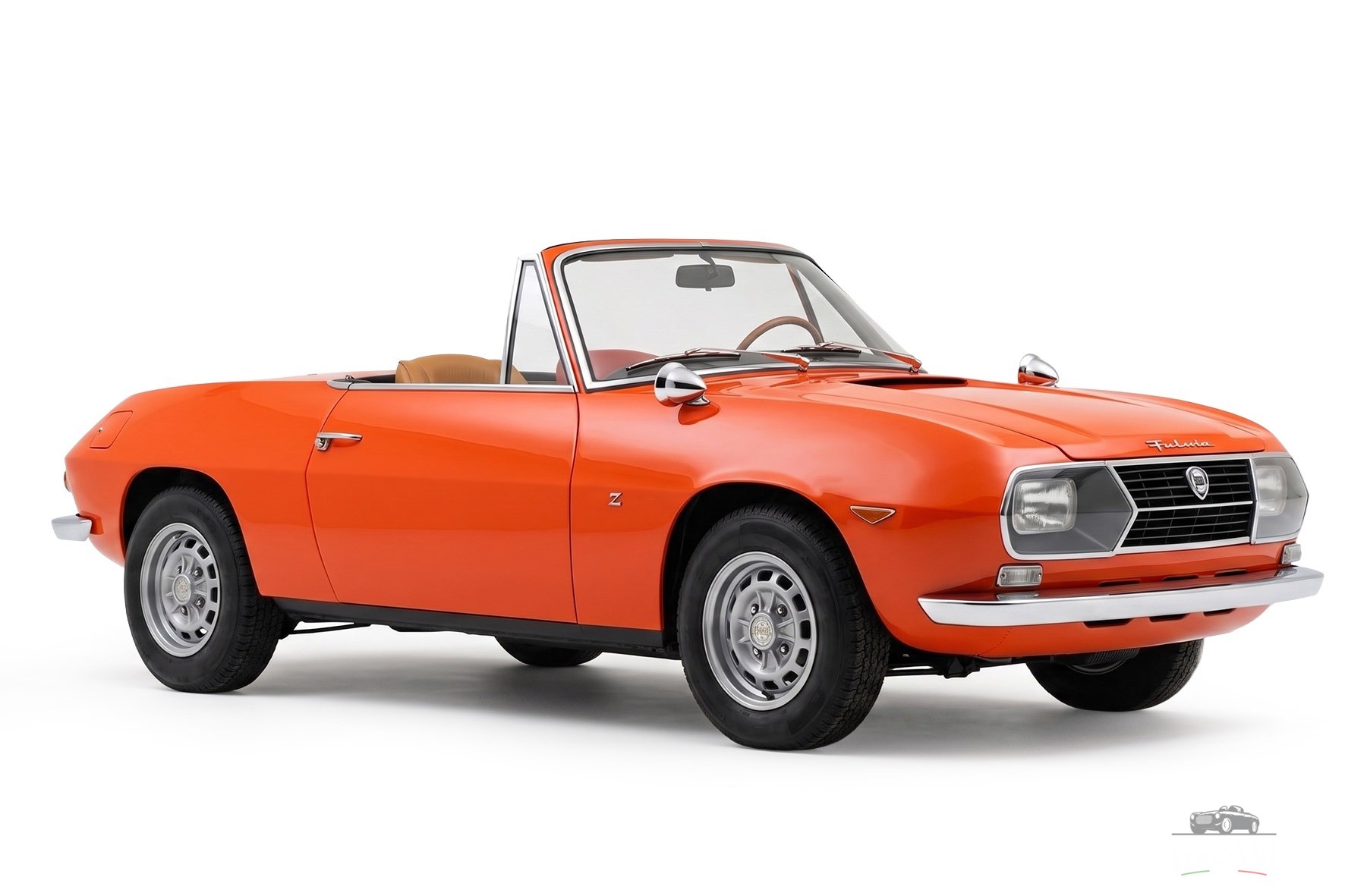
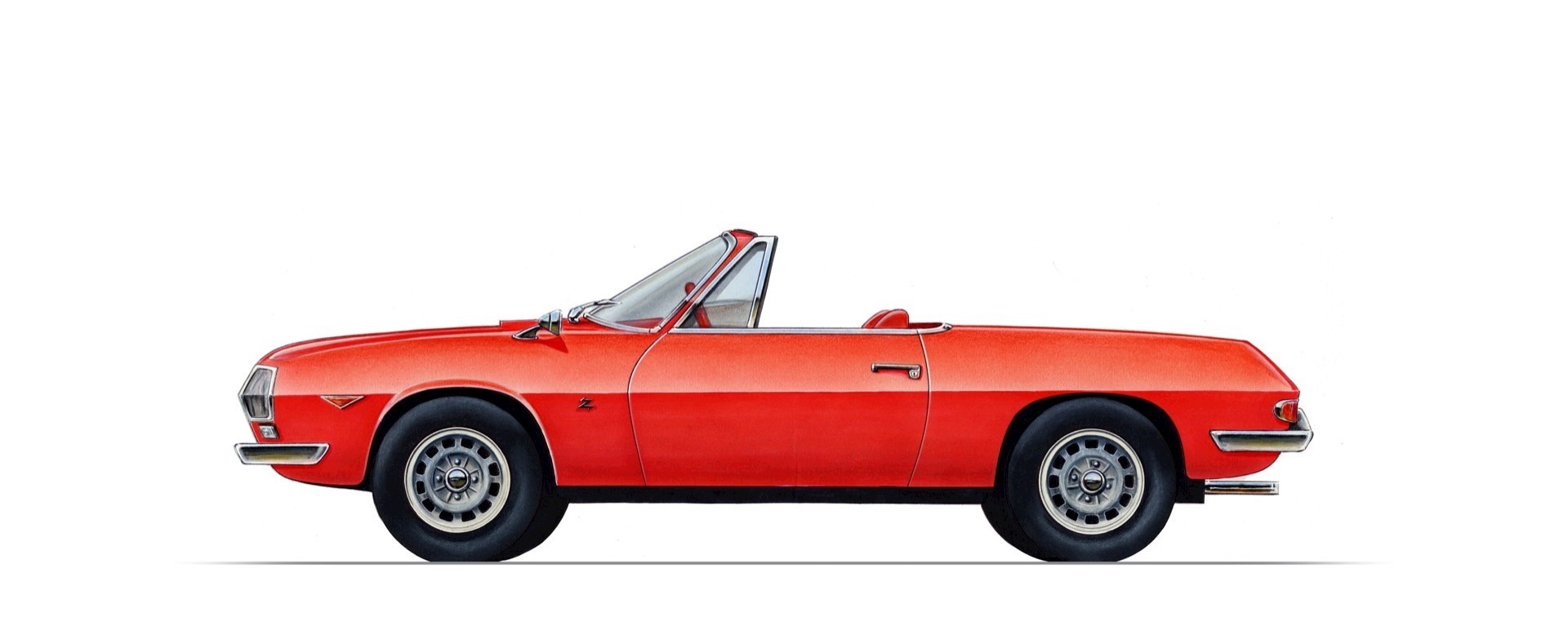
The Lancia Fulvia Sport Spider was a one-off prototype developed by Milanese coachbuilder Zagato and introduced at the 1968 Turin Motor Show. The model was conceived as a two-seat open version of the Fulvia Sport Coupé , showcasing an evolution of the aerodynamic fastback design previously executed by Ercole Spada for Zagato. The Fulvia Sport Spider was based on the standard Fulvia Sport platform but with a reduced wheelbase shortened by approximately 150 mm (5.9 in) to achieve balanced proportions suitable for an open-body configuration. Mechanically, the Spider retained the front-engine, front-wheel-drive layout of the Fulvia Sport. It was equipped with Lancia’s narrow-angle 1,298 cc V4 engine, featuring twin carburetors and an output of approximately 87 horsepower (64 kW) at 6,000 rpm. Power was delivered through a five-speed manual gearbox. Suspension employed independent front wishbones and a rear beam axle with transverse leaf spring, consistent with other Fulvia models. Braking was provided by four-wheel hydraulic disc brakes, and steering used a rack-and-pinion system. The prototype’s structure combined steel and aluminum components, maintaining a total weight close to 900 kg. The soft top was designed to fold completely beneath a flush-fitting tonneau cover, leaving the rear deck unobstructed when retracted. The exterior was finished in red, complemented by matching red leather upholstery covering the seats, dashboard, and steering wheel. Plexiglas headlamp covers, a black front grille, and Peugeot 202-sourced tail lamps were fitted—elements that previewed the aesthetic treatment later seen on the 1970 Series 2 Fulvia Sport. Dimensions were consistent with the shortened chassis configuration: an overall length of approximately 3,850 mm, width of 1,580 mm, and height of 1,240 mm. The car’s design prioritized aerodynamic cleanliness and lightweight construction rather than production feasibility. The Fulvia Sport Spider remained a single prototype, not intended for series manufacture. It served as a stylistic and technical exploration of an open Fulvia derivative, representing the last phase of close collaboration between Lancia and Zagato before the company’s industrial integration into the Fiat Group.
IN THE ARCHIVE
Coachbuilders & design studios
02 / TECHNICAL IDENTITY
Specifications & construction
Production & construction
- Production
- 2
- Production type
- Limited
Engine & performance
- Engine configuration
- V4
Dimensions & accommodation
- Length
- 3,850 mm
- Width
- 1,580 mm
- Height
- 1,240 mm
Design & manufacture
- Manufacturer · Documented
- Lancia
- Coachbuilder / Body Builder · Documented
- Zagato
- Designer · Documented
- Ercole Spada
06 / EVENTS & AWARDS
Events & awards
50° Salone Internazionale dell'Automobile – Torino General · legacy_preserved
- Date
- 1968
- Chassis
- General
Preserved CI 1.0 relation. Evidence field: _yoast_wpseo_primary_events. No award inferred.
07 / THE VEHICLE IN DETAIL
Photo gallery 4 photographs
08 / FROM THE ARCHIVE
Archive
References held in the vehicle dossier. Their inclusion does not establish that every historical claim has been independently verified.
| Reference | Source type |
|---|---|
| Zagato Archive — Lancia Fulvia Sport www.zagato.it | Coachbuilder official archive |
THE CONVERSATION
Comments 0
Share a memory, a period photograph or a documented detail about this car.