
Lamborghini Centauri 12V: Pietro Camardella’s Project That Started It All
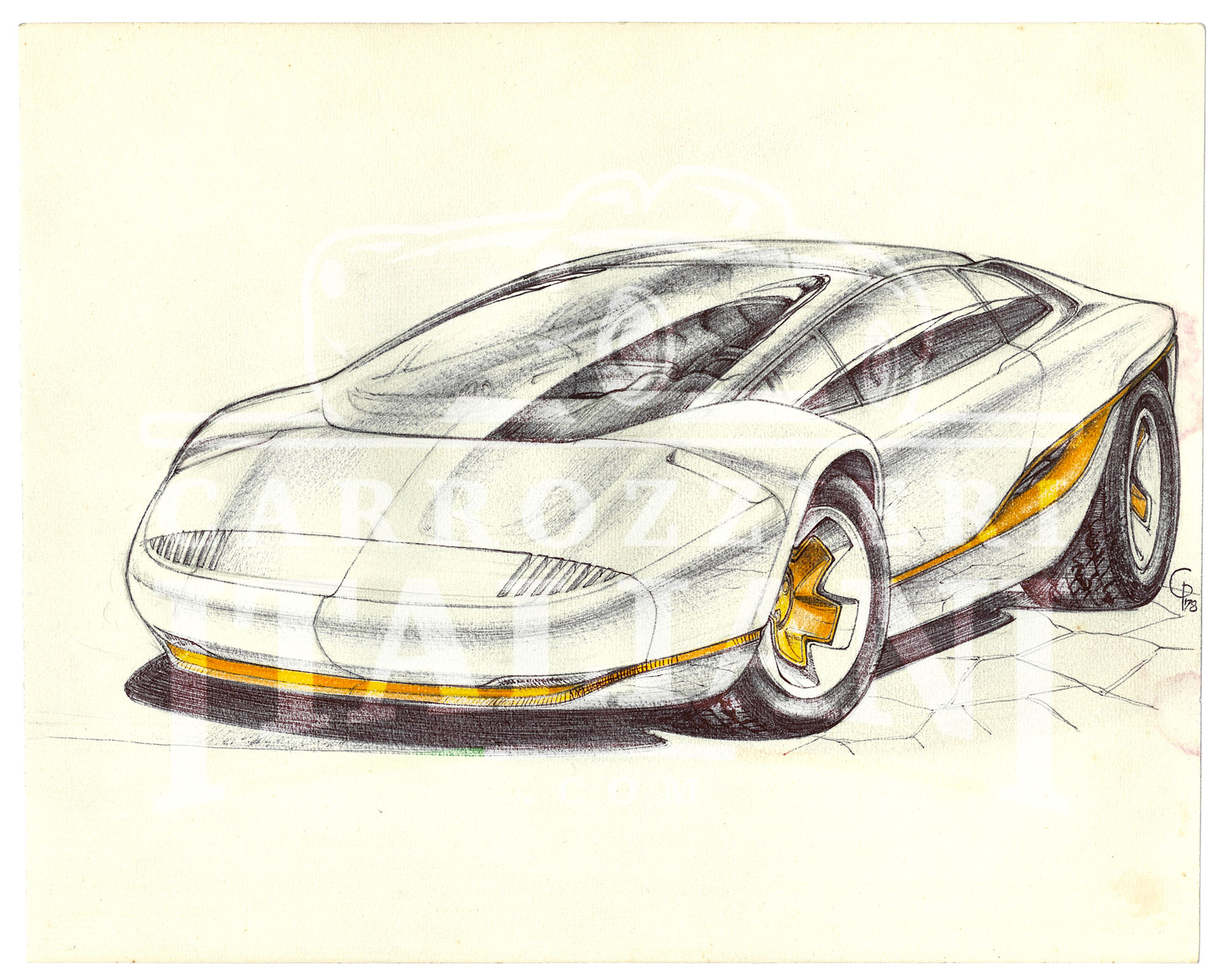
Carrozzieri-Italiani.com presents exclusive insights into the first design ever created by Pietro Camardella: a visionary 1978 concept based on the Lamborghini Countach, lost to time, yet foundational to a legendary career.
In the spring of 1978, while Italy’s coachbuilding tradition was thriving and the Lamborghini Countach was rewriting the visual grammar of high-performance design, a young graduate from the Istituto d’Arte of Rome was quietly preparing to change his life. That young man was Pietro Camardella, and his first complete project — a visionary, hand-rendered concept car named Lamborghini Centauri 12V — was his bold application for a place among the titans of Italian design.
Today, over four decades later, Carrozzieri-Italiani.com is honored to unveil this project in full, thanks to our exclusive interview with Camardella himself. What we discovered is not merely a student’s speculative sketch, but a fully realized automotive thesis: technically ambitious, stylistically daring, and startlingly prescient. It is, in every sense, the blueprint of a career.
The Origins of a Vision
At just 22 years old, Pietro Camardella was already thinking beyond the accepted limits of sports car design. He wasn’t content to imitate the wedge-shaped formula made famous by Marcello Gandini or Giorgetto Giugiaro. He sought to evolve it — or rather, to disrupt it entirely.
His canvas was one of the boldest foundations available: the Lamborghini Countach, a car already regarded as a visual thunderbolt. But Camardella wasn’t interested in simply redesigning its surface. He went deeper. Much deeper.
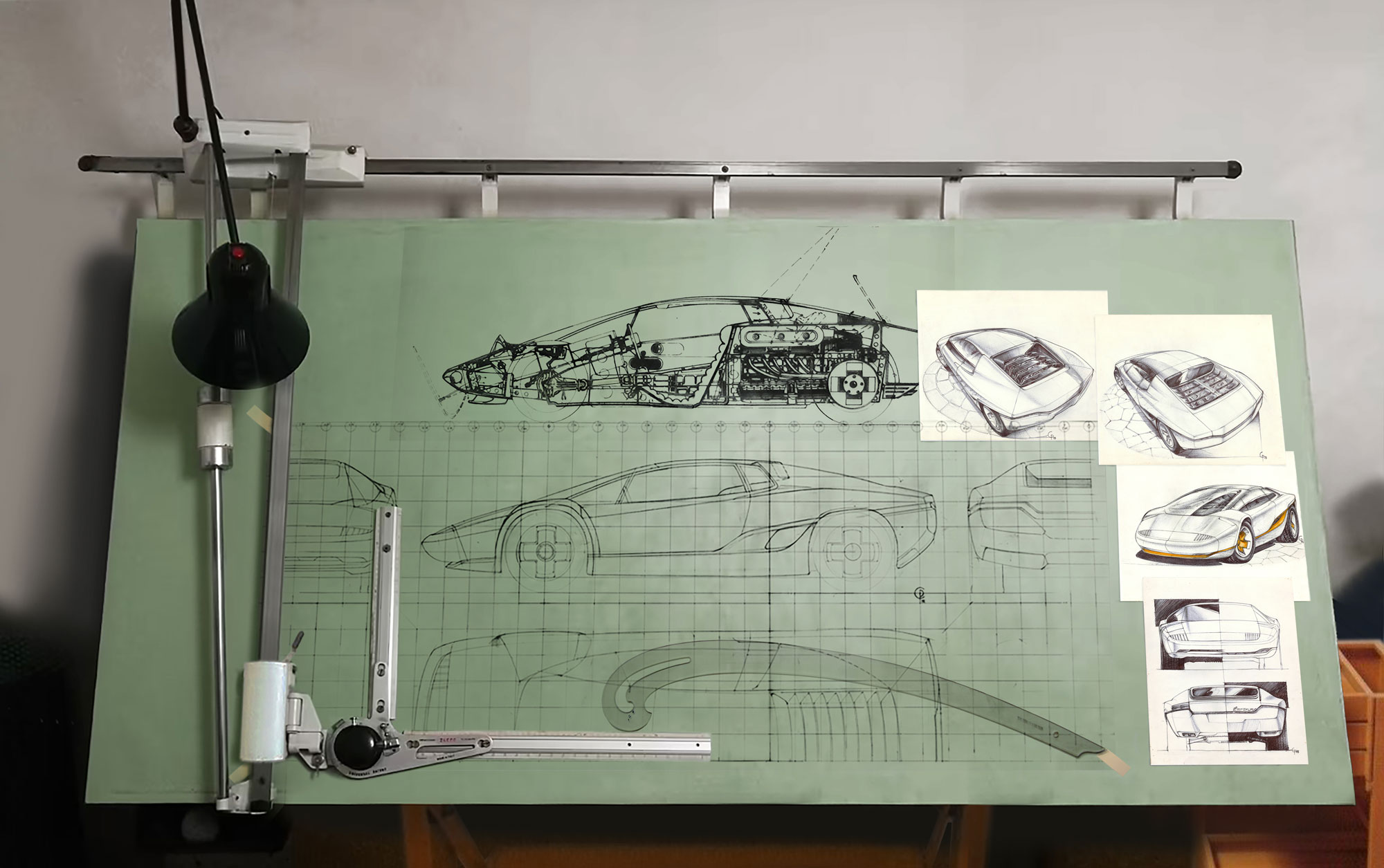
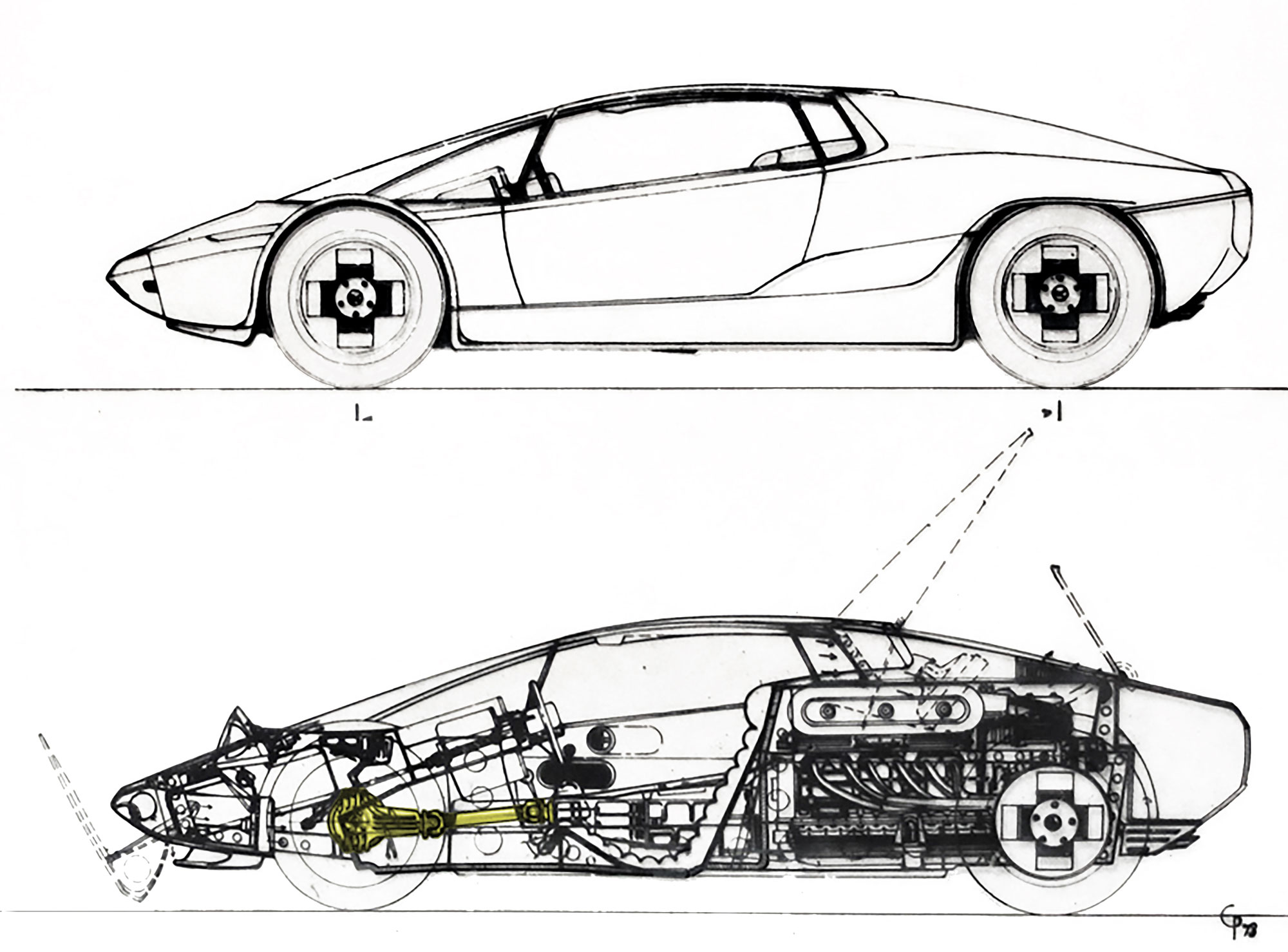
The result? The Lamborghini Centauri, a concept that was not only aesthetically advanced but mechanically reimagined. Camardella proposed a radical transformation of the Countach’s rear-wheel-drive layout into a bespoke four-wheel-drive system — a concept all but unheard of in high-performance vehicles at the time.
“I introduced a 4×4 layout, highlighted in yellow on the exploded diagram,” Pietro told us, smiling at the memory. “It used a specific transmission shaft and the rear differential of the Espada. It was unconventional, of course — but it worked.”
Design That Spoke the Language of the Future
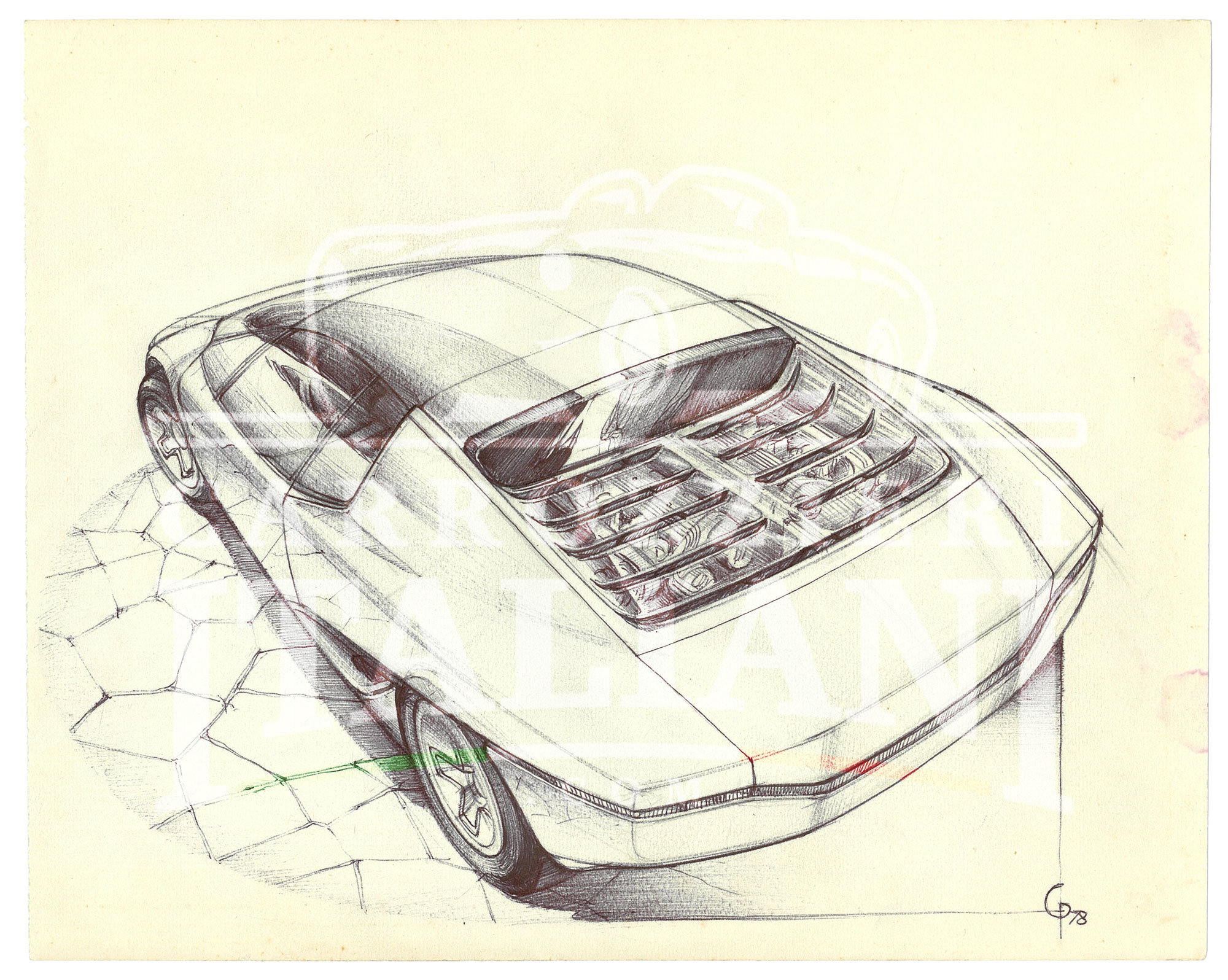
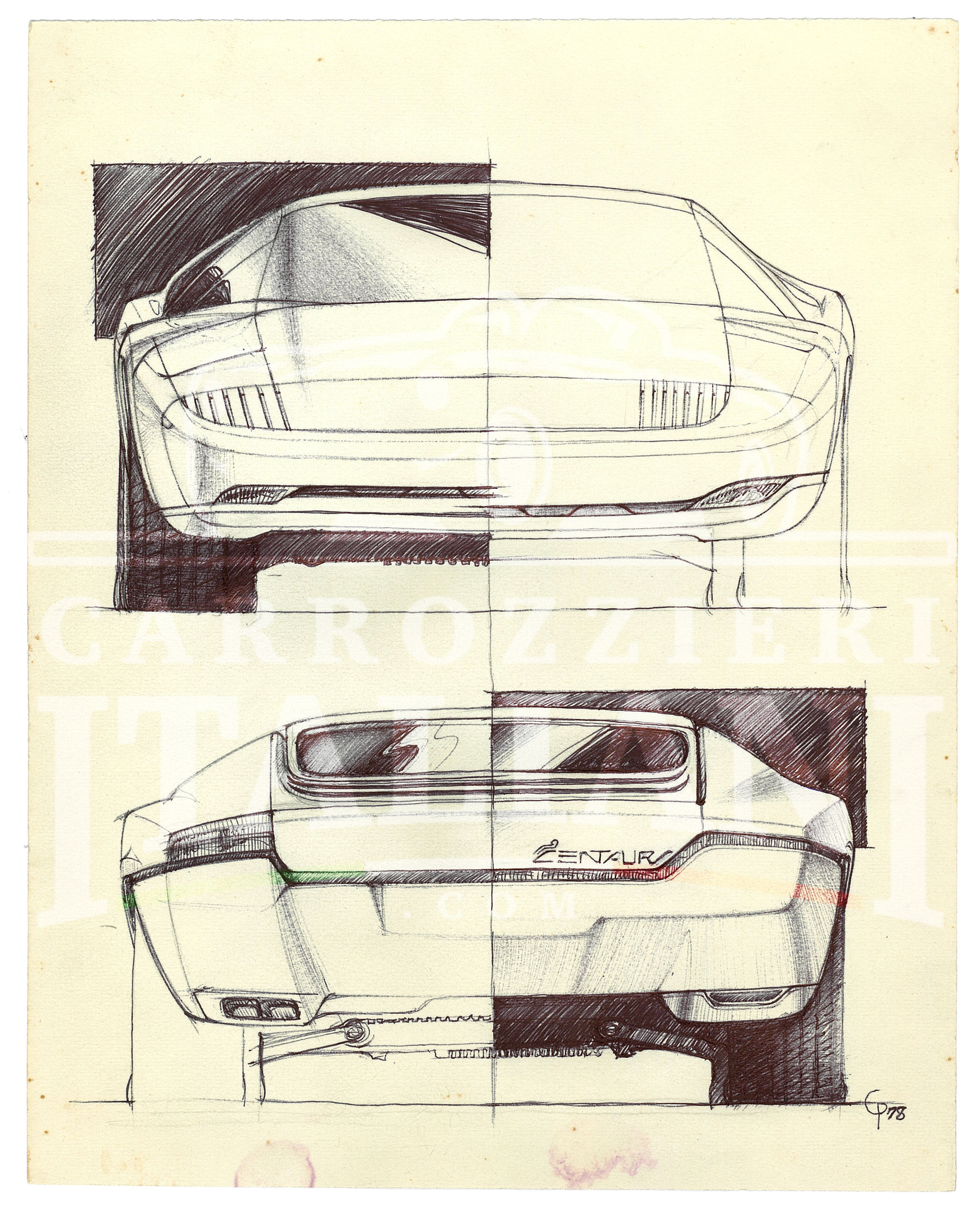
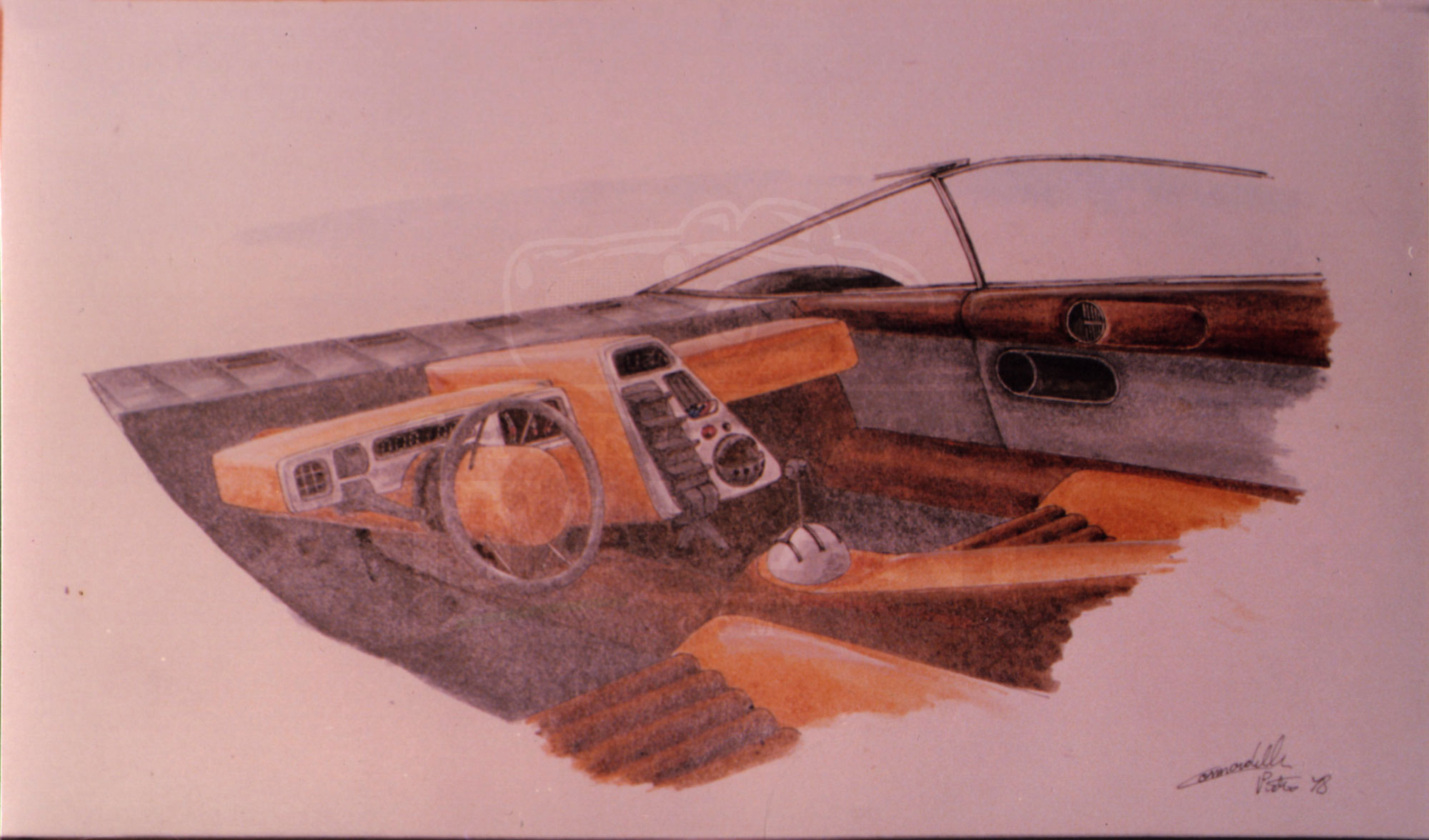
The Centauri 12V’s visual identity is no less remarkable than its technical underpinnings. Its most striking feature was the strongly forward-set windshield, a design choice that emphasized both speed and aerodynamic intent. The body was divided perimetrically, a structural separation that served both functional and aesthetic purposes. Painted in a vivid orange, the division helped to integrate direction indicators in a continuous, seamless flow — a small detail that reveals Camardella’s obsession with harmony and innovation.
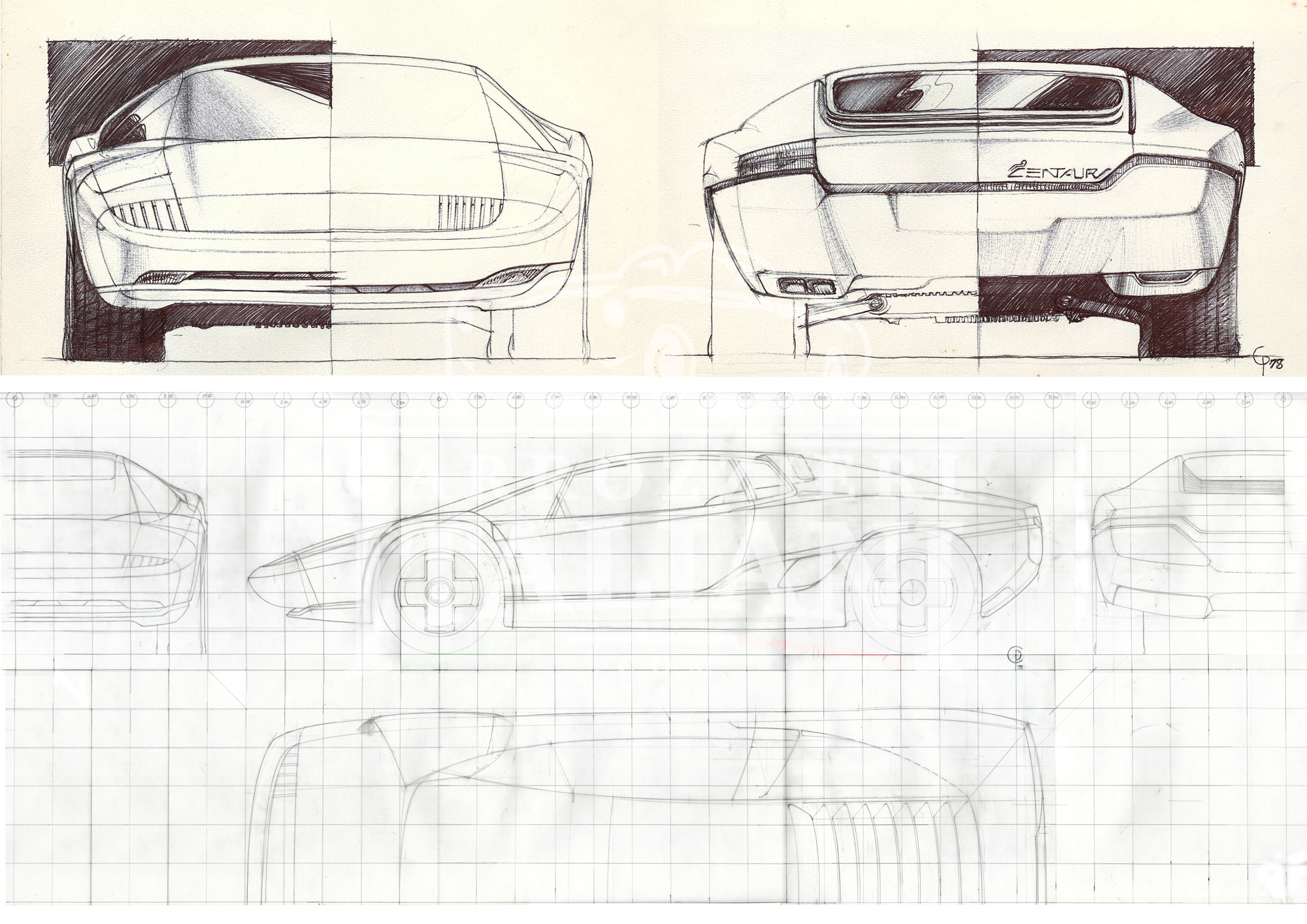
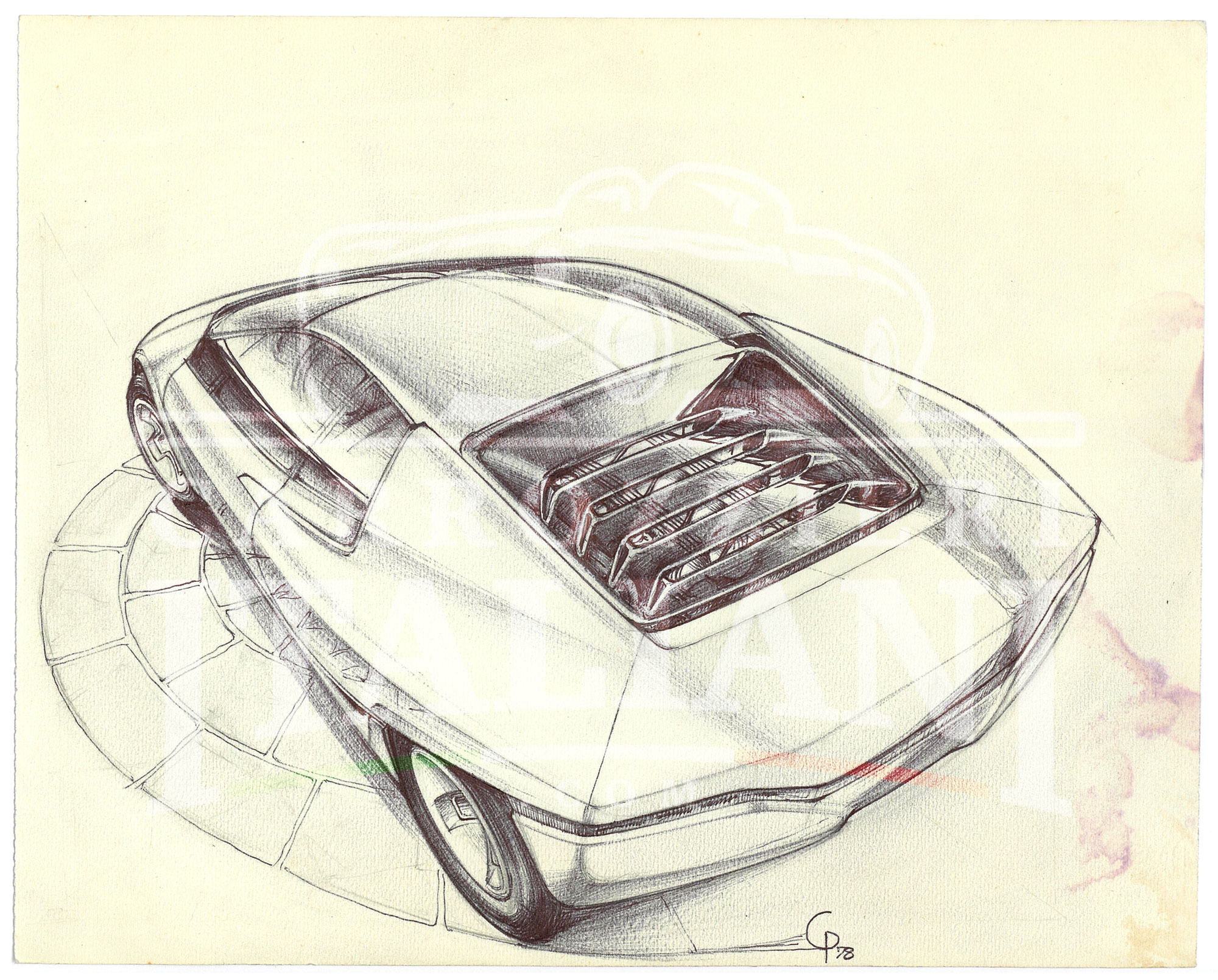
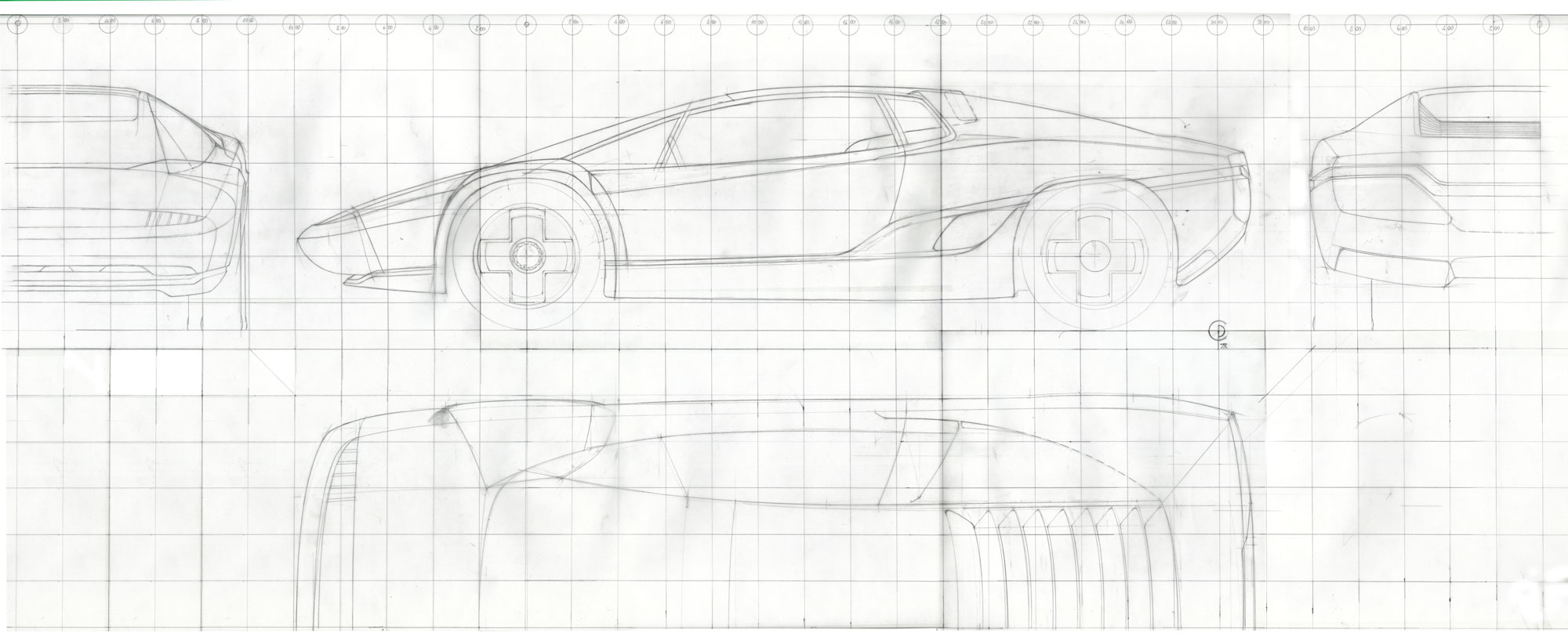
Other key elements included:
-
Oversized air intakes sculpted into the body just aft of the cockpit, anticipating the aggressive airflow strategies that would later define Group B and supercar design in the 1980s.
-
An automatically deploying front spoiler, decades ahead of similar active aerodynamic systems.
-
And perhaps most intriguingly, a unique interpretation of pop-up headlights, not merely for drama, but for genuine aerodynamic efficiency — a rare synthesis of beauty and purpose.
Even today, some of the solutions presented in the Lamborghini Centauri 12V remain unseen in production models. That alone is a testament to how far Camardella was thinking ahead.
A Costly Silence
Once the project was complete, Camardella packaged his entire vision into a meticulously prepared physical portfolio, a “plico” as he described it — beautifully bound, printed with care, and likely costing a significant portion of his student budget. He sent it to Bertone, a firm synonymous with bold ideas and design revolution.
He never received a reply.
“That was disappointing,” he admits with a shrug, but without bitterness. “At the time, you expect at least a letter — even a rejection. But there was nothing. Not a word.”
One could argue that Bertone missed an opportunity that day. But destiny had other plans. Pietro continued presenting his work elsewhere, and eventually, it landed in the right hands: those of Pininfarina. There, his career began in earnest.
From Centauri to Ferrari
The young man who designed the Lamborghini Centauri 12V would go on to become one of Italy’s most respected automotive designers. At Pininfarina, Camardella contributed to several landmark projects, including the Ferrari 456 GT, the Mythos, and most famously, the Ferrari F40 — arguably the definitive supercar of the 1980s.
In hindsight, the DNA of the F40 — its aerodynamic sharpness, its unapologetic function-over-form ethos — can already be seen taking root in the Centauri.
“That project taught me everything,” Camardella reflects. “How to integrate mechanics with aesthetics, how to solve problems before they happen, and most of all — how to have a point of view.”
Why the Centauri 12V Still Matters
It’s easy to view early student projects as charming footnotes, but the Lamborghini Centauri 12V is something else entirely. It’s a reminder of how the Italian design tradition is fueled not just by experience, but by visionaries who dare to ask “what if” at the beginning of their journey.
For Camardella, it was the project that defined his voice — even if no one answered at first. And for us, it offers a rare and precious window into the making of a designer who would help shape the modern supercar.

ABOUT THE AUTHOR
Andreas Scheidl
Italian classic car enthusiast with German roots. Renowned as a respected figure in the classic car community, he serves as a jury member at various international concours d'elegance, including the Classic Gala Schwetzingen and Mantova. As a content creator, Andreas passionately shares his profound knowledge and appreciation for vintage automobiles. His heart beats for cars designed by Giovanni Michelotti, showcasing his discerning taste and dedication to preserving the timeless elegance of automotive history.
More stories by Andreas Scheidl ↗CONTINUE READING
Posts You Might Like
Fiat Panda Cabrio: The Italian Coachbuilders Who Opened Giugiaro’s Box
From Moretti’s Panda Rock to Italdesign’s experimental Strip, Maggiora’s four-wheel-drive convertible and Stola’s remarkable Destriero, the history of the open-top Panda reveals an unexpected chapter in Italian coachbuilding. When Giorgetto Giugiaro designed…
Read story
Gabriele d’Annunzio and the Cult of the Automobile
There was a time when the automobile had not yet become part of the landscape. It announced itself from afar through the beating of an engine, the smell of petrol and hot…
Read story
Fiat 1400: The Last Great Playground of the Carrozzieri
From Touring and Abarth to Farina, Ghia, Vignale, Boneschi, Bertone, Viotti and the smaller carrozzerie, the new Fiat quickly became one of the richest bases for Italian special bodies in the early…
Read story
How a Swiss Dealer Challenged Ferrari: The Story of Monteverdi
How Peter Monteverdi went from Swiss Ferrari dealer to creator of rare Frua and Fissore-bodied GTs, the Hai supercar and luxury off-roaders.
Read story
THE CONVERSATION
Comments 0
Share a memory, a period photograph or a documented detail about this story.