
How Ford Hacked the Wind: Inside the Probe Concept Revolution
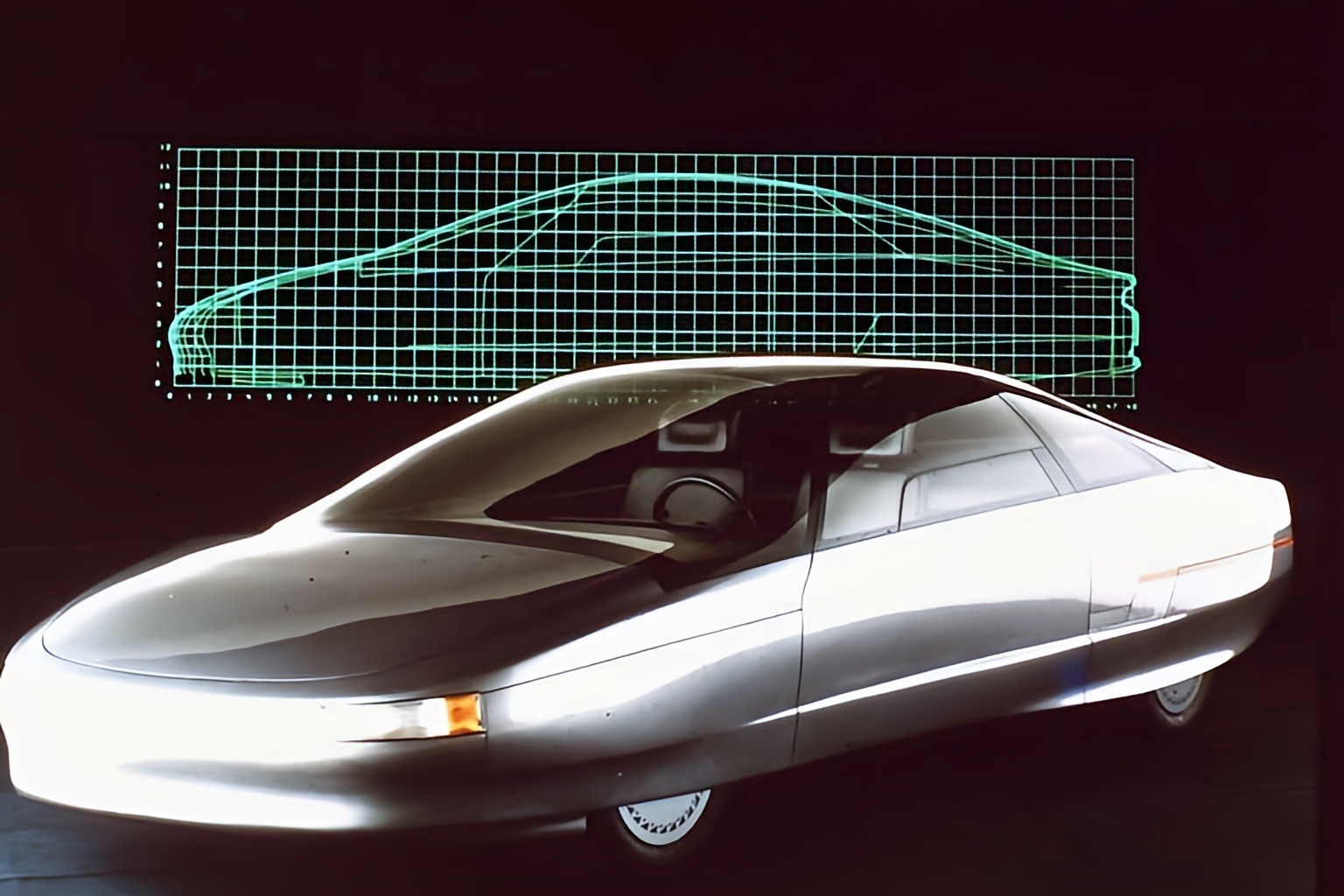
By the late 1970s, the car industry was running on fumes—literally and creatively. Fuel crises, environmental pressure, and the end of America’s big-block swagger forced automakers to admit a hard truth: the future wouldn’t be won with cubic inches. The 1973 oil embargo had already served as a global slap in the face, sending pump prices skyward and consumer patience downward. If Detroit wanted to survive, it needed a new playbook.
At Ford, some designers saw an opportunity hiding inside the chaos—a kind of cheat code the industry had mostly ignored. Aerodynamics, once the domain of Le Mans prototypes and eccentric French streamliners, could be the efficiency multiplier Detroit desperately needed. Don Kopka, then rising through Ford’s design ranks, argued that smart aero wasn’t about making every car a jellybean; it was about using science to unlock performance and economy at the same time. The skeptics said all wind-tunnel cars would look the same. Kopka insisted they just needed to look right.
And Ford had an ace up its sleeve: Carrozzeria Ghia. The Turin coachbuilder—longtime home to design legends like Giorgetto Giugiaro and Tom Tjaarda; had become Ford’s European concept shop, staffed with some of the sharpest metal-shapers on the continent. By the late ’70s it was led by Filippo Sapino, a stylist with a feel for futuristic form and Italian drama. When Ford’s “Project Alpha” team handed Ghia the challenge of creating a ground-up, aero-first car for the real world, it wasn’t just a brief—it was an invitation to hack the future.
What followed was a transatlantic experiment unlike anything Ford had attempted: a series of aerodynamic concept cars christened Probe. Each was a rolling test rig, a design manifesto, and a glimpse at a world where efficiency didn’t mean compromise. The Probe series wouldn’t just influence Ford’s next generation of production cars—it would quietly bend the trajectory of automotive design itself.
Probe I – Rebirth of the Dream Car (1979)
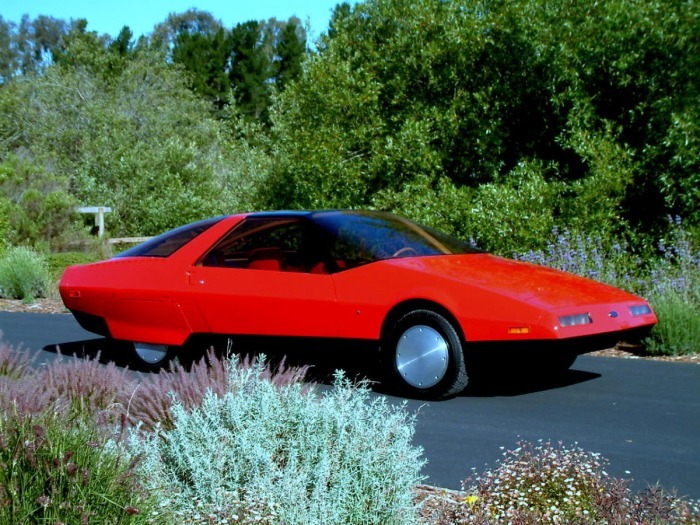
Ford didn’t just roll out a concept car in Frankfurt in 1979—they dropped a full-blown statement. Probe I was the first real payoff from the Ford–Ghia alliance, and it landed like a plot twist. In an era when the classic “dream car” had gone dormant, Probe I arrived looking like a cheat code someone had accidentally leaked from the future.
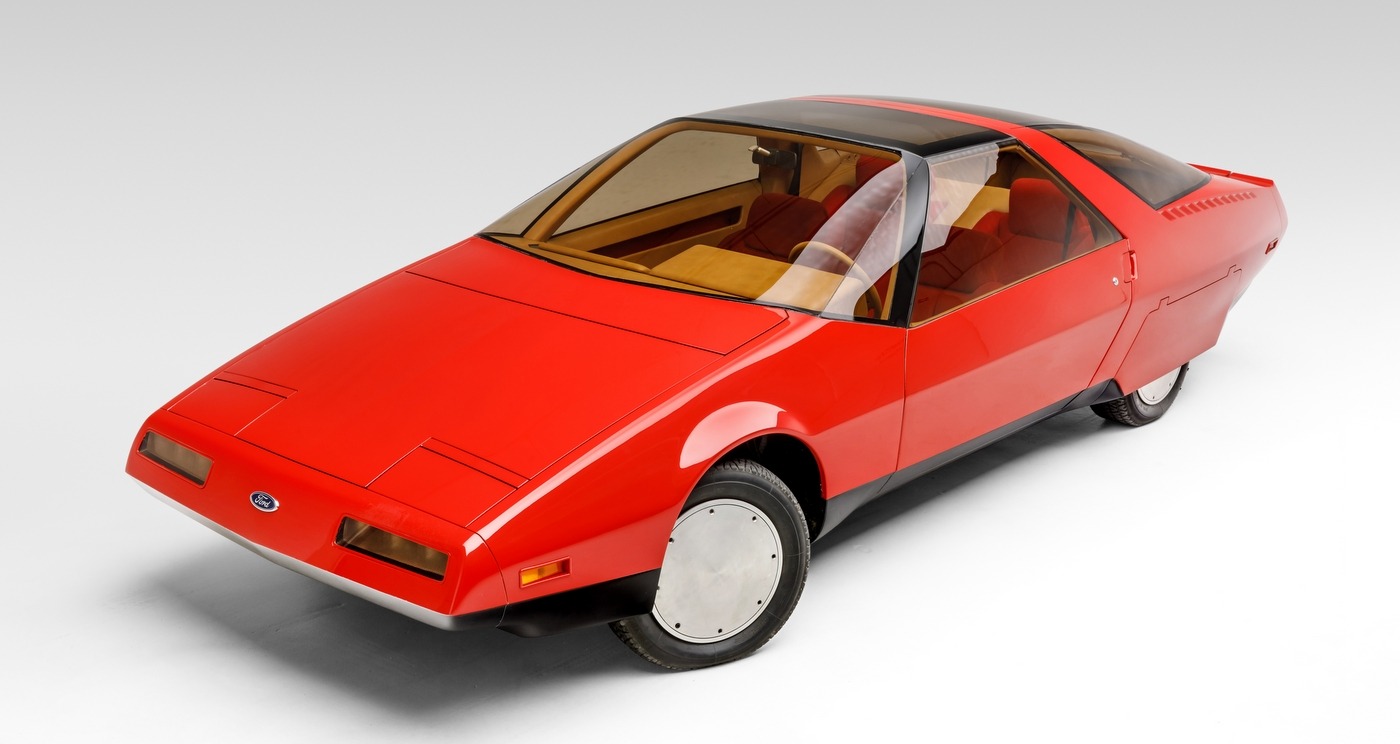
Born from Don Kopka’s Advanced Design Studio and shaped by Filippo Sapino’s team at Ghia, the car blended Detroit’s engineering urgency with Italian sculptural confidence. In silver paint and a razor-edged wedge profile, it stood out immediately: a low nose, smooth flanks, and surfaces so clean they looked digitally rendered. Underneath, however, it was still a Fox-platform Mustang—cut, stretched, and disguised so effectively you’d never guess its origins.
🔗 Read more: Sharper Than a Leisure Suit: The Wedge-Shaped Revolution of Italian Concept Cars
What mattered most wasn’t the styling drama; it was the aero math. Probe I was packed with drag-killing tricks: a minimalist frontal area, a gently raked flush windshield, pop-up headlights, fender skirts over the rear wheels, and disc-style aero wheel covers. When Ford ran it in the tunnel, the numbers came back almost unbelievable—0.25 Cd, roughly half of what the average American sedan was pushing through the air at the time. For context, that’s barely worse than a modern Prius. Ford had effectively hacked the wind.
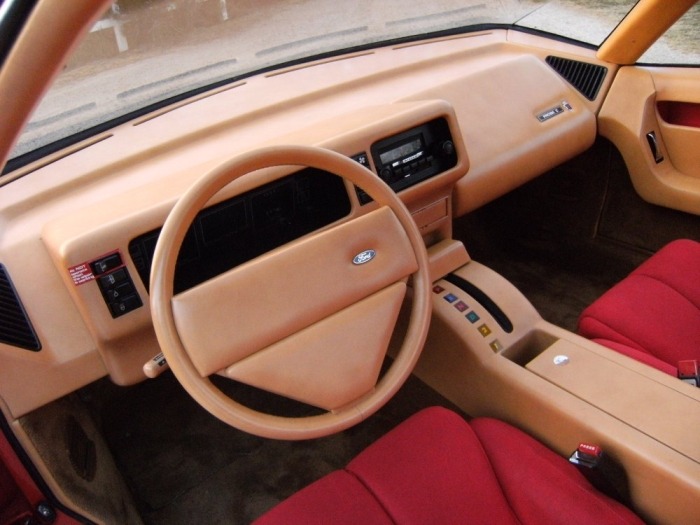
The interior doubled down on the futurism—a red cloth cocoon, early digital-style readouts, even a hypothetical “credit card” ignition. Some of the show-car tech was more imagination than reality, but the car itself was absolutely real. After its static debut, Ford made it fully drivable for Geneva in 1980, installing a turbocharged 2.3-liter four from the Mustang Cobra (around 170 horsepower) and an automatic transmission. By then, dressed in a bold red repaint, Probe I was no longer just a sculpture—it was a functioning proof that aerodynamics didn’t have to mean slow or sterile.
Seeing Ford—usually the cautious, sensible one among the Big Three—parade an Italian-styled aero missile across European show stands sent a clear message: this wasn’t a styling exercise. It was a pivot point. As one period writer put it, Probe I marked “the rebirth of the American Dream Car… a milestone in function through form.”
And that was the real mission. Probe I was Ford’s internal disruptor, built to convince its own leadership that aerodynamic design wasn’t a geeky sideshow but a necessary evolution. It worked. The wedge stance, the tucked rear wheels, the emphasis on smooth surfaces—all of it would echo in Ford’s production design for years. Kopka immediately pushed for a follow-up model that would bring the aero gospel closer to everyday buyers. Probe I had made the point loudly; the next concept would aim to make it practical.
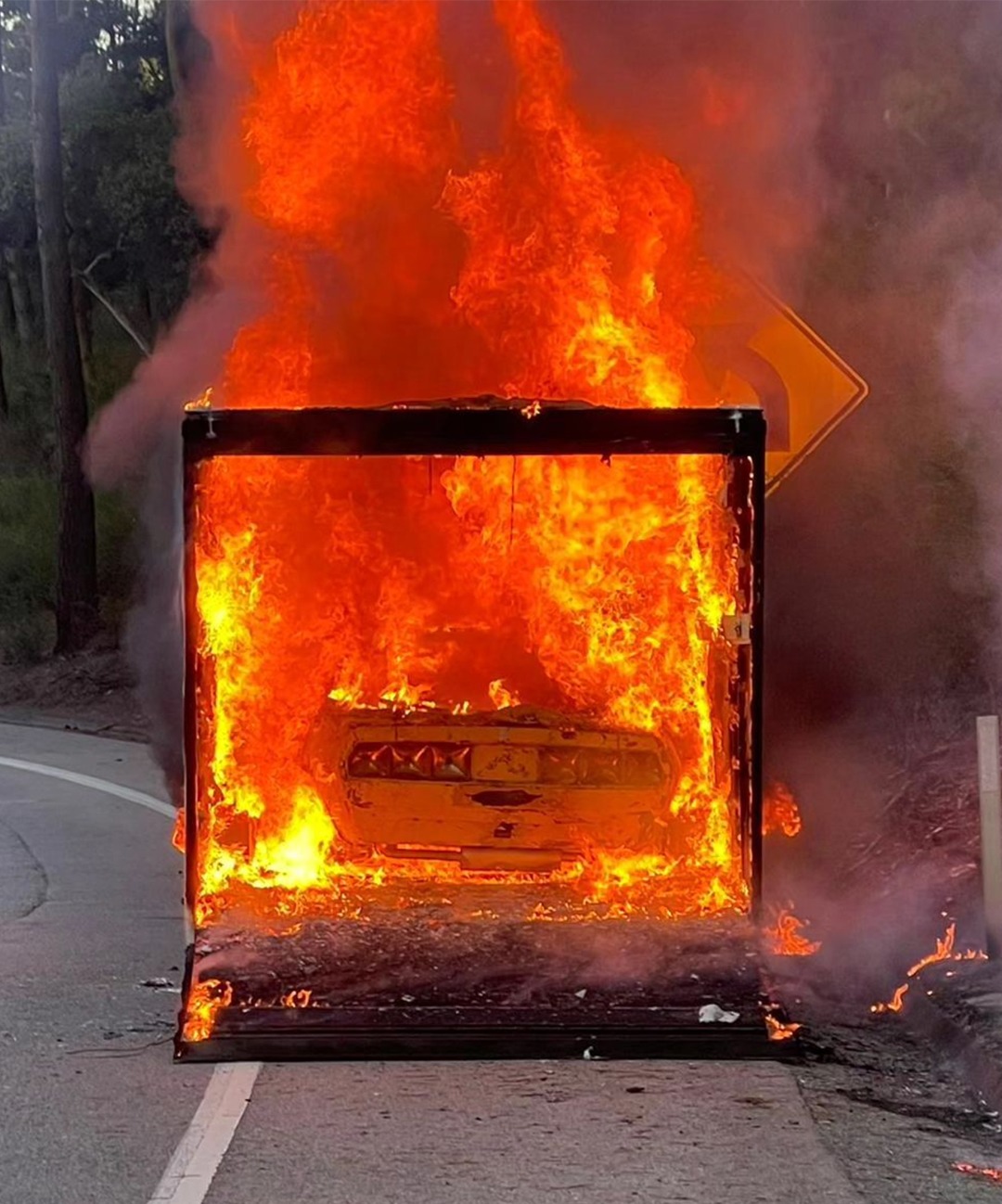
The car itself, sadly, didn’t live to see its legacy fully celebrated. After decades in the care of the Scott Grundfor Company and a well-earned appearance at Pebble Beach, the one-off Probe I was destroyed in a transport-trailer fire in August 2024—a heartbreaking end to a landmark machine. But its influence is long since baked into modern automotive design. The car is gone; its disruption isn’t.
Probe II – A Practical Prototype (1980)
If Probe I was the headline-grabber—the red, wedge-shaped attention hacker; Probe II was the quiet strategist. Unveiled with far less fanfare in 1980, it was built to answer a tougher question: What happens when all that wind-tunnel wizardry gets applied to a car normal people might actually drive?
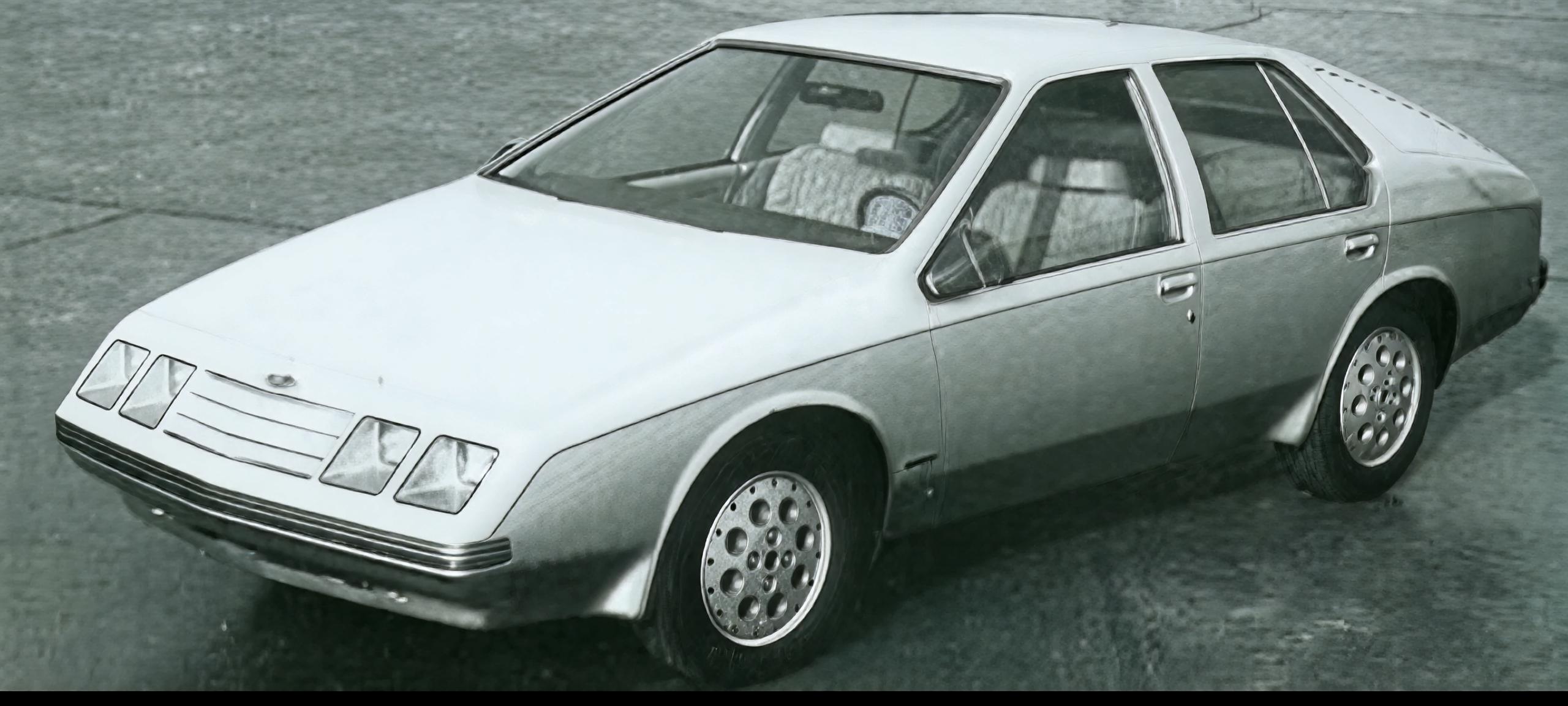
Where its predecessor was all drama, Probe II looked disarmingly sensible. The low-slung coupe silhouette was traded for an upright five-door hatchback, complete with a roomy cabin and acres of glass. It wasn’t trying to be a spaceship; it was trying to be tomorrow’s family car. And honestly, it looked close enough to production that some assumed Ford was about to release it.
But underneath the appliance-like restraint was a sharp engineering agenda. Probe II was designed with the logic of a systems engineer: smooth the body, clean the airflow, boost the interior volume, and preview the front-wheel-drive architecture Ford’s U.S. lineup hadn’t yet embraced. The nose still tapered to a subtle point, but the excesses of Probe I were gone. What remained were features that would soon become the Ford design language: flush headlamps behind clear covers, integrated bumpers, hidden wipers, recessed handles, and mirrors sculpted more like aircraft parts than car accessories.
The payoff? A drag coefficient hovering around 0.30—excellent for a five-seat hatchback in 1980. Ford’s own estimates suggested fuel economy could crest the 40-mpg mark. At a time when Americans were just beginning to obsess over efficiency, that number sounded almost optimistic.
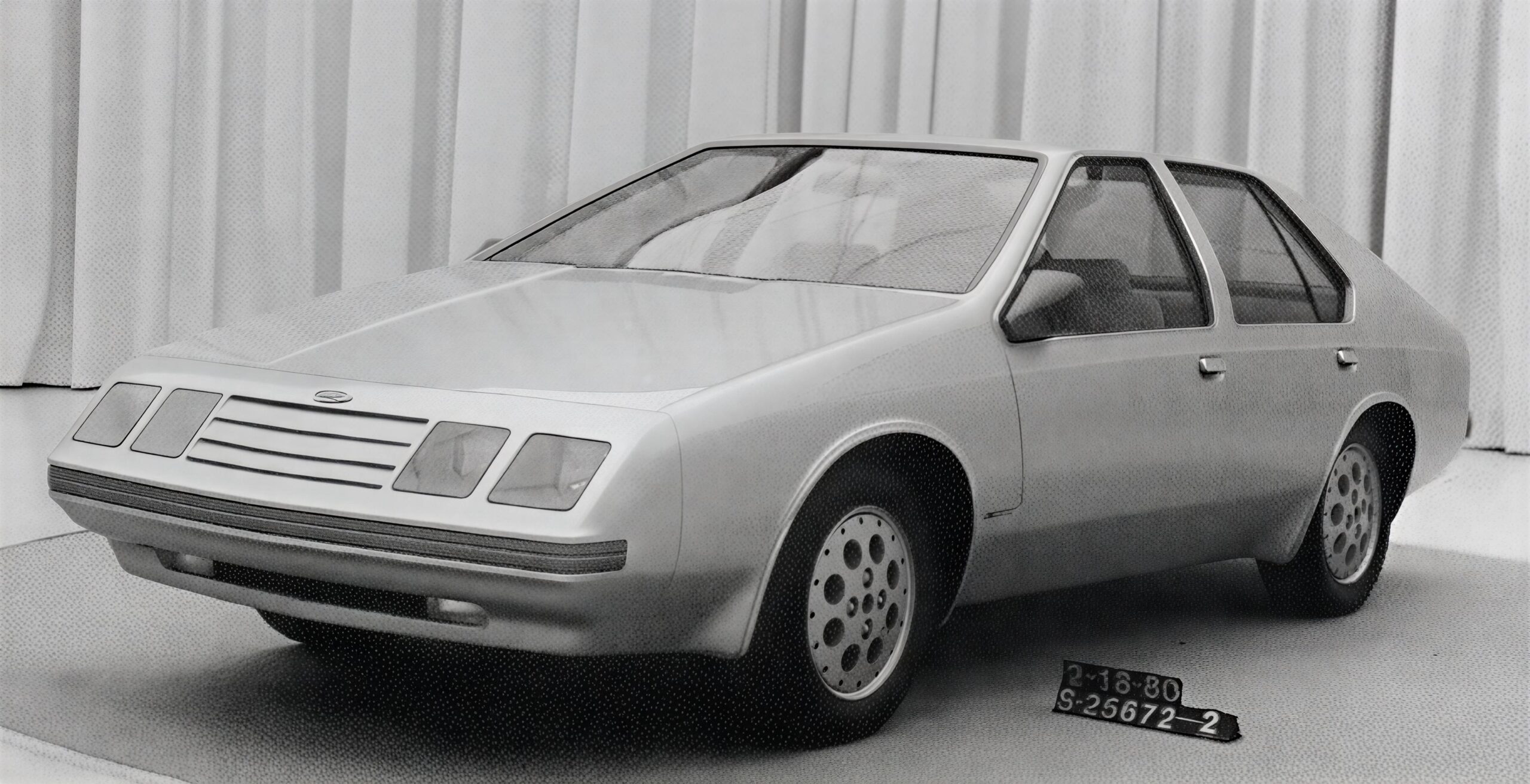
Despite its promise, Probe II never became a show-circuit celebrity. Ford used it more internally than publicly, showing it to engineers and executives as a practical demonstration of aero thinking. As a result, it’s easy to lose it in the Probe lineup today. But inside Dearborn, its impact was significant. Probe II was essentially a full-scale dress rehearsal for Ford’s aero revolution: the 1983 Thunderbird, the 1984 Tempo/Topaz, and ultimately the 1986 Taurus all carry unmistakable echoes of this quietly influential prototype. One journalist later called it “a semi-productionized version of Probe I’s ideas,” which is exactly the point.
🔗 Read more: The story of Ghia – part 1
From a craftsmanship angle, Ghia was still very much in the mix. Although the design work centered in Dearborn, the build likely involved Ghia’s Turin workshop, just as with Probe I. And it shows: Probe II had the polished, almost showroom-ready presence of a prototype assembled by people who sculpted metal for a living.
Probe I proved Ford could hack the wind. Probe II proved they could make that hack useful. It wasn’t meant to dazzle—it was meant to set the course. And inside Ford, it did.
Probe III – The Shape of the Future (1981)
When Ford rolled out the Probe III at the 1981 Frankfurt Motor Show, it didn’t look like a moonshot. It looked like… a Ford. A clean, modern four-door hatchback with tidy lines, a proper grille, and the air of something that could plausibly show up at a dealership. And that was exactly the trick.
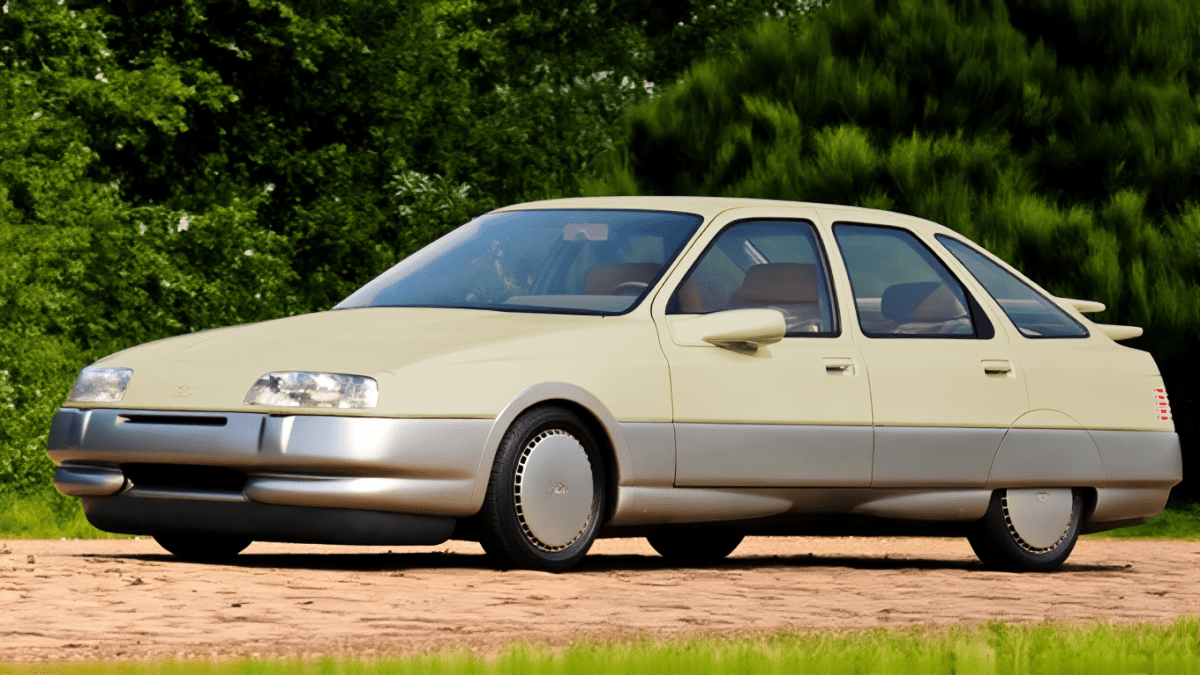
Ford presented it so casually that many attendees assumed they were simply seeing the new Cortina replacement. In a sense, they were—the Probe III was a barely camouflaged preview of the upcoming Sierra. But beneath the modest debut was the most radical concept in the entire Probe lineage: the moment when Ford stopped experimenting with aerodynamics and started committing to them.
Despite the more conventional body style, Probe III’s aero numbers were astonishing. Wind-tunnel tests returned a 0.22 Cd, an outrageously low figure for a practical five-seat family car. How did something this normal-looking beat the sleek Probe I? By refining every surface: flush glass with no protruding moldings, a tiny mail-slot grille, smoothly integrated composite headlights, soft-radius edges, moon-disc wheel covers, even discreet rear wheel skirts. Probe III didn’t need theatrics—it just executed the science with ruthless precision.
The design was led by Patrick Le Quément under Uwe Bahnsen at Ford of Europe, with Ghia still shaping the concept’s final form. Internally, convincing upper management to green-light such a slippery, unconventional silhouette required proof the public wouldn’t recoil. The Probe III became that proof. Clinics, boardrooms, and executive reviews all reacted the same way: curiosity, then acceptance.
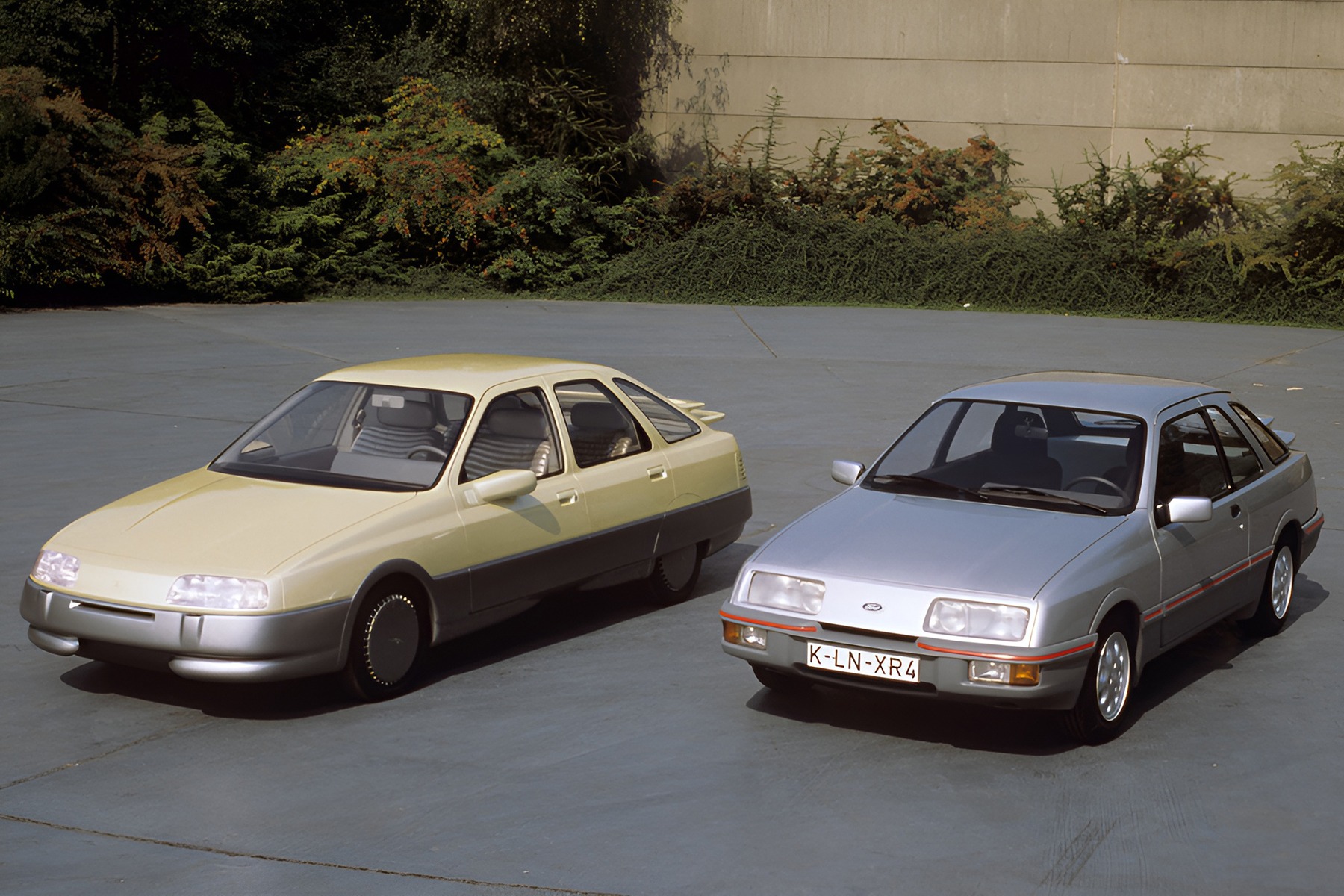
When the Sierra launched in late 1982, you could trace its DNA straight to the concept. The fastback profile, the flush glass, the slim nose—they all migrated nearly intact. The only element dialed back initially was the dual-plane rear spoiler. But even that returned in production form: the XR4i proudly wore the very bi-plane wing that Probe III had pioneered.
Probe III’s impact didn’t stop at the English Channel. The shape that Europe accepted became the template Ford’s U.S. studios studied obsessively while developing the 1986 Taurus. Before long, the Aero Look went from niche to mainstream. Flush headlights, jellybean silhouettes, and wind-honed fascias began popping up across Ford’s lineup—and then across Detroit’s. GM and Chrysler couldn’t ignore the shift.
Probe IV – The Extreme Aero Experiment (1983)
By the time Probe IV arrived in 1983, Ford and Ghia had already proved they could turn aerodynamic theory into a production reality with the Sierra-bound Probe III. So with the practical box checked, they went back to having fun—engineering-nerd, wind-tunnel-obsessed, push-the-envelope fun. Probe IV wasn’t about design language or market readiness. It was about finding the absolute limits of what a car-shaped object could do when you treat drag as the enemy and elegance as optional.
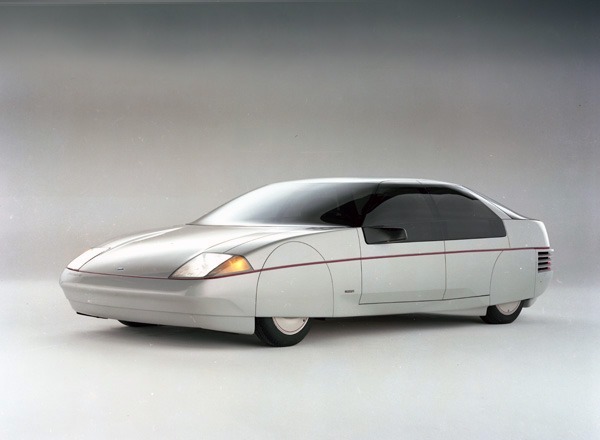
The result was a concept that looked less like something you’d see on a highway and more like something you’d see in a research lab at NASA. And that was the point: Ford and Ghia were going moonshot hunting. Their target was a drag coefficient so low it bordered on science fiction. They got it—0.15 Cd—putting Probe IV in the aerodynamic neighborhood of an F-16 fighter jet.
The body was a long, seamless fastback in metallic silver, with almost every visual cue of a traditional car sanded away. No grille up front (the radiator had been relocated to the rear, fed by hidden inlets). No protrusions. No open wheel wells. Even the underbody was smoothed flat. And the most radical move of all: fully skirted wheels—front and rear.
🔗 Read more: How the Space Age Shaped 50s-60s Italian Car Design
Skirting the rear wheels was easy; Probe I and III had already done that. Skirting the front wheels, where steering articulation normally ruins any chance of a clean opening, was the real hack. Ghia solved it with flexible membranes and articulated panels that moved with the wheel as you steered. Straight ahead, the opening was fully sealed, eliminating one of the biggest sources of drag in any car. Even today, the idea feels bold.
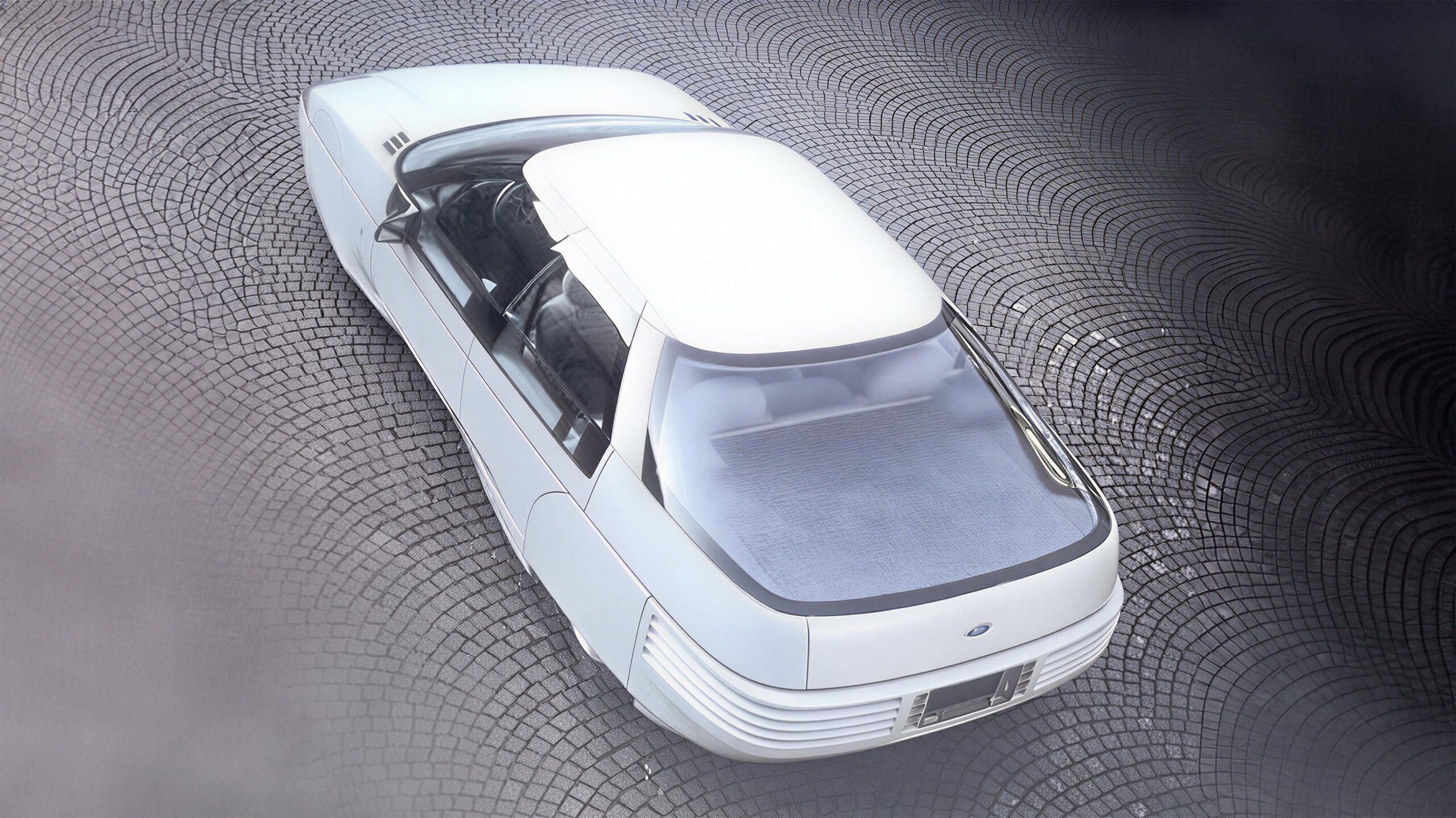
Probe IV didn’t stop at airflow; it hacked the car’s stance, too. At speed, the active suspension automatically altered the body’s “attitude”—the nose could drop four inches, while the rear lifted six, placing the car in its slipperiest posture. A dynamic front air dam adjusted itself in real time. Mirrors were replaced by aerodynamic pods, badges were flush-mounted, and even the tires were uniquely designed to cut turbulence. And powering it all was… a modest 1.6-liter turbo four driving the rear wheels. Performance wasn’t the goal; drag reduction was.
Inside, Probe IV continued the futurism. Four passengers reclined in sling-like seats under a near-continuous glass canopy. Fixed side windows minimized seams, leaving only small powered vent windows for toll booths. The single-spoke steering wheel with a transparent upper section looked like it belonged on a sci-fi film set. It felt less like a family car and more like a pressurized capsule ready for a low-orbit test flight.
Ford built two Probe IVs—one functional, one static—so they could show the car and test it simultaneously. Both toured the show circuit in 1983 and ’84, drawing crowds who weren’t quite sure what they were looking at but knew it was something from the future.
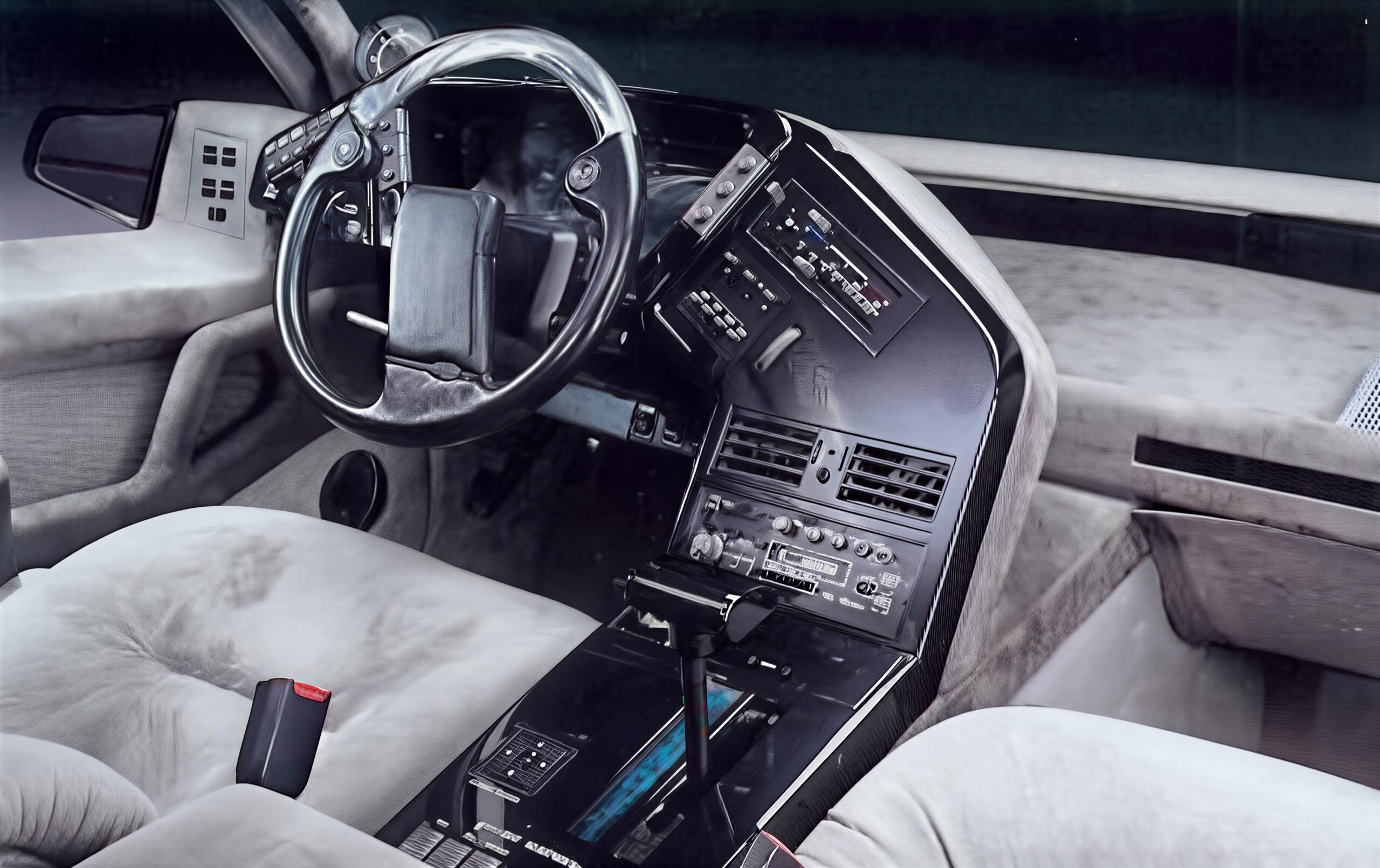
Probe IV wasn’t meant to spawn a production model, but its influence seeped into Ford’s mainstream cars anyway. The extreme flush glazing, the low nose, the disciplined surfacing—those ideas helped shape the ’86 Taurus and, by proxy, every aerodynamic sedan that followed. Probe IV proved a simple but crucial point: if you’re willing to challenge every assumption, a four-seat car can be as slippery as physics allows.
And with that, Ford and Ghia had one final experiment left in them—one more Probe that would attempt to blend moonshot efficiency with something resembling real-world usability.
Probe V – The Final Evolution (1985)
By 1985, Ford had turned aerodynamics from a design experiment into an actual company-wide philosophy. The Taurus and Sable were on the runway, jellybean shapes were becoming mainstream, and the public was warming up to cars shaped by science rather than chrome. Into this moment rolled the final chapter of Ford and Ghia’s aero saga: Probe V.
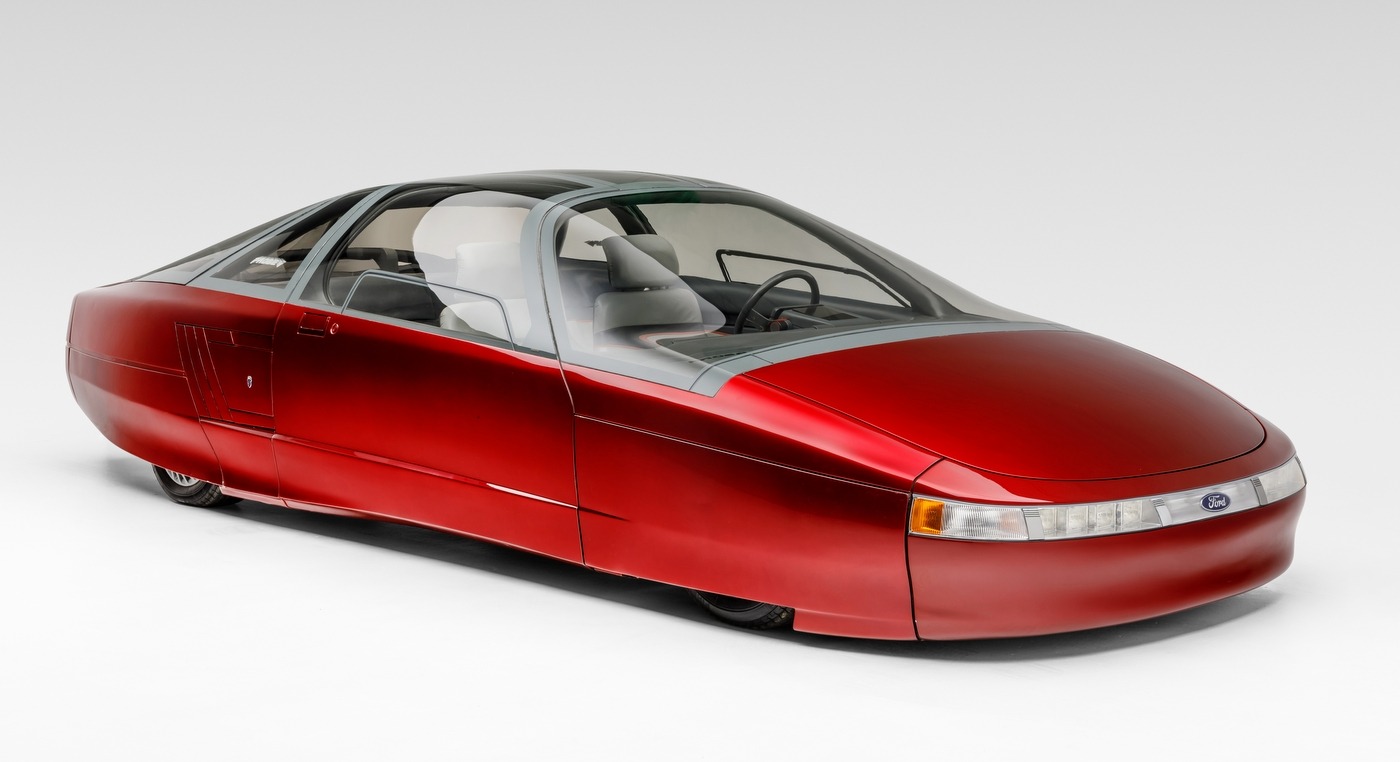
If Probe IV was the moonshot, Probe V was the victory lap—the car that said, “We’ve hacked the wind, now let’s make it beautiful.” Unveiled at the Tokyo Motor Show in a deep candy-apple red, the car immediately looked more cohesive, more intentional, and more emotionally styled than the spaceship-on-wheels that came before it. The rounded nose, the flush surfacing, the integrated forms—all of it hinted at Ford’s production design of the mid-’80s. You could even spot shades of Taurus in its face. Probe V didn’t just push drag numbers; it made them look good.
And those numbers were outrageous. Probe V hit a drag coefficient of 0.137—the lowest in the series, roughly 10 percent slipperier than Probe IV. But Ghia didn’t achieve that by adding more gimmicks; they refined the tricks they already had. Full wheel skirts returned, flexible membranes still handled front-wheel articulation, but everything was cleaner, better integrated, almost invisible unless you knew what you were looking at.
The silhouette shifted to something sportier: a two-door coupe profile with seating for four. And then there were the doors—ingenious parallelogram units that first swung outward, then slid rearward along the body. It was a piece of functional theater, solving tight-parking frustrations long before minivans made trick doors trendy. Above it all stretched a greenhouse made almost entirely of tinted glass, a single sweeping canopy from windshield to roof to side windows.
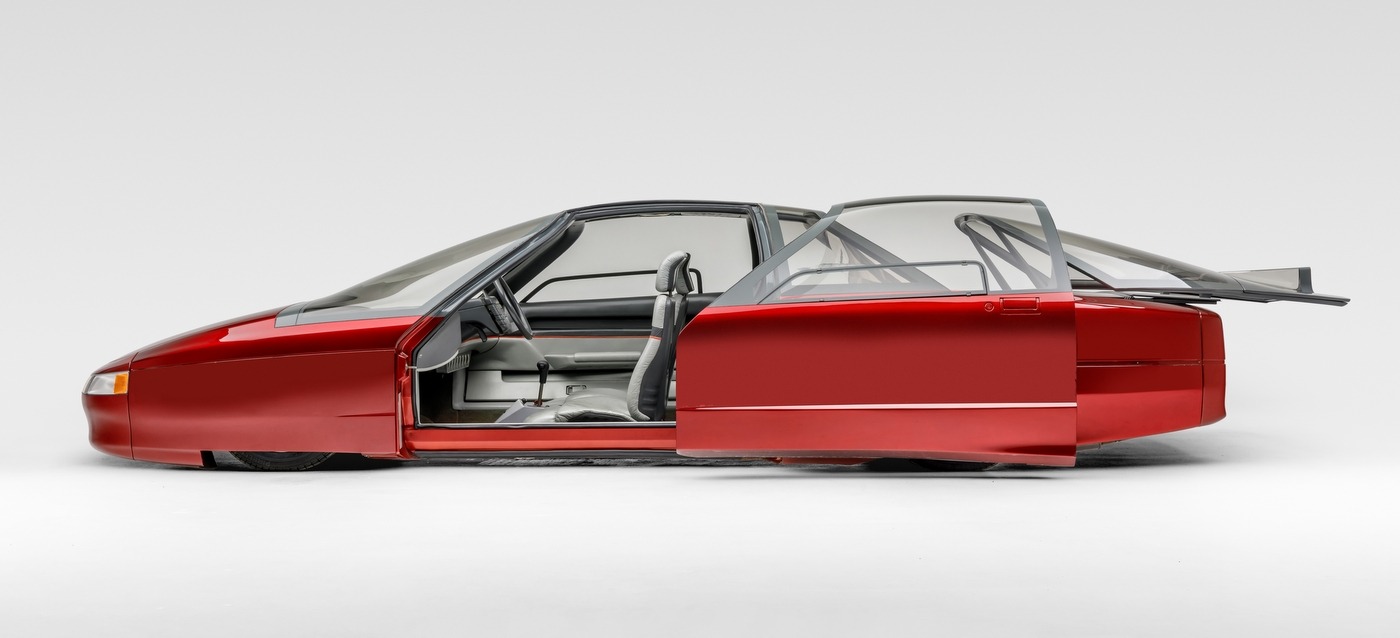
Technically, Probe V kept pushing boundaries. Most surprising was the mid-engine layout—an unexpected move for a four-seat aero concept, chosen purely to allow the nose to be low and clean. The cabin teemed with forward-thinking ideas: a head-up display projected onto the glass; a gauge cluster that moved with the steering column; “roll-up” rear seats for cargo flexibility; and a rear window that slid away rather than hinging upward.
🔗 Read more: Zagato’s “Coda Tronca”: The Legacy of the Cut-Tail Design
Compared to the hyperfunctional Probe IV, Probe V had a bit of swagger. Reviewers at the time noted its more expressive shoulder line and subtly flared arches—touches of attitude that didn’t disrupt the aero mission. The rear ended in a crisp Kamm-back cutoff, a shape that not only looked modern but echoed the production template Ford was already deploying across its lineup. Probe V wasn’t pretending to be a road car, but it certainly hinted at one.
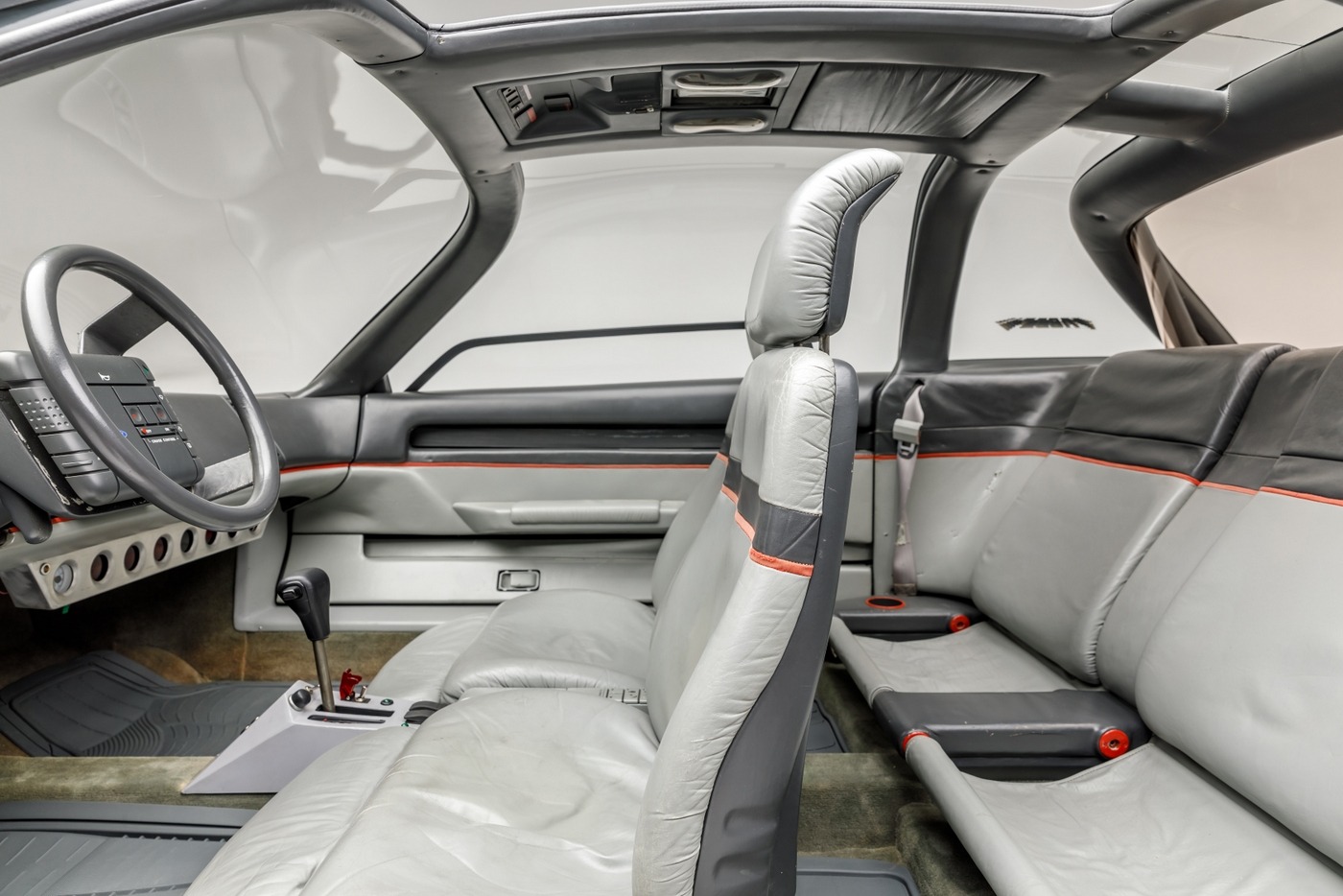
After its Tokyo debut, it toured shows into the late ’80s, sometimes with light updates, serving as the capstone to Ford and Ghia’s aerodynamic odyssey. By then, the Probe series had already done its work. Wind cheating was no longer radical—it was the rule. The Probe name itself returned in 1988, attached to a sporty production coupe with no direct mechanical lineage to these concepts, but plenty of inherited ethos.
Probe V closed the book on one of the most ambitious concept-car lineages any major manufacturer ever attempted. It was the final evolution—sleeker, smarter, more refined—and the quiet announcement that Ford had fully mastered the aero cheat code.
After the Breakthroughs: The Probes and Their Long Reach
From 1979 to 1985, the five Ford Probe concepts traced one of the most ambitious design arcs any major automaker ever attempted. What began as a wild, wind-tunnel dream with Probe I evolved into a production preview, then into full-blown aerodynamic experimentation. Together, the five cars marked the moment Ford pivoted decisively toward efficiency and proved that aerodynamics didn’t have to mean identical “aero blobs,” as skeptics had warned. The Probes showed the opposite: that science and style could coexist, and that the future didn’t have to be boring. Probe I made aerodynamics thrilling. Probe II made it practical. Probe III made it real. Probe IV made it extreme. Probe V made it beautiful. By the mid-1980s, the ideas born in this series were already reshaping Ford’s lineup. The Sierra and Taurus were proof that the program wasn’t just theoretical; its lessons translated into cars that sold in huge numbers. Detroit took notice, and suddenly everyone was paying attention to the wind.
The cars themselves took very different paths after their moment in the spotlight. Probe I spent decades in the hands of the Scott Grundfor Company, appearing at events like Pebble Beach before being tragically destroyed in a transport-trailer fire in 2024—a loss that echoed throughout the enthusiast community. Probe II, always the quiet one of the family, slipped into obscurity; it seems to have remained mostly within Ford for internal work, and archival traces suggest it may not have survived. Probe III, essentially the Sierra prototype, likely stayed with Ford of Europe for as long as it was useful; its fate is uncertain, and no confirmed sightings have surfaced in years. Probe IV and Probe V, however, managed to escape the crusher. Both eventually found their way into private hands, including a high-profile sale in 2002 that reunited them under the care of the Grundfor collection. For a time, the pair appeared together at museums, including the Petersen Automotive Museum in Los Angeles, where their ahead-of-time shapes drew crowds who had no idea Ford once built cars this radical. Probe V—still wearing its candy-red paint and still showing off those wild parallelogram doors—remains particularly captivating.
What the Probe series ultimately represents is more than a sequence of concept cars; it is a narrative about how a major automaker chose to confront crisis with creativity. And at the heart of that creativity was Ghia. Ford brought the engineering urgency, but Ghia brought the sculptural intelligence—the ability to turn airflow theory into something that looked and felt like the future. Sapino’s dramatic shaping of Probe I, the meticulous fabrication of the later concepts, the Italian willingness to push forms beyond the expected—all of it gave the Probes a level of artistry that elevated their aerodynamic mission.
There was always a romance to the Probe story, a sense that science and emotion were collaborating rather than colliding. Crowds didn’t flock to see drag coefficients; they came because these cars felt like tomorrow. Each Probe arrived like a message from the near future, whispering what cars could be if designers stopped fighting the air and started working with it. And today, every smooth sedan, every rounded crossover, every flush-mounted headlamp carries a trace of the breakthroughs Ford and Ghia forged in those years. The Probe concepts beckoned the future, as one journalist wrote, and the future answered. They turned a moment of industry anxiety into an odyssey of innovation, and even now, decades later, they remain unmatched landmarks in Ford’s aerodynamic journey.

ABOUT THE AUTHOR
Andreas Scheidl
Italian classic car enthusiast with German roots. Renowned as a respected figure in the classic car community, he serves as a jury member at various international concours d'elegance, including the Classic Gala Schwetzingen and Mantova. As a content creator, Andreas passionately shares his profound knowledge and appreciation for vintage automobiles. His heart beats for cars designed by Giovanni Michelotti, showcasing his discerning taste and dedication to preserving the timeless elegance of automotive history.
More stories by Andreas Scheidl ↗CONTINUE READING
Posts You Might Like
Fiat Panda Cabrio: The Italian Coachbuilders Who Opened Giugiaro’s Box
From Moretti’s Panda Rock to Italdesign’s experimental Strip, Maggiora’s four-wheel-drive convertible and Stola’s remarkable Destriero, the history of the open-top Panda reveals an unexpected chapter in Italian coachbuilding. When Giorgetto Giugiaro designed…
Read story
Gabriele d’Annunzio and the Cult of the Automobile
There was a time when the automobile had not yet become part of the landscape. It announced itself from afar through the beating of an engine, the smell of petrol and hot…
Read story
Fiat 1400: The Last Great Playground of the Carrozzieri
From Touring and Abarth to Farina, Ghia, Vignale, Boneschi, Bertone, Viotti and the smaller carrozzerie, the new Fiat quickly became one of the richest bases for Italian special bodies in the early…
Read story
How a Swiss Dealer Challenged Ferrari: The Story of Monteverdi
How Peter Monteverdi went from Swiss Ferrari dealer to creator of rare Frua and Fissore-bodied GTs, the Hai supercar and luxury off-roaders.
Read story
THE CONVERSATION
Comments 0
Share a memory, a period photograph or a documented detail about this story.