
The Ferrari GG50 by Giorgetto Giugiaro: A personal celebration
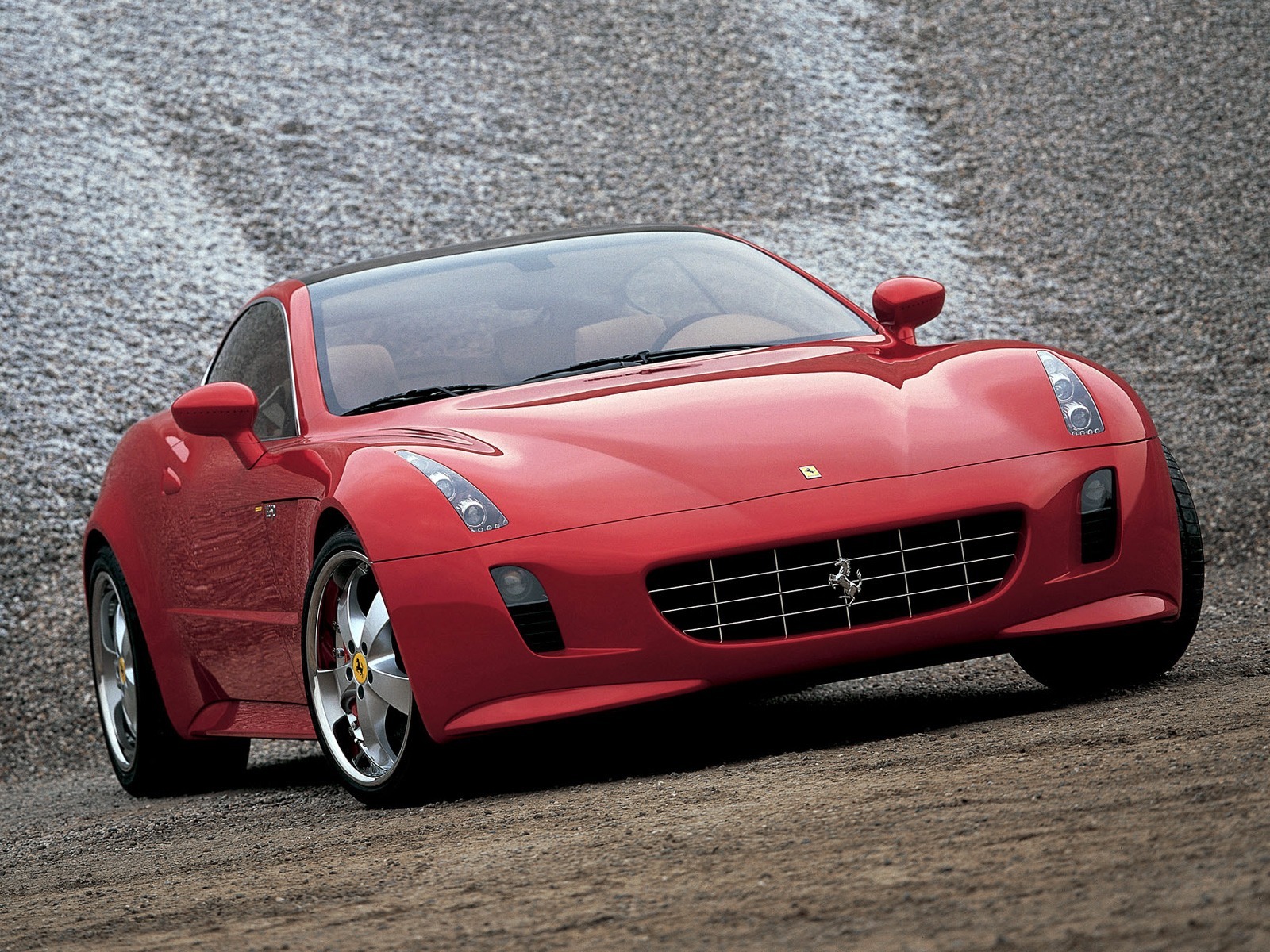
The Ferrari GG50 was never meant to be just another model—it was something far more personal. Created in 2005 to celebrate fifty years of Giorgetto Giugiaro’s career, it took the form of a one-off Ferrari designed not for the market, but for the man himself. Built by Italdesign with the cooperation of Ferrari, the car made its public debut at the Tokyo Motor Show—but its story began long before that.
The idea was deceptively simple: a Ferrari that could actually fit into everyday life. Giugiaro envisioned a grand tourer he could use with his family—practical, elegant, and unmistakably Ferrari. The project took shape after a conversation with Luca di Montezemolo, who approved the concept on two conditions: it had to remain clearly identifiable as a Ferrari, and it had to feel more compact than its donor car, the 612 Scaglietti.
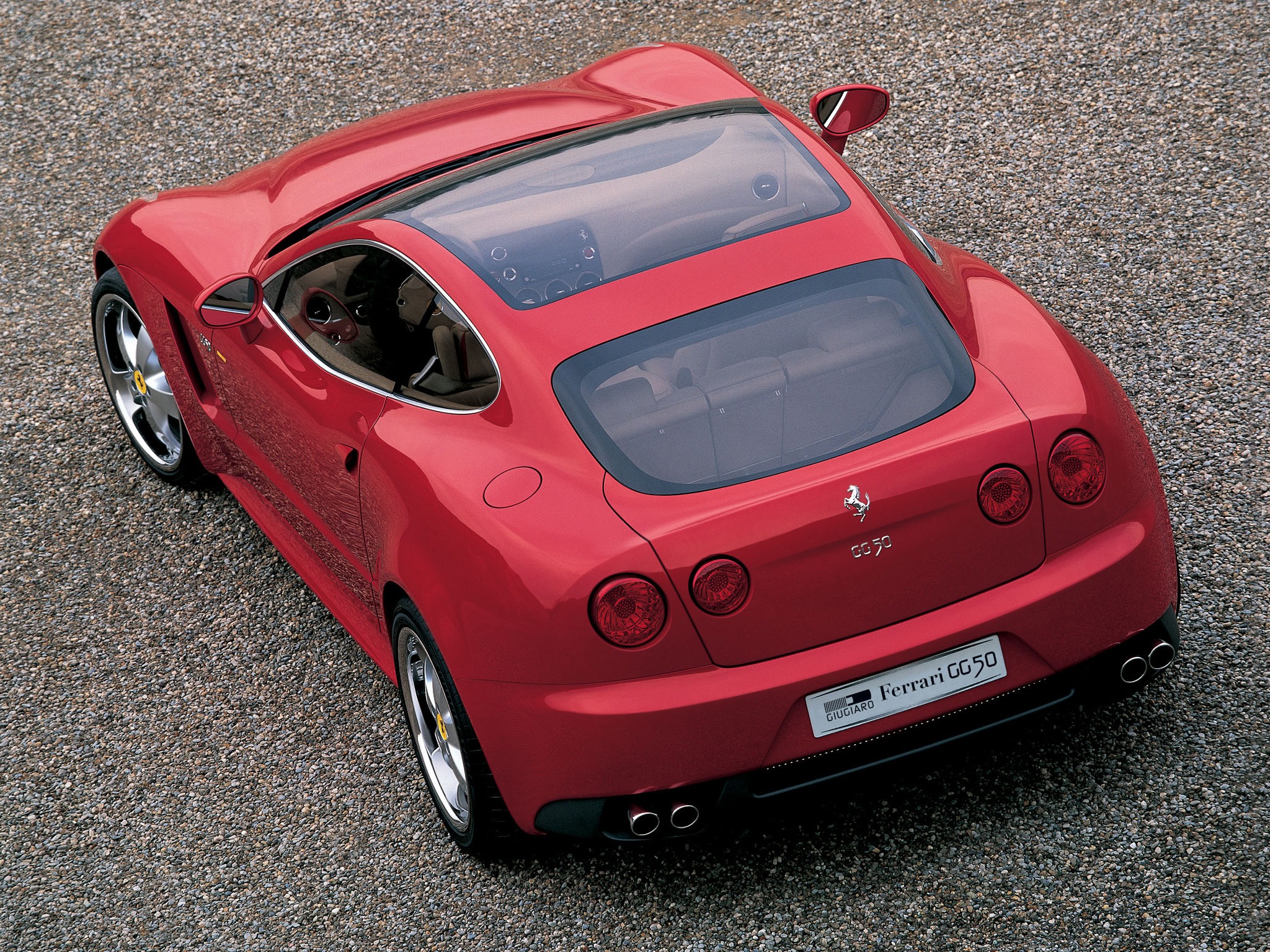
From that point, the GG50 became an exercise in reinterpretation. Beneath the surface, it retained the architecture of Ferrari’s V12 2+2 grand tourer, but everything around it was reconsidered. The proportions were tightened, the overhangs reduced, and the traditional coupé form reshaped into a more practical fastback silhouette. At the rear, a proper tailgate replaced the usual trunk, transforming the car’s usability.
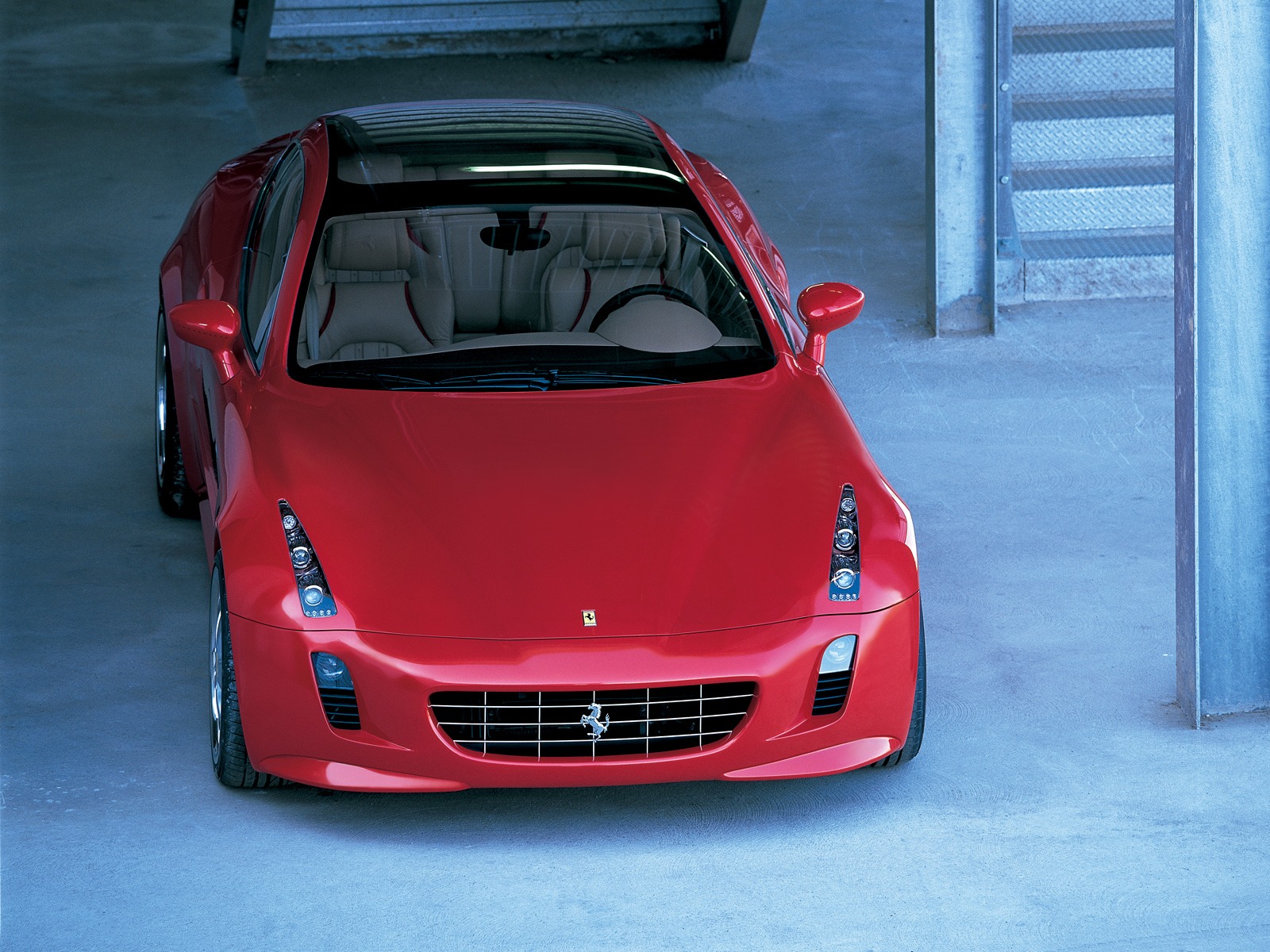
The most radical change, however, was hidden beneath the bodywork. By repositioning key components, the interior gained a level of flexibility rarely associated with Ferrari. The rear seats could fold completely flat, creating a surprisingly large load space—something closer to a shooting brake in spirit than a conventional grand tourer.
🔗 Read more: Giorgetto Giugiaro: Car Designer of the Century
When it appeared, the GG50 sparked a mix of admiration and debate. Some saw it as a bold and intelligent rethinking of what a Ferrari could be—less theatrical, more usable. Others viewed it as an intriguing experiment that challenged expectations without necessarily surpassing the original.
Unlike most Ferraris, the GG50 never entered production. It remained a true one-off, closely tied to Giugiaro and his studio, appearing occasionally at major shows and exhibitions. Its exact whereabouts today are not widely documented, adding a final layer of mystique to a car that was never about mass appeal, but about a singular vision of what a Ferrari could become.
The Brief That Began as a Birthday Gift
There are many ways to mark fifty years in car design. Giorgetto Giugiaro chose the most revealing one: he decided to create the Ferrari he had never designed, and one he could genuinely use with his family.
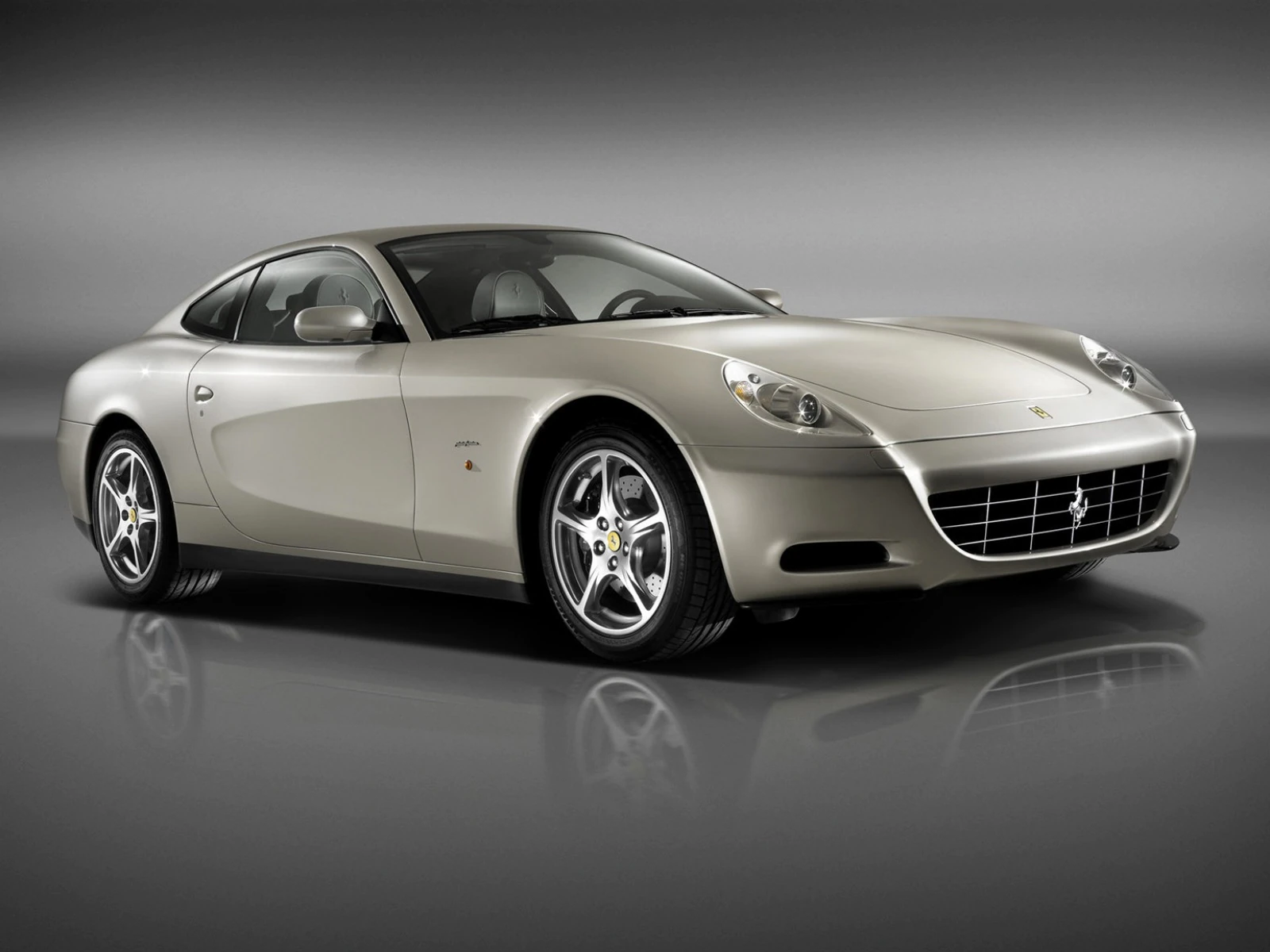
The idea was born in late 2004 during the Paris Motor Show, when Giugiaro spoke directly with Luca di Montezemolo. From that conversation came the foundation of the project: Ferrari would provide the then-new Ferrari 612 Scaglietti as the donor car, while setting two clear conditions. The result had to remain unmistakably Ferrari, and it had to feel more compact without sacrificing practicality.
That was the real brief. Not to design an entirely new Ferrari, but to reinterpret the brand’s V12 four-seat grand tourer through a different design philosophy—one focused on proportion, packaging, and everyday usability.
The GG50 was therefore conceived less as a traditional show car and more as a design statement. It was a personal project by Giugiaro, but one developed with Ferrari’s approval and technical cooperation. In this sense, it stood at the intersection of private vision and corporate identity: Giugiaro was both the initiator and the intended owner, while Ferrari remained the guardian of what the car had to represent.
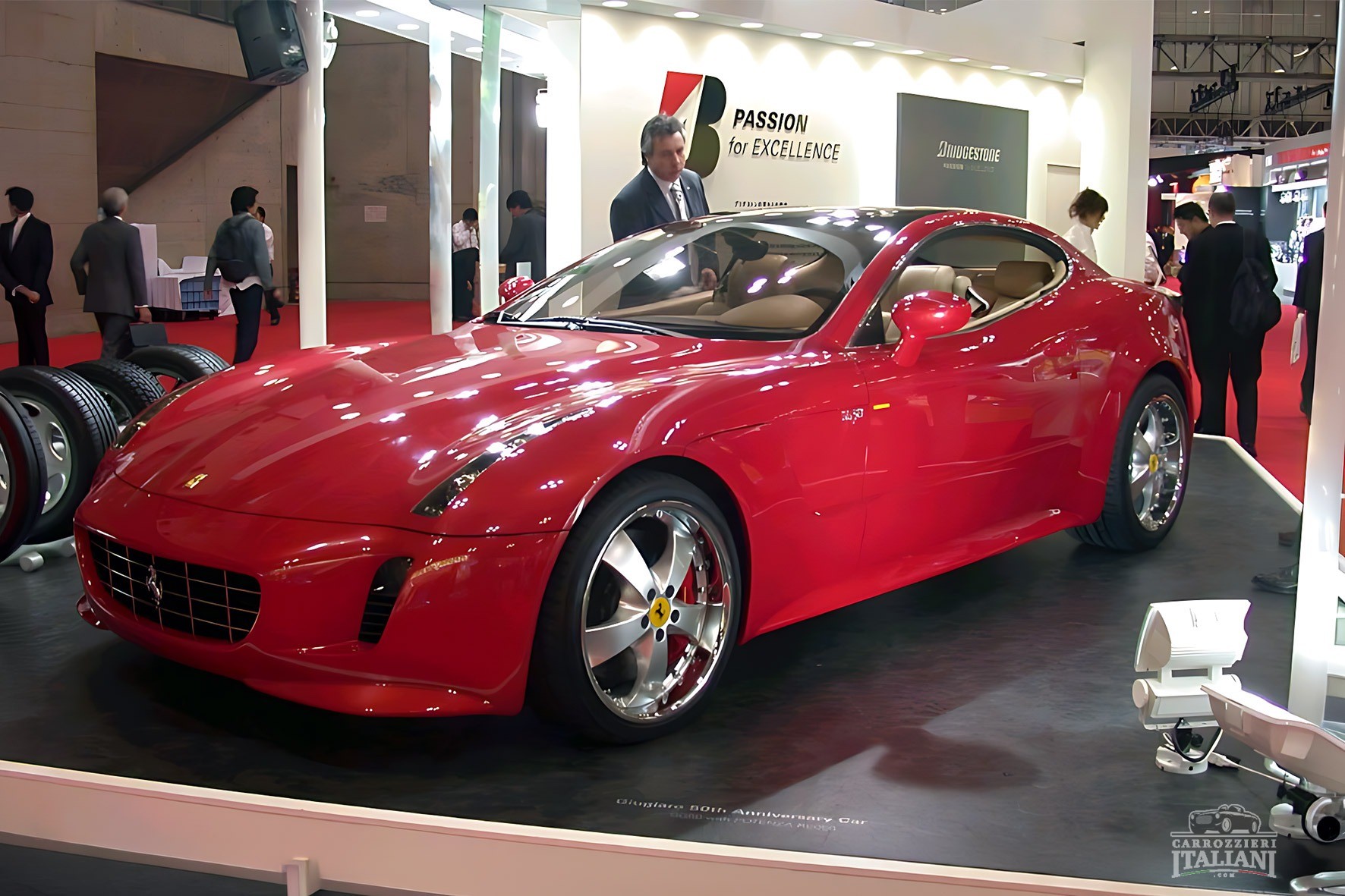
Its debut at the Tokyo Motor Show in 2005 reflected exactly that status—a collaborative one-off, created to celebrate a career milestone while opening a design conversation about what a modern Ferrari grand tourer could be.
Giugiaro and Italdesign in the Mid-2000s
By 2005, Giorgetto Giugiaro was more than a celebrated stylist—he was one of the defining figures of modern automotive design. His name already carried the weight of decades of landmark projects, and by the mid-2000s he had become a point of reference for the entire industry.
Just as important was the role of Italdesign. This was not simply a design house producing sketches for manufacturers, but a fully integrated engineering and prototyping studio based near Turin, capable of taking a concept from paper to fully functioning prototype within its own facilities. That technical independence was central to the GG50.
The project reflects a transitional moment in automotive design. It still began in the traditional way—with Giugiaro’s pencil and proportion studies—but it moved immediately into the digital realm. By this stage, Italdesign had developed advanced virtual modeling capabilities that allowed full-scale verification of surfaces, visibility, and proportions long before the physical prototype was built.
For the GG50, the process moved quickly from initial sketches to digital modeling, then to a full-size milled plaster model and ergonomic mock-up. This was essential because the car was not a simple restyling exercise. The new body shape required significant packaging changes, including revised proportions, a true fastback layout, and reworked interior space.
What made Italdesign exceptional in this period was precisely this ability to combine design and engineering under one roof. The studio was able not only to imagine an alternative Ferrari grand tourer, but to build a coherent, fully functional argument in metal, structure, and packaging.
That is what the GG50 represents in the context of the mid-2000s: a car born at the intersection of Giugiaro’s human, hand-drawn design language and Italdesign’s increasingly scientific approach to prototyping.
Design Language — Compact, Usable, and Unmistakably Ferrari
The design of the GG50 begins with a tension at its core: it had to remain recognizably Ferrari, yet reinterpret the grand tourer as something more practical and more compact.
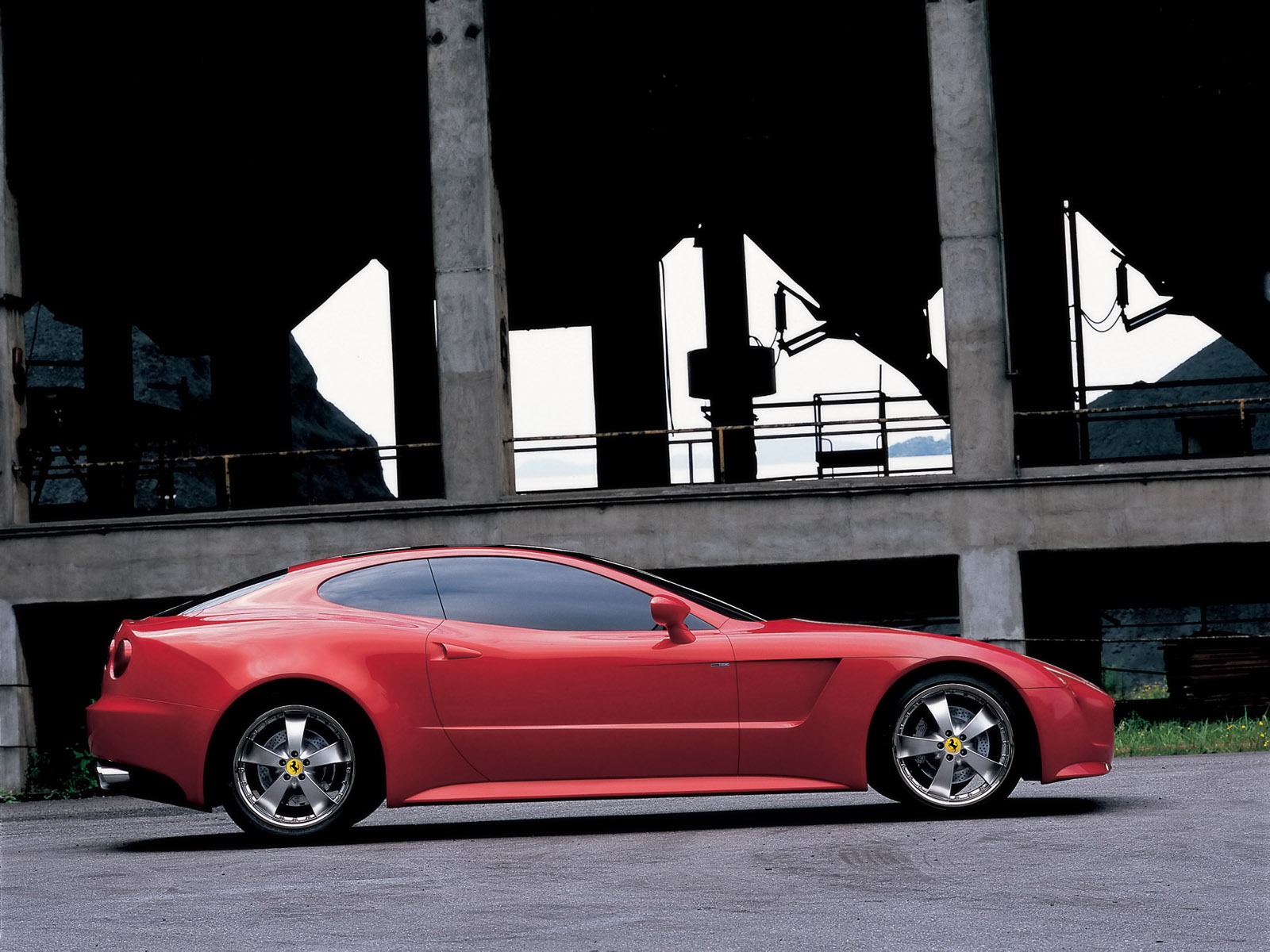
The most significant transformation lies in its proportions. While based on the Ferrari 612 Scaglietti, the GG50 abandons the donor car’s classic three-box layout in favor of a two-box fastback silhouette with a proper tailgate. This single move changes the entire character of the car. It is no longer a formal GT coupé with a separate trunk, but a hatchback grand tourer shaped around usability.
Rather than introducing radical stylistic gestures, Giorgetto Giugiaro focused on proportion and visual perception. The car was made shorter overall, with reduced front and rear overhangs, while the transitions between hood, fenders, and greenhouse were softened to visually reduce its mass. The effect is subtle but deliberate: the GG50 appears more compact than it actually is.
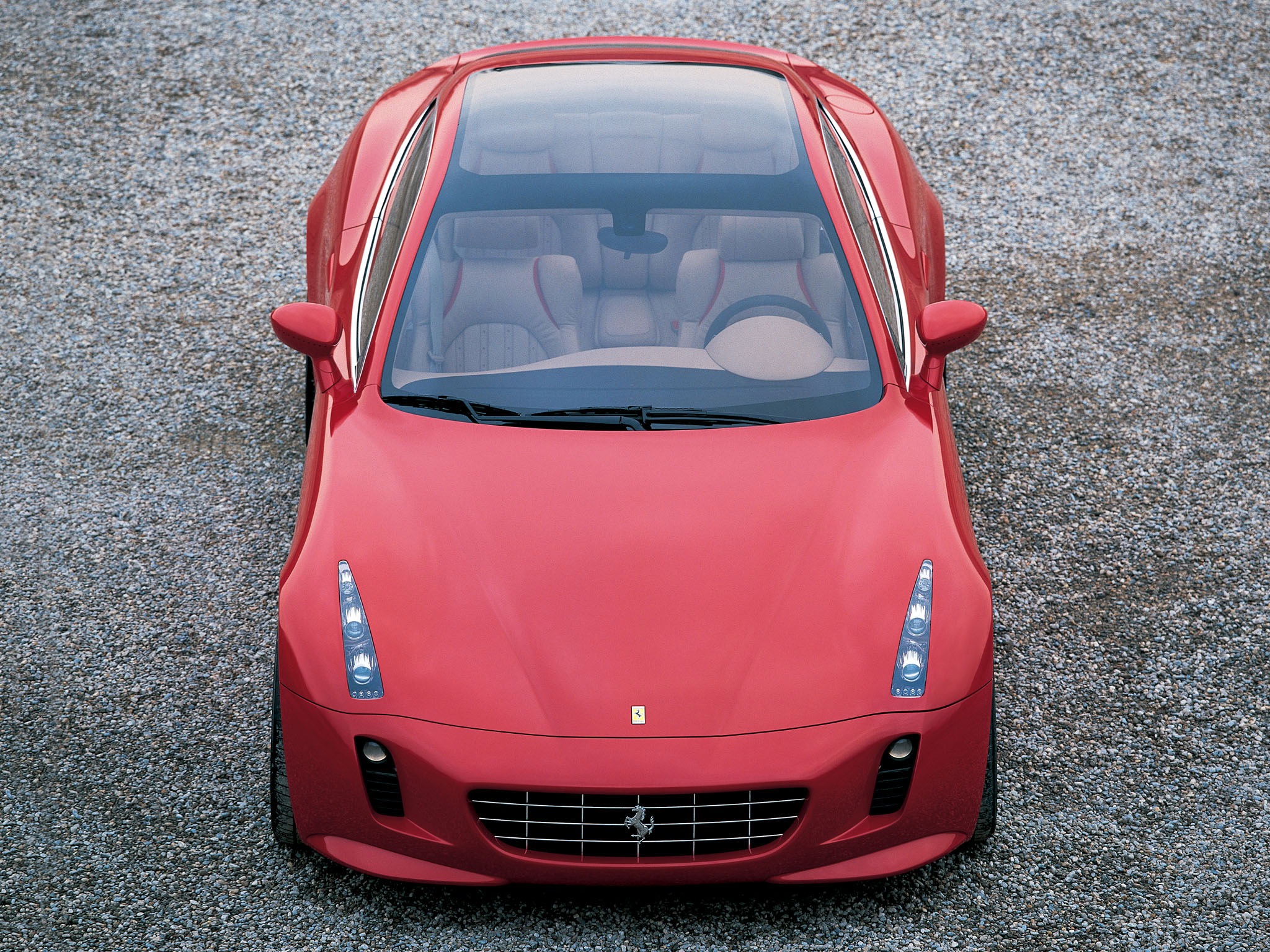
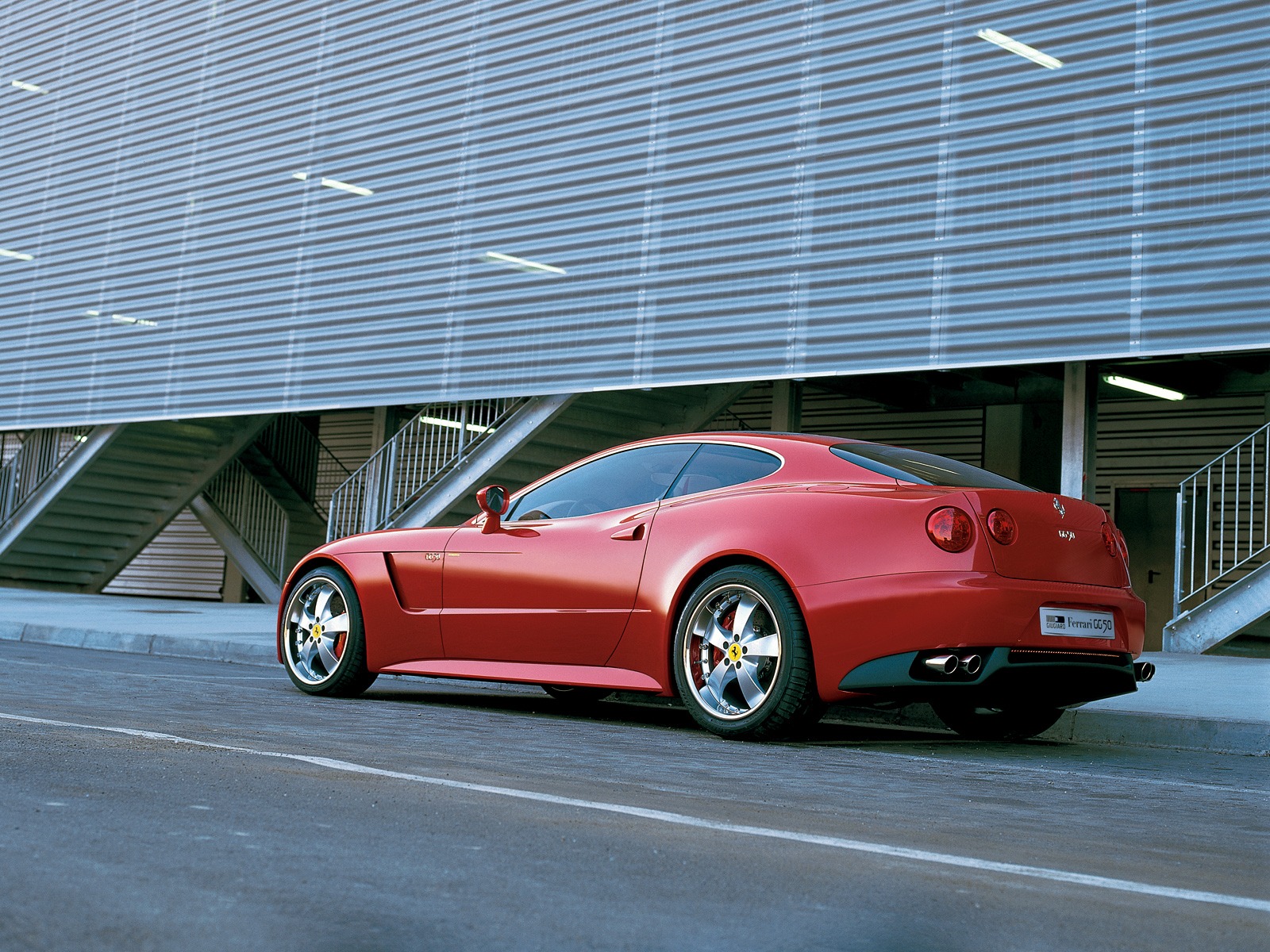
The front end was redesigned with a more assertive treatment, featuring larger intakes, sharper lamp graphics, and a lower, more aerodynamic stance. Along the sides, extended vents and cleaner surfacing emphasize flow and length, while the rear resolves into a tighter fastback volume finished with Ferrari’s traditional round taillights.
🔗 Read more: The Touring Berlinetta Lusso: The Ferrari Maranello Didn’t Dare to Build
The body itself remained in aluminum, preserving the lightweight engineering philosophy of the 612. But the real design story is inside.
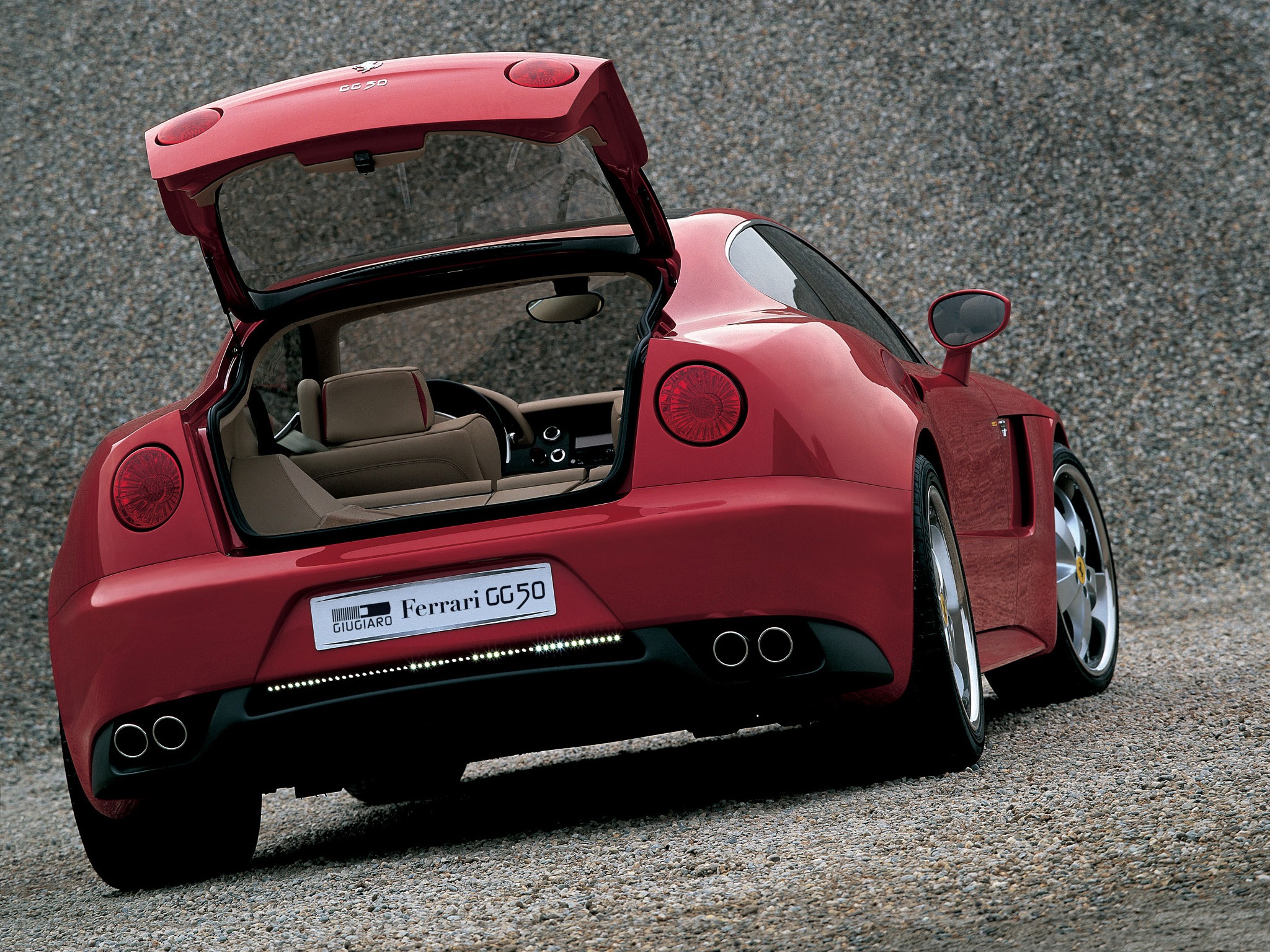
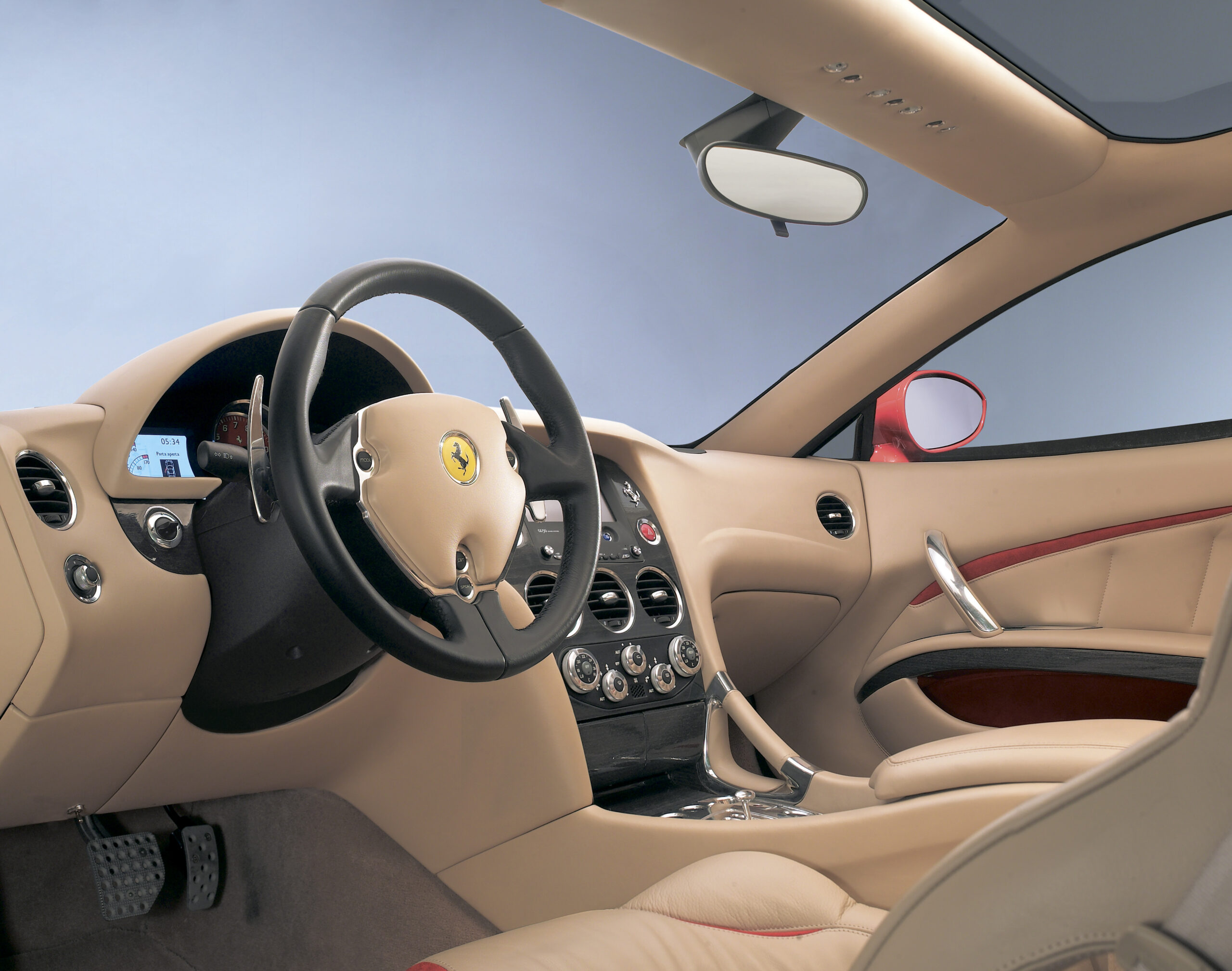
Here, the GG50 is less about visual reinvention and more about function. The cabin keeps the four-seat grand touring layout, but it is reworked around accessibility and practicality. Entry and exit—always a compromise in a 2+2 coupé—were clearly part of the design brief, influencing the roofline and rear side glass profile. The dashboard was redesigned, storage space improved, and the interior layout subtly adapted for everyday use.
This is what makes the GG50 historically interesting. It is not simply a Ferrari restyled by Giugiaro. It is a reinterpretation of the Ferrari GT through his functional design philosophy: better proportions, easier access, and real luggage space, all without giving up the V12 identity at its core.
Engineering, Structure, and the Numbers Behind the Hatchback
Beneath its reworked body, the GG50 remained fundamentally a Ferrari 612 Scaglietti. The donor car’s core engineering architecture was left intact: an all-aluminum chassis and body, front-mid mounted V12, rear transaxle layout, and rear-wheel drive. This was never conceived as a performance experiment, but as a packaging and design exercise built on Ferrari’s established flagship platform.
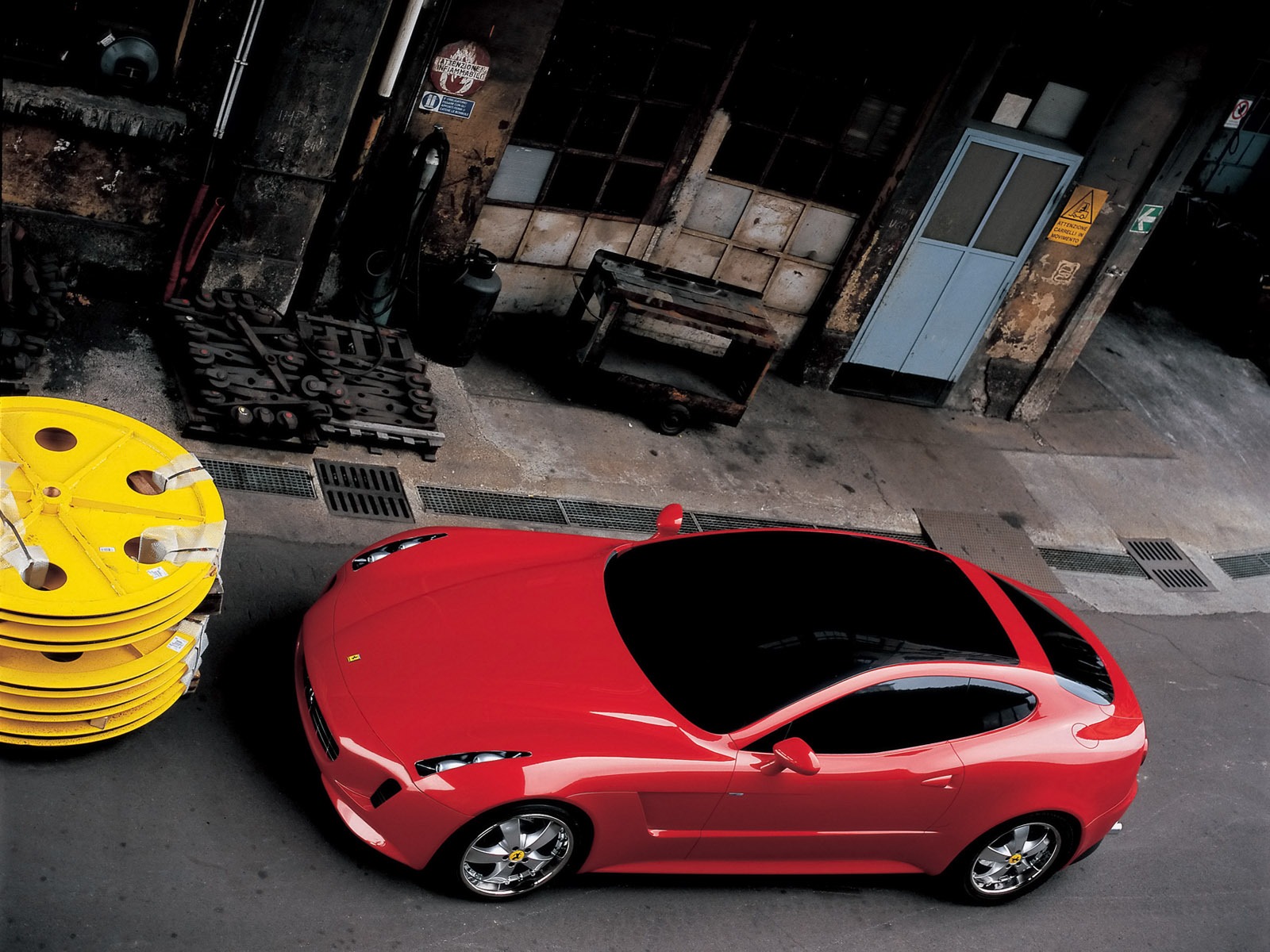
That mechanical continuity is what makes the structural changes so interesting. The engine, gearbox, wheelbase, and overall layout remained unchanged, preserving the 612’s proportions at the mechanical level. The wheelbase stayed at 2.95 meters, while the overall length was reduced to 4.81 meters, approximately 9 centimeters shorter than the original. Most of this reduction came from the rear, where the car’s entire typology was rethought.
That mechanical continuity is what makes the structural changes so interesting. The engine, gearbox, wheelbase, and overall layout remained unchanged, preserving the 612’s proportions at the mechanical level. The wheelbase stayed at 2.95 meters, while the overall length was reduced to 4.81 meters, approximately 9 centimeters shorter than the original. Most of this reduction came from the rear, where the car’s entire typology was rethought.
The real engineering work happened in the packaging. In the standard 612, the fuel tank sits behind the rear seats, making a folding rear backrest impossible. For the GG50, this was completely reengineered. A newly designed 95-liter fuel tank was repositioned beneath the load floor, allowing the rear seats to fold flat.
This single modification transformed the car’s usability. With the seats up, luggage capacity increased slightly over the donor car. With the rear seatbacks folded, the GG50 gained a flat loading platform approximately 1.4 meters deep—an almost radical concept for a Ferrari V12 grand tourer.
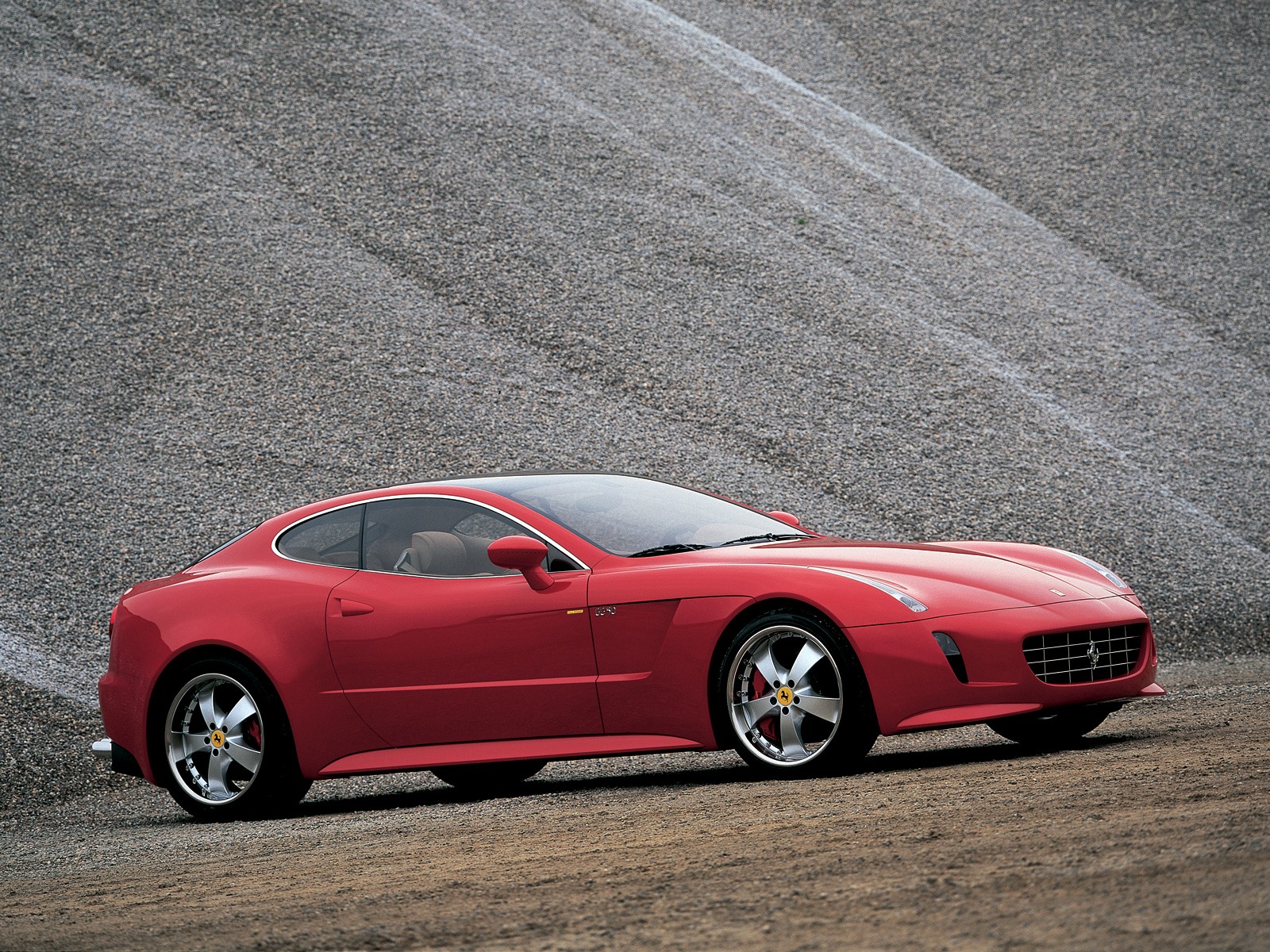
The addition of a true rear hatch also required structural reinforcement. Unlike the fixed rear glass and separate trunk of the 612, the GG50 introduced a roof-hinged tailgate, which meant reinforcing the rear pillars and redesigning the rear cross-member area around the suspension towers.
Mechanically, the car retained Ferrari’s 5.7-liter naturally aspirated V12, producing around 540 horsepower and 588 Nm of torque, paired with the paddle-shift transmission from the donor car. As a result, performance would have remained broadly in line with the 612 Scaglietti, even if no dedicated figures were officially emphasized for the one-off.
What emerges here is the real engineering identity of the GG50: not a new Ferrari, but a structural and packaging thesis built around the question of how far practicality could be pushed without touching the mechanical soul of the car.
Debut, Reaction, and the Legacy of a One-Off Ferrari
When the GG50 debuted at the Tokyo Motor Show in 2005, it immediately stood out as a contradiction: a personal gift to Giorgetto Giugiaro that was also a very public design statement. Built with Ferrari’s cooperation, it presented a rare sight—a Ferrari V12 grand tourer with a proper rear hatch.
The reaction was immediate and divided. Many admired the concept for making the Ferrari 612 Scaglietti look more compact and arguably more modern, while introducing a level of practicality almost unheard of in a Ferrari of the period. The fastback tail, revised proportions, and increased luggage space were widely seen as bold and intelligent moves.
At the same time, not everyone preferred it to the original. Some saw the GG50 as a fascinating design exercise rather than a more beautiful Ferrari, arguing that the 612 retained greater elegance and purity as a classic grand tourer.
The car continued to appear at major international motor shows after Tokyo, including Detroit and Geneva, reinforcing its role as more than a private concept. Yet despite the visibility, its production future was never in question.
The GG50 remained a true one-off.
🔗 Read more: Ferrari F355: Designer Maurizio Corbi on Creating a 1990s Icon
It was built as a fully functioning, road-registered one-off, conceived for Giorgetto Giugiaro’s personal use rather than as a precursor to series production, and no additional examples were ever made. Today, the GG50 is preserved within the Giugiaro Collection, where it remains one of the most significant personal projects associated with his career.
Its legacy, however, extends well beyond its singular status. In retrospect, the GG50 feels almost prophetic. The idea of a front-engined V12 Ferrari with genuine luggage versatility and a hatchback-style rear opening would later find echoes in cars such as the Ferrari FF.
Whether it directly influenced Ferrari’s later production thinking cannot be stated with certainty, but the conceptual parallel is difficult to ignore. The GG50 demonstrated that practicality and Ferrari identity did not have to exist in opposition.
More than a show car, it remains one of the clearest expressions of Giugiaro’s design philosophy: functionality first, without sacrificing proportion, character, or presence.

ABOUT THE AUTHOR
Andreas Scheidl
Italian classic car enthusiast with German roots. Renowned as a respected figure in the classic car community, he serves as a jury member at various international concours d'elegance, including the Classic Gala Schwetzingen and Mantova. As a content creator, Andreas passionately shares his profound knowledge and appreciation for vintage automobiles. His heart beats for cars designed by Giovanni Michelotti, showcasing his discerning taste and dedication to preserving the timeless elegance of automotive history.
More stories by Andreas Scheidl ↗CONTINUE READING
Posts You Might Like
A Central Driving Position, a Rear-Mounted V8. Was This Really a Lancia?
In 1948, visitors to the Turin Motor Show could see an unusual Lancia on the stand of Carrozzeria Ghia. It was a large two-door coupé with a two-litre V8 mounted behind the…
Read story
Fioravanti F100: The Ferrari He Was Allowed to Imagine
Enzo Ferrari’s centenary, Leonardo Fioravanti’s independent studio and a supercar that explored air brakes, steel wheels and a new way of driving—without ever wearing the Cavallino.
Read story
Michelotti Shellette: When the Fiat 850 Became a Yacht
The yacht designer, the Turin stylist and the tiny coachbuilt car that crossed between the quay, the royal holiday house and the auction room. Some automobiles were conceived for the open road,…
Read story
Maserati A6 1500: A New Road for the Trident
When the doors of the Geneva Motor Show opened in March 1947, Maserati was a name that required little introduction to anyone who followed motor racing. What it did not yet possess…
Read story
THE CONVERSATION
Comments 0
Share a memory, a period photograph or a documented detail about this story.