
Ercole Spada, Legendary Car Designer, Passes away at 88

Ercole Spada, one of Italy’s most prolific post-war automobile designers, has died at the age of 88. Spada passed away on 3 August 2025 while vacationing in Sestriere, in the Piedmont region of Italy. Renowned for his inventive and aerodynamic styling, he was best known for shaping the distinctive sports cars of the 1960s Zagato coachbuilding house – including the Aston Martin DB4 GT Zagato and Alfa Romeo TZ series – and for leading the I.DE.A Institute design firm in the 1980s. His career spanned more than half a century and produced an extraordinary portfolio ranging from hand-crafted Italian fuoriserie to popular production models around the world.
Early Triumphs at Zagato (1960s)
Spada’s career took off at Carrozzeria Zagato, where he was hired in February 1960 straight out of engineering school. In his very first year, the 23-year-old designer penned some of the era’s most iconic sports cars – notably the Aston Martin DB4 GT Zagato (unveiled late 1960) and the Alfa Romeo Giulietta SZ “Coda Tronca.” The latter featured a truncated tail (Kamm tail) design that Spada embraced to improve aerodynamics, giving the lightweight Zagato-bodied Alfa a higher top speed and stability than its predecessors.
🔗 Read more: Zagato’s “Coda Tronca”: The Legacy of the Cut-Tail Design
Throughout the 1960s, Spada, as Zagato’s chief stylist, defined a string of Italian racing and GT cars that have since entered design legend. His creations – including the Alfa Romeo Giulia TZ (Tubolare Zagato) and its later TZ2 variant, the Alfa Romeo 2600 SZ, and Lancia Flaminia Super Sport Zagato – were not only striking to look at but extremely competitive on track. Spada’s aerodynamic “coda tronca” approach became a Zagato signature, yielding victories in European sports-car racing for the TZ1/TZ2 and others. He also styled the Lancia Fulvia Sport Zagato (1965), a sleek fastback coupé that was among Zagato’s first models built using more modern steel stampings. In 1969, Spada’s initial tenure at Zagato culminated with the diminutive Alfa Romeo Junior Z, a sharp-edged sports coupé that has since become a sought-after classic. By the time he left Zagato in 1969, Spada’s work had firmly established the Milanese carrozzeria as a leader of avant-garde design, marrying Italian elegance with racing functionality.
Global Design Journey: Ghia, Ford, and BMW
After the Zagato years, Spada broadened his influence internationally. He joined Ford’s Ghia design studio in 1970 as chief designer, working on projects for Ford of Europe. During this period he developed prototypes such as the Ford GT70 rally sports car and contributed to designs for models like the Ford Capri and Taunus. A brief stint at Audi followed in the mid-1970s, before Spada was hired by BMW in 1976. At BMW, he served as chief stylist under design director Claus Luthe and was instrumental in shaping two of the German marque’s most significant 1980s luxury models: the BMW 7 Series (E32) and BMW 5 Series (E34). Both cars debuted to initial mixed reactions but later came to be appreciated as classics of restrained, elegant design. Spada’s own philosophy anticipated this trajectory – as he once acknowledged, “Most of my designs were disapproved of at first, but then, after some time, they start to see the beauty of it. And years later they are big fans.” His time abroad also saw him involved in projects as varied as a late-1970s Mustang concept for Ford and even the petite Hillman Imp, reflecting a versatility across continents and segments.
Design Leadership at I.DE.A Institute (1983–1993)
In 1983 Spada returned to Italy to take the helm of the I.DE.A Institute in Turin, an up-and-coming Italian design house. During a decade as I.DE.A’s design director, Spada oversaw an impressive run of successful models for multiple brands, often in direct competition with other famed studios like Italdesign. He was the creative force behind the Fiat Tipo (1988) and its sedan sibling Fiat Tempra – compact cars that were not only commercially successful but also praised for their clean, rational styling (the Tipo won 1989 European Car of the Year). Under Spada’s leadership, I.DE.A also designed the Lancia Dedra (1989) and second-generation Lancia Delta (1993), as well as the Alfa Romeo 155 sports sedan (1992). All of these models were built on the shared “Tipo Quattro” platform, yet Spada’s team managed to give each a distinct identity – a testament to his ingenuity in design differentiation. Spada even ventured into Japanese projects, contributing to the design of the Daihatsu Move microcar and working with manufacturers like Nissan and Isuzu during this period. By the early 1990s, I.DE.A Institute had risen to prominence, securing major contracts from Fiat and others – a success often credited to Spada’s guidance and putting him in direct rivalry with legends such as Giorgetto Giugiaro in the Italian design arena.
Return to Zagato and Later Projects
In the 1990s, Spada came full circle back to coachbuilt exotics. He rejoined Zagato in 1992 as a consultant stylist, collaborating on special projects. Notably, he designed the Ferrari FZ93 (Ferrari Zagato 1993) – a dramatic one-off supercar based on the Ferrari 512 TR, unveiled at the 1993 Geneva show. He also participated in the development of the O.S.C.A. 2500 GT Dromos prototype in the mid-1990s, an ambitious mid-engine sports car concept that ultimately remained a one-off. After 1993, Spada operated as an independent design consultant, lending his pen to a wide array of international clients ranging from Mercedes-Benz and Toyota to Kia and General Motors.
Even late in life, Spada’s passion for design never waned. In 2006, together with his son Paolo, he co-founded Spadaconcept, a boutique design studio in Turin dedicated to experimental automotive projects. Their signature creation was the Spada Codatronca TS (first shown in 2008), a limited-production supercar built on Corvette underpinnings that served as a modern tribute to Spada’s 1960s coda tronca Alfa Romeos. With its angular lines and Kamm-tail rear profile, the Codatronca distilled Spada’s lifetime of aerodynamic expertise into a futuristic package, bridging the past and present of Italian car design.
Tributes and Reactions
News of Spada’s passing has prompted fond tributes across the automotive design community. Fellow designers and historians remember him not only for his creations but for his character and humble approach. “Ercole Spada was more than just a pioneering designer – he was a warm, kind, and gracious man,” wrote Gautam Sen, former vice president of FIVA (Fédération Internationale des Véhicules Anciens). Many have noted that Spada, despite shaping so many famous cars, remained relatively low-profile compared to contemporaries like Giugiaro or Gandini. Spada himself once reflected on his lack of spotlight: “When I was designing cars for Zagato, I never thought of how they would be considered in 20, 30 or even 50 years’ time. When people say how much they like the DB4GTZ I am flattered but, really, it was done very quickly.” His modesty and focus on the work, rather than fame, endeared him to colleagues.
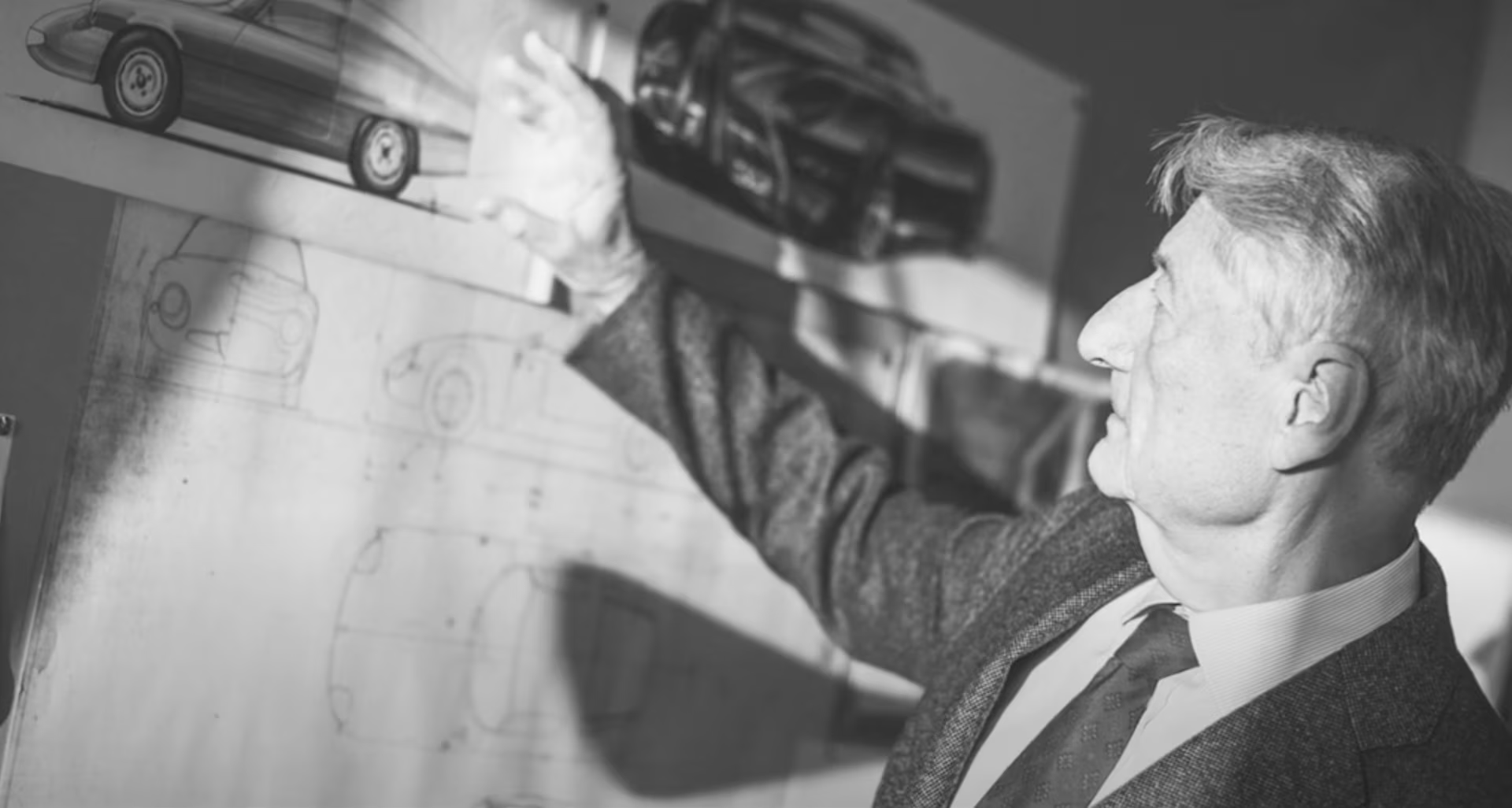
Industry reactions have emphasized Spada’s unique legacy. Classic & Sports Car magazine eulogized him as “the quietly inventive designer” whose name might not have been as widely known as some of his peers, yet whose hand shaped an astonishing array of vehicles over the last half-century. Andrea Zagato, current president of Zagato, also paid homage, reflecting on Spada’s contributions to the coachbuilder’s golden era: “His design of the DB4 GT Zagato at such a young age will forever be a point of pride for us. Ercole’s vision helped define the essence of Zagato – race-bred beauty with no excess.”
Legacy and Influence
Ercole Spada’s influence on Italian automotive design is profound and enduring. He is widely regarded as one of the most important post-war Italian car designers, responsible for some of the most iconic lines in motoring history. In 2023, in recognition of his lifetime of achievements, Spada was inducted into the FIVA Heritage Hall of Fame – a fitting honor that placed him among the pantheon of great automotive designers.
His trademark coda tronca (cut-off tail) design philosophy has left a lasting mark: in fact, Alfa Romeo’s current design chief announced in 2023 that upcoming Alfa models will re-introduce the short-tail silhouette of the 1960s SZ and TZ, directly inspired by Spada’s work decades ago.
Spada’s legacy is one of bold innovation balanced by practical engineering sense. He bridged the era of artisan coachbuilt sports cars and the era of computer-aided mass production, proving that creative design and efficiency can go hand in hand. From exotic Ferraris and Aston Martins to humble city cars, he applied a distinct vision that prized aerodynamic purity and purposeful simplicity. Future generations of car designers continue to study his designs for inspiration. As the automotive world bids farewell to Ercole Spada, it also celebrates the timeless quality of his creations – machines that remain as compelling in form and function today as when they first emerged from his drafting table. His contributions have indelibly shaped the course of Italian automotive design, ensuring that his spirit lives on every time a classic Zagato roars down a road or a modern Alfa Romeo echoes his coda tronca lines.
CONTINUE READING
Posts You Might Like

Castagna Milano’s Alfa Romeo Giulia coupé-cabriolet: a new Antisalon for Italian coachbuilding
Eighty years after Battista Farina's famous protest at the Paris Motor Show, Gioacchino Acampora presents a radical two-seat Alfa Romeo Giulia as a manifesto for the survival of independent coachbuilding. In October…
Read story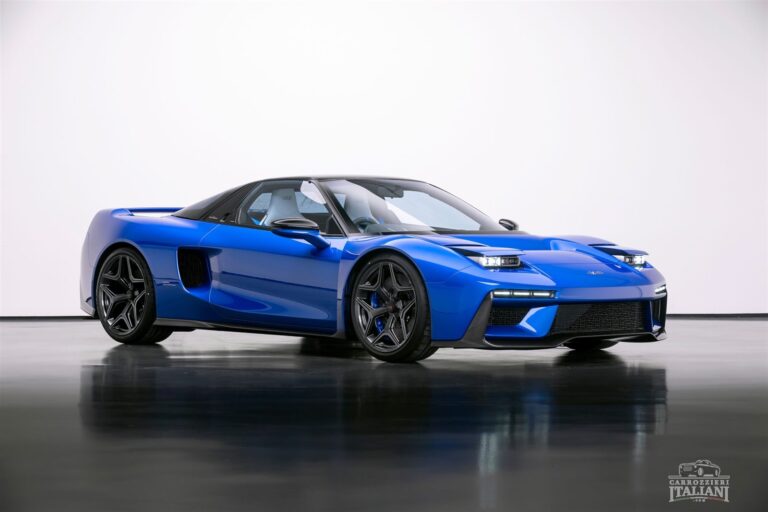
JAS Tensei Designed by Pininfarina: The Honda NSX Reborn
Unveiled on 8 October 2026, the JAS Tensei brings together the motorsport expertise of JAS Motorsport and the design heritage of Pininfarina, transforming the original Honda NSX into an exclusive, carbon-fibre-bodied supercar.…
Read story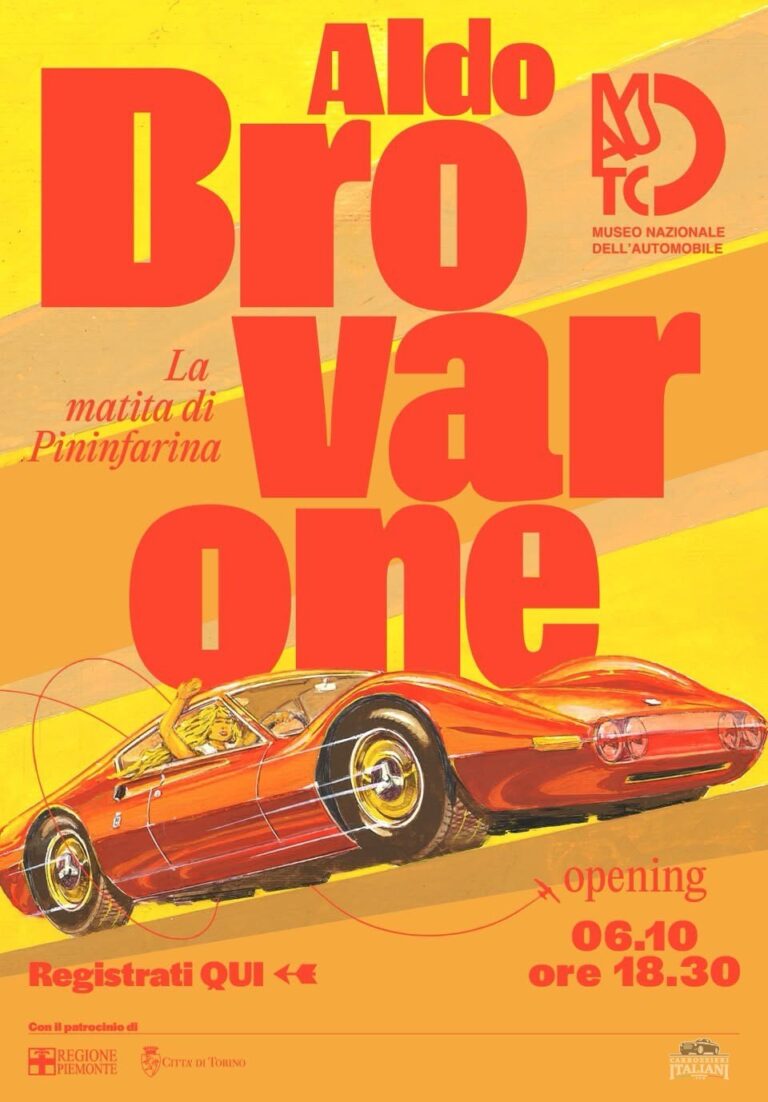
MAUTO to Celebrate Aldo Brovarone with New Exhibition in Turin
The Museo Nazionale dell’Automobile in Turin will open a new exhibition dedicated to Aldo Brovarone, one of the most distinctive figures in post-war Italian automotive design.
Read story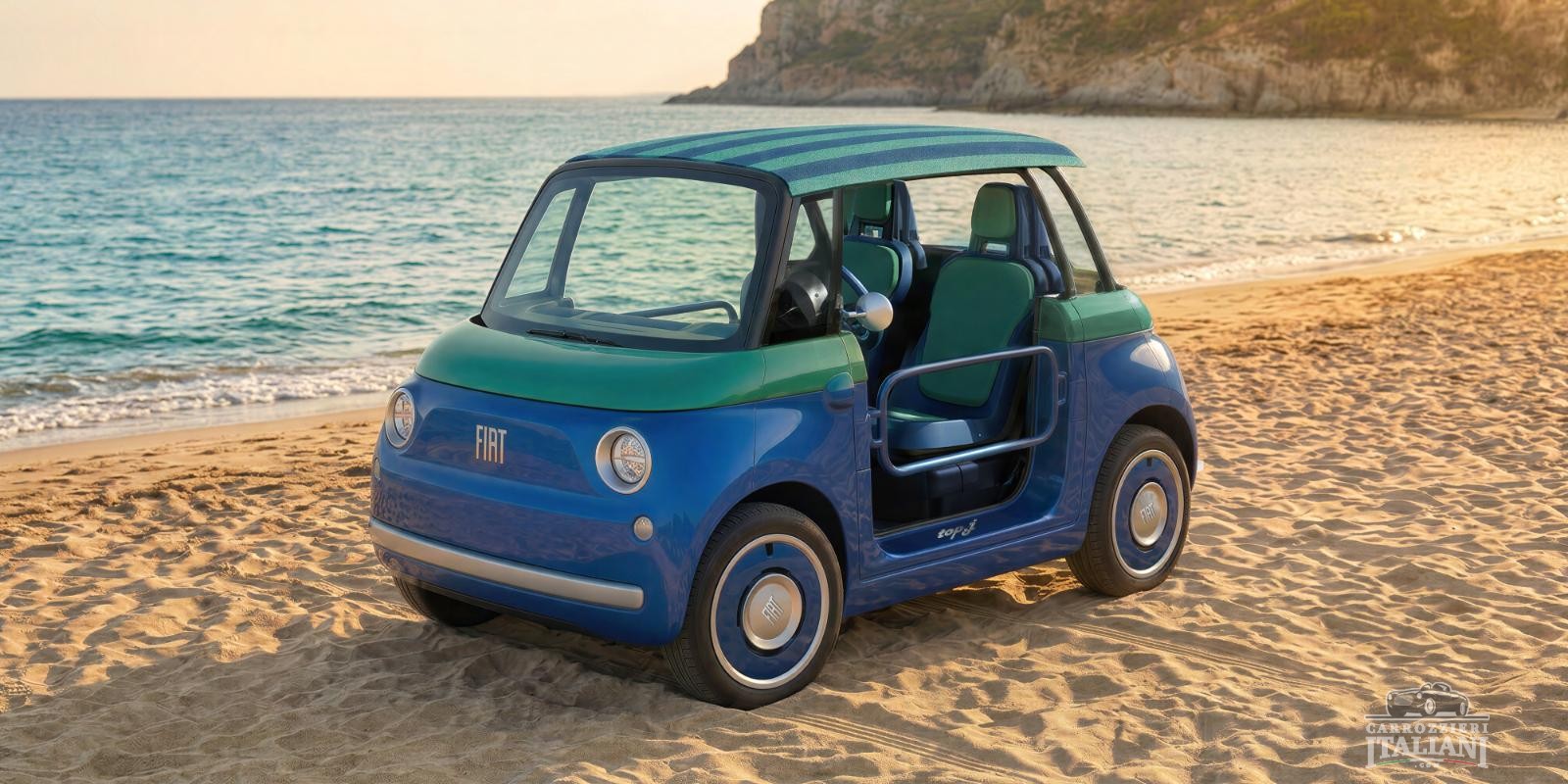
Giugiaro and Lapo Elkann Reinvent the Fiat Topolino
Giugiaro and Lapo Elkann Reinvent the Fiat Topolino with Two GFG Style One-Offs GFG Style has unveiled two radically different interpretations of the Fiat Topolino at Salone Auto Torino 2026, marking the…
Read story
THE CONVERSATION
Comments 0
Share a memory, a period photograph or a documented detail about this story.