
The Story of Tazio Nuvolari, the Fearless Flying Mantuan
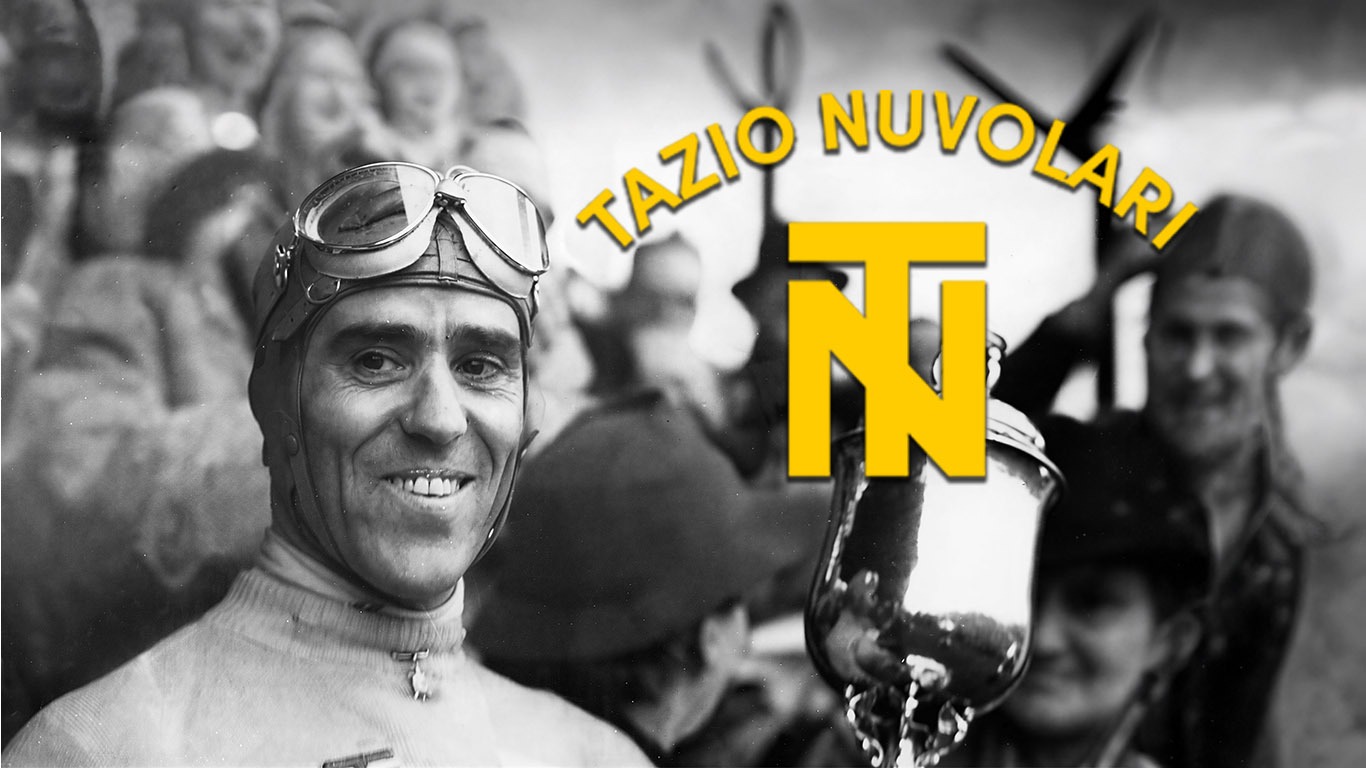
Ferdinand Porsche once declared Tazio Nuvolari “the greatest driver of the past, the present, and the future”. It was no exaggeration. In the pre-Formula One era of Grand Prix racing, Nuvolari’s fearless exploits on two and four wheels became the stuff of legend. From humble beginnings in rural Mantua to dominating Europe’s most dangerous races, Nuvolari’s life reads like an epic adventure. He was a slight, wiry man in a bright yellow sweater and blue pants, seemingly unassuming – until he got behind the wheel. Then he became “Il Mantovano Volante,” the Flying Mantuan, a daredevil who defied death, defeated the Nazi-backed German teams on their home soil, and captured the imagination of a nation. This is the incredible story of Tazio Nuvolari – a tale so astonishing it’s hard to believe it all really happened.
Early Life in Mantua: A Need for Speed
Tazio Giorgio Nuvolari was born on November 16, 1892, in the little village of Castel d’Ario near Mantua, in northern Italy. He was the youngest of four brothers in a modest but not poor family – his father Arturo was a farmer, and his mother Elisa a homemaker. Motorsports, however, ran in his blood. Arturo and Tazio’s Uncle Giuseppe were passionate bicycle racers; Uncle Giuseppe was even a multi-time Italian cycling champion admired by young Tazio. From the start, the boy had speed in his veins and daring in his heart.
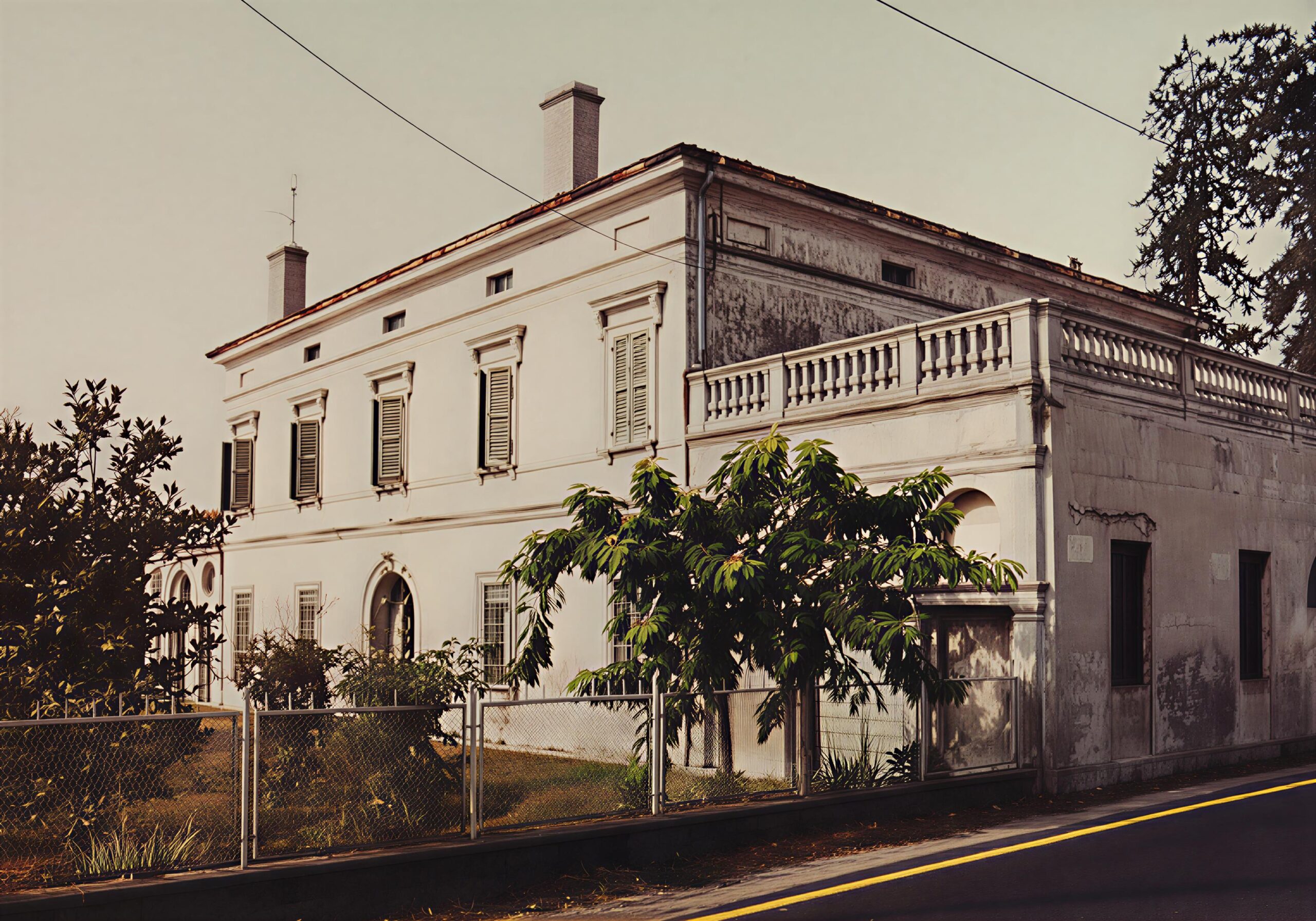
As a child, Nuvolari displayed a fearless streak that hinted at the daredevil he’d become. Famously, he built a makeshift parachute out of blankets and jumped off the roof of his family home to test it – an escapade that nearly killed him when he crash-landed. Not much later, at age 12, he secretly “borrowed” his father’s automobile in the middle of the night. Under the light of the moon, the young Tazio drove off on the public roads for a joyride and miraculously returned without a scratch to himself or the car – a precocious taste of motoring adventure that his parents certainly hadn’t authorized. These childhood stunts earned him scoldings, but they also revealed an uncanny boldness and obsession with going fast.
In his late teens, Nuvolari’s love of engines grew alongside a rebellious spirit. Italy’s historical backdrop at this time also shaped him. The early 1900s were an era of rapid industrial progress and the dawn of motor racing. Mantua, steeped in history and tradition, may have seemed an unlikely cradle for a future racing superstar. But the flat plains around the Po Valley gave Tazio space to run and ride, and the local culture – proud of its “mantovani” heroes – would eventually embrace him as a favorite son. Nuvolari first witnessed an automobile race in 1904 at age 12, on a circuit near Brescia, and he was instantly enthralled. Watching daredevils like Vincenzo Lancia and Felice Nazzaro thunder down dust-covered roads sparked something in the boy. From that moment, he knew the world of speed and engines was his calling.
World War and First Forays into Racing
Before Nuvolari could chase racing glory, history intervened. World War I erupted in 1914, and like many young men of his generation, Tazio was swept into military service. He became an ambulance driver in the Italian Army, which allowed him to hone his driving skills under pressure. In typical Nuvolari fashion, he carried wounded soldiers at breakneck speed. On one occasion, he drove so fast with a full ambulance that he lost control – the vehicle careened into a ditch. The crash left the ambulance wrecked (though the occupants survived), and it left Tazio with a stern reprimand. His commanding officer promptly dismissed him from the driver’s unit, growling that he should “forget about driving” because he clearly wasn’t cut out for it. Nuvolari ignored that advice, of course. Being told something was impossible or forbidden only fueled his determination further.
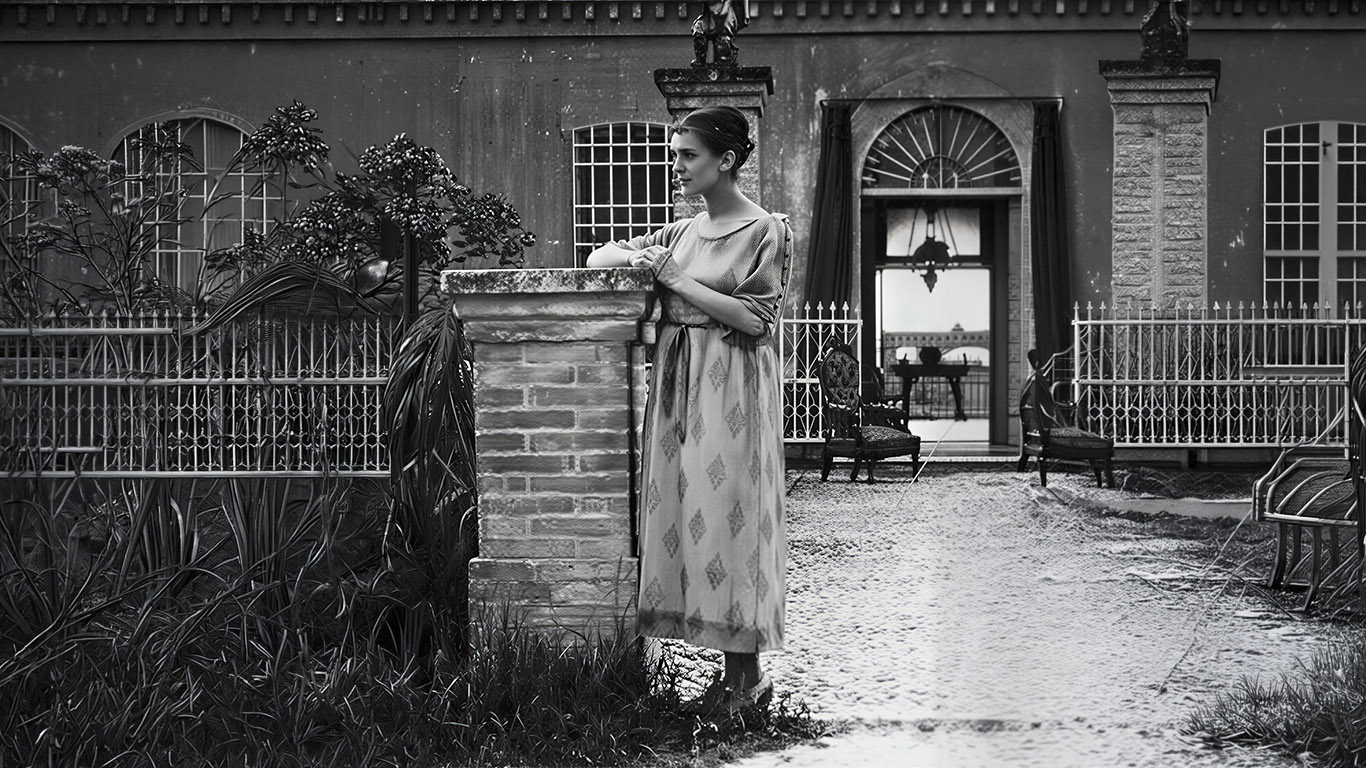
After the war, Italy was a land of both opportunity and tumult. The 1920s dawned with rapid technological advancement and a nationwide fascination with motorsport – even as economic hardship and political changes (the rise of Fascism) loomed. In this environment, Nuvolari set out to make his mark. He married Carolina Perina in 1917 (in a simple civil ceremony scandalous for the time) and started a family, but his heart remained with racing
🔗 Read more: Italian Coachbuilders Under Fascism and Beyond
Nuvolari’s first taste of organized racing came on two wheels. He obtained a motorcycle racing license in 1915, but World War I delayed any competition. Finally in 1920, at age 27, he entered his first motorcycle race, the Circuito Internazionale Motoristico at Cremona. It did not go well – he failed to finish that debut race. Undeterred, he kept honing his skills. He also tried four wheels sporadically, entering a local car trial. In 1921, he won the Coppa Verona reliability trial in an automobile, driving essentially the family car (an Ansaldo) that he had prepped for the event. In those days, racing was an expensive pursuit, and the Nuvolari family wasn’t wealthy. So Tazio had to be resourceful – borrowing vehicles, doubling up uses of his personal car, and chasing any opportunity to compete.
Through the early 1920s, Nuvolari juggled both motorcycle and car races. He showed flashes of brilliance but nothing that foreshadowed his later fame. By 1922 he was only able to enter a handful of races due to limited means. He did claim a couple of modest wins – for instance, in 1922 he won a local motorcycle race on an Indian motorcycle. Yet by 1923-24, he remained relatively unknown, a late-blooming 30-year-old still trying to break into the racing world. Many thought his age and meager finances would keep him a provincial hobbyist at best. But Nuvolari’s big break – and the first of many legendary tales – was just around the corner.
The Daredevil Motorcycle Champion
Nuvolari’s first brush with legend came not in a glamorous Grand Prix, but on an ill-suited road course with a barely competitive car. In April 1924, at the Circuito del Tigullio in Liguria, Tazio drove a Chiribiri – a small Italian car – and delivered an unforgettable performance. The Tigullio circuit was essentially 11 km of perilous mountain roads, full of tight hairpins with sheer drops into the sea. Nuvolari attacked it with ferocity. He pushed his car beyond its limits, careening through hairpin turns and nearly sliding off cliffs. Riding as his mechanic was a hapless fellow tasked with fixing breakdowns on the fly – a common practice then, to carry a riding mechanic.
As Nuvolari hurtled near the finish, his overstressed car’s tire flew off the rim, sending the car flipping into a ditch. It was a spectacular crash. Nuvolari crawled out from the wreckage miraculously uninjured, but the car was battered and his mechanic lay unconscious. Any ordinary driver would have conceded the race then and there – but not Tazio. In a display of sheer grit (and madness), he enlisted spectators to help flip the car upright and performed makeshift repairs on the spot. The steering wheel had broken off in the crash, so Nuvolari jammed a wrench onto the steering column to serve as a makeshift steering wheel. The driver’s seat was trashed, so he perched on the frame. With his mechanic still passed out beside him, Nuvolari fired up the crumpled car and rejoined the race. Incredibly, he still managed to take the checkered flag in first place, driving the last stretch on bare wheel rims with no front tire. When he crossed the finish line – battered car, unconscious mechanic, and a wrench in hand – the crowd was stunned. This almost surreal victory earned Nuvolari instant fame in racing circles. As one official race report marveled, spectators saw “something incredible… Nuvolari arrived at the finish first despite proceeding on wheel rims, without suspension, the bodywork destroyed… he was driving without a seat and using a wrench instead of a steering wheel, with his mechanic lying in a corner covered in mud and oil”. The Flying Mantuan moniker now seemed apt – it was as if Nuvolari could fly even with a broken machine.
That same year, 1924, also marked a fateful meeting. At the Circuito del Savio in 1924, Nuvolari met a fellow racer named Enzo Ferrari. Ferrari, a stylish driver from Modena, later recalled first seeing “a skinny little man” and not giving him much thought – until the race began. Nuvolari proved to be Ferrari’s only real challenger that day. Though Ferrari ultimately won that Savio circuit race, he remembered Nuvolari’s raw speed and fearless driving. It was a friendship and rivalry that would deeply influence both men’s careers.
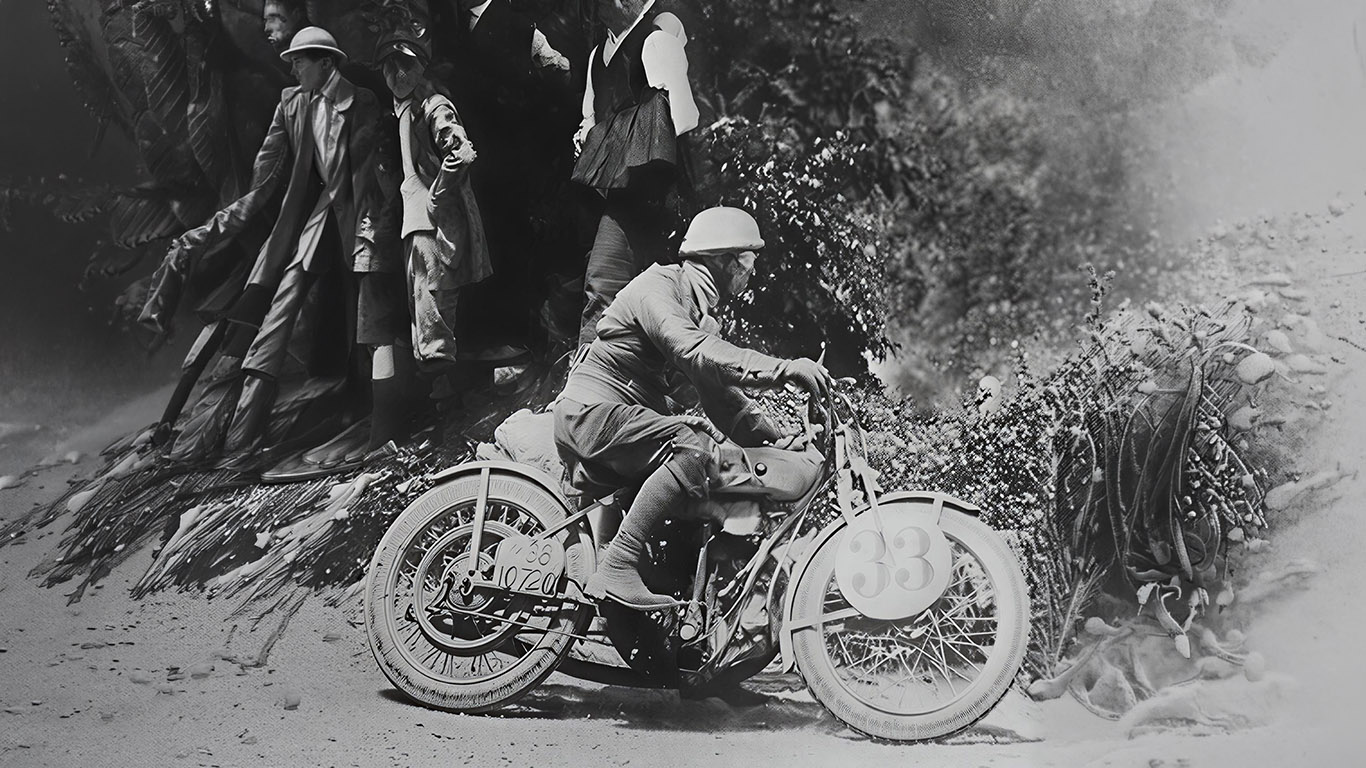
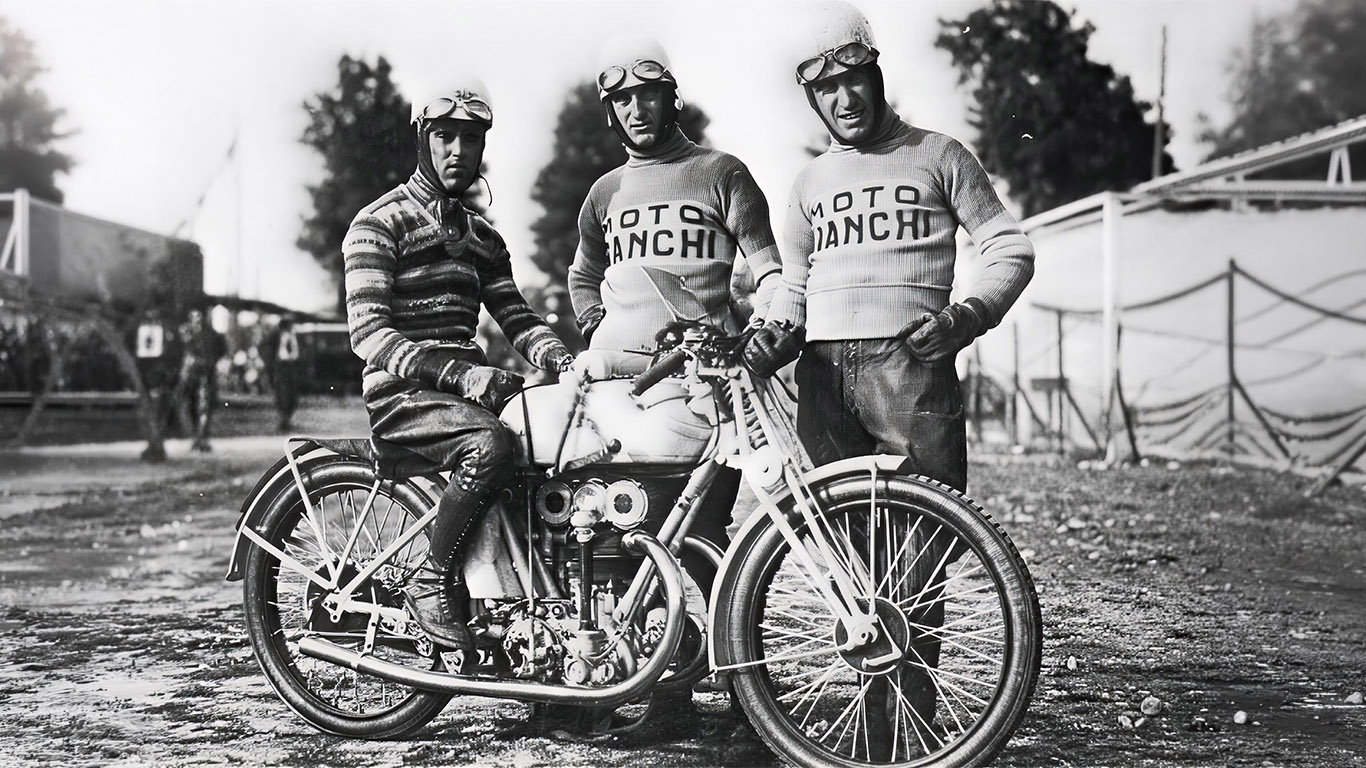
In the latter half of the 1920s, Nuvolari’s reputation grew, above all on motorcycles. He often found motorcycle racing more affordable than car racing, so he focused on two wheels where possible. His big breakthrough came in 1925, a year of triumph and pain. That year he became the 350cc European Motorcycling Champion, winning the Nations Grand Prix at Monza on a Bianchi bike. But the story behind that title is extraordinary. Earlier in 1925, Alfa Romeo’s Grand Prix team, seeking a replacement for star driver Antonio Ascari (who had died in a crash), invited Nuvolari to test their P2 race car. This was Tazio’s dream shot at a top car drive. During the Monza test, he pushed hard to impress – too hard. The car’s gearbox seized at high speed, and Nuvolari crashed violently, getting thrown through a barbed-wire fence. He suffered numerous broken bones and severe lacerations across his back from the barbed wire. Doctors told him he’d need weeks, if not months, to recover and that racing was out of the question.
Yet just six days after the crash, Nuvolari astounded everyone. Swathed in bandages and essentially taped together, he showed up at Monza for the Nations Grand Prix motorcycle race. He refused to miss the championship event. His Bianchi mechanics had to lift him onto the motorcycle and prop him up, since he could not mount the bike or even stand without support. He wore a rigid corset under his leathers and even strapped a pillow to his stomach to cushion the fractured ribs. The race was run in treacherous rain, and no one expected the “mummified” Nuvolari to last long. But once the flag dropped, Tazio became a man possessed. Despite excruciating pain, he battled through the field, passing one rider after another. In the final laps, he seized the lead and won the 350cc Grand Prix of Nations on pure willpower. The moment he took the checkered flag, he finally succumbed to pain and exhaustion, fainting and toppling off the bike into the arms of his crew. It was a superhuman effort that crowned him European champion and cemented his legend of courage. Nuvolari’s uncanny ability to withstand pain and push beyond normal human limits had become his trademark.
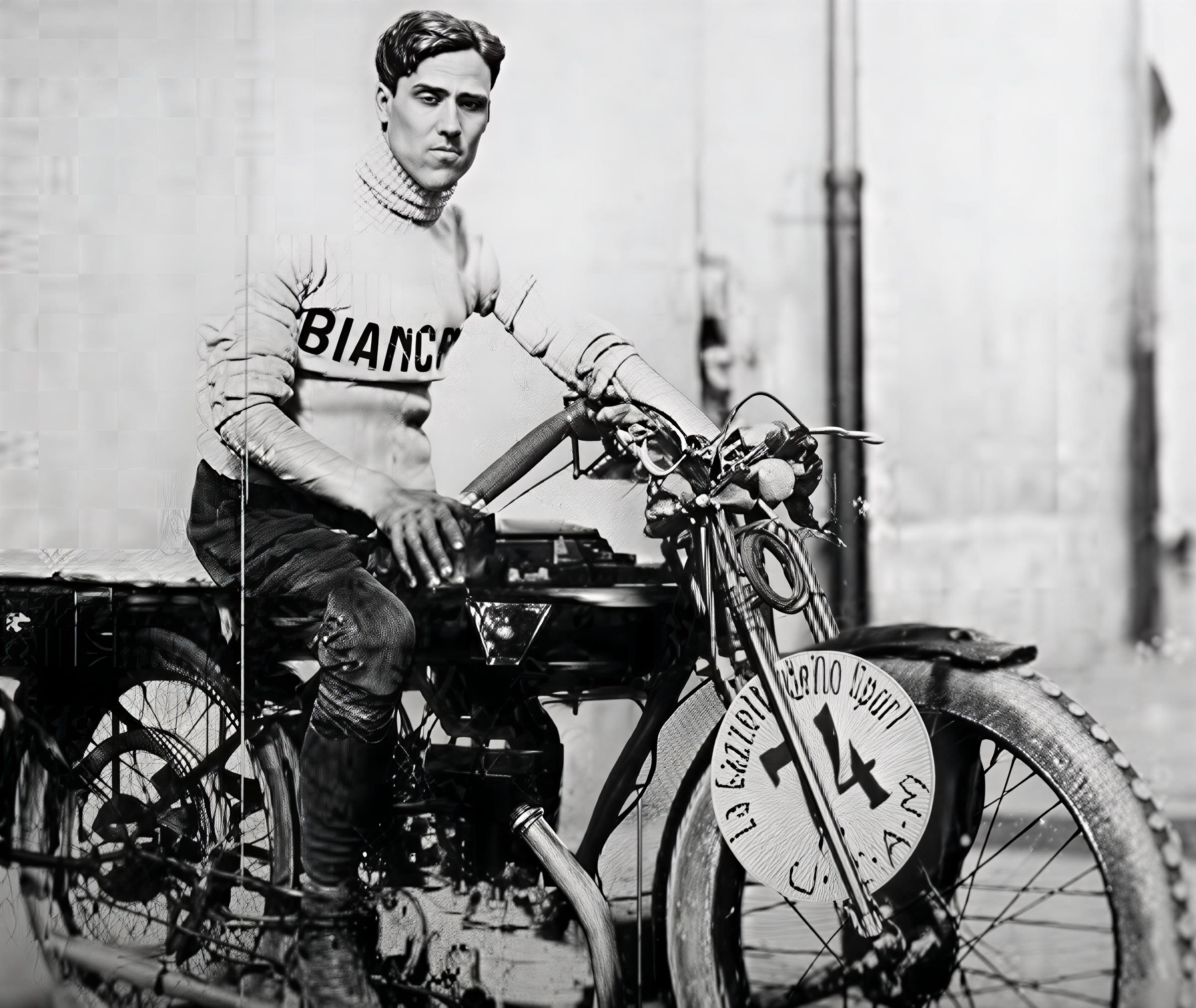
Through 1926–1928, Nuvolari dominated Italian motorcycle racing. He won the Nations Grand Prix four times in a row (1925–1928) and the Lario Circuit race five times. He rode for the Bianchi factory team and became Italy’s biggest motorcycle star. However, these years also brought harrowing moments. In 1926, he suffered a serious crash at the Solitude circuit in Germany, where early reports even mistakenly declared him dead. He survived, recovered, and continued racing,
Nuvolari’s passion for four wheels never faded. In late 1927, flush with confidence from his bike victories, he made a bold move: he founded his own car racing team, Scuderia Nuvolari. To finance this dream, Tazio had to sacrifice something dear – he sold off a portion of land he inherited from his father. With the funds, he purchased four Bugatti racing cars, keeping two for himself and selling the other two to fellow drivers (one of whom was his friend and rival, Achille Varzi). Scuderia Nuvolari was short-lived but eventful. In 1928, Tazio won the Tripoli Grand Prix – his first international car racing victory – and another race at Verona, showing that his four-wheeled talent matched his two-wheeled prowess. Varzi, who had been Nuvolari’s teammate on bikes and now in cars, was equally ambitious. The two men, once friends, became fierce rivals as each vied to be Italy’s top racer.
By 1929, Nuvolari was juggling everything – running a team, racing bikes, and driving cars of various makes (Bugatti, Alfa Romeo, even an old Chiribiri or Ansaldo when nothing else was available). Money was always tight, so he’d hop between manufacturers and events to scrape by. This hectic life would overwhelm most people, but not Tazio. He was doing what he loved: racing anything, anywhere, and usually winning.
Four Wheels and Rivalries: Nuvolari Meets Varzi and Ferrari
The turn of the new decade would elevate Nuvolari from national hero to international superstar. In 1930, Alfa Romeo finally came calling for real. Impressed by his driving (and perhaps desperate after some team setbacks), Alfa’s race team – led by Enzo Ferrari – signed 37-year-old Nuvolari to join their Grand Prix squad. Now Tazio was teammates with the likes of Giuseppe Campari and his archrival Achille Varzi. This partnership with Ferrari’s Alfa Corse team kicked off the most storied chapter of Nuvolari’s career.
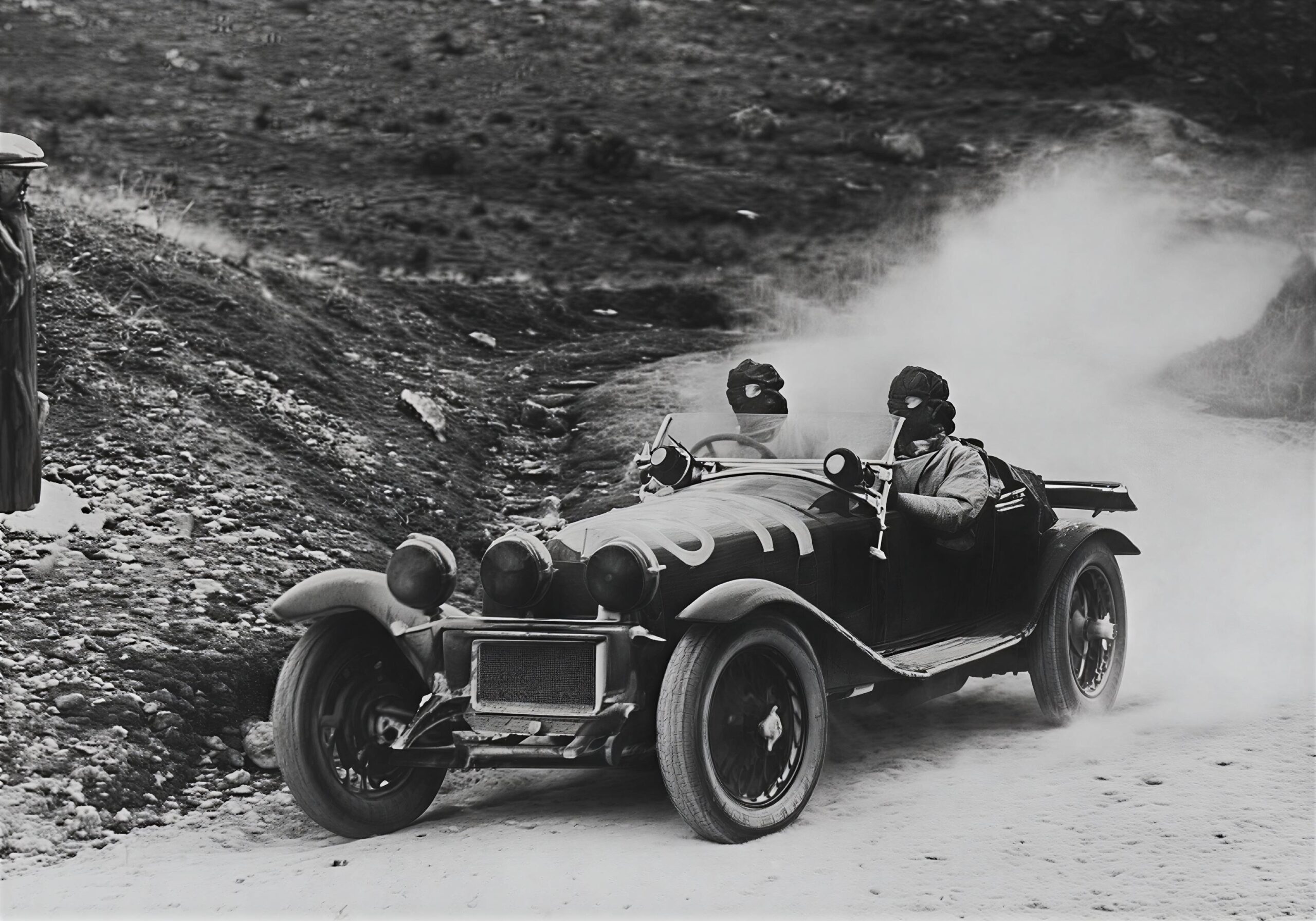
Nuvolari wasted no time making history for Alfa Romeo. In April 1930, he ventured to Sicily and won the RAC Tourist Trophy in a privateer Alfa – even taking time during that race to snatch a ham from a butcher’s shop window in passing, or so the humorous legend goes. But the defining moment came in the 1930 Mille Miglia, Italy’s grueling 1,000-mile road race from Brescia to Rome and back. That year’s Mille Miglia saw Nuvolari and Varzi locked in an epic duel, both driving Alfa Romeo 6C 1750 GS sports cars. Varzi had started earlier and was leading on the road, with Nuvolari closing the gap on elapsed time. In the pitch-black of night, tearing through the Italian countryside, Nuvolari plotted a cunning move. He turned off his headlights and tailed Varzi in darkness, using the glow of Varzi’s tail-lights as his guide. This way, Varzi wouldn’t realize his rival was right behind him. The two drivers barreled along at over 150 km/h (93 mph) in the dead of night, a scenario almost too terrifying to imagine. As dawn approached Brescia, just a few kilometers from the finish, Nuvolari made his move. He suddenly flicked his headlights back on, pulled out of Varzi’s slipstream, and overtook his astonished teammate in a flash. Nuvolari crossed the finish line first, securing victory in record time – the first Mille Miglia ever completed at over 100 km/h average speed. This audacious tactic became known as the “legend of the headlights”, a tale oft-repeated wherever Nuvolari’s name is mentioned. (Varzi later claimed he let Nuvolari by once he knew Tazio had him beat on time, but the romantic image of Nuvolari stealing the win in the dark was irresistible to the public.) That Mille Miglia coup de théâtre solidified Nuvolari’s fame. He was now not just a champion but a folk hero – the fearless trickster who outsmarted and outdrove everyone.
🔗 Read more: The story of Zagato Milano
Enzo Ferrari, who ran Alfa’s factory-supported team, was delighted. He had in Nuvolari a driver who embodied unrelenting talent, bravery, and showmanship. Ferrari later affectionately said of Tazio: “Friends and enemies, rivals and brothers” – capturing the mix of camaraderie and competition that Nuvolari brought to the team. Indeed, Nuvolari and Achille Varzi’s rivalry became the talk of Europe. They were opposites in style: Varzi, the suave, calculated aristocrat; Nuvolari, the scrappy, impassioned fighter. Their duels on track were wheel-to-wheel and heart-stopping. Off track, their relationship soured as success and pride got between them. The once friendly rivals barely spoke except to trade barbs in the press.
Nuvolari, meanwhile, continued accumulating legendary feats. In 1931, during a minor race on the Three Provinces Circuit, he demonstrated MacGyver-like ingenuity in the face of mechanical failure. While blasting over a railroad crossing at full speed, his Alfa Romeo hit a bump so hard that it broke the accelerator’s return spring, leaving the throttle stuck open. Most drivers would retire immediately, but Nuvolari improvised. He shouted to his riding mechanic to help. The mechanic unbuckled his belt, threaded it through the engine bay to the carburetor throttle, and effectively became the “human throttle cable” – pulling on the belt to regulate the engine speed on Nuvolari’s command. Tazio, for his part, managed steering, clutch, and brakes while his mechanic controlled acceleration by tugging the belt.
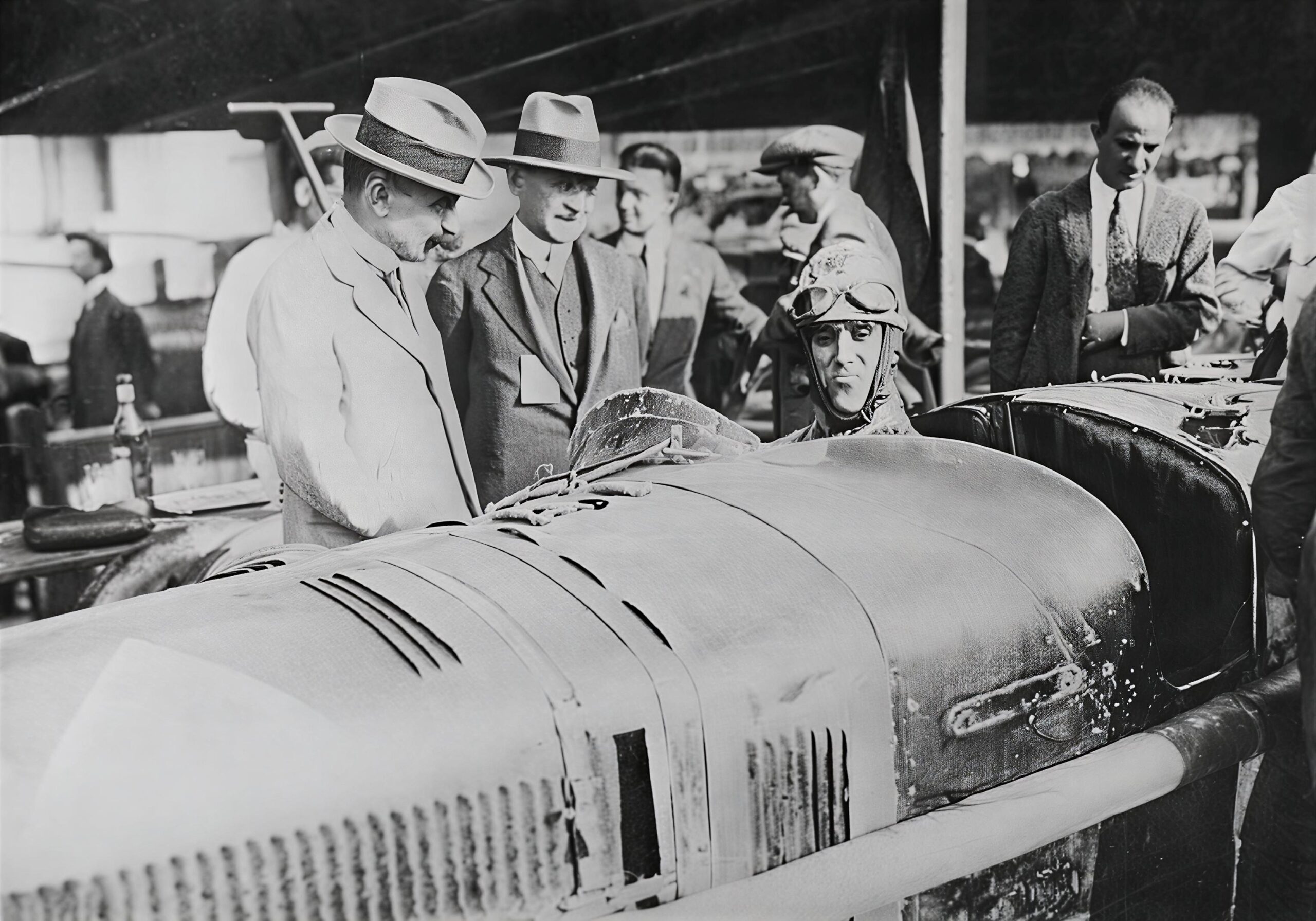
In this absurd manner, they not only finished the race but won it by half a minute, leaving an incredulous Enzo Ferrari (who had also been competing) in second place. Such stories only added to Nuvolari’s mystique as a driver who simply never gave up, no matter the odds or obstacles.
By 1932, Nuvolari was at the pinnacle of the sport. Driving the spectacular Alfa Romeo P3 Grand Prix car (one of the fastest machines of its day), he had a dominant season. He won the 1932 European Drivers’ Championship, essentially the top Grand Prix title of the era, by winning two of the three championship Grands Prix and numerous other races. He also claimed prestigious victories like the Monaco Grand Prix and another Targa Florio in Sicily. His poor mechanic on the Targa Florio had to ride lying on the car’s floor the entire race at Tazio’s command – every time Nuvolari approached a corner too quickly he would scream, and the mechanic knew that was the cue to crouch down to lower the car’s center of gravity and prevent a rollover. “He screamed at the first turn and didn’t stop until the last,” the mechanic recalled later. It was all in a day’s work for Nuvolari, who seemed utterly fearless on any terrain.
🔗 Read more: The Alfa Romeo Soffio di Satana: Satan’s Breath
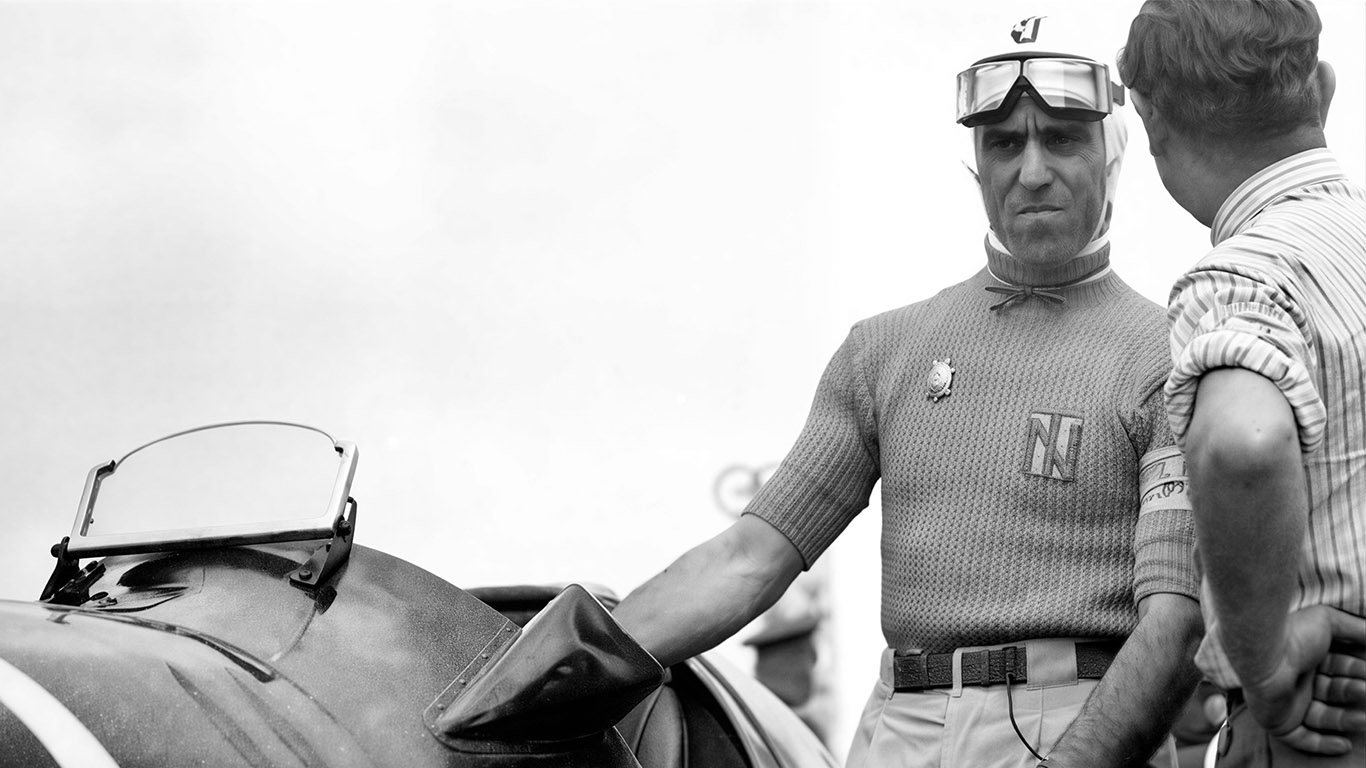
Nuvolari’s on-track heroics were making him a national icon in Fascist Italy. The country, under Mussolini, loved sporting heroes who brought glory to the Italian flag. And Tazio delivered plenty of glory. In 1932, the poet Gabriele D’Annunzio – a living legend himself – invited Nuvolari to his villa. There, D’Annunzio bestowed upon him a gold medallion in the shape of a tiny tortoise, with a dedication: “To the fastest man, the slowest animal”. It was a whimsical, poetic gift – a golden tortoise for the speed king. Nuvolari was deeply moved. He adopted the tortoise as his personal emblem, sewing the gold turtle badge onto his signature yellow racing jersey from then on. The “tartaruga” became an enduring symbol of Nuvolari’s career, representing good luck and perhaps a reminder to stay humble. That same year, Nuvolari’s fame reached the highest halls of power. Benito Mussolini himself summoned Nuvolari to Rome for a meeting. The dictator was an admirer, seeing Nuvolari as the embodiment of Italian daredevil spirit. In a much-publicized photo op, Mussolini eagerly posed in the cockpit of Nuvolari’s Alfa Romeo, grinning like a fanboy behind the wheel of the champion’s car. By this time, Tazio Nuvolari was more than a sportsman – he was Italy’s pride, a symbol of modern Italian prowess in the mechanical age.
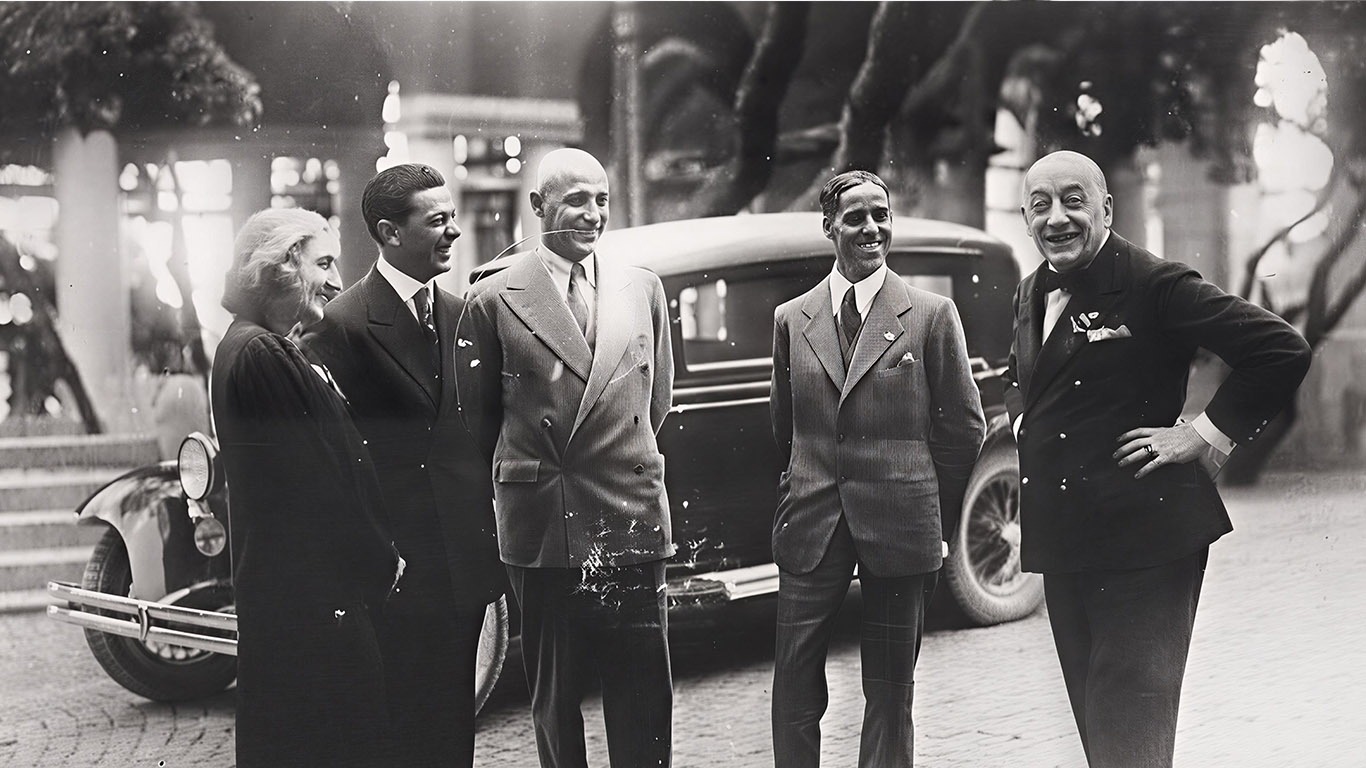
In the mid-1930s, the world of Grand Prix racing underwent a seismic change – one that threatened to eclipse Nuvolari and Alfa Romeo. Starting in 1934, the German “Silver Arrows” arrived: the state-funded Mercedes-Benz and Auto Union teams with their gleaming silver cars, massive engines, and unlimited resources. With the direct backing of Adolf Hitler’s Nazi government, these German machines were technologically years ahead. They boasted supercharged engines making 400+ horsepower, whereas Alfa Romeo’s best could barely muster 265 hp. Races became a David vs. Goliath battle – and Nuvolari was David. Initially, even his brilliance couldn’t bridge the performance gap. By 1934, Nuvolari, now 42 and having parted ways with Ferrari’s team temporarily, tried running a Maserati of his own. In one race in Alessandria, he crashed and broke a leg. In typical fashion, he refused to stay sidelined. He had his Maserati modified with special controls so that he could operate all three pedals (clutch, brake, accelerator) using his one good foot. Amazingly, he returned for the next race with his left leg still in a cast, driving essentially one-legged – and he still finished in the top five.
Triumph and Tragedy: Personal Losses and a Nation’s Hero
For all his success, Nuvolari’s life was not without deep personal tragedy. Amid his golden early 1930s run, he suffered heartbreak that would have crushed lesser men. Tazio and his wife Carolina had two sons, Giorgio and Alberto. Nuvolari adored his boys, but tragically, both fell gravely ill in their youth. In 1937, his firstborn Giorgio died at age 19 from myocarditis (heart inflammation). Nuvolari was devastated. He had been away racing in the United States when Giorgio passed – a cruel blow and an unfillable void in his life. As if that weren’t enough, his second son Alberto died in 1946 at just 18 from nephritis (kidney disease). To lose both children so young was a nearly unimaginable sorrow. Those close to Nuvolari noted that after these losses “Nuvolari was a sad mask”, carrying a deep, quiet grief behind his steely racing gaze. He seldom spoke of his pain, preferring to suffer in silence – “without making noise,” as he would say, reflecting the stoic motto taught by his family. If anything, these tragedies made the public love him even more; they saw in Tazio not just an unbeatable hero, but a man who endured hardship with dignity.
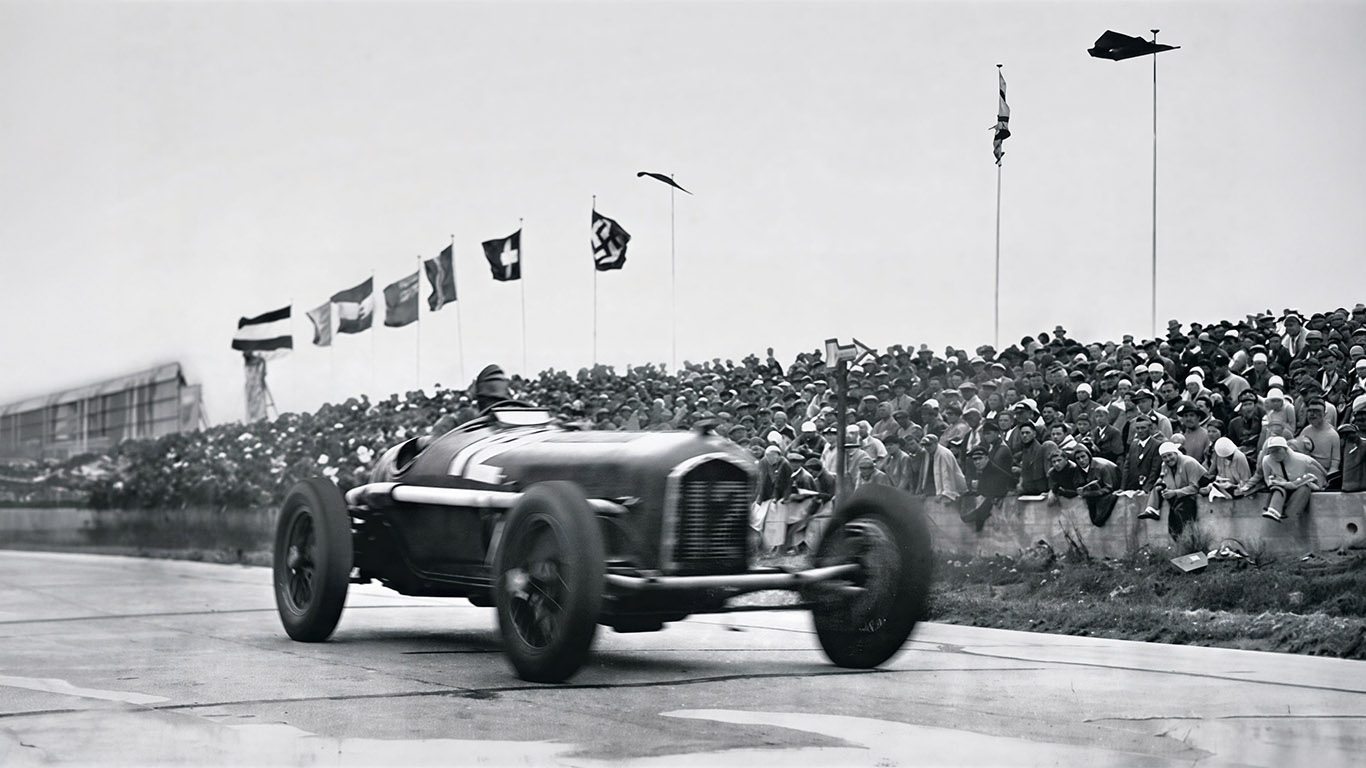
After mending, Nuvolari reconciled with Enzo Ferrari and rejoined the Alfa Romeo fold. But the German cars were dominant, and the Nazis relished proving Aryan superiority on the racetrack. In 1935, Auto Union considered hiring Nuvolari (he had tested their rear-engined beast) but Achille Varzi, who had defected to the German team, allegedly blocked the move – Varzi couldn’t bear having Nuvolari as a teammate again. Spurned by Auto Union, Tazio stuck with Alfa Romeo. Mussolini himself was keen to see an Italian driver challenge the Germans, and he reportedly made sure Alfa kept Nuvolari on their team. What followed was Nuvolari’s most famous victory – one often hailed as the greatest motor race upset of all time.
It took place at the 1935 German Grand Prix at the Nürburgring Nordschleife. This was Germany’s home race, attended by a massive crowd of 300,000 including Nazi officials and Hitler himself. The German teams fielded five Mercedes-Benz W25s and four Auto Union Pends, against which Alfa Romeo had just a couple of outdated cars. Nuvolari’s ride, an Alfa P3, was a 3-year-old design with roughly 265 hp, facing modern juggernauts with well over 400 hp. The outcome seemed pre-ordained – a German car was certain to win on home soil. The Nazis would not even allow the Italian national anthem to be played at the ready, so confident were they that no Italian would be on the top step of the podium.
Nuvolari, however, had other plans. When the race began, the German drivers rocketed ahead on the long straights, their superior power evident. But Nürburgring is a twisting, 22-kilometer “Green Hell” of a circuit. And Nuvolari was a master of corners, famous for his ability to drift a car in a four-wheel slide – an innovation he pioneered to carry more speed through bends. Enzo Ferrari himself credited Nuvolari as the inventor of the four-wheel drift technique. Lap after lap, the little red Alfa would lose ground on straights but claw it back in the turns, Nuvolari power-sliding with balletic skill. Mid-race, Tazio actually took the lead briefly, only to suffer a setback: a botched pit stop. The fuel pump broke, forcing his crew to dump petrol in manually with cans and a funnel – a delay costing almost a minute. Nuvolari rejoined well behind the leaders. Most would have resigned to a decent finish. Not Nuvolari. He attacked the track with a fury nobody had seen before, pushing the Alfa to its absolute limits in a desperate chase.
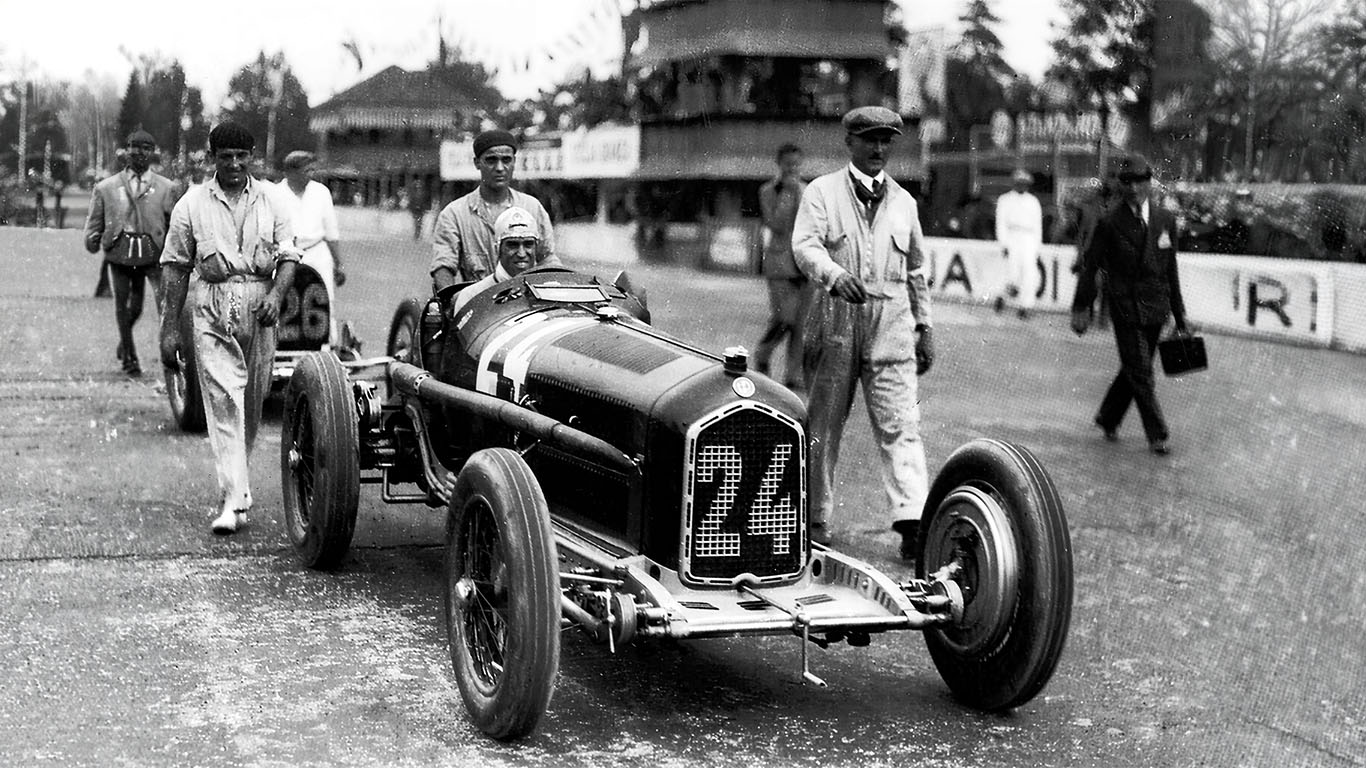
By the final lap, to everyone’s shock, Nuvolari had hauled himself up to second place and was rapidly closing on leader Manfred von Brauchitsch’s Mercedes. Von Brauchitsch still had a half-minute lead, but he had been driving hard to keep Nuvolari at bay and his tires were in dire shape. In the dramatic last moments, the German’s rear tire exploded from the strain. With his Mercedes wobbling, von Brauchitsch could only watch in disbelief as Nuvolari’s Alfa streaked past into the lead. Tazio Nuvolari took the checkered flag first, achieving the “impossible victory” – beating nine superior German cars on home turf with an underpowered Italian machine. The German crowd was momentarily struck silent in disbelief. Then, recognizing the greatness they had witnessed, they erupted in a massive applause for the Italian hero. Adolf Hitler was reportedly enraged, storming off. The Nazi brass, in a petty move, initially refused to play the Italian anthem or provide an Italian flag for the podium celebration. Unfazed, Nuvolari reached into his racing suit and produced a small tricolore flag he had brought just in case, waving it triumphantly as the Italian anthem finally played. It was a symbolic David-vs-Goliath moment that resonated far beyond sports. Many consider that 1935 Nürburgring win as the crowning achievement of Nuvolari’s career – “in many eyes, the greatest victory of all time”.
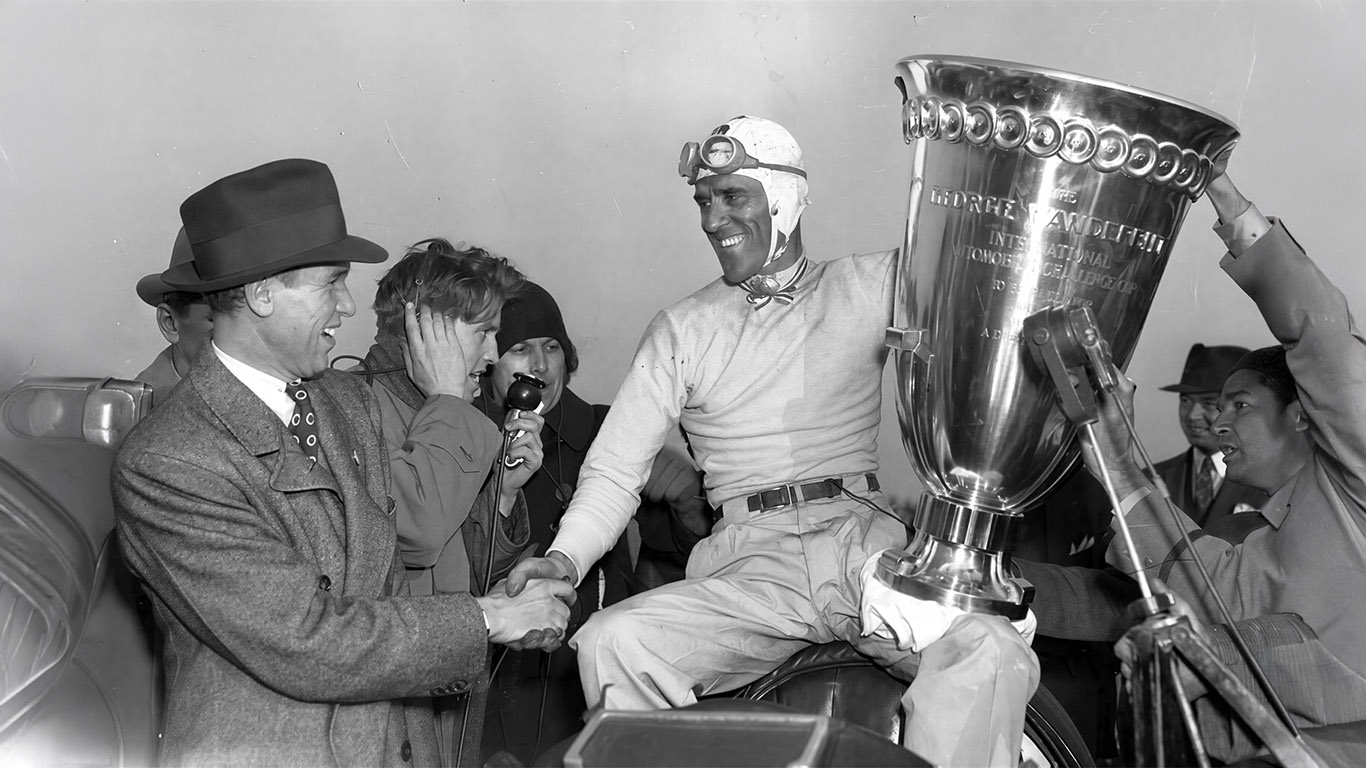
Now in his mid-forties, Nuvolari kept racing hard, refusing to slow down. In 1936 and 1937 he still managed to win races against the German cars on occasion, including a Grand Prix at Budapest in 1936 and the Vanderbilt Cup in America. Nuvolari crossed the Atlantic in 1936 to compete in the Vanderbilt Cup in New York, dazzling American fans as well. He won that race by a huge margin (reportedly eight minutes ahead of the next car), pocketing a hefty prize that astonished European reporters at the time. But alongside the triumphs came more frightening crashes. In 1936, at the Tripoli Grand Prix, his car caught fire; Tazio saved himself by leaping from the burning vehicle at roughly 160 km/h (99 mph), sustaining multiple injuries. That same year, he was badly hurt in another crash and ended up hospitalized. True to form, he sneaked out of the hospital against doctors’ orders to race the next day, again wearing a plaster cast/corset under his suit. Nothing could keep him from the track. These near-misses only added to his otherworldly reputation – fans started to believe Nuvolari had a charmed life or an uncanny pact with fate.
By 1938, Nuvolari finally accepted an offer to drive for the Auto Union team, the very German marque he’d fought so long. Auto Union had lost their star driver Bernd Rosemeyer (who died attempting a land speed record) and they needed an ace to fill the void. At 45 years old, Nuvolari climbed into the ferocious mid-engined 16-cylinder Auto Union and, after a brief adaptation, showed he still had magic. He won the 1938 Italian Grand Prix at Monza in the Auto Union, delighting the home crowd who, despite the car’s nationality, cheered Nuvolari’s victory over the rival Mercedes team. He also won the 1938 Donington Grand Prix in England. During practice at Donington, a bizarre incident underlined Nuvolari’s crazy luck – a deer bounded onto the track in front of Tazio. He struck the animal at speed, killing it and nearly pitching the car off a bridge. Nuvolari narrowly avoided another violent crash. The Auto Union mechanics later gifted him the deer’s head, mounted as a trophy, which Nuvolari hung in his study as a morbid memento of the close call (as if he needed more reminders of danger in his life).
In September 1939, Nuvolari won the Belgrade Grand Prix in Yugoslavia, driving for Auto Union. Unbeknownst to everyone, it would be the last major European race before World War II engulfed the continent. Fittingly, Nuvolari stood on the top step of that podium as the world of racing entered a long, dark hiatus.
After the War: The Last Mille Miglia and Farewell
The Second World War (1939–1945) halted racing and wrought devastation across Europe. Nuvolari spent those years in forced idleness on his farm near Mantua, his racing career seemingly frozen in time. By war’s end, he was in his mid-50s – an age by which nearly all racing drivers would have long retired. Moreover, years of inhaling exhaust fumes had damaged Nuvolari’s lungs, and he developed severe asthma and respiratory issues. He would suffer terrible coughing fits and shortness of breath near running cars – a cruel ailment for someone whose life was motorsport. Friends thought Tazio would finally hang up his helmet. But the moment peace returned, Nuvolari was back at the starting line. It was as if he couldn’t live without the thrill of competition.
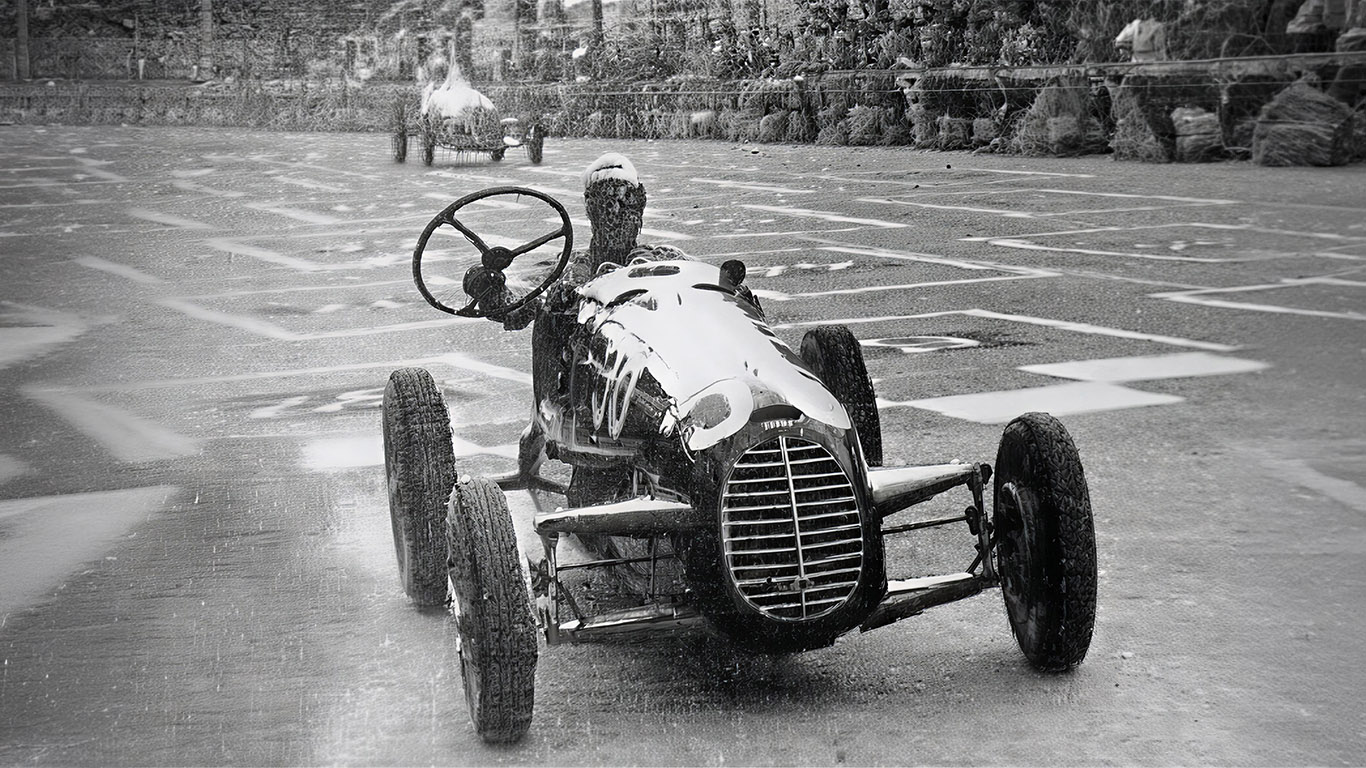
In 1946, Nuvolari made a tentative return to racing. Despite being well past his prime physically, he still possessed the racer’s instinct and skill. He entered some local races and hillclimbs, astonishing observers by still being competitive. In fact, even at 54 years old, Nuvolari managed to win a few minor events – including a victory in the 1947 Palermo–Monte Pellegrino hillclimb in a tiny Cisitalia, where he won his class. The motoring press and fans greeted these comebacks with adulation; seeing the old master still at it was inspirational and poignant.
However, Nuvolari’s health was deteriorating. By 1948, he suffered frequent asthma attacks and had been warned by doctors to avoid strenuous activity and fumes. He would sometimes become nauseated by the smell of racing fuel – an intolerable irony. Reluctantly, Tazio agreed to limit his racing and spend time resting at a quiet lakeside retreat to breathe cleaner air. Yet, when the 1948 Mille Miglia approached, Nuvolari couldn’t resist one last adventure. Initially, he planned only to be an honored spectator. But Enzo Ferrari – now building his own cars – had a surprise for his old friend. Ferrari offered Nuvolari a drive in a new Ferrari 166 SC sports car for the Mille Miglia, insisting that Tazio give it a go: “Don’t worry if you destroy it. Drive as hard as you can – no one can beat you,” Ferrari purportedly urged. Despite trembling hands and far-from-ideal fitness, Nuvolari accepted.
What followed was a final, heroic performance that has gone down in lore. Nuvolari led the 1948 Mille Miglia for much of the race, against drivers half his age, through awful weather and exhaustion. In scenes reminiscent of old times, as the race progressed, pieces of Nuvolari’s car literally began to fall off. First, the hood (bonnet) tore off and blew away at speed, nearly hitting Tazio in the head. His riding mechanic was aghast, but Nuvolari only grinned and said, “Good, that will help cool the engine!”. Then, as they bounced over rough roads, the passenger seat broke off its mounts. Nuvolari unceremoniously chucked the loose seat out onto the roadside, leaving his mechanic to crouch. He then pulled into a village and grabbed a sack of lemons and oranges to sit on as a cushion – a makeshift replacement for the seat that he figured was better than nothing. Spectators were bewildered to see the famous Nuvolari driving past, perched on a bag of fruit in an open-top car with no hood, utterly determined to continue. And continue he did, at racing speed, despite the car gradually disintegrating around him. The team begged him to retire the car, but Tazio refused. It took a catastrophic mechanical failure – a brake failure (or some say a suspension spring collapse) – near Reggio Emilia to finally halt Nuvolari’s charge. With the car unable to continue, Tazio had to withdraw, surrendering a lead that would have been a fairy-tale win. Nonetheless, that final Mille Miglia run only burnished his legend: Nuvolari would rather drive a car to pieces than concede defeat. He had proven once more that his will to win was as strong as ever.
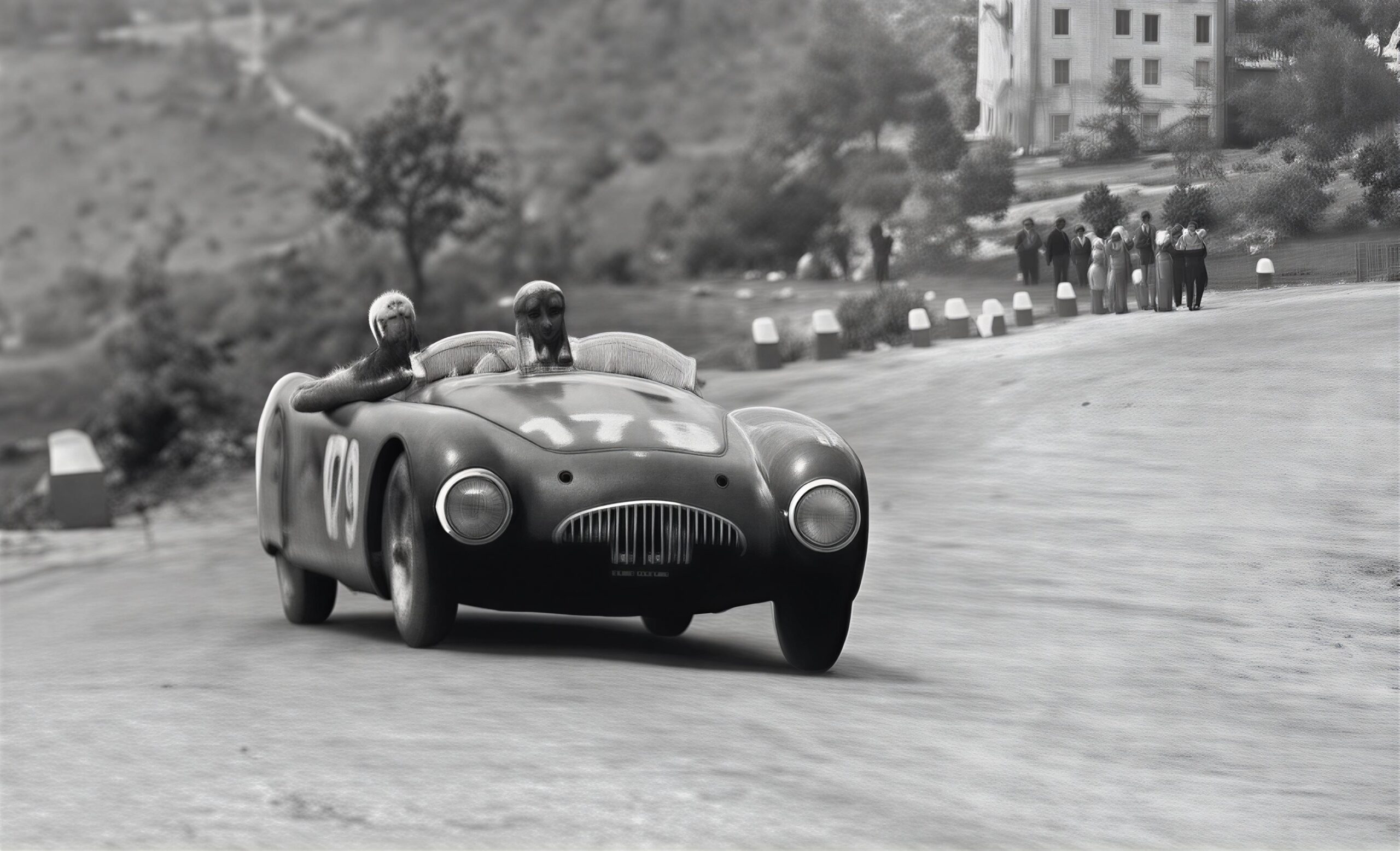
When it was over, Nuvolari was utterly spent. According to accounts, after retiring from the 1948 Mille Miglia, he quietly stepped into a small church along the route and lay down on a pew to rest, utterly exhausted and emotionally crushed that his swan song victory slipped away. Enzo Ferrari found him and tried to console him, saying, “Don’t worry, Tazio, you’ll win it next year.” But Nuvolari weakly replied that there wouldn’t be a next year – he knew this was the end of the road. “Days like these, at our age, won’t come again,” he lamented to Ferrari, acknowledging that time had finally caught up with the Flying Mantuan.
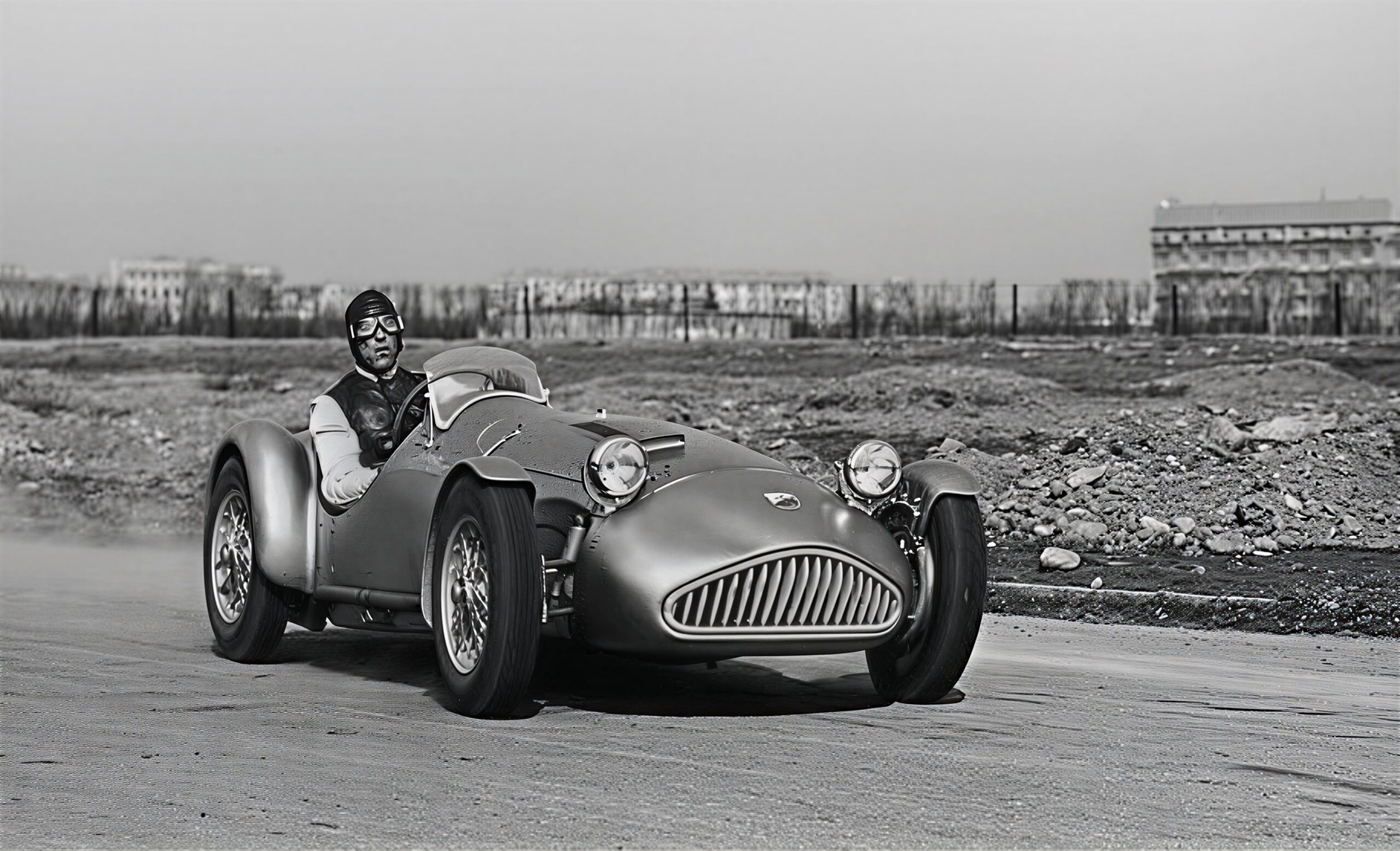
Nuvolari never officially announced a retirement – he simply faded away from racing after 1950. His last competitive event was a minor hillclimb in April 1950, where he drove a tiny Cisitalia 204A and, fittingly, won his class at age 58. After that, his health made even ceremonial drives impossible. The asthma grew worse, and he suffered a stroke in 1952 that left him partially paralyzed. Tazio spent his final months in bed at his farmhouse in Mantua, visited by a few close friends. The man who had tempted fate so many times in fiery crashes and at outrageous speeds ultimately met a quiet end. On August 11, 1953, Tazio Nuvolari died at home in Mantua at age 60, likely of a second stroke. In the end, the legend who once quipped that he’d prefer to die behind the wheel passed away in his sleep – perhaps the only race he ever surrendered.
Legacy of an Immortal Racer
Nuvolari’s funeral was a monumental event. The entire city of Mantua and fans from all over Italy turned out to pay respects to their hero. An estimated 55,000 people lined the streets of Mantua as his coffin passed. It was a funeral fit for a head of state – the nation mourned as if an icon had fallen. Pallbearers included racing greats Alberto Ascari, Luigi Villoresi, and Juan Manuel Fangio, all of whom came to honor the Maestro. According to his wishes, Tazio was buried in his racing clothes – his trademark yellow jersey with the Nivola monogram, blue trousers, and a leather vest. In his coffin, they placed his beloved steering wheel, the same one he had gripped in so many battles. On his tombstone in the family crypt at Mantua’s Cimitero degli Angeli, an inscription reads: “Correrai ancor più veloce per le vie del cielo” – “You will race even faster along the roads of heaven.” It is a poetic tribute to the racer who seemed born to defy gravity and limits.
To this day, Tazio Nuvolari is revered as arguably the greatest racing driver of all time. His contemporary rival Achille Varzi, despite their complicated history, declared Nuvolari “the best driver of all times… not a master, for a master could teach – Tazio was an artist of the steering wheel, and art cannot be taught.” Indeed, Nuvolari’s style was inimitable. He had 92 major car victories and 69 motorcycle wins in his career, including two Mille Miglia, two Targa Florio, five Coppa Ciano, two RAC Tourist Trophies, a 24 Hours of Le Mans (1933) and the 1932 European Championship. And he achieved all this before Formula One even existed, in an era far more dangerous and wild than anything since. His fearless feats – driving blind at night with lights off, finishing races with wrenches for steering wheels and belts for throttles, winning with broken bones, and humiliating Hitler’s prized racers – have become racing folklore passed through generations.
In Italy, Nuvolari’s legacy is woven into the national sports culture. The great opera singer Lucio Dalla immortalized him in a 1976 song “Nuvolari,” depicting him as a mythic hero with “a voice that seems to bark” and a mantle of invincibility. There’s a museum in Mantua (Museo Tazio Nuvolari) showcasing his trophies, cars, and that famous gold tortoise. Enthusiasts restore his old race cars to keep the history alive. Even internationally, those who know racing history hold Nuvolari in awe. The famous British motorsport historian Cyril Posthumus perhaps summarized it best: “Tazio Nuvolari was not simply a racing driver. To Italy he became an idol, a demi-god, a legend, epitomizing all that young Italy aspired to be – the man who ‘did the impossible’, not once but habitually, the David who slew the Goliaths of motor racing. He was Il Maestro.”
It is often said that modern champions like Senna, Schumacher, or Fangio would pale at the dangers Nuvolari faced and the primitive machinery he manhandled. Yet Nuvolari rarely gets mentioned in the same breath by casual fans, simply because he raced in an earlier epoch. But ask any racing scholar or veteran, and they’ll affirm that in the pantheon of motorsport, Nuvolari stands near or at the very top. Enzo Ferrari, who knew all the greats, called Nuvolari “the greatest of them all”. Ferdinand Porsche was so mesmerized by Nuvolari’s driving that, as noted, he proclaimed Tazio the greatest driver of the past, present, and future – a quote that has echoed across time.
Ultimately, Tazio Nuvolari’s story is one of relentless passion, extraordinary courage, and resilience in the face of adversity. He lived for the thrill of speed and competition, and nothing – not war, not injuries, not personal tragedy – could break that spirit until his body gave out. Today, over a century from his birth, the Flying Mantuan’s exploits still captivate and inspire. His life reminds us of a fearless era when racing drivers were seen as gladiators flirting with death on every lap. And among those, Nuvolari was the fiercest of them all – a man who drove straight into legend and never lifted off the throttle.

ABOUT THE AUTHOR
Andreas Scheidl
Italian classic car enthusiast with German roots. Renowned as a respected figure in the classic car community, he serves as a jury member at various international concours d'elegance, including the Classic Gala Schwetzingen and Mantova. As a content creator, Andreas passionately shares his profound knowledge and appreciation for vintage automobiles. His heart beats for cars designed by Giovanni Michelotti, showcasing his discerning taste and dedication to preserving the timeless elegance of automotive history.
More stories by Andreas Scheidl ↗CONTINUE READING
Posts You Might Like
Fiat Panda Cabrio: The Italian Coachbuilders Who Opened Giugiaro’s Box
From Moretti’s Panda Rock to Italdesign’s experimental Strip, Maggiora’s four-wheel-drive convertible and Stola’s remarkable Destriero, the history of the open-top Panda reveals an unexpected chapter in Italian coachbuilding. When Giorgetto Giugiaro designed…
Read story
Gabriele d’Annunzio and the Cult of the Automobile
There was a time when the automobile had not yet become part of the landscape. It announced itself from afar through the beating of an engine, the smell of petrol and hot…
Read story
Fiat 1400: The Last Great Playground of the Carrozzieri
From Touring and Abarth to Farina, Ghia, Vignale, Boneschi, Bertone, Viotti and the smaller carrozzerie, the new Fiat quickly became one of the richest bases for Italian special bodies in the early…
Read story
How a Swiss Dealer Challenged Ferrari: The Story of Monteverdi
How Peter Monteverdi went from Swiss Ferrari dealer to creator of rare Frua and Fissore-bodied GTs, the Hai supercar and luxury off-roaders.
Read story
THE CONVERSATION
Comments 0
Share a memory, a period photograph or a documented detail about this story.