
Renault Floride: Inside the Design Dispute Between Frua and Ghia
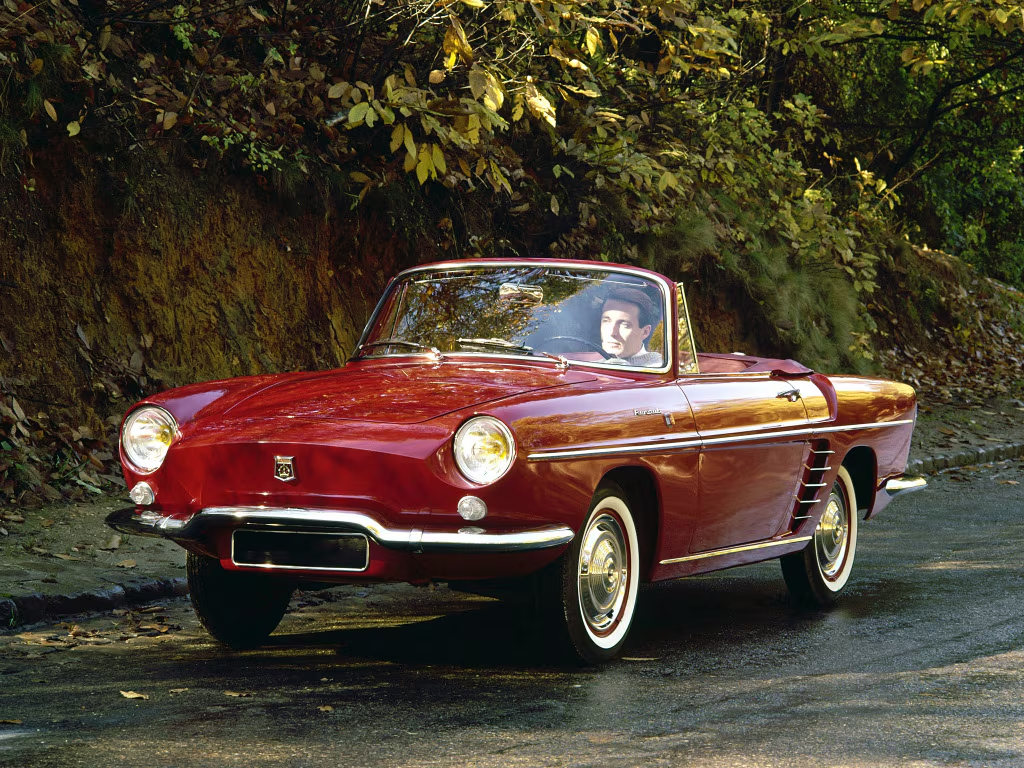
The Renault Floride looks far too cheerful to have caused so much trouble.
It was the sort of car designed to appear in holiday photographs: a small French convertible with an Italian line, bright paint, a removable hardtop and just enough chrome to catch the sun. Renault sold it with images of beaches, fashionable women and an easier kind of motoring. Brigitte Bardot drove one. In North America it became the Caravelle, a name chosen to sound modern, fast and unmistakably French.
Behind that carefully prepared image, however, was a much less relaxed story.
The Floride emerged from a complicated sequence involving Renault, Luigi Segre, Carrozzeria Ghia, Giovanni Savonuzzi, Virgil Exner Jr., Ghia-Aigle and Pietro Frua. More than one man claimed an important role. Money was disputed, designs appeared under competing names, and a prototype turned up at the Geneva Motor Show before Renault had formally presented the production car.
For Frua, the argument became serious enough to end his short relationship with Ghia and return him to independence. For Ghia, the Floride became another international success associated with the company’s name. Renault, meanwhile, received exactly the car it wanted: an affordable image-builder capable of making humble Dauphine mechanicals look glamorous.
The Floride became a commercial product. Its authorship never became quite as tidy.
Renault wanted more than another small saloon
By the middle of the 1950s, Renault had rebuilt itself around practical cars. The 4CV had given post-war France an affordable family model, while the larger Frégate occupied the upper end of the range. The new Dauphine, introduced in 1956, was intended to expand Renault’s success at home and abroad.
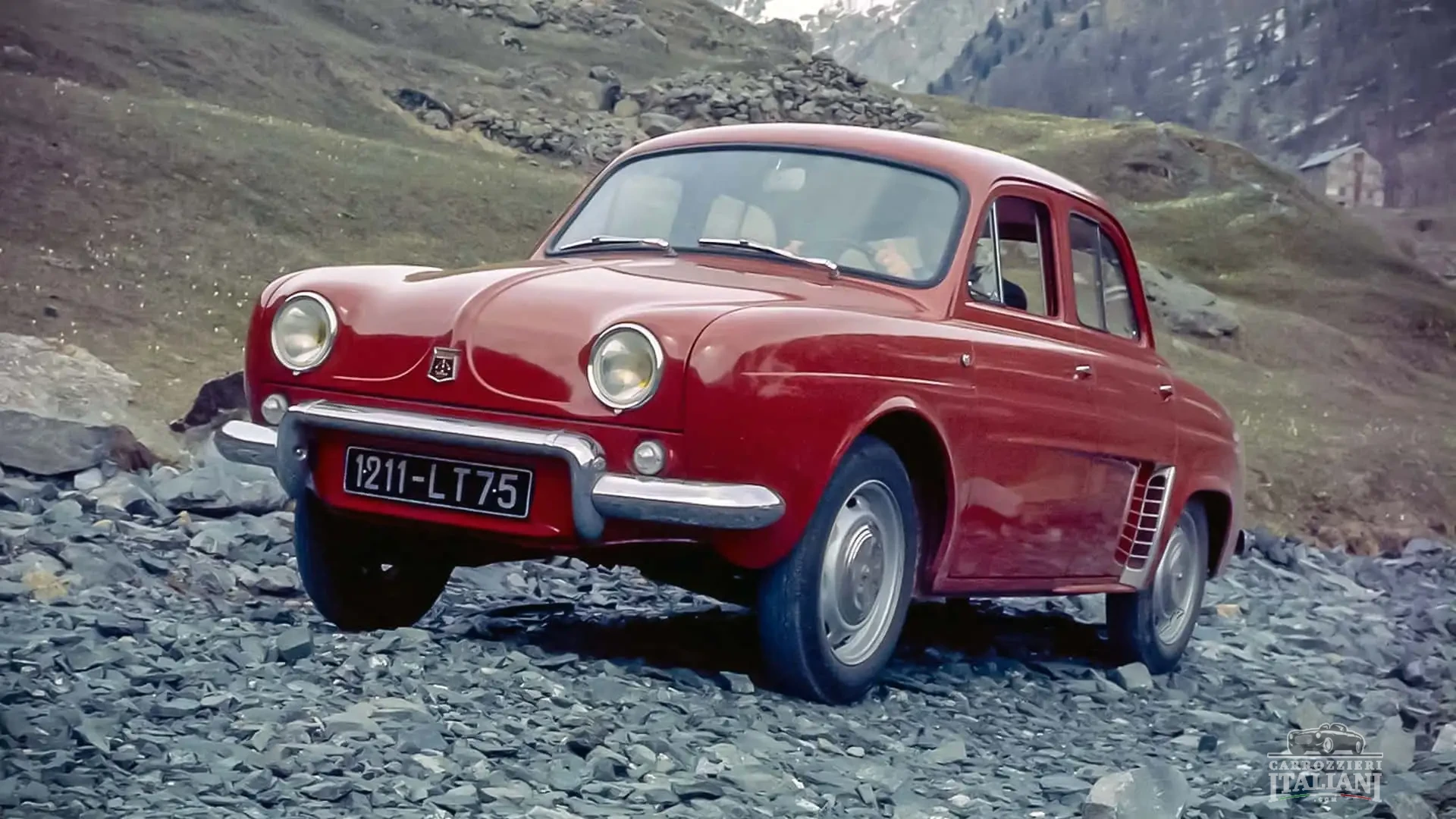
The Dauphine was economical, compact and easy to manufacture in large numbers. It was also conventional in purpose. Renault needed something that could add desire to the range without requiring an entirely new mechanical platform.
The United States was central to the idea.
Renault had watched Volkswagen turn the Beetle into an unlikely American success. A European economy car could apparently find buyers among the enormous sedans of Detroit, provided it had enough character and was supported by the right dealer network. The Dauphine initially appeared capable of doing the same.
🔗 Read more: How Italy and Germany United to Create the Karmann Ghia
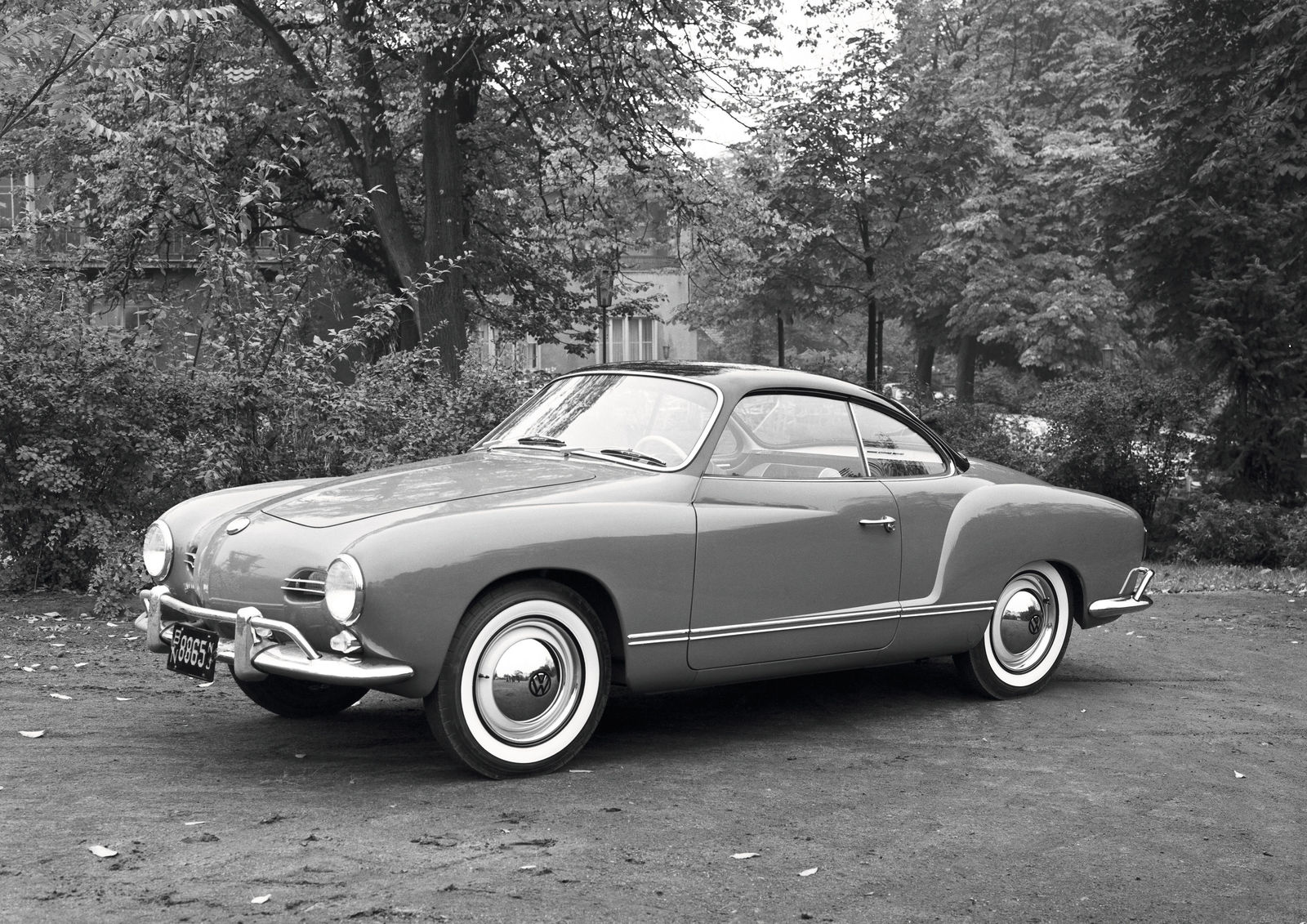
Renault president Pierre Dreyfus travelled to the United States with technical director Fernand Picard and listened to the company’s distributors. The American dealers wanted something more visible than a small four-door saloon. A coupé or convertible based on the Dauphine could attract customers into showrooms, give Renault a more sophisticated image and compete with cars such as the Volkswagen Karmann Ghia.
According to the most repeated version of the story, the discussion took place during a Renault distributor meeting in Florida. The location supplied an internal nickname that eventually became the European production name: Floride, the French word for Florida.
The programme received the internal designation R1092.
Renault could engineer the car, but it wanted an outside studio to give it the necessary style. The company turned to Turin, and specifically to Ghia.
Luigi Segre’s international Ghia
Carrozzeria Ghia was no longer simply a small Italian body shop.
Under Luigi Segre, it had become one of Turin’s most internationally connected design businesses. Segre spoke English, travelled constantly and understood that the future of the Italian carrozzeria depended on foreign manufacturers. He had developed close relationships in the United States, most importantly with Chrysler and its design chief Virgil Exner.
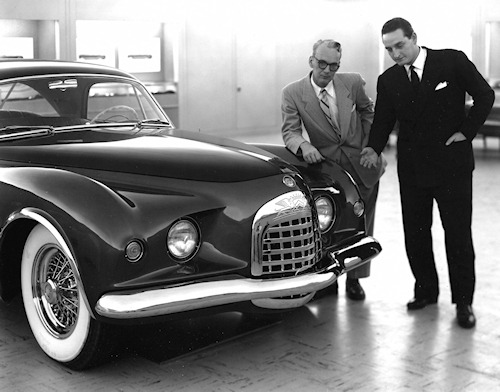
Ghia could offer Renault something a French internal design office could not provide as convincingly: an Italian body shaped with an awareness of American taste.
Segre was particularly skilled at bringing the right people together. He was not necessarily the man drawing every line, but he found commissions, managed clients, directed projects and ensured that Ghia’s name remained attached to the result.
The Floride project appears to have begun in this collaborative manner.
Virgil Exner Jr., son of Chrysler’s celebrated design chief, is generally credited in several accounts with contributing early sketches or ideas. His involvement made sense. He understood American design culture and knew Segre through the close relationship between the Exner family and Ghia.
🔗 Read more: Virgil Exner was the designer who taught Detroit to dream again
Giovanni Savonuzzi, Ghia’s technically gifted designer and engineer, is also connected to the early development. Some accounts state that he produced or supervised an initial clay model based on the preliminary ideas approved by Renault.
Then Pietro Frua entered the picture. That is where the attribution becomes difficult.
Frua arrives at Ghia
By the middle of the 1950s, Pietro Frua had established a respected but relatively small coachbuilding company. His workshop had built bodies for Fiat, Lancia, Maserati, Renault and several foreign manufacturers. The Maserati A6G spiders and coupés had made his name among wealthy clients, while his numerous specials proved that he could take a project from drawing board to finished automobile.
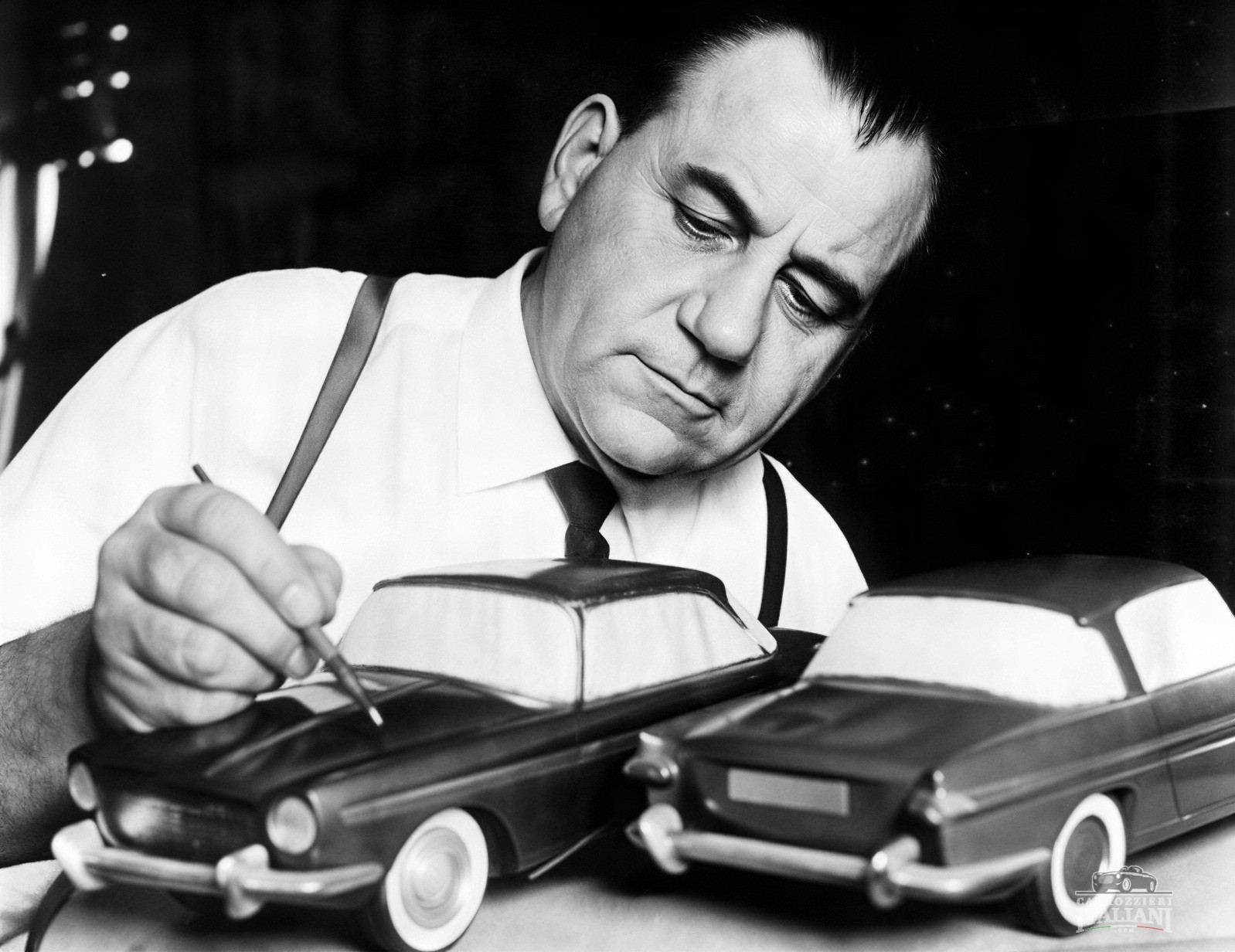
Small coachbuilders, however, required constant capital. Producing prototypes and short series consumed space, labour and materials long before clients settled their invoices. Ghia could offer Frua greater resources, while Frua brought Ghia a recognised name, experienced craftsmen and an established relationship with Maserati.
The two operations moved closer in 1956. Frua’s company transferred into larger premises connected with Ghia, and he was appointed to a senior design position as Giovanni Savonuzzi’s successor. In 1957, Frua sold his coachbuilding company to Ghia.
The arrangement looked sensible. It was also short-lived.
Frua was not naturally suited to becoming an anonymous member of a larger organisation. He had spent years designing cars under his own name, supervising their construction and presenting them as complete Frua creations. At Ghia, authorship belonged first to the company. Even when one designer had done most of the work, the badge on the body and the credit in the press normally went to the carrozzeria.
The Floride exposed that difference in the most public way possible.
A small Fiat that anticipated the Floride
Before the Renault project became public, Frua had already explored some remarkably similar ideas on a much smaller car.
At the 1957 Turin Motor Show, Carrozzeria Savio presented a one-off Fiat 500 Spider designed by Pietro Frua. Built around the tiny rear-engined Fiat, it transformed an extremely short and upright economy car into a playful open two-seater.
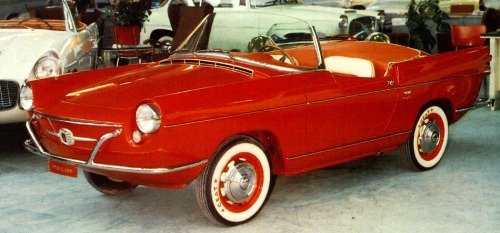
The proportions were naturally very different from those of the later Renault, but several details anticipated the visual language Frua would develop on the Floride: the clean grille-less nose, round headlamps integrated into the front wings, a low bonnet and a body shaped to make modest rear-engined mechanicals appear longer, lower and more glamorous.
The similarity should not be interpreted as proof that the Floride was simply derived from the Fiat. The Renault programme involved different people, a different platform and a much more complex development process. Nevertheless, the Savio-built Fiat shows that Frua was already experimenting with these ideas before the Floride appeared.
In miniature, some of its character was already there.
Who drew the first Floride?
The simple version says that Pietro Frua designed the Renault Floride for Ghia.
That description is broadly understandable, but it hides the project’s layered development.
Renault supplied the brief and the Dauphine platform. Segre secured and managed the commission. Exner Jr. appears to have contributed to the earliest visual direction, particularly the effort to make the car attractive to American buyers. Savonuzzi is linked to the preliminary modelling stage. Frua then developed the body and constructed the prototype.
The argument is not really about whether other people were involved. They clearly were.
The question is who transformed a collection of requirements, influences and preliminary sketches into the recognisable car.
Frua believed that contribution was his.
A preliminary sketch is not yet an automobile. A designer working from an existing floorpan must resolve the wheelbase, seating position, windscreen, roof, door openings, luggage space and engine cooling. The Dauphine’s rear-mounted engine created further restrictions. Air had to reach the engine compartment, while the front luggage area had to accommodate the spare wheel and suspension structure.
The Floride’s shape was therefore not simply placed over an empty package. It had to work around a small rear-engined saloon never intended to become a low coupé.
Frua’s experience as both designer and coachbuilder was particularly useful here. He knew how to take an idea and make it buildable.
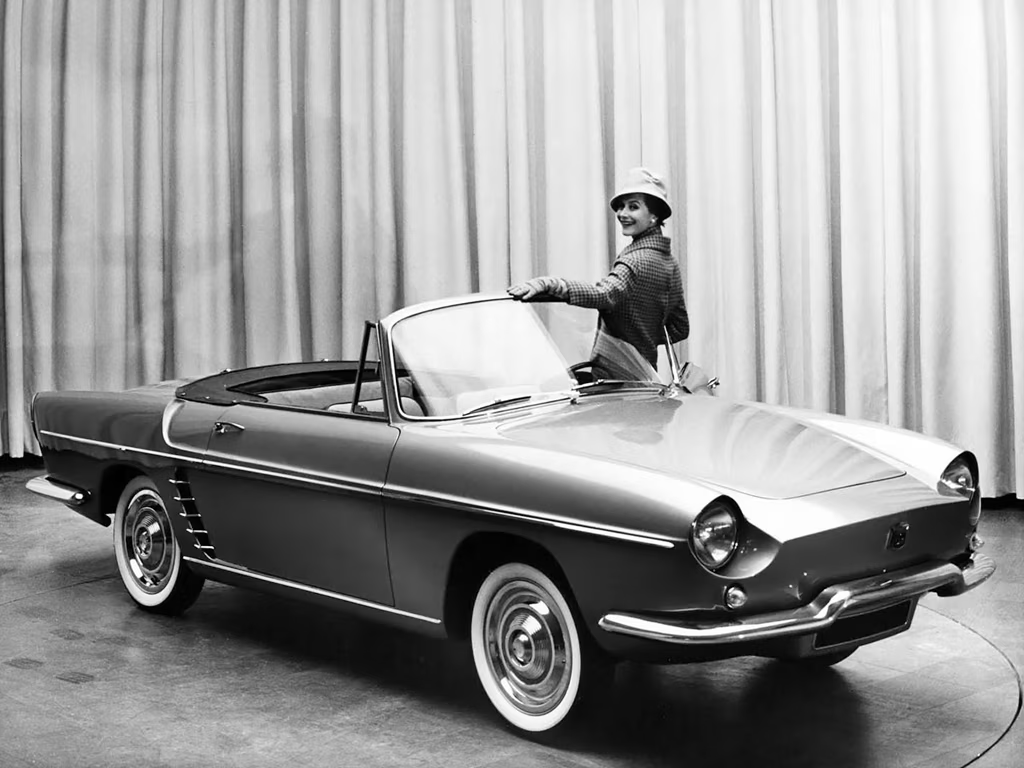
Several details also belonged to the visual territory he was exploring in the late 1950s: the round headlamps set into the leading edges of the front wings, the clean bonnet, the rising centre section of the bumper, the chrome spear running along the flanks and the air intakes cut into the rear quarters.
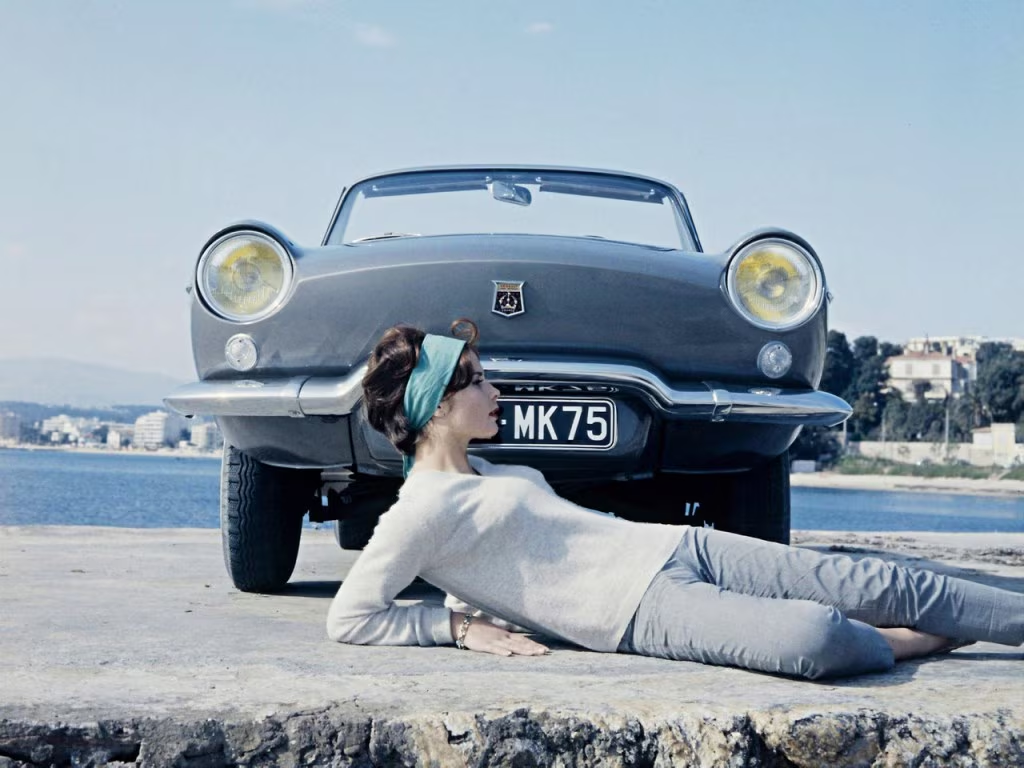
None of these features was exclusive to Frua, and the American influence is obvious. But their combination produced a car closely related to his other work of the period.
The Floride was not purely American, French or Italian. It was a Turin interpretation of what Renault believed an affordable international sports car should look like.
The prototype that appeared twice
The first prototype was built during Frua’s relationship with Ghia. From that point, accounts diverge over payment, ownership and permission.
According to the version most favourable to Frua, Ghia failed to pay him adequately for his work. Frua, unable to resolve the matter with Segre, treated the design as his own and made it available to Ghia-Aigle.
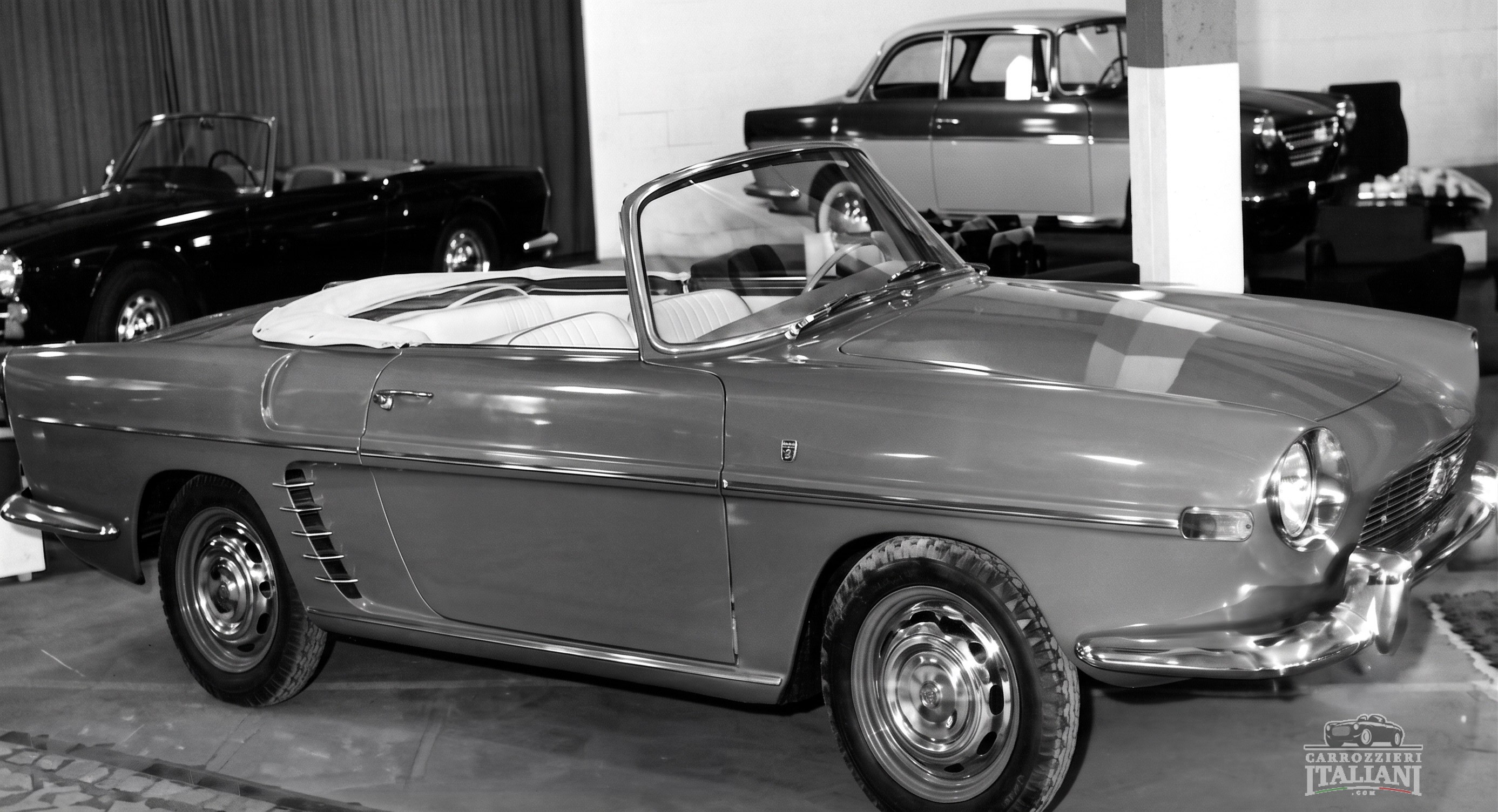
Despite the name, Ghia-Aigle was no longer simply a Swiss branch controlled from Turin. It had become operationally independent and could compete with the Italian Ghia. Frua worked with the Swiss company on several projects during this period.
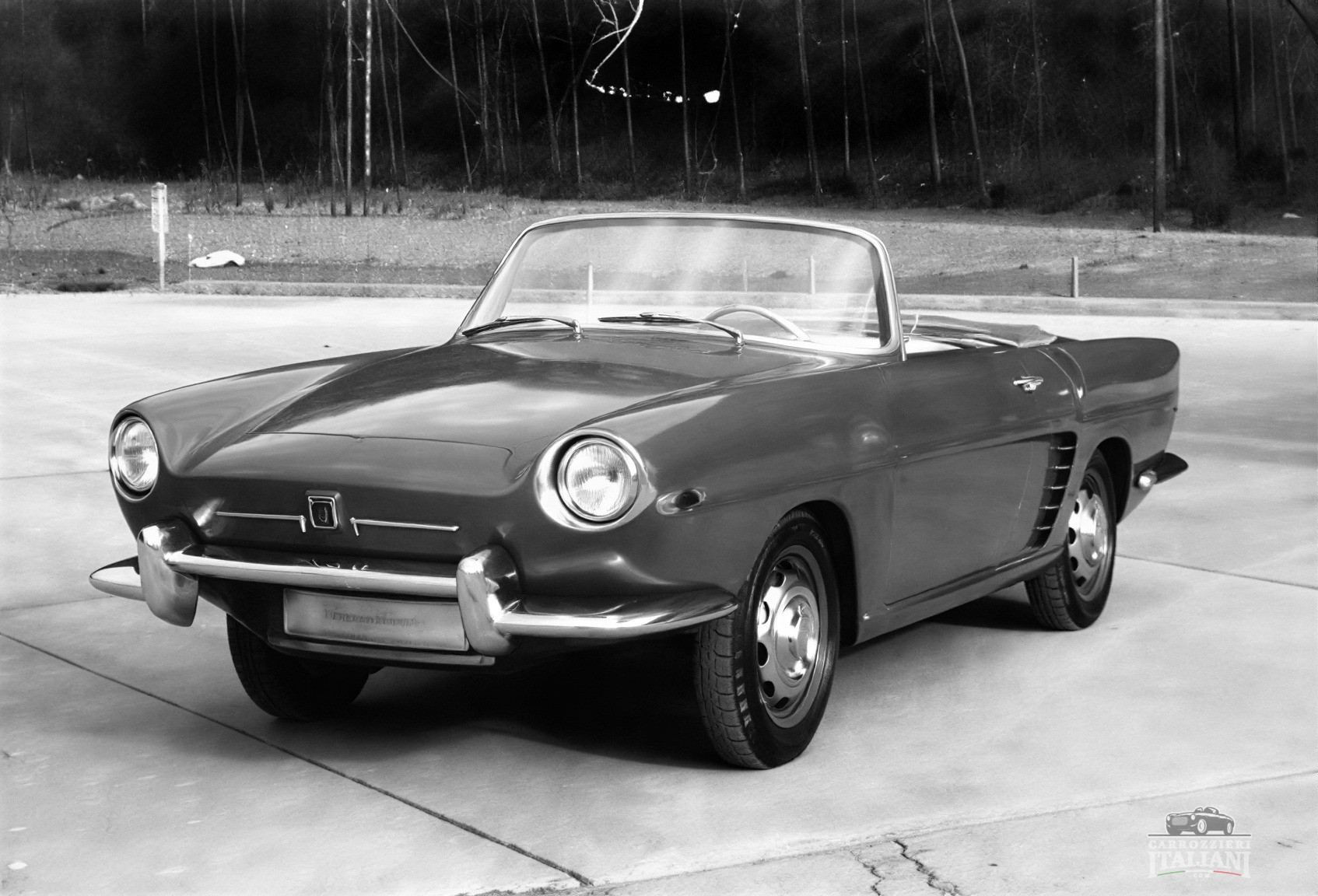
At the Geneva Motor Show in March 1958, Ghia-Aigle displayed a Renault-based coupé-cabriolet identified as the Renault Dauphine GT. The car was recognisably connected to the project being developed for Renault through Ghia.
This created an extraordinary situation.
Renault had commissioned Ghia in Turin. Yet a version of the proposed car was now appearing publicly on the stand of a separate Swiss coachbuilder, apparently without an agreed Renault launch.
Pierre Dreyfus reportedly saw the car while visiting the show and demanded an explanation. Frua explained his version of the dispute. Dreyfus then confronted Segre and ordered the situation to be resolved.
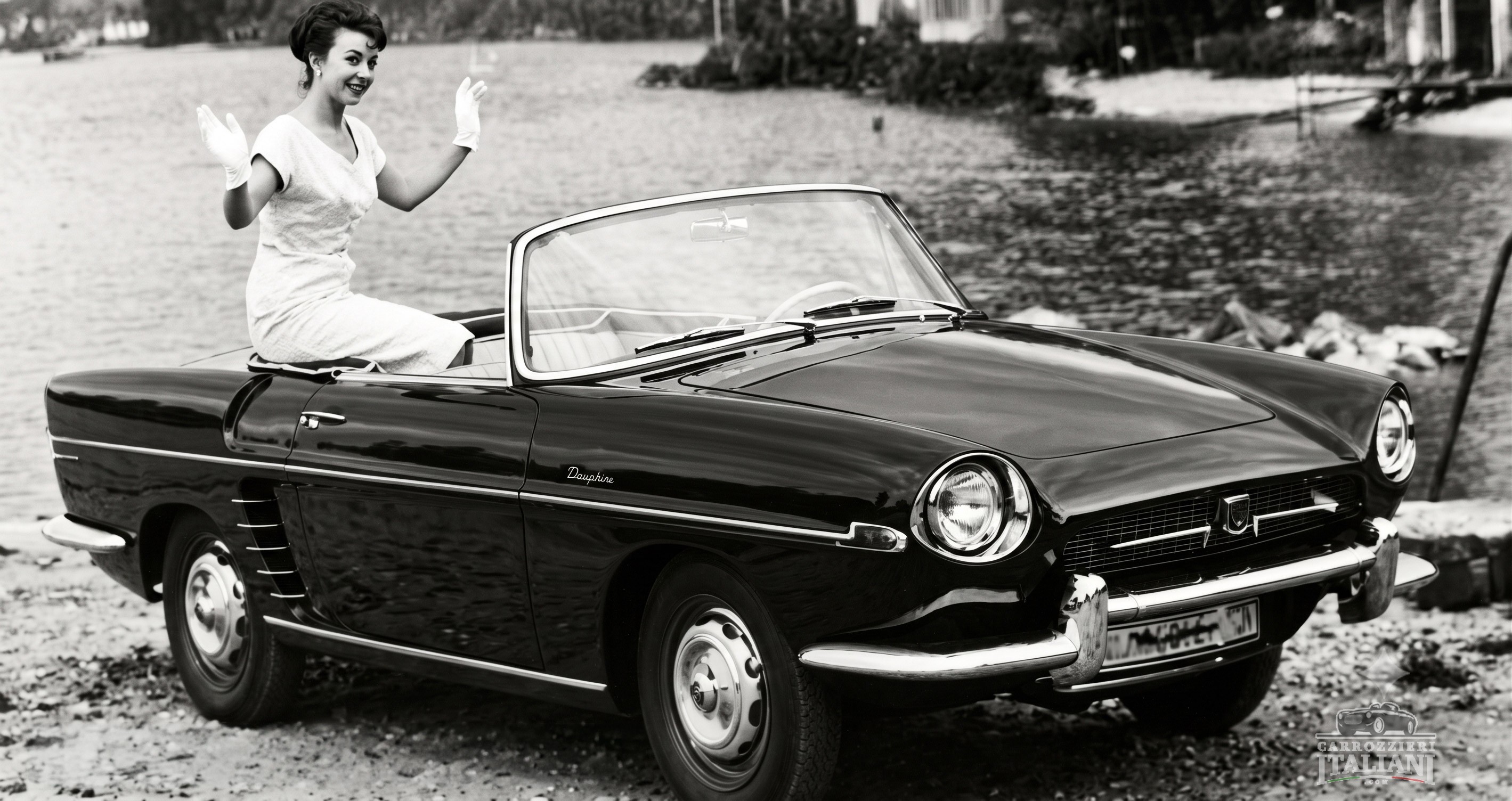
Like many stories from the Turin coachbuilding industry, the Geneva confrontation has been repeated in slightly different forms. What is documented is that Frua presented the Renault GT through Ghia-Aigle in March 1958 without coordination with the Italian Ghia, and that the conflict over authorship contributed to his departure.
The motor show had revealed more than a new car. It had made a private business dispute visible to Renault, the press and the public.
From Dauphine GT to Floride
Renault did not immediately put the Geneva prototype into production.
The company continued developing the car, modifying details and adapting the design for industrial manufacture. The definitive Floride was presented at the Paris Motor Show in the autumn of 1958.
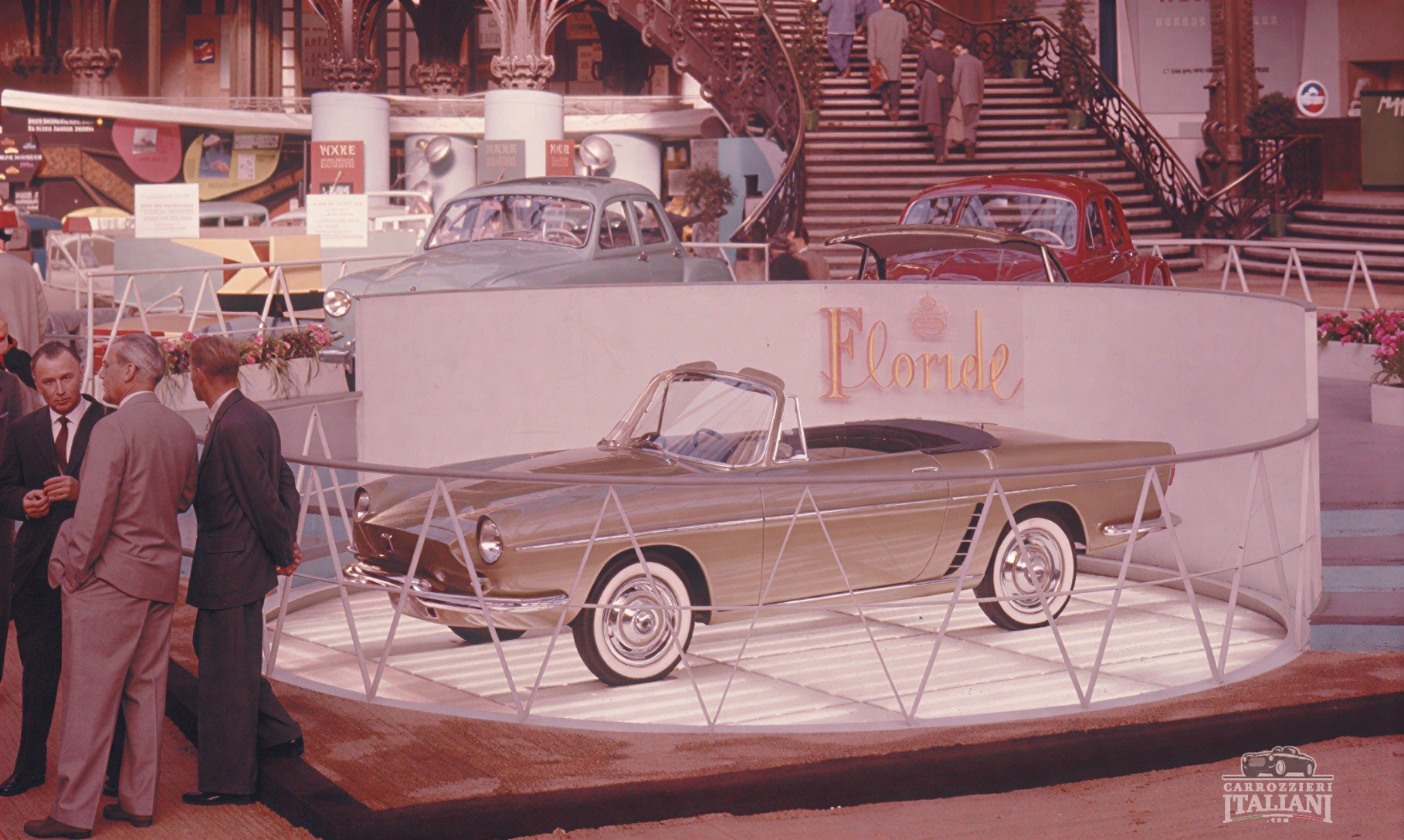
The production model retained the central themes of the prototype but was not identical to it. Renault’s designers and engineers refined the surfaces, fittings and structure. The finished car needed to be produced in quantities far beyond anything Frua’s own workshop could have handled.
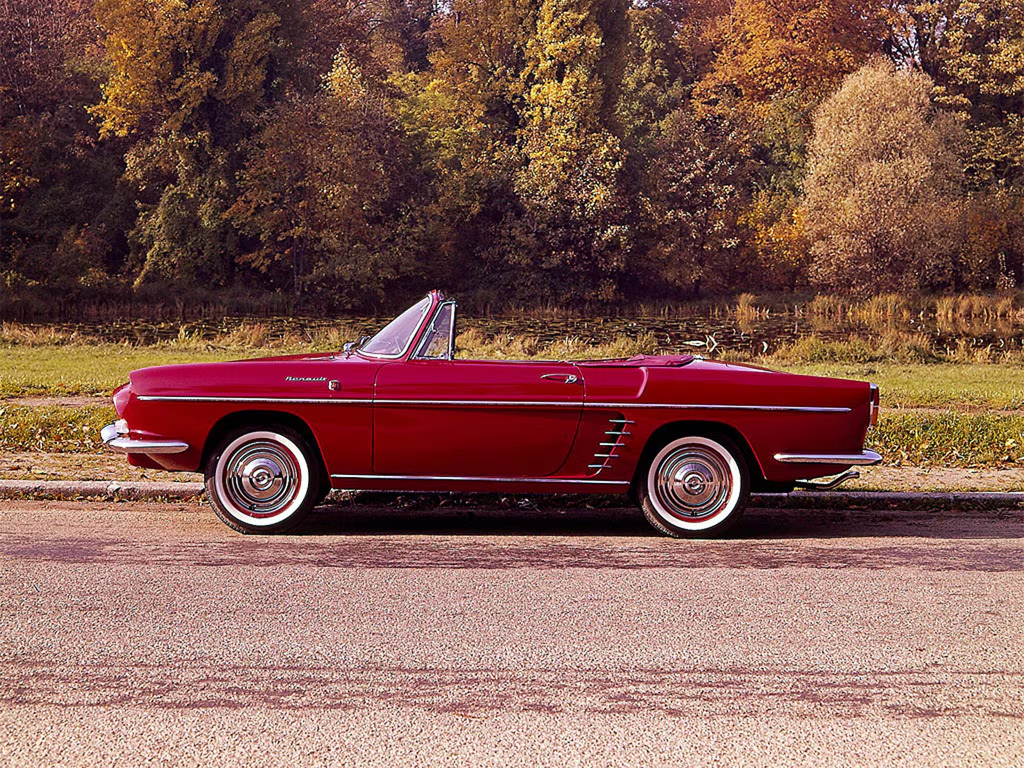
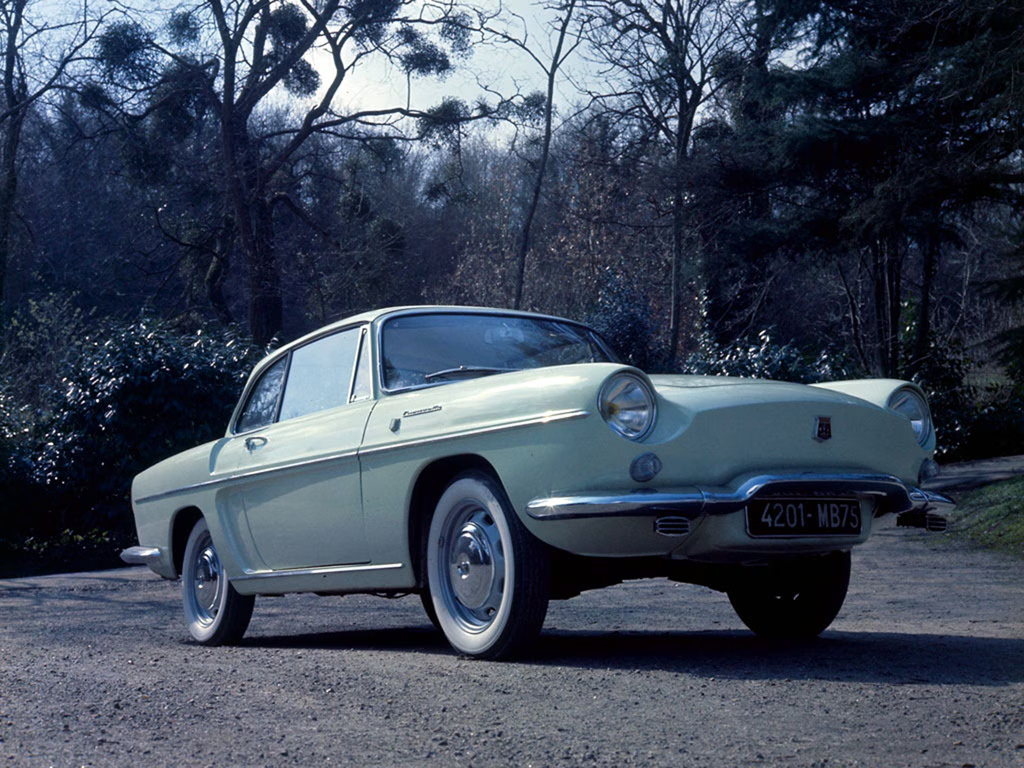
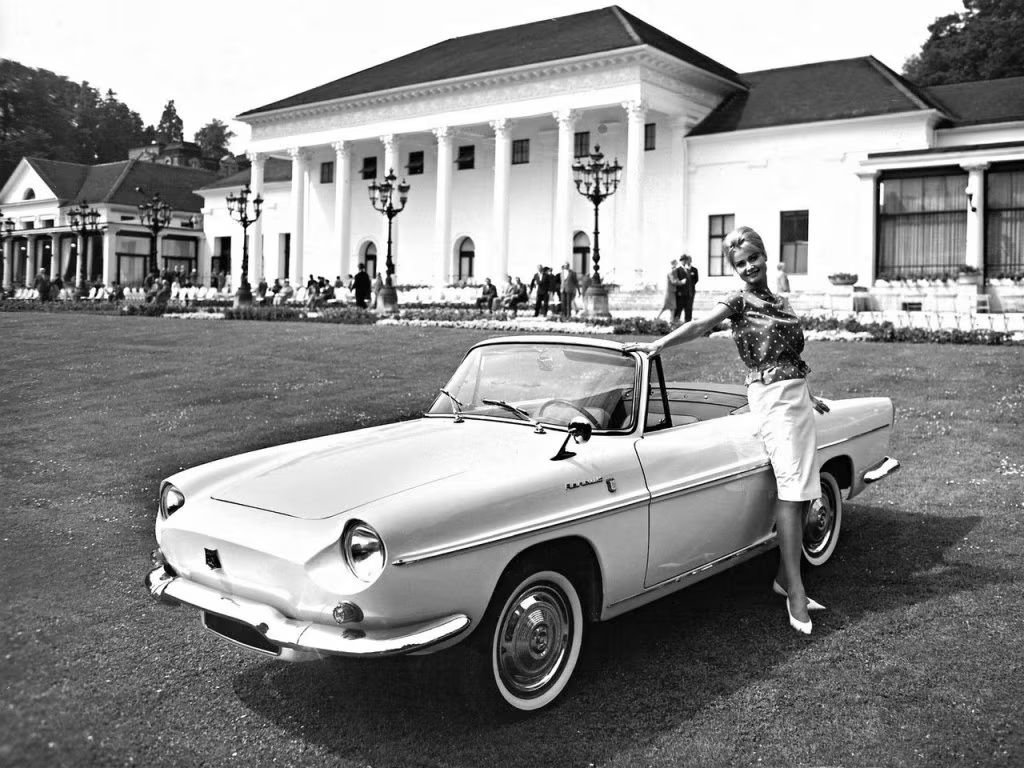
The basic proportions remained straightforward. The wheelbase came from the Dauphine, but the body was longer, lower and much more dramatic. The front had no conventional grille because the engine was at the rear. Instead, a narrow central form and the curved bumper gave the nose an almost boat-like profile.
🔗 Read more: Pietro Frua: The Quiet Master of Italian Style
The headlamps sat deeply within the front wings. This was becoming a familiar Frua device and would later appear in more sophisticated form on the Maserati Mistral and AC 428. The arrangement allowed the bonnet to remain low while keeping the lamps at the required height.
The side view was the Floride’s strongest angle. A long chrome strip began behind the front wheel and continued toward the rear intake, visually stretching the short Dauphine platform. The rear wing rose gently, ending in a restrained fin rather than the extravagant tail treatment found on contemporary American cars.
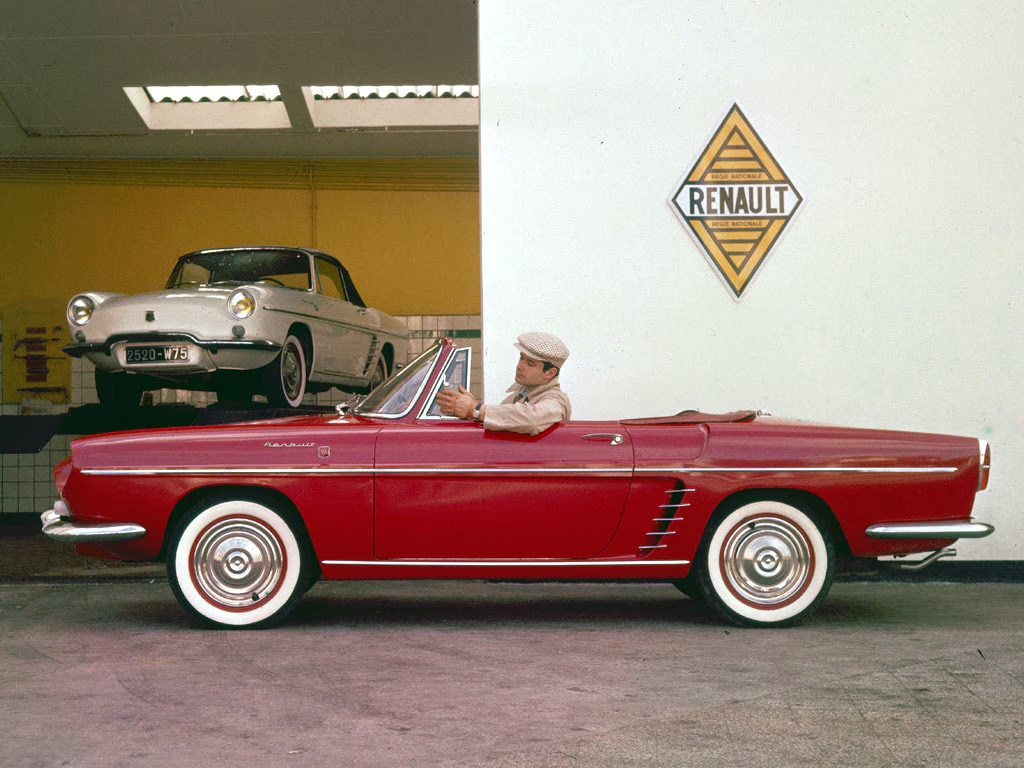
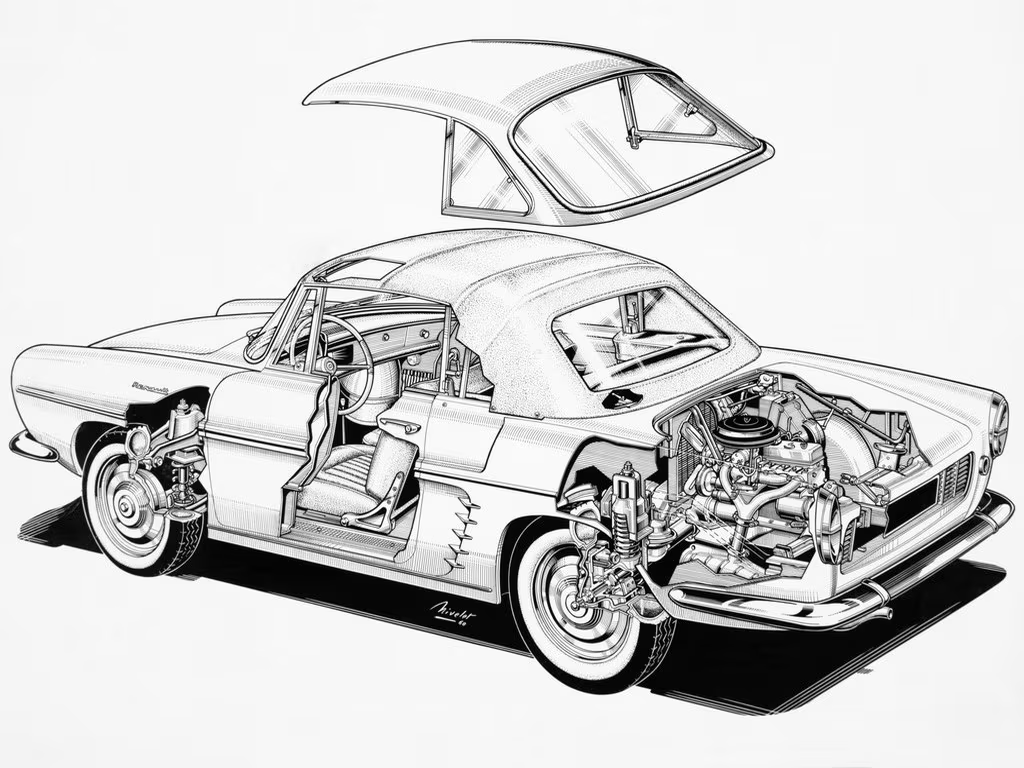
The cooling intakes behind the doors were essential rather than decorative. They supplied air to the rear-mounted engine, but Frua integrated them into the side treatment instead of allowing them to look like engineering afterthoughts.
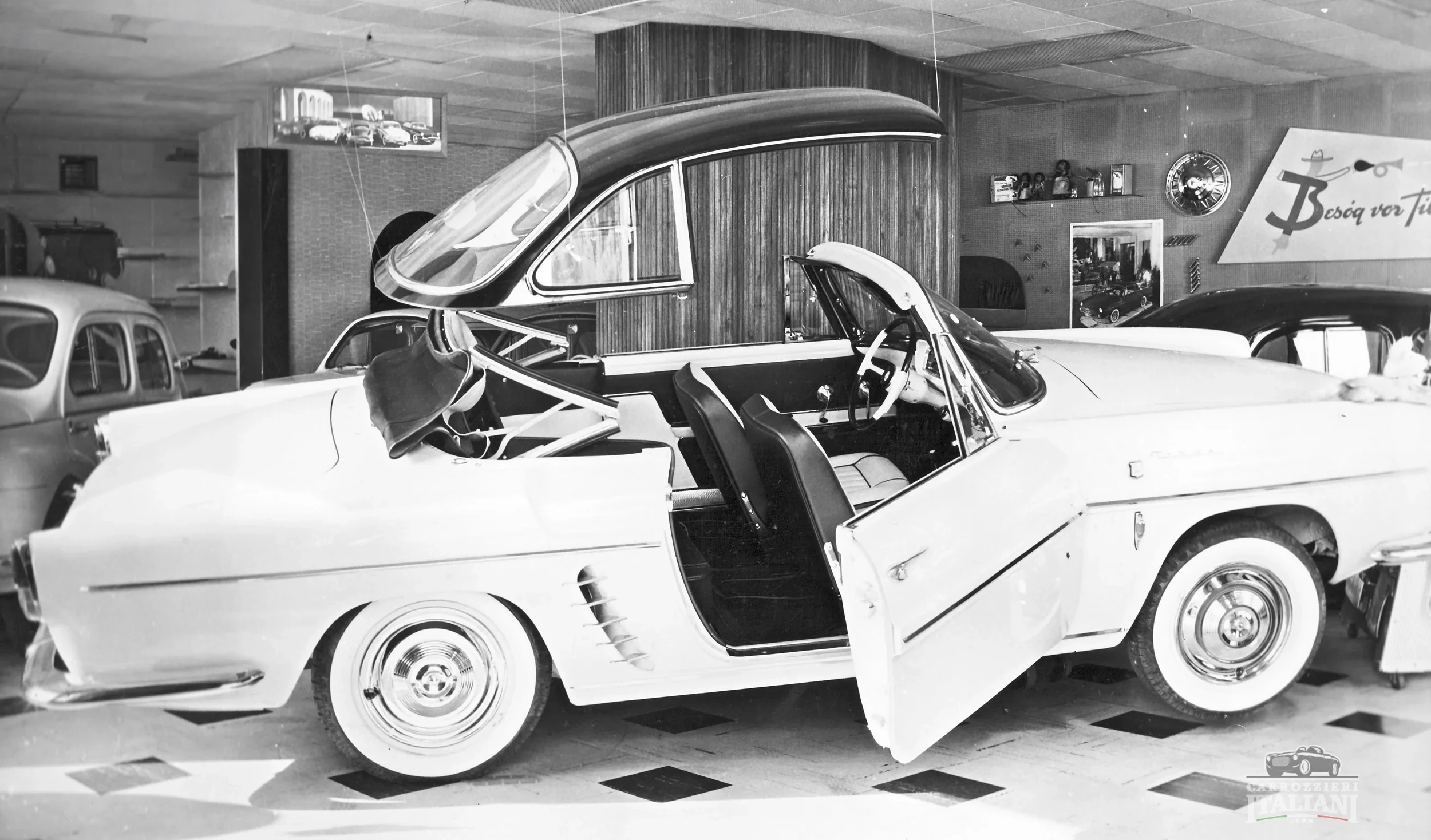
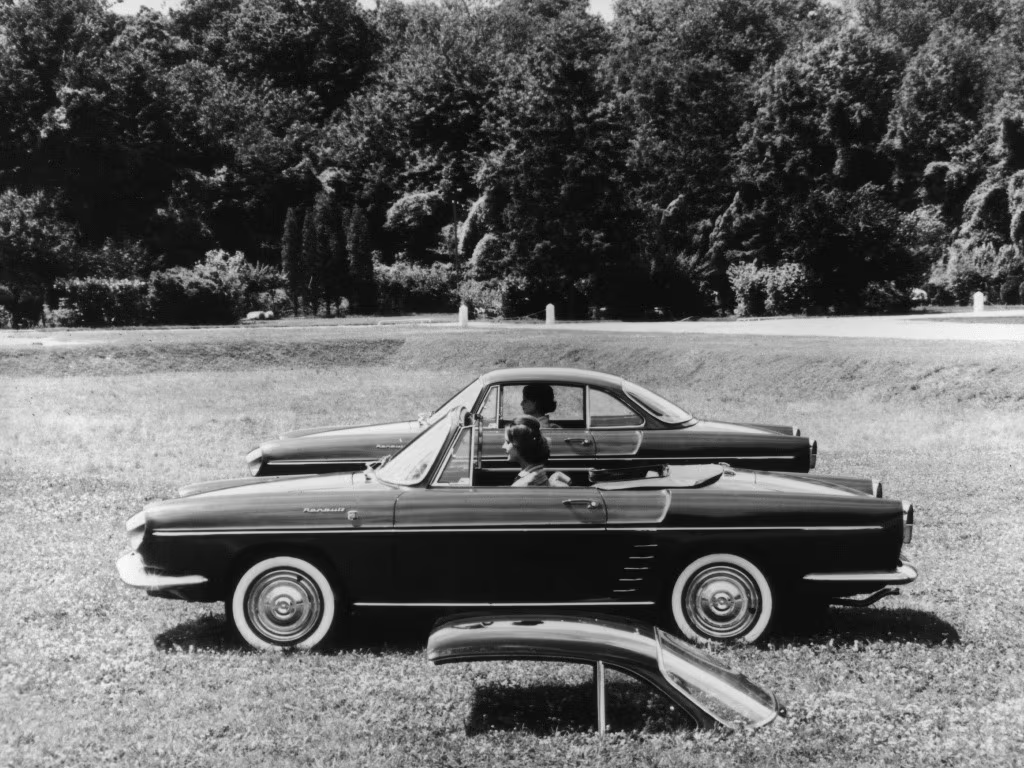
With the removable hardtop fitted, the Floride became a compact coupé. Without it, the car turned into a fashionable convertible. Renault could therefore promote several personalities without developing separate bodies.
It looked quicker and more expensive than it really was. That was the point.
A sports car in appearance
Underneath the Italian shape remained the mechanical package of the Renault Dauphine.
The early Floride used Renault’s rear-mounted 845 cc four-cylinder engine, in a specification related to the Dauphine Gordini. With around 38 DIN horsepower, it could reach approximately 125 km/h under favourable conditions.
Nobody bought it for brutal acceleration.
The Floride was a sports car in the social rather than competitive sense. It offered open-air driving, low seating and the impression of speed without the cost or mechanical demands of a true high-performance machine. It was aimed at young professionals, fashionable women and customers who might otherwise have considered a Volkswagen Karmann Ghia or one of the smaller British roadsters.
The rear-engine layout gave it unusual packaging and equally unusual handling. Like the Dauphine, it carried much of its mass behind the rear axle. Driven gently, it was pleasant and economical. Driven carelessly into a corner, it could remind its owner that appearance and chassis sophistication were not the same thing.
Renault understood that few Floride buyers were looking for a racing car. The product was sold on style, colour and lifestyle.
Paule Marrot, the French textile artist who had helped Renault develop the colours and interior atmosphere of the Dauphine, also contributed to the fashionable presentation associated with the Floride. The car was offered in bright, optimistic shades that separated it from the grey and black saloons still common on European roads.
Renault had created an accessible piece of automotive couture.
Building it outside Renault
The success of the Dauphine created a practical problem. Renault’s own factories were already occupied satisfying demand for the saloon, leaving limited capacity for a comparatively specialised coupé and convertible.
Production of the Floride therefore depended heavily on outside contractors.
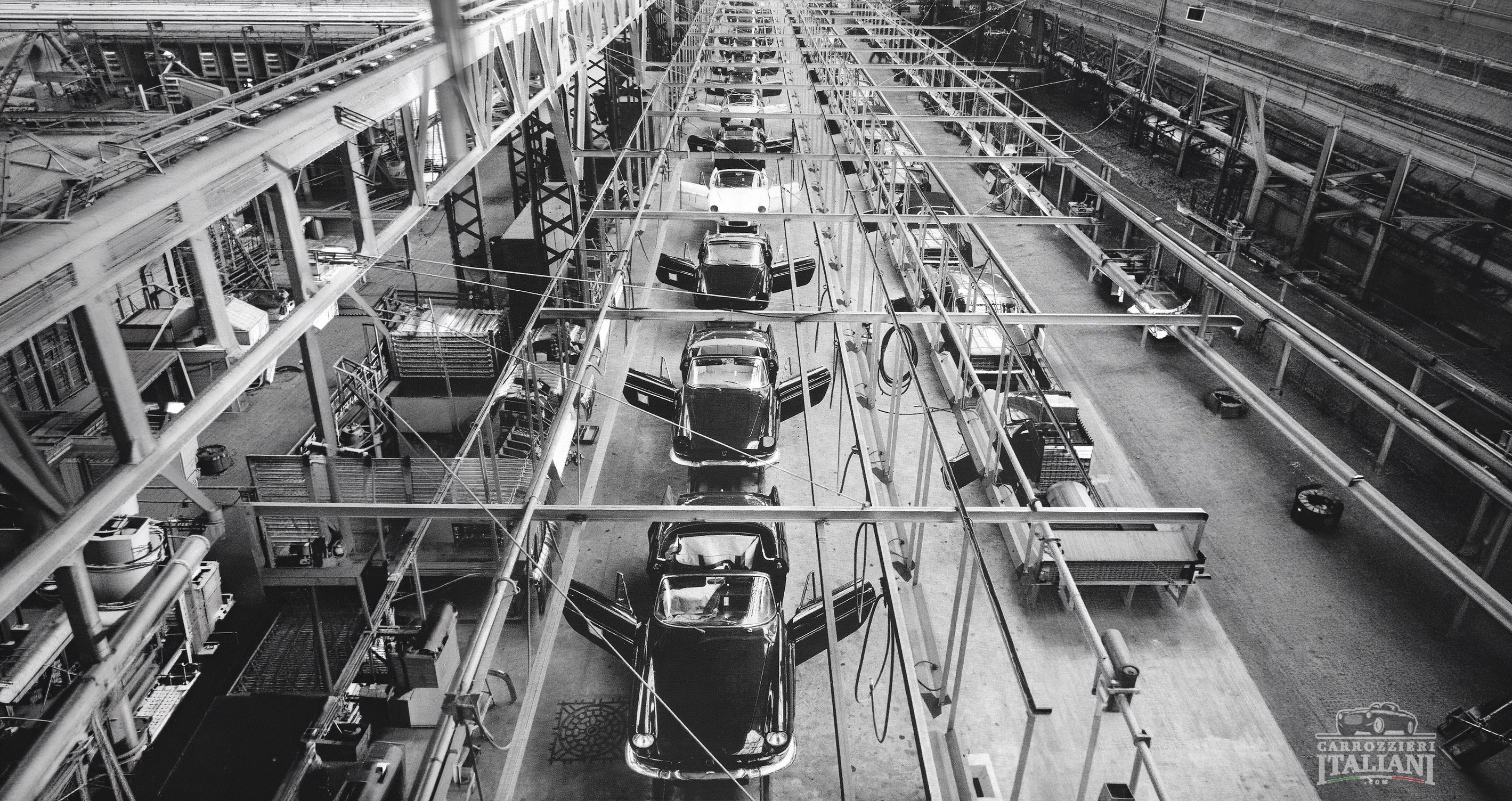
Chausson was involved in manufacturing body panels and shells, while Brissonneau et Lotz at Creil handled important assembly work. Brissonneau et Lotz had already built a small convertible based on Renault 4CV mechanicals, giving it relevant experience with low-volume open cars.
This industrial arrangement moved the Floride far beyond the traditional world of Frua’s workshop. It was no longer a hand-built Turin prototype. It had become a production Renault assembled through a French supplier network.
That transformation also weakened the visibility of the individual designer.
A one-off Maserati could carry a Frua badge on its flank. A mass-produced Renault was advertised as a Renault. Ghia might receive corporate recognition, but the names of the individuals behind the shape were not central to the sales campaign.
For Frua, this must have been particularly frustrating. The Floride had the potential to become the most widely produced design associated with his career, yet the public credit was passing primarily to Ghia.
Paris, New York and 13,000 orders
The Floride attracted immediate attention at the 1958 Paris Motor Show. Contemporary reporting identified it as one of the event’s major novelties and understood that Renault had designed it with the American market in mind.
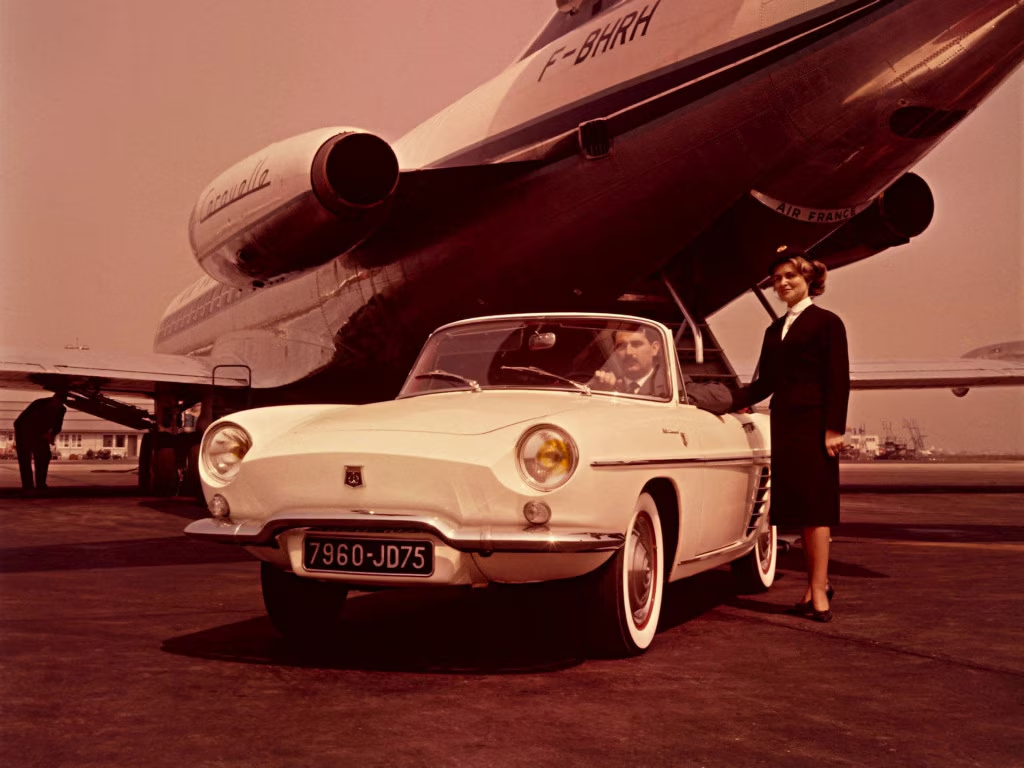
In January 1959, Renault presented the car in New York under a different name: Caravelle.
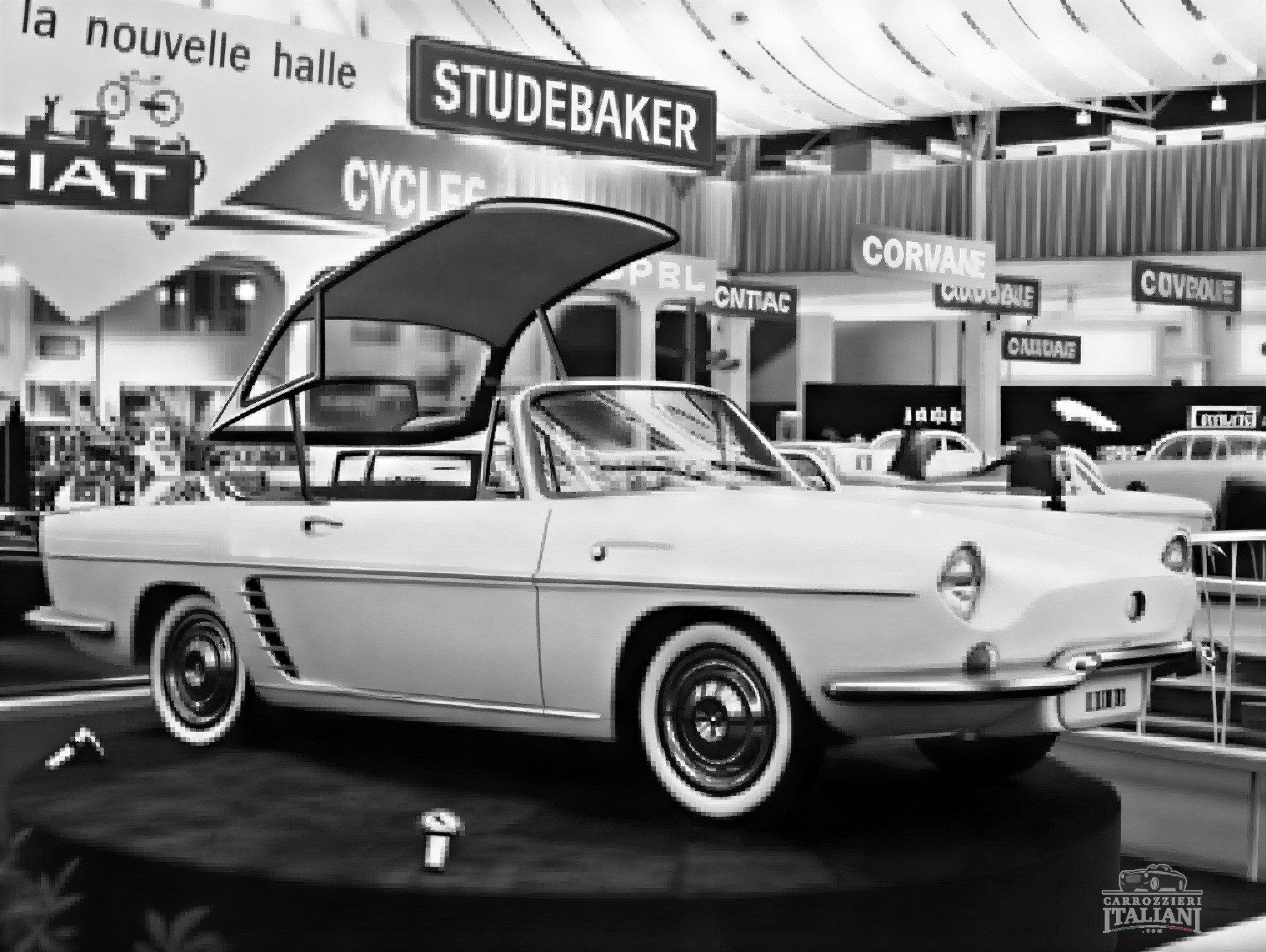
Calling it Floride throughout the United States would have created an awkward association with a single state, so Renault selected the name of France’s new jet airliner. Caravelle suggested technological confidence and international travel, exactly the image Renault wanted.
The initial response was remarkable. Contemporary accounts commonly cite around 13,000 American orders following the presentation.
But there was a problem.
Many buyers wanted the convertible, while Renault’s launch arrangements prioritised the coupé. Delays followed, and some customers lost patience. Renault’s American expansion was also approaching a broader crisis. The Dauphine had sold strongly at first, but service difficulties, reliability complaints and unsold inventory soon damaged the marque’s reputation.
The Floride could attract people to the showroom, but it could not solve Renault’s American distribution and after-sales problems.
In Europe, the car found a more natural place. It was affordable enough to be attainable, unusual enough to feel special and attractive enough to become a minor celebrity.
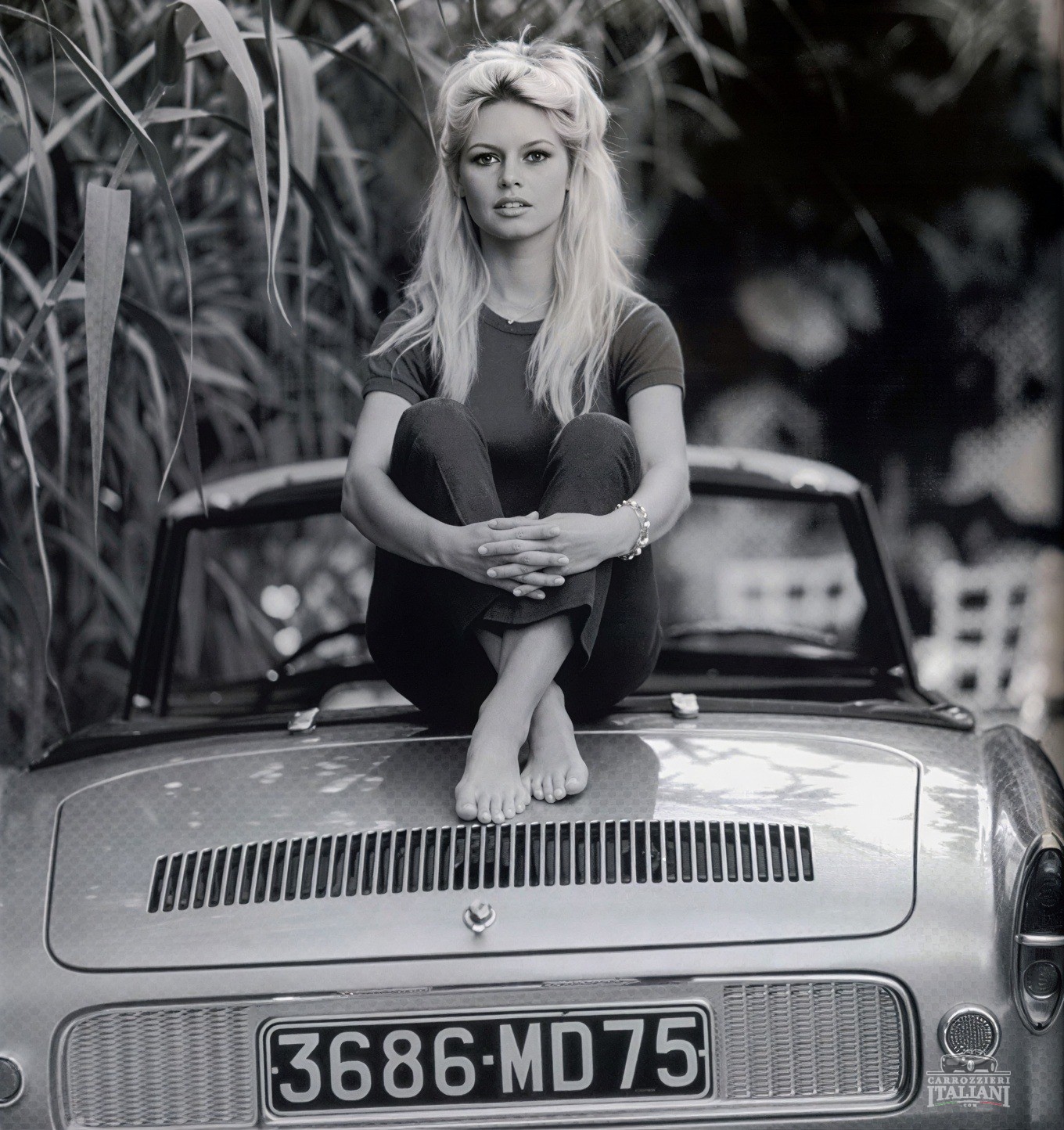
Brigitte Bardot became its most famous ambassador. Photographs of the actress with the Floride fitted the product so perfectly that it became difficult to separate the car from the image: young, fashionable, French and apparently unconcerned with practical life.
The marketing made the Floride look effortless.
The struggle behind its design remained largely invisible.
Frua leaves Ghia
By the time the Floride entered production, Frua’s relationship with Ghia had ended.
The official chronology is less simple than the often-repeated story that he joined Ghia in 1957, drew the Floride and immediately resigned. Frua’s coachbuilding operation had already moved closer to Ghia during 1956, and the companies remained entangled legally and commercially for some time after the personal relationship deteriorated.
What is clear is that the dispute over the Floride’s authorship and compensation helped force the break.
Frua established the Studio Tecnico Pietro Frua and resumed work under his own name. He collaborated with Ghia-Aigle, Viotti, Savio and Italsuisse, while developing new projects for Maserati, Glas and other manufacturers.
The separation ultimately produced two very different legacies.
🔗 Read more: The History of Carrozzeria Ghia – Part 1
Ghia continued to receive broad recognition as the Italian design house behind the Floride. Its name had contractual weight and international prestige. Frua, meanwhile, became increasingly identified by historians as the designer who had given the car its finished form.
The two statements are not necessarily incompatible. The Floride was a Ghia commission. It was also, to a substantial degree, a Frua design.
The battle began when corporate attribution and individual authorship were treated as though they meant exactly the same thing.
The Caravelle brings the argument back
The story did not end with the original Floride.
By the beginning of the 1960s, Renault needed to update the car. The original coupé roof was stylish but limited rear-seat space, and the Dauphine-based mechanical package was ageing. Renault was also preparing the Renault 8, with a new engine and improved brakes.
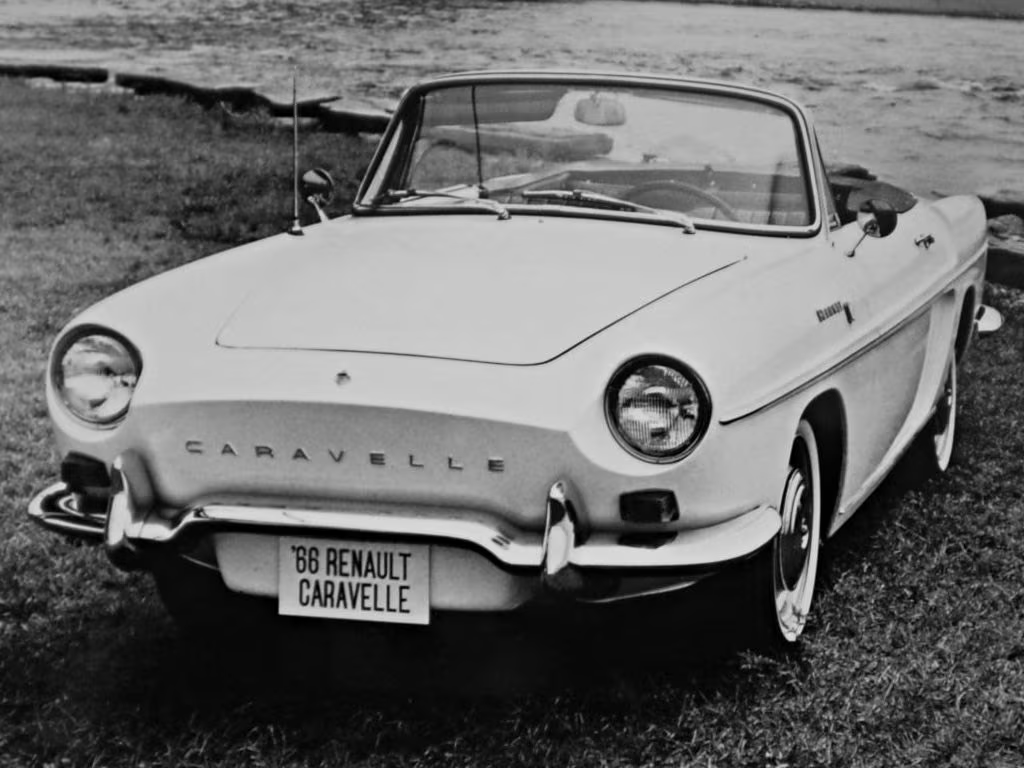
The Floride S arrived in 1962 with the 956 cc Cléon-Fonte engine, four-speed transmission and disc brakes on all four wheels. Changes to the cooling system allowed Renault to remove the functional rear-quarter intakes, although their outlines remained visible in the body.
At the same time, the revised coupé adopted the Caravelle name already used in North America. Its roof was more angular and extended farther rearward, improving accommodation for two occasional rear passengers.
Frua is frequently credited with this revision as well. Some accounts state that Renault returned directly to him to develop the improved 2+2 roof and related details. The renewed use of his contribution brought the earlier authorship dispute back into view.
The Caravelle name gradually replaced Floride across most markets. In 1963, an 1108 cc version followed, and the range continued until 1968.
Across the Floride and Caravelle family, production reached approximately 117,000 cars.
For a design born in a specialist Turin environment, this was an enormous number. It was greater than the combined production of Frua’s Maseratis, Glas coupés, ACs and Monteverdis many times over.
Yet even after the final Caravelle left the factory, the question remained: whose success was it?
Exner, Savonuzzi, Segre or Frua?
Trying to reduce the Floride to one name creates a misleadingly clean history.
Virgil Exner Jr. appears to have contributed ideas at the beginning, helping Ghia interpret what American buyers might expect from a compact European convertible. His role belongs to the conceptual stage.
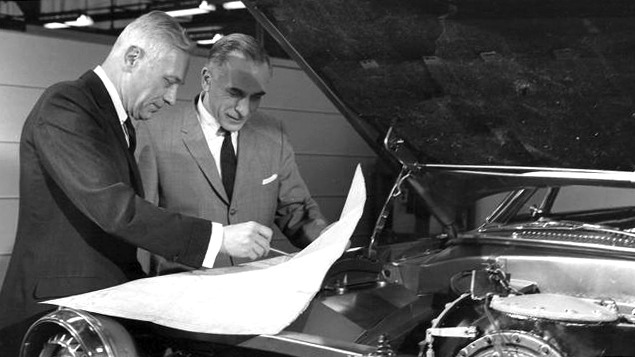
Giovanni Savonuzzi is linked to the early model development. As Ghia’s designer-engineer, he could translate sketches and management instructions into a three-dimensional proposal.
Luigi Segre secured the Renault relationship, organised the process and represented Ghia. Without him, the commission might never have existed.
Renault created the brief, supplied the platform, approved the design, modified it for manufacture and organised industrial production.
Pietro Frua developed and built the prototype that most directly anticipated the production Floride. His claim rests not on having invented every element from nothing, but on having transformed the project into a coherent and recognisable automobile.
This is why the Floride controversy cannot be resolved simply by finding the earliest sketch.
Designing a production car is not one gesture. It is a sequence.
The person who proposes the idea, the person who draws the first profile, the person who develops the full-scale model and the person who resolves the final body may all be different. A company can legitimately claim a design created under its contract, while an individual designer can legitimately claim authorship of the form.
The trouble begins when the success arrives and there is only room for one name in the caption.
Comparing the Ghia-Aigle prototype and the production car
The physical cars provide the most useful evidence.
The Dauphine GT displayed by Ghia-Aigle in Geneva and the production Floride are plainly connected. The basic proportions, open body, front-wing treatment, side decoration and rear-engine architecture belong to the same project.
The production Renault is more resolved and more industrial. Its surfaces are cleaner, its details less fragile, and its fittings suited to repeated manufacture. Renault’s development team clearly did more than copy a show car panel for panel.
But the transition does not erase Frua’s contribution. The essential character survives.
The Floride still carries the sort of visual tricks Frua used particularly well. The long side moulding makes the car appear lower. The headlamps help define the front wings without requiring a conventional grille. The rear intakes become part of the decoration. The removable roof changes the car’s personality without destroying its proportions.
These are not isolated ornaments. They are the decisions that turn the short, high mechanical package of a Dauphine into something that appears long, low and desirable.
That is the work for which Frua wanted recognition.
Why the dispute mattered
The argument was not merely about ego.
Credit had commercial value. A successful production design could bring a small studio future contracts. It could reassure manufacturers, impress private clients and establish a visual reputation that lasted for years.The argument was not merely about ego.That is the work for which Frua wanted recognition.
Ghia understood this perfectly. The company’s name opened doors in Detroit, Wolfsburg, Paris and elsewhere. Segre was building an international business, and allowing individual designers to separate their work too clearly from the Ghia identity could weaken that business.
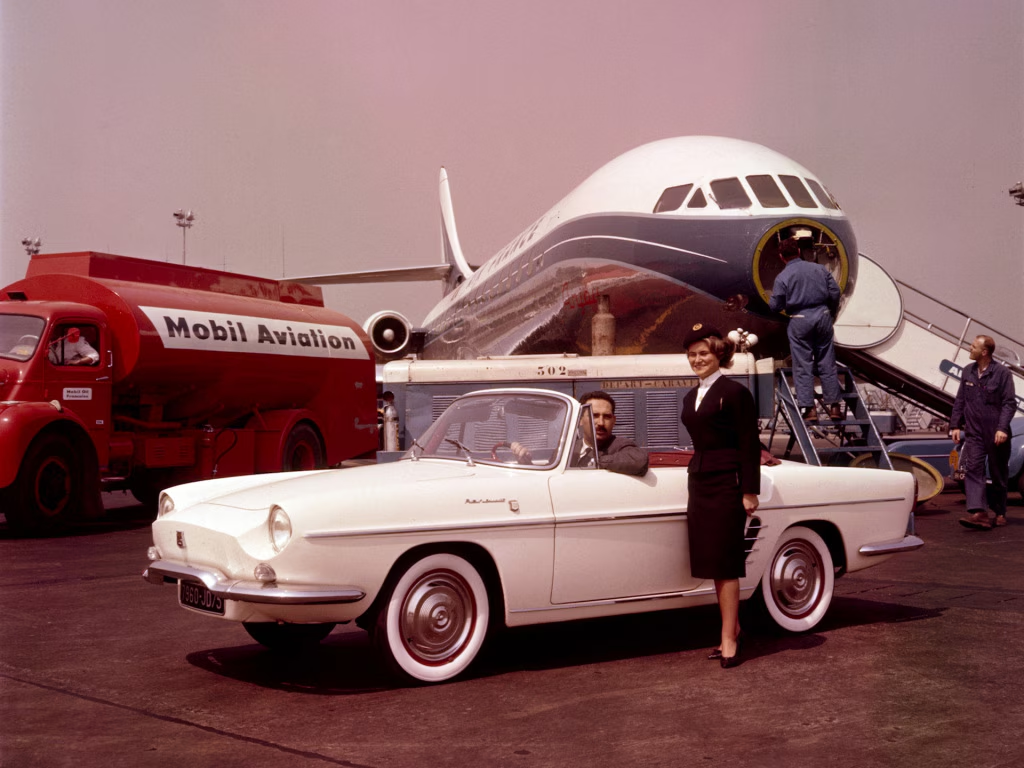
Frua had the opposite interest. His livelihood depended on clients knowing what he personally could do. If his most visible work appeared only under the Ghia name, the success strengthened the company he had left rather than the studio he was rebuilding.
Both men were protecting something real.
Segre was defending the value of the Ghia brand and the commission it had secured. Frua was defending the value of his authorship and labour.
The disagreement became bitter because the Floride succeeded.
Nobody fights this hard over a forgotten prototype.
The fairest attribution
The safest label for the Floride is often “designed by Pietro Frua for Ghia”.
It recognises the contractual and organisational role of the carrozzeria while identifying the individual most closely connected with the completed form. It also leaves room for the contributions made before and after Frua’s work.
Even that formulation does not settle every detail.
The exact division of responsibility among Exner Jr., Savonuzzi and Frua remains imperfectly documented. Accounts written many years later sometimes contradict one another. Corporate histories tend to favour the company, while designer biographies naturally favour the individual.
The surviving evidence does not support the idea that Frua conceived every aspect alone in complete isolation.
Nor does it support treating him as a mere subcontractor who only formed panels around somebody else’s finished design.
He was central to the car. That is the most defensible conclusion.
A pretty car with an untidy history
The Renault Floride achieved what Pierre Dreyfus wanted.
It gave Renault glamour without requiring an expensive new mechanical programme. It brought customers into showrooms, strengthened the company’s image and translated the practical Dauphine into something that looked suitable for the Riviera, California or the pages of a fashion magazine.
As a sports car, it was modest. As a piece of design and marketing, it was extremely effective.
Its story also reveals how the Italian carrozzerie really operated. The romantic image of a lone master drawing an immortal shape in one inspired evening is rarely accurate. Projects moved through managers, designers, model makers, engineers and outside contractors. Ideas crossed borders, studios changed ownership, and talented people worked under company names that received most of the public credit.
The Floride was born from that system.
Renault supplied the ambition. Segre supplied the opportunity. Exner Jr. helped frame the American direction. Savonuzzi participated in the early development. Ghia provided the internationally recognised name.
Frua gave the project its body.
That final sentence may not close the case, but it explains why his name has never disappeared from it.

ABOUT THE AUTHOR
Andreas Scheidl
Italian classic car enthusiast with German roots. Renowned as a respected figure in the classic car community, he serves as a jury member at various international concours d'elegance, including the Classic Gala Schwetzingen and Mantova. As a content creator, Andreas passionately shares his profound knowledge and appreciation for vintage automobiles. His heart beats for cars designed by Giovanni Michelotti, showcasing his discerning taste and dedication to preserving the timeless elegance of automotive history.
More stories by Andreas Scheidl ↗CONTINUE READING
Posts You Might Like

A Central Driving Position, a Rear-Mounted V8. Was This Really a Lancia?
In 1948, visitors to the Turin Motor Show could see an unusual Lancia on the stand of Carrozzeria Ghia. It was a large two-door coupé with a two-litre V8 mounted behind the…
Read story
Fioravanti F100: The Ferrari He Was Allowed to Imagine
Enzo Ferrari’s centenary, Leonardo Fioravanti’s independent studio and a supercar that explored air brakes, steel wheels and a new way of driving—without ever wearing the Cavallino.
Read story
Michelotti Shellette: When the Fiat 850 Became a Yacht
The yacht designer, the Turin stylist and the tiny coachbuilt car that crossed between the quay, the royal holiday house and the auction room. Some automobiles were conceived for the open road,…
Read story
Maserati A6 1500: A New Road for the Trident
When the doors of the Geneva Motor Show opened in March 1947, Maserati was a name that required little introduction to anyone who followed motor racing. What it did not yet possess…
Read story
THE CONVERSATION
Comments 0
Share a memory, a period photograph or a documented detail about this story.