
The Mazda Luce: How Bertone and Giugiaro Gave Mazda a New Shape
Update: After this article was published, Carrozzieri Italiani was contacted by Edgardo Michelotti, son of Giovanni Michelotti, who shared an unpublished testimony suggesting a possible Michelotti connection behind the Mazda Luce design. We have covered the story in a separate follow-up article.
[Read it here]
Today, the name Luce sounds new again because Ferrari has brought it back for its first electric car. But long before Maranello attached the word to a battery-powered future, Luce had already travelled a very different road: from Hiroshima to Turin, from Mazda to Bertone, from Japanese ambition to the hand of a young Giorgetto Giugiaro. That is the better story.
Because the Mazda Luce was not just another elegant sedan with an Italian name. It was one of the earliest moments when a Japanese manufacturer did not simply look at Italy from a distance, but entered into a real design conversation with it. In the early 1960s, Mazda was still officially Toyo Kogyo, still building its identity, still far from the global image it would later create through rotary engines, RX badges and the MX-5. Yet it already understood something important: if it wanted to move beyond practical small cars and build a true flagship, engineering alone would not be enough. It needed design. It needed atmosphere. It needed a line.
And in those years, the line was in Turin.
Not in Detroit, despite all the chrome and confidence. Not in Britain, where tradition still sat heavily in the passenger seat. Turin was the place where the automobile was being redrawn almost weekly, inside studios like Bertone, Pininfarina, Ghia, Vignale and Michelotti. It was there that Mazda found Nuccio Bertone, and through Bertone, Giorgetto Giugiaro: still very young, still in his formative years, but already one of the most dangerous pencils in Europe.
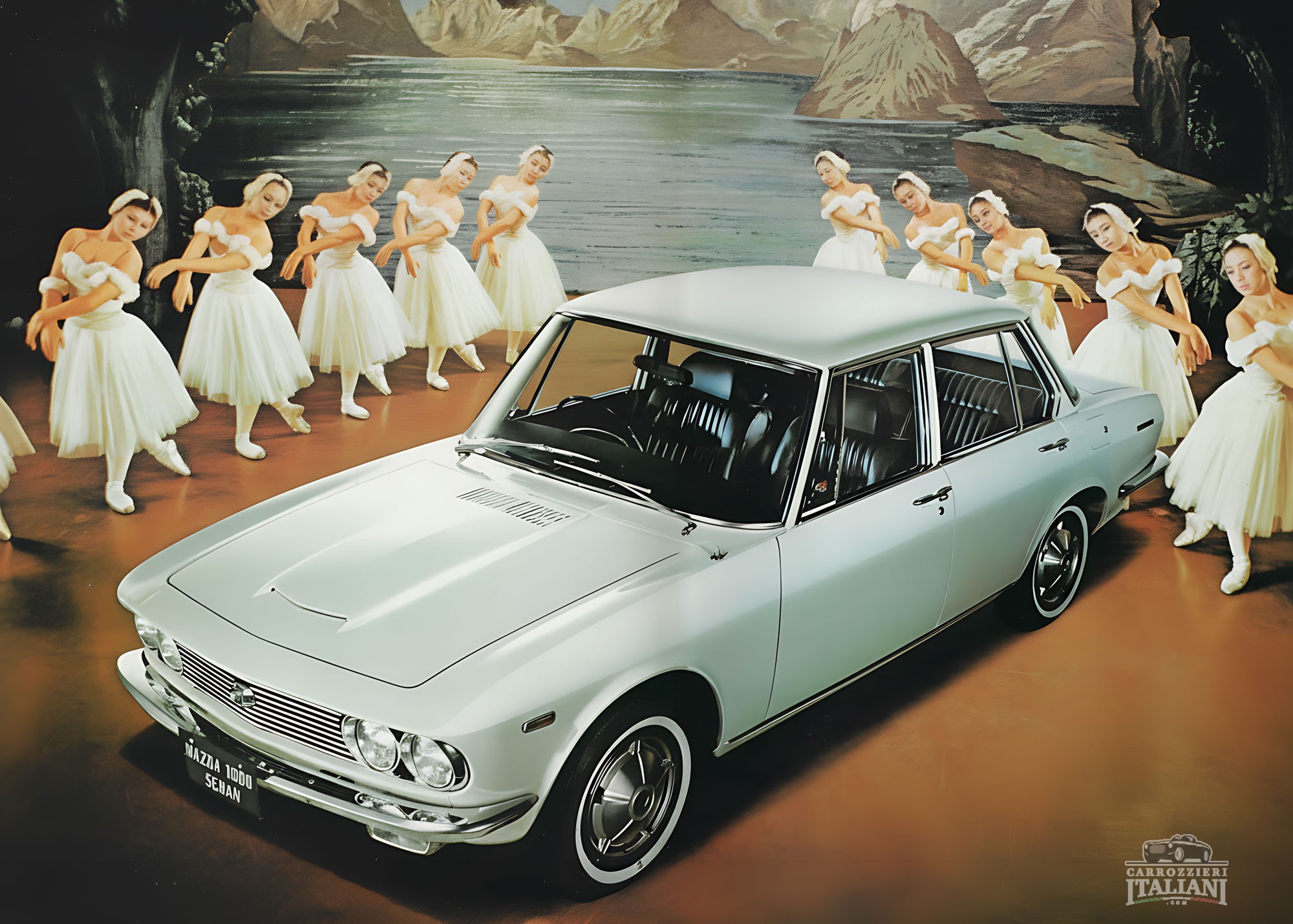
The result was the Mazda Luce 1500, a car that looks modest only if one reads it too quickly.
At first glance, it is a calm four-door sedan from Hiroshima. Look longer and the story becomes richer. The Luce was a meeting point between two very different ideas of the car. Mazda wanted space, dignity, reliability and a new position in the market. Bertone brought proportion, lightness and the confidence of Italian coachbuilding culture. Giugiaro gave the project its difficult balance: formal enough to serve as a flagship, clean enough to feel international, but never so exotic that it stopped being believable as a Mazda.
Even the name was Italian. Luce means light. And for once, the word was not only decoration. The car really did bring a different kind of light into Mazda’s history: the light of Turin, filtered through Hiroshima.
Hiroshima looks west
In the early 1960s, Mazda was still known officially as Toyo Kogyo, a company whose post-war transformation had been rapid and ambitious. Its first passenger car, the R360 Coupe, had arrived in 1960. The Carol followed in 1962, and the Familia in 1964. These cars gave Mazda a foundation, but they did not yet give it a face capable of standing beside the more sophisticated European sedans that Japanese engineers and designers watched with growing interest.
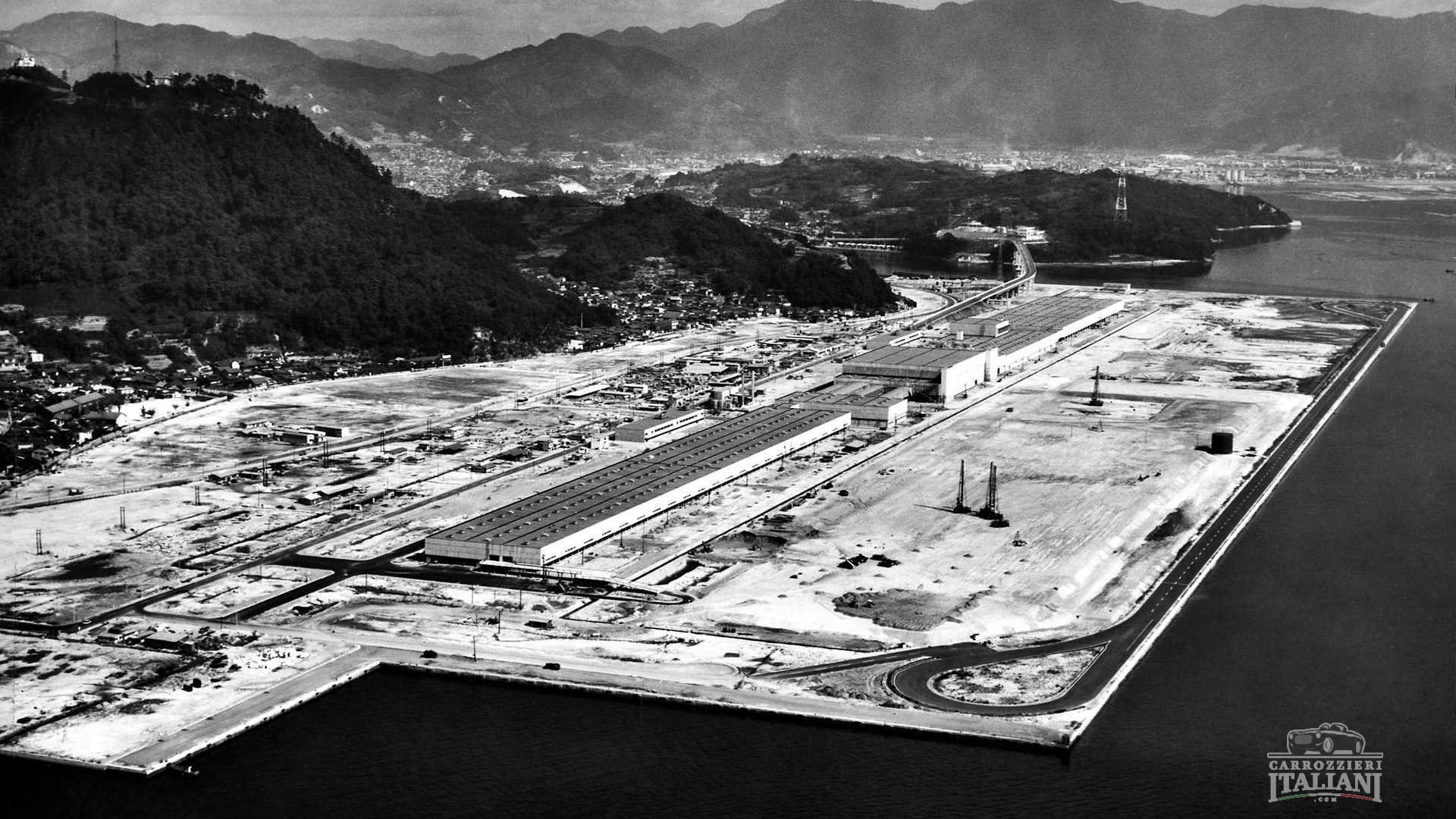
Japan was changing quickly. Its economy was climbing, its cities were expanding, and a new class of customers wanted something more refined than basic mobility. A car could no longer be just useful. It had to say something about the person driving it, and about the nation building it. Mazda understood this earlier than many people realise.
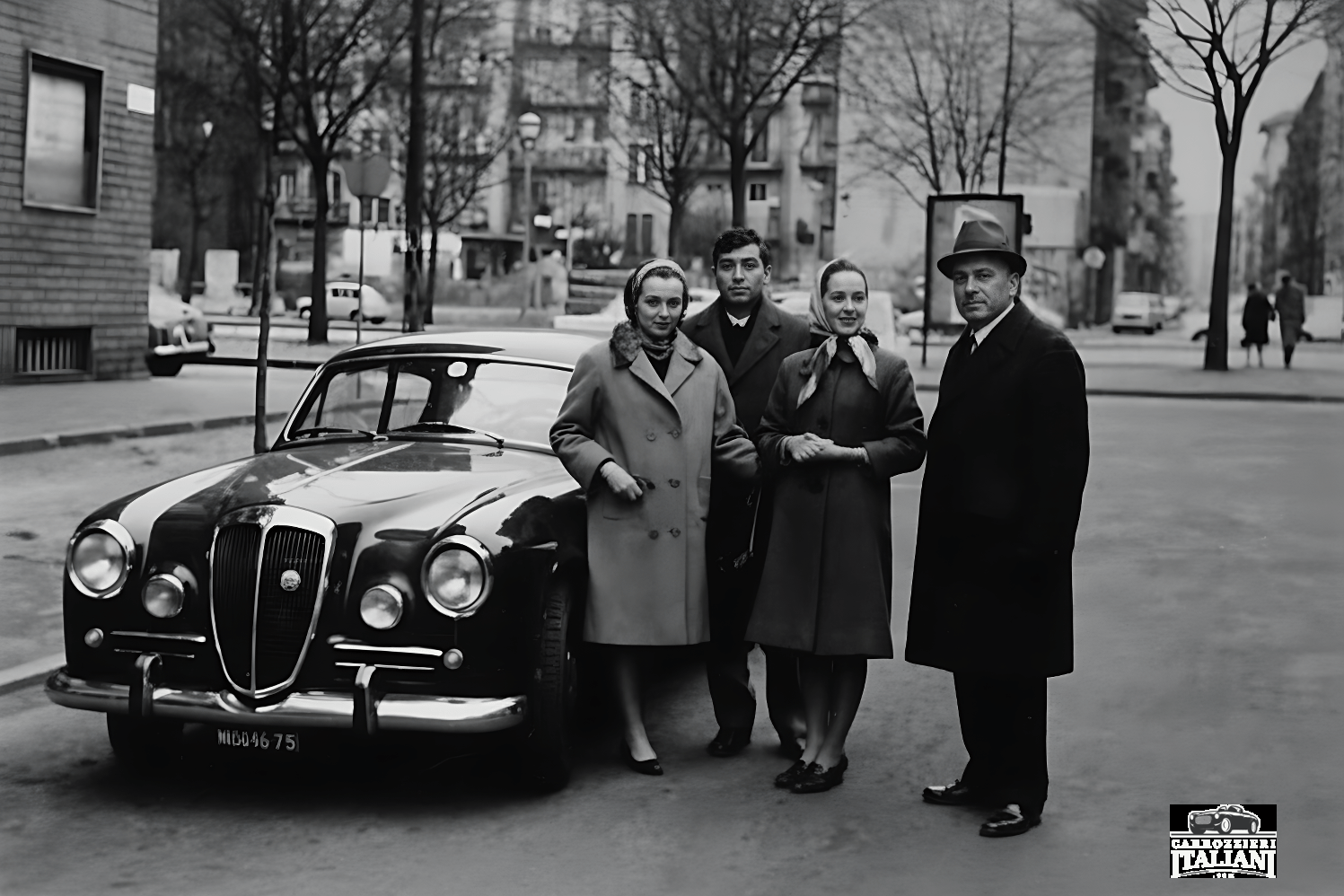
Italy, meanwhile, was the world capital of automotive form. Turin was a place where ideas became metal before anyone else had found the courage to ask for them. Bertone, Pininfarina, Michelotti, Ghia, Vignale and the other carrozzerie were not simply body builders; they were interpreters of ambition. If a manufacturer wanted to look modern, it often came to Italy.
That road to Turin was opened in part by Hideyuki Miyakawa, a Japanese journalist and intermediary who understood both the needs of Japanese manufacturers and the creative power of Italian design houses. Through this bridge, Mazda came into contact with Bertone. At Bertone, the man drawing many of the most important shapes was not yet the global icon he would later become, but a remarkably young designer from Piedmont: Giorgetto Giugiaro.
By the time Mazda entered Bertone’s orbit, Giugiaro had already been entrusted with enormous responsibility. Nuccio Bertone had made him head of the Bertone Style Center in December 1959, when he was just twenty-one. That detail is still difficult to absorb. At an age when most designers are still sharpening pencils in the corner of a studio, Giugiaro was shaping Alfas, Iso Rivoltas, Aston Martins and experimental dream cars. His line was already disciplined, clean, architectural. But the sedan remained a different battlefield.
A coupé could seduce with a falling roofline and dramatic proportions. A sedan had to be elegant while carrying people, luggage, glass, doors, structure and dignity. It had to be useful without becoming dull. This was the problem Mazda brought to Bertone.
The first Luce: a difficult beginning
The first public step in the Mazda-Bertone relationship was the Luce 1000/1500, shown at the Tokyo Motor Show in 1963. It wore an Italian name and carried the promise of something far more international than Mazda’s earlier small cars.
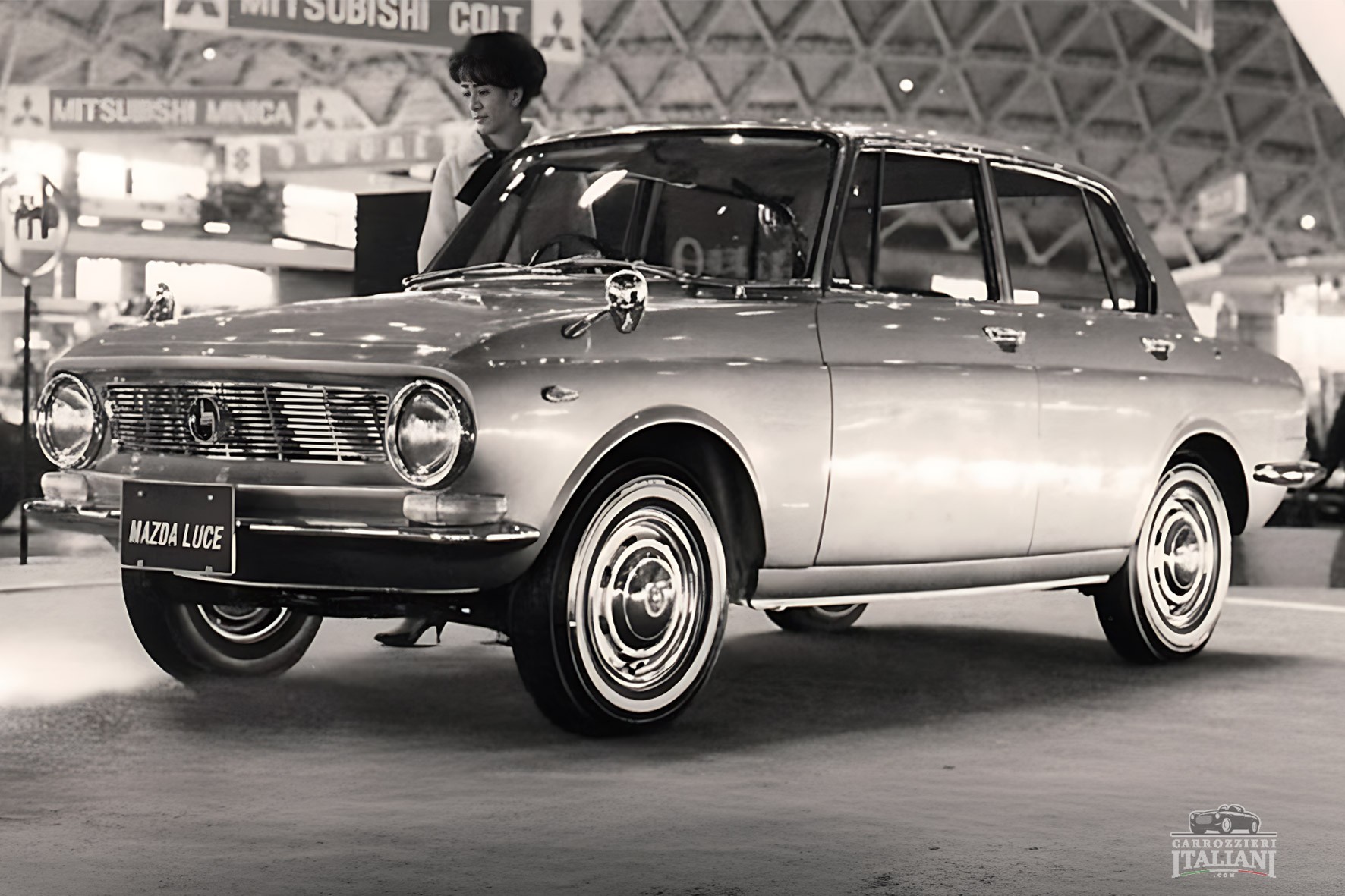
It was also part of a wider moment. That year, Japan was clearly looking toward Italy for design authority: at the same Tokyo show, Hino displayed the Michelotti-designed Contessa 900 Sprint. Mazda went to Bertone, Hino to Michelotti, but the message was similar. Turin had become the place Japanese manufacturers looked to when they wanted a more international line.
The 1963 Luce prototype, however, was not yet the perfect answer. It was historically important, but its proportions were still uneasy. The lower body felt too full for the delicacy expected from Bertone, making the car more curious than truly beautiful.
That is what makes the later Luce 1500 so fascinating. It was not a single sketch magically turned into a production car. It was a process. Mazda and Bertone had to learn each other’s language. The Japanese engineers wanted space, reliability, comfort and technical credibility. Giugiaro wanted proportion, tension, balance and a sense of visual lightness. Between those two cultures, something new began to form.
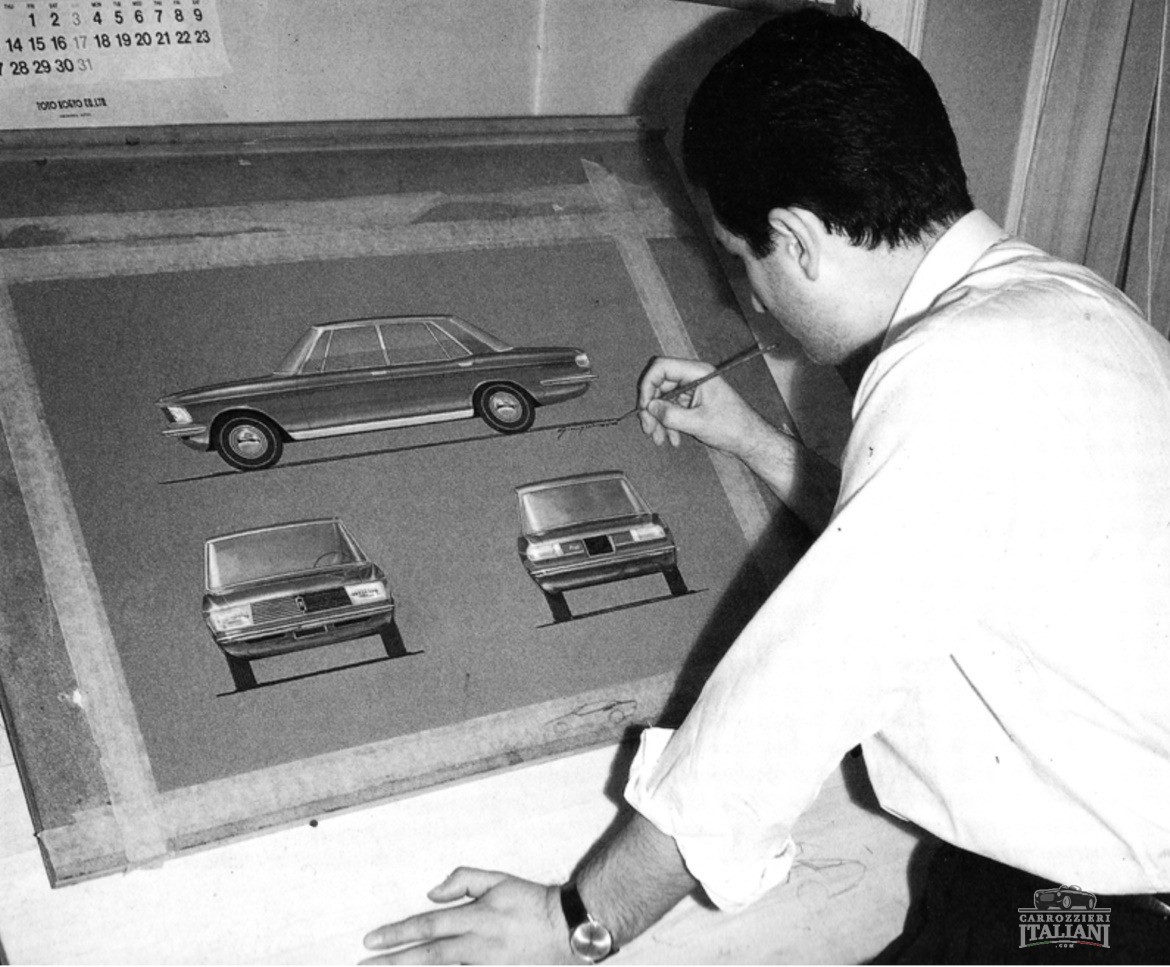
By 1965, Bertone and Giugiaro had another chance to refine the idea. This second study, the one that led more directly to the production Luce 1500, was far more mature. It abandoned the awkward fullness of the earlier proposal and moved toward a cleaner three-box architecture. The surfaces became flatter, the glasshouse more disciplined, the front more confident. It was still unusual, but now the strangeness had purpose.
Seen from today, the Luce 1500 almost looks like a European sedan from the early 1970s that accidentally arrived in Japan several years too early. That is the great secret of the car. It was not futuristic in a theatrical way. It did not wear fins or vents or fantasy details. Its modernity was quieter and much more dangerous: it was modern in proportion.
Giugiaro before the wedge
When people think of Giorgetto Giugiaro, they often jump straight to the “folded paper” period: the Volkswagen Golf, Lotus Esprit, Maserati Boomerang, Hyundai Pony, Lancia Delta, Fiat Panda and all those rational, sharp-edged machines that changed the shape of the everyday car. But the Mazda Luce belongs to an earlier Giugiaro, the Bertone-era Giugiaro, before the full manifesto of geometry had emerged.
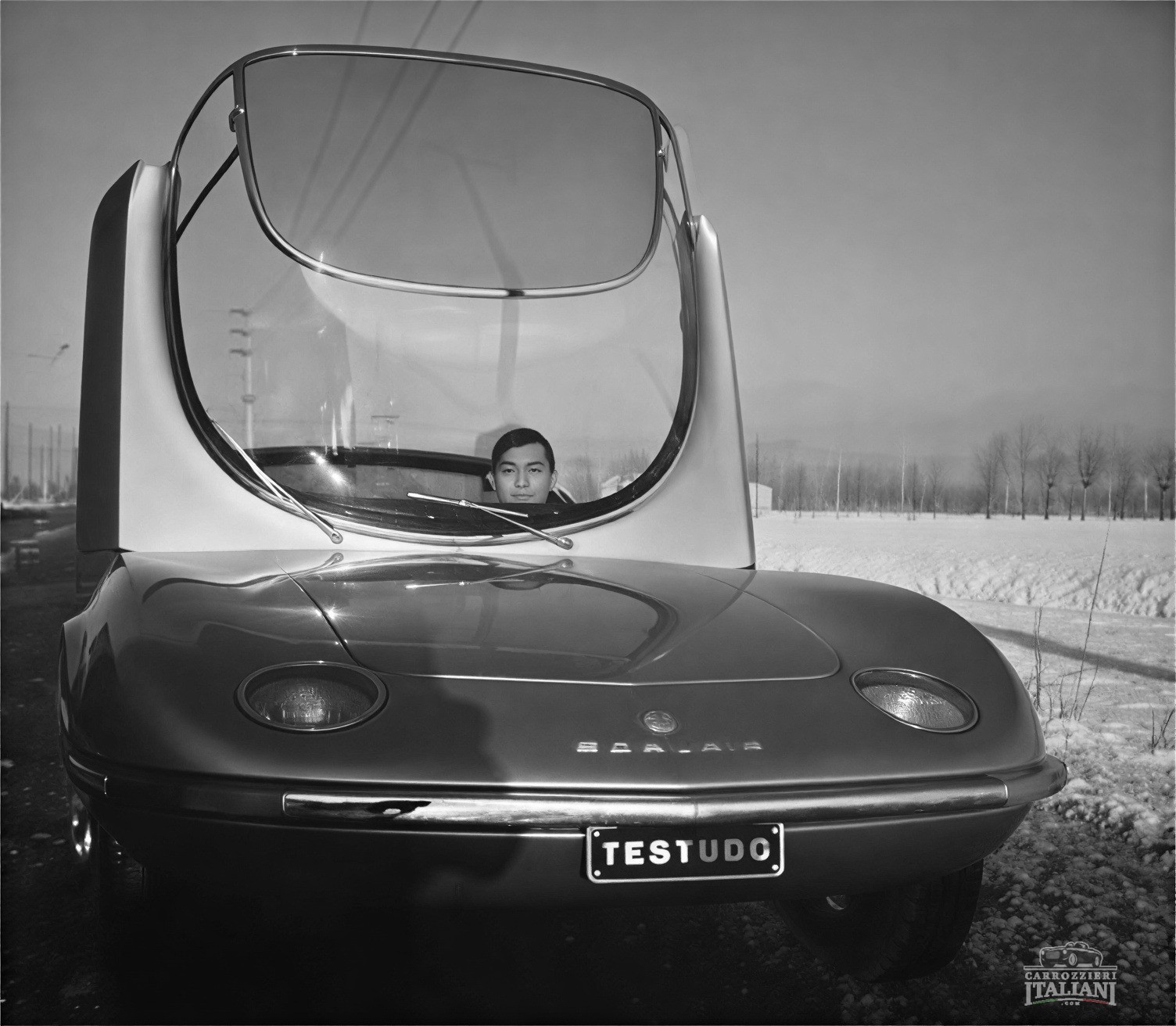
This was the same young designer who had worked on the Alfa Romeo 2000 and 2600 Sprint, the Iso Rivolta, the Giulia GT, the Chevrolet Corvair Testudo and the Iso Grifo. He was already obsessed with the relationship between volume and line. He did not decorate cars so much as organise them. His best work from this period often has a kind of muscular calm: the form seems inevitable, as if the car had been cleaned of everything unnecessary.
The Luce 1500 shows that thinking, but in a more complicated form. It was not an Italian sports car. It was a Japanese flagship sedan, and that made the assignment less glamorous but perhaps more revealing. Giugiaro had to give Mazda a car that could be built, sold and used by families, executives and professional drivers. He had to make a sedan that looked expensive without looking fragile, European without looking foreign, modern without frightening conservative buyers.
The result was a car full of controlled contradictions.
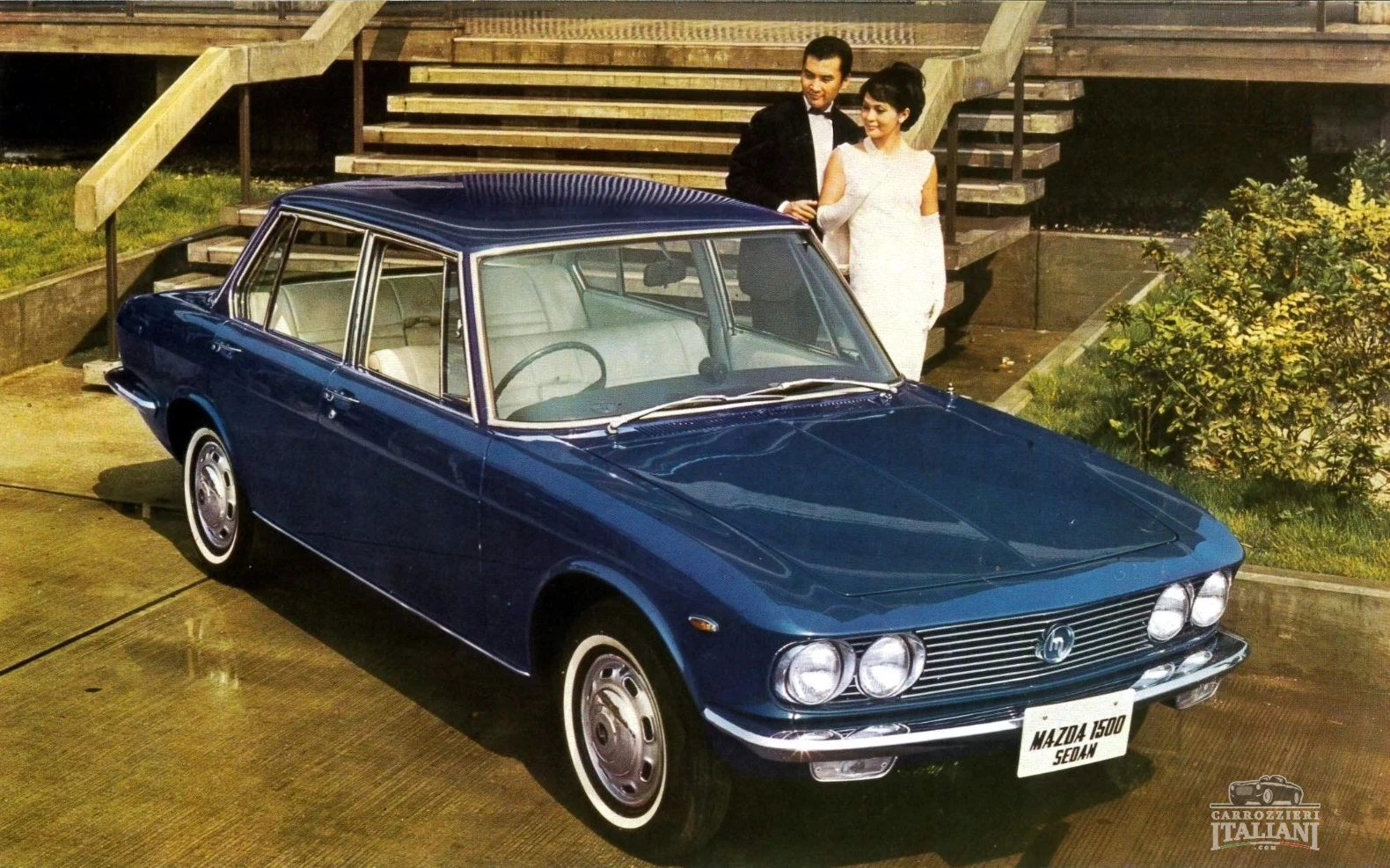
The body is long and low for its category, but the passenger compartment is generous. The pillars are thin, yet the car does not look weak. The beltline is clean, but the glasshouse is almost surprisingly tall. The front has the formal dignity of a premium sedan, but the overall volume feels lighter than most Japanese four-doors of the period. The deck is flat, the flanks are restrained, and the ornamentation is carefully limited. It is a car of lines, not gestures.
That was unusual in Japan in 1966.
The “A-line” and the secret of lightness
Mazda later described one of the Luce’s defining design features as the “A-line”: the visual relationship between the front, centre and rear pillars. The idea is subtle but important. The A-, B- and C-pillars are arranged in a way that gives the side profile a rising, architectural rhythm, as if the greenhouse were drawn as one continuous composition rather than a roof placed on top of a body.
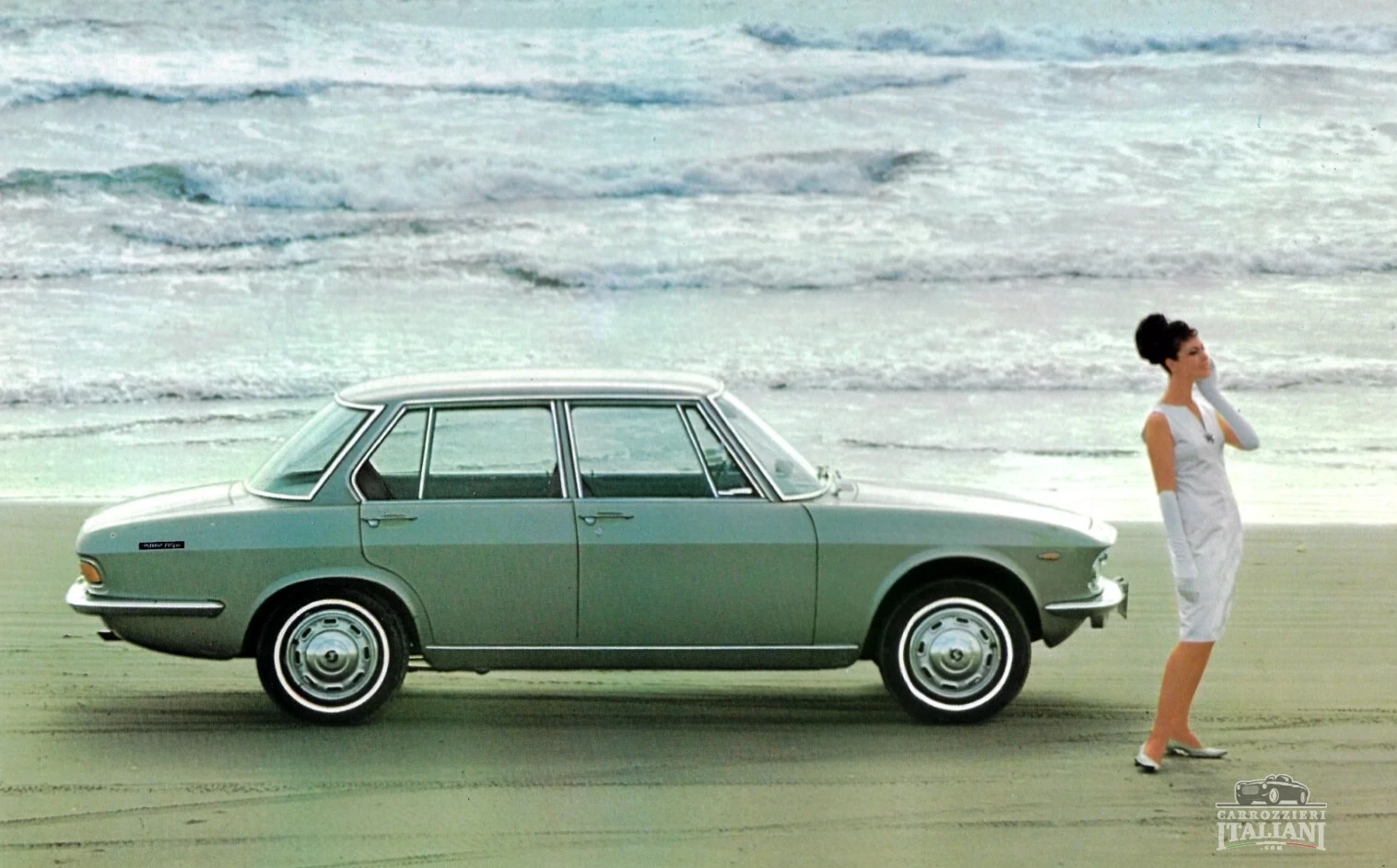
This is where the Luce earns its name. The car feels bright not because it has shiny chrome, but because the cabin appears open and full of air. The large window surfaces make the sedan look more spacious and less heavy than many rivals. In a period when Japanese sedans often borrowed heavily from American themes or retained conservative proportions, the Luce offered something cleaner: a European sense of luminosity.
The pillars are delicate, but they do not feel decorative. They are structural punctuation marks in a carefully measured sentence. The windscreen is upright enough to provide clarity and space, while the rear glass gives the tail a refined, almost formal conclusion. The car never has the feline grace of a coupé, and that is not its mission. Its elegance comes from restraint.
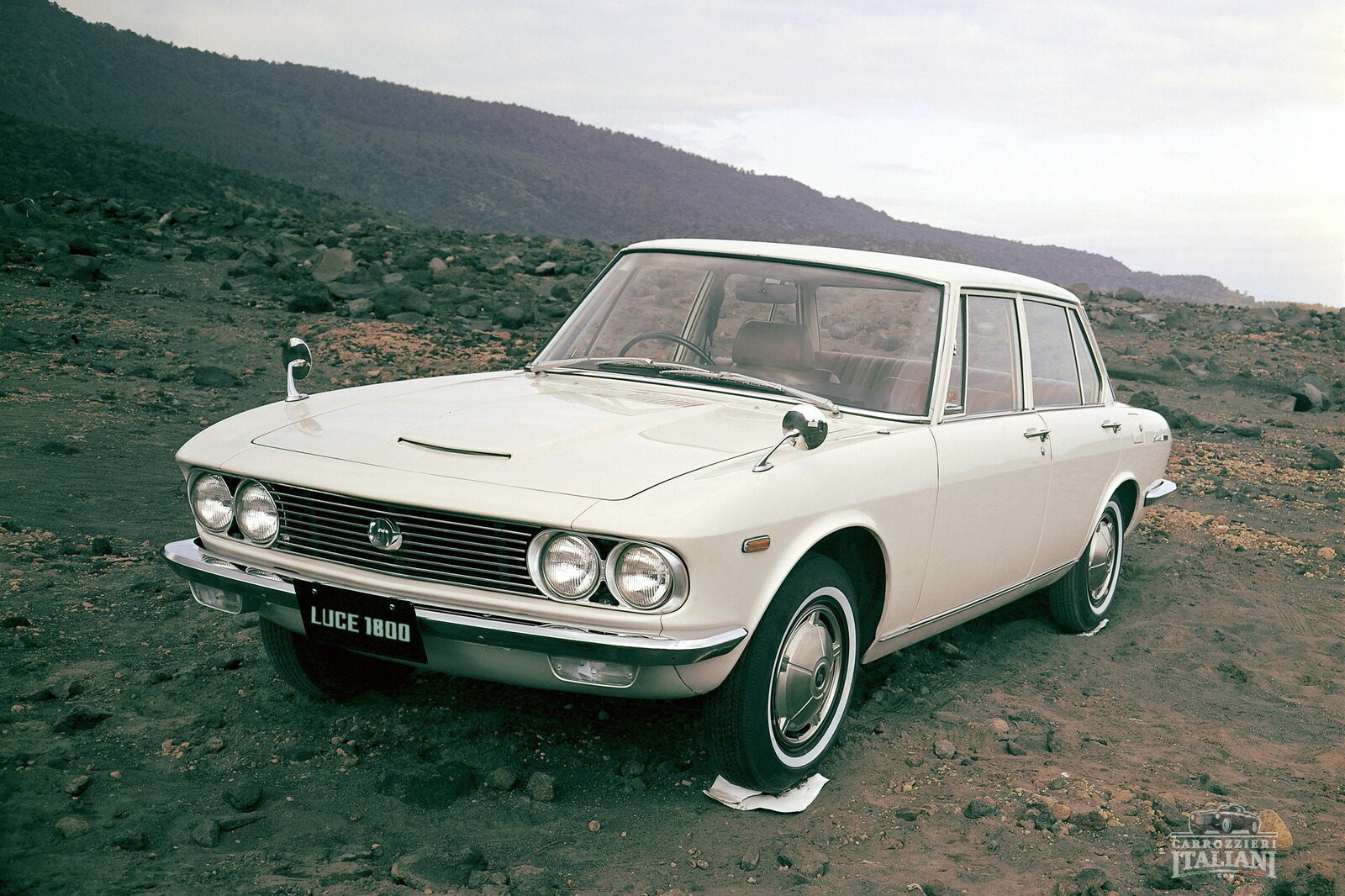
The front end is equally important. Twin round headlights sit within a horizontal graphic that gives the car a calm, serious expression. The grille is not aggressive; it is composed. Chrome is present, but never excessive. The bumper is slim enough to preserve the body’s lightness, while the centre badge gives the nose a sense of identity. There is something almost Alfa-like in the precision of the face, which is why so many observers over the years have tried to connect the Luce to some lost Italian proposal from Milan.
That rumour is understandable, but too simple.
The Alfa that wasn’t
For years, enthusiasts have whispered that the Mazda Luce was somehow a rejected Alfa Romeo design. The story survives because the visual temptation is strong. Giugiaro had designed the Alfa Romeo 2000 and 2600 Sprint, and some of that Bertone-era grammar is visible in the Luce: the disciplined front, the slim roof, the understated Italian elegance, the sense of a car drawn by someone who understood how to make metal look intelligent.
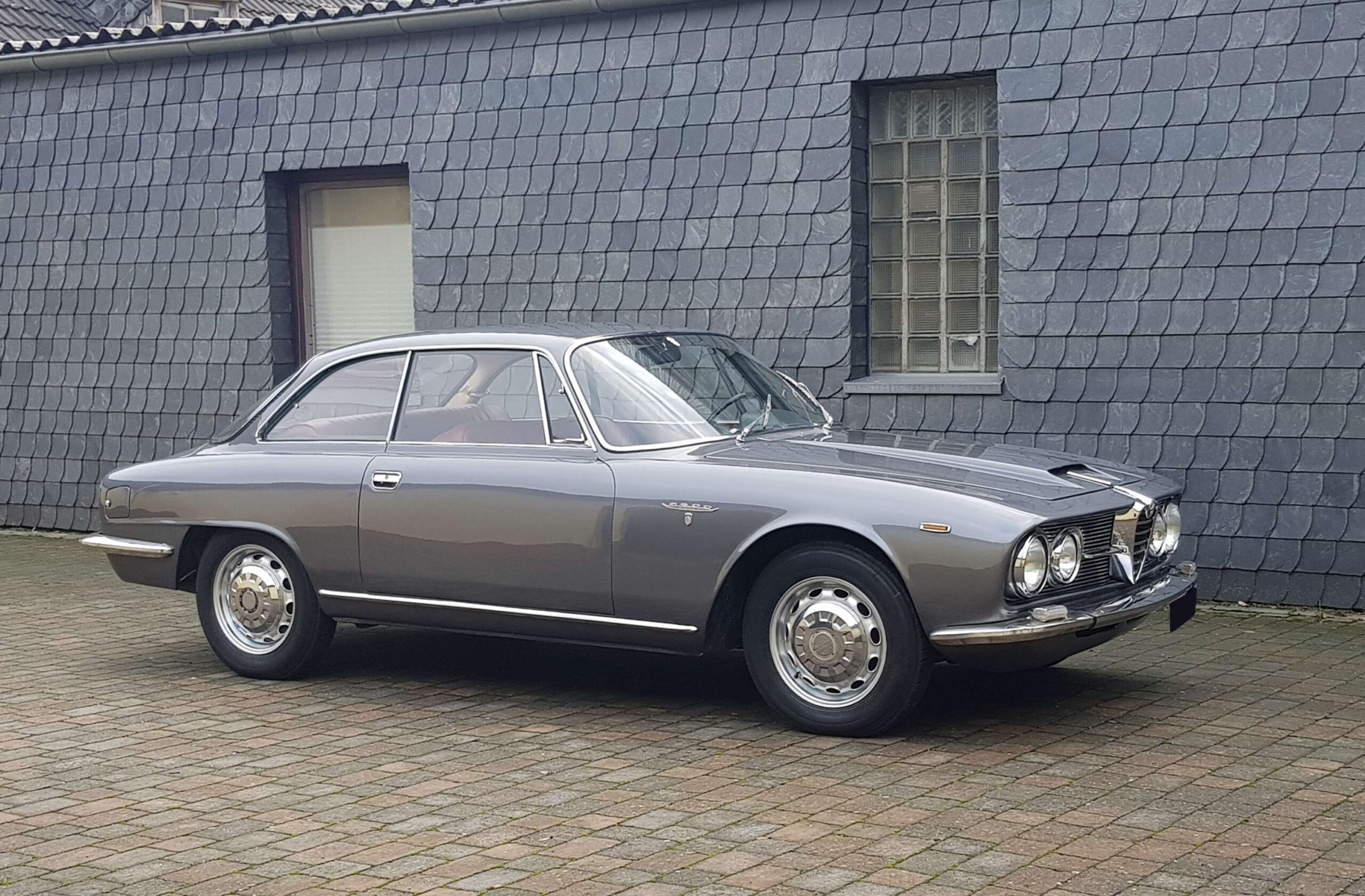
But calling the Luce a rejected Alfa does a disservice to Mazda, Bertone and Giugiaro. The Luce was not simply an Italian suit altered for a Japanese body. It was a project shaped by Mazda’s own ambitions and modified by Mazda’s own design team. The production car was based on Bertone’s original design, but it was finalised in Hiroshima to suit Mazda’s taste, engineering requirements and market position.
That detail matters. The Luce was not a passive import of style. It was a negotiation.
Giugiaro provided the direction, the elegance and the proportions. Bertone provided the prestige and the Turin methodology. Mazda then absorbed, adjusted and domesticated the design. The final car is therefore not purely Italian and not purely Japanese. It is a hybrid in the best sense: Italian in its search for proportion, Japanese in its discipline, build philosophy and technical seriousness.
Perhaps this is why the car still feels so intriguing. It does not look like a Mazda trying to imitate an Alfa Romeo. It looks like Mazda discovering that it could have its own kind of elegance.
August 20, 1966: the flagship arrives
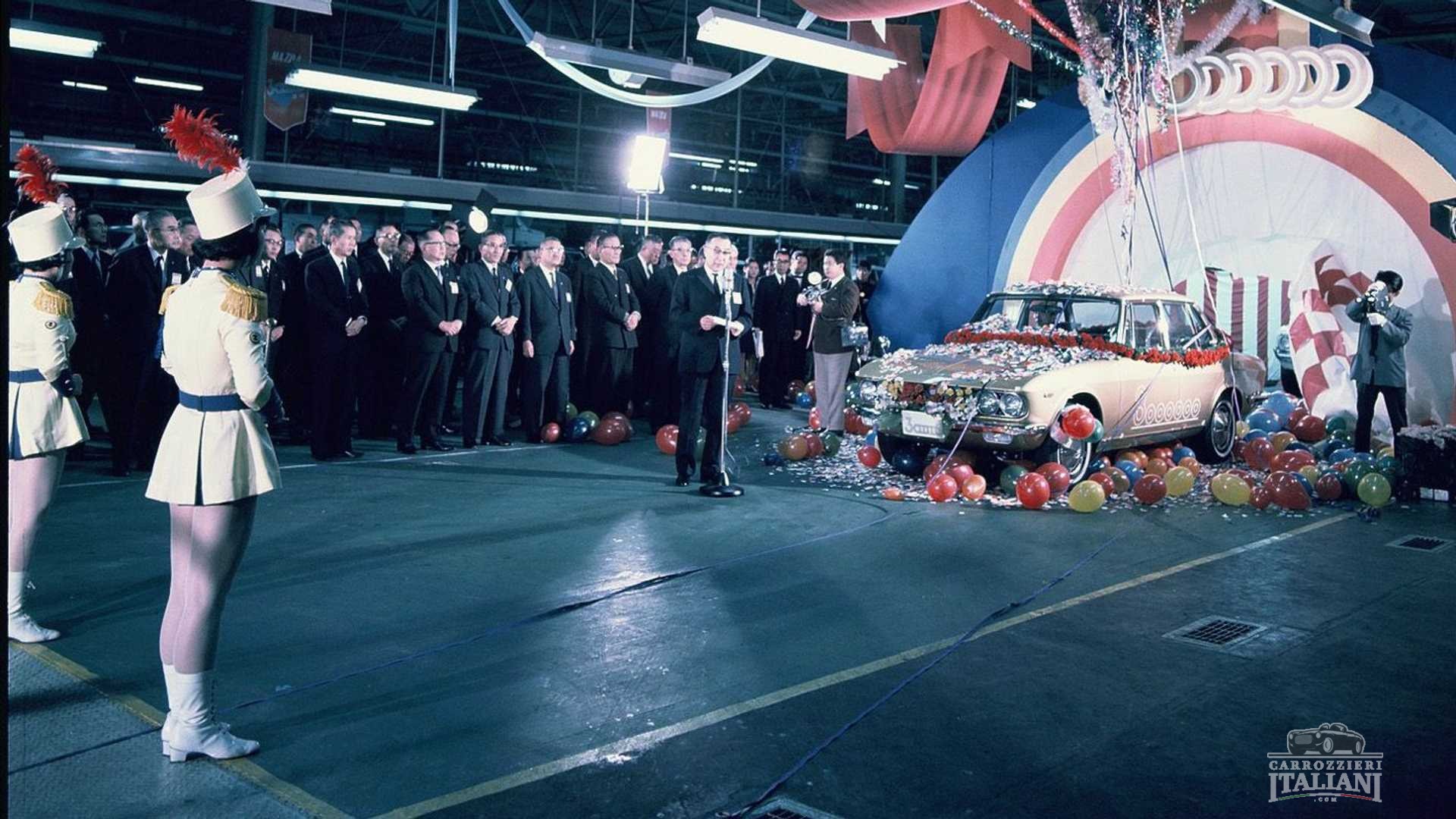
On August 20, 1966, Mazda introduced the Luce as its new flagship. It entered the 1,500cc class with a level of refinement that Mazda presented as unusually high for the Japanese market. The car was a front-engine, rear-wheel-drive sedan powered by a newly designed 1.5-litre SOHC four-cylinder engine. With 78 PS and a claimed top speed of 150 km/h, the Luce was not a sports car, but it carried itself with confidence. More importantly, it offered a spacious cabin capable of accommodating six occupants, a remarkable claim in its class.
This was crucial. The Luce was not just a design exercise. It had to justify itself as a proper flagship. Mazda gave it the comfort, space and engineering dignity required for that role. The overhead-cam engine helped separate it from more ordinary sedans, while the body gave it a presence that could not be confused with the smaller Familia or Carol.
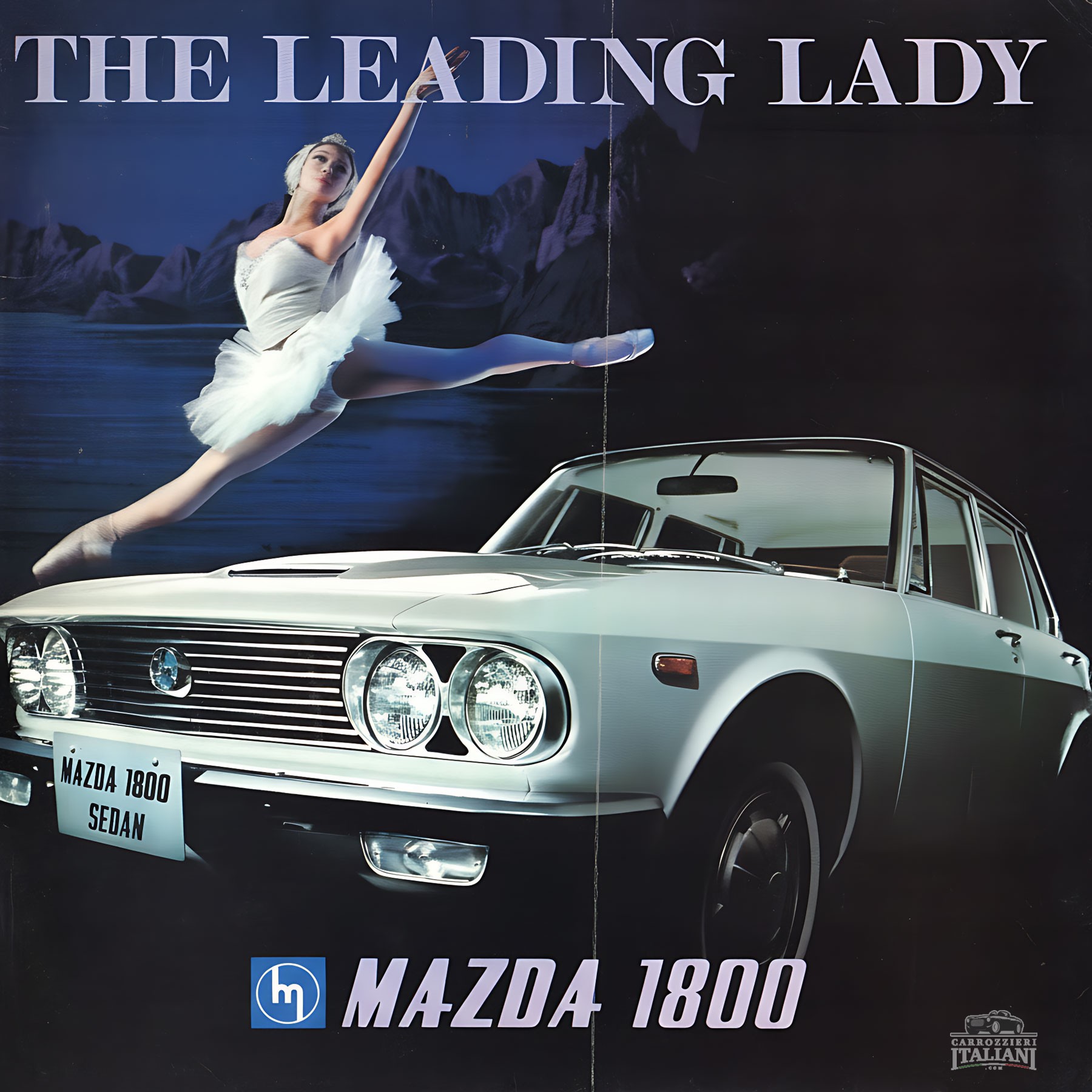
The advertising atmosphere around the Luce leaned into elegance. This was a car for people who wanted more than utility. In some markets and materials, the Luce would be associated with a refined, almost feminine grace, an unusual position for a Japanese sedan of the period. It was not trying to be a brute. It was trying to be cultured. That was very Italian.
The Luce 1500 SS and the evolution of the line
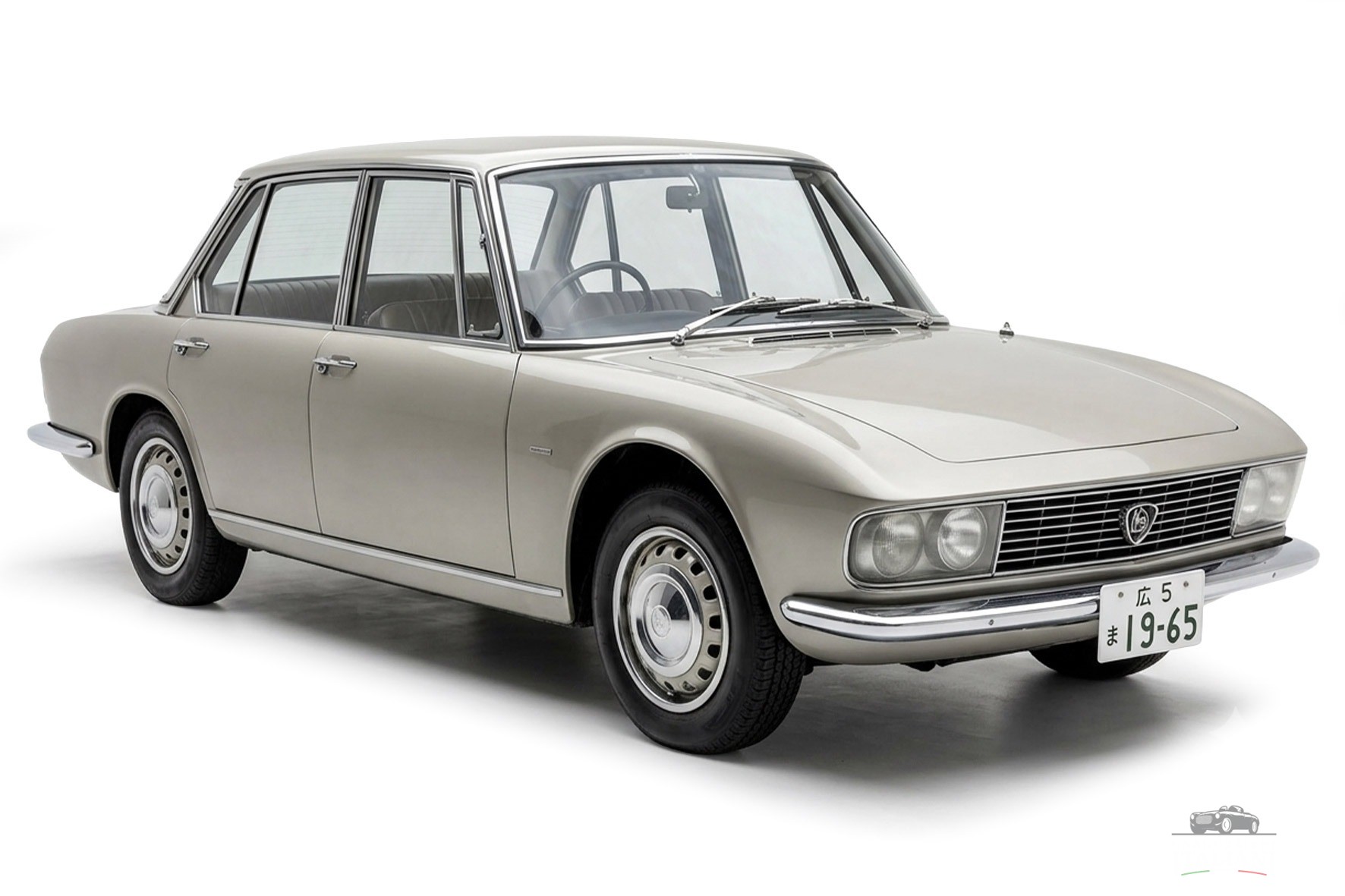
Mazda soon developed the range further. In 1967, the Luce 1500 SS added a more spirited character, using twin carburettors and raising output to 86 PS. A station wagon also joined the family, broadening the appeal of the model and making the Luce more than a formal sedan. Then, in 1968, Mazda introduced the Luce 1800, with a larger 1.8-litre engine and stronger performance.
The 1800 brought a small but telling visual change: a bonnet bulge and intake to accommodate the taller engine. It slightly altered the purity of Giugiaro’s original surface, but it also gave the car a more assertive character. The Luce had begun as a refined 1.5-litre flagship; by the end of the decade, it was becoming a broader family of cars, exported in some markets simply as the Mazda 1500 or Mazda 1800.
In Europe and Australia, the car made an impression as something different from the expected Japanese formula. It was solid, elegant, slightly exotic and clearly touched by Italian design. In America, the later 1800 struggled, partly because Mazda’s identity there would soon be dominated by rotary engines and smaller, more distinctive models. But the Luce was never merely about sales figures. Its significance lies elsewhere. It gave Mazda a design memory.
The S8P: the hidden rotary ghost
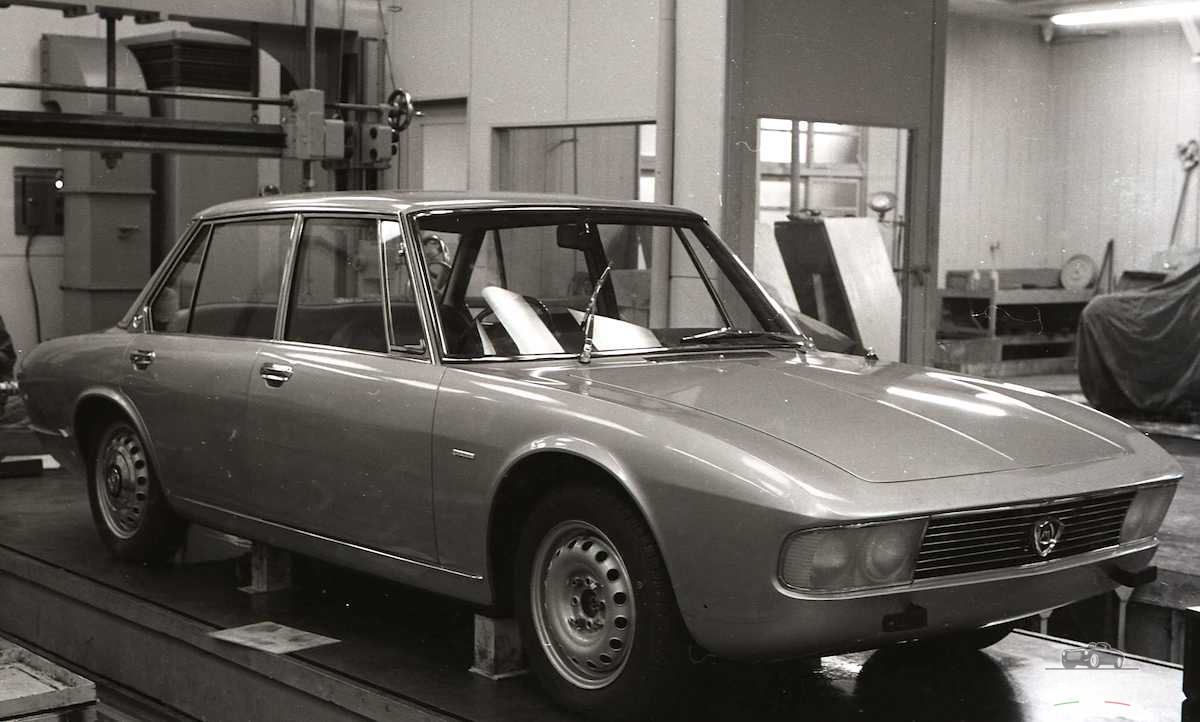
Among the most intriguing chapters in the Luce story is the S8P, sometimes also referred to in secondary sources as SP8. This was a Bertone-built prototype created around the same general theme as the Luce, but far more radical in technical ambition. It was intended to explore the possibility of a rotary-powered, front-wheel-drive flagship sedan, using Mazda’s early two-rotor L8A experimental engine.
The most extraordinary detail is that the prototype was not a running car. Its engine was reportedly a dummy unit made of wood. That image alone feels almost cinematic: a futuristic Mazda flagship, clothed by Bertone, carrying a wooden ghost of the rotary engine that Hiroshima was still trying to master
t reveals how ambitious Mazda had become. The company was not only asking Italy for style; it was also imagining a future in which rotary engines, front-wheel drive and international design could all meet in a single advanced sedan. In the mid-1960s, that was not a conservative plan. That was a leap.
The S8P did not become the production Luce 1500. The production car took the safer and more realistic route: piston engine, rear-wheel drive, proper sedan usability. But the S8P is essential to understanding the atmosphere around the project. The Luce was born at a moment when Mazda was not yet locked into a predictable identity. Everything was possible. A luxury sedan could be Italian. A family car could have a rotary future. A Japanese company could sit at the same table as Bertone and ask for something no one else had.
That experimental energy would soon flow into the Luce Rotary Coupe.
From Luce sedan to Luce Rotary Coupe
In 1969, Mazda launched the Luce Rotary Coupe, one of the most elegant and technically unusual cars in its history. Again connected with Bertone and Giugiaro, the R130 coupe was longer, lower and more glamorous than the sedan. It used a 13A rotary engine and, remarkably, front-wheel drive. It was expensive, rare and almost aristocratic. Mazda called it “Lord of the Road,” and in many ways it represented the dream that had hovered behind the earlier S8P prototype.
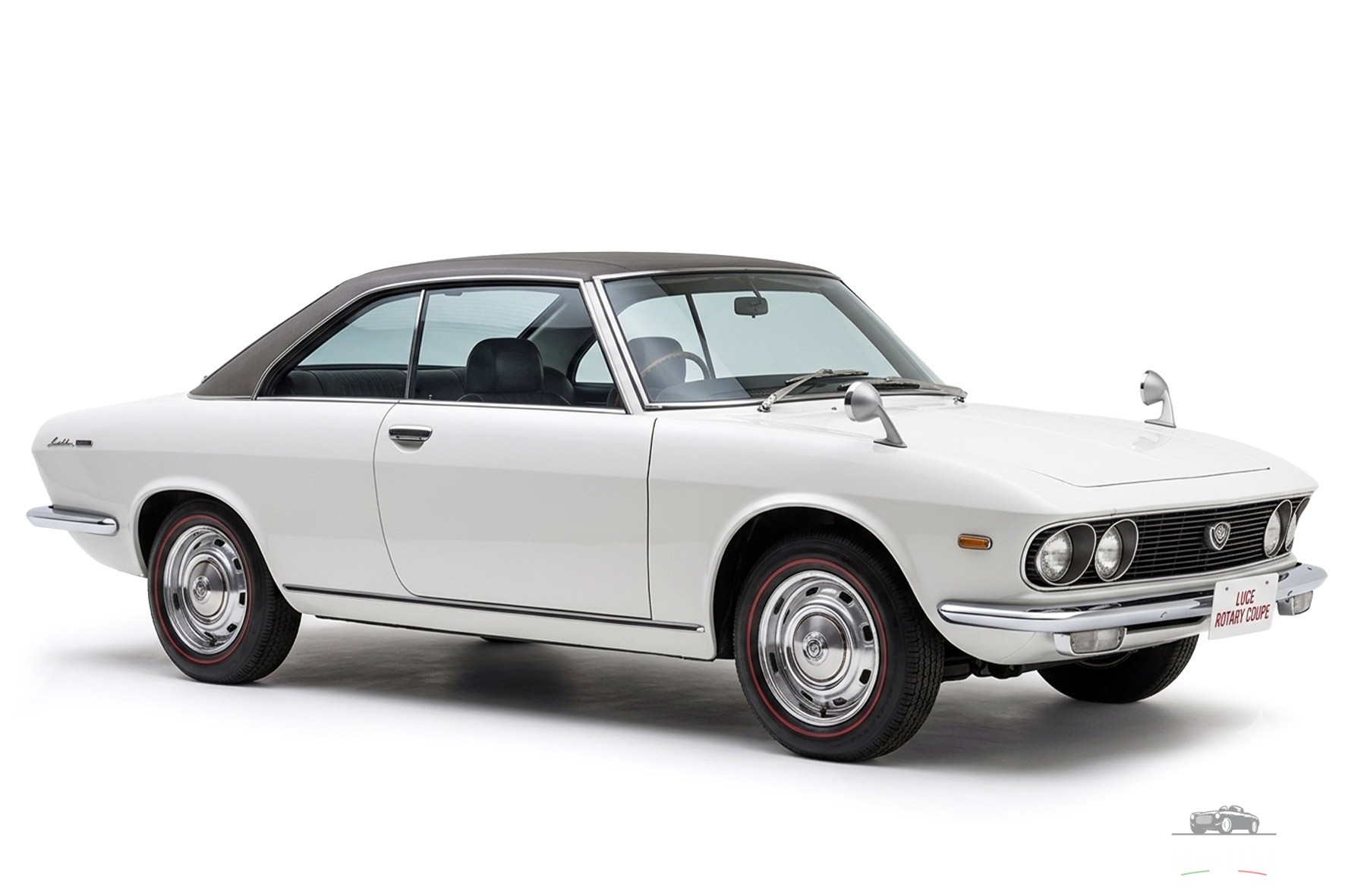
The relationship between the Luce 1500 sedan and the Luce Rotary Coupe is not merely one of shared name. The sedan established the idea that Mazda’s flagship could be Italian in spirit. The coupe turned that idea into something more dramatic and more technically daring. If the Luce 1500 was the elegant diplomat, the R130 was the mysterious prince.
But the sedan came first, and that matters. Without the Luce 1500, Mazda’s later experiments with high-style design would have lacked their first foundation. The Luce created a precedent: Mazda could be different.
The Maeda connection
One of the most beautiful human details in the story concerns the Maeda family. Matasaburo Maeda, a Mazda designer, worked on the collaboration with Bertone during the Luce period. His son, Ikuo Maeda, later Mazda’s global head of design and one of the key figures behind the modern Kodo design philosophy, remembered being a young student when Giugiaro and Bertone came to Hiroshima. For him, it was the first encounter with foreigners, and it left a powerful impression.
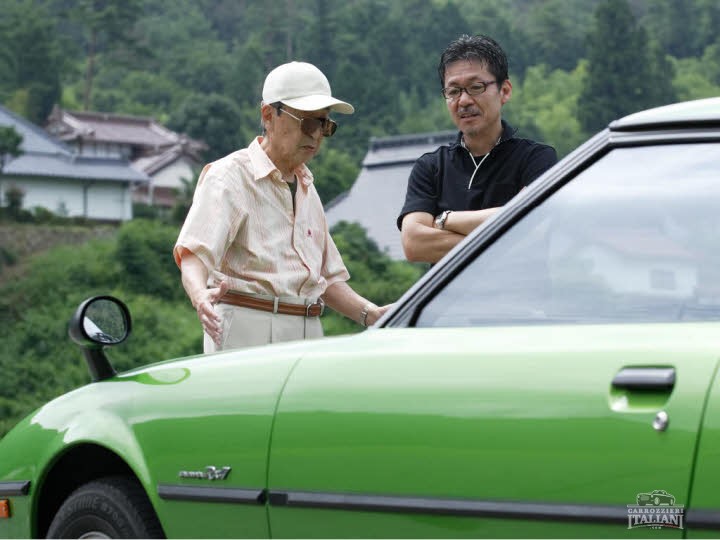
This small scene is worth pausing over. Imagine Hiroshima in the early 1960s: a car company rebuilding itself, a design department still forming its identity, and suddenly these men from Turin arrive carrying drawings, proportions, gestures, clothes, language and confidence from another world. For a young Ikuo Maeda, it must have felt like watching the future walk through the door.
Decades later, Mazda would speak of design with an almost philosophical intensity. Kodo, Soul of Motion, was not merely about making cars look sharp. It was about tension, movement, emptiness, reflection and the emotional power of form. The direct line from the Luce to Kodo should not be exaggerated, but it should not be dismissed either. The Luce was one of Mazda’s earliest lessons in the idea that design could be cultural, not just functional. Italian style did not make Mazda Japanese. It helped Mazda understand how to express itself.
The quiet legacy of the Luce
The Mazda Luce 1500 is easy to overlook, and maybe that is part of its charm. It was not a sports car, not a racing icon, not a machine built to shock a motor show crowd. It was a sedan, and sedans rarely get the mythology they deserve.
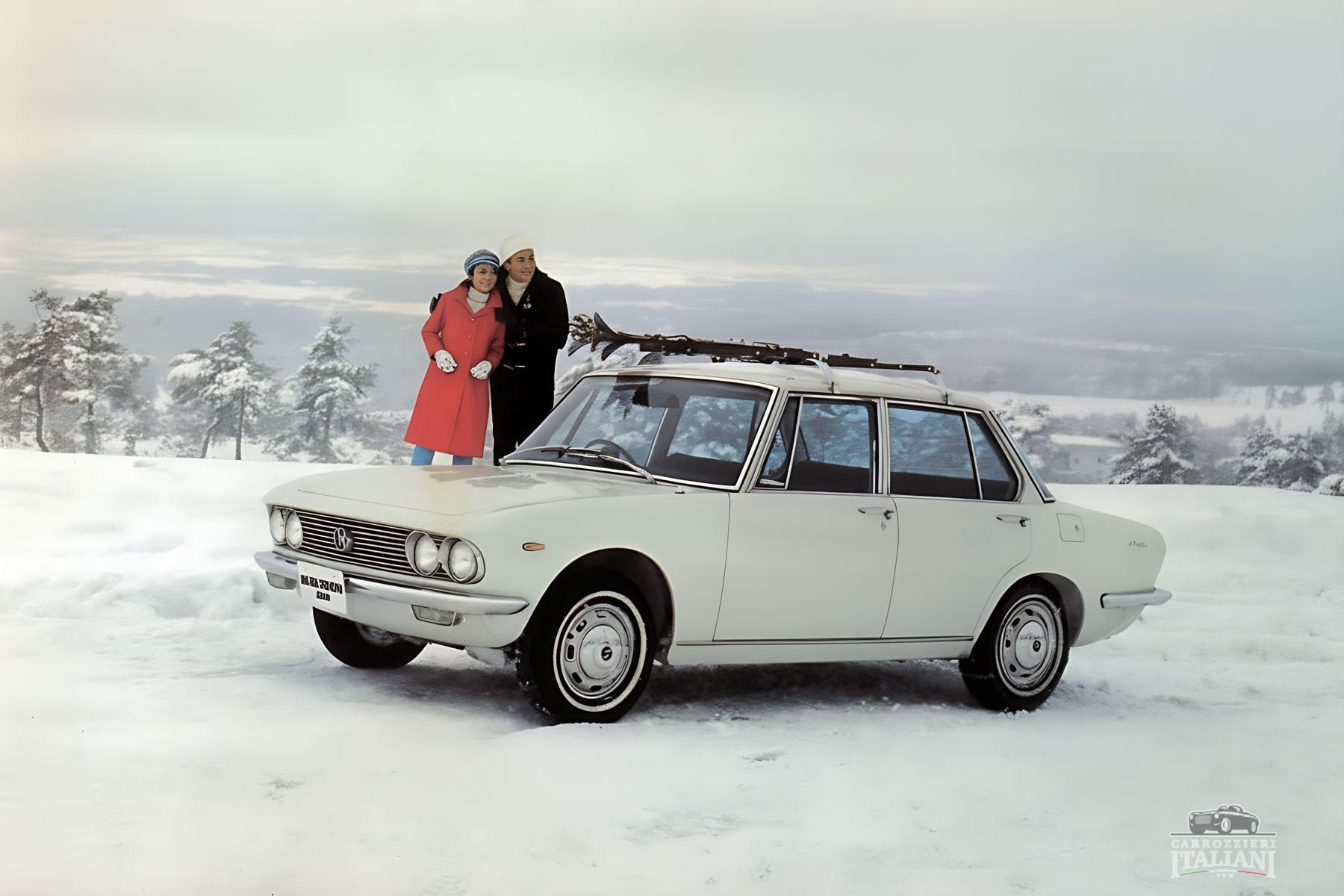
But the Luce arrived at a crucial moment for Mazda. The company was still shaping its identity, and instead of following the safest route, Hiroshima went to Turin.
Bertone gave Mazda an international stage. Giugiaro gave the car proportion, restraint and a sense of European elegance. Mazda then turned that Italian idea into a real production sedan: practical enough for Japan, but refined enough to stand apart.
That is why the Luce still works. It does not look like an Alfa Romeo imitation, nor like a Japanese sedan trying too hard to look foreign. It sits somewhere in between, and that is exactly what makes it interesting.
Before the rotary legends, before the RX-7, before the MX-5 and long before Kodo, there was already this instinct: take the less obvious road, trust proportion, and build character through restraint.
A Bertone idea, filtered through Hiroshima.
A Giugiaro line with a Japanese pulse.
A car called Luce.

ABOUT THE AUTHOR
Andreas Scheidl
Italian classic car enthusiast with German roots. Renowned as a respected figure in the classic car community, he serves as a jury member at various international concours d'elegance, including the Classic Gala Schwetzingen and Mantova. As a content creator, Andreas passionately shares his profound knowledge and appreciation for vintage automobiles. His heart beats for cars designed by Giovanni Michelotti, showcasing his discerning taste and dedication to preserving the timeless elegance of automotive history.
More stories by Andreas Scheidl ↗CONTINUE READING
Posts You Might Like

A Central Driving Position, a Rear-Mounted V8. Was This Really a Lancia?
In 1948, visitors to the Turin Motor Show could see an unusual Lancia on the stand of Carrozzeria Ghia. It was a large two-door coupé with a two-litre V8 mounted behind the…
Read story
Fioravanti F100: The Ferrari He Was Allowed to Imagine
Enzo Ferrari’s centenary, Leonardo Fioravanti’s independent studio and a supercar that explored air brakes, steel wheels and a new way of driving—without ever wearing the Cavallino.
Read story
Michelotti Shellette: When the Fiat 850 Became a Yacht
The yacht designer, the Turin stylist and the tiny coachbuilt car that crossed between the quay, the royal holiday house and the auction room. Some automobiles were conceived for the open road,…
Read story
Maserati A6 1500: A New Road for the Trident
When the doors of the Geneva Motor Show opened in March 1947, Maserati was a name that required little introduction to anyone who followed motor racing. What it did not yet possess…
Read story
THE CONVERSATION
Comments 0
Share a memory, a period photograph or a documented detail about this story.