
Hino Contessa 900 Sprint: When Hino Built an Italian Gran Turismo
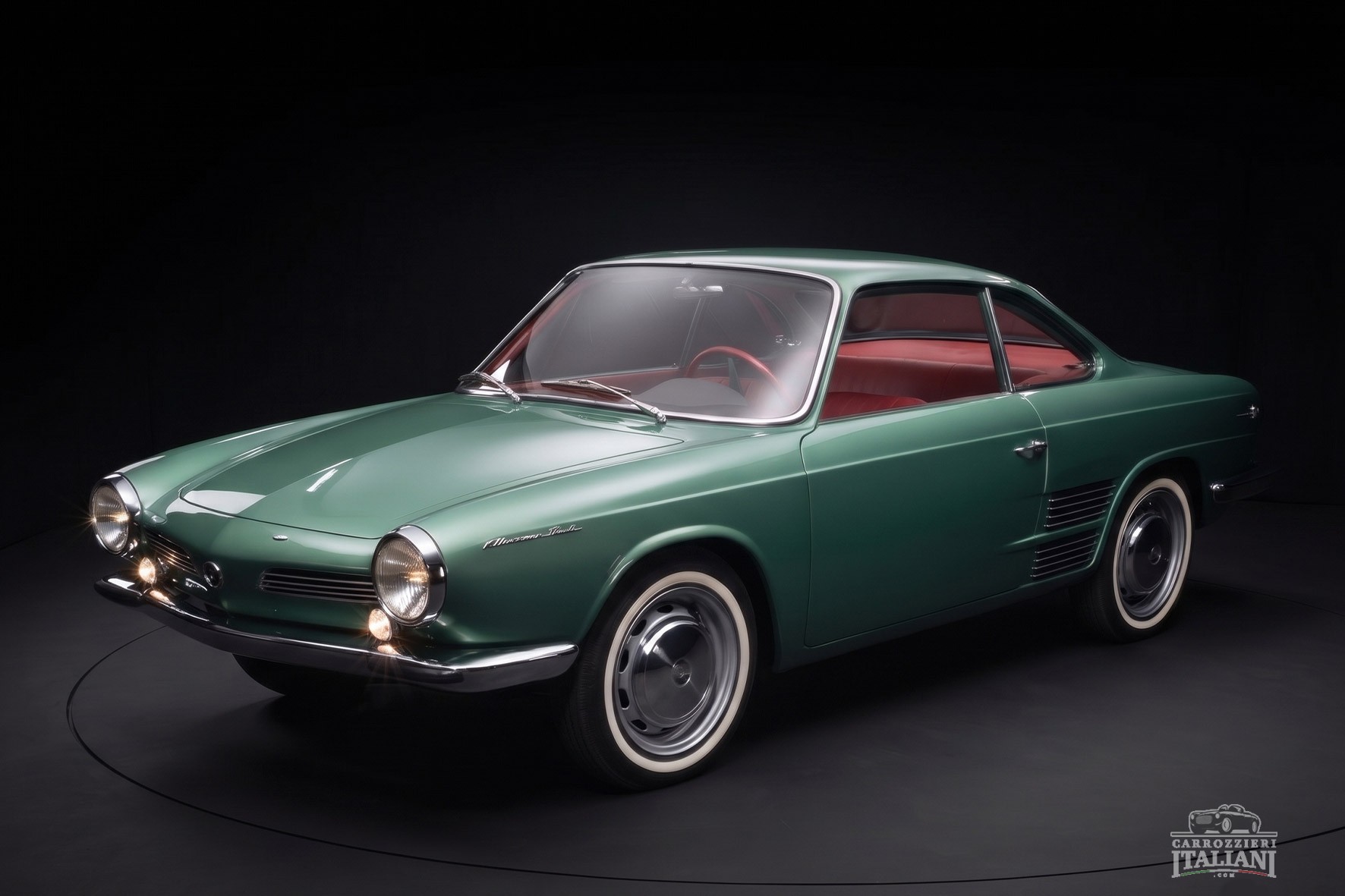
Today, the Hino badge is associated with trucks, buses and machinery built to spend several decades carrying improbable quantities of concrete. In 1962, however, Hino produced something rather different: a tiny, low-slung, rear-engined coupé with Italian bodywork, Nardi tuning and a claimed top speed of 140 km/h.
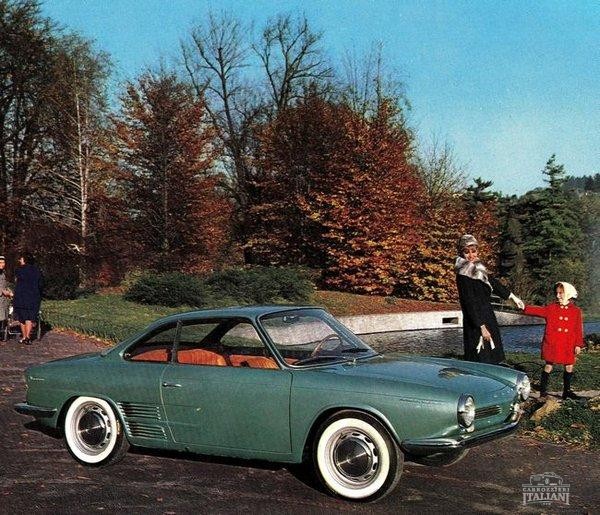
It was called the Hino Contessa 900 Sprint, and it looked as though a miniature gran turismo had escaped from Turin before anyone could ask whether a Japanese commercial-vehicle manufacturer really needed one.
The obvious answer was no. The more interesting answer was absolutely.
The Sprint was not merely a styling model created to decorate a motor-show stand. It was a functioning 2+2 coupé, built around Hino mechanical components, refined by Enrico Nardi and designed by Giovanni Michelotti. It travelled from Turin to Geneva, New York and Tokyo, appeared to be heading towards limited production in Italy and then disappeared into the category occupied by so many fascinating cars: the future that nearly arrived.
From Renault licence-builder to Japanese manufacturer
To understand why Hino found itself presenting an Italian sports coupé in Turin, it is necessary to go back to 1953, when the company entered the passenger-car business by producing the Renault 4CV under licence in Japan.
The arrangement was more than a simple exercise in assembling imported parts. It gave Hino experience in passenger-car production at a time when the post-war Japanese motor industry was still developing its own engineering and manufacturing identity. When the Renault agreement approached its conclusion, Hino decided not merely to replace the 4CV with another foreign design, but to create a car carrying its own name.
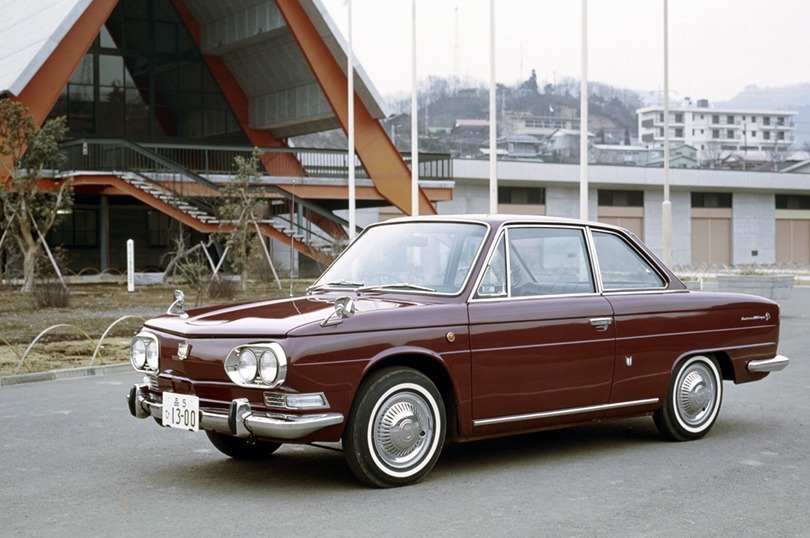
The result was the Contessa 900, launched in April 1961. Its drivetrain and suspension were rooted in Renault 4CV technology, but Hino gave it a new and considerably more modern four-door body. The rear-mounted, water-cooled 893 cc four-cylinder engine produced 35 PS, while the enlarged cabin could accommodate five occupants rather than the four expected of the smaller Renault. It was a practical family saloon, but its rear-engine layout, compact dimensions and modest weight also gave it a naturally sporting character.
The Contessa represented something larger than a new model. Hino wanted to establish itself as a complete vehicle manufacturer, not simply a producer of trucks and buses. It also needed a car capable of representing Japan abroad. The original Contessa was respectable, but respectable was not going to make Europeans abandon their Fiats, Renaults or Volkswagens. Hino needed performance, international styling and a stronger sense of identity.
For that, it went to Turin.
A chance meeting, a glass of whisky and Giovanni Michelotti
According to the history preserved by Hino specialist Satoshi Ezawa, the relationship between Hino and Michelotti began in circumstances that sound suspiciously like the opening scene of an automotive film.
In 1960, Hino engineer Tsunenori Yamauchi, then working with Renault in Paris, was instructed to travel to Turin and find a designer for the company’s next passenger car. After visiting several coachbuilders, the young Giovanni Michelotti emerged as the preferred candidate. Yamauchi failed to meet him during his first trip because Michelotti was working in Britain.
On his second visit, Yamauchi arrived early and stopped at a bar. The man beside him asked whether he was Japanese, produced a bottle of Japanese Suntory whisky and began a conversation. When Yamauchi explained that he was on his way to Michelotti’s studio, the stranger reportedly replied that he was Michelotti.
Naturally, they carried on drinking.
Michelotti discussed the possibilities of working with Hino and produced a sketch on the spot. It was an appropriately informal beginning to a relationship that would eventually give Hino some of the most internationally recognisable Japanese cars of the decade.
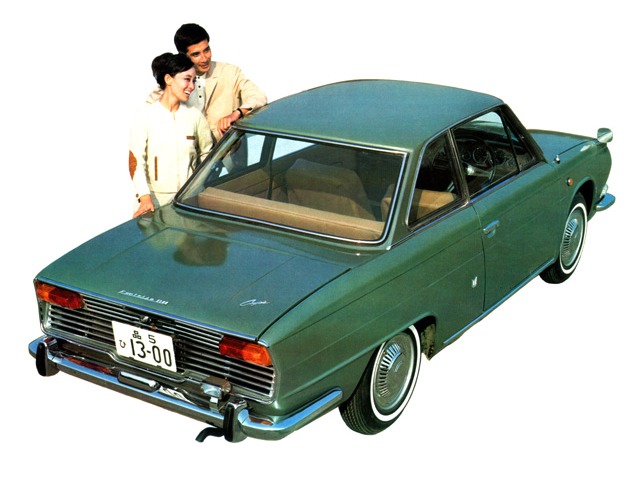
The main objective was the next-generation Contessa 1300. Hino settled the car’s basic engineering specification in May 1961 and sent its overall design requirements to Michelotti that August. A surviving Michelotti sketch dated 18 December 1961 shows that the project was already taking shape well before the Sprint appeared.
This distinction matters. The Contessa 900 Sprint was not originally commissioned as the first stage of the 1300. It emerged alongside that larger programme and, remarkably, largely because Michelotti wanted to build it.
The car Michelotti proposed himself
During discussions with Hino at the end of 1961, Michelotti asked whether the company would provide him with the engine and chassis of a Contessa 900. His proposal was separate from the commercial contract for the Contessa 1300: he believed the smaller rear-engined platform could become a proper lightweight sports car.
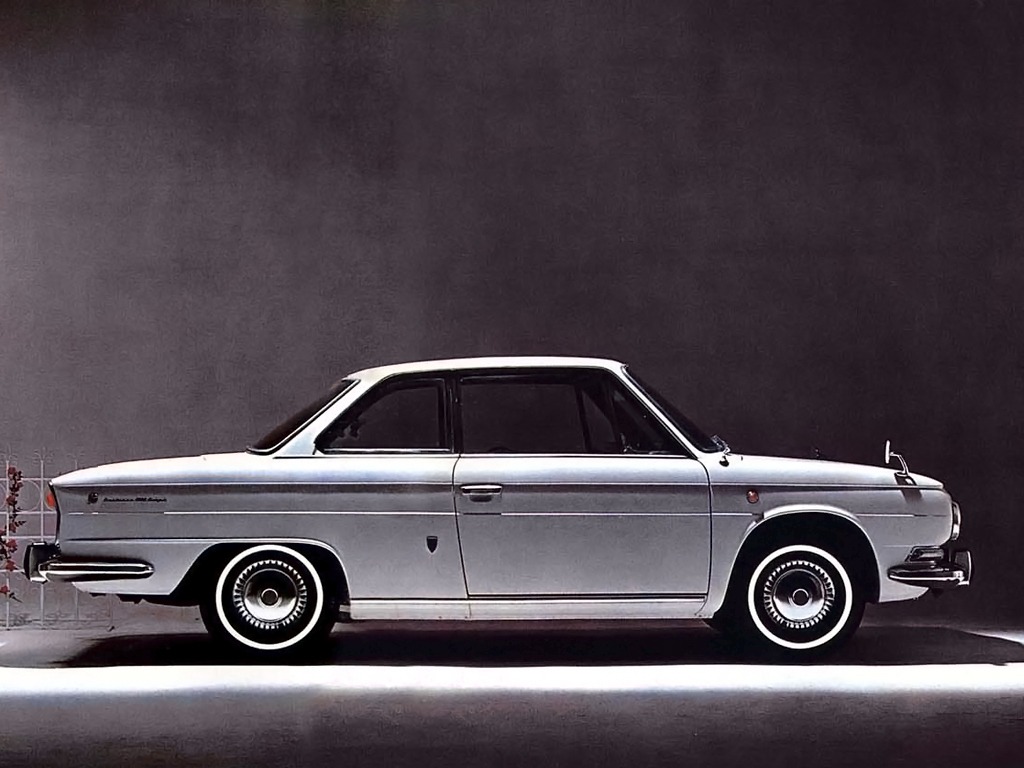
Hino development chief Saburo Iwasaki accepted the idea, apparently before obtaining formal approval from Japan. Michelotti was provided with an export-specification Contessa chassis and floorpan, and in June 1962 he began designing and constructing the Sprint.
The project was intensely personal. Hino had requested the 1300; Michelotti had requested the 900 Sprint.
One Hino engineer later recalled an evening during which he and Michelotti emptied a bottle of Old Parr whisky and started on a bottle of Suntory. Michelotti spoke enthusiastically about Japanese radios, cameras and engineering, arguing that Hino’s engine deserved to sit inside a sports car. The following morning, the engineer checked whether this had simply been whisky-powered optimism. Michelotti was entirely serious.
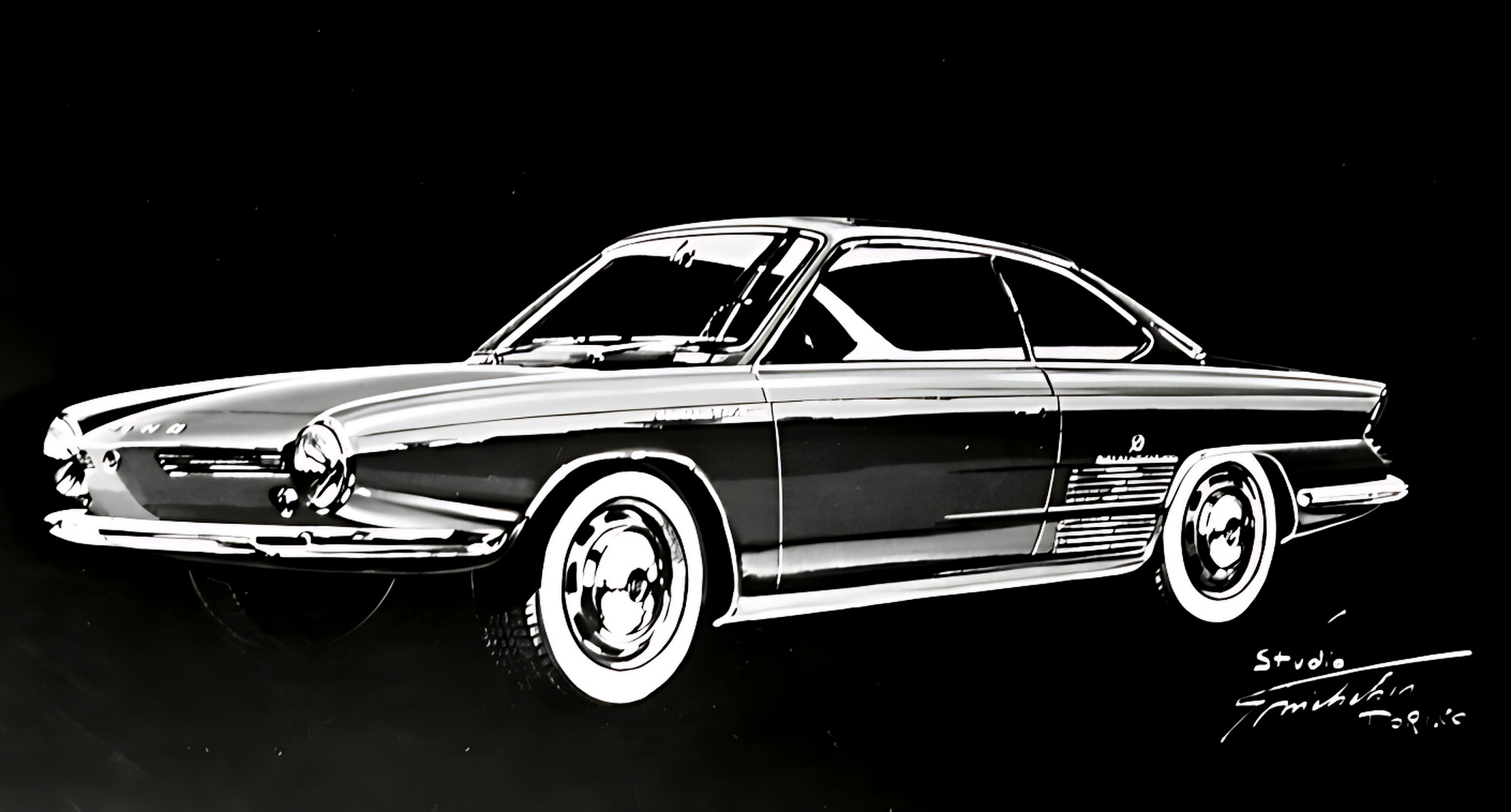
The car was completed in approximately four months. By October 1962, it was ready for the Turin Motor Show.
That pace explains some of the Sprint’s energy. It was not a design sterilised by years of committees, clinics and marketing presentations. It was Michelotti taking a useful little Japanese platform and asking what would happen if every unnecessary centimetre were removed.
A miniature Italian gran turismo
The standard Contessa 900 was an upright four-door saloon. The Sprint was something else entirely.
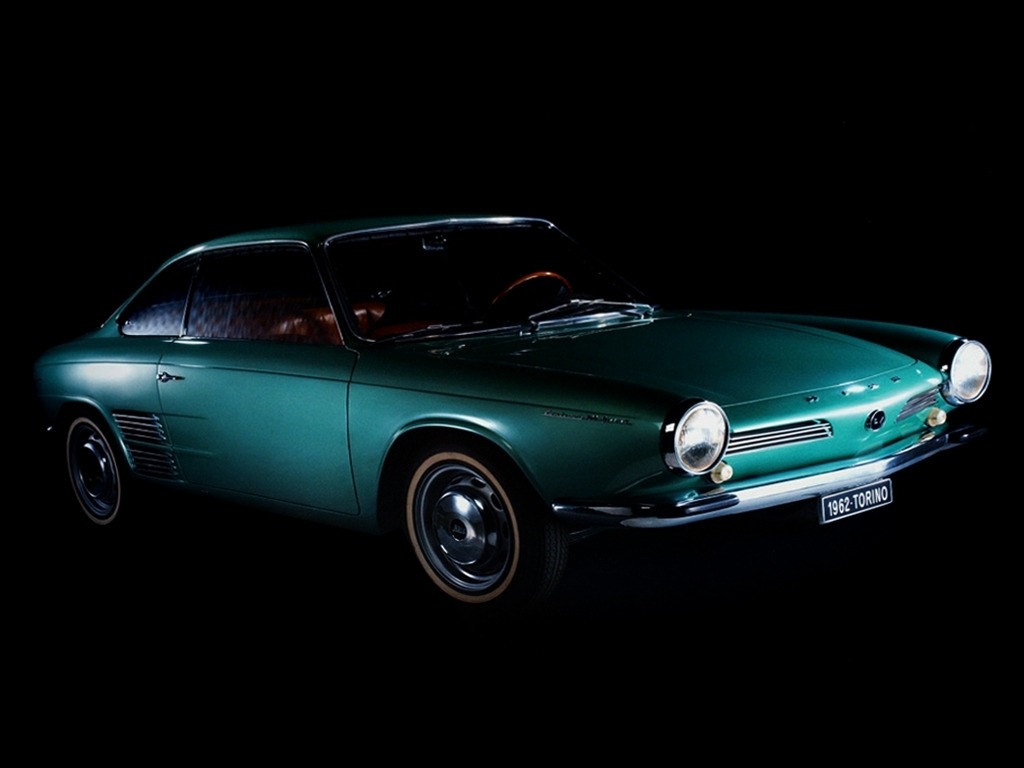
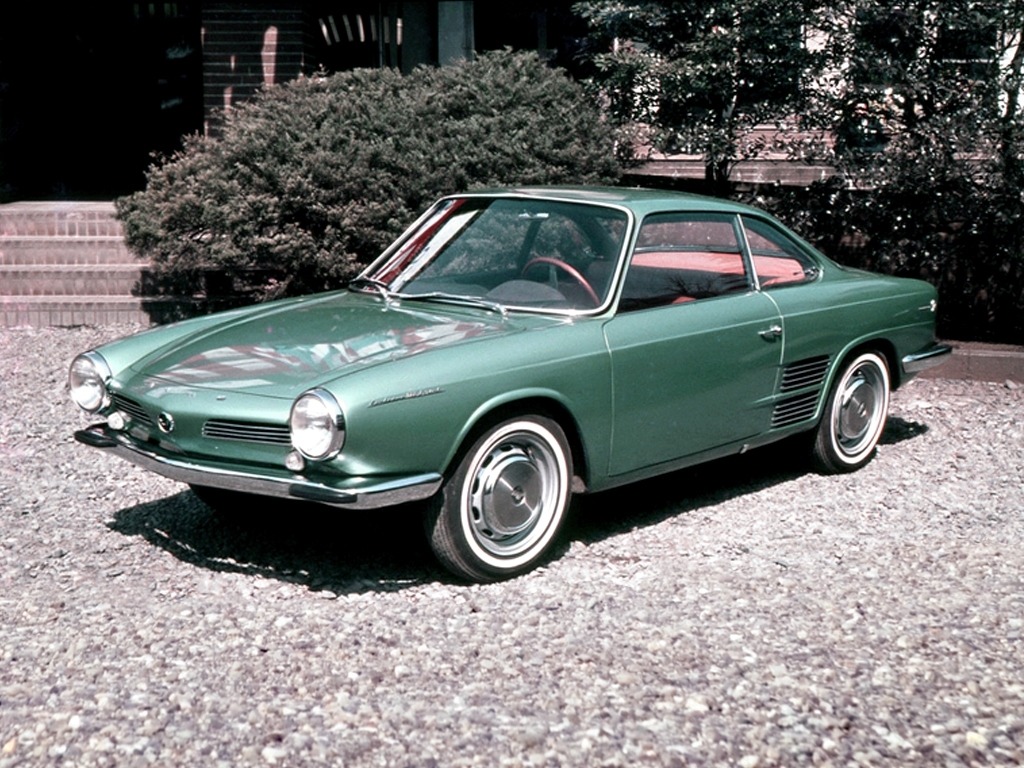
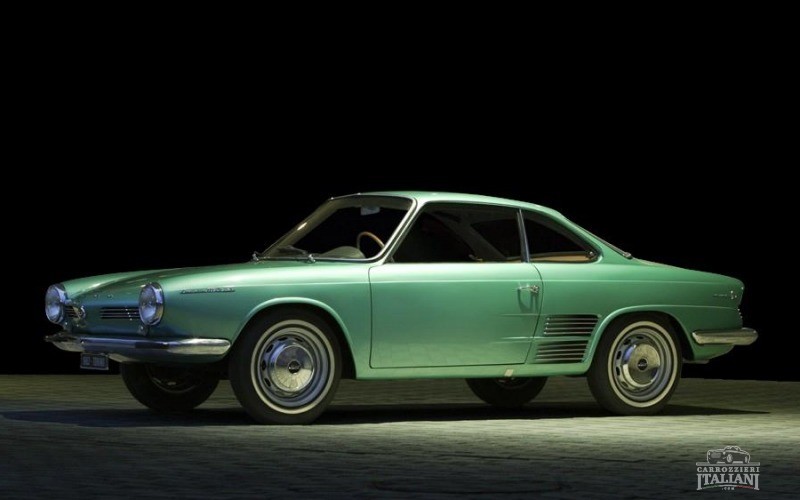
Michelotti retained the rear-engine architecture but used it to create a dramatically lower nose. With no large engine or radiator demanding space at the front, the bonnet could sit close to the wheels, giving the car the stance of a much more exotic machine. The circular headlamps stood proud at the outer edges, connected visually by a narrow, understated grille and a slim chrome bumper.
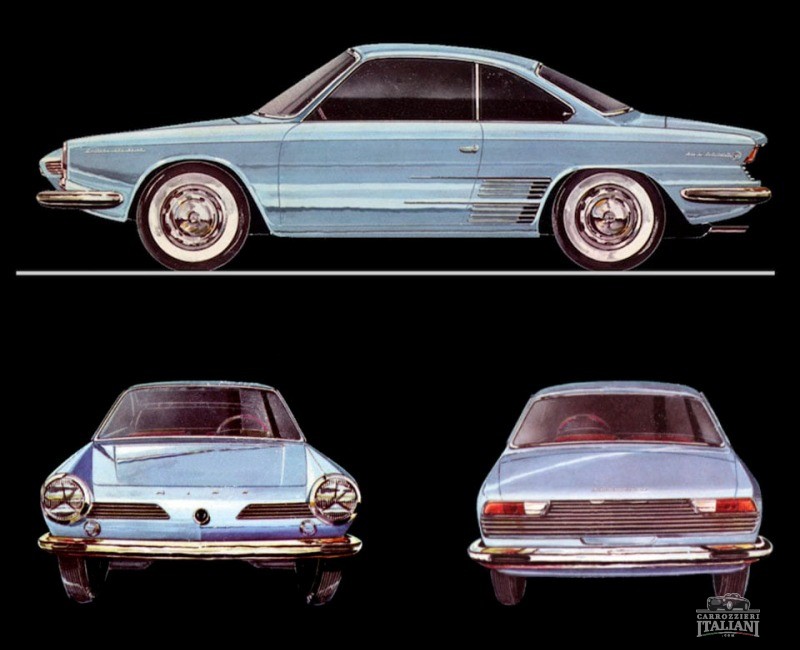
From the side, the Sprint was exceptionally clean. The waistline sat low, the pillars appeared almost impossibly thin and the glasshouse was large without making the body look fragile. The gently arched roof flowed towards a steep rear window before meeting a short, truncated tail. Horizontal cooling slots ahead of the rear wheels were not decorative theatre; they announced that the engine lived behind the passengers.
This was not a Contessa saloon wearing a tracksuit. Almost nothing of the donor car’s visual identity remained.
Michelotti described his styling philosophy at the time as one driven by functional requirements. Aerodynamics encouraged a low front and a cut-off tail, while visibility, comfort, safety and ease of production were considered from the beginning. On the Sprint, he eliminated the traditional opening quarter-windows and used dedicated fresh-air intakes instead. The dashboard was padded, projecting fittings were reduced and the body surfaces were kept simple enough that the design could conceivably be industrialised rather than remaining a hand-built fantasy.
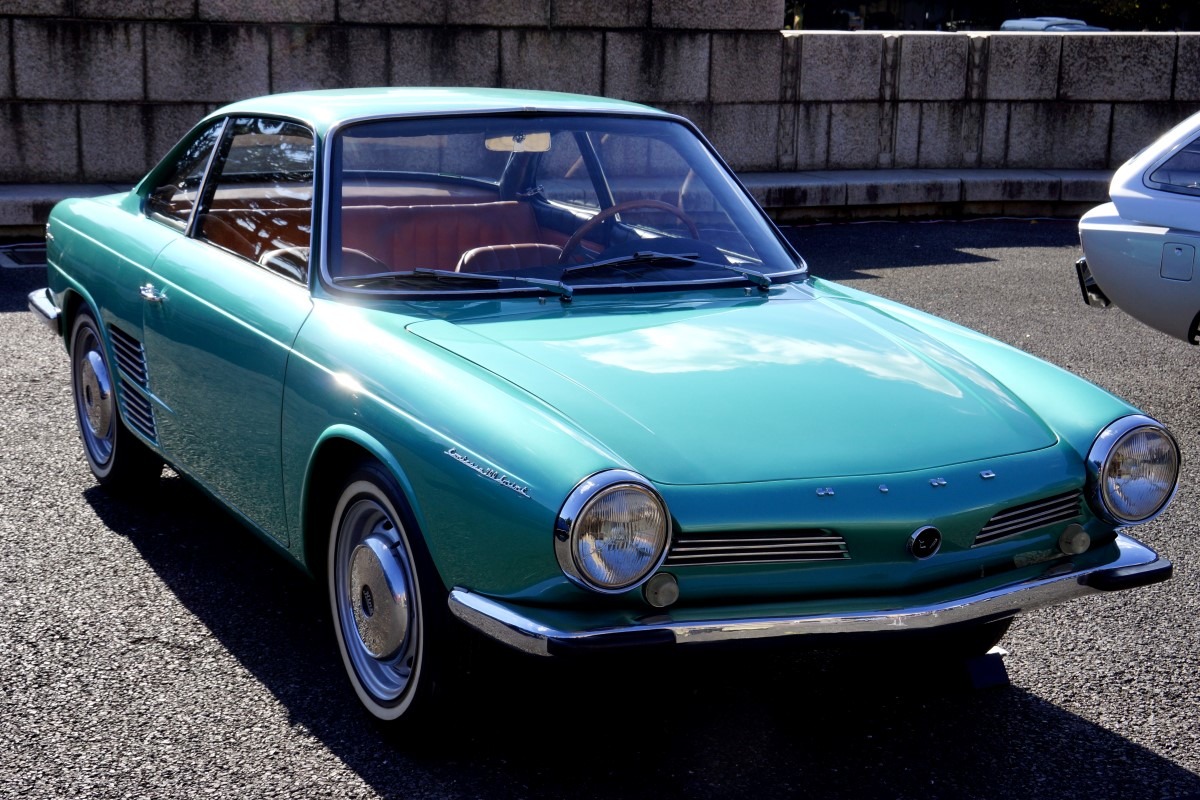
The proportions were particularly impressive because the Sprint remained tiny. It measured 3,830 mm long, 1,470 mm wide and just 1,200 mm high, with a wheelbase of 2,150 mm. In modern terms, it was shorter than many city cars and only slightly taller than a determined Labrador.
Yet it was officially described as a 2+2 rather than a cramped two-seater. Michelotti had created a cabin with proper front bucket seats, occasional rear accommodation and excellent visibility, all within a body weighing only 650 kilograms.
Forty-five horsepower, applied properly
The Sprint’s performance figures require a small adjustment in expectations. There was no screaming V12, no twin-cam racing engine and no carburettor arrangement resembling a church organ.
There was an 893 cc Hino four-cylinder.
In the ordinary Contessa, it produced 35 PS. With Nardi’s attention and a sports-type Weber carburettor, the Sprint’s output rose to 45 hp at 5,000 rpm. This is not enough power to frighten a modern rental hatchback, but the Hino weighed only 650 kg. The result was roughly 69 horsepower per tonne, which was perfectly respectable for a small sporting car of the early 1960s.
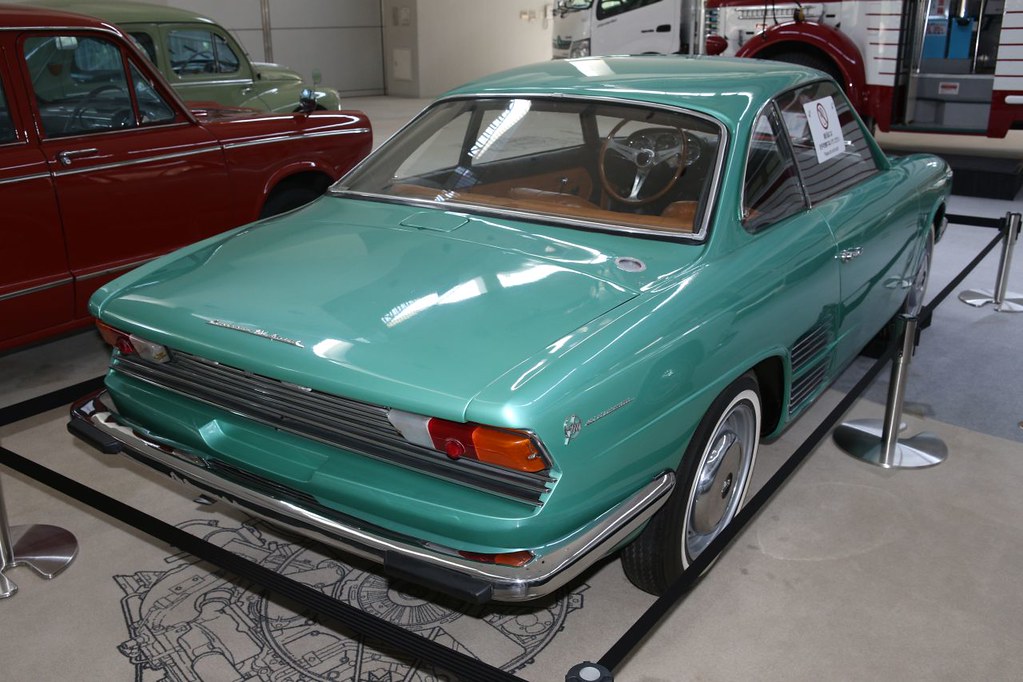
More importantly, the Sprint was not simply a standard Contessa with a louder exhaust. Its official brochure described a floor-mounted three- or four-speed gearbox, front disc brakes, revised suspension intended to reduce body roll and a claimed maximum speed of 140 km/h. That was 30 km/h faster than the regular Contessa 900.
The involvement of Nardi continued inside. The driver sat behind a hand-crafted Nardi steering wheel, facing a central instrument panel containing a mechanical tachometer, speedometer and auxiliary gauges. The aluminium-faced cluster used Italian Veglia instruments specially marked with Hino branding. A free-standing centre console rose from the otherwise flat floor, while the door sills carried a wonderfully unambiguous inscription: Hino-Michelotti.
🔗 Read more: From Turin to Tokyo: Italian Design in Japanese Cars
The interior was restrained but serious. It looked less like that of a converted economy car and more like the cockpit of a scaled-down Italian GT. That was precisely the point.
Turin, Geneva, New York and Tokyo
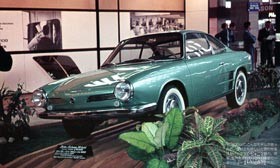
The Contessa 900 Sprint made its public debut when the 44th Turin Motor Show opened on 31 October 1962.The interior was restrained but serious. It looked less like that of a converted economy car and more like the cockpit of a scaled-down Italian GT. That was precisely the point.
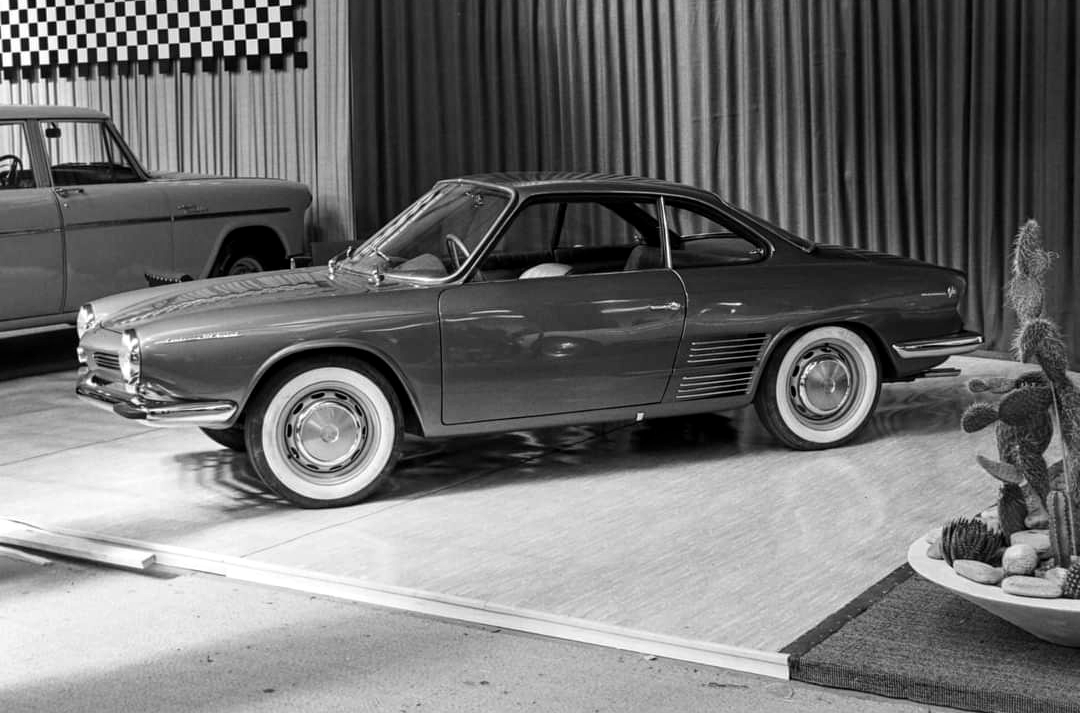
Hino’s stand was small, particularly when surrounded by Fiat, Alfa Romeo, Lancia, Renault and the established Italian coachbuilders. But the Sprint was displayed with remarkable confidence. The Japanese and Italian flags framed a sign reading “Hino – Contessa 900 Sprint”, followed by the declaration “Creazione Studio G. Michelotti”. Nardi’s name appeared beneath the technical specifications.
There was only one car on the stand, but Hino did not present it as an eccentric one-off from a distant manufacturer. It was positioned as an international sports car created jointly by Japanese engineering and Italian design. Iwasaki later remembered the public response as extraordinary, claiming that the car dominated attention at the show and was featured prominently by the local press.
The Sprint then appeared at the Geneva Motor Show in March 1963, where it was reported alongside new cars from Abarth, Alpine, ATS, Mercedes-Benz and other major manufacturers.
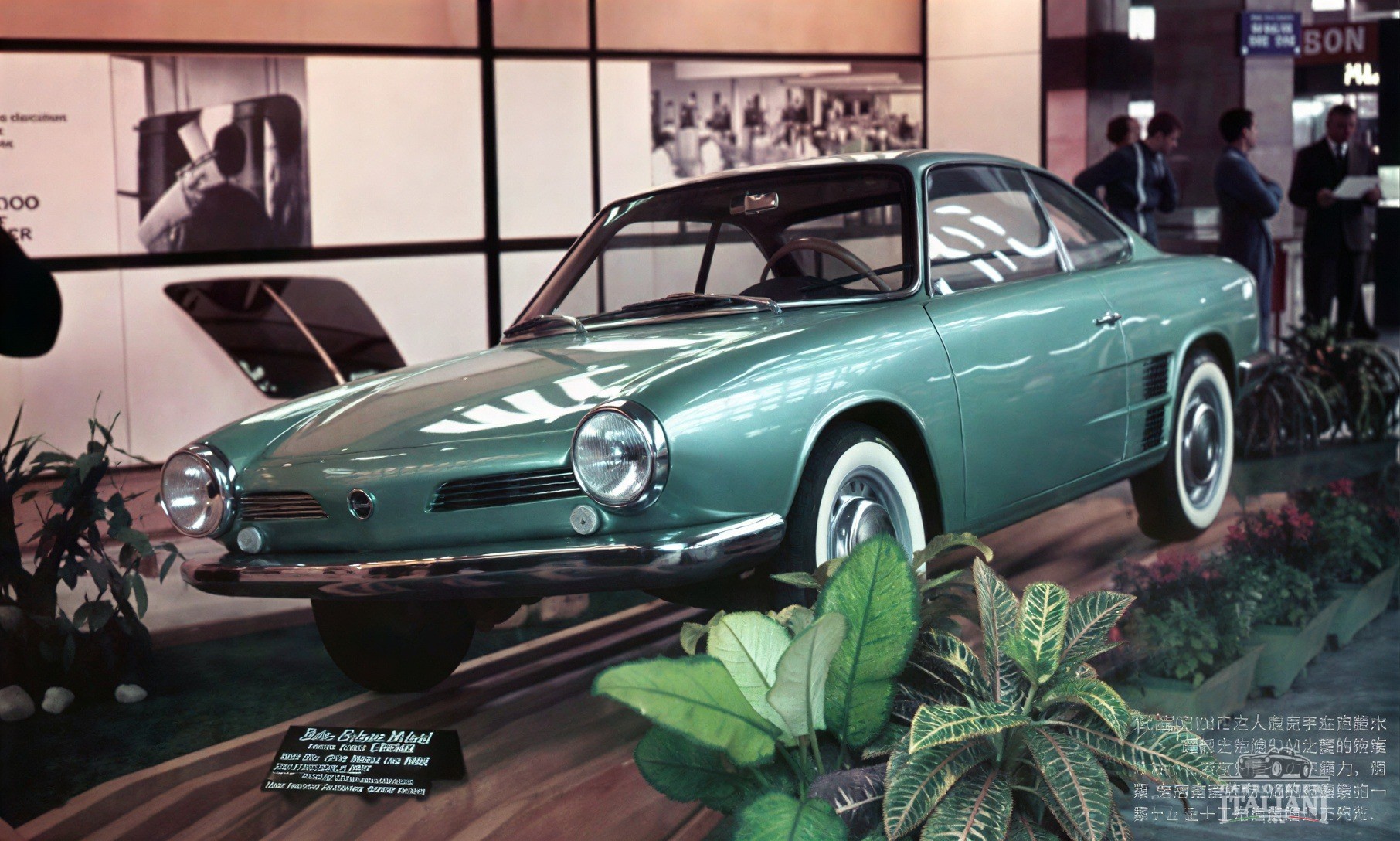
A month later, it crossed the Atlantic for the New York International Automobile Show, held from 13 to 21 April. Time included the Hino among the show’s notable premieres and reported that the 45 hp Italian-styled car was expected to sell for approximately $2,300. It was an ambitious price, but also evidence that the Sprint was being discussed as a genuine product rather than a decorative prototype.
Finally, the coupé returned to Japan and appeared at the 10th All Japan Automobile Show in Tokyo, held from 26 October to 10 November 1963. For Japanese visitors, it must have seemed almost extraterrestrial. Domestic manufacturers were rapidly improving, but a low, hand-built Italian GT carrying a Hino badge belonged to a different world.
The production plan that vanished
For a time, the Sprint appeared destined for production in Italy.
Contemporary reports suggested that it would be manufactured there and sold in Europe and the United States for around $2,300. Later accounts even mentioned an initial production target of 5,000 cars beginning in October 1963, although surviving evidence is insufficient to confirm that figure.
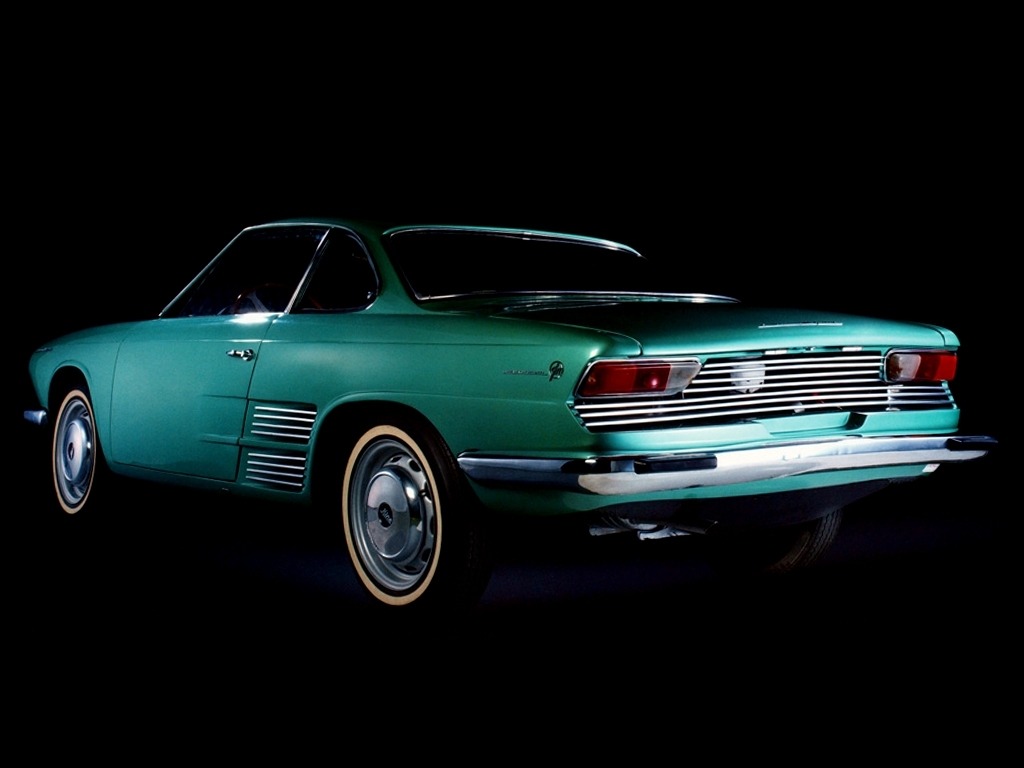
Hino export executive Ichiro Uchida offered one explanation in early 1964. He said the Sprint had created a sensation and appeared capable of attracting substantial demand, but claimed that plans for Italian manufacture had been suspended after pressure from major domestic carmakers.
It is an irresistible story: tiny Hino and independent Michelotti prepare to upset the establishment, only for the great Italian manufacturers to close ranks. It may even be partly true. But the practical obstacles were substantial enough without requiring a Turin conspiracy.
Who would have manufactured thousands of bodies? Could Hino have supplied chassis and engines quickly enough? How would a Japanese company with a limited European network have provided parts and service? Was a four-month-old prototype sufficiently developed for series production? And could its rear-engine cooling system cope with customers who did not treat the car like a delicate showpiece?
The historians at HinoSamurai have raised precisely these questions. They also note that the small-car market was moving quickly. By 1964, the performance expected from a one-litre sports car had increased, prompting Hino to consider a more powerful successor rather than continue with the original 900. The Sprint remained a prototype, while company resources returned to the much more important Contessa 1300.
In other words, the Sprint was defeated not by one dramatic decision, but by the usual collection of things that kill wonderful cars: cost, timing, production capacity, servicing, corporate priorities and the inconvenient habit of the market moving on.
More than a beautiful dead end
It would be easy to describe the Sprint simply as the prototype that inspired the Contessa 1300, but the chronology is more complicated.
Development of the 1300 had already begun before Michelotti started work on the Sprint. The larger car’s basic engineering programme had been established in 1961, and Michelotti had already produced sketches for it. The Sprint was therefore not the beginning of the 1300 project.
What it did was concentrate Michelotti’s ideas into a smaller, purer and less compromised object. Its low waistline, slim pillars, clean surfaces, rear cooling treatment and truncated tail demonstrated how convincingly Hino’s mechanical layout could be translated into an international design language. Elements of that thinking then fed back into the final development of the 1300.
🔗 Read more: Giovanni Michelotti: The Freedom of a Thousand Designs
The production Contessa 1300 saloon arrived in September 1964, followed by the coupé in 1965. Both were more mature, spacious and commercially realistic than the Sprint, but neither possessed quite the same delicacy. The 900 Sprint had enjoyed the freedom of being created before accountants, production engineers and rear-seat passengers were given the opportunity to complain.
That freedom was precisely what made it special.
The survival of the original car
Unlike many experimental cars of the period, the Contessa 900 Sprint survived.
For years it was stored at Hino’s Nitta factory. During the early 1990s, the car underwent an exterior restoration and was placed on display at Hino’s headquarters. Photographs from 1993 show the restored prototype back in its distinctive metallic green finish.
Some details took longer to correct. The original large mechanical Veglia tachometer had been removed decades earlier and replaced by a smaller electrical unit from a later Contessa coupé. Remarkably, the authentic instrument had survived in private hands. It was eventually returned to Hino and reinstalled in 2008, restoring the dashboard to Michelotti’s original arrangement. An ashtray apparently added before the 1963 Tokyo show was also removed, returning the centre console to its cleaner European configuration.
The surviving Sprint is now cared for by Hino and exhibited at the Hino Auto Plaza. The museum has continued to maintain the car, including recent mechanical work intended to preserve its ability to run rather than reducing it to a permanently static object.
That matters, because the Contessa Sprint is more than an attractive museum curiosity. It captures a very specific moment when a Japanese manufacturer was still deciding what it might become.
Hino could have developed into a global passenger-car brand. Michelotti could have given it a family of elegant rear-engined models. The Sprint might have become a Japanese alternative to the Alpine A110, Fiat 850 Coupé or small Abarths. None of that happened. Hino entered an alliance with Toyota, ended passenger-car production and concentrated on the commercial vehicles for which it is now known.
The Contessa 900 Sprint remains the evidence of the other route.
It had only 45 horsepower, an engine descended from the Renault 4CV and a badge now more familiar from motorway service areas than concours lawns. Yet it combined Japanese ambition, Italian instinct and Nardi engineering in a body just 1.2 metres tall.
Small car. Small engine. Enormous story.

ABOUT THE AUTHOR
Andreas Scheidl
Italian classic car enthusiast with German roots. Renowned as a respected figure in the classic car community, he serves as a jury member at various international concours d'elegance, including the Classic Gala Schwetzingen and Mantova. As a content creator, Andreas passionately shares his profound knowledge and appreciation for vintage automobiles. His heart beats for cars designed by Giovanni Michelotti, showcasing his discerning taste and dedication to preserving the timeless elegance of automotive history.
More stories by Andreas Scheidl ↗CONTINUE READING
Posts You Might Like
A Central Driving Position, a Rear-Mounted V8. Was This Really a Lancia?
In 1948, visitors to the Turin Motor Show could see an unusual Lancia on the stand of Carrozzeria Ghia. It was a large two-door coupé with a two-litre V8 mounted behind the…
Read story
Fioravanti F100: The Ferrari He Was Allowed to Imagine
Enzo Ferrari’s centenary, Leonardo Fioravanti’s independent studio and a supercar that explored air brakes, steel wheels and a new way of driving—without ever wearing the Cavallino.
Read story
Michelotti Shellette: When the Fiat 850 Became a Yacht
The yacht designer, the Turin stylist and the tiny coachbuilt car that crossed between the quay, the royal holiday house and the auction room. Some automobiles were conceived for the open road,…
Read story
Maserati A6 1500: A New Road for the Trident
When the doors of the Geneva Motor Show opened in March 1947, Maserati was a name that required little introduction to anyone who followed motor racing. What it did not yet possess…
Read story
THE CONVERSATION
Comments 0
Share a memory, a period photograph or a documented detail about this story.