
How Italian Coachbuilders Reimagined Chevrolet
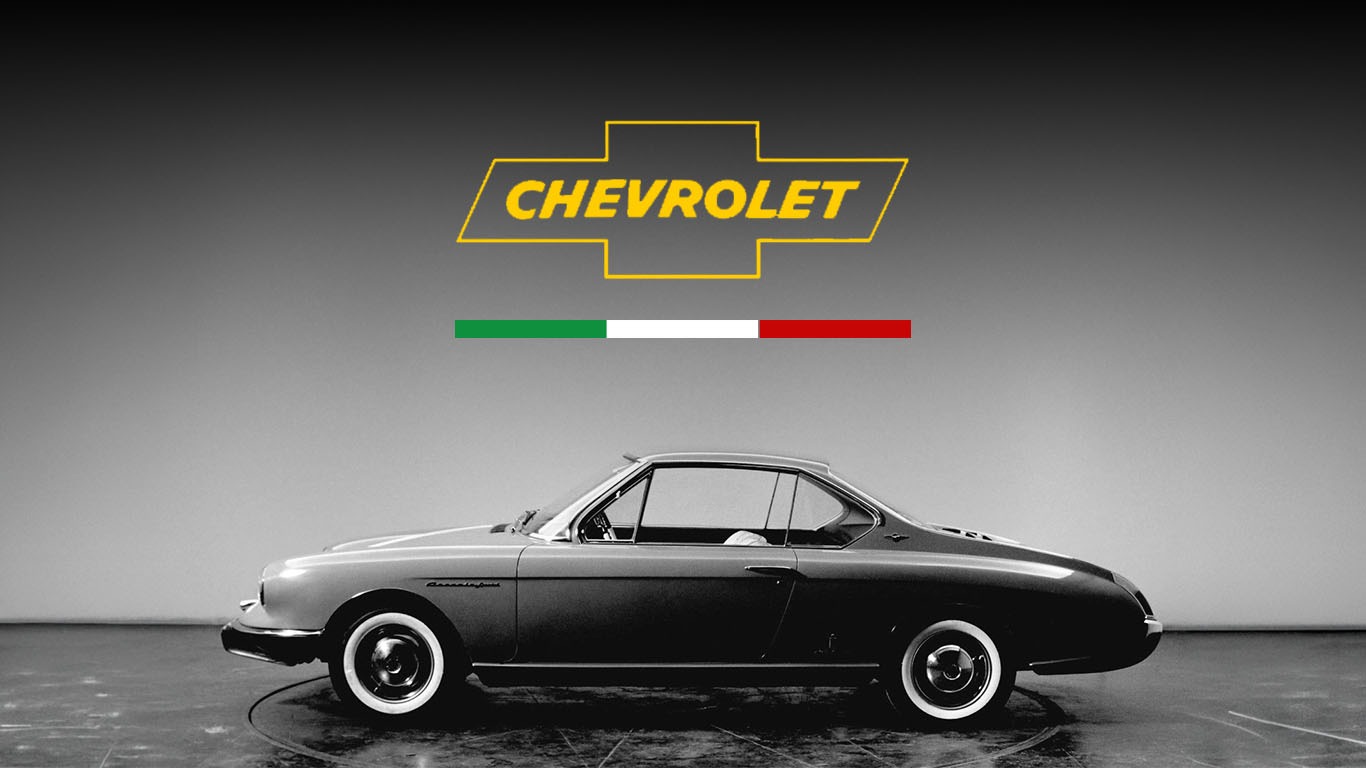
By the time Chevrolet chassis began appearing in Italian carrozzerie, the idea itself was hardly unprecedented. Chrysler had already established a productive relationship with Ghia, and decades earlier Pinin Farina had experimented with Cadillac underpinnings as far back as the 1930s. American mechanicals, Italian bodies — the concept was familiar, even if it remained exclusive, expensive, and fundamentally experimental.
What made Chevrolet’s involvement particularly intriguing was its breadth. From late-1950s show cars to later, more personal commissions and modern reinterpretations, Chevrolet platforms became the basis for a scattered but compelling series of Italian coachbuilt automobiles. Detroit supplied durability, torque, and scale; Italy responded with proportion, surface discipline, and a very different sense of elegance. These were not mere re-skins, but genuine design exercises that treated American hardware as raw material rather than limitation.
The resulting cars occupy a fascinating middle ground. They are neither fully American nor conventionally Italian, and they often sit outside the canonical narratives of both traditions. Yet they reveal how Italian studios approached mass, wheelbase, and mechanical layout when freed from their usual constraints — and how American manufacturers, whether officially or tacitly, allowed those interpretations to exist.
What follows is a chronological exploration of these Italian coachbuilt Chevrolets, examined within their historical and cultural context. Each car reflects the priorities of its coachbuilder, the ambitions of its commissioner, and the moment in which it was created. Some were fleeting showpieces, others long-lived curiosities, but together they form a telling chapter in the broader story of transatlantic automotive design.
The 1959 Corvette Italia by Scaglietti
This story doesn’t begin in Detroit or Modena, but in frustration.
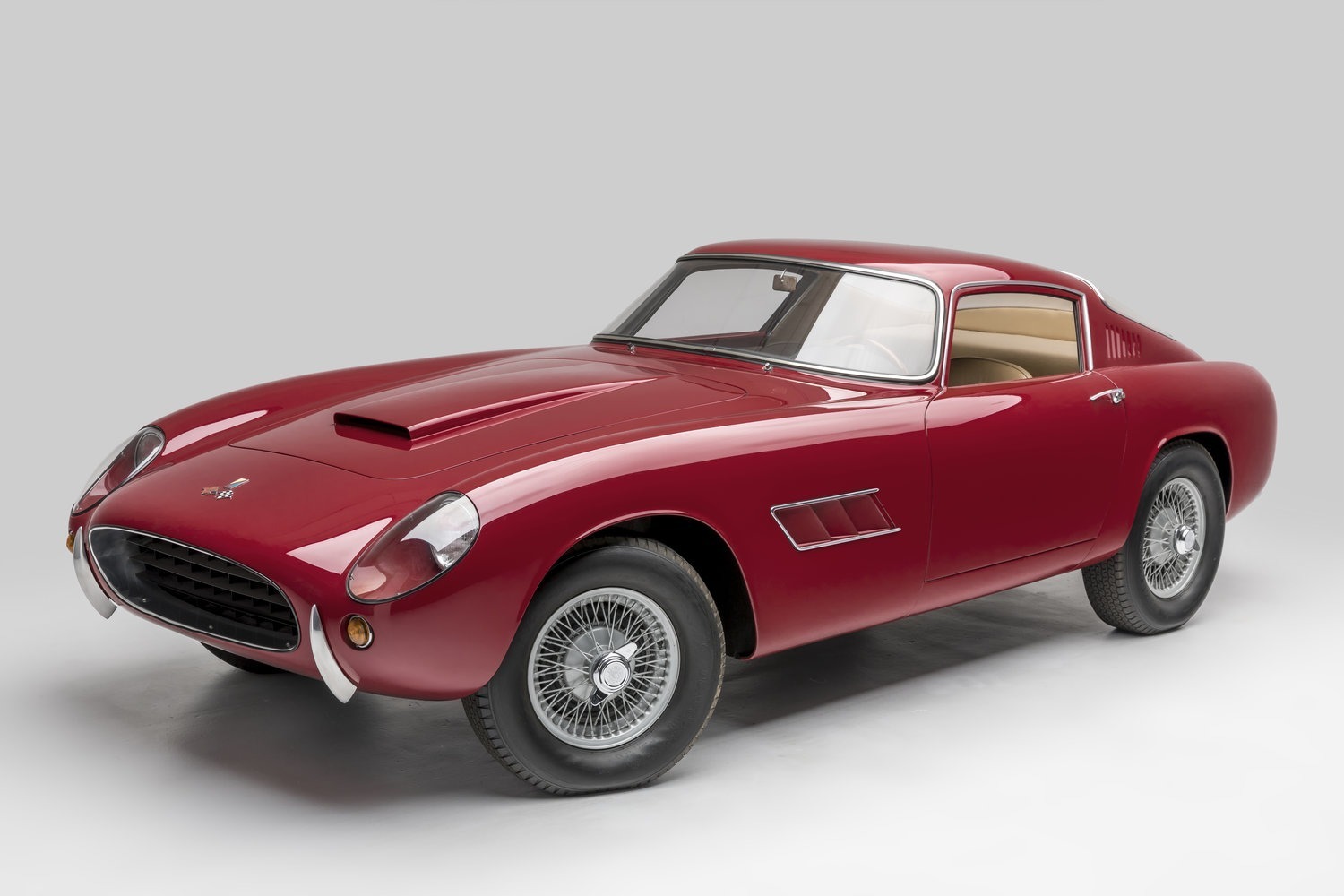
In 1959, Texas oilman Gary Laughlin — already deeply embedded in the American Ferrari privateer scene — reached the breaking point. Italian engines were intoxicating but brittle, expensive, and all too willing to turn a minor racing incident into a financial catastrophe. Laughlin’s response wasn’t to abandon performance, but to rethink the foundation entirely. What if the solution wasn’t better Italian mechanics, but no Italian mechanics at all?
The idea was deceptively simple: take Chevrolet’s new Corvette — still young, still evolving, but already mechanically robust — and clothe it in a proper Italian gran turismo body. Laughlin wasn’t alone in thinking this way. He enlisted two friends who would soon reshape American motorsport in their own right: Carroll Shelby and Jim Hall. Together, they formed a uniquely qualified conspiracy.
Through Shelby’s connections, Chevrolet quietly sanctioned the release of three brand-new 1959 Corvette chassis, which were promptly shipped to Italy. These were no stripped test mules. One carried fuel injection, the other two dual four-barrel setups — Chevrolet at full confidence. The mechanical package was complete, waiting only for a body worthy of the ambition.
For that, the trio turned to Carrozzeria Scaglietti.
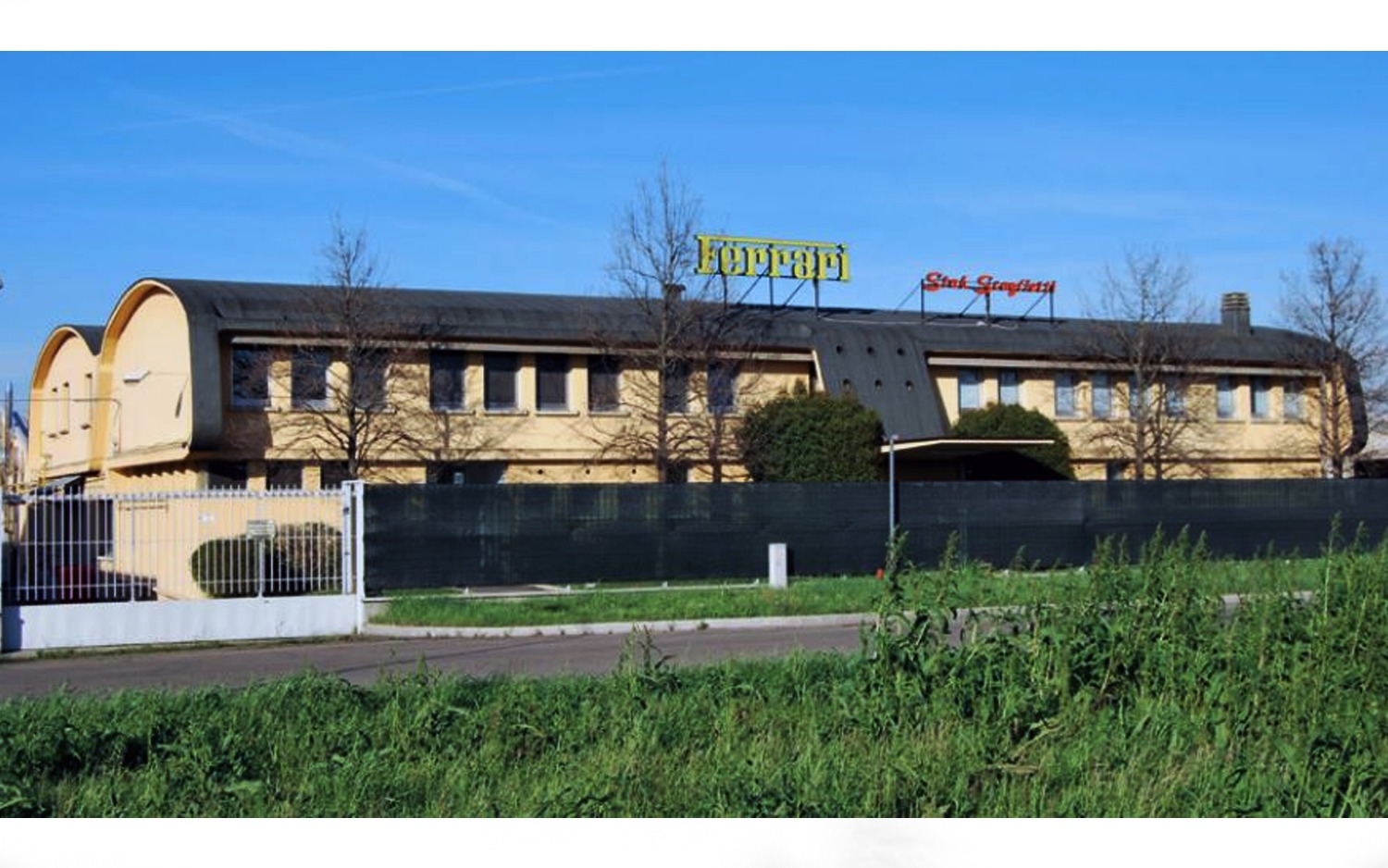
At the time, Scaglietti was inseparable from Ferrari’s competition identity. His Modena workshops were shaping some of Maranello’s most important racing cars, and his craftsmen understood aluminum in a way few others did. Over the Corvette frames, Scaglietti hand-formed sleek aluminum coupe bodies that transformed the American roadster into something altogether different: long-hooded, tightly surfaced, and unmistakably European in stance.
The influence was obvious — echoes of contemporary Ferrari GTs in the proportions and greenhouse — but this was no imitation. Subtle concessions were made to Chevrolet, including Corvette grille elements intended to keep General Motors’ executives on side. The result was a cultural hybrid: American mass and torque wrapped in Italian restraint and tension.
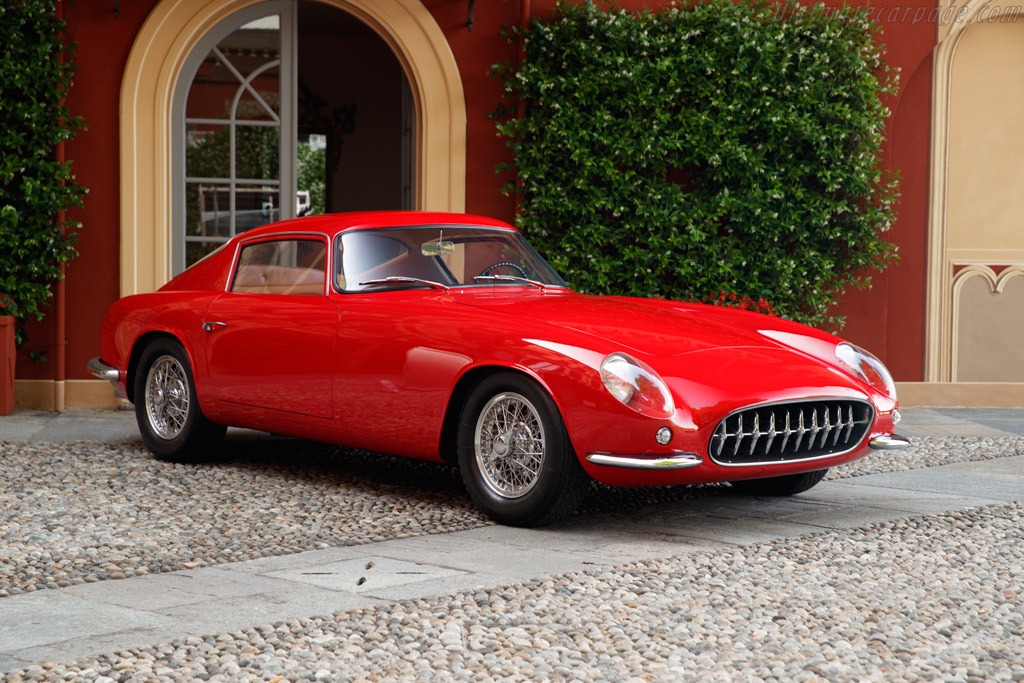
Only three were built — and that number was not accidental. According to long-standing accounts, Enzo Ferrari himself encountered the project while visiting Scaglietti’s shop. Upon seeing American Corvettes receiving Italian bodies under his favored coachbuilder’s roof, Il Commendatore reportedly demanded an explanation. “Three,” he was told. Ferrari’s response was unambiguous: build a fourth, and Scaglietti would never work for Ferrari again.
The message was received.
Though closely related, the three cars were not identical. The earliest example retained a more explicit Corvette identity, complete with a recognizable grille. The later two evolved toward a cleaner, more Ferrari-like face, with detailing that aligned closely with Scaglietti’s contemporary competition GTs, including the Tour de France-style cues he knew so well.
🔗 Read more: Carrozzeria Scaglietti: The Coachbuilder of the Prancing Horse
When the cars finally returned to the United States — delayed in part by Scaglietti’s overwhelming Ferrari commitments, and perhaps by a certain tension in Modena — they landed like a revelation. Here was the Corvette reinterpreted, not tuned or modified, but reimagined. Each of the original conspirators took delivery of one car: Laughlin, Shelby, and Hall. Over time, the cars were modified, traded, and in some cases mechanically altered, but their significance never diminished.
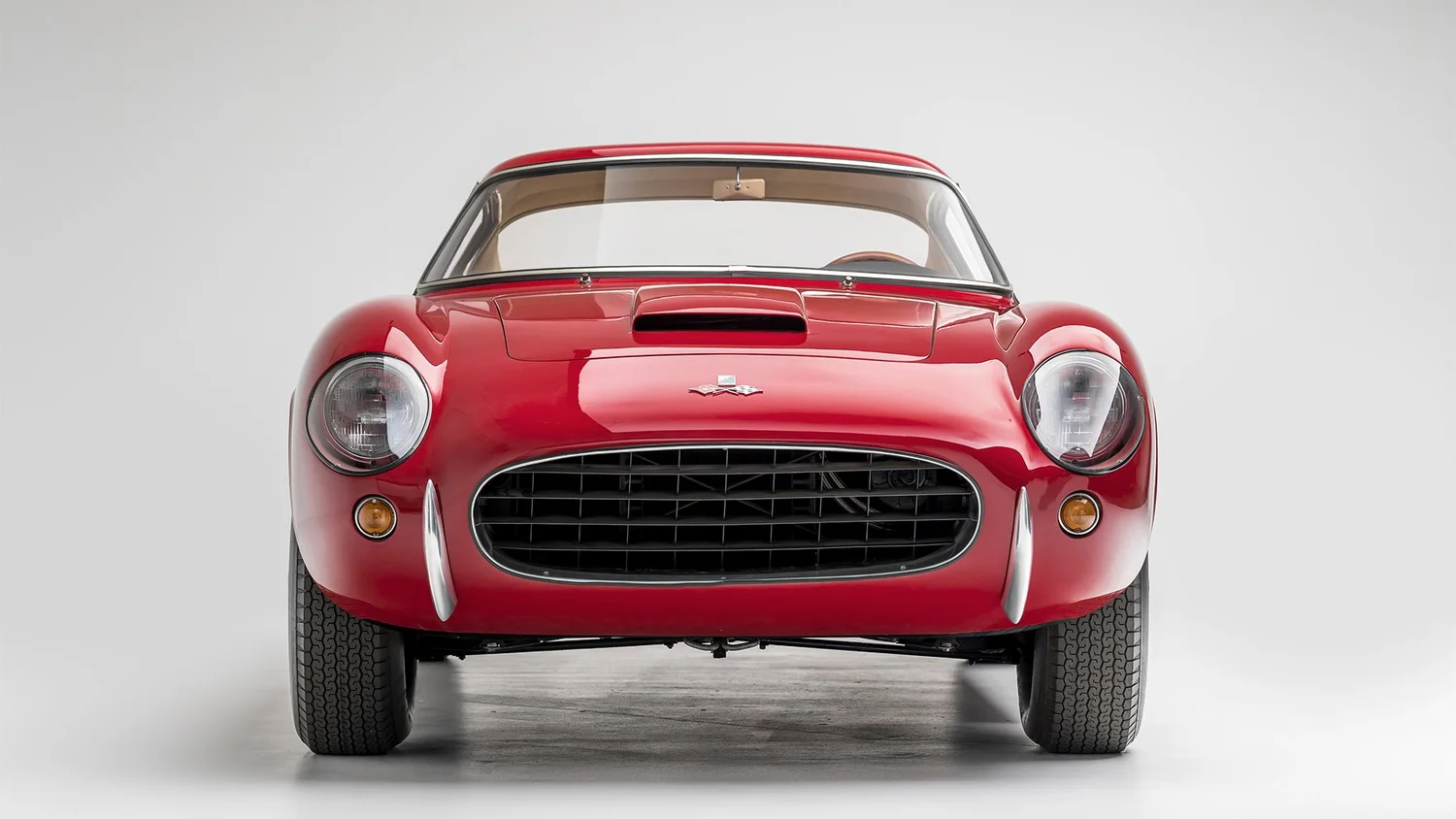
Decades later, one of the trio — the second Scaglietti Corvette — would be recognized at the Pebble Beach Concours d’Elegance, its award serving as official confirmation of what had long been obvious. These cars were not curiosities. They were artifacts of a moment when American performance and Italian craftsmanship met on equal footing.
Today, the three Scaglietti-bodied Corvettes remain among the most compelling transatlantic hybrids ever built — proof that the marriage of Detroit power and Modenese form was not only possible, but occasionally brilliant.
The Pininfarina Corvair Experiment (1960–1963)
If the Scaglietti Corvette was born from private frustration, the Pininfarina Corvair was something else entirely: a corporate thought experiment.
As the 1960s opened, Chevrolet had done something quietly radical. The Corvair arrived not just as a compact, but as an American car willing to break rules — rear engine, air-cooled flat-six, European proportions by Detroit standards. It didn’t take long for that mechanical audacity to attract attention across the Atlantic. Bill Mitchell, GM’s design chief and no stranger to Italian influence, saw the opportunity immediately. In 1960, he sent a Corvair chassis to Pininfarina with a simple mandate: show us what this could be.
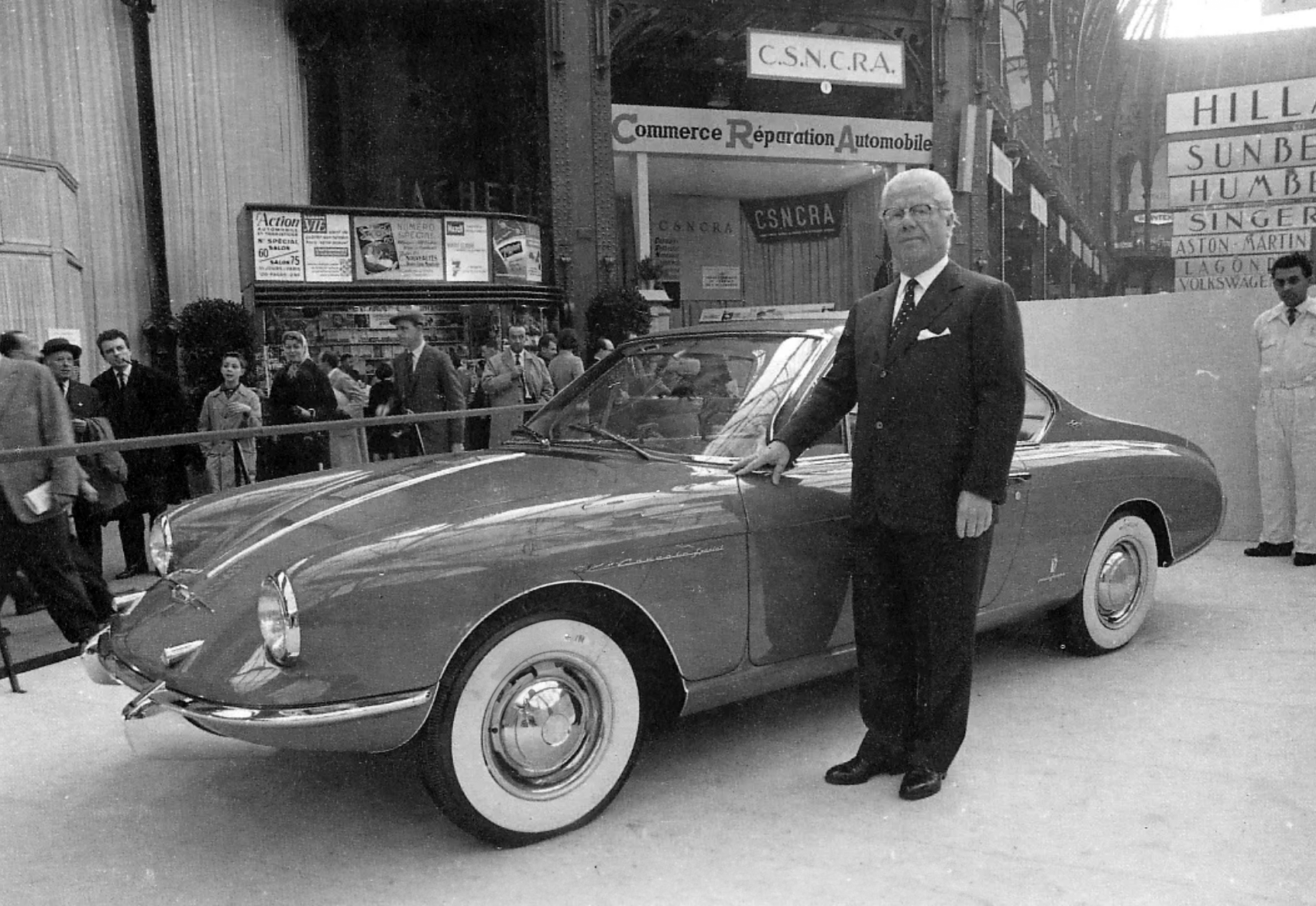
What emerged was not a styling exercise in excess, but restraint. Debuting at the 1960 Turin Auto Show, the first Pininfarina Corvair, translated American architecture into a distinctly continental form. The lines were long and uninterrupted, chrome was used sparingly, and the overall stance felt more GT than compact. The rear-mounted flat-six allowed a low rear deck and clean profile, while the front carried echoes of Pininfarina’s earlier Cadillac experiments — a wide grille, wraparound headlamps — scaled down and disciplined.
It was immediately clear this was no novelty. The car looked resolved, and Turin noticed.
Unlike many show cars, this Corvair didn’t freeze in time. Instead, it evolved — deliberately — over the next three years. That evolution coincided with the arrival of a young American designer at Pininfarina: Tom Tjaarda. Under his guidance, the Corvair concept was rethought twice, each revision tracking the rapid shift in early-1960s design language.
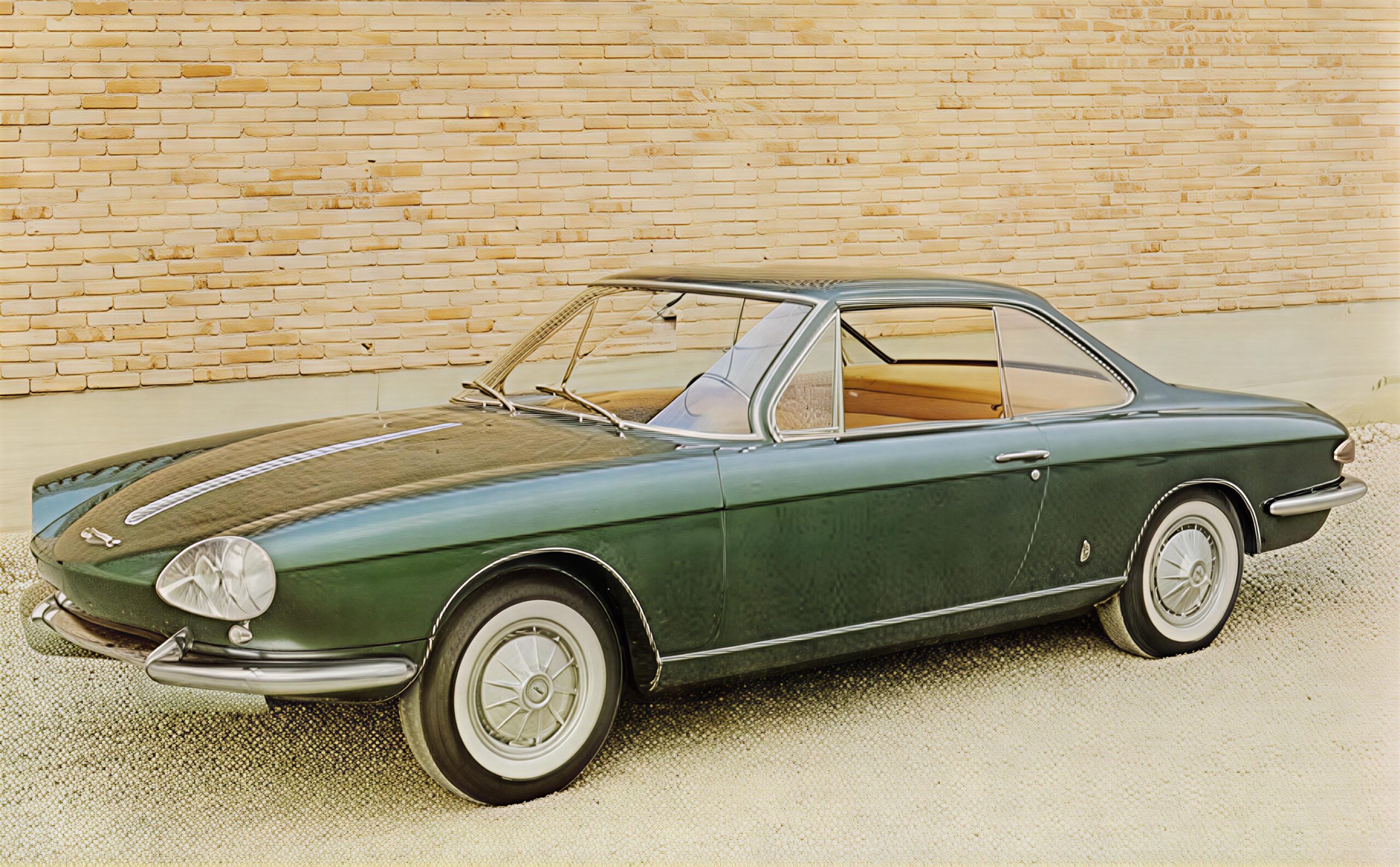
The second iteration, completed in 1962, transformed the coupe into a 2+2 fastback. The surfaces sharpened, the greenhouse grew longer and lighter, and distinct elliptic headlamp housings gave the car a more assertive, contemporary face. Finished in a dark metallic green, this version didn’t just circulate on show stands — it landed on the cover of Road & Track in February 1963, reinforcing the seriousness with which the project was being taken. It was already the second time a Pininfarina Corvair appeared on the magazine’s cover, following the original design’s Paris showing in March 1961.
🔗 Read more: Pininfarina Through the Ages: The Complete History
By 1963, even that version was deemed ready for refinement. The final update focused on purity. Tjaarda eliminated the awkward dogleg in the A-pillar, smoothed transitions, and further clarified the car’s proportions. Shown in red with a white interior at the Geneva Motor Show, the Corvair Speciale reached its most mature form — a compact GT that felt entirely at home among contemporary European designs, yet unmistakably rooted in American engineering.
The influence did not stop at the show circuit. Several key elements of the Speciale — the tapered rear deck, the expansive glass area, the overall stance — would later surface in Chevrolet’s second-generation 1965 Corvair. The transatlantic dialogue, it seemed, had begun flowing both ways.
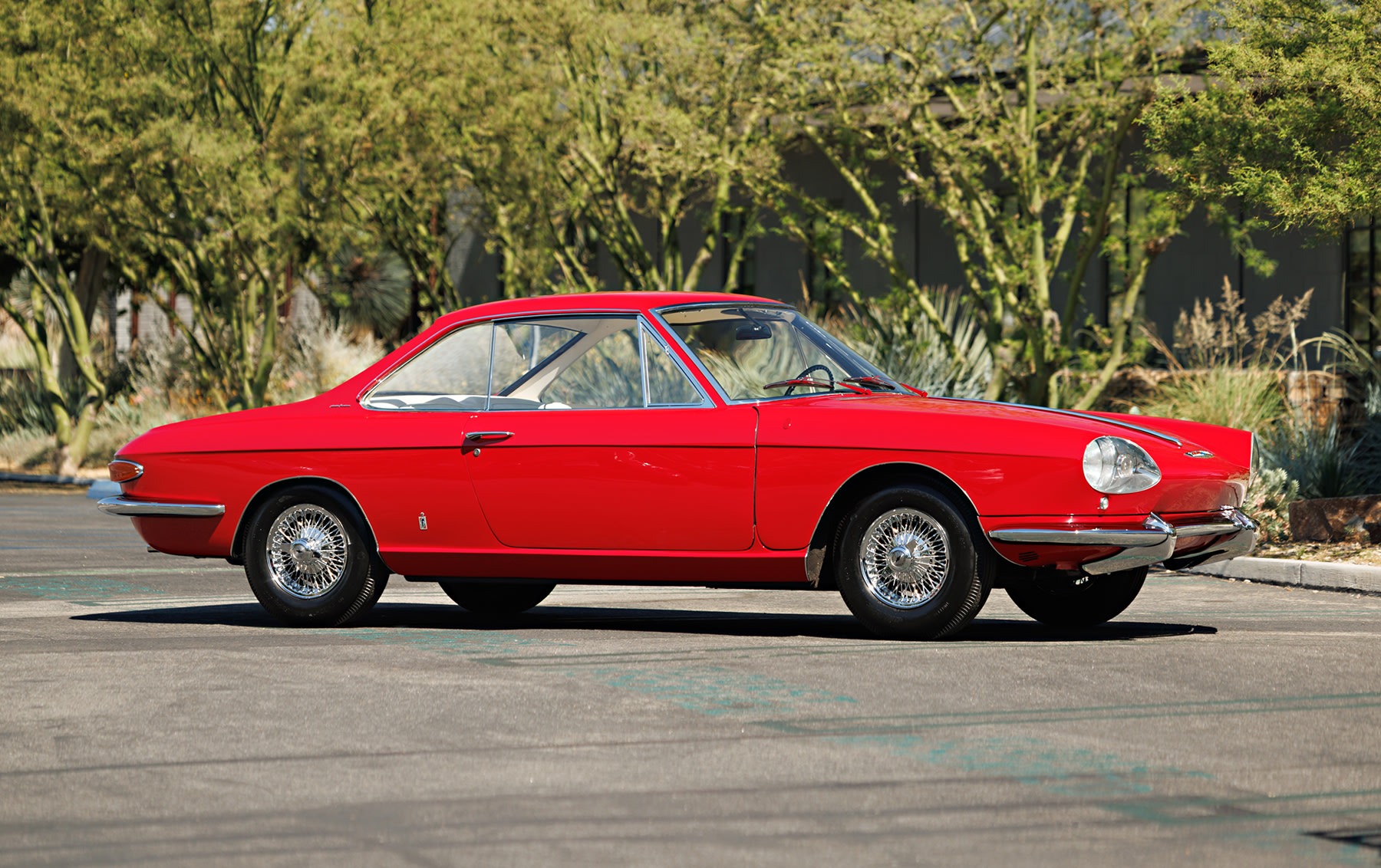
Production was never seriously on the table, but the prototype’s afterlife proved just as compelling. Retained by Pininfarina for more than thirty years, the car remained largely untouched before being sold in 1996 to collector Pascal Saint-Maux. Eventually, it crossed back to the United States, resurfacing publicly in the 21st century. In 2022, it appeared at auction during Pebble Beach week, and later through a specialist dealer — still showing fewer than 4,000 miles.
A Custom Corvette by Vignale: The 1961 “Kelly” Corvette
Not every transatlantic Corvette was born inside a design studio or sanctioned—quietly or otherwise—by General Motors. Some began the old-fashioned way: with obsession.
Gordon Kelly was not an industrialist or a racing magnate. He was a young American stylist who, in the late 1950s, set out to design the sports car he wanted to drive. Kelly sketched relentlessly, refining a sleek GT concept over several years and eventually committing it to a detailed 1:8 scale model. This wasn’t fantasy — it was preparation.
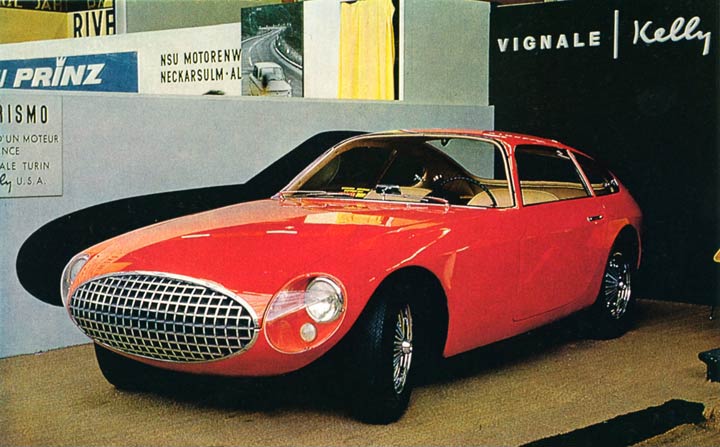
The opportunity came in 1960, when Kelly acquired a standard Corvette chassis and drivetrain and shipped it to Turin with a singular request: build this. Carrozzeria Vignale, still firmly established as one of Italy’s most expressive coachbuilders, agreed to execute the design. What emerged was not a variation on Corvette themes, but a wholesale reinterpretation.
Unveiled on Vignale’s stand at the 1961 Paris Motor Show, the Kelly Corvette looked almost defiantly European. The fastback coupe body was clean and fluid, its greenhouse unusually expansive, with thin pillars and large glass areas that gave the car a lightness completely absent from production Corvettes of the period. The roofline flowed uninterrupted into a restrained Kamm-style tail, while the front abandoned Chevrolet’s chrome-heavy grin in favor of a single large oval grille. Gone were the scallops and exaggerated fenders; in their place was a unified volume, smooth and forward-looking.
🔗 Read more: The Story of Carrozzeria Vignale
This was American hardware filtered through an Italian obsession with proportion and surface continuity.
Vignale’s craftsmen, working with subcontractor Sibona-Basano, formed the body in polished aluminum, lending the car a delicacy that contrasted sharply with its mechanical core. Beneath the skin remained the familiar Corvette formula — a 283-cubic-inch V8 and stock running gear — but the cabin told a different story. Italian instruments, tailored trim, and rich leather completed the transatlantic synthesis, creating an interior as bespoke as the exterior suggested.
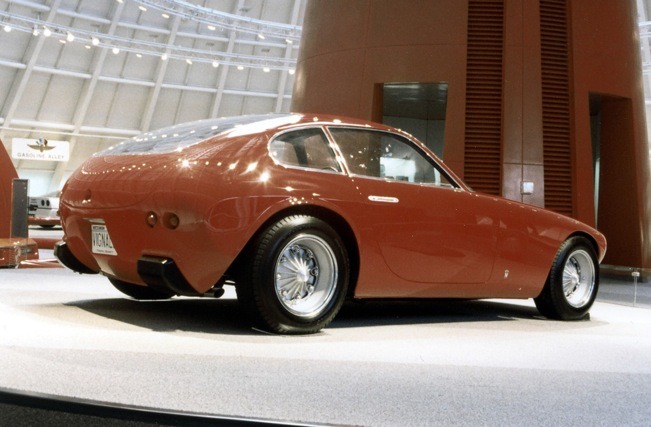
Unlike many one-off show cars, the Kelly Corvette was driven — and driven often. After Paris, Gordon Kelly took delivery and used the car as intended, treating it less as an artifact and more as proof that his idea worked.
Over time, the car returned to the United States, where it became a whispered legend among Corvette historians. Remarkably, it survived largely intact. In the early 2000s, Wisconsin enthusiast Mike Breslow acquired the car and undertook a careful restoration, returning it to its original specification and finish. Once complete, the Kelly Corvette began appearing on concours lawns and in museum settings, frequently stopping knowledgeable observers in their tracks. Its glassy canopy and clean silhouette felt shockingly modern — “airy” was a word often used, and accurately so.
Coverage by outlets such as Petrolicious ensured the story reached a wider audience, but the car’s appeal never relied on novelty. It rested on clarity of purpose.
1963: A Year of Italian Visions – Bertone’s Testudo and Pininfarina’s Rondine
If any single year crystallized the Italian fascination with Chevrolet platforms, it was 1963. Within months of each other, two of Italy’s most influential houses unveiled radically different interpretations of American mechanicals — one experimental and futuristic, the other elegant and deliberate. Together, they revealed just how elastic Chevrolet’s engineering could be in Italian hands.
Bertone Chevrolet Testudo
The more radical of the two arrived first.
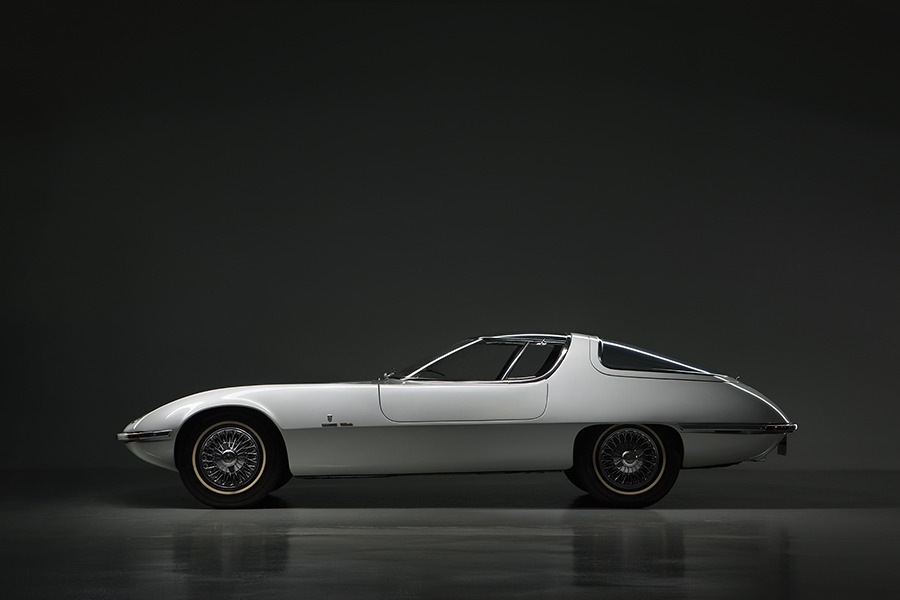
Unveiled at the 1963 Geneva Motor Show, Bertone’s Chevrolet Testudo was built on a heavily modified Corvair platform and represented one of the earliest major works of a young designer named Giorgetto Giugiaro. Encouraged by Bill Mitchell, who was keen to give the Corvair a European halo, Bertone shortened and re-engineered a 1962 Corvair Monza into a compact two-seat sports car — and then discarded nearly every conventional idea of how a car should look or function.
Giugiaro’s steel-bodied Testudo was low, smooth, and startlingly cohesive. The most dramatic feature was its absence of doors. Instead, a single forward-hinged canopy — incorporating the windshield and side glass — tilted open to grant access. The effect was aviation-inspired and unmistakably futuristic, a visual trick that made the car appear more concept aircraft than automobile. The nose was long and clean, with concealed headlamps that rotated upward when deployed, while the rear terminated abruptly in a glass-covered fastback over the engine bay.
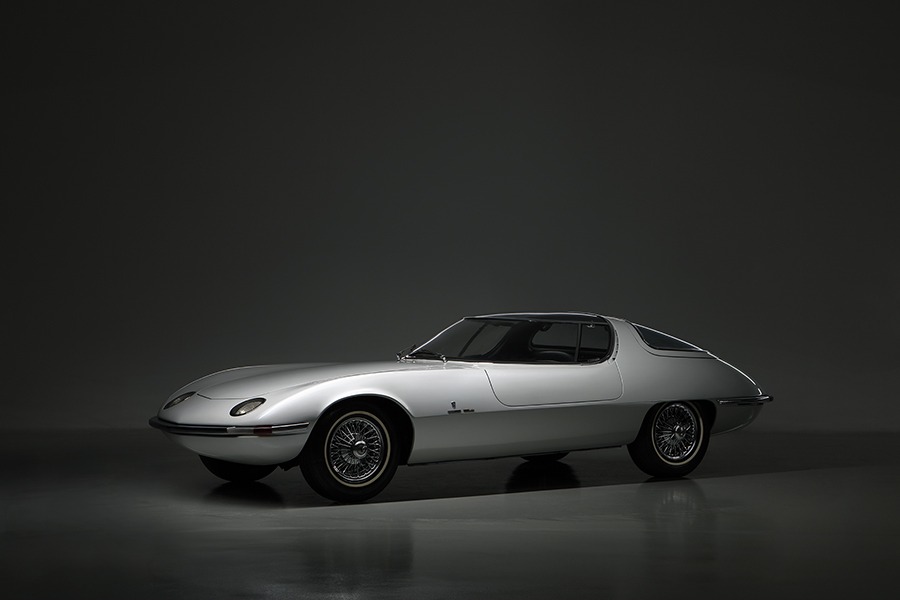
A sharp horizontal crease ran the length of the body, evoking the segmented shell of a turtle — a reference made explicit by the small turtle emblem on the rear deck. Despite the drama, this was no static showpiece. Nuccio Bertone personally drove the Testudo from Turin to Geneva for its debut, and Giugiaro himself drove it back afterward.
Mechanically, the Testudo remained Corvair at heart: a rear-mounted air-cooled flat-six, producing between 100 and 140 horsepower depending on tune, driving through a four-speed transaxle. Bertone reinforced the chassis and experimented with new materials — most notably polycarbonate plastic taillights, an automotive first. The result was a fully functional prototype that felt improbably advanced for its time.
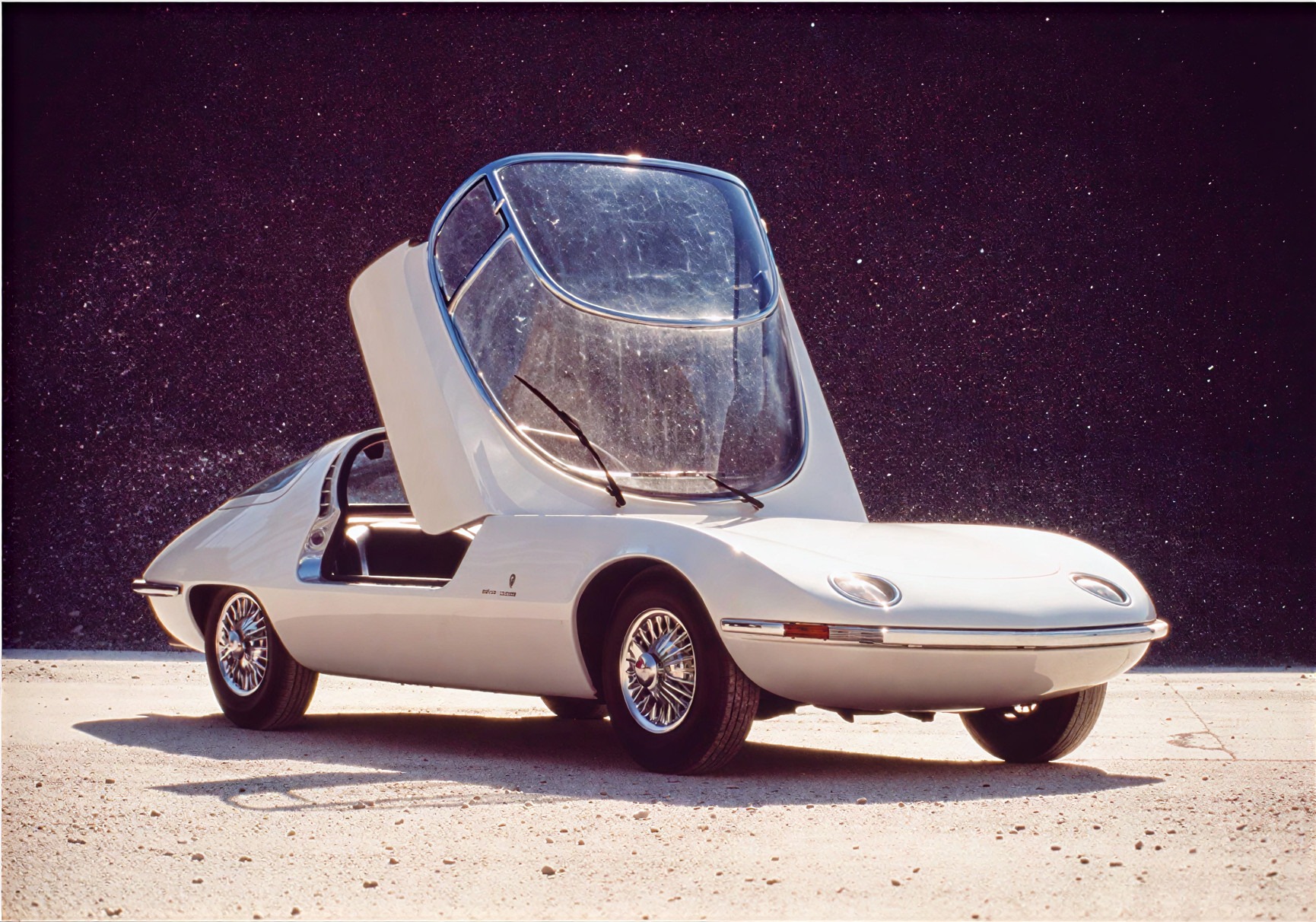
Its influence was immediate and long-lasting. The Testudo’s seamless integration of plan and profile became a defining Giugiaro trait, later echoed in cars such as the Alfa Romeo Spider and Ferrari Daytona. Its canopy concept and mid-engine proportions foreshadowed the Alfa Montreal and Lamborghini Miura. Even across the Atlantic, the design resonated — AMC’s Dick Teague would later cite the Testudo as a direct inspiration for the 1975 AMC Pacer.
🔗 Read more: The story of Bertone: the Most Controversial Coachbuilder Ever
The car’s story nearly ended prematurely. In 1965, while filming a Shell commercial at Monza, the Testudo was accidentally crashed into another Bertone prototype, the Alfa Romeo Canguro. Severely damaged, it languished unrepaired for decades. Only in the early 1990s was it finally restored under Bertone chief designer Luciano D’Ambrosio, re-emerging in time for Pebble Beach in 1996. In 2011, it sold at Villa d’Este for €336,000 — a fitting recognition of its place as one of Giugiaro’s earliest masterpieces.
Pininfarina Chevrolet Corvette Rondine
If the Testudo was experimental and provocative, Pininfarina’s response later that year was measured, intentional — and, in retrospect, profoundly influential.
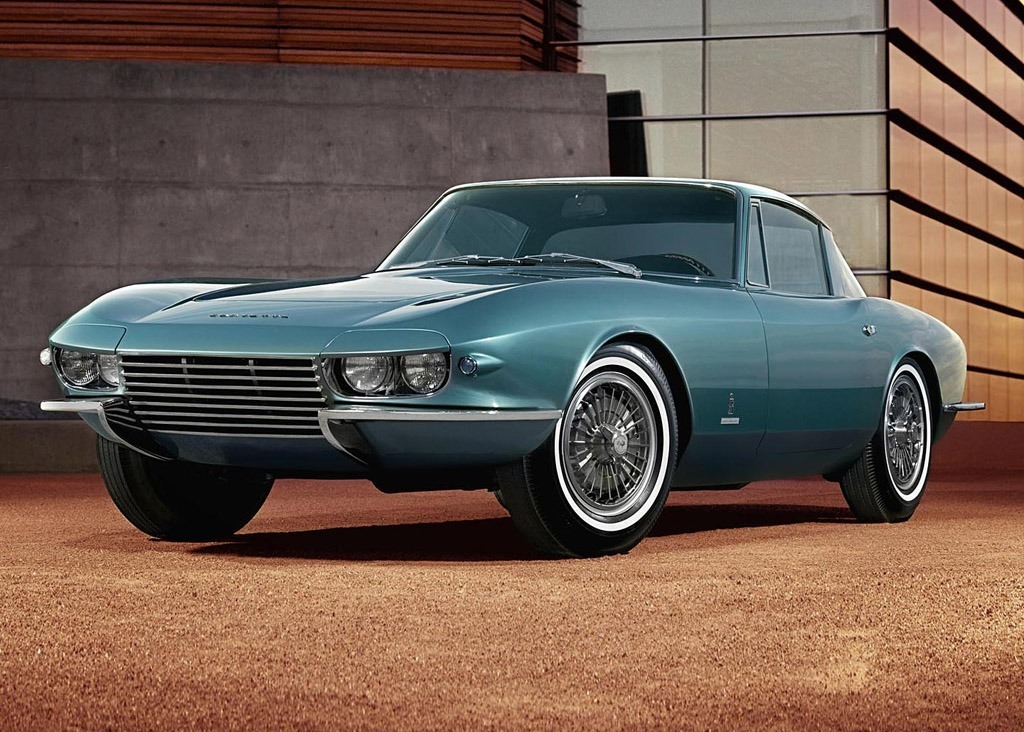
Unveiled at the October 1963 Paris Motor Show, the Chevrolet Corvette Rondine was commissioned directly by Chevrolet, a rare and revealing move. Built on a brand-new 1963 Corvette Sting Ray chassis, complete with a fuel-injected 327 V8, the project posed a deceptively simple question: what if the Corvette were interpreted not as an American muscle car, but as a European gran turismo?
The answer came from Tom Tjaarda.
Working at Pininfarina, Tjaarda created an entirely new steel-bodied convertible that retained just enough Corvette identity to remain recognizable, while shedding nearly all of its visual aggression. From the front, the Rondine still read as a Corvette — concealed headlamps survived, though now hidden beneath elegant clamshell eyelids, and the split-bumper theme was subtly echoed. But beyond that, the Italian design language took over completely.
The flanks were smooth and uninterrupted, free of the Sting Ray’s decorative vents. A single, crisp character line ran from nose to tail, anchoring the composition. The windshield was wider and more steeply raked, flowing naturally into the roofline, while the rear departed most dramatically from Corvette orthodoxy. Modest tailfins framed an angular, almost architectural tail, with slim horizontal taillights integrated into the trailing edge. It was disciplined and rational — closer to architectural “origami” than muscular sculpture.
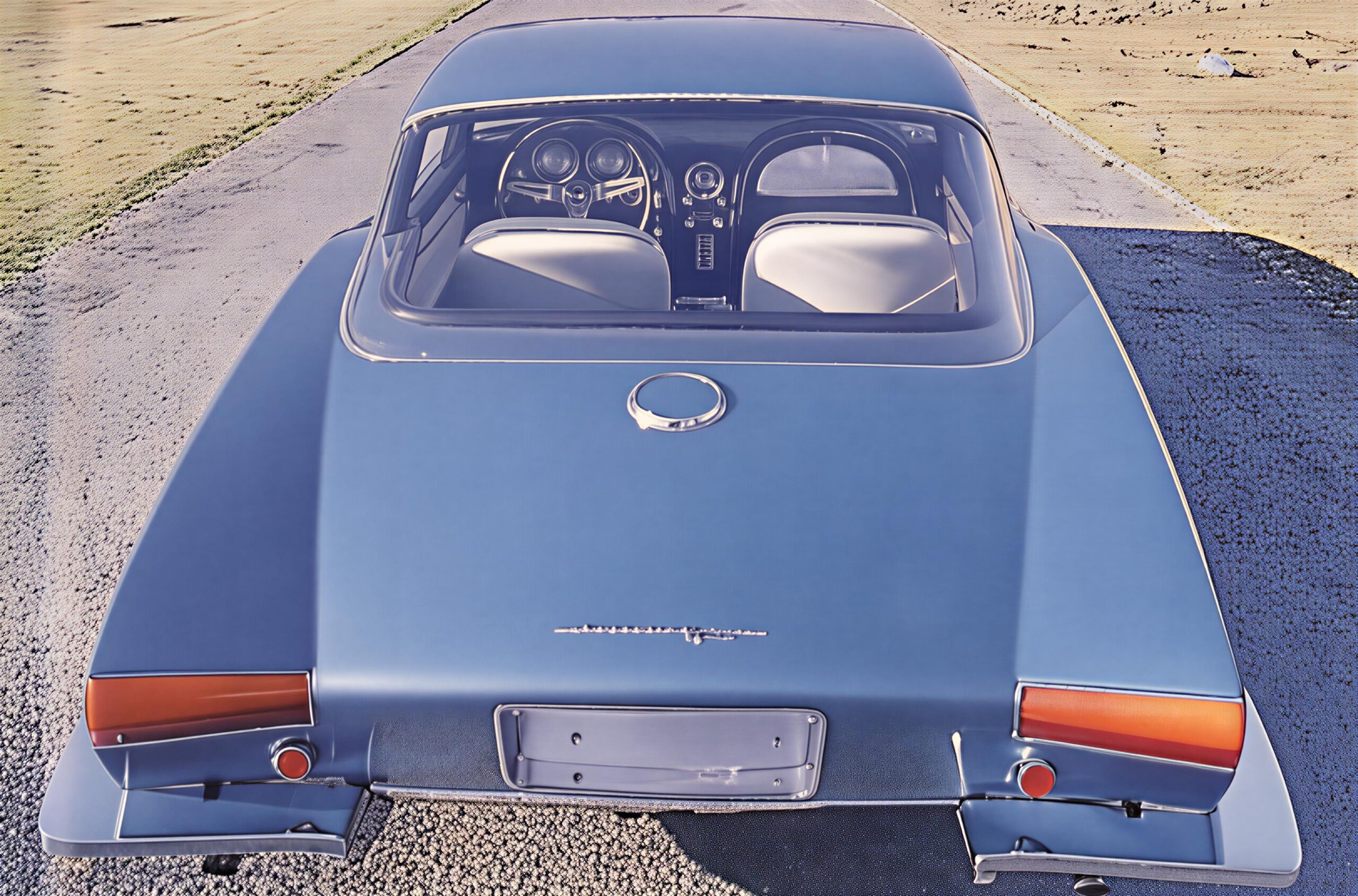
Where the production Sting Ray crouched and tensed, the Rondine stood lighter and more relaxed. Longer overhangs and carefully controlled surfaces pushed the car firmly into GT territory, evoking contemporary Ferraris and Aston Martins rather than American street racers. Period observers described it as “visually lighter,” and the phrase remains perfectly apt.
More importantly, the Rondine did not end with itself.
Tjaarda’s work on the Corvette Rondine directly informed Pininfarina’s subsequent Fiat 124 Rondine concept, which distilled the same themes — clean flanks, crisp beltline, restrained tail treatment — onto a more compact and realistic platform. That evolution, in turn, became the foundation for the production Fiat 124 Sport Spider, one of the most enduring and commercially successful Italian sports cars of the postwar era. In a quiet but remarkable way, an American V8-powered Corvette prototype helped shape the design language of a Fiat that would sell in the hundreds of thousands.

After its Paris debut, Pininfarina retained the Corvette Rondine in Turin, where it remained for more than four decades. It appeared only occasionally in museum displays and special exhibitions, becoming something of a mythical “what if” within Corvette circles. That changed in 2008, when Pininfarina auctioned several collection pieces at Barrett-Jackson. The Rondine sold for $1.76 million, instantly placing it among the most valuable Corvettes ever sold.
🔗 Read more: The Fiat 124 Sport Spider History
In private hands, the car began a second public life. It made its American concours debut at the Greenwich Concours d’Elegance in 2012 and has since appeared regularly at high-level events, particularly on the East Coast. Finished in metallic turquoise, its refined proportions and restrained chrome continue to arrest even seasoned enthusiasts. As one journalist aptly observed, where else would you find a Corvette commissioned by Chevrolet and bodied by a Turin carrozzeria in the 1960s — and one that would quietly give birth to a Fiat icon?
Transatlantic Camaros: Frua’s Creations in 1968 and 1976
By the end of the 1960s, the center of gravity for Italian–Chevrolet experimentation shifted away from the Corvette. Chevrolet’s new pony car — the Camaro — had arrived, and with it came fresh opportunity. Smaller, more affordable, and already global in ambition, the Camaro presented Italian designers with a different challenge: not how to civilize a sports car, but how to elevate a mass-market performance coupe.
Few were better suited to attempt this than Pietro Frua.
Independent, prolific, and stylistically confident, Frua would reinterpret the Camaro twice — once at the height of late-1960s GT elegance, and again amid the uncertainty and experimentation of the mid-1970s. The two results could not be more different, yet together they form a coherent transatlantic statement.
1968 Chevrolet Camaro CS 327 Coupé by Frua
The first Frua Camaro appeared in 1968, unveiled at the Paris Motor Show before crossing the Atlantic for the 1969 New York Auto Show. Based on a first-generation Camaro chassis — likely powered by Chevrolet’s 327 V8, hence the designation CS 327 — the car was not a rebody in the superficial sense. Frua discarded nearly all visual ties to Detroit muscle and replaced them with a distinctly European grand touring vocabulary.
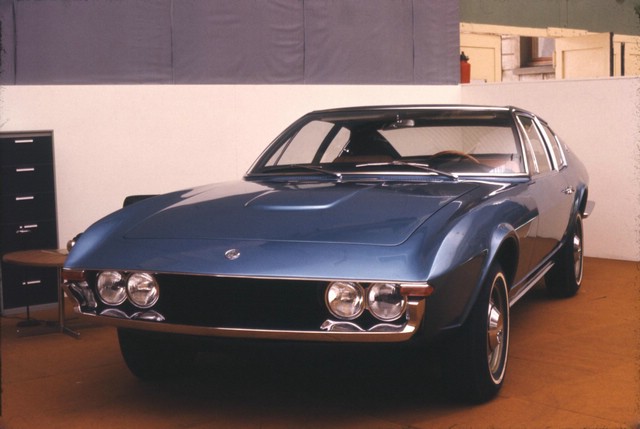
The familiar quad-headlamp Camaro face gave way to a calmer, more resolved front end, hinting at contemporary European exotics rather than American aggression. A strong, sharply defined beltline crease ran the length of the body — a Frua signature also visible on his Maserati Mistral and AC 428 — visually tightening the mass and adding tension to the surfaces. The roofline flowed into a clipped fastback tail with a large rear window, trading drag-strip bravado for Autobahn composure.
The underlying proportions still betrayed the F-body architecture — long hood, short deck, wide stance — but the overall effect was transformative. This was no longer a pony car; it was a continental GT that merely happened to be powered by a Chevrolet V8.
General Motors’ involvement, while limited, was telling. The car appeared prominently on GM’s stand in Paris, badged simply “Camaro CS,” with the letters widely interpreted as Coupé Speciale or Carrozzeria Sport. The interior was completely reimagined with Italian upholstery and bespoke instrumentation, emphasizing that this was not a trim package but a philosophical shift.
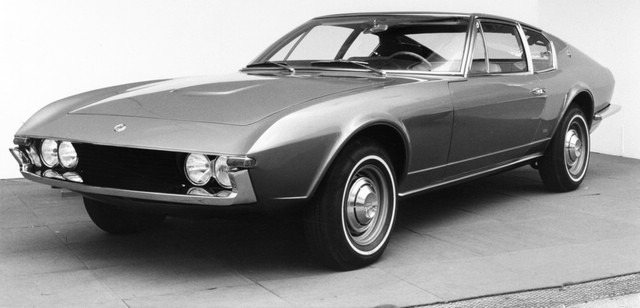
After its European debut, the Frua Camaro’s appearance at the New York Auto Show confirmed that the project was more than a private indulgence. It was a test balloon — for Frua, and perhaps quietly for GM — exploring whether Italian refinement could broaden the Camaro’s appeal beyond American shores.
No production followed. The CS 327 remained a one-off.
Its later history is refreshingly intact. By the 1980s, the car had returned to the United States, eventually entering the Mitosinka Collection in California. Remarkably well preserved and largely original, it became a familiar sight at Southern California concours events, including Huntington Beach and Concorso Italiano. When it crossed the auction block in 2020, it sold for approximately $32,000 — a surprisingly modest figure that reflected its status as a historical artifact rather than a performance icon. Its importance, however, is unquestioned: it proves that even Chevrolet’s most accessible performance car could inspire serious Italian bespoke design.
1976 Chevrolet Camaro Europo Hurst by Frua
Eight years later, Frua returned to the Camaro — and to a very different world.
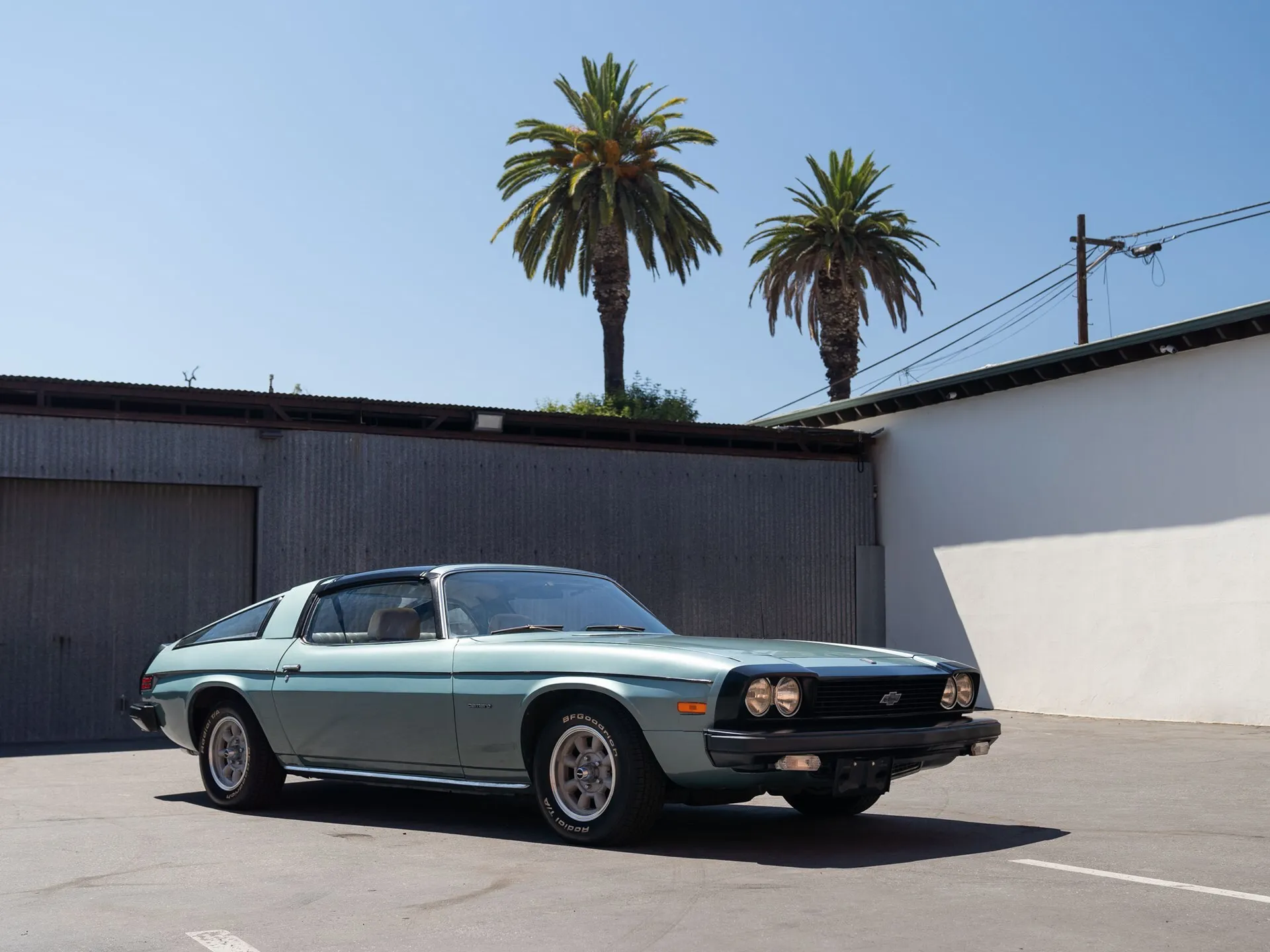
By 1976, automotive optimism had given way to regulation, compromise, and experimentation. Frua’s second Camaro, unveiled at the Turin Auto Show that November, responded accordingly. Based on the second-generation Camaro (1970–81), the Europo Hurst was more radical than its predecessor, both technically and visually.
The most dramatic change was the roof. Frua replaced the Camaro’s conventional fastback with a large glass hatch, giving the car a distinctly European silhouette — closer in spirit to a Lancia Beta Montecarlo than anything from Detroit. The nose was reworked into a blunt, wedge-shaped front end with pop-up headlights and a slim grille, aligning the car squarely with mid-1970s Italian design trends.
🔗 Read more: Pietro Frua: Mastering the Art of Automotive Elegance
In 1977, the concept evolved further with the addition of removable Hurst roof panels — aftermarket “Hurst Hatches” that transformed the car into a semi-open GT and lent the project its name. Shown that year at the New York Auto Show in metallic teal with a pale interior, the car was now branded the Europo Hurst Camaro and presented as a potential limited-production conversion.
An American firm, Multi-Passenger Export Inc. of New York, announced plans to offer Europo Hurst conversions through GM dealers and Hurst outlets. Competing claims from a Miami-based distributor hinted at behind-the-scenes maneuvering, but in the end, nothing materialized. As with the earlier Frua Camaro, the idea proved easier to imagine than to industrialize.
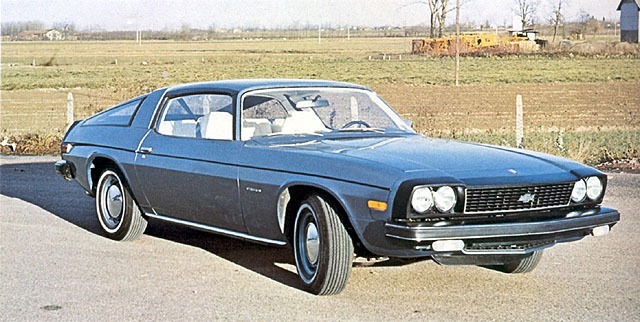
The Europo Hurst remained unique — and effectively became Frua’s final coachbuilt American car.
Acquired in 1990 by collector Dennis Mitosinka, the car remained in his care for three decades. Aside from minor updates — including modern magnesium wheels fitted with custom Frua center caps — it stayed largely as built. Its vivid turquoise paint and unconventional proportions made it a standout wherever it appeared, and Mitosinka regularly exercised it on the road.
Observers often remarked that the Europo Hurst spoke more of Turin than of Chevrolet — a sentiment echoed by RM Sotheby’s, which described it as “more Lancia than Camaro.” When it was finally auctioned in 2020 as part of the Mitosinka Collection, it carried a unique distinction: the only second-generation Camaro ever rebodied by an Italian coachbuilder.
Rotary Dreams: The 1973 Corvette XP-897GT by Pininfarina
By the early 1970s, General Motors was restless. Regulations were tightening, performance paradigms were shifting, and the company was actively searching for ideas that could leapfrog convention rather than merely adapt to it. One of those ideas was the Wankel rotary engine — compact, smooth, and theoretically efficient — and for a brief moment, GM believed it might power the future of its sports cars.
To make that future tangible, GM created the XP-897GT.
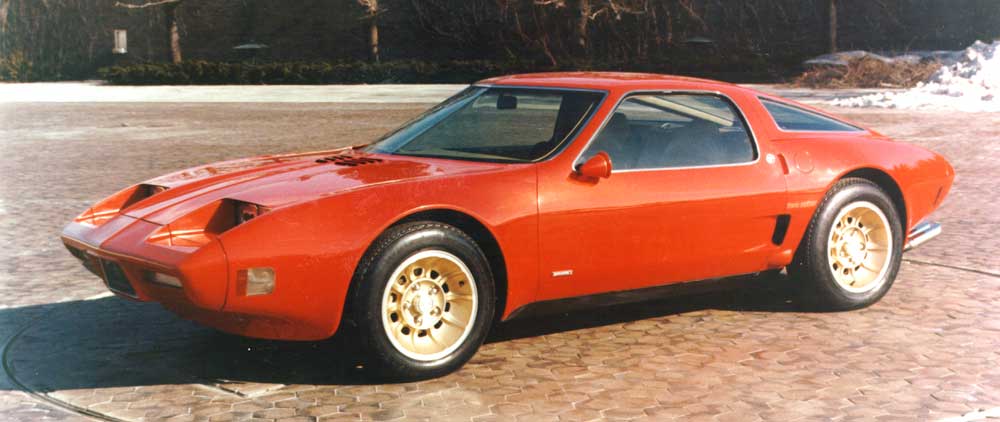
Developed under the direction of Bill Mitchell and GM’s Experimental Studio, the XP-897GT was envisioned as something the Corvette had never been: compact, mid-engined, and mechanically radical. While the overall concept and styling direction originated in Detroit, GM turned to Pininfarina to bring the idea to life. The Italian firm had long experience turning sketches into fully functional prototypes — and this project demanded exactly that.
The engineering solution was as unconventional as the engine. Rather than develop a bespoke platform, GM sourced a Porsche 914/6 chassis, shortening it by roughly 6.5 inches and widening it to suit American proportions. German structure, American ambition, Italian execution — the global nature of the project was already baked in before a body panel was formed.
Over this reworked foundation, Pininfarina crafted a steel coupé body that perfectly captured early-1970s wedge logic. The XP-897GT sat low and purposeful, with a sharp nose, concealed headlamps, and a clean, uninterrupted profile. The tail ended in a restrained Kamm-back, while large side intakes fed air to the mid-mounted engine. Ornamentation was minimal: tasteful brightwork, crisp surfacing, and the unmistakable Corvette crossed-flags badge — a subtle reminder of lineage rather than a shout.
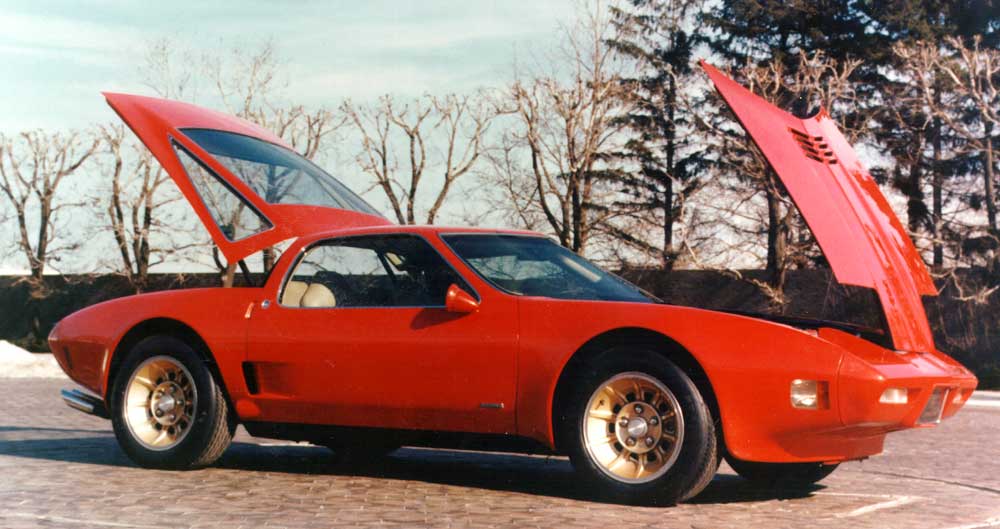
At the heart of the project was GM’s two-rotor Wankel engine, displacing 266 cubic inches (approximately 4.4 liters) and producing around 180 horsepower. Mounted transversely behind the seats, the rotary’s compact dimensions allowed Pininfarina to maintain tight proportions. In fact, the XP-897GT was notably smaller than a contemporary production Corvette, with a lower roofline and shorter overall length. Finished in silver, the car presented itself as modern and disciplined rather than flamboyant.
Inside, the theme continued. The cockpit blended American expectations of comfort with Italian craftsmanship — deep bucket seats, a plush interior environment, and thoughtful detailing that suggested this was not a styling fantasy, but a viable production preview.
🔗 Read more: Tom Tjaarda: An American Designer in Turin
The XP-897GT made its public debut at the 1973 Frankfurt Motor Show, a deliberate choice. GM clearly saw Europe as a critical proving ground for its rotary ambitions. The reaction was positive. Here was a Corvette that spoke fluent European design language while remaining unmistakably American in identity. Many observers assumed they were looking at a serious preview of a mid-engine Corvette for the coming decade.
Then history intervened.
The car was completed just as the OPEC oil embargo triggered the global fuel crisis. Overnight, rotary engines — already facing efficiency and emissions challenges — became politically and economically untenable. GM’s broader rotary program, which had included plans for a Vega rotary, was quietly dismantled. The XP-897GT never progressed beyond prototype status.
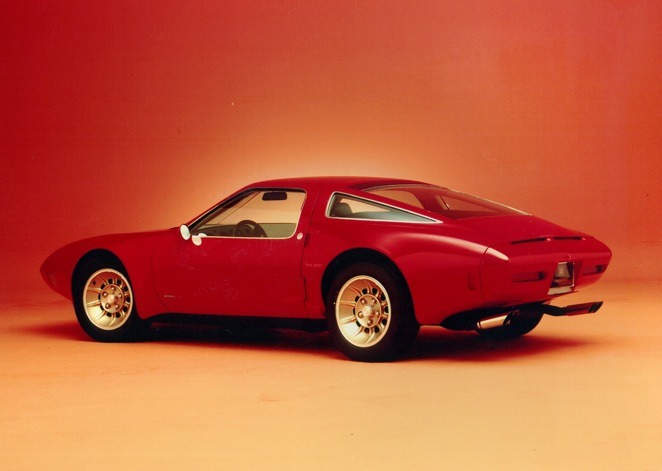
For years, the car remained in GM’s possession, an artifact of a path not taken. Eventually, it found a permanent home at the National Corvette Museum in Bowling Green, Kentucky, where it resides today. Visitors encountering it in person are often struck by its compact dimensions — and by the small but telling Pininfarina build plate affixed to the door jamb.
In hindsight, the XP-897GT feels uncannily prescient. A mid-engine Corvette, developed nearly half a century before the production C8 finally realized that layout, built with global collaboration and radical intent — it was simply born at the wrong moment. More than a styling exercise, it stands as a reminder of how far GM was willing to venture in the 1970s, and how Italian craftsmanship helped give form to one of the most ambitious Corvette experiments ever attempted.
Bertone’s Radical Corvette Concepts of the 1980s and ’90s: Ramarro and Nivola
After the experimental burst of the early 1970s, Italian coachbuilt Chevrolets largely disappeared from the conversation. By the late ’70s, the era of bespoke one-offs seemed to be fading. When the story resumed in the 1980s, it did so with a crucial shift: these were no longer concepts quietly encouraged or commissioned by General Motors. Instead, the initiative came from Italy itself.
Once again, Bertone led the charge.
Under the ever-theatrical guidance of Nuccio Bertone, the firm acquired a freshly launched 1984 C4 Corvette and set out to make a point — not about feasibility, but about authorship. The result was the Bertone Ramarro, unveiled at the 1984 Los Angeles Auto Show, a Corvette that looked less like a redesign and more like a provocation.
Bertone Ramarro (1984)
Finished in vivid metallic green and named after the Italian word for “green lizard,” the Ramarro was a Corvette projected a decade into the future. Designed under the direction of Marc Deschamps, it reimagined the C4 not as a raw performance car, but as a futuristic grand tourer filtered through pure Italian show-car logic.
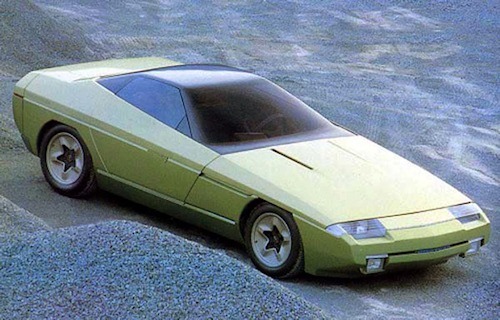
Its most memorable feature was also its most impractical — and most discussed. Instead of conventional doors, the Ramarro employed forward-sliding panels that moved electrically outward and along the nose of the car. The idea echoed the 1954 Kaiser Darrin in concept, but the execution was entirely different and far more complex. In 1984, this was audacious bordering on reckless — exactly the point.
The body itself was comprehensively reworked. Bertone relocated the radiator and air-conditioning condenser to the rear of the car, occupying the spare-tire cavity, purely to achieve a lower, sharper nose. Cooling air was routed via gills behind the side windows, regulated by thermostatic flaps that opened and closed like a reptile’s vents — a literal embodiment of the car’s name. The pop-up headlights were discarded in favor of slim, futuristic lighting, and the tail terminated in a wide, ribbed panel with integrated lamps, reinforcing the Ramarro’s uncompromising wedge profile.
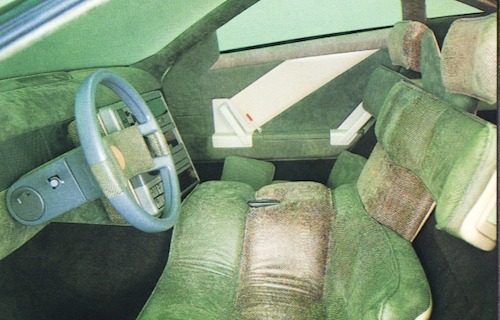
Inside, the concept doubled down on theater. The standard Corvette seats were replaced by a single sculpted two-person bench, visually unified but subtly contoured. The interior was trimmed entirely in green leather textured to evoke lizard skin, leaving nothing to metaphor. The digital C4 instrument cluster remained — a deliberate tether to Corvette identity — but the gear selector was replaced by a rotary control on the console. Beneath the drama, the mechanicals stayed largely intact: a 5.7-liter V8, now fitted with tuned-port injection, delivering over 230 horsepower.
🔗 Read more: Bertone Ramarro: the green Lizard Ep. 22
The choice to debut the Ramarro in Los Angeles was no accident. Nuccio Bertone wanted visibility in the Corvette’s home market, and he got it. The concept was widely praised, and in 1985 it received Auto&Design magazine’s prestigious Car Design Award, with the jury citing its boldness in giving the Corvette “an entirely new personality.”
Privately, Bertone had another motivation. He was frustrated that Italian-designed cars sold in America were often credited solely to their manufacturers, not the design house. With the Ramarro, Bertone’s name was unmistakably front and center — a declaration of authorship on America’s sports car.
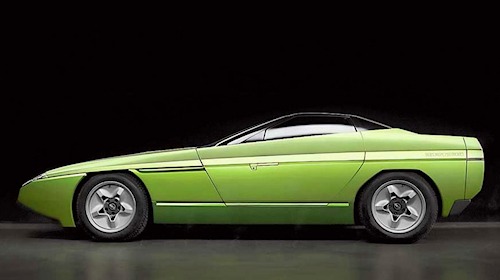
The Ramarro remained a one-off, but it endured. Preserved through museum tours and exhibitions, it now resides under the stewardship of ASI following the dispersal of Bertone’s archives. Even decades later, its electric green presence and unapologetic form make it impossible to ignore.
More importantly, it reopened the door — figuratively and literally — for the most ambitious Italian Corvette concept yet.
Bertone Nivola (1990)
If the Ramarro was about redefining the Corvette’s skin, the Bertone Nivola was about rewriting its DNA. More importantly, it reopened the door — figuratively and literally — for the most ambitious Italian Corvette concept yet.
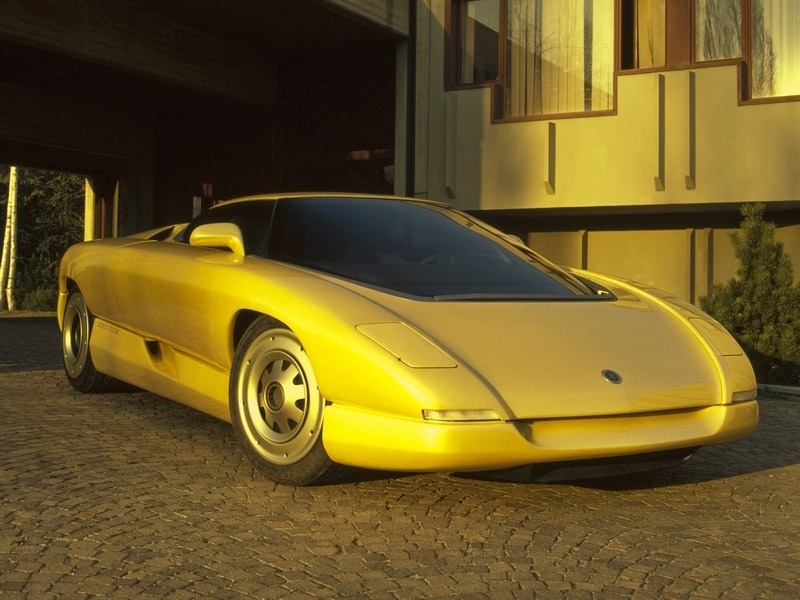
By 1990, the idea that ultimate performance demanded a mid-engine layout was no longer controversial — it was accepted doctrine. Bertone decided to demonstrate what a mid-engine Corvette might look like at the dawn of the 1990s, free from production constraints. Named after Tazio Nuvolari’s nickname, the Nivola debuted at the 1990 Geneva Motor Show.
Designed by Marc Deschamps and built on a heavily modified C4 ZR-1 foundation, the Nivola relocated the Corvette’s most advanced powerplant — the 5.7-liter, 32-valve LT5 V8 — behind the seats. This was not a superficial exercise. Bertone engineered a bespoke rear subframe and suspension, targeting a 40/60 front-rear weight distribution and true supercar dynamics.
Visually, the Nivola was almost monolithic. Low, wide, and exceptionally clean, it wore a barchetta-like form with a smooth nose, hidden headlamps, and a shallow wraparound windshield flowing into a speedster-style rear deck. Traditional doors were absent; access was achieved through unconventional body openings, reinforcing the car’s concept-car purity. The wheels featured aerodynamic covers designed to smooth airflow — functional sculpture in true Italian fashion.
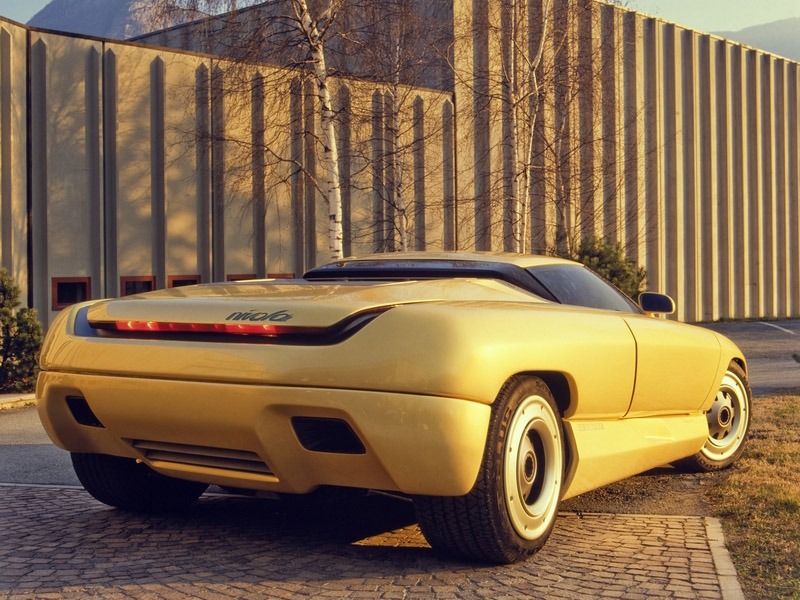
Finished in a warm metallic orange-gold, the Nivola looked every bit an Italian supercar. Only subtle proportions and discreet Chevrolet badging hinted at its American origins.
Under the skin, the specification was formidable. The LT5 V8 was tuned to approximately 380 horsepower and paired with a ZF six-speed manual — cutting-edge hardware in 1990. In concept and execution, the Nivola sat closer to Ferrari than to any production Corvette.
It was also fully operational — just barely in time.
As recalled by LT5 engineer Ian James, Bertone contacted GM in January 1990 in something approaching panic. The firm needed urgent assistance wiring the LT5’s complex electronics. GM responded, flying engineers to Bertone’s workshop near Turin, where they worked around the clock to bring the car to life days before Geneva. When the show opened, Nuccio Bertone himself drove the Nivola onto the stand — a not-so-subtle statement that this was no static fantasy.
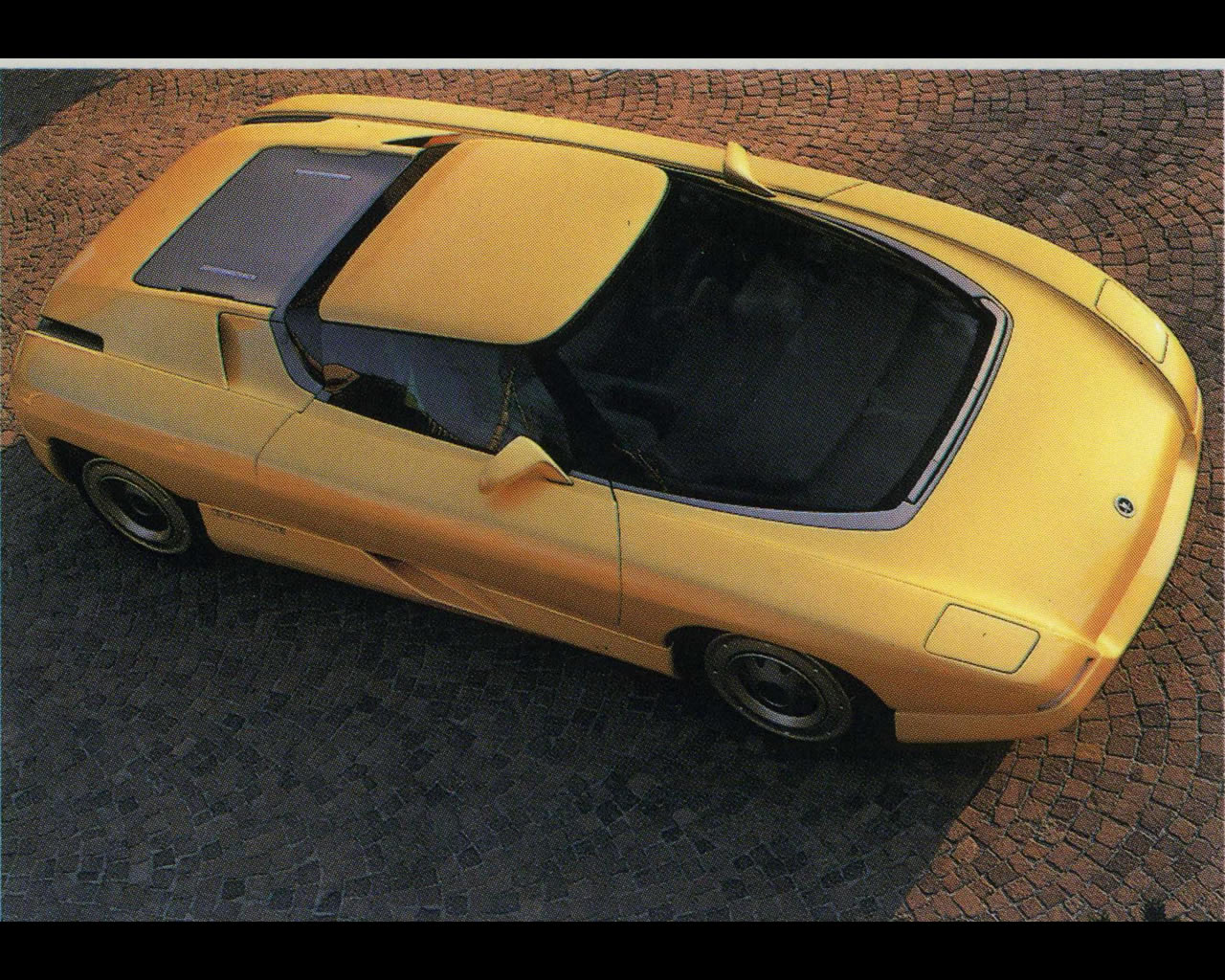
The reaction was predictably intense. The Nivola was received as a credible “what if” — a mid-engine Corvette supercar decades before such a thing would become reality. As Hagerty later observed, it demonstrated just how far into supercar territory the fourth-generation Corvette could be pushed.
Like the Ramarro, the Nivola returned to Bertone’s collection after its show career and survived the company’s later bankruptcy. Today, it remains preserved and occasionally exhibited, often alongside the Ramarro — two radically different answers to the same question.
Homage and Aftershocks: Italian Chevrolets in the New Millennium
By the early 2000s, the era of Italian coachbuilders reshaping Chevrolets had shifted again. This was no longer about production intent or experimental engineering detours. Instead, it became about homage, reinterpretation, and selective collaboration — Italian design reflecting on an American legacy it had helped shape.
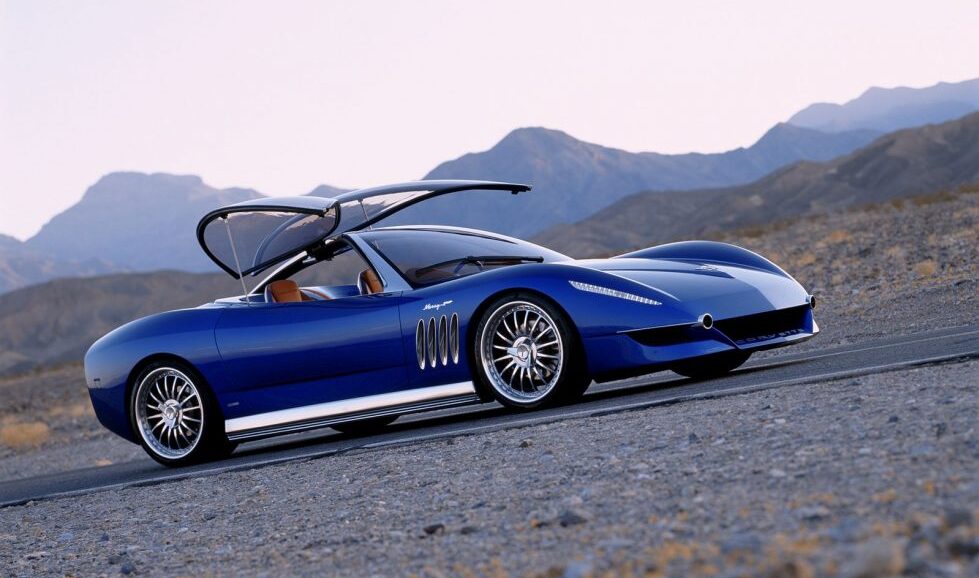
The most poetic expression came in 2003, when Italdesign Giugiaro marked the Corvette’s 50th anniversary with the Corvette Moray. Built on C5 mechanicals and unveiled at Geneva, the Moray was not a redesign so much as a romantic meditation on what a Corvette could feel like through Italian eyes. Its twin glass gullwing canopies, flowing marine-inspired surfaces, and boat-tail rear transformed the Corvette into a refined gran turismo without diluting its V8 soul. Fully functional and beautifully resolved, the Moray stood apart from GM’s own anniversary concepts by leaning unapologetically into emotion rather than branding. One was built — and that was enough.
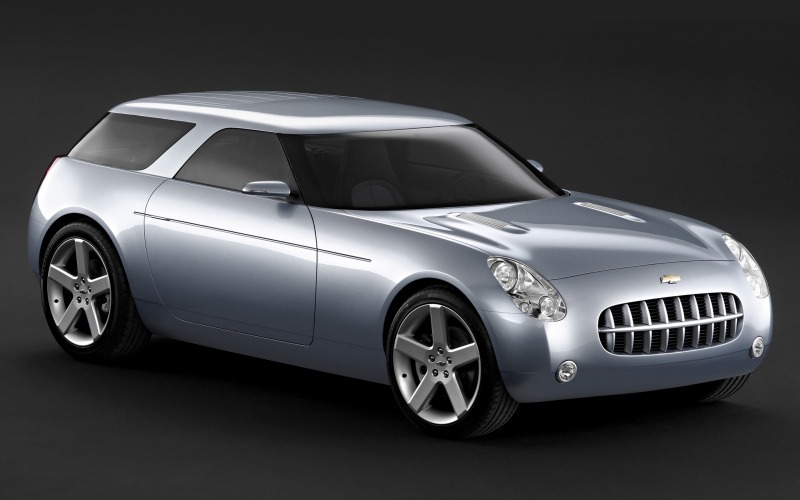
A year later, Chevrolet explored its past from a different angle with the 2004 Nomad Concept. Designed by GM’s UK studio and physically built by Pininfarina, the Nomad reimagined the 1950s two-door wagon as a modern shooting brake on the Kappa platform. Clever, practical, and surprisingly performance-oriented, it showcased how global GM’s design process had become: British-led, Italian-built, American-branded. Though never produced, the Nomad remains one of the most fondly remembered modern Chevy concepts — a reminder that Italian craftsmanship was still integral to GM’s boldest ideas.
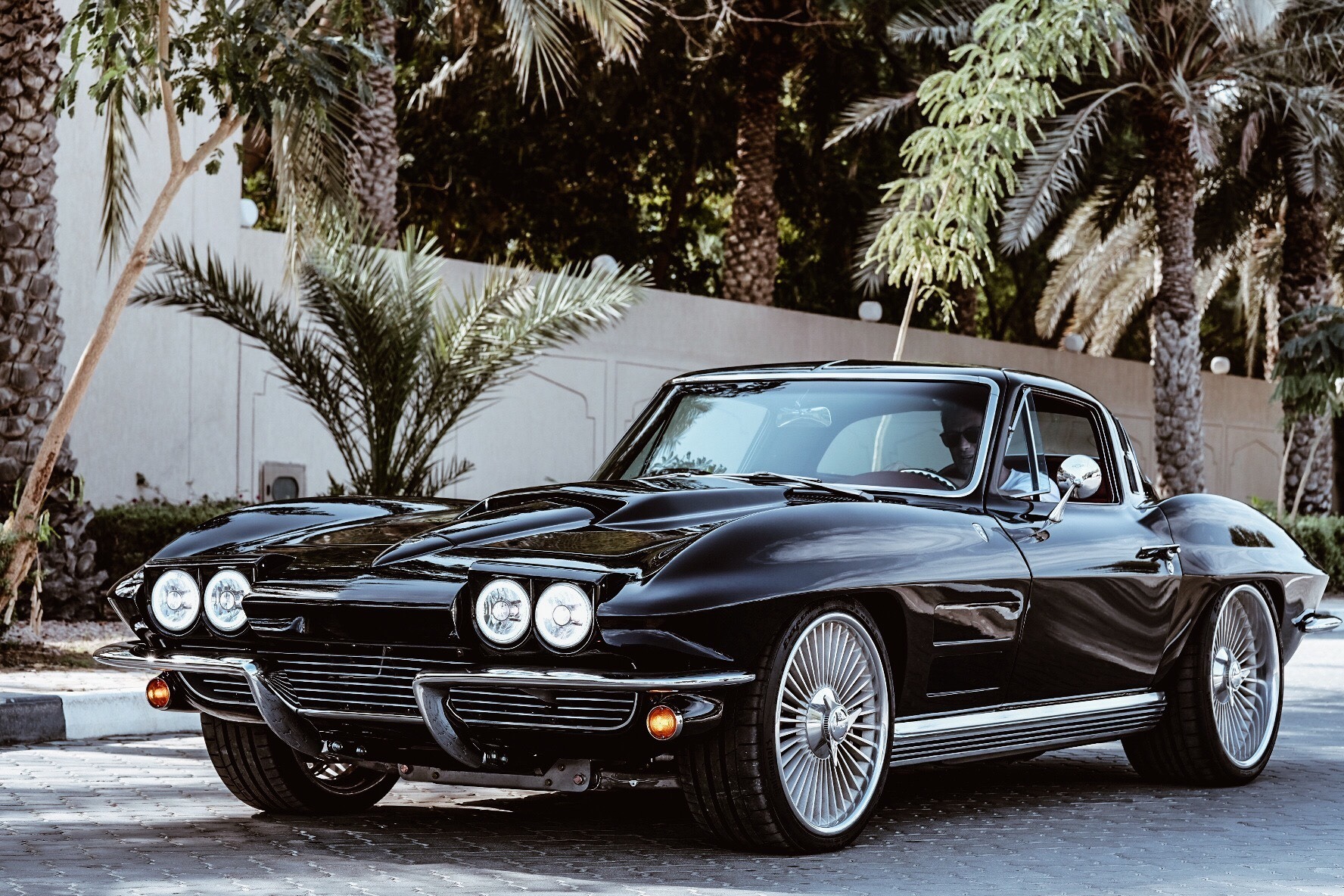
In the 2010s, the relationship evolved once more. Bertone, near the end of its long history, contributed to the facelift and conceptual development of the Chevrolet Niva for the Russian market — an obscure but telling example of Italian design influencing even the most utilitarian Chevrolets. And in 2018, the story came full circle with ARES Design of Modena, which reimagined a 1964 Corvette Sting Ray as a modern restomod. Using contemporary GM power, Italian craftsmanship, and bespoke execution, the ARES Stingray proved that the coachbuilt Corvette idea was not a relic — merely transformed for a new era.
What These Cars Ultimately Meant
From the Scaglietti Corvettes of 1959 to the ARES Stingray six decades later, Italian coachbuilt Chevrolets trace a remarkably consistent idea: that American engineering and Italian design are not opposites, but complements. Sometimes the collaboration was official, sometimes improvised, sometimes purely expressive — but the results were always memorable.
These cars mattered not because they rewrote sales charts, but because they expanded possibility. They influenced production designs, launched careers, challenged assumptions, and occasionally predicted the future — including, decades early, the idea of a mid-engine Corvette. Most importantly, they survived. Today, nearly all remain preserved, shown, driven, and debated, their stories retold every time someone stops and asks, “What exactly is this?”
The answer is never simple — and that’s precisely the point.
Italian coachbuilt Chevrolets are proof that great automotive ideas don’t respect borders. They happen when ambition meets artistry, when horsepower meets proportion, and when someone dares to ask what if? And as long as these cars continue to appear on concours lawns and in quiet collections, that question — and its many beautiful answers — will never truly fade.

ABOUT THE AUTHOR
Andreas Scheidl
Italian classic car enthusiast with German roots. Renowned as a respected figure in the classic car community, he serves as a jury member at various international concours d'elegance, including the Classic Gala Schwetzingen and Mantova. As a content creator, Andreas passionately shares his profound knowledge and appreciation for vintage automobiles. His heart beats for cars designed by Giovanni Michelotti, showcasing his discerning taste and dedication to preserving the timeless elegance of automotive history.
More stories by Andreas Scheidl ↗CONTINUE READING
Posts You Might Like
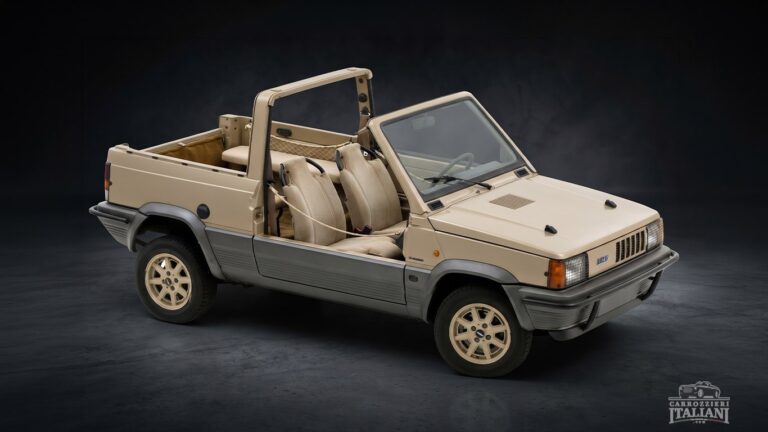
Fiat Panda Cabrio: The Italian Coachbuilders Who Opened Giugiaro’s Box
From Moretti’s Panda Rock to Italdesign’s experimental Strip, Maggiora’s four-wheel-drive convertible and Stola’s remarkable Destriero, the history of the open-top Panda reveals an unexpected chapter in Italian coachbuilding. When Giorgetto Giugiaro designed…
Read story
Gabriele d’Annunzio and the Cult of the Automobile
There was a time when the automobile had not yet become part of the landscape. It announced itself from afar through the beating of an engine, the smell of petrol and hot…
Read story
Fiat 1400: The Last Great Playground of the Carrozzieri
From Touring and Abarth to Farina, Ghia, Vignale, Boneschi, Bertone, Viotti and the smaller carrozzerie, the new Fiat quickly became one of the richest bases for Italian special bodies in the early…
Read story
How a Swiss Dealer Challenged Ferrari: The Story of Monteverdi
How Peter Monteverdi went from Swiss Ferrari dealer to creator of rare Frua and Fissore-bodied GTs, the Hai supercar and luxury off-roaders.
Read story
THE CONVERSATION
Comments 0
Share a memory, a period photograph or a documented detail about this story.