
The Cisitalia 808XF Program: How Ford Almost Got an Italian Sports Car
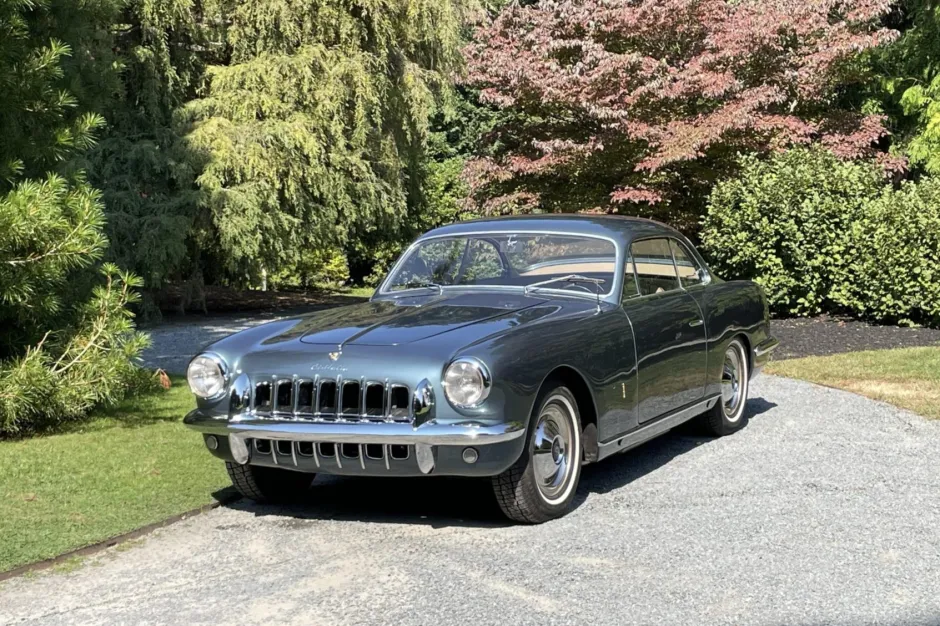
In the early 1950s, American carmakers watched European sports cars—nimble MGs, elegant Jaguars—begin to win over U.S. buyers. Ford Motor Company, unwilling to surrender this emerging market, explored a radical alternative: a collaboration with a small Italian manufacturer to create a transatlantic sports car blending Italian design sensibility with Detroit V8 power. The result was not a single experiment, but a short sequence of closely related prototypes developed under the Cisitalia banner, collectively known as the 808XF program. These cars—often described retrospectively as Ford’s “proto-Thunderbird”—were never intended as mere styling exercises. They represented a genuine attempt to evaluate form, packaging, and market appeal. Production ultimately proved unviable, but the 808XF prototypes remain among the most intriguing what-ifs in postwar automotive history: a story of ambition, international collaboration, and outsized personalities linking Turin and Dearborn at a moment when the future of the sports car was still being written.
Cisitalia: Post-War Origins and a Fragile Ambition
Cisitalia was born from the optimism—and recklessness—of Italy’s immediate post-war years. Its founder, Piero Dusio, was not an engineer by training but a former footballer, industrialist, and gentleman racer whose greatest talent lay in persuasion. During the Second World War, Dusio built substantial wealth supplying textiles and uniforms. When peace returned, he redirected that fortune toward an idea as romantic as it was precarious: an Italian marque dedicated to lightness, performance, and advanced design.
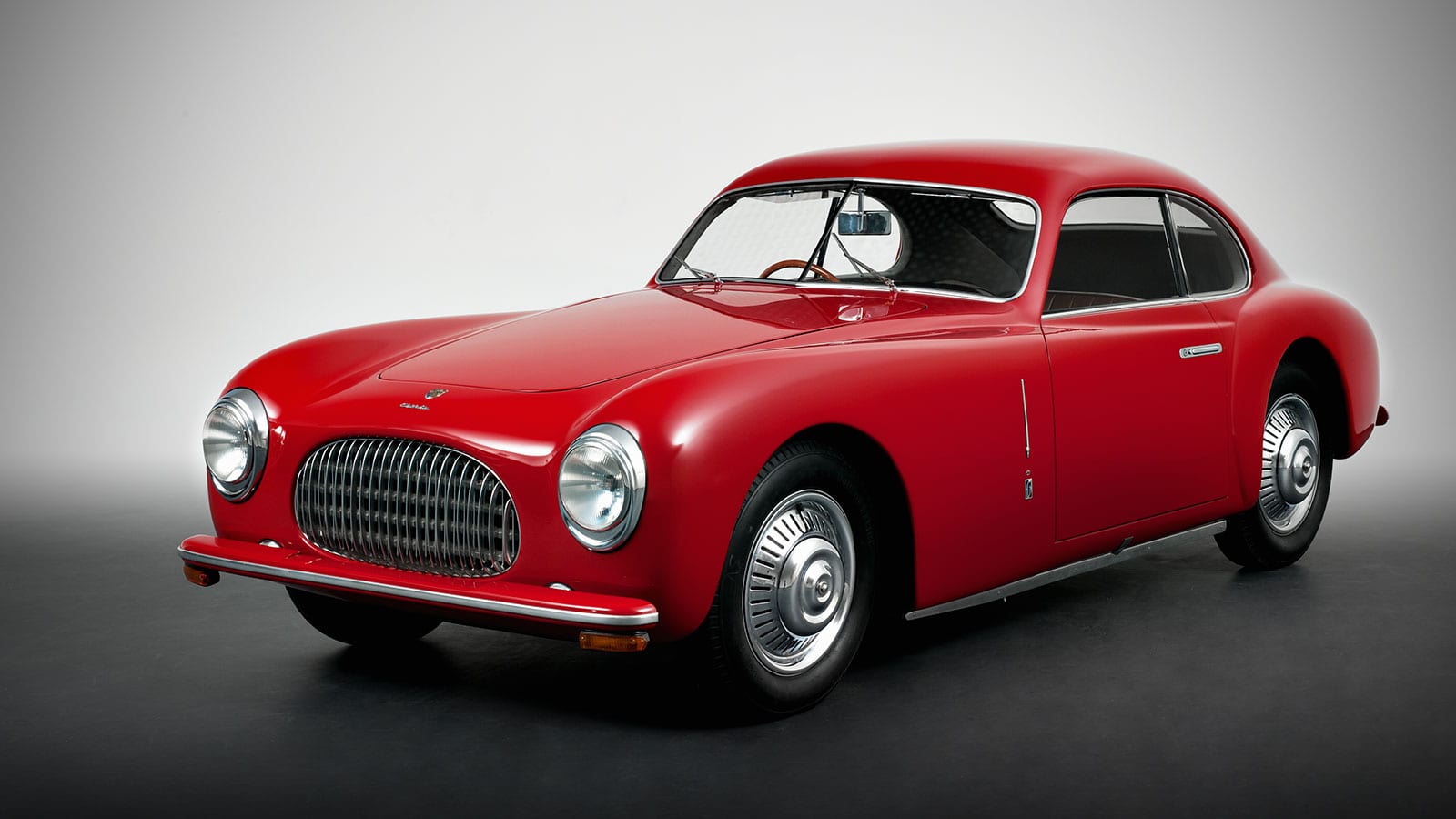
Founded in 1946 as Consorzio Industriale Sportiva Italia, Cisitalia quickly gained attention through competition. The D46 monoposto, assembled from modified Fiat components, proved that intelligent engineering could compensate for limited resources. But it was the Cisitalia 202 that elevated the company from promising startup to international reference. Light, beautifully proportioned, and aerodynamically coherent, the 202 embodied a new idea of the sports car—one that culminated in its selection by the Museum of Modern Art in 1951 as a work of industrial art.
🔗 Read more: The Cisitalia 202: the rolling sculpture
Success, however, bred ambition. Flushed with acclaim, Dusio pursued a far more dangerous objective: Grand Prix racing. The Tipo 360, developed with Ferdinand Porsche’s engineering office, was technologically extraordinary—mid-engined, supercharged, all-wheel drive—but financially catastrophic. The project consumed resources Cisitalia could not afford, draining capital faster than victories could replenish it.
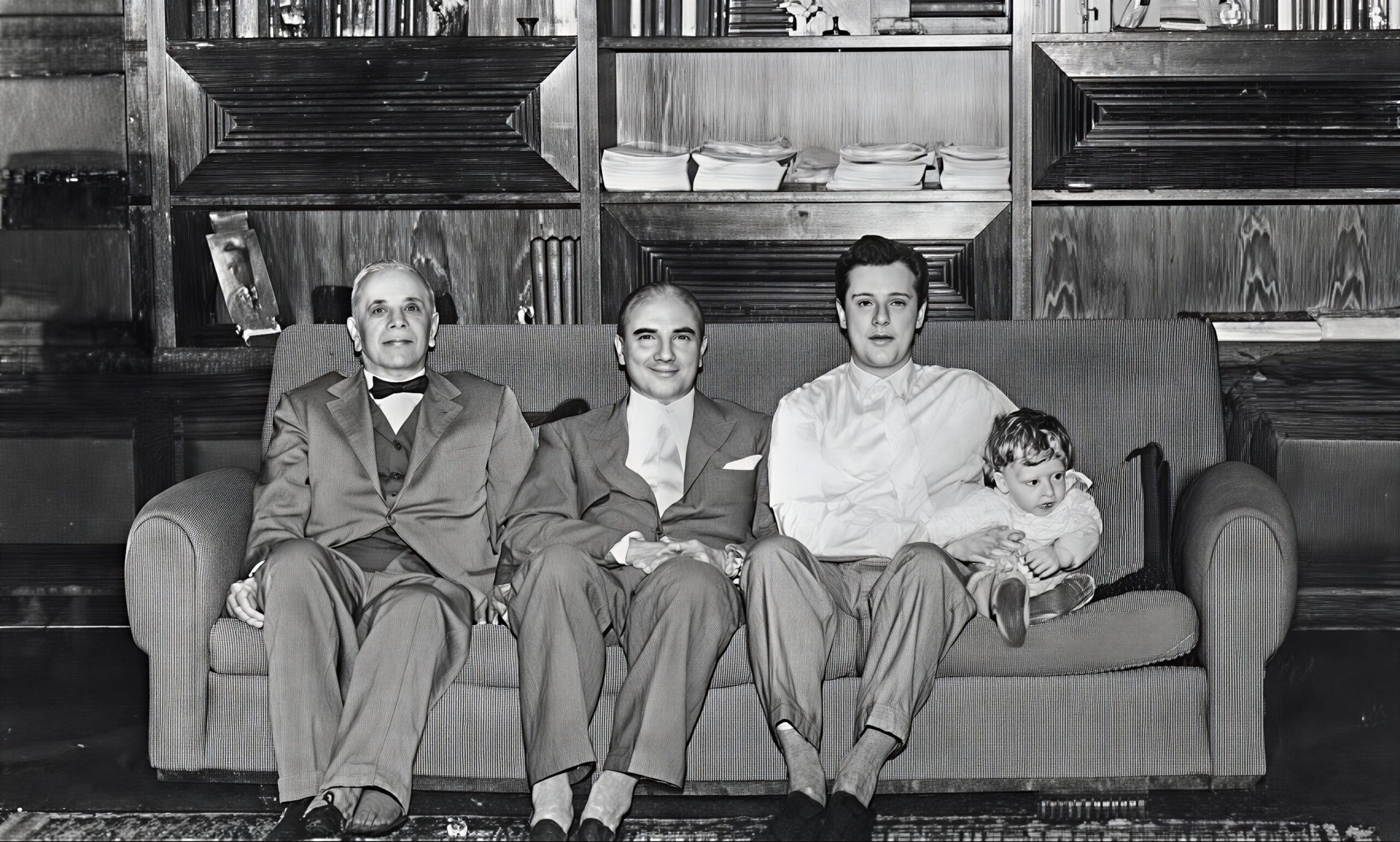
By the end of the 1940s, the company was effectively insolvent. In 1950, Piero Dusio left Italy for Argentina, backed by the Perón government, hoping to rebuild his automotive vision abroad. Cisitalia split in two: a South American operation under Dusio himself, and a skeletal Turin presence overseen by his son Carlo Dusio, tasked with keeping the marque alive with minimal means.
The early 1950s were defined not by growth but by improvisation. Cisitalia no longer possessed the infrastructure for full-scale production. Instead, it survived through outsourced construction, experimental projects, and conceptual proposals—attempts to leverage design intelligence rather than manufacturing capacity. It was in this context that a new generation of talent briefly intersected with the marque. Among them was Aldo Brovarone, who, while working in Argentina under Dusio’s orbit, began developing automotive design ideas that would later surface in Cisitalia projects once their execution returned to Italy.
🔗 Read more: Aldo Brovarone: The Quiet Master of Elegance
By 1951, Cisitalia had become a company rich in ideas but poor in options. The challenge was no longer how to build the next great Italian sports car, but how to secure a partner capable of turning vision into viability. For Carlo Dusio, the solution would not come from Turin or Milan—but from across the Atlantic.
By the early 1950s, Cisitalia’s survival depended less on production capacity than on vision. Carlo Dusio’s boldest idea was to look across the Atlantic and imagine a new kind of partnership: Italian design intelligence paired with the industrial muscle of Ford Motor Company. If successful, Cisitalia could bypass the crippling costs of series manufacture and tap directly into the booming American postwar market. The formula was deceptively simple—American engines and components, installed in a compact, Italian-designed grand tourer, aimed at buyers who wanted something exotic but usable. It echoed contemporary transatlantic experiments such as the Nash-Healey, and anticipated later collaborations like the Volkswagen-Karmann Ghia.
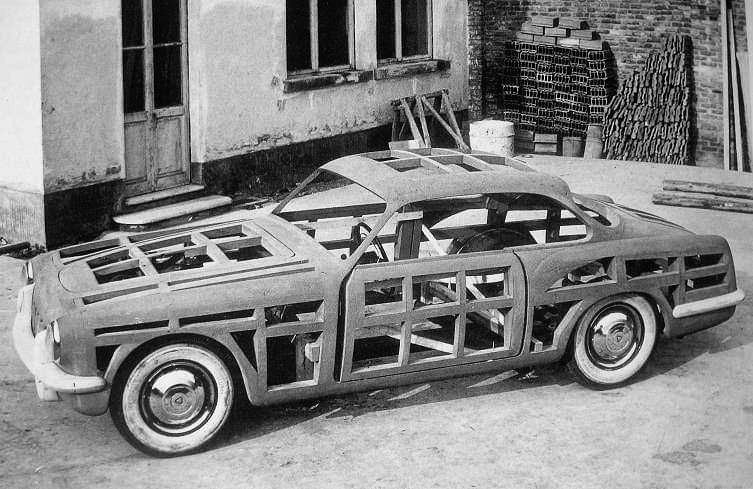
The proposal found an unexpectedly sympathetic audience in Dearborn. Henry Ford II, newly installed at the helm of Ford after the war, was already a committed admirer of Cisitalia. He owned a Cisitalia 202 and reportedly regarded it as a small masterpiece—light, elegant, and utterly alien to Detroit’s design culture. When Carlo Dusio floated the idea of a collaboration, Ford listened. In April 1951, Henry Ford II met Carlo Dusio and Cisitalia engineer Giovanni Savonuzzi in Paris to discuss the project. By 1952, an agreement in principle had been reached: Ford would supply engines and key mechanical components, while Cisitalia would develop a larger GT tailored to American tastes. Ford approved the construction of prototypes and appointed an unlikely intermediary—Ed Sullivan, the American television host, car enthusiast, and family friend of the Fords—to act as liaison. Sullivan would later become one of the project’s most enthusiastic advocates.
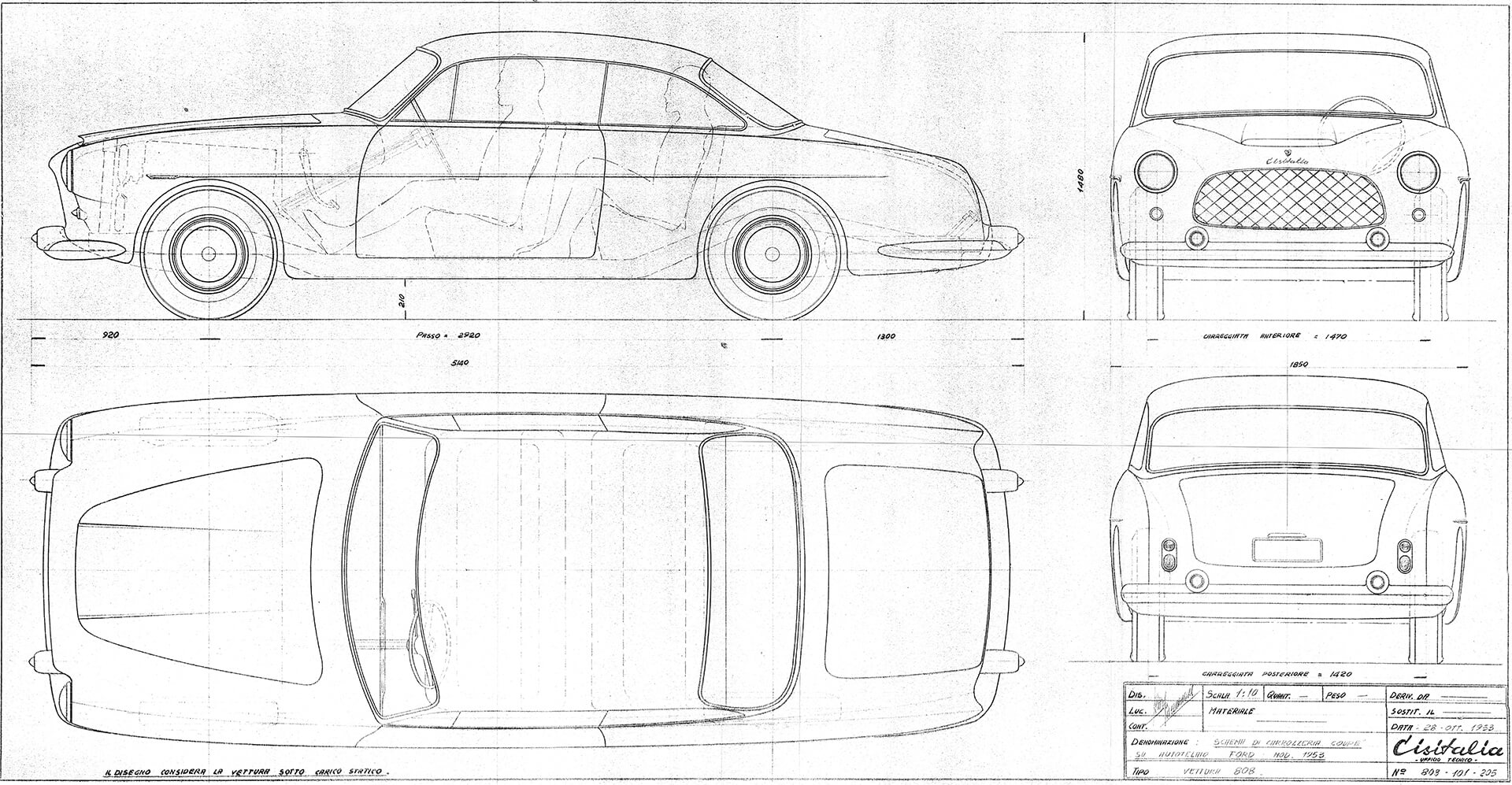
The internal project code was 808XF: “808” an internal Cisitalia designation, “X” referring to the experimental X-section backbone chassis, and “F” standing for Ford. The ambition was clear—a true granturismo capable of sustained high-speed cruising on American highways, using readily available Ford mechanicals for serviceability and potential scalability. Dusio designed an all-new tubular chassis with an X-type central structure for stiffness, forked extensions front and rear for suspension mounting, and advanced solutions unusual for an American-engined car, including a De Dion rear axle assembled with Lincoln driveline components.
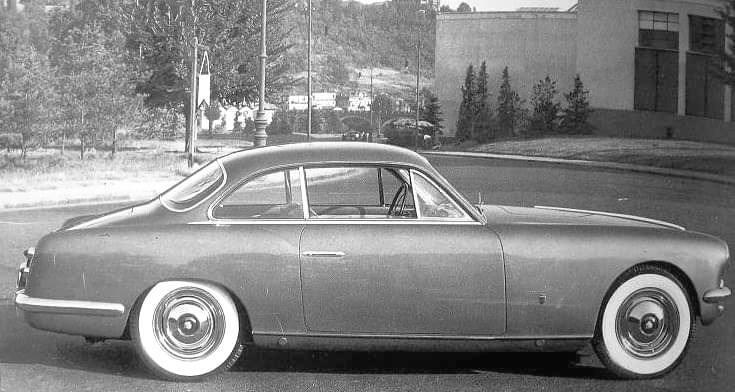
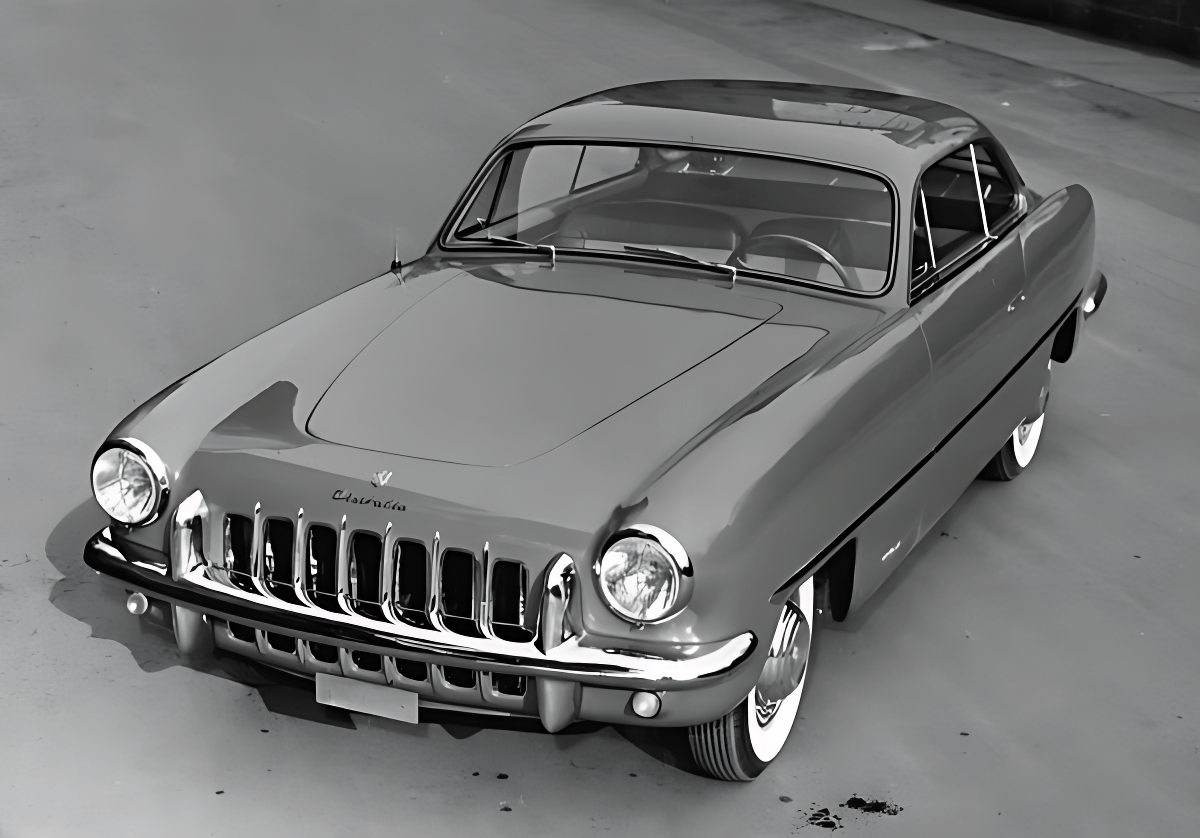
The question of styling authorship, however, is more complex—and more revealing of Cisitalia’s late-period reality. At the time the 808XF concept took shape, Aldo Brovarone was already operating within Cisitalia’s creative orbit, despite being physically based in Argentina. Having actively sought out Piero Dusio in Buenos Aires in 1949, Brovarone became effectively Cisitalia’s designer abroad, producing sketches and conceptual studies that circulated back to Turin. Recent discoveries of signed drawings strongly suggest that Brovarone was responsible for the original design concept of the first 808XF coupé, later built by Ghia on chassis 00001. and of course for chassis 00203. Some earlier sources attributed the design to Savonuzzi, but this appears increasingly unlikely: Savonuzzi’s role was primarily technical, while the formal language of the Ghia coupé—its compact massing, aerodynamic restraint, and reduced frontal area—aligns closely with Brovarone’s known work from the same period, including the Cisitalia Volo Radente.
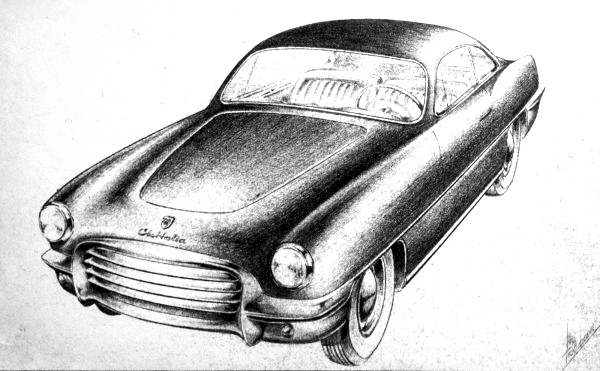
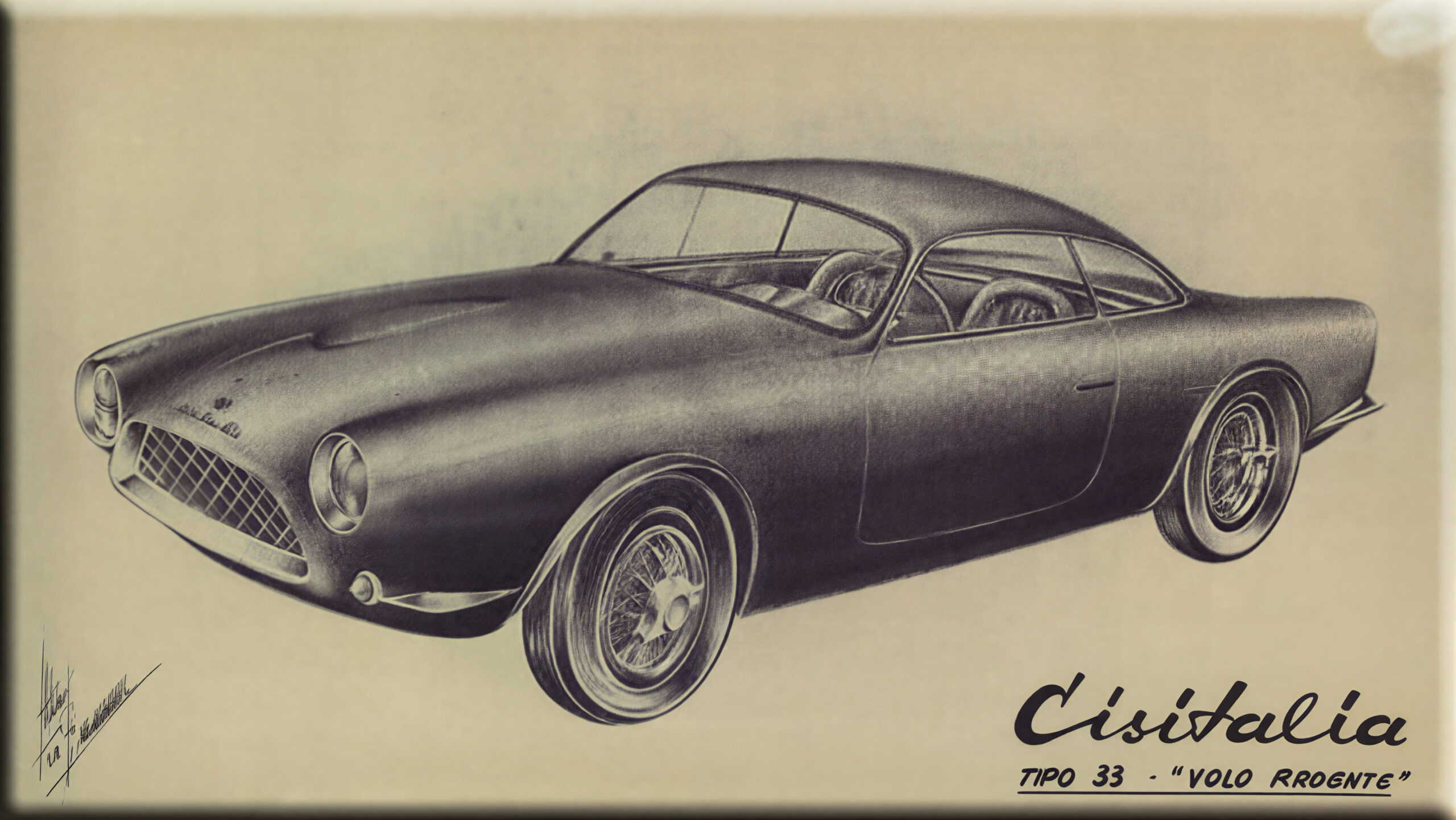
It has occasionally been suggested that Brovarone merely redrew or refined designs conceived by others while working from home, yet this interpretation is difficult to sustain. The surviving figurini associated with the 808XF display the same graphic hand, proportional logic, and stylistic vocabulary seen in Brovarone’s authenticated drawings for the Volo Radente. More importantly, it would be counterintuitive for Brovarone—who at that moment held primary responsibility for Cisitalia’s stylistic direction—to reproduce a design originally authored by Savonuzzi rather than generate an original proposal of his own. Taken together, these elements strongly support Brovarone’s authorship of the 808XF’s initial styling concept rather than a secondary or interpretive role.
By the time the physical prototypes were constructed in Italy, Brovarone had already returned to Europe. Crucially, he did not rejoin Cisitalia directly. Instead, following Cisitalia’s collapse, Piero Dusio personally introduced him to Battista “Pinin” Farina, leading to Brovarone’s hiring at Pininfarina in 1954. As a result, the realization of the 808XF prototypes was handled externally: the first closed coupé (00001) was built by Carrozzeria Ghia, almost certainly interpreting Brovarone’s earlier design studies; a second closed coupé (chassis 000203) was later built by Vignale, closely related in concept but subtly reinterpreted in surface and detail.
A third car, the 808XF Cabriolet on chassis 000202, was again bodied by Vignale but designed independently by Giovanni Michelotti. This open car stands apart both stylistically and conceptually. Its proportions, detailing, and formal language reflect Michelotti’s emerging personal vocabulary rather than Cisitalia’s internal design direction, and it should be understood as a parallel interpretation of the same mechanical idea—not a derivative of the coupé designs.
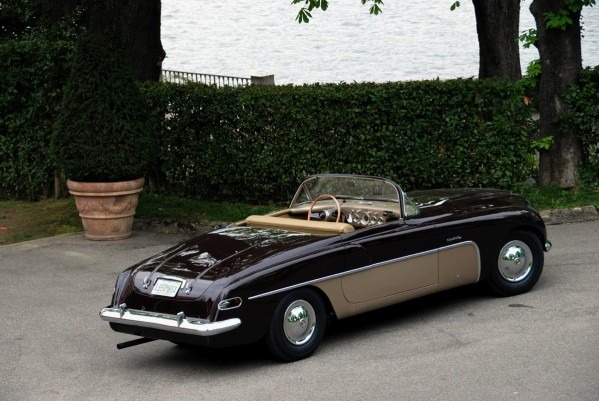
Mechanically, the prototypes explored several Ford powertrain options. Early studies considered Ford’s 215-cu-in straight-six, but the completed cars were fitted with Mercury’s 255-cu-in flathead V8, producing approximately 120–150 hp with twin carburetors. Combined with the advanced chassis and relatively low mass, the result promised performance and refinement well beyond typical American cars of the era.
🔗 Read more: Giovanni Michelotti: Automotive Maestro
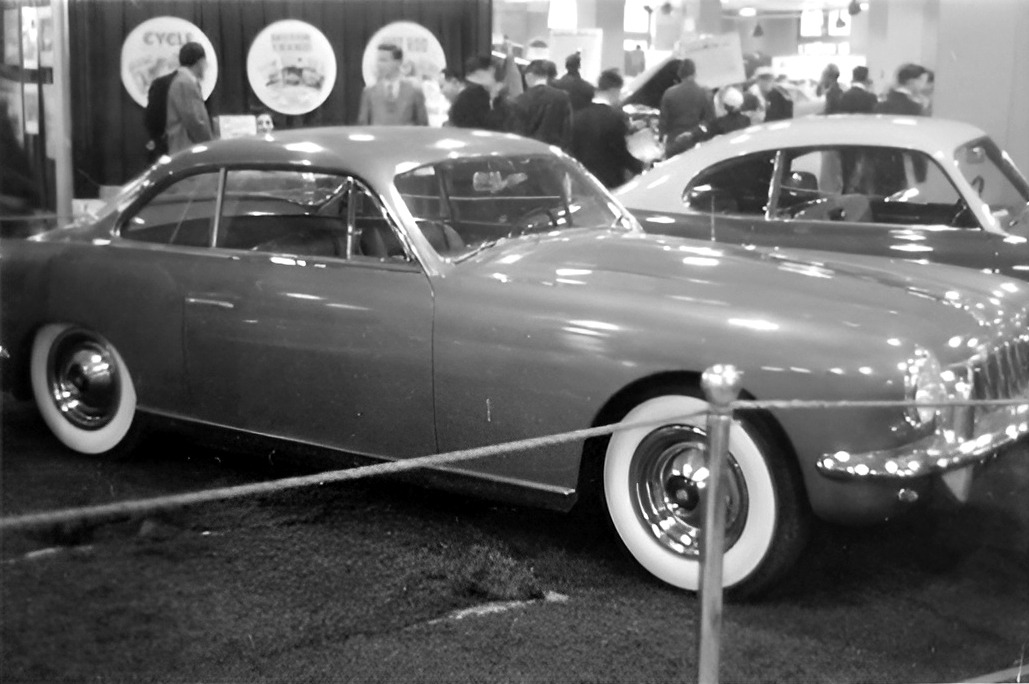
Before being sent to Dearborn, the project was publicly tested at the 1953 New York Auto Show, where the Cisitalia–Ford experiment was presented directly to the American audience. Displayed as an Italian-built grand touring prototype powered by Ford mechanicals, the 808XF stood apart from Detroit’s domestic offerings—lower, more compact, and unmistakably European in proportion. Its appearance in New York underscored the seriousness of the initiative: this was not an internal design exercise, but a proposal exposed on the world’s most important commercial stage. Only after the show did the coupé travel onward to Ford for technical evaluation, where Henry Ford II and his team assessed its feasibility as a production or limited-production sports car.
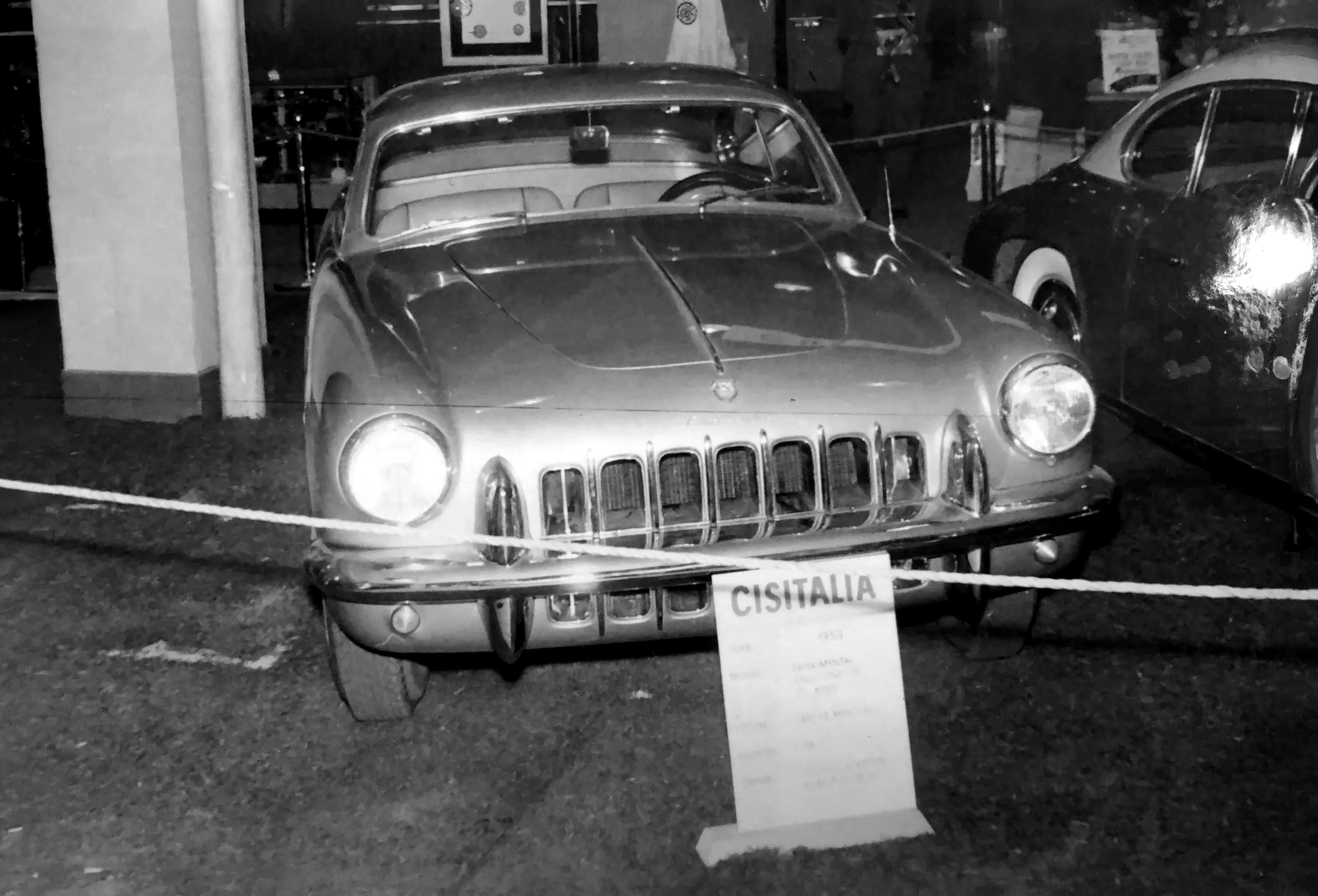
Further prototypes followed, though with diminishing momentum. Two additional cars were bodied—without great conviction—in Cisitalia’s own Racconigi workshops, while Vignale completed a coupé and a spider intended to refine the proposal. In June 1953, Carlo Dusio once again crossed the Atlantic, delivering the Vignale-built cars to Ed Sullivan. By then, however, time had worked decisively against the project. The launch of the Chevrolet Corvette was imminent, and Ford had already committed to a swift in-house response in the form of the Thunderbird. The window for collaboration had closed, and the episode concluded without result.
The 808XF: Technical Architecture and Mechanical Concept
Beneath its coachbuilt skin, the Cisitalia 808XF was conceived as a technically ambitious transatlantic hybrid, combining American powertrain components with European chassis thinking. The project was less about stylistic experimentation than about proving that Detroit mechanicals could be integrated into a compact, performance-oriented Italian framework.
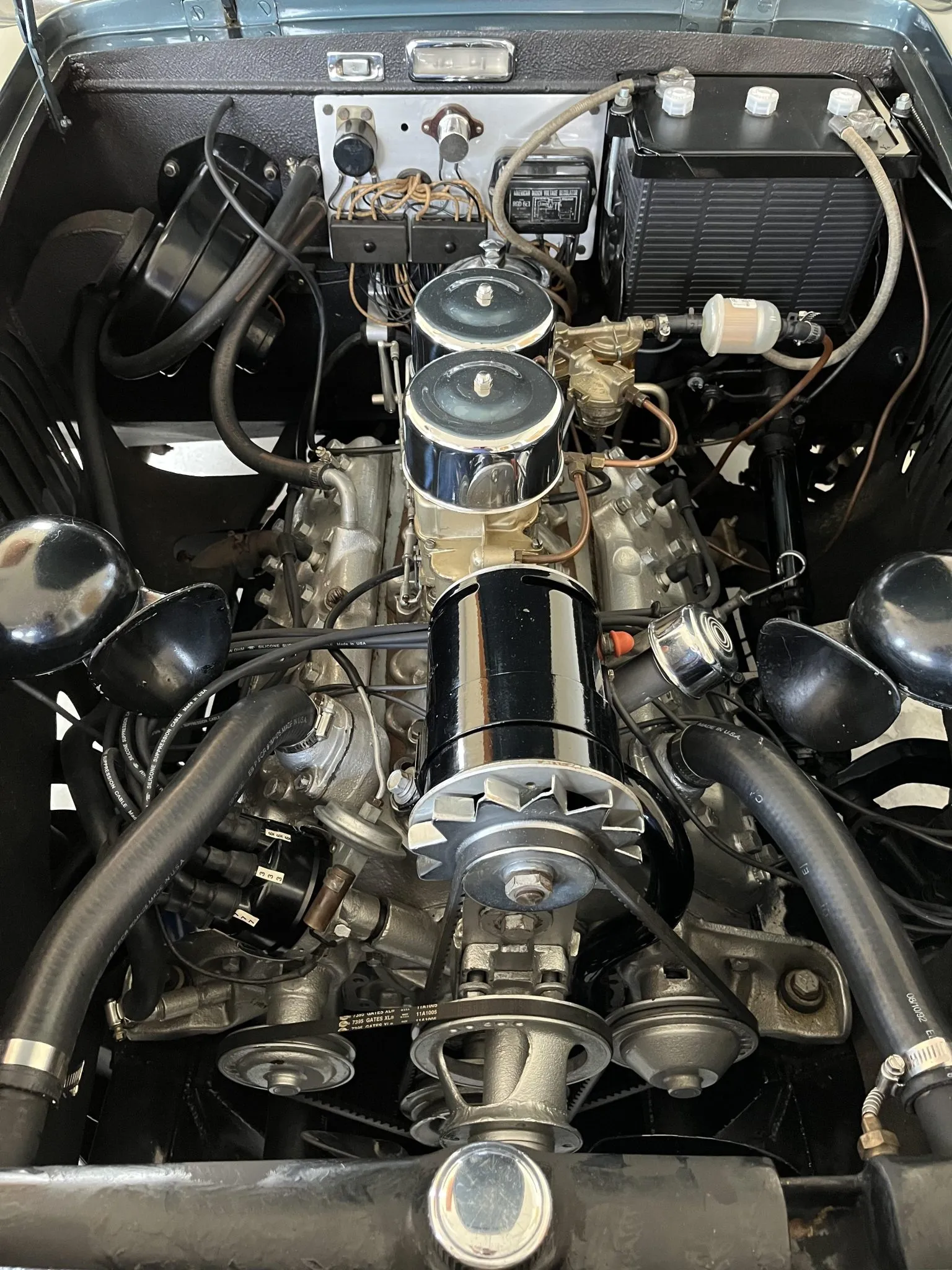
At the heart of the 808XF lay a Ford-sourced powertrain. While early engineering studies considered the use of Ford’s 215 cu in (3.5-litre) straight-six—augmented with Cisitalia-developed aluminium cylinder heads and twin carburetors—the final prototype was equipped with a Mercury flathead V8. Displacing 255.6 cu in (4.2 litres) and fed by twin Holley carburetors on a performance intake, the engine produced approximately 115–120 bhp in period tune. Though modest by later standards, this output represented a substantial increase over Cisitalia’s earlier Fiat-based cars and delivered strong low-end torque suited to long-distance touring. Later in its life, one prototype was reportedly upgraded by Ed Sullivan with a 312 cu in Ford “Police Special” V8, suggesting the chassis had ample headroom for further power development.
The engine was mounted within an entirely new chassis, centered around an X-shaped steel backbone—the “X” referenced directly in the 808XF designation. This structure combined a rigid central spine with forked extensions at the front and rear to carry suspension and drivetrain loads. The layout provided torsional stiffness while keeping mass relatively low, and it was designed from the outset to accept both six- and eight-cylinder American engines without major re-engineering.
Suspension design reflected Cisitalia’s competition background and willingness to depart from American convention. Independent front suspension employed unequal-length wishbones and coil springs derived from contemporary Ford and Mercury components. At the rear, Savonuzzi specified a De Dion axle, an advanced solution rarely seen outside European racing and high-end GT cars at the time. Using a rigid transverse tube to maintain wheel alignment while mounting the differential to the chassis, the De Dion system reduced unsprung weight and improved handling consistency compared with Ford’s standard live axle. Period sources indicate that Lincoln driveline components were adapted for use within this configuration.
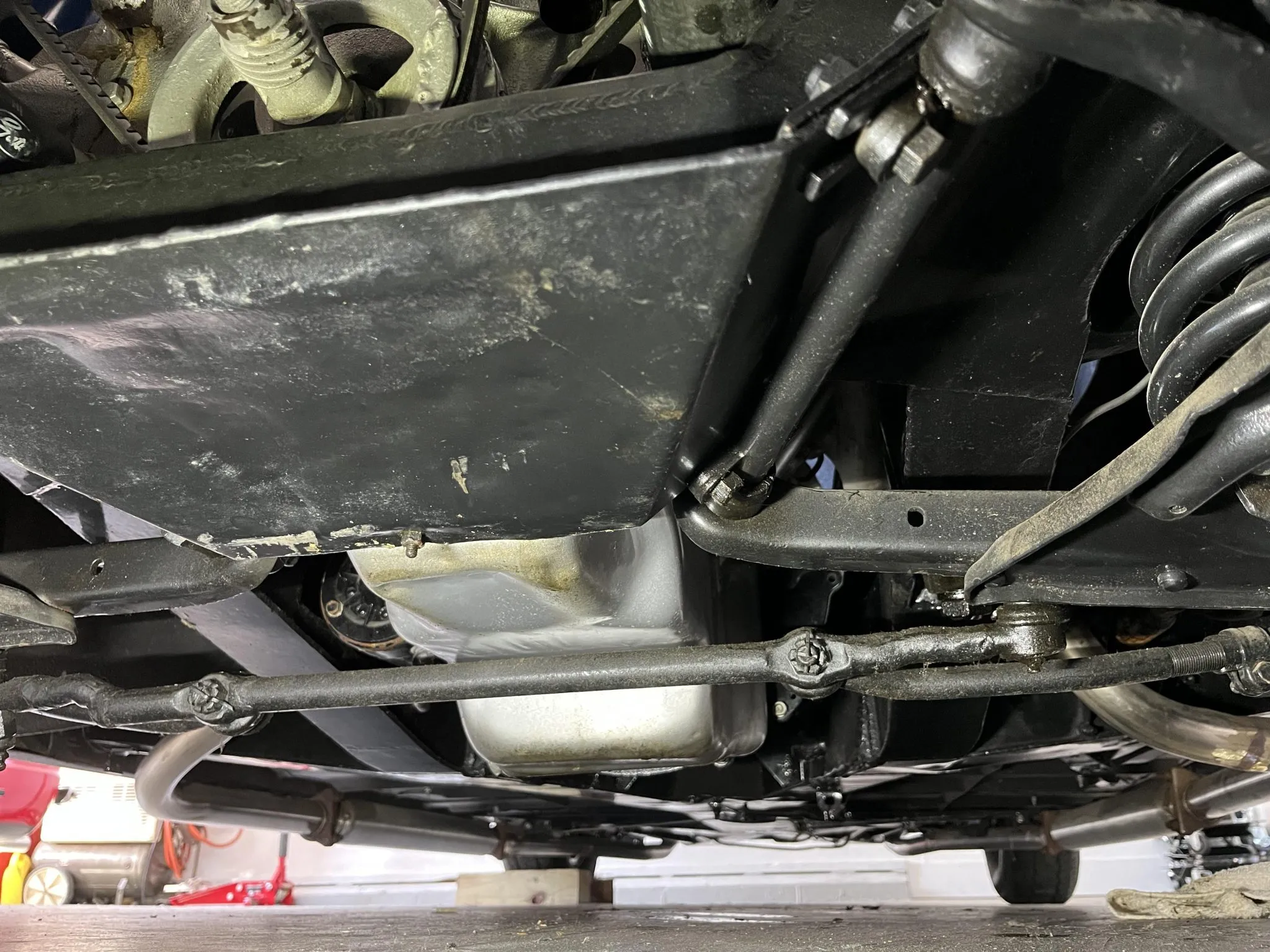
Braking was conventional for the era but robust, relying on hydraulically actuated drum brakes on all four wheels, sourced from Ford and Mercury production hardware. While disc brakes were still several years away from mainstream adoption, the system was adequate for the car’s intended performance envelope and aligned with Ford’s serviceability requirements.
Transmission choice further underscored the project’s grand touring intent. The prototype was equipped with a three-speed Ford-O-Matic automatic gearbox, a relatively novel feature in a European-oriented sports car of the early 1950s. This decision reflected an understanding of the American market, prioritizing ease of use and long-distance comfort over outright competition focus.
Taken as a whole, the 808XF’s mechanical package represented an unusually sophisticated synthesis for its time: American engines and serviceability combined with European chassis rigidity and suspension theory. In an era before multinational automotive platforms were common, Cisitalia’s engineering effort anticipated later Italo-American hybrids and demonstrated that a compact GT could be engineered around Detroit hardware without sacrificing dynamic intent.
From Show Floor to Shifting Fortunes
Once the prototype arrived in the U.S. in late 1952, the Cisitalia-Ford sports car project faced its moment of truth. Henry Ford II’s initial enthusiasm was soon met by skepticism from his engineering department. Inside Ford, the 808XF was greeted with what one observer called a “not-invented-here” reception. In other words, Ford’s engineers bristled at the idea of adopting an outside design – especially one as unconventional as an Italian-made car – and they doubted it could be built at a price that made sense. After inspecting the prototype, the bean-counters in Dearborn concluded that “a production model would cost too much to build”. Simply put, the Cisitalia was too exotic and labor-intensive for mass production. Henry Ford II, with other fires to fight in his company, heeded his team’s advice. By mid-1953, Ford shifted focus to developing its own sports car entirely in-house – which would emerge in 1955 as the two-s
For Cisitalia, this was a heavy blow. Carlo Dusio’s grand vision of an Italian-bodied Ford sports car was slipping away just as it had barely begun. Yet, the resourceful Italians did not give up immediately. Hoping to salvage the venture, they tried a second approach: simplify and resubmit. Ford had balked at the expense of the custom X-frame chassis and all the hand-built intricacy of the first prototype. So Cisitalia built two more prototypes in 1953, this time using standard Ford chassis and running gear in an effort to reduce costs. Essentially, they took complete Ford passenger car frames (with their simpler suspension and dimensions) and shortened or modified them for sports car duty. The Italian styling was retained, but these new prototypes would be a bit less radical under the skin.
🔗 Read more: The Story of Carrozzeria Vignale
Carlo Dusio commissioned Carrozzeria Vignale to construct the bodies for the two follow-up cars. Vignale built one coupe and one convertible (spyder) in 1953, both following the general design language of the original 808XF but adjusted to fit the off-the-shelf Ford chassis dimensions. The Vignale coupé had a slightly longer wheelbase and a taller stance, since it sat on a production Mercury frame. It was painted a metallic blue and looked quite similar to the Ghia prototype, though connoisseurs might notice the body proportions were a touch more upright. The convertible, finished in a striking two tone, offered open-air motoring and was built on a Ford chassis as well. Both Vignale cars used Ford V8 engines and running gear like the first prototype, though likely the newer overhead-valve Y-block V8s were considered by that point. In fact, the convertible would later be fitted with Ford’s 312 cid “Police Special” V8 as noted, giving it a robust 225 hp, paired with Ford’s 3-speed automatic transmission for easy cruising. Visually, the Vignale-bodied 808XFs featured the same transatlantic styling cues – a blend of Italian elegance with hints of Detroit chrome – and Vignale’s execution was top-notch.
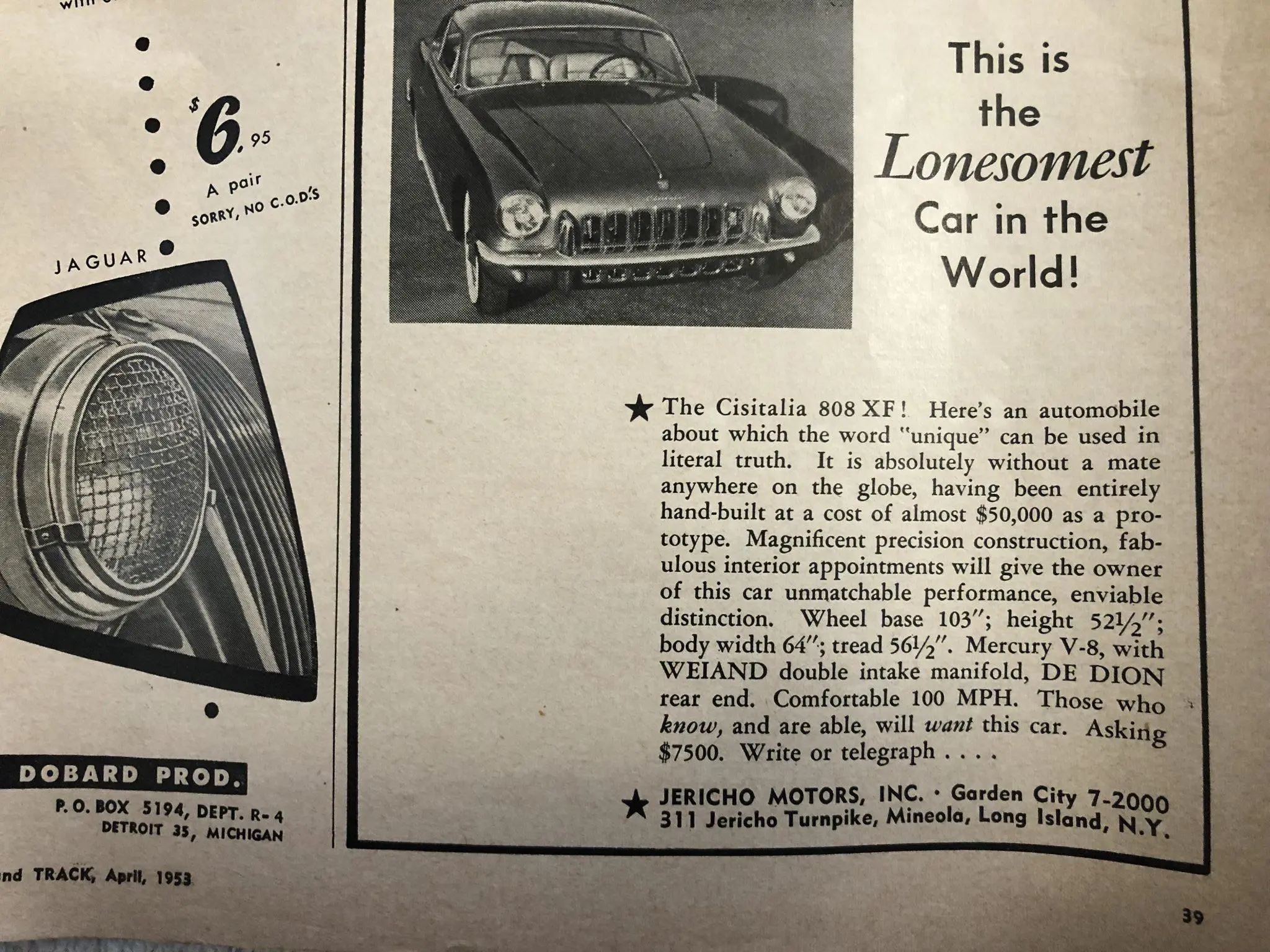
These two prototypes were completed and shipped to New York in a last-ditch attempt to interest Ford (or any American backers) in the project. Carlo Dusio himself accompanied the cars across the ocean and into the hands of Ed Sullivan, who had agreed to help champion them in the U.S.. Sullivan, best known as a media personality, was also an avid car buff and at the time he even owned a dealership on Long Island – Jericho Motors. In early 1953, advertisements from Jericho Motors began appearing in magazines like Road & Track, offering the Cisitalia 808XF coupe for sale at a heady price of $7,500. (To put that in perspective, $7,500 in 1953 was an astronomical sum – roughly equivalent to over $80,000 today, and more than double the price of a new Cadillac of the time.) The ads touted the Cisitalia-Ford sports car’s exclusive nature, hoping to entice wealthy American enthusiasts or even Ford dealers to support a limited production run.
Despite these efforts, time had run out. By late 1953, Ford was well into developing the Thunderbird, and Chevrolet’s Corvette had already been introduced (albeit in limited numbers). The window for Cisitalia’s transatlantic venture had closed. No orders came forth for the 808XF. Carlo Dusio’s vision was overtaken by events – the big American manufacturers were pursuing their own sports cars, and Cisitalia lacked the capital to proceed alone. The 808XF project quietly wound down. It was, as Octane Magazine later reflected, the “last attempt to save Cisitalia” and to fulfill an idea that had tantalized both Edsel Ford (Henry II’s late father, who loved European cars) and Henry Ford II himself. In the end, it became a footnote in history – albeit a glittering one.
From Show Floor to Shifting Fortunes
When the first 808XF reached the United States in late 1952, the Cisitalia–Ford project entered its decisive phase. Henry Ford II had already expressed personal interest, but inside Dearborn the reaction was markedly cooler. Ford’s engineering and production departments viewed the Italian-built prototype with skepticism, shaped less by its performance than by institutional instinct. The car represented everything Detroit found uncomfortable: an external design, hand-built methods, and a cost structure incompatible with Ford’s industrial logic. Internally, the conclusion was blunt—whatever its appeal, the Cisitalia could not be produced profitably at scale.
By mid-1953, Ford redirected its resources toward a wholly internal sports-car program, one that would eventually emerge as the Thunderbird. For Cisitalia, this decision effectively ended the original ambition of a Ford-backed Italian GT. Yet Carlo Dusio was not prepared to abandon the project outright. If the bespoke X-frame prototype had been deemed too complex, the next attempt would be simpler, cheaper, and closer to American production reality.
As said, two additional prototypes were commissioned in 1953, this time abandoning Cisitalia’s custom chassis in favor of standard Ford passenger-car frames. These cars retained the core mechanical concept—Ford V8 power and automatic transmission—but were engineered around readily available components to address Ford’s cost concerns. Construction was entrusted to Carrozzeria Vignale, which bodied both cars: one closed coupé and one open cabriolet.
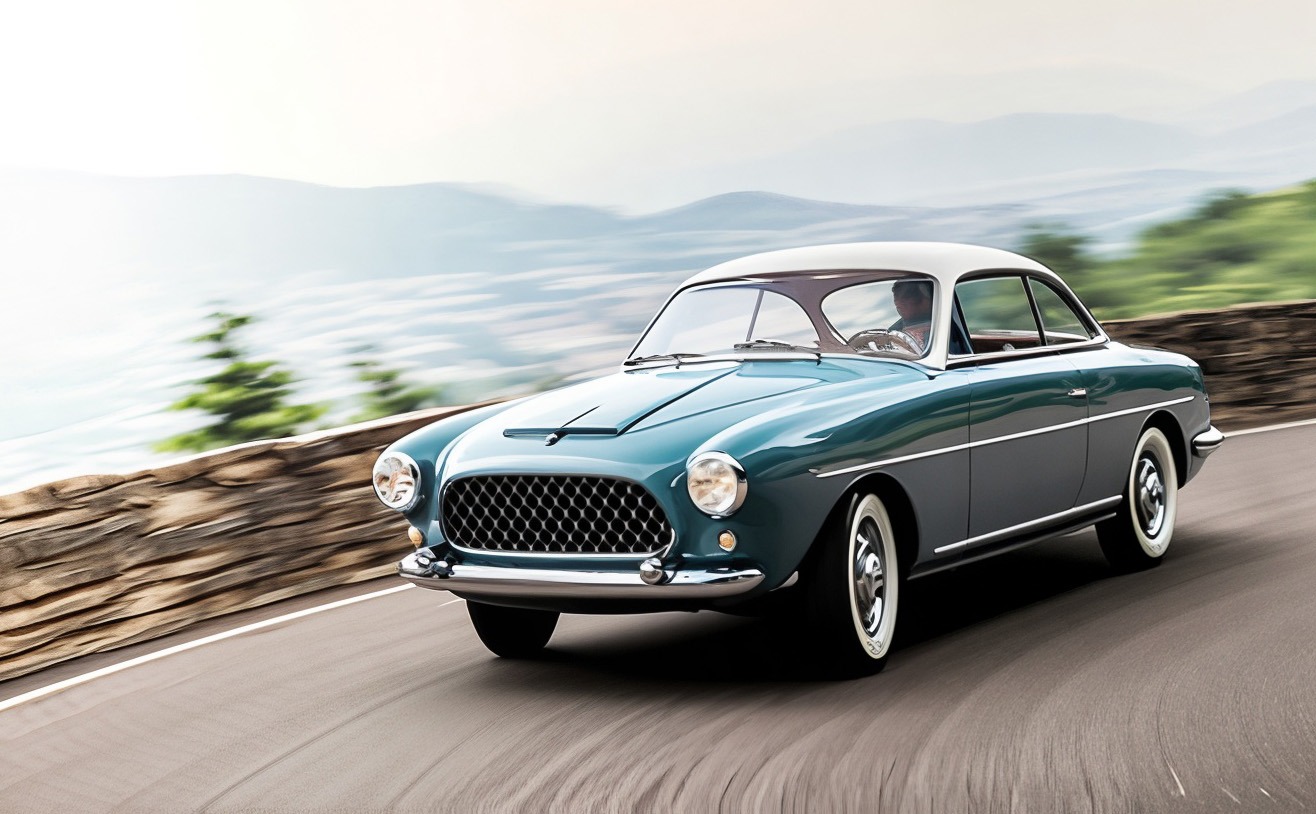
The Vignale coupé, chassis 000203, sat on a production Mercury frame, resulting in slightly altered proportions compared to the original Ghia-built car. Taller, more upright, and marginally longer in wheelbase, it nonetheless preserved the overall character of the 808XF concept. The cabriolet, chassis 000202, offered a more overtly American grand-touring interpretation. Designed by Giovanni Michelotti, it was not a derivative of the earlier coupé design but an independent solution applied to the same mechanical idea. In later years, the cabriolet would be upgraded with a high-output 312 cubic-inch Ford V8, underscoring how adaptable the concept remained even after the project’s commercial prospects had faded.
Both Vignale-built cars were shipped to New York in a final attempt to secure interest—whether from Ford itself or from private American buyers. Ed Sullivan, who had acted as liaison during the earlier Ford discussions, took an active role in promoting the cars through his Long Island dealership, Jericho Motors. Advertisements appeared in early 1953 offering the 808XF at a price of $7,500, positioning it as an exclusive transatlantic grand tourer rather than a mass-market sports car.
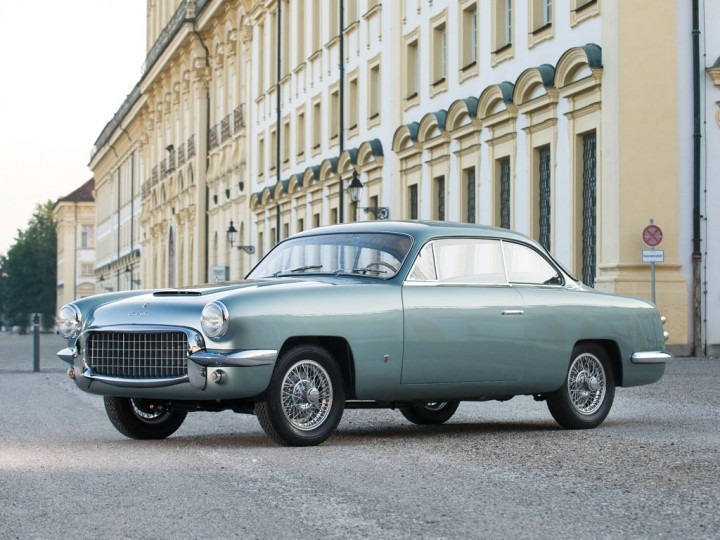
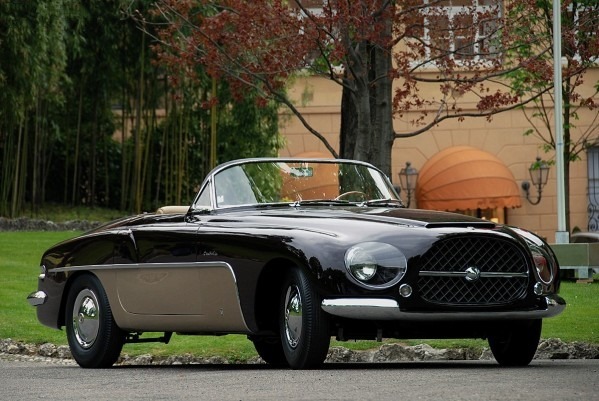
With the Ford venture definitively closed, Carlo Dusio made one final attempt to salvage Cisitalia by reusing what already existed. The original 808XF coupé concept—developed on the first prototype—was reinterpreted as a purely Italian car: the Cisitalia 505 DF. Built at Racconigi on Fiat 1900 mechanicals and bodied by Ghia, the 505 DF translated the proportions, surface language, and overall stance of the Ford-based prototype into a more modest and theoretically viable domestic package. This was not a mere stylistic echo, but a direct evolution of the 808XF’s design identity, scaled to Italian components and severely limited means.
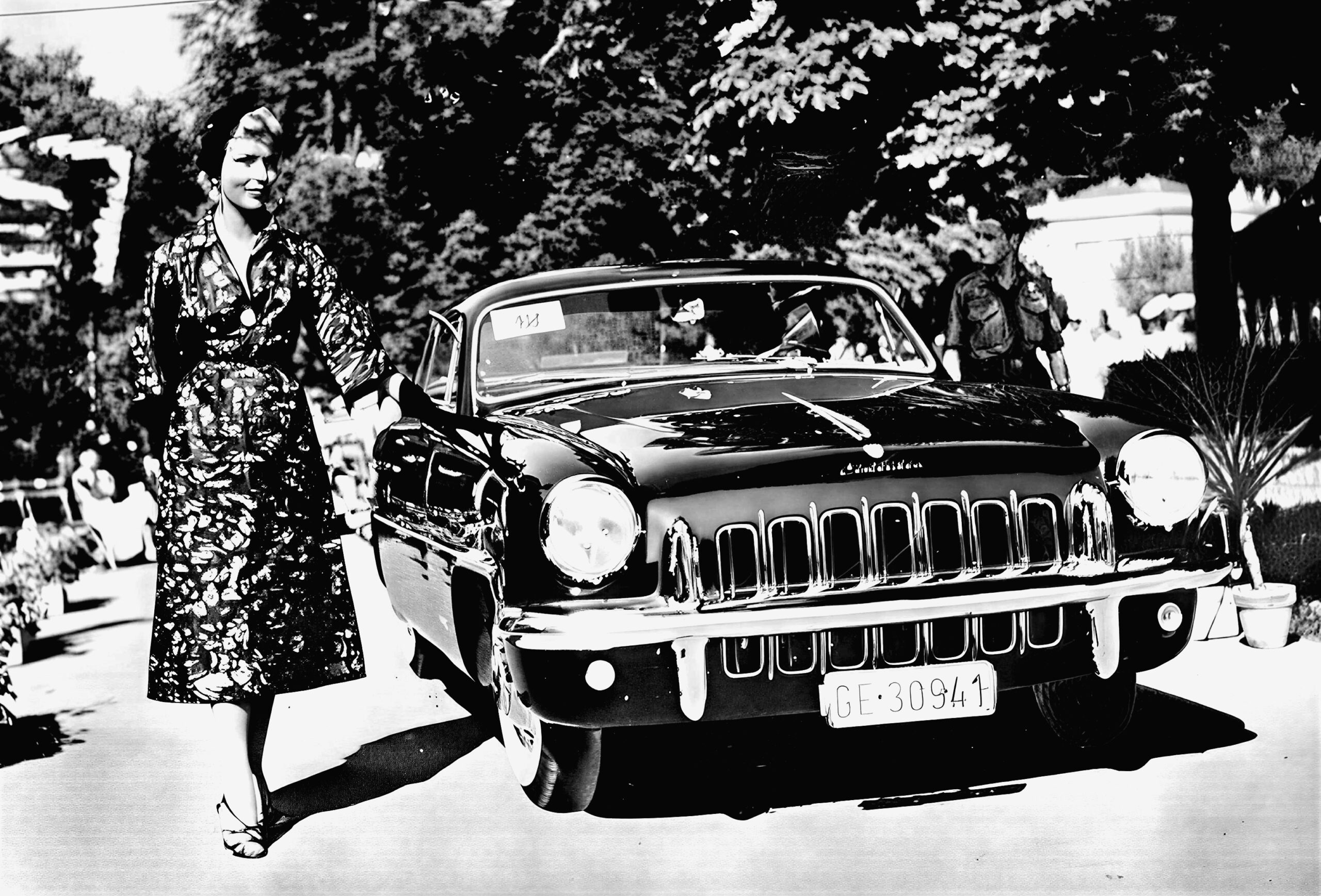
The first 505 DF was completed at Racconigi and claimed by Piero Dusio—temporarily back in Italy—who specified it in black with tan interior. Publicly, the model was introduced in March 1953 at the Geneva Auto Salon, where it appeared finished in a light colour and notably lacking both bonnet and side mouldings, lending it an almost experimental clarity. A second example followed one month later at the Salone Internazionale dell’Automobile di Torino, this time painted in a darker shade and fitted with a bonnet moulding. Period photographs from Turin reveal further variations in trim and detailing, suggesting that specification was never standardised.
Production remained extremely limited. Chassis records indicate that no more than ten examples of the 505 DF were completed, of which only three are known to survive today—corresponding to chassis numbers 00205, 00209, and 00210. Differences among these cars confirm the semi-bespoke, workshop-level nature of their construction. As so often in Cisitalia’s final years, commercial success proved elusive: priced at 2,900,000 lire, the 505 DF was significantly more expensive than the Fiat 1900 Gran Luce, offered at 2,124,000 lire, and consequently failed to find a meaningful market.
A Near Miss That Still Matters
The Cisitalia 808XF never became the car it was meant to be—but that is precisely why it endures. It occupies that narrow and fascinating space where ambition outran circumstance: too refined, too early, and too complex for the industrial logic of its time. What survives is not a failed product, but a fully formed idea that history simply declined to adopt.The Cisitalia 808XF never became the car it was meant to be—but that is precisely why it endures. It sits in that narrow, fascinating space where ambition outran circumstance: too refined, too early, too complex for the industrial logic of its time. What survives is not a failed product, but a fully formed idea that history simply declined to adopt.
In the years that followed, Carlo Dusio continued to search for a path forward, pursuing a series of increasingly modest but conceptually coherent projects. In 1953 he presented the 33 DF Volo Radente, a prototype designed by Brovarone based on the new Fiat 1100/103 mechanicals, followed in 1957 by two closely related cars—the 35 and 36 DF—none of which progressed beyond the experimental stage. These efforts reflected both persistence and realism: Cisitalia no longer aspired to grandeur, but to survival through intelligent adaptation.
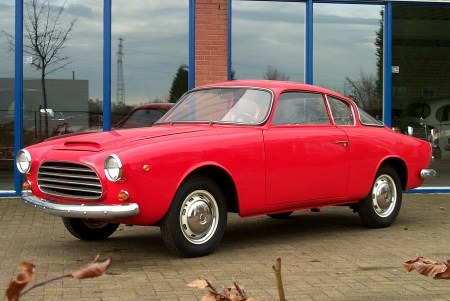
A more tangible success arrived in 1959 with the launch of a coupé and a particularly well-resolved spider derived from Fiat 600 mechanicals. Produced in small numbers, updated in 1962, and remaining in production until 1964, these models reached a total of approximately 200 examples—modest by any standard, yet significant in the context of Cisitalia’s final years. In 1965, Carlo Dusio closed the Racconigi factory and, simultaneously, the Cisitalia I.C.S.A. operation in Buenos Aires. Crucially, he did so while honouring all outstanding debts, bringing the company’s story to a dignified close and avoiding formal bankruptcy.
Still relatively young, Carlo Dusio remained active in the automotive world as a representative for Karmann, overseeing important supply agreements, including those connected with the Alfa Sud plant. An empathetic and widely respected figure—an aficionado of jazz, a tireless traveller between Monte Carlo, Europe, and the Far East—he was well known among major manufacturers and never entirely abandoned the hope of reviving the Cisitalia name. One such attempt came after an encounter with Gianni Agnelli in the Ferrari pits at the Monaco Grand Prix. Subsequently received at Fiat’s Corso Marconi offices, Dusio proposed—on the suggestion of Balestra—that the name Cisitalia be paired with Barchetta. The idea was favourably received by the Avvocato, but proved too late: by then, every aspect of the project’s production and marketing had already been defined.
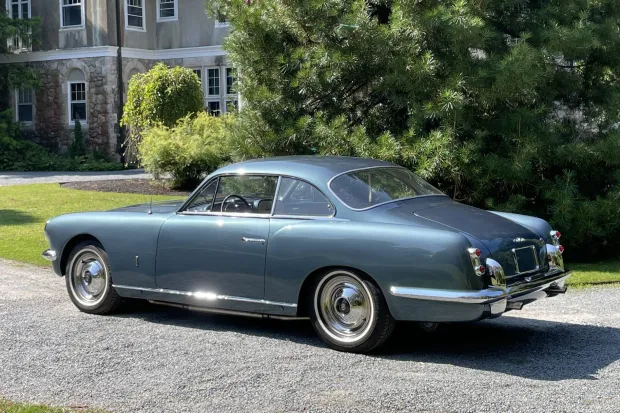
Seen in context, the 808XF was less an isolated prototype than a statement: proof that a small, fragile Italian marque could engage an American giant on equal conceptual terms, anticipating later Italo-American collaborations. Its legacy lies not in production numbers, but in the ideas it carried forward. The 808XF reminds us that automotive history is shaped as much by near-misses as by successes. In that sense, it is not an orphan, but a resolved thought left unfinished by history—one of the post-war era’s most eloquent “almosts.”

ABOUT THE AUTHOR
Andreas Scheidl
Italian classic car enthusiast with German roots. Renowned as a respected figure in the classic car community, he serves as a jury member at various international concours d'elegance, including the Classic Gala Schwetzingen and Mantova. As a content creator, Andreas passionately shares his profound knowledge and appreciation for vintage automobiles. His heart beats for cars designed by Giovanni Michelotti, showcasing his discerning taste and dedication to preserving the timeless elegance of automotive history.
More stories by Andreas Scheidl ↗CONTINUE READING
Posts You Might Like
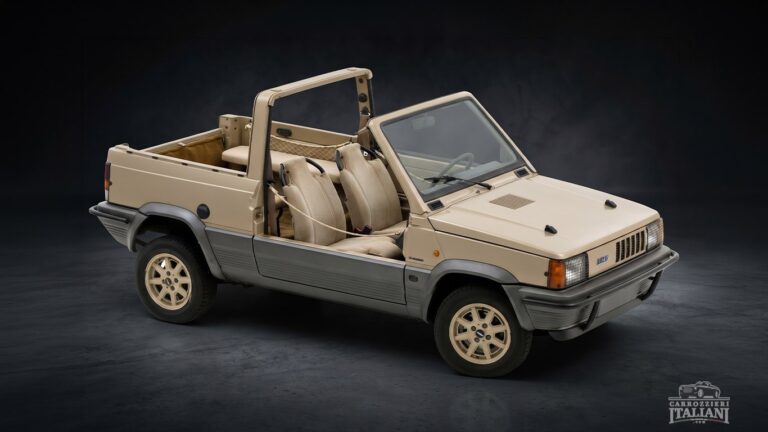
Fiat Panda Cabrio: The Italian Coachbuilders Who Opened Giugiaro’s Box
From Moretti’s Panda Rock to Italdesign’s experimental Strip, Maggiora’s four-wheel-drive convertible and Stola’s remarkable Destriero, the history of the open-top Panda reveals an unexpected chapter in Italian coachbuilding. When Giorgetto Giugiaro designed…
Read story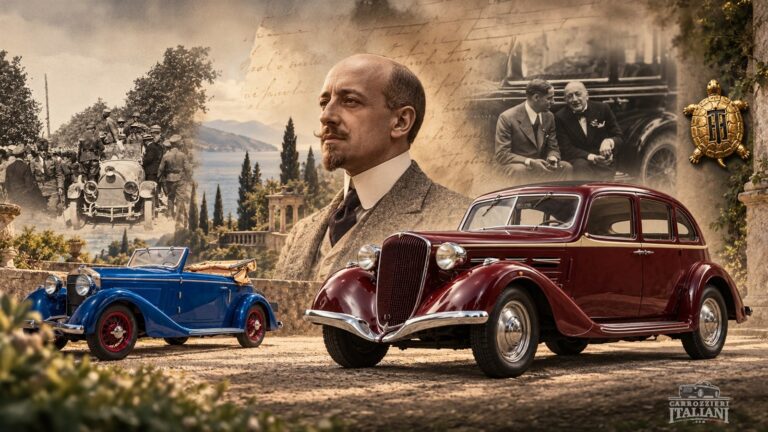
Gabriele d’Annunzio and the Cult of the Automobile
There was a time when the automobile had not yet become part of the landscape. It announced itself from afar through the beating of an engine, the smell of petrol and hot…
Read story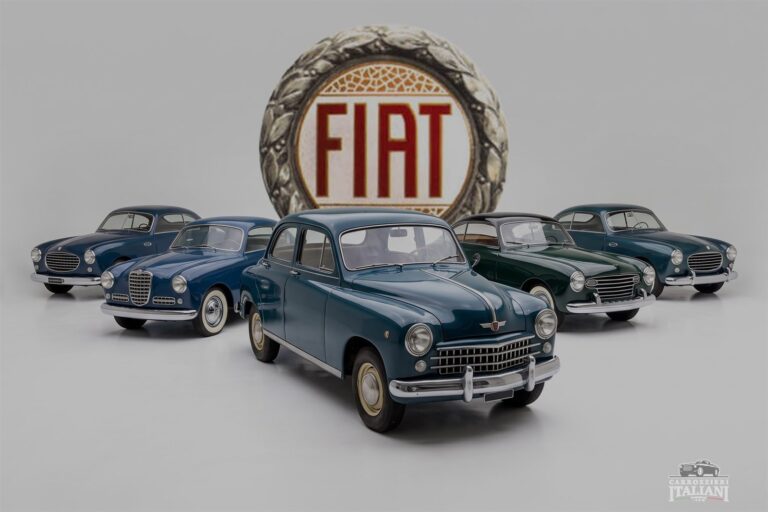
Fiat 1400: The Last Great Playground of the Carrozzieri
From Touring and Abarth to Farina, Ghia, Vignale, Boneschi, Bertone, Viotti and the smaller carrozzerie, the new Fiat quickly became one of the richest bases for Italian special bodies in the early…
Read story
How a Swiss Dealer Challenged Ferrari: The Story of Monteverdi
How Peter Monteverdi went from Swiss Ferrari dealer to creator of rare Frua and Fissore-bodied GTs, the Hai supercar and luxury off-roaders.
Read story
THE CONVERSATION
Comments 0
Share a memory, a period photograph or a documented detail about this story.