
Why the Fiat 130 Coupé Is the Connoisseur’s Italian Grand Tourer
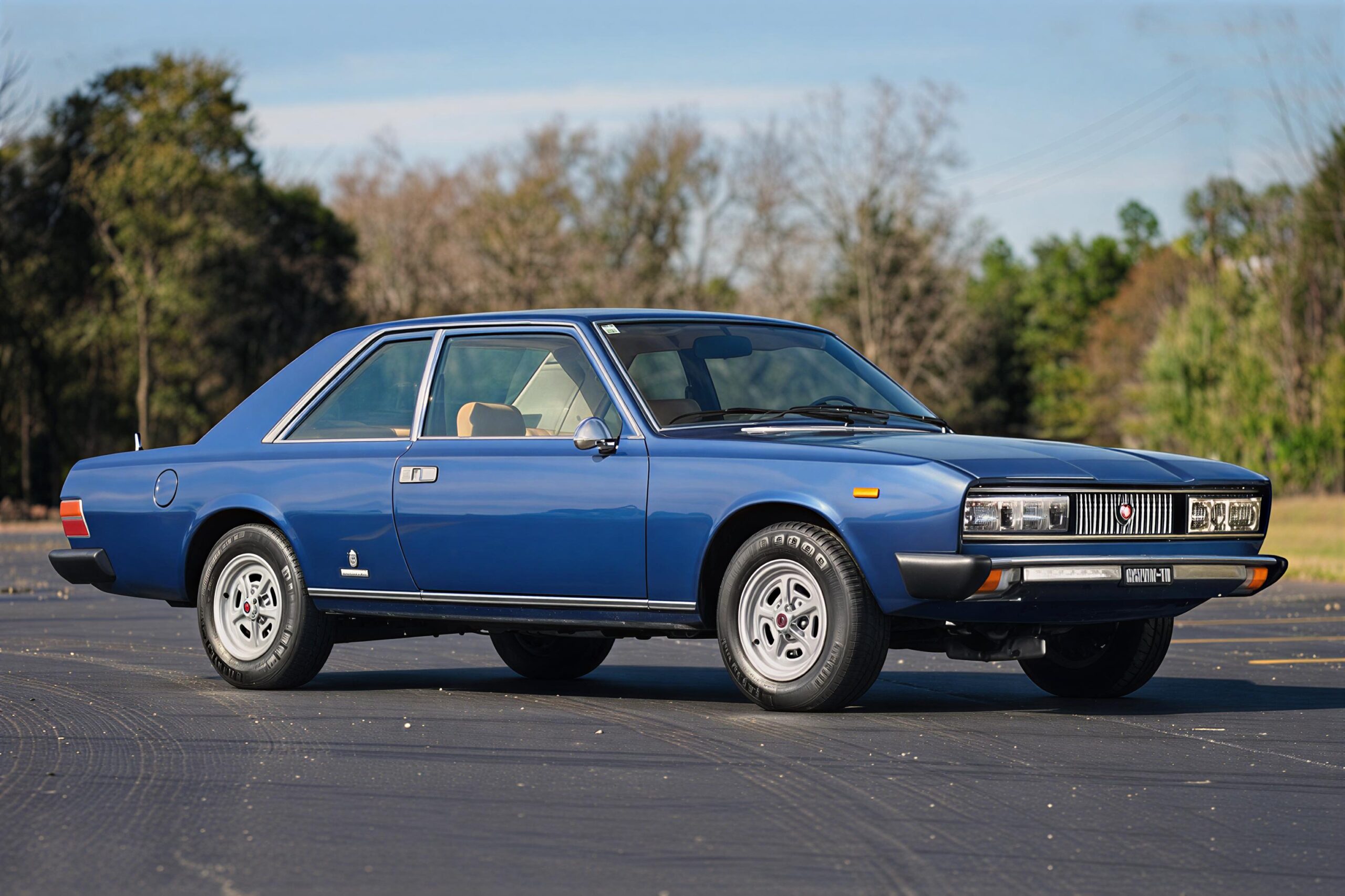
In the late 1960s, Fiat found itself at a crossroads. Known primarily for small, affordable cars, the Italian giant was eager to prove it could compete in the upscale market. Fiat’s management realized that their dominance at home was under threat as Europe’s markets opened up, and profits on tiny economy cars were slim. The solution? Move upmarket with a true flagship. In 1969, Fiat launched the 130 berlina (sedan), a large luxury four-door with an all-new 2.9-liter V6 by famed engineer Aurelio Lampredi. It debuted at the Geneva Motor Show and was intended to capture a slice of the executive sedan segment dominated by Mercedes and Jaguar. This was Fiat’s moonshot – a car developed from the ground up rather than pieced together from their existing parts bin.
Yet the initial reception of the 130 sedan was lukewarm. The design, penned in-house by under the supervision of Mario Felice Boano, was formal but a bit conservative. Worse, Italy’s hefty car taxes and the car’s prodigious thirst for fuel limited its appeal even to affluent Italians. Reports of underwhelming performance (the early 140 hp engine struggled to move its weight) and reliability niggles didn’t help. By the end of 1970, it was clear the 130 berlina wasn’t going to set sales charts on fire. Some accounts later suggested Fiat’s brass, stung by the sedan’s slow sales, green-lit an even more upmarket derivative – a sporty grand touring coupé – as a last-ditch effort to spark interest. More likely, the coupé was already part of Fiat’s vision to elevate its image, possibly even with an eye toward export markets like the U.S.. Either way, by 1968 Pininfarina had been commissioned to style a new 130-based coupé, using the sedan’s unmodified chassis as the foundation. It was a daring move: a Fiat luxury coupé was something the market hadn’t asked for and arguably didn’t need. But Fiat was about to build one simply because they could.
Pininfarina’s Masterpiece of Simplicity
Fiat handed the project to Pininfarina, the Italian design house that had sculpted many masterpieces. Pininfarina’s team, led by senior stylist Franco Martinengo, explored various proposals before a young designer named Paolo Martin had his design chosen for development The brief was straightforward: the coupé would ride on the sedan’s bones – same wheelbase, width, and mechanical layout. But in terms of style, it was to be entirely new. The resulting Fiat 130 Coupé shared almost nothing visually with the square, “three-box” sedan that spawned it.
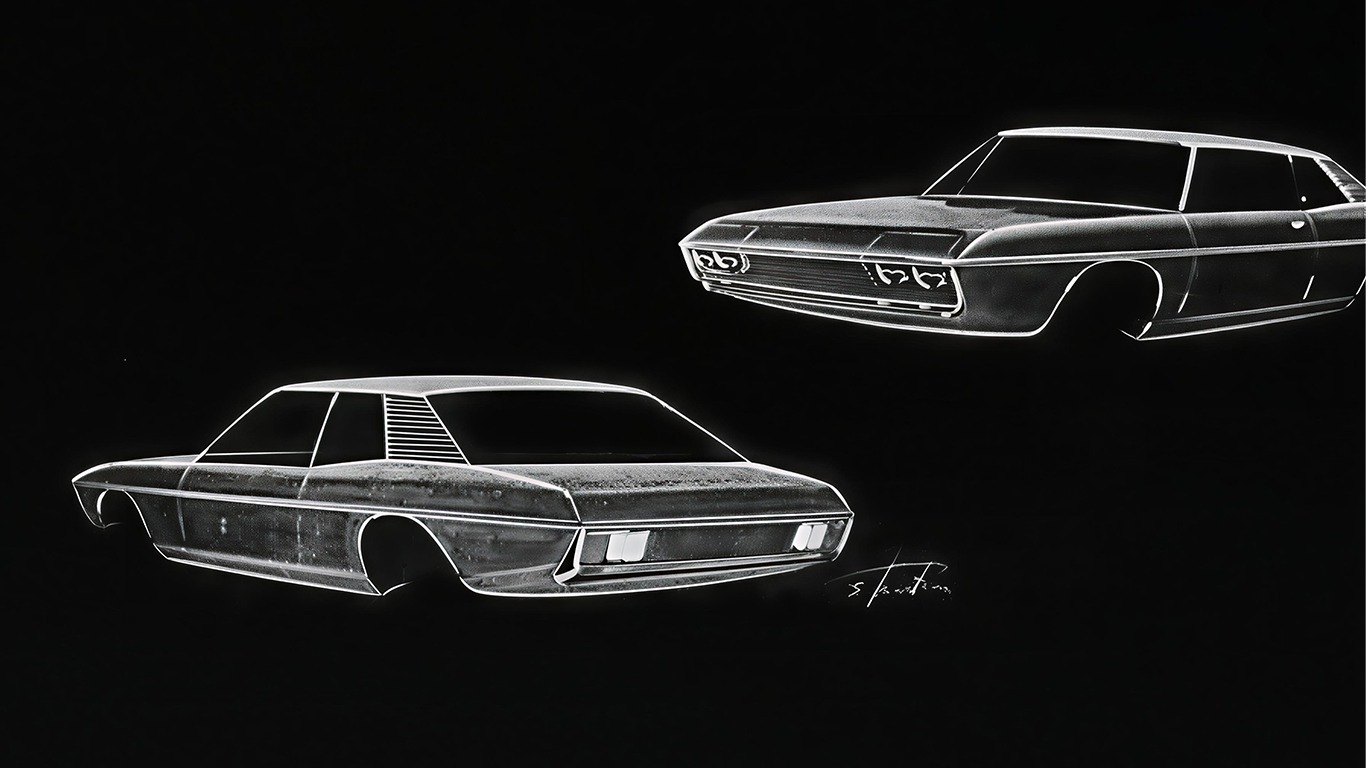
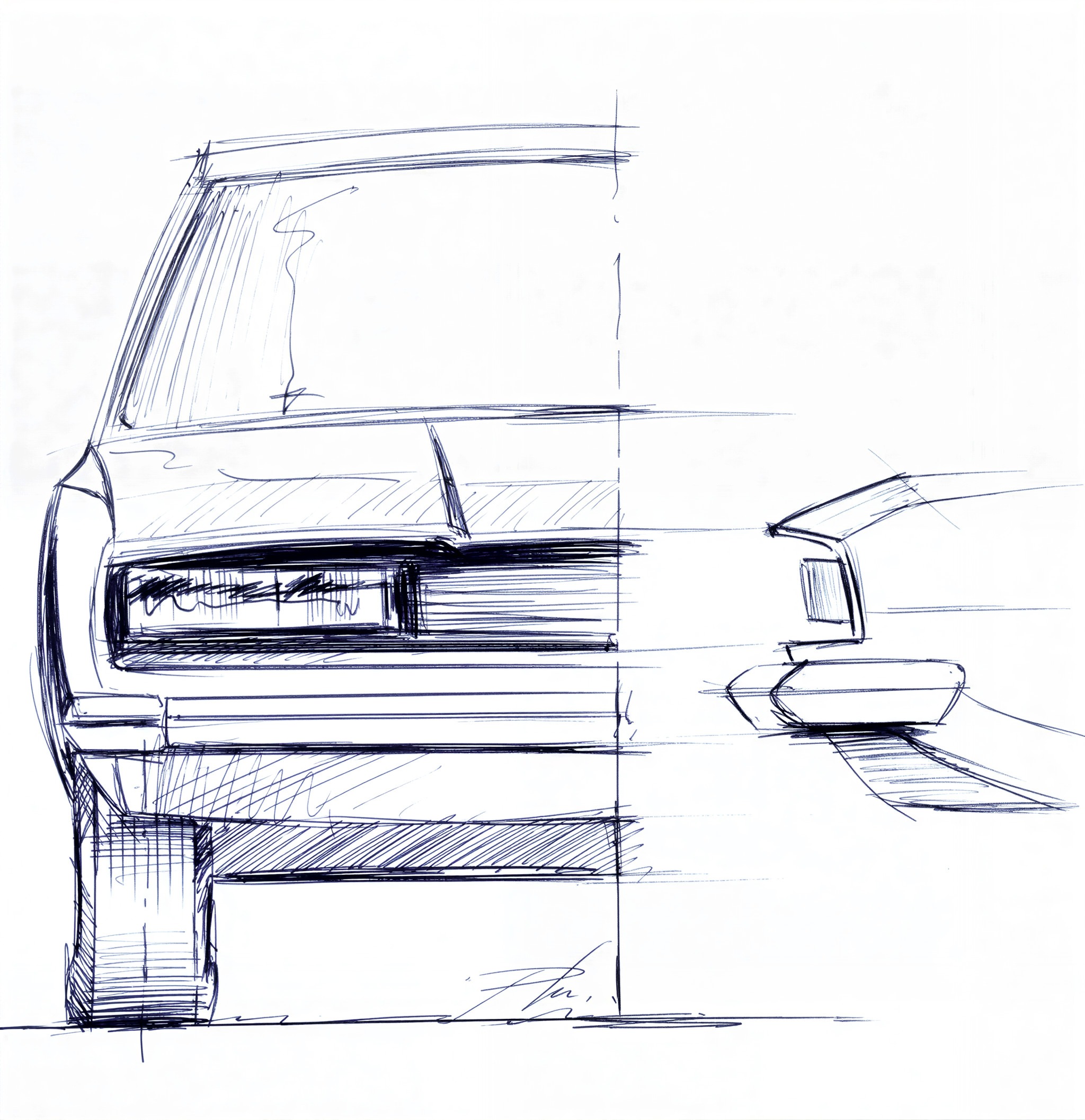
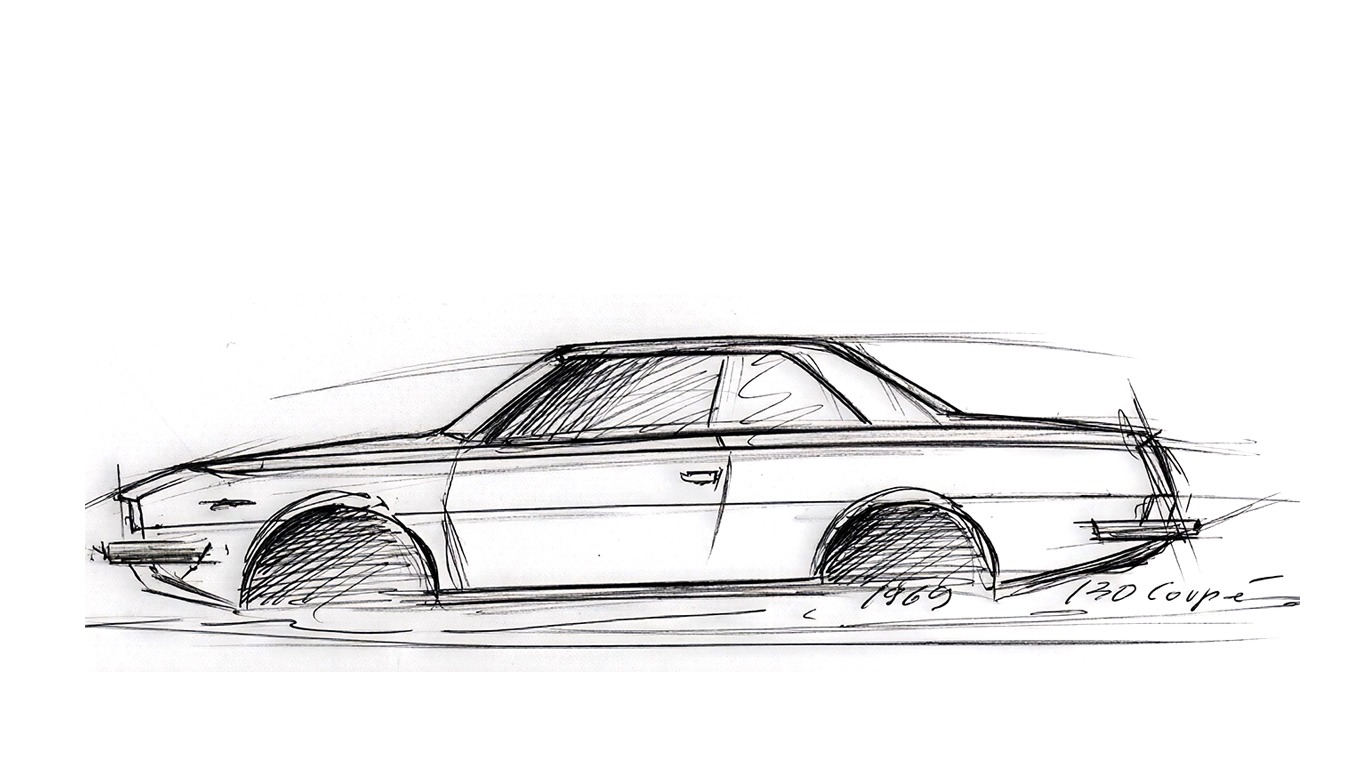
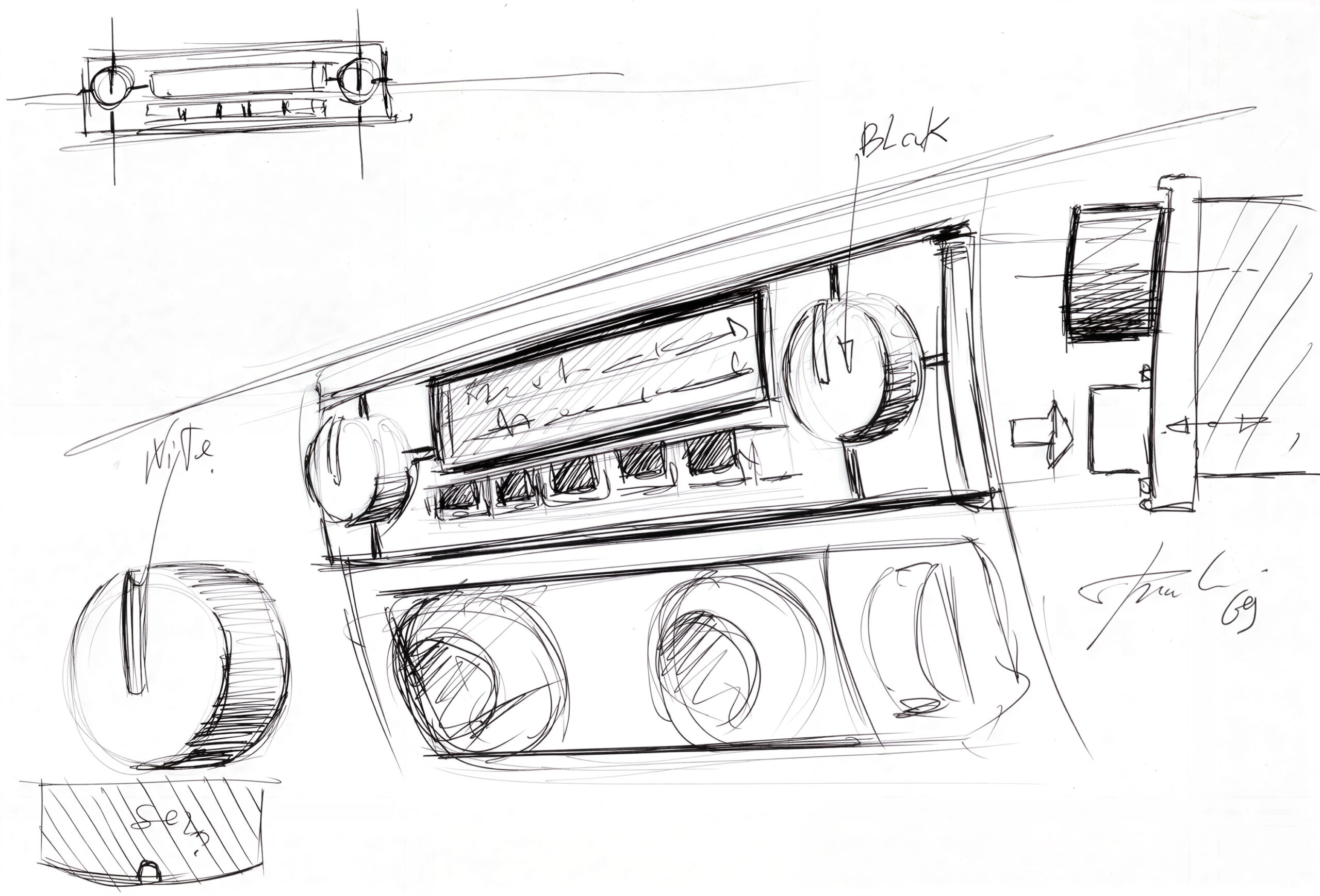
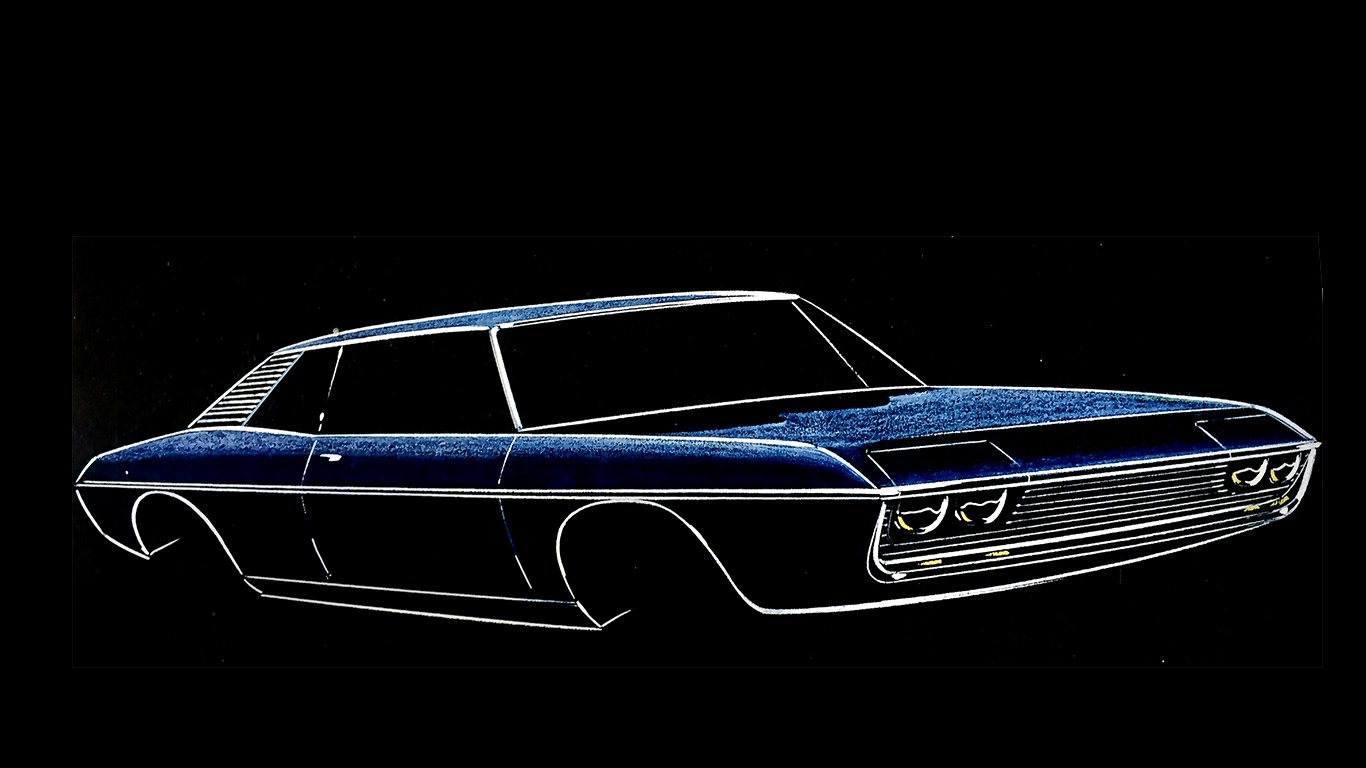
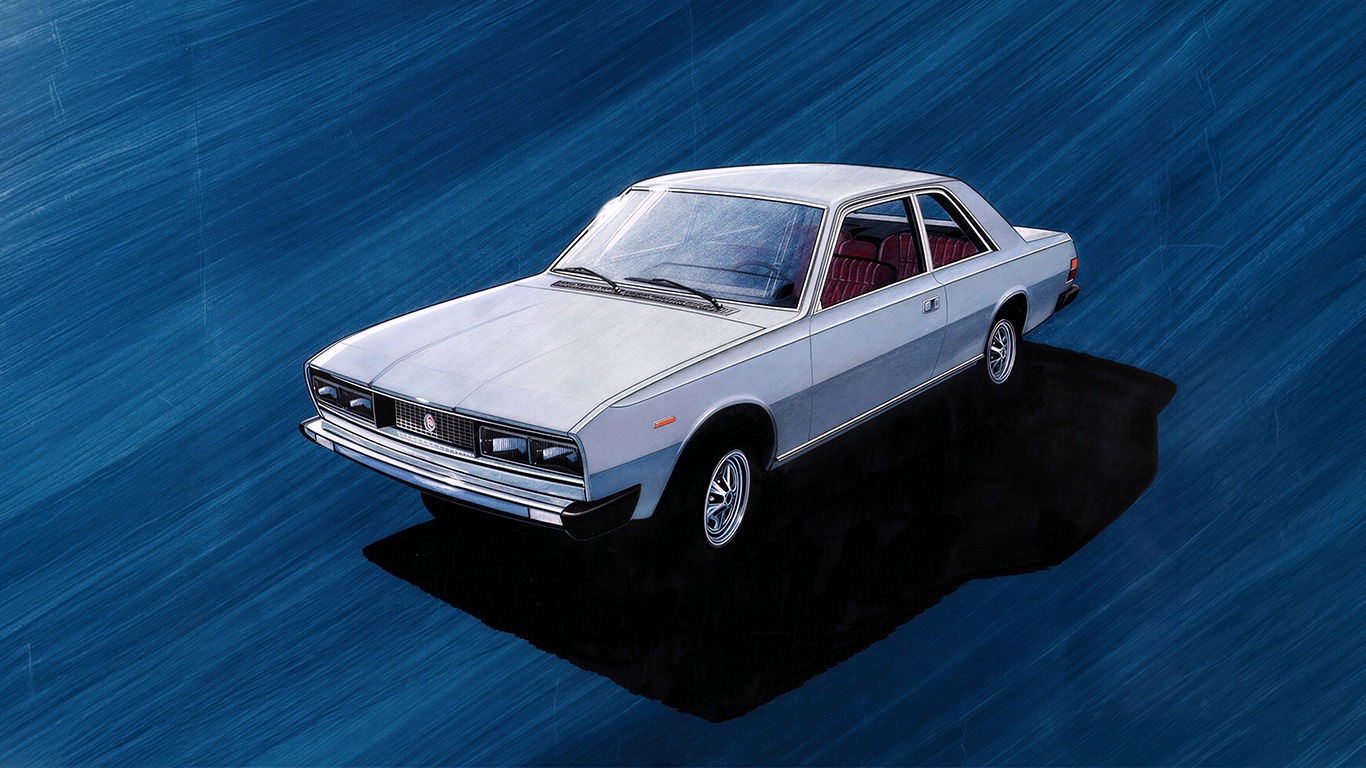
When the covers were pulled off at the 1971 Geneva Motor Show, audiences saw a sleek, modern two-door grand tourer that oozed Italian elegance. Sergio Pininfarina himself lauded the 130 Coupé as a “masterpiece of simplicity,” comparing it to Pininfarina’s greatest hits like the classic Lancia Florida II. One look explains why: the 130 Coupé’s design was taut, clean, and perfectly proportioned. It had a low, linear profile with crisp trapezoidal lines and absolutely minimal ornamentation – a radical departure from the sedan’s stuffier look. Every panel flowed harmoniously into the next. The front end was particularly innovative: Pininfarina crafted a sharp, cut-off nose with a thin grille slot flanked by headlamps set behind glass, giving the car a unified, modernist face. A subtle dip in the hood line drew the eye down and made the prow seem lower than it actually was. Along the sides ran a signature Pininfarina crease at the beltline, under which Paolo Martin integrated a delicate concave scallop to break up the bulk of the body. This clever sculpting “lightened” the visual weight and accentuated the car’s length. At the rear, the tail was neat and unfussy, with a slight built-in lip on the trunk edge for aerodynamics. The overall effect was understated glamour – imposing in size, yet somehow effortless in its elegance.
🔗 Read more: Pininfarina Through the Ages: The Complete History
Interestingly, Martin’s design drew on Pininfarina’s own heritage. Observers noted echoes of the 1950s Lancia Florida/Flaminia in the panoramic greenhouse and that gracefully sloping C-pillar. But it also looked forward, heralding the angular aesthetic that would define the 1970s. The 130 Coupé was avant-garde in its simplicity – a car that made other contemporaries look suddenly old-fashioned. It’s no surprise it earned Pininfarina a prestigious honor: in 1972 the Italian design magazine Style Auto bestowed its annual Design Award on the 130 Coupé’s styling.
This accolade was a much-needed boost for Pininfarina, which had spent the late ’60s crafting fairly conservative designs for mass-market sedans. The Fiat 130 Coupé’s success marked a renaissance for the carrozzeria, proving they still had the magic touch in shaping modern classics. Paolo Martin, at just 28 years old, suddenly found his name celebrated in design circles. (He would soon depart Pininfarina in 1972, but not before leaving an indelible mark – more on that later.)
From Show Floor to Executive Garages
Beyond its striking looks, the 130 Coupé impressed with its luxurious appointments. Fiat had wisely given Pininfarina free rein on the interior, and they delivered an ambiance more befitting a bespoke Ferrari than a Fiat. Gone was the sedan’s bland plastic dash; the coupé’s cabin was all new and all class. A beautiful wood-veneered dashboard housed a row of round instruments with white needles, softly lit by state-of-the-art fiber optics – yes, fiber optic illumination in 1971!. Switchgear was neatly arranged in a center console, and even the steering column was adjustable for both rake and reach – a rarity at the time. Rich velour upholstery in tasteful colors (or optional leather) covered the seats, which were shaped with input from an orthopedic consultant for maximum comfort.
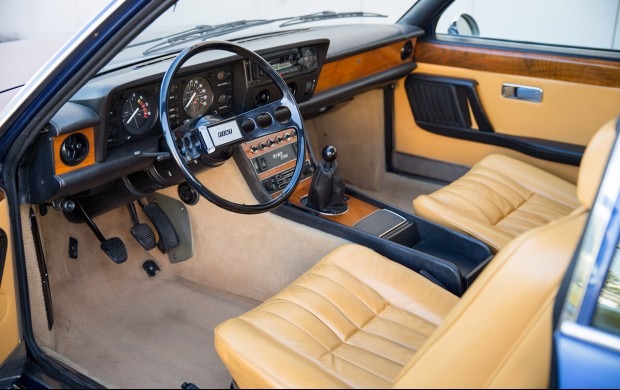
One charming touch that delighted period journalists was a little lever under the dash that let the driver remotely pop open the passenger door – a courteous flourish for welcoming companions. In short, the 130 Coupé’s interior managed to be stylish and indulgent, without veering into gaudy territory.
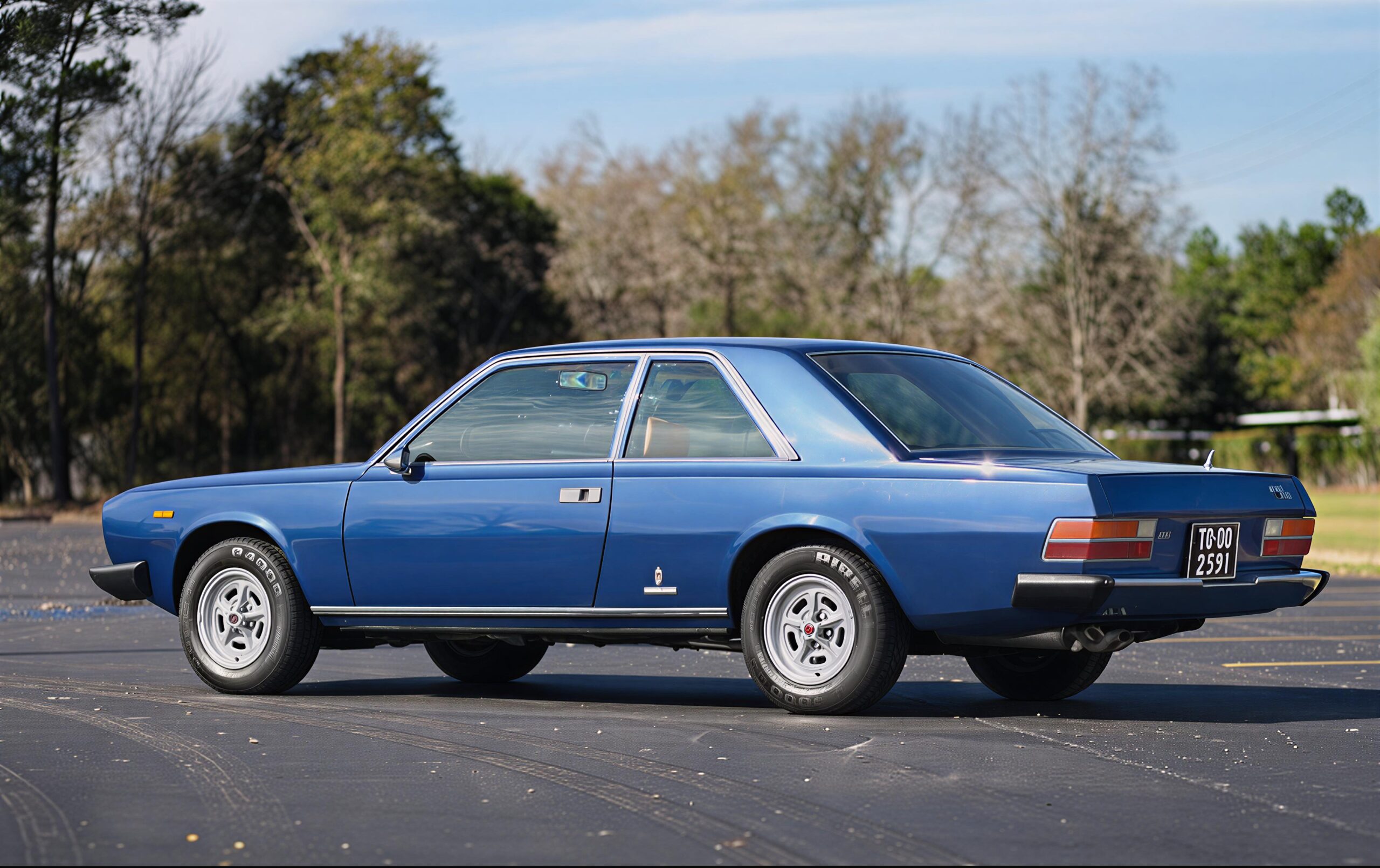
Under the skin, the coupé shared the sedan’s advanced engineering but added some twists of its own. The suspension was fully independent, using a sophisticated torsion bar setup in front and a precise semi-trailing arm design in back, tuned for a velvety ride on Europe’s autostrade. Power came from a new 3.2-liter iteration of Lampredi’s V6, making about 165 horsepower and plenty of smooth torque. This engine was introduced alongside the coupé and became standard for all 130s from 1971 on, as the original 2.8L had proven too anemic. Performance was respectable for a 1.6-ton grand tourer: top speed was around 190 km/h (120 mph), and it cruised effortlessly at high speeds. Buyers could choose a 5-speed ZF manual gearbox to extract the most from the V6, though the majority opted for the 3-speed Borg-Warner automatic for seamless wafting about town. And waft it did – the 130 Coupé was praised for being eerily smooth and quiet at speed, with that V6 emitting just a distant refined hum.
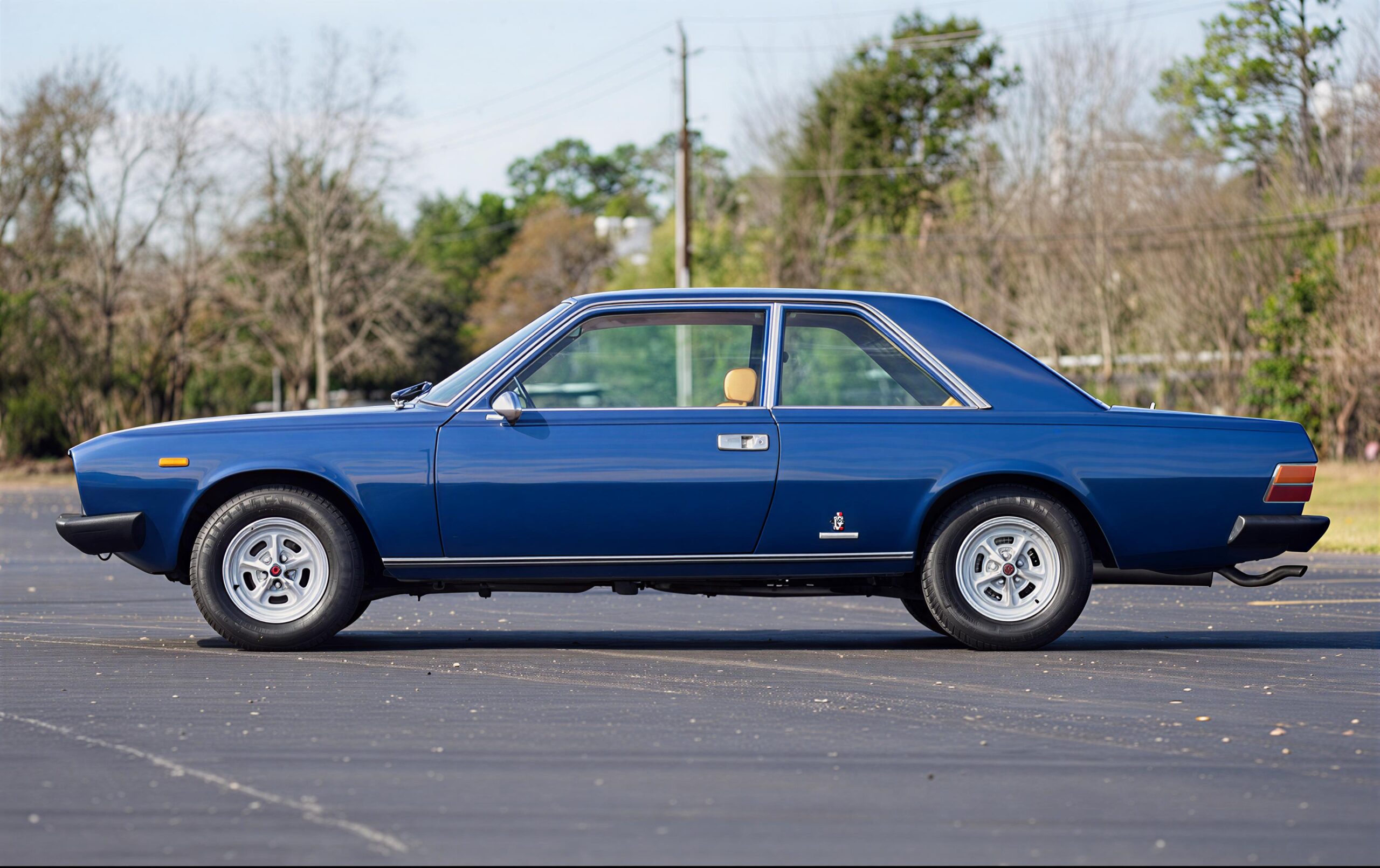
All these qualities did not go unnoticed by Europe’s elite. Here was a Fiat with the soul of a Ferrari 2+2, a car that could hold its own parked next to an Aston Martin or Maserati. Naturally, Italy’s jet set took a liking to it. Movie icon Marcello Mastroianni was an early owner, as was his co-star and style legend Sophia Loren. Even the President of Italy in the late ’70s, Sandro Pertini, had one at his disposal. These high-profile endorsements gave the 130 Coupé an aura of La Dolce Vita glamour. An exclusive aura it was, too – Fiat priced the Coupé ambitiously. In Germany it cost about 8,000 DM more than the sedan, putting it on par with the BMW 3.0 CSi, a similarly elite six-cylinder coupé from Bavaria. This lofty price (roughly 50% higher than a Jaguar XJ6 at the time) kept the 130 Coupé a rare sight. During its production run from 1971 to 1977, only about 4,500 examples were built in total. In the peak year, 1972, Pininfarina assembled 1,746 units; in some later years, only a few hundred rolled off the line. Needless to say, the 130 Coupé was never a mass-market car. It was a statement piece for those who had “arrived” – financially and stylistically – and wanted something more distinctive than the ubiquitous Mercedes S-Class coupe.
A Rolls-Royce with an Italian Accent?
The Fiat 130 Coupé’s design was so captivating that it echoed far beyond Fiat’s lineup. In fact, one of the automotive world’s most prestigious marques took notice: Rolls-Royce. In the early 1970s, Rolls was developing a new top-of-the-line model aimed at wealthy owner-drivers. Uncharacteristically, the proud British firm turned to an outside Italian designer for styling help – none other than Paolo Martin of Pininfarina, the very man behind the 130 Coupé. The result was the Rolls-Royce Camargue, introduced in 1975 as the most expensive car in the world at the time. Its long, squared-off body, hidden headlamps, and clean surfaces looked strikingly familiar to anyone who had seen the Fiat 130 Coupé a few years prior. This was no coincidence: Martin had actually drawn the initial sketches for the Camargue back in 1969, during the same period he was working on the 130. Essentially, the Camargue was a 130 Coupé in a tuxedo, wearing the signature Rolls grille and a slightly bulkier frame.
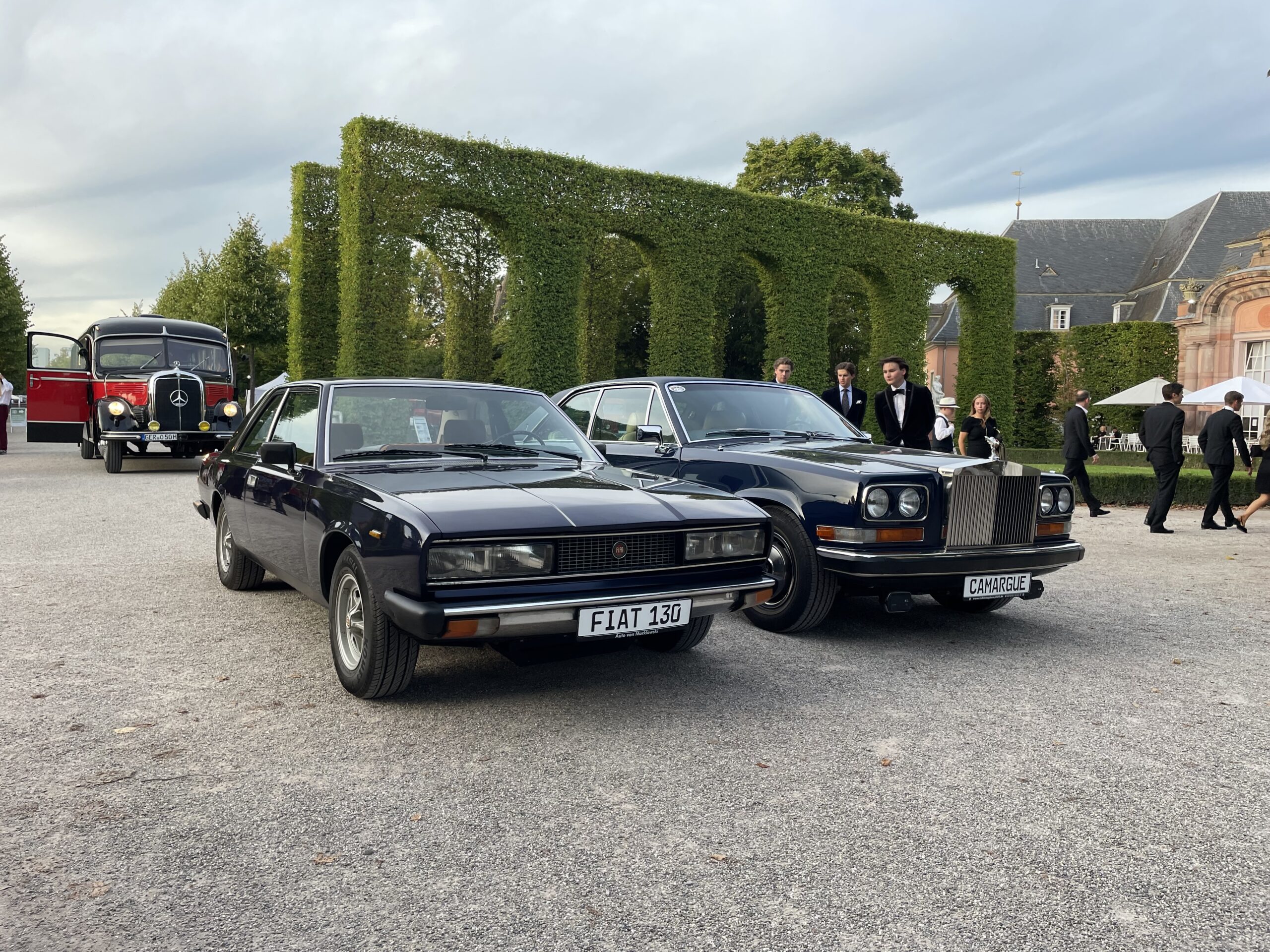
The resemblance did not go unnoticed. Contemporary observers often quipped that the Camargue could be the 130’s Anglo cousin – a testament to how advanced the Fiat’s design was, that even a Rolls ended up walking a similar path. Indeed, the Camargue’s designer admitted that many details were carried over from the Fiat project. Rolls-Royce, of course, would never frame it that way in press releases, but history shows this Anglo-Italian cross-pollination in design.
🔗 Read more: Paolo Martin: A Design Maestro’s Journey Through Automotive History
Today, the Camargue remains a polarizing chapter in Rolls history (some find its looks too severe), whereas the 130 Coupé is widely appreciated as a classic. But one thing’s for sure: both cars underscore Paolo Martin’s influence on 1970s automotive style. His sharp-edged, minimalist aesthetic helped usher Rolls-Royce – of all companies – out of its conservative shell. Imitation is the sincerest form of flattery, and being imitated by Rolls-Royce is about as flattering as it gets for a Fiat design.
The Maremma and Opera: Pininfarina’s Lost Prototypes
Pininfarina’s creativity with the Fiat 130 didn’t end at the production coupé. In 1974, sensing the 130 platform still had untapped potential, Sergio Pininfarina dreamt up two radical new variations to entice Fiat – perhaps hoping to extend the model’s life. The first was the Fiat 130 Maremma, a stunning two-door shooting brake (sport wagon) concept. The second was the Fiat 130 Opera, an elegant four-door saloon concept that essentially added two extra doors to the coupé’s design. Both were pure coachbuilt fantasies, unveiled as one-off show cars meant to persuade Fiat’s top brass.
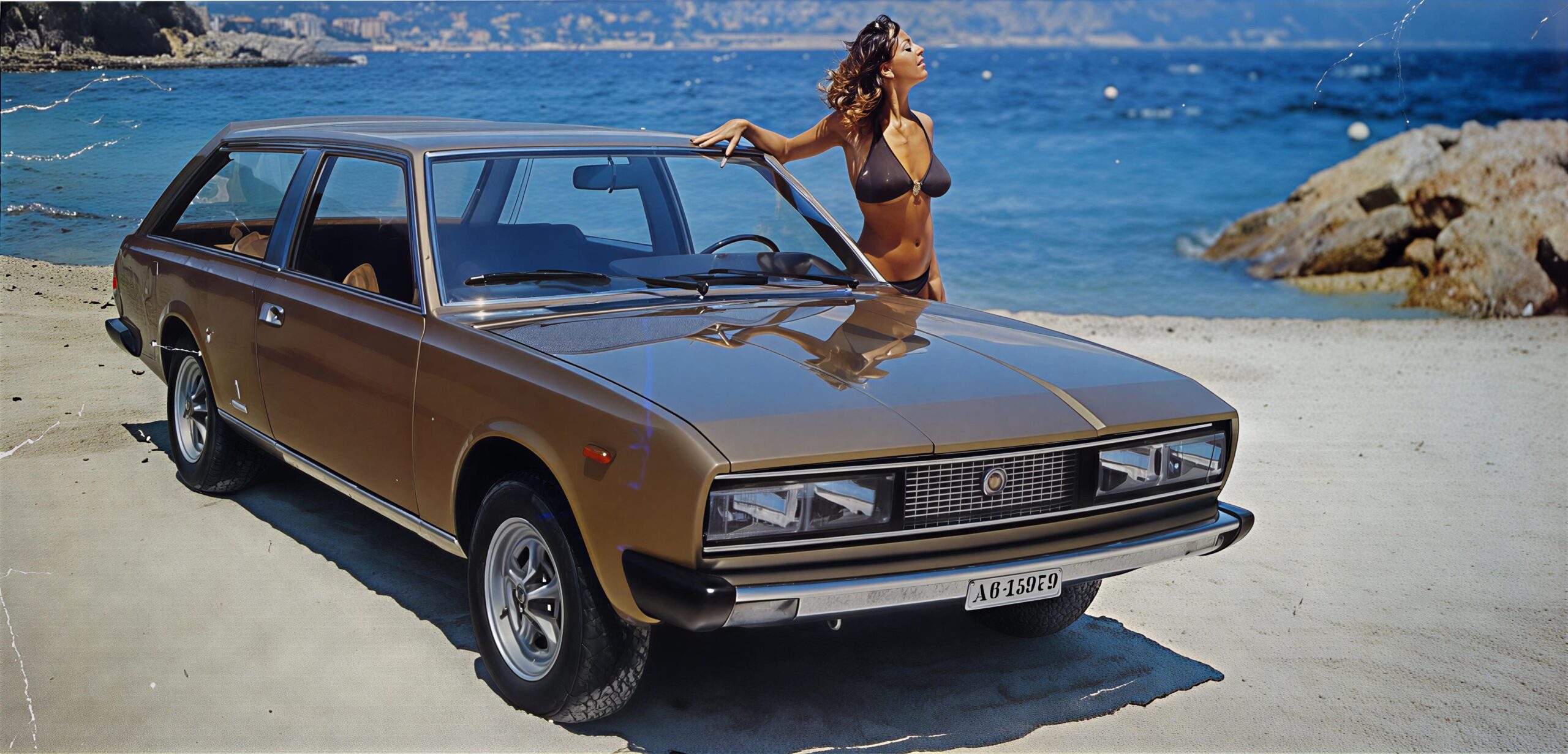
The 130 Maremma – named after the picturesque coastal Maremma region of Tuscany – reimagined the coupé as a luxurious grand touring wagon for the well-heeled country gentleman (or in this case, Avvocato Gianni Agnelli himself). Painted in a rich metallic champagne gold and trimmed inside with plush beige suede-like cloth and blue accents, the Maremma exuded bespoke exclusivity. It stretched nearly five meters long, with a long flat roof that ended in a functional rear spoiler – an aerodynamic tweak from Pininfarina’s wind tunnel tests to keep the tailgate window clean in use. Despite the wagon layout, the Maremma remained a strict two-door, preserving the coupé’s sleekness. Under the hood it kept the familiar 3.2L V6 and automatic transmission, so it could waft to the ski lodge as effortlessly as the standard coupé. When it debuted at the 1974 Geneva Motor Show, the Maremma caused a stir – it even landed on the cover of Quattroruote magazine, photographed strikingly on a beach in the French Riviera. Pininfarina’s press materials boldly claimed the Maremma would “change the ingrained image of the traditional estate car,” highlighting its huge panoramic windows for visibility and that clever rooftop spoiler for stability. Reviewers at the Geneva and Turin shows that year marveled at this marriage of sports car and station wagon. It was undeniably one of the most beautiful shooting brakes ever conceived – practicality meets Italian artistry.
Fiat’s chief, Gianni Agnelli, was particularly smitten. In fact, when Agnelli laid eyes on the Maremma, he decided he had to have it. The one-off concept was soon registered to Agnelli in April 1975, effectively becoming his personal car. It’s easy to see why the car captivated him: Agnelli was a notorious connoisseur of unique cars (his garage also included things like a custom Ferrari 365P “Tre Posti” and a special Fiat 130 Familiare wagon by Introzzi). The Maremma, with its blend of utility and unabashed style, fit right into his collection of toys. He drove this “hunting wagon” around his estates and to weekend getaways, enjoying its singular status. Pininfarina had hoped that Fiat might approve a limited production run of the Maremma for elite clients, but that was not to be. By 1974–75, Fiat had already decided to wind down the whole 130 series – pouring more money into a niche variant made little business sense. Thus, only the single Maremma was ever built. It remained one of Agnelli’s beloved cars for decades, earning the nickname “the curbside concept” because it lived a real life on the road rather than just a turntable. After Agnelli’s passing, the unique machine disappeared from public view until it resurfaced in a private collection in 2004. Today, the Fiat 130 Maremma stands as a fascinating what-if: what if Fiat had introduced a luxury shooting brake in the 1970s? The world will never know, but at least one very important man got to enjoy the idea.
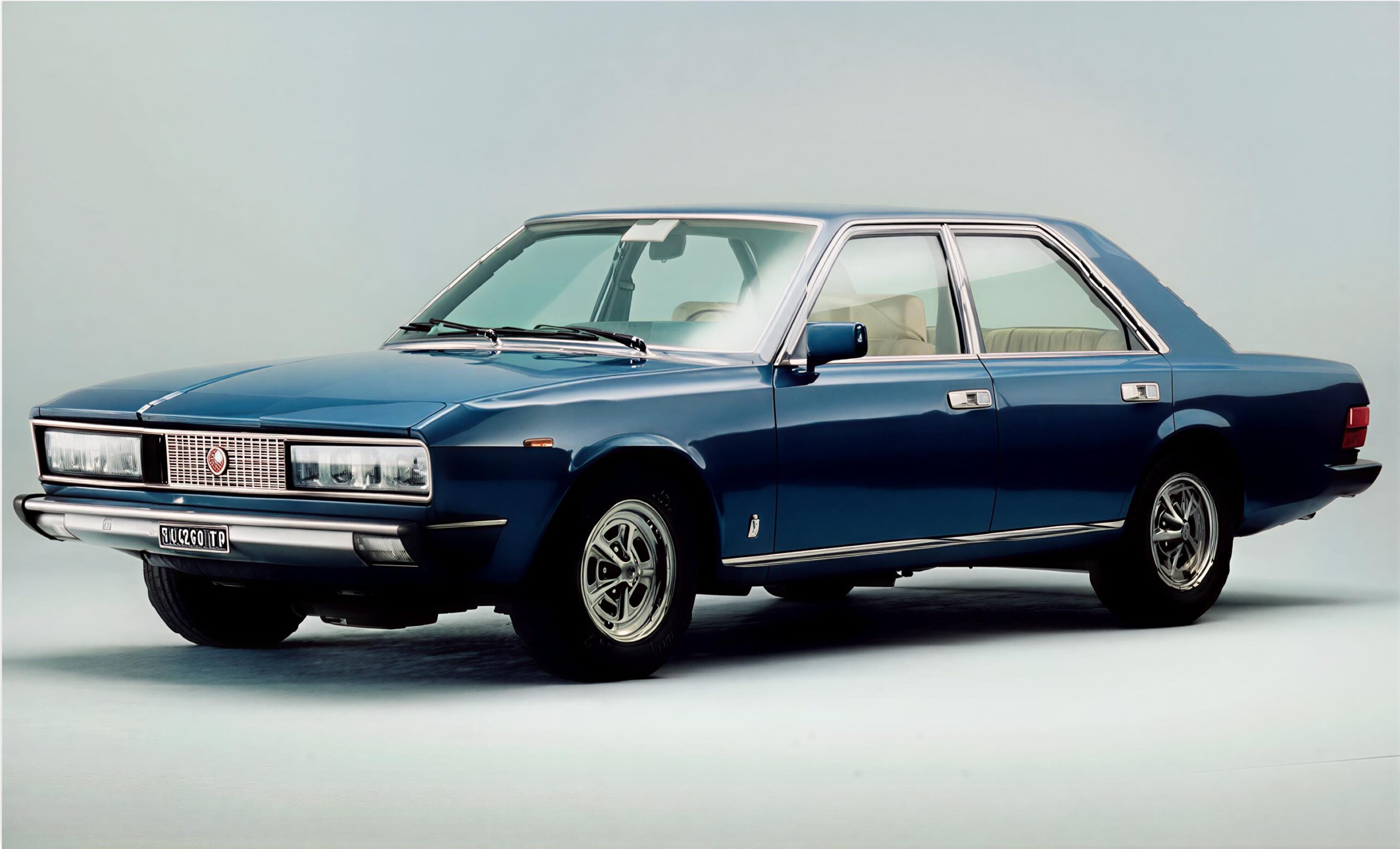
The second concept, the 130 Opera, was unveiled later in 1974 and took a more formal approach. Pininfarina essentially asked, “What if the gorgeous coupé became a sedan?” The Opera grafted an extra pair of doors and a slightly taller roof onto the coupé’s silhouette, creating a low-slung four-door limousine that could have replaced the aging 130 berlina. Shown at the Paris Motor Show in October 1974, the Opera was hailed by showgoers as “the most elegant car at the event,” outshining even bespoke Rolls-Royces in the elegance stakes. Painted in a stately deep hue, the Opera had an undeniably regal presence – it looked ready to whisk European dignitaries to the opera house (perhaps that’s how it earned its name). The design clearly channeled Paolo Martin’s original coupé lines – long hood, clean flanks, and that distinctive front treatment – just stretched over a longer wheelbase. Martin himself was no longer at Pininfarina by then, and he confirmed he was not directly involved in the Opera’s creation. Nonetheless, the car carried his stylistic DNA. Pininfarina also displayed the Opera at the Turin show, hoping to convince Fiat that a new flagship sedan could be born from the coupé. Despite universal praise for its styling, Fiat’s executives ultimately passed on the idea. The 130 Opera remained a one-off show car, a victim of the same cold feet that doomed the Maremma – by the mid-’70s, the company had judged the 130 project a dead end. The Opera was tucked away, never seeing production just like another Pininfarina concept of the era, the Lancia Gamma “Scala” (a similar attempt to turn a coupe into a sedan). Today the sole Opera prototype survives as a piece of what-might-have-been history. For years it resided in Pininfarina’s private collection, and it has occasionally been displayed in museums – a silent reminder that even beautiful designs must bow to business realities.
Legacy and Whereabouts Today
The Fiat 130 Coupé may not have been a showroom hit, but it has secured a special place in automotive history – and in the hearts of enthusiasts. This big Pininfarina coupé is now seen as a timeless design, one that foretold the angular luxury cars of the 1970s while retaining a clean elegance that still turns heads. Collectors began appreciating the 130 Coupé’s significance relatively recently. For a long time, these cars were undervalued “sleepers” – after all, they wore Fiat badges in a world that usually prizes Ferraris and Maseratis. But the tide is turning. Good surviving examples are sought out by connoisseurs who recognize that 4,500 built is a pretty scarce run for a Fiat. Many of those that remain are in the hands of caring owners, often sporting low mileage. It’s not uncommon to find a 130 Coupé that has been pampered in a collection, which means plenty have survived in nearly concours condition. The upside of its past obscurity is that prices have stayed reasonable – as one magazine cheekily noted, you get “real Italian elegance” for a fraction of what comparable classics cost.
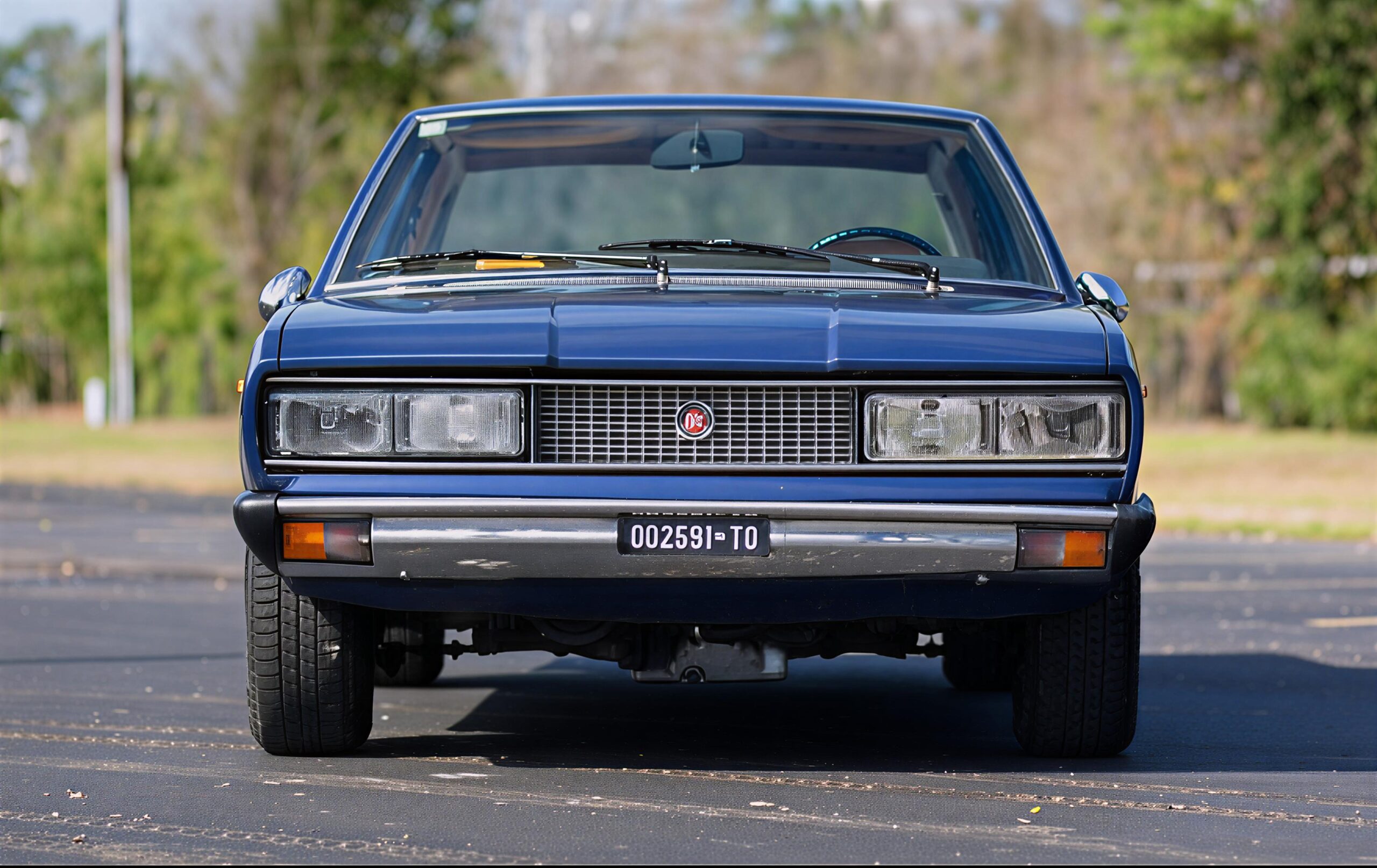
Perhaps more important than collectibility is the 130 Coupé’s cultural legacy. It proved that Fiat – with Pininfarina’s genius – could create a car as glamorous and desirable as any grand tourer from established luxury marques. In an era when Italy faced economic and social turmoil (the early ’70s oil crisis and domestic unrest), the 130 Coupé was a rolling statement of confidence and optimism – a car that said Italy could still dazzle the world with style and la dolce vita flair. Its design influenced not only the Rolls-Royce Camargue but also set the tone for Italian luxury cars to follow. You can see hints of the 130 Coupé’s DNA in later Pininfarina creations like the Ferrari 400 and even the 1980s Cadillac Allanté (which Pininfarina also styled). As for Paolo Martin, the prodigy behind the car, he went on to design other head-turners in the 1970s, but the 130 Coupé remains arguably his magnum opus – the car that made his reputation and still has enthusiasts discussing his work decades later.
And what of the special prototypes, the ones that got away? The 130 Maremma, after living a charmed life with Gianni Agnelli, changed hands and is believed to reside with a private collector today – occasionally emerging for classic car shows as a unicorn from a bygone era. The 130 Opera has likewise been preserved; it has appeared on display in museums (such as the Manro Classic museum in Austria) and at concours events, where its one-off beauty always draws admiring crowds. These two one-of-a-kind cars are a reminder of Pininfarina’s relentless ingenuity – even if Fiat didn’t capitalize on them, we’re lucky they exist at all for us to admire.
In the end, the Fiat 130 Coupé by Pininfarina is a story of ambition and artistry. It was born from Fiat’s drive to elevate itself, sculpted by one of Italy’s finest design houses, and honed during an era of fearless experimentation. It might have been an oddball in Fiat’s lineup, a vanity project that made little financial sense, but half a century later it stands tall as an automotive icon. In the words of Sergio Pininfarina, it truly was a masterpiece of simplicity – one that left a rich, nuanced legacy in metal and memory. For a car that the world never asked for, the 130 Coupé has certainly made the world glad it exists. It remains an exquisite chapter in the book of Italian car design, a chapter full of intriguing side stories and “what ifs,” from Rolls-Royce connections to wagons for playboys. The Fiat 130 Coupé’s tale is proof that sometimes the most enduring legends arise not from market demand or sales numbers, but from the sheer passion to create something beautiful for its own sake. And that is a story worth telling, one engaging drive at a time.

ABOUT THE AUTHOR
Andreas Scheidl
Italian classic car enthusiast with German roots. Renowned as a respected figure in the classic car community, he serves as a jury member at various international concours d'elegance, including the Classic Gala Schwetzingen and Mantova. As a content creator, Andreas passionately shares his profound knowledge and appreciation for vintage automobiles. His heart beats for cars designed by Giovanni Michelotti, showcasing his discerning taste and dedication to preserving the timeless elegance of automotive history.
More stories by Andreas Scheidl ↗CONTINUE READING
Posts You Might Like

A Central Driving Position, a Rear-Mounted V8. Was This Really a Lancia?
In 1948, visitors to the Turin Motor Show could see an unusual Lancia on the stand of Carrozzeria Ghia. It was a large two-door coupé with a two-litre V8 mounted behind the…
Read story
Fioravanti F100: The Ferrari He Was Allowed to Imagine
Enzo Ferrari’s centenary, Leonardo Fioravanti’s independent studio and a supercar that explored air brakes, steel wheels and a new way of driving—without ever wearing the Cavallino.
Read story
Michelotti Shellette: When the Fiat 850 Became a Yacht
The yacht designer, the Turin stylist and the tiny coachbuilt car that crossed between the quay, the royal holiday house and the auction room. Some automobiles were conceived for the open road,…
Read story
Maserati A6 1500: A New Road for the Trident
When the doors of the Geneva Motor Show opened in March 1947, Maserati was a name that required little introduction to anyone who followed motor racing. What it did not yet possess…
Read story
THE CONVERSATION
Comments 0
Share a memory, a period photograph or a documented detail about this story.