
Tom Tjaarda’s last creation: The Fiat 124 Targa
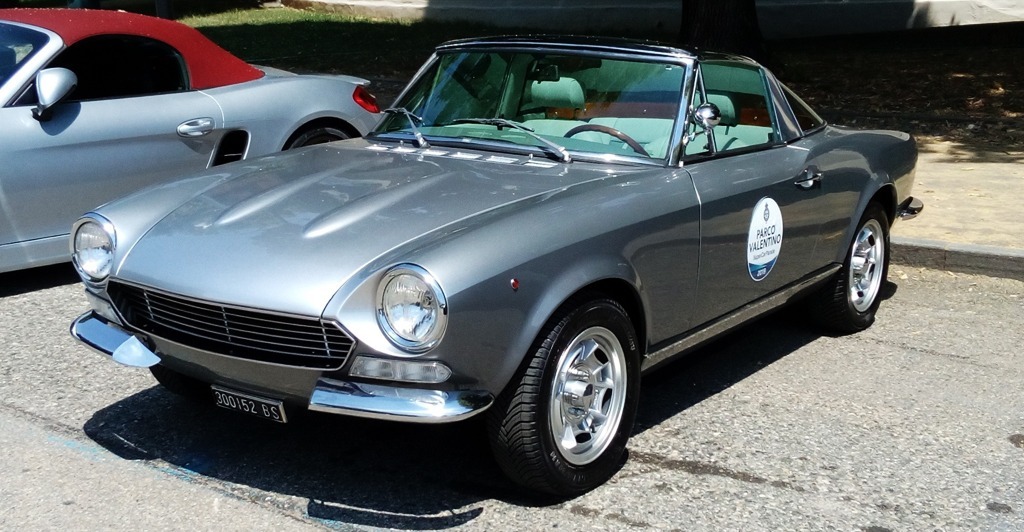
The 124 Tjaarda Targa, a unique and one-off creation, holds a special place in the story of Italian automotive design. Presented at the Super Car Parade 2019 at Parco del Valentino in Turin, later exhibited at the Circolo del Design di Torino, and ultimately honored as Best Show Car at the Castello di Meano Elegance Competition, this singular automobile is far more than a modified Fiat 124. It is the summation of Tom Tjaarda’s stylistic journey, a reflection of his lifelong fascination with proportion, elegance, and sportiness, and a tribute to his father’s design legacy as well.
The car’s story is not only about aesthetics but also about philosophy. Through it, Tjaarda explored questions of heritage and innovation—how far one could reinterpret an existing icon while keeping its essence intact. For car enthusiasts and design historians alike, the Tjaarda Targa represents a living document, a sculpted narrative in metal and glass.
Inspirations Rooted in the Past
At the heart of the project lies Tjaarda’s deep connection to his earlier works and to the heritage of Italian coachbuilding. One can trace the lines of the Tjaarda Targa back to the 1962 Corvette Rondine show car, built by Pininfarina, which Tom himself had designed at the dawn of his career. From that Rondine came the inspiration for the Targa’s roll bar and roof shape, defined by clean, taut lines and a sporty yet refined character.
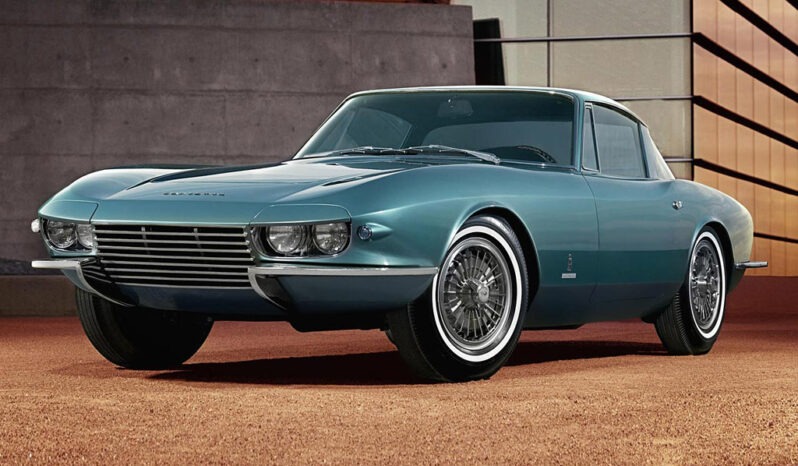
The greenhouse—transparent and airy—further reinforces the sense of a “show car,” as though the driver and passengers were always on display within an exhibition. This openness is not accidental. Tjaarda had always favored transparency and light in his cars, believing that a sports car should offer not just speed but also a heightened sensory connection to its environment.
Another influence came from within his own family. The plexiglass roof of the Targa reminded Tom of his father John Tjaarda’s experimental work on the Lincoln Zephyr decades earlier. This was no mere coincidence. Tom explicitly sought to integrate family heritage into the project, transforming personal history into tangible design. The roof itself was ingeniously engineered: it could be removed quickly by one person and stowed neatly in the luggage compartment, a detail that blended practicality with conceptual clarity.
A New Genre: The Fiat 124 as a Targa
Tom’s ambition was clear—he wanted to present a new genre of Fiat 124, something between a coupe and a spider, defined by its Targa-style roof. To achieve this, he lowered the roofline dramatically compared to the standard car. The new top formed a seamless line with the integrated roll bar and the car’s elongated tail. The result was a striking silhouette that exuded both balance and motion, even at rest.
🔗 Read more: The Fiat 124 Sport Spider History
To make this new proportion work, Tjaarda and his team modified the interior as well. Newly lowered seat rails were fabricated, which not only changed the overall driving layout but also offered a more comfortable and ergonomic driving position. The transformation was holistic, affecting both form and function, exterior and interior.
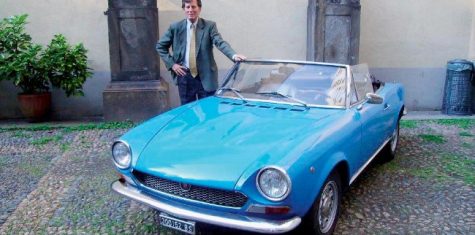
For the donor vehicle, Tjaarda selected a 124 France Blue model with a Brescia license plate. This particular car had already achieved a kind of celebrity status, being featured repeatedly in publications. To Tom, it was almost a famous specimen, instantly recognizable. More importantly, it was a car in excellent condition, one he knew intimately and had driven extensively. By choosing a pristine example that carried its own cultural cachet, Tjaarda ensured the project would be built on a solid and respected foundation.
Hands-On Craftsmanship
What makes the Tjaarda Targa especially remarkable is the degree of direct involvement by Tom himself. Rather than delegating the work entirely, he personally oversaw the main phases of realization: the study of the roof and rear window, the lengthening of the tail, and the integration of the new conical taillights. This was not a mere styling exercise but an act of craftsmanship, closer to the spirit of Italian carrozzeria traditions of the 1960s, when designers and artisans collaborated closely to shape one-off automobiles.
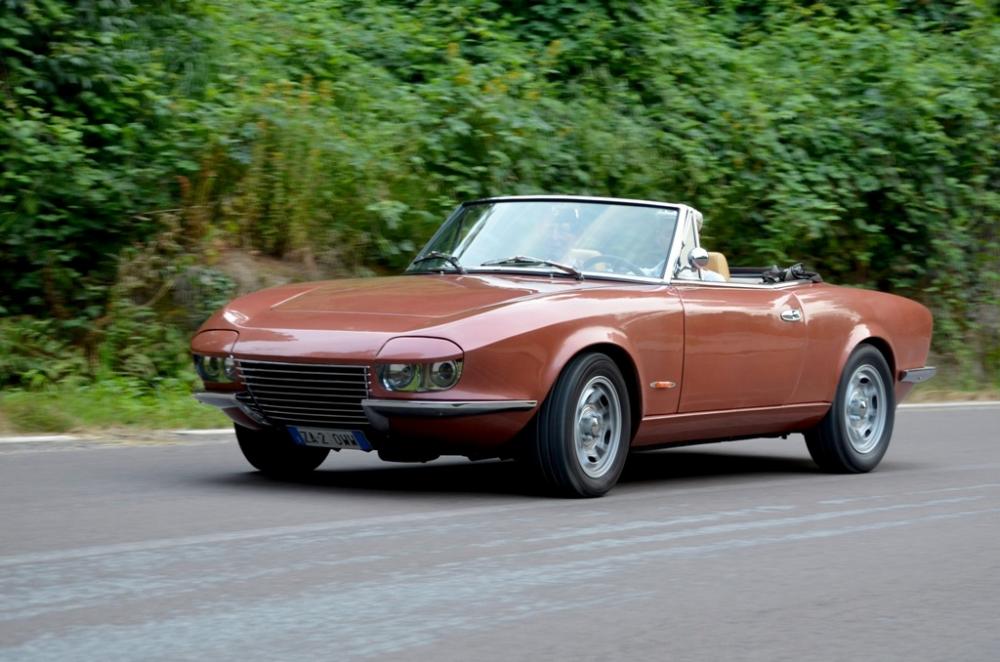
The front of the car demonstrates this artisanal care. It features hand-made solid aluminum trim, a split bumper, and a bonnet distinguished by drop-shaped humps. These humps underwent several iterations. At first, Tom found them timid, too small to assert a strong identity. Later, they were reshaped to become more imposing, until they achieved a balance that he considered truly proportionate to the car. This process of refinement reveals how Tjaarda pursued harmony through trial, error, and artistic intuition.
Inside, the inspiration came full circle. While the Fiat 124 Rondine had provided the conceptual starting point, Tom wanted the Targa to have a distinct personality. He introduced nautical inspirations, using wood not only on the central console but also above the rear seat and on the steering wheel. Brass was used for the instrument rings, echoing the Rondine but with a deeper and more deliberate execution. Even the pull-switches carried inspiration from motorboat design, lending the cabin a refined, maritime atmosphere.
Performance Meets Elegance
Despite its elegant proportions and artisanal details, the Tjaarda Targa was no static sculpture. Beneath its skin, it carried an elaborate two-liter engine paired with a differential featuring short ratios. The result was a car so lively that Tom himself nicknamed it “the bomb.” It was, in his words, a machine where a bit of elegance had to be sacrificed in the name of sportiness. Yet even here, the paradox of the design emerged: when parked, the Tjaarda Targa looked like a refined lady, calm and dignified; on the road, it transformed into a ferocious performer, capable of thrilling any driver.
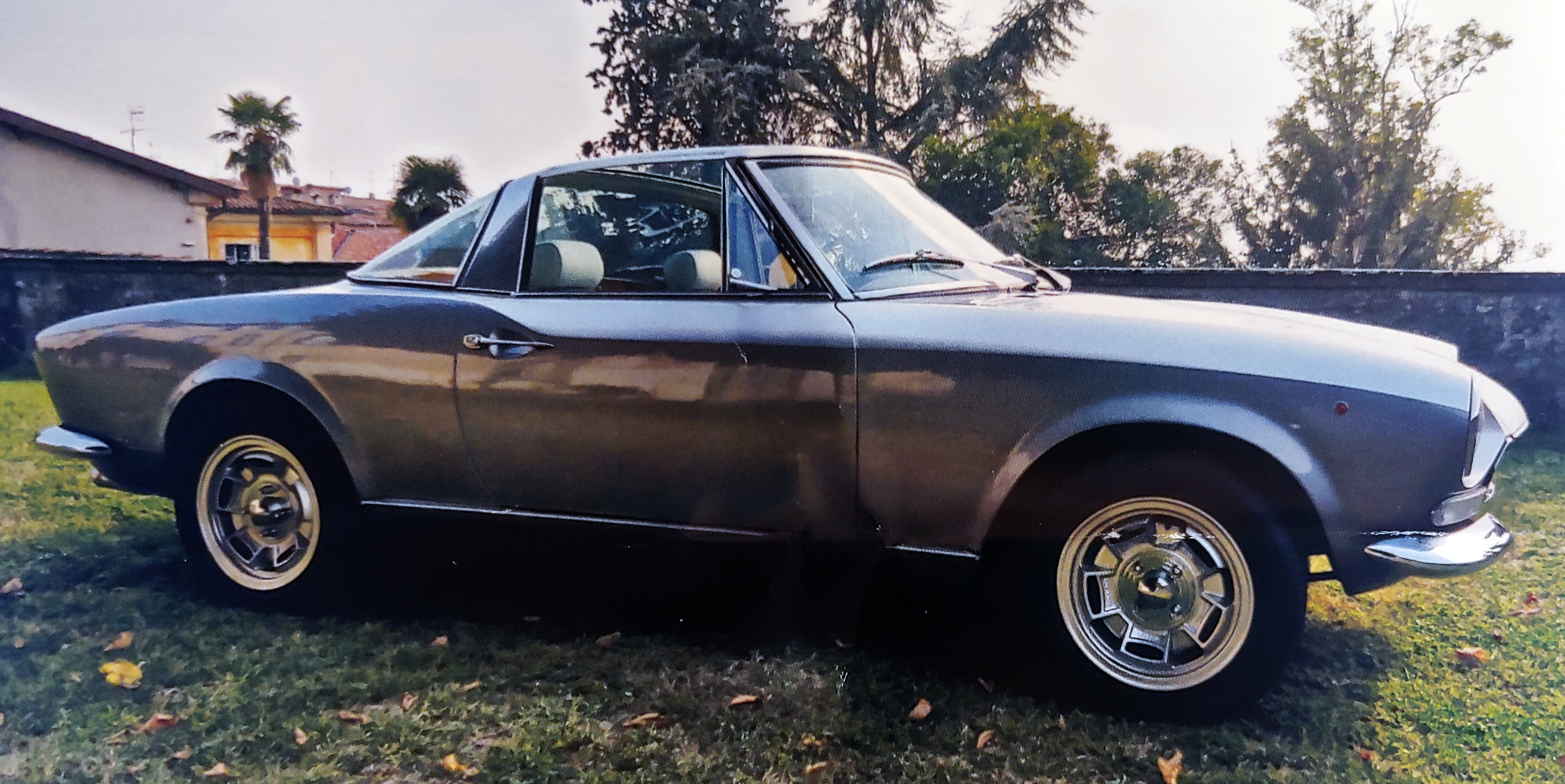
The two-tone paintwork further accentuated this dual personality. The upper body was finished in silver, while the sides were rendered in a light quartz hue. This subtle contrast emphasized the car’s beltline without creating harsh divisions. Tom wanted the car to be discovered gradually by the eye, not through loud color clashes but through quiet sophistication. The bi-color scheme rewarded careful observation, just as fine art does.
A Living Expression of Italian Coachbuilding
In its final form, the “124 Tjaarda Targa” is much more than a design experiment. It stands as a revival of the expressiveness of 1960s Italian coachbuilding, a period when great carrozzerie such as Pininfarina, Bertone, and Zagato were pushing boundaries in aesthetics and engineering. Tom’s project did not merely replicate that tradition; it extended it, showing how those classic methods of handcraft and proportion could still yield something fresh in the 21st century.
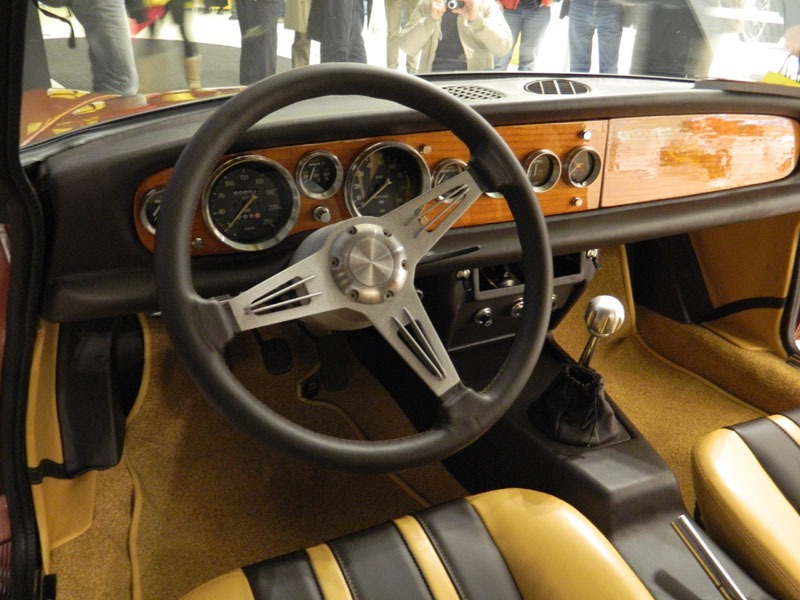
This dual nature—heritage and innovation—is what makes the Tjaarda Targa so captivating. It is at once an homage to the past and a proposal for the future, a new type of Fiat 124 envisioned not by corporate committees but by a master designer with decades of experience.
Legacy and Significance
Today, the “124 Tjaarda Targa” is celebrated not only for its beauty but also for its narrative. It embodies Tom Tjaarda’s lifelong dialogue with form, proportion, and cultural context. It reflects his respect for his father’s legacy, his own early career at Pininfarina, and his enduring desire to create cars that balanced elegance with passion.
🔗 Read more: Pininfarina Through the Ages: The Complete History
By choosing to work with the Fiat 124, a car accessible to many rather than an exotic chassis reserved for the few, Tom also underscored his belief in democratizing beauty. He showed that even familiar platforms could be elevated to the level of art through vision and craftsmanship.
The accolades it received—the warm reception at Parco del Valentino, the exhibition at Circolo del Design, and the award at Castello di Meano—were not merely trophies but affirmations of the car’s significance in the ongoing story of Italian design.
Conclusion
The “124 Tjaarda Targa” is a one-off, and perhaps that is precisely why it resonates so deeply. It captures a moment in time, a confluence of history, personal memory, and creative daring. For Tom Tjaarda, it was both a reflection of where he had been and a statement of where design could still go. For enthusiasts, it remains a masterpiece that bridges the gap between the golden age of Italian coachbuilding and the modern era.
In every curve of its roof, every shimmer of its two-tone bodywork, and every roar of its tuned engine, the Tjaarda Targa tells a story—one not just of metal and mechanics, but of passion, heritage, and the timeless pursuit of beauty in motion.

ABOUT THE AUTHOR
Andreas Scheidl
Italian classic car enthusiast with German roots. Renowned as a respected figure in the classic car community, he serves as a jury member at various international concours d'elegance, including the Classic Gala Schwetzingen and Mantova. As a content creator, Andreas passionately shares his profound knowledge and appreciation for vintage automobiles. His heart beats for cars designed by Giovanni Michelotti, showcasing his discerning taste and dedication to preserving the timeless elegance of automotive history.
More stories by Andreas Scheidl ↗CONTINUE READING
Posts You Might Like
A Central Driving Position, a Rear-Mounted V8. Was This Really a Lancia?
In 1948, visitors to the Turin Motor Show could see an unusual Lancia on the stand of Carrozzeria Ghia. It was a large two-door coupé with a two-litre V8 mounted behind the…
Read story
Fioravanti F100: The Ferrari He Was Allowed to Imagine
Enzo Ferrari’s centenary, Leonardo Fioravanti’s independent studio and a supercar that explored air brakes, steel wheels and a new way of driving—without ever wearing the Cavallino.
Read story
Michelotti Shellette: When the Fiat 850 Became a Yacht
The yacht designer, the Turin stylist and the tiny coachbuilt car that crossed between the quay, the royal holiday house and the auction room. Some automobiles were conceived for the open road,…
Read story
Maserati A6 1500: A New Road for the Trident
When the doors of the Geneva Motor Show opened in March 1947, Maserati was a name that required little introduction to anyone who followed motor racing. What it did not yet possess…
Read story
THE CONVERSATION
Comments 0
Share a memory, a period photograph or a documented detail about this story.