
The strangest Maserati no one asked for: The Auge
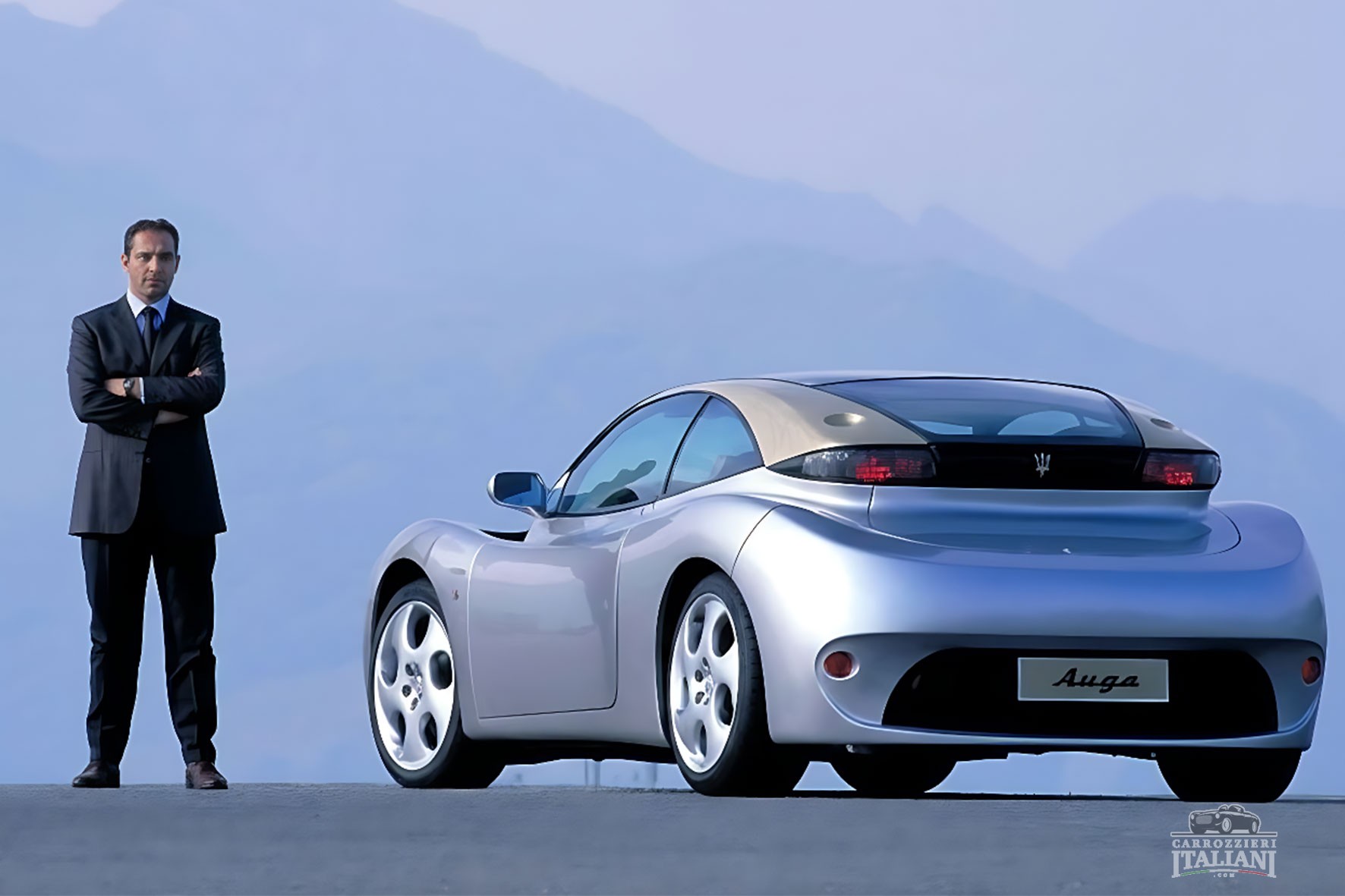
The Maserati Auge is not simply a rare special; it is a cultural experiment on four wheels, born at the point where university, industry, and old-school Italian craftsmanship briefly shook hands and agreed to try something faintly irrational. Which, as anyone who loves cars eventually discovers, is usually where the interesting stories begin. In the most convincing reconstructions available today, the car began life as a thesis project by Gioacchino Acampora at the Politecnico di Milano, with an ambition so gloriously excessive it feels almost fictional: not to present a set of renderings, not to arrive with a scale model, not to do what sensible students do, but to show up with a working automobile. That detail matters because it tells you, immediately, what sort of thing the Auge really was. It was not a styling exercise pretending to be a car. It was a car pretending, perhaps only slightly, to be a declaration of intent.
That declaration was aimed in two directions at once. On one hand, it looked backward, toward the age when Maserati chassis might leave the factory and acquire bodies from master coachbuilders with names painted on workshop walls in Milan or Turin. On the other, it looked forward into the strange optimism of the late 1990s, when luxury increasingly meant electronics, interfaces, remote functions and the promise that the future would arrive upholstered in leather. The Auge sits precisely in that intersection. It is a handmade special that wanted to behave like an advanced concept car. It is a grand tourer that started from a four-door donor. It is a modern one-off built with the rhetoric of the classic carrozzeria. In other words, it is exactly the sort of car that makes complete sense only after you have stopped trying to make complete sense of it.
🔗 Read more: Carrozzeria Castagna Milano: A Timeless Legacy
To understand the Auge properly, it helps to begin with what it was trying to be, because it was never intended as a conventional prototype. Castagna described it in poetic terms, referring to “Auge” as a cold wind on the Côte d’Azur, a new air that announces a change of season. That sounds like the sort of line normally found in a brochure written at midnight by someone in a black turtleneck, but in this case it is surprisingly revealing. The car was conceived as a sign of renewal, almost an attempt to suggest that Maserati could once again inhabit the world of bespoke, aristocratic, highly individual gran turismo machinery. Not through mass production, not through corporate brand management, but through the old Italian trick of making one extraordinary object and letting it do all the talking.
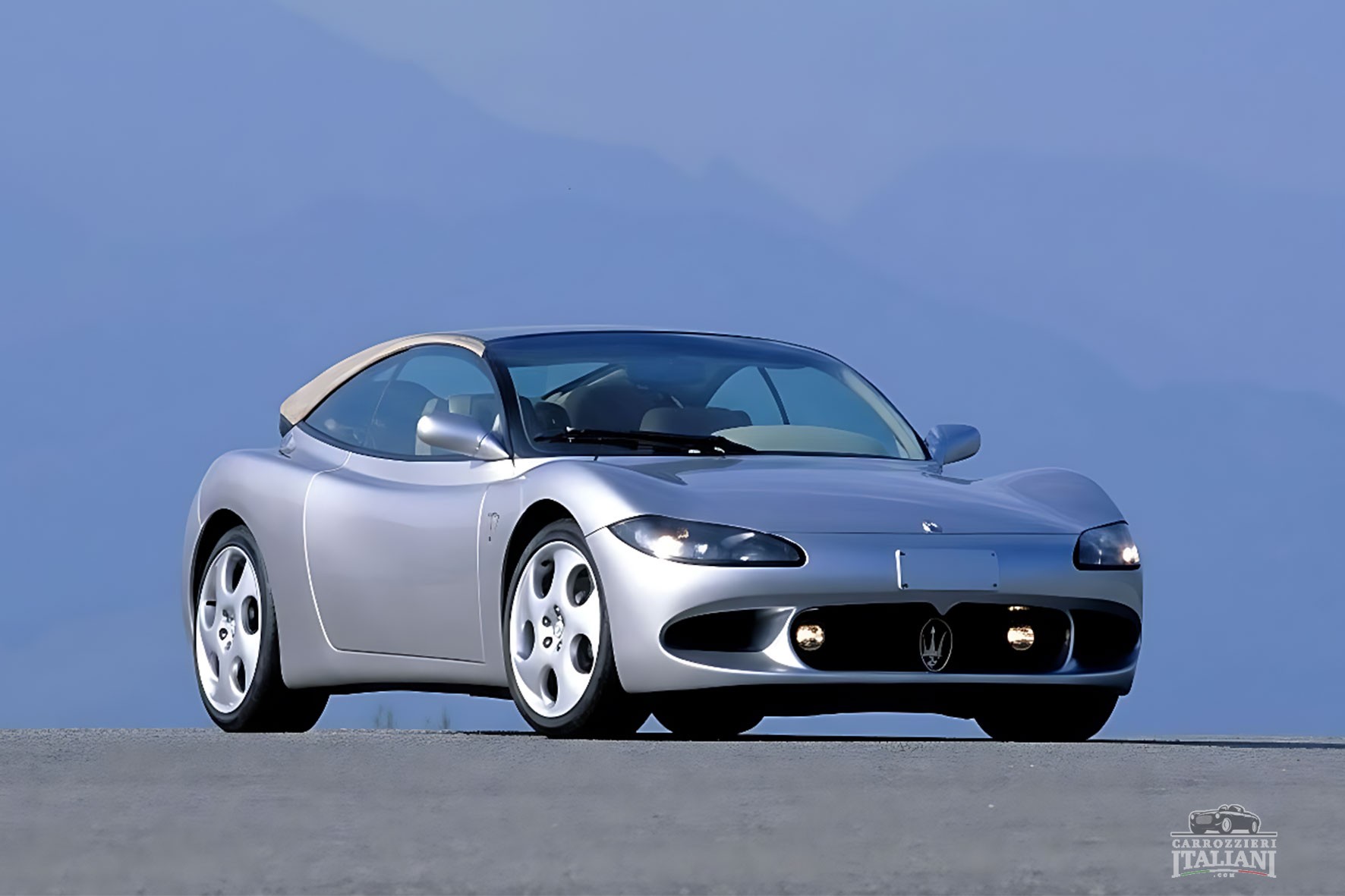
The irony, of course, is that the Auge did not begin as a commission from some oil magnate or prince. It began as a thesis. Acampora later explained that he had dedicated his degree project to Maserati, his favorite marque, and that Auge was meant almost as an auspicious gesture, a hope that the Trident might return “in auge,” back into fashion, back into prominence. There is something admirably cheeky about that. Most students hope to pass; Acampora appears to have set out to revive an entire marque’s aura. The more one looks at the Auge, the more that ambition makes sense. It is not modest, not particularly interested in understatement, and certainly not designed with the timid caution of a committee. It is a car conceived by someone who still believed the automobile could be a total object: engineering, sculpture, theater, furniture, and manifesto all at once.
That it made it beyond the academic setting at all is part of what gives the story its unusual weight. There are indications that figures within Maserati and the wider Fiat orbit, including Eugenio Alzati and Nevio Di Giusto, were supportive of the project. That does not make the Auge an official factory prototype in the strictest sense, but it does suggest that it was not merely the fever dream of an architecture student working alone in a garage. It had access, legitimacy and enough industrial oxygen to become real. And real, in this case, meant a full-scale, functioning one-off built around genuine Maserati mechanicals.
The Quattroporte underneath
That brings us to the donor car, because the mechanical basis of the Auge is both crucial and slightly slippery. The strongest consensus points toward the Maserati Quattroporte IV Evoluzione, specifically the 3.2-liter twin-turbo V8 version. This is a wonderfully inappropriate starting point, which is one reason it works so well. The Quattroporte IV was a compact, ferociously fast luxury sedan from the last great Biturbo-adjacent chapter of Maserati history, a car that hid its aggression under formal tailoring and behaved like something that had been taught manners but not obedience. In Evoluzione form, the 3.2-liter V8 produced 336 horsepower and 450 Nm of torque, driving the rear wheels through a six-speed manual gearbox. Those figures may not sound apocalyptic now, in an age when family SUVs produce the kind of power once associated with supercars and terrible decisions, but in period they made the Quattroporte a deeply serious machine. It could crack 270 km/h and hit 100 km/h in under six seconds, which for a 1990s four-door luxury sedan was less “executive transport” and more “board meeting interrupted by a missile launch.”
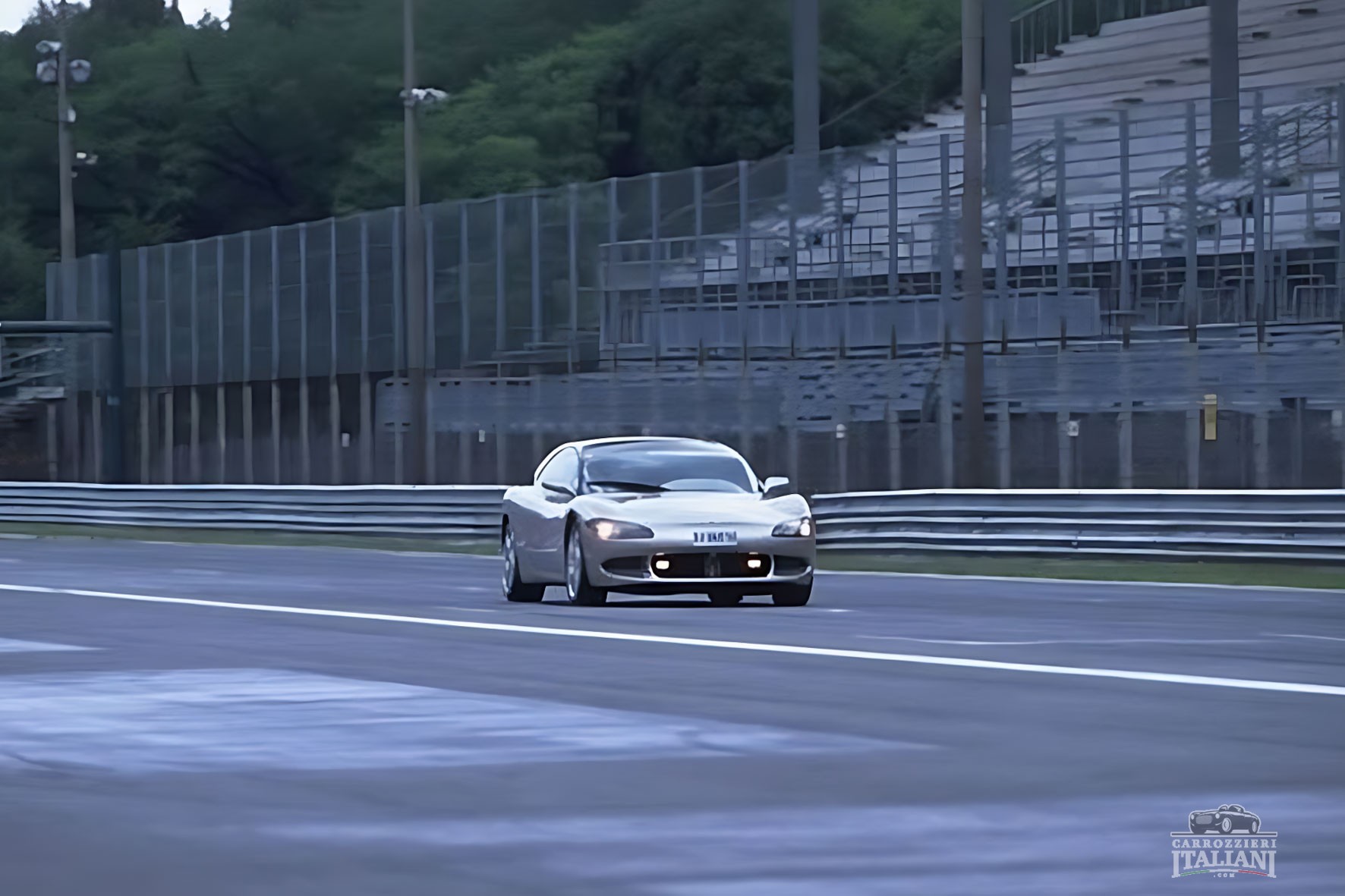
Using that car as a donor was an inspired move for several reasons. First, it gave the Auge a mechanical foundation worthy of the Maserati name. Second, it gave it the proportions of something unexpected. The Quattroporte IV was not a low-slung two-door GT platform waiting to be rebodied; it was a sedan architecture, complete with the structural compromises and packaging logic that entails. To turn that into a two-door four-seater gran turismo required not merely restyling but a complete rethinking of how the car should present itself. This is what makes the Auge more interesting than a simple body conversion. It was not a costume change. It was anatomical revision.
And that revision is where the design begins to justify the car’s existence.
Sculpting a modern coachbuilt grand tourer
The Auge does not behave like a conventional coupe, because underneath it is not one. Instead, it turns the sedan’s proportions into something more theatrical. Castagna described it as a four-seater custom body with two very long doors, which tells you almost everything you need to know about the project’s priorities. It wanted the practicality and cabin space of a sedan, but the drama and purity of a grand touring coupe. That is a difficult recipe, because long doors can easily become comic, side profiles can become heavy, and the whole thing can end up looking like a stretched compromise rather than an elegant transformation. Yet the Auge’s shape is compelling precisely because it embraces the tension. It does not pretend to be a lightweight berlinetta. It looks substantial, deliberate, and expensive in that old-fashioned sense where a car appears to have been built for someone who expects doors to close like bank vaults and rear passengers to exist without apology.
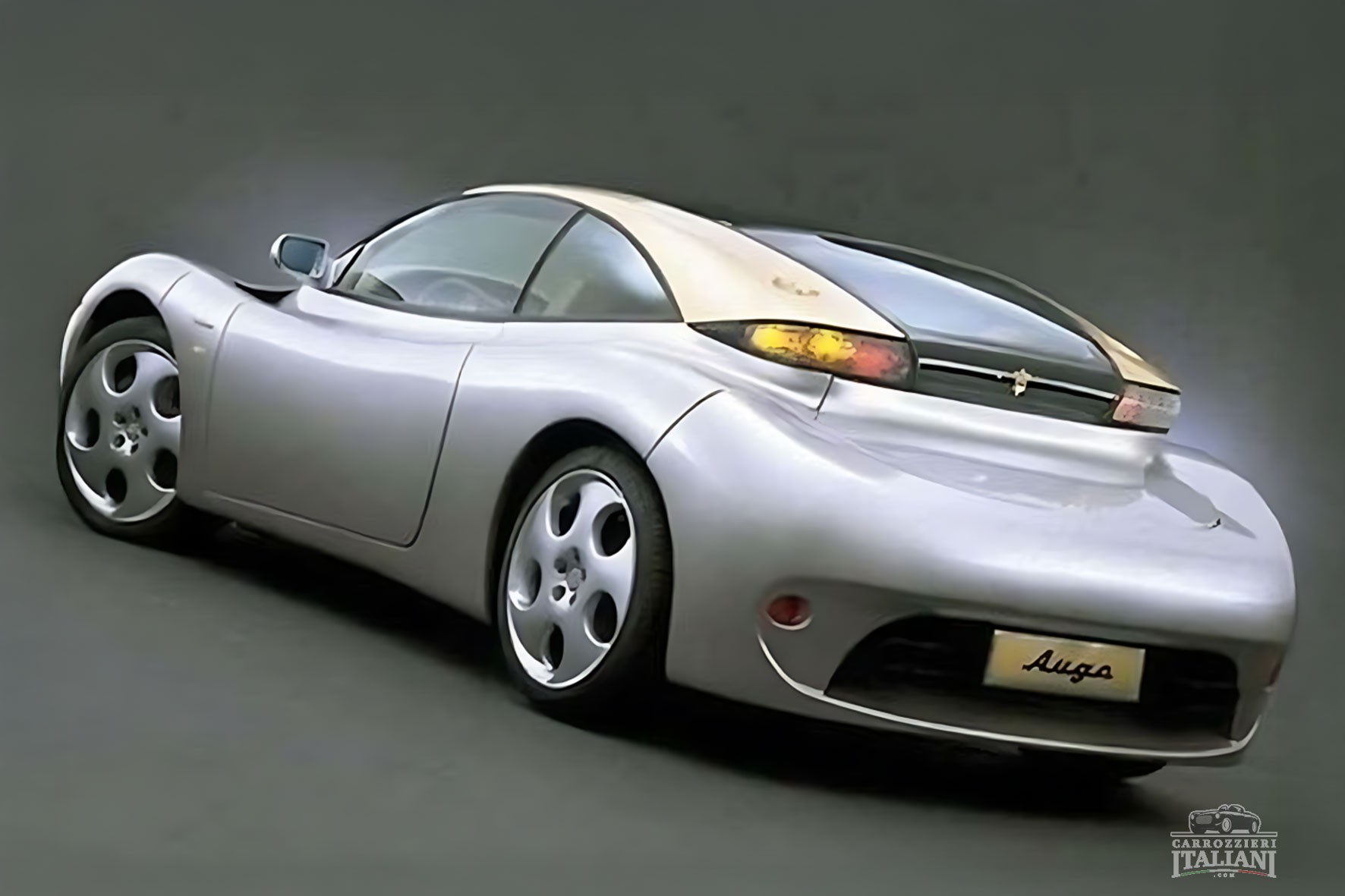
The references are there if you know where to look. Castagna’s own language pointed toward the Maserati 5000 GT, and that is not an accidental comparison. The 5000 GT was one of the great expressions of old-world Maserati excess, a car built in tiny numbers, often bodied by different coachbuilders, and sold to clients for whom the phrase “special request” was less an exception than a default setting. The Auge clearly wants to borrow some of that atmosphere, not by copying the forms directly but by reviving the idea that Maserati could be the basis for a coachbuilt statement rather than merely a production car with a luxury badge. In that sense, the Auge is less a retro design than a postmodern argument. It says that the tradition of the bespoke Italian GT might still be possible, even at the end of the twentieth century, even in an era increasingly dominated by platform sharing, digital design tools and manufacturing logic.
🔗 Read more: The Maserati 5000 GT: From Racing Tragedy to the “Shah of Persia” Supercar
The exterior details support that reading. One of the most striking features was the absence of conventional exterior door handles, replaced by a remote opening system operated through a control in the driver’s watch and linked to a satellite alarm. Today this sounds almost normal, because modern cars have trained us to accept keyless entry, flush surfaces and digital theater as everyday facts of life. Back then, it was a rather outrageous flourish. More importantly, it was a clean design decision. Removing the handles allowed the flanks to remain uninterrupted, preserving the visual tension of the side surfaces and reinforcing the sense that the car had been sculpted as a single gesture rather than assembled from components. It also introduced exactly the right amount of drama. A car like the Auge should not merely open; it should make an entrance.
The future imagined in leather, brass and television screens
Inside, the car leaned even harder into the idea that it represented not just transportation but an entire traveling environment. This is one of the areas where the Auge becomes gloriously, unapologetically late-1990s. Castagna described an interior in which each passenger had access to entertainment and communication systems including audio, television, DVD, satellite navigation, telephone, internet connection, video games, laptop access and a rear camera. It is impossible not to smile at that now, because it reads like a luxury-tech wish list written at the exact moment humanity discovered that putting a screen into something made it futuristic. But there is more to it than gadget fever. The car was trying to redefine the gran turismo for its time, and at that moment “for its time” meant connectivity, onboard media and the fantasy that the automobile could become a moving command center.
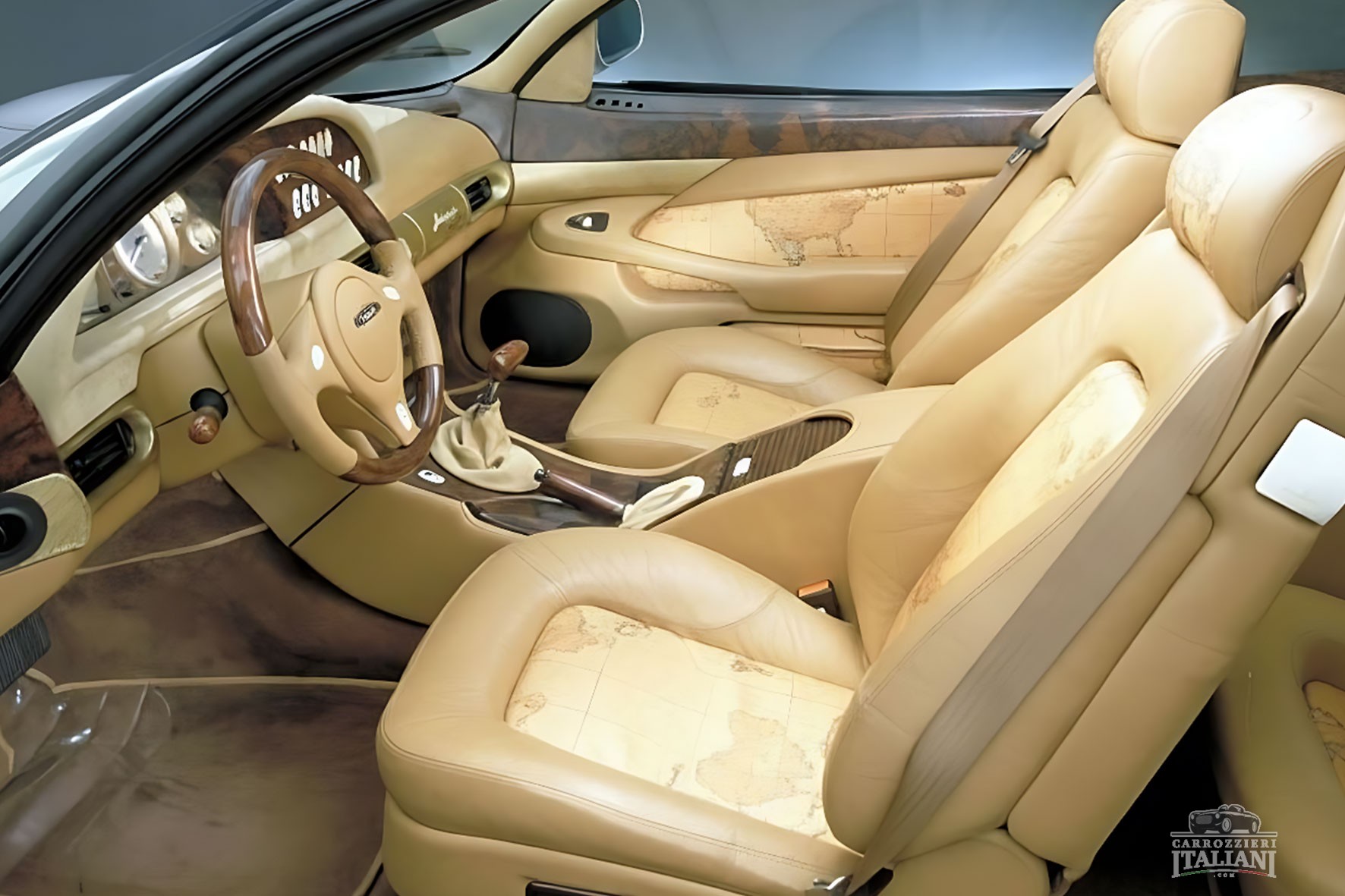
Yet the truly revealing details are not the electronics but the small acts of civilized excess. Castagna mentioned a refrigerator in the center tunnel and a pair of umbrellas in the door pockets. That is wonderful, because it tells you the Auge was not designed simply to impress under show lights. It was imagined as something inhabitable, something meant for travel, weather and ritual. The umbrellas are particularly perfect. They suggest a car designed by people who understood that luxury is not always about performance statistics or dramatic bodywork; sometimes it is about remembering that rain exists and deciding that even the rain ought to be handled elegantly.
Beauty was clearly not the brief
As a design exercise, then, the Auge occupies a very specific and rather fascinating place. It is not minimalist. It is not pure in the severe modernist sense. It is instead a composition built around controlled richness. The body appears to balance warm and cool tones, with some descriptions referring to brass-like highlights set against silver bodywork, and the interior seems to have leaned into premium materials, polished metallic accents and a consciously crafted atmosphere. Whether every reported material detail can be documented with perfect certainty is another matter, but the intent is unmistakable. The Auge wanted to feel expensive in the tactile, old-world sense while also presenting itself as technologically progressive. That is a hard balance to strike. Done badly, it becomes chaos. Done well, it becomes character.
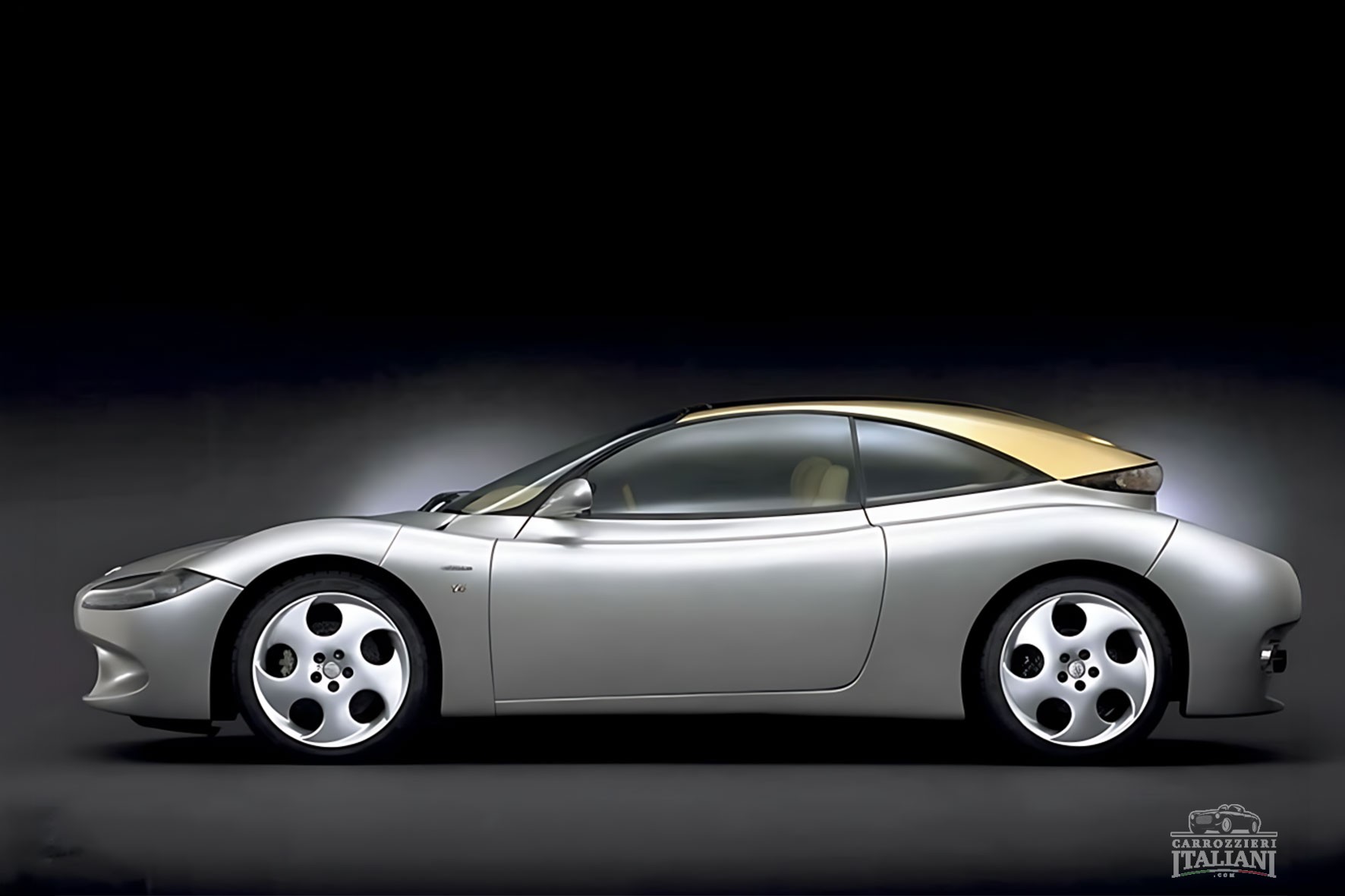
The construction methods are part of that story too. Castagna described the car as having been built through “two technological paths, one close to the past and one to the future,” which is exactly the sort of line that can sound vague until you think about what such a project would actually require. A one-off of this sort could never rely on conventional mass-production body stamping. It would have required traditional panel work, likely in aluminum, combined with newer composite techniques where appropriate. Some later descriptions mention aluminum and carbon fiber, which would be entirely plausible for a workshop attempting to reconcile artisanal methods with modern performance and design freedom. The important point is not whether every panel’s exact composition has been published beyond doubt, but that the car was conceived as a handmade object using contemporary materials without giving up the visible evidence of craft.
🔗 Read more: Alfa Romeo Vittoria: The First Child of a Reborn Carrozzeria Castagna
That matters because the Auge belongs to a narrow and difficult category: the modern coachbuilt car. The old carrozzerie had built their reputations in an era when bodies were routinely separated from chassis and customization was expected. By the 1990s, that world had largely vanished. Safety regulations, integrated body structures, industrial economics and corporate branding had squeezed the traditional coachbuilder into irrelevance or nostalgia. To create a modern one-off on a contemporary donor platform therefore required not only design confidence but a kind of stubbornness, even defiance. It meant insisting that the coachbuilder could still do more than trim interiors or create show fantasies. It meant proving that transformation, real transformation, was still possible.
A beautiful mistake worth remembering
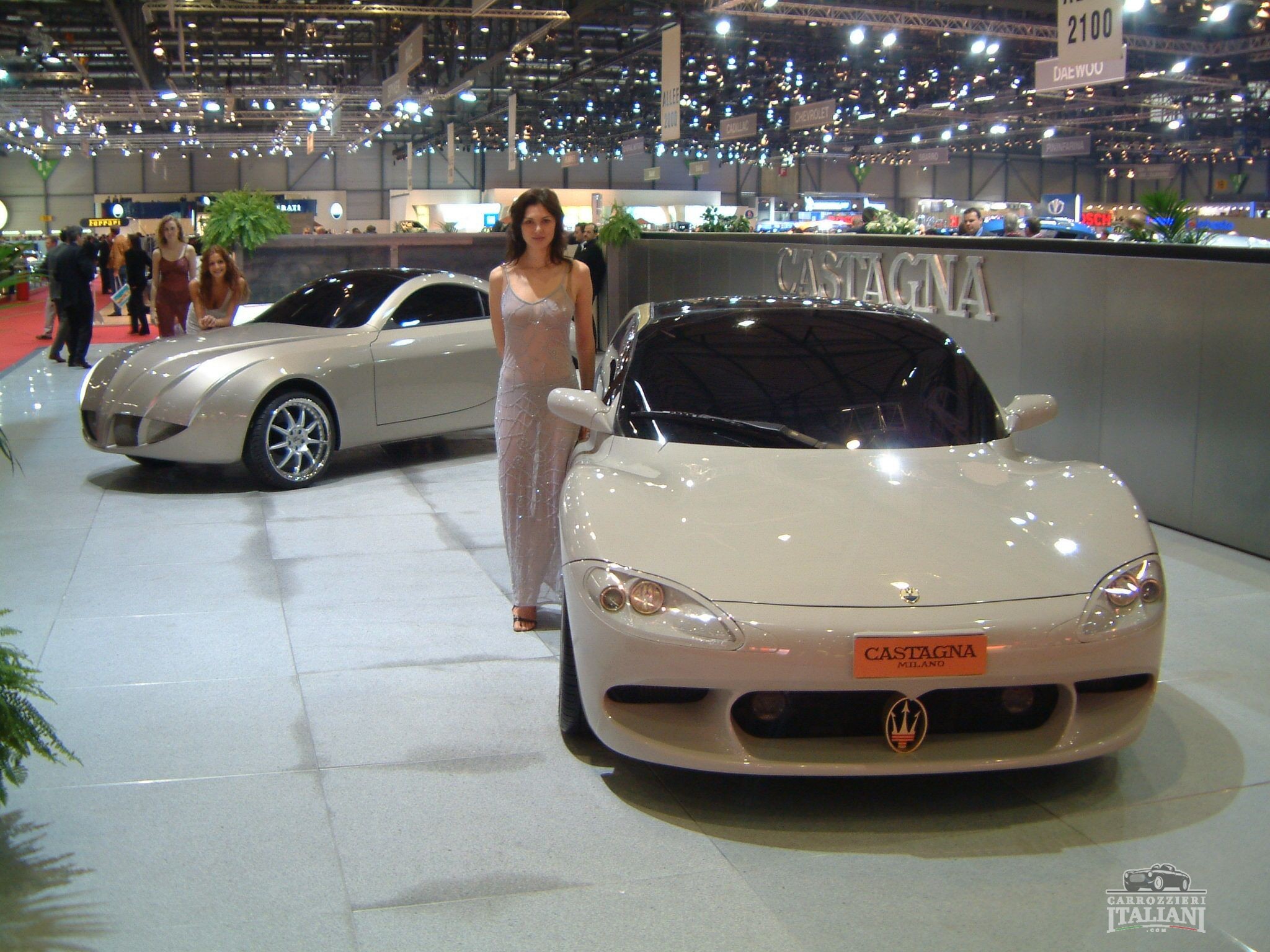
This is perhaps why the Auge remains so compelling even if some parts of its public record are hazy. There is still uncertainty around dates. Some sources place the original car in 1995, others in 1996, while its more public second life is more clearly associated with an appearance at Villa d’Este in 2002 and at Geneva in 2003. There is also inconsistency around the car’s exact power output, with some descriptions claiming significantly more than the donor Quattroporte’s factory figure. Without access to a definitive technical dossier, the safest conclusion is that the donor car’s standard published specifications are reliable, while the more dramatic power claims should be treated with caution. But none of that really damages the car’s significance. The Auge does not matter because it can be reduced to a perfectly verified spreadsheet of measurements and outputs. It matters because it represents a genuine attempt to revive a coachbuilding mentality in a modern context.
Seen that way, the Auge is almost less important as an isolated car than as a method. It anticipated the later revival of bespoke, ultra-low-volume specials, restomods and coachbuilt commissions that would become fashionable again in the twenty-first century. Today, the idea of a wealthy client commissioning a radically reimagined version of an existing platform is once again familiar. At the time, it was much less so. The Auge therefore feels a little like an early warning shot, a reminder that the old Italian art of shaping individuality into metal had not disappeared, only gone quiet.
It also helps to compare it with other Castagna projects of the period, because the Auge makes more sense when viewed not as an isolated extravagance but as part of a broader attempt to redefine what a modern carrozzeria could be. Cars like the Rossellini and the Aria show a similar obsession with narrative, luxury and identity. Castagna was clearly not interested in building anonymous show cars. It wanted each project to carry a story, a mood, an argument about what bespoke mobility might still mean. The Auge was perhaps the purest expression of that philosophy because it combined a serious Maserati platform, an ambitious academic origin, and the symbolic weight of trying to reconnect the Trident with the age of one-off grand tourers.
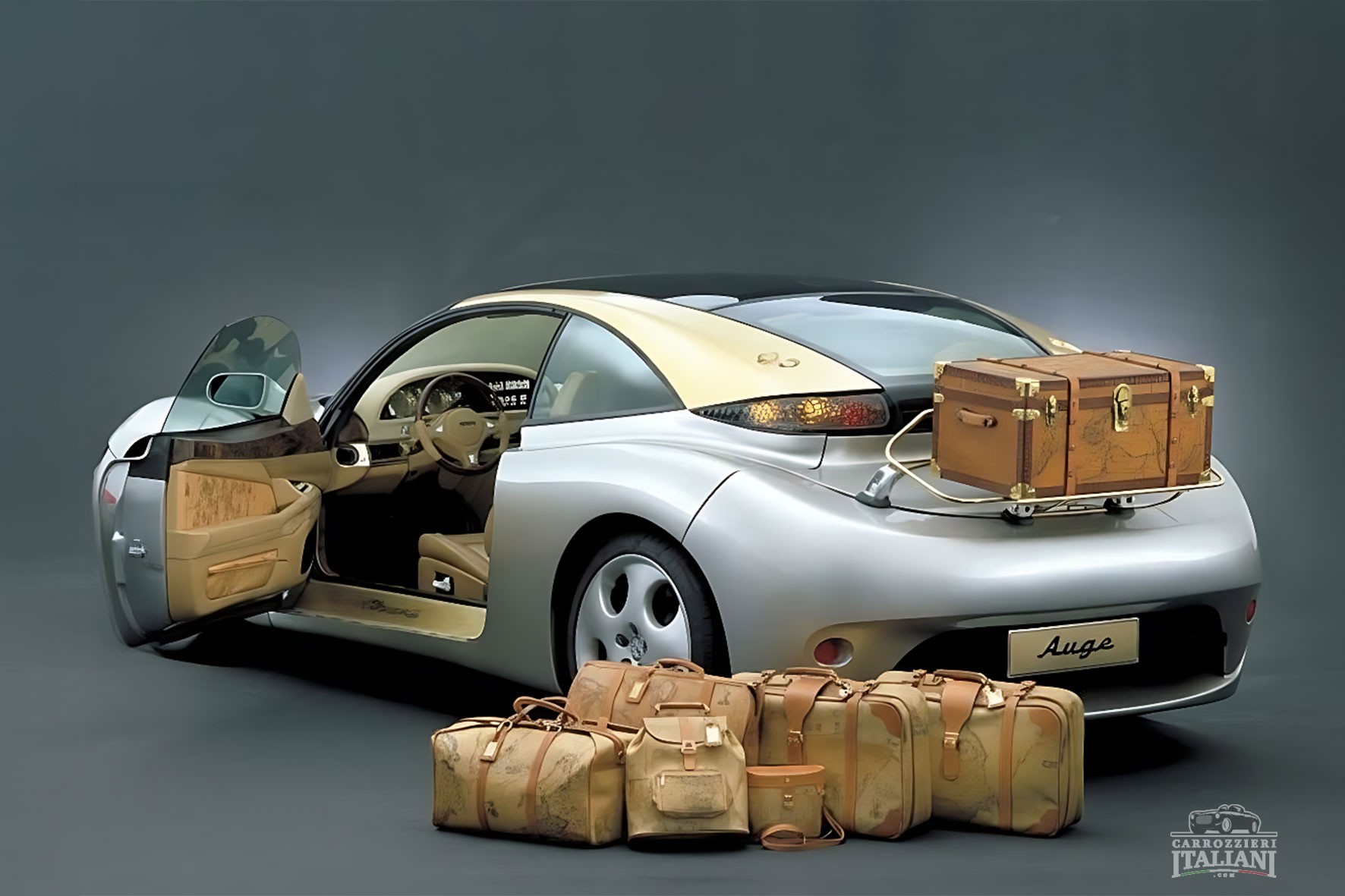
Of course, being interesting as history is not the same thing as being easy to own, restore or preserve. Mechanically, the use of Maserati production hardware is actually helpful. If the donor really was a Quattroporte IV Evoluzione, then many of the core components belong to a known ecosystem with at least some parts support and specialist knowledge available. The custom body, however, is another matter entirely. Everything that makes the Auge special also makes it difficult: bespoke panels, custom glass and trim, special mechanisms, one-off electronic integrations and interior components that were never intended to live in a parts catalog. This is the classic paradox of concept-car collectability. The drivetrain may be serviceable. The soul is handmade and irreplaceable.
That challenge extends especially to the electronics, because the future ages faster than sheet metal. A hand-formed aluminum panel can be repaired. A custom late-1990s multimedia and control system becomes a restoration nightmare the moment its proprietary hardware fails. Anyone preserving the Auge today would face a delicate decision: restore the functionality, perhaps invisibly modernizing components beneath original interfaces, or preserve the appearance and accept that some of its techno-luxury promises remain period-correct but dormant. That tension, too, is part of the car’s historical value. It reminds us that concept cars and one-offs do not merely preserve the past; they preserve old visions of the future.
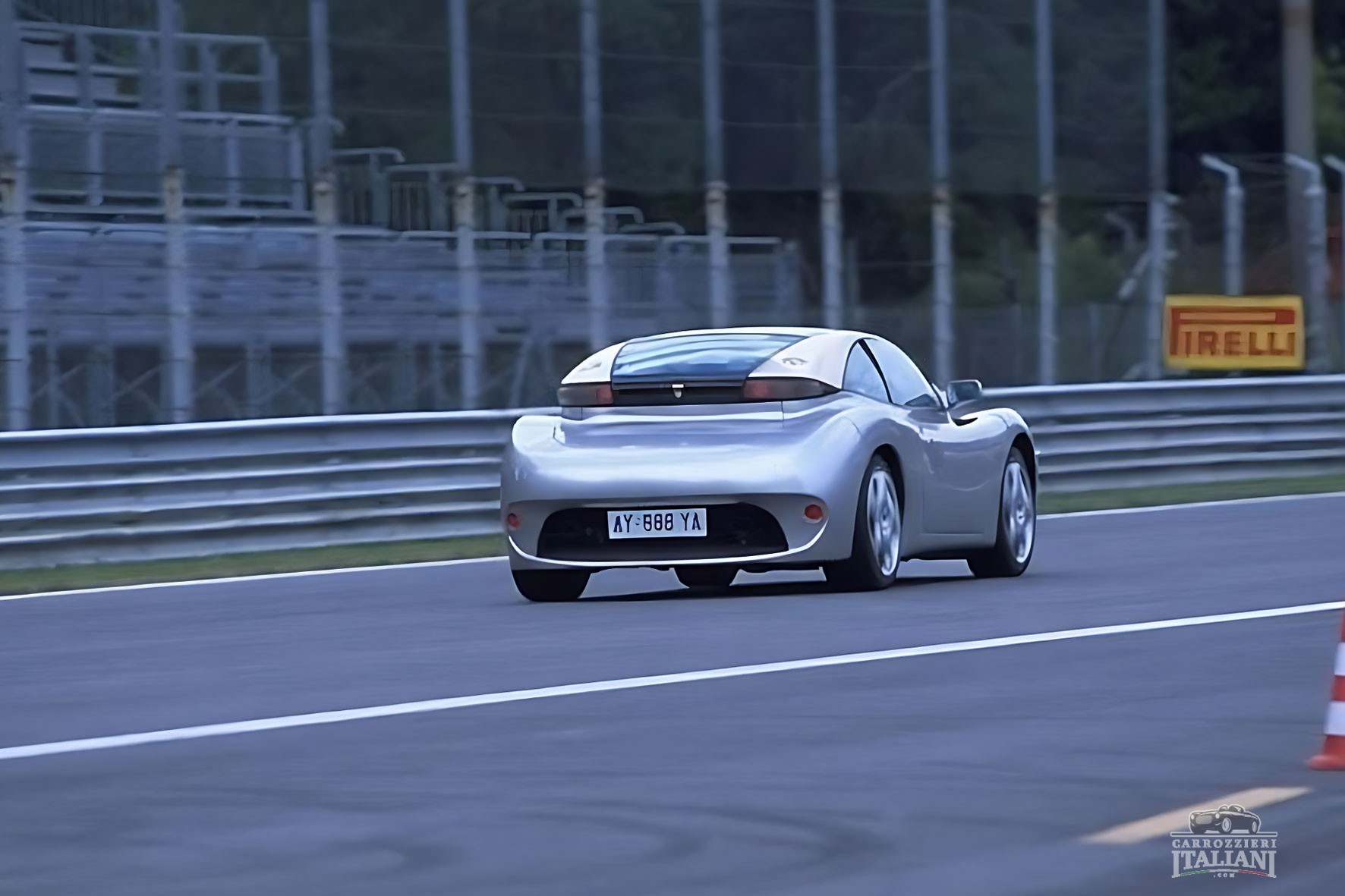
And perhaps that is the right way to end the story, because the Maserati Auge is ultimately not a car that asks to be judged by ordinary standards. It is too strange to be a production model, too complete to be a sketch, too sincere to be dismissed as styling nonsense, and too ambitious to be explained away as a student project that got out of hand. It is one of those rare cars that reveals more the longer you look at it. First you see the body. Then the proportions. Then the donor logic. Then the coachbuilding audacity. Then, finally, the bigger idea underneath all of it: that even in an age of digital design and industrial conformity, someone still believed a handmade Maserati-based gran turismo could say something new.
And it did.
What it said, more or less, was this: the age of the coachbuilder was not dead, only unfashionable, and perhaps all it needed was one cold wind from the Côte d’Azur to put it back in vogue.

ABOUT THE AUTHOR
Andreas Scheidl
Italian classic car enthusiast with German roots. Renowned as a respected figure in the classic car community, he serves as a jury member at various international concours d'elegance, including the Classic Gala Schwetzingen and Mantova. As a content creator, Andreas passionately shares his profound knowledge and appreciation for vintage automobiles. His heart beats for cars designed by Giovanni Michelotti, showcasing his discerning taste and dedication to preserving the timeless elegance of automotive history.
More stories by Andreas Scheidl ↗CONTINUE READING
Posts You Might Like
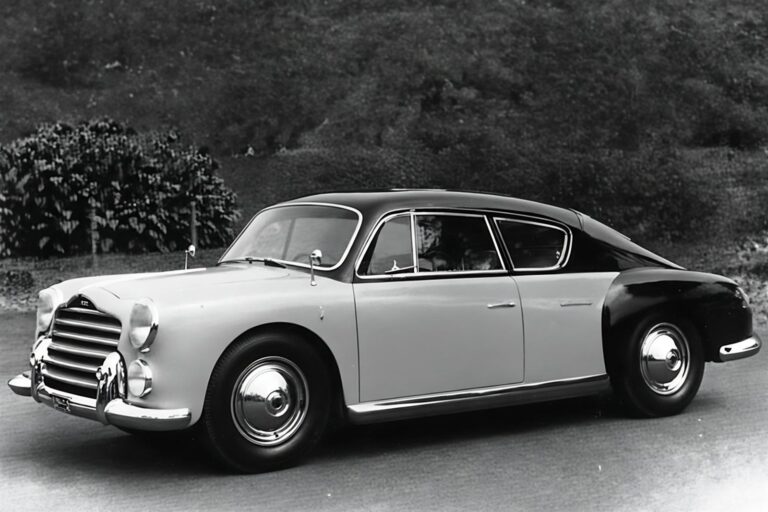
A Central Driving Position, a Rear-Mounted V8. Was This Really a Lancia?
In 1948, visitors to the Turin Motor Show could see an unusual Lancia on the stand of Carrozzeria Ghia. It was a large two-door coupé with a two-litre V8 mounted behind the…
Read story
Fioravanti F100: The Ferrari He Was Allowed to Imagine
Enzo Ferrari’s centenary, Leonardo Fioravanti’s independent studio and a supercar that explored air brakes, steel wheels and a new way of driving—without ever wearing the Cavallino.
Read story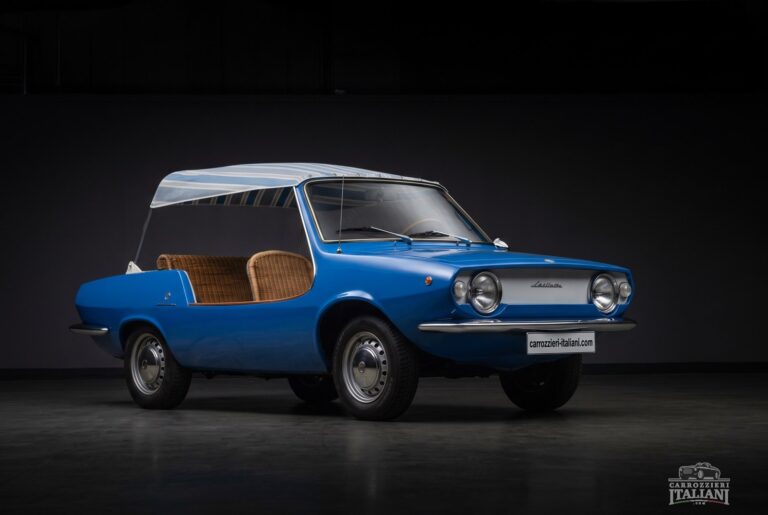
Michelotti Shellette: When the Fiat 850 Became a Yacht
The yacht designer, the Turin stylist and the tiny coachbuilt car that crossed between the quay, the royal holiday house and the auction room. Some automobiles were conceived for the open road,…
Read story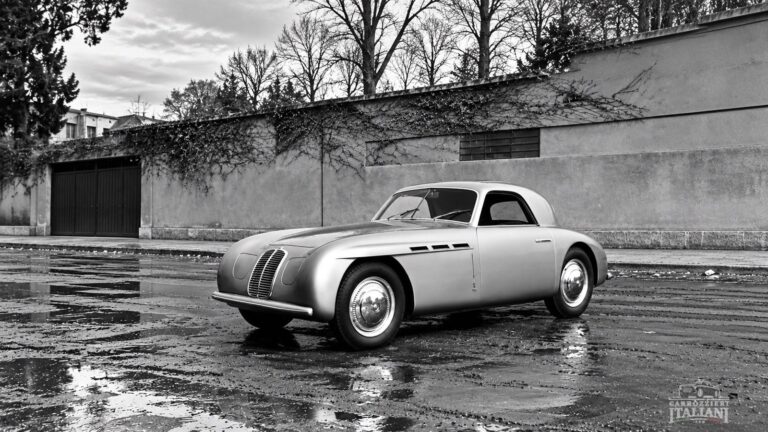
Maserati A6 1500: A New Road for the Trident
When the doors of the Geneva Motor Show opened in March 1947, Maserati was a name that required little introduction to anyone who followed motor racing. What it did not yet possess…
Read story
THE CONVERSATION
Comments 0
Share a memory, a period photograph or a documented detail about this story.