
Alfa Romeo Vittoria: The First Child of a Reborn Carrozzeria Castagna
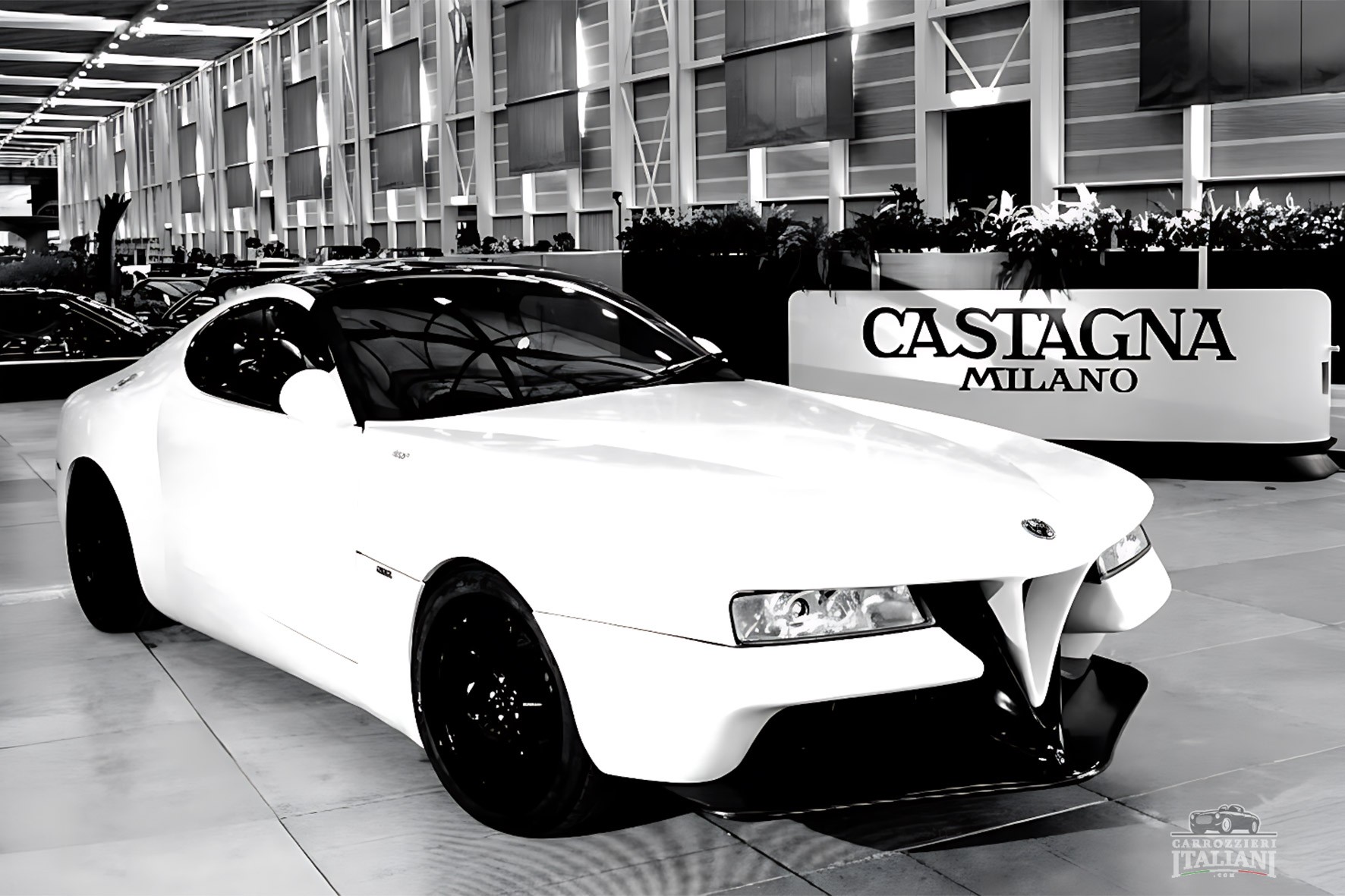
In March 1995, amid the buzz of the Geneva Motor Show, a striking white coupe named “Vittoria” made its debut. This one-off creation was not an official Alfa Romeo product but the brainchild of the resurrected Carrozzeria Castagna of Milan – a storied Italian coachbuilder reborn after decades of dormancy. The Castagna Vittoria blended the mechanical heart of an Alfa Romeo with bespoke craftsmanship, heralding the “victory” of traditional coachbuilding in a modern era. In fact, the car’s name Vittoria (Italian for victory) was a personal touch: it was named after the young daughter of financier Uberto Pietra, who funded the project, while stylist Gioacchino Acampora penned its aggressive lines. The stage was set for a truly unique automobile that would intrigue Alfa Romeo enthusiasts and design aficionados alike.
Importantly, the name Vittoria was not only symbolic for Castagna’s “victory” comeback but also carried personal significance. Uberto Pietra’s daughter Vittoria was the inspiration for the name – in fact, she lent her own name to the car. As legend has it, young Vittoria, a lover of speed like her father, would later even enjoy rides in this custom-built machine dedicated to her. This intimate naming gave the car a human touch often absent in one-off concepts, underlining that the project was a passion product from the start.
Design and Construction
Visually, the Castagna Vittoria is unlike any other Alfa Romeo – only the signature scudetto grille gives away its heritage at a glance. Gioacchino Acampora’s design is daring and unconventional, purposely distancing itself from the boxy Alfa 75 sedan origins. The entire body is bespoke, composed of hand-formed aluminum panels beaten and shaped by artisans, then riveted onto the original steel monocoque (which was reinforced to handle the new stresses). In contrast to the donor car’s four-door layout, the Vittoria wears a sleek two-door gran turismo coupe silhouette. Its proportions – a long, overhanging nose, a low cabin set far rearward, and a chopped tail – are more akin to the exotic Alfa Romeo SZ sports coupe than to any Alfa sedan. Indeed, from certain angles the Vittoria looks like a futurist cousin of the SZ, featuring a similarly squat stance and wide track.
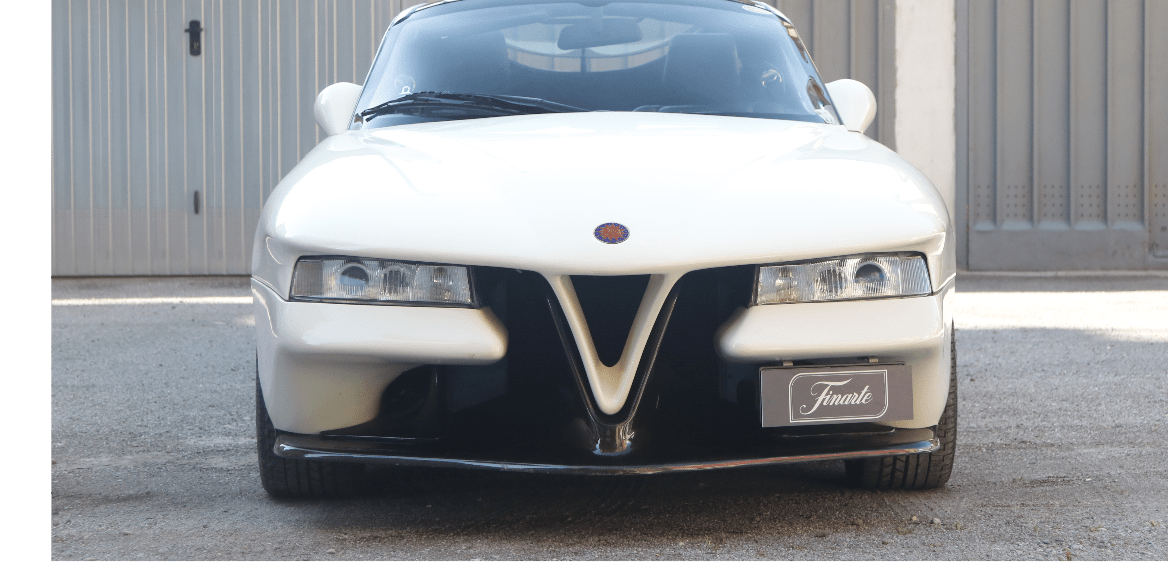
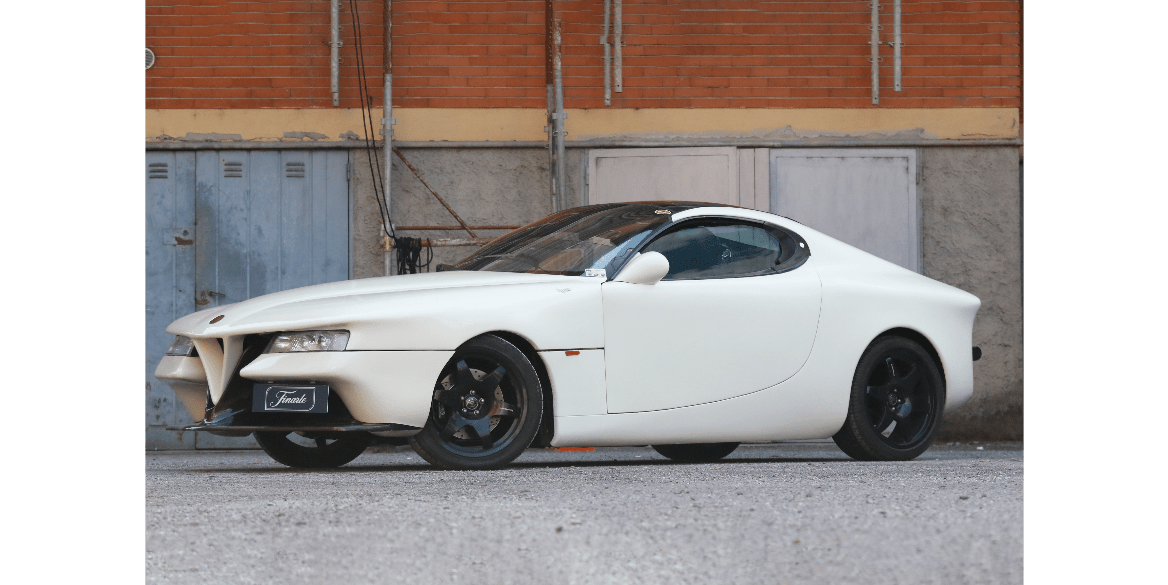
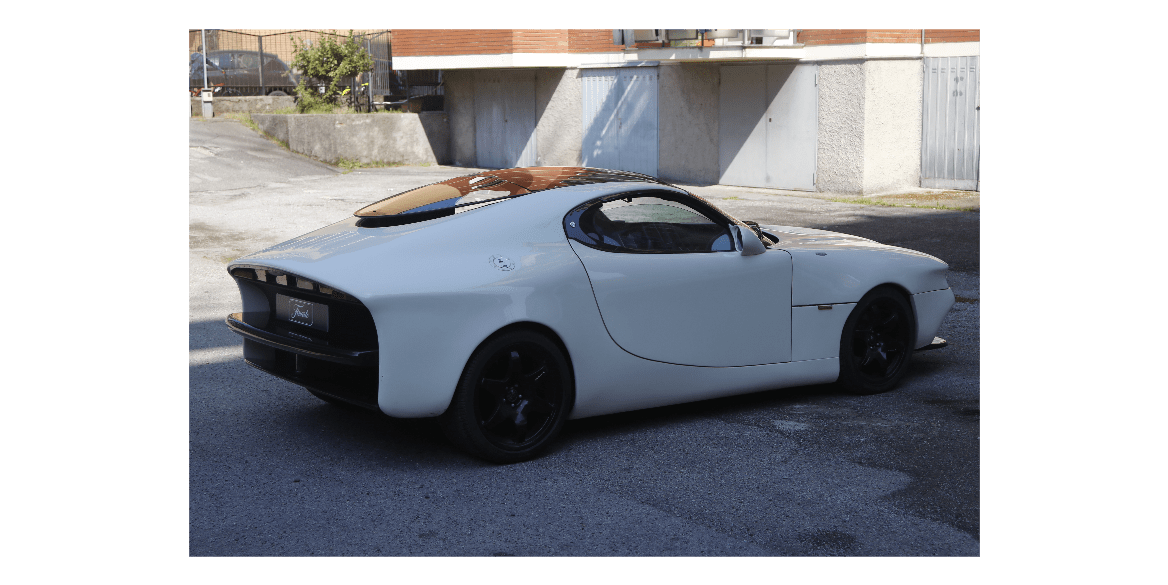
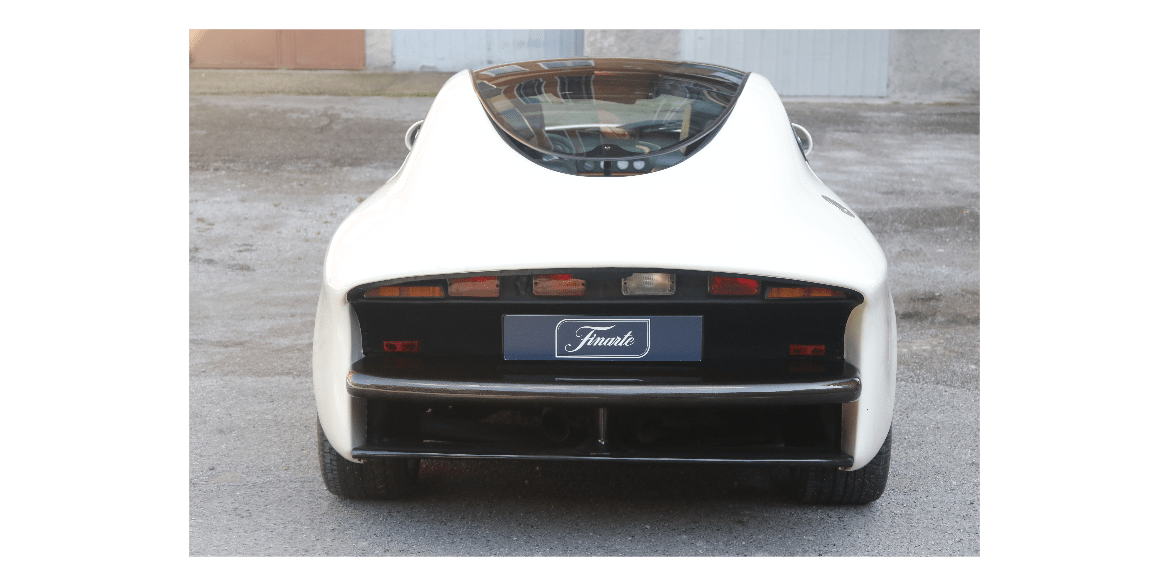
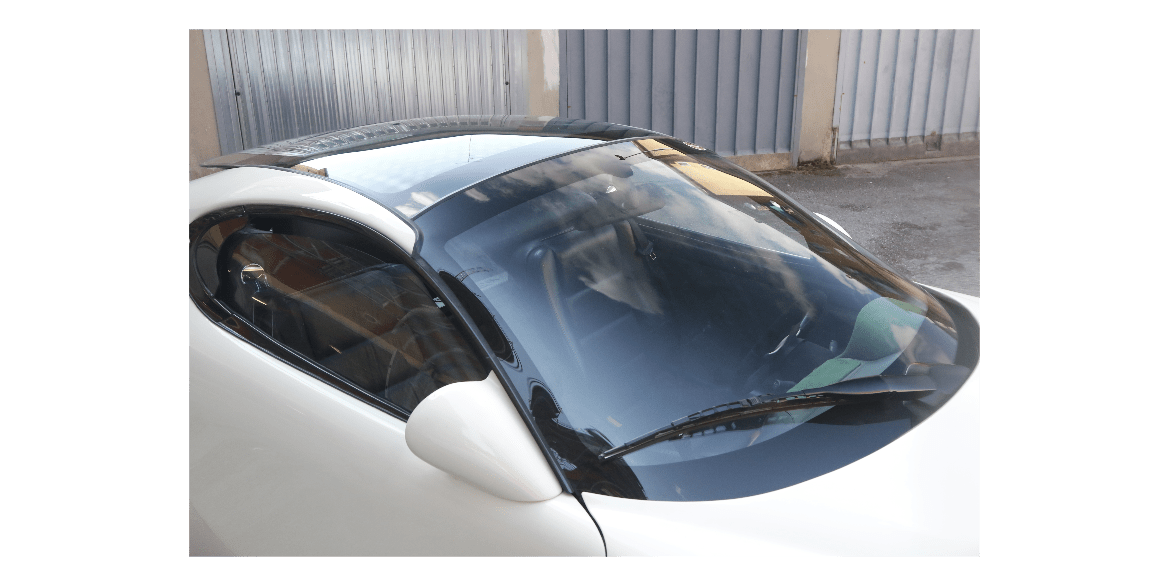
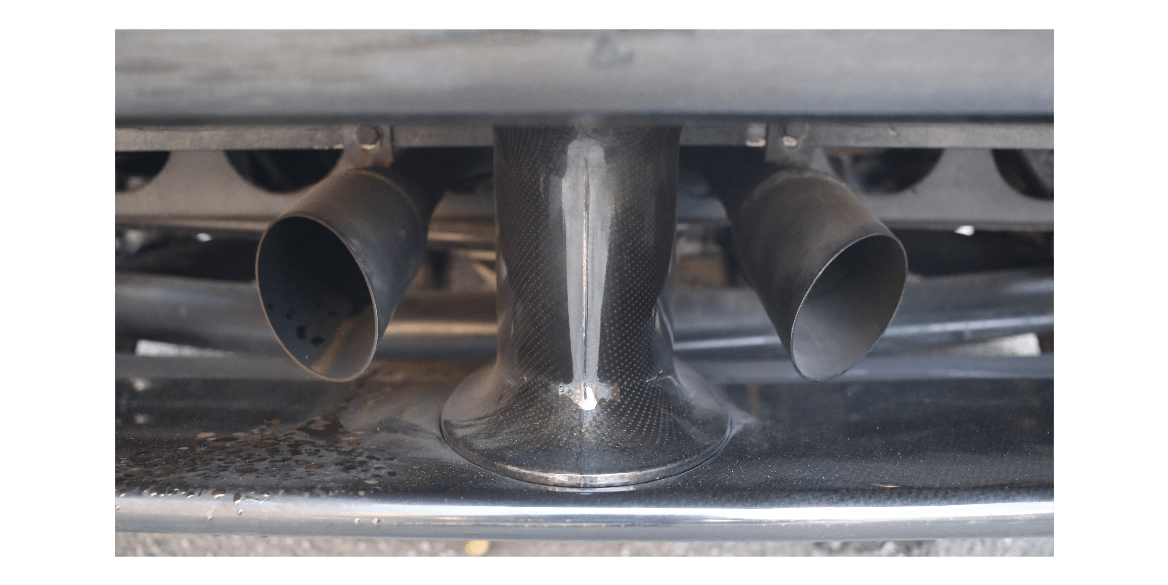
Up front, Acampora crafted a bold face for the Vittoria. The hood extends forward in an aggressive prow, overhanging the grille. The headlamps were sourced from the contemporary Opel Calibra and molded into the design, flanking a floating Alfa trilobo grille reinterpretation. Large intakes and a pronounced front splitter (fashioned from carbon fiber) give the car a snarling, purposeful look reminiscent of modern performance cars. In profile, a distinctive curved character line arcs over the greenhouse – a design flourish that has been compared to the C-line later seen on 21st-century Bugatti coupes. The roofline is low and aerodynamic, flowing into a truncated Kamm-tail rear end. The tail is perhaps the most futuristic aspect: a high, blade-like rear spoiler (also in carbon fiber) and an integrated diffuser-like tail panel create a sharp departure, quite unlike any production car of its time. The overall effect is eye-catching and polarizing – the Vittoria’s styling defied the norms of mid-90s car design. Some observers found its looks challenging, even calling it a “monster,” while others appreciated the sheer uniqueness and audacity of the design. Love it or not, the Vittoria demands attention, standing out even among concept cars.
Despite the show-car bodywork, the Vittoria was engineered to be fully functional and street-legal. All the lighting, glass, and safety features had to meet regulations. Castagna commissioned a custom windshield with a double curvature (laminated and homologated for road use) as well as a matching curved rear window in safety glass – costly undertakings for a one-off. The body panels, though handcrafted, conceal the original Alfa 75 chassis hard points, meaning the car retained essentials like windshield wipers, door hinges, and other hardware engineered to production-car standards. A competition-grade fuel cell (55 liters) was installed, compliant with FIA/CSAI safety norms, underscoring that this prototype was built to be driven, not just displayed. The wheels are special lightweight Tecnomagnesio magnesium alloys (measuring 18 inches in diameter), with wide Pirelli P Zero tires (235/40 ZR18 front and 255/35 ZR18 rear) giving the Vittoria a substantial footprint. These modern touches, combined with the bespoke aluminum skin, yield a car that bridges the gap between artisan craftsmanship and practical engineering.
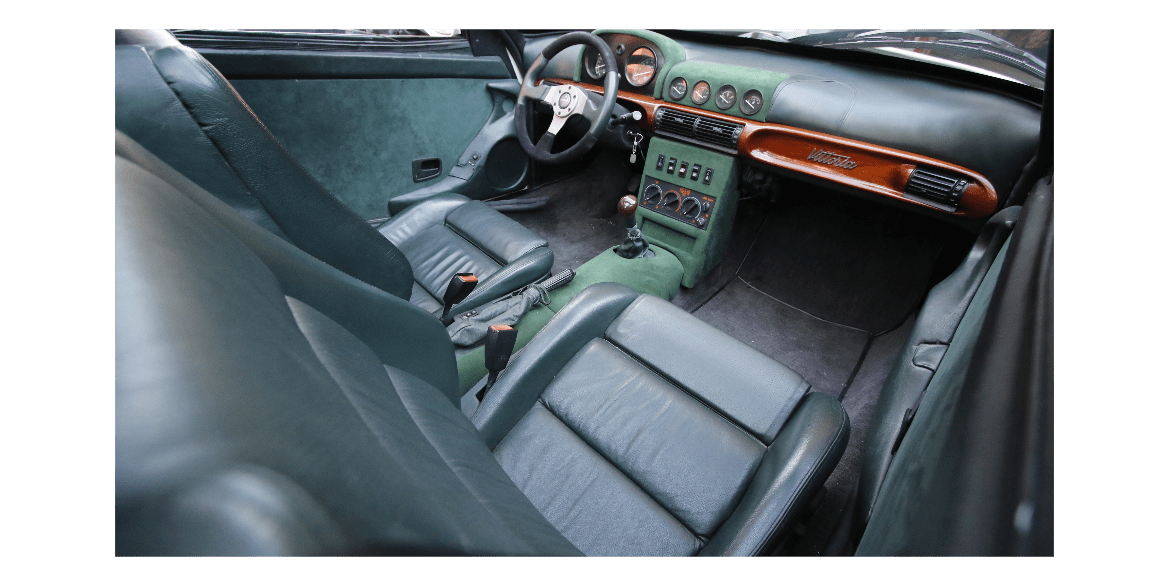
The interior of the Vittoria is equally bespoke and luxurious. Opening the doors (which retain the frameless windows of the Alfa 75 coupe conversion), one finds a cozy two-seat cabin swathed in dark green leather and Alcantara – a rich color choice that complements the car’s Bianco Gardenia pearlescent white exterior. The dashboard and center console feature hand-crafted wooden trim (the gearknob, for instance, is a carved wooden piece), adding a touch of classic Italian luxury. The instruments were borrowed from the high-performance Alfa SZ (Sprint Zagato) ES30, but carry unique Castagna graphics on the dials. In a clever bit of parts-bin innovation, the seats were sourced from a BMW 8 Series coupe – chosen because that model’s seats had integrated seatbelts in the backrest. By using these, Castagna gave the Vittoria modern, self-contained seatbelts (a boon in a pillarless coupe) while re-trimming the seats in matching green leather to blend with the interior. The end result is an interior that feels one-off yet functional, mixing exotic materials with proven components. Build quality was reportedly excellent; even decades later, photographs have shown the cabin in pristine condition with minimal wear. The Vittoria’s interior demonstrates how old-world coachbuilding techniques (hand-tailored upholstery, custom glass, wood trim) were married with off-the-shelf components to ensure the car could actually be used regularly. It’s a true grand tourer environment – intimate, well-appointed, and utterly unique.
Performance and Engineering
Beneath the custom body, the Alfa Romeo Vittoria retains the core of its Alfa 75 (Milano) origins – and then elevates it further. The drivetrain is built around Alfa’s legendary 3.0-liter Busso V6 engine, a 2959 cc 12-valve V6 loved for its sonorous sound and smooth power delivery. In stock form (as used in the late-80s Alfa 75), this engine made around 188–192 horsepower. For the Vittoria, Castagna turned to a racing engine specialist (one that had experience preparing Alfa V6s for DTM touring car racing at the time) to tune and upgrade the Busso V6. The result was a bump to roughly 254–255 horsepower, achieved with internal modifications and careful tuning. On a dynamometer, the Vittoria’s V6 was measured at 254.8 hp at 5,740 rpm, a significant increase over stock and even slightly above the output of the contemporary Alfa SZ (210 hp). This power is delivered through a rear-mounted 5-speed transaxle gearbox (in classic Alfa 75 fashion) with a limited-slip differential, driving the rear wheels. Thanks to the transaxle layout, the car has a balanced weight distribution, aiding handling. The performance of the Vittoria was quoted at a top speed of around 245 km/h (152 mph), which put it on par with many 1990s sports cars. While no official 0–100 km/h times were published, the substantial power and relatively low weight (helped by the aluminum body) suggest it would be very quick off the line for its era.
Under the skin, the chassis and suspension were extensively reworked to make the Vittoria a capable driver’s car. The front suspension was converted to an independent coil-spring setup (replacing the stock torsion bars of the Alfa 75) using components from the Alfa SZ, including Koni adjustable coaxial shock absorbers and upgraded control arms. In the rear, the Alfa’s signature De Dion tube suspension was retained but enhanced – fitted with coil springs and Koni shocks, and located by a Watts linkage as in the SZ. The braking system was also overhauled for high performance: the Vittoria wears Brembo 6-pot brake calipers clamping ventilated cross-drilled discs at all four corners. This was a supercar-grade braking setup in the mid-90s, ensuring that the Vittoria could scrub off speed as effectively as it gained it. The combination of the taut SZ-derived suspension, Koni dampers, wide modern tires, and powerful brakes transformed the driving dynamics. Unlike many one-off concept cars which are often not fully functional or have compromised drivability, the Vittoria was engineered to drive as good as it looks – or better, given that some found its looks debatable. Contemporary accounts and later tests indicated that the Vittoria handled confidently and delivered the charismatic performance one expects from an Alfa Romeo V6. It truly was a coachbuilt special that could be enjoyed on the road – a rarity when many bespoke show cars remain static display pieces.
Debut and Public Reaction
When the Castagna Vittoria was unveiled at the 1995 Geneva International Motor Show, it marked a bold return for Carrozzeria Castagna. The car occupied a special stand dedicated to Castagna, surrounded by the glitz of more mainstream manufacturers. In the public and press, the Vittoria made an unforgettable impression. Its unorthodox styling immediately drew mixed reactions. Some in the automotive press were not kind to its aesthetics – one outlet even dubbed it “visually challenged,” and certain onlookers thought the design had gone “too far” in its pursuit of uniqueness. Indeed, in a later tongue-in-cheek reflection, an Italian magazine called the Vittoria “un elogio della bruttezza” (an homage to ugliness), underscoring how polarizing the looks were. However, there was also ample admiration: Alfa Romeo enthusiasts and design connoisseurs appreciated the nods to Alfa’s heritage and the sheer audacity of the project. Many recognized it as a rolling work of art and passion, the kind of daring concept that only a storied coachbuilder might attempt. The Vittoria’s role in reviving a historic brand gave it an appealing backstory that went beyond just looks – it was a conversation piece about Italy’s coachbuilding tradition finding a new life in modern times.
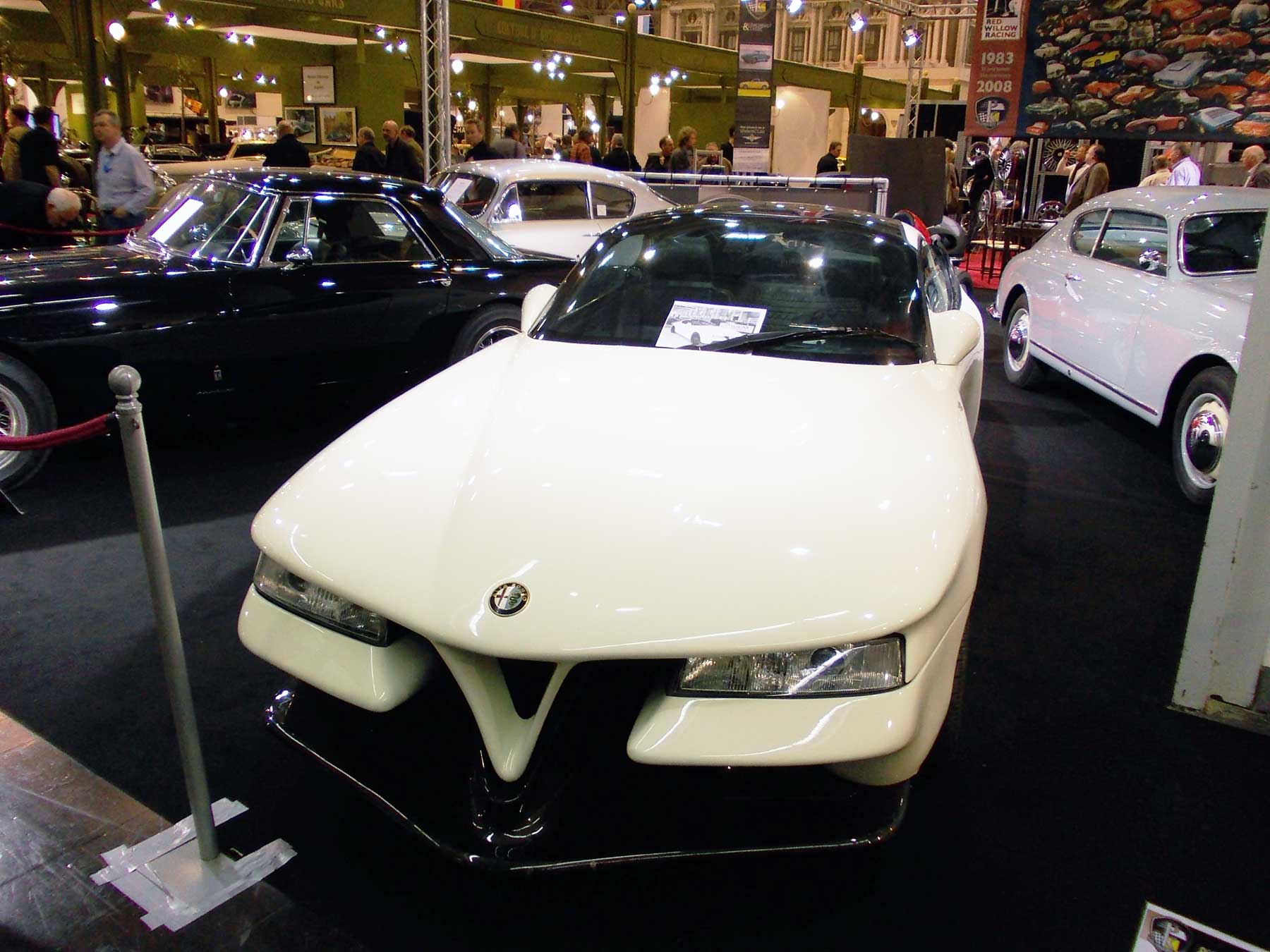
By all accounts, Castagna’s return with the Vittoria was successful in generating buzz. The car was extensively covered by Italian and international automotive media at the time. Geneva show-goers flocked to see this odd yet alluring white coupe and hear its story. The specialized press lauded the effort: for example, Italy’s Quattroruote magazine noted the prideful resurgence of a Milanese carrozzeria. The public response was also strong – whether people loved it or hated it, they certainly talked about it. How could they not? As one article mused, “How can such a new, different and unprecedented style not leave a memory in the public and in the experts?” The Vittoria succeeded in keeping the Castagna name in headlines, and importantly, it showed that the revived company could deliver a finished, operational automobile. It wasn’t just a static show model; Castagna demonstrated real coachbuilding prowess. In fact, in the months after Geneva, the Vittoria was driven and showcased in various venues, proving its roadworthiness.
🔗 Read more: Carrozzeria Castagna Milano: A Timeless Legacy
One early high-profile outing was as a sponsor/pace car in the 1995 Mille Miglia historic rally (the modern re-run of the classic race) – the Vittoria followed the event, sporting sponsorship from the Italian magazine Automobilismo. Seeing this futuristic Alfa-based coupe amidst vintage sports cars of the Mille Miglia must have been a sight to behold. The car also caught the attention of Alfa’s enthusiast community. In 1999, for instance, the president of the Netherlands’ Alfa Romeo SZ Register, E. van der Beek, visited to see and review the Vittoria, attesting to the car’s mystique among those in the know. Clearly, the impact of the Vittoria extended beyond its Geneva premiere, resonating with a core of enthusiasts and keeping the Castagna revival momentum alive.
Legacy and Later Years
After its mid-90s debut, one might have expected the Castagna Vittoria to disappear into a private collection or museum. Instead, this unique Alfa-based creation continued to make appearances, slowly gaining a reputation as a modern classic in its own right. Over the years, the Vittoria has been displayed at numerous prestigious automotive events and shows, often drawing fascinated crowds. Some of the key milestones in its post-debut journey include:
1995: Participated in the Mille Miglia Storica (as a sponsor/support car), immediately after its Geneva debut.
2010: Shown at “The Unique Special Ones” concours in Florence – an event celebrating rare one-off automobiles.
2010: (Later in the year) Displayed at “100×100 Alfa” in Novegro, Italy, a special gathering commemorating Alfa Romeo’s 100th anniversary.
2012: Exhibited at Techno Classica Essen (one of Europe’s largest classic car shows), where the Vittoria impressively won the Youngtimer Award for best young classic car.
2016: Took part in the Vernasca Silver Flag, a renowned historic hillclimb event in Italy, driving up the closed public road in an exhibition of classic competition cars.
2019: Featured in the “Auto che Passione” exhibition at the MAUTO (Museo dell’Automobile di Torino), which showcased passionate automotive creations. The Vittoria sat alongside other legendary one-offs and prototypes, highlighting its significance in Italian automotive history.
2025: Returned to the Vernasca Silver Flag hillclimb event, again delighting fans who got to see and hear this one-of-a-kind machine in action 30 years after its creation.
These appearances testify that the Castagna Vittoria did not languish forgotten — it has been cherished and actively shared with the public as an exceptional piece of Alfa Romeo and coachbuilding heritage. When shown at Techno Classica 2012, for example, it stood out among hundreds of classics, enough to earn an award recognizing its uniqueness and restoration. Each event added to the car’s lore. By the 2010s, the Vittoria was being hailed as an “exceptional youngtimer, still looking ahead towards the future,” as one classic car publication put it. Its status evolved from obscure ’90s concept to respected collector’s item.
Crucially, the Vittoria survived these years in fine form due to limited use and careful preservation. The car spent a good deal of time in storage during the late 1990s and 2000s, accumulating very low mileage (reportedly only on the order of 2,500 km total by the 2020s). It remained with its creator, Uberto Pietra, for decades. In 2020, as the Vittoria turned 25 years old and eligible for historic registration, it underwent a full restoration to bring it back to its original glory. The restoration refreshed any aging components and cosmetics, ensuring the car was mechanically sound and aesthetically just as it appeared in 1995. That year, the Vittoria was officially road-certified in Italy as a historic vehicle, complete with a CRS certificate from the Registro Italiano Alfa Romeo (RIAR). For the first time, the one-off Castagna Vittoria received license plates and could legally roam the roads. This was a significant milestone: after a quarter-century, Vittoria was victorious again – not just a showpiece, but a street-legal, drivable exotic.
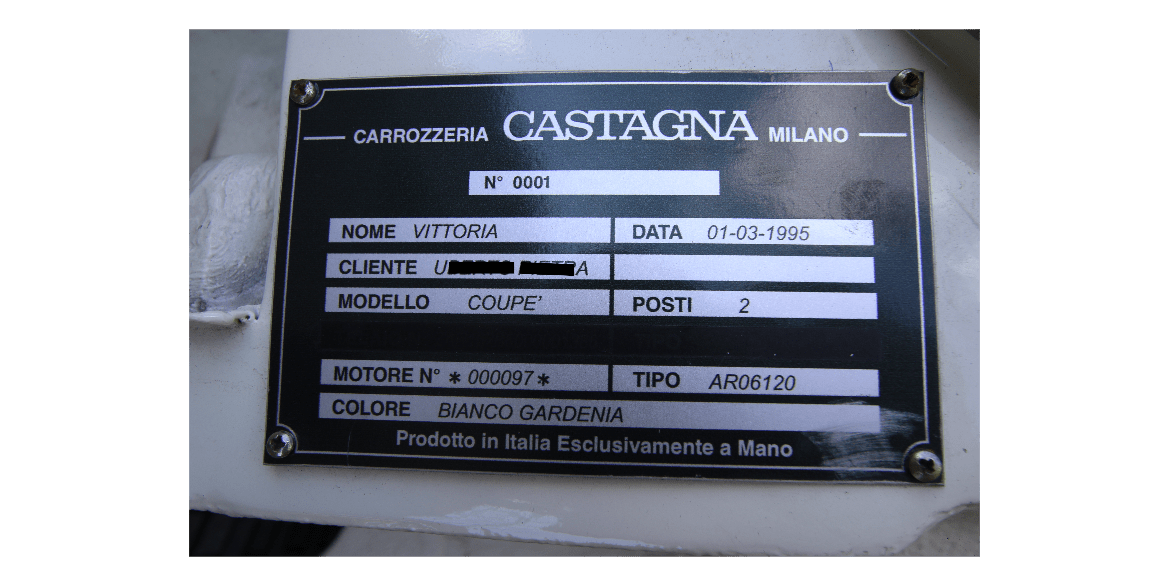
The renewed Vittoria quickly caught wider attention. In August 2021, the Italian magazine EpocAuto ran a detailed feature on the car (titled “La Vittoria di Castagna” by Giuliano Silli), highlighting its story and recent restoration. In mid-2023, RIAR’s official magazine Il Quadrifoglio also published an in-depth article on the Castagna Vittoria, reflecting the Alfa Romeo club’s pride in this unique creation. Enthusiast blogs and videos began to circulate, especially as news emerged that the Vittoria would be offered at auction. In late 2023, the car was consigned for sale via an online auction on Car & Classic in the UK, giving the public a chance to bid on this singular Alfa Romeo. The auction listing lauded the Vittoria’s low mileage, extensive documentation, and the fact that it was “Car 0001” of Castagna’s modern rebirth. Bidders were reminded that this is one of the rarest Alfa Romeos in existence – truly one-of-a-kind. The estimated value exceeded £125,000, underscoring how special the car had become in collector circles.
Whether or not the Vittoria changed hands, it has firmly cemented its status as a collector’s gem and a fascinating footnote in Alfa Romeo’s narrative. Its presence at events like Milano AutoClassica and continuing appearances (such as the 2025 hillclimb) indicate that the car is being lovingly maintained and shared, as it deserves to be.
The Vittoria’s Place in History
The Alfa Romeo Castagna Vittoria stands as a remarkable convergence of history, design, and passion. Born as a one-off prototype, it managed to revive a historic coachbuilding marque and leave a lasting imprint on automotive enthusiasts. In an era (mid-1990s) when coachbuilt specials were virtually extinct, the Vittoria dared to exist – and to excel. Its dramatic styling may have divided opinions, but it undeniably showcased creativity and fearless design experimentation. At the same time, by leveraging the proven engineering of the Alfa 75 and infusing it with racing enhancements, the Vittoria proved to be a genuinely capable machine, not just a trailer queen.
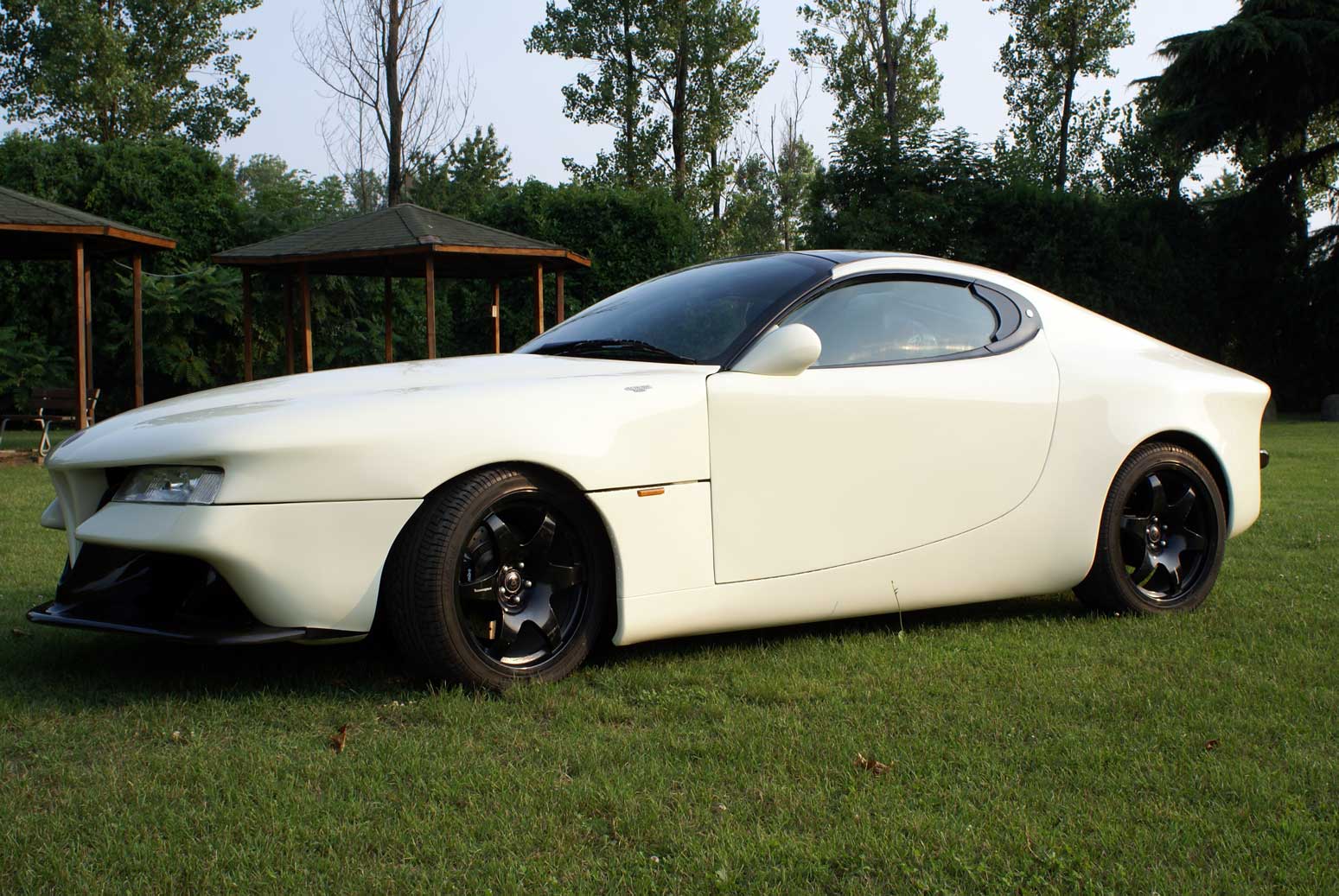
Beyond the specs and looks, what truly makes the Vittoria enduring is the story it carries. It’s the story of resurrecting Italian artisanship – the idea that a car could still be handcrafted in metal by panel beaters in the 1990s, that a small team could take an old chassis and make something totally new from it. It’s also a personal story: a father naming the car after his daughter, and that family enjoying the thrill of their road-going creation. As one article noted, “the Castagna Vittoria is an exceptional youngtimer, still looking ahead towards future” – implying that its design was ahead of its time, and its spirit remains forward-looking. Interestingly, some design cues of the Vittoria foreshadowed later cars (for instance, observers note that the curvy glasshouse anticipated the lines of the Alfa 8C Competizione introduced years later). In this way, the Vittoria wasn’t just harking back to the past glory of coachbuilders; it was also pushing design conversations that echoed into the future.
Today, the Castagna Vittoria is remembered as a singular piece of Alfa Romeo lore, though not without debate. From the moment it was unveiled, the car divided opinions: some praised its bold proportions and the craftsmanship of its hand-formed aluminum body, while others struggled to accept its unconventional styling. The most discussed feature was undoubtedly the front end, where the traditional Alfa Romeo scudetto grille was reinterpreted into an unusual, almost “melted cheese” shape that seemed to sag across the nose. For some, this daring distortion of an icon was a brave attempt at modernity; for others, it felt like a step too far.
Yet, beyond those polarized reactions, the Vittoria has grown into a fascinating chapter in the history of Italian coachbuilding. It proved that even in the 1990s, long after the golden age of carrozzerie, a car could still be hammered by hand, created not by committee but by conviction. Unique in every sense, the Vittoria stands as “one of one” — a reminder that passion, experimentation, and a willingness to provoke can leave a lasting mark. For Alfisti and design enthusiasts alike, it remains a striking meeting point between Alfa Romeo performance and the artistry of bespoke Italian coachbuilding.

ABOUT THE AUTHOR
Andreas Scheidl
Italian classic car enthusiast with German roots. Renowned as a respected figure in the classic car community, he serves as a jury member at various international concours d'elegance, including the Classic Gala Schwetzingen and Mantova. As a content creator, Andreas passionately shares his profound knowledge and appreciation for vintage automobiles. His heart beats for cars designed by Giovanni Michelotti, showcasing his discerning taste and dedication to preserving the timeless elegance of automotive history.
More stories by Andreas Scheidl ↗CONTINUE READING
Posts You Might Like
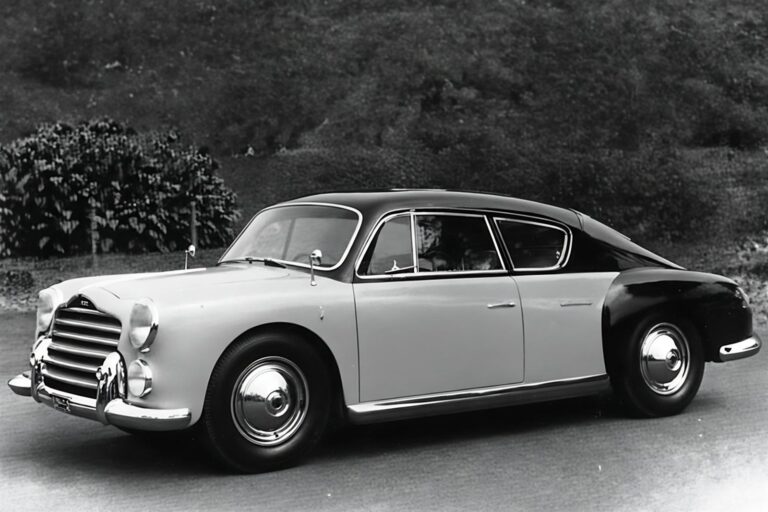
A Central Driving Position, a Rear-Mounted V8. Was This Really a Lancia?
In 1948, visitors to the Turin Motor Show could see an unusual Lancia on the stand of Carrozzeria Ghia. It was a large two-door coupé with a two-litre V8 mounted behind the…
Read story
Fioravanti F100: The Ferrari He Was Allowed to Imagine
Enzo Ferrari’s centenary, Leonardo Fioravanti’s independent studio and a supercar that explored air brakes, steel wheels and a new way of driving—without ever wearing the Cavallino.
Read story
Michelotti Shellette: When the Fiat 850 Became a Yacht
The yacht designer, the Turin stylist and the tiny coachbuilt car that crossed between the quay, the royal holiday house and the auction room. Some automobiles were conceived for the open road,…
Read story
Maserati A6 1500: A New Road for the Trident
When the doors of the Geneva Motor Show opened in March 1947, Maserati was a name that required little introduction to anyone who followed motor racing. What it did not yet possess…
Read story
THE CONVERSATION
Comments 0
Share a memory, a period photograph or a documented detail about this story.