
The Shocking Sacrilege of Electric Classic Cars
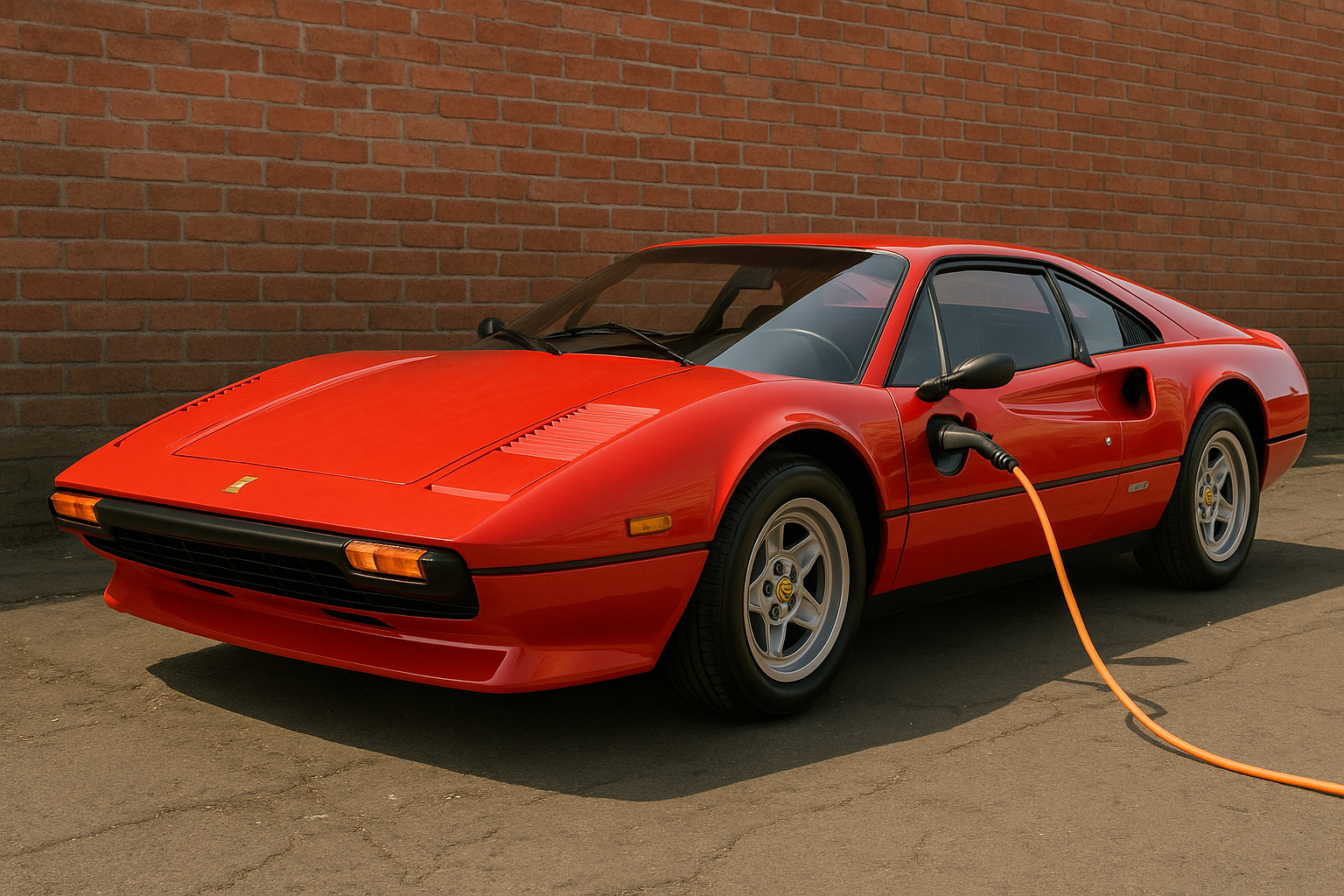
Imagine a vintage Ferrari pulling up to a gathering of auto enthusiasts – and you don’t hear it coming. No shriek of a V12, no burble of an idling V8, just an eerie silence broken only by the whisper of tires. Converting classic cars into electric vehicles has become a shocking new trend (pun intended), but not everyone is toasting it with high-octane enthusiasm. Indeed, among many petrolheads and purists, the rise of electric classic cars – these so-called EV classic car conversions – is viewed with deep skepticism and a touch of horror. To them, swapping out a car’s soul (in the form of pistons and petrol) for lithium and electrons is like putting a Vitamix in a Bordeaux cellar – a jarring marriage of fine vintage and modern gadgetry that simply feels wrong.
In this article, we take a gentlemanly but critical look at this fad of electrifying vintage automobiles. From the loss of spine-tingling engine notes and mechanical charm to the almost absurd juxtaposition of touchscreen dashboards in cars born before the moon landing, we’ll explore why are EV swaps ruining classic cars? is more than just a provocative question – it’s a lament echoing in the halls of automotive nostalgia. With refined sarcasm and a wink of wit, allow me to argue that when it comes to classic cars, silence is not golden – it’s sacrilege.
Silencing the Symphony
There’s a reason enthusiasts describe a well-tuned engine as “music.” The growl of an old Jaguar inline-six or the ferocious crescendo of a Ferrari V12 isn’t just noise; it’s the heartbeat of the machine. Converting a classic to electric drive effectively hits the mute button on this mechanical orchestra. It’s the automotive equivalent of staging a rock concert and pulling the plug on the amplifiers. As one commentator keenly observed, a huge part of the character and soul of classic cars comes from their engine note and drivetrain – the “smell of an old flat four, the bark of a finely tuned flat six, or the satisfying snick” of an iconic gated manual shifter. Take those away, and you’re left with a gorgeous prop that goes but no longer grunts.
Refitting a 1960s sports car with a silent electric motor is like giving Shakespeare an AI editor – sure, the work may become more efficient and polished, but the poetry and drama are utterly lost in translation. An Aston Martin DB5 without the rumble and burble is as incongruous as a James Bond film scored with crickets chirping. Some modern EV-converted classics even add fake engine sounds through speakers – an audio appeasement for what’s been lost – but let’s be honest, that’s like drinking decaf and pretending it gives you a caffeine buzz. The thrill is gone. In the world of classic motoring, silence isn’t peaceful; it’s eerie. We don’t want our vintage Jaguars to whisper; we want them to clear their throat and roar.
Mechanical Soul vs. Digital Control
Beyond sound, part of what makes a classic car “classic” is the analog, mechanical interaction – a sort of man-and-machine tango that today’s push-button EVs simply don’t offer. Think of the delight in tuning carburetors, the satisfying feedback of a clutch pedal, the elegant sweep of an analog speedometer. Replacing these with battery management systems and instantaneous electric torque is a trade-off of character for convenience. It’s akin to ripping the intricate guts out of a Patek Philippe watch and swapping in a digital quartz movement; the new setup might keep time with atomic accuracy, but the soulful tick-tock of craftsmanship vanishes.
Take the interior experience: Classic cabins are tactile wonderlands of wood, leather, and chromed dials. Now, picture those being updated with large touchscreens and modern infotainment. In some EV conversions, that nightmare is real – one meticulously converted 1960 Rolls-Royce now boasts conveniences like heated seats, smartphone connectivity, USB ports and even a touchscreen-compatible audio system with Apple CarPlay. It’s comfortable and tech-friendly, yes, but utterly out of character – the automotive equivalent of installing a digital selfie cam in a Rembrandt painting. One can practically hear the collective shudder of aficionados: this isn’t modernity enhancing a classic; it’s modernity intruding.
Proponents will say “but it makes the car so much more usable!” – I daresay that misses the point. Driving a vintage machine is supposed to be a bit of an adventure, a dance with an occasionally temperamental partner. It’s those little quirks – the double-clutch finesse, the occasional scent of fuel, the need to listen to the car – that endear us to classic motoring. Strip the machine of its mechanical intricacy and you’re left with something slick yet bland. As Ferrari’s late CEO Sergio Marchionne famously quipped, a Ferrari without its engine is “an obscene concept”. When you trade an engine for an electric motor, you’re not just swapping powerplants – you’re performing open-heart surgery and putting an artificial heart in an old friend. It might live on, but will it still feel alive?
High-Profile Heresies: From Rolls-Royce to Mini
A stately 1960 Rolls-Royce Silver Cloud quietly recharging via an orange cable – the handiwork of Lunaz’s EV conversion. Even the Spirit of Ecstasy seems unsure how to feel about this modern intrusion. Consider some high-profile examples of this trend, which illustrate just how far the EV conversion craze has infiltrated the garage temples of automotive heritage. In the UK, a firm called Lunaz has made headlines by electrifying ultra-luxe classics – including a one-off 1960 Rolls-Royce Silver Cloud II that once belonged to actress Sophia Loren. This grand Rolls now wafts along on silent electrons, ferrying hotel guests in ghostly quiet. Lunaz’s founder insists they’ve remained “absolutely faithful to its original spirit” even after swapping its mighty V8 for a battery, because the car still conveys passengers in “perfect serenity, privacy and comfort”. An amusing choice of words – serenity and silence were never the goals of a Rolls-Royce in its heyday. These cars were about imperious presence and a velvety engine purr, not a Zen-like absence of sound. One might argue Lunaz has achieved the latter at the expense of the former.
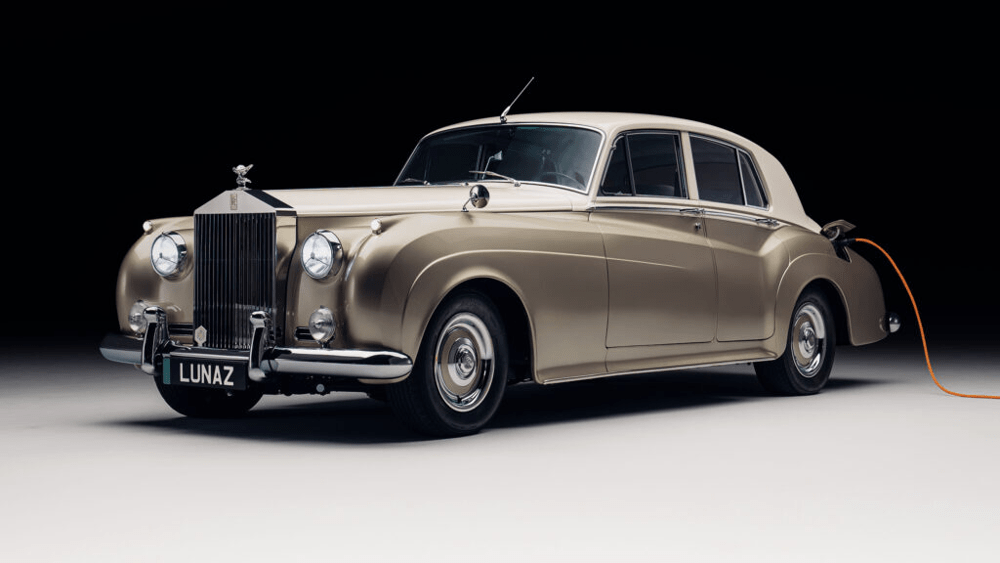
It’s not just one Rolls-Royce, either. Lunaz is planning a whole production run of electric Rolls-Royce Phantoms and Bentleys, at a price tag that would make any sheikh blush – prices start around £350,000 for a Silver Cloud conversion (and north of £500k for a Phantom). Yet demand is apparently strong among those with means. Even David Beckham has invested in Lunaz, and the notion of brand-new electrified 1950s cars has lured buyers from aristocratic circles and luxury hotels alike. If even a Rolls-Royce – that aristocrat of automobiles – isn’t safe from the EV evangelists, what hope do humbler classics have?
Speaking of humbler: at the other end of the classic spectrum, the beloved Mini Cooper has also gone electric. British outfit Electrogenic offers a “drop-in” EV kit for the original Mini, allowing enthusiasts to swap out the car’s chirpy little four-cylinder for a modest electric motor and a bundle of batteries. It’s marketed as so straightforward that you could convert your classic Mini in a day or two at home. The result? A quietly whirring Mini with about 80–100 miles of urban range, perfectly suited for silently scurrying about London. Charming to some, perhaps – but to others, it’s proof that no classic icon is too sacred to escape the plug-in revolution. After all, if even the cheeky, petrol-scented go-kart personality of a Mini is being sanitized into a mute electric runabout, one has to wonder what’s next? Will we convert vintage Porsche 911s en masse, banishing their air-cooled flat-six howl? (Actually, that’s happening too.) Is nothing sacrosanct?
In fact, even the prancing horse of Ferrari hasn’t been spared entirely: there have been experiments putting Tesla-like guts into classic Ferraris, much to the dismay of traditionalists. Seeing a Ferrari 308 GTB – a car once celebrated for its melodious V8 – glide by in near silence is a bit like seeing your favorite opera singer mouthing the lyrics with the sound turned off. Yes, the car still looks gorgeous, but something essential is missing. It underscores the crux of the issue: an electric Classic may still resemble its former self, but does it feel the same? For many of us, the answer is a resounding no.
Green Dreams vs. Cold Reality
Advocates of electrifying classics often pitch it as a win for reliability and the environment. No more fiddling with finicky carburetors on Sunday, no more oil leaks staining the garage floor – and of course, a smaller carbon footprint to assuage our 21st-century guilt. It sounds convincing, but dare I pour a bit of cold Castrol on these claims? For starters, the environmental benefit is dubious when it comes to classic cars. Most cherished vintage autos aren’t daily drivers racking up huge mileage; in fact, the average classic car in Britain drives a mere 1,200 miles per year. Even a gas-guzzling Aston or uncatalyzed old Jaguar running a few hundred miles each summer is not exactly turning the planet into a furnace. (As one writer wryly noted, your classic isn’t going to put you on “Greenpeace’s Christmas card list,” but it’s also melting far fewer ice caps than “the enormous ship that chugged those battery packs” over from overseas!) In other words, converting a rarely-driven classic to electric for Mother Earth’s sake is a bit like installing solar panels to power a vacation home you visit one week a year.
What about performance and usability? It’s true that electric motors deliver instant torque – your converted classic will leap like a startled hare at the traffic lights, embarrassing many a modern car in a drag race. And yes, you won’t have to worry about the temperamental cold-start ritual on a frosty morning. But if raw performance were the primary goal, would you really be driving a 50-year-old car to begin with? The joy of classics is not in beating Teslas off the line; it’s in the experience of the drive. Plus, the practical reality is that many EV classic car conversions actually reduce a car’s grand-touring abilities. After spending six figures on a conversion, you often end up with 100–150 miles of real-world range in exchange. That’s fine for a local jaunt, but attempt a proper vintage road rally or cross-country tour, and you may find yourself hunting for charging outlets more often than admiring the scenery. “Range anxiety” was never part of the classic car experience until now – petrol tanks, after all, can be topped up in minutes at any highway stop. Forgive me if I don’t find the prospect of plotting charging stops every 100 miles in a 1960s grand tourer particularly romantic.
Then there’s the question of value and long-term wisdom. A classic car is a rolling piece of history. Remove its original engine and you remove a chunk of that history (and likely a chunk of its monetary value to future collectors as well). Today’s trend is electric; tomorrow’s might be hydrogen or synthetic e-fuels. We simply don’t know – what if electric cars turn out to be the Betamax of motoring? An expensive EV conversion could look very foolish if hydrogen power or some new technology becomes the preferred choice in a decade. Meanwhile, the original engine you pulled out – where are you storing it? Under a tarp in the shed? What state will it be in if you (or the next owner) decide to revert the car to its authentic self one day? These are not trivial questions. Yet, in the zealous rush to “future-proof” classics, such practicalities are often glossed over. Hindsight, as they say, is 20/20 – but by the time hindsight arrives, you might have a lovely vintage shell with an obsolete electric drivetrain and a long-lost engine rusting somewhere.
Conclusion
It’s easy to see the appeal of electrifying a classic car on paper: better reliability, zero tailpipe emissions, and the novelty of marrying old-school cool with new-age tech. But as we’ve explored, in practice it can feel like a Faustian bargain – you gain a cleaner, quieter machine, but lose some of the magic that made it a classic to begin with. For many of us, that visceral connection forged by sound and mechanical feel is priceless; no amount of eco-goodwill or tech gimmickry can replace the grin that comes from heel-and-toeing through a corner in an old Porsche, or hearing the cams sing as you rev out an Italian thoroughbred. Perhaps one passionate observer said it best: “If you want an electric car, go buy one – don’t mutilate a petrol car if electric is what you want.”
So, dear readers, where do you stand on this contentious issue? Are EV swaps ruining classic cars, or do they represent a clever evolution that preserves beloved vehicles for future generations? I’ve nailed my (oil-stained) colors to the mast – now it’s your turn. Pour yourself a glass of something refined, settle into your leather armchair, and let us know your take in the comments below. In the grand debate of electric vs. classic, we invite your witty analogies, your passionate defenses or rebuttals, and above all, your honest opinions. After all, the beauty of classic car culture lies in the spirited discussions it fuels – much like a high-compression V12 roaring to redline, stirring the soul… even if, heaven forbid, one day that roar is only a memory.
CONTINUE READING
Posts You Might Like

Castagna Milano’s Alfa Romeo Giulia coupé-cabriolet: a new Antisalon for Italian coachbuilding
Eighty years after Battista Farina's famous protest at the Paris Motor Show, Gioacchino Acampora presents a radical two-seat Alfa Romeo Giulia as a manifesto for the survival of independent coachbuilding. In October…
Read story
Nardi Silver Ray: What Giovanni Michelotti Wrote in 1961
A September 1961 letter from Giovanni Michelotti, written on his corso Francia studio stationery, gives a contemporary account of the Nardi Silver Ray and sheds new light on its chassis, body construction…
Read story
Mazda Luce: Edgardo Michelotti Challenges the Official Bertone Story
After our article on the Mazda Luce, Edgardo Michelotti revealed an unpublished claim: the Bertone design may have originated from a Michelotti Triumph project.
Read story
Who Designed It? The Most Confusing Italian Car Design Attributions Explained
Who really designed the F40, EB110, Fiat Coupé or BMW Turbo? A look at the confusing world of Italian car design credits, from Pininfarina to Zagato.
Read story
THE CONVERSATION
Comments 0
Share a memory, a period photograph or a documented detail about this story.