
The BMW 3200 Michelotti Vignale: Turin’s Lost Interpretation of the 507
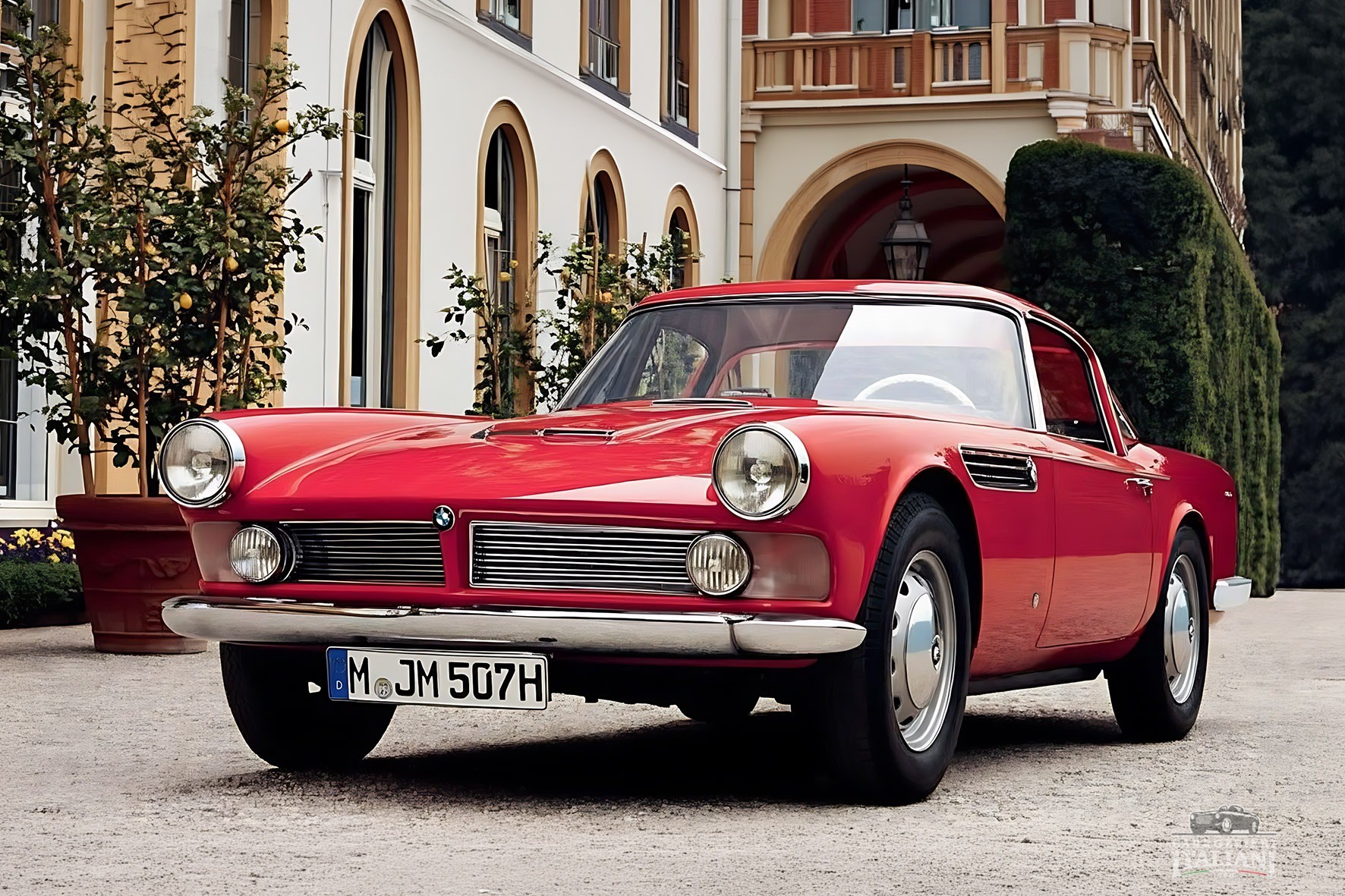
The BMW 3200 Michelotti Vignale is one of those brilliant oddities the coachbuilding era occasionally produced—when a designer, a carrozzeria, and a manufacturer’s chassis briefly collided to create something the factory itself never planned. Conceived in the late 1950s, it was essentially Giovanni Michelotti’s answer to a simple question: what if BMW’s elegant 507 had been filtered through the sharper, more experimental styling language emerging from Turin?
Michelotti penned the design, Sergio Scaglietti shaped the aluminum panels in Modena, and Alfredo Vignale’s workshop in Turin assembled the finished car. Underneath sat BMW’s 3.2-litre V8 platform, the same mechanical foundation that powered both the 507 and the prestigious BMW 3200 saloons. But visually, this was something entirely different. Where the 507 relied on smooth, sculptural curves, Michelotti introduced crisp lines, a rising shoulder, and restrained fins—subtle nods to the American styling wave that had begun influencing European designers.
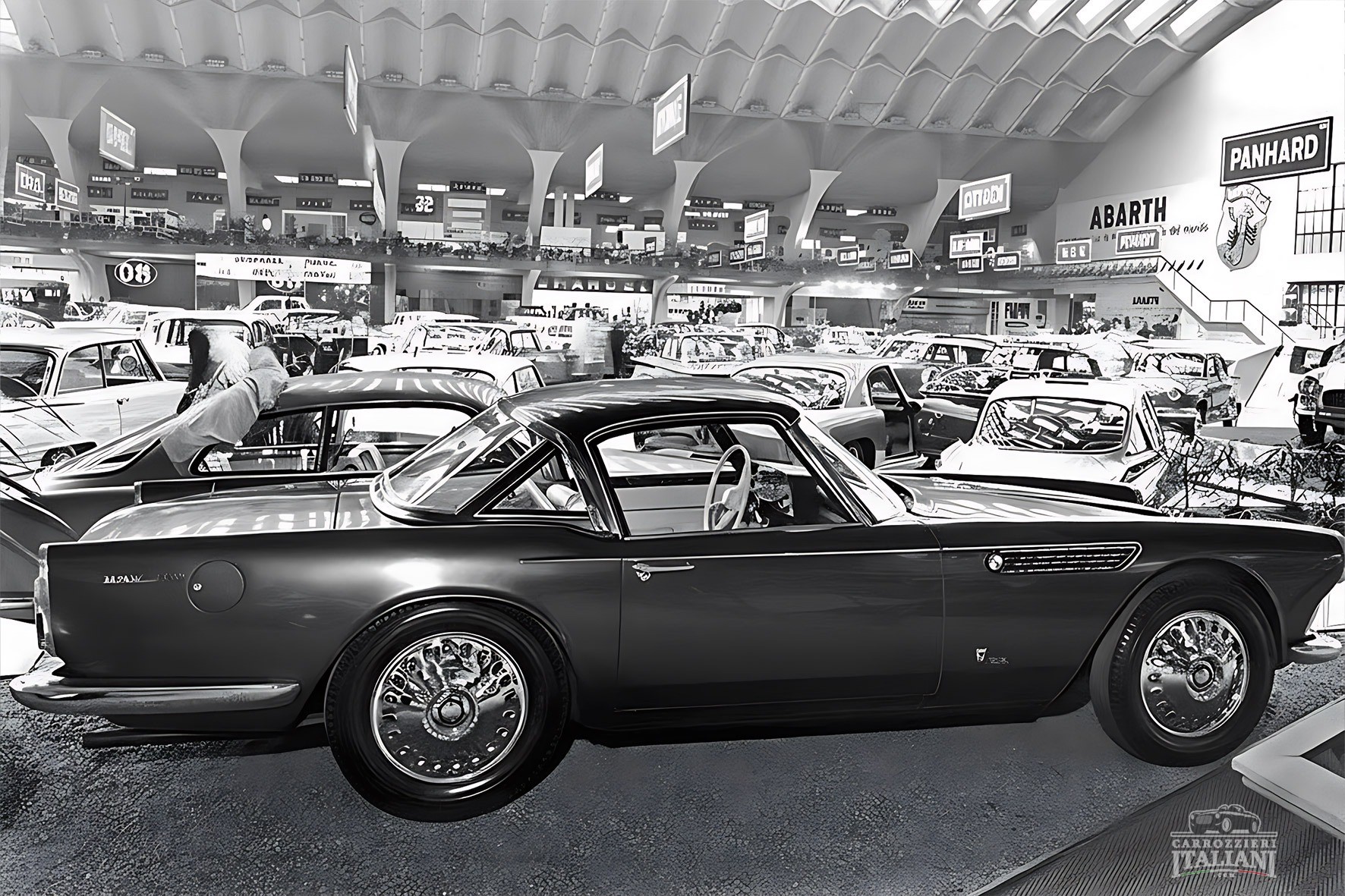
The project was never commissioned by BMW. Michelotti pursued it independently, hoping the Bavarian manufacturer might see potential in a more modern, Italian interpretation of its V8 flagship. The completed prototype debuted at the 1959 Turin Motor Show on the Vignale stand, surrounded by the sort of daring coachbuilt experiments that defined the exhibition in that era.
BMW never moved the concept toward production, leaving the Michelotti Vignale as a one-off design study. Yet the car’s story continued through a small circle of distinguished owners—including a British aristocrat and later an American collector—before eventually entering BMW’s own historic collection. Today it survives as a fascinating reminder of a time when Turin’s designers could take a manufacturer’s mechanicals and imagine an entirely different future for them.
Turin, BMW, and a Designer’s Ambition
In the decade after the Second World War, Italy became the unofficial styling studio of the automotive world. European manufacturers with solid engineering but conservative aesthetics often turned to Turin for something extra—something dramatic enough to turn heads in showrooms and motor shows alike. In the workshops of Pininfarina, Bertone, Ghia, Touring, Zagato and Vignale, designers reshaped existing chassis into entirely new personalities. A production car from Germany or Britain could arrive in Italy as engineering and leave as sculpture.
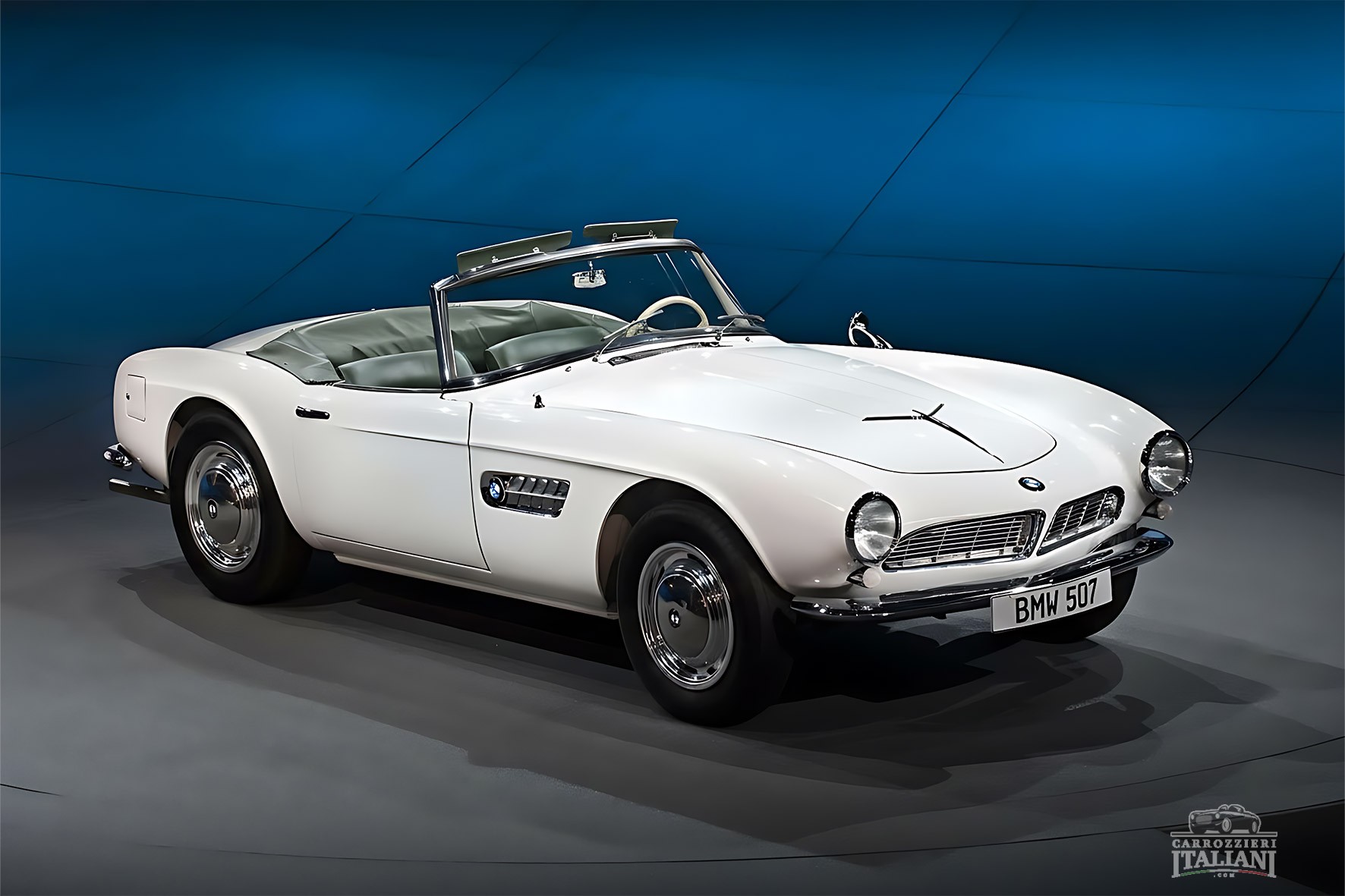
BMW, rebuilding its reputation in the 1950s, watched this landscape carefully. The company had returned to the luxury market with the elegant 501 and 502 sedans and had attempted to capture international attention with the BMW 507 roadster, designed by Count Albrecht Graf Goertz. The 507 delivered prestige and beauty, but the economics were less convincing. Production costs were high and sales limited, leaving BMW financially fragile as the decade drew to a close. At the same time, global styling trends were shifting. American cars—with their chrome flashes and restrained tailfins—were influencing designers everywhere, including those working in Europe’s coachbuilding capitals.
Turin thrived in that environment, and few designers moved through its studios with more energy than Giovanni Michelotti.
🔗 Read more: Giovanni Michelotti: The Freedom of a Thousand Designs
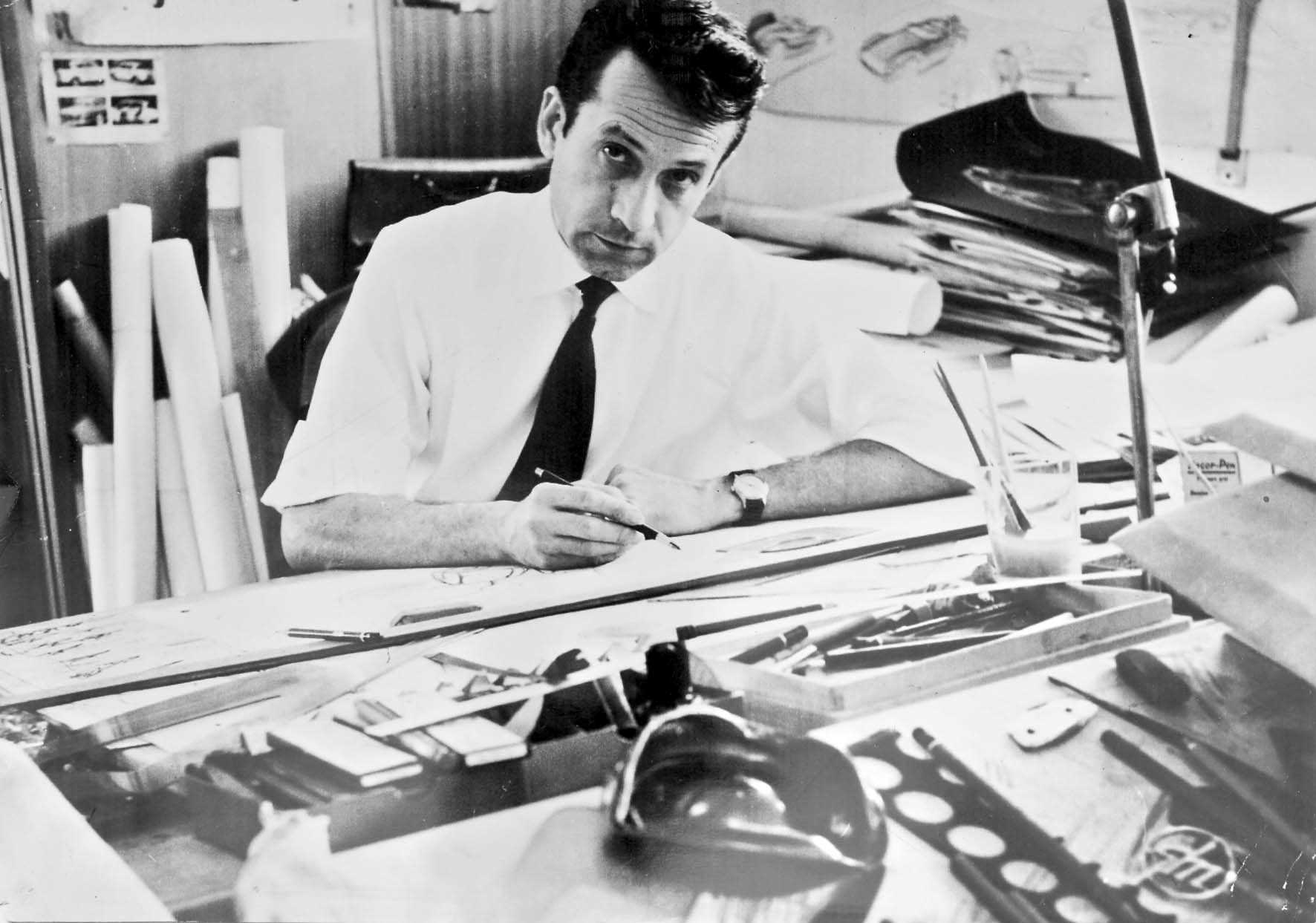
Born in 1921, Giovanni Michelotti had already become one of the most prolific stylists of his generation by the mid-1950s. His sketches flowed across the desks of Alfa Romeo, Ferrari, Maserati and Lancia, while British manufacturers such as Standard-Triumph increasingly relied on his ability to translate Italian elegance into production-ready shapes. Unlike many designers tied to a single house, Michelotti operated with remarkable independence. He collaborated with coachbuilders like Vignale, Allemano and Ghia, often moving from drawing board to metal in a matter of months.
His design language contrasted sharply with that of the BMW 507. Where Goertz favored flowing sculpture and sensual curves, Michelotti preferred clarity—clean lines, taut surfaces, and proportions that suggested motion even when the car stood still. By 1957 he had opened his own studio in Turin, giving him the freedom to pursue ideas beyond formal commissions.
One of those ideas revolved around BMW’s V8 sports car.
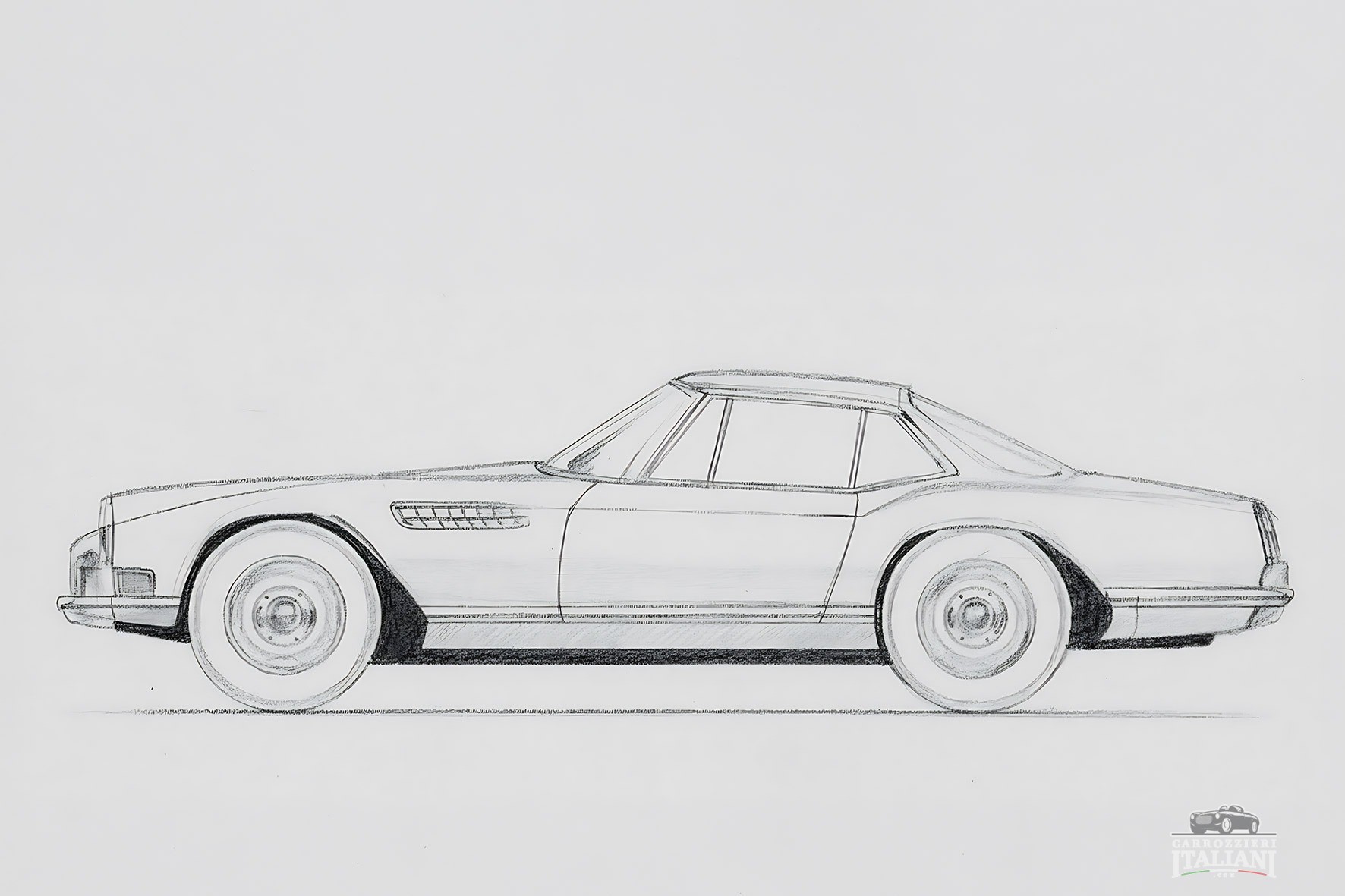
The 507 fascinated him. According to BMW’s historical archives, Michelotti produced an astonishing number of sketches exploring alternative interpretations of the car—hundreds upon hundreds of variations on how the Bavarian roadster might evolve. At the same time he had already begun working with BMW on the compact BMW 700 project, giving him a tentative connection to the company’s future. That connection encouraged a bold thought: instead of waiting for BMW to ask, why not build a prototype that showed what a new generation of the 507 could look like?
So in late 1958 Michelotti quietly obtained a BMW 507 chassis through the marque’s Italian importer, Paolini of Casa dell’Automobili in Rome. Chassis number 70184 became the canvas for a completely new body conceived in his Turin studio. The intention was clear. This would be more than a styling exercise—it would be a proposal, a fully realized vision of how BMW’s V8 sports car might evolve under Italian influence.
🔗 Read more: Carrozzeria Scaglietti: The Coachbuilder of the Prancing Horse
To bring the idea to life, Michelotti assembled an impressive circle of collaborators. Sergio Scaglietti in Modena—already famous for shaping Ferrari competition bodies—fabricated the metal panels of the design. The finished body was then assembled and completed at Carrozzeria Alfredo Vignale in Turin, a workshop well known for turning Michelotti’s drawings into tangible automobiles with remarkable craftsmanship.
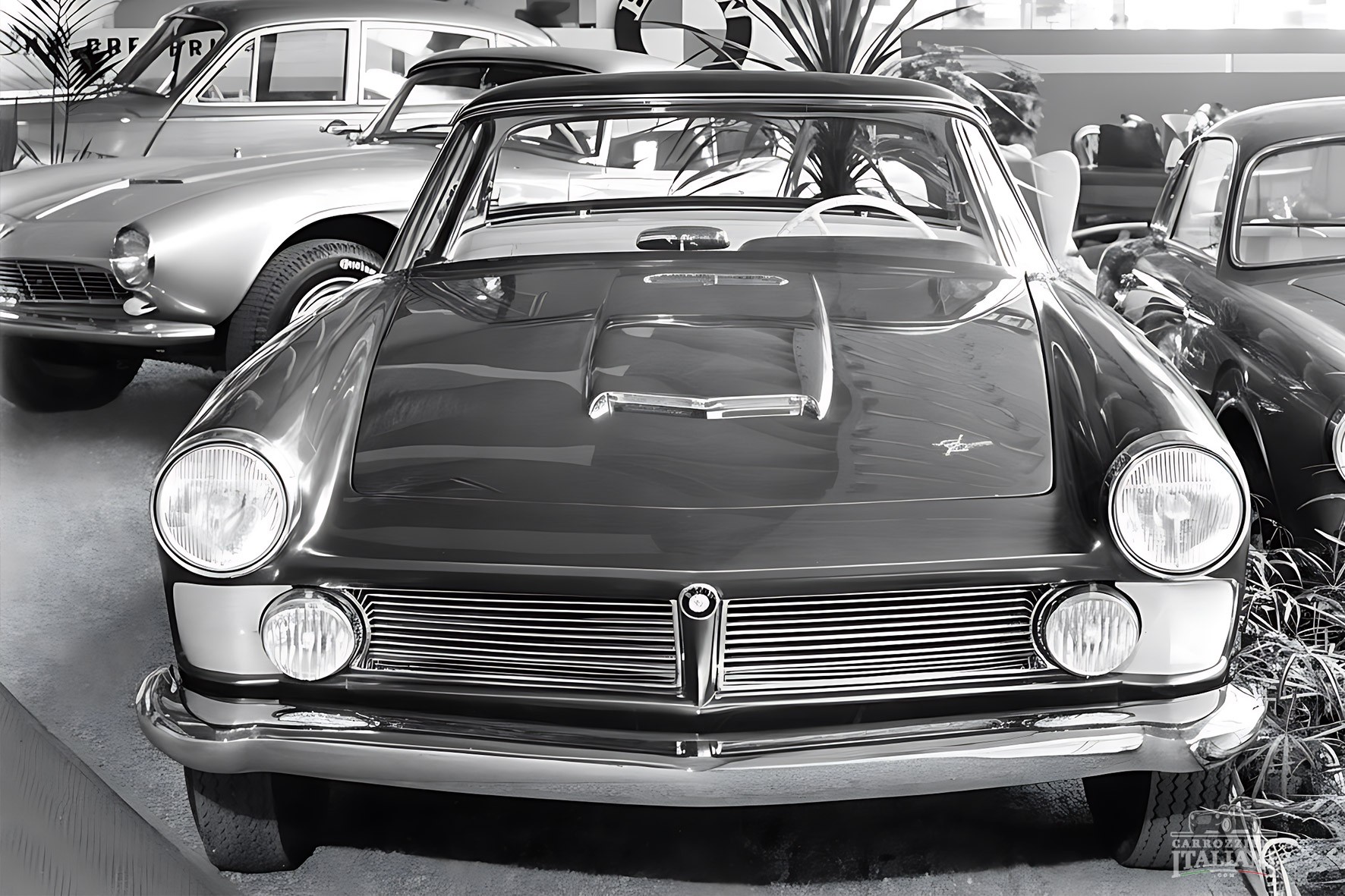
The shape that emerged was unmistakably related to the 507, yet entirely different in character. The long bonnet and compact cabin remained, preserving the classic sports-car proportions of the BMW chassis. But the surfaces were tighter, the lines sharper. The flanks carried a rising shoulder that flowed into subtle rear fins, hinting at the American styling influence sweeping through the late 1950s without overwhelming the car’s European restraint.
Compared with Goertz’s voluptuous original, Michelotti’s interpretation felt more structured, more architectural. The shoulders were more upright, the panels flatter, the transitions between surfaces crisper. Observers at the time noticed echoes of contemporary Italian grand tourers—cars from Alfa Romeo and Maserati—blended with a distinctly international flair.
There was also a practical idea behind the design. The 507’s beautifully sculpted aluminum body was expensive and labor-intensive to produce. Michelotti believed that a body composed of cleaner lines and simpler surfaces could reduce manufacturing complexity while preserving the car’s presence. Later commentators would describe his interpretation as more linear and less muscular than the original—precisely the effect Michelotti intended.
By the time the car was complete, it represented something uniquely of its moment: German mechanical engineering, Italian design ambition, and the creative freedom of Turin’s coachbuilding world converging in a single automobile. It was not built by BMW, yet it imagined what BMW might become.
The Making of the 3200 Michelotti Vignale
The finished prototype quickly became known as the BMW 3200 Michelotti Vignale, a name that reflected both its creators and the heart of the machine beneath the bodywork. The “3200” referred to BMW’s 3.2-litre aluminum V8—the same engine used in the BMW 503 and 507—while Michelotti and Vignale represented the Italian minds and hands that reshaped the Bavarian chassis. Under the long hood remained the familiar V8, producing around 150 horsepower and paired with BMW’s four-speed manual transmission. Mechanically the car stayed faithful to the Series II 507: independent front suspension, a well-balanced chassis, and Girling disc brakes at all four corners, a sophisticated setup for the late 1950s.
The real transformation was in the body.
Unlike the original 507, whose voluptuous shape was formed in aluminum, Michelotti’s interpretation used steel panels. The material choice, along with generous use of body filler during construction, made the car somewhat heavier than its Munich-built counterpart. Yet the new body allowed Michelotti to pursue the taut, angular surfaces he preferred. The proportions remained unmistakably those of a grand touring BMW—long bonnet, compact cabin, short tail—but the lines were cleaner, the shoulders sharper, and the rear finished with discreet fins that hinted at the influence of contemporary American design.
🔗 Read more: Giovanni Michelotti and BMW: The Italian Designer Who Saved a Bavarian Brand
Inside, Michelotti abandoned the traditional 507 layout and introduced a completely new interior. The dashboard was modernized, with a cleaner instrument arrangement and a more architectural design language that echoed the exterior. Details uncommon on the original car appeared as well, including electric windows and more luxurious trim. Contemporary observers noted that the cockpit felt slightly tighter than that of the 507 roadster, likely due to the revised windshield frame and the broader sills created by the new body. Even so, the interior projected a more modern atmosphere—less classic roadster, more continental GT.
The pace of development was remarkably quick. According to Vignale’s records, the BMW 507 chassis—number 70184—arrived in Turin on 11 September 1958 and immediately became the centerpiece of Michelotti’s project. The designer initially envisioned the car as a closed coupé, but the concept evolved during development. By late 1959 the decision had been made to present it as an open roadster with a detachable hardtop, a configuration that better emphasized the sporting character of the BMW V8 platform.
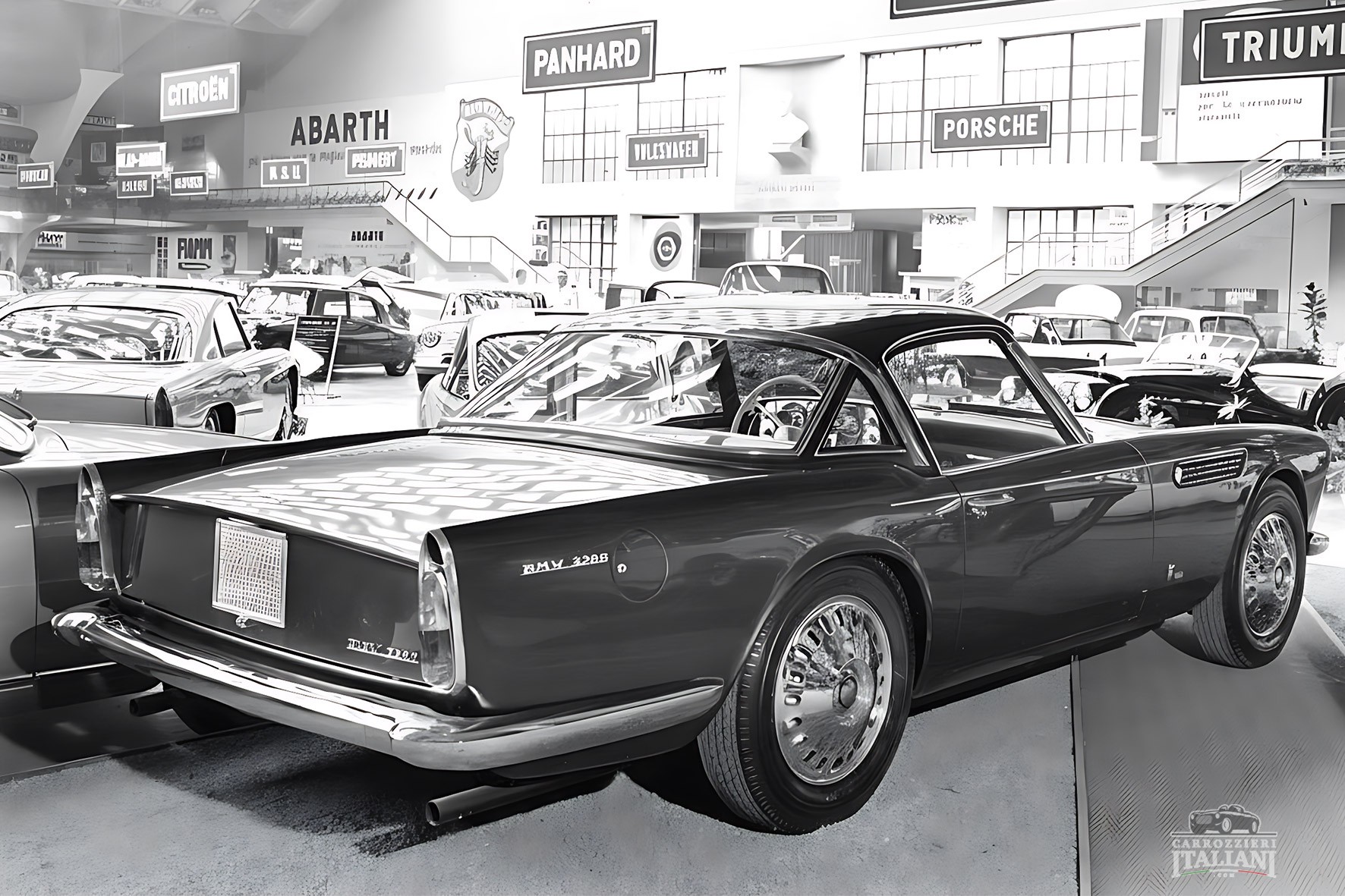
Work progressed rapidly through Vignale’s workshops. By the autumn of 1959 the car was complete, finished in a deep reddish-brown metallic paint complemented by an off-white leather interior. The prototype was then entered into Italy’s most important automotive exhibition: the 41st Salone dell’Automobile di Torino, held from 31 October to 11 November 1959.
Motor shows of that era were theatrical affairs, and Turin was the natural stage for Italy’s coachbuilders. The halls filled with experimental shapes and bold styling exercises, each carrozzeria attempting to outdo the others. When the Michelotti Vignale BMW appeared under the exhibition lights, it immediately drew attention. The crisp lines, unusual proportions, and rich finish gave the car a striking presence among the many prototypes on display.
Contemporary reports from the show described the car as one of the visual highlights of the Salon. Journalists noted its sharp-edged styling and distinctive character, qualities that made it stand apart from BMW’s own production cars. Visitors recognized the mechanical foundation of the 507, yet the Italian body transformed the familiar Bavarian sports car into something entirely different—more angular, more theatrical, unmistakably influenced by the styling language of Turin.
Despite the attention it received, the car remained exactly what Michelotti had intended: a proposal.
The designer hoped BMW might see the prototype as a starting point for a new generation of V8 sports cars. Part of his argument rested on practicality. Michelotti believed his body design could be produced more economically than the labor-intensive aluminum body of the 507, estimating a substantial reduction in production costs.
But BMW’s leadership was facing difficult decisions by the end of the 1950s. The company’s finances were under strain, and resources were limited. Rather than embark on a new coachbuilt sports car program, BMW chose to continue producing the existing 507 body and to focus its attention on more urgent projects. Among them were the compact BMW 700—ironically styled by Michelotti himself—and the developments that would eventually lead to the “Neue Klasse” sedans of the 1960s.
🔗 Read more: The Story of Carrozzeria Vignale
With that decision, the Turin-built prototype remained a one-off. No additional Michelotti-Vignale BMWs were constructed, and chassis 70184 never evolved into a production model.
Yet the car’s existence still tells a remarkable story. It represents a moment when a designer in Turin believed he could reshape the future of a Bavarian sports car with a single prototype. The BMW 3200 Michelotti Vignale captures that spirit perfectly—an elegant experiment, a glimpse of an alternate design path, and one of the most intriguing “what-ifs” in BMW’s long history.
From Turin Show Car to BMW Heritage
After its dramatic debut in Turin, the Michelotti prototype slipped quietly into the background, its moment under the motor show lights giving way to decades of relative obscurity. Unlike many coachbuilt show cars of the era, it was not dismantled or lost. Instead, it survived—moving slowly through a small circle of enthusiasts who recognized its unusual place in BMW history.
The car reappeared publicly in 1980 when it was acquired in England by John Pelham, the 9th Earl of Chichester. An enthusiast with an eye for unusual automobiles, Chichester kept the car in private hands for several years. By the mid-1980s, however, it was ready to change custodians again. In April 1986 the BMW Michelotti was offered at a Sotheby’s auction in London. By this point the car had been refinished in bright red with a black leather interior, a departure from its original darker metallic presentation.
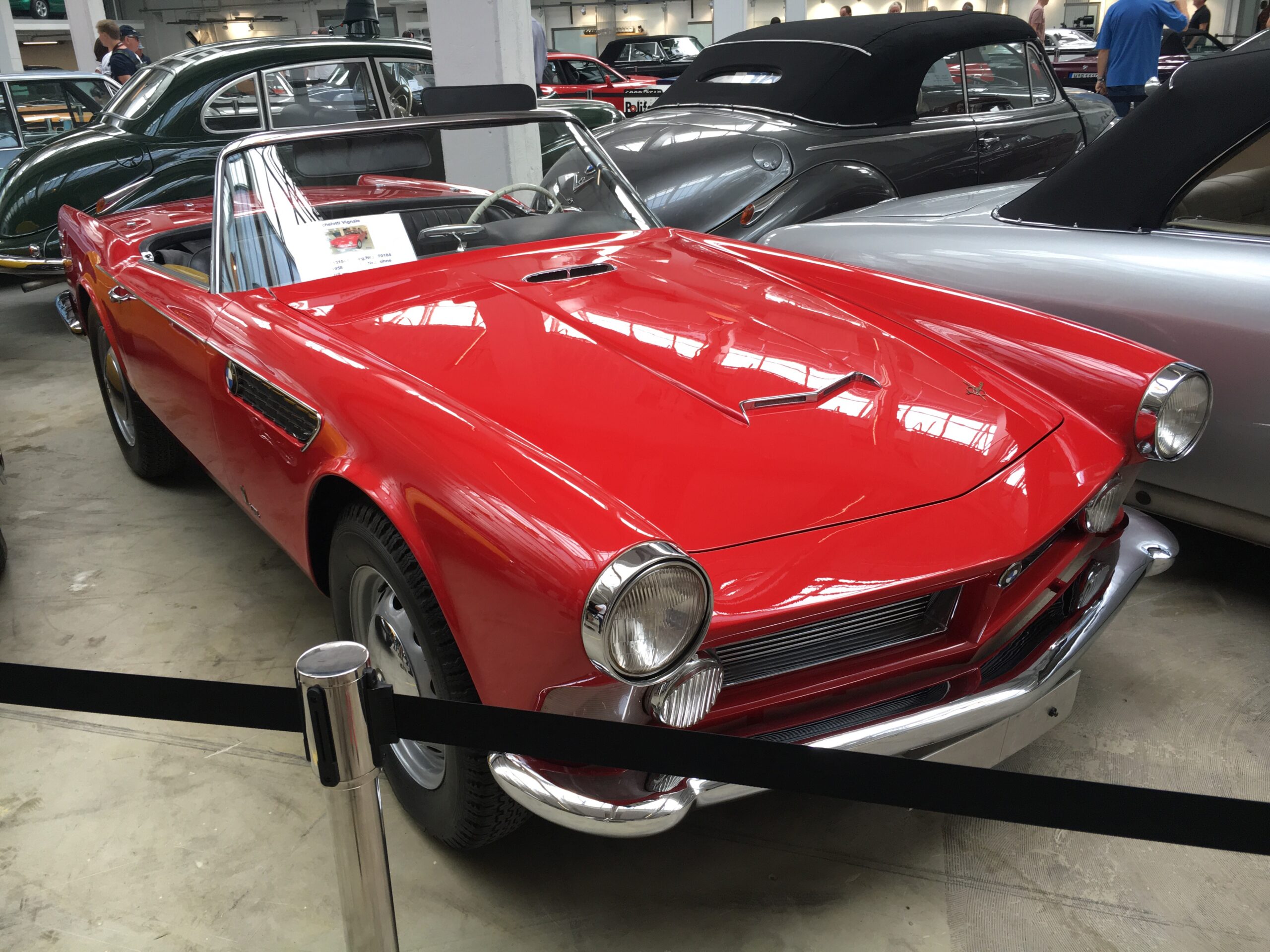
When the hammer fell, the car sold for £51,000 to American collector Oscar Davis, an industrialist known for assembling significant automobiles for display at the Blackhawk Collection in California. Davis had the car carefully restored and incorporated it into the Blackhawk museum, where it became part of a broader narrative celebrating rare and historically significant automobiles. Throughout the late 1980s and 1990s the Michelotti BMW remained there, quietly admired by visitors who often had little idea they were looking at one of the most unusual interpretations of the BMW 507 ever created.
The next chapter brought the car back to its spiritual home. In 2005, BMW Group Classic—the company’s heritage and historical preservation division—acquired the prototype for the BMW museum collection. Some records place the formal transfer in early 2006, but the intent was clear: the car would return to BMW as part of the company’s official historical archive.
Today the lone BMW 3200 Michelotti Vignale survives within BMW’s heritage fleet, preserved not merely as a curiosity but as an artifact of an era when designers and coachbuilders could reinterpret a manufacturer’s identity with remarkable freedom. In exhibitions dedicated to the legacy of the 507 and BMW’s design evolution, the car serves as a reminder of an alternate path—one imagined in Turin, built by Italian craftsmen, and carried forward through decades until it finally returned to Munich.

ABOUT THE AUTHOR
Andreas Scheidl
Italian classic car enthusiast with German roots. Renowned as a respected figure in the classic car community, he serves as a jury member at various international concours d'elegance, including the Classic Gala Schwetzingen and Mantova. As a content creator, Andreas passionately shares his profound knowledge and appreciation for vintage automobiles. His heart beats for cars designed by Giovanni Michelotti, showcasing his discerning taste and dedication to preserving the timeless elegance of automotive history.
More stories by Andreas Scheidl ↗CONTINUE READING
Posts You Might Like
A Central Driving Position, a Rear-Mounted V8. Was This Really a Lancia?
In 1948, visitors to the Turin Motor Show could see an unusual Lancia on the stand of Carrozzeria Ghia. It was a large two-door coupé with a two-litre V8 mounted behind the…
Read story
Fioravanti F100: The Ferrari He Was Allowed to Imagine
Enzo Ferrari’s centenary, Leonardo Fioravanti’s independent studio and a supercar that explored air brakes, steel wheels and a new way of driving—without ever wearing the Cavallino.
Read story
Michelotti Shellette: When the Fiat 850 Became a Yacht
The yacht designer, the Turin stylist and the tiny coachbuilt car that crossed between the quay, the royal holiday house and the auction room. Some automobiles were conceived for the open road,…
Read story
Maserati A6 1500: A New Road for the Trident
When the doors of the Geneva Motor Show opened in March 1947, Maserati was a name that required little introduction to anyone who followed motor racing. What it did not yet possess…
Read story
THE CONVERSATION
Comments 0
Share a memory, a period photograph or a documented detail about this story.