
The Alfa Romeo 6C 2500 Villa d’Este: The Car That Named Itself
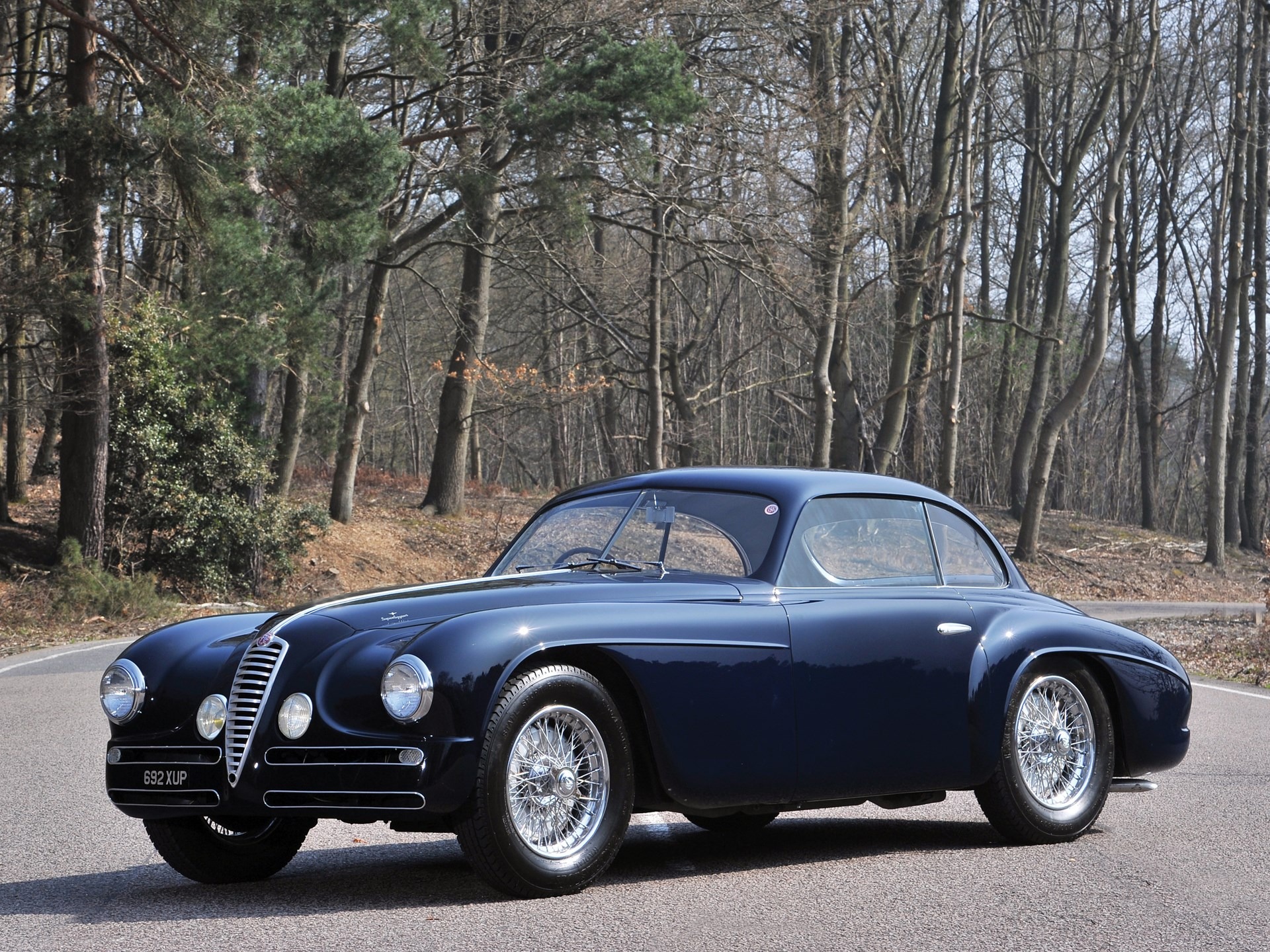
In the late 1940s, as Italy emerged from the devastation of World War II, Alfa Romeo set out to revive its prewar glory with a car that would symbolize Italian elegance and ingenuity in the new era. The result was the Alfa Romeo 6C 2500 Villa d’Este, a glamorous grand tourer that became an icon of postwar automotive design. Clothed by Carrozzeria Touring of Milan in exquisite Superleggera coachwork, the Villa d’Este was a limited-production jewel – the last hand-built Alfa Romeo model, and a bridge between the prewar coachbuilt tradition and the modern age. Focusing exclusively on the Touring-bodied examples, this article delves into the Villa d’Este’s historical context, the craftsmanship of Touring’s Carlo Felice Bianchi Anderloni, the famed concours that gave the car its name, its design and rarity, tales of those who cherished it, and its lasting legacy and collectability.
A Postwar Renaissance at Alfa Romeo
By 1945, Alfa Romeo’s factories lay in ruins from bombing, and production had virtually halted. Yet by 1946–47, the company cautiously restarted car manufacturing using the proven prewar 6C 2500 chassis and engine design. These inline-6 powered cars, originally designed by the legendary Vittorio Jano in 1939, featured advanced elements for their time – notably dual overhead camshafts and fully independent suspension – and were among the first road-going Alfas capable of 100+ mph speeds.
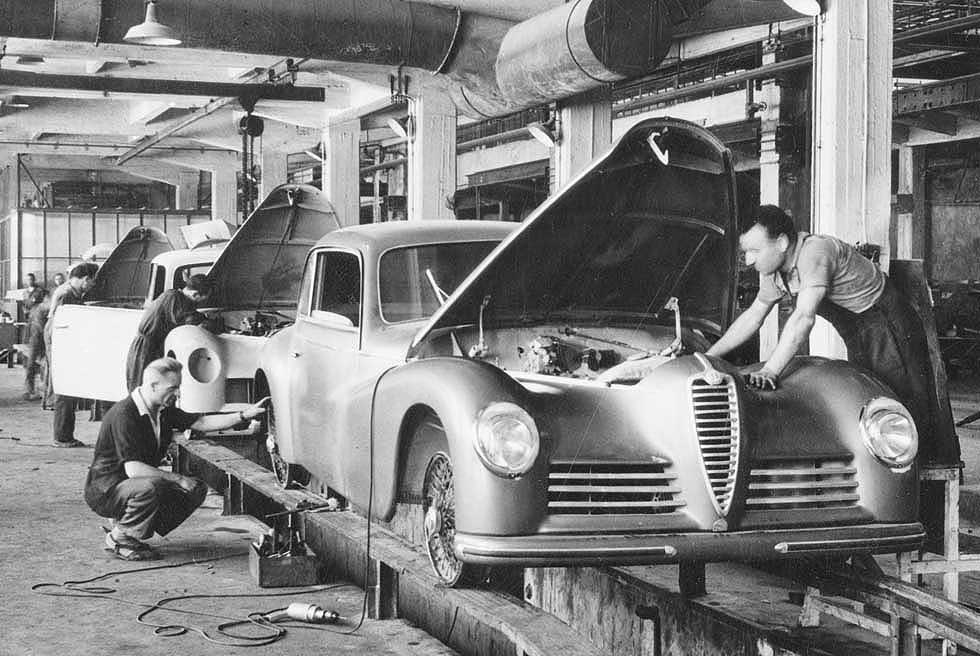
Initially, Alfa offered the 6C 2500 in a factory-built Freccia d’Oro steel coupe for practicality, but as before the war, wealthy customers could still order bare chassis to be finished by Italy’s top coachbuilders. It was in this atmosphere of revival and resilience that Alfa Romeo sought to create something truly special – a halo model to showcase Italian excellence. The 6C 2500 platform, though rooted in 1930s engineering, would be the canvas for that postwar masterpiece.
Carrozzeria Touring and the Anderloni Touch
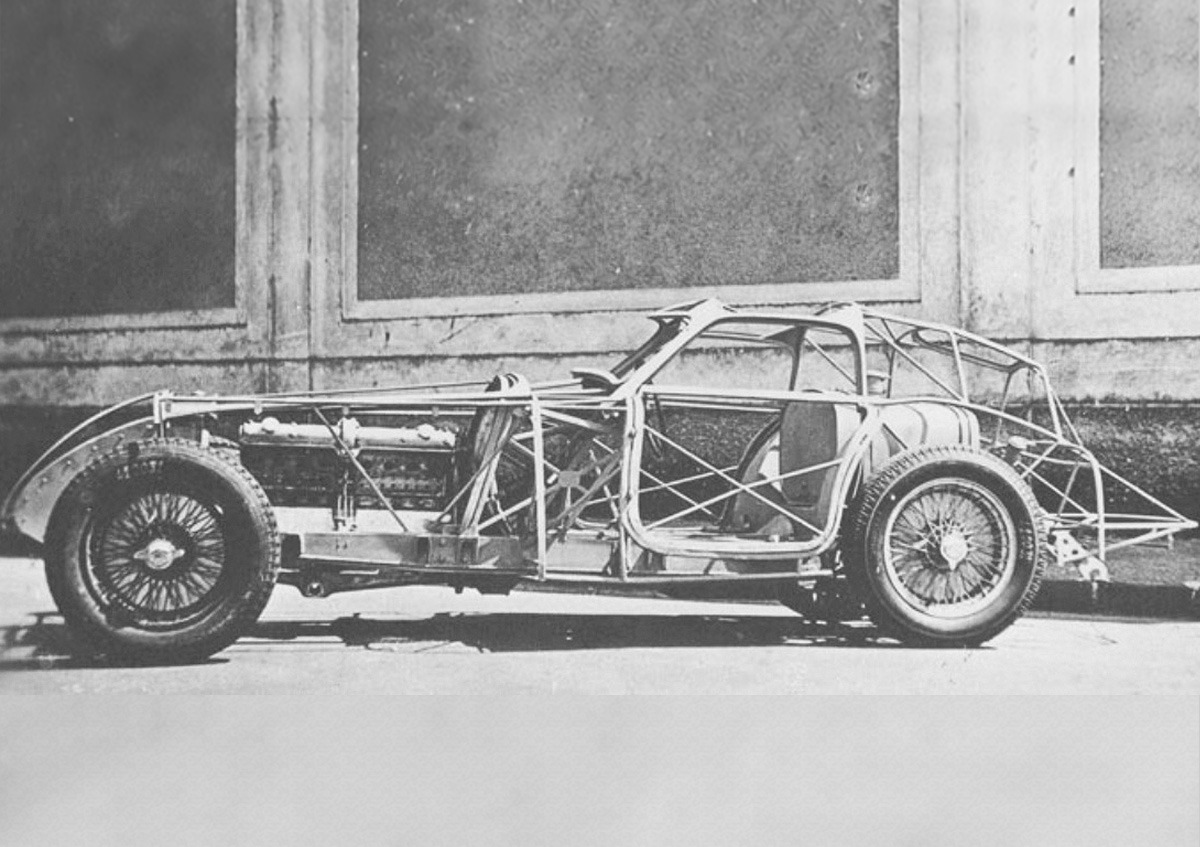
Enter Carrozzeria Touring of Milan – one of Alfa’s closest coachbuilding partners and the originator of the famed Superleggera (super-light) construction method. Touring had made its name before the war crafting lightweight, aerodynamic bodies (its 1930s Alfa 8C 2900 sports cars are legendary), guided by the motto “Weight is the enemy, air resistance the obstacle”. The Touring technique, patented in 1936, used a cage of small-diameter steel tubes to define the body’s shape, covered by hand-formed aluminum alloy panels – resulting in a structure both rigid and extremely light. This Superleggera system, inspired by aircraft construction, allowed Touring’s designers to create flowing, elaborate shapes without excessive weight.
Crucially, Touring’s founder Felice Bianchi Anderloni had passed away in 1949, and his son Carlo Felice “Cici” Bianchi Anderloni took the helm of the design office. Carlo Felice’s first major project as lead designer was the new 6C 2500 coupe for Alfa Romeo. He inherited his father’s passion for elegant styling and light construction, and he poured that energy into the creation of what would become the Villa d’Este. The resulting design was both a homage to prewar coachbuilt grandeur and a vision of contemporary taste. Touring’s Superleggera coachwork on the 6C 2500 chassis debuted in 1949 with an immediate impact. As Carlo Felice later quipped, “Weight is the enemy…” – and indeed the new coupe was not only beautiful but engineered for performance thanks to Touring’s lightweight philosophy.
The Villa d’Este Concours and a Name is Born
In April 1949, the glamorous Concorso d’Eleganza Villa d’Este on the shores of Lake Como provided the perfect stage for Alfa and Touring to unveil their creation. This prestigious concours d’elegance – first held in 1929 at the opulent Villa d’Este hotel – had long been where Europe’s coachbuilders exhibited their latest art on wheels in competitive beauty contests. Winning at Villa d’Este was more than just a trophy; it was an invaluable advertisement, often translating directly into orders from wealthy patrons. Amidst the postwar optimism of 1949, Touring presented its new 6C 2500 Super Sport Berlinetta at the concours. Painted a deep lustrous hue and boasting flowing lines, the coupe captivated the crowd. It went on to win the Gran Premio Referendum – the coveted “People’s Choice” award voted by the public. (Interestingly, it narrowly missed the top juried prize, which that year went to a flashy Ghia-bodied competitor, but in terms of popular acclaim the Alfa was the star of the show.) Alfa Romeo gleefully capitalized on this triumph: the production version of the car was christened “Villa d’Este” in honor of its victory at the Lake Como concours. In doing so, Alfa forever linked the car to an image of Italian elegance at its finest hour.
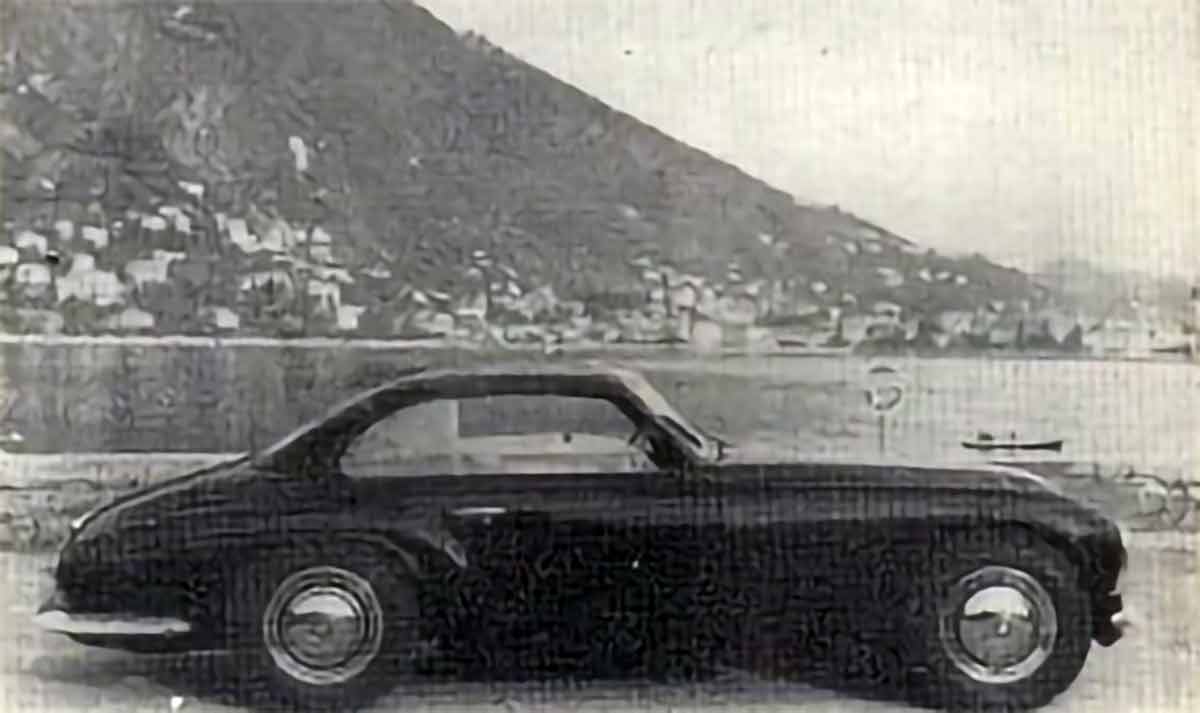
The cultural impact of that moment was significant. Italy, only a few years into peace, had produced a machine that married engineering and artistry so perfectly that it could stand as a national symbol of recovery. Newspapers and magazines wrote of the Villa d’Este coupe as a rolling sculpture, proof that Italy’s coachbuilt car tradition had survived the war’s darkness and emerged shining. Even today, the Concorso d’Eleganza Villa d’Este remembers this heritage – the event awards a “Carlo Felice Bianchi Anderloni Memorial Trophy” each year to the most elegant coachbuilt car, a nod to the very designer of the Villa d’Este coupe and the legacy he left.
Design: Marrying Prewar Glamour with Postwar Modernity
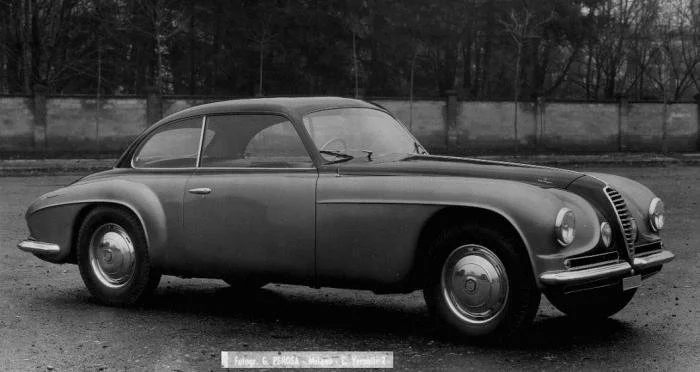
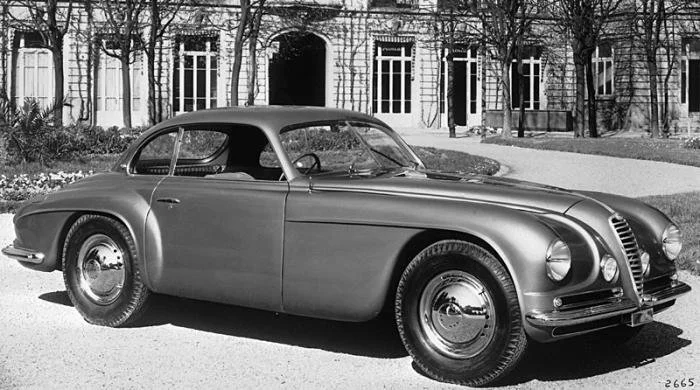
The Alfa 6C 2500 Villa d’Este is often hailed as “one of the most beautiful cars ever made” – and with good reason. Its design masterfully blends the voluptuous grace of 1930s streamlining with a new postwar purity of line. The overall form is that of a compact, aerodynamic coupe with a long hood and a tight, close-coupled cabin set towards the rear, emphasizing the car’s performance credentials. From every angle, the Villa d’Este exudes balance and refinement: observers have noted that it has “no bad angles”, appearing perfectly proportioned from front, side, or rear.
Up front, the car features Alfa Romeo’s signature heart-shaped vertical grille flanked by elegant chrome slats, giving it a confident face. Many Villa d’Este examples were fitted with twin Marchal headlamps set into the front wings, with an additional pair of smaller driving lamps inboard for high-speed illumination. Notably, Touring added a distinctive styling flourish: a subtle cutaway sculpting around the headlights, as if the fender line scoops down gracefully to cradle the lamps. This detail draws the eye to the lights and creates a sense of depth at the front end. The front bumper, if fitted at all, was minimalist – some cars were delivered bumperless with only small “bumperette” nubs or faux bumper slots as decoration. This kept the nose clean and sporty, accentuating the delicate chrome grille and the sweep of the fenders.
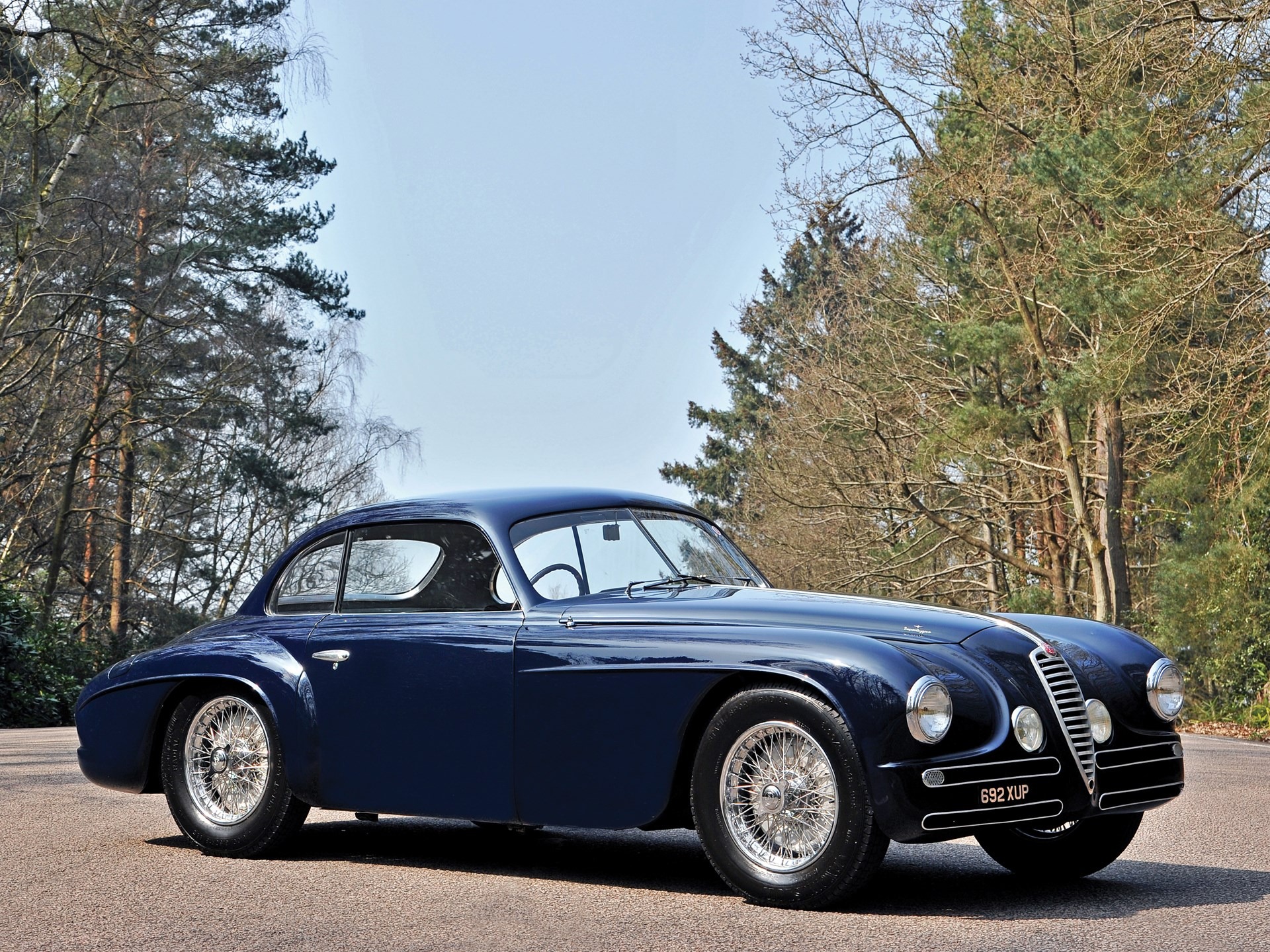
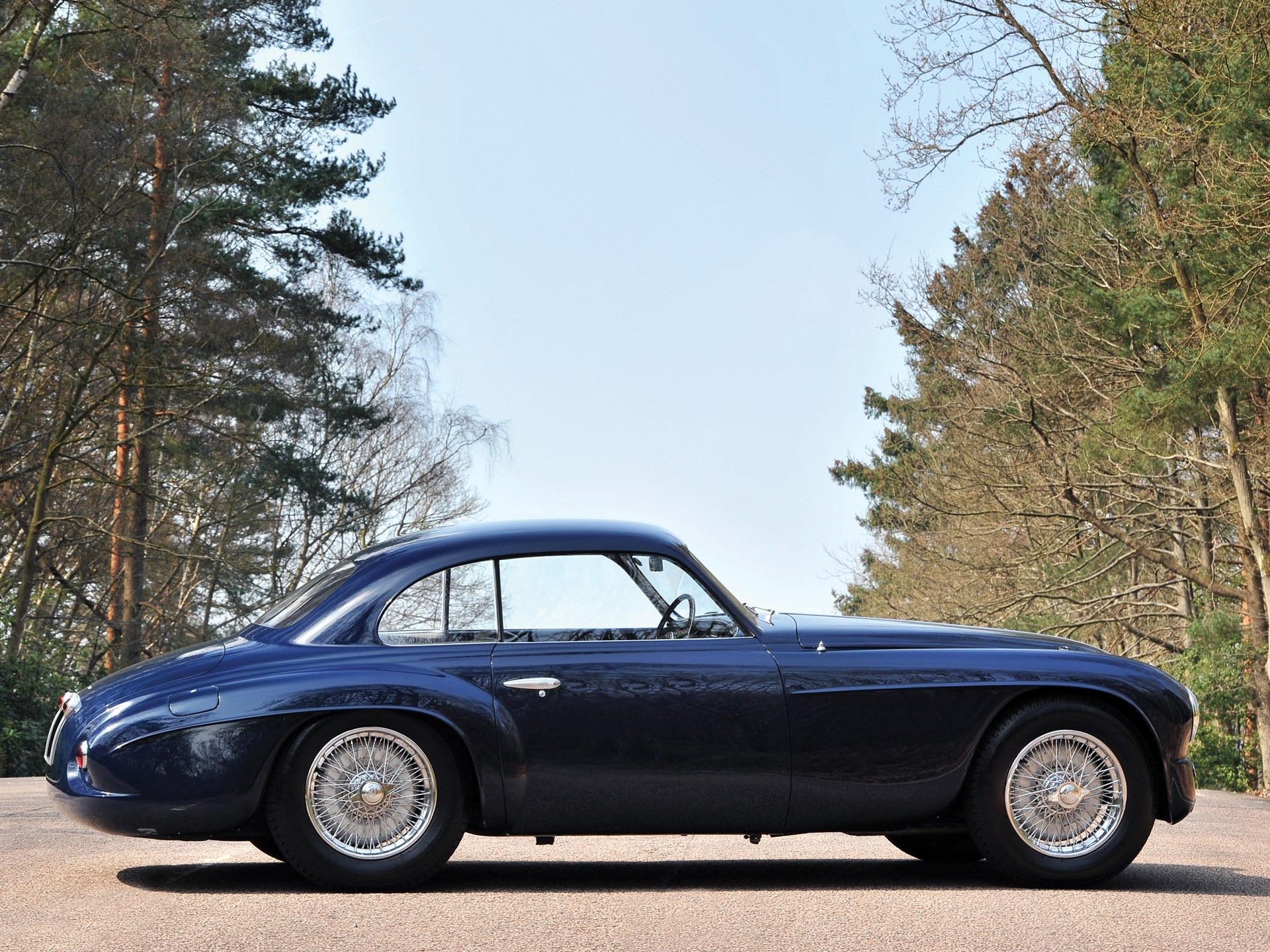
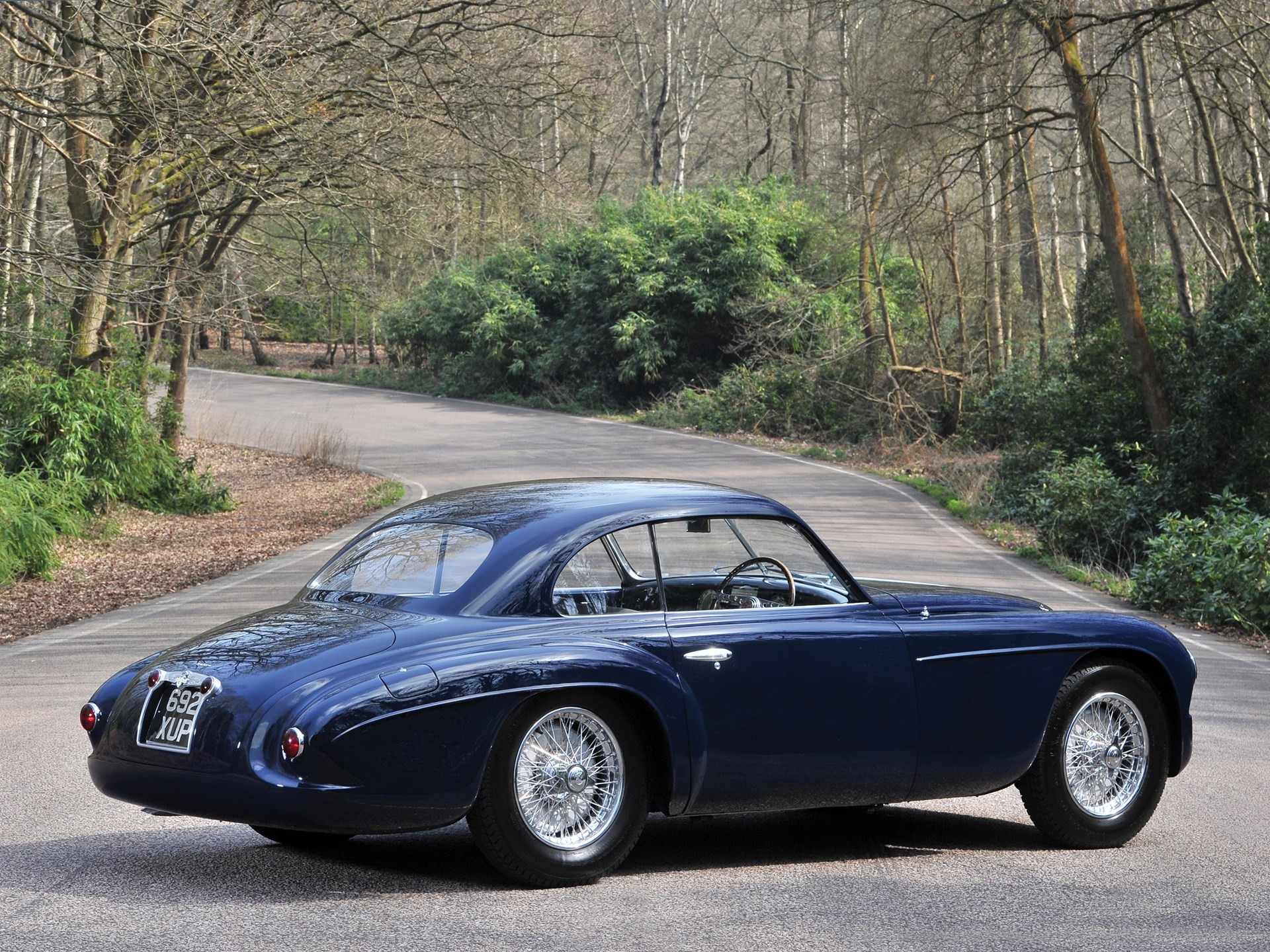
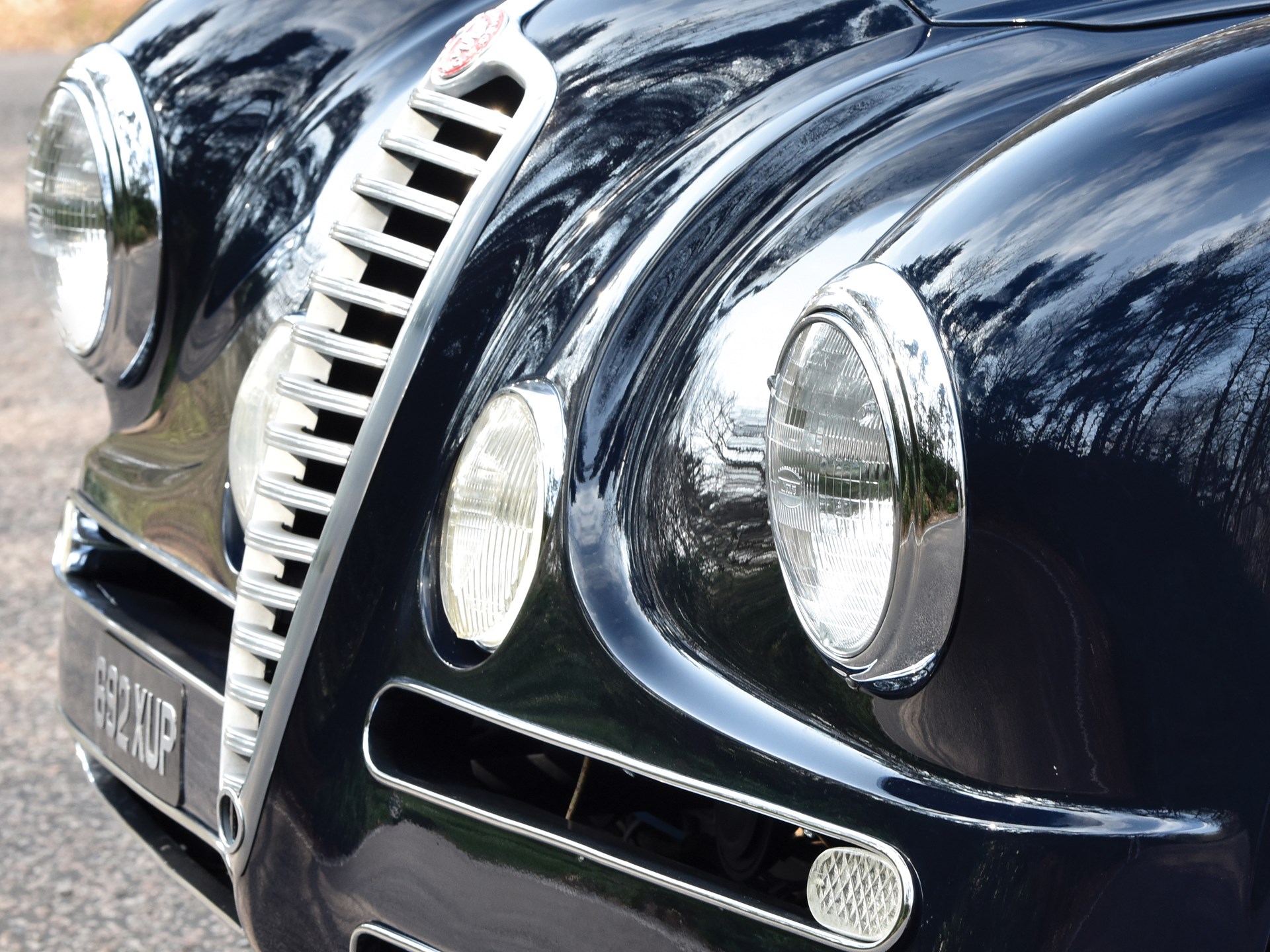
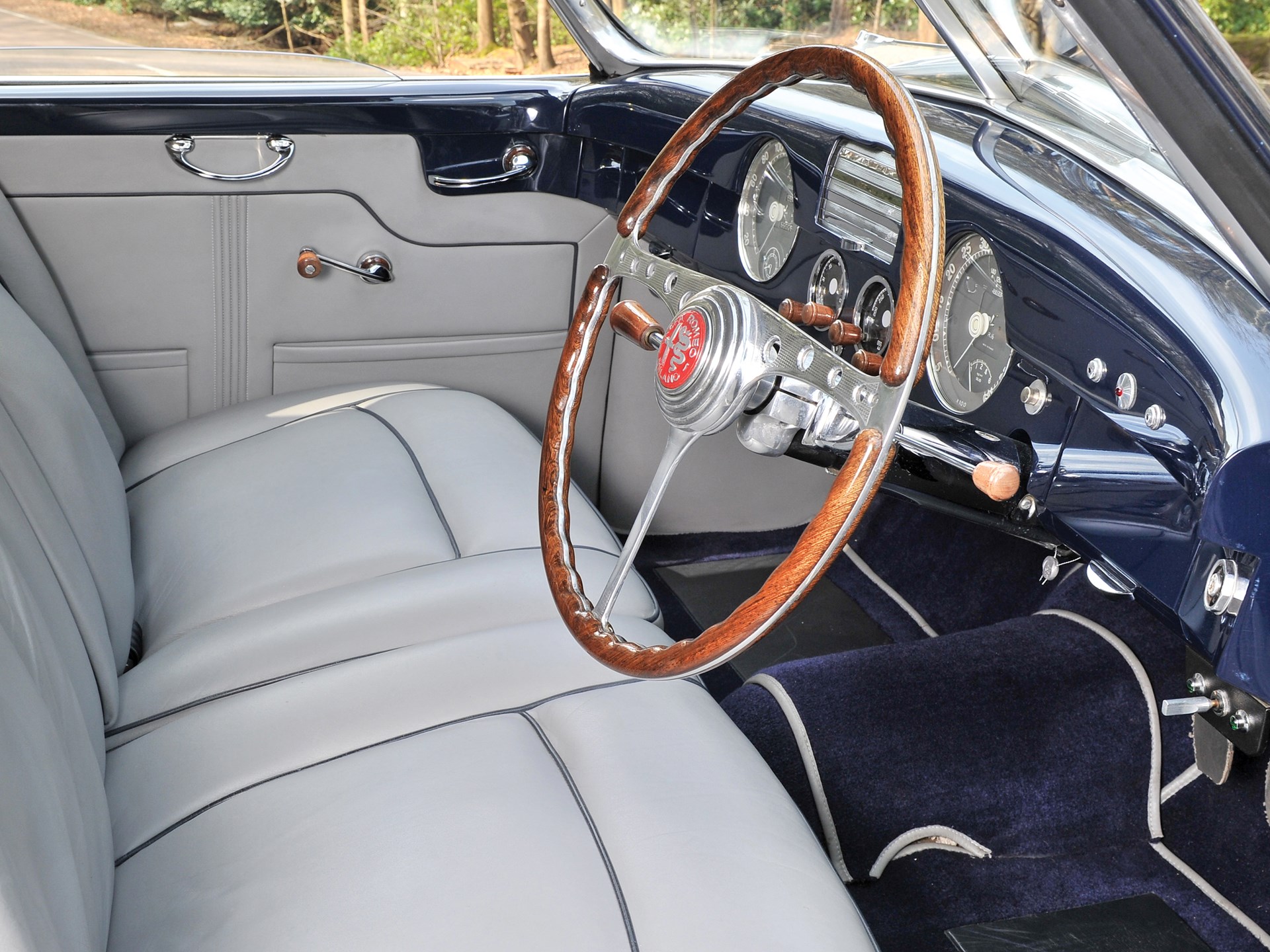
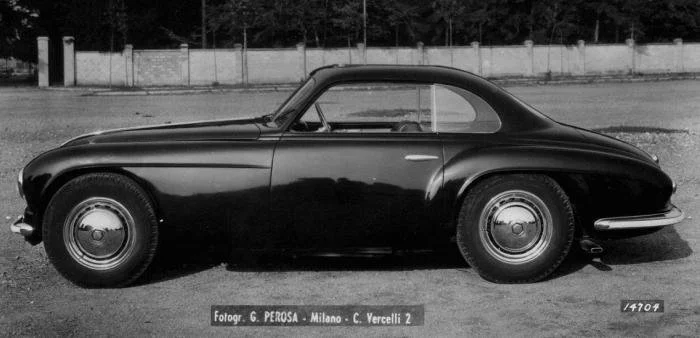
In profile, the Villa d’Este shows off flowing fenderlines and artful curves. The front fenders glide back into the doors with a gentle character crease, and the rear fenders swell over the wheels in a muscular yet elegant sweep. Touring’s design incorporated “rounded but tightly wound lines”, with pronounced fender arches that flow into a tapered tail. A subtle crease accents the beltline, hinting at a teardrop profile when viewed from above. The roofline is a low dome that tapers toward the rear, ending in a neatly integrated fastback tail – almost an automotive equivalent of a yacht’s stern. Because the Villa d’Este was built on Alfa’s short 108-inch (2,700 mm) wheelbase Super Sport chassis, the cabin is compact and the roof “glassy” with ample window area, which visually lightens the car. There is just a hint of a rear quarter window, and most were two-seater coupes (any rear seat was minimal, with some cars featuring a fitted luggage shelf instead – indeed, some restored examples today come with tailored fitted luggage in the back). This tight greenhouse gave the car a sporty, intimate feel, while large windows and thin pillars (relative to the era) provided an airy elegance. One observer described the Villa d’Este’s shape as “smooth, harmonious, and downright sporty” – a testament to Touring’s ability to fuse beauty with a hint of aggression.
🔗 Read more: The Superleggera System by Carrozzeria Touring
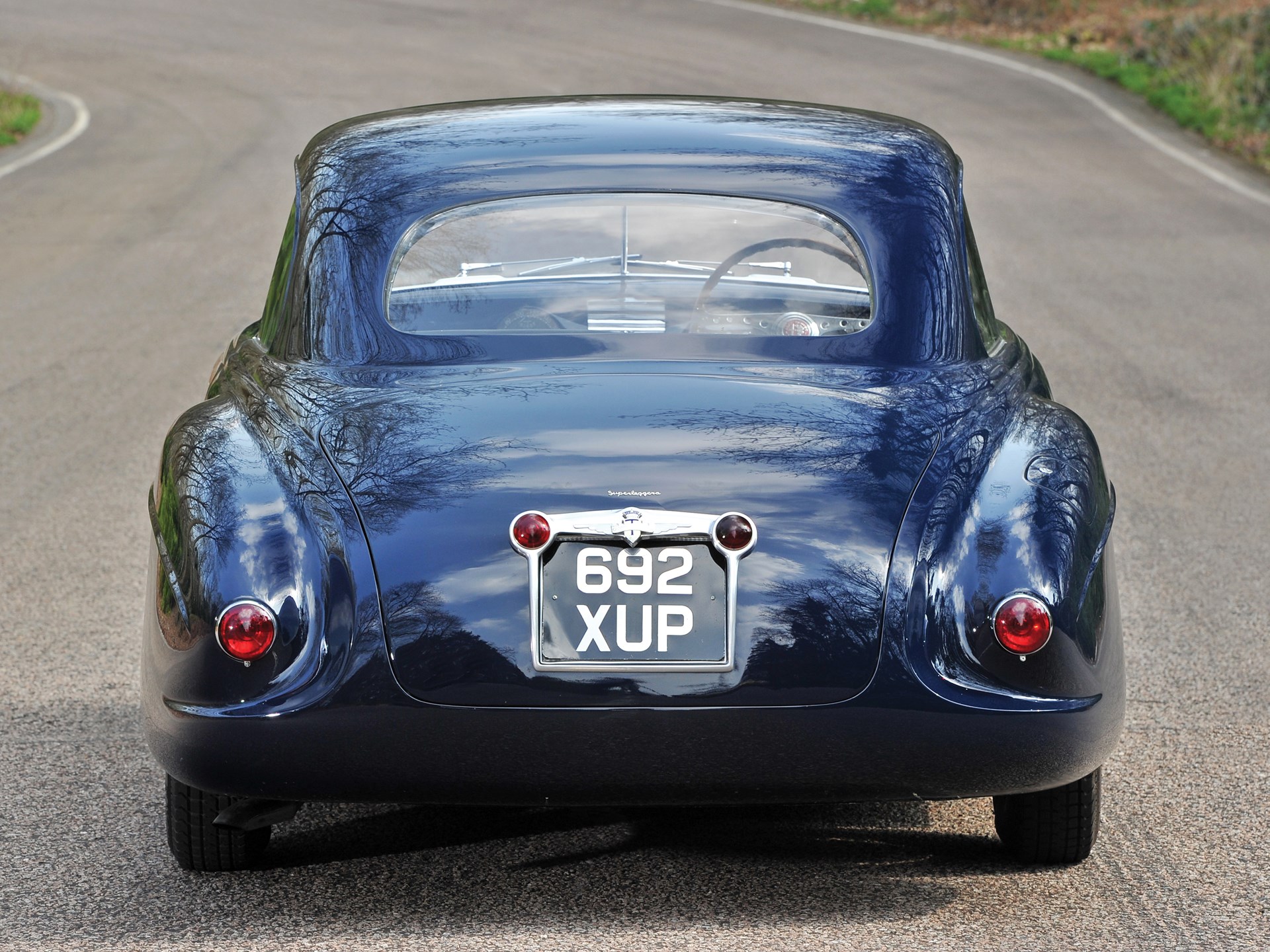
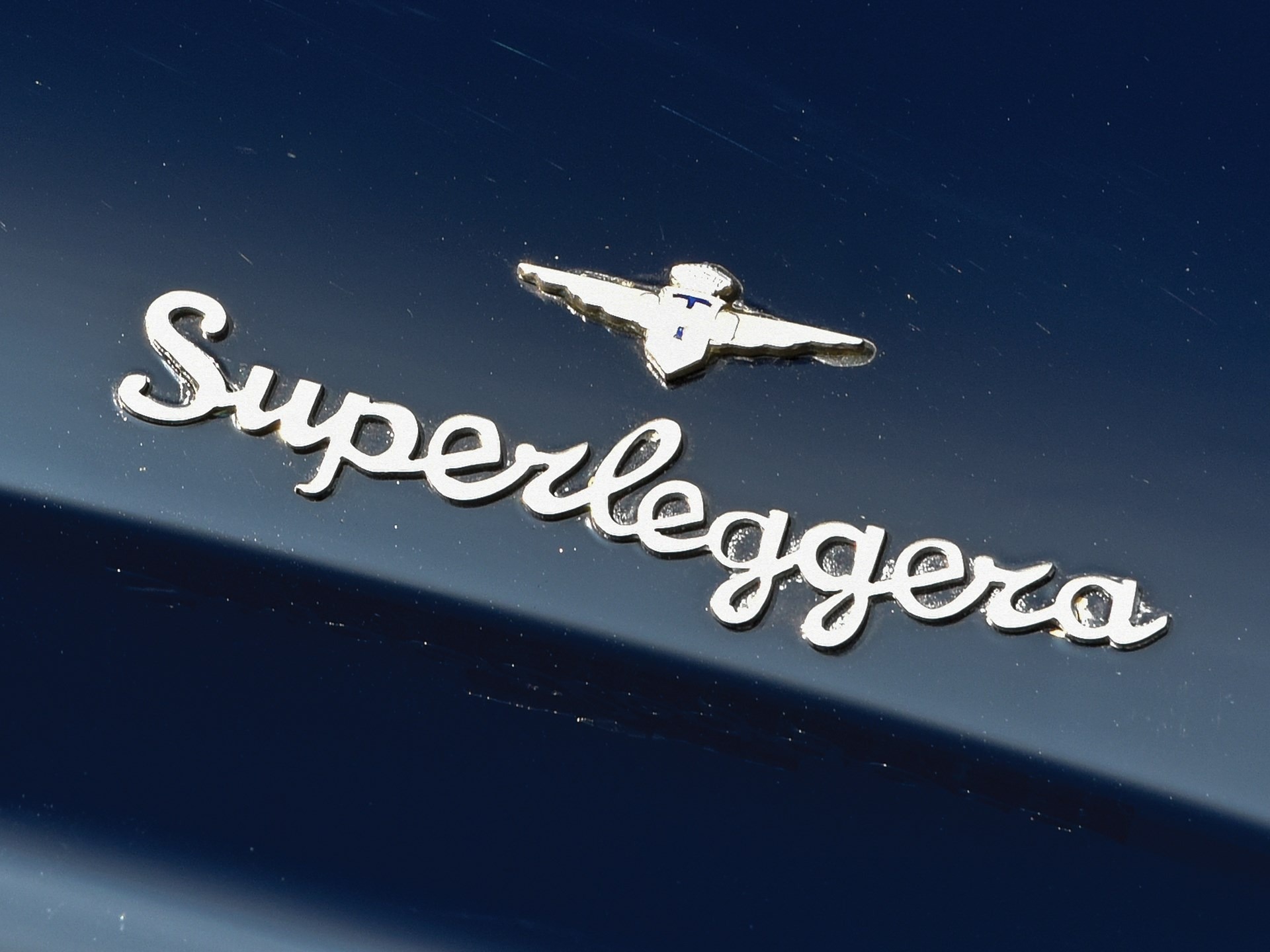
At the tail, the design is delightfully restrained. The rear tapers to a modest point, with tiny horizontal taillights and a slight rolled edge forming something of a boat-tail hint. A petite chrome bumper (or no bumper at all, on some cars) and a pair of exhaust tips complete the understated rear view. The entire body was hand-formed in aluminum, meaning each curve was literally sculpted by artisans. Touches of brightwork – a chrome strip here, the cursive “Superleggera” script on the hood – were applied sparingly, letting the car’s proportions and surfaces do the talking. The interior, not to be overlooked, was finished in rich leather with beautifully crafted gauges and switches, offering both luxury and a sporting, driver-focused atmosphere. In short, the Villa d’Este’s design achieved a timeless elegance. As one historian noted, it “incorporates the best of prewar streamlining with postwar unity of form,” combining flowing curves with a cohesive, modern aesthetic.
Hand-Built Rarity – Production Facts and Surviving Examples
Alfa Romeo originally planned a very limited run for the Villa d’Este coupe. Some sources suggest the idea was to build only 25 copies for a select clientele, but strong interest from wealthy buyers prompted a few extra to be made. In total, between 1949 and 1952, Alfa and Touring built just 36 cars with the Villa d’Este design. Of those, 31 were berlinetta coupes like the show car, mostly on the short 2.7 m Super Sport chassis, and 5 were cabriolets, open-top versions crafted on slightly longer wheelbases for those desiring top-down motoring. These numbers make the Villa d’Este one of the most exclusive postwar Alfas. Every single one was built to order, by hand – skilled craftsmen at Touring took Alfa’s supplied chassis and running gear and painstakingly fashioned the bodywork, a process that could take months for each car. No assembly line here: this was essentially bespoke coachbuilding. It’s often said that no two Villa d’Estes are exactly alike, and that is true. Minor differences in trim, lighting, and details were common, depending on the original buyer’s wishes or running changes. For example, one coupe might have the full-width bumpers and another none; some had a sunroof installed, an ultra-rare feature at the time. Even the rooflines could vary subtly – one noted right-hand-drive example had a slightly lower, more tapered roof and thicker C-pillars than others, suggesting Touring was unafraid to tweak the design for a custom request. This individual character of each chassis only adds to the mystique.
The Villa d’Este also marked the end of an era for Alfa Romeo. When the final car was completed in 1952, it effectively closed the book on Alfa’s hand-built production in the traditional sense. From then on, models like the new Alfa 1900 were built on modern assembly lines with monocoque bodies, heralding a shift to series production. Thus, the Villa d’Este coupes are often called the “swan song” of the great coachbuilt Alfa Romeos. They represent the last flourish of a time when automotive design was as much art as engineering, created in panel-beating shops by craftsmen rather than stamped out by the thousands in factories.
Given their rarity and desirability, one might expect that all 36 have survived into the present – and indeed many have, though not every single one. These cars were extremely expensive when new (approximately $10,000 in the U.S. market around 1950 – a price on par with a Rolls-Royce), meaning they were generally treasured by first owners and kept in good care. Most Villa d’Estes remained in Europe, though a few found their way to America early on, and at least one to Japan decades later. Over the years, a handful did fall on hard times – enthusiasts recount how one sat forgotten in Sicily until “barn-found” in 2006, and another languished in New York in the 1970s before being rescued. Today, the majority of the 36 are accounted for, and they enjoy a near-legendary status among collectors. By 2012, an estimated 15 or so examples were extant and roadworthy enough to gather for a special reunion at the Villa d’Este hotel, where they lined up on the lakeside grounds for a celebratory display. (It’s possible that number referred to the coupes only, excluding cabriolets, or simply those known to organizers at the time.) Since then, a few more have been restored and surfaced at events, so the number of survivors may be a bit higher now. In any case, every surviving Villa d’Este is well documented and cherished; as one expert noted, “most have well-known histories” – fitting for cars that were celebrities from birth.
Among Kings and Stars – Owners and Concours Stories
From the beginning, the 6C 2500 Villa d’Este was a status symbol, bought by the elite of society. These were not cars one stumbled upon at the local dealer; they were ordered by princes, tycoons, and connoisseurs who could afford the best. Period records and accounts suggest that owners of 6C 2500s (including the Villa d’Este variant and its closely related stablemates) read like a who’s who of the era’s rich and famous. King Farouk of Egypt had an Alfa 6C 2500 in his stable, as did Prince Aly Khan, the playboy son of the Aga Khan. In fact, Aly Khan’s penchant for fast cars was matched by his love of Hollywood glamour – he famously married actress Rita Hayworth, and it’s said that a 6C 2500 was among the extravagant gifts during their courtship. Hollywood heartthrob Tyrone Power also owned an Alfa 6C 2500, likely using it on the sunny roads of California when he wasn’t on set. And across the Atlantic, a young Prince Rainier of Monaco (before he met Grace Kelly) counted a 6C 2500 among the royal garage’s prized possessions. Such illustrious owners underscored the car’s image: this was Italy’s postwar carriage for the aristocracy, a modern equivalent of the bespoke grandes routières of the 1930s.
Beyond private owners, Villa d’Este Alfas have had brilliant second acts in the hands of dedicated collectors who ensured they continue to be seen at top events. In recent decades, these cars have made star appearances at concours and historic rallies worldwide. For instance, chassis number 915.882 – one of the 1949 coupes – lived quite a life: after winning its namesake award in Italy, it spent time in New York, passed through several enthusiasts (including noted Alfa collector Homer Tsakis), went to Japan for a full restoration, then returned to Europe. In 2012, that very car participated in the Mille Miglia Storica (the modern revival of Italy’s 1000-mile race) under the ownership of former racing driver Toine Hezemans, proving that even in their 60s these cars could still perform admirably on the road. The same year, it joined six other Villa d’Este coupes at the famed Villa d’Este reunion, where it earned a special beauty award from the judges – a sort of Best of the Best among its peers. Another coupe was owned by Marco Makaus, a historian who has meticulously kept a roster of all Villa d’Este examples; Makaus’s car was shown after a concours-quality restoration in Italy. There are stories of these Alfas winning Best of Show at Pebble Beach or other elite concours, often after multi-year restorations where artisans recreate every detail to perfection. One current custodian, fashion designer Gerolamo Etro, kept his Villa d’Este in such immaculate condition (complete with fitted luggage and an unblemished “Grigio Metallizzato” paint finish) that it hadn’t been shown publicly since restoration – essentially a hidden jewel waiting to wow the next concours it enters.
These anecdotes highlight that the Villa d’Este cars have lived charmed lives. From royal castles to Californian ranches, from barn discoveries in Sicily to triumphant returns on the show lawn, each surviving example carries a trove of stories. And through it all, the model’s reputation has only grown. Carlo Felice Bianchi Anderloni himself remained involved with the legacy – in later years he often appeared as an honored judge at the Villa d’Este concours, witnessing the enduring admiration for his creation.
Legacy in Design and Alfa Romeo History
The Alfa Romeo 6C 2500 Villa d’Este occupies a special place in both Alfa’s heritage and Italy’s design history. In Alfa Romeo’s pantheon, it represents the grand finale of the 6C lineage that began in the 1920s – the final evolution of the six-cylinder coachbuilt touring cars that won races and graced concours before the war. When Alfa shifted to unit-body mass-produced models in the 1950s (starting with the 1900 and later the Giulietta series), it marked a necessary move to modernity. Yet, something was lost – never again would Alfa offer a model built in such a bespoke fashion, where a customer could choose a coachbuilder and wait for a rolling work of art. Thus, the Villa d’Este coupe became a symbol of Alfa’s artisanal era, often called “the last of the hand-built Alfas”. It’s no surprise that historians and collectors look at it with reverence, much as one would admire the final performance of a great opera singer before retirement.
In the broader context of Italian automotive design, the Villa d’Este solidified Carrozzeria Touring’s postwar reputation and influenced other designs to come. The very lines of the Villa d’Este coupe echoed through other cars of the early 1950s: for example, Touring built a run of Aston Martin coupes (the DB2/4) with similar flowing fender contours, and even the British Bristol 402 drophead showed a familial resemblance in its curves. Touring’s mastery of proportion and surface seen on the Villa d’Este would reach a wider audience when they later designed the Aston Martin DB4/DB5 – bringing Italian style to a global stage, directly owing to the credibility Touring earned with cars like the Villa d’Este. The car’s aesthetic – marrying elegance with subtle sportiness – can be seen as a forerunner to the great Italian gran turismos of the 1950s and 60s. And its construction techniques, the Superleggera approach, would be adopted under license by other manufacturers (Aston Martin among them), spreading Touring’s lightweight gospel far and wide.
Carlo Felice Bianchi Anderloni’s work on the 6C 2500 Villa d’Este also cemented his own legacy. He took what could have been a swan-song footnote and created a lasting masterpiece. To this day, at the Villa d’Este concours, the award for the most elegant coachbuilt car carries Anderloni’s name, ensuring that new generations of enthusiasts ask, “Who was Anderloni, and what did he create?” The answer, invariably, leads them to the Alfa Romeo Villa d’Este.
Collectability and Value Today
It is often said in the collector car world that certain automobiles tick every box – beauty, rarity, historical significance, driving enjoyment – and the Alfa 6C 2500 Villa d’Este is undoubtedly one of those cars. For a long time, these postwar 6Cs lived somewhat in the shadow of Alfa’s prewar legends (like the 8C 2900) and the later popular Giuliettas, making them a connoisseur’s choice. But over the past couple of decades, their stature has grown immensely. Top-tier concours events love to invite Villa d’Este coupes because they wow crowds, and vintage rally organizers welcome them because of their capable Jano-engineered chassis and the eligibility that comes with a 1940s build date. This broad appeal – “a passport into any and all events” as one journalist put it – means demand among collectors is consistently high.
As a result, the Villa d’Este models command strong prices on the rare occasions they come up for sale. Public auctions have seen these cars fetch anywhere from around half a million to nearly a million USD depending on condition, provenance, and body style. For instance, a well-pedigreed 1952 Villa d’Este cabriolet sold for about $825,000 in 2008, and a coupe in beautifully restored condition changed hands for roughly $529,000 (€460,000) in 2018. More recently, auction listings have quoted guide prices in the range of €575,000–€675,000 (approximately $700–800K) for top examples. There is some variation: the open-top cabriolets, being even scarcer (only five made), can draw exceptional interest, though some purists prefer the purity of the original coupe design – meaning both versions are equally coveted for different reasons. Notably, a Villa d’Este coupe formerly owned by historian Marco Makaus sold in early 2024 for around $500,000, indicating the market’s continued strength. In terms of collectability, experts rate the Villa d’Este as an “Investment Grade A” vehicle – essentially the pinnacle of desirability in its category. It’s worth observing that compared to some contemporaries (like the French Talbot-Lago Grand Sport or certain coachbuilt Bentleys), the Alfa offers a somewhat more accessible price for similar levels of beauty and exclusivity, a fact not lost on savvy collectors.
https://youtu.be/2WwouQ0DtpM?si=fHqutyIMiJl4FHuI
For those fortunate enough to own one, the Villa d’Este is usually a long-term hold – a cherished centerpiece of a collection. As one market commentator mused, when one becomes available, the question for a would-be buyer is simply “if you want one, when will the next one be available?”, implying that hesitation could mean missing out for years. The supply is that limited. Maintenance of these cars is a task for specialists, given the intricacy of the Superleggera body and the vintage Alfa mechanicals, but the robust engineering means they can be made quite usable. Many owners do exercise them in rallies and tours, finding that the 110 bhp triple-carburetor six has enough performance to keep up with modern traffic (top speed was around 160 km/h or 100 mph in period), and the handling – while from a prewar design – is pleasantly balanced due to the four-wheel independent suspension.
A Name, a Place, a Legend
The Alfa Romeo 6C 2500 Villa d’Este is far more than just a rare old car; it’s a rolling narrative of Italy’s renaissance in the late 1940s, a testament to the artistry of Carrozzeria Touring and the vision of Carlo Felice Bianchi Anderloni, and a jewel in Alfa Romeo’s crown. From the concours lawns of 1949 to the exclusive collections and shows of today, the Villa d’Este continues to turn heads and win hearts. It embodies the meeting of engineering and art, where a car becomes a piece of cultural history. For knowledgeable enthusiasts, the very name “Villa d’Este” conjures an image of Lake Como’s gentle waters reflecting the silhouette of a maroon Touring coupe in the afternoon sun – a scene as romantic and timeless as the car itself. In an era dominated by industrial production, the Villa d’Este reminds us of when automobiles were crafted, not just made. And as long as these cars survive – lovingly maintained, admired, and driven – the legacy of the Villa d’Este will remain alive, celebrating a golden chapter in Italy’s automotive story.

ABOUT THE AUTHOR
Andreas Scheidl
Italian classic car enthusiast with German roots. Renowned as a respected figure in the classic car community, he serves as a jury member at various international concours d'elegance, including the Classic Gala Schwetzingen and Mantova. As a content creator, Andreas passionately shares his profound knowledge and appreciation for vintage automobiles. His heart beats for cars designed by Giovanni Michelotti, showcasing his discerning taste and dedication to preserving the timeless elegance of automotive history.
More stories by Andreas Scheidl ↗CONTINUE READING
Posts You Might Like

A Central Driving Position, a Rear-Mounted V8. Was This Really a Lancia?
In 1948, visitors to the Turin Motor Show could see an unusual Lancia on the stand of Carrozzeria Ghia. It was a large two-door coupé with a two-litre V8 mounted behind the…
Read story
Fioravanti F100: The Ferrari He Was Allowed to Imagine
Enzo Ferrari’s centenary, Leonardo Fioravanti’s independent studio and a supercar that explored air brakes, steel wheels and a new way of driving—without ever wearing the Cavallino.
Read story
Michelotti Shellette: When the Fiat 850 Became a Yacht
The yacht designer, the Turin stylist and the tiny coachbuilt car that crossed between the quay, the royal holiday house and the auction room. Some automobiles were conceived for the open road,…
Read story
Maserati A6 1500: A New Road for the Trident
When the doors of the Geneva Motor Show opened in March 1947, Maserati was a name that required little introduction to anyone who followed motor racing. What it did not yet possess…
Read story
THE CONVERSATION
Comments 0
Share a memory, a period photograph or a documented detail about this story.