
Lotus Etna: The Lost Supercar That Finally Found Second Gear
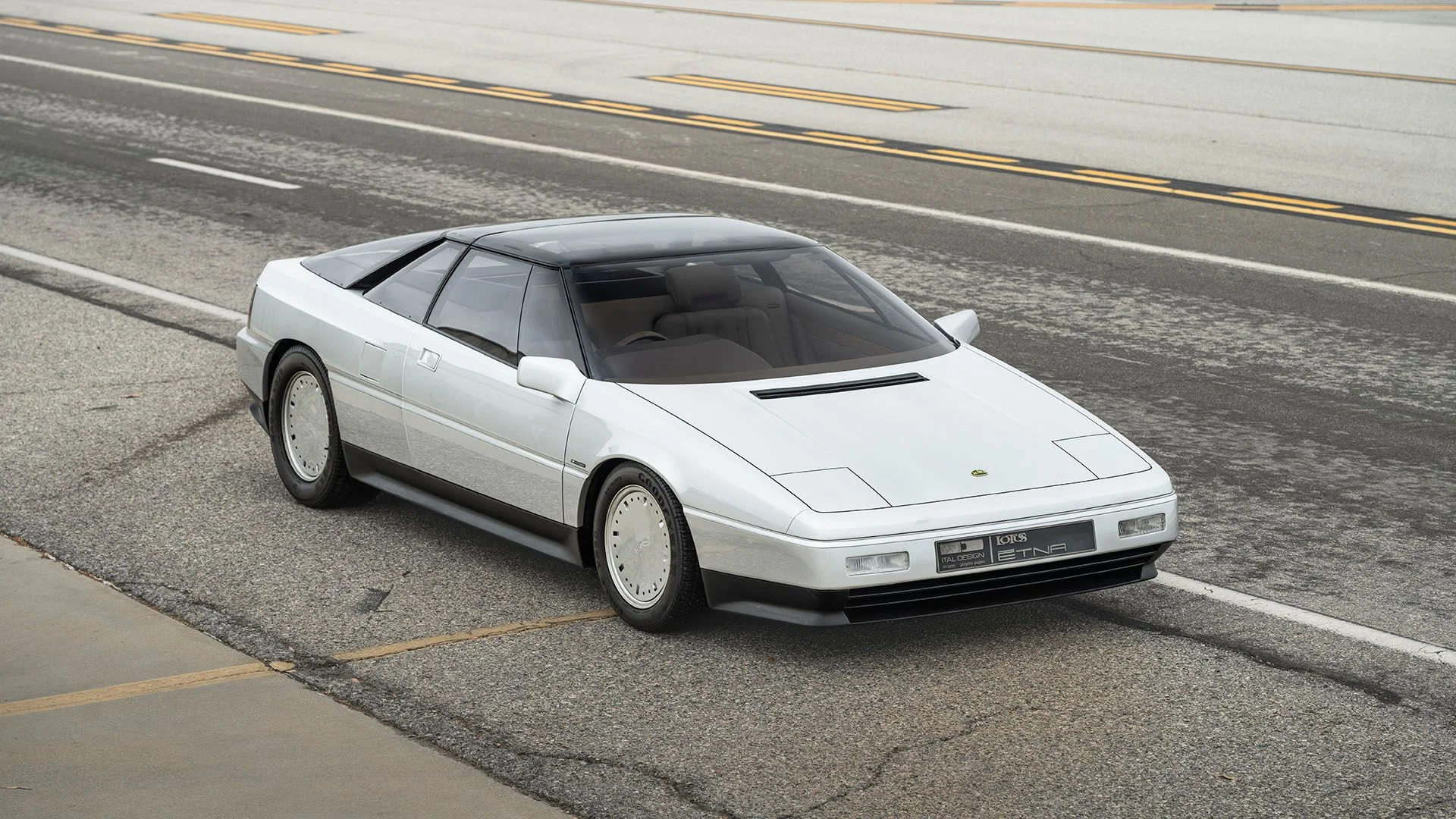
Birmingham, 1984. The NEC smells faintly of new carpet, machine oil, and the optimism of an industry that still believes the future will be better, faster, and shinier. Men in pinstripe suits and women in shoulder-padded jackets stroll past rows of Escorts and Cavaliers, but there’s a magnetic pull to one corner of the show hall. There, under surgical-white spotlights, something utterly alien rotates slowly on a mirrored plinth. A ripple passes through the crowd: “What is that?” someone whispers over the canned music. Cameras flash. The nameplate says Lotus Etna.
The shape is unmistakably a Giugiaro wedge—low, sharp, and impossibly long in the nose—but the execution is like nothing anyone has seen. Metallic silver paint turns the air itself into a mirror. A bubble-like Perspex canopy swallows the cockpit, giving it the menacing poise of a fighter jet at idle. One young boy, hoisted onto his father’s shoulders, asks if it’s from Tron. His father, a Lotus man, shakes his head slowly and says, “No son… this is the future.”
Giugiaro’s Masterstroke
By 1984, Giorgetto Giugiaro had earned the right to draw a car that looked like it belonged in a science fiction film. He had already penned the Esprit, Alfa Romeo Caimano, and Maserati Boomerang—cars that didn’t just turn heads but bent the very idea of what a car could look like. The Etna took those lessons and pushed them further. The silhouette was pulled taught, every line measured, every surface tuned to play with the light. Silver, his favourite “light sculptor” hue, flowed from prow to tail, broken only by the glint of the vast canopy overhead.
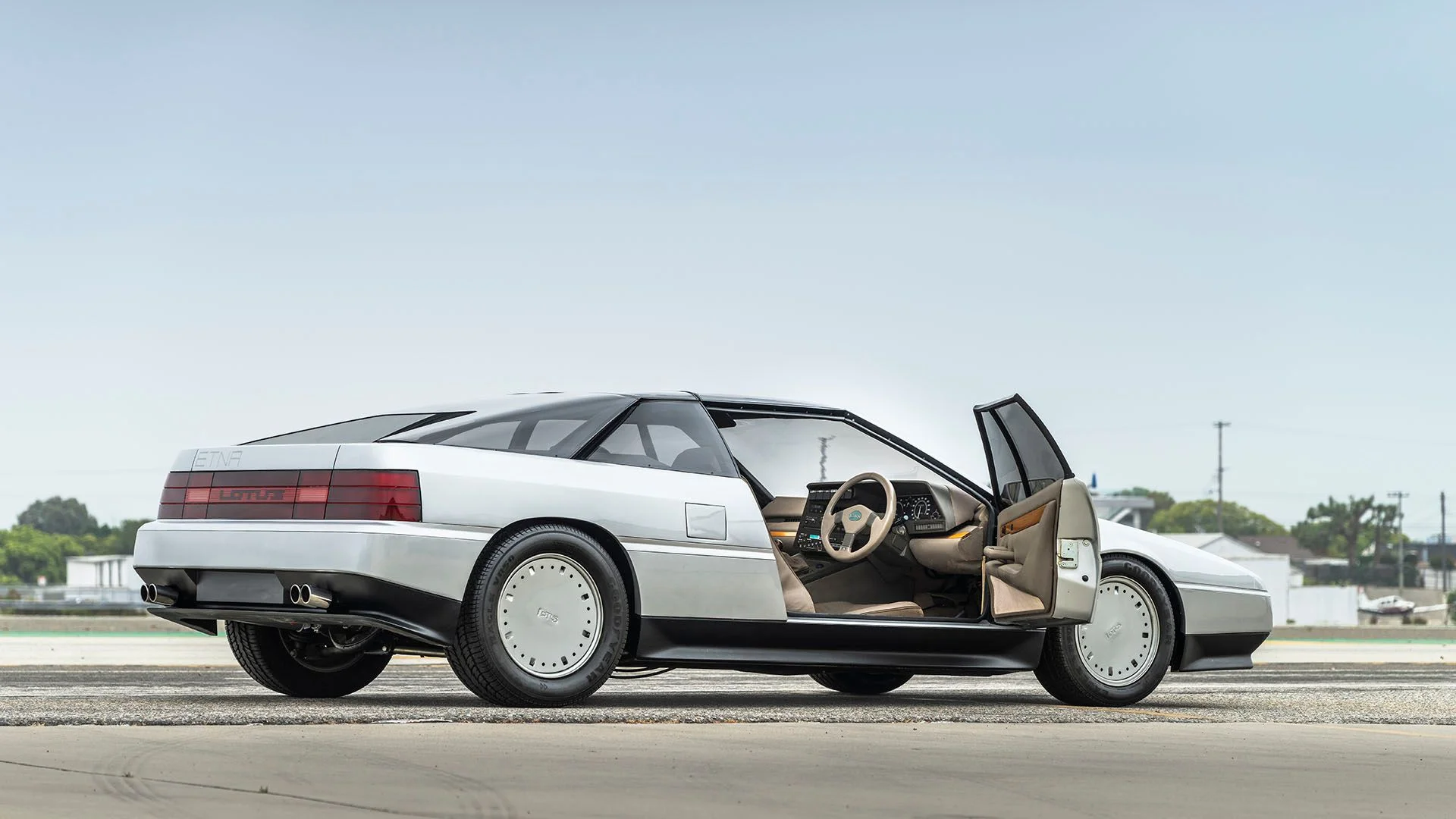
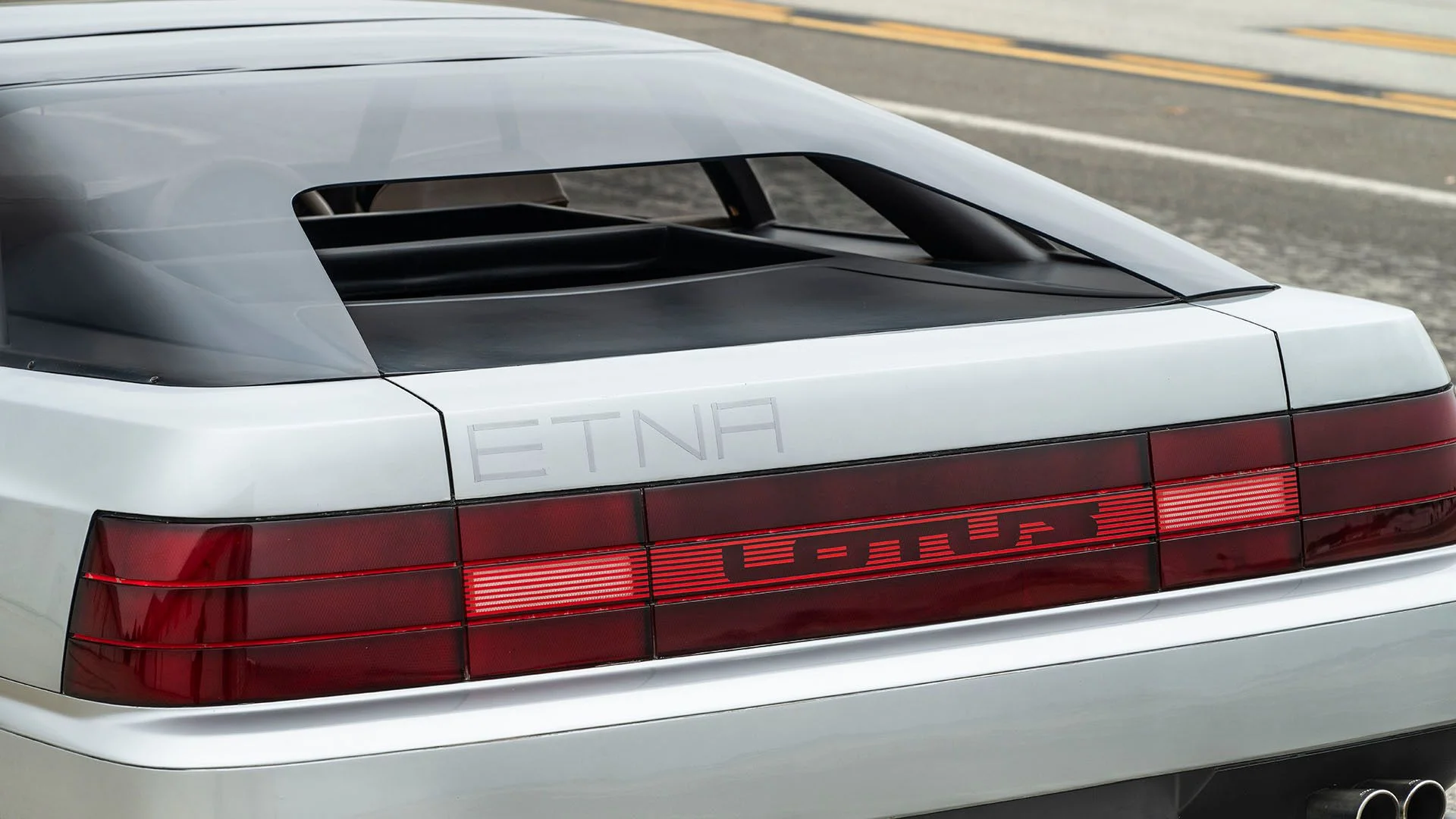
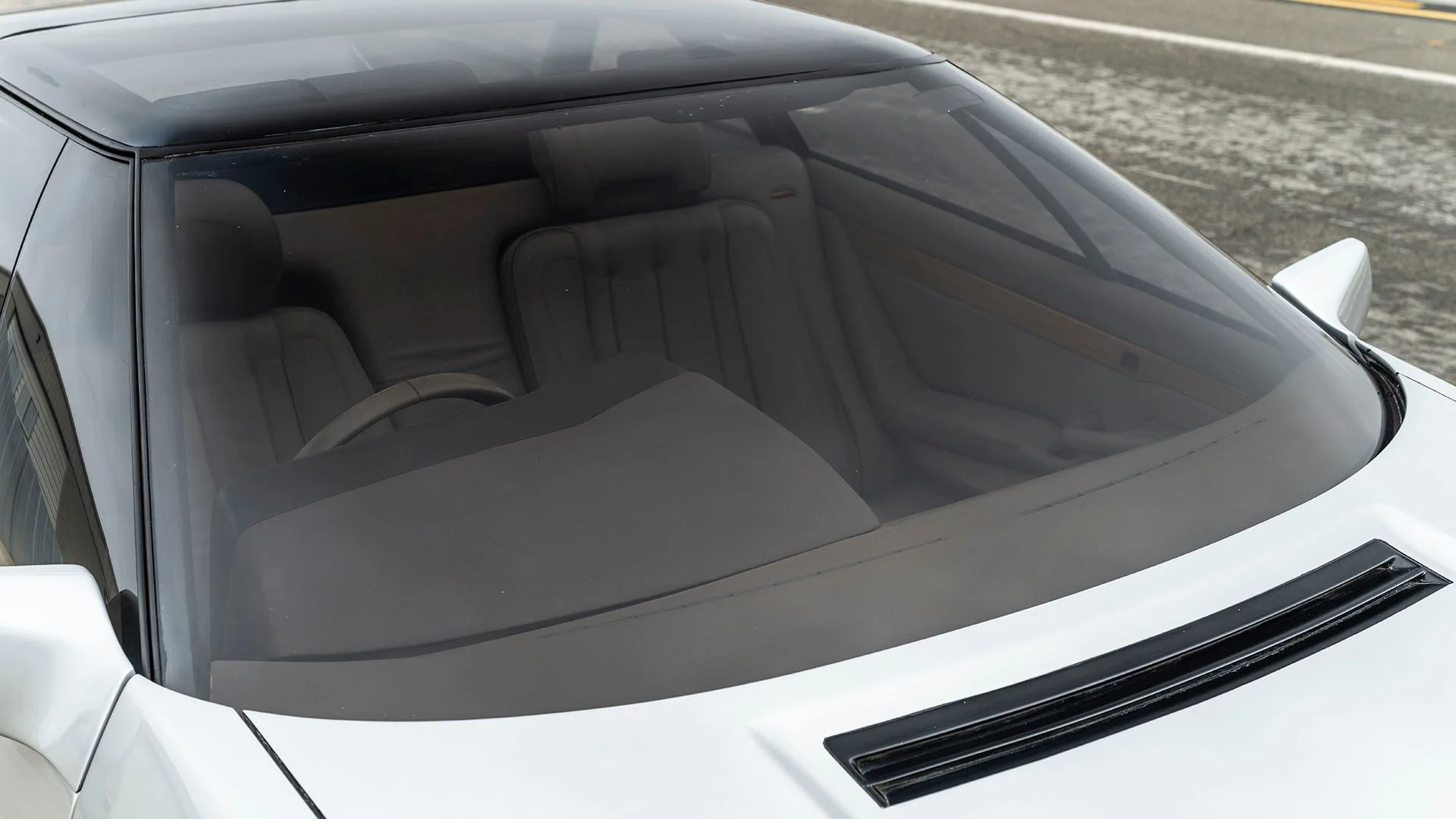
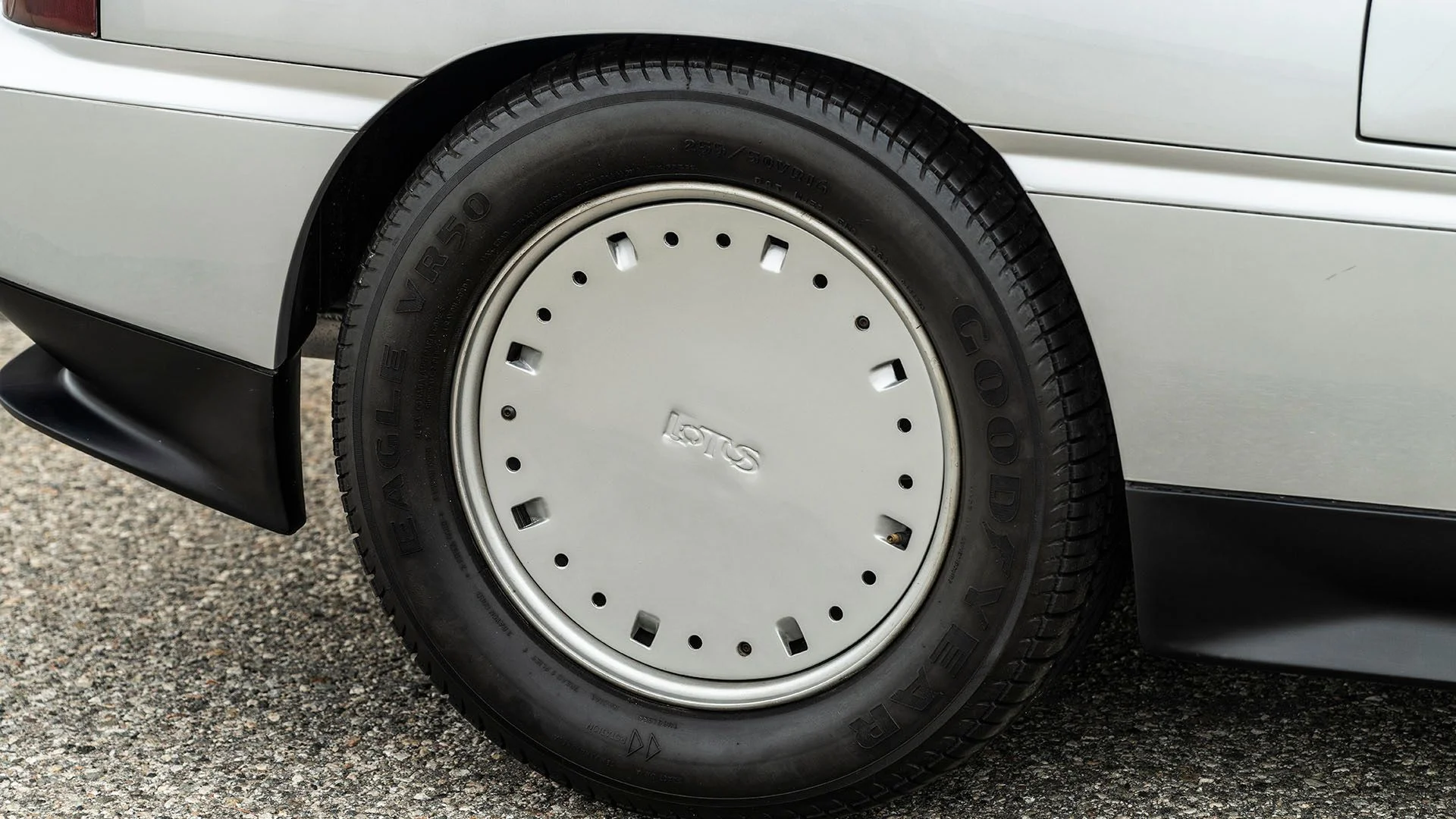
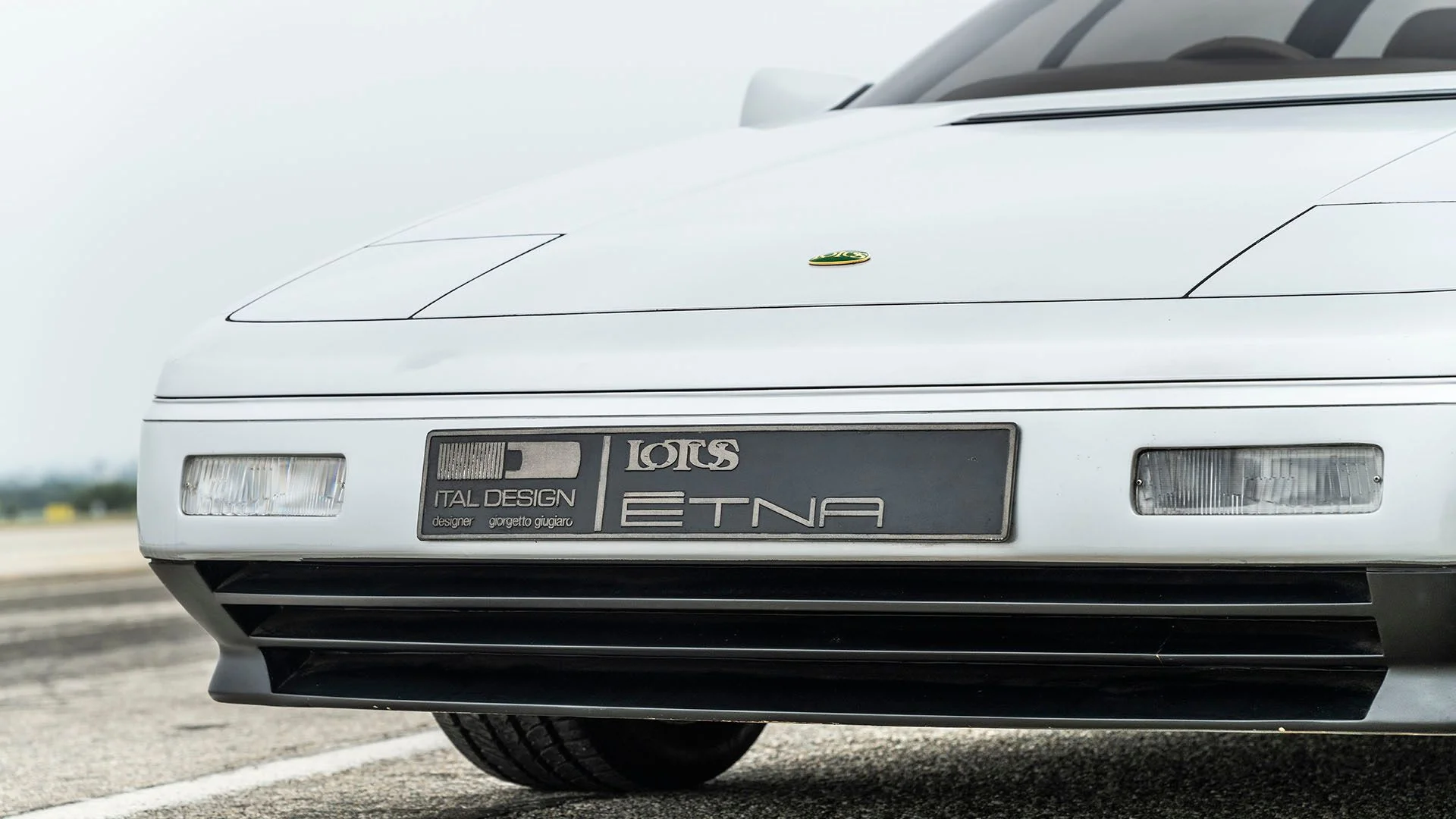
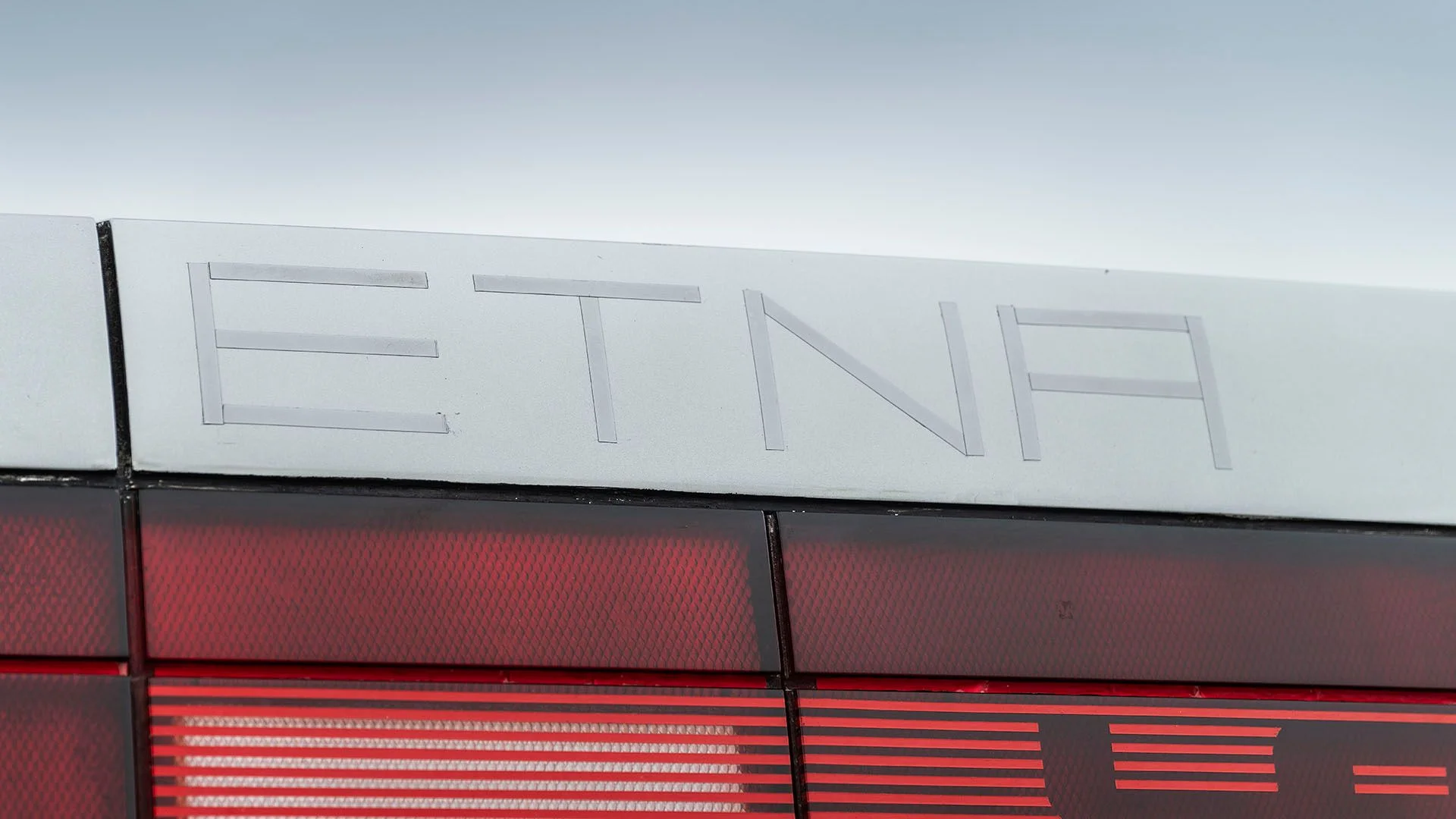
The canopy was pure Giugiaro. He’d toyed with the concept for years: the Caimano’s glass bubble, the Boomerang’s panoramic wrap, the gullwing arcs of the BMW Nazca C2. In the Etna, it reached maturity—a seamless dome flowing into the A-pillars, unbroken, almost organic. Under the NEC’s halogens, reflections curved and danced across it. From outside, the cabin looked like a sealed command module. Inside, the effect was intoxicating: light everywhere, no blind spots, the sensation that you could point the nose at the horizon and fly.
The Volcano’s Heart
Lotus, flush with ambition, wasn’t about to stuff something so radical with an off-the-shelf engine. They developed the Type 909 V8, a 4.0-litre, all-alloy masterpiece designed in-house. The numbers were intoxicating: 335 horsepower, 295 lb-ft of torque, and performance that, on paper, could humble the day’s Italian exotics—0–60 in around 4.3 seconds, top speed of 180 mph. But the Etna was about more than straight-line bragging rights.
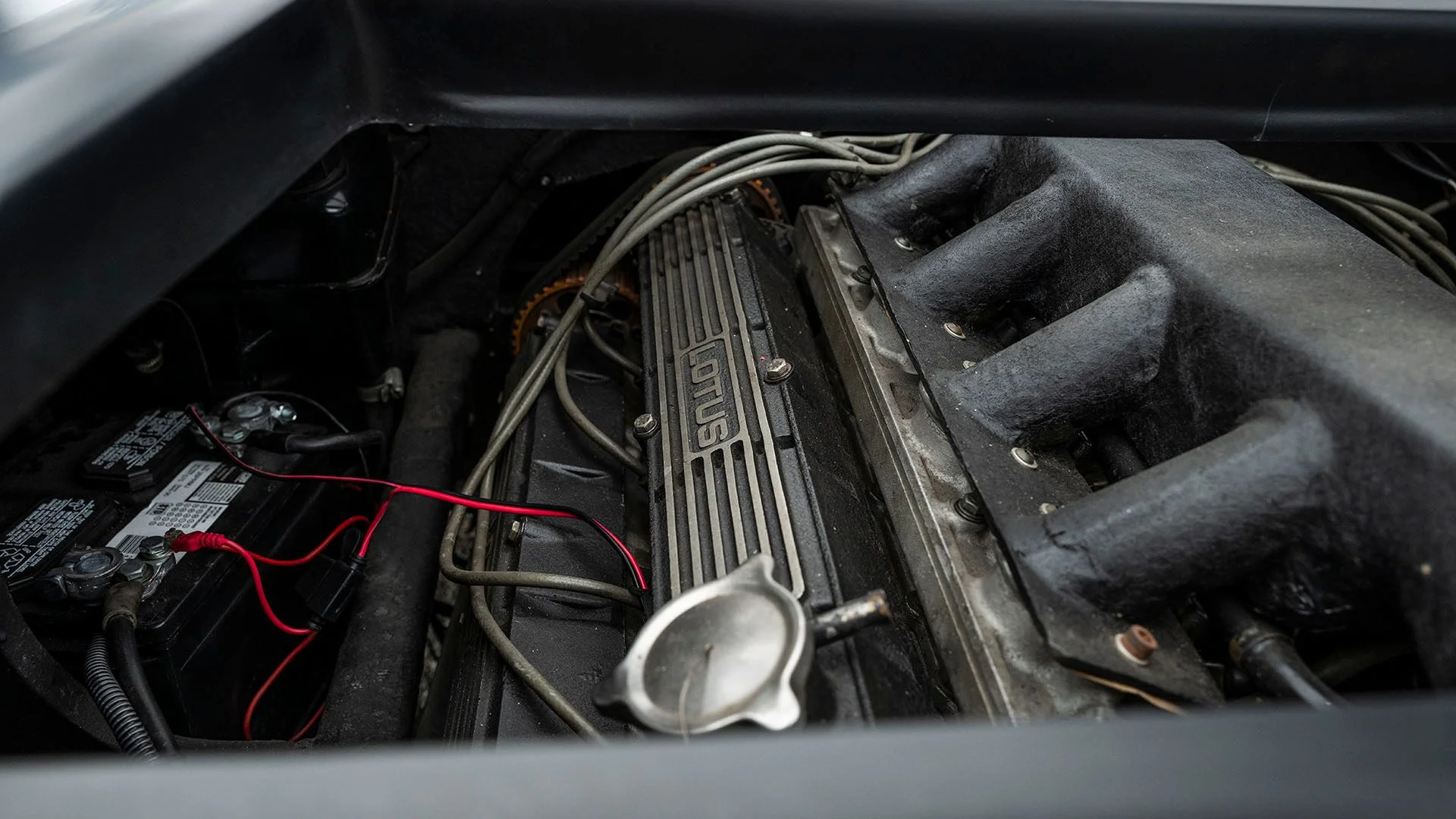
Lotus engineers, drawing from their Formula One expertise, specced an active suspension system that would monitor and adjust itself in real time. Traction control, still the stuff of pit-lane whispers, was baked into the plan. ABS brakes, too, and—most fantastical of all—active noise cancellation in the cabin. Imagine that in 1984: a cocoon of quiet inside a supercar, years before Bose would make it a production reality. On the show stand, all this was distilled into the brochure copy: the fastest, smartest British supercar ever conceived. Standing in front of it, you didn’t need the brochure. The Etna radiated intent.
Curtain Falls Early
But as any good filmgoer knows, Act Three is where the tension spikes. Lotus was still reeling from the sudden death of Colin Chapman in 1982. By 1986, General Motors had taken the helm, and GM’s calculators didn’t like what they saw. The Etna would be wildly expensive to develop, risky to build, and—if history taught anything—unlikely to make money. The project was mothballed. The bespoke V8 program stopped after only two prototypes. The Etna’s future evaporated in a puff of corporate caution.
Giugiaro’s gleaming wedge was rolled off the plinth and into a corner of Hethel, a starlet retired after her debut, her script unfinished.
Years in the Shadows
There it sat for more than a decade. The world moved on. Supercars sprouted wings and flares; the 959 and F40 set new benchmarks; the McLaren F1 rewrote the rulebook. The Etna became a whisper among diehards, a single photograph in a dog-eared copy of Car magazine. Most assumed it was a hollow mock-up. Few remembered it at all. In the cold storage bay, the silver paint dulled under a film of dust. The canopy’s tint faded to amber. The volcano slept.
The Sleeping Volcano Stirs
In 2004, a man named Olav Glasius heard the whisper again. A Dutch businessman with a Lotus collection to make even Chapman jealous, Glasius had long coveted the Etna. When the opportunity came to buy it, he jumped. He knew it would never be more than a display piece—or so he thought. It was loaded onto a transporter and sent to Ken Myers, former Lotus engineer and restorer, with a simple brief: make it presentable.
🔗 Read more: Cockpit Canopy: Giugiaro’s Signature in Automotive Design
Myers began his inspection with the patience of an archaeologist. He removed panels, traced cables, and then stopped cold. There, beneath the sculpted engine cover, sat the aluminium Type 909 V8. One of two in the world. Connected to a gearbox. The Etna was no hollow mannequin; it had bones, muscle, and—potentially—a pulse. Myers phoned Glasius. “Olav,” he said, “this thing could run.”
Resurrection
The work began. The years had not been kind. Rubber seals crumbled to dust at a touch. Fluids had long since vanished. The canopy—Etna’s crown jewel—was brittle and crazed. Then came the comedy: in transit to Myers’s shop, the original Perspex decided to eject itself. Fighter jets eject pilots; the Etna ejected its own roof. A new canopy was fabricated, flawless and clear, restoring the car’s defining line.
The active suspension system was beyond affordable repair, so Myers substituted a Lotus Esprit setup, preserving the stance and handling balance. The V8 was stripped, cleaned, and rebuilt with fresh gaskets. One day, Myers turned the key. The starter cranked. The engine coughed, caught, and roared into life. After two decades of silence, the volcano erupted.
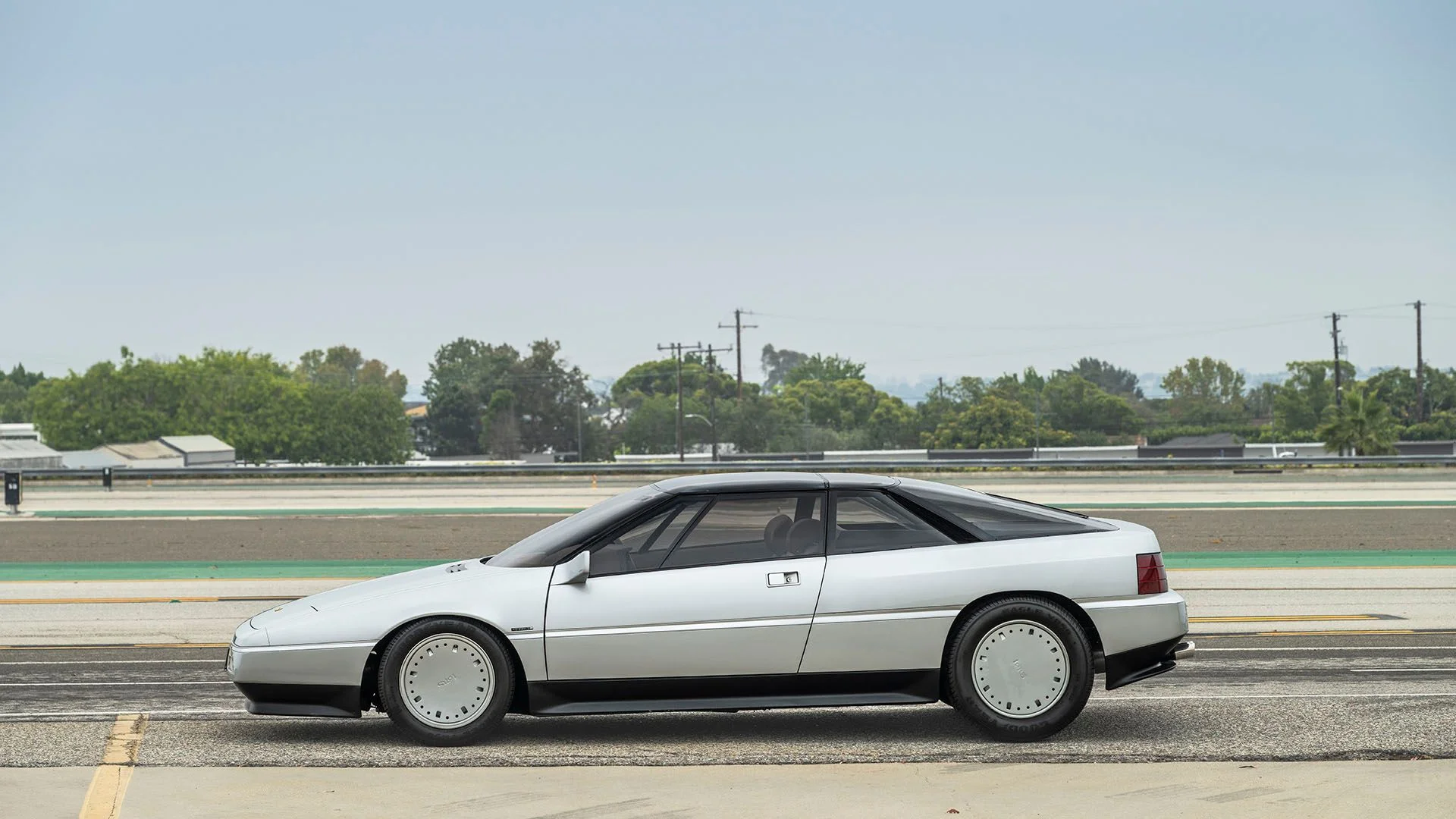
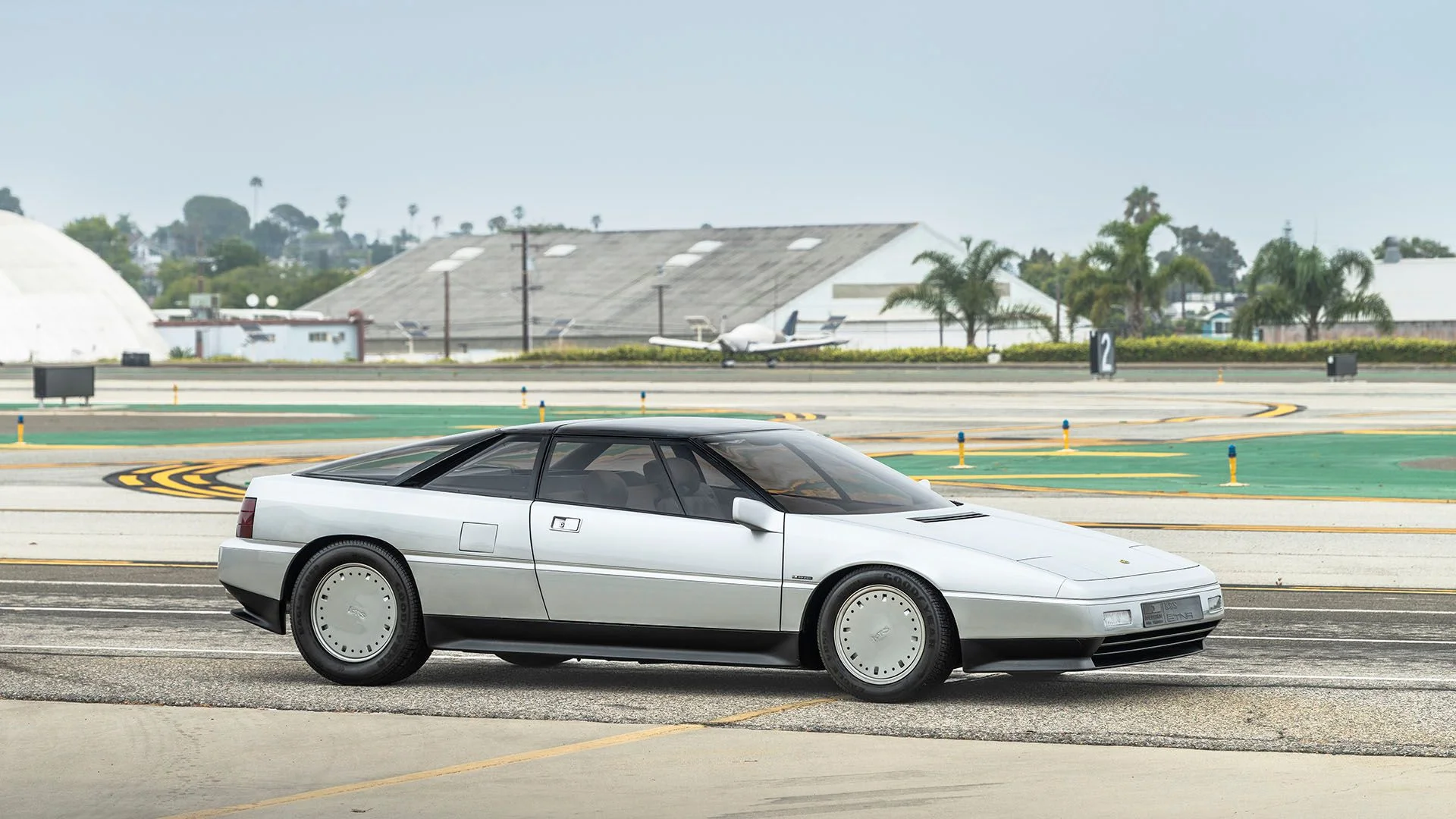
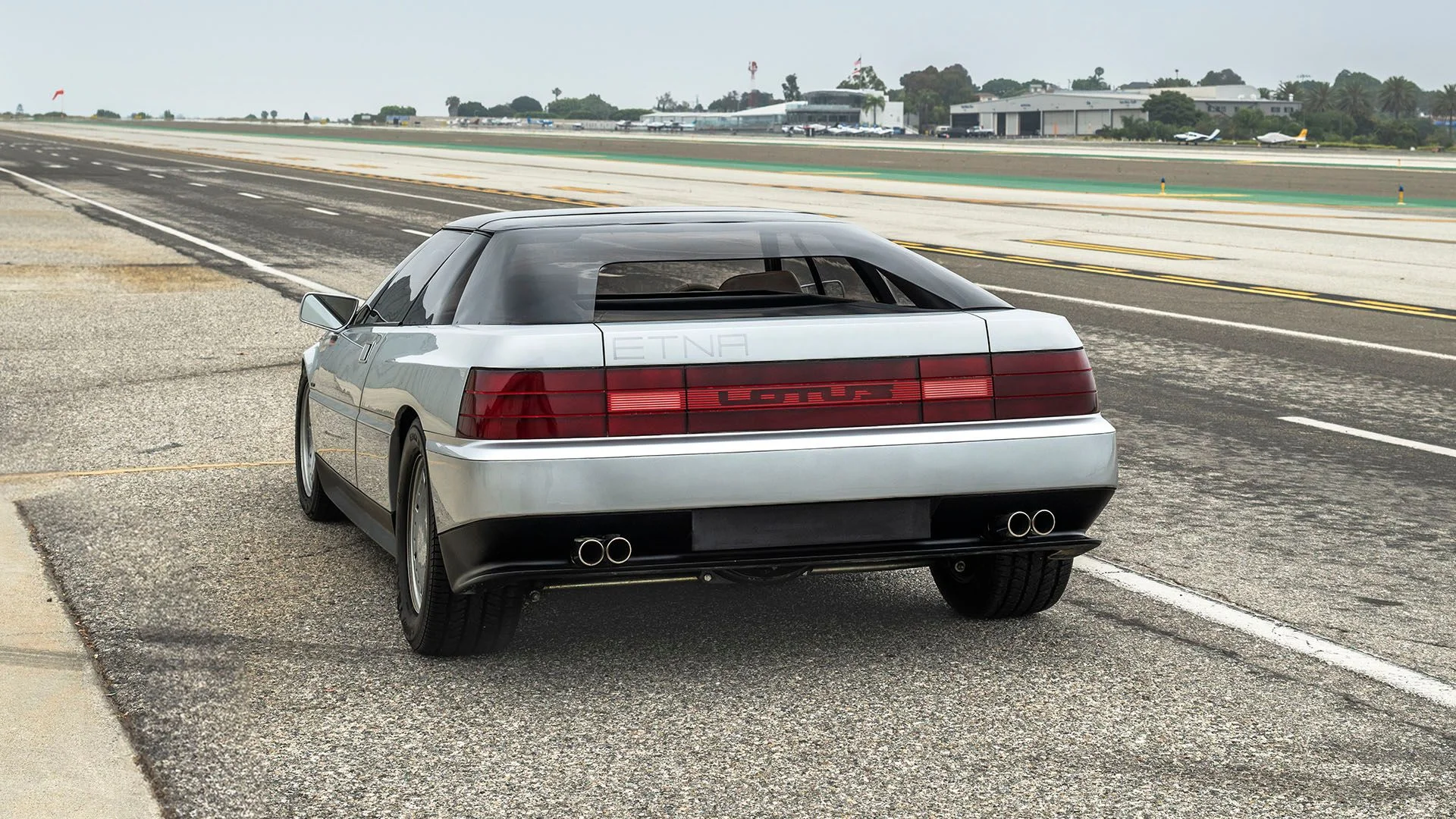
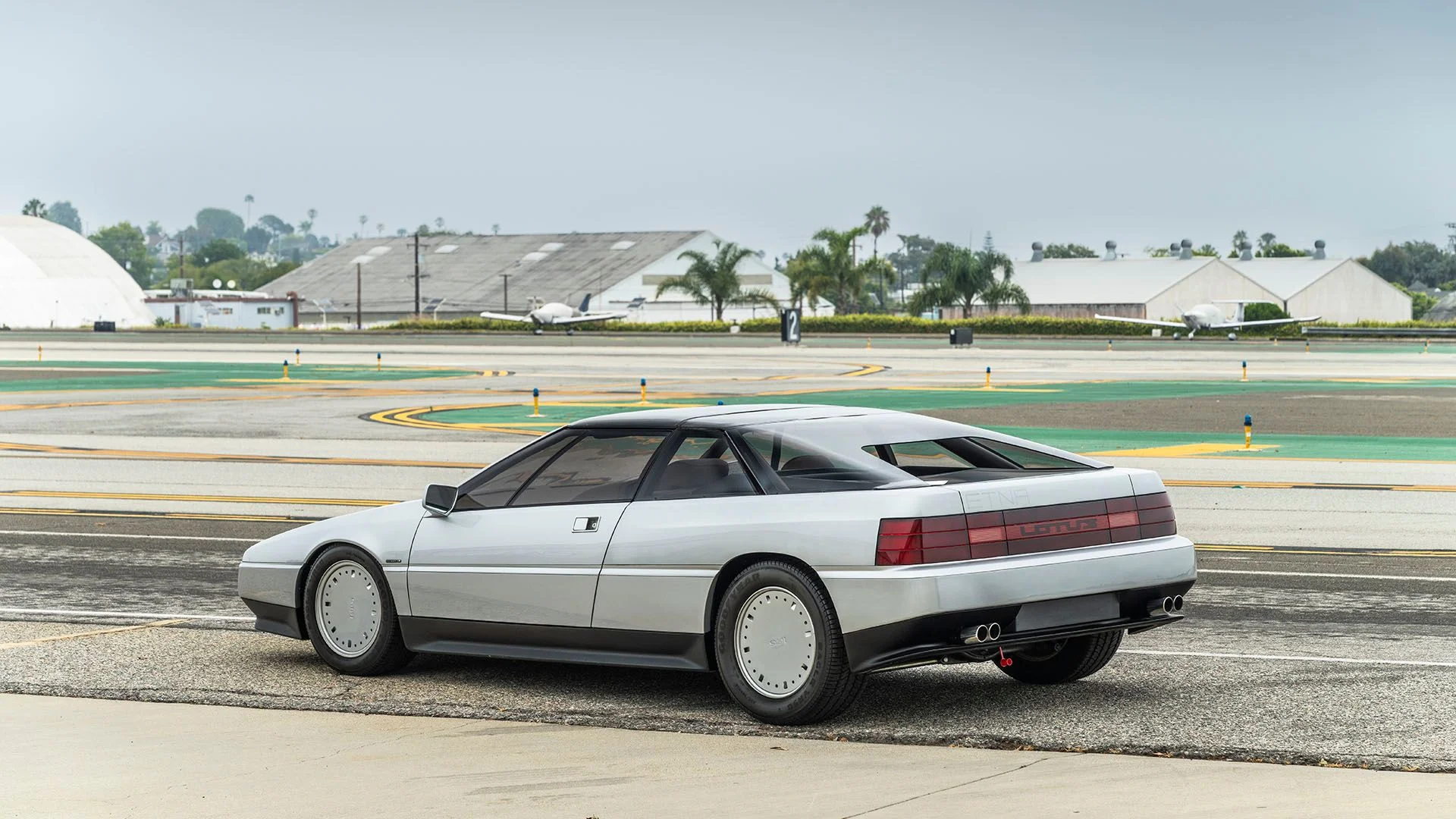
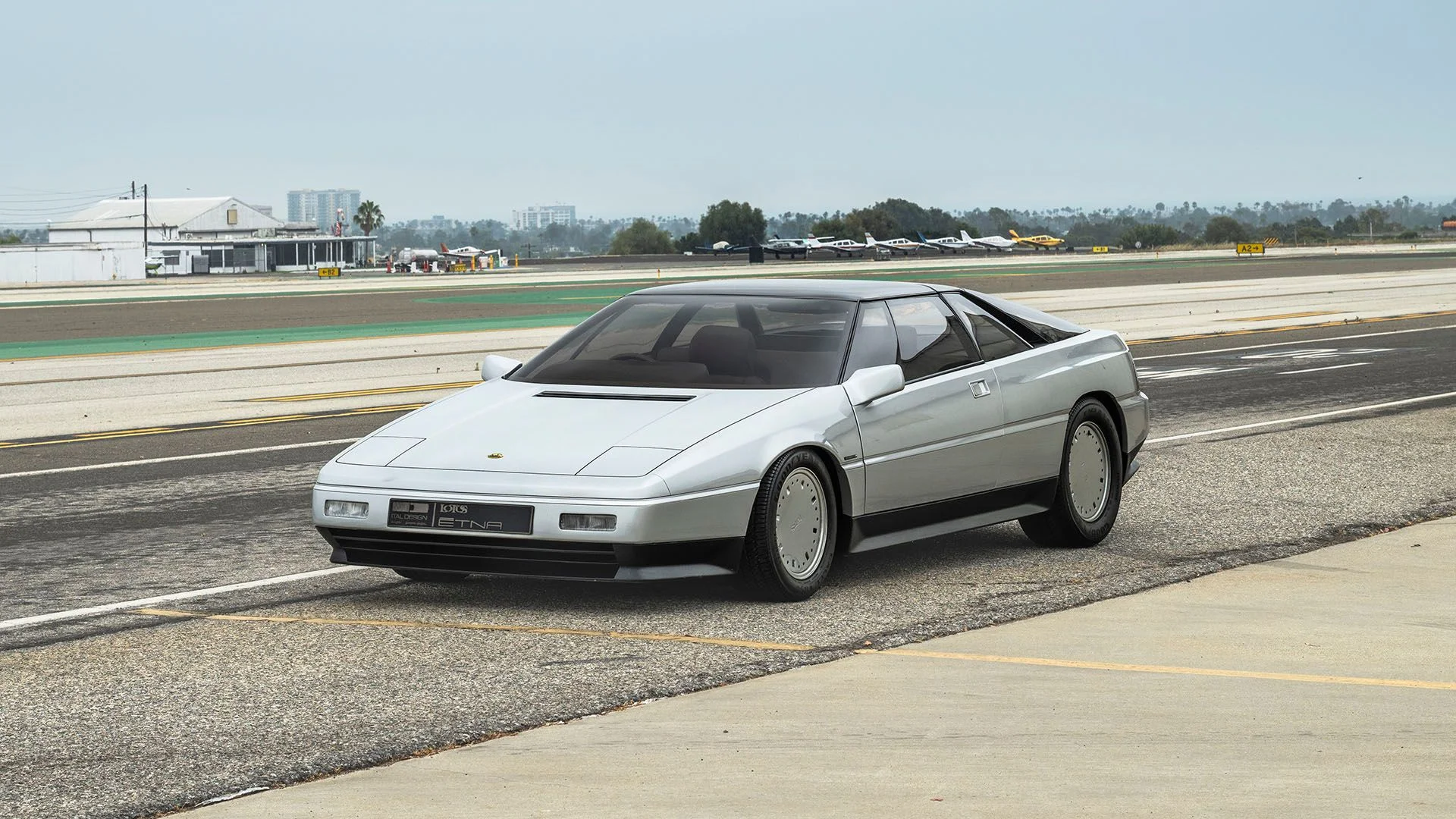
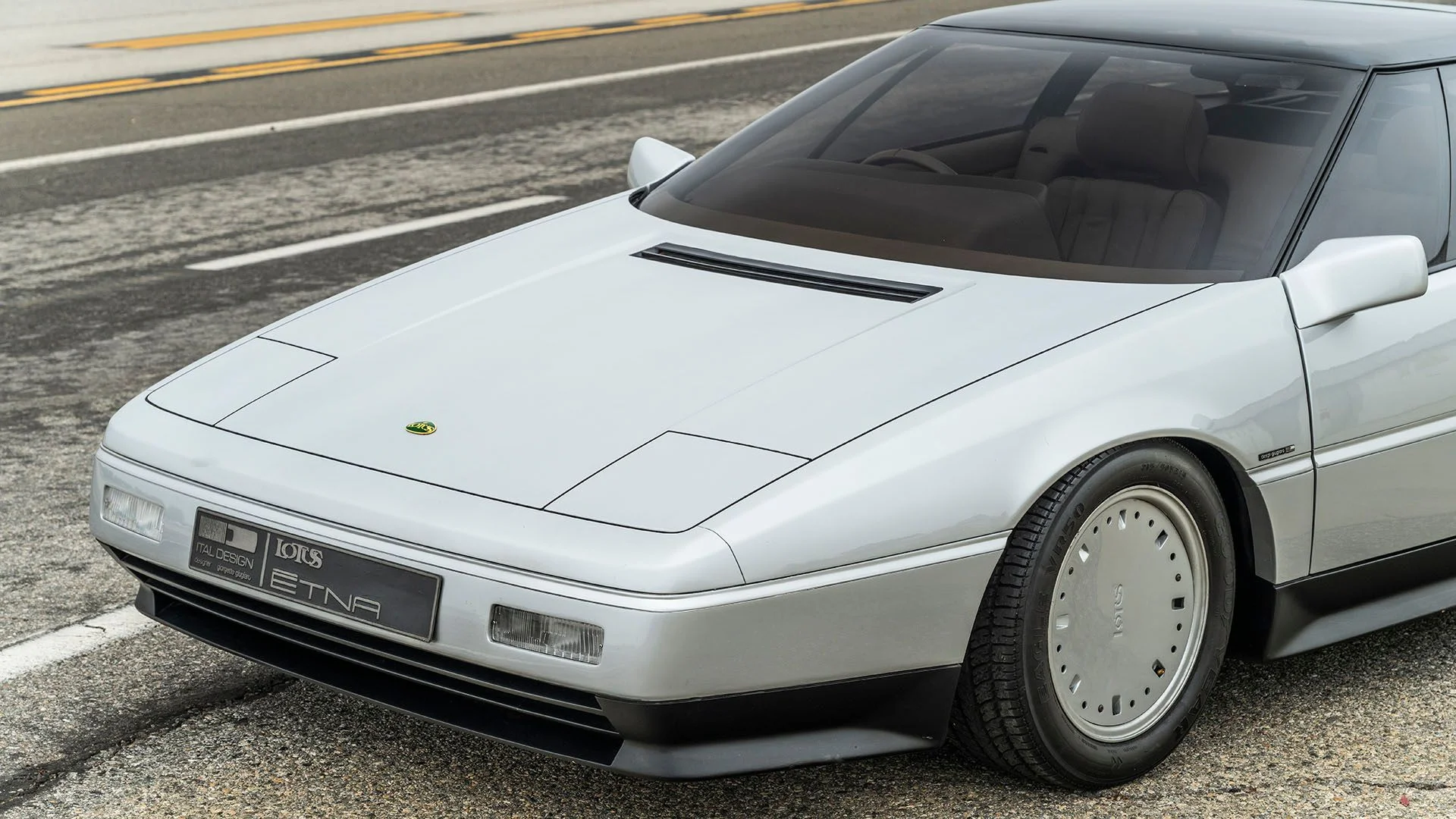
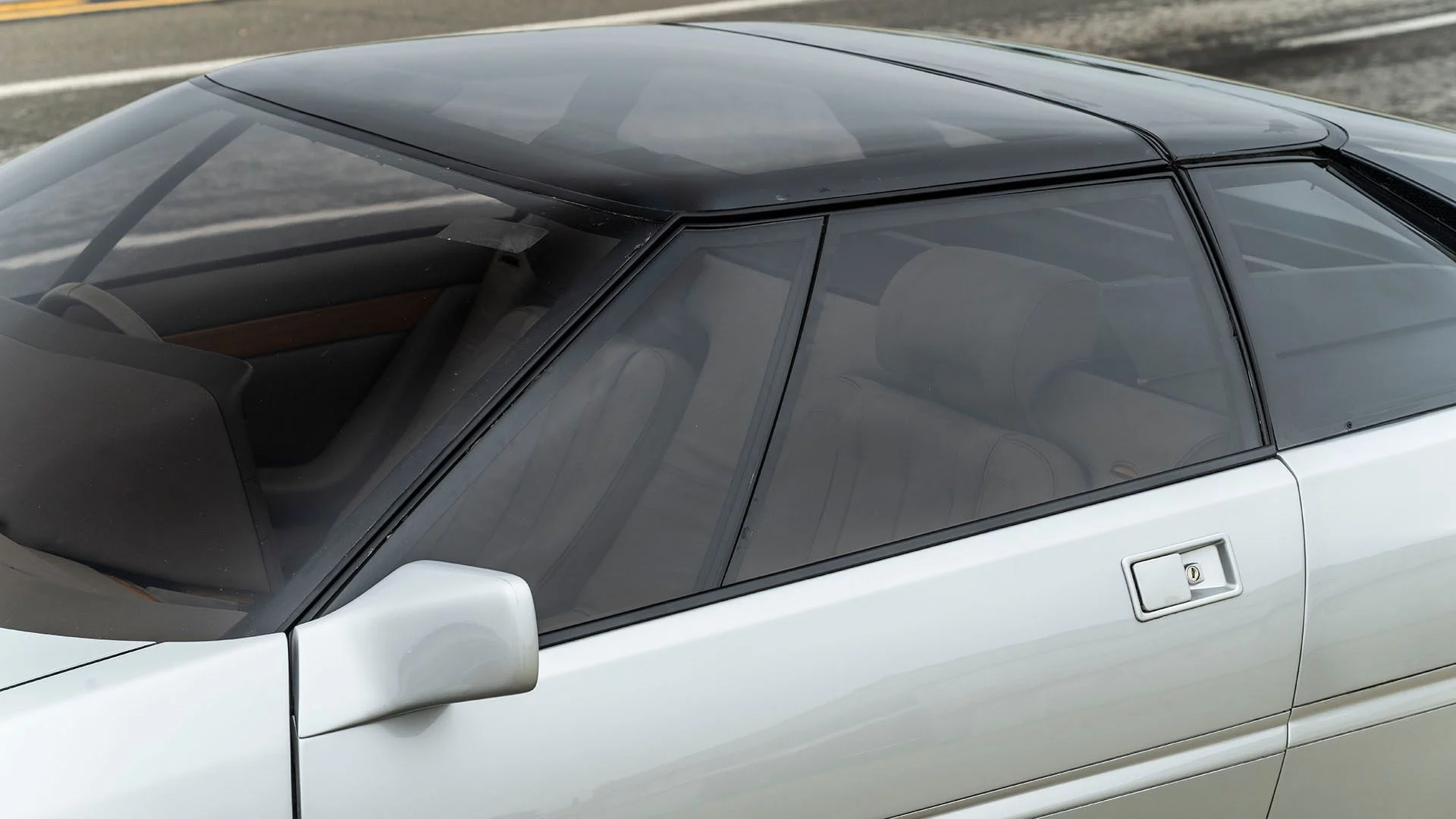
In 2006, the reborn Etna appeared at the Lotus Festival at Donington Park. It moved under its own power, canopy glinting in the sun, exhaust note rich and eager. People who had only ever seen it in photographs heard it, smelled it, watched it roll. In 2008, it ran up the hill at Goodwood, proving itself more than a static relic. For a moment, you could believe you were seeing an alternate history play out—a 1980s where Lotus built the car, and British roads echoed with the bark of the Type 909.
What Might Have Been
Had that history come to pass, the McLaren F1 might have met its match a decade earlier. British design might have embraced the glass canopy as boldly as Giugiaro dreamed. Instead, the Etna’s influence was subtle. Its DNA can be traced in the McLaren Speedtail’s wraparound glass, in the Bugatti Chiron’s light-filled cockpit, in the panoramic windshields of modern hyper-EVs. Giugiaro’s canopy lineage—from Alfa Caimano to Maserati Boomerang to Bugatti ID 90—remains one of the most distinctive design through-lines in automotive history, and the Etna is perhaps its purest British expression.
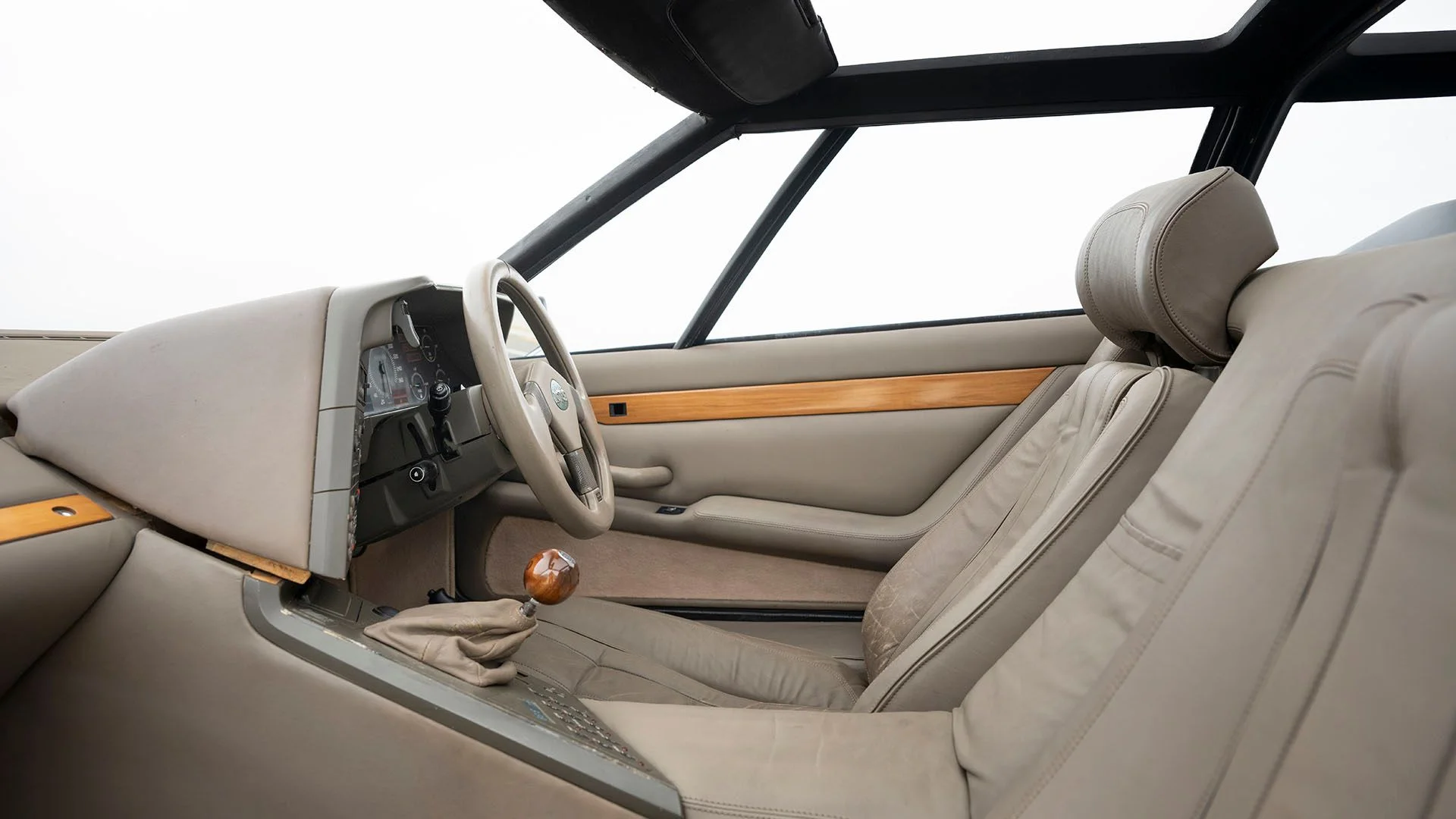
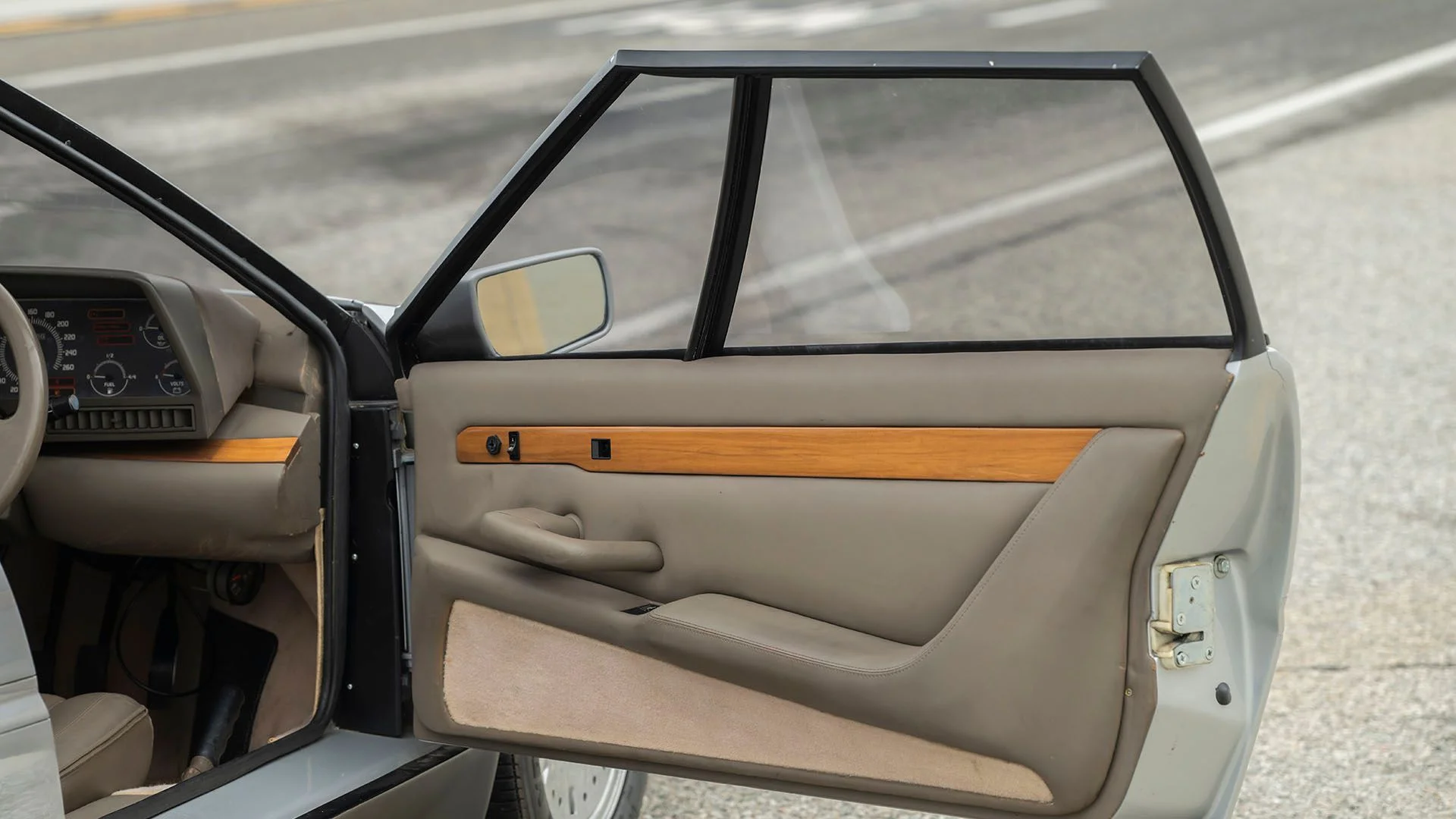
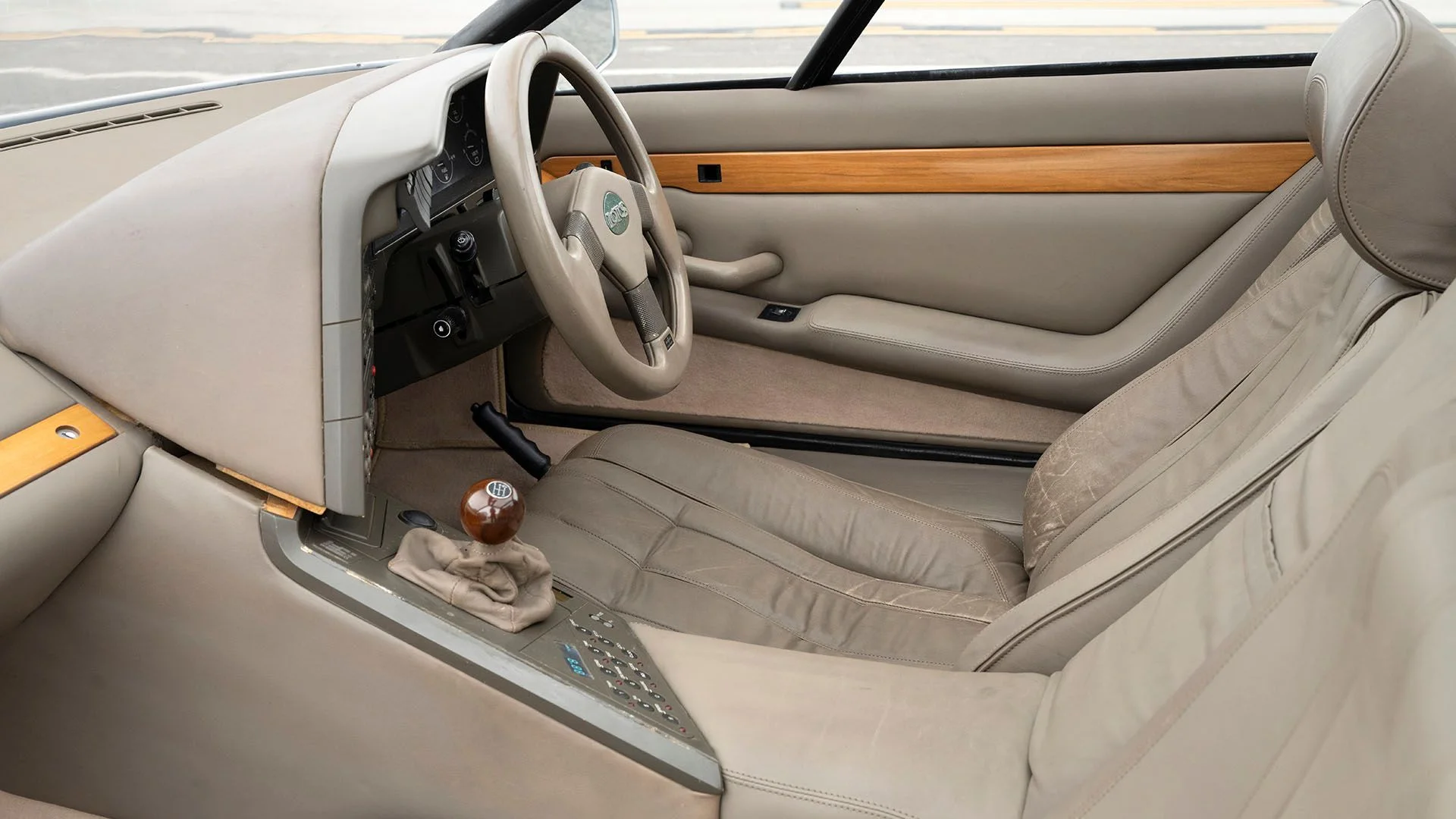
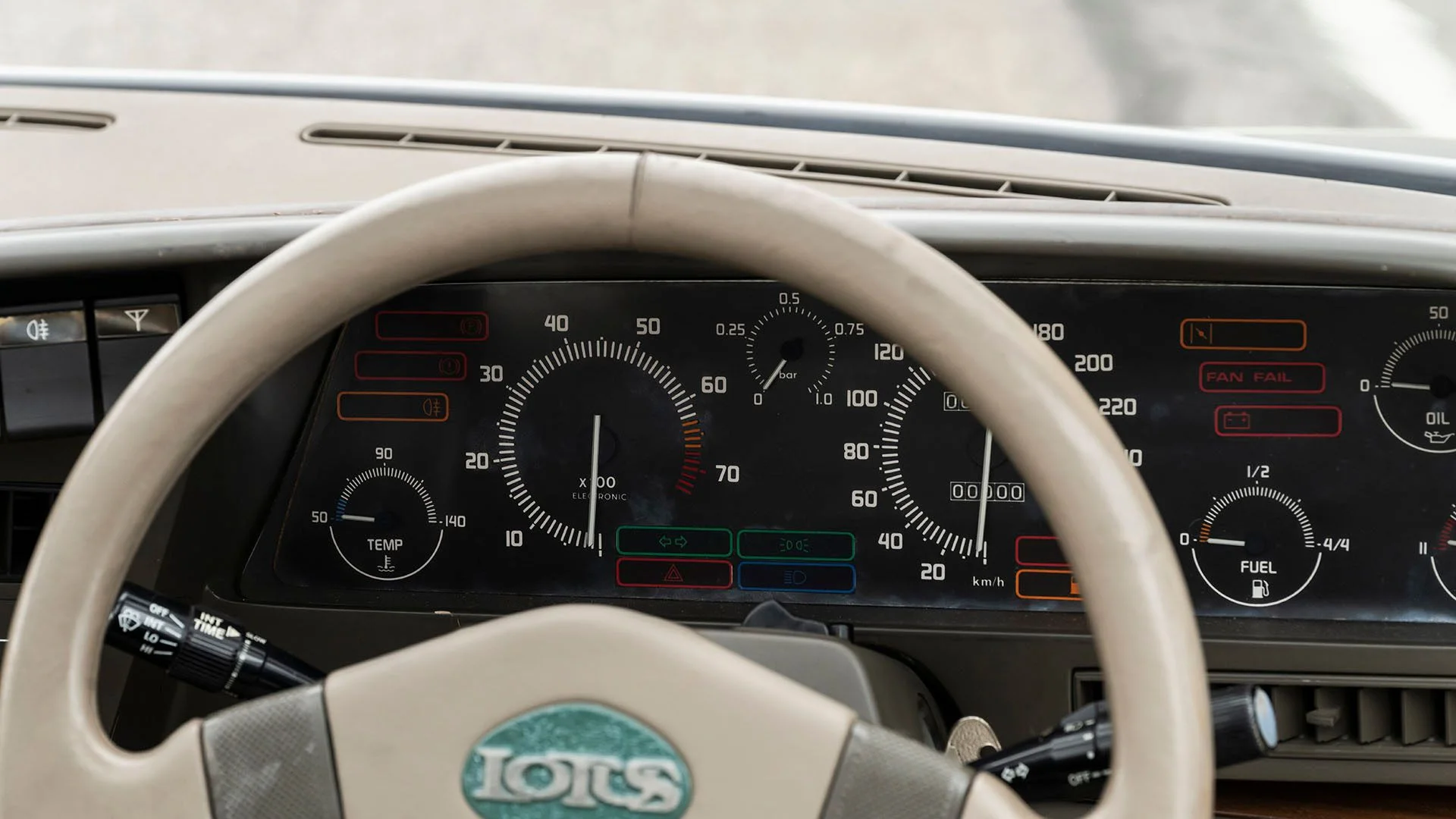
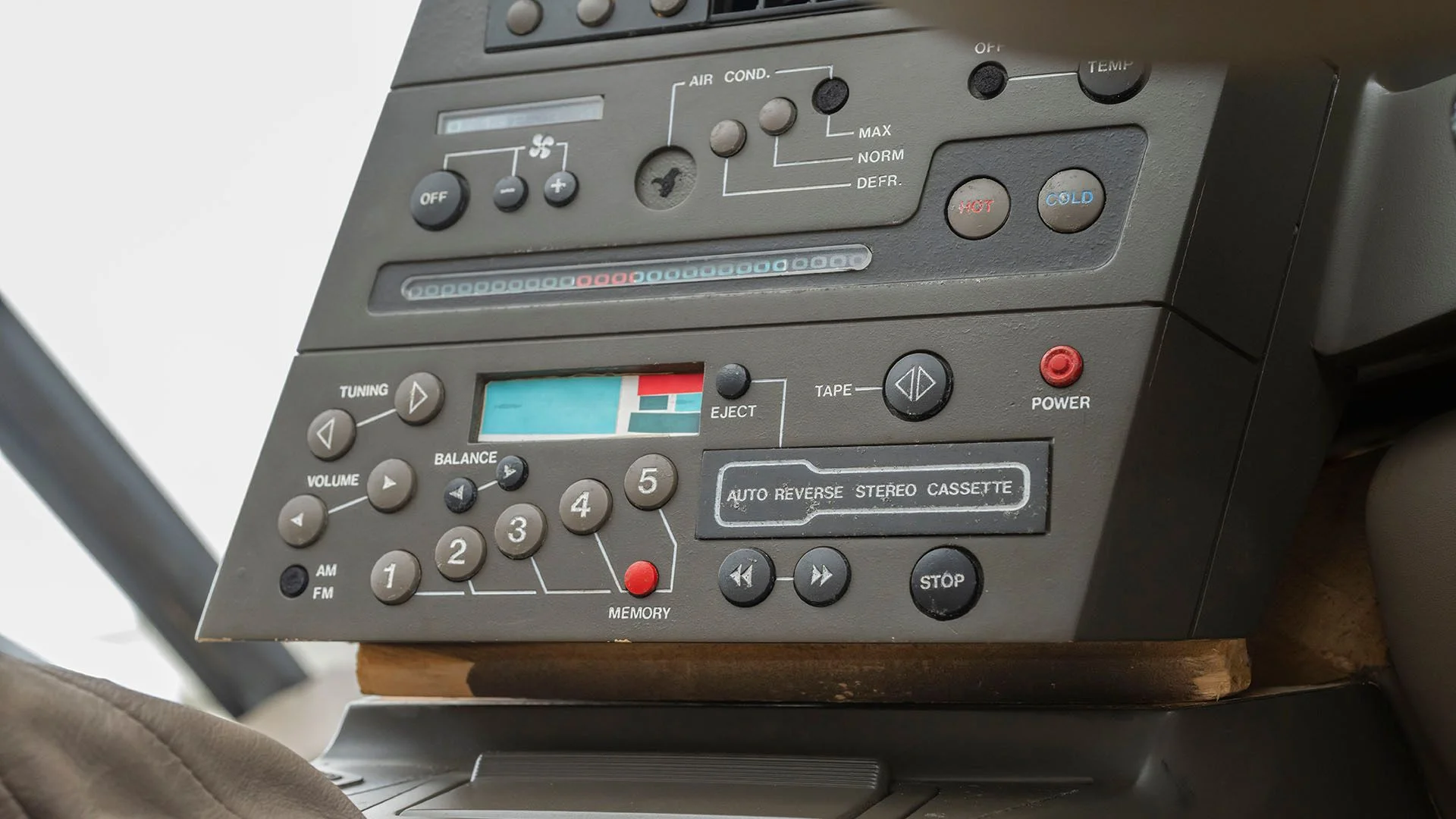
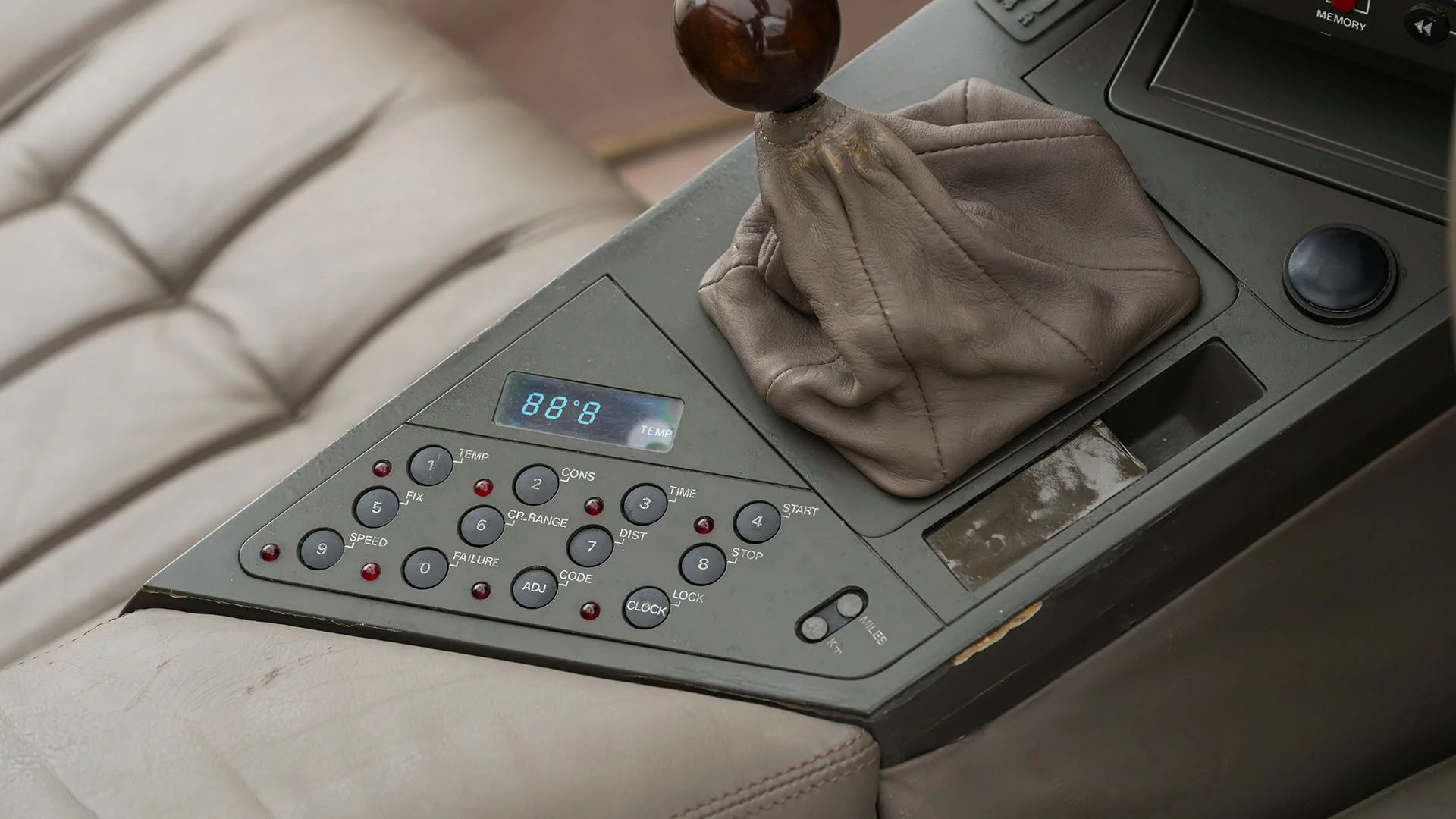
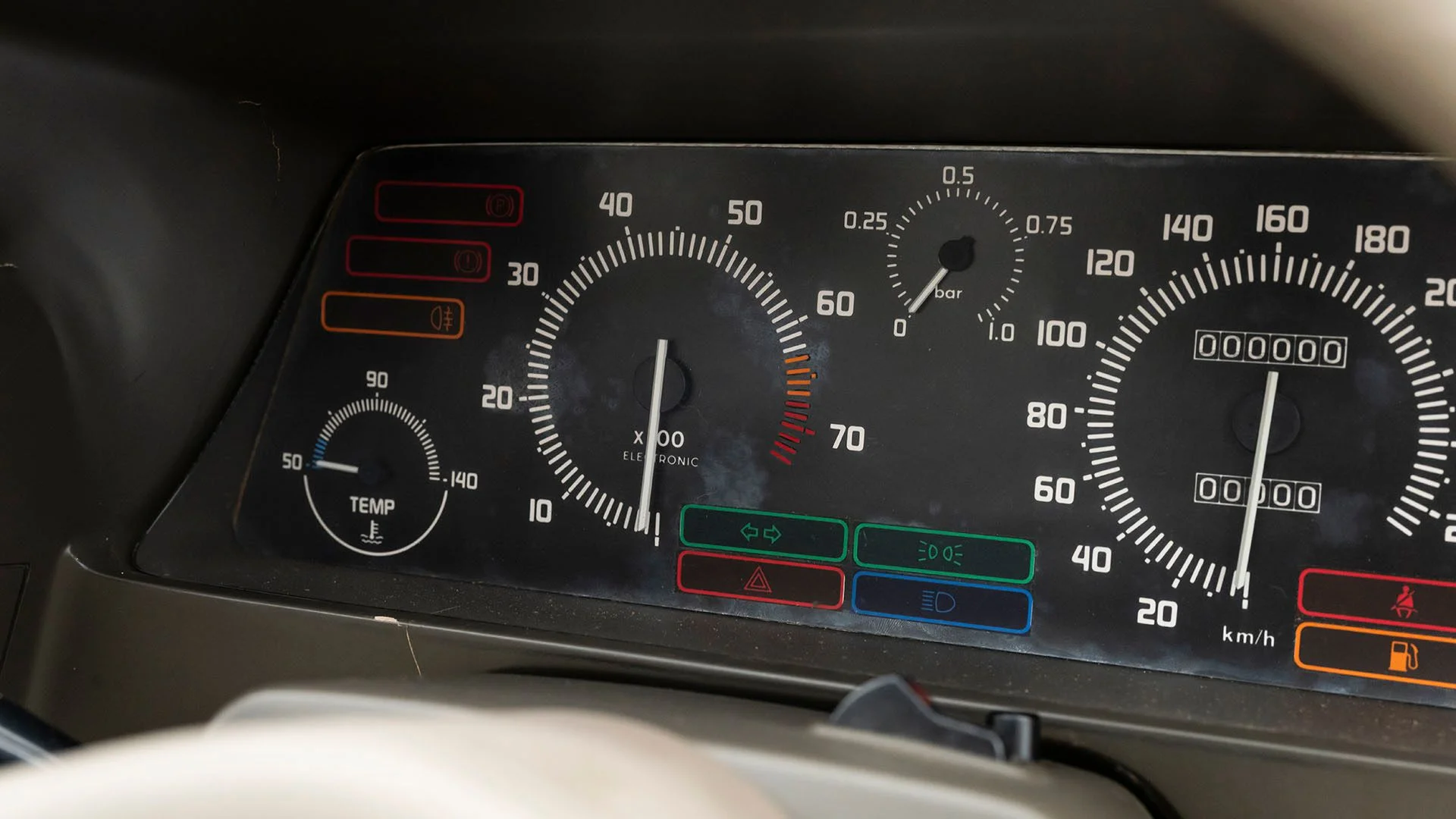
In 2012, Glasius sold the Etna at Goodwood. It crossed the Atlantic, finding a new home in a Southern California collection. There it basked under desert skies, the silver paint still sharp, the canopy arching overhead like a sci-fi visor. The V8 would fire on command, proof that this was no empty showpiece. At the local cars-and-coffee, conversations stopped. “What is that?” someone would ask. The owner would grin. “Britain’s supercar that never was.”
The Third Act
Every film needs a final act, and for the Etna, it’s about to begin. On 13 August 2025, under the bright lights of the Broad Arrow Auction at Monterey’s Jet Center, the Etna will roll into the spotlight once more. Not as a rumour. Not as a static display. But as a living, running artefact of the future Lotus once dared to build. As bidders raise paddles and the auctioneer calls the numbers, the silver wedge will wait for a new custodian. When the gavel falls, a curtain will lift—not on an ending, but on the next chapter of the Etna’s extraordinary story, the futuristic dream that refused to die.

ABOUT THE AUTHOR
Andreas Scheidl
Italian classic car enthusiast with German roots. Renowned as a respected figure in the classic car community, he serves as a jury member at various international concours d'elegance, including the Classic Gala Schwetzingen and Mantova. As a content creator, Andreas passionately shares his profound knowledge and appreciation for vintage automobiles. His heart beats for cars designed by Giovanni Michelotti, showcasing his discerning taste and dedication to preserving the timeless elegance of automotive history.
More stories by Andreas Scheidl ↗CONTINUE READING
Posts You Might Like
A Central Driving Position, a Rear-Mounted V8. Was This Really a Lancia?
In 1948, visitors to the Turin Motor Show could see an unusual Lancia on the stand of Carrozzeria Ghia. It was a large two-door coupé with a two-litre V8 mounted behind the…
Read story
Fioravanti F100: The Ferrari He Was Allowed to Imagine
Enzo Ferrari’s centenary, Leonardo Fioravanti’s independent studio and a supercar that explored air brakes, steel wheels and a new way of driving—without ever wearing the Cavallino.
Read story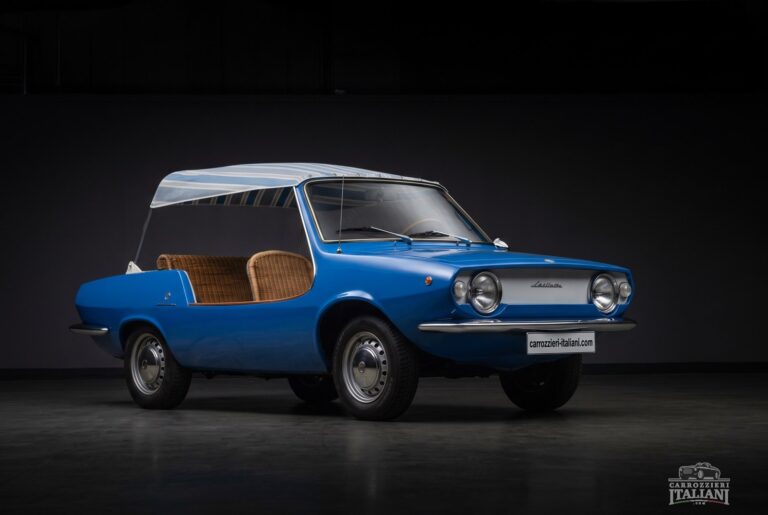
Michelotti Shellette: When the Fiat 850 Became a Yacht
The yacht designer, the Turin stylist and the tiny coachbuilt car that crossed between the quay, the royal holiday house and the auction room. Some automobiles were conceived for the open road,…
Read story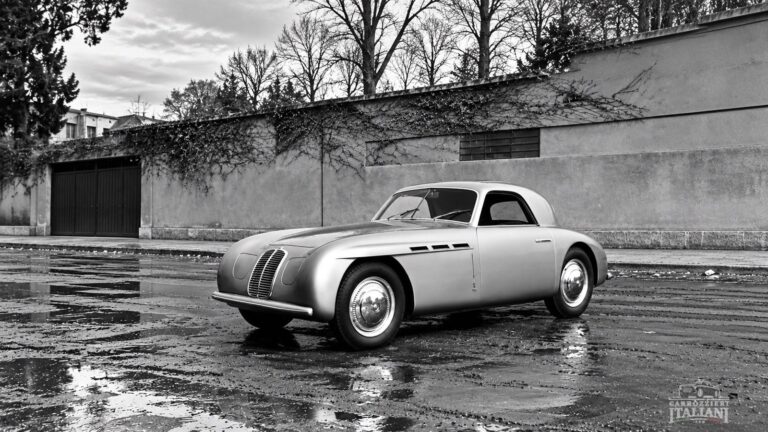
Maserati A6 1500: A New Road for the Trident
When the doors of the Geneva Motor Show opened in March 1947, Maserati was a name that required little introduction to anyone who followed motor racing. What it did not yet possess…
Read story
THE CONVERSATION
Comments 0
Share a memory, a period photograph or a documented detail about this story.