
THE VEHICLE AT A GLANCE
Model dossier
- Production period
- 2012
- Body style
- Microcar / Quadricycle
- Engine
- Electric
- Type
- Concept
THE PEOPLE BEHIND THE CAR
Coachbuilding, design & conversions

PRICE & SALES RECORD
Vehicle value
- Original price
- Not documented
- Latest recorded sale
- Not documented
01 / THE STORY
History & context
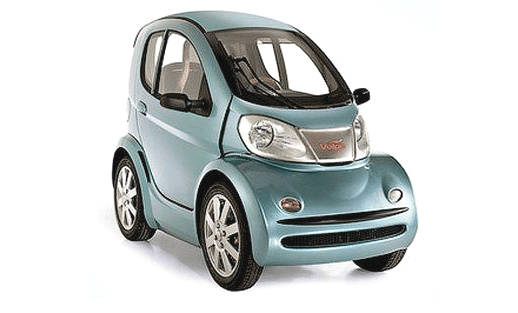
The Volpe, acronym for Veicolo Originale Leggero Privo di Emissioni, represents a contemporary approach to sustainable urban mobility through compact electric propulsion. Designed as a microcar with zero tailpipe emissions, the Volpe combines low environmental impact with innovative design and technology. This lightweight two-seater, developed for short-distance urban use, offers an estimated electric range of 70 kilometers. To extend usability beyond city limits, an optional bifuel internal combustion generator—running on gasoline or compressed natural gas—is available. This range extender does not power the wheels directly but recharges the batteries, increasing the total range to approximately 380 kilometers. The vehicle adopts a fully enclosed body layout, offering improved protection and usability over more spartan alternatives like the Renault Twizy. Solar panels, applied as a photovoltaic film on the bodywork, supplement the main battery pack with renewable energy, further enhancing the car’s ecological credentials. Braking is managed by a four-disc system, assisted by ABS and ESP, underlining the intent to offer the safety features of a conventional car in a micro-sized platform. The design of the Volpe is attributed to the Zagato design studio, reflecting an emphasis on aesthetic identity as well as functionality. Despite its modest dimensions—200 cm in length, 100 cm in width, and 150 cm in height—the Volpe’s cabin is structured to accommodate two occupants in tandem. Initially scheduled for release in 2012, the Volpe was planned in four variants: the Globo (pure electric), the Goal (electric, 4 kW), the Graffio (8 kW), and the Guru (12 kW with bifuel range extender and all-wheel drive). Prices were to range from €6,900 to €9,000 depending on the configuration. Though referencing the ill-fated postwar Alca Volpe project in name only, this modern interpretation originated from the initiative of entrepreneur Romano Anticoli. It aimed to deliver an accessible, compact, and technologically forward-looking mobility solution for European cities.
IN THE ARCHIVE
Coachbuilders & design studios
02 / TECHNICAL IDENTITY
Specifications & construction
Production & construction
- Production type
- Concept
- Production notes
- Contemporary ACI and alVolante reports identify Volpe as the vehicle/company product and Zagato as the styling/design source. Canonical make/title are normalized from 'Zagato Volpe' to Volpe; Zagato is design studio, not manufacturer/coachbuilder/body-builder. Norihiko Harada attribution is cleared pending a source naming him for this project.
Engine & performance
- Engine configuration
- Electric
- Specification notes
- Four 2012 variants were announced with pure-electric and range-extender layouts. No single family-wide engine configuration or completed production quantity is projected.
Design & manufacture
- Design Studio · Documented
- Zagato
06 / EVENTS & AWARDS
Events & awards
No events or documented awards are currently recorded for this vehicle.
07 / THE VEHICLE IN DETAIL
Photo gallery
No publishable photographs are currently catalogued for this vehicle.
08 / FROM THE ARCHIVE
Archive
References held in the vehicle dossier. Their inclusion does not establish that every historical claim has been independently verified.
| Reference | Source type |
|---|---|
| Automobile Club di Roma — Volpe, l'auto elettrica più piccola del mondo roma.aci.it | Automobile club contemporary vehicle report |
| alVolante — Una Volpe per la città www.alvolante.it | Reputable automotive press |
THE CONVERSATION
Comments 0
Share a memory, a period photograph or a documented detail about this car.