
THE VEHICLE AT A GLANCE
Model dossier
- Production period
- 1958
- Body style
- Coupé
- Type
- Prototype
THE PEOPLE BEHIND THE CAR
Coachbuilding, design & conversions
PRICE & SALES RECORD
Vehicle value
- Original price
- Not documented
- Latest recorded sale
- Not documented
01 / THE STORY
History & context
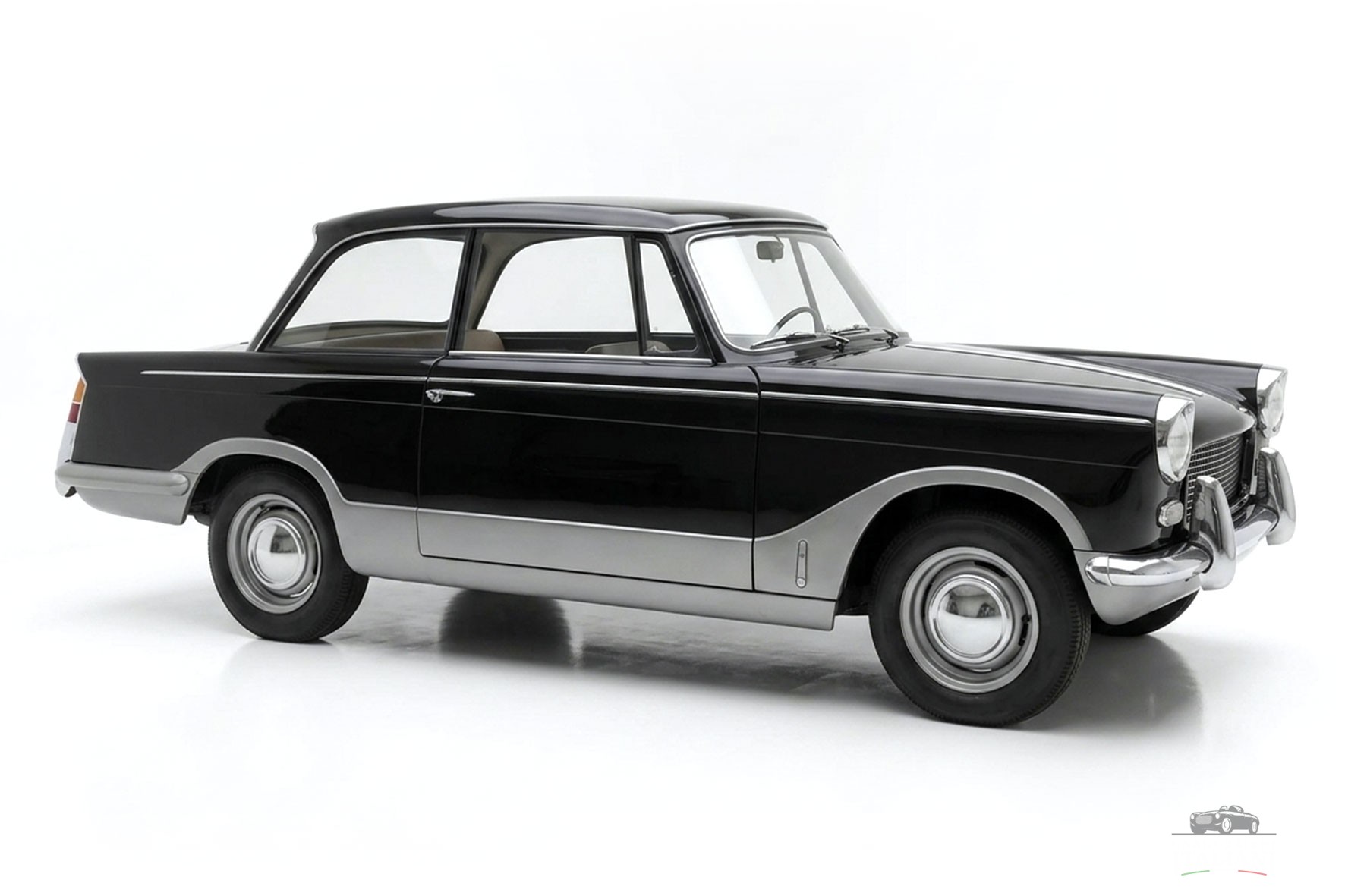
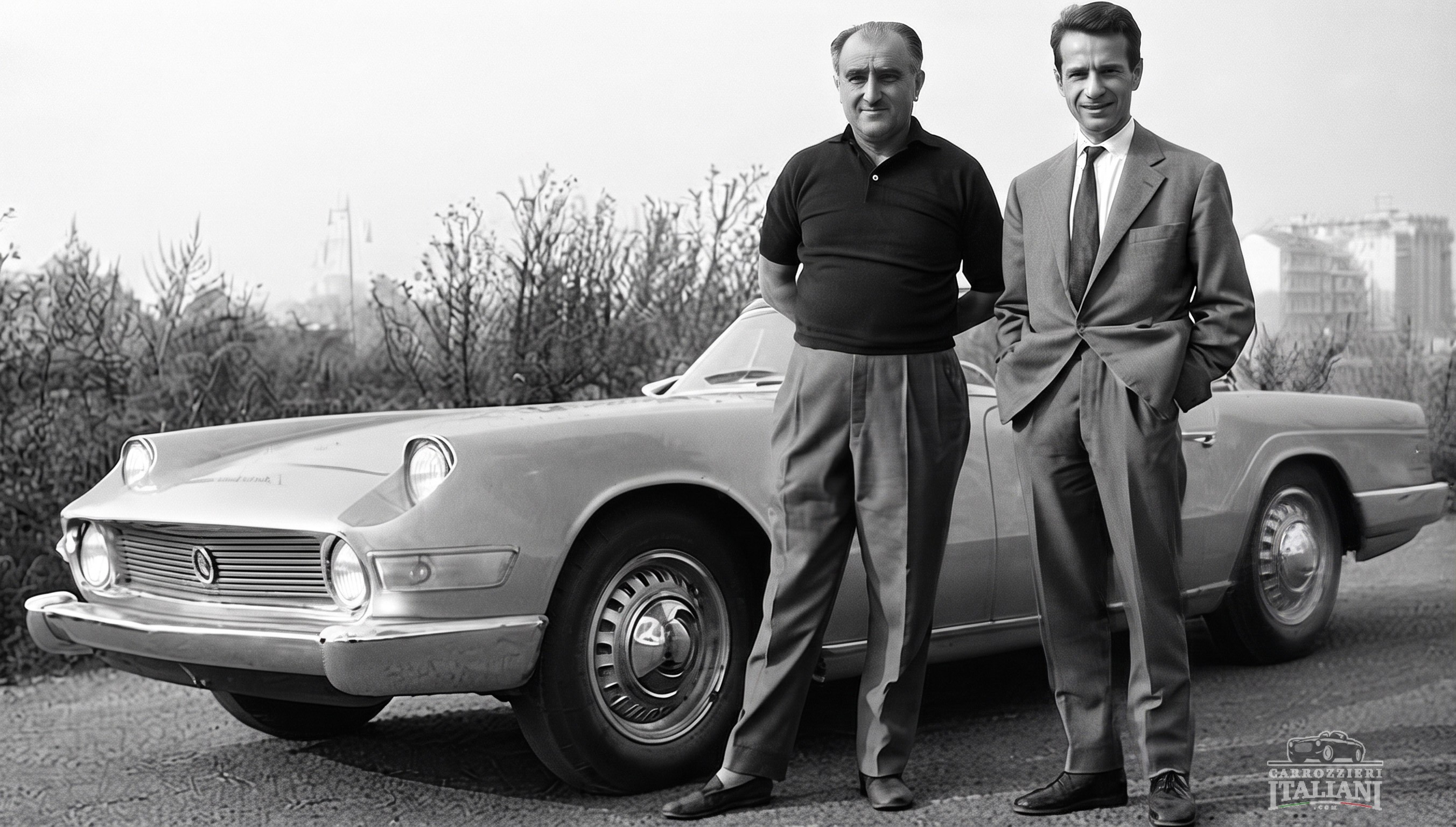
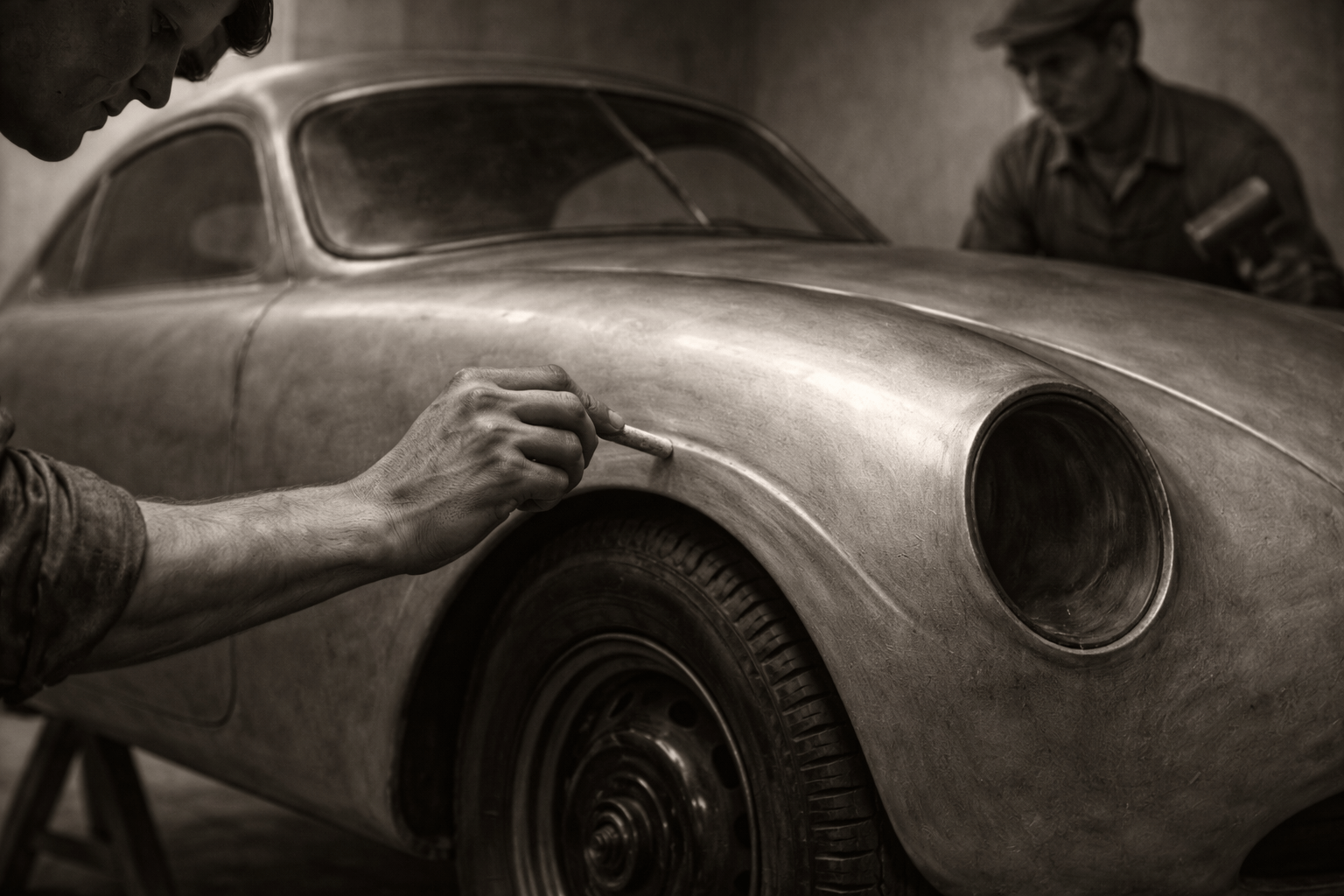
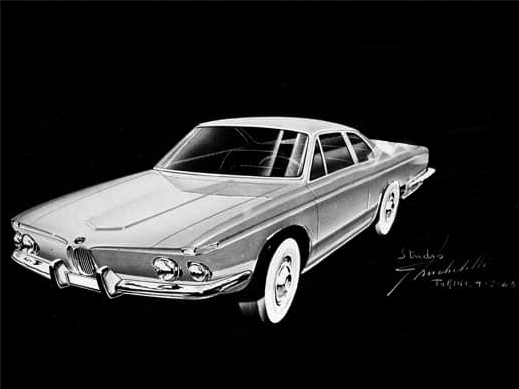
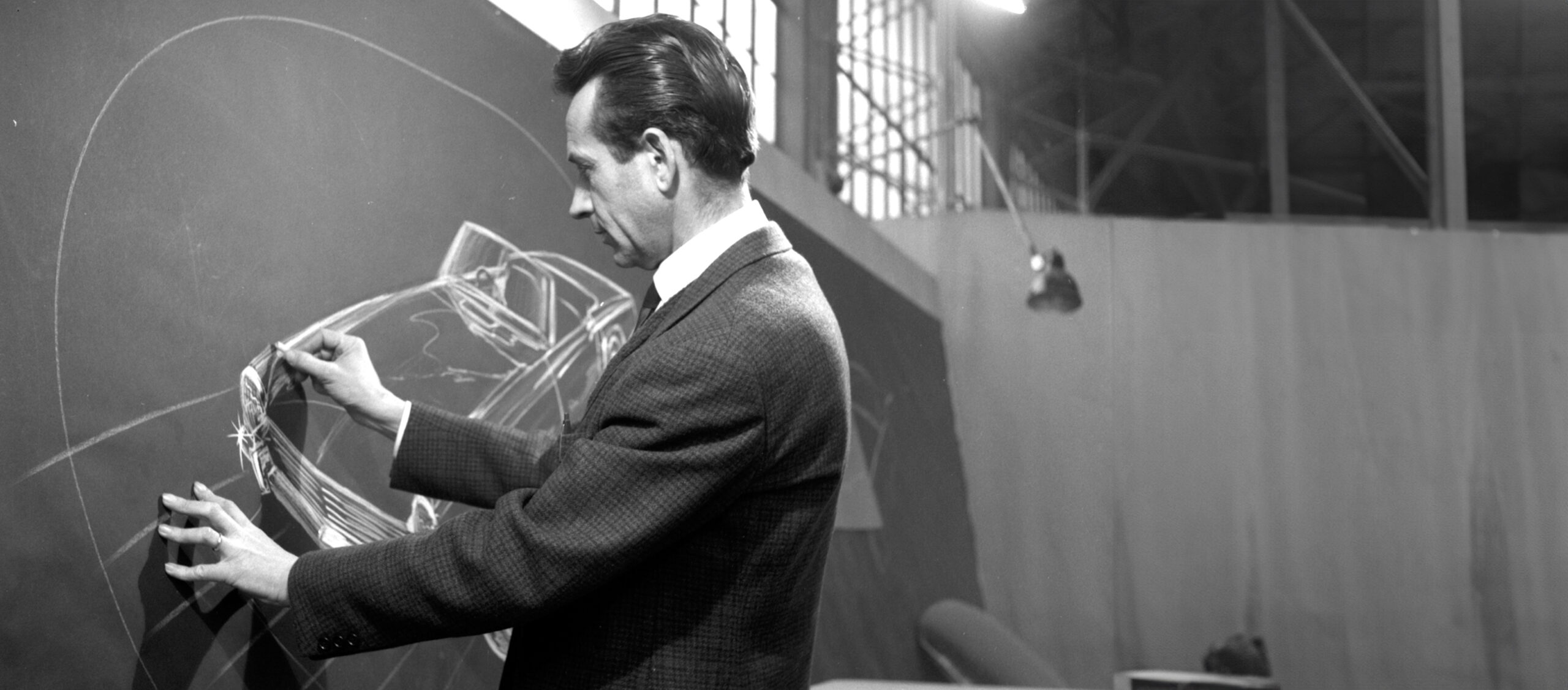
The Triumph Zobo Saloon prototype was developed as the principal expression of the Zobo program that led to the production Triumph Herald. Initiated under the technical leadership of Harry Webster, the project introduced a structured development methodology in which multiple body styles were planned simultaneously. Saloon, coupé, convertible, and estate variants were conceived as a unified family, sharing common proportions, mechanical layout, and construction principles. This approach was intended to reduce engineering duplication and support efficient series production. Design responsibility was assigned to Giovanni Michelotti, who produced a complete set of exterior drawings in Turin. The saloon body defined the formal and dimensional reference for the entire range. Its proportions, roofline, door apertures, and glazing were resolved at an early stage, with emphasis on structural clarity and manufacturability. Carrozzeria Vignale was commissioned to construct the prototype bodywork, forming the panels by hand in accordance with Michelotti’s specifications. The saloon prototype was built on chassis X597. Although delivered after the coupé prototype, it represented the most commercially relevant configuration and served as the primary basis for production engineering. The body structure followed Michelotti’s modular construction philosophy. The front section was designed as a single assembly, while the remaining bodywork was composed of relatively small sheet-metal panels, welded or bolted together. This strategy allowed stamping work to be outsourced to smaller suppliers without large presses, aligning with Standard-Triumph’s industrial capabilities and cost constraints. Engineering development proceeded in parallel in the United Kingdom. Alford & Alder engineers worked on suspension geometry, steering layout, braking systems, hubs, and packaging. During this phase, a proposal by Martin Tustin led to the specification of an unusually tight turning circle. The resulting steering geometry, uncommon for a compact saloon, was adopted as a defining characteristic of the Herald and later influenced several British competition cars. The car was originally meant to be sold under the Standard brand.
IN THE ARCHIVE
Related people
IN THE ARCHIVE
Coachbuilders & design studios
02 / TECHNICAL IDENTITY
Specifications & construction
Production & construction
- Production type
- Prototype
Design & manufacture
- Designer · Documented
- Giovanni Michelotti
- Coachbuilder / Body Builder · Documented
- Vignale
- Manufacturer · Documented
- Triumph
04 / INDIVIDUAL HISTORY
Chassis & provenance
Chassis X597
- Chassis number
- X597
- Year
- 1958
06 / EVENTS & AWARDS
Events & awards
No events or documented awards are currently recorded for this vehicle.
07 / THE VEHICLE IN DETAIL
Photo gallery 2 photographs
08 / FROM THE ARCHIVE
Archive
No publishable archival references are currently catalogued for this vehicle.
THE CONVERSATION
Comments 0
Share a memory, a period photograph or a documented detail about this car.