
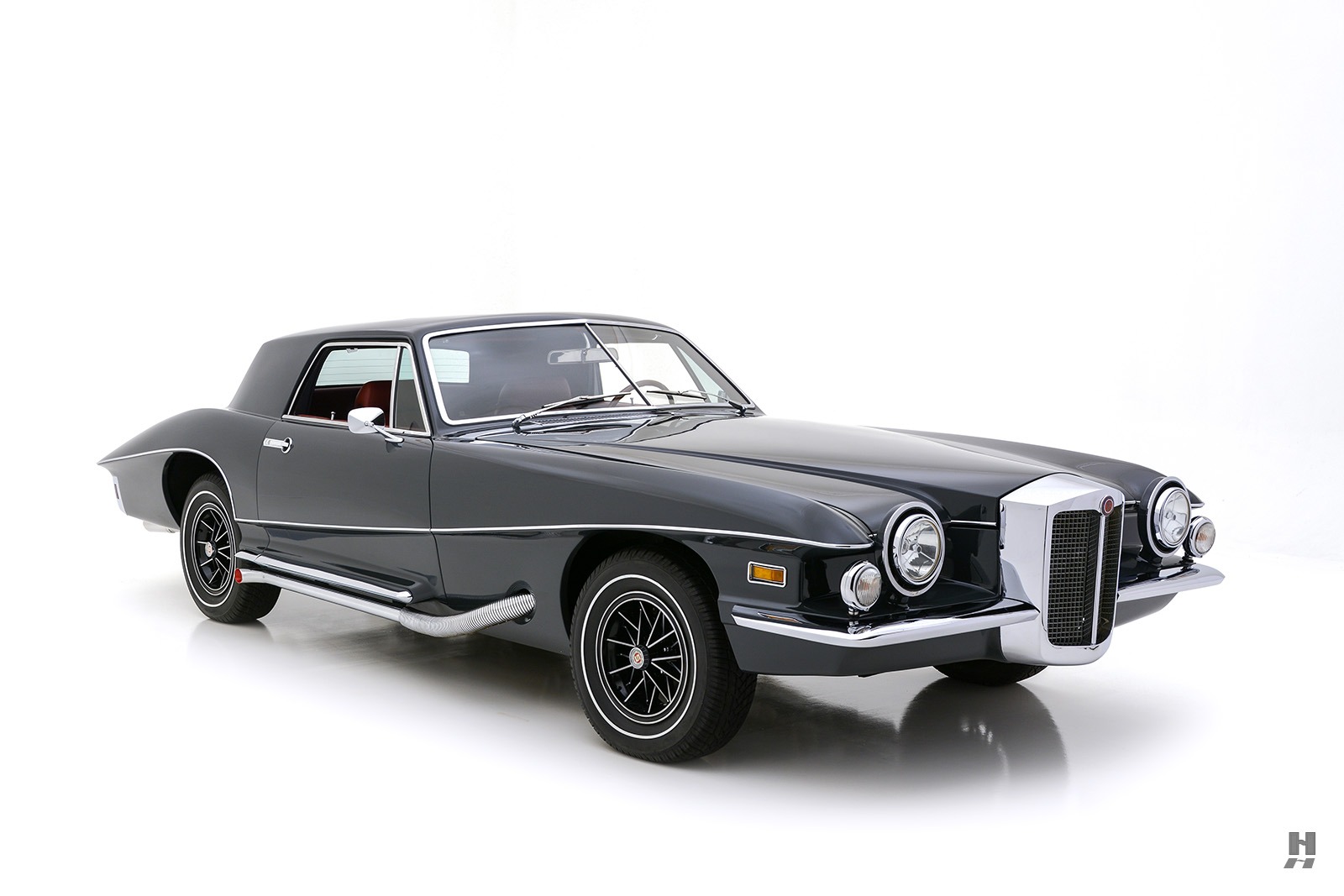
THE VEHICLE AT A GLANCE
Model dossier
- Production period
- 1971
- Body style
- Coupé
- Engine
- V8
- Type
- Limited
- Production
- 25–27
THE PEOPLE BEHIND THE CAR
Coachbuilding, design & conversions

PRICE & SALES RECORD
Vehicle value
- Original price
- Not documented
- Latest recorded sale
- Not documented
01 / THE STORY
History & context
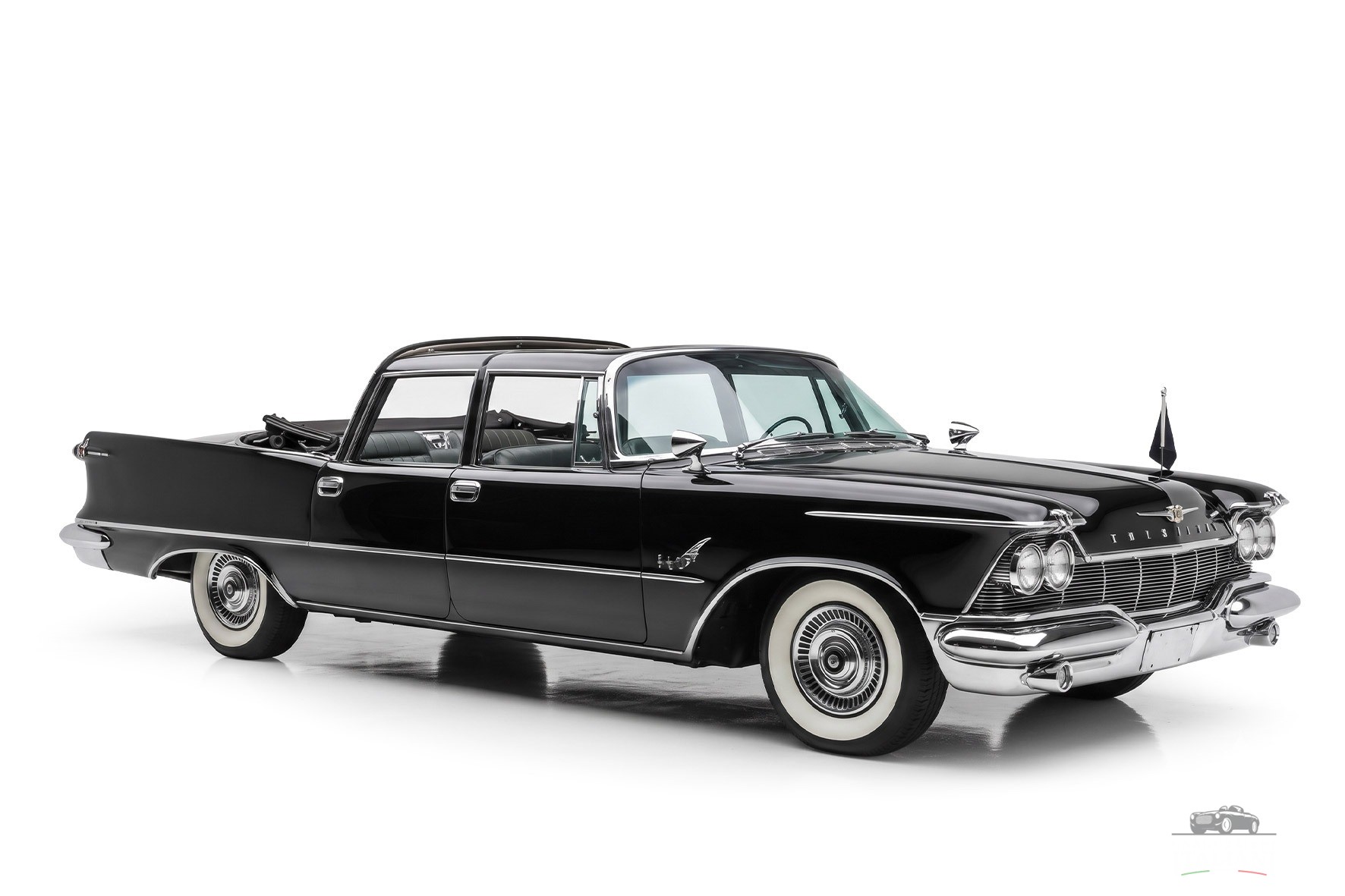
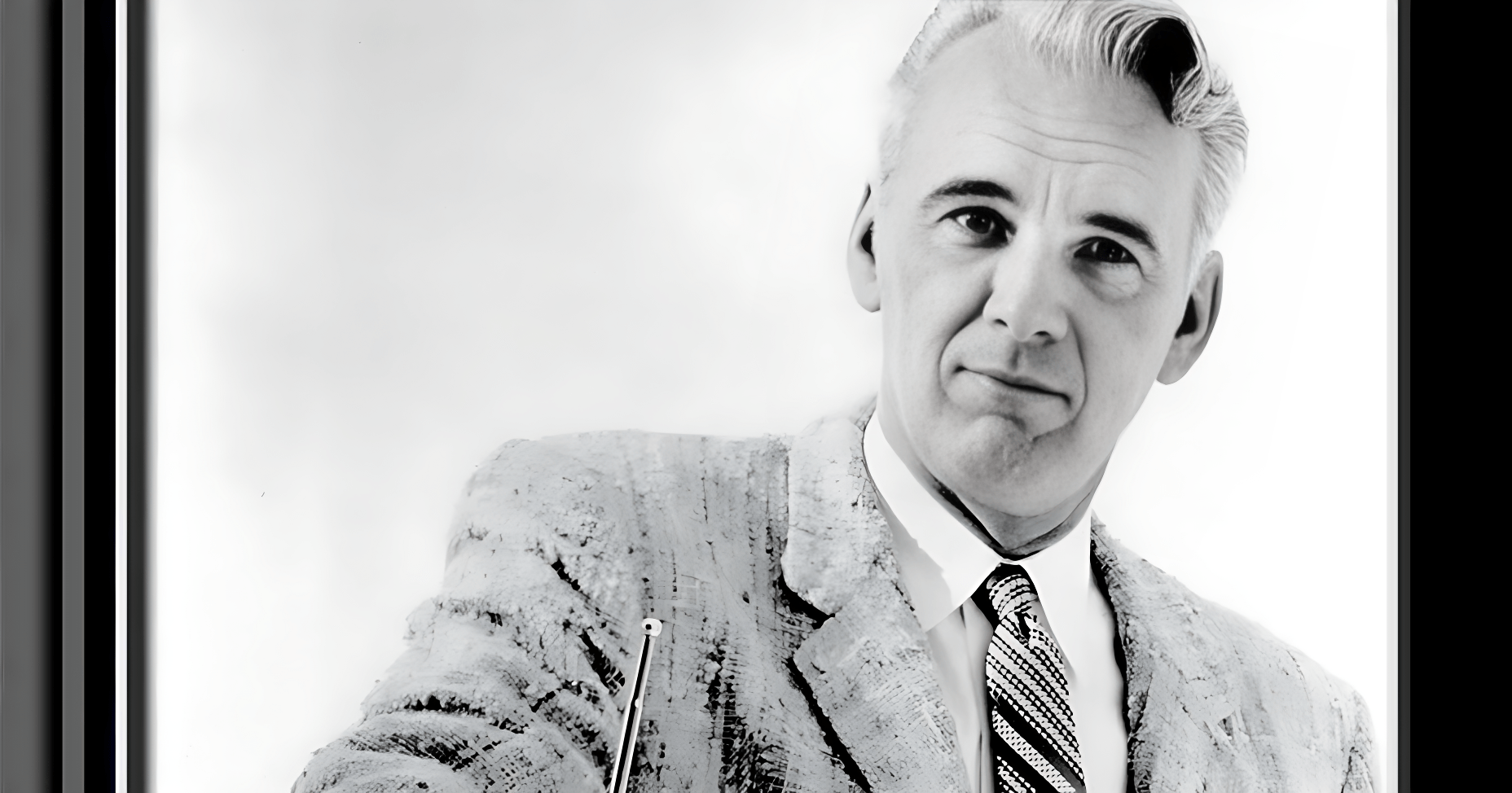
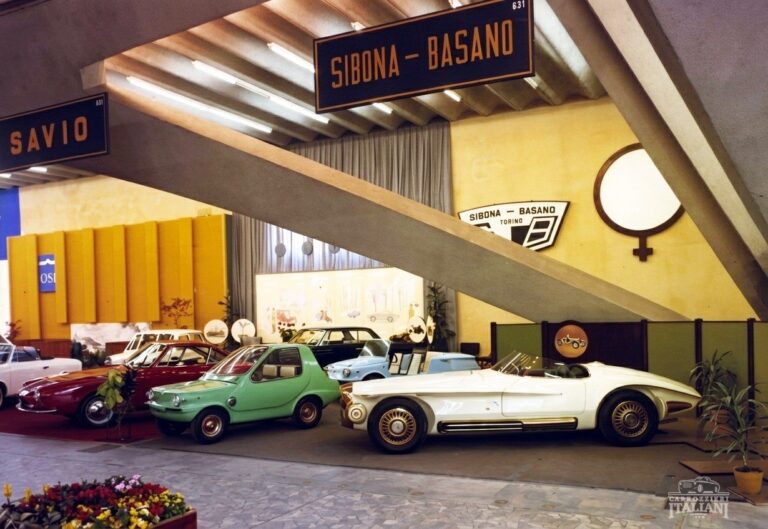
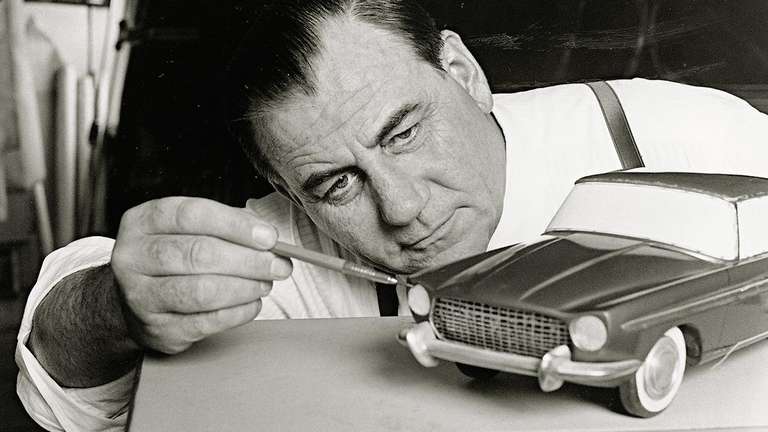
The Stutz Blackhawk, a symbol of luxury and exclusivity, owes its existence to the visionary design of Virgil Exner, a prominent figure in automotive history. Exner, who defined the iconic fins and chrome era of the 1950s during his tenure as the head of Chrysler design with his revolutionary “Forward Look,” was instrumental in transforming the American automotive landscape. Before that, he played a key role in introducing American buyers to sophisticated Italian style through collaborative dream cars created with Gigi Segre of Carrozzeria Ghia. After a contentious departure from Chrysler in 1962, Exner embarked on various personal projects and served as a consultant. In the mid-1960s, he conceived a series of “Revival Cars,” modern interpretations of classic-era automobiles such as Mercer, Duesenberg, Bugatti, Pierce-Arrow, Packard, and Stutz. While his attempt to revive Duesenberg was unsuccessful, Exner turned his attention to the Stutz Motor Car Company in 1968, seeking to resurrect the once-glorious marque. Exner’s vision for the Stutz Blackhawk became a reality with the help of James O’Donnell, a wealthy investor with a deep affection for Stutz automobiles. O’Donnell’s financial backing allowed Exner to focus on the design, leading to the creation of a stylish and high-performance grand touring coupe that honored the prestigious Stutz name. The Stutz Blackhawk was conceived as a luxurious, hand-built motorcar, drawing inspiration from the Dual-Ghia of the 1950s. It was crafted using American-sourced components, but with an exclusive Italian touch. The prototype for the Stutz Blackhawk was built by Ghia, a renowned Italian coachbuilder. The production process was incredibly costly and labor-intensive, involving the purchase of complete Pontiac Grand Prix vehicles, which were then shipped to Carrozzeria Padane in Modena. There, the entire body and interior were discarded, and the new coachwork was meticulously hand-built with no shared components with the donor car. Each car was then finished with high-quality paint, luxurious leather, and wood trimmings, tailored to the buyer’s specifications. The Stutz Blackhawk attracted an elite clientele, including Dean Martin, Sammy Davis Jr., Lucille Ball, and Elvis Presley, who famously purchased the very first Blackhawk at its debut at the Waldorf Astoria in New York—a car that remains on permanent display at Graceland. In 1971, only 25 of the original split-windshield “Series I” Blackhawks were produced, each carrying a staggering price tag of $35,000, equivalent to nearly $225,000 today. Despite the high cost, Stutz lost approximately $10,000 on each car. Recognizing the unsustainable business model, O’Donnell revised the production process in 1972 to use more of the Pontiac donor car’s substructure, which, while making the car more profitable, compromised the unique proportions of Exner’s original design. However, it is the early, coachbuilt Blackhawks that remain most coveted by collectors today. Of the original 25, only 16 are believed to survive, maintaining their status as some of the most exclusive and desirable cars of their era.
IN THE ARCHIVE
Coachbuilders & design studios
02 / TECHNICAL IDENTITY
Specifications & construction
Production & construction
- Production
- 25–27
- Production type
- Limited
- Production notes
- Independent histories consistently support Virgil Exner design and Padane hand-built Series I production in Modena. Sources differ in count framing: 25 cars are reported for 1971 Padane production, while another history refers to the first 27 early cars. Preserve the range/context rather than a false single total. NO_AUTO_INHERIT.
Engine & performance
- Engine configuration
- V8
Design & manufacture
- Designer · Documented
- Virgil Exner
- Manufacturer · Documented
- Stutz
- Coachbuilder / Body Builder · Documented
- Padane
04 / INDIVIDUAL HISTORY
Chassis & provenance
Ownership & provenance
- Ownership & history · Legacy attribution
- VIP Owned
- Ownership association · Legacy attribution
- Dean Martin
- Ownership association · Legacy attribution
- Elvis Presley
- Ownership association · Legacy attribution
- Lucille Ball
- Ownership association · Legacy attribution
- Samuel George Davis Jr
- Ownership scope
- These associations may concern individual examples of a model. They do not establish ownership of every chassis. Legacy attributions remain subject to historical verification.
06 / EVENTS & AWARDS
Events & awards
No events or documented awards are currently recorded for this vehicle.
07 / THE VEHICLE IN DETAIL
Photo gallery 8 photographs
Show 2 more photographs Show fewer photographs
08 / FROM THE ARCHIVE
Archive
References held in the vehicle dossier. Their inclusion does not establish that every historical claim has been independently verified.
| Reference | Source type |
|---|---|
| Stutz Blackhawk 1 Series by Padane www.rmw.lv | Specialist model history |
| Makes That Didn't Make It — Stutz www.makesthatdidntmakeit.com | Independent marque history |
| Daniel Schmitt — 1971 Stutz Blackhawk Series I www.schmitt.com | Specialist surviving vehicle history |

THE CONVERSATION
Comments 0
Share a memory, a period photograph or a documented detail about this car.