
THE VEHICLE AT A GLANCE
Model dossier
- Production period
- 1958
- Body style
- Station Wagon
- Engine
- Inline-4
- Type
- Mass
THE PEOPLE BEHIND THE CAR
Coachbuilding, design & conversions
PRICE & SALES RECORD
Vehicle value
- Original price
- Not documented
- Latest recorded sale
- Not documented
01 / THE STORY
History & context
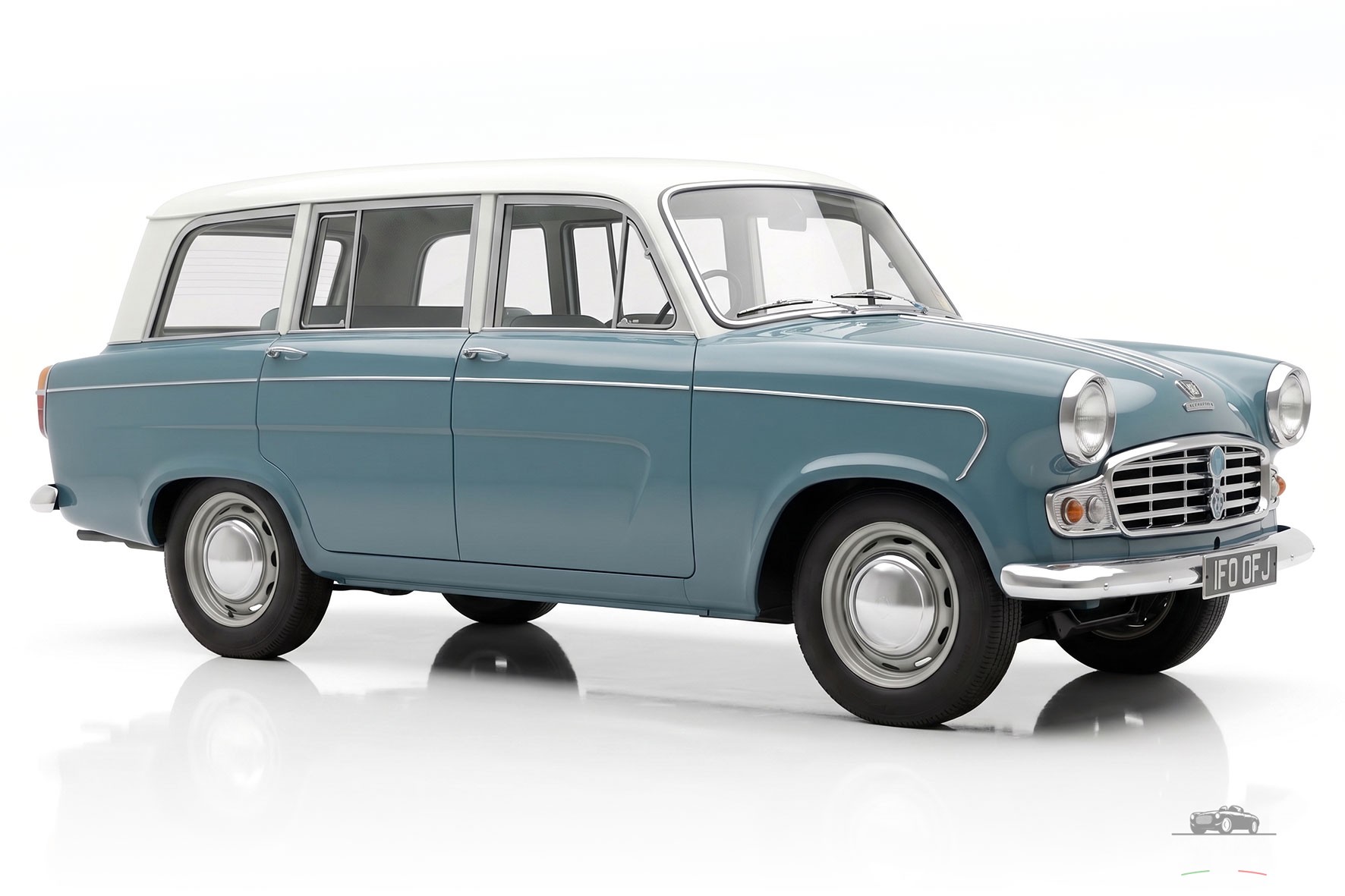
The Standard Vanguard Vignale Estate is a mid-sized station wagon produced by the Standard Motor Company between 1958 and 1961. The model represented the estate variant of the Vanguard Phase III saloon, and incorporated stylistic revisions executed by the Italian coachbuilding firm Vignale, under the direction of designer Giovanni Michelotti. These changes were commissioned by Standard-Triumph as part of a broader strategy to modernize the aesthetic identity of its post-war model range while retaining mechanical continuity. The vehicle retained the Phase III’s monocoque construction and front-engine, rear-wheel-drive configuration. Power was supplied by a 2088 cc inline-four engine producing approximately 68 brake horsepower, coupled with a three-speed manual transmission as standard. A four-speed gearbox, available with an optional Laycock de Normanville overdrive unit, was later introduced. From 1960, a revised engine of 1998 cc displacement and six cylinders was made available, offering increased power output and smoother operation. Suspension comprised independent front coils and a rear live axle with leaf springs. Braking was by hydraulic drums on all four wheels. The estate body was notable for its horizontally split tailgate, permitting independent opening of the glass upper section and the lower panel. This configuration facilitated access to the rear load space, which could be expanded via folding rear seat backs. Interior accommodations provided for five occupants. Vignale’s revisions to the exterior included a new front grille, deeper windscreen, modified rear window treatments, and alterations to brightwork and body-side detailing. These changes differentiated the estate from its saloon counterpart while preserving structural commonality. Production figures for the Vignale Estate were modest, and the model was manufactured concurrently with the Vanguard saloon until its discontinuation in 1961. The vehicle was ultimately superseded by the Vanguard Six and related Ensign derivatives, which adopted more contemporary mechanical and stylistic features. The Standard Vanguard Vignale Estate exemplifies a mid-century collaboration between British automotive engineering and Italian stylistic intervention. It occupies a transitional position within the history of the Standard marque, illustrating both a reliance on existing mechanical architectures and an increasing openness to external design influences in the context of the international post-war automotive market.
IN THE ARCHIVE
Related people
IN THE ARCHIVE
Coachbuilders & design studios
02 / TECHNICAL IDENTITY
Specifications & construction
Production & construction
- Production type
- Mass
- Production notes
- Vignale designation/design collaboration must not be interpreted as body construction.
Engine & performance
- Engine configuration
- Inline-4
- Specification notes
- ROLE CORRECTION 2026-09-29 — cleared ORG-VIGNALE from body_builder_org_key; Standard remains manufacturer, Michelotti remains individual designer.
Design & manufacture
- Designer · Documented
- Giovanni Michelotti
- Design Studio · Documented
- Vignale
- Manufacturer · Documented
- Standard
06 / EVENTS & AWARDS
Events & awards
No events or documented awards are currently recorded for this vehicle.
07 / THE VEHICLE IN DETAIL
Photo gallery 2 photographs
08 / FROM THE ARCHIVE
Archive
References held in the vehicle dossier. Their inclusion does not establish that every historical claim has been independently verified.
| Reference | Source type |
|---|---|
| Standard Motor Club — Buying Guide: Vanguard Phase 3, Ensign & Sportsman www.standardmotorclub.org.uk | Marque club historical guide |
| Motor-car.net — Standard Vanguard Vignale 1958–61 motor-car.net | Specialist model history |
| Historics — 1961 Standard Vanguard Vignale Estate www.historics.co.uk | Auction exact vehicle history |
THE CONVERSATION
Comments 0
Share a memory, a period photograph or a documented detail about this car.