
Lancia Orca: The Future, Without the Noise.
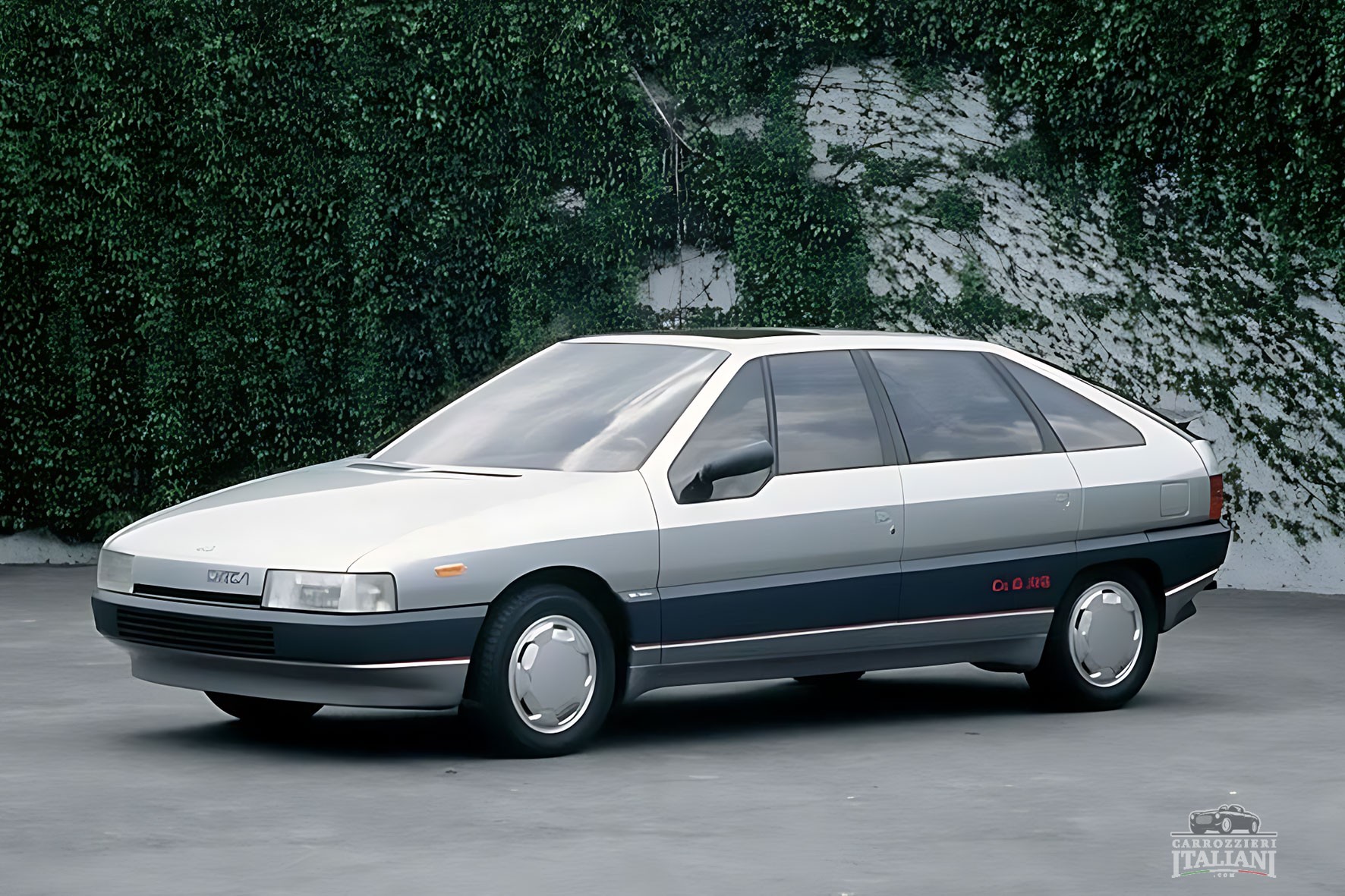
There are concept cars that shout, concept cars that posture, and concept cars that exist mostly to make a motor show stand look expensive. Then there are the rare ones that seem to arrive from a slightly better version of the future, one where engineers, designers, and dreamers were allowed to sit in the same room long enough to agree on something genuinely clever. The Lancia Orca belongs firmly in that last category.
Presented in 1982 at the Turin Motor Show, the Orca was not a supercar, not a wedge-shaped fantasy machine, and not one of those unusable show cars with doors that open like stage curtains. It was, at least in concept, a compact four-door family car. That sounds modest, almost ordinary. But the Orca was anything but ordinary. It was a rolling argument that the everyday car could be more aerodynamic, more intelligent, more spacious, and more technologically advanced without becoming ridiculous.
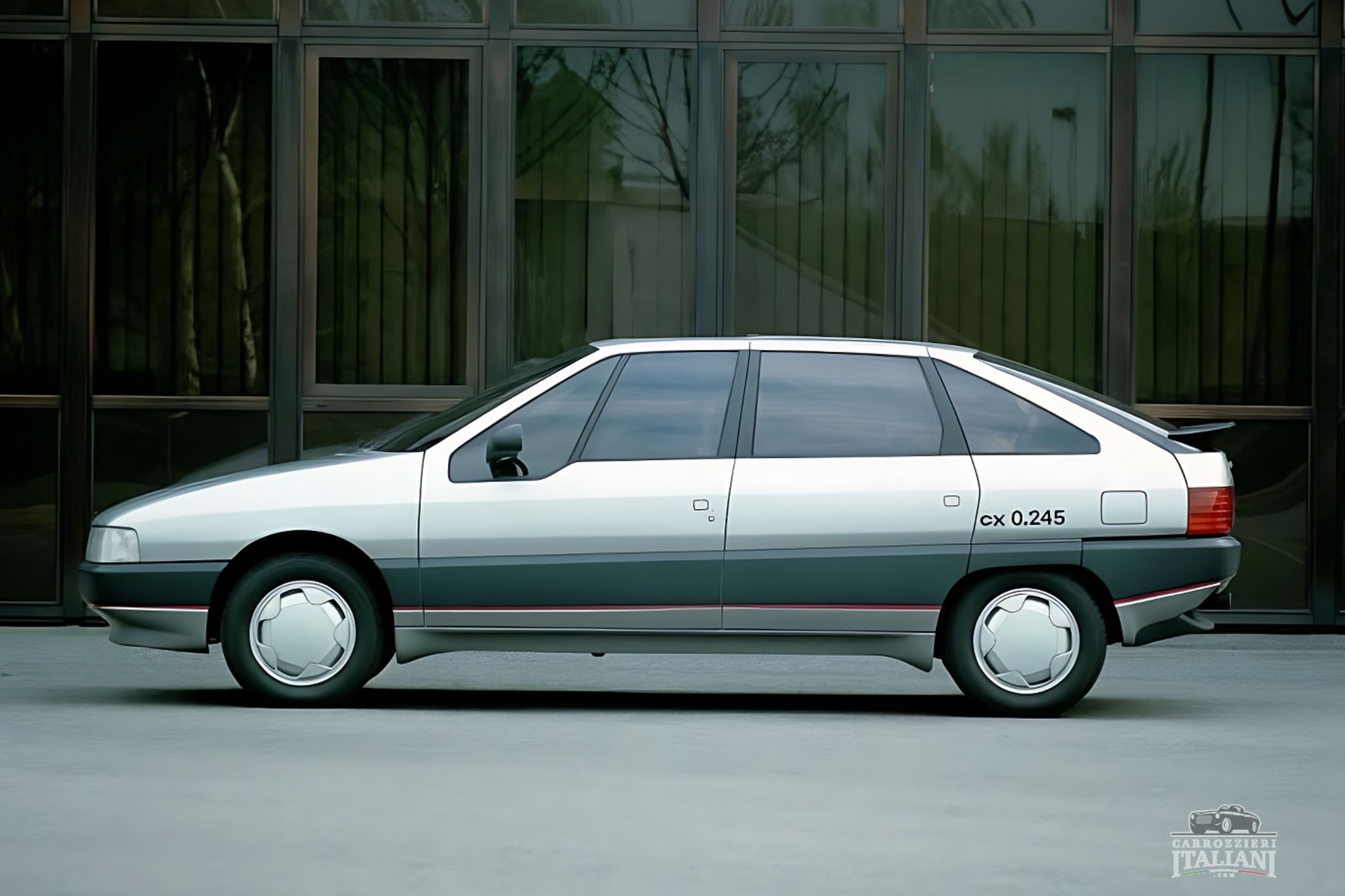
The name itself is wonderfully Lancia. Orca. Not aggressive in the way modern car names often try to be, but fluid, marine, almost biological. It suggested movement through a dense medium with minimum resistance. That was exactly the point. The Orca was designed to slip through the air with the smooth, untroubled confidence of a sea creature moving through water. Its drag coefficient of 0.245 was remarkable for the early 1980s, especially for a practical four-door hatchback-shaped car. Today, we have become used to talking about aerodynamic efficiency in electric cars and luxury saloons, but in 1982 this was seriously forward-thinking stuff.
Quiet genius in motion
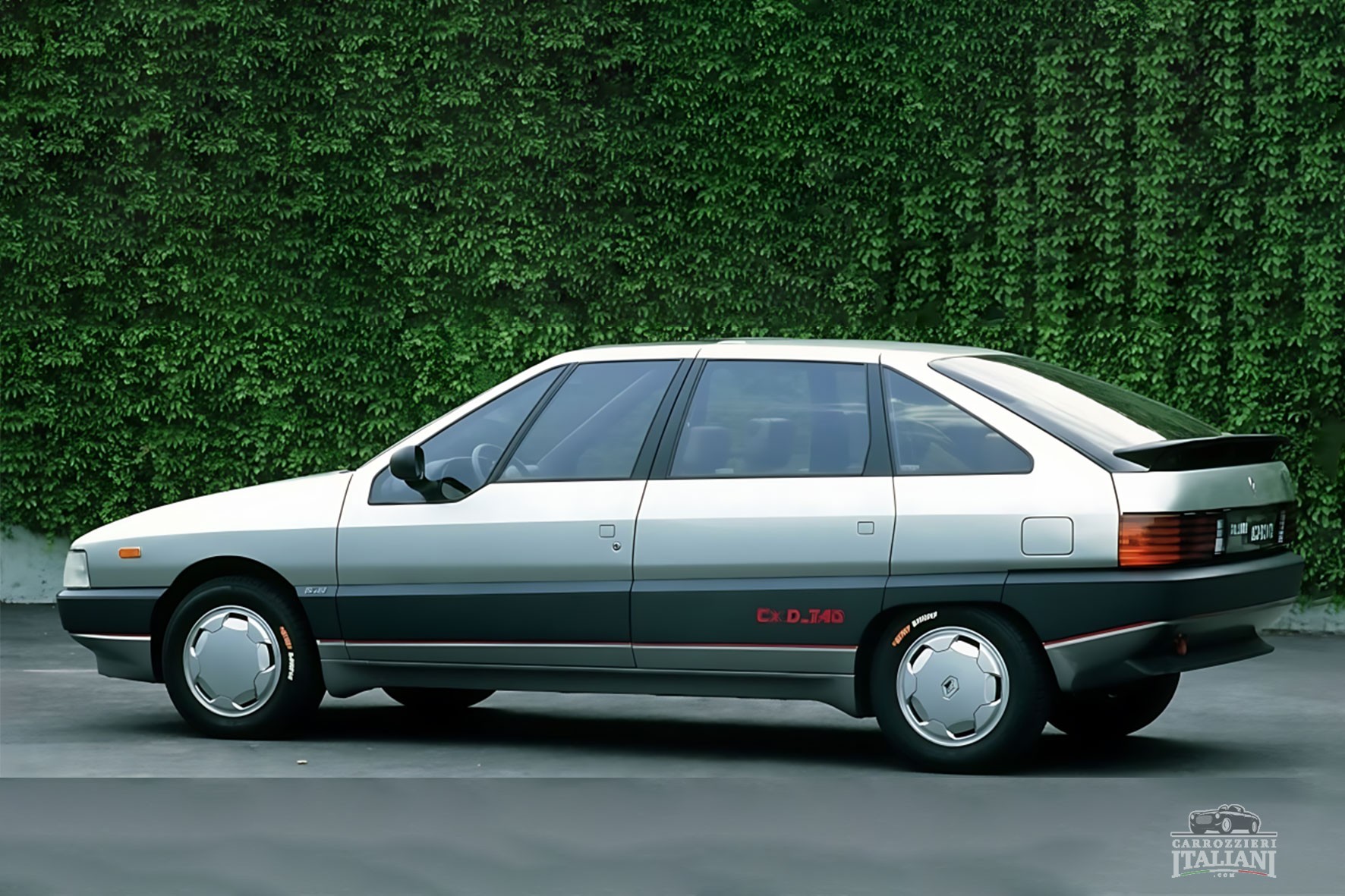
The Orca was the work of Giorgetto Giugiaro and Italdesign, which already tells you that it was unlikely to be clumsy. Giugiaro had a special talent for making rational shapes feel desirable. His best cars were not merely styled; they were resolved. The Orca has that quality. It is clean, calm, and almost strangely free of decoration. There are no unnecessary creases, no fake intakes, no dramatic flourishes added because somebody in marketing wanted the car to look “dynamic”. The body is smooth and disciplined, with glass areas that flow neatly into the surrounding panels and a steeply raked windscreen that gives the whole thing a soft, technical intelligence.
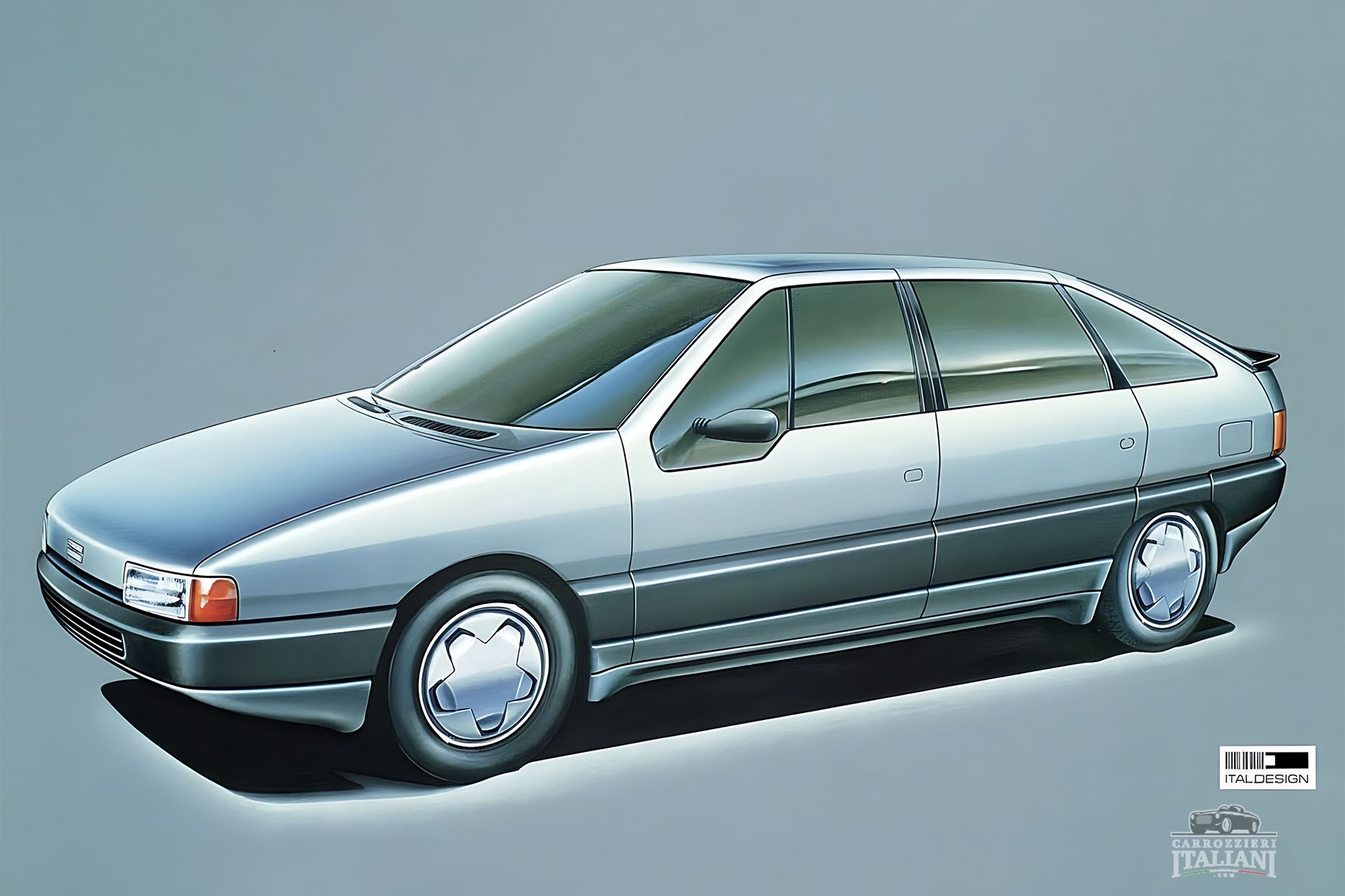
Look at it today and it does not scream 1982. Of course, there are period details: the flat surfaces, the squared-off lamps, the black lower body cladding, the slim red accent line. But the underlying thinking feels modern. The Orca looks less like an old concept car and more like an alternate timeline version of the compact executive hatchback. It has the confidence of something that did not need to be loud because it knew exactly what it was trying to achieve.
That is perhaps the most interesting thing about the Orca. It was not a fantasy about speed or glamour. It was a fantasy about better transport. It asked a simple question: what if a compact car could be genuinely roomy, aerodynamically outstanding, technologically ambitious, and still elegant? In that sense, it was more radical than many outrageous show cars. Anyone can build a dramatic two-seat wedge with poor visibility and no luggage space. Building a clever family car is much harder.
🔗 Read more: Giorgetto Giugiaro: Car Designer of the Century
Delta blood, future shape
The proportions are particularly fascinating. The Orca was a two-box saloon, or hatchback-like berlina, with four doors and four seats. It did not have the long bonnet and formal boot of a traditional sedan, nor the blunt practicality of a basic hatchback. It sat somewhere between categories, which made it feel progressive. The cabin was pushed forward, the windscreen deeply inclined, and the surfaces were carefully blended. The result was a car that looked compact but not cramped, aerodynamic but not alien.
The relationship with the Lancia Delta is important too. Beneath the Orca’s experimental bodywork was a connection to the mechanical world of the Delta Turbo 4×4 project, the line of thinking that would eventually lead toward the legendary Delta HF 4WD. That gives the Orca a pleasingly serious undertone. It was not just a hollow styling buck with a spaceship dashboard. There was real Lancia engineering logic beneath it. The car was fitted with selectable four-wheel drive, which, at the time, was not the common feature it later became. In the early 1980s, four-wheel drive in a compact road car still felt technical, purposeful, and faintly exotic.
Knowing what happened later with the Delta only makes the Orca more intriguing. The Delta HF 4WD and its successors would go on to build one of the most celebrated motorsport reputations in rallying. The Orca was not a rally car, of course, and it was not trying to be. But there is a delightful tension in the idea that this smooth, low-drag, intelligent concept shared a mechanical philosophy with the machinery that would help define Lancia’s wild rallying years. One was about slicing through air and improving the everyday drive; the other was about clawing through mud, gravel, snow, and history. Both were unmistakably Lancia.
And then there is the interior.
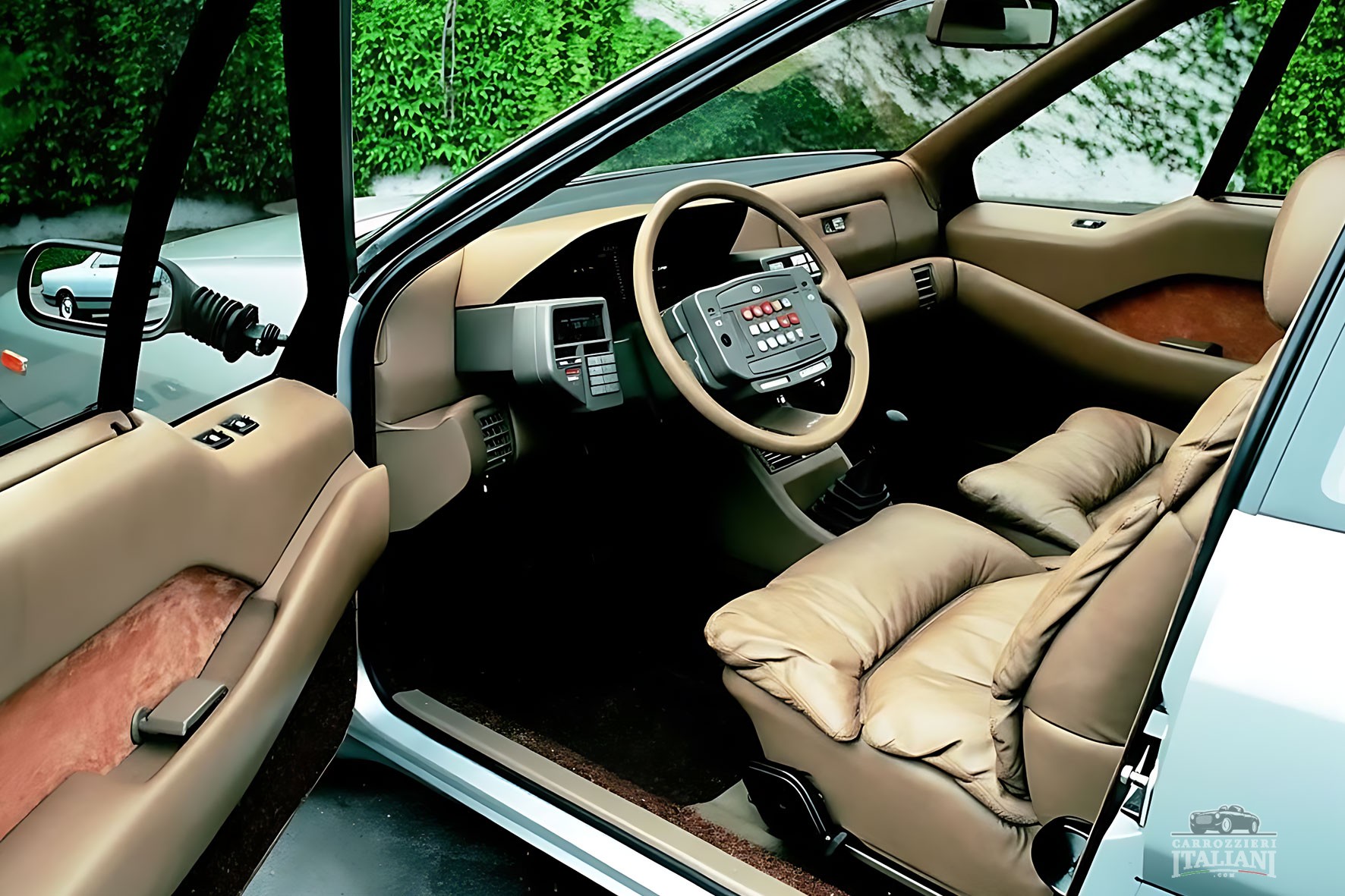
If the outside of the Orca is calm, the cabin is where the science fiction properly begins. The dashboard looks like the sort of thing a 1980s film director would install in a spacecraft if the brief included “Italian taste” and “several dozen buttons”. It is wonderfully ambitious. Ahead of the driver sits a large command panel, filled with switches, controls, and digital displays. The instruments are tucked beneath a broad, curved brow, giving the whole arrangement a cockpit-like feel. On either side of the steering wheel are satellite control pods, another futuristic idea that many manufacturers would experiment with over the following decades
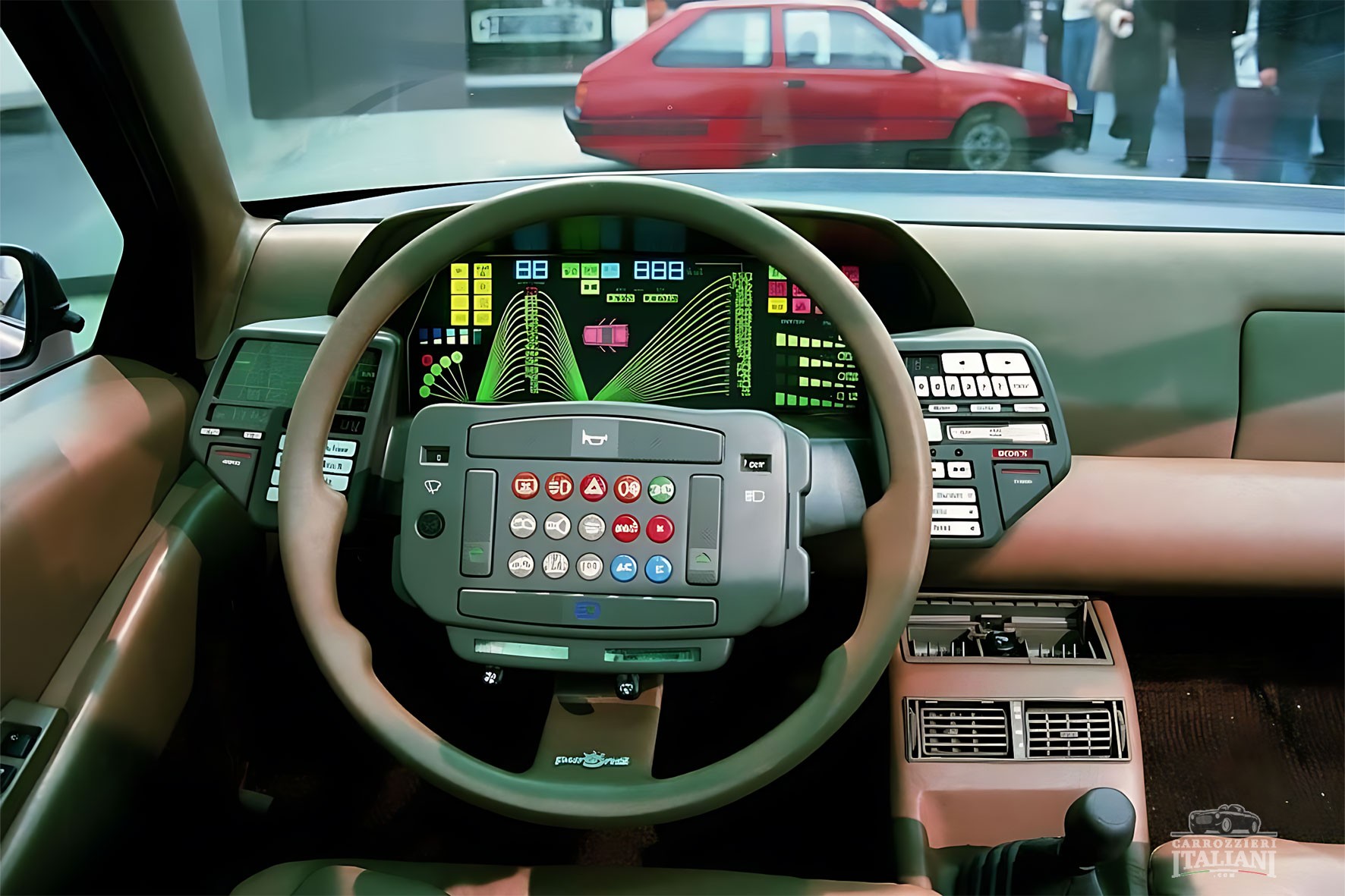
It is easy to smile at interiors like this now, because the future they imagined did not arrive in quite the same form. Modern cars have largely replaced physical futurism with screens. Where the Orca had buttons, pods, and dedicated displays, today’s cars often have a slab of glass and a software menu. But that makes the Orca’s approach feel more charming, not less. It was tactile futurism. The controls looked important because they were physical things, placed deliberately around the driver. You can imagine sitting in it and feeling as if you were preparing to operate a piece of serious equipment.
There is something very human about that kind of optimism. In the early 1980s, digital technology had not yet become invisible. It was still theatrical. A digital display was not merely a way to show information; it was a statement that the future was here, glowing faintly green or amber under a smoked plastic cover. The Orca captures that moment perfectly. It is not minimalist. It is not trying to disappear into the background. It is proud of its electronics and proud of the idea that a car interior could be an interface, not just a dashboard.
Safety, shaped by elegance
One of the Orca’s most interesting safety ideas was its front warning light. When the driver braked, this light would illuminate at the front of the car, alerting pedestrians and oncoming traffic that the vehicle was slowing. It sounds simple, almost obvious, yet it shows a type of thinking that went beyond convention. Brake lights are traditionally for people behind you. The Orca asked whether braking could also be communicated to people ahead of you. In modern language, we might call that an early gesture toward active safety, or at least preventive signalling. In plain language, it was a clever idea that considered the car as part of a shared environment rather than an isolated machine.
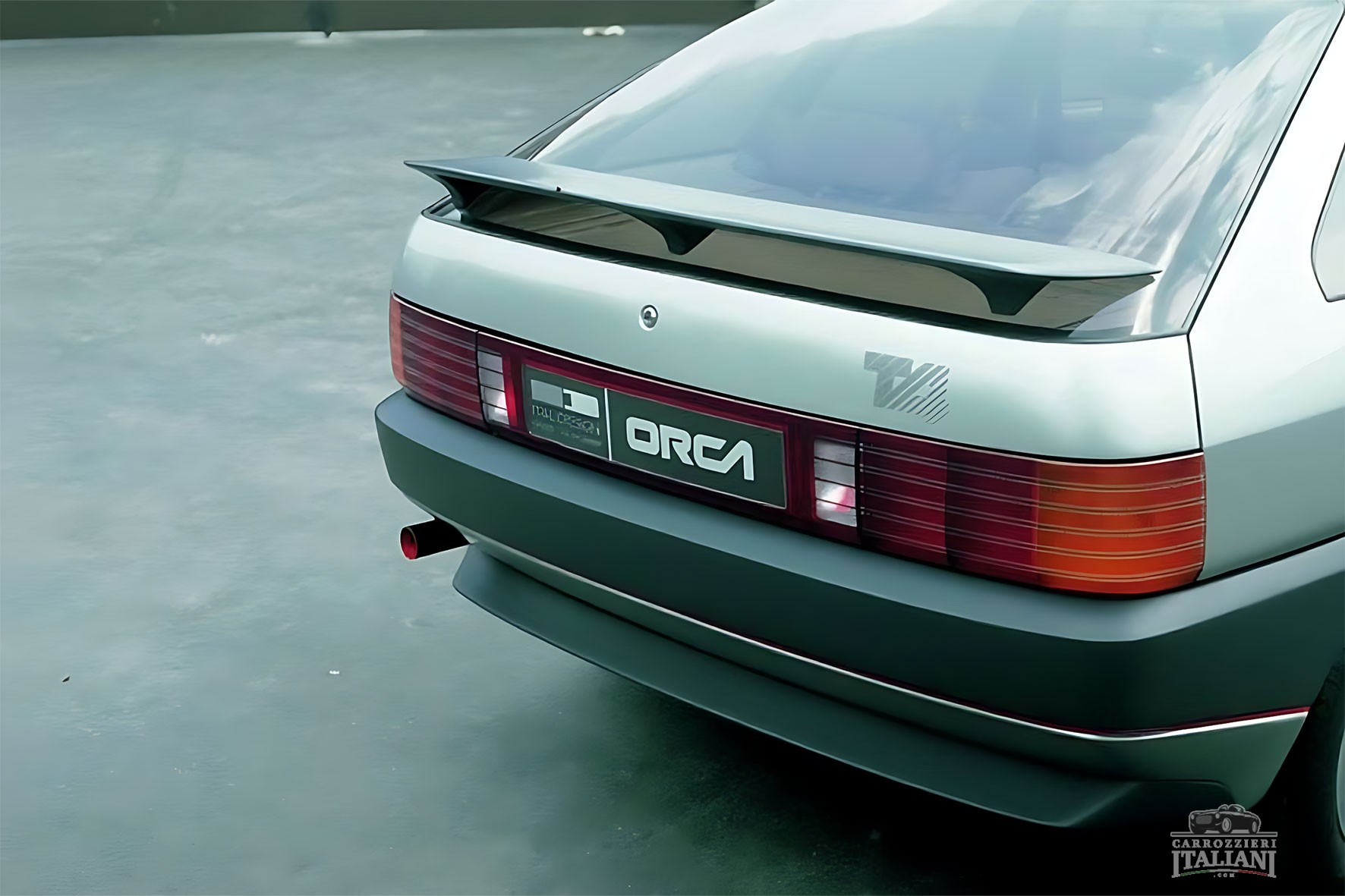
That is where the Orca becomes more than a design curiosity. It was full of thoughts about how cars could work better in the real world. Aerodynamics were not pursued only because a low number looked good in a press release. Reduced drag meant efficiency, stability, and quietness. The smooth body was not just styling; it was function. The cabin layout was not simply theatrical; it was an attempt to rethink the relationship between driver and machine. The four-wheel-drive system was not a gimmick; it pointed toward traction, security, and all-weather ability. The front brake warning light was not decoration; it was communication.
🔗 Read more: The Lotus Esprit: Giugiaro’s Wedge Wonder
This is why the Orca still feels so compelling. Many concept cars age badly because they are built around spectacle. Once the spectacle fades, there is not much left. The Orca ages differently because its ideas remain relevant. We are still talking about aerodynamic efficiency. We are still arguing about driver interfaces. We are still trying to improve safety communication between cars, pedestrians, cyclists, and other road users. We are still fascinated by the idea of a compact car that feels spacious, efficient, and technically sophisticated. The Orca may look like a product of its time, but its questions have not gone away.
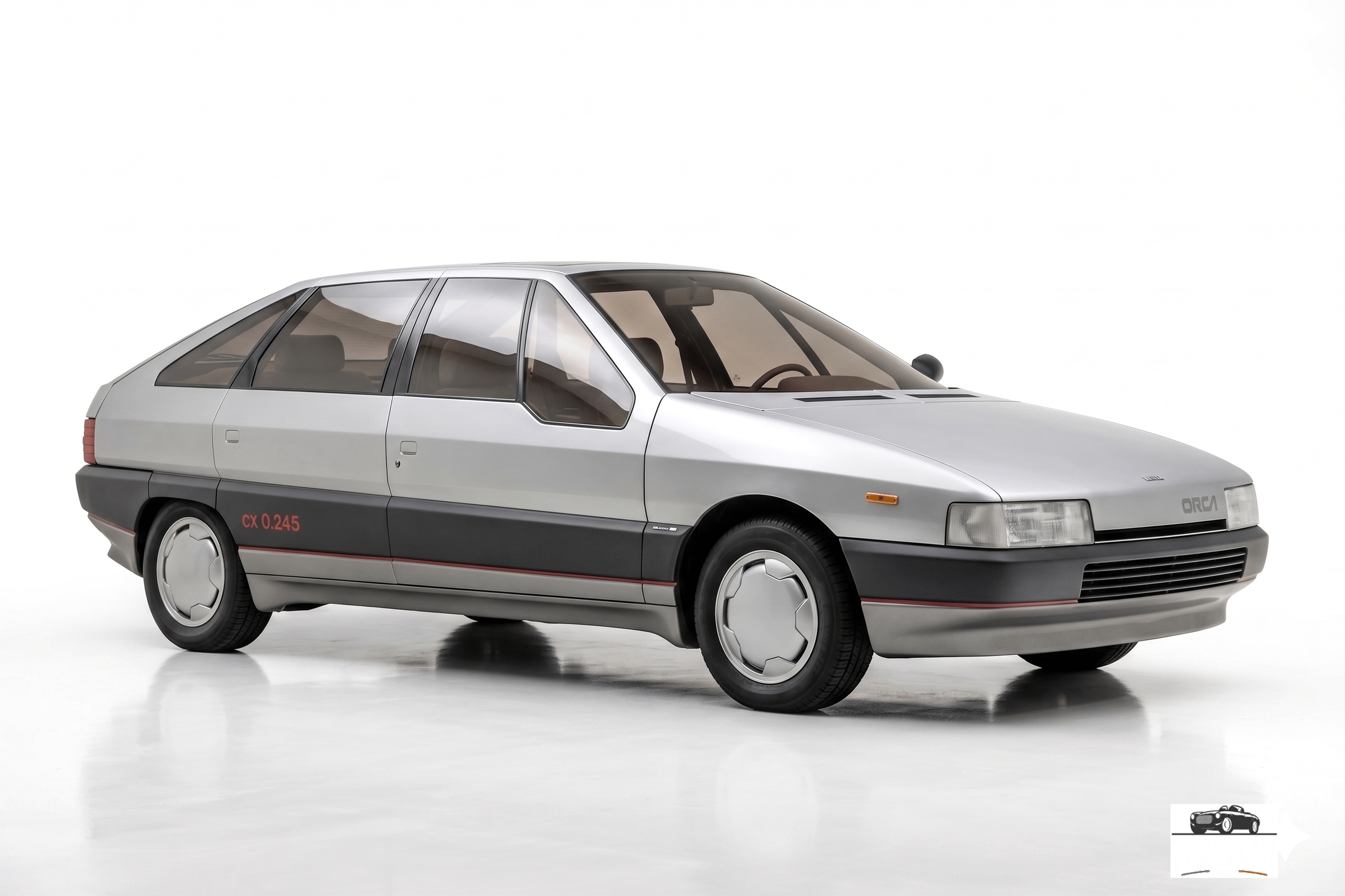
Of course, it was also very Italian in the best possible way. Not flamboyant Italian, not opera-house Italian, but design-studio Italian. The kind of Italian that understands proportion, surface, and restraint. Giugiaro’s genius was often found in making the practical beautiful. The Orca is not pretty in a soft or decorative sense. It is handsome because it is coherent. Every line appears to have a reason. The bonnet is low and smooth. The front lamps sit neatly within the nose. The side glass is generous without making the car look fragile. The rear is clean and tidy. Even the wheel covers serve the larger aerodynamic story.
The future Lancia almost built
There is a temptation, when looking at a concept like the Orca, to ask why it was never built. That is understandable, but perhaps too simple. Concept cars are not always failed production cars. Sometimes they are laboratories, sketches in full scale, moving essays on what might be possible. The Orca’s value was not necessarily that it should have appeared in showrooms exactly as shown. Its value was that it explored a direction. It suggested that the family car did not have to be dull, wasteful, or technologically conservative.
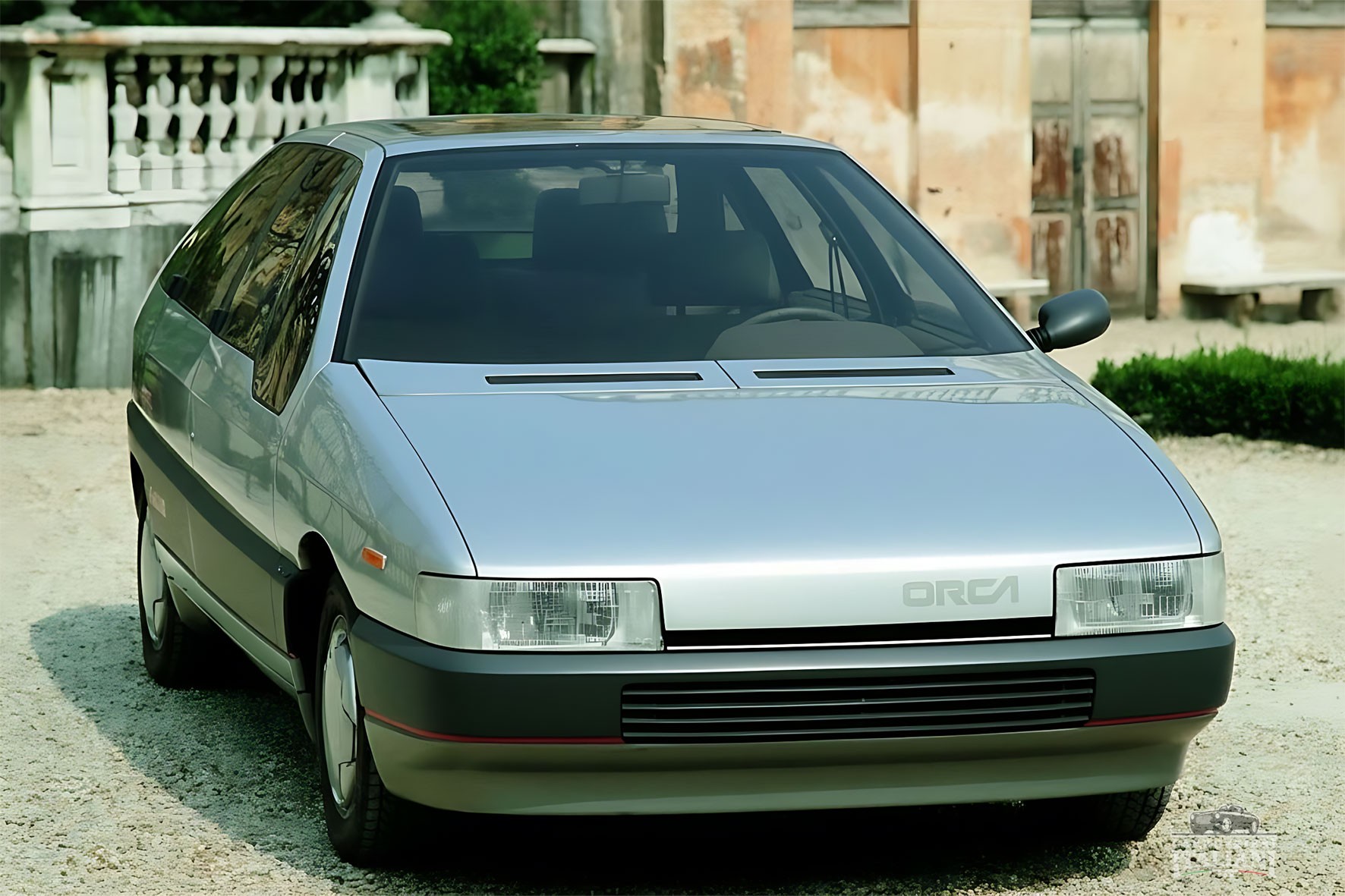
Still, one cannot help imagining an alternate Lancia range shaped by the Orca. Picture the mid-1980s with a production Orca sitting above or alongside the Delta: a slippery, four-wheel-drive, high-tech compact saloon with a proper Giugiaro body and a dashboard that made every journey feel like a launch sequence. Would it have sold? Perhaps not in huge numbers. Would it have been expensive to build? Almost certainly. Would some of the electronics have caused headaches? Given the era, one suspects they might have provided enough material for an entire owners’ club newsletter. But would it have been magnificent? Absolutely.
That is the bittersweet charm of Lancia. At its best, the company was capable of making cars that felt intellectually richer than their rivals. Lancia understood engineering sophistication, elegance, and the quiet drama of doing things differently. But the same qualities that made its cars fascinating often made them difficult to produce, market, or sustain. The Orca fits perfectly into that tradition. It was clever, refined, experimental, and slightly too advanced for the world around it.
The comparison with modern cars is revealing. Today, manufacturers spend enormous sums chasing aerodynamic efficiency, especially for electric vehicles where range is king. Smooth underbodies, flush handles, carefully managed airflow, and low drag coefficients are now mainstream talking points. The Orca was pursuing that path decades earlier, without the benefit of today’s simulation tools or the commercial pressure of EV range anxiety. It came from a time when aerodynamic research was becoming more serious, but before it had fully reshaped the ordinary car. That makes its 0.245 figure especially impressive.
🔗 Read more: The Italdesign Medici Series: Giugiaro’s Renaissance of the Luxury Sedan
Modern interiors also make the Orca look prophetic, though not always in the way one might expect. The idea of concentrating information around the driver, using digital displays, and placing key controls close to hand has become standard. Yet the industry’s current obsession with touchscreens has also made many drivers nostalgic for physical controls. In that sense, the Orca’s button-filled cockpit suddenly feels oddly appealing. It may look busy, but at least it suggests that every function has a place and a physical identity. You would not need to prod through three menus to adjust something important. You would press a button that looked like it meant business.
A quiet icon with better questions
The Orca also shows how much character can come from restraint. It does not rely on nostalgia because, when new, it was not nostalgic at all. It does not rely on aggression because aggression was not part of its mission. Its personality comes from intelligence. That is rare. Many cars try to charm us with noise, speed, luxury, or heritage. The Orca charms because it seems thoughtful. It feels like the result of people asking better questions.
What should a compact car be? How much space can it offer? How clean can its shape become? How can the driver receive information more clearly? How can a car communicate with the people around it? How can advanced traction systems improve confidence without turning the vehicle into something bulky or crude? These are not glamorous questions in the usual motor-show sense, but they are the questions that actually move the car forward.
The photographs tell the story beautifully. From the front, the Orca has a calm, almost expressionless face, with rectangular lamps and a smooth nose that looks more technical than emotional. From the side, the aerodynamic work becomes obvious: the long sweep of the windscreen, the flowing roofline, the carefully managed rear, the covered wheels, the clean flanks. It is not trying to look fast in the juvenile sense. It looks efficient. It looks like it would rather prove a point in a wind tunnel than win an argument outside a café.
Yet there is elegance in that. The Orca has aged into a kind of quiet icon, a reminder of a period when concept cars could be both imaginative and serious. It was not a cartoon of the future. It was a proposal for it. That makes it more interesting than many cars that actually reached production.
In the end, the Lancia Orca is one of those machines that makes you admire not only the object itself, but the culture that produced it. It came from a world where a mainstream manufacturer, a great design house, and one of the greatest car designers of the twentieth century could explore the future of the compact automobile with sincerity and style. It did not need huge wings or outrageous claims. It had a low drag coefficient, four doors, four seats, four-wheel-drive thinking, a science-fiction dashboard, and a name borrowed from a creature built by nature to move cleanly through its environment.
That is more than enough.

ABOUT THE AUTHOR
Andreas Scheidl
Italian classic car enthusiast with German roots. Renowned as a respected figure in the classic car community, he serves as a jury member at various international concours d'elegance, including the Classic Gala Schwetzingen and Mantova. As a content creator, Andreas passionately shares his profound knowledge and appreciation for vintage automobiles. His heart beats for cars designed by Giovanni Michelotti, showcasing his discerning taste and dedication to preserving the timeless elegance of automotive history.
More stories by Andreas Scheidl ↗CONTINUE READING
Posts You Might Like
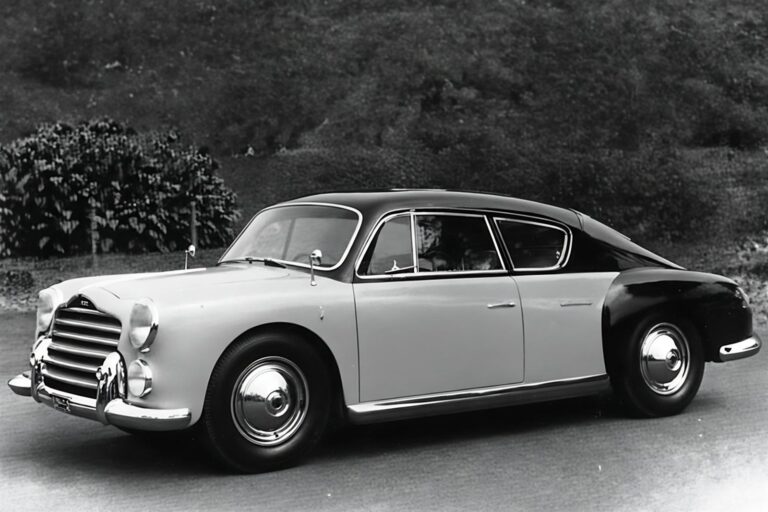
A Central Driving Position, a Rear-Mounted V8. Was This Really a Lancia?
In 1948, visitors to the Turin Motor Show could see an unusual Lancia on the stand of Carrozzeria Ghia. It was a large two-door coupé with a two-litre V8 mounted behind the…
Read story
Fioravanti F100: The Ferrari He Was Allowed to Imagine
Enzo Ferrari’s centenary, Leonardo Fioravanti’s independent studio and a supercar that explored air brakes, steel wheels and a new way of driving—without ever wearing the Cavallino.
Read story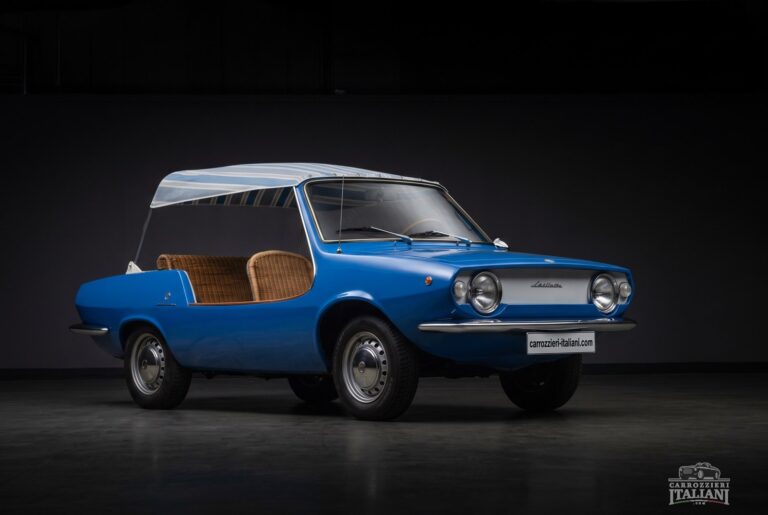
Michelotti Shellette: When the Fiat 850 Became a Yacht
The yacht designer, the Turin stylist and the tiny coachbuilt car that crossed between the quay, the royal holiday house and the auction room. Some automobiles were conceived for the open road,…
Read story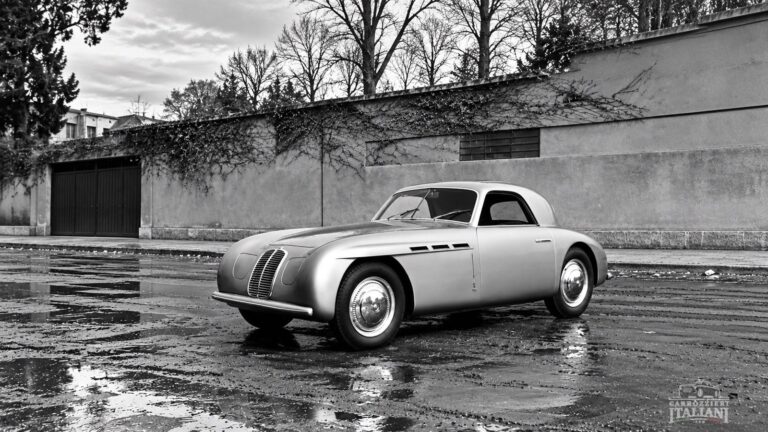
Maserati A6 1500: A New Road for the Trident
When the doors of the Geneva Motor Show opened in March 1947, Maserati was a name that required little introduction to anyone who followed motor racing. What it did not yet possess…
Read story
THE CONVERSATION
Comments 0
Share a memory, a period photograph or a documented detail about this story.