
THE VEHICLE AT A GLANCE
Model dossier
- Production period
- 1961–1971
- Body style
- Station Wagon
- Engine
- Inline-4
- Type
- Mass
- Production
- 55286
THE PEOPLE BEHIND THE CAR
Coachbuilding, design & conversions

PRICE & SALES RECORD
Vehicle value
- Original price
- Not documented
- Latest recorded sale
- Not documented
01 / THE STORY
History & context
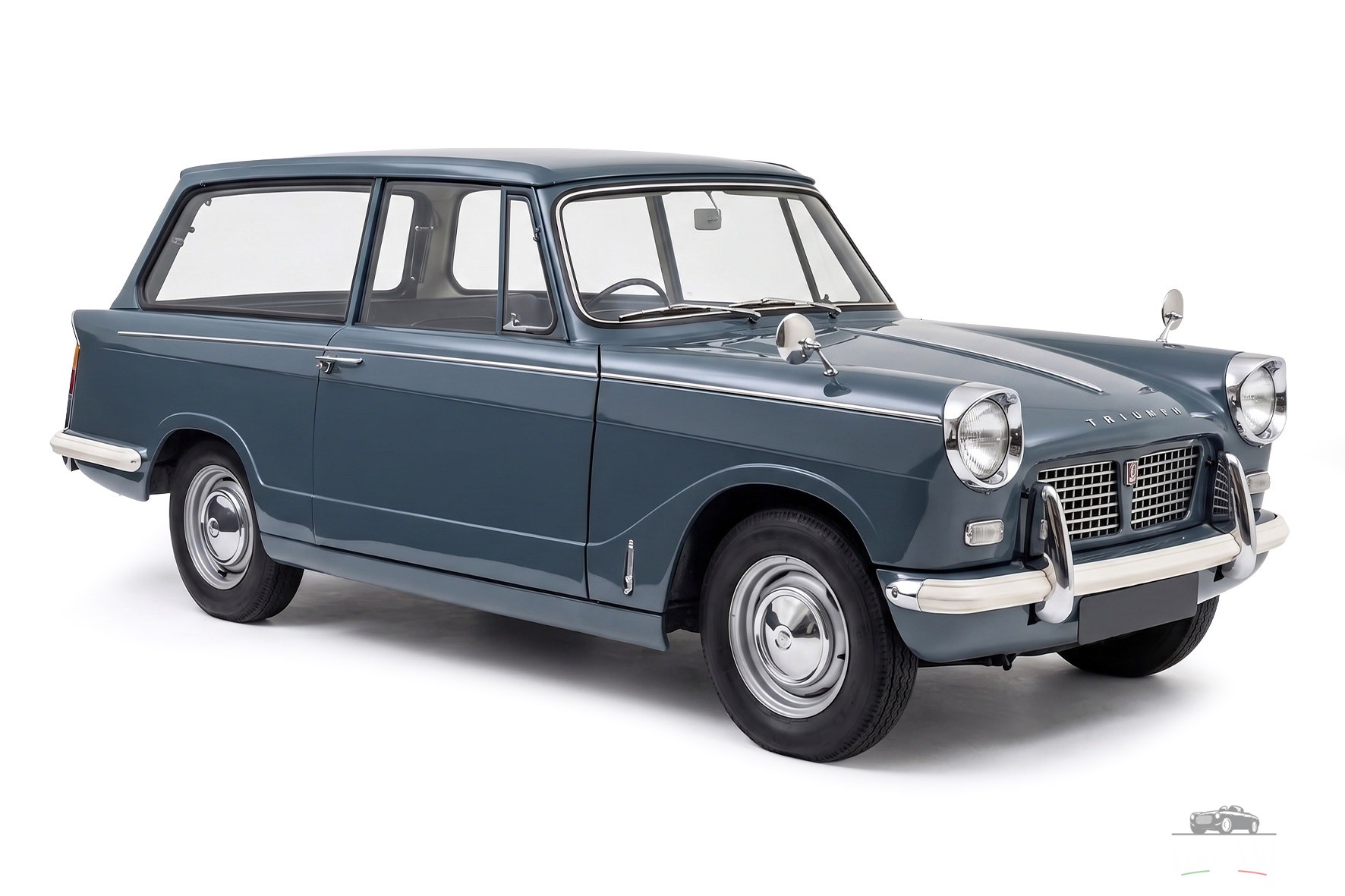
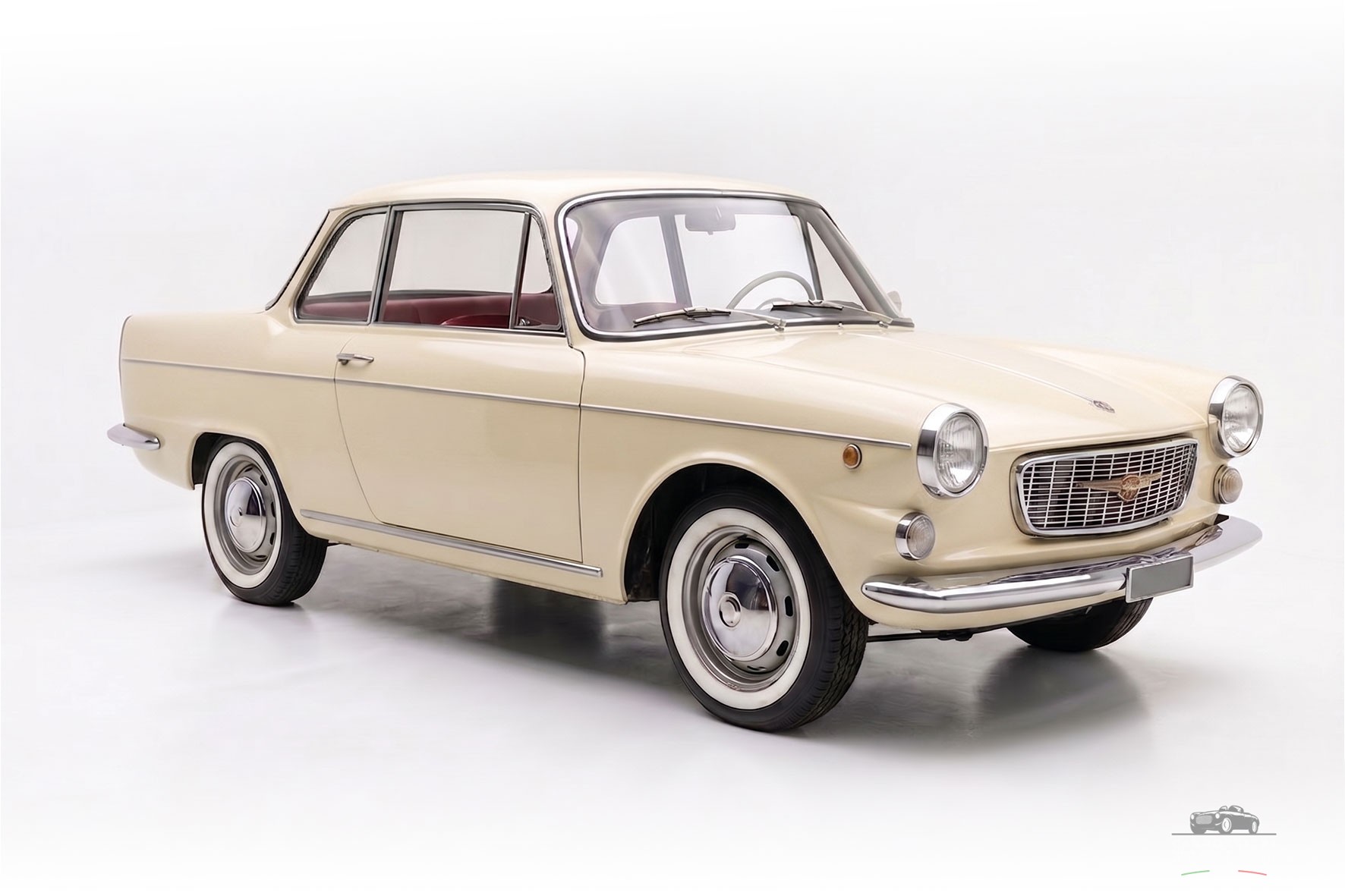
The Triumph Herald Estate was introduced in 1961 as the final major body style derived from the Zobo modular program developed by the Standard Motor Company in the late 1950s. Like the saloon and coupé, the estate was not conceived as an afterthought but as a planned extension of a single mechanical and structural architecture intended to cover a wide range of market needs. The Herald Estate shared the same separate chassis adopted across the range, a decision driven by the need for production flexibility, ease of overseas CKD assembly, and independence from large external body suppliers. The chassis featured independent suspension on all four wheels and rack-and-pinion steering, giving the estate road manners comparable to the passenger versions despite its increased load-carrying role. This configuration distinguished the Herald Estate from many contemporaries that relied on more conventional rear suspension layouts. Body design was by Giovanni Michelotti, who adapted the saloon’s proportions to accommodate an extended roofline and vertical rear tailgate. The estate retained the Herald’s characteristic lightness through large glazed areas and thin pillars, ensuring good visibility and interior brightness. The rear structure was designed to maximize cargo access and volume while maintaining structural coherence with the rest of the body. The tailgate opened downward, creating a flat loading surface, while the rear seat could be folded to increase carrying capacity. Unlike the early prototypes, which were built in Italy, series-production Herald Estate bodies were manufactured by Mulliners at the Tile Hill plant, following its acquisition by Standard-Triumph in 1958. Final assembly was carried out at Banner Lane alongside the other Herald variants. The modular panel construction philosophy allowed the estate body to be produced with limited additional tooling. Mechanically, the Herald Estate was initially offered with the 948 cc inline four-cylinder engine producing 34 bhp, later joined by the 1,147 cc and 1,200 cc units as the range evolved. Production ran from 1961 to 1967, with approximately 26,000 units built. The Herald Estate extended the versatility of the Herald platform and demonstrated the adaptability of the Zobo concept to practical, load-oriented applications without sacrificing engineering consistency.
IN THE ARCHIVE
Related people
IN THE ARCHIVE
Coachbuilders & design studios
02 / TECHNICAL IDENTITY
Specifications & construction
Production & construction
- Production
- 55286
- Production type
- Mass
- Production from
- 1961
- Production to
- 1971
Engine & performance
- Engine configuration
- Inline-4
Design & manufacture
- Designer · Documented
- Giovanni Michelotti
- Design Studio · Documented
- Studio Michelotti
- Manufacturer · Documented
- Triumph
06 / EVENTS & AWARDS
Events & awards
No events or documented awards are currently recorded for this vehicle.
07 / THE VEHICLE IN DETAIL
Photo gallery 1 photographs
08 / FROM THE ARCHIVE
Archive
References held in the vehicle dossier. Their inclusion does not establish that every historical claim has been independently verified.
| Reference | Source type |
|---|---|
| Archivio Storico Michelotti — Herald programme www.archiviostoricomichelotti.it | Designer primary archive |
| Vintage Triumph Register — Herald/Vitesse production figures vintagetriumphregister.org | Marque register production reference |
THE CONVERSATION
Comments 0
Share a memory, a period photograph or a documented detail about this car.