
The Citroën Camargue: A Coupé That Dared to Be Different
ChatGPT ha detto:
Setting the Scene: When Citroën and Bertone Briefly Aligned
By the early 1970s, Bertone wasn’t just designing cars — it was shaping the automotive future. With landmark designs for Alfa Romeo, Lancia, Lamborghini, and others, the studio had become shorthand for forward-thinking form. Meanwhile, Citroën had just launched the GS, a family car engineered with the sort of obsessive ambition usually reserved for six-figure flagships: air-cooled flat-four, four-wheel disc brakes, and that now-legendary hydropneumatic suspension. It won European Car of the Year in 1971. Deservedly.
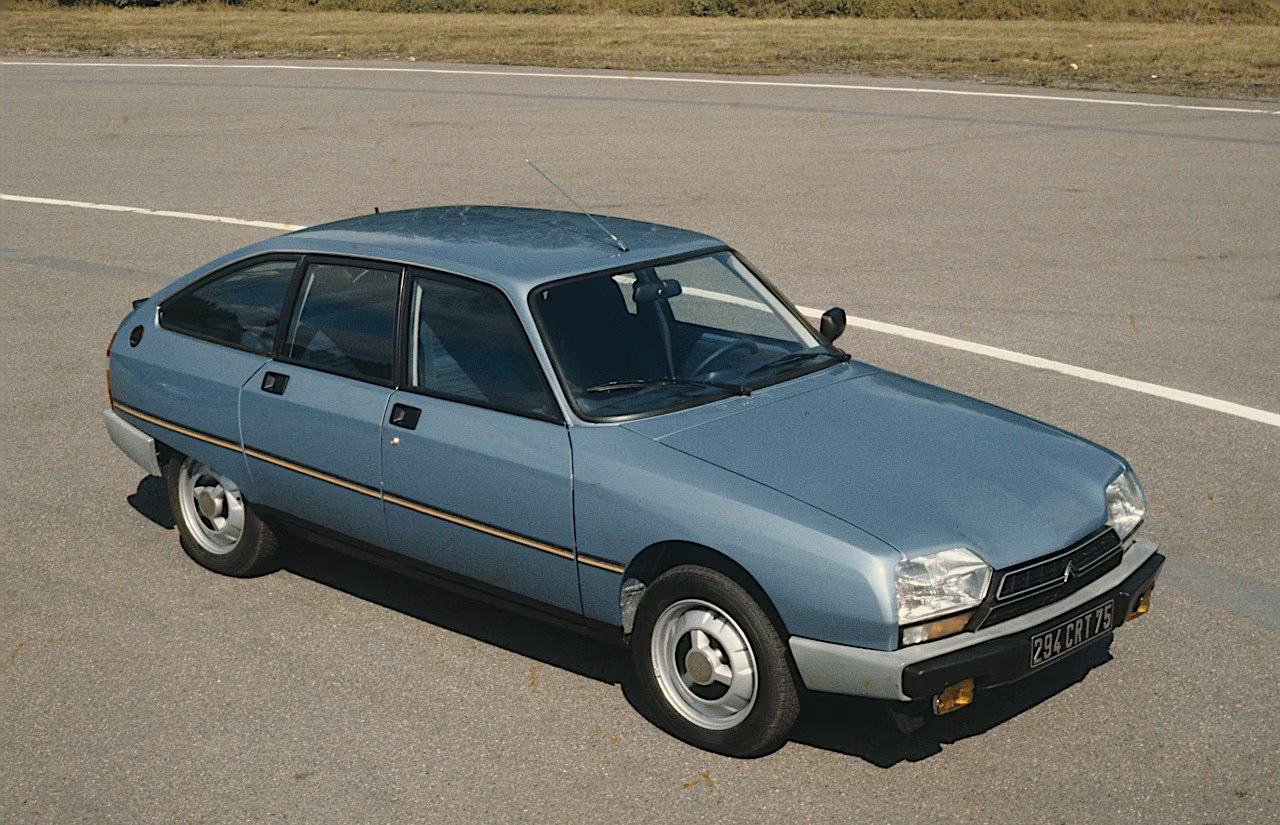
Nuccio Bertone took note. Pininfarina had Peugeot locked down, so if there was an opening in France, it was with Citroën. The thinking was simple: take the GS’s advanced platform and reimagine it as a coupe. A proper one. Not a sports car, not a luxury cruiser — something in between. Something fresh.
🔗 Read more: The Partnership between Peugeot & Pininfarina
This was more than just an exercise in styling. Bertone saw an opportunity to pitch Citroën a new direction — a proof of concept in steel and glass. What followed was the Camargue: a compact grand tourer prototype that blended Citroën’s engineering confidence with Bertone’s design clarity. It would remain a one-off, but not because the idea didn’t work. It worked a little too well.
Five Weeks to Build a Dream: The Camargue Comes to Life
The Camargue didn’t come from a boardroom brief. It came from a new hire with a company car and an idea. Marc Deschamps had just landed a job at Bertone in early 1972 when he pitched a concept coupé based on the Citroën GS — the same car he’d just bought for himself. Not exactly the origin story of a grand tourer, but this was Bertone, where intuition often carried as much weight as market research.
Citroën hadn’t asked for a GS coupé — but Bertone didn’t wait for an invitation. With Pininfarina already tied to Peugeot and the GS proving a commercial and engineering success, Bertone saw a quiet opportunity. The plan? Take the GS’s clever underpinnings and reframe them in something leaner, sharper, and more aspirational. Not a radical rethink, but a reminder of what design alone could unlock.
Marcello Gandini, then Bertone’s design director, was booked solid at the time, which gave Deschamps a rare opportunity to lead the charge. And charge he did. In just five weeks, the team at Stile Bertone turned the humble GS into the Camargue: a low-slung, wide-shouldered concept car with enough presence to hold its own next to Lamborghinis and Lancias.
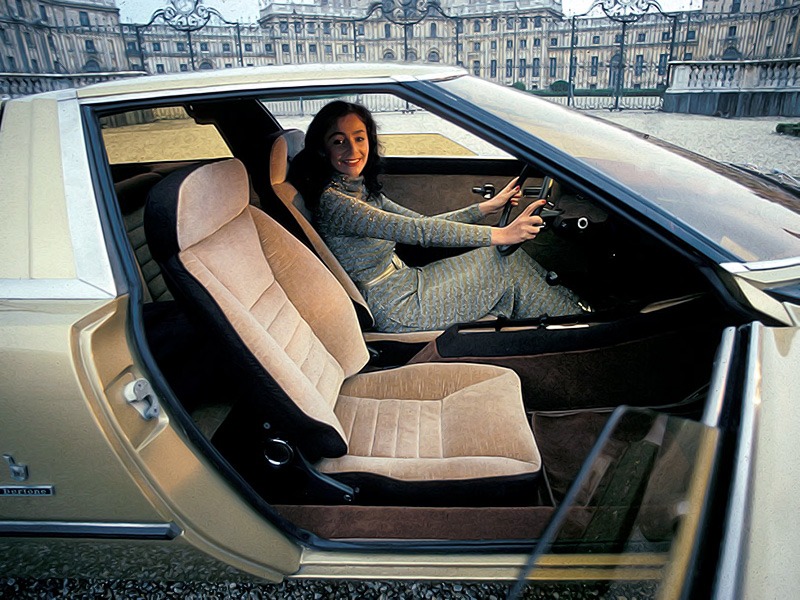
To keep costs realistic, Bertone left the mechanical bits untouched. Underneath, it was still a GS: 1.0-liter flat-four, front-wheel drive, hydropneumatic suspension. The interior was mostly GS too — dash, switchgear, even the single-spoke wheel — but the transformation was all in the stance and surface language. This wasn’t a rebody. It was a rebirth.
They named it Camargue, after the wild marshes and white horses of southern France — moody, elegant, just mysterious enough. Fitting for a Citroën with Italian tailoring. Coincidentally (or maybe not), Pininfarina and Rolls-Royce would later use the same name Camargue, for the luxury coupé launched in 1975. Who got there first? Technically, Bertone. But the name, like the design, lives a double life.
Striking Form: When Bertone Took the Long Way Round a Citroën GS
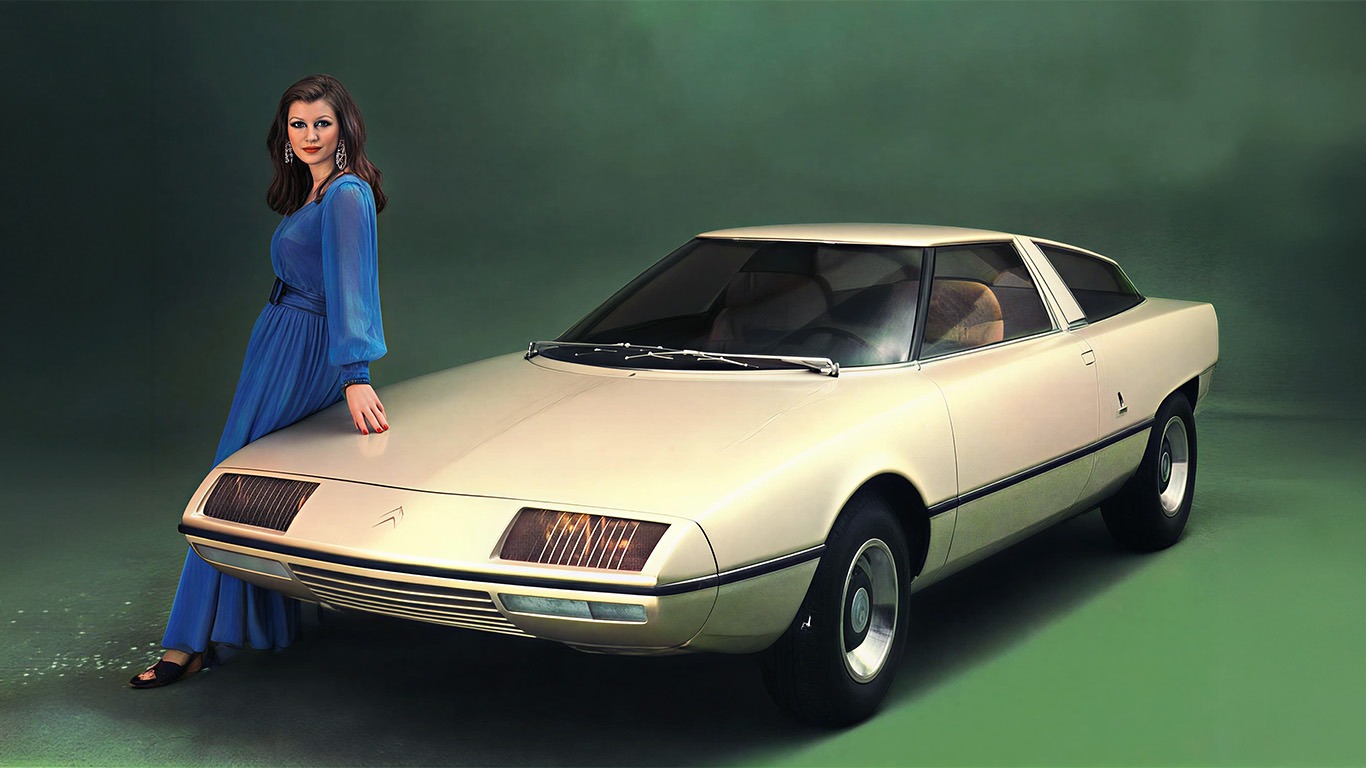
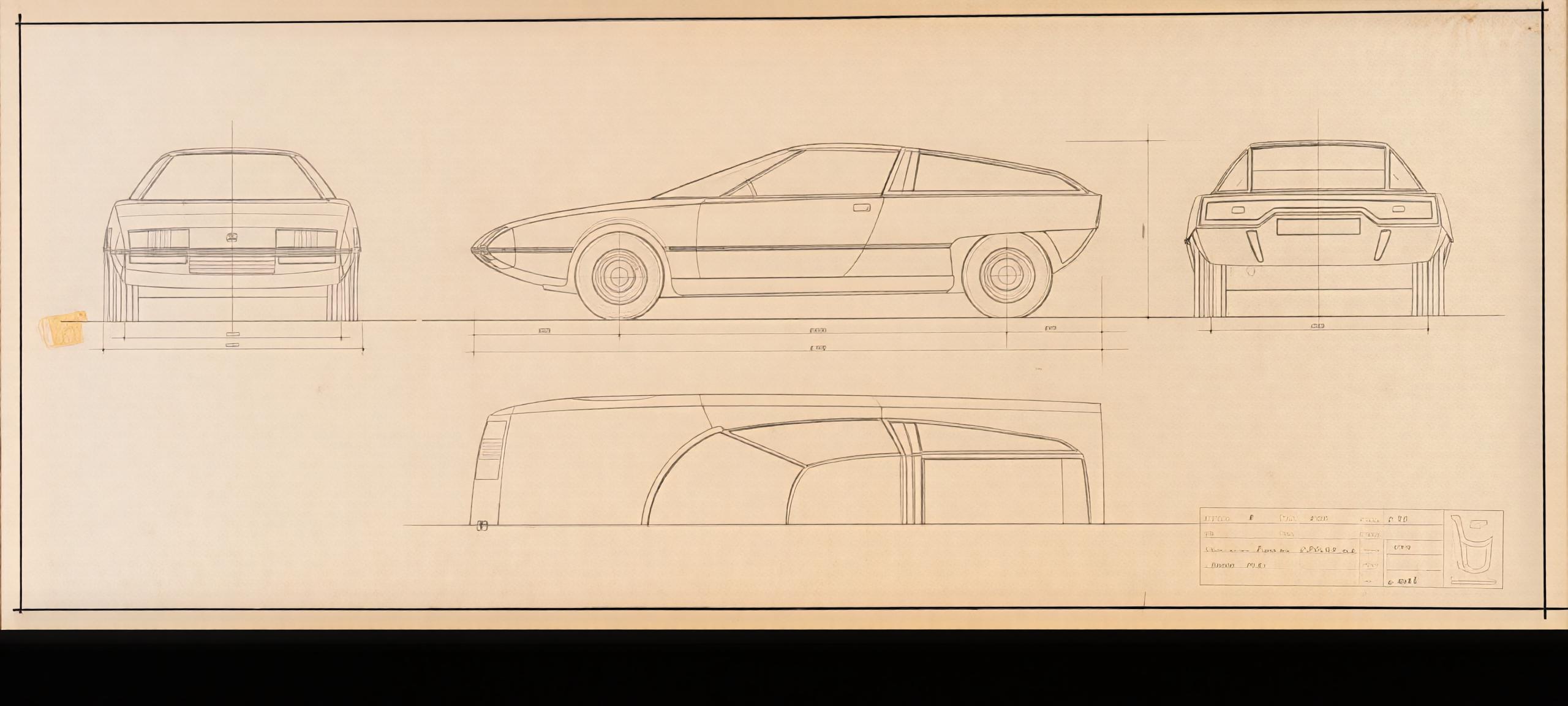
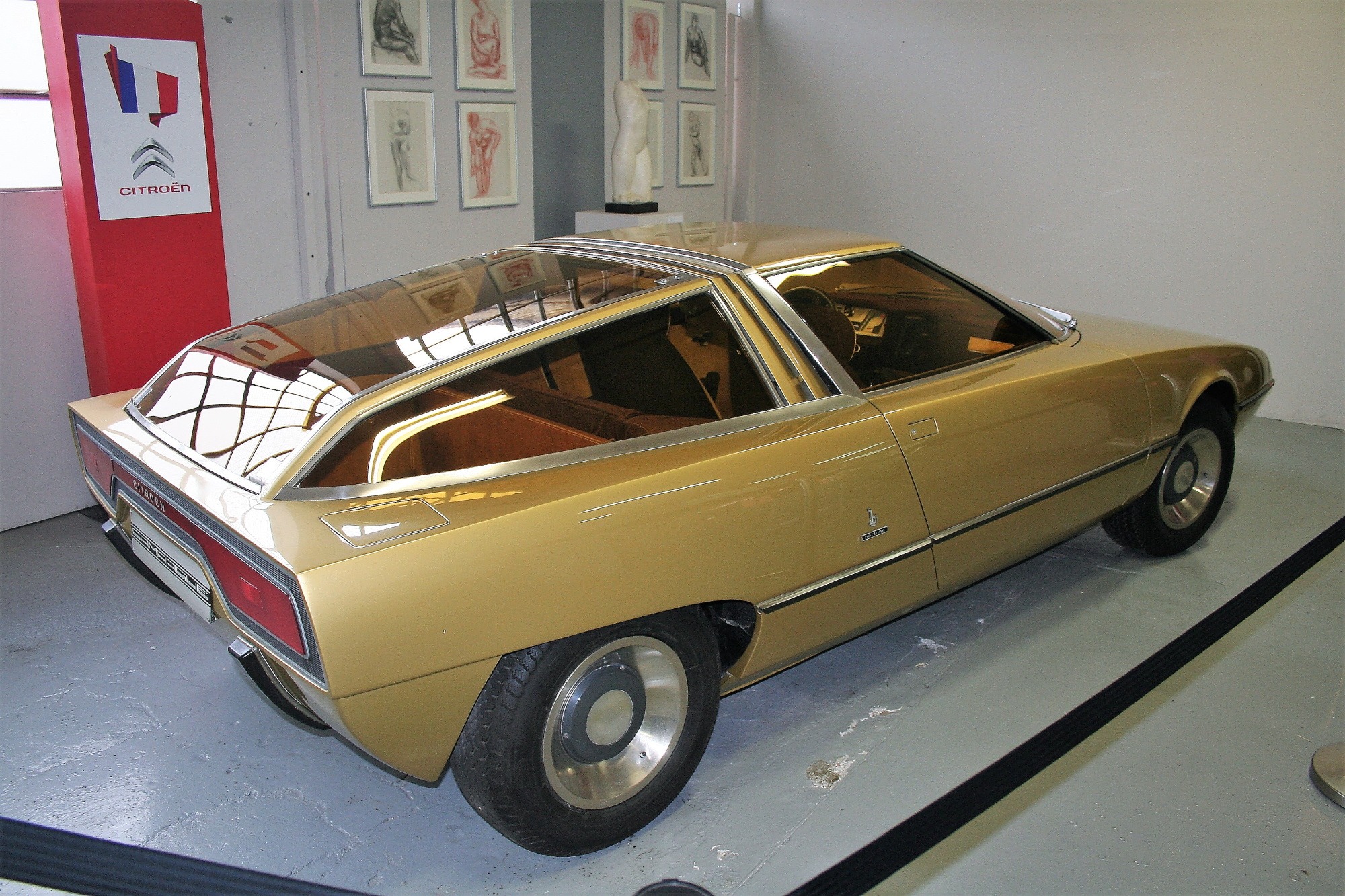
The Camargue didn’t whisper. It arrived with presence — low, wide, and dripping with attitude. Based on the sensible, engineering-forward Citroën GS, Marc Deschamps’ coupe rework looked nothing like the car it came from, which was sort of the point. Same 4.12-meter footprint, sure. But the stance? Flattened. The height? Chopped by a full 20 centimeters. It sat just 1.15 meters tall, crouched like it was about to pounce. The Italian “wedge” era was fully underway, and Bertone wasn’t going to miss it.
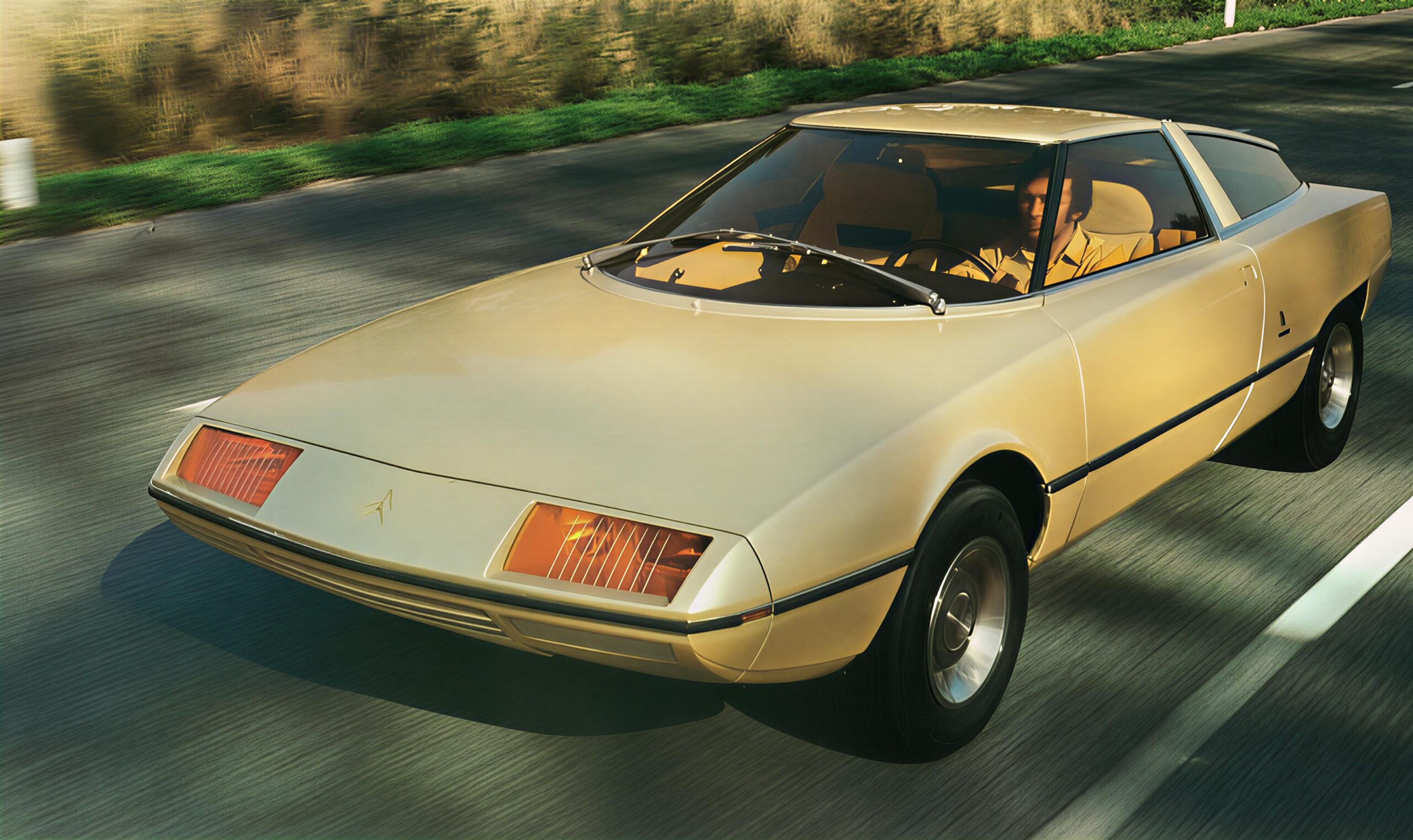
Widened tracks, fatter hips, and a thoroughly reimagined roofline transformed the GS’s upright silhouette into something leaner and far more self-assured. Deschamps pushed the A-pillars back and raked the windscreen into a dramatic curve that nearly wrapped into the doors. There was no grille to speak of — just a discreet intake tucked under the bumper to keep the GS’s air-cooled flat-four from cooking itself. The bonnet was clamshell, the detailing tight, the attitude confident.
And yet, it never lost its Citroën-ness. The massive front overhang, minimal rear, and front-heavy balance were still there, even exaggerated slightly. That “leaning into the future” posture Citroën loved? Present and accounted for. The Camargue didn’t look quite like any Citroën before it, but it clearly wasn’t trying to be anything else either.
🔗 Read more: Marcello Gandini: The Man Who Designed the Future
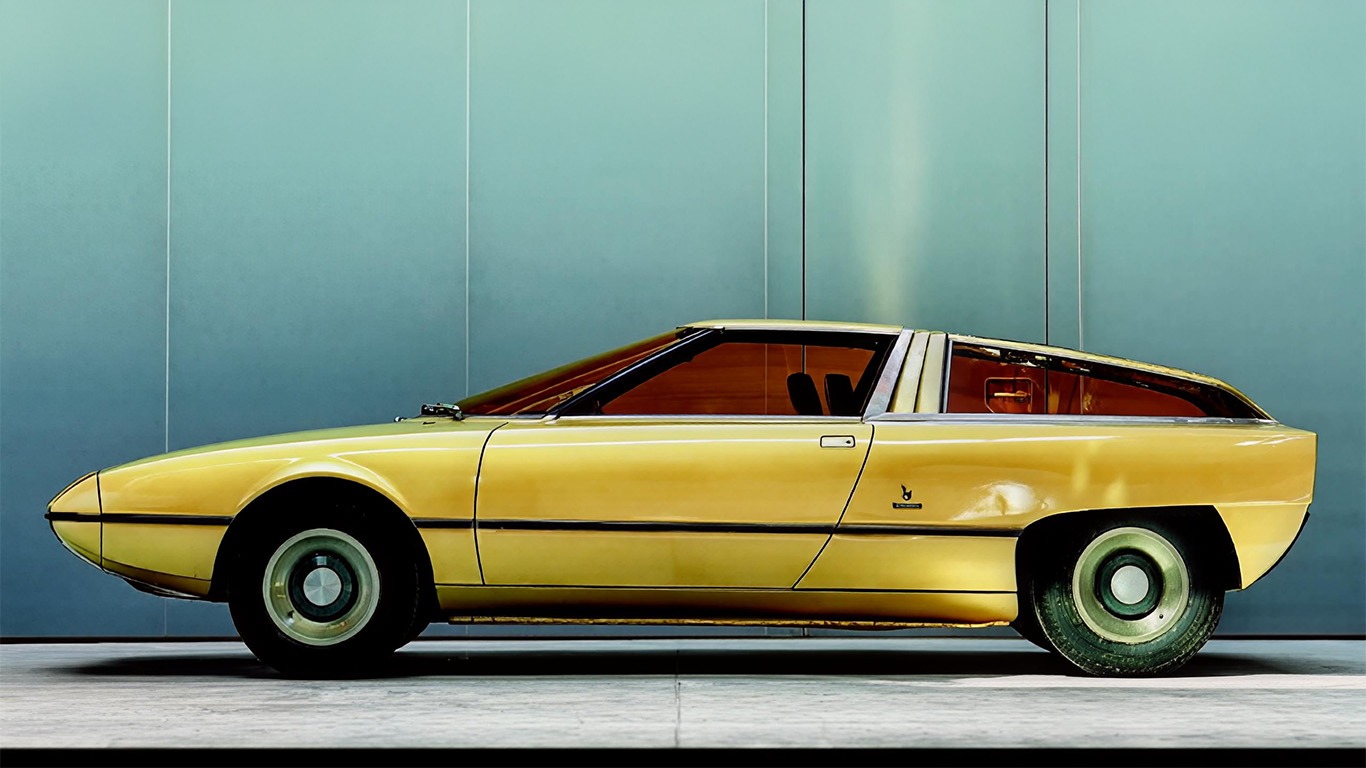
Viewed side-on, you got the full picture: no B-pillar, long doors, floating roofline. The rear quarter featured twin louvered vents where a pillar might have been — one part aero, one part theatre. A pair of buttresses connected roof to rear fenders, creating a faux-Targa silhouette that, while not functional, looked fantastic. The sloped rear glass met a kick-up spoiler, and a band of horizontal tail lights stretched the full width — clean, modern, and exactly where design would head a decade later.
The wheel arches deserve their own footnote: squared at the rear, pointed at the front. Asymmetric, subtly aggressive, and unmistakably Bertone — a visual quirk that would echo through the firm’s designs for years to come.
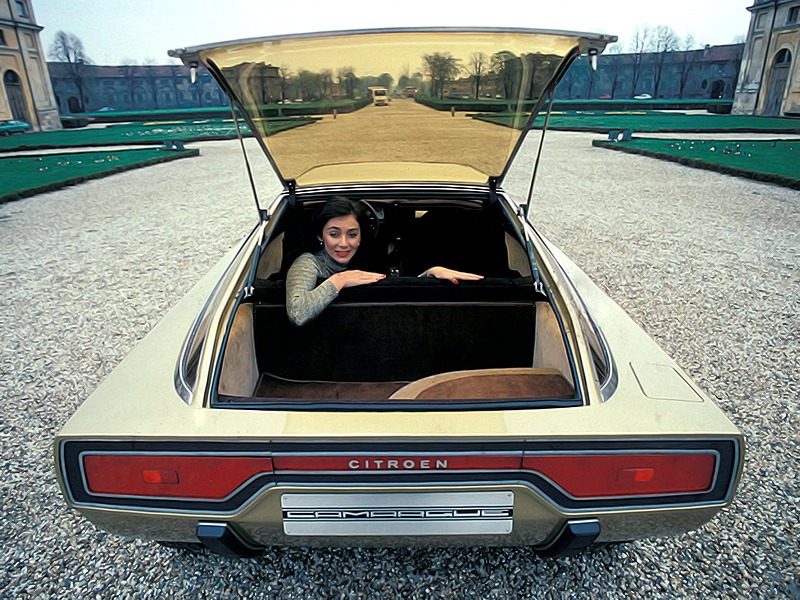
Color? Metallic champagne. Glass? Tinted bronze. Details? Minimal. Even the bumper was painted, not chromed — something radical in 1972. Inside, it was mostly GS carryover: drum speedo, one-spoke wheel, familiar dashboard. But the materials were higher grade, the atmosphere lighter, the proportions tighter. The 2+2 layout was optimistic, but hey, it was a show car. Rear seats are more about implication than practicality anyway.
The Camargue looked like what it was: an engineering platform in couture. French tech wrapped in Italian tailoring. And while it never made production, it proved just how far style alone could take a humble family car.
Showtime: The Coupé That Stole the Circuit
The Camargue made its debut in March 1972 under the high-voltage lighting of the Geneva Motor Show, and it didn’t just show up — it dominated the conversation. Bertone had dropped a low-slung, gold-painted coupé onto its stand, and people weren’t quite sure what they were looking at. Citroën badging? Italian proportions? A GS that had done time at the design gym? Whatever it was, it worked. Crowds clustered around it. Press called it elegant, futuristic, and completely unexpected. Bertone had taken Citroën’s engineering language and spoken it in a whole new dialect.
And here’s the twist: Citroën hadn’t even asked for it.
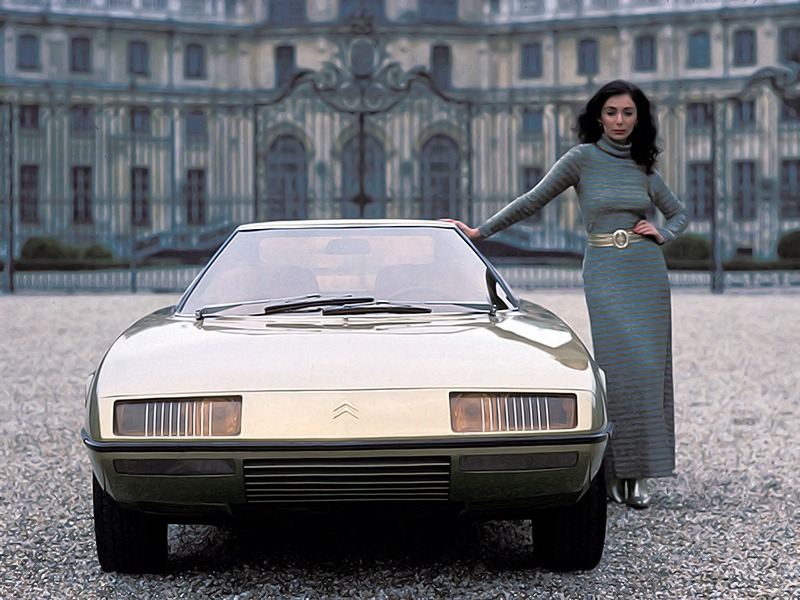
Nuccio Bertone and his team had built the Camargue on their own initiative, aiming to turn Citroën’s attention their way — and it worked. Citroën execs watched the Geneva reception closely. The Camargue hadn’t just attracted attention; it had lit up imaginations. A GS coupé suddenly seemed like a smart idea, not just a stylistic exercise.
Citroën didn’t commit, but it didn’t ignore the car either. In June 1972, they brought the Camargue to the 24 Hours of Le Mans. For a brand not known for motorsport posturing, that was a statement. Then came the Paris Salon in October, where L’Automobile had already given the Camargue its front cover two months early. The car also crossed the Channel for Earls Court — and everywhere it went, the reception was the same: curiosity, excitement, and plenty of “Will they actually build it?” speculation.
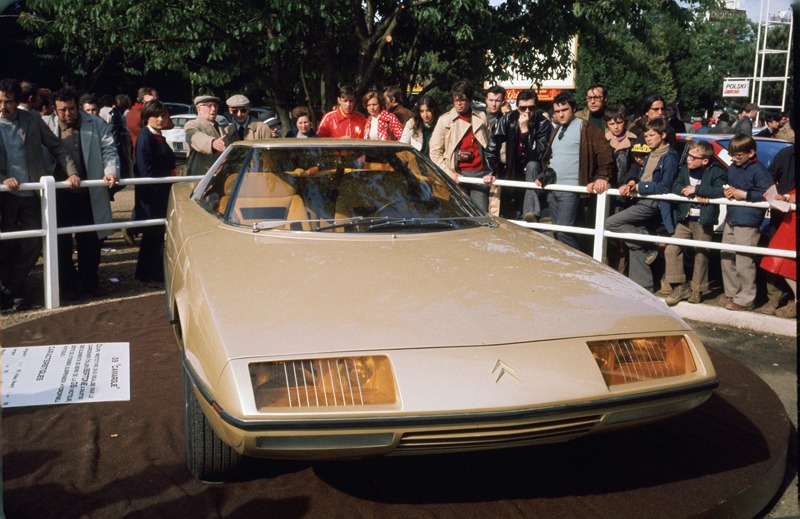
But back in the boardroom, things looked different. Citroën was knee-deep in expensive projects — rotary engines, the Maserati-powered SM, not to mention the financial turbulence already brewing. A boutique GS coupé was hard to justify, no matter how good it looked under spotlights. By the end of the year, the Camargue had been quietly parked in Citroën’s conservatory, its show circuit over, its future sealed.
Still, Bertone got what it came for. The Camargue didn’t get a production green light, but it did open a channel between Bertone and Citroën that would prove valuable later — just not in the way anyone expected.
A Dream Deferred: Why the Camargue Never Made It
The Camargue should have been a turning point. It looked the part, drew the crowds, and hinted at a new kind of Citroën — stylish, youthful, and just exotic enough. But by the time it hit the auto show circuit in 1972, the timing couldn’t have been worse.
Citroën, for all its creativity, was hemorrhaging cash. The GS had been expensive to develop, the SM was struggling to justify its Maserati-powered ambitions, and the company was betting big — and losing — on a future filled with rotary engines. It had even bought Maserati in 1968, a move that strained both companies. To make matters worse, the global economy was about to get a sharp slap from the 1973 oil crisis. Suddenly, niche coupes and grand tourers were looking like liabilities, not assets.
So when the Camargue came along — a GS-based coupe dressed to kill — it was always going to be a hard sell. Internally, Citroën had flirted with the idea of a sportier GS variant before, even a coupe version in the late ’60s, but none had gained real traction. With the economy shifting and priorities narrowing, the Camargue didn’t make the cut.
It didn’t help that Citroën already had a halo car — the SM — and it was proving tricky to sell. A second, smaller coupe would have cannibalized whatever market existed, or so the thinking went. Even earlier efforts to spin a four-door out of the SM (Bertone was involved there, too) got shut down when it became clear the cost of lengthening the chassis wasn’t worth it. The Camargue, then, was less about launching a product and more about keeping a conversation going — a rolling reminder to Citroën that Bertone was still at the table.
🔗 Read more: The Volvo Tundra vs Citroën BX
In that sense, it worked. While the Camargue never went beyond the show stand, it did preserve the Bertone–Citroën connection just long enough to matter. By the late ’70s, Citroën came calling again — this time with a real brief, a real budget, and real production in mind. That car became the Citroën BX, launched in 1982 and styled by Bertone. You don’t have to squint too hard to see some shared DNA: the angular surfaces, the unique C-pillar treatment, the crisp volumes. It wasn’t a coincidence — the Camargue was still in the design team’s bloodstream.
As for Marc Deschamps, the young designer behind the Camargue, his story took a few more turns. He left Bertone in 1974 and joined coachbuilder Chapron, where he pitched yet another GS coupe idea — this time using Citroën’s experimental rotary Birotor drivetrain and aimed at production via Ligier. That project, too, vanished in the financial fog as Citroën discontinued the Birotor entirely. But Deschamps would come full circle: by the late ’70s, he was back at Bertone, this time as chief designer. He succeeded none other than Marcello Gandini — the man who had once overseen his early work on the Camargue. From junior sketch artist to design director in one decade, with a rogue Citroën coupe as the catalyst.
In the end, the Camargue was never built. But it did its job — not by becoming a product, but by opening doors. Not every concept car gets that far.
An Enduring Legacy: Camargue’s Second Life
The Citroën Camargue never made it to production, but it’s far from forgotten. For decades, the one-off prototype lived quietly in Bertone’s private collection, a gleaming champagne-gold time capsule of early ’70s ambition. It was more than a show car — it was proof that even Citroën’s rational streak had room for a little glamour, given the right nudge from across the Alps. The Camargue would occasionally resurface for exhibitions, usually stealing the show just as it had in 1972. It was part of Citroën’s centenary celebration at Rétromobile in 2019, and in 2024 it returned to the spotlight at Villa d’Este, lined up alongside Gandini-era legends in a tribute to the late designer. The crowd reaction? Still wowed. Still wondering.
There was a brief scare in the 2010s. When Bertone filed for bankruptcy in 2014, its historic concept cars risked being scattered at auction. Fortunately, Italy’s national historic vehicle club, the ASI (Automotoclub Storico Italiano), stepped in. In 2015, it acquired the entire Bertone collection — including the Camargue — to preserve it intact. Today, the car is safe in public hands and shown as part of the ASI Bertone Collection, ensuring it remains accessible to enthusiasts and historians alike.
🔗 Read more: The story of Bertone: the Most Controversial Coachbuilder Ever
With hindsight, the Camargue feels like a missed opportunity — the stylish, affordable GT Citroën never built. It might have rivaled the Renault Fuego or Ford Capri, injecting some flair into Citroën’s image at a time it sorely needed it. But even as a one-off, it left a legacy. Its panoramic glass, tucked bumpers, and integrated fastback lines previewed design ideas that would become mainstream a decade later. More importantly, the Camargue opened the door for Bertone to land the Citroën BX project — a car that carried echoes of the concept coupe’s angular character and helped define Citroën’s design direction in the 1980s.
For Marc Deschamps, the Camargue was the launchpad of a significant design career. For Citroën, it was a momentary flirtation with Italian flair. And for Bertone, it was one of the last great show cars built purely for the sake of design — five weeks of sketching, sculpting, and dreaming, immortalized in metal.
The Camargue may not have changed Citroën’s future, but it did change its story. That’s the mark of a great concept car: not what it sold, but what it stirred in people’s imaginations. Today, it’s no longer a “forgotten Citroën.” It’s exactly where it belongs — preserved, admired, and still provoking the same question it did in 1972: “Why didn’t they build this?”

ABOUT THE AUTHOR
Andreas Scheidl
Italian classic car enthusiast with German roots. Renowned as a respected figure in the classic car community, he serves as a jury member at various international concours d'elegance, including the Classic Gala Schwetzingen and Mantova. As a content creator, Andreas passionately shares his profound knowledge and appreciation for vintage automobiles. His heart beats for cars designed by Giovanni Michelotti, showcasing his discerning taste and dedication to preserving the timeless elegance of automotive history.
More stories by Andreas Scheidl ↗CONTINUE READING
Posts You Might Like

A Central Driving Position, a Rear-Mounted V8. Was This Really a Lancia?
In 1948, visitors to the Turin Motor Show could see an unusual Lancia on the stand of Carrozzeria Ghia. It was a large two-door coupé with a two-litre V8 mounted behind the…
Read story
Fioravanti F100: The Ferrari He Was Allowed to Imagine
Enzo Ferrari’s centenary, Leonardo Fioravanti’s independent studio and a supercar that explored air brakes, steel wheels and a new way of driving—without ever wearing the Cavallino.
Read story
Michelotti Shellette: When the Fiat 850 Became a Yacht
The yacht designer, the Turin stylist and the tiny coachbuilt car that crossed between the quay, the royal holiday house and the auction room. Some automobiles were conceived for the open road,…
Read story
Maserati A6 1500: A New Road for the Trident
When the doors of the Geneva Motor Show opened in March 1947, Maserati was a name that required little introduction to anyone who followed motor racing. What it did not yet possess…
Read story
THE CONVERSATION
Comments 0
Share a memory, a period photograph or a documented detail about this story.