
Aerlux: Carrozzeria Touring’s Window to the Sky
The world of Italian coachbuilding is full of glamorous tales, but few details are as unusual—or as overlooked—as Carrozzeria Touring’s Aerlux roof. Touring, based in Milan, was never short on ideas. Founded in 1926 by Felice Bianchi Anderloni, the company made its name with Superleggera construction: a lattice of slim steel tubes covered in aluminum, light yet strong, that helped Alfa Romeo, Lancia, Fiat, and even Ferrari to racing glory in the 1930s. Touring’s cars were rolling sculptures, equal parts engineering and artistry. But after the upheaval of World War II, with factories in ruins and materials scarce, the company’s inventiveness found a new outlet: a transparent roof that promised both sunshine and optimism.
An Innovation in a Time of Rebuilding
In the aftermath of World War II, Italy was a land rebuilding itself – and its automotive industry – from the rubble. Materials were scarce and the future was uncertain. Yet Touring’s spirit of innovation never dimmed. Felice Bianchi Anderloni, together with his son Carlo Felice, pressed on with bold ideas and elegant solutions, even as factories were being reassembled from bombed ruins. Among the straordinario creations of this era was a 1947–48 coupe that introduced a feature unlike any seen before. It sported a special openable roof in Plexiglas known as “Aerlux,” a term derived from Latin for air and light. This patented Aerlux sunroof was Felice Anderloni’s brainchild – a bright beacon of ingenuity conceived at a time when most automakers were simply struggling to restart production. The very name Aerlux (sometimes stylized Aerlux) evokes the romance of its intent: to bathe passengers in fresh air and sunshine, symbolizing a hopeful new era after the darkness of war.
🔗 Read more: Italy’s Plexiglas Revolution in Postwar Car Design
The Aerlux was more than a poetic idea; it was a genuine technical innovation. In concept, it was a panoramic roof panel made of crystal-clear acrylic, seamlessly integrated into the car’s roofline. Unlike a conventional metal sunroof or canvas top, Aerlux used Perspex – a trade name for plexiglas – a material first popularized in wartime aircraft canopies for being light and shatter-resistant. Touring’s wartime experience with aeronautical manufacturing directly fed into this innovation: the same clear acrylic that had shielded pilots now found a home above the heads of motorists. In a sense, Aerlux was aviation technology repurposed for road-going luxury. The use of Perspex meant the roof could be molded into a broad, transparent dome that would not crack like glass under stress. The result was a coupé roof that invited the sky inside, without exposing passengers to the elements until they so desired.
Air and Light: The Aerlux Experience
What truly set the Aerlux apart was its dual nature: it was both fixed panoramic window and functional sunroof. When closed, the large curved plexiglas panel wrapped over the cabin, giving occupants an expansive view of the heavens – an experience of openness unprecedented in a 1940s closed car. Sunlight flooded the interior, illuminating fine Italian leather and wood in a gentle glow. One contemporary observer noted that this “luminous canopy” made the passengers feel as if they were riding in a grand conservatory on wheels, surrounded by scenery and sky. Indeed, Touring advertised the Aerlux as providing not only air but also light to the occupants – a first in automotive design, as earlier sunroofs had mainly been about ventilation. The effect was uplifting and almost spiritual. Driving in this car in 1949, in a ravaged Europe, you must have felt so far above it all, an enthusiast would later remark, the name is so appropriate – Aerlux. In an era when much of Europe was still rebuilding, to ride beneath an Aerlux roof was to glimpse optimism itself: blue skies by day, stars by night, and a reminder of better days ahead.
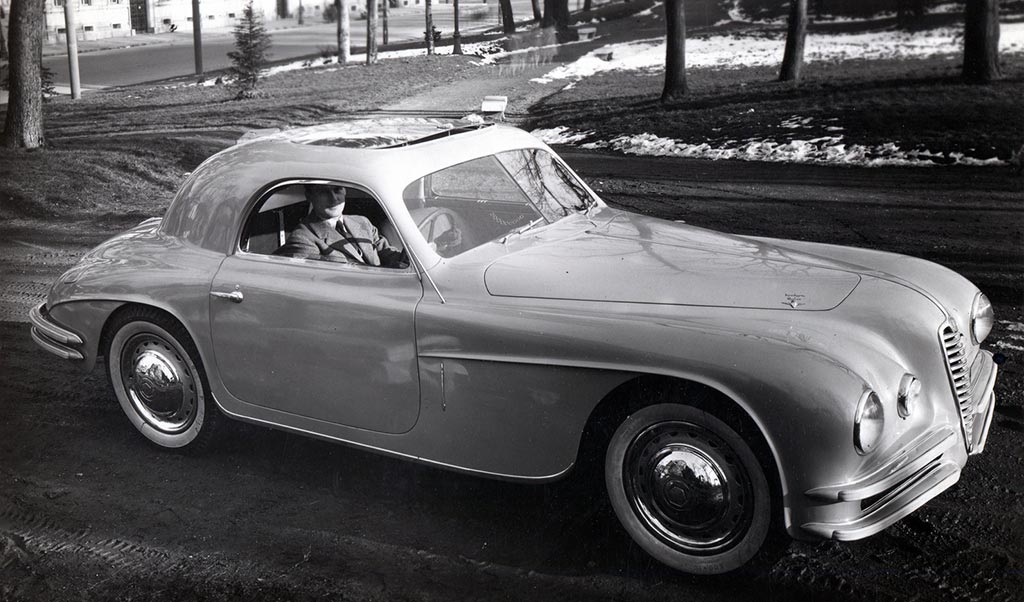
Yet when the weather or mood called for fresh air, the Aerlux roof delivered that too. The plexiglas panel was cleverly made openable, tilting or sliding thanks to an ingenious mechanism that capitalized on the flexibility of acrylic. This engineering nuance was one of several patents registered by Anderloni in those years, and it allowed the roof to be opened without a heavy, complex hinge system. With a turn of a handle, the clear dome would partially lift, letting in a gentle breeze – aer as well as lux. In essence, Aerlux provided many of the joys of a convertible while preserving the comfort and safety of a closed coupe. Felice Anderloni had effectively “revolutionized the concept of open-top driving” for GT cars. No longer did one need to remove an entire roof panel or settle for a small sunroof; the Aerlux was a wide skylight and an airy vent all in one, executed with the elegance one expected from Touring. It’s little wonder the innovation was not only patented but even trademarked – Aerlux became a proud part of the Touring identity, a signature feature reserved for the coachbuilder’s most exclusive builds.
The Aerlux Across Marques and Models
Carrozzeria Touring first showcased the Aerlux concept in the late 1940s, and it soon graced a select few automobiles from different Italian marques – each a rare gem in its lineup. Lancia was among the earliest beneficiaries. In 1947 Touring crafted a special Lancia Aprilia Berlina with the Aerlux roof, presenting this masterpiece at the Geneva and Turin auto shows in 1948. Showgoers marveled at the Aprilia Aerlux, whose entire top was a curved sheet of glass-like acrylic. The transparent roof panel was so seamlessly integrated that at first glance one might not notice it – until peering inside, where the heavens themselves were visible from the driver’s seat. This Lancia’s sleek black paintwork contrasted with the silvery glow filtering through its roof, and it became a symbol of post-war Italian ingenuity. Touring’s blend of aesthetics with functionality on the Aprilia – the harmonious lines uninterrupted by the innovation – underscored how the Aerlux roof was as much about style as sensation. It allowed a humble family saloon to deliver a near-convertible thrill while keeping its dignified, covered profile. The reception was enthusiastic, and the Aprilia Aerlux proved that Touring’s patent was more than a gimmick; it was a viable enhancement to a luxury automobile.
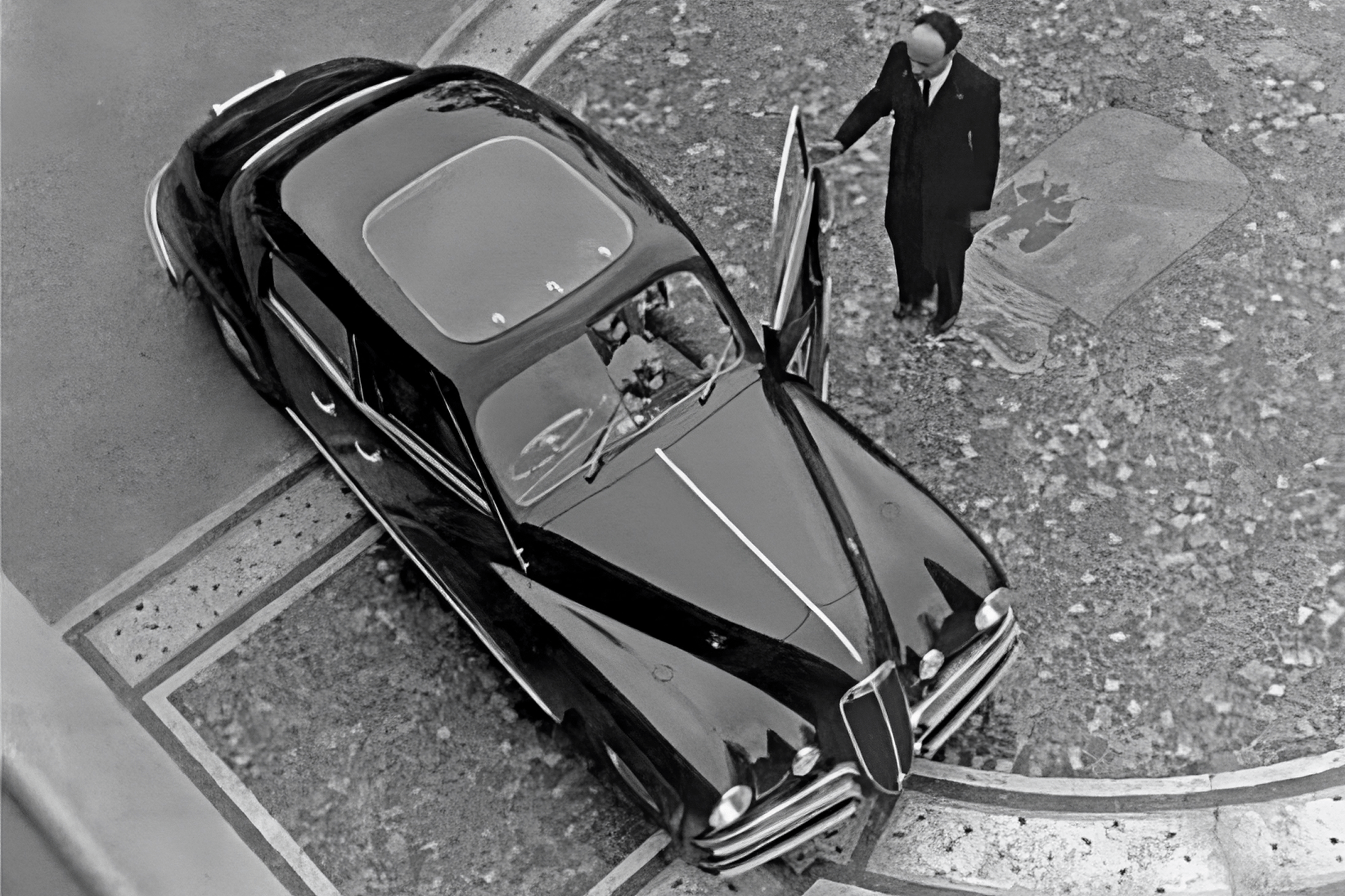
Around the same time, Alfa Romeo’s flagship was given the Aerlux treatment, creating perhaps the most famous Aerlux-equipped model. The Alfa Romeo 6C 2500 Super Sport coupé of 1948 – already an elegant five-passenger gran turismo – became truly unforgettable once Touring fitted it with a broad plexiglas roof section.. Under the Milanese coachbuilder’s hand, several of these 6C 2500 SS models were built with the tettuccio Aerlux, turning heads wherever they went. One such car, finished in deep maroon, was delivered to Count Gaetano Marzotto, a notable Italian aristocrat, who favored it as his family’s daily conveyance. Imagine the sight in late-1940s Vicenza: Count Marzotto driving his gleaming Alfa coupe down a sun-dappled lane, his children gazing up through the crystal-clear roof at passing clouds. The patented “Aerlux” Plexiglas sunroof not only distinguished the car aesthetically, with a gently curved transparent cap where most vehicles had opaque metal, but it also elevated the driving experience into something almost magical. Journals of the time praised the novelty – the Italian press noting how this Alfa offered aria e luce in equal measure, a brief escape into the open air without ever leaving the sumptuous cabin. Alfa Romeo’s own post-war slogan for the 6C was “the renaissance of an Italian masterpiece,” and Touring’s Aerlux feature complemented that sentiment perfectly. It exemplified Italian creativity: luxurious, adventurous, and deeply human-centric in its appeal.
Touring did not stop with Lancia and Alfa. The Fiat 1500 6C – a mid-range six-cylinder car – might seem an unlikely candidate for such a forward-thinking feature, yet Touring had long worked its magic on Fiat chassis as well. Between 1935 and 1948, Touring built a series of 1500 Berlinetta Superleggera coupes, and in the post-war batch they introduced an Aerlux variant for Fiat too. The Fiat 1500 Aerlux was a unique blend of practicality and glamour. What had been a reasonably sized family coupe was transformed by “its large glass sunroof, termed ‘Aerlux’ – a unique touch that Touring applied not only to the Fiat 1500 but also to other cars from different brands”. .
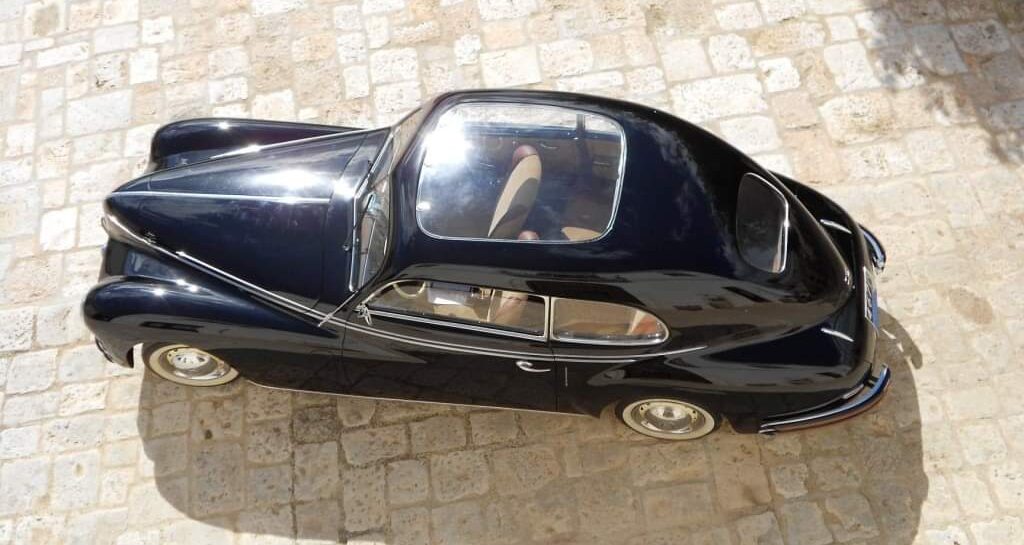
The Fiat’s roof now featured an expansive clear section that set it apart from any standard 1500 sedan on the street. One can picture the driver of a Fiat Aerlux in 1946, proudly winding through the streets of Rome or Naples, sunlight pouring in and curious onlookers peering at the strange reflection of sky on the car’s roof. The Aerlux trim added an airy, luxurious feel that was uncommon at the time for a family car. It demonstrated Touring’s ethos that advanced design was not solely the province of high-end sports cars; even a more humble Fiat could be endowed with a bit of the sublime. This democratic spread of the Aerlux idea across marques cemented Touring’s reputation as an innovator: whether the client was Alfa Romeo, Lancia, or Fiat, they all could benefit from a dose of air and light.
Even the exalted world of Ferrari saw the Aerlux’s influence. In the very earliest years of Ferrari as a road car maker, Carrozzeria Touring was one of the go-to coachbuilders for Maranello’s chassis. Most famously, Touring penned the barchetta body for the 1948–49 Ferrari 166 MM, but they also built a handful of closed 166 Inter coupes. One of those, chassis #0047S built in 1950, was outfitted with the Aerlux roof – making it a unicorn among Ferraris.
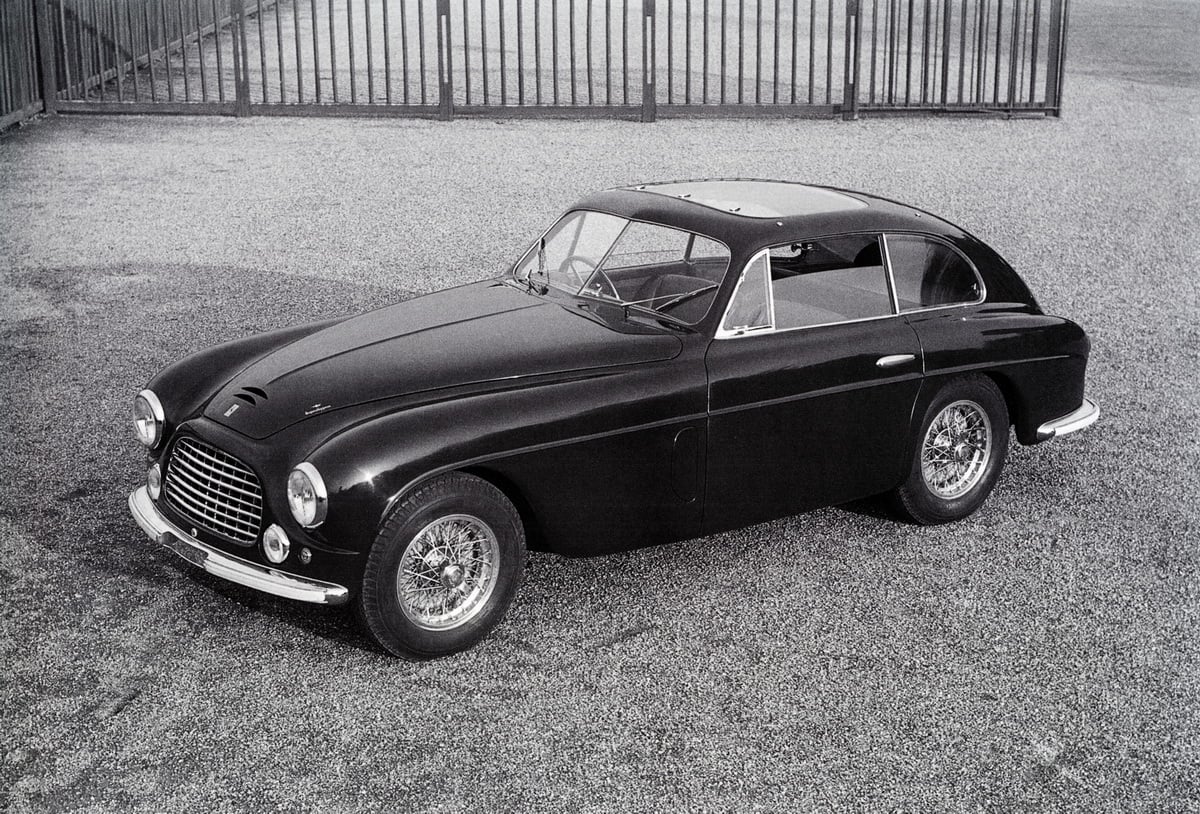
The Ferrari 166 Inter Aerlux Berlinetta appeared at the Turin Motor Show in 1950, sporting a dark blue paint and a striking plexiglas sunroof that immediately set it apart from the Pinin Farina and Vignale-bodied Ferraris on display. Period reports suggest that it might have been the first Ferrari ever shown with a transparent roof feature. To Ferrari’s conservative clientele, a see-through top on a GT car was startling and intriguing. Touring’s patented Superleggera framework made it structurally feasible, and the Aerlux dome made it technically and stylistically advanced for its time. Though the Aerlux roof was more commonly seen on Alfa Romeos, Lancias, and Fiats by Touring, its appearance on a Ferrari was especially notable, rendering that car particularly desirable to collectors today. Indeed, some Ferraris around 1950 also were “Aerlux” models, including at least two 166 Inters, marking a fascinating crossover of cutting-edge coachbuilt luxury into the world of exotic sports cars. With these few Ferraris, Touring proved that their skyward vision had no bounds – from mainstream Fiats to the rarified Ferraris, any car could be enhanced with a touch of Milanese innovation.
Legacy of the Aerlux
By the early 1950s, the Aerlux roof had graced only a limited number of vehicles. It remained an exclusive feature, largely limited to Touring’s own bespoke creations. Nonetheless, its impact during that era was significant. The Aerlux cars generated buzz and admiration at auto salons, offering a hopeful glimpse of the future. They encapsulated the optimism of the post-war Italian automobile renaissance – a time when designers dared to dream beyond conventional limits. The concept of a panoramic roof was so ahead of its time that it would be many decades before mainstream production cars embraced similar designs. Today, panoramic glass roofs are a common sight on luxury cars, but Touring’s Aerlux patent stands as a forerunner – a mid-century ancestor of the modern vista roof, achieved with 1940s materials and ingenuity. In 1948, one magazine poetically wrote that the Aerlux “allowed the sun to ride along as a passenger” in the car; such was the lyrical wonder it inspired.
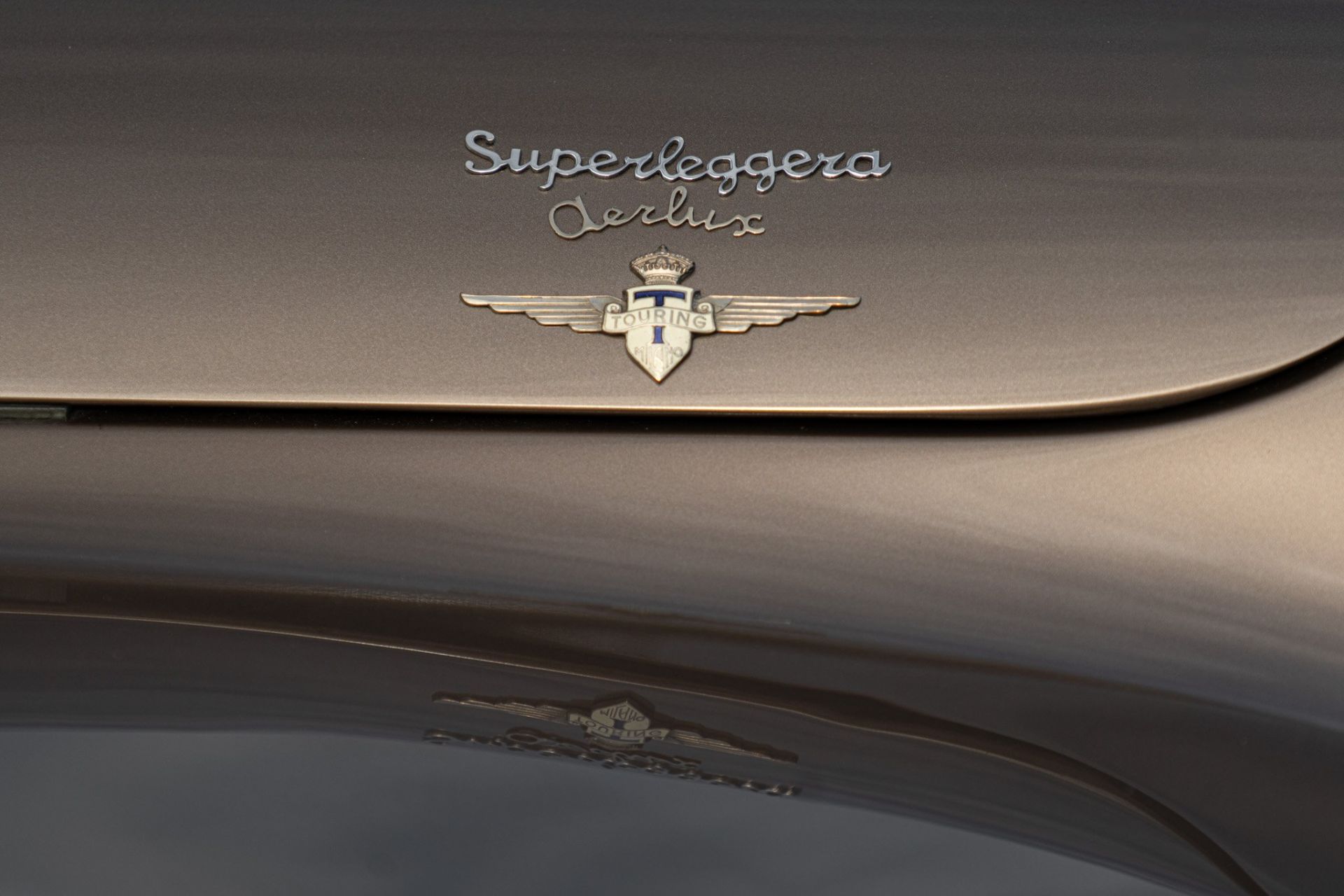
For Carrozzeria Touring, Aerlux became a proud part of its heritage. It was a tangible expression of the company’s philosophy that beauty and innovation must go hand in hand. Even as the original Touring company ceased operations in 1966, the legend of the Aerlux lived on in the lore of automotive enthusiasts. Each surviving Aerlux-equipped car – be it an Alfa 6C or a Lancia Aprilia – is cherished not just as a rare classic, but as an embodiment of a bright idea that bridged earth and sky. The very rarity of Aerlux models adds to their mystique: they were built in an era of austerity, yet they felt indulgent and futuristic. Owners who experienced them spoke of the particular joy of night drives under the stars or the way passengers would gather under the roof to watch raindrops dance on the plexiglas above.
In the annals of Italian automotive history, Carrozzeria Touring’s Aerlux roof is remembered with a fond, almost wistful admiration. It remains warmly romanticized as a detail that gave cars a soul. After all, a machine that lets you commune with the open sky taps into something fundamentally human – our love for freedom, nature, and light. Touring understood this, and through the Aerlux they brought a bit of poetry into the science of car design. As a patented innovation, the Aerlux roof was a technical accomplishment; as an experience, it was almost whimsical. Its story is one of a coachbuilder at the height of its creativity, enriching Italian motoring with a novel feature that was literally brilliant.
🔗 Read more: The Car That Marked the End of Carrozzeria Touring: The Sunbeam Venezia
Looking back, the Aerlux can be seen as the glass crown atop Touring’s post-war achievements. It distilled the coachbuilder’s ethos of elegance and excellence into one clear roof panel – simultaneously simple and revolutionary. To sit in a Touring Aerlux coupé is to be transported not only in space but in time: you feel the post-war optimism, the craftsmanship of hands that shaped metal and acrylic with equal finesse, and the romance of an era when automobiles were evolving into art forms. In a very real sense, Aerlux was Carrozzeria Touring’s invitation to drivers to look up and dream. It allowed sunlight and starlight to flood the intimate space of a car’s cabin, turning every journey into a cinematic experience. And in doing so, it ensured that Touring’s legacy would forever include this luminous chapter – a chapter where air and light became part of the very language of Italian automotive design, thanks to one coachbuilder’s patented vision of the skies.

ABOUT THE AUTHOR
Andreas Scheidl
Italian classic car enthusiast with German roots. Renowned as a respected figure in the classic car community, he serves as a jury member at various international concours d'elegance, including the Classic Gala Schwetzingen and Mantova. As a content creator, Andreas passionately shares his profound knowledge and appreciation for vintage automobiles. His heart beats for cars designed by Giovanni Michelotti, showcasing his discerning taste and dedication to preserving the timeless elegance of automotive history.
More stories by Andreas Scheidl ↗CONTINUE READING
Posts You Might Like
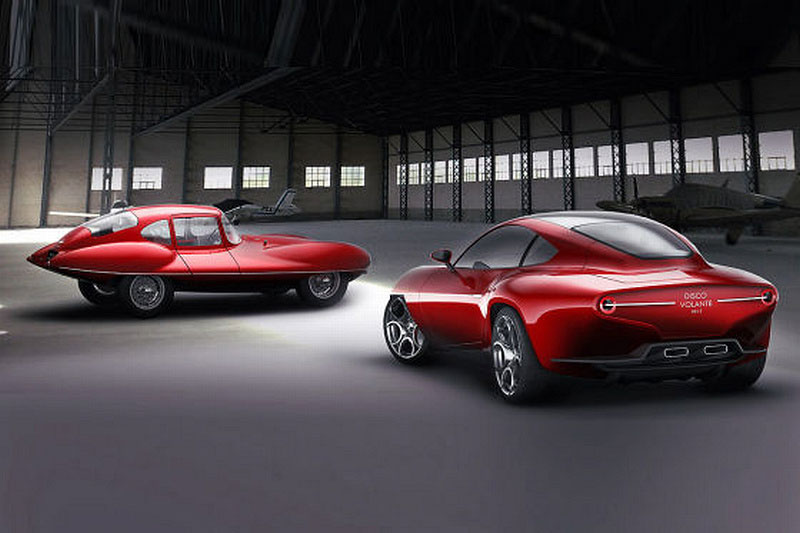
Reinterpreting the Past: When Coachbuilders revisited it’s Icons
When iconic coachbuilt cars are rebade through time, intent matters more than nostalgia. From experimental originals to modern reinterpretations, this article examines how legends are reimagined—and why some ideas refuse to stay…
Read story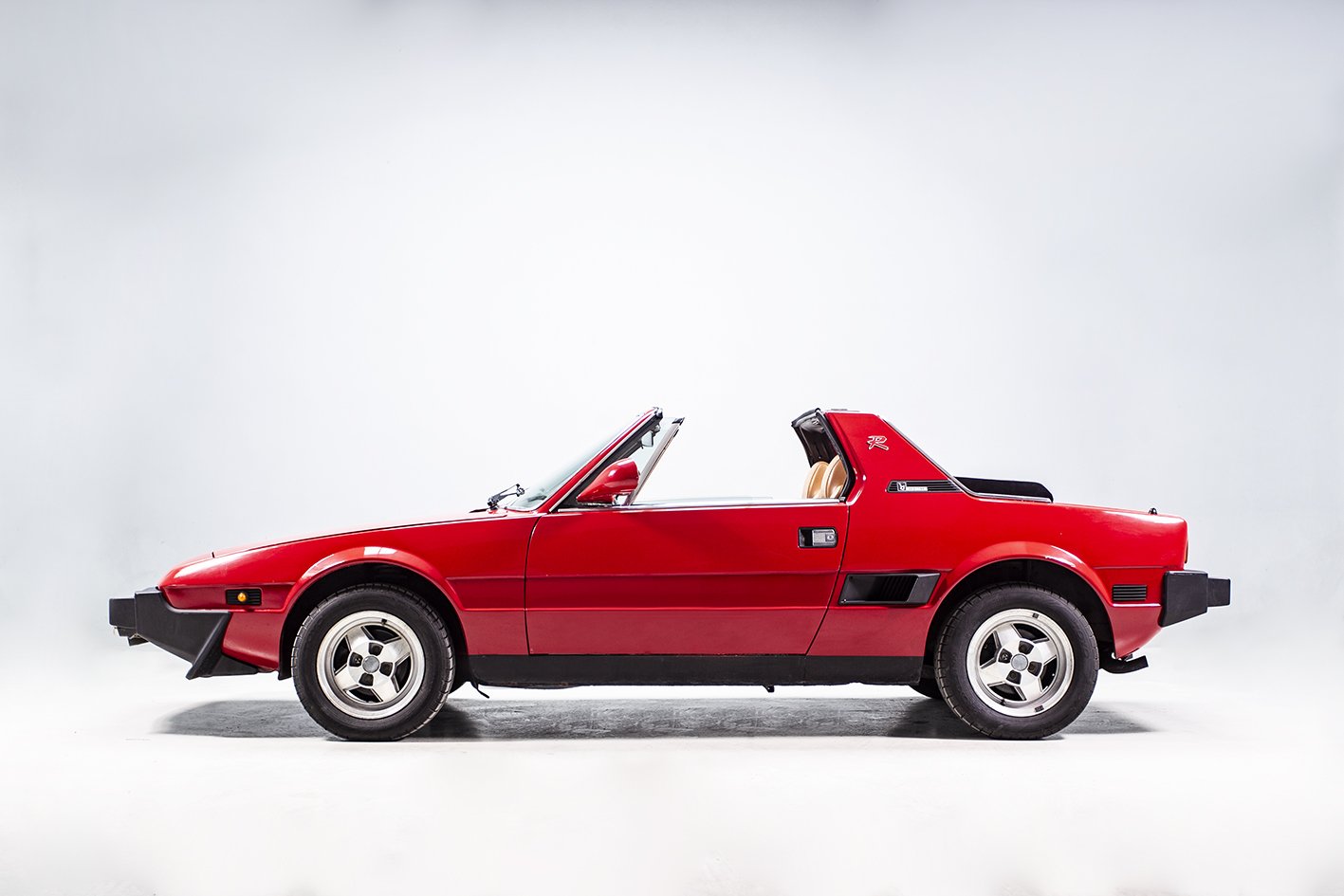
Neither Coupé nor Spider: Italy and the Targa Roof
A deep dive into Italy’s decades-long exploration of the targa roof—from early post-war experiments to Ferrari and Lamborghini icons—revealing how Italian designers created a third way between coupé and spider.
Read story
Italian Vision of the MPV: The Monovolume Concept
Long before MPVs filled suburban driveways, Italian designers were shaping the monovolume with prototypes that ranged from pragmatic to outright outrageous. Their work rewrote how space, style, and function could fit under…
Read story
Italian Coachbuilt City Car Concepts: From Microcars to Urban EVs
How did Italy’s famed coachbuilders go from designing Ferraris to dreaming up tiny electric runabouts? From the quirky Tsé-Tsé to Pininfarina’s visionary Nido, discover how city cars became a proving ground for…
Read story
THE CONVERSATION
Comments 0
Share a memory, a period photograph or a documented detail about this story.