
Opel’s Italian Love Affair: The Coachbuilt Cars You’ve Never Heard Of
In the 1960s, as Opel was solidifying its reputation for reliable German engineering, a new stylistic influence began to shine on the horizon: the creative touch of Italian coachbuilders. This unlikely crossroad of Teutonic substance and Italian style yielded some of the most fascinating concept cars and limited-production vehicles in Opel’s history. From one-off showstoppers by design houses like Vignale and Frua to full-fledged production partnerships with Bertone and others, the marriage of Opel chassis with Italian carrozzeria design has produced a rich narrative spanning from the Swinging Sixties to the 21st century. What follows is a chronological journey – an engaging story of elegant roadsters, daring grand tourers, and forward-thinking concepts – all born from the collaboration between Opel and Italy’s famed coachbuilders. It’s a tale of style and innovation that not only gave Opel a dash of Mediterranean flair but also left an enduring mark on automotive history.
1960s: Turin Elegance Meets Rüsselsheim Roots
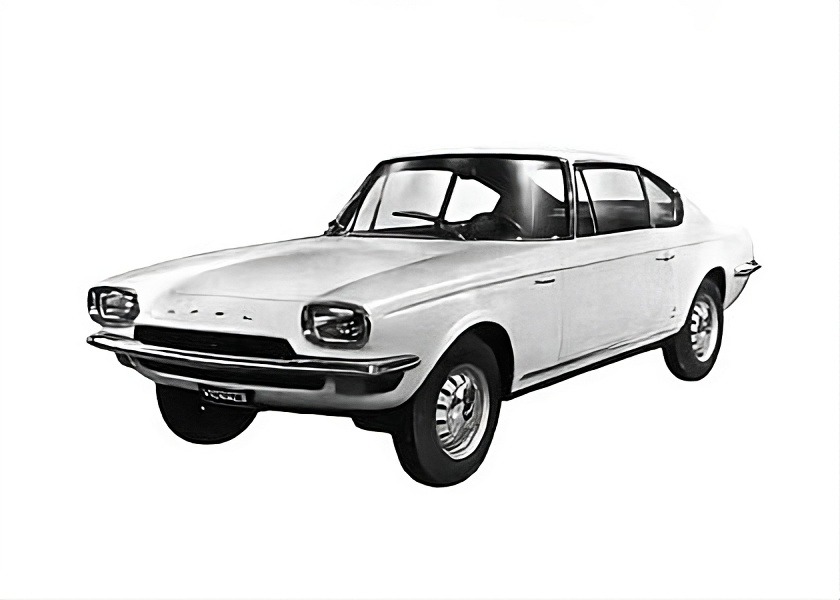
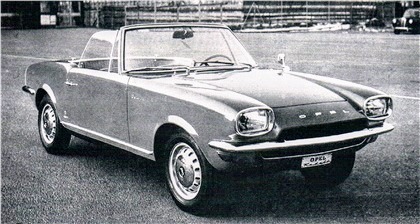
The story begins in the mid-1960s, an era when European coachbuilders often crafted their own interpretations of popular production cars. In 1965, Carrozzeria Vignale – one of Italy’s renowned coachbuilders – turned heads by reimagining Opel’s humble Kadett. Using the lightweight underpinnings of the 1964 Opel Kadett A, Vignale created the Opel Kadett Spider, a sleek two-seat convertible brimming with Italian elegance. This one-off show car, styled by Alfredo Zanellato (the nephew of Alfredo Vignale himself), debuted at the 1965 Geneva Motor Show and immediately stood out from the Kadett’s economy-car origins. With its low-slung profile, neatly sculpted body sides, and an undeniably continental flair, the Kadett Spider demonstrated how Italian design could inject glamour into a practical German platform. Later that year, Vignale didn’t stop at the roadster – the car was rebodied into a coupe and exhibited at the Turin Motor Show, wearing a graceful fixed roof that gave it a sporty GT look. Although neither the Spider nor the Coupe went into production, Vignale’s Kadett specials signaled the first of many Italo-Opel collaborations. They showed Opel (and the world) that even an everyman’s Opel could be transformed into something truly chic and bespoke, blending German engineering with Italian artistry in a way that captivated showgoers and journalists alike.
As the 1960s progressed, Opel itself began exploring bolder designs, and Italian influence wasn’t always external – sometimes it was simply in the air. In 1969, Opel unveiled a dramatic concept car of its own, the Opel CD (Coupé Diplomat), at the Frankfurt Motor Show. The CD was a low, long-nosed grand tourer prototype that looked more like Italian exotica than an Opel, signaling the company’s aspirations to push stylistic boundaries. The concept was extremely well received, but initially it was just a non-functional styling study.
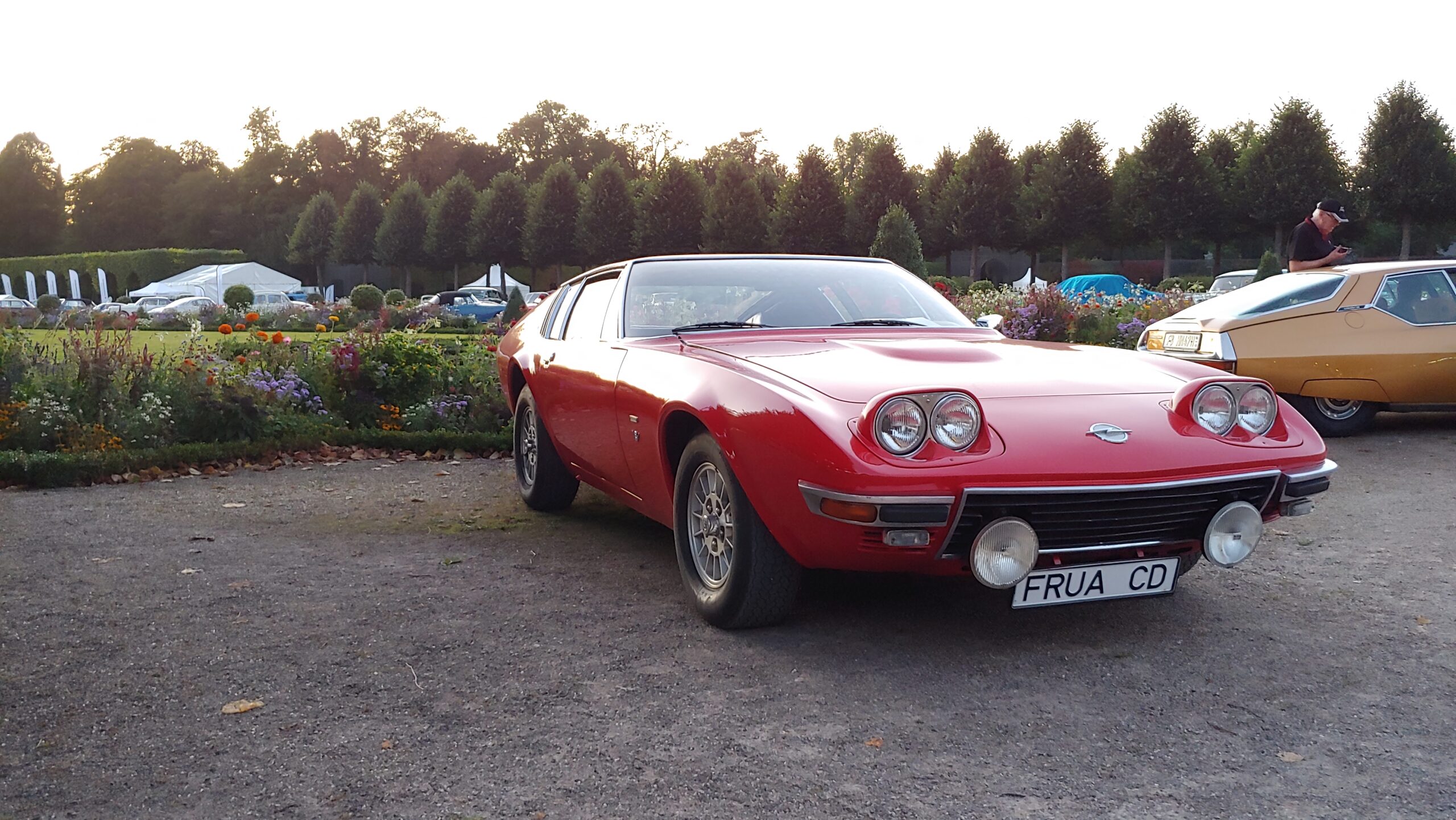
Sensing they had a hit on their hands, Opel – under the guidance of then-Opel chief Bob Lutz – decided to bridge the gap between show car and reality by turning to an Italian coachbuilder for help. Lutz commissioned Pietro Frua, one of Italy’s legendary designers, to refine and build a running prototype based on the show car’s idea. Frua, working from his Turin studio, took Opel’s design and added his own touches, crafting a fully functional grand touring coupé. The result was often called the Opel Diplomat Coupé by Frua (or Opel Diplomat CD Frua), essentially a more production-feasible iteration of the 1969 concept. Underneath, it was based on Opel’s flagship Diplomat sedan chassis with a big V8 engine, but Frua clothed it in a lithe, elegant body that would have been at home on the stand of Maserati or Iso. The Diplomat CD Frua prototype, completed around 1970, retained the sleek lines and dramatic proportions of the concept, but with a dose of Italian refinement in its details.
Interestingly, Frua also developed an Opel-based coupé during the same period. At the 1969 Geneva Motor Show, he presented the Opel Diplomat Coupé Special, a one-off four-seat coupé based on a pre-production Opel Diplomat E. The donor car was supplied to Frua by Karl-Heinz Wedel of the Opel design studio at the beginning of February 1969, leaving less than six weeks to complete the prototype before its debut on 13 March.
Frua shortened the Diplomat’s wheelbase by approximately 20 cm and constructed a new two-door body, incorporating some components derived from the Glas V8, which he had previously designed. The front and rear sections were substantially redesigned, with the front treatment showing similarities to Frua’s contemporary work on the Monteverdi High Speed. The prototype was finished in light blue with a beige interior and was conceived as a four-seat luxury coupé that could potentially be produced in a limited series.
The car retained Opel’s 2,784 cc fuel-injected inline six-cylinder engine, producing 165 PS (121 kW), and had a quoted maximum speed of 190 km/h. Frua hoped that the Geneva prototype would lead to a production contract with Opel, but the manufacturer did not proceed with the proposal.
The Diplomat Coupé Special subsequently appeared at other European motor shows, including the 1969 Frankfurt IAA and the Paris Salon, and returned to the Geneva Motor Show in 1972. Although the car has frequently been described in later publications as the Opel Admiral B Coupé Frua, documentation displayed with the surviving prototype identifies it as the Opel Diplomat Coupé Special by Frua and confirms that it was based on a pre-production Diplomat. Only one example was built.
🔗 Read more: Pietro Frua: Mastering the Art of Automotive Elegance
Opel never put either Frua-designed coupé into full production – they remained tantalizing one-offs. However, the story didn’t end there. The Diplomat CD Frua’s acclaimed reception and untapped potential inspired others to carry the idea forward. Entrepreneur and former racer Erich Bitter saw an opportunity and struck a deal to make the Frua–Opel dream a reality under his own brand. Using Frua’s Opel CD prototype as a template (with some modifications of his own), Bitter launched the Bitter CD in 1973 – essentially a limited-production grand tourer based on Opel Diplomat mechanicals and Frua’s Italianate design.
Early 1970s: Grand Experiments and “What If” Prototypes
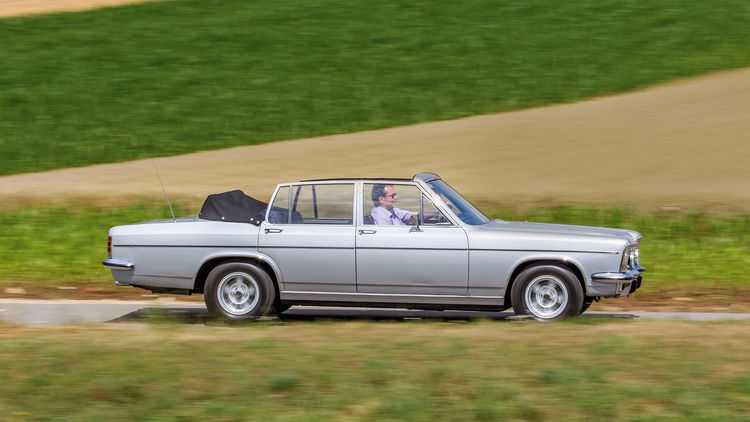
The fruitful partnership with Frua was not the only Italophile venture for Opel around the turn of the decade. In the early 1970s, Opel toyed with the idea of offering a full-sized luxury convertible – something to rival the elegant open-top cruisers of Mercedes-Benz. To explore this, Opel turned once more to Italian hands, this time Carrozzeria Fissore in Savigliano. In 1970, Opel quietly commissioned a small batch of Diplomat B Cabriolets to be built by Fissore, with final assembly and tuning by German coachbuilder Karmann. In total, four such Diplomat convertibles were crafted, each an imposing yet elegant machine intended to gauge public and executive interest. Fissore’s execution on the Opel Diplomat chassis yielded a stately four-seat cabriolet with clean lines and a tastefully understated Italian design touch – almost a Teutonic take on a Cadillac Eldorado convertible, filtered through Italian sensibilities. Despite the promising concept and the unique cachet of having an Italian-built Opel luxury convertible, this project remained very limited. The Fissore Diplomat cabriolets were used for promotional duties and evaluation, but Opel ultimately decided against putting a topless Diplomat into series production. All four examples survived as rare examples of Opel’s flirtation with bespoke luxury – a testament to Fissore’s craftsmanship and Opel’s willingness to experiment beyond its comfort zone. Today, those cars stand as elusive pieces of Opel history, marking another instance where Italian coachbuilders left their fingerprint on Opel’s flagship designs.
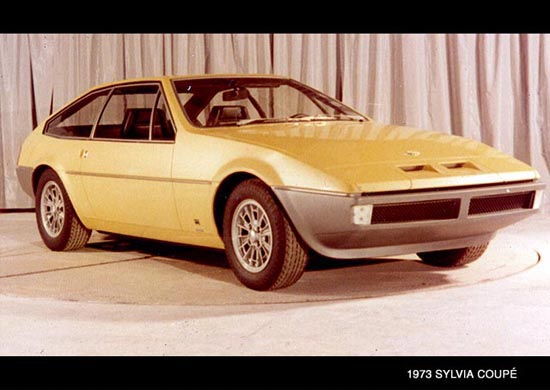
Meanwhile, at the other end of Opel’s model range, the early 1970s also saw Italian creativity tackling the sports-car segment. By 1973, the Opel GT – Opel’s little Corvette-inspired coupé – was ending its production run, and there was speculation about a successor. Enter Carrozzeria Coggiola, a Turin-based coachbuilder founded by Sergio Coggiola. Coggiola, together with talented British designer Trevor Fiore, took it upon themselves to imagine what a next-generation Opel GT might look like. The result was the Opel Sylvia GT, a one-off prototype completed in 1973. The Sylvia GT (despite its feminine name, a homage to an internal project moniker) was a sleek fastback coupé built on the Opel GT’s general underpinnings and proportions. Fiore’s design departed from the curvy 1960s style of the original GT, instead adopting the sharp-edged “folded paper” aesthetic that was coming into vogue in the 1970s. The car’s nose was wedge-like and clean, with pop-up headlamps, and the tail was a truncated Kamm-back, almost reminiscent of a contemporary Maserati or De Tomaso. Coggiola’s craftsmen realized the design in fiberglass, giving the Sylvia GT a crisp, modern look that stood apart from Opel’s in-house designs. Unveiled as a proposal for a GT successor, the Sylvia wowed those who saw it with its sophisticated Italian interpretation of a German sports car. Sadly, much like other independent coachbuilt “suggestions,” the car did not lead to a production agreement with Opel. The Sylvia GT remained a fascinating “what if” footnote – a prototype that showcased innovation (such as its aerodynamic lines and liftback hatch) and the ambition of its creators, but ultimately a road not taken. Enthusiasts today look back on the Opel Sylvia GT with intrigue, imagining how the 1970s sports car landscape might have been different had Opel embraced that Italian-designed vision.
The early 1970s, therefore, were a period of bold experiments. Opel’s collaboration with Frua and Fissore on the Diplomat-based projects represented the brand’s exploration of the high end – powerful luxury coupés and convertibles with Italian style. In parallel, Coggiola’s independent venture with the Sylvia GT represented the creative enthusiasm of Italian designers for even Opel’s sportiest aspirations. Each of these projects, whether officially commissioned or independently pursued, added a chapter to the narrative of Opel’s Italian connections. They highlighted key milestones: Frua’s Diplomat CD prototype influencing a production car (the Bitter CD), Fissore’s cabriolets illustrating Opel’s dabbling in coachbuilt luxury, and Coggiola’s Sylvia showing the allure of Italian design in the sports coupé realm. These milestones underscored a broader significance – they were evidence that in the automotive world of the 60s and 70s, collaboration across borders could yield truly innovative results, blending strengths from different traditions to push the envelope of design.
1980s: Italian Style on the Assembly Line
After the experimental fervor of the 70s, the 1980s initially seemed quieter on the coachbuilt Opel front. Opel focused on core models and in-house concepts during the late 70s and early 80s. But by the mid-1980s, a new trend brought Italian coachbuilders back into Opel’s orbit – the resurgence of the convertible. Convertibles were making a comeback in Europe, and Opel saw an opportunity to add some excitement to its compact family car range. Lacking recent experience with open-top cars, Opel once again turned to Italy for expertise. The answer came from Gruppo Bertone, the famed design house and coachbuilder in Turin. Opel and Bertone forged a partnership to create a factory-approved convertible out of the popular Kadett.
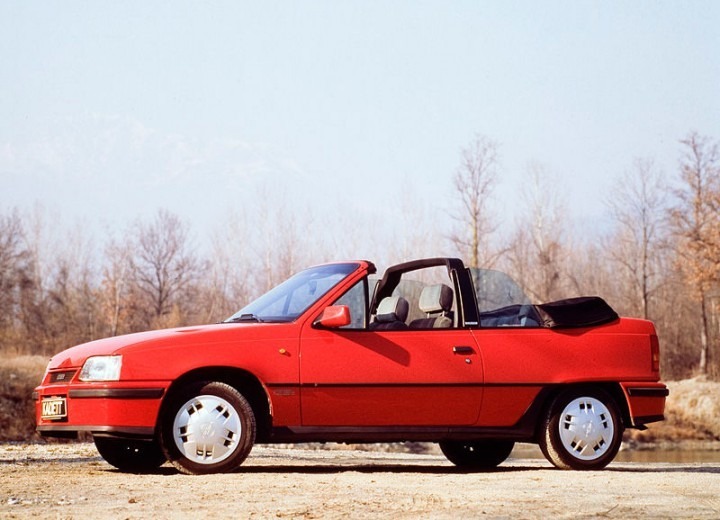
In 1987, the fruit of this collaboration appeared as the Opel Kadett Cabriolet (based on the Kadett E generation). Unlike the one-off show cars of previous decades, this was a full production model built in significant numbers – and it was built by Bertone in Italy. The Kadett Cabrio featured a neatly integrated roll bar (a stylistic and safety hallmark of 1980s convertibles) and a soft top that folded down to give Opel buyers a taste of open-air driving. Bertone was responsible for engineering the conversion from the Kadett hatchback, reinforcing the body and designing the roof mechanism, as well as actually manufacturing the car bodies in their Grugliasco plant. The results spoke for themselves: the Kadett Cabrio looked sharp and clean, retaining the practical personality of the Kadett while adding a dash of Mediterranean sunshine. Customers responded with enthusiasm. In just four years, roughly 60,000 units of the Kadett Cabrio were produced by Bertone, a remarkable figure for a coachbuilt car. It was a testament to Bertone’s capability not only to design but to deliver high-quality cars at scale. Parked next to rivals like the Ford Escort Cabriolet and VW Golf Cabriolet (both converted by Karmann in Germany), the Kadett Cabrio held its own – and indeed, having Bertone’s name attached gave Opel some added cachet. Perhaps the Kadett’s styling was still conservative (Opel’s design DNA was never as flamboyant as Fiat or Alfa Romeo), but there was an underlying sense of Italian finesse in the proportions and details, thanks to Bertone’s touch. This collaboration in the late ’80s marked a new kind of partnership: no longer just concepts, but series-production Opel models were now being shaped and even built by Italian coachbuilders. Italian design had effectively become part of Opel’s production process, reflecting a maturation of the relationship.
1990s: A Growing Partnership in Production
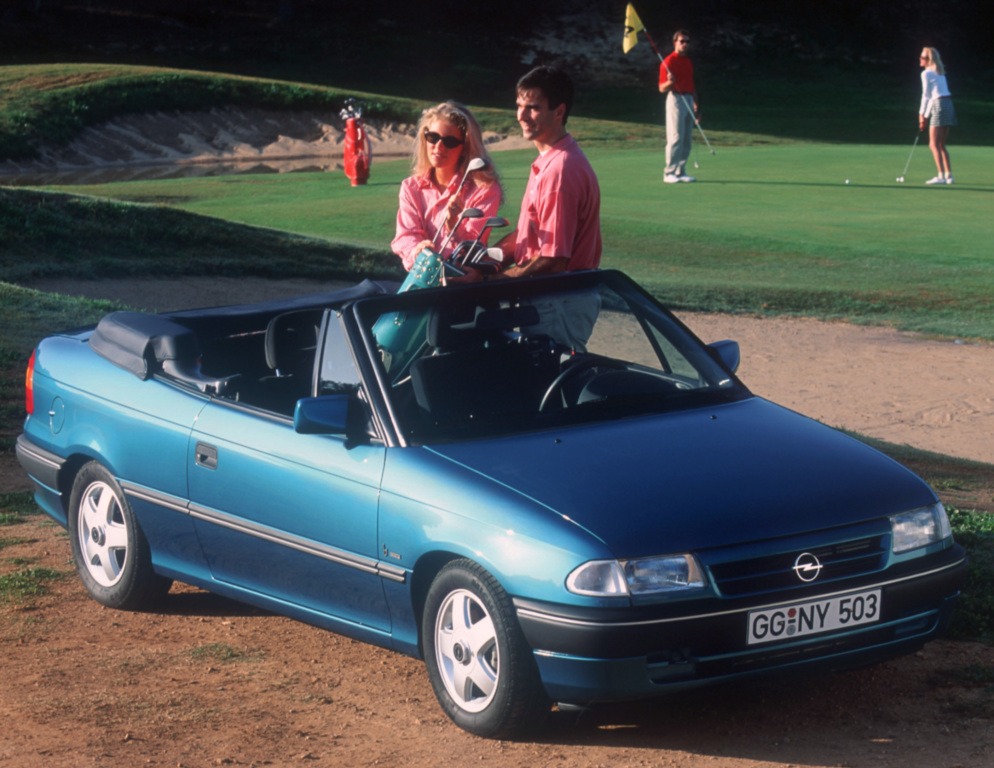
Following the success of the Kadett E Cabrio, Opel’s cooperation with Bertone continued into the 1990s with the Kadett’s successor, the Opel Astra. When the new Astra F debuted in 1991 (succeeding the Kadett nameplate in Europe), plans were quickly laid to offer a convertible version, and once again Bertone was entrusted with the project. In 1993, the Opel Astra Cabriolet made its debut, carrying forward the formula of the Kadett Cabrio but with improvements learned along the way. Bertone’s engineers used the longer floorpan of the Astra 4-door sedan as a basis, which gave the convertible more structural rigidity and a roomier rear seat area. The design of the Astra Cabrio was smooth and elegant – a bit more cohesive than the Kadett, with a taut rear deck that concealed the folded top completely (a neat touch that many convertibles of the time didn’t manage). In true Italian fashion, the Astra’s convertible conversion was executed with an eye for proportion: when the top was down, the car had a clean, unbroken beltline, and when the top was up it had a snug, coupe-like profile. Bertone kept the look “very classic” and refined, as one period description put it. This car solidified the Opel-Bertone relationship – the two companies were now in sync on a production level. Enthusiast drivers enjoyed a well-engineered convertible that was every bit as robust as its hardtop cousins (Opel insisted on rigorous quality control, which Bertone adopted to meet Opel’s German standards), yet it offered something extra: a whisper of Italian style on sunny afternoons.
By the late 1990s, Opel and Bertone were so confident in their partnership that they expanded its scope. Not content with just convertibles, Opel allowed Bertone to have a hand in designing an Astra-based coupe as well. The result arrived in 2000 with the Opel Astra Coupé, styled in collaboration with Bertone and built at Bertone’s facilities. This sleek two-door coupé had an Italianate sense of style – its lines were cleaner and more dynamic than the standard Astra hatchback, with a slightly sculpted profile and a tasteful use of curves that gave it a sporting presence. When Opel presented the Astra Coupé at the Geneva Motor Show in 2000, it was clear that this model was a further step in combining Italian style with German technology. Reviewers noted that it looked more expensive than it really was – a nod to Bertone’s design influence.
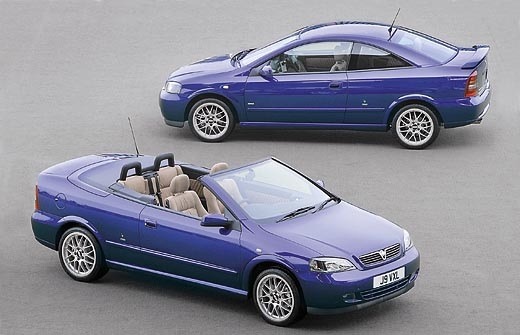
By 2001, a convertible version of this coupé (essentially the Astra Cabriolet) was introduced, completing Opel’s range of sporty variants. With an elegant two-door body and a fully power-operated soft top, the Astra G Cabrio of the early 2000s was arguably the prettiest Opel in the lineup at the time – and we largely have Bertone to thank for that. Not only were these models designed with Italian input, they were also assembled in Italy at Bertone’s plant, with Opel supplying components and Bertone handling the bodywork and final assembly. It was a collaboration that forced Bertone to adopt Opel’s stringent production processes and quality controls, blending the best of both worlds into the final product. For Opel, this partnership was a strategic win: it could offer niche models like coupes and convertibles without diverting its own factories, while benefiting from Italian design prestige. For Bertone, it meant high-volume work (the Astra coupé/convertible series also sold in the tens of thousands) and a showcase for their design and manufacturing prowess on the European stage. The 1990s thus ended on a high note, with Opel and Italian coachbuilders not just flirting at auto shows, but working hand-in-hand to deliver cars into customers’ garages.
🔗 Read more: The story of Bertone: the Most Controversial Coachbuilder Ever
The Opel Maxx, unveiled at the 1995 Geneva Motor Show, was another forward-thinking concept car built by Bertone that exemplified innovative design and engineering for city cars of its time. Powered by a three-cylinder gasoline engine, the Maxx was ahead of its era, embodying features and materials that promised efficiency and sustainability. Its body was constructed from aluminum sheet metal rather than conventional steel, drastically reducing weight and enhancing modularity. The welded aluminum panels formed a robust structural cell, partially exposed as a unique design element and integrated into the aluminum chassis. Weighing no more than 650 kg, the Maxx delivered fuel efficiency, nimble handling, and low emissions – ideals that aligned with the growing environmental concerns of the mid-1990s. Opel even announced intentions to bring the Maxx to market, generating significant interest at its debut. However, production never materialized. Today, the Maxx stands as a significant example of lightweight, sustainable automotive engineering, with ideas that influenced later generations of city cars.
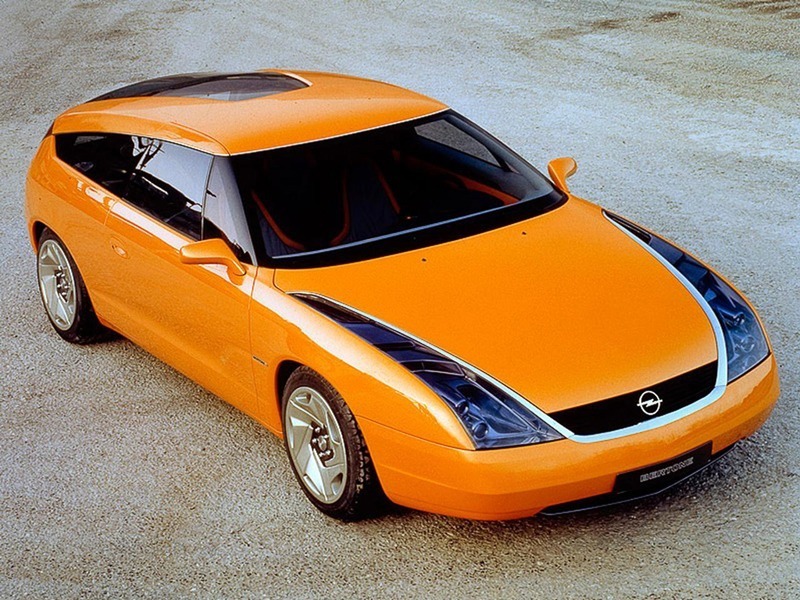
A year later, Bertone returned to Geneva with the Opel Slalom (1996), a striking exploration of how coupes could blend sportiness with versatility. Developed on Opel mechanicals and equipped with four-wheel drive, the Slalom reimagined the sports coupé as a multifunctional vehicle that straddled the line between coupe, station wagon, and people carrier. Designed under the direction of Luciano D’Ambrosio, its bold proportions and dynamic “slalom effect” body lines gave it an avant-garde appearance, with intersecting beltlines, large headlamps extending onto the bonnet, and flowing glazing surfaces. Inside, Bertone’s creativity shone in both aesthetics and practicality: grey leather contrasted with vivid orange inserts, while an ingenious rear-seat system expanded cargo space far beyond typical 2+2 layouts. Powered by a 2.0-liter four-cylinder with 16 valves, the Slalom balanced performance with utility, offering a fresh interpretation of what a modern Opel coupé could be. Though it remained a concept, the Slalom underscored Bertone’s knack for combining Italian style with German practicality, once again pushing Opel’s design narrative into new territory.
2000s: Concepts and the Modern Era of Collaboration
The dawn of the 21st century saw Opel and its Italian design partners reaching new heights, especially on the concept car front. While Bertone continued to collaborate on production models (as seen with the Astra G twins), it also undertook imaginative concept projects for Opel. In 2001, Bertone built two particularly notable concept cars for Opel that encapsulated the spirit of the time. The first was the Opel Frogster, a whimsical small convertible pickup concept unveiled at the Frankfurt Motor Show in 2001. Based on Corsa mechanicals, the Frogster was a playful urban runabout with a modular design – its four seats could be folded and reconfigured, and it could transform from a roadster into a mini pickup. This fun concept reflected the versatile lifestyle vehicles trend, and Bertone’s execution gave it a cheeky, youthful character. The second was far more technologically forward-looking: the Opel Filo concept, also shown in 2001. Co-developed by Bertone with the steering systems company SKF, the Filo (meaning “wire” in Italian) was a showcase for drive-by-wire technology. Bertone designed the Filo as a compact mono-space vehicle with a minimalist interior, famously replacing the traditional steering wheel and pedals with a videogame-like control yoke on the center console. This radical interior layout was wrapped in a clean, modern exterior – again demonstrating Bertone’s ability to blend Opel’s design language with Italian futurism. Both the Frogster and Filo remained purely concepts, but elements of their ideas (flexible seating in one, advanced human-machine interface in the other) would echo in future Opel designs and beyond.
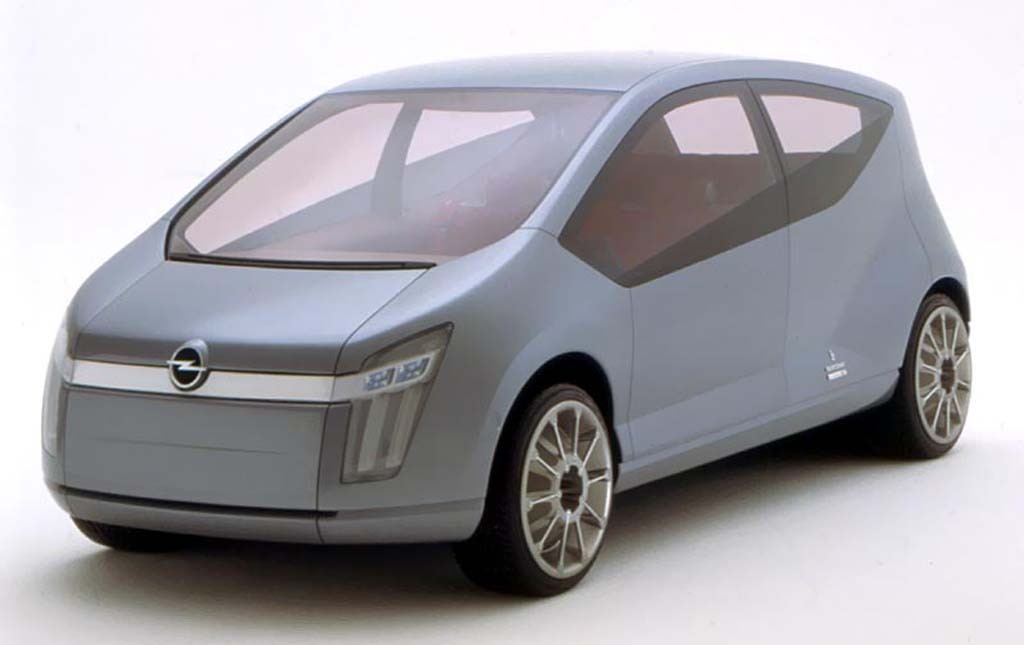
One of the crowning achievements of the Opel-Italian cooperation in the 2000s came in the form of a grand concept car: the Opel Insignia Concept of 2003. Although the Insignia name would later be used for a production sedan, in 2003 it was attached to a luxurious four-seat coupé concept developed by Bertone for Opel. Revealed at the Frankfurt IAA in late 2003, the Insignia Concept was Opel’s statement of ambition – and Bertone’s design expertise helped bring it to life. The Insignia Concept was a large, imposing coupé with a progressive, elegant design and well-balanced proportions. It featured innovative pantograph-hinged doors: press a button and the rear half-doors would slide backwards parallel to the body, rather than swinging out – a clever solution for tight parking spaces and a dramatic party trick on the show floor. The tailgate was similarly complex, with a sliding mechanism to provide a large opening. The car’s lighting was all-LED, a novelty at the time, giving it a distinctive illumination signature. And under the hood, Opel showcased its engineering might by fitting a 344-hp Corvette-sourced V8 engine, blending American muscle with European luxury. Bertone’s touch was evident in the Insignia Concept’s interior as well – a sumptuous four-seat arrangement with innovative use of space, including a hidden fifth seat that could deploy from the rear center console at the touch of a button. This concept not only previewed design cues that would later appear in Opel’s production cars (the Insignia production model in 2008, for instance, inherited some of its grand style from this concept), but it also underscored the fruitful nature of Opel’s collaboration with Italian design: Bertone had created a show-stopping flagship concept that married Opel’s brand heritage with Italian ingenuity. It was widely praised for bringing a bit of Mediterranean glamour to the otherwise pragmatic Opel brand, and it signaled that Opel was unafraid to explore new design horizons with the help of its Italian partners.
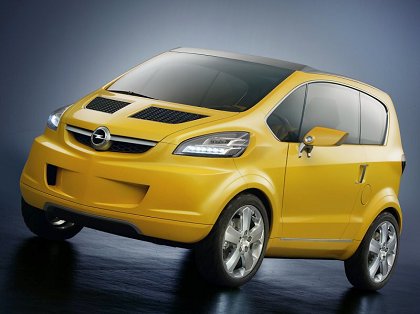
Italian coachbuilders didn’t just help with flashy sports cars or luxury concepts; they also lent a hand in envisioning the future of practical cars. A great example came in 2004, when Opel unveiled the Trixx Concept, a tiny city car with big ideas. The Trixx was built by Carrozzeria Coggiola (marking another chapter in Coggiola’s involvement with Opel) and was introduced at the Geneva Motor Show 2004. This cheerful urban concept was all about maximizing space in a micro package. Thanks to Coggiola’s clever construction, the Trixx featured an extended height roof and innovative doors to ease entry. It could seat three adults and a child in a pinch, or reconfigure to carry cargo with a slide-out drawer-like trunk. Unconventional features – like an inflatable front passenger seat that could turn into a child’s booster seat – showed that Opel was thinking outside the box. The fact that this forward-thinking concept was built in Italy by Coggiola speaks to Opel’s continued trust in Italian craftsmanship for turning wild ideas into reality. While the Trixx itself did not reach production, some of its thinking influenced Opel’s approach to small cars (for instance, hints of its space-efficient philosophy were seen later in the Opel Agila and other city cars). More symbolically, the Trixx indicated that even in the 21st century, when in-house design teams had grown larger and more global, Opel still saw value in teaming up with boutique Italian coachbuilders to explore the fringes of design and innovation.
By the late 2000s, the era of traditional carrozzerie was undergoing change. Many Italian coachbuilders like Bertone and others were facing economic challenges, and automobile manufacturers, including Opel, were expanding their own design and concept-building capabilities. The need to contract out concept car construction or low-volume niche models began to dwindle. For instance, after the Astra TwinTop (a retractable hardtop convertible launched in 2006, which Opel handled largely in-house with engineering support from roof specialists), the direct involvement of Italian firms in Opel’s new production models became less visible. Opel’s later concepts in the 2010s, such as the 2016 GT Concept, were designed by Opel’s own designers in-house, reflecting a more self-reliant approach. And yet, the legacy of the collaborations from the past decades remained very much alive. The design philosophies, the innovative ideas, and the successful models born from the Opel-Italian partnerships have become a part of Opel’s heritage. Enthusiasts today still fondly recall the “Italian Opels” – those cars and concepts where the flair of Turin or Milan was evident in the lines of a car wearing the Blitz badge.
A Lasting Impact on Automotive History
From the elegant one-offs of the 1960s to the co-produced convertibles and striking concepts of the new millennium, Opel’s experiences with Italian coachbuilders form a remarkable narrative in automotive history. It’s a story of cross-pollination: German solidity meeting Italian creativity. The collaborations yielded cars that were often greater than the sum of their parts – whether it was a humble Kadett transformed into a stylish roadster, or a flagship concept car infused with Latin charisma. These projects introduced design innovations (like the pantograph doors of the Insignia Concept or the flexible interior of the Trixx) and produced key milestones (such as the production Bertone Cabriolets that proved the feasibility of coachbuilt high-volume manufacturing). They even resulted in independent spin-offs like the Bitter CD, which owe their existence to the initial Opel-Italian design crossovers. Moreover, these partnerships had a broader significance: they demonstrated the value of thinking beyond borders and traditions. Opel, traditionally seen as an engineer’s brand, earned newfound respect for style thanks to its Italian connections, while Italian coachbuilders gained a wider canvas to apply their artistry beyond the usual Alfa Romeo or Ferrari.
🔗 Read more: 10 Rare BMWs with Italian Design You’ve Probably Never Heard Of
Importantly, the narrative has always remained engaging for car enthusiasts – especially those who follow coachbuilding and design. There’s an undeniable romance to the idea of an Italian carrozziere taking a German car and turning it into a piece of automotive art. It’s the kind of story that sparks imagination: envisioning Alfredo Vignale’s team hammering out custom panels for a Kadett in 1965, or Pietro Frua sketching a sleeker roofline for the Opel Diplomat in 1970, or Bertone’s engineers cutting the roof off a Kadett in 1987 to give it new life. These tales show a human, artisanal side of carmaking that nicely balances the mass-production reality of brands like Opel. And for the Italian design houses, working with Opel added a chapter to their portfolios that is sometimes overlooked, but no less interesting – it wasn’t all Lamborghinis and Maseratis; it was also about elevating the everyday cars and exploring new concepts for a broader market.
As we reach modern times, we see that the spirit of those collaborations lives on in subtle ways. Opel, now part of a multinational group that includes storied Italian brands, continues to value design heavily – a priority that was arguably reinforced by the successes of the past partnerships. While independent coachbuilt Opels are rare today, the legacy of style and innovation endures. Enthusiast sites like carrozzieri-italiani.com celebrate these vehicles because they symbolize a special alchemy in car design. They remind us that behind every great car, there may be an unexpected collaboration or a meeting of minds across cultures. The Opel models touched by Italian hands remain beloved by collectors and fans: the Vignale Kadett with its mid-century charm, the Frua Diplomat prototypes and their Bitter progeny, the Coggiola Sylvia – a lost gem of the wedge-era, and the Bertone convertibles that put thousands of drivers behind the wheel of something a bit more special than the ordinary.
In the end, the marriage of Opel and the Italian carrozzieri has been a story of mutual enrichment. It brought Mediterranean passion into Opel’s design room and gave Italian designers a new arena to showcase their versatility. And most of all, it gave car lovers an engaging saga and some truly unique automobiles. From the 1960s to today, that saga continues to be told – every time one of these Italo-Opel creations rolls by at a classic car show or is featured in a magazine, the legacy is alive. It’s a friendship on wheels, forged in the 60s, that has cruised with us into the 21st century, reminding us that cars, at their best, are a blend of art and engineering without borders.

ABOUT THE AUTHOR
Andreas Scheidl
Italian classic car enthusiast with German roots. Renowned as a respected figure in the classic car community, he serves as a jury member at various international concours d'elegance, including the Classic Gala Schwetzingen and Mantova. As a content creator, Andreas passionately shares his profound knowledge and appreciation for vintage automobiles. His heart beats for cars designed by Giovanni Michelotti, showcasing his discerning taste and dedication to preserving the timeless elegance of automotive history.
More stories by Andreas Scheidl ↗CONTINUE READING
Posts You Might Like
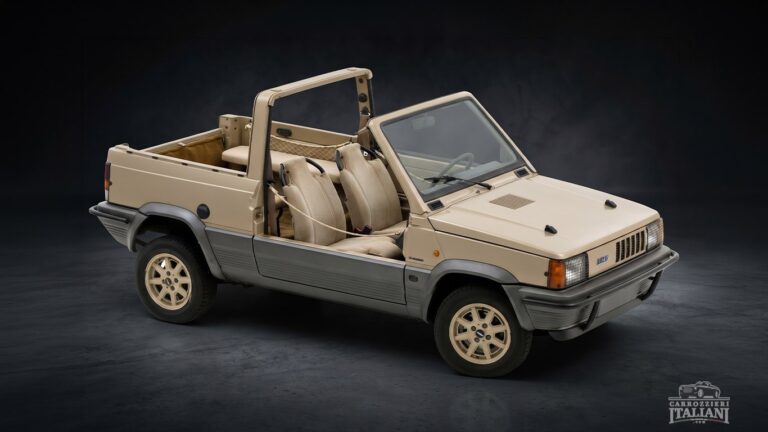
Fiat Panda Cabrio: The Italian Coachbuilders Who Opened Giugiaro’s Box
From Moretti’s Panda Rock to Italdesign’s experimental Strip, Maggiora’s four-wheel-drive convertible and Stola’s remarkable Destriero, the history of the open-top Panda reveals an unexpected chapter in Italian coachbuilding. When Giorgetto Giugiaro designed…
Read story
Gabriele d’Annunzio and the Cult of the Automobile
There was a time when the automobile had not yet become part of the landscape. It announced itself from afar through the beating of an engine, the smell of petrol and hot…
Read story
Fiat 1400: The Last Great Playground of the Carrozzieri
From Touring and Abarth to Farina, Ghia, Vignale, Boneschi, Bertone, Viotti and the smaller carrozzerie, the new Fiat quickly became one of the richest bases for Italian special bodies in the early…
Read story
How a Swiss Dealer Challenged Ferrari: The Story of Monteverdi
How Peter Monteverdi went from Swiss Ferrari dealer to creator of rare Frua and Fissore-bodied GTs, the Hai supercar and luxury off-roaders.
Read story
THE CONVERSATION
Comments 0
Share a memory, a period photograph or a documented detail about this story.