
Carrozzeria Savio: The History
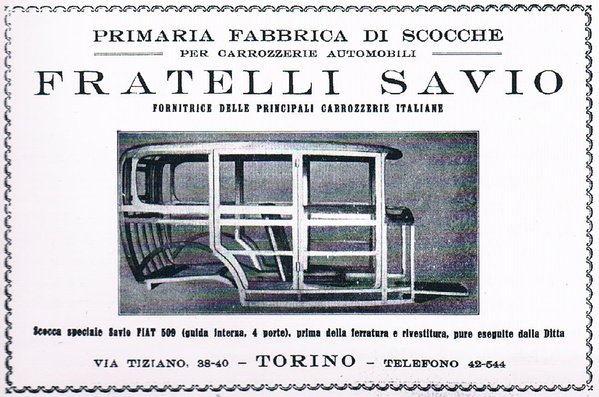
The history of Carrozzeria Savio begins before the company itself existed, because Antonio and Giuseppe Savio belonged to the generation of craftsmen who learned their trade during the difficult but extraordinarily fertile passage from horse-drawn carriage construction to motor-car coachbuilding, a transition that demanded woodworking skill, metal-shaping instinct, structural intelligence, and a willingness to understand that the automobile was not merely a carriage with an engine, but a new object whose body had to serve speed, comfort, production, and identity at the same time. Around 1899, the two brothers entered the world of Turin coachbuilding through Carrozzeria Alessio, one of the important names of the period, and their apprenticeship there gave them not only practical ability but also commercial credibility, because they later worked within a network that included firms such as Rothschild, Diatto, and other established coachbuilders before opening their own workshop.
When the Savio brothers founded their own carrozzeria in Turin in 1919, the timing was both difficult and promising, since Italy was emerging from the First World War while the automobile industry was searching for capable suppliers that could translate chassis into finished vehicles with speed and precision. Their first major opportunity came through an order connected with Itala, reportedly for 900 complete bodies, and this early contract immediately placed the young company in the orbit of serious industrial work rather than purely artisanal experimentation.
The 1920s and the making of a practical, respected coachbuilder
During the 1920s, Savio built its reputation not by chasing celebrity but by becoming one of those dependable Turin companies that could serve both prestigious chassis makers and larger manufacturers, a position that required flexibility, discretion, and a very clear understanding of what each client wanted from a body. The firm produced coachwork for names including Lancia, Fiat, Alfa Romeo, Isotta Fraschini, Itala, and others, while also carrying out subcontract work for well-known carrozzerie such as Ghia, Farina, and Boneschi, which suggests that Savio was trusted not only by car manufacturers but also by other specialists who needed reliable execution behind the scenes.
One of the most interesting early technical details associated with Savio was the use of Silentbloc rubber bushings, first applied by the firm on a Ceirano saloon in 1925 according to historical accounts, a choice that fitted perfectly with Savio’s later character because it showed a concern for refinement and usability rather than styling alone. In a period when coachbuilders often competed through ornament, elegance, or spectacular one-offs, Savio was already developing a reputation for bodies that were well made, comfortable, technically attentive, and adaptable to real needs.
The 1930s, Fiat, aerodynamic bodies, and the early logic of the utility vehicle
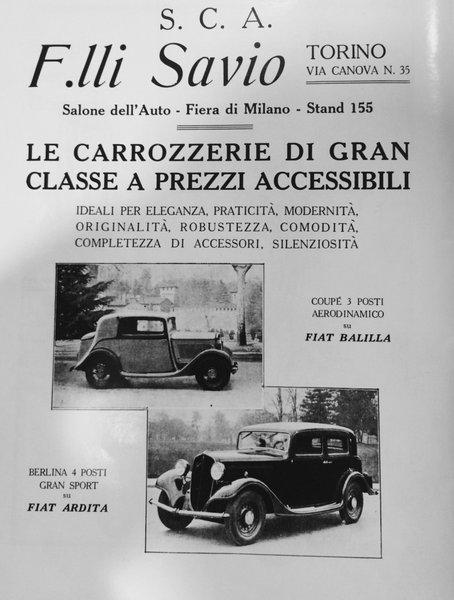
By the 1930s, Savio’s relationship with Fiat became increasingly important, and this collaboration shaped much of the company’s identity because it pushed Savio toward vehicles that combined Italian flair with practical production logic, from coachbuilt versions of popular Fiats to special bodies that anticipated later categories of transport. The company worked on Fiat 508 Balilla and Fiat 518 Ardita bases, developed aerodynamic and aluminium-bodied interpretations, and became associated with bodies whose purpose was not simply decorative but functional, efficient, and modern in the broadest sense of the word.
🔗 Read more: Mario Revelli di Beaumont: the first Freelance Car Designer
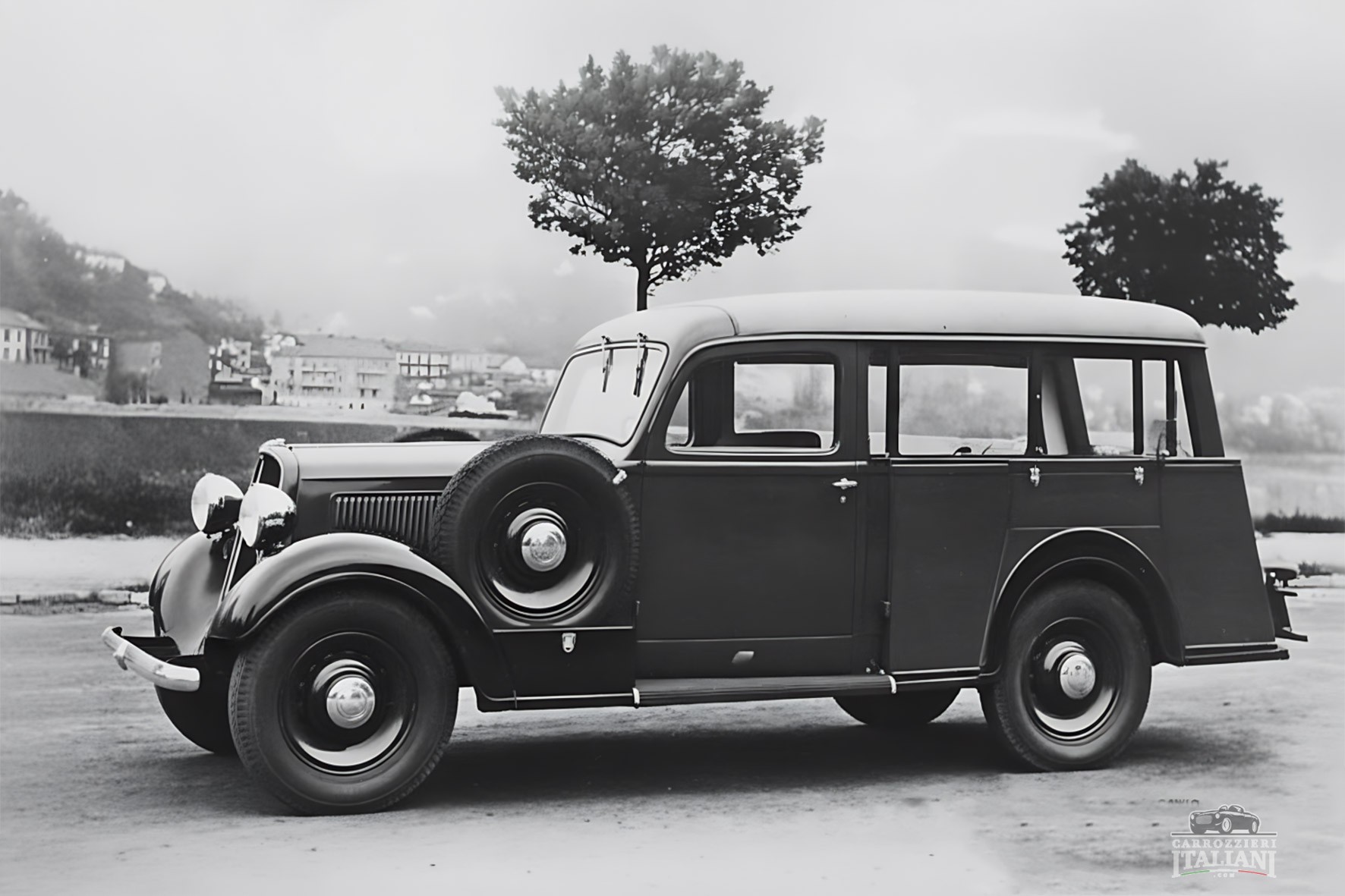
Among the most fascinating pre-war Savio creations was the so-called Box Body on the Fiat 518 Ardita, a design linked to Mario Revelli di Beaumont and often described today as a remarkably early interpretation of a multi-purpose off-road or sport-utility idea, long before such categories became common commercial language. Around the same decade, Savio also produced a wood-panelled station-wagon-type body on a Fiat 1100, while its 508 C Mille Miglia and aluminium-bodied Fiat specials reflected the same capacity to move between sporting, family, commercial, and experimental requirements without losing the company’s disciplined approach to construction.
The commercial visibility of Savio in this era is also reflected by surviving period ephemera, including eBay listings for advertising material related to a 1934 Savio-bodied Balilla spider or landaulet, which should not be treated as primary factory evidence but does show that Savio’s pre-war work still circulates among collectors as a recognizable and documented part of Italian coachbuilding culture.
War, destruction, and the difficult restart after 1943
The Second World War interrupted Savio’s natural development and forced the company, like many Italian industrial firms, into work connected with military and emergency needs, including ambulances and other special vehicles. The bombing of Turin in 1943 severely damaged the factory, and the consequences were personal as well as industrial, because Antonio Savio withdrew from the company after the war years, while Giuseppe continued the business under the name Stabilimento Savio Giuseppe Carrozziere Automobili.
The post-war restart showed the resilience of the firm, because Savio returned to Fiat-based work and began to rebuild its identity around practical coachbuilding, special bodies, and vehicles for institutional or professional use. eBay listings also preserve traces of this period through post-war advertising for Savio-bodied Fiat 1100 Berlina and Belvedere models, again useful as evidence of collector interest and period publicity rather than as a substitute for company archives.
The late 1940s and early 1950s, when Savio turned practicality into elegance
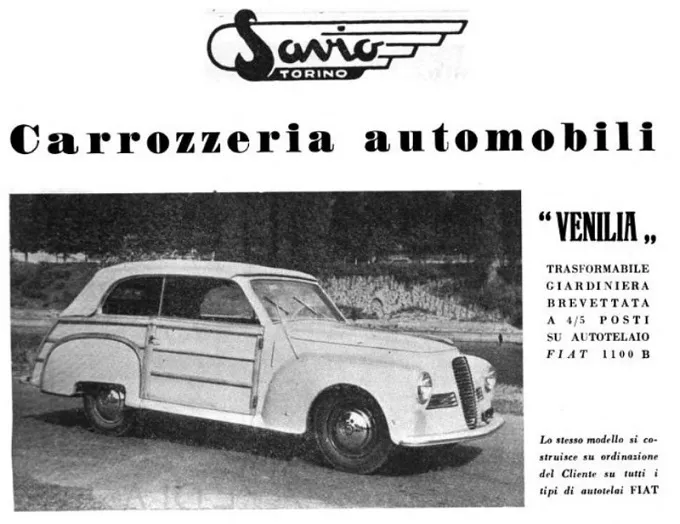
In the years immediately after the war, Savio produced several Fiat-based variants that showed how the firm could add distinction to familiar mechanical bases, including the Fiat 1100 E derivatives and the 1100 Venilia, a giardiniera-transformable design with a retractable cloth roof that combined structural practicality with the open-air spirit that would later become central to many Italian leisure cars.
Savio’s most elegant early post-war statements were the Fiat 1400 Landaulet of 1950 and the later Fiat 1900 Landaulet, both of which revived an old formal body style in a modern Italian context by keeping the front passengers under a fixed roof while giving the rear compartment an opening section suited to ceremonies, official use, and refined public display. The Fiat 1400 Landaulet appeared among the participants at the 1950 Concorso Internazionale di Eleganza e Comodità della Carrozzeria at the Pincio in Rome, while the Fiat 1900 Landaulet later had its moment in the spotlight at the 1954 San Remo Concours d’Elegance, where its partially retractable rear roof and careful craftsmanship represented Savio’s ability to make a Fiat feel ceremonial without becoming excessive.
🔗 Read more: From Wagon to Cabriolet: The Story of Savio’s Fiat 1100 Venilia
Giuseppe Savio’s death, Alfredo Caracciolo’s leadership, and the move to Moncalieri
Giuseppe Savio died in 1954, and the company passed into a new phase under the leadership of his son-in-law Alfredo Caracciolo, whose management would prove decisive in giving the firm a second life during a period when traditional coachbuilding was being squeezed by monocoque bodies, larger production runs, and the growing power of manufacturers’ internal styling departments. Caracciolo’s Savio moved to Moncalieri in 1959, where the company worked from more modern facilities and increasingly concentrated on specialized vehicles, ambulances, school buses, buses, prototypes, and carefully selected Fiat-based fuoriserie projects.
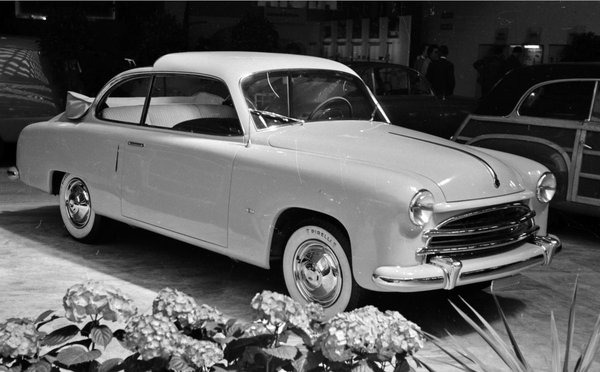
What makes the Caracciolo period particularly interesting is that Savio did not attempt to become a glamour coachbuilder in the manner of Pininfarina, Bertone, or Ghia, but instead positioned itself as a flexible constructor that could produce small series, prototypes, institutional vehicles, and occasional show cars with the same seriousness. Contemporary accounts note that Savio remained a relatively small operation, with fewer than 100 employees in the 1960s, yet this scale allowed it to respond to unusual briefs that larger firms might not have found convenient.
The creative flowering of the late 1950s and early 1960s
The late 1950s and early 1960s gave Savio one of its most creative phases, because the company worked across city cars, coupés, spiders, utility vehicles, and formal specials with a freedom that reflected both Italian design optimism and the firm’s own practical intelligence. In 1957 Savio presented a Fiat 500 Spider at the Turin Salon, designed by Mario Revelli di Beaumont, and this one-off roadster anticipated the light recreational mood that would later define several Savio projects.
Savio also produced military and institutional vehicles such as the Fiat 1100 Industriale, built in small numbers for the Italian Army, while continuing to create Fiat-based fuoriserie models including the 1500 S Spider, the 1500 S Berlinetta, the Fiat 600 Roadster, and later coupés that showed how Savio could reinterpret mass-market Fiat mechanics with more personal proportions.
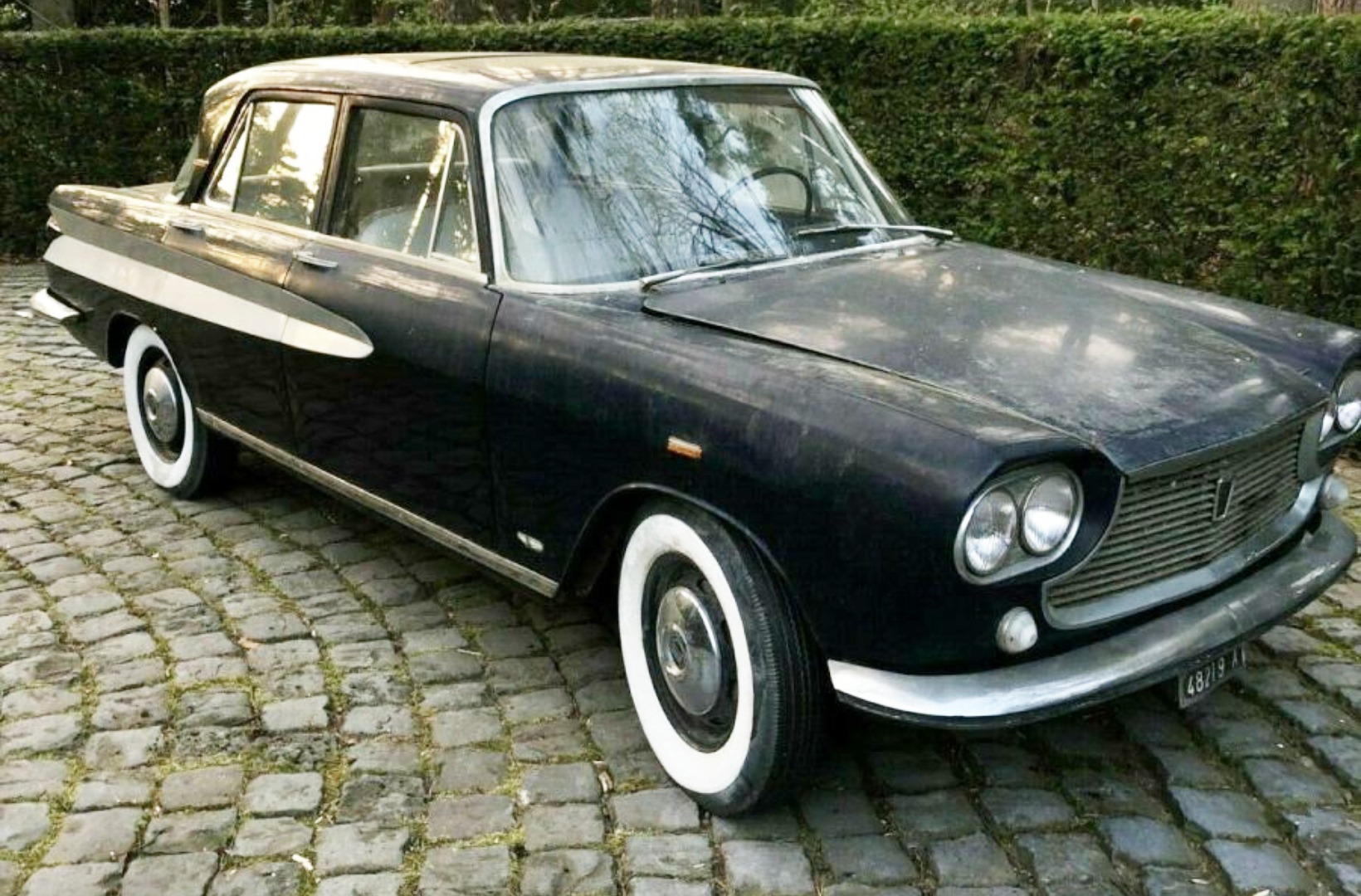
One of the most refined one-offs from this period was the Fiat 2100 Berlina Speciale, sometimes known as the 2100 Sky, a Savio-bodied formal sedan on Fiat 2100 mechanics whose rediscovery and later preservation by Corrado Lopresto helped return attention to Savio’s more elegant side. The car’s restrained American-influenced details, long side treatment, and formal proportions demonstrated that Savio could produce a dignified executive special as convincingly as it could build ambulances or small utility vehicles.
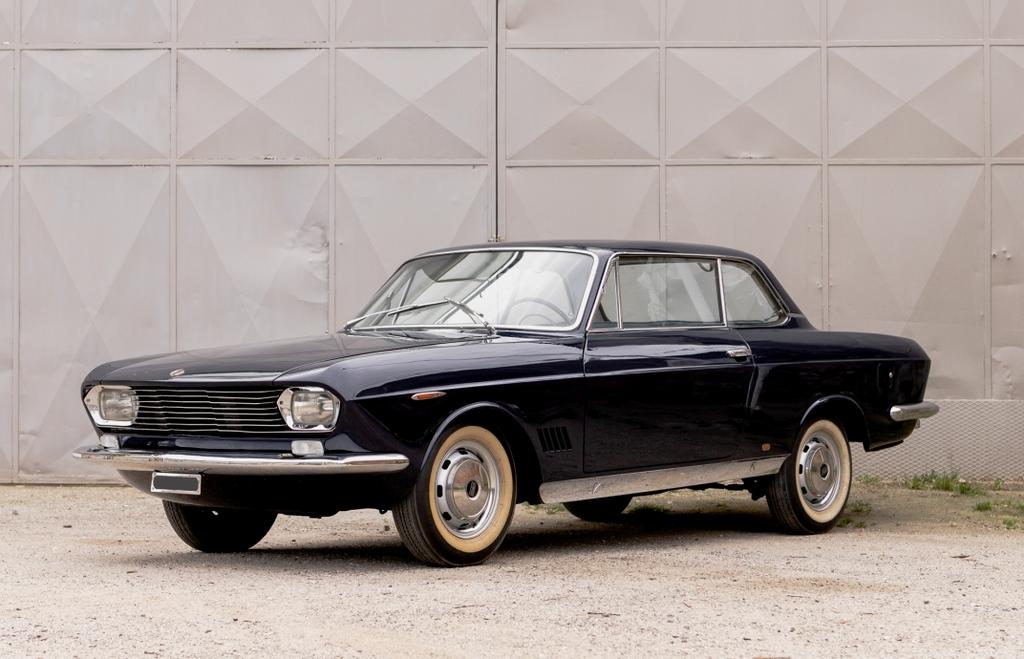
Designer collaborations remained an important part of this period, because the Fiat 2300 S Coupé by Savio was associated with Giovanni Michelotti, while a Fiat 600 coupé project involved Pietro Frua, and the Fiat 500 Elegance developed the spiaggina theme through a line connected with Boano’s earlier ideas. These collaborations reveal that Savio was not isolated from the wider Turin design community, but rather participated in a network where independent designers, manufacturers, and small construction firms frequently combined their strengths.
In 1964, Savio presented the Fiat Polis, a compact concept based on Fiat 600D mechanicals that deserves more attention than it usually receives, because it proposed a practical urban car with sliding doors, an airy cabin, and an intelligent use of limited space at a time when European cities were beginning to face the pressures of congestion, parking, and changing mobility. The Polis did not become a production model, yet its logic was exceptionally modern, because it treated the small car as a spatial problem rather than merely a cheaper version of a larger automobile.
The Jungla years, when Savio made utility feel cheerful
The car most closely associated with Savio in popular memory is the Fiat 600 Jungla, launched in the mid-1960s from an original military requirement for a compact, light, dismountable vehicle that could be transported easily and used in difficult conditions. When the Italian Army order did not proceed in the expected way, Savio transformed the idea into a simple, open, cheerful leisure vehicle, creating one of the most distinctive Italian answers to the beach-car and utility-car culture of the decade.
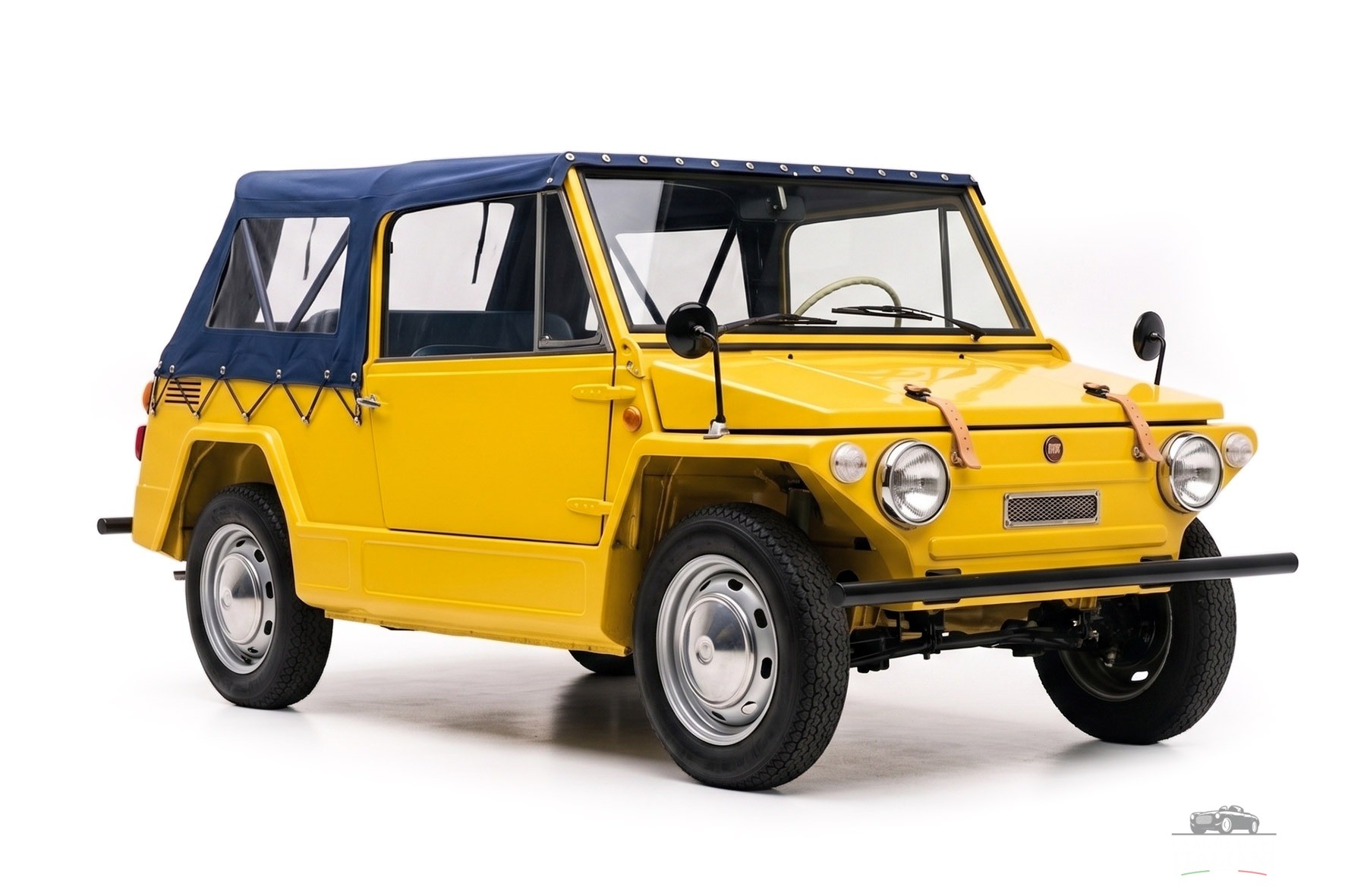
The Jungla was based on Fiat 600D mechanicals and used an intentionally simple torpedo-style body, which made it inexpensive, robust, and suitable for seaside use, country houses, public services, or light-duty institutional work. Production continued until 1974, reportedly reaching around 3,200 units, and later examples used Seat or Zastava mechanical components after the end of Fiat 600D production; state and utility versions were supplied to bodies such as Enel, the Guardia Forestale, and the Carabinieri, which confirmed that the Jungla’s charm was not only recreational but genuinely functional.
The continuing appeal of the Jungla is also visible in collector ephemera, including an eBay listing for a 1966 article with technical characteristics of the Fiat 600 Jungla Savio, which shows how the model remains documented through period press material as well as surviving cars.
The late 1960s and 1970s, from beach cars to small-series experiments
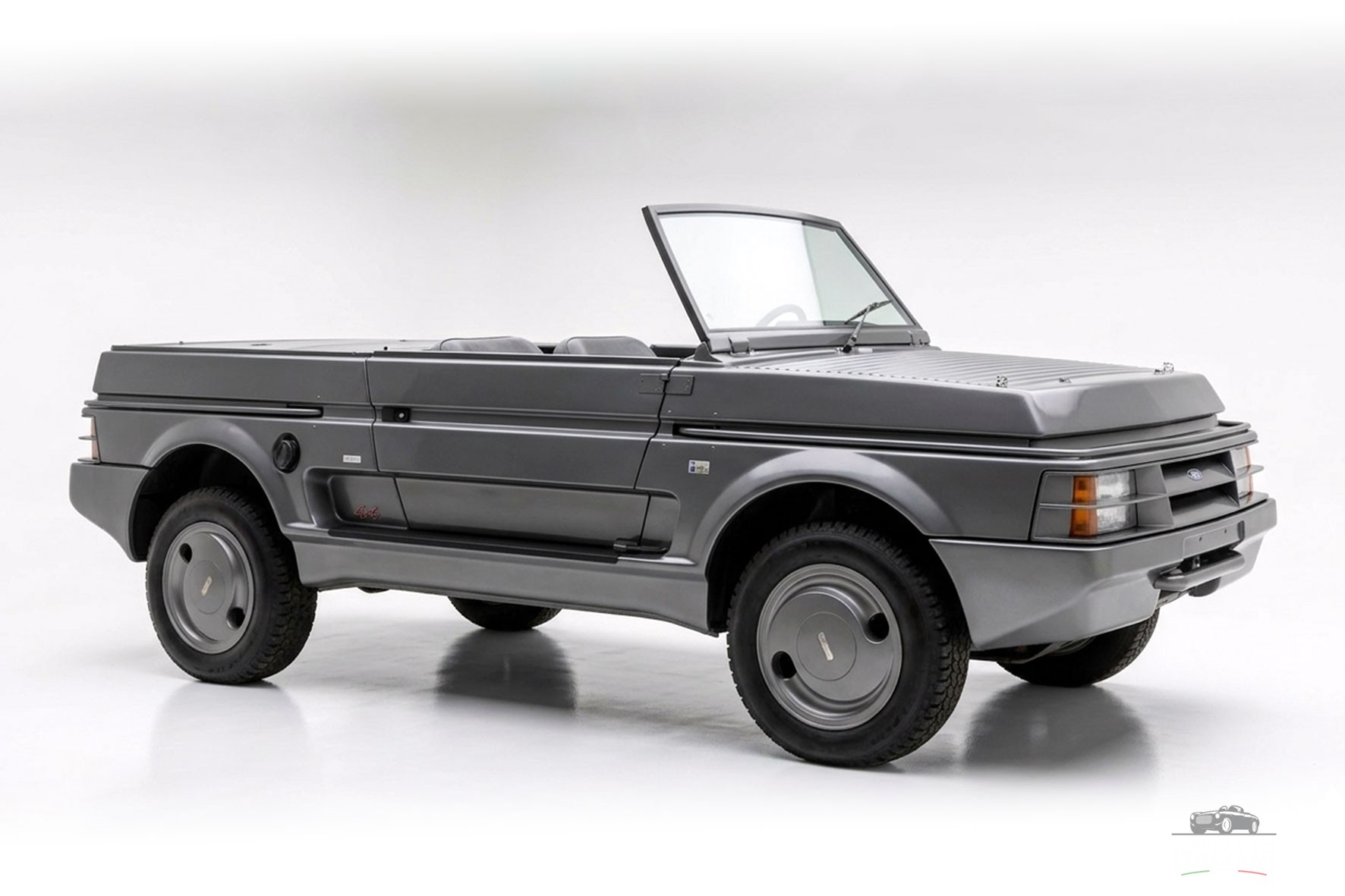
After the Jungla, Savio continued to explore the space between utility vehicle, leisure car, and coachbuilt special, producing models such as the Fiat 124 Savana, the Fiat 127 Albarella, the Fiat 126 Jungla, and the Autobianchi A112 Torpedo, each of which reflected a different attempt to make ordinary mechanical bases more open, informal, practical, or playful.
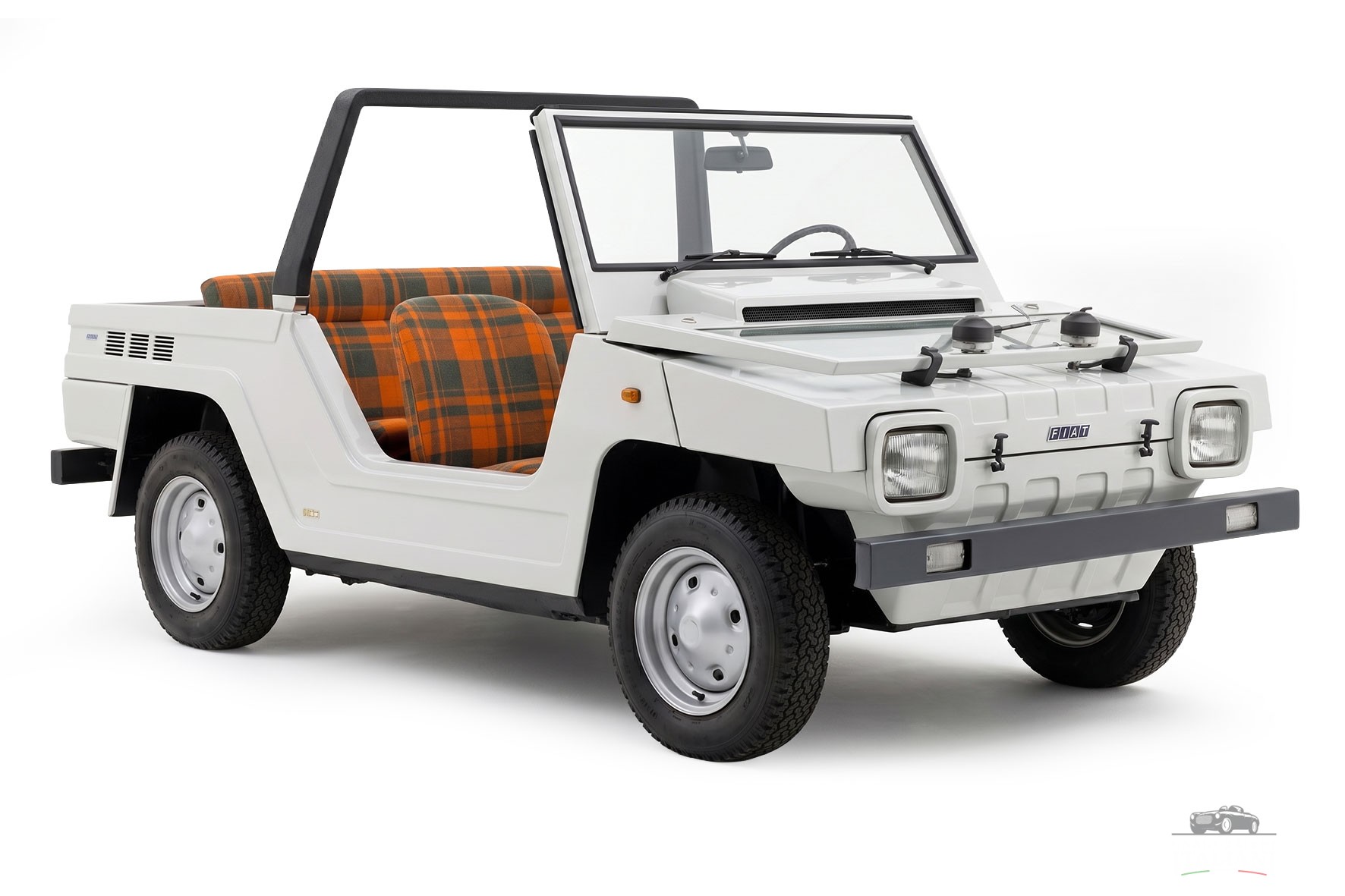
This direction was not accidental, because the economic conditions of the 1960s and 1970s made it increasingly difficult for small coachbuilders to survive on traditional bespoke coupés and cabriolets alone, while the Italian market still offered opportunities for special bodies connected with tourism, public service, light commercial work, and institutional fleets. Savio’s answer was to embrace the categories that others might have considered marginal, and this decision gave the company a longer life than many more famous carrozzerie whose identity was tied too tightly to one-off luxury bodies.
The 1980s, the Delta S4, and a return to high-performance relevance
By the 1980s, Savio was far removed from the ceremonial landaulets of the early post-war years, yet the company’s skill in special bodies brought it unexpectedly close to one of the most extreme rally cars ever made, the Lancia Delta S4. Official Stellantis historical material describes the Delta S4 as a Group B machine with composite body panels and a technical architecture created for homologation and competition, while Quattroruote identifies Carrozzeria Savio as the builder involved in the construction of the Delta S4 in Turin during the crucial late-1984 and early-1985 period.
For Savio, the Delta S4 connection was more than a footnote, because it showed that a company best known to many enthusiasts for ambulances, buses, spiaggine, and utility specials still possessed the industrial competence needed for advanced composite-body work on a cutting-edge competition car. In historical terms, this was a return to the company’s oldest virtue, because Savio had always been strongest when a client required a difficult body to be made properly rather than merely dramatically.
🔗 Read more: Paolo Martin: A Design Maestro’s Journey Through Automotive History
The decade also brought later leisure proposals such as the Panda-based Freely and Panda Jungla ideas, while sources connected with Savio’s model history list Paolo Martin among the designers associated with the company, confirming once again that Savio’s identity was built through collaboration as much as through internal continuity.
Italdesign Aztec and the final coachbuilt small-series chapter
At the end of the 1980s, Savio became involved in one of the most eccentric Italian small-series stories of the period, the Italdesign Aztec, Giorgetto Giugiaro’s futuristic barchetta created as part of Italdesign’s anniversary trio with the Aspid and Asgard. Italdesign’s own history identifies the Aztec as part of its 1988–1989 concept programme, while later accounts of the road-going project describe how the rights were acquired for a limited production attempt and how bodywork and assembly were entrusted to Carrozzeria Savio.
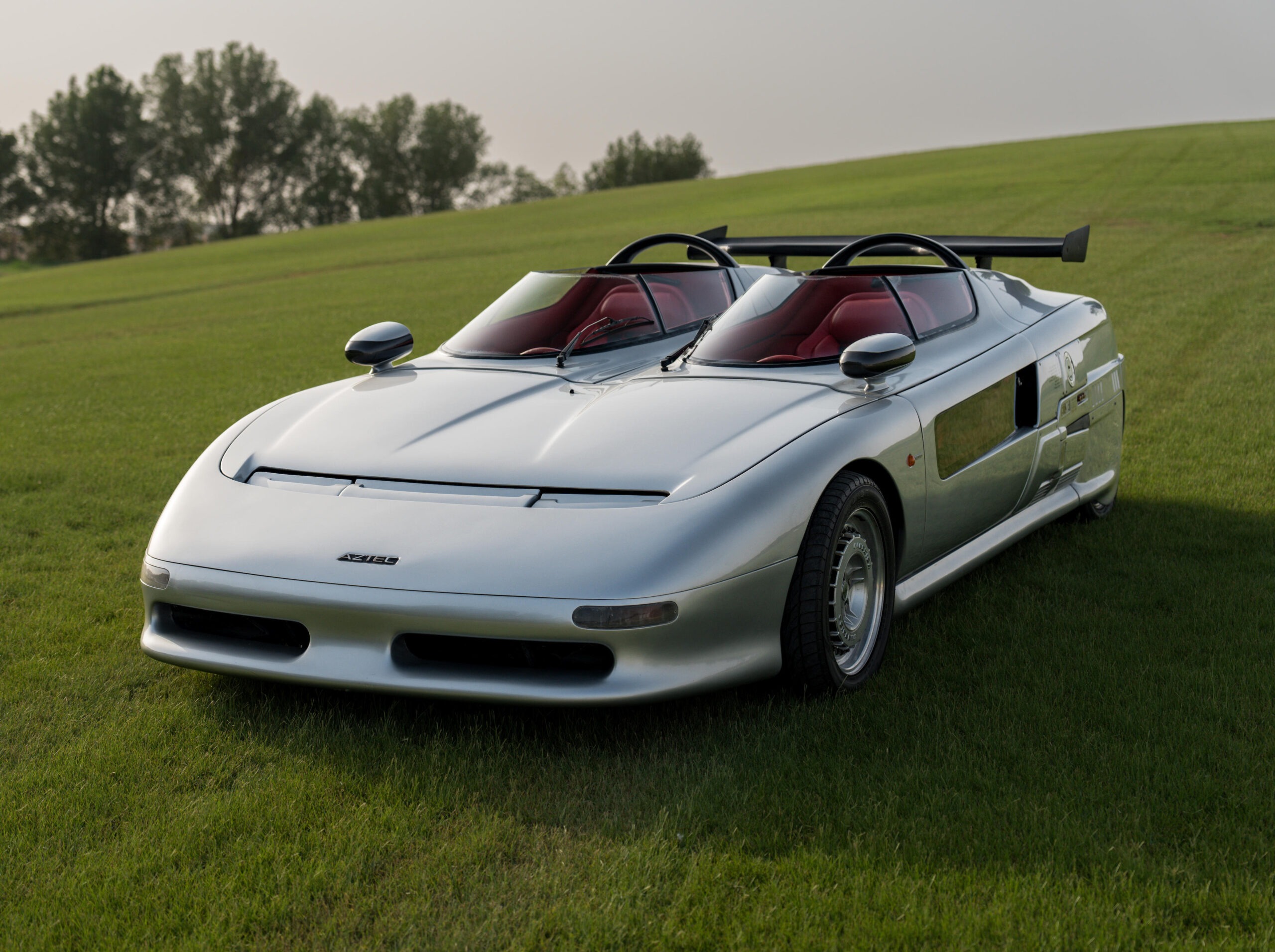
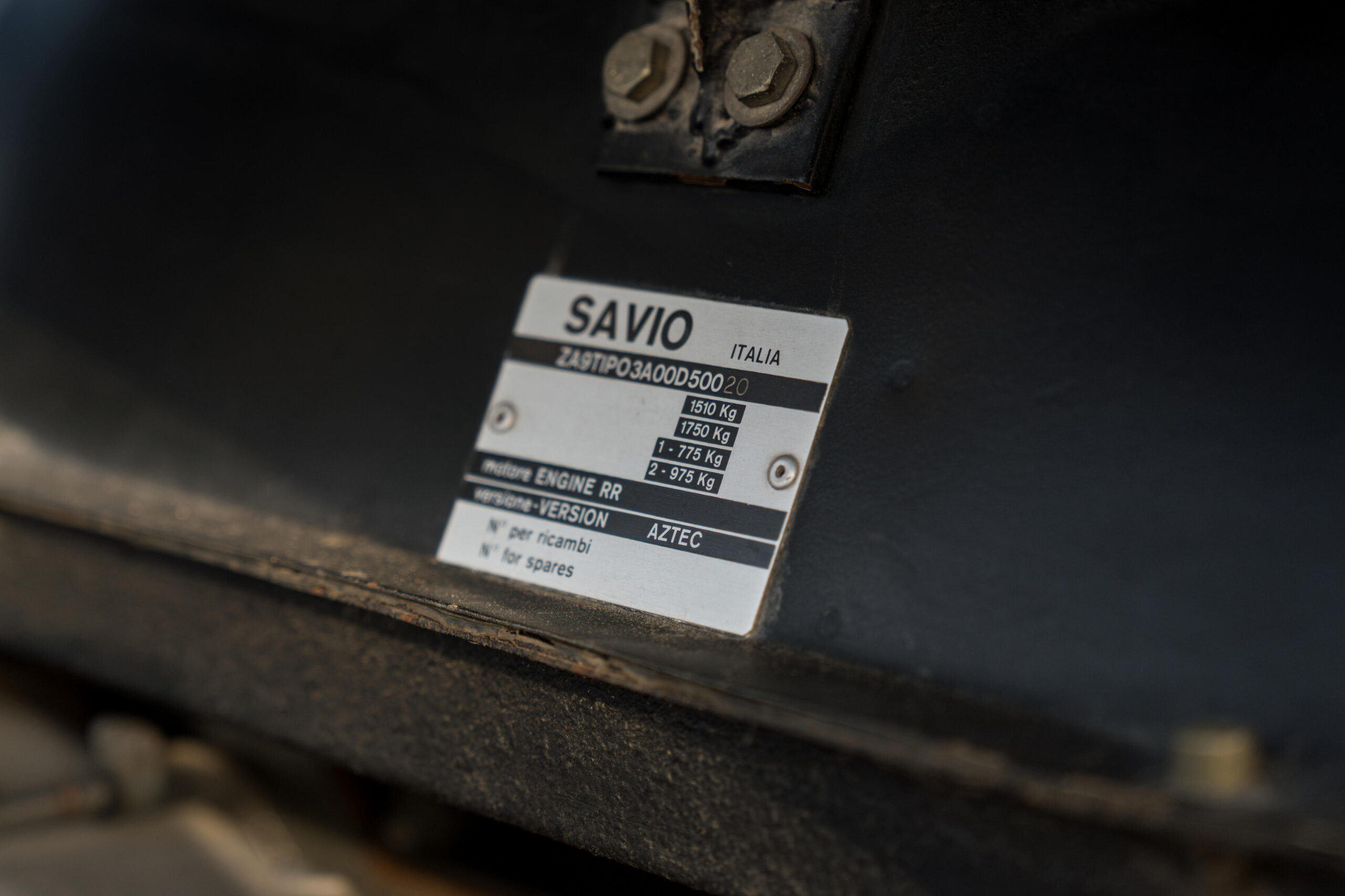
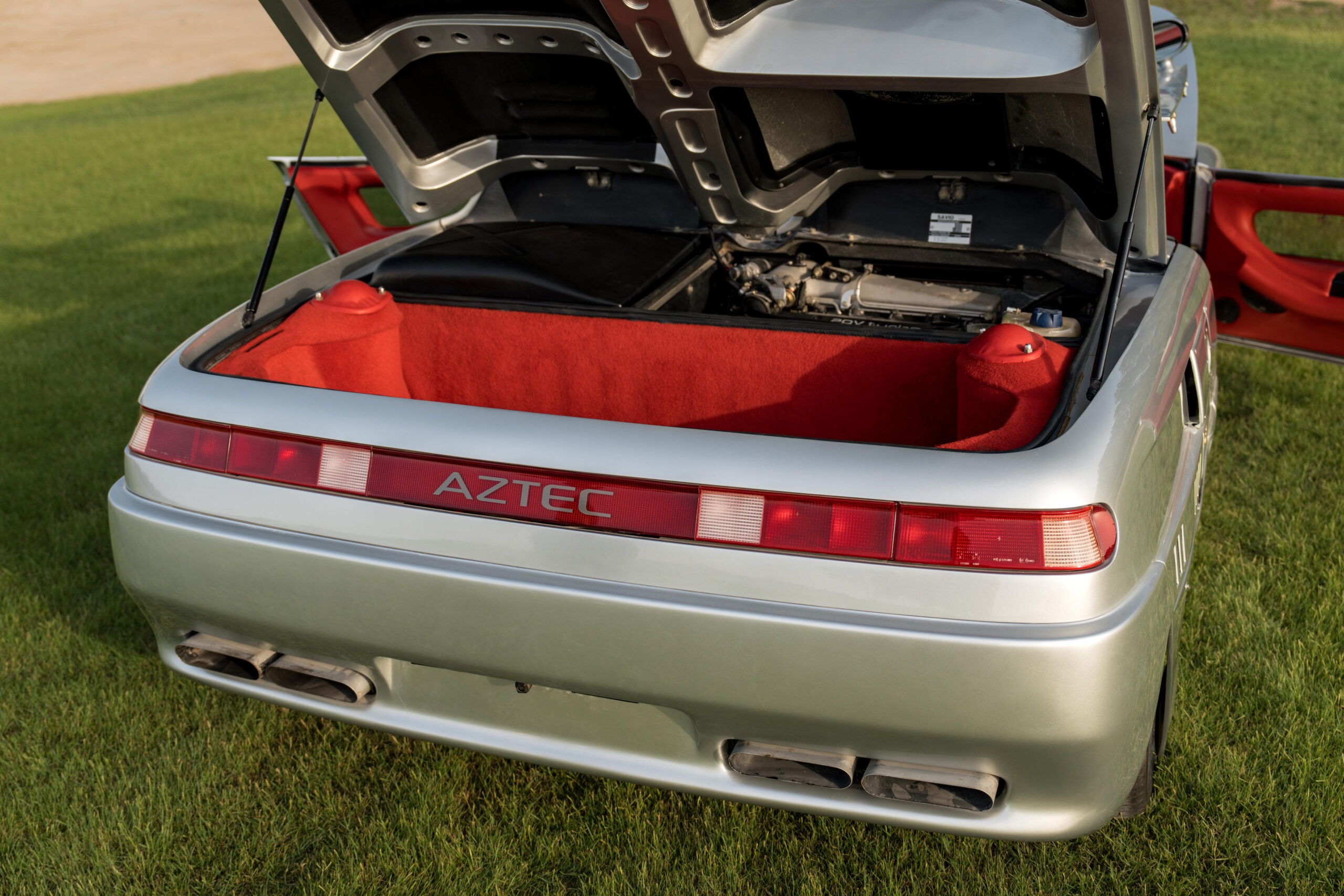
Although the Aztec was planned in larger numbers than were ultimately achieved, later reporting places production at roughly 15 to 20 examples, and the car remains one of the most unusual cases in which a concept so extreme in form and layout reached a small group of private owners. For Savio, the Aztec was a fitting late coachbuilt chapter, because it combined outsourced design, low-volume construction, technical complexity, and the ability to make an unlikely idea physically real.
From Savio to Boneschi, and the modern survival of a historic name
In the 1990s, Savio’s story entered a new corporate phase through its connection with Boneschi and the Omnia group, and the business increasingly concentrated on commercial, sanitary, industrial, prototype, and transport-related work rather than traditional coachbuilt passenger cars. Current company material describes Boneschi and Savio as historic industrial coachbuilders founded in 1919 and now connected with specialized vehicle transformations, healthcare vehicles, commercial bodies, prototypes, and railway components, with design and management activities in Genova and production operations in Cavenago di Brianza.
This modern continuation is important because it prevents Savio from becoming merely a nostalgic name, and it also gives the company’s history a coherent ending that is not really an ending at all. Many Italian coachbuilders disappeared because the world that had created them vanished, yet Savio survived by doing what it had always done best: interpreting the practical needs of manufacturers, institutions, and specialist clients through body construction that was disciplined, adaptable, and useful.
The dignity of useful Italian design
Carrozzeria Savio occupies a special place in Italian automotive history because it was never only a stylistic house, never only a subcontractor, never only a maker of beach cars, and never only an industrial bodybuilder. Its identity was formed by Antonio and Giuseppe Savio’s apprenticeship in the old carriage tradition, strengthened by the 1919 Itala contract, refined through Fiat, Lancia, Alfa Romeo, Isotta Fraschini, and Ceirano work, tested by war and reconstruction, renewed by Alfredo Caracciolo’s post-1954 direction, and extended through vehicles as different as the Fiat 1900 Landaulet, the Fiat Polis, the 600 Jungla, the Lancia Delta S4, and the Italdesign Aztec.
Its concours story is not a long list of headline trophies, but it includes meaningful public recognition through appearances such as the Fiat 1400 Landaulet at Rome’s Pincio concours in 1950 and the Fiat 1900 Landaulet’s showing at San Remo in 1954, while its collaborations with Franco Scaglione, Mario Revelli di Beaumont, Giovanni Michelotti, Pietro Frua, Boano, Paolo Martin, and Italdesign place it firmly inside the creative network of Italian design. Savio’s achievement was quieter than that of the great celebrity carrozzerie, yet in many ways it was just as Italian, because it turned intelligence, craft, restraint, and usefulness into a body of work that still deserves to be studied with respect.

ABOUT THE AUTHOR
Andreas Scheidl
Italian classic car enthusiast with German roots. Renowned as a respected figure in the classic car community, he serves as a jury member at various international concours d'elegance, including the Classic Gala Schwetzingen and Mantova. As a content creator, Andreas passionately shares his profound knowledge and appreciation for vintage automobiles. His heart beats for cars designed by Giovanni Michelotti, showcasing his discerning taste and dedication to preserving the timeless elegance of automotive history.
More stories by Andreas Scheidl ↗CONTINUE READING
Posts You Might Like
Sibona & Basano: The Turin Workshop Behind Abarth, Exner and Autonova
For a brief period in the 1960s, Sibona & Basano occupied a distinctive position in Turin's coachbuilding industry, constructing competition bodies, prototypes and experimental cars for Abarth, American designers and some of…
Read story
The Story of Carrozzeria Vignale
The story of Carrozzeria Vignale represents one of the many somewhat forgotten success stories born against the backdrop of an Italy that was torn apart by the Second World War and which,…
Read story
The History of Carrozzeria Boano
The untold story of Mario Boano and Carrozzeria Boano, from Ferrari 250 GTs to the Spiaggina, reshaping Italian automotive history.
Read story
Carrozzeria Coggiola: The Untold Story of Turin’s Hidden Coachbuilder
Discover the story of Carrozzeria Coggiola, the discreet Turin coachbuilder behind some of the most striking concept cars of the 20th century. From Saab and Volvo to Chrysler and Mercedes, its hidden…
Read story
THE CONVERSATION
Comments 0
Share a memory, a period photograph or a documented detail about this story.