
Lamborghini Genesis by Bertone: A Glimpse into the Future
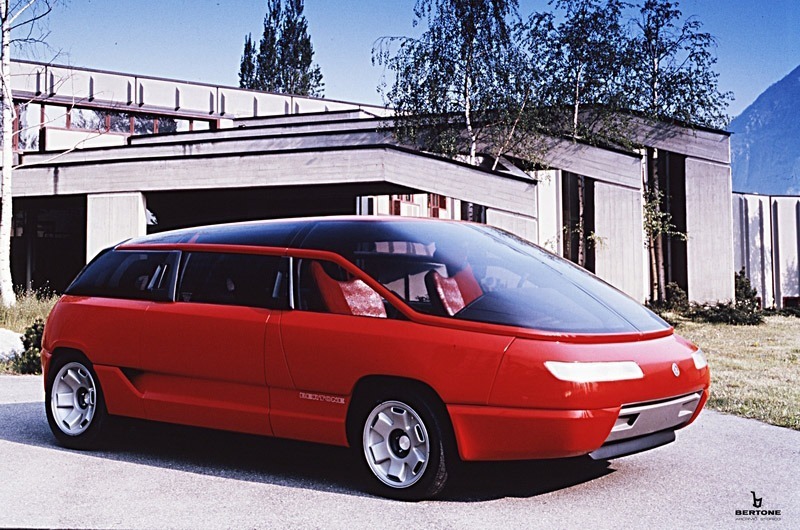
Imagine strolling through the 1988 Turin Motor Show and coming face-to-face with a low-slung, crimson family hauler sporting scissor-like doors cut through its windshield. It wasn’t a spaceship or a movie prop – it was the Lamborghini Genesis by Bertone, a wild marriage of a Lamborghini V12 engine with an MPV (multi-purpose vehicle) body. In an era when minivans were boxy tools for soccer moms, Italian coachbuilder Bertone dared to ask: what if a people-carrier could be as jaw-dropping as a supercar? The result was the Genesis – part minivan, part supercar, and wholly unlike anything else on the road. This one-off concept car, unveiled at the 62nd Turin International Motor Show on April 21, 1988, remains one of the most fascinating “what if” footnotes in Lamborghini’s history. Let’s dive into the full story of how this road-going UFO came to be, the historical context that birthed it, the visionary design and engineering behind it, its splashy debut, and what became of this peculiar machine in the decades since.
A Bold Vision in the Late 1980s
The late 1980s were boom times for outrageous concept cars – especially in Italy, where design houses vied to outdo each other at every Turin show. In 1988, Turin’s show floor was a carnival of futurism: Italdesign was celebrating its 20th anniversary with a trio of radical prototypes (the Aztec, Asgard, and Aspid), Pininfarina had sleek design studies on display, and then there was Bertone with a surprise up its sleeve. Bertone’s creation would steal plenty of attention. It was called the Genesis, an aptly biblical name hinting at new beginnings – and indeed, nothing like it had been seen before from the house of the raging bull.
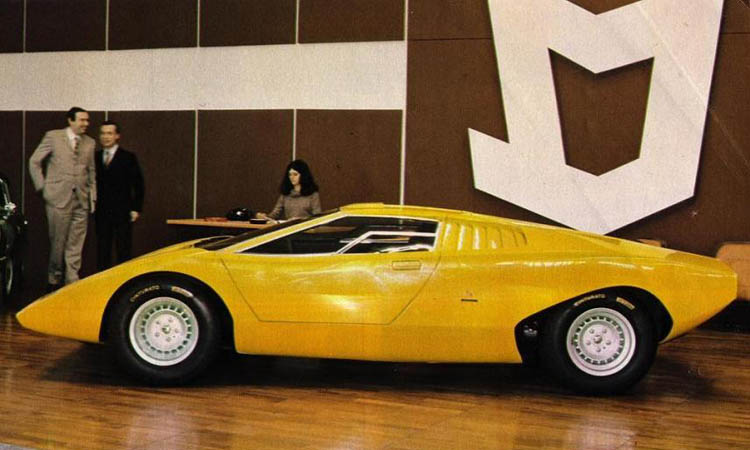
Importantly, the Genesis was not a Lamborghini-funded project at all, but an internal Bertone initiative. By the mid-1980s, the legendary collaboration between Bertone and Lamborghini had cooled off. Bertone (led by founder Nuccio Bertone) had styled Lamborghini’s greatest hits in the 1960s and ’70s – the Miura, Espada, and Countach were all shaped by Bertone’s superstar designer Marcello Gandini, forging a symbiotic relationship between the Turinese atelier and Sant’Agata’s supercar maker.
🔗 Read more: Marcello Gandini: The Man Who Designed the Future
But as the 1980s progressed, Lamborghini’s perpetual financial troubles meant fewer design commissions for Bertone. Then, in 1987, Chrysler swooped in to buy Lamborghini, injecting new life (and money) into the brand. Almost immediately, Lamborghini (under Chrysler’s influence) debuted a concept of its own – the Portofino, a sleek four-door sedan shown in late 1987 and designed in Detroit by Chrysler stylist Kevin Verduyn. This may have been a wake-up call for Bertone: after decades as Lamborghini’s go-to design house, suddenly the new owners were styling Italian exotics on their own.
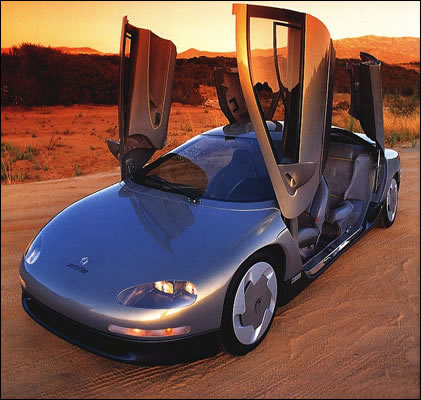
Against that backdrop, one can imagine Nuccio Bertone thinking it was time to remind the world of Bertone’s audacity – and to show Chrysler that Bertone still had plenty of wild ideas for Lamborghini. “It could be surmised that Bertone feared its association with the Sant’Agata marque was at risk, hence the decision to build something with Lamborghini power,” writes historian Richard Heseltine. The project Bertone embarked on would be unlike any Lamborghini seen before: a high-performance minivan. It was a bold, even cheeky, response. If Chrysler envisioned a sensible four-door Lambo (the Portofino), Bertone would envision an insensible one-box Lamborghini van. Why not? Concept cars are meant to push boundaries, and by the late ’80s the world was just warming up to the idea of the MPV as a family car. Bertone’s idea was to inject some Italian passion into the practicality-first world of people-movers.
Designing the “Lambo Minivan”
Responsibility for shaping the Genesis fell to Marc Deschamps, Bertone’s design director at the time. Deschamps had taken over the reins of Bertone’s styling department after Marcello Gandini’s departure, and this would be one of his most daring projects. The team reportedly invested 30,000 hours of work into the Genesis’s development – a huge commitment that underscores how seriously Bertone took this concept. The result was truly head-turning.
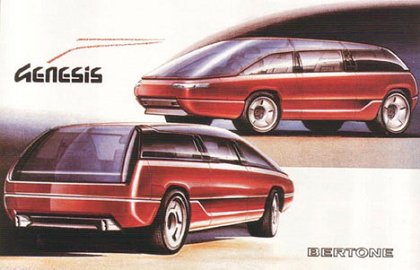
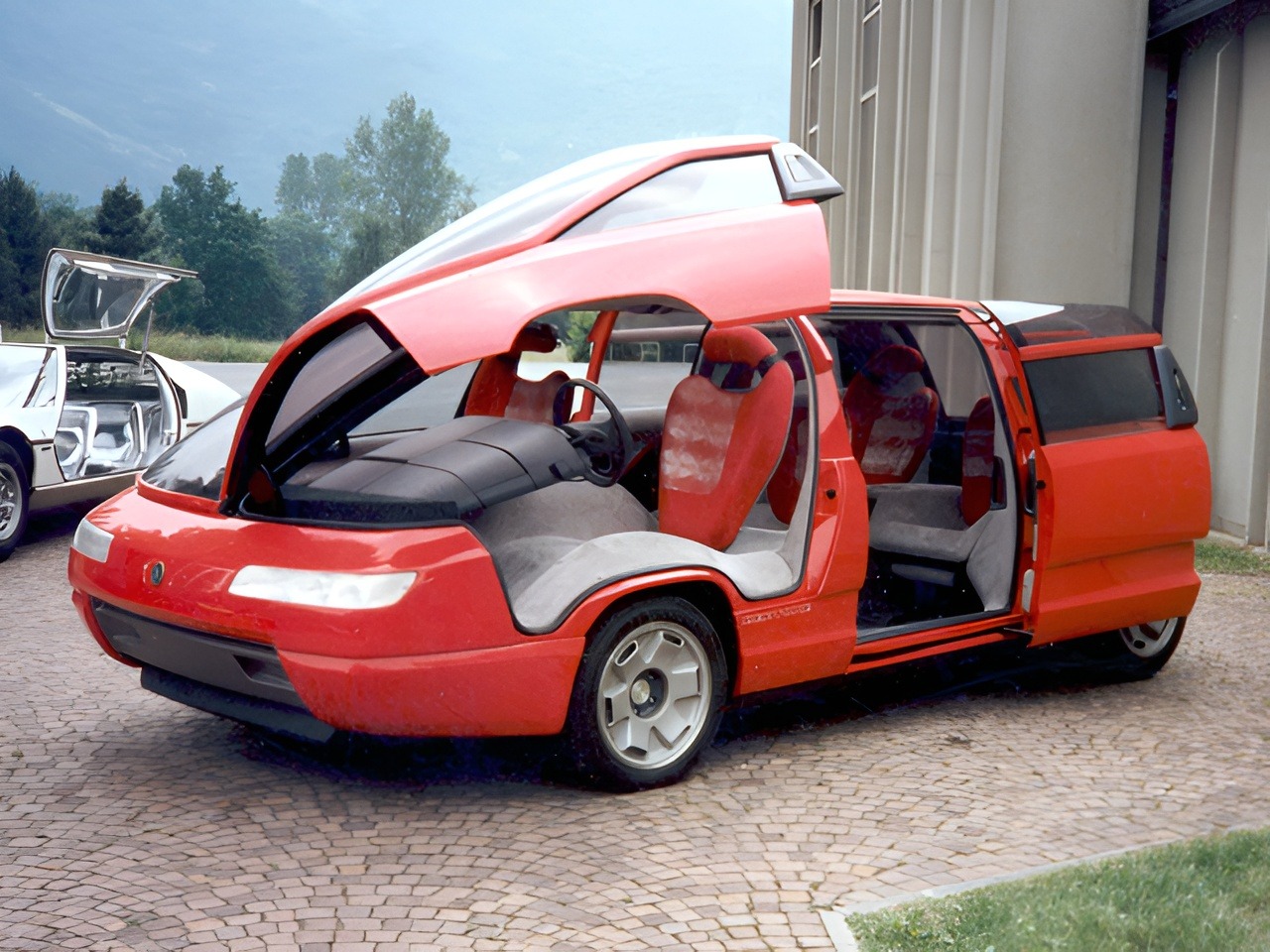
Painted in arresting bright red and stretching about 4.475 meters in length, the Genesis looked like a futurist’s sketch brought to life. It had a monobox profile – essentially a wedge-shaped single-volume body like a minivan – but with pronounced sporty cues. A sharp, pointed nose and low roofline gave it a wedge stance reminiscent of a supercar, even though the body was tall enough to allow a comfortable cabin. In fact, the Genesis was surprisingly low in height for a van (about 1.52 m, or five feet tall), yet extremely wide (over two meters wide, about 6 ft 9 in). This width was exaggerated by vast expanses of glass from the beltline up – a “greenhouse” so large that Deschamps introduced a body-colored horizontal band across it, to break up what could have looked like a giant aquarium on wheels. Some observers even felt that this band made it appear as if the Genesis had two canopies stacked atop each other, a quirky optical illusion.
Perhaps the most dramatic aspect of the design was its unorthodox doors. Bertone gave the Genesis a pair of enormous gullwing doors up front that swung upwards and forward – each front door was hinged at the center of the windshield, and each contained half of the windshield glass within it. When both doors opened, the windshield split in two like the elytra of a beetle (earning them a nickname as “beetle wing” doors in the press). Opening those doors must have been a sight to behold – not to mention offering some dramatic front ingress for the driver and passenger. For the rear passengers, Bertone fitted sliding rear doors. Sources differ on whether the concept had one or two sliding doors, but most indicate there was a sliding door on each side for symmetry (though one account recalls only a single sliding door on the right side). In any case, the sliding doors were more conventional than the wild front openings, but they allowed easier access to the rear seats in tight parking spaces – a practical MPV touch. Around back, the Genesis featured a one-piece, all-glass tailgate that lifted up, with a huge smooth bumper below. The rear styling was restrained compared to the front; aside from the sheer width and low squat stance, the tail was almost bland – perhaps to keep the focus on that front half which looked like nothing else on Earth.
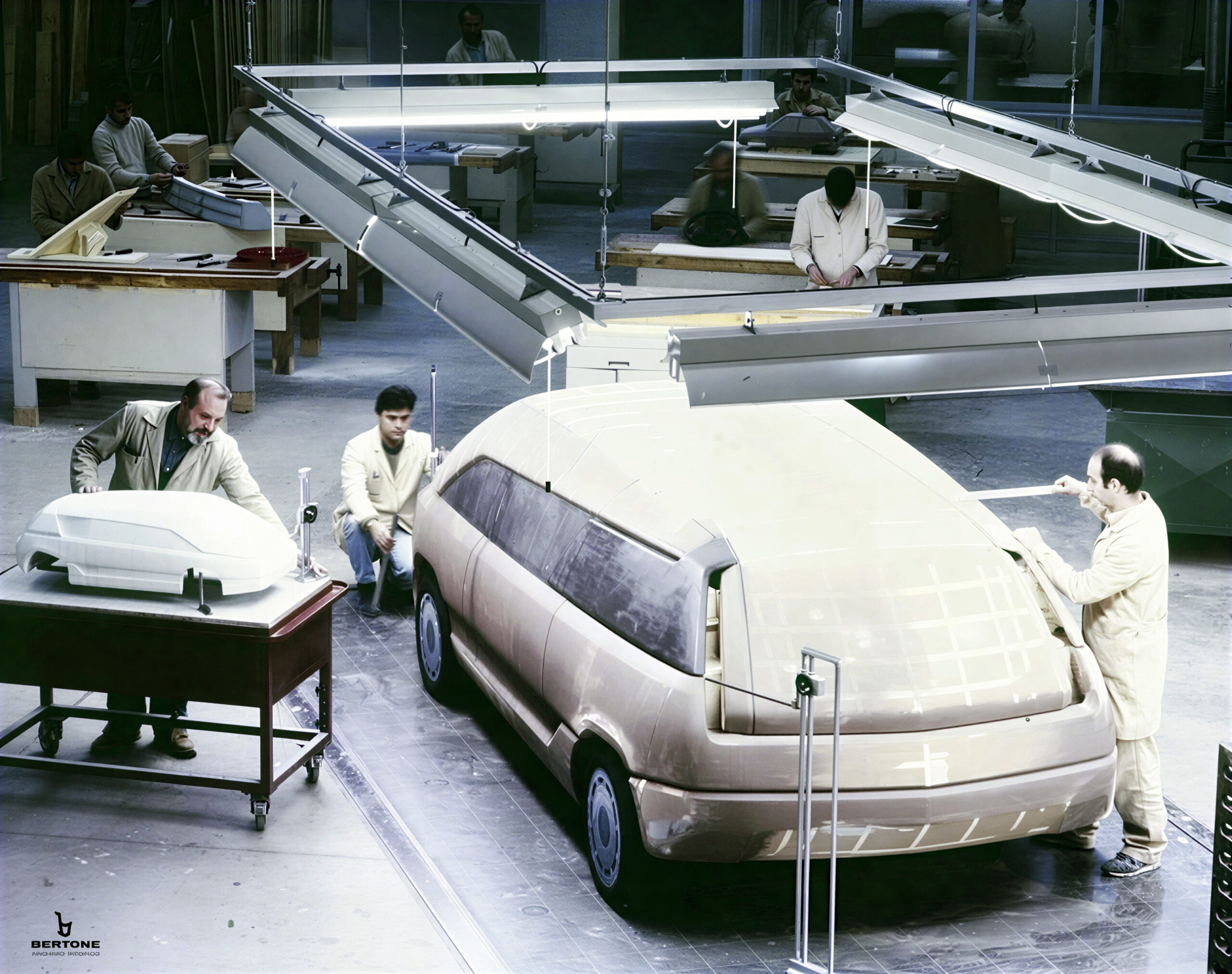
Deschamps and his team’s design successfully blended futurism and functionality. It wasn’t beauty in the classical sense – the Genesis looked a bit odd from some angles with its cab-forward proportion and stretched windshield – but it was undeniably striking and conversation-starting. Autocar magazine wryly noted the name Genesis was fitting because this vehicle was a “Revelation”. Indeed, Bertone was trying to spark a new idea: that a GT car of the future might not be a low slung coupe, but could marry performance with the space and comfort of an MPV. As Nuccio Bertone himself put it in the press materials: “Genesis represents a vision of a possible GT car for coming decades which incorporates the mobility and comfort requirements of the near future.” In other words, a Grand Tourer for the year 2000 – imagined in 1988.
A Lamborghini Heart Under the Hood
If the exterior was audacious, the mechanicals underneath were equally so. True to its informal nickname “Lamborghini Genesis,” this machine carried the beating heart of a Lambo. Bertone installed the 5.2-liter V12 from the Lamborghini Countach Quattrovalvole, a 48-valve engine producing around 455 horsepower. This was the same engine that made the Countach a legend, complete with six Weber carburetors and an unforgettable exhaust note. But unlike the Countach which had the V12 mounted behind the driver, the Genesis’s V12 was mounted up front, longitudinally – in true GT or sedan fashion. In fact, the engine sat so far back in the chassis that the front seats were basically on top of the V12 – a packaging necessity that raised eyebrows about serviceability. Nuccio Bertone shrugged off concerns, claiming that in the future engines would be so reliable we wouldn’t need easy maintenance access: “A car will be like a fridge; it will work for years and years without the need for maintenance,” he said optimistically. Perhaps that was wishful thinking about a high-strung Italian V12 – but concept cars live in a land of idealism, after all.
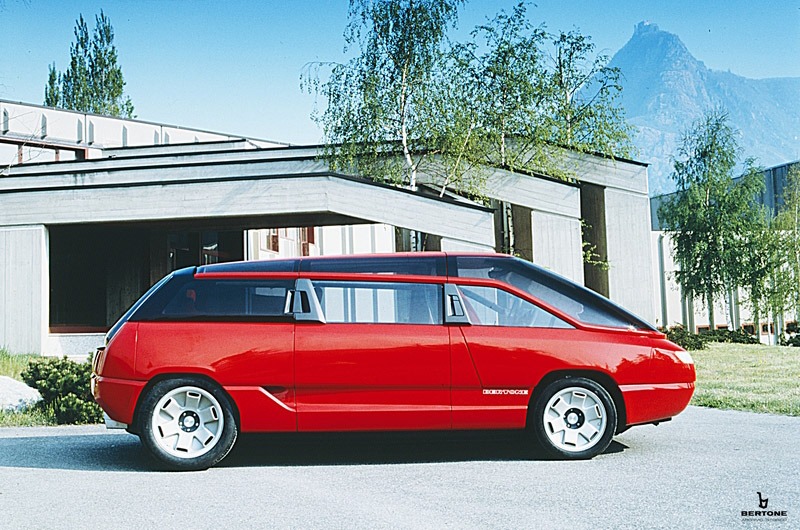
The V12 sent power to the rear wheels via a Chrysler 3-speed TorqueFlite automatic transmission. This choice of gearbox was another direct result of Lamborghini’s new American ownership – Chrysler’s parts bin was tapped to make the Genesis a sort of Italo-American hybrid at heart. The TorqueFlite was a sturdy but old-school automatic with only three forward gears. While it made some sense for an easy-driving people-mover concept, it was hardly a performance enthusiast’s choice. With gear ratios that were very long, the big V12 struggled to launch the nearly two-ton Genesis with any urgency. In fact, as one reporter quipped, this “supervan” might have had trouble keeping up with an electric milk float off the line, thanks to the combination of hefty weight (~1,800 kg) and a lazy automatic. There was no official acceleration or top speed published – and given the prototype’s undeveloped state, it likely never reached high speeds safely – but clearly it was significantly slower than a Countach, which was no surprise.
🔗 Read more: The story of Bertone: the Most Controversial Coachbuilder Ever
Underneath, the Genesis used a bespoke chassis with some Lamborghini DNA. It reportedly had a wheelbase of 2650 mm, coincidentally the same as the classic Lamborghini Espada 2+2 GT of the 1970s. In fact, some sources say it was literally a shortened, modified Lamborghini chassis – possibly related to the Espada or the Jalpa – though details are scant. The stance was front-engined, rear-drive (FR layout) like a traditional GT. With its wide track and the engine sitting between the front axle and the cabin, weight distribution would have been unusual. Contemporary accounts mention that the suspension tuning on the concept was never fully sorted for the Genesis’s weight; the car bobbled and weaved over bumps and wasn’t happy at speed. But again, as a show car, its dynamic performance was secondary to its visual and conceptual impact. Brakes existed and could stop the car if you pushed hard enough, but any notion of taking this red beast on a spirited mountain drive was purely fantasy. It was enough that the Genesis could move under its own power for brief spurts – many concept cars of the era were mere rollers, but the Genesis, thanks to that proven Lamborghini drivetrain, was a running vehicle. One might imagine the sound of that V12 bellowing through a custom exhaust, echoing off the exhibition hall walls in Turin as Bertone demonstrated the future of family transportation with a wink and a roar.
A First-Class Cabin for Five (Sort of)
Swing open the giant gullwing door (or rather, lift it upward) and you stepped into a cabin that was as avant-garde as the exterior. The interior of the Genesis was configured for five occupants, with an arrangement that prioritized comfort and flexibility. The driver and front passenger sat in individual bucket seats with a high, nearly panoramic view out the expansive windshield. Because the roofline was low, the seats were not upright like in a normal van but rather semi-reclined – almost like a sports car seating position, but lifted higher off the floor. This gave front occupants a strange blend of “chair-like” height and “sports-car” posture, an interesting experiment to give commanding visibility without losing the sense of occasion.
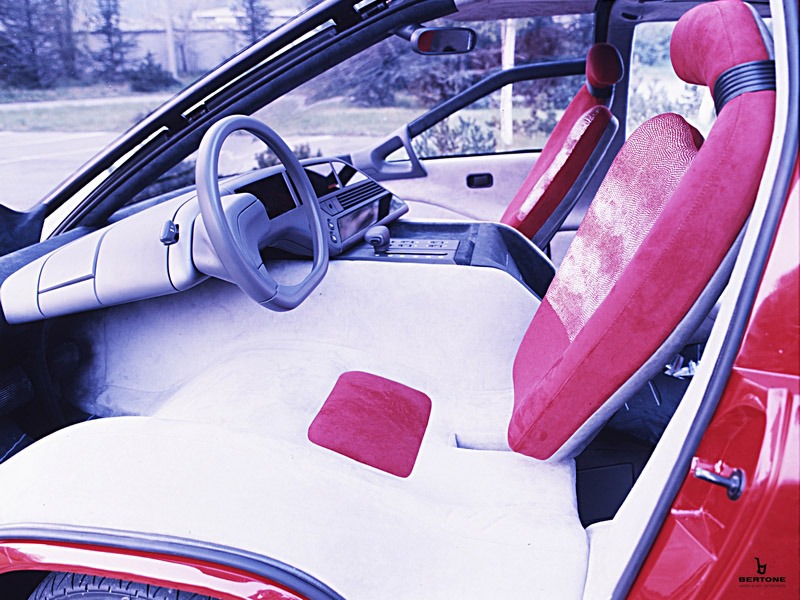
The real party piece was in the back: three bucket seats arranged in a unique configuration. Rather than a conventional rear bench or two-and-two layout, Bertone put two rear seats flanking the sides and a third seat in the center slightly ahead of the others, forming a sort of V pattern. That center seat could swivel 180 degrees to face backwards, converting into a kind of lounge setting where rear passengers could talk to the front passenger (who could rotate as well). In fact, even the front passenger seat was mounted on a rotating base – it had a clever dual-cushion design, with one cushion for forward-facing and another for rear-facing, and the whole backrest could flip around so the seat could face the rear compartment. This way, the Genesis could be a sociable space, almost like a living room on wheels, when parked or in some autonomous future. It even had a small television on board to entertain passengers – remember, this is 1988, long before minivan DVD players or Tesla theater modes! The idea of a TV in a car was ultra-luxury stuff; Bertone was imagining a future where you could lounge and watch media while the car (maybe) drove itself, or at least while someone else drove.
All five seats were sumptuous Alcantara-covered buckets, trimmed in an eye-catching two-tone scheme. Reports vary on the exact colors – some say red and grey Alcantara, others recall red and beige. Either way, it was decidedly opulent for a family hauler. Each seat supposedly had its own integrated audio system, allowing passengers to listen to music privately – a very forward-thinking feature that prefigured modern infotainment with individual headrest speakers or personal sound zones. The two primary rear seats (left and right) even featured retractable leg rests that could extend out like a La-Z-Boy recliner. One can picture wealthy passengers kicking back as their legs were supported, enjoying that lounge-like atmosphere. As for the fifth seat – that center swiveling one – Hagerty’s Richard Heseltine noted it was really more of a “small fold-down jump seat”, not as accommodating as the others. In truth, the Genesis was a luxurious four-seater with an occasional fifth seat for short trips. Bertone’s press release glossed over this, simply claiming seating for five, but any adult consigned to that middle perch would likely prefer to be facing backward with the leg rests up!
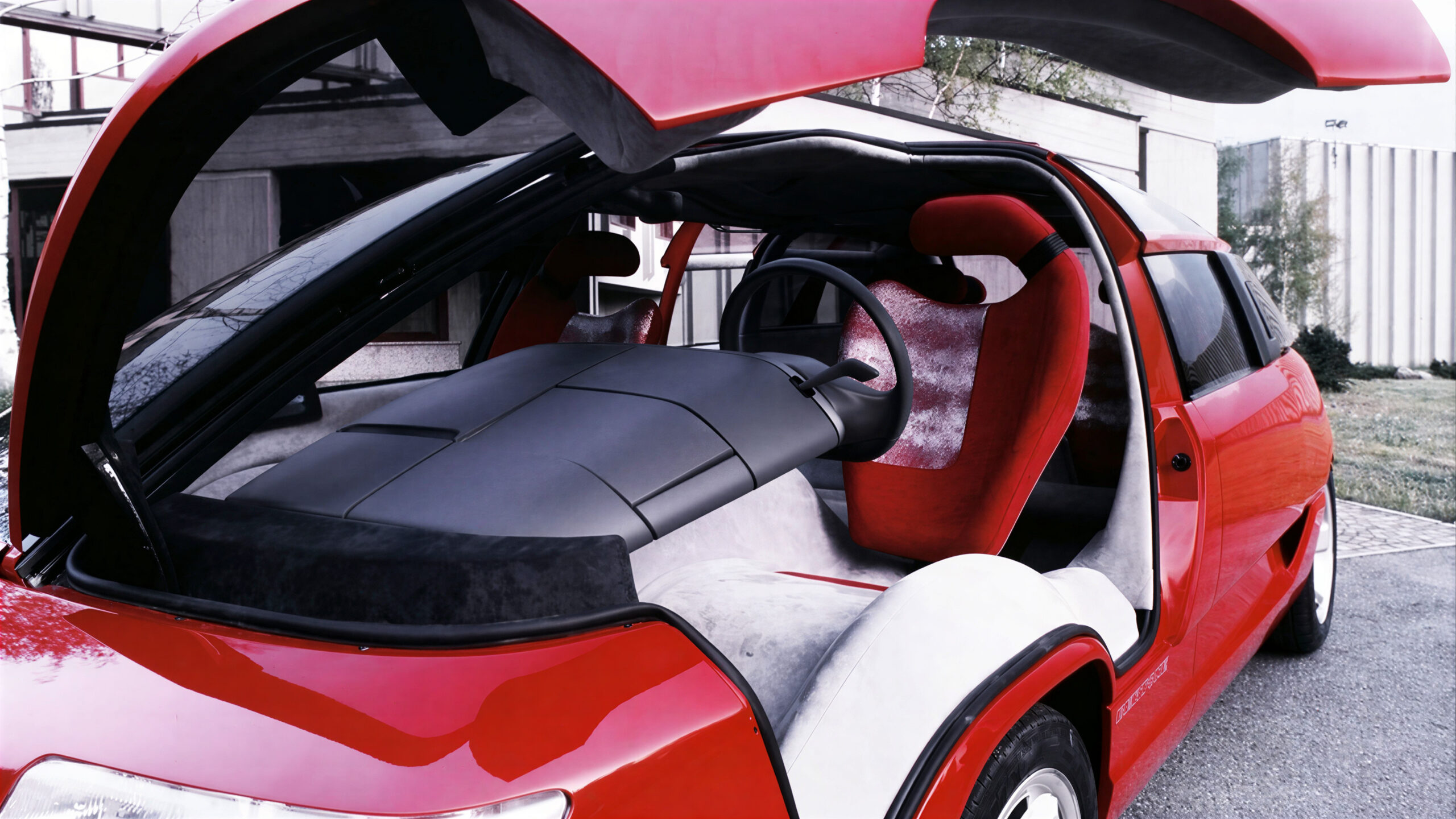
Despite the radical concept, Bertone did ensure the Genesis had plenty of space inside thanks to its boxy shape and extreme width. Photos from the Turin show reveal a very airy cabin with a low dashboard, a wide center console (housing that big V12 underneath, no doubt) and controls oriented toward the driver. Visibility outward was excellent – nearly 360 degrees of glass – although one can only imagine the greenhouse effect on a sunny day (hopefully the air conditioning was powerful!).
Show-Stopping Debut in Turin
When Bertone pulled the wraps off the Genesis at the 1988 Turin Motor Show, the crowd must have been stunned. Here was a vehicle that defied easy categorization: was it a supercar, an MPV, a concept of a future Lamborghini model, or just a designer’s daydream? Bertone intentionally avoided labeling it, simply calling it the Genesis, but as one journalist put it, “everyone who clapped eyes on this crimson machine… dubbed it a people carrier”. The term “people carrier” (British-ism for minivan/MPV) stuck in observers’ minds because of the one-box shape and seating count. An exception was the American magazine AutoWeek, which ran a provocative cover line: “Is this the shape of the next great Italian supercar?”. AutoWeek’s cover showed the Genesis and teased the notion that maybe, just maybe, this was Lamborghini’s future. In reality, that was more tongue-in-cheek than a serious prediction – but it certainly grabbed attention and sparked debate. If nothing else, Bertone had achieved a PR coup: the Genesis had people around the world talking about Lamborghini and minivans in the same breath.
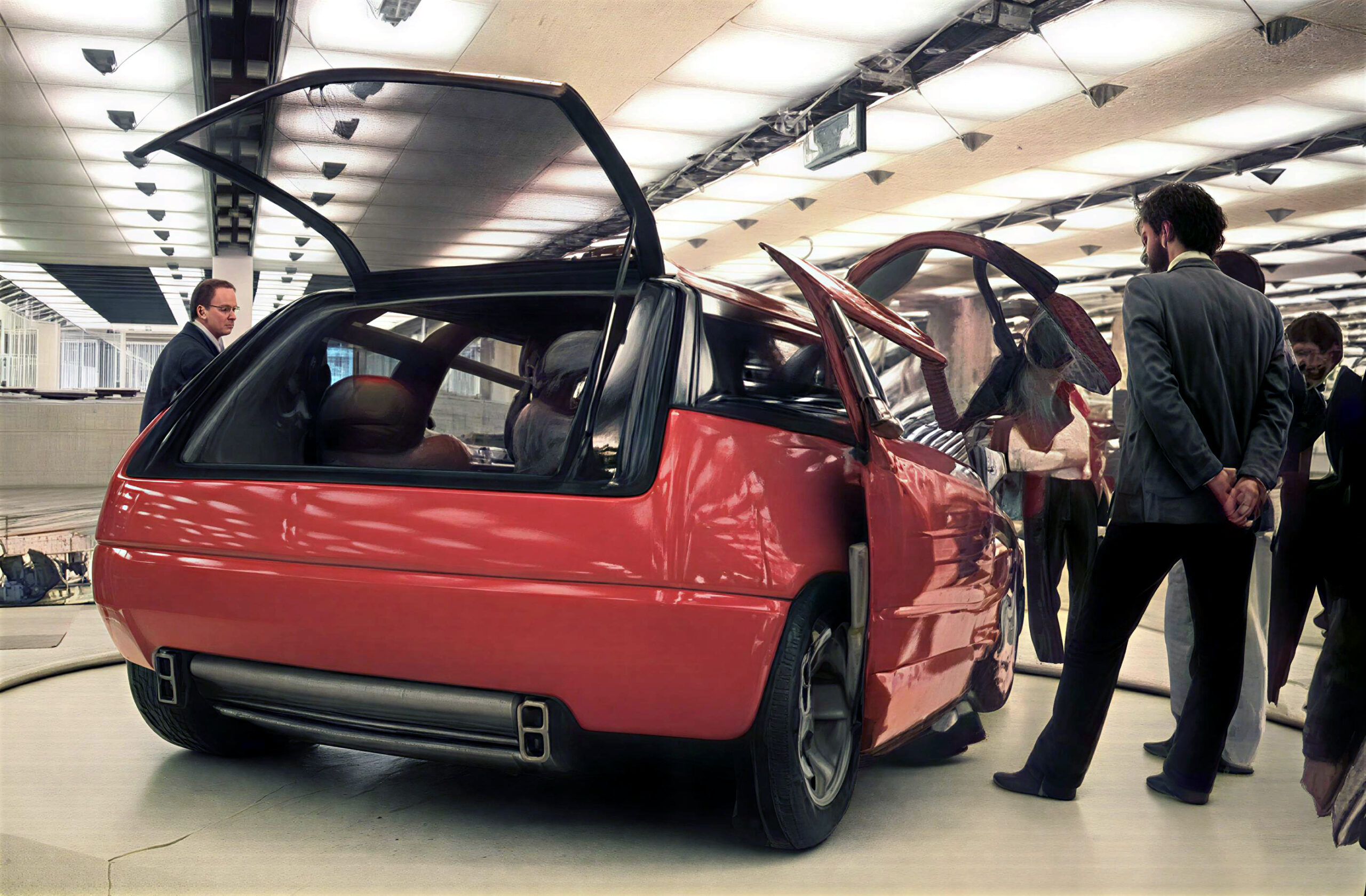
The public and press reaction was mixed, as one might expect. Many found it fascinating and admired Bertone’s creativity; some were puzzled or even disapproving of the idea of a Lamborghini engine in a family hauler. After all, by 1988 the minivan had only recently emerged (the Chrysler minivans in the U.S. and the Renault Espace in Europe proved the concept’s viability), and they were seen as the antithesis of exotic cars. To stuff a screaming V12 into a van was either genius or madness. A bit of both, perhaps. Bertone’s press materials defended the concept by emphasizing changing customer desires. The Genesis was pitched as “a captivating, fast, comfortable ‘road jet’” that anticipated a future where owners “were less willing to sacrifice comfort”, even in a sporty car. In other words, why shouldn’t a car be thrilling and practical at the same time? Bertone pointed to “changing human needs” and presented the Genesis as a provocative vision of the 21st-century GT.
On the show stand, the Genesis certainly drew eyeballs with its flashy presentation. Bertone often displayed their concept cars with dramatic flair, and one imagines the Genesis flanked by spotlights, gullwing doors open to reveal that plush interior, maybe even the sound of the V12 played over speakers to entice showgoers. It was an attention-grabber, no doubt. At 14 feet 8 inches long and nearly seven feet wide, painted in fire-engine red, it couldn’t be missed. Parked next to more conventional sedans and hatchbacks of the era, it looked like an alien visitor.
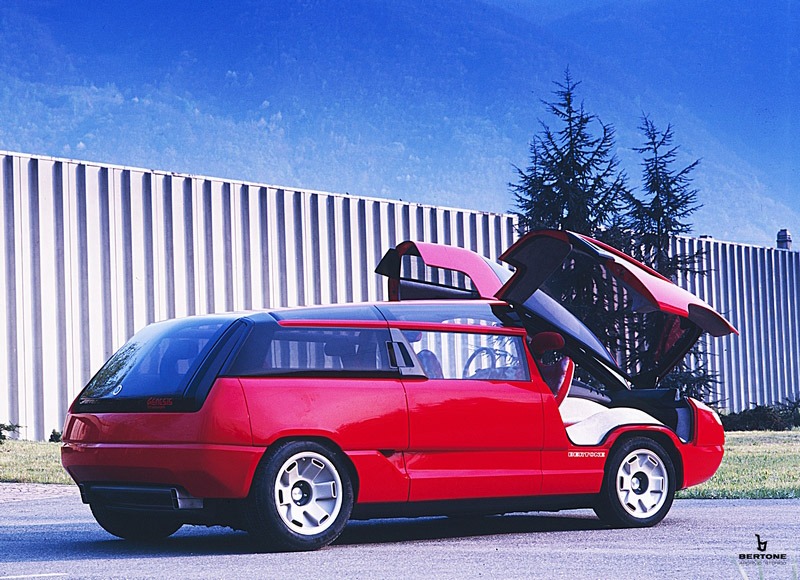
One interesting aspect was that Lamborghini themselves had no official role in the Genesis’s unveiling. Unlike the Portofino concept (which Lamborghini showcased as a vision of a Lamborghini sedan), the Genesis was presented under the Bertone banner. It was Bertone’s trophy, emphasizing the coachbuilder’s innovation rather than Lamborghini’s future lineup. Some observers initially assumed Lamborghini had commissioned it – hence the persistent (if technically incorrect) habit of calling it the “Lamborghini Genesis.” But as noted, it was Bertone’s own baby, merely borrowing Lamborghini hardware. Lamborghini’s management under Chrysler surely saw it, perhaps with a mix of amusement and alarm. Amusement, because it was a spectacular publicity stunt for the brand; alarm, because it might have clashed with whatever image polish Chrysler was planning (a minivan is a far cry from the suave supercar image).
After Turin, the Genesis likely made a few more auto show appearances. Concept cars of that era often toured the circuit – perhaps it was shown in Geneva or elsewhere in 1989, or at least mentioned in year-end roundups of wild concepts. However, it largely receded from headlines soon after. As one commentator later put it, concept cars are “guaranteed to glide into obscurity as soon as a motor show closes”, and so it was with Genesis. It made a splash, sparked some dreams (and a few nightmares for purists), and then quietly went away to slumber in Bertone’s storage.
Legacy, Influence, and Whereabouts
In the immediate sense, the Genesis did not lead to any production Lamborghini model. It was truly a one-off show car, never seriously intended for production. Lamborghini in the late ’80s had other priorities – they were preparing the launch of the Lamborghini Diablo (a true successor to the Countach) and exploring a smaller sports car project (the P140), not to mention they had just ended production of the LM002 off-road truck in 1992. Notably, with the LM002 “Rambo Lambo” gone, Lamborghini did have factory space free that could have built something like Genesis, as some observers cheekily pointed out. But the exotic minivan idea was simply too far ahead of its time – or perhaps too outlandish altogether – to turn into a money-making product in 1988. Bertone engineers themselves knew the Genesis was “never supposed to be a fully sorted road car”, and making a viable production V12 MPV would have been a massive, likely unprofitable undertaking.
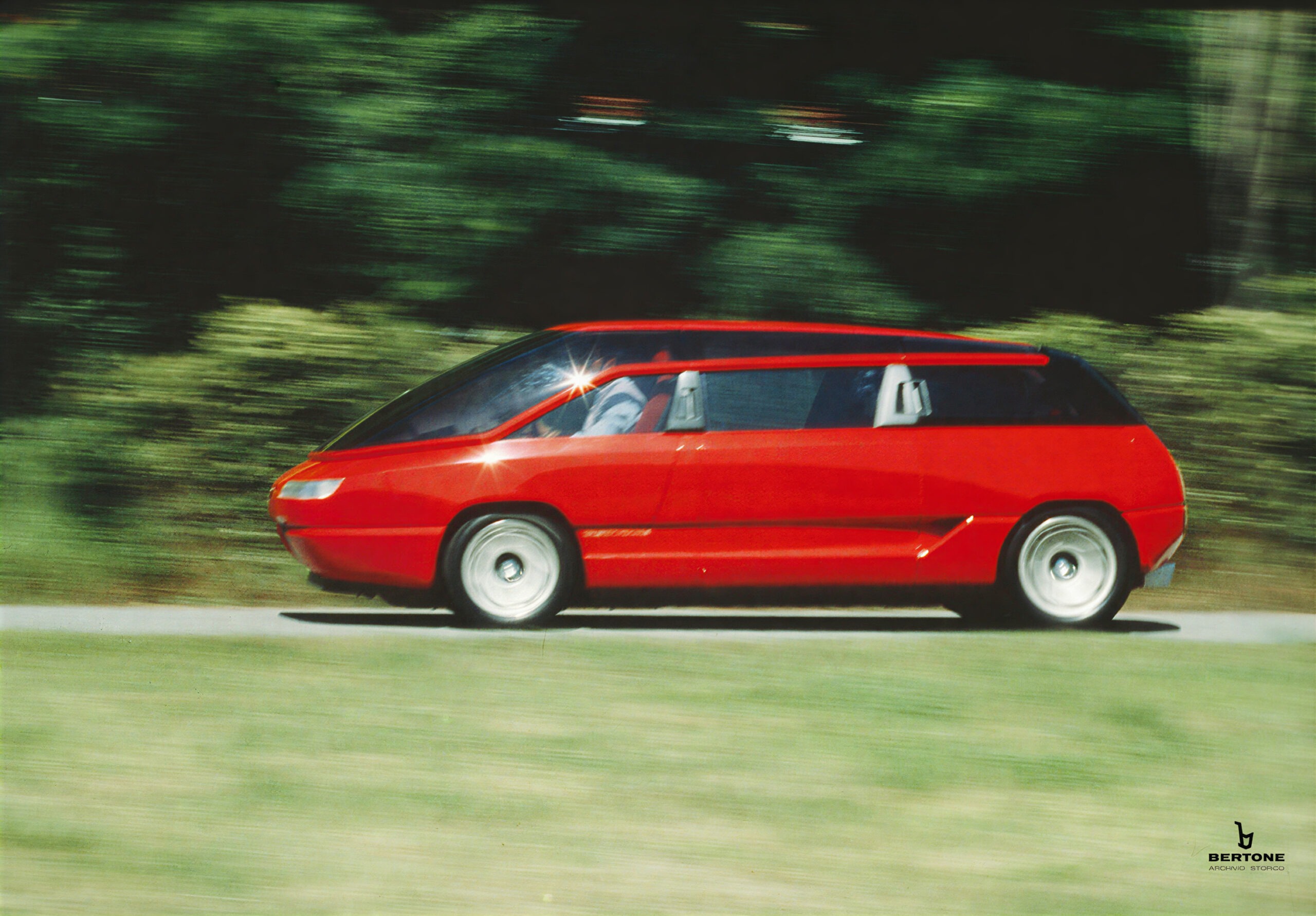
However, the Genesis’s spirit did echo in later years. In the 1990s, as if picking up Bertone’s gauntlet, a few projects explored the supercar/minivan mashup. Most famously, Renault stunned everyone in 1994 with the Espace F1, a one-off concept that dropped a Renault Formula 1 engine into a Renault Espace minivan, complete with four racing seats. It was another ultimate people-carrier turned racer – clearly the idea that “minivans can be exciting” had percolated into the industry. Renault’s project was purely for spectacle (celebrating the Espace’s 10th anniversary and Renault’s F1 title), but it proved Bertone was ahead of the curve – Genesis had been the first attempt to make an otherwise bland genre of cars more alluring with supercar power.
🔗 Read more: Italian Vision of the MPV: The Monovolume Concept
More substantially, the age of performance SUVs and crossovers eventually dawned, fulfilling the Genesis prophecy in a roundabout way. By the 2000s and 2010s, the market was awash with high-horsepower family vehicles – Porsche Cayennes, BMW X5Ms, even minivans tuned by AMG. Lamborghini itself finally built a production “people carrier” of sorts in 2018: the Urus SUV, a twin-turbo V8 powerhouse that is arguably the spiritual successor to Lamborghini’s off-road LM002 and a concession that even supercar makers must cater to the practical-minded wealthy. One might say the Genesis foretold the current obsession with mega-horsepower people-movers – just look at the Urus and any number of 600+ hp SUVs today. It took 30 years, but the world eventually came around to the idea that a family vehicle could wear a raging bull badge and go extremely fast. Unlike the Genesis, though, the Urus sticks to a more traditional SUV shape – perhaps the world wasn’t ready for a true superminivan even now.
For Bertone, the Genesis was in a sense a last hurrah of the Lamborghini partnership. After the Genesis, Bertone would never again design a production Lamborghini. The Diablo’s design was completed by Marcello Gandini (and tweaked in-house at Lamborghini/Chrysler) without Bertone’s badge on it. The later Murciélago and Gallardo came under Audi’s ownership with other designers. So, the Genesis stands as the last Bertone-Lamborghini love child – a final, madcap flourish in a long relationship. As Heseltine noted, it sadly “didn’t function as a calling card” for more business with Lamborghini. If anything, it was a glorious parting gift.
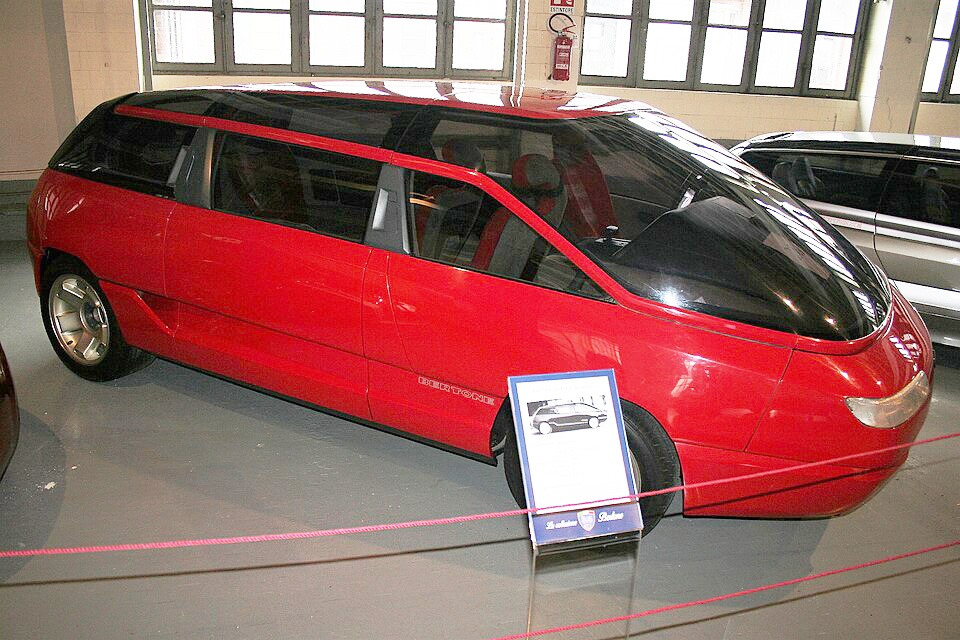
What became of the singular Genesis prototype itself? Thankfully, unlike some concept cars that are lost or destroyed, the Genesis survives to this day, and is even considered a cultural treasure. After its show career, it went into Bertone’s private collection. Decades later, when Bertone faced bankruptcy in 2014, a huge cache of 79 Bertone concept cars and prototypes went up for auction – the Genesis among them. The Italian government declared the entire collection national historic artifacts, effectively preventing them from leaving Italy. In 2015, the Automotoclub Storico Italiano (ASI), Italy’s historic automobile club, purchased the whole collection to preserve it. The Genesis and its siblings (such as the 1984 Bertone Ramarro, a model we had the privilege of featuring in a video.) were placed on display at the ASI’s museum space – initially in the Volandia museum near Milan. As of the last reports, the Bertone Genesis resides in the ASI Bertone Collection, in beautifully preserved, fully intact condition – essentially just as it appeared in 1988. It even made a trip to the famous Rétromobile classic car show in Paris in 2020 as part of a special Bertone exhibit, wowing a new generation of enthusiasts with its bizarre proportions and gullwing doors. Seeing it in person, one can appreciate that it’s not a half-forgotten myth; it’s right there, a big red reminder that car designers can dream crazy dreams.
The Most Exotic School-Run Shuttle in History
In the end, the Lamborghini Genesis by Bertone remains a captivating footnote – a vehicle that asks “what if?” and then answers with spectacle rather than sales. It encapsulates so much about its era and creators: the bravery of Bertone to explore uncharted territory, the willingness of Italian carrozzieri to mix elegance with insanity, and Lamborghini’s charisma that even a van carrying its engine could cause a stir. The Genesis was never going to ferry actual families to school or soccer practice, but it set imaginations ablaze about the notion of a supercar for five. In a romantic, storybook way, one might say the Genesis was a car ahead of its time – dreaming of a future where high-performance grocery-getters are normal. Today, when you see a 641 hp Lamborghini Urus or watch a video of a 1000 hp Tesla Model X racing a supercar, tip your hat to the Genesis. Bertone’s 1988 “supervan” was there first, proving that when you fuse Italian passion with practicality, you get something truly unforgettable.
Even among the pantheon of wild concept cars, the Genesis stands out. It wasn’t the first four-seater Lamborghini idea (the Espada had already proven a Lamborghini could have four seats decades prior, and concepts like the 1970 Bertone Marzal had toyed with outrageous doors and layouts), but the Genesis took it to another level. It wasn’t just a four-seater – it was a five-door, five-seat Lamborghini-bodied spaceship for the road. That combination still sounds almost mythical. As an article years later aptly stated, the Genesis was “the Countach-powered minivan with gullwing doors you never knew existed.” It exists, alright, and its story is richer and more fascinating than one might expect for a vehicle that never turned a wheel in anger.
The Lamborghini Genesis by Bertone may have glided into obscurity after 1988, but in recent years it has been rediscovered by enthusiasts and celebrated as one of the quirkiest chapters in Lamborghini’s saga. It’s a testament to the creativity of Italy’s carrozzieri and the extremes they would go to in order to explore new concepts. Professional, friendly, and a little bit crazy – that was the tone of Bertone’s Genesis. And perhaps that’s why, even today, the Genesis captivates: it’s an underdog story of a coachbuilder staking its claim, an imaginative leap toward a future that never quite happened, and a romanced vision of the family supercar. In the annals of automotive history, there’s nothing quite like the Genesis – and that alone makes it worth remembering in vivid detail.

ABOUT THE AUTHOR
Andreas Scheidl
Italian classic car enthusiast with German roots. Renowned as a respected figure in the classic car community, he serves as a jury member at various international concours d'elegance, including the Classic Gala Schwetzingen and Mantova. As a content creator, Andreas passionately shares his profound knowledge and appreciation for vintage automobiles. His heart beats for cars designed by Giovanni Michelotti, showcasing his discerning taste and dedication to preserving the timeless elegance of automotive history.
More stories by Andreas Scheidl ↗CONTINUE READING
Posts You Might Like
A Central Driving Position, a Rear-Mounted V8. Was This Really a Lancia?
In 1948, visitors to the Turin Motor Show could see an unusual Lancia on the stand of Carrozzeria Ghia. It was a large two-door coupé with a two-litre V8 mounted behind the…
Read story
Fioravanti F100: The Ferrari He Was Allowed to Imagine
Enzo Ferrari’s centenary, Leonardo Fioravanti’s independent studio and a supercar that explored air brakes, steel wheels and a new way of driving—without ever wearing the Cavallino.
Read story
Michelotti Shellette: When the Fiat 850 Became a Yacht
The yacht designer, the Turin stylist and the tiny coachbuilt car that crossed between the quay, the royal holiday house and the auction room. Some automobiles were conceived for the open road,…
Read story
Maserati A6 1500: A New Road for the Trident
When the doors of the Geneva Motor Show opened in March 1947, Maserati was a name that required little introduction to anyone who followed motor racing. What it did not yet possess…
Read story
THE CONVERSATION
Comments 0
Share a memory, a period photograph or a documented detail about this story.