
The Vistotal System by Carrozzeria Castagna
It’s 1937. The world is wobbling toward war, streamliners are slicing through air like Art Deco daggers, and at the Milan Motor Show, a Milanese coachbuilder decides that pillars are for buildings—not automobiles.
On its stand, Carrozzeria Castagna unveils a cabriolet with something that makes onlookers blink, lean in, and blink again. The windshield rises cleanly from the dashboard. No A-pillars. No side posts. Just a single, shimmering sheet of glass describing a gentle arc between the fenders and the sky.
It was called Vutotal—a contraction of vue totale, “total view.” The system had been patented by French engineer Joseph Vigroux, and first tested in 1935 by Parisian coachbuilder Jean Henri-Labourdette. Labourdette, never one for half-measures, trialed it on cars like the Delage D6-70, and most famously on the unforgettable Rolls-Royce Phantom III Labourdette Vutotal Cabriolet—a machine that looked less built than exhaled.
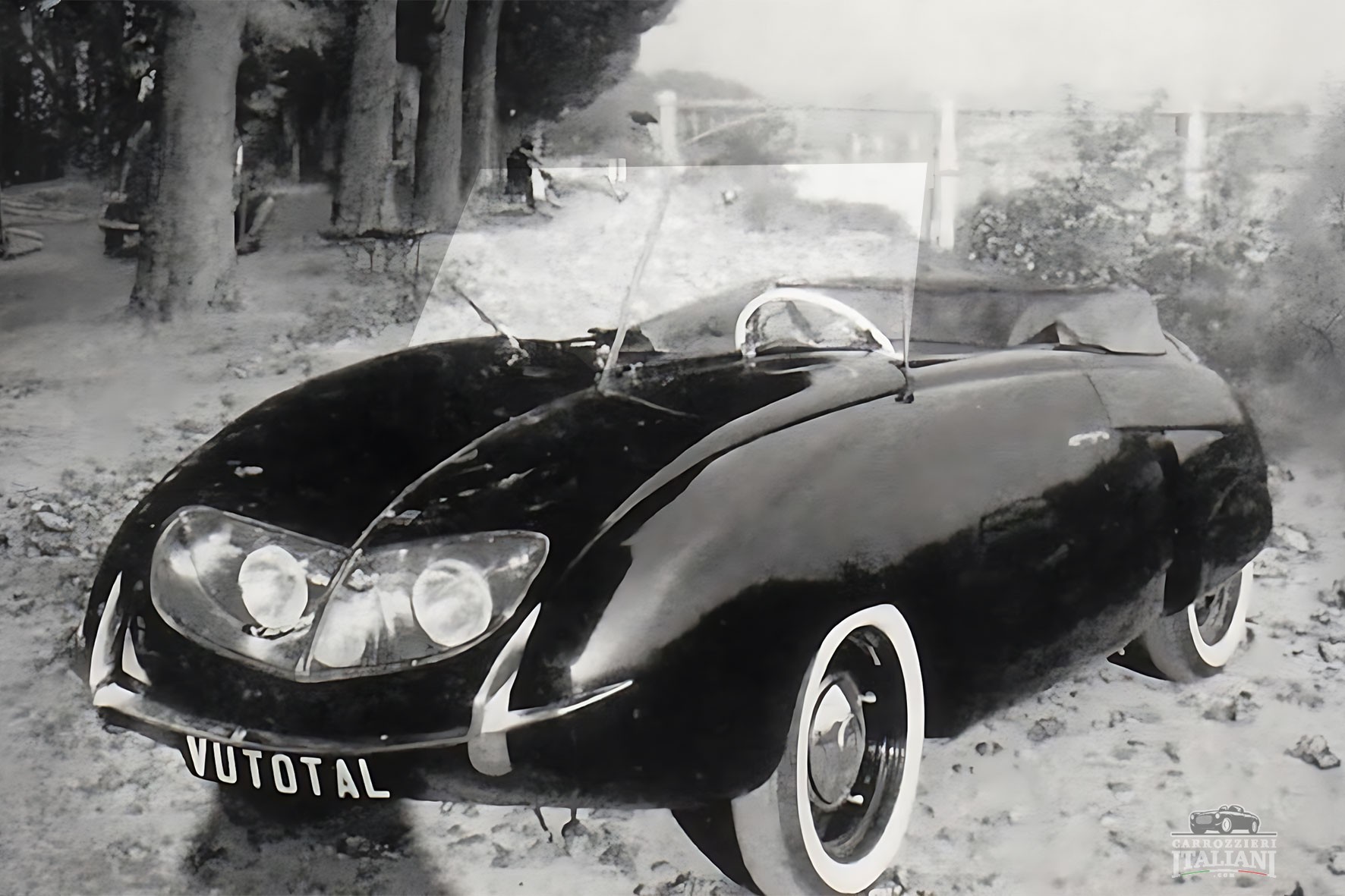
But in 1939, after legal wrangling and commercial choreography, Castagna acquired exclusive rights to the patent. They renamed it something more operatic, more Italian, more theatrical:
Because if you’re going to eliminate pillars, you may as well eliminate consonants too.
The System: Engineering a Horizon
To understand why this mattered, you have to remember what windshields were in the 1930s. They were upright. Framed. Divided. They had the visual delicacy of a bank vault door. The A-pillars—those vertical supports on either side—were thick enough to hide a bicyclist, a pedestrian, or possibly an entire existential crisis.
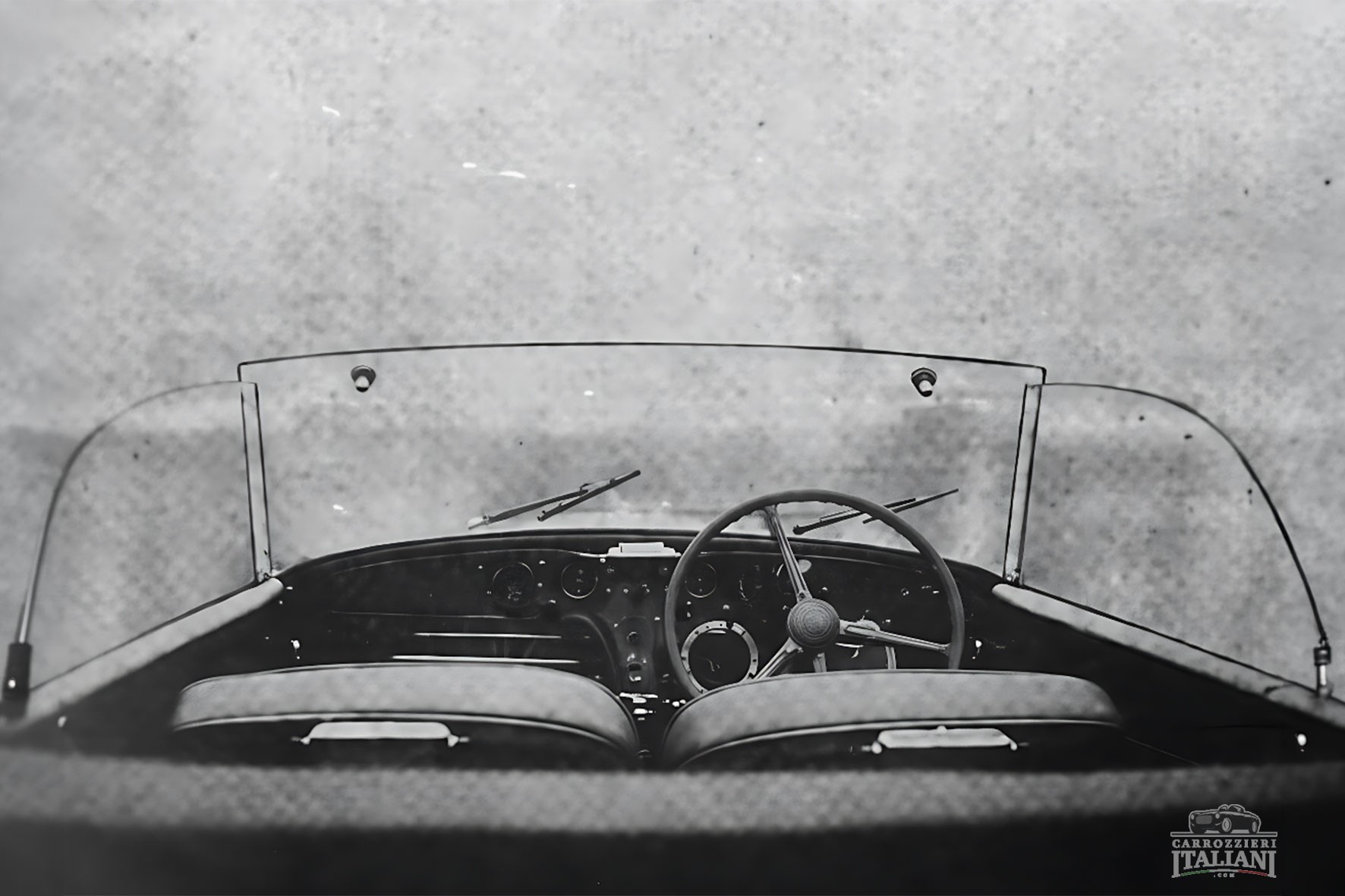
Creating a pillarless windshield at the dawn of the automobile would have been unthinkable. Glass simply wasn’t strong enough. But by the late 1930s, advances in laminated safety glass and industrial processing meant thicker, stronger panes were finally possible.
So Castagna went big.
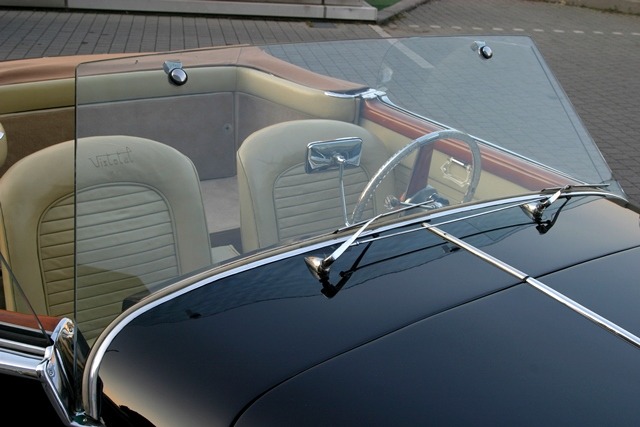
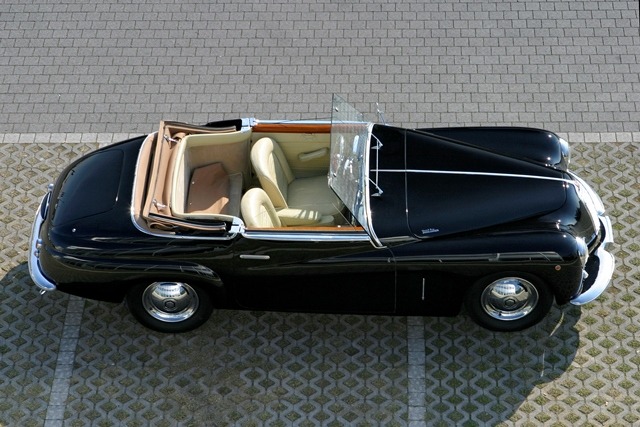
Instead of a conventional windscreen, Vistotal used a single slab of glass between 12 and 15 millimeters thick. That’s aquarium territory. The pane extended downward into the dashboard by roughly 15 centimeters, where it was secured by a series of patented steel clamps. These mounts allowed a degree of independence from chassis vibration while keeping the glass structurally integrated with the body.
In other words: it didn’t just sit there. It participated.
On cabriolets, the roof latched directly to the upper edge of the glass. On closed cars, the roof structure bonded through the windshield itself, creating a kind of transparent keystone. It wasn’t merely glazing—it was architecture.
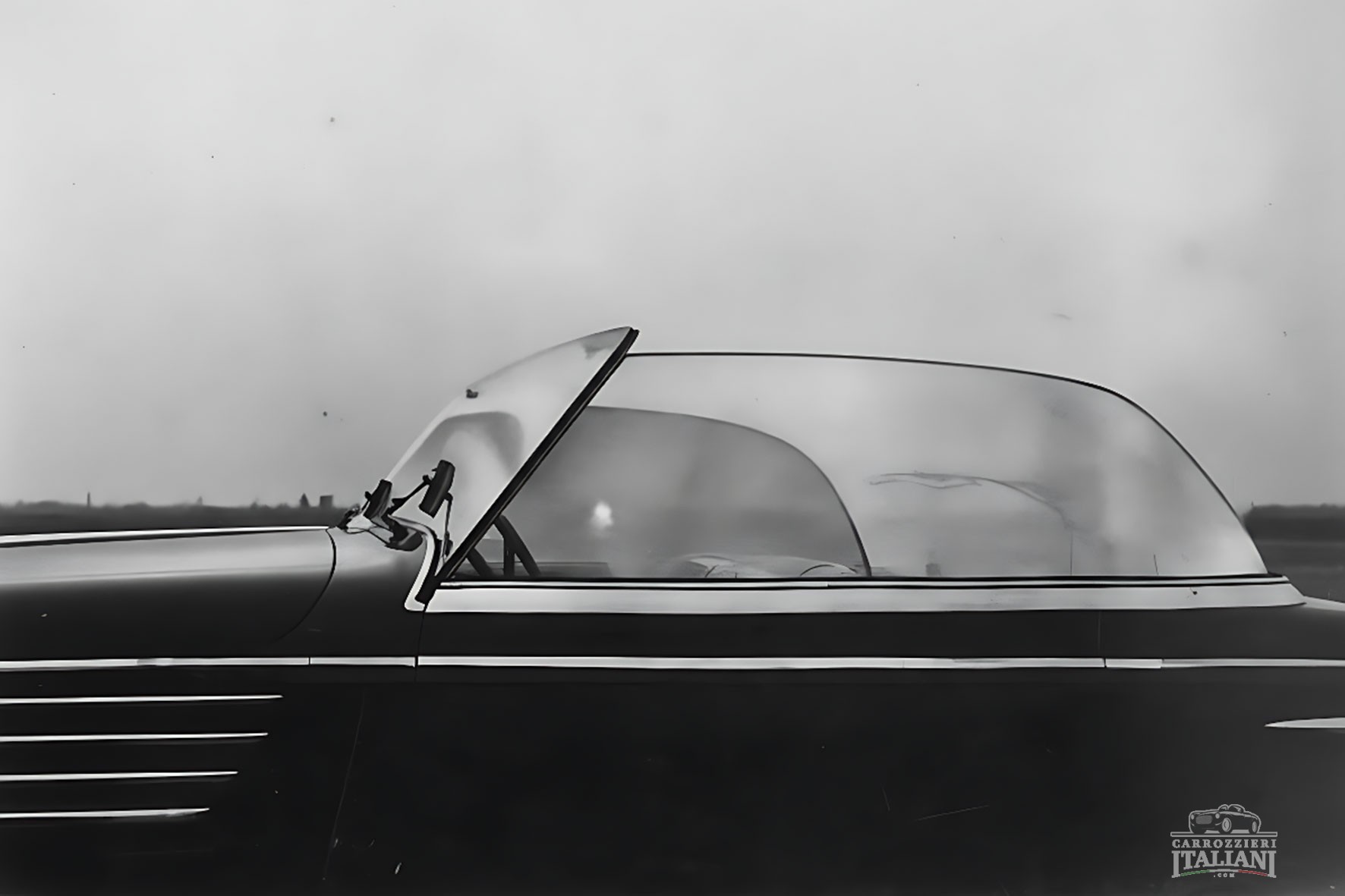
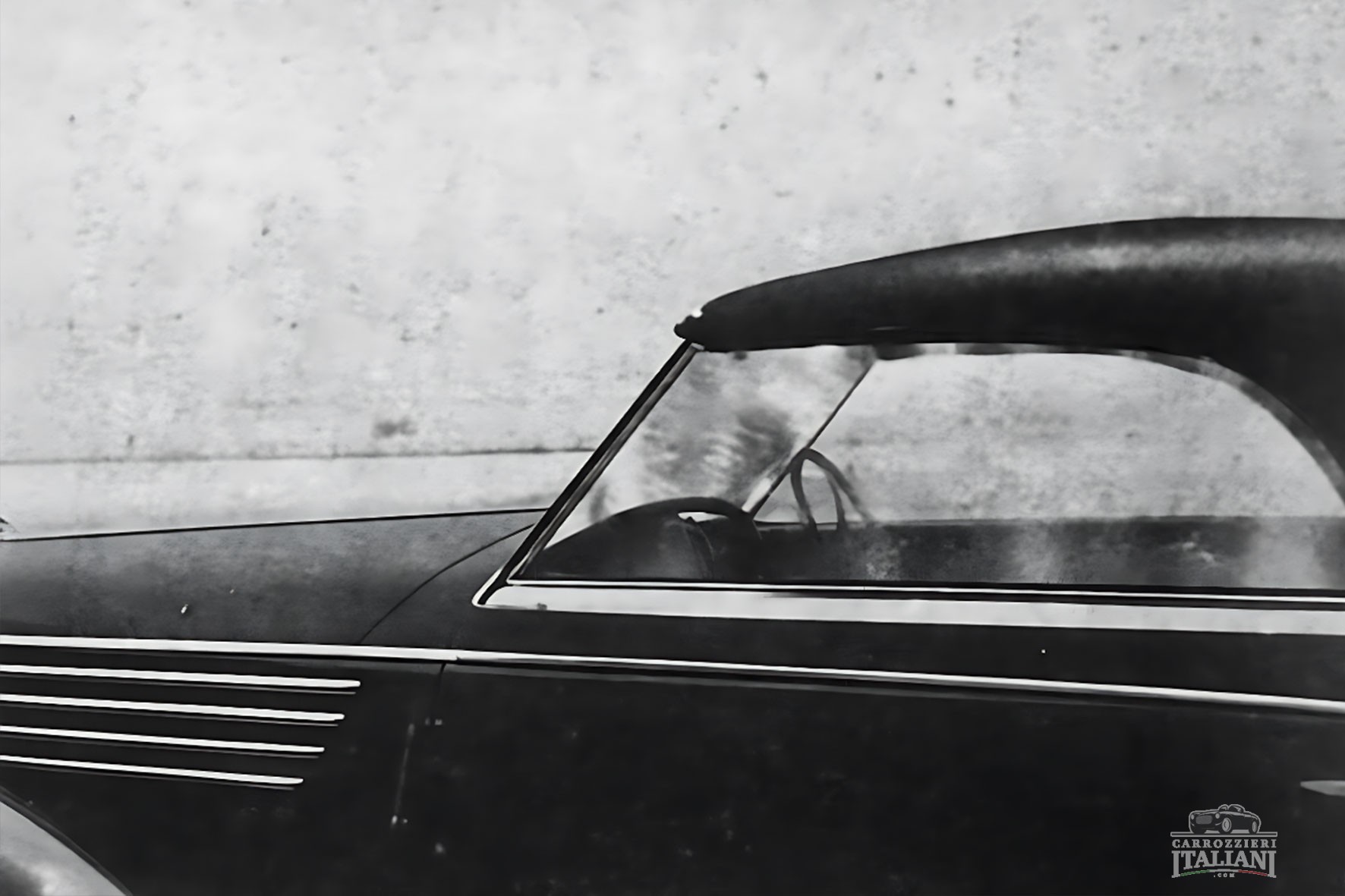
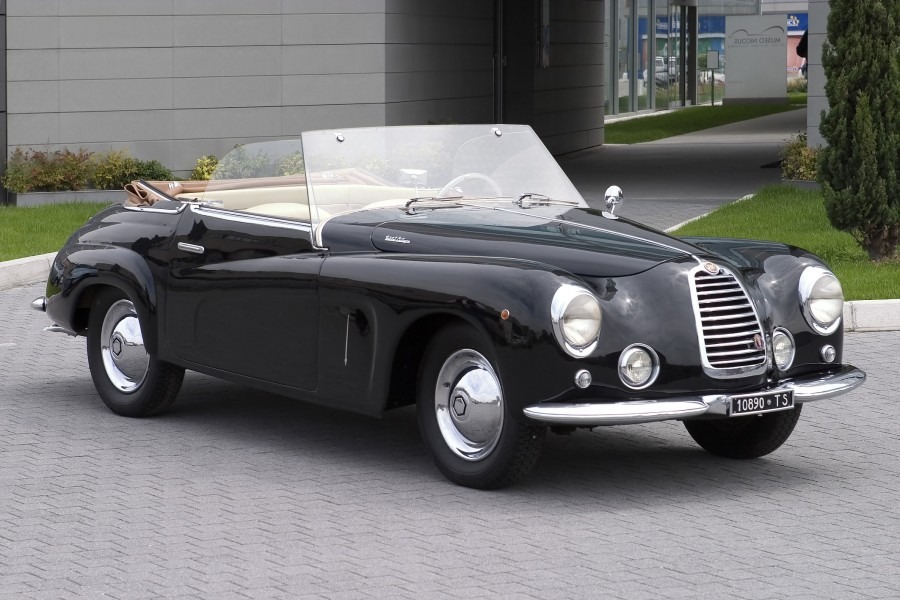
Cars like the Fiat 1100 E Cabriolet Vistotal and the Fiat 1400 Coupé Vistotal demonstrated the system’s versatility. Without A-pillars, side windows could also be frameless, formed as single pieces that aligned perfectly with the rake of the windshield. The front glass extended slightly beyond the side panes, creating a subtle aerodynamic overlap.
And here’s where it gets deliciously nerdy.
The small gap between windshield and side window didn’t seal hermetically. Instead, airflow at speed created a pressure differential in the corner—an invisible aerodynamic curtain that prevented rain from entering while encouraging ventilation inside the cabin. Even in winter, fogging was reportedly reduced to the point that traditional anti-fog visors became redundant.
It was less brute force. More physics.
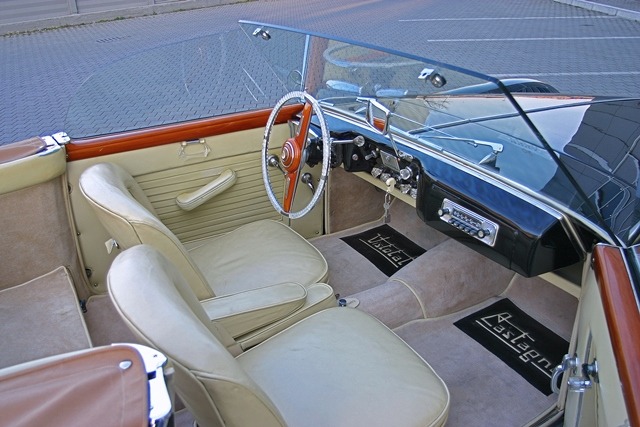
And in a further flourish of thematic consistency, Castagna often fitted Vistotal cars with plexiglass steering wheels and interior handles. If you’re going to make transparency your manifesto, commit.
As for weight? Castagna claimed savings of roughly 50 kilograms thanks to the elimination of heavy framing structures. In an era when performance was measured in both horsepower and tailoring, that mattered.
Too Clever for Its Time
For all its brilliance, Vistotal was expensive. Thick custom glass. Precision clamps. Structural integration that demanded coachbuilt craftsmanship. This was not a solution for mass production—it was a solution for patrons.
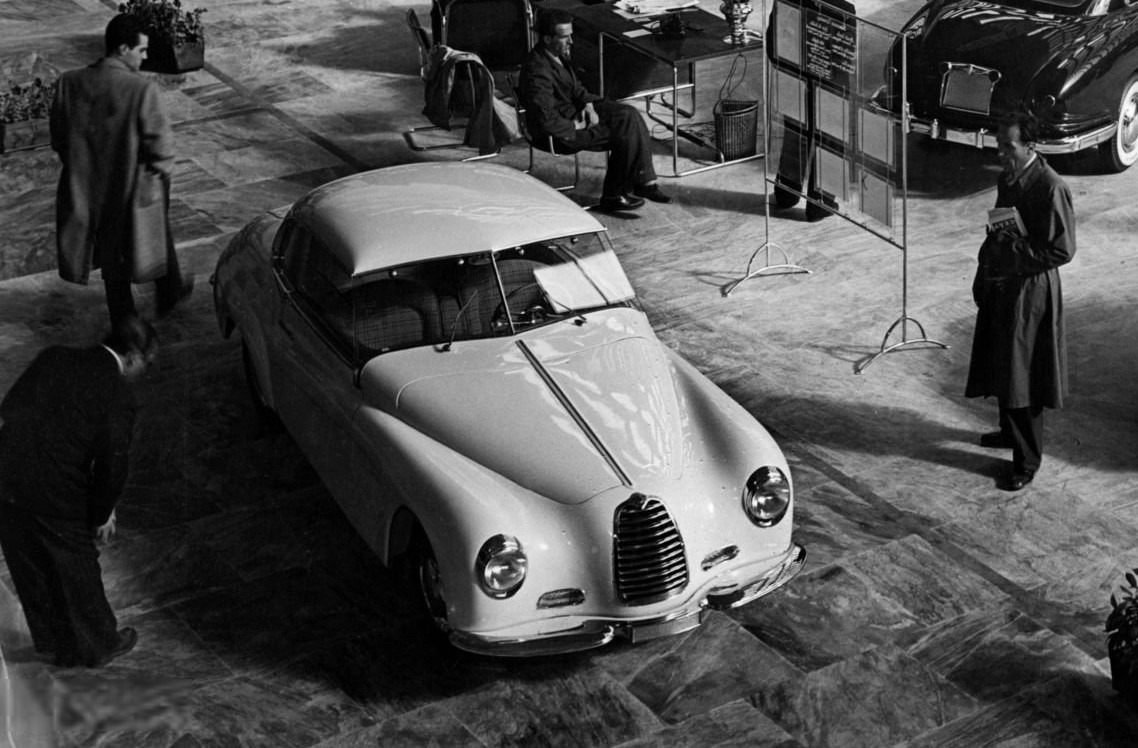
Though pioneered in France and even adopted on certain luxury buses, the concept remained niche. Public reception was polite but cautious. A windshield without visible supports felt, to many buyers, like a magic trick performed at 100 km/h.
By the early 1950s, Vistotal quietly exited the stage. Costs were high. Manufacturing was complex. And the industry was moving toward standardized steel monocoques, not artisanal glass sculptures.
Still, echoes of the idea persisted
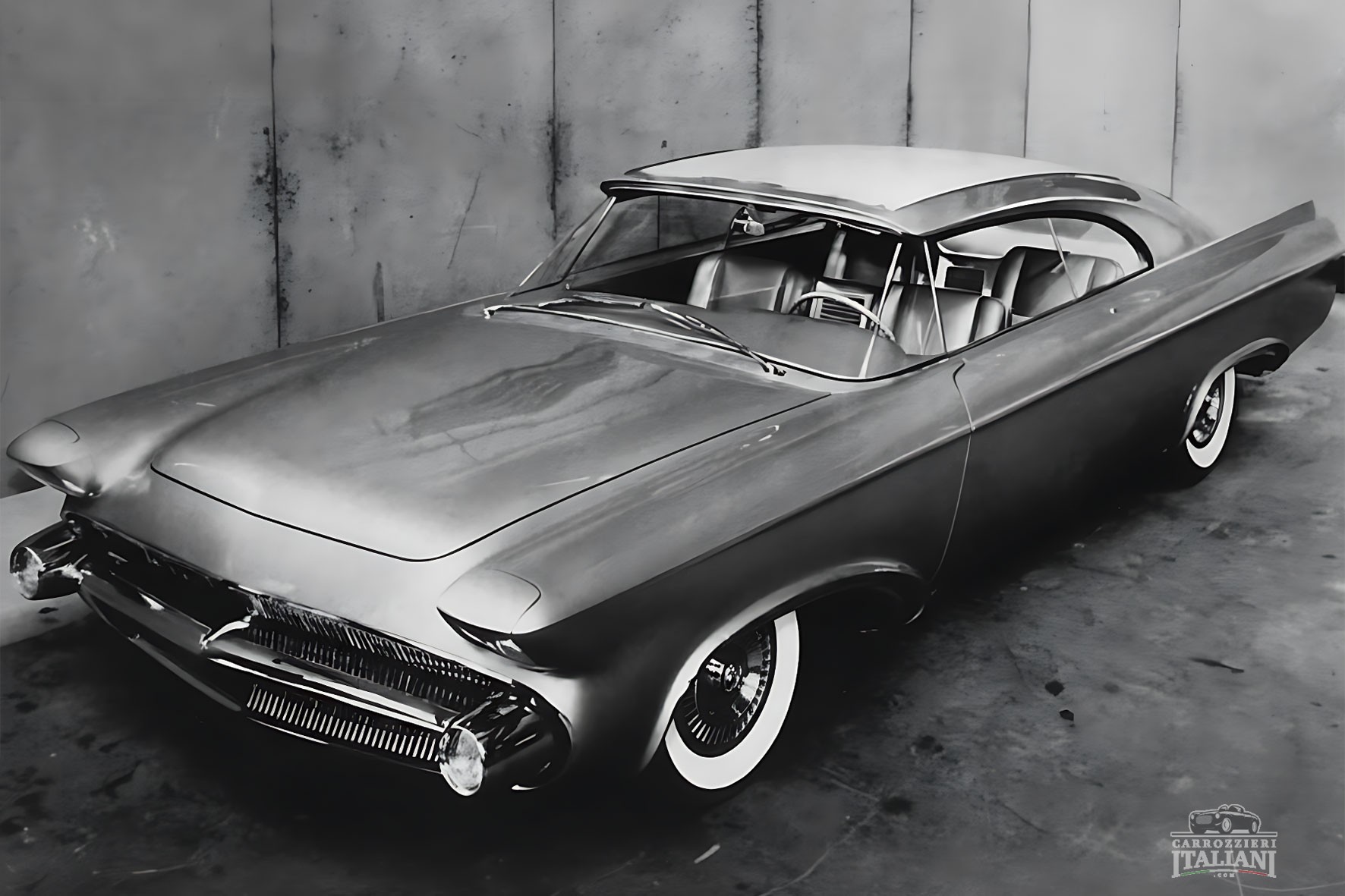
In 1956, Carrozzeria Ghia explored similar thinking in the dramatic Chrysler Norseman, a show car tragically lost at sea aboard the Andrea Doria. The Norseman’s vast glass canopy carried the same spirit: transparency as spectacle.
Sergio Coggiola’s team also flirted with extreme glazing in projects like the Ferrari 212 Inter “Uovo,” though from Carrozzeria Fontana—another experiment in reshaping how drivers relate to horizon and hood.
But by mid-century, safety regulations, cost realities, and mass production logic had spoken. Pillars returned. Glass retreated. The horizon narrowed again.
The Rebirth? Glass Dreams in Carbon Fiber
And then, in 2019, Castagna did something wonderfully irrational.
Drawing inspiration from its own archive, the reborn Carrozzeria Castagna unveiled a reinterpretation concept of Vistotal based on the Porsche Panamera. But instead of merely removing pillars, they removed doors—or rather, replaced them with a single carbon-fiber side aperture with vertical opening.
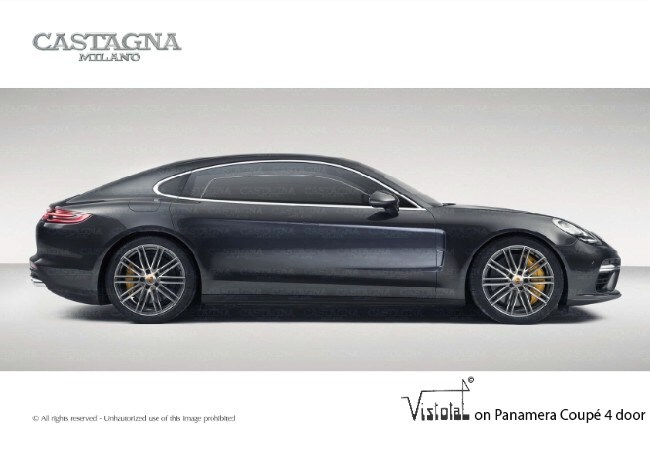
One sweeping glazed surface per side. Improved visibility. Improved accessibility. Maximum theatre.
The design carved a hollowed accent near the front fender vent, highlighted by iridescent two-tone paint that turned the flank into a prism. A single retractable handle, touch-activated. Servo-assisted locking. Remote operation. It was less about structural necessity and more about philosophical continuity.
Because Vistotal was never just a windshield. It was a worldview.
Total View, Total Nerve
The Vistotal system arrived decades before panoramic roofs became marketing bullet points and before “visibility” became a regulatory metric. It asked a simple question:
What if the car didn’t frame your view of the world—but dissolved into it?
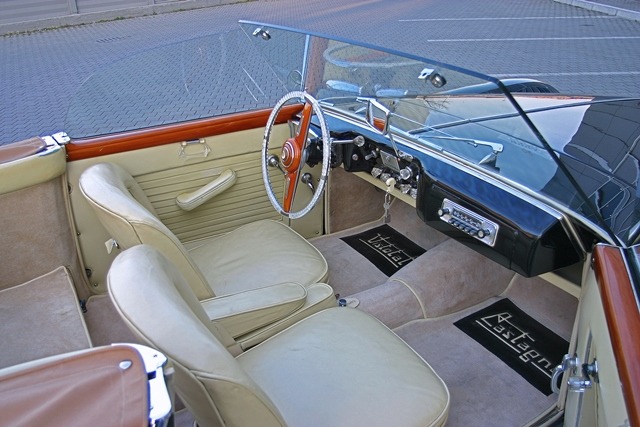
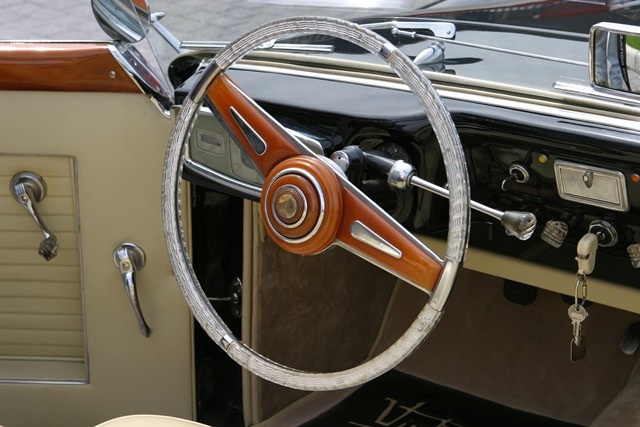
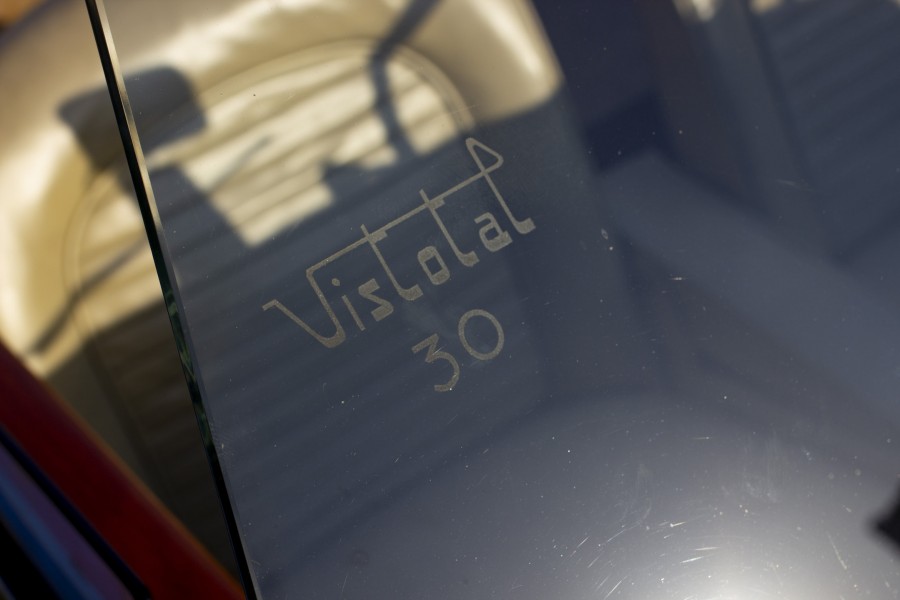
In doing so, Castagna and its French collaborators created something rare: an idea that was technically daring, aesthetically pure, and commercially inconvenient.
Which is to say, it was perfect.
A single sheet of glass, rising from the dashboard like a declaration. No pillars. No compromise. Just the road ahead—uninterrupted.
Fiat 1100 E Cabriolet Vistotal
Photo courtesy of Museo Nicolis.

ABOUT THE AUTHOR
Andreas Scheidl
Italian classic car enthusiast with German roots. Renowned as a respected figure in the classic car community, he serves as a jury member at various international concours d'elegance, including the Classic Gala Schwetzingen and Mantova. As a content creator, Andreas passionately shares his profound knowledge and appreciation for vintage automobiles. His heart beats for cars designed by Giovanni Michelotti, showcasing his discerning taste and dedication to preserving the timeless elegance of automotive history.
More stories by Andreas Scheidl ↗CONTINUE READING
Posts You Might Like
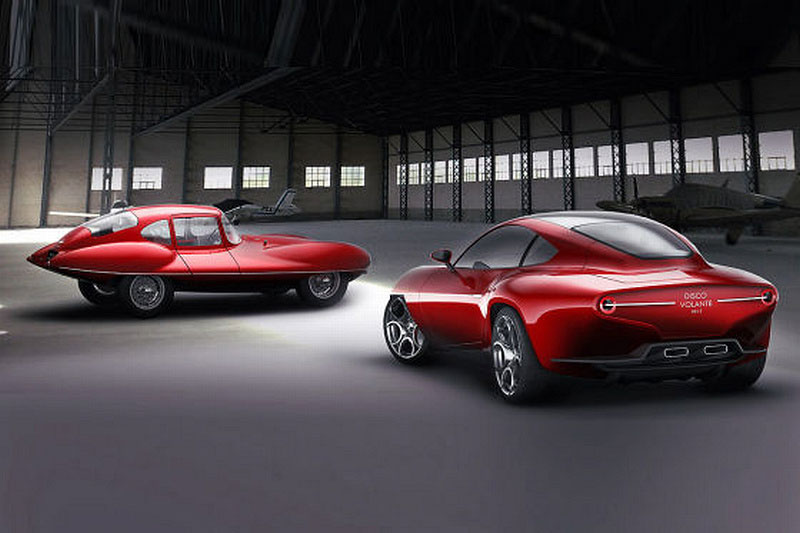
Reinterpreting the Past: When Coachbuilders revisited it’s Icons
When iconic coachbuilt cars are rebade through time, intent matters more than nostalgia. From experimental originals to modern reinterpretations, this article examines how legends are reimagined—and why some ideas refuse to stay…
Read story
Neither Coupé nor Spider: Italy and the Targa Roof
A deep dive into Italy’s decades-long exploration of the targa roof—from early post-war experiments to Ferrari and Lamborghini icons—revealing how Italian designers created a third way between coupé and spider.
Read story
Italian Vision of the MPV: The Monovolume Concept
Long before MPVs filled suburban driveways, Italian designers were shaping the monovolume with prototypes that ranged from pragmatic to outright outrageous. Their work rewrote how space, style, and function could fit under…
Read story
Italian Coachbuilt City Car Concepts: From Microcars to Urban EVs
How did Italy’s famed coachbuilders go from designing Ferraris to dreaming up tiny electric runabouts? From the quirky Tsé-Tsé to Pininfarina’s visionary Nido, discover how city cars became a proving ground for…
Read story
THE CONVERSATION
Comments 0
Share a memory, a period photograph or a documented detail about this story.