
The Hillman Zimp by Zagato: One of three
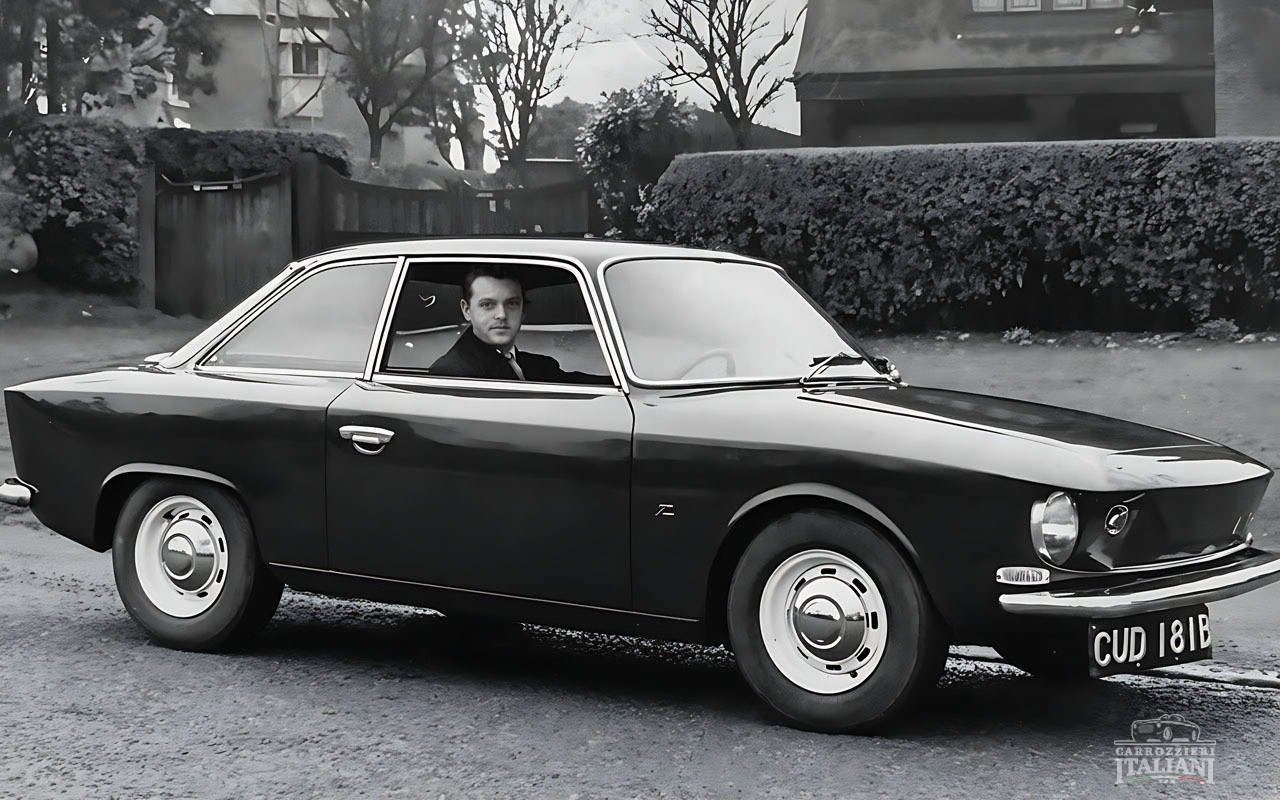
In the mid-1960s, the Hillman Imp took an unexpected turn into Italian coachbuilding territory. Zagato, the famous Milanese carrozzeria, reworked the compact British rear-engined car into a sharp-looking aluminum-bodied GT known as the Hillman Zimp, short for Zagato-Imp.
The project was led by a young Ercole Spada and backed by British investors Peter Thomas and Anthony Charles. Development moved quickly: in just nine months, three prototypes were completed and shown at the 1964 Earls Court Motor Show in London.
Zagato’s lightweight body transformed the Imp’s character. The Zimp came in at roughly 630 kg, around 50 kg lighter than the standard car, and sat four inches lower. Under the skin, it kept the Imp’s rear-mounted 875 cc Coventry Climax-derived engine, producing 42 hp and inclined at 45 degrees, along with its independent suspension layout. With a cleaner, more aerodynamic shape, top speed rose to nearly 87 mph.
Contemporary British and Italian publications responded positively, highlighting the car’s clean styling and lively road manners. Despite that early promise, the project was cut short in late 1964 after Chrysler took control of the Rootes Group and deemed it commercially unviable.
All three prototypes still exist today, with two in the UK and one in Italy, and they occasionally resurface at concours events and auctions. The Hillman Zimp never made production, but it remains one of the most intriguing lost opportunities of the 1960s: a compact British mechanical package wrapped in unmistakable Italian design.
A Meeting of Industries: Britain and Italy in the 1960s
In the early 1960s, Britain’s car industry was under growing pressure, yet it continued to produce technically ambitious small cars. The Rootes Group’s response to the Mini was the Hillman Imp, launched in 1963. Compact and advanced for its class, the Imp featured a rear-mounted 875 cc Coventry Climax-derived all-aluminum engine and a fully independent suspension setup influenced by the Chevrolet Corvair.
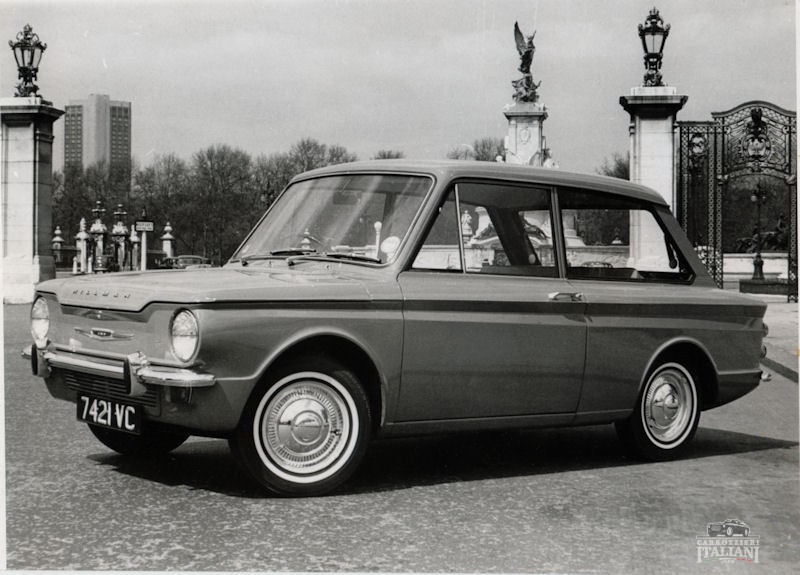
It also brought unusually sophisticated engineering to the small-car segment. The Imp used an aluminum block and head, an automatic choke, and proper instrumentation for oil pressure and coolant temperature. Over time, the model was offered in multiple forms and under several marques, including Hillman, Singer and Sunbeam, with saloon, coupe, estate and van variants all joining the range. Early reliability problems affected its reputation, but the car eventually earned respect for its agile handling and strong competition record, including three consecutive British Saloon Car Championship titles from 1970 to 1972.
🔗 Read more: Zagato Milano: A History Shaped by Speed and Style
At the same time, Italy was shaping the visual future of the automobile. Design houses such as Zagato, Bertone and Pininfarina were producing some of the decade’s most distinctive sports-car bodies, pushing proportions and surfacing in new directions. The wedge era had not fully arrived yet, but its influence was already building, and by the end of the decade Marcello Gandini at Bertone would define that movement with concepts such as the Lamborghini Marzal in 1967 and the Stratos Zero in 1970.
Zagato had already built its reputation on lightweight, aerodynamic design, with cars such as the Aston Martin DB4 GT Zagato standing as clear proof of its approach. Against that backdrop, the Hillman Imp made perfect sense as a base for experimentation. Its compact dimensions, advanced mechanical layout and light-alloy engine gave Zagato a technically interesting platform, while its modest production-car origins left plenty of room for a more distinctive coachbuilt identity. It was exactly the kind of Anglo-Italian combination that could turn a clever small car into something far more memorable.
From Dealership to Design Studio: Zagato Gets the Green Light
In mid-1964, British entrepreneurs Peter Thomas and Anthony Charles saw an opportunity to bring Italian coachbuilding flair to a modern British small car. With Lord Rootes’ approval, they established British Zagato Ltd in Surrey and set the plan in motion. Under a gentlemen’s agreement, Rootes would supply Hillman Imp chassis in kit form, allowing Zagato to build the cars with far lower import costs than fully assembled vehicles.
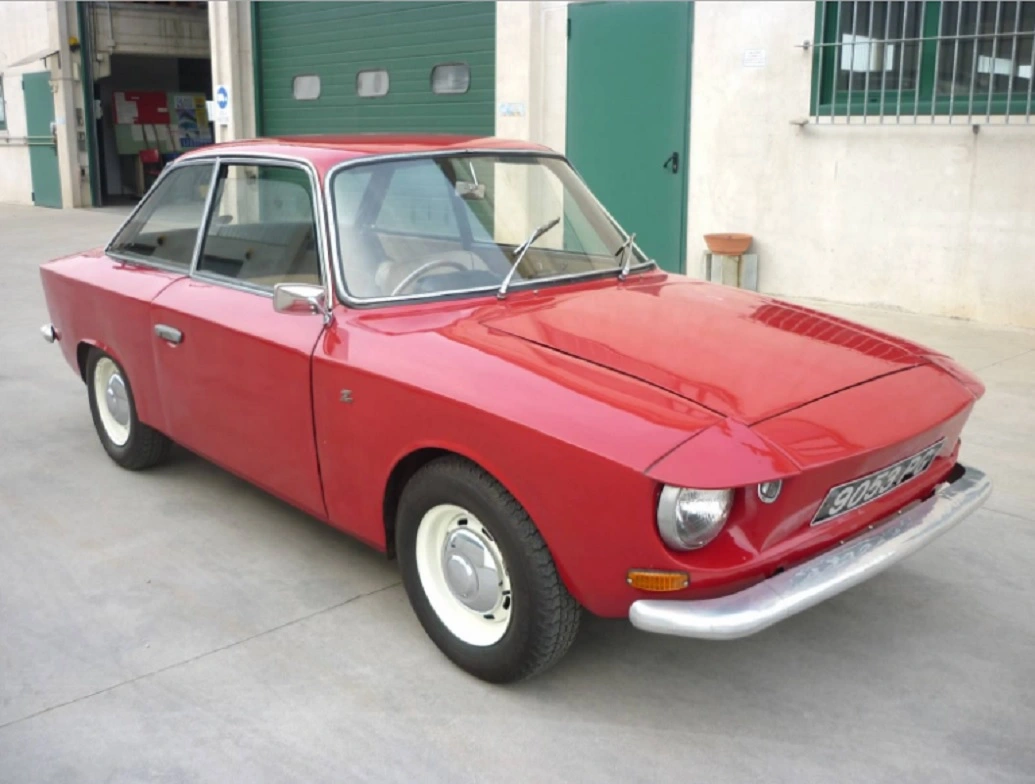
Thomas moved quickly. He bought two new Imp Deluxe models from a UK dealer, registered CUD 180B and CUD 181B, and drove them to Zagato’s Milan workshop, with his wife joining the trip in convoy. By the time they arrived, Zagato was already working on a third Imp, chassis 9053 PG, which was being converted alongside them.
Once the project was underway, Zagato handed design responsibility to Ercole Spada, one of its most promising young talents. Spada had already built an impressive résumé, with work that included the Aston Martin DB4 GT Zagato and Alfa Romeo. For this new project, he coined the name “Zimp,” a simple blend of Zagato and Imp.

The objective was clear: create a lightweight, elegant four-seat coupé that looked more exclusive than its humble donor car suggested. Spada left the Imp’s mechanical package untouched, including the 875 cc Coventry Climax-derived FWMA engine, and focused entirely on reshaping the car visually. Drawing on lessons from Zagato’s earlier Mini-based concept, the 1961 Mini Cat, he developed a slimmer, lower and far more refined silhouette.
What makes the Zimp story even more impressive is the pace. In roughly nine months, Zagato completed three bodies, mounted them to Imp chassis and prepared all of them for their public debut. For a niche cross-border project built around a city car platform, that was an unusually fast turnaround.
Styling the Zimp: Spada’s Aluminum Artistry
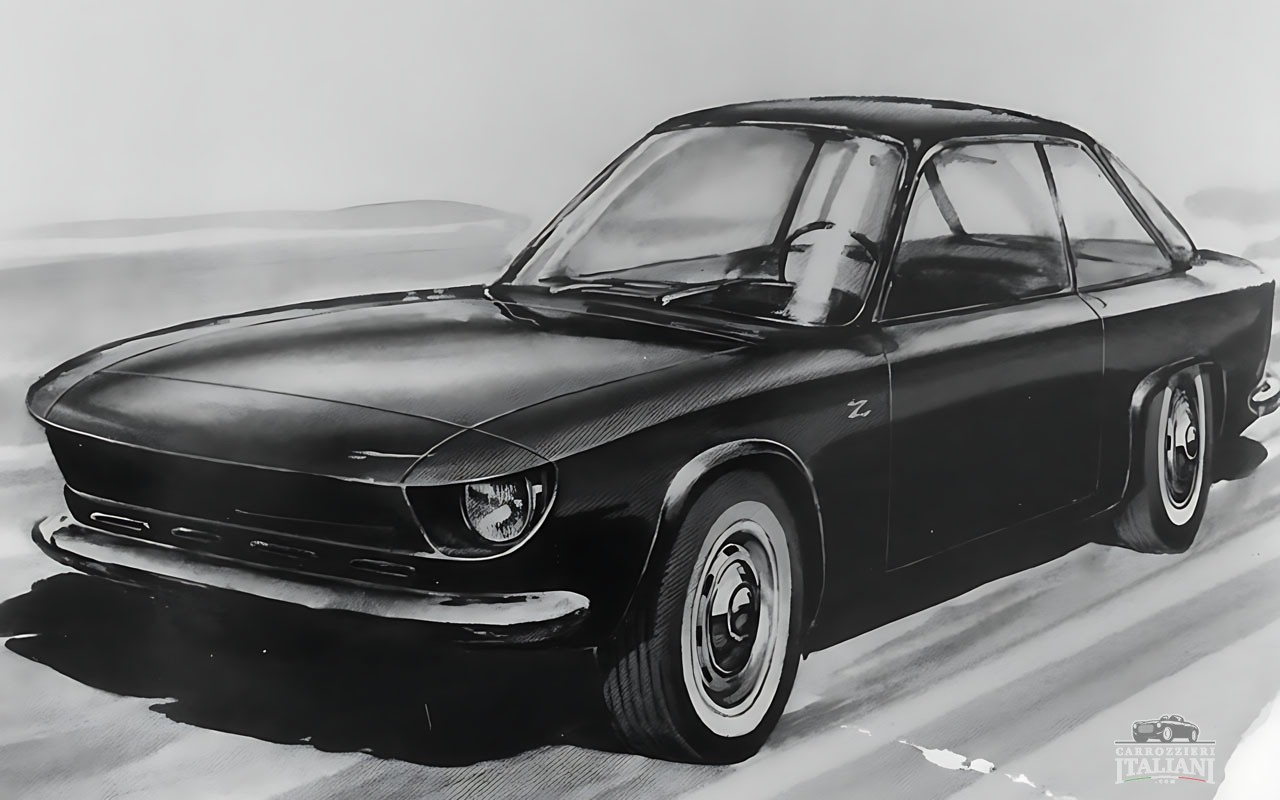
Ercole Spada’s work on the Zimp turned the practical Hillman Imp into something far more sophisticated. Where the standard car was upright and functional, the Zagato-bodied version was low, taut and deliberately clean. Overall height dropped to just 1.23 metres, compared with the Imp’s 1.38 metres, giving the car a noticeably flatter roofline and a much more planted stance.
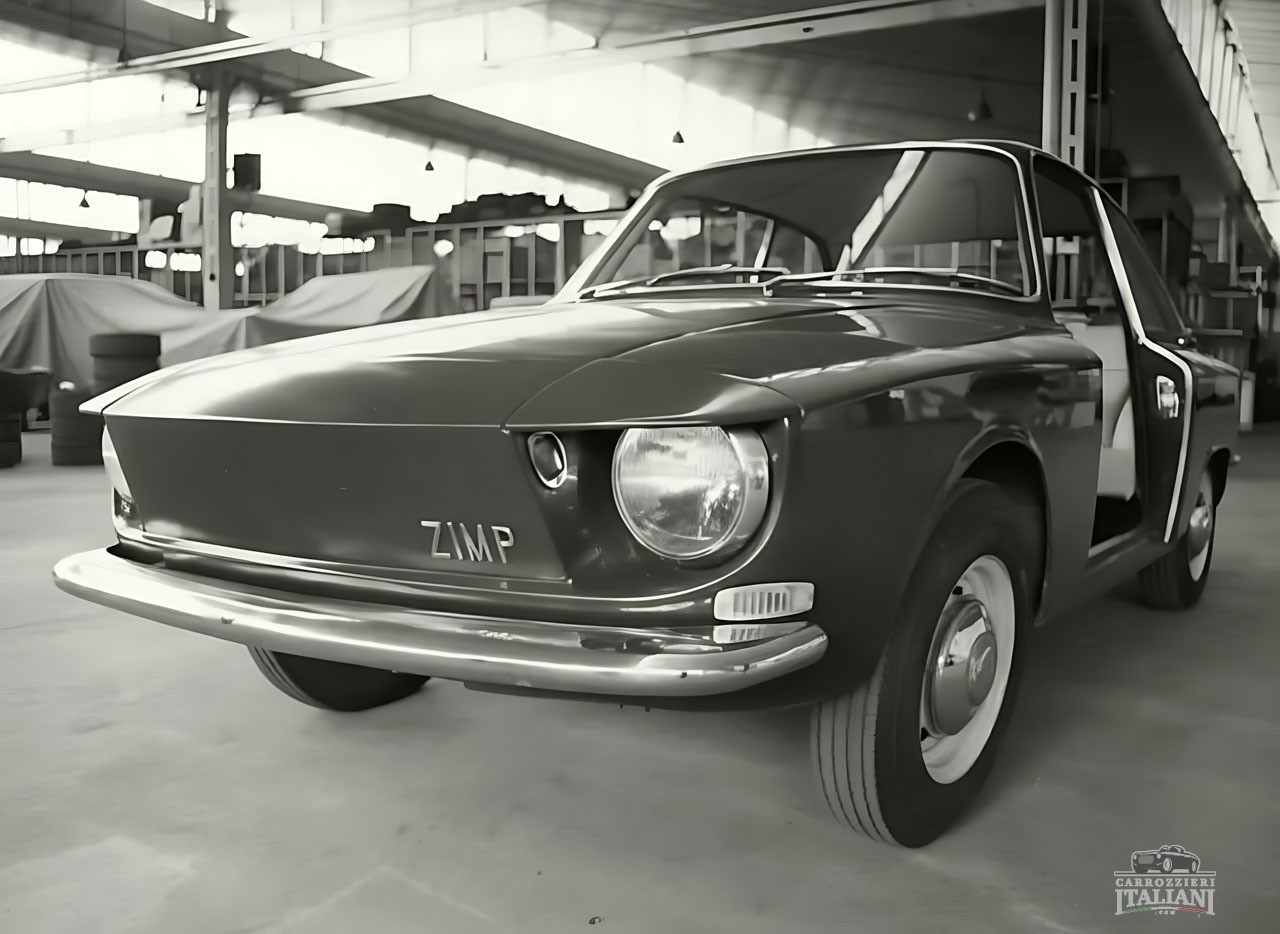
Spada kept the surfaces uncluttered. Chrome was used sparingly, and decorative trim was largely avoided in favour of shape and proportion. One of the Zimp’s defining details was a strong horizontal crease that wrapped around the entire body. To preserve that line at the front, Zagato gave the car a distinctive headlamp treatment: eyebrow-like flaps sat over the lights and lifted when the lamps were switched on. It was an unusual solution, but it worked. The effect gave the Zimp a sharper, more modern face than most small coupés of the period.
🔗 Read more: The Partnership between Zagato & Aston Martin
In profile, the transformation was even more dramatic. The standard Imp’s upright greenhouse disappeared, replaced by a more fluid cabin shape and a long, gently tapering rear section. Beneath it all, the steel Imp floorpan remained, but the exterior panels were hand-formed in aluminum. The proportions were carefully balanced, with only the slightly longer front section and short rear deck interrupting the car’s otherwise remarkably even visual flow.
Spada would later describe the Zimp as loosely related to the design language of Zagato’s earlier Mini Cat concept, but here the idea was executed with much greater polish. The cabin also received thoughtful upgrades. Better vinyl trim, a Moto-Lita wood-rim steering wheel and tidier dashboard and door-panel treatment gave the interior a more refined grand-touring feel. The result was convincing: the Zimp looked and felt like a compact Italian GT, even if its power came from a small British engine mounted at the rear.
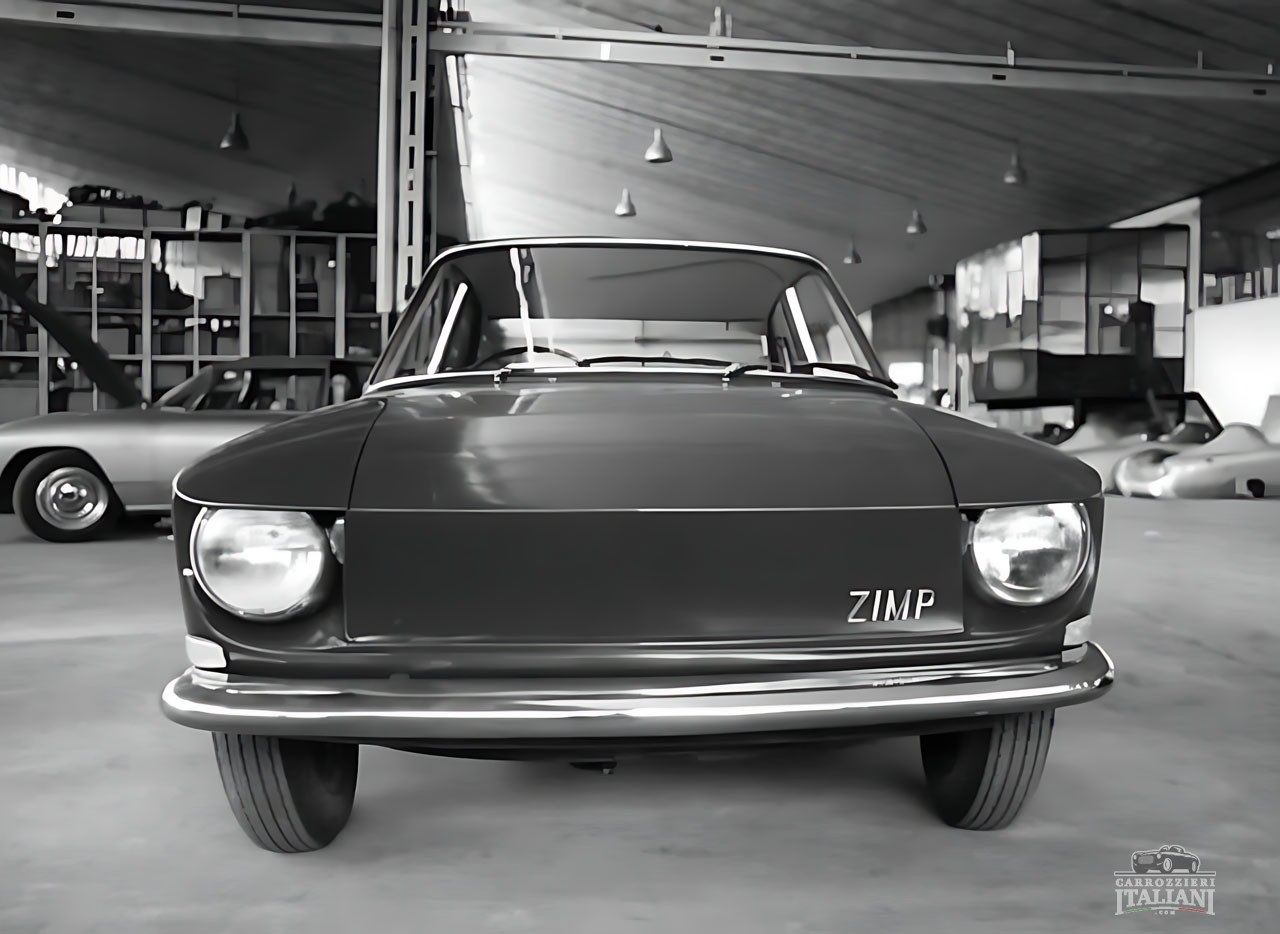
Placed in its wider design context, the Zimp fits naturally into the changing visual language of mid-1960s Italy. The wedge era had not yet fully arrived, but the shift toward lower noses, cleaner surfaces and more aggressive fastback forms was already underway. In that sense, the Zimp was ahead of its size and its origins. It brought Zagato’s focus on lightness and aerodynamic clarity to an unlikely platform and, in doing so, created one of the most distinctive small-car rebody exercises of the decade.
It also hinted at themes that would become much more prominent later on. The low nose, the uninterrupted shoulder line and the slightly severe front-end expression all foreshadowed ideas that Italian designers would explore more boldly by the end of the 1960s. The Zimp may have started life as a Hillman Imp, but visually it belonged to a much more ambitious world.
On the Showroom Floor: Launch and First Impressions
By the autumn of 1964, all three Zimp prototypes were finished and ready for the motor show circuit. Zagato sent them to London for their public debut at the Earls Court Motor Show in late October, where the cars immediately stood out as something far more exotic than their Hillman Imp origins suggested.
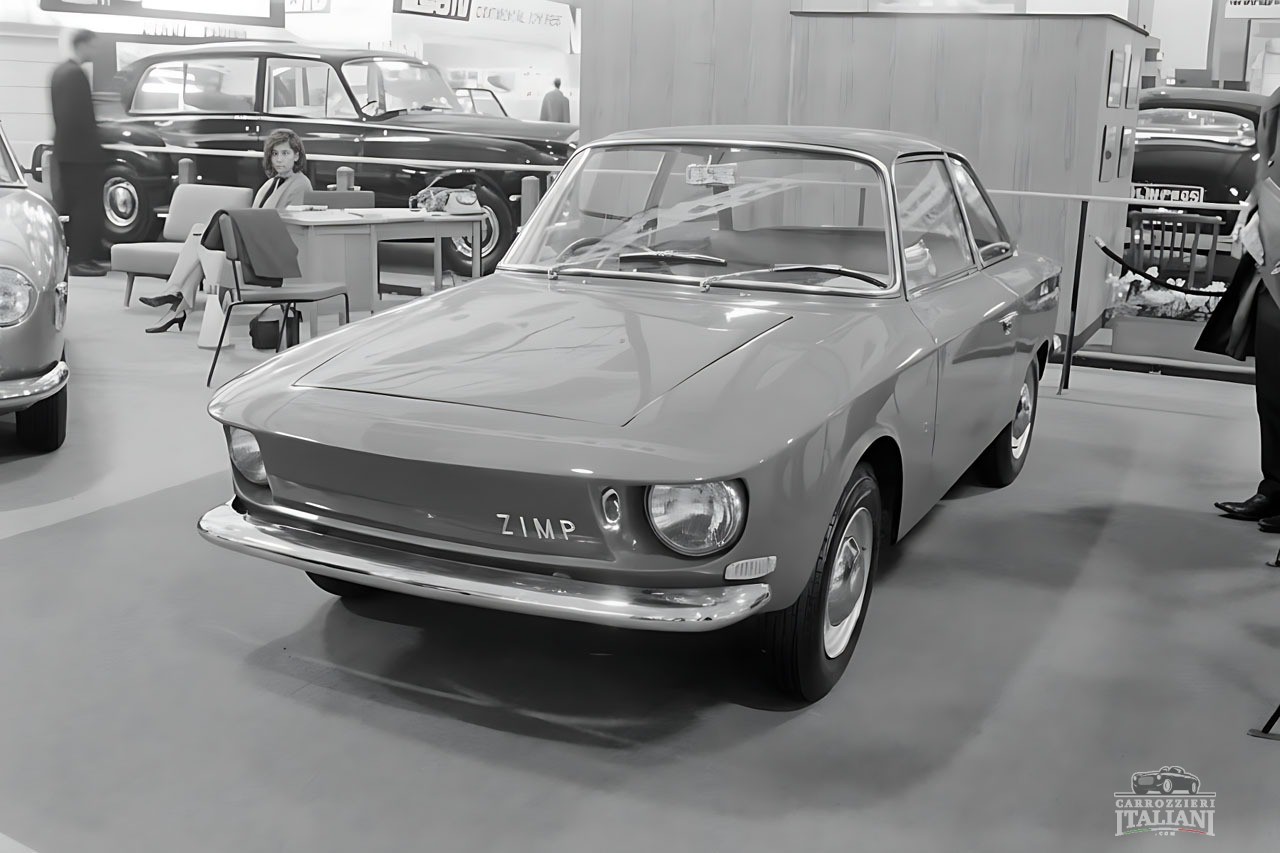
The reaction from both the press and the public was notably positive. In its show coverage, Motor Sport described the Zimp as a four-seat coupé with light-alloy body panels built over a space-frame structure and mounted on an almost standard Hillman Imp chassis with a braced platform and revised front-wheel camber. The message was clear: this was not a lightly restyled Imp, but a full Zagato interpretation of the platform. The magazine also positioned it as a high-end offering aimed at buyers who wanted something more distinctive than a conventional small coupé.
That early promise carried over into road-test coverage. In January 1965, Small Car drove one of the prototypes and came away impressed by how complete the package felt. The magazine praised the driving position, the supportive seats and the car’s reassuring handling, noting that it remained composed even when the road became less predictable. The Zimp’s shape also drew attention, not only for its elegance but for the sense that its lines had been shaped with real aerodynamic intent.
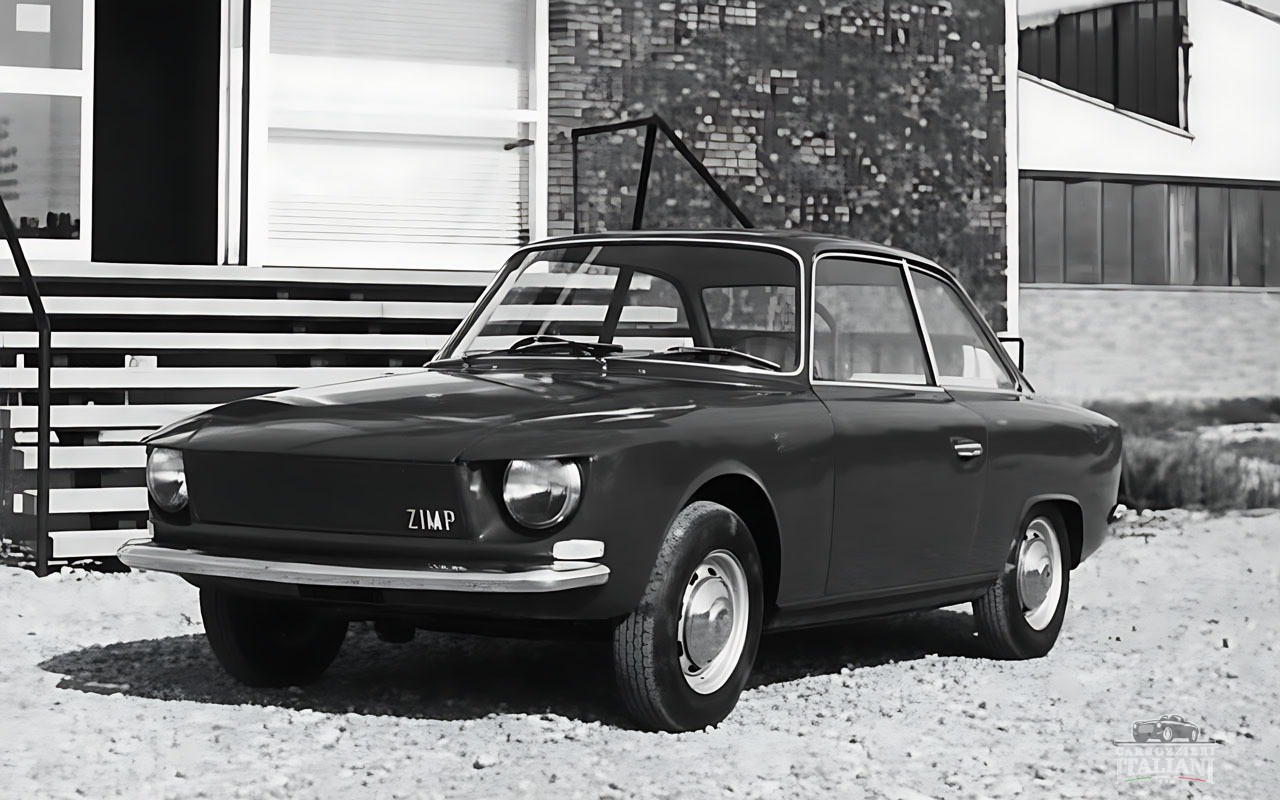
The conclusion was straightforward: this was a car for buyers willing to pay a premium for style, exclusivity and a more refined driving experience. Italian journalist Franco Lini was equally optimistic, writing that the Zimp was only the first of a planned series and suggesting that British Zagato intended to put further examples into production.
Taken together, the early response pointed to genuine commercial potential. The Zimp was never going to be a mass-market model, but it appeared to have found its audience: enthusiastic buyers drawn to the idea of compact British mechanicals wrapped in a bespoke Italian body. At launch, at least, it looked like a niche project with real momentum.
Engineering, Exit and Afterlife: The Full Zimp Story
Beneath its Zagato bodywork, the Zimp remained closely tied to the Hillman Imp Mk I. One prototype, chassis B411 054790, began life as an Imp Deluxe, and mechanically the formula changed very little. Power came from the familiar 875 cc Coventry Climax-derived FWMA all-aluminum engine, mounted transversely at the rear and paired with the Imp’s four-speed all-synchromesh manual gearbox. As on the production Imp, the engine was inclined at 45 degrees to lower the centre of gravity and improve packaging. Zagato left the engine internally untouched, although British Zagato Ltd had considered a modest increase in output, from 39 hp to around 46 hp, had limited production gone ahead.
The rest of the running gear was also standard Imp. Suspension, steering, brakes and transmission were all carried over, meaning the Zimp retained one of the small British car’s strongest qualities: its fully independent suspension and direct rack-and-pinion steering. Where the Zagato version made its gains was in weight, packaging and aerodynamics. Thanks to its hand-formed aluminum body, the Zimp weighed around 630 kg, roughly 50 kg less than a standard Imp. The footprint changed very little, but the roofline dropped dramatically to 1.23 metres, giving the car a much lower profile. Combined with cleaner airflow, those changes pushed top speed to around 87 mph, roughly 10 mph better than the standard car.
🔗 Read more: Lancia Thema Plus by Zagato: The One-Off That Refused to Be Forgotten
Zagato’s engineers did make a few detail revisions to suit the new body. Contemporary reports noted extra bracing in the floor structure and changes to front-wheel camber, most likely to maintain chassis balance and geometry with the altered body shape and lower mass. The front section also received a distinctive hinged nose panel for access, while preserving the Imp’s useful front luggage space. Construction followed typical coachbuilt practice of the era, with aluminum outer panels attached to a steel inner structure using rivets and seams. It was an effective solution for a low-volume project, though one that later created the usual risk of corrosion where dissimilar metals met.
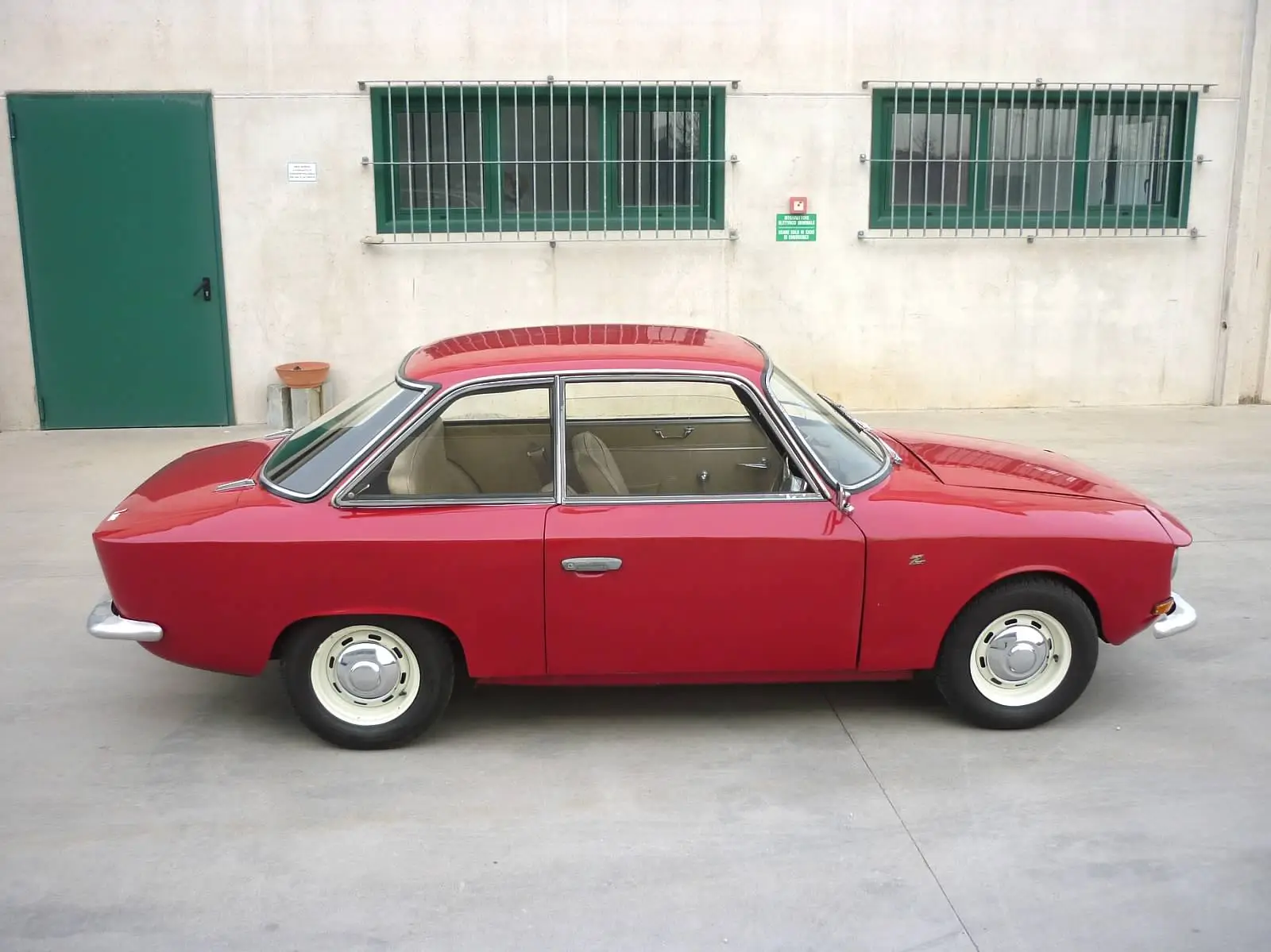
For a brief moment, the numbers suggested the Zimp could be more than a design exercise. It was lower, lighter, faster and far more visually distinctive than the car it was based on. That combination made it feel less like a rebodied city car and more like a serious compact GT.
What stopped it was not engineering, but timing. By the end of 1964, the Rootes Group was under severe financial strain, and Chrysler was moving in to secure control. When Chrysler took a controlling stake in December that year, projects with limited commercial upside came under immediate scrutiny. The Zimp quickly fell into that category. Building a Zagato-bodied Imp was estimated to cost at least £1,000 per car, compared with a standard Imp retail price of roughly £600. Even at a projected sale price of £1,200, it would have been an expensive proposition in a market not yet ready to pay that kind of money for a small bespoke coupé.
With finances tightening, the decision was straightforward: the Zimp would go no further. Production approval never arrived, tooling plans were dropped and the three completed prototypes were quietly set aside. The project’s prospects had already been weakened by the death of Lord Rootes, one of its key supporters, and Chrysler’s arrival effectively ended any remaining momentum. The Hillman Imp itself stayed in production until 1976, but the idea of an Italian-bodied derivative was over before it had properly begun.
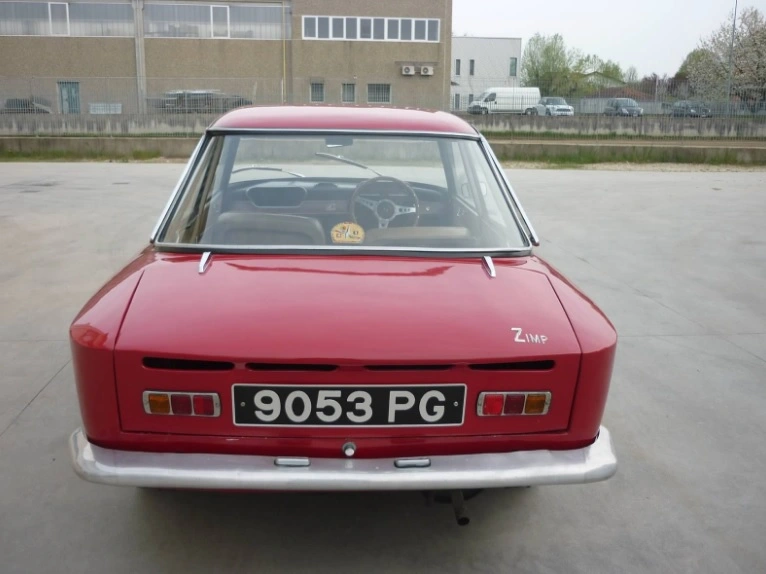
That could easily have been the end of the story. Instead, the Zimp survived in a way few canceled prototypes do. All three cars still exist, an extraordinary outcome for such a short-lived project. After cancellation, Zagato arranged for the completed cars to pass to people connected with their creation. Two remained in England, while the third stayed linked to Italy. Over the decades, each car passed through remarkably few hands, which helps explain why the trio survived at all.
That could easily have been the end of the story. Instead, the Zimp survived in a way few canceled prototypes do. All three cars still exist, an extraordinary outcome for such a short-lived project. After cancellation, Zagato arranged for the completed cars to pass to people connected with their creation. Two remained in England, while the third stayed linked to Italy. Over the decades, each car passed through remarkably few hands, which helps explain why the trio survived at all.

ABOUT THE AUTHOR
Andreas Scheidl
Italian classic car enthusiast with German roots. Renowned as a respected figure in the classic car community, he serves as a jury member at various international concours d'elegance, including the Classic Gala Schwetzingen and Mantova. As a content creator, Andreas passionately shares his profound knowledge and appreciation for vintage automobiles. His heart beats for cars designed by Giovanni Michelotti, showcasing his discerning taste and dedication to preserving the timeless elegance of automotive history.
More stories by Andreas Scheidl ↗CONTINUE READING
Posts You Might Like
A Central Driving Position, a Rear-Mounted V8. Was This Really a Lancia?
In 1948, visitors to the Turin Motor Show could see an unusual Lancia on the stand of Carrozzeria Ghia. It was a large two-door coupé with a two-litre V8 mounted behind the…
Read story
Fioravanti F100: The Ferrari He Was Allowed to Imagine
Enzo Ferrari’s centenary, Leonardo Fioravanti’s independent studio and a supercar that explored air brakes, steel wheels and a new way of driving—without ever wearing the Cavallino.
Read story
Michelotti Shellette: When the Fiat 850 Became a Yacht
The yacht designer, the Turin stylist and the tiny coachbuilt car that crossed between the quay, the royal holiday house and the auction room. Some automobiles were conceived for the open road,…
Read story
Maserati A6 1500: A New Road for the Trident
When the doors of the Geneva Motor Show opened in March 1947, Maserati was a name that required little introduction to anyone who followed motor racing. What it did not yet possess…
Read story
THE CONVERSATION
Comments 0
Share a memory, a period photograph or a documented detail about this story.