
1967: The Year Alfa Romeo Created the Ultimate Supercar — the 33 Stradale
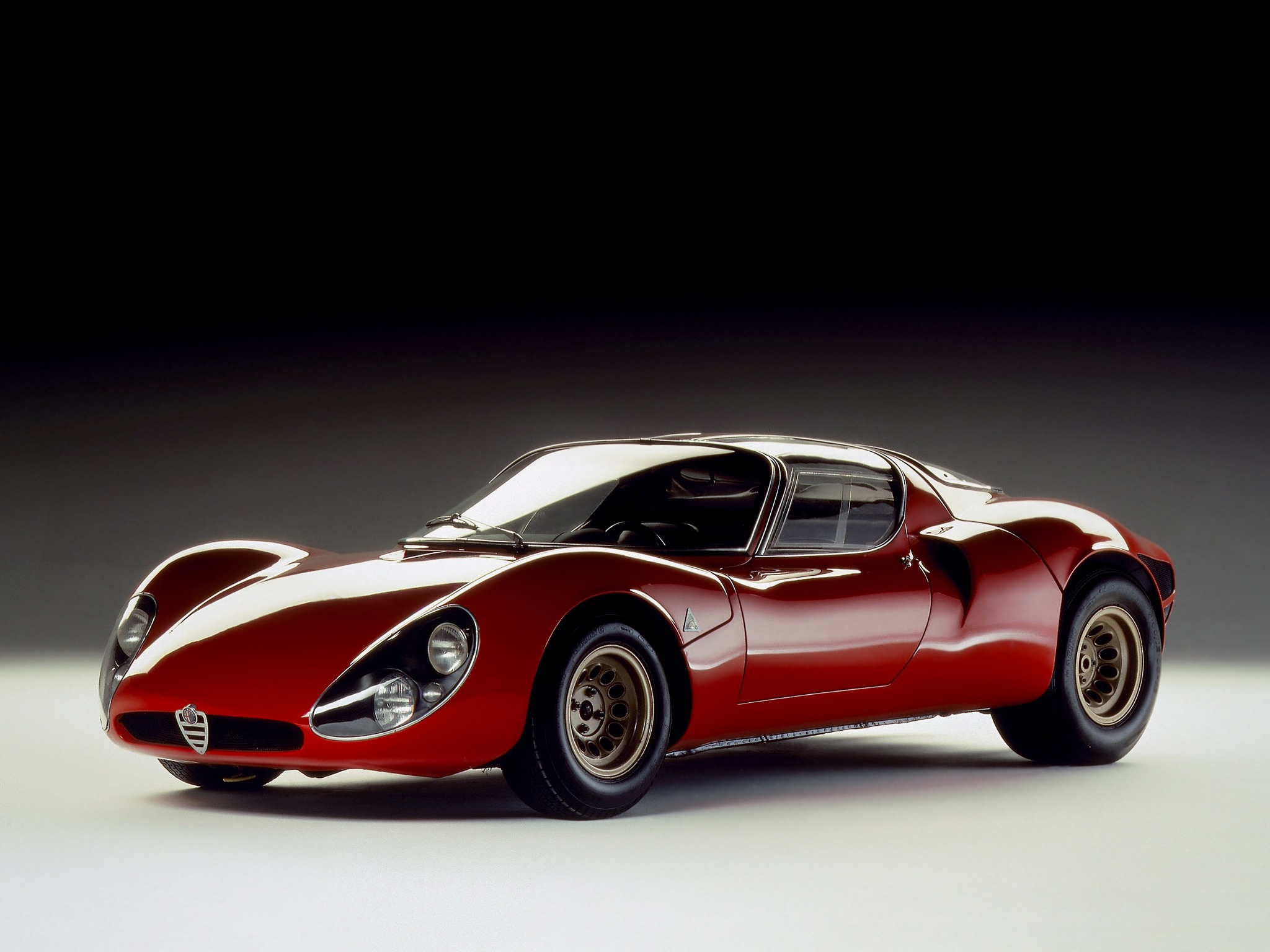
In late 1960s Italy – an era of economic resurgence and creative fervor – a rolling masterpiece was born. The Alfa Romeo 33 Stradale made its debut in 1967, capturing the spirit of its time with a blend of passion and innovation. On a golden September day at Monza, as engines roared for the Italian Grand Prix, a low-slung red coupé quietly stole the show. It was a vision of speed and beauty that left even battle-hardened racing fans breathless – a car that seemed more sculpture than machine. Under the Italian sun, its curvaceous aluminum body glinted like a jewel, and those who saw it knew they were witnessing something special: the birth of a legend.
This was no mere new model launch; it was the unveiling of a dream on wheels. The Alfa Romeo 33 Stradale was conceived to bring the magic of Alfa’s racing heritage to the street. Its very name, Stradale (meaning “road-going”), hinted at the dual identity it carried. Here was a street-legal racing car, a rare fusion of track ferocity and Italian design artistry. The story behind its creation is as captivating as the car itself – a tale of visionary engineers, a genius designer, and the creative energy of 1960s Italy. What follows is a journey into that story: the atmosphere, personalities, and passion that gave birth to the 33 Stradale.
The Visionaries and the Racing Dream
Every legend begins with a vision. In the mid-1960s, Alfa Romeo’s leadership yearned for a return to motorsport glory. Years had passed since Alfa’s domination of early Grand Prix racing, and the desire to compete burned anew. To spearhead this revival, Alfa turned to its newly acquired racing department – Autodelta – led by the brilliant engineer Carlo Chiti. Chiti was a formidable figure in Italian racing, known for his tenure at Ferrari and an unbridled passion for high-performance engineering. At Autodelta’s humble workshops in Settimo Milanese, on the outskirts of Milan, Chiti and his small team set out to build a new sports prototype that could take on the world. The project was code-named “Tipo 33,” and it would soon yield both a championship-caliber race car and an automotive work of art.
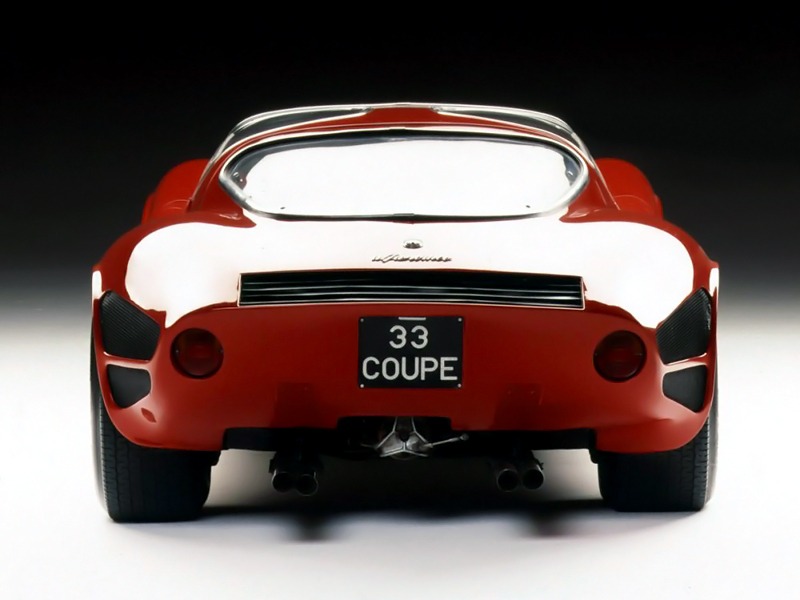
By 1967, the Tipo 33 race car had already begun to prove itself – scoring a debut victory in a hillclimb in Belgium and showing Alfa Romeo was back on the competition map. Buoyed by this success, Alfa’s racing dream expanded into something even more ambitious. The idea emerged to create a road-going version of the race car – not for homologation or mass production, but as a statement. This road car would showcase what Alfa Romeo’s racing technology and Italian craftsmanship could achieve together. It would be exclusive, daring, and utterly spectacular – a gift from the racetrack to the aficionados of the street. Carlo Chiti knew that to pull this off, he needed not just engineering excellence but design genius. For the body of the new 33 Stradale, he turned to a trusted collaborator and old friend: Franco Scaglione.
Franco Scaglione and the Art of Design
Franco Scaglione was no ordinary car designer; he was an artist in metal and an aerodynamic wizard. A Florentine aristocrat by birth, Scaglione had walked away from an aeronautical engineering career after World War II to pursue his passion in car design. By the 1950s and ’60s he had made a name for himself styling innovative, almost otherworldly automobiles – from the swooping Alfa BAT concept cars at Bertone to the sleek Giulietta Sprint Speciale. By 1967, working as a freelancer, Scaglione poured all of his creativity and technical know-how into the 33 Stradale project Alfa had entrusted to him. As Alfa’s official heritage would later note, “Scaglione put all his technical expertise and creative daring into the design of the 33 Stradale, resulting in a masterpiece where innovation in style blends with the quest for aerodynamics and functionality”.
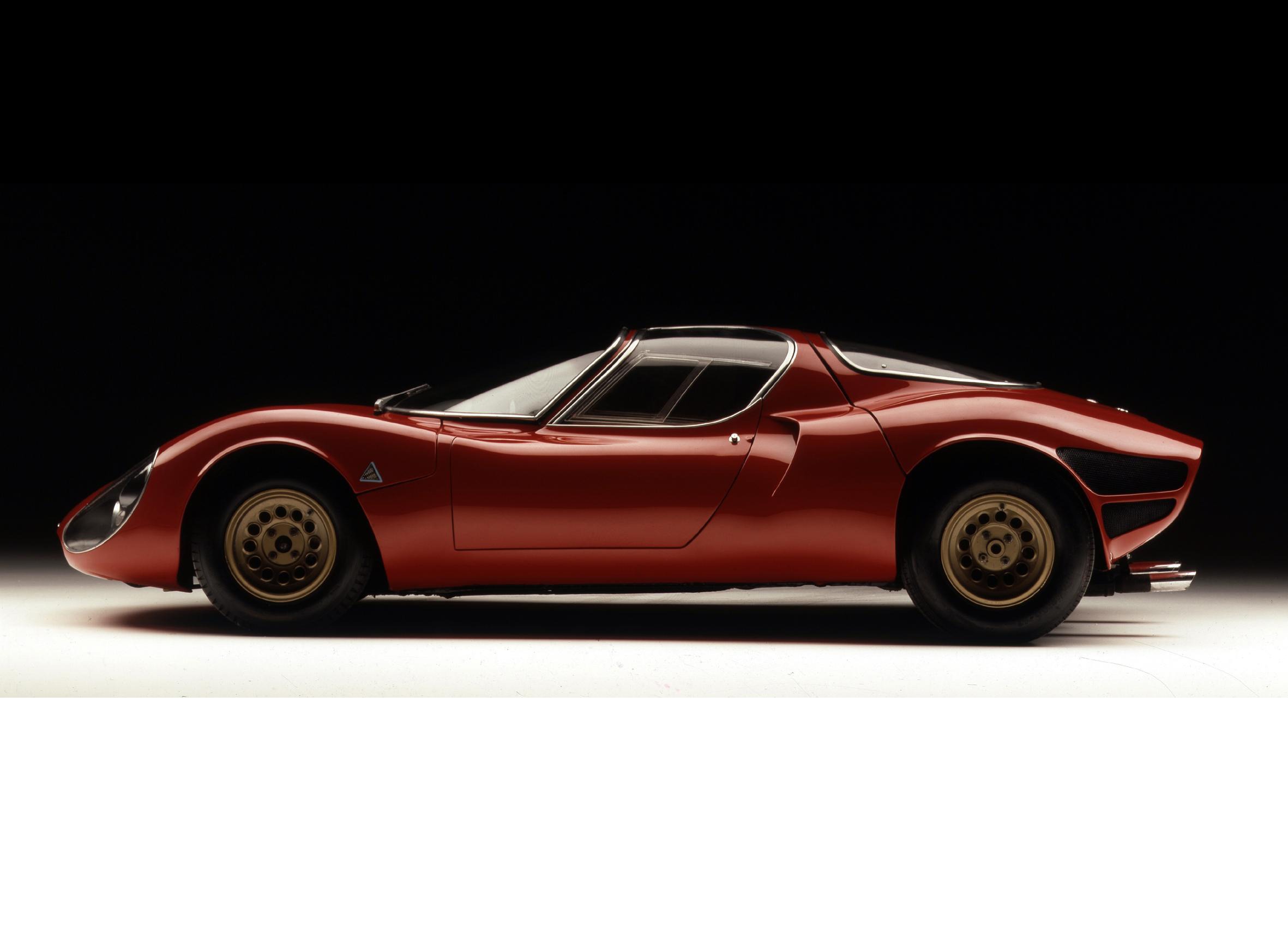
Working closely with Autodelta’s engineers, Scaglione sketched and sculpted a shape that was equal parts racing machine and rolling sculpture. The 33 Stradale’s lines were deeply organic – sinuous curves inspired by nature and the human form – yet every curve had a purpose. The car’s profile was low and teardrop-sleek, its mid-engine proportions laid out around a lightweight tubular chassis derived from the race car. Scaglione’s experience in aerodynamics showed in every detail: there were no frivolous ornaments, only the pure form dictated by air and speed. The front bore elliptical “eyes” for headlamps and a modest shield grille as a mouth, giving the car an almost human expression of determination. From the side, the wheel arches traced muscular shoulders and hips, as if the car were an athlete tensed to leap. This was automotive design as high art, a form that appealed not just to the eye but to the soul.
🔗 Read more: Franco Scaglione: The Maestro of Aerodynamics
One revolutionary feature underscored how bold Scaglione’s design was. The 33 Stradale stood under one meter tall, so low that conventional doors wouldn’t suffice. Instead, Scaglione engineered ingenious forward-and-upward lifting doors – what we now call butterfly doors – that cut into the roof and made entry possible despite the car’s petite height. It was the first time such doors appeared on a production road car, and they added to the Stradale’s drama. When opened, they resembled the wings of a butterfly about to take flight, inviting the driver into a cockpit that felt more aircraft than automobile. The expansive windshield wrapped up into the roof, and once those doors clasped down, the cabin felt like a fighter jet’s canopy. All around the driver, curved glass and thin pillars provided an immersive view of the road – or racetrack – ahead.
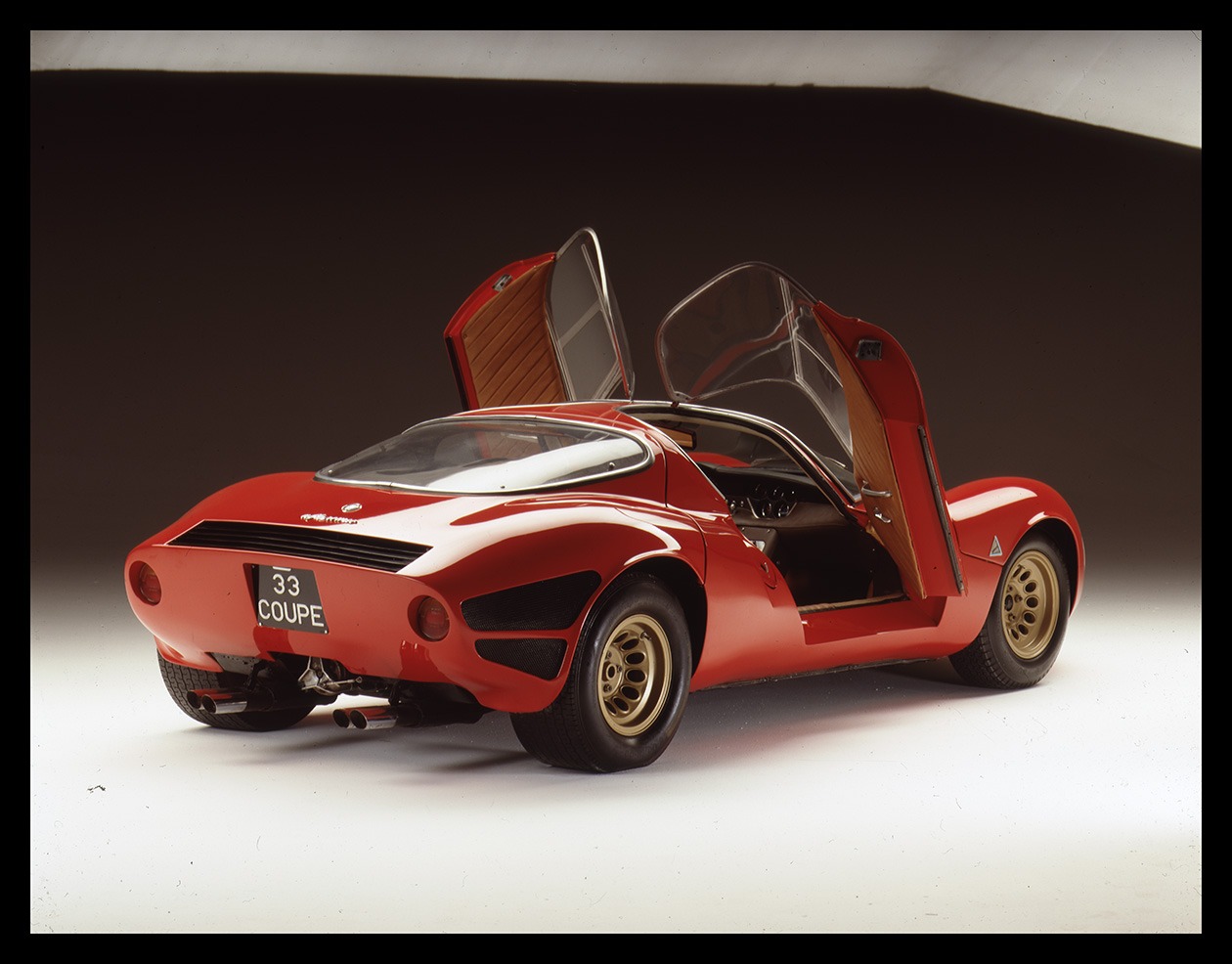
Under the skin, Autodelta ensured that the Stradale stayed true to its racing roots. The chassis was a shortened, slightly reinforced version of the Tipo 33 tubular frame, and behind the seats lay a small-displacement 2.0-liter V8 engine that was pure race-bred fury. With twin overhead cams, a flat-plane crankshaft and twin-plug ignition, the motor produced around 230 horsepower at dizzying revs. In a car weighing barely 700 kg, that was enough for explosive performance: 0–100 km/h in under six seconds and a top speed of about 260 km/h (160 mph) – stunning figures for the 1960s. Yet as impressive as the numbers were, it was the character of the machine that truly astonished. The engine’s note was a piercing symphony of mechanical noise, and every input – steering, braking, shifting – was calibrated for the racetrack. The 33 Stradale may have been road-legal, but it brooked no compromise. It had no exterior door locks, minimal ground clearance, and an interior spartan in its dedication to driving. This car existed to blur the line between racing and road, and it did so with a single-minded passion.
A Debut Amidst Applause and Awe
After months of secretive development, the Alfa Romeo 33 Stradale was ready to face the public. Its unveiling remains the stuff of motoring lore. Officially, the 33 Stradale premiered at the Turin Motor Show in November 1967, where it sat like a piece of artwork amid Italy’s finest automotive creations. But its true debut had come a few weeks earlier, on September 10, 1967, on the hallowed tarmac of Monza. That day, as Formula One heroes Jim Clark and Jack Brabham dueled in the Italian Grand Prix, Alfa Romeo quietly rolled out the prototype 33 Stradale before an audience of journalists and racing insiders. The reaction was immediate and passionate. Here was “one of the most beautiful sports cars ever”, declared voices in the press and paddock. Parked in the Monza pit lane, the diminutive red coupé drew crowds away from the racing action, everyone straining for a glimpse of Scaglione’s latest masterpiece.
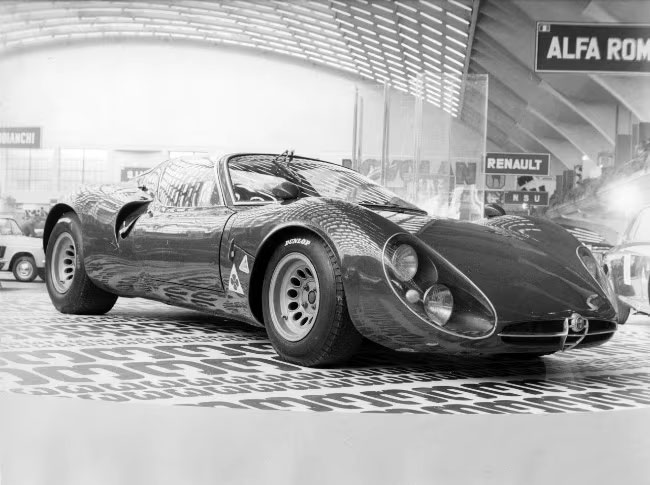
Enzo Ferrari himself was reportedly captivated by the 33 Stradale’s appearance (if not entirely pleased to see Alfa Romeo building a rival to his sports cars). The Italian media dubbed the Stradale “la belva alata” – the winged beast – for its dramatic doors and ferocious persona. Beyond aesthetics, there was plenty to talk about. At its launch, the Alfa Romeo 33 Stradale was the most expensive car in the world that one could buy, carrying a price tag of nearly 10 million lire, at a time when even the priciest Ferraris and Maseratis cost much less. Alfa was effectively selling a hand-made racing prototype for road use, and it priced it accordingly. Despite the cost (or perhaps because of it), owning a 33 Stradale immediately became the ultimate status symbol for the discerning enthusiast. It was said that those lucky enough to acquire one weren’t just buying a car – they were buying a piece of automotive art and a slice of Alfa Romeo’s racing soul.
🔗 Read more: This is how Michelotti influenced American fashion trends: The Lilly Ann Ferrari
Production of the 33 Stradale was, by design, extremely limited. Between 1967 and 1969, only a handful of these exotic machines were built. Official records are a bit hazy, but no more than 18 chassis were made in total, and of those only about a dozen were fully fitted with Scaglione’s gorgeous bodywork for customers. Each car was individually hand-assembled, the bodies crafted by the artisans at Carrozzeria Marazzi in Milan under Scaglione’s supervision. No two cars were exactly identical – subtle differences in details, a vent here or a wiper placement there, betrayed the fact that these were essentially coachbuilt cars in an age of emerging mass production. Securing one was a matter of being exceedingly wealthy, well-connected, or fervently devoted to Alfa Romeo (and usually all three). The buyers included racing drivers and industrialists, each of whom instantly knew they had made the investment of a lifetime – after all, how do you put a price on a dream? As Alfa’s heritage documentation later observed, those few buyers truly were investing in something timeless, as the cars would become “virtually priceless” in the decades that followed.
Legend and Legacy
Although the Alfa Romeo 33 Stradale’s production run was brief, its impact on automotive history was profound. This was a car that encapsulated a moment – the late 1960s zenith of Italian design and innovation – and it has resonated with enthusiasts ever since. The Stradale’s rarity and mystique only amplified its legend. With so few ever built, sighting one in the wild became an almost mythical event. Yet its influence was visible in the creative ripples it sent through the car design world. In the years immediately after the Stradale’s debut, a series of radical concept cars sprang up, all built on the agile chassis that Autodelta and Scaglione had created. It was as if the 33 Stradale’s spirit was too large for one form alone – it inspired others to dream further.
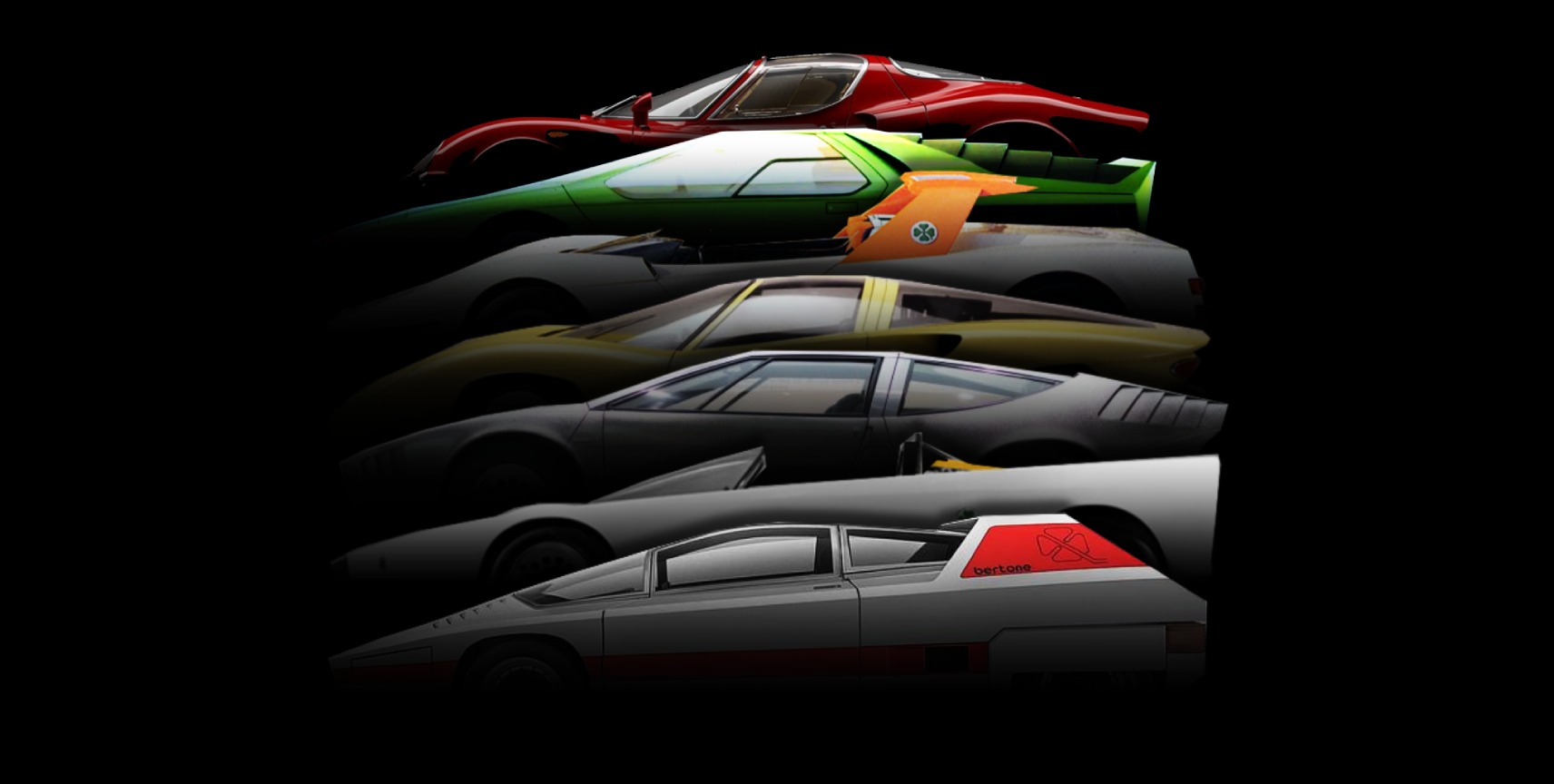
Design houses like Bertone, Pininfarina, and Italdesign obtained Stradale chassis and clothed them in wildly futuristic bodies, each a one-off “dream car” that pushed the boundaries of style. At the 1968 Paris show, Bertone unveiled the Carabo, a wedge-shaped, neon-green supercar concept penned by Marcello Gandini on a Stradale frame. Gone were the curves; in their place, razor-sharp angles and scissor doors signaled a new decade to come, making the Carabo the Stradale’s ultra-modern, non-identical twin. Around the same time, Pininfarina’s studios produced the sleek 33/2 Coupé Speciale and later the outrageous Cuneo concept, while Giugiaro (at Italdesign) created the aggressive Iguana. Even years later in 1976, Bertone returned with the spacey Navajo concept on the last Stradale chassis. Each of these prototypes shared the Stradale’s underlying engineering, yet each interpreted the idea of a supercar in a different way – from curvaceous to geometric, from organic to space-age. This succession of coachbuilt exotics, born from the bones of the 33 Stradale, only enhanced the original car’s aura. It proved that the Stradale was more than a car – it was a canvas for the most gifted automotive artists of Italy’s golden age.
🔗 Read more: The Alfa Romeo 33 Stradale based dream cars
Meanwhile, the standard 33 Stradale itself aged into an icon. Although it never spawned a direct successor in Alfa’s lineup, its DNA lived on in subtle ways. The Stradale’s high-revving V8 would be adapted (in detuned form) to power the 1970s Alfa Romeo Montreal grand tourer. The lessons learned in chassis design and lightweight construction fed back into Alfa’s racing efforts, which by the 1970s earned World Sportscar Championship titles – a goal that the original Tipo 33 program eventually achieved. And on the aesthetic front, the 33 Stradale became a benchmark for beauty. To this day, it is frequently cited in lists of the most beautiful cars ever made. Its combination of voluptuous form and compact, purposeful stance has rarely been equaled. For many, the 33 Stradale occupies that rarified realm where an automobile transcends its mechanics and becomes art.
Revival of a Dream in the 21st Century
The story of the Alfa Romeo 33 Stradale does not end in the 1960s. Such was the car’s enduring allure that it continued to inspire new creations half a century later, like echoes of a beautiful melody. In 2023, Alfa Romeo itself paid the ultimate tribute to its 1967 masterpiece by reviving the 33 Stradale name for a modern limited-edition supercar. Designed as a futuristically reimagined homage, the new Alfa Romeo 33 Stradale (2023) was crafted in a series of just 33 bespoke units – each already spoken for by the marque’s most dedicated connoisseurs. From its inception, this project was about capturing the soul of the original in a contemporary form. Unveiled to the public on August 30, 2023 at the Alfa Romeo Museum in Arese (the very site where Scaglione’s design had been approved decades prior), the new 33 Stradale then made a poignant appearance at Monza the following day – exactly 56 years after the original’s debut on that same track. The modern car’s design is unmistakably influenced by Scaglione’s classic: the sensuous curves, the harmonious proportions, and the distinctive forward-opening doors all echo the 1967 legend, albeit sharpened and honed for the 21st century. As Alfa Romeo put it, the new model “pays homage to its 1967 forerunner – the car considered by many to be one of the most beautiful ever – and provides the most exciting driving experience for a very small circle of enthusiasts”. In other words, the romance and exclusivity of the Stradale live on, reinterpreted for a new era of technology.
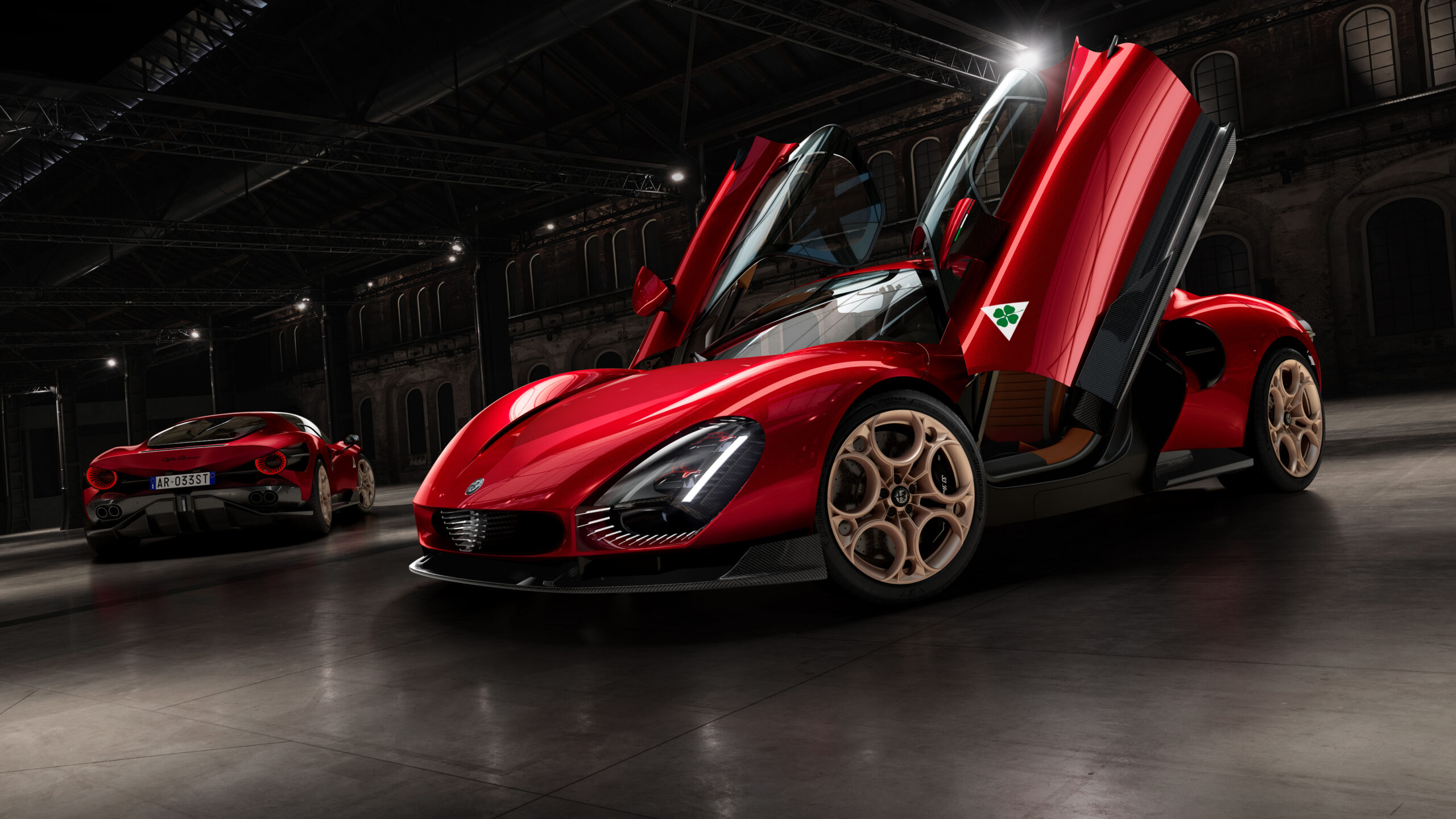
Befitting a modern supercar, the 2023 Stradale is a technical tour de force – available with a twin-turbo V6 or even an electric powertrain – yet it is also hand-built with artisanal care. Alfa Romeo partnered with the famed coachbuilder Carrozzeria Touring Superleggera to ensure that each of the 33 new Stradales is finished to the highest standards of craftsmanship, just as the originals were. Carbon-fiber, aluminum, and modern engineering might form the backbone, but the spirit is very much old-school Italian fuoriserie. Each customer collaborates in a bespoke commissioning process akin to a tailor-made suit or a coachbuilt car of the 1960s, underscoring that the 33 Stradale’s legacy of exclusivity and creativity remains intact. And as if to underline the cosmic alignment of this revival, the first new 33 Stradale was delivered to its owner on December 17, 2024 – 58 years to the day after Franco Scaglione received the original design commission in 1966. History, it seems, has come full circle in the most poetic way.
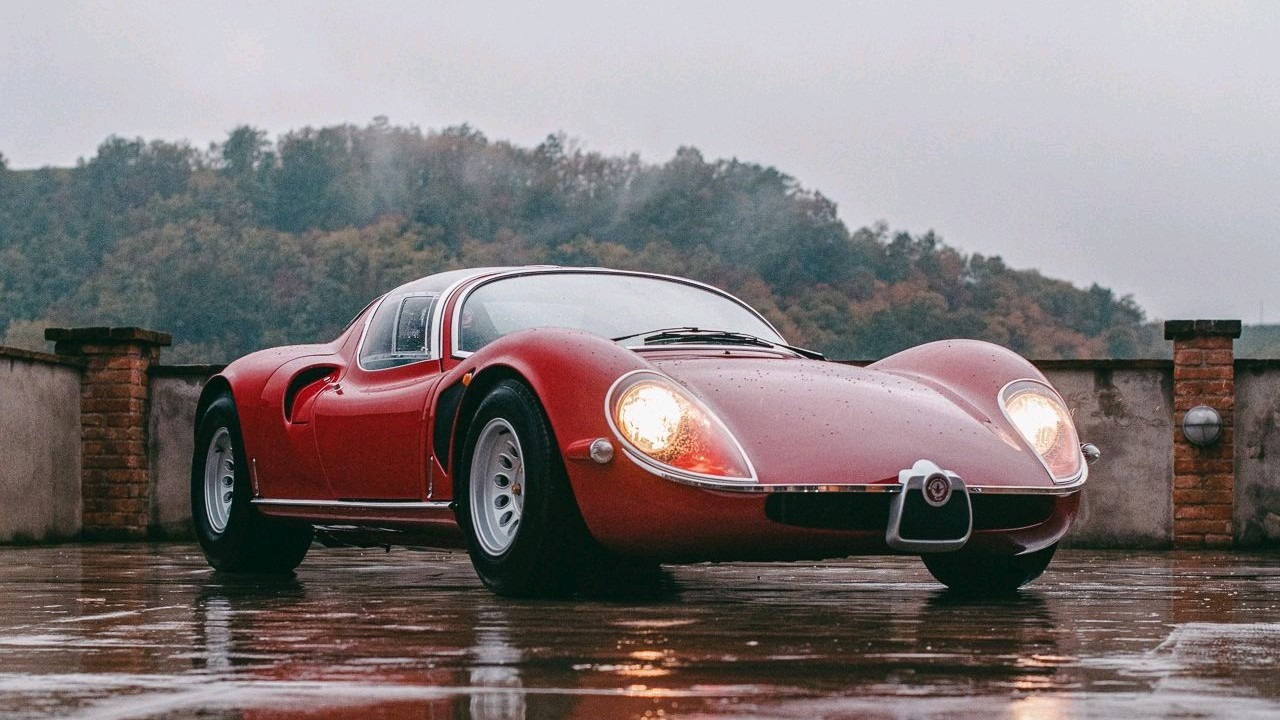
The legend has also been kept alive by passionate artisans outside of Alfa Romeo. In 2022, the boutique automotive firm Manifattura Automobili Torino (M.A.T.) unveiled a spectacular one-off tribute to the original Stradale – the first creation in their new “Jewelry” line of bespoke cars. This project, nicknamed the 33 Stradale ‘Jewel’, was a modern recreation faithful to the spirit of 1967. Painstakingly built with hand-shaped aluminum bodywork and an obsessive attention to detail, the MAT 33 Stradale revives the old-school carrozzeria tradition in the 21st century. The artisans at M.A.T. sought to “capture the soul of the original while infusing it with contemporary technology and performance,” and by all accounts they succeeded. The result is a car that looks as if the original dream never died, blending historical reverence with modern capability. It is a singular creation, born of passion for an icon, and a testament to how the 33 Stradale’s mystique still enchants designers and enthusiasts around the world.
Epilogue
From the fevered creativity of the 1960s to the bespoke tributes of today, the Alfa Romeo 33 Stradale’s story is a tapestry of passion, innovation, and undying romance. Back in 1967, Franco Scaglione, Carlo Chiti, and the team at Autodelta set out to create something extraordinary – and in doing so, they forged more than a car; they forged a legend. The 33 Stradale remains a touchstone of automotive artistry, a rare alchemy of speed and beauty that continues to inspire. Its scarlet presence on that Monza afternoon long ago has echoed through the years in every enthusiast’s heartbeat and every designer’s sketch. Even now, as Alfa Romeo revives the name for a new generation and craftsmen conjure replicas by hand, the spirit of the original 33 Stradale shines undimmed – a reminder that some dreams are so powerful, they never truly end.
Photo courtesy of Museo Alfa Romeo.

ABOUT THE AUTHOR
Andreas Scheidl
Italian classic car enthusiast with German roots. Renowned as a respected figure in the classic car community, he serves as a jury member at various international concours d'elegance, including the Classic Gala Schwetzingen and Mantova. As a content creator, Andreas passionately shares his profound knowledge and appreciation for vintage automobiles. His heart beats for cars designed by Giovanni Michelotti, showcasing his discerning taste and dedication to preserving the timeless elegance of automotive history.
More stories by Andreas Scheidl ↗CONTINUE READING
Posts You Might Like
A Central Driving Position, a Rear-Mounted V8. Was This Really a Lancia?
In 1948, visitors to the Turin Motor Show could see an unusual Lancia on the stand of Carrozzeria Ghia. It was a large two-door coupé with a two-litre V8 mounted behind the…
Read story
Fioravanti F100: The Ferrari He Was Allowed to Imagine
Enzo Ferrari’s centenary, Leonardo Fioravanti’s independent studio and a supercar that explored air brakes, steel wheels and a new way of driving—without ever wearing the Cavallino.
Read story
Michelotti Shellette: When the Fiat 850 Became a Yacht
The yacht designer, the Turin stylist and the tiny coachbuilt car that crossed between the quay, the royal holiday house and the auction room. Some automobiles were conceived for the open road,…
Read story
Maserati A6 1500: A New Road for the Trident
When the doors of the Geneva Motor Show opened in March 1947, Maserati was a name that required little introduction to anyone who followed motor racing. What it did not yet possess…
Read story
THE CONVERSATION
Comments 0
Share a memory, a period photograph or a documented detail about this story.