
The Partnership between Peugeot & Pininfarina
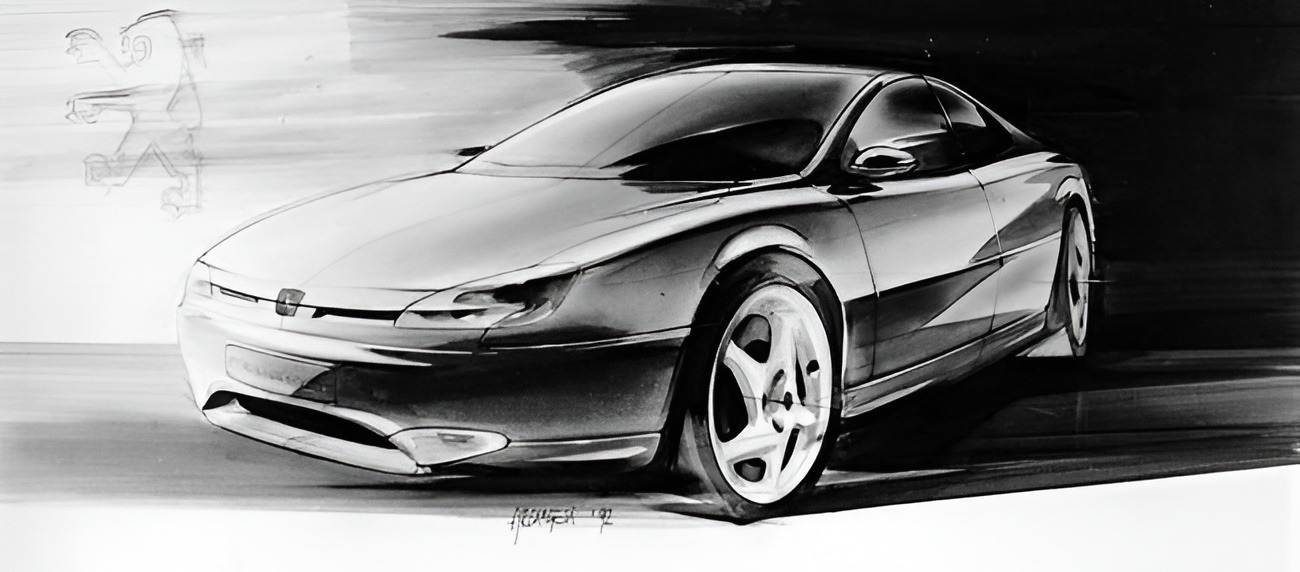
Few partnerships in automotive history have endured with the grace and creativity of Peugeot and Pininfarina. Their story begins in the early 1950s, when Europe was rebuilding and carmakers were searching for new identities. Peugeot, the solid French marque known for its engineering integrity, wanted something more — a touch of Italian elegance to lift its image beyond the utilitarian. At the time, Peugeot’s in-house styling under Henri Thomas produced cars that were competent but conservative. So, in a moment of vision and perhaps quiet daring, Jean-Pierre Peugeot looked south to Turin. He reached out to Battista “Pinin” Farina, whose design house had already made its name by blending classical beauty with technical finesse. It was an unlikely alliance — French restraint meeting Italian flair — yet it proved inspired. Together, they created a new design language for Peugeot: refined, balanced, and unmistakably European. What began as a single collaboration would grow into a partnership that lasted more than fifty years, yielding some of the most admired cars ever to wear the lion badge.
The roots of the Peugeot–Pininfarina partnership actually stretch back further than most realize. Battista Farina — who would later merge his nickname into the famous surname Pininfarina—had collaborated (at Stabilimenti Farina) with Peugeot as early as the late 1920s. In his memoirs, he recalls crafting bespoke bodies for Peugeot’s tiny Quadrilette models around 1927–28, even signing an agreement with Robert Peugeot, then head of the company. Those first efforts were modest—Italian coachwork draped over sturdy French chassis—but they planted a seed of mutual respect. So when, in 1951, Peugeot began searching for a design partner to help shape a new mass-market car, it was only natural that Farina’s phone rang once more. What followed was often described as a meeting of opposites: the pragmatic French lion and the imaginative Italian maestro, united in a partnership that would redefine elegance on the road.
When Pininfarina Gave Peugeot Its Identity
Peugeot’s next chapter took shape with the 403, a mid-sized family saloon conceived to replace the long-serving 203. From the very beginning, Pininfarina understood what was being asked: to create a design that exuded quiet confidence — beautiful, but never showy. “Peugeot excluded any boldness, but aspired to a classic style which was not anachronistic,” Battista Pininfarina later reflected. The brief was clear: modernity without fashion, elegance without excess. Under Pininfarina’s direction, the 203’s rounded form was subtly reinterpreted. The lines became wider and more upright, the surfaces cleaner, the proportions calmer — Italian sophistication meeting French solidity. By 1953, the first prototypes were complete, and when the Peugeot 403 made its public debut beneath the Eiffel Tower in April 1955, the reaction was immediate. Here was a French saloon with the grace of an Italian grand tourer. Its crisp ponton body, generous glasshouse, and measured use of chrome marked a turning point for Peugeot — a confident stride from postwar conservatism into the modern age.
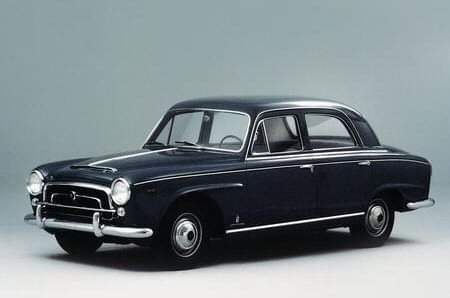
The market’s verdict was resounding. The Peugeot 403 became a runaway success, with more than 1.2 million units sold between 1955 and 1966 — an extraordinary figure for a French car of its era. It transformed Peugeot from a respected domestic brand into a truly global player. Buyers were captivated by its balance of virtues: solid engineering, unflappable reliability, and a quiet elegance that set it apart from its rivals. The 403 was, in many ways, Peugeot’s first world car — exported across continents and even assembled in places as far-flung as Australia and Argentina. In America, it found an unexpected cult following as a refined European import, and decades later, a 403 Cabriolet earned pop-culture immortality as the rumpled detective Columbo’s faithful companion — a fitting reminder that great design never really goes out of style.
Behind the scenes, the partnership was already proving inspired. A long-circulating rumor suggests that Pininfarina’s original proposal for the 403 had actually begun life as a design pitch for Fiat — one that Turin never used. Whether fact or folklore, the story highlights how Battista Farina’s design language could transcend borders and brands. What he created for Peugeot was unmistakably Italian in poise, yet deeply Peugeot in spirit. The 403’s upright grille and proud lion bonnet mascot lent it a touch of ceremony, balanced by clean, disciplined lines that spoke of modernity and restraint. Pininfarina had, in essence, given Peugeot a new face — one that was stately but never stiff, elegant yet approachable. In doing so, Peugeot became the first French automaker to entrust the styling of its flagship model to an Italian studio — a daring move in an era when rivals like Renault and Citroën still kept design strictly in-house. It was a bold act of creative faith, and it paid off handsomely.
🔗 Read more: Pininfarina Through the Ages: The Complete History
The success of the 403 cemented the partnership. As Battista Pininfarina later remarked, by the mid-1950s “with Peugeot, we now form a proven tandem.” Encouraged by their shared triumph, Peugeot expanded Pininfarina’s role to new projects. In 1956, the collaboration bore its most glamorous fruit: the 403 Cabriolet. Styled by Pininfarina and built in Turin, it translated the saloon’s quiet dignity into open-air elegance. With fewer than 2,600 examples produced, it remains one of Peugeot’s most coveted classics. It was during the creation of these 403 derivatives that the mechanics of collaboration between Sochaux and Turin were truly defined. For limited-production models, Peugeot would rely not only on Pininfarina’s design expertise but also on its craftsmanship in manufacturing. The Italian coachbuilder’s facilities could manage the intricate, hand-finished work that Peugeot’s high-volume lines could not. This approach — Italian artistry married to French precision — became the blueprint for many of their future successes. It was more than a partnership; it was a creative symbiosis that bridged two very different automotive cultures.
Expanding the Family: The 404 and the Pininfarina Touch
After the 403’s triumph, Peugeot wasted no time in extending its Italian alliance. As the 1960s dawned, the partnership with Pininfarina entered a new phase with the launch of the Peugeot 404 — a car that would elevate the marque’s design language and global reputation. Unveiled in 1960, the 404 marked a decisive stylistic evolution. Where the 403 still bore traces of 1950s American influence — a hint of chrome, a touch of roundness — the 404 was sharply modern. Its taut, architectural lines, subtle tailfins and balanced proportions reflected Pininfarina’s mature, international style. The design shared a family resemblance with several of the Turin studio’s contemporaries, including the BMC Austin Cambridge and Fiat 1800, yet the 404 was distinctly Peugeot: cleaner, leaner, and imbued with a quiet authority. With its forward-leaning stance, expansive glasshouse and understated detailing, it looked lighter and more confident than its predecessor. Period journalists called it “the French Mercedes” — a nod to its combination of sturdy engineering and cultivated elegance. For Peugeot, it was more than a successful model; it was proof that French pragmatism and Italian flair could produce design that transcended national style.
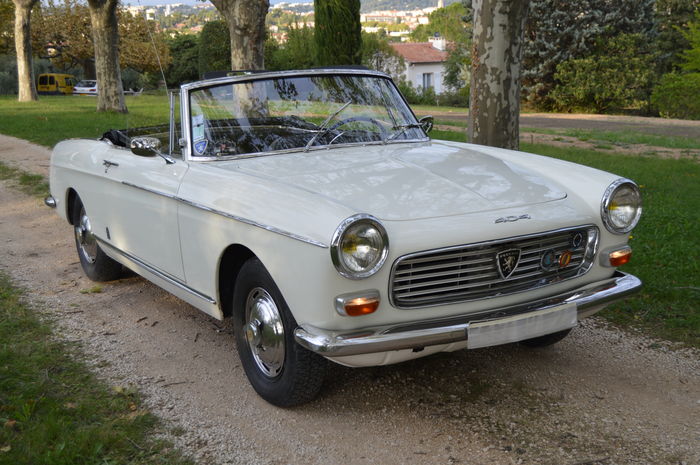
The partnership deepened on an industrial level with the 404. This time, Pininfarina wasn’t merely responsible for the car’s graceful shape — it became a key production partner as well. In 1962, Peugeot introduced the 404 Cabriolet, followed a year later by the elegant 404 Coupé — two exclusive derivatives designed to bring a touch of prestige to the range. Both were built by Pininfarina in Turin, using an ingenious cross-border production process that exemplified Franco-Italian cooperation at its best. From Peugeot’s Sochaux plant, bare 404 floorpans were shipped by rail to Italy. There, Pininfarina’s craftsmen hand-formed and painted the bespoke bodies, fitted the interiors, and prepared the cars for final completion. The semi-finished vehicles were then sent back to France for installation of engines and running gear — an elaborate logistical ballet that worked with remarkable precision. The result was a pair of cars unlike anything else in Peugeot’s catalogue. These Italian-built Peugeots offered a level of finish and refinement previously unseen from the marque. They were expensive — the 404 Cabriolet, for instance, cost nearly as much as a small Mercedes in 1966 — but they sold respectably, with around 17,000 units produced across both variants. Today, collectors regard the 404 Coupé and Cabriolet as some of Peugeot’s most desirable classics. The Coupé, in particular, is admired for its poise and solidity — its chassis, reinforced with lessons from the Cabriolet, was even stiffer than the sedan’s. They stand as lasting symbols of a moment when Peugeot and Pininfarina operated in perfect creative and industrial harmony.
If the 403 established the partnership, the 404 expanded its ambition. By the mid-1960s, Peugeot’s confidence in Pininfarina was such that nearly every new model carried the Italian studio’s signature. In 1965, the collaboration produced another milestone: the Peugeot 204, Peugeot’s first front-wheel-drive car and its bold entry into the compact class. Styled once again by Pininfarina, the 204 abandoned the 404’s formality and faint American cues in favour of a gentler, more contemporary simplicity. It had a friendly elegance — approachable yet refined — that resonated perfectly with the decade’s spirit. The formula worked: by the late 1960s, the 204 had become France’s best-selling car. Pininfarina also shaped the 204’s Coupé and Cabriolet variants, introduced a few years later — charming, petite convertibles that brought Italian flair to everyday motoring. By the end of the decade, Peugeot’s range presented a clear design lineage: a family of cars united by Pininfarina’s touch. From the practical 204 to the stately 404, each model expressed its own personality while sharing the same poised understatement. The collaboration had matured from a styling exercise into a fully realized design philosophy — one that would reach its zenith with the Peugeot 504 in 1968.
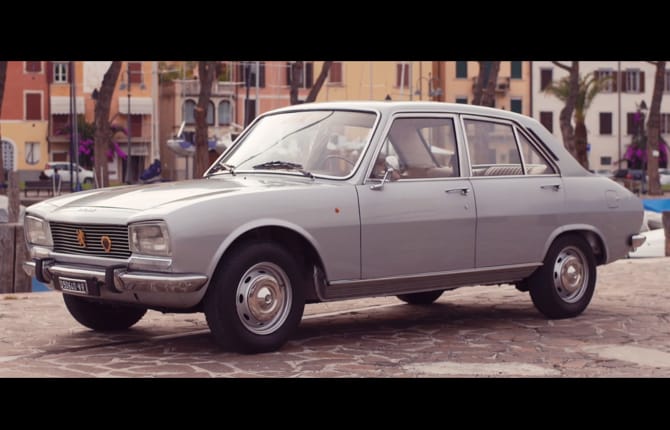
The Peugeot 504 was a landmark in every sense. Not only did it earn the 1969 European Car of the Year award, but it also marked the full maturity of the Peugeot–Pininfarina collaboration. Styled under Aldo Brovarone at Pininfarina, the 504 managed a rare balance: strength with sophistication. Its distinctive trapezoidal headlamps, angled subtly inward, gave the car a purposeful, almost feline expression, while its smooth, uncluttered profile conveyed quiet confidence rather than ostentation. Peugeot themselves embraced the Italian influence, promoting the car with the slogan “Italian style, French soul.” Beneath that elegant skin lay classic Peugeot virtues — a supple suspension and an indestructible drivetrain that earned the 504 legendary status on African roads and rally stages alike. This fusion of style and substance resonated worldwide. The 504’s design felt timeless, adaptable to saloon, coupé, cabriolet, and estate forms, and its mechanical toughness ensured production continued for decades across multiple continents. In many ways, the 504 became the definitive expression of the Peugeot–Pininfarina alliance: elegant, enduring, and effortlessly cosmopolitan.
🔗 Read more: The Timeless Elegance of the Peugeot 504 Coupe and Cabriolet
Following tradition, Pininfarina also created the 504 Coupé and Cabriolet, unveiled in 1969 — two cars often ranked among the most beautiful ever to wear the Peugeot badge. Designed by Franco Martinengo at Pininfarina, these elegant two-doors shared little with the sedan beyond their mechanical core. The 504 Coupé, in particular, stood out as a masterpiece of proportion: its pillarless profile, long bonnet, and delicately upturned tail gave it the air of an Italian grand tourer with a French accent. At the rear, both the coupé and cabriolet featured a distinctive kinked trunk line — a subtle, sculpted flourish that hinted at a spoiler lip and added visual balance. These were exclusive cars — fewer than 23,000 coupés and 8,000 cabriolets were produced over a 14-year run — yet their influence on Peugeot’s image was immense. Period road tests praised their blend of Gallic comfort and Italian poise, noting how effortlessly they combined elegance with everyday usability. Half a century later, the 504 Cabriolet still ranks among the most admired French designs of all time — a testament to Pininfarina’s gift for creating forms that transcend fashion. It’s no coincidence that modern Peugeot concept cars continue to echo its lines; the 504 remains the benchmark of Peugeot beauty, the moment when French sensibility and Italian artistry reached perfect equilibrium.
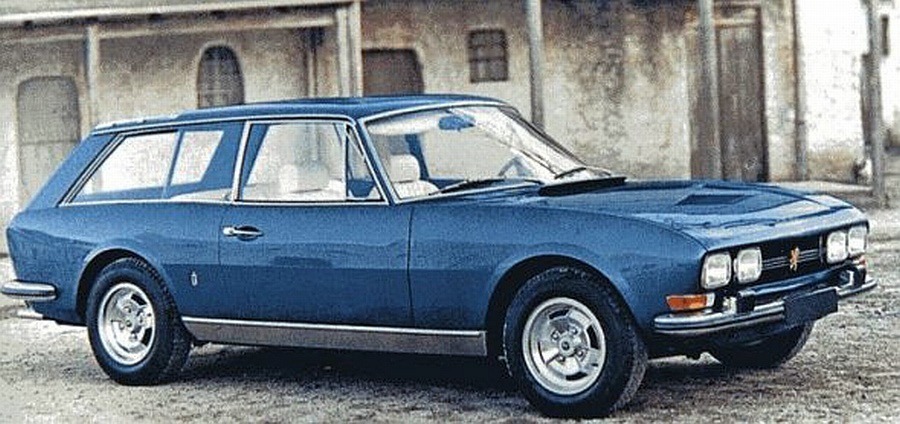
A fascinating footnote from this era was the 504 “Break Riviera”, a one-off prototype unveiled by Pininfarina in 1971. Starting with a 504 Coupé, the coachbuilder transformed it into a luxurious two-door shooting brake, complete with an extended roofline and generous cargo space. The result was both elegant and practical — an early vision of the grand touring estate, decades before such a genre became fashionable. Though Peugeot never approved it for production, the Break Riviera captured Pininfarina’s flair for reimagining existing platforms with imagination and style. It hinted at a broader creative role for the Italian studio — not merely as a stylist executing Peugeot’s ideas, but as a source of new concepts and inspiration for the brand’s future.
By the close of the 1960s, the Peugeot–Pininfarina partnership had reached full maturity. Peugeot’s models were now praised as much for their elegance as for their engineering — a transformation owed in large part to the Italian studio’s influence. The collaboration had grown beyond styling alone, extending into manufacturing and establishing a rare harmony between creative design and industrial precision. For Pininfarina, Peugeot had become a cornerstone client, standing proudly alongside names like Ferrari, and proving that true design excellence could elevate even the most practical automobiles. As Peugeot prepared to enter the 1970s, the partnership stood at its strongest — poised to face both new opportunities and the inevitable tests of changing times.
New Directions in the 1970s: Innovation and Experimentation
The 1970s ushered in a new set of challenges for the automotive world — tightening emissions standards, growing safety regulations, and the turbulence of the oil crises. Yet through it all, the alliance between Peugeot and Pininfarina endured, evolving with the times rather than resisting them. For Peugeot, the decade opened with a broadening of horizons — moving both upmarket and downmarket to capture new audiences. And, true to form, Pininfarina’s hand could be seen at both ends of the spectrum, ensuring that even in an era of constraint, Peugeot’s cars retained a quiet elegance and clarity of line.
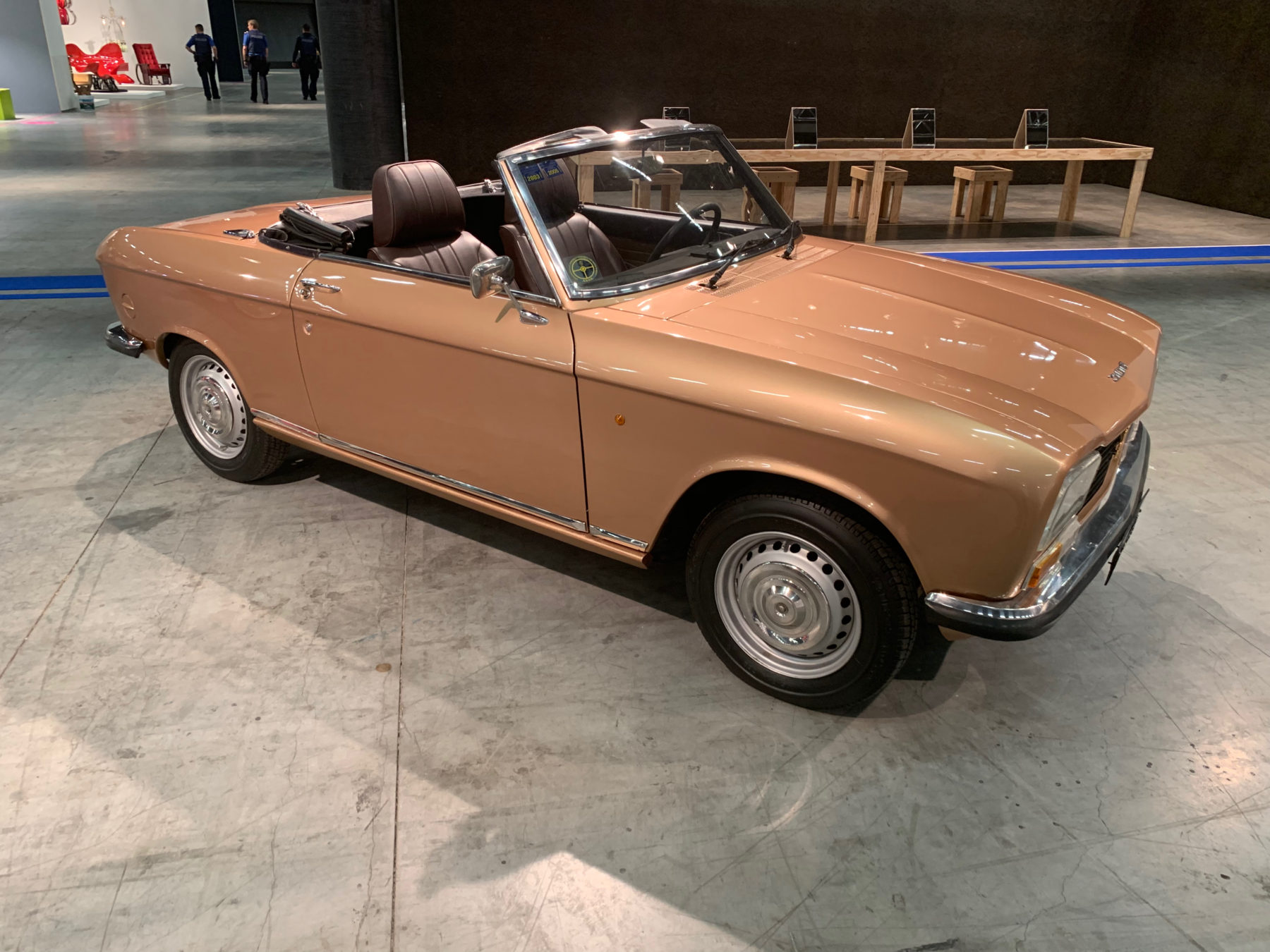
In 1970, Peugeot introduced the 304, a compact evolution of the earlier 204 designed to keep pace with an increasingly competitive market. While the 304 sedan was largely an in-house facelift, its Cabriolet — and the short-lived Coupé variant — were pure Pininfarina creations. Launched the same year, these small open-tops carried forward the charm of the 204 Cabriolet but with crisper, more contemporary styling. Built in limited numbers, they captured Pininfarina’s gift for miniaturizing elegance — turning a modest front-wheel-drive platform into something that looked and felt genuinely aspirational. With their snug two-plus-two cabins and light, airy proportions, the 204 and 304 Cabriolets had the spirit of Italian roadsters spoken with a French accent. Though never produced in large volumes, they brought a welcome touch of glamour to Peugeot’s early-’70s lineup and today stand as rare, collectible reminders of a time when even small Peugeots carried an unmistakably Pininfarina grace.
At the opposite end of the range, Peugeot made a decisive move into the executive luxury class with the launch of the 604 in 1975. Once again, Pininfarina’s influence was unmistakable. Tasked with creating a French rival to Mercedes-Benz, the Italian studio delivered a sedan of quiet authority and refined proportions. Unveiled at the Geneva Motor Show in March 1975, the 604 immediately drew praise for its formal yet graceful styling. Its design was crisp and assured: a pure three-box silhouette with a wide stance, generous glasshouse, and minimal ornamentation. The effect was dignified rather than flashy — a car that projected confidence without shouting. As Denmark’s Bilrevyen magazine observed, the 604 “oozed calm and understated elegance” — precisely the kind of transnational sophistication that had become Pininfarina’s hallmark. Rumor even had it that elements of the 604’s form echoed a Jaguar prototype once sketched at Pininfarina — a reminder of how freely the Turin design house cross-pollinated ideas across borders. Whatever the origins, the 604 proudly wore the coachbuilder’s “F” badges on its front wings, and Peugeot made sure to highlight this in its marketing: Italian design had become a selling point for French luxury. Though the 604’s commercial story was mixed — its engineering never quite matched the elegance of its styling — it remains a classic example of 1970s Pininfarina minimalism: clean, confident, and enduringly refined.
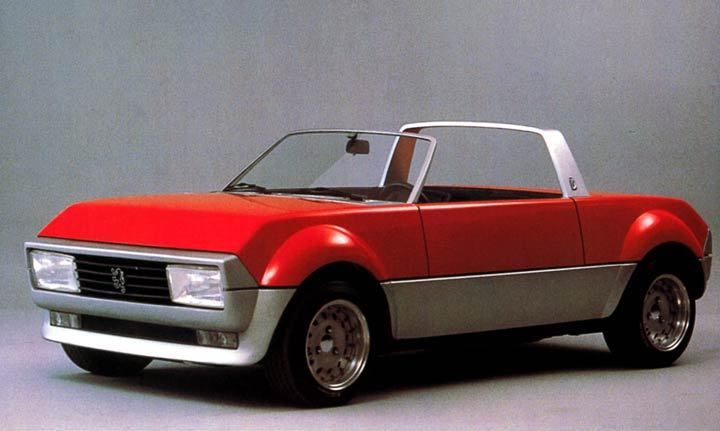
Between these bookends — the compact 304 and the stately 604 — Pininfarina’s hand could be found in almost every Peugeot of the 1970s. By this stage, the collaboration had become deeply woven into Peugeot’s design DNA. When Peugeot developed the 104, its new entry-level hatchback of 1972, Pininfarina lent its eye to refining the car’s proportions and surface treatment. And the partnership didn’t stop there. A few years later, the Turin studio used the humble 104 as the basis for a flight of imagination: the Peugeot “Peugette”, a cheeky two-seat roadster concept revealed in 1976. Compact, open-topped and deliberately minimalist, the Peugette was Pininfarina’s playful answer to the question, “What if Peugeot built a small sports car?” With its chopped-down 104 chassis, airy design and youthful energy, the Peugette embodied a kind of Latin joie de vivre filtered through French practicality. Though it remained a one-off — Peugeot, then preoccupied with acquiring Citroën and consolidating the new PSA Group, never pursued it for production — the concept captured the spirit of the partnership at its most creative. Interestingly, around the same time, Pininfarina explored the same theme with Fiat’s Autobianchi A112 Giovani, proof that the studio was experimenting with the genre of ultra-compact spiders across brands. The Peugette may never have reached showrooms, but it stood as a reminder that Pininfarina wasn’t just Peugeot’s stylist — it was also its dream factory.
🔗 Read more: From Classic to Modern: 15 Shooting Brakes That Deserve Your Attention
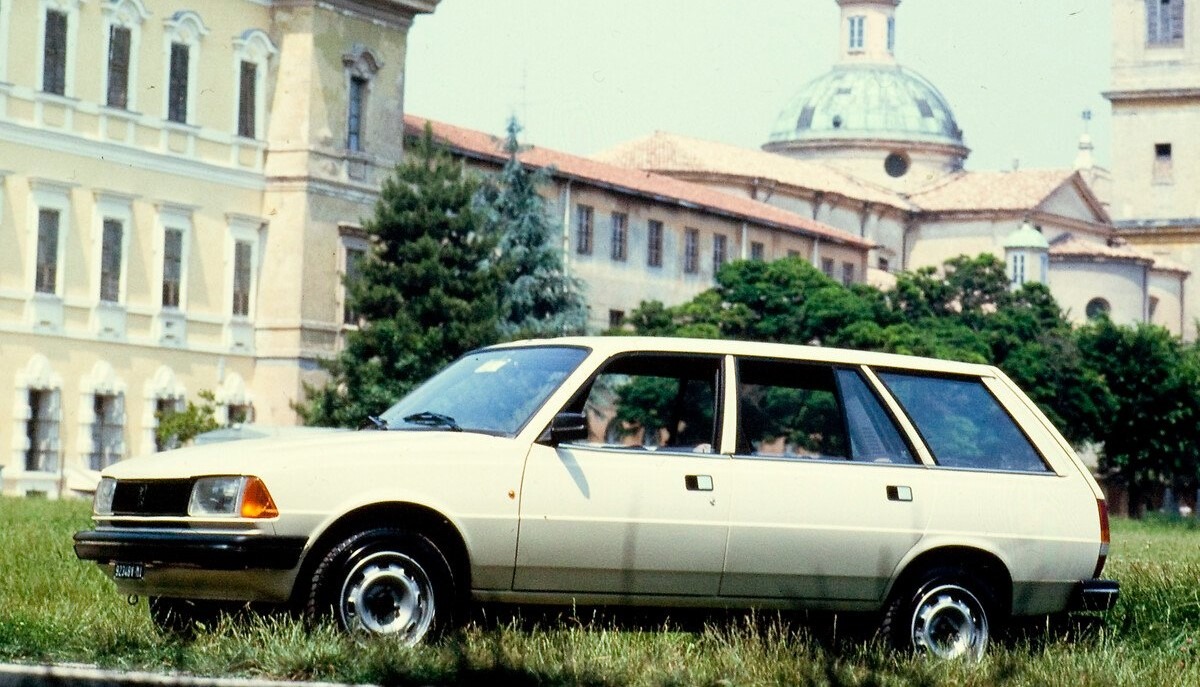
By the mid-to-late 1970s, Peugeot’s lineup was being steadily renewed, and Pininfarina’s influence was everywhere. The Peugeot 305, launched in 1977 as a new mid-size family sedan, was another of the Turin studio’s designs. It wasn’t flashy — in fact, it was deliberately modest, a car shaped by economic caution and practical intent — yet its clarity of line and disciplined proportions bore Pininfarina’s unmistakable hand. Reviewers at the time praised its “nothing superfluous” simplicity, calling it clean, balanced, and timelessly functional. One journalist would later quip that, despite being designed in Italy, the 305 had “no visual highlights to offer — which apparently struck a chord; it was exactly what was needed.” Faint praise, perhaps, but it underscored Pininfarina’s ability to exercise restraint — to craft elegance from understatement. The 305 Break (wagon), introduced in 1980 and also styled by Pininfarina, became one of Europe’s quiet workhorses. With its squared-off practicality and honest proportions, it was proof that the Italian design house could design beauty into utility as deftly as it did glamour into coupes.
Then came the Peugeot 505 of 1979 — Peugeot’s last rear-wheel-drive sedan and another product of the enduring Franco-Italian alliance. Its design was a true collaboration between Pininfarina and Peugeot’s own styling department, blending Italian smoothness with French solidity. The result was a car of quiet confidence: a slim, unadorned front end with rectangular headlamps, a gently rising beltline, and proportions that subtly evolved the 504’s familiar themes. Like its predecessors, the 505 possessed an unforced elegance — refined without pretense — and its styling proved remarkably durable. The design aged so gracefully, in fact, that the 505 remained in production in various markets well into the late 1990s with only minor changes. By 1980, Peugeot and Pininfarina had achieved a shared design language that transcended individual models. From the petite 104 to the executive 604, a thread of Italianate refinement ran through the entire Peugeot range — a rare feat in automotive history. Few manufacturers could claim such a unified aesthetic shaped so deeply by an outside design house, and fewer still have sustained it with such quiet distinction.
Celebrating 30 Years: The 1980s and New Hits
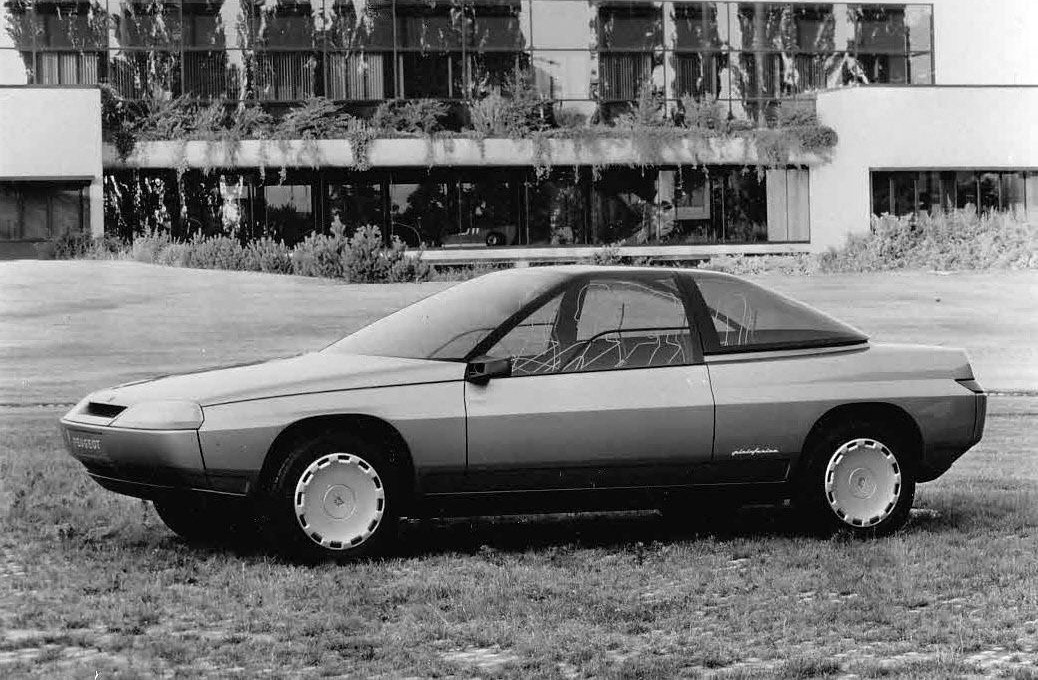
As the calendar turned to the 1980s, the Peugeot–Pininfarina partnership entered its third decade — a rare longevity in the world of car design. To mark 30 years since the Peugeot 403, Pininfarina decided to celebrate the alliance in its own language: through form and sculpture. At the 1985 Geneva Motor Show, the Turin design house unveiled the Peugeot Griffe 4, a striking concept car created as a tribute to the collaboration. Its name — Griffe, French for “claw” — nodded to Peugeot’s lion emblem, while the “4” hinted at the four decades of friendship soon to be completed. The Griffe 4 was a vision of the future: a low-slung, aerodynamic coupé with sweeping glass surfaces, integrated bumpers, and a gently tapered tail that embodied the era’s fascination with aerodynamics. More than a mere styling exercise, it was a rolling testament to shared values — the precision of French engineering paired with the artistry of Italian design. Observers immediately grasped its symbolism. In a time when most coachbuilder–manufacturer relationships were transactional, Pininfarina’s decision to publicly honor Peugeot spoke volumes. The Griffe 4 wasn’t just a show car — it was a gesture of respect, celebrating a creative partnership that had become as enduring as it was elegant.
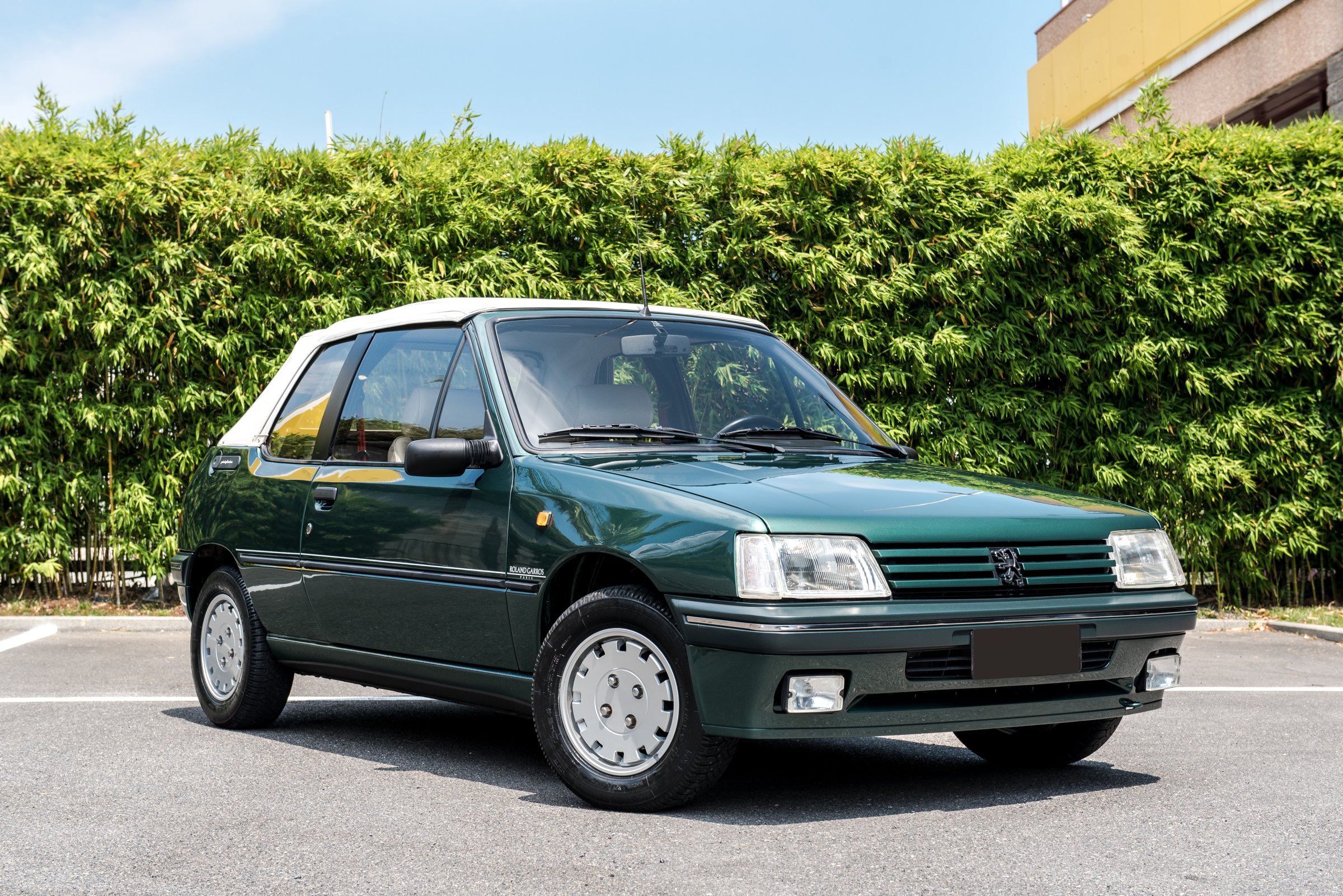
Meanwhile, the partnership carried on into production, though the balance was beginning to shift. In 1983, Peugeot unveiled the 205 — a car that would come to define the brand’s success throughout the decade. Unusually, its design was not primarily the work of Pininfarina but of Peugeot’s own stylist Gérard Welter, with contributions from Paul Bracq. The 205’s chic, athletic shape proved that Peugeot’s in-house talent had come of age, marking a turning point after decades of relying on external design leadership. The car was a sensation, earning critical praise and selling in the millions. For Peugeot, it was both a commercial triumph and a moment of creative independence. Yet Pininfarina was far from sidelined. The Turin studio had in fact submitted its own proposal for the 205 during development — a design that wasn’t chosen for the hatchback but would later resurface in another guise. More importantly, Peugeot entrusted Pininfarina with the task of creating the 205 Cabriolet, the open-top version that would bring a dash of Italian glamour to the 205 range and help cement its status as a true 1980s icon.
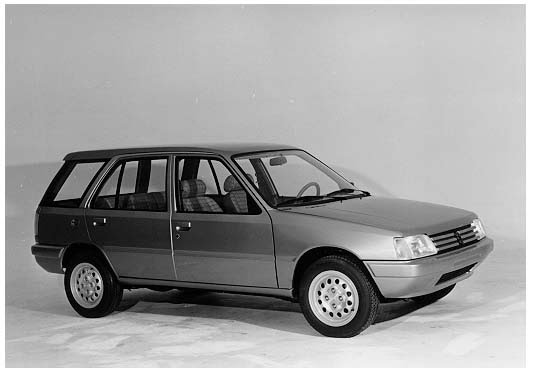
Pininfarina continued to explore alternative visions of the 205, pushing the boundaries of Peugeot’s most successful model. In 1984, the studio unveiled the 205 “Verve”, a concept that imagined a petite three-door shooting brake version of the hatchback. With its slightly taller roofline and elongated rear, the Verve transformed the sprightly supermini into a miniature family hauler — practical yet stylish in true Pininfarina fashion. Though it remained a one-off prototype, the Verve reflected the Turin firm’s habit of anticipating market niches. Peugeot, by then preparing to launch the larger 309, saw little need to pursue the idea, and the concept was quietly shelved. Around the same time, Pininfarina’s workshops turned out a series of other intriguing Peugeot experiments — from the revived Peugette concept to a wild 205 Turbo 16 Roadster built specially for rally champion Ari Vatanen. Taken together, these projects underscored just how deeply embedded Pininfarina remained in Peugeot’s creative orbit during the 1980s — not just as a stylist, but as a source of ideas, prototypes, and dreams.
🔗 Read more: Progetto Tipo Quattro Platform (Type Four)
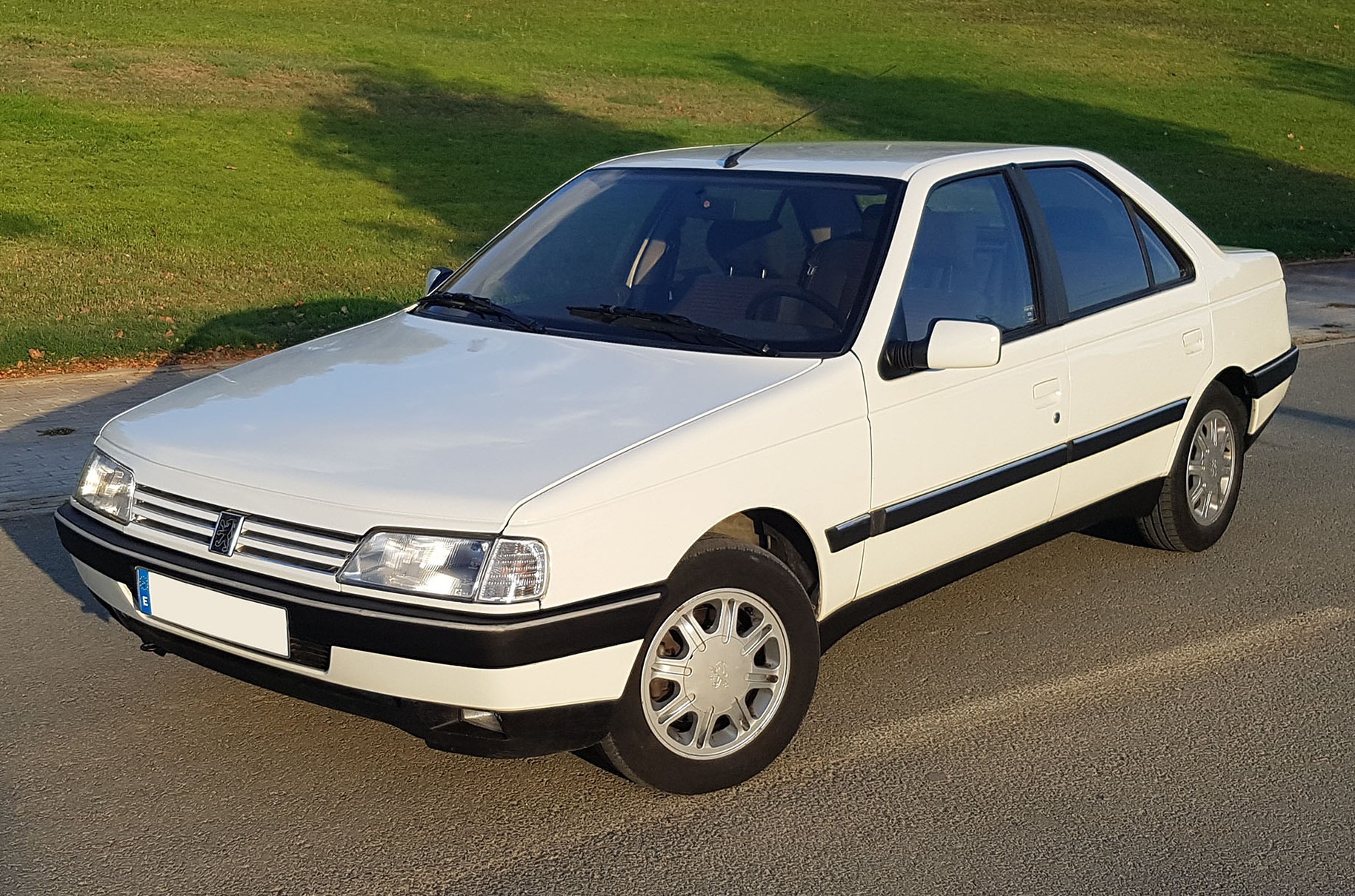
Another milestone of the decade was the Peugeot 405, introduced in 1987. Tasked with replacing the 305 and 505, the new mid-size sedan’s styling was once again entrusted to Pininfarina — notably developed in parallel with the Alfa Romeo 164, which the Italian firm was simultaneously designing for the Fiat Group. The result was a sleek, aerodynamic four-door with a low nose, flush glazing, and taut proportions. The visual kinship with the Alfa 164 was unmistakable — and, some critics joked, a little too close for comfort. Yet the resemblance spoke to Pininfarina’s confident house style of the era: clean, modern, and subtly athletic. The 405 was an instant success. It won European Car of the Year 1988, lauded for both its elegant design and its superb handling. In many ways, it represented one of Pininfarina’s last great classic sedans for Peugeot — dynamic yet restrained, sophisticated without excess. Peugeot’s own advertising proudly highlighted its Italian styling pedigree, a clear sign of how much cachet Pininfarina’s name still carried. The 405 also marked a turning point. As Peugeot’s in-house design team matured under Gérard Welter, the company began to look inward for creative leadership — the 405’s successor, the 406, would be designed entirely within Peugeot. Still, the 405 endures as a high point: a perfectly judged blend of French engineering and Italian finesse. In sporty Mi16 form, it even achieved cult status, its sharp lines and spirited character capturing the final flourish of the Peugeot–Pininfarina golden age.
Peugeot’s next flirtation with the luxury segment came in 1989 with the 605, a sleek executive saloon intended to succeed the long-retired 604. Pininfarina once again lent its pen to the project, shaping a clean, aerodynamic body that echoed the studio’s parallel work for Alfa Romeo. That resemblance—especially to the Alfa 164—would later prove awkward, as the Italian sedan reached showrooms first, leaving the Peugeot looking derivative by accident rather than design. Still, viewed on its own terms, the 605 was an elegant, quietly confident machine: a smooth wedge, low-slung and unpretentious, with Pininfarina’s restrained hand evident throughout. The interior, also attributed to the Italian studio, followed the same theme of functional refinement. Sadly, early reliability issues clouded its debut, and the 605 never fulfilled its promise. But it stood as a reminder that even at the top of Peugeot’s range, Pininfarina remained the brand’s most trusted stylistic compass.
By the close of the 1980s, the Peugeot–Pininfarina partnership had built an extraordinary legacy. To recount Pininfarina’s contributions up to that point is essentially to trace Peugeot’s own model history: the 404 (1960) and its elegant Coupé and Cabriolet; the 204 (1965); the 504 family (1968); the 304 Cabriolet (1969); the 104 (1972); the 604 (1975); the 305 (1977); the 505 (1979); the 205 Cabriolet (1985); the 405 (1987); and the 605 (1989) — all bore the unmistakable influence of Turin. And those were just the production cars. Pininfarina also penned or built an array of concepts and prototypes — from the Break Riviera and Peugette to the Verve and the celebratory Griffe 4 — even lending its expertise to Peugeot’s rally specials. In effect, for much of the 20th century, Peugeot’s design identity was inseparable from Pininfarina’s artistry. Few other carmakers can claim such a long, symbiotic bond with an external design house — a partnership that shaped not just a lineup, but an entire aesthetic philosophy.
A Last Flourish: 1990s Coupés and the New Millennium
If the 1980s showcased the breadth of the Peugeot–Pininfarina collaboration, the 1990s would reveal its focus and finesse — a period that produced some of their most admired creations, especially among sporting coupés and cabriolets. By this stage, Peugeot’s in-house team had firmly taken charge of mainstream models such as the 306 hatchback (1993) and 406 sedan (1995). Yet Pininfarina remained an essential creative partner — the studio now specialized in transforming these solid platforms into cars with genuine emotional appeal. The Italians were once again called upon to inject style, romance, and a sense of occasion into Peugeot’s lineup — qualities that would define some of the most memorable Peugeots of the decade.
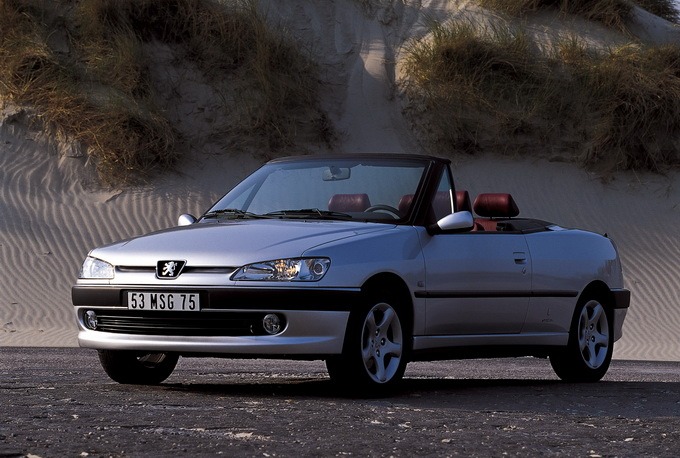
One of the decade’s early delights was the Peugeot 306 Cabriolet, launched in 1994. The 306 hatchback was already a handsome design from Peugeot’s own studio, but it was the Pininfarina-penned cabriolet that truly stole the show. With the roof down, the 306 Cabrio revealed fluid curves and spot-on proportions — widely regarded as one of the prettiest convertibles of the 1990s, full stop. Pininfarina’s designers achieved a remarkably clean profile by eliminating the roll bar seen on the earlier 205 Cabrio, giving the 306 an unbroken, elegant silhouette. Subtle touches — the gentle kick-up of the rear deck, the wraparound taillights, the crisp shut lines — lent the car an unmistakably Italian poise that set it apart from any other compact open-top of its time. As tradition dictated, Pininfarina not only designed but also built the car, producing it at their Cambiano plant near Turin. The Cabrio struck a chord with buyers seeking a touch of affordable dolce vita; demand was so strong that in some markets there were waiting lists well into the late ’90s. In August 1998, Pininfarina celebrated the 50,000th 306 Cabriolet built — a milestone that testified to both its popularity and the enduring strength of the Franco-Italian partnership. By the time production ended in 2002, over 77,000 examples had been made — a remarkable figure for a convertible. The 306 Cabriolet proved that even as Peugeot’s core models were now designed in-house, Pininfarina could still elevate them to another level of beauty — effortless, timeless, and distinctly Mediterranean in spirit.
Then came what many regard as the crown jewel of the Peugeot–Pininfarina alliance: the Peugeot 406 Coupé. Unveiled in 1997, it transformed the competent but unremarkable 406 sedan into a true grand tourer. Pininfarina was given almost complete creative freedom — and they delivered, spectacularly. The 406 Coupé’s design has often been compared to the Ferraris of its era (understandably, as Pininfarina was shaping those too). Its lines exude a timeless, sculpted grace that many still consider the most beautiful ever to wear the Peugeot badge. Long-bonneted, low-slung, and perfectly balanced, it combines muscle and elegance with effortless poise. Contemporary reviewers spoke of “lines of perfection,” and more than twenty-five years later, the car’s purity of form still draws admiration. Subtle references to history were no accident: the delicate shoulder crease and curved C-pillar quietly echoed the classic 504 Coupé of 1969, linking the 406 back to the golden age of the Peugeot–Pininfarina partnership. The result was not merely a new car, but a modern interpretation of tradition — Italian artistry channeling French restraint into a single, flawless silhouette.
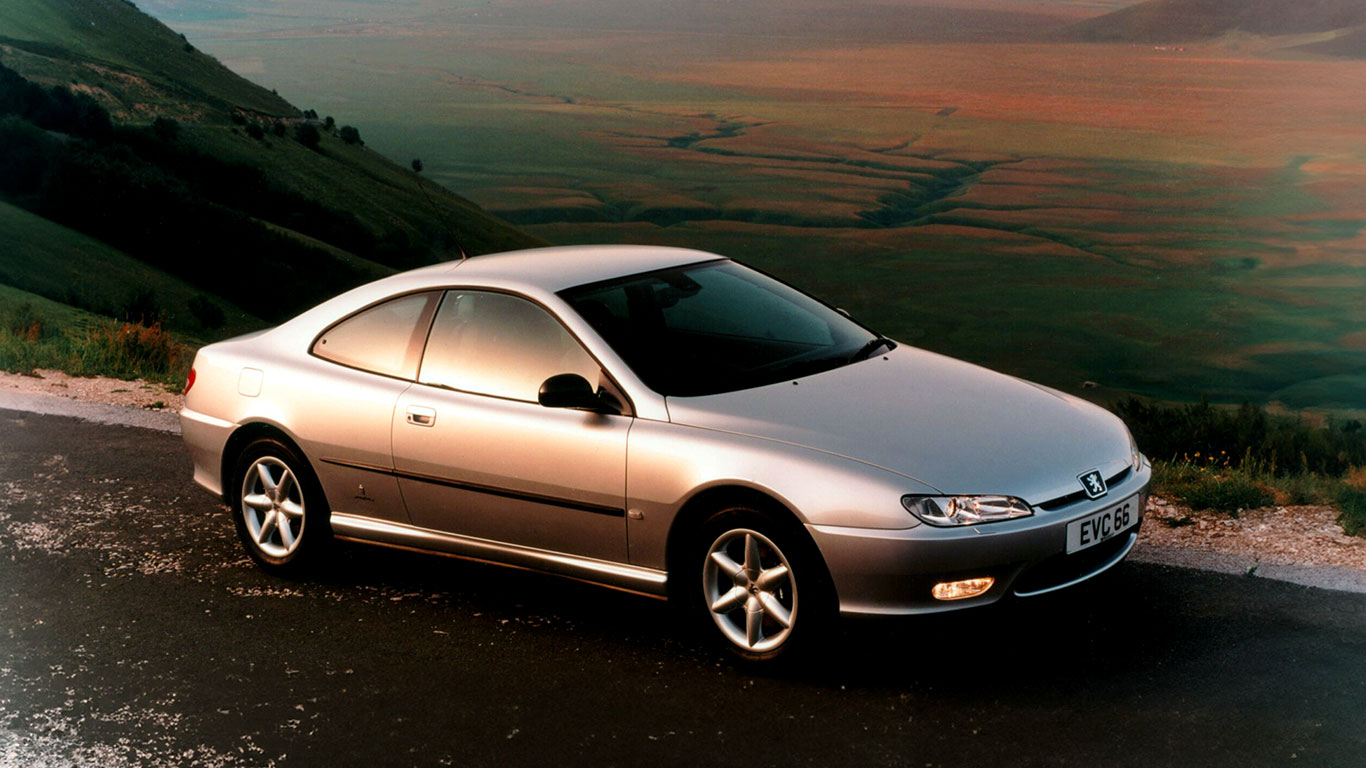
What truly set the 406 Coupé project apart was the unprecedented trust Peugeot placed in Pininfarina. For the first time, the French marque handed an external partner not only the styling, but also full production engineering and manufacturing responsibility. Pininfarina oversaw industrialisation, set up the assembly line at its San Giorgio Canavese facility near Turin, and built every car to Peugeot’s stringent quality standards. It was a bold experiment — effectively, a Peugeot conceived and built entirely in Italy, then sold through Peugeot’s global network. The gamble paid off brilliantly. The 406 Coupé’s build quality was exemplary; many owners later remarked that it felt more solidly assembled than its French-built sedan counterpart. In June 2003, just five years after launch, Pininfarina celebrated the 100,000th 406 Coupé leaving the line. Production eventually reached around 107,600 units by 2004, far surpassing Peugeot’s original forecasts and making it one of the most commercially successful cars ever built by Pininfarina. For the coachbuilder, the project was a matter of immense pride. Development had begun back in 1992, with countless prototypes refined to perfect those sensuous curves. The result was both a technical and artistic triumph — a car so complete that even years later Peugeot struggled to outshine it. Often affectionately dubbed “the poor man’s Ferrari,” the 406 Coupé remains one of the most elegant grand tourers of its era, its Italian pedigree unmistakable in every line.
🔗 Read more: The Peugeot 406 Coupé: Lines of Perfection
During the 406 Coupé’s development, Pininfarina continued to explore Peugeot’s future through concept work. At the 1997 Geneva Motor Show, the Italian studio unveiled the striking Peugeot Nautilus – described as “an exciting stylistic exploration of the high-class sporty saloon.” Built on the mechanical base of the Peugeot 605, complete with a V6 engine, the Nautilus wore entirely new bodywork: sweeping curves, a fastback roofline, and a bold oval grille that gave the car an almost sculptural presence. The design hinted at how a next-generation Peugeot flagship might look — futuristic yet fluid, with subtle maritime cues that justified its name. Though Peugeot would eventually launch the more restrained 607 in 1999, styled in-house, the Nautilus stood as a glimpse of a path not taken. It remained a bold, poetic vision — proof that even as Peugeot became more self-sufficient in design, Pininfarina was still dreaming ahead, imagining what French luxury could be if given an Italian accent.
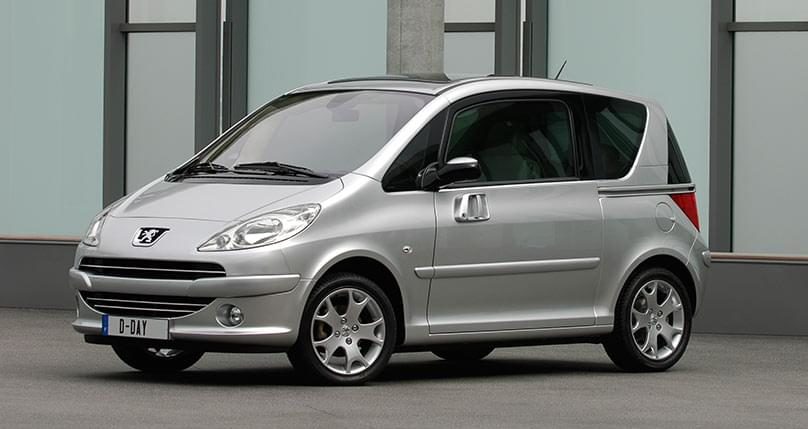
By the early 2000s, the writing was on the wall: an era was drawing to a close. Peugeot’s parent company, PSA Group, had chosen to bring both design and manufacturing fully in-house — a decision driven by cost pressures and the confidence of a new generation of French stylists. The long tradition of co-developing models with Pininfarina was quietly winding down. Yet one last collaboration reached production: the Peugeot 1007. Launched in 2005, it was a compact city car distinguished by an unusual innovation — electric sliding doors on both sides, a feature almost unheard of in its class. The concept originated within Peugeot, but it was Pininfarina who shaped its exterior and helped turn the idea into reality. The result was a tall, playful design that translated Peugeot’s new visual language — large headlamps, soft curves, expressive details — into a bold urban form. Pininfarina also contributed to the initial production of 1007 bodies, continuing its role as both designer and craftsman. Still, the 1007’s commercial run (2005–2009) was brief, and its unconventional looks divided opinion. In hindsight, it felt like a symbolic final act: the last echo of an era when Peugeot’s finest cars bore the subtle imprint of Italian artistry. As one historian noted, the 1007 was “the last Peugeot to carry the Pininfarina signature” — the quiet end to one of the longest and most fruitful collaborations in European automotive design.
As the 2000s progressed, Peugeot fully consolidated its creative direction within the Peugeot Design Centre, occasionally collaborating with outside consultants but with none approaching the depth or longevity of its bond with Pininfarina. For the Italian firm, too, a new chapter was beginning: after 2005, Pininfarina shifted its focus toward projects for other manufacturers and, eventually, to its own ventures — from advanced design studies to the creation of its electric hypercar, the Battista. Thus, the partnership that had begun in 1951 quietly came to an end — amicably, yet unmistakably final. As one retrospective succinctly put it, “Peugeot and Pininfarina were linked until the 2000s, when the PSA Group decided to do without any design collaboration in exterior and industrial subcontracting.” Times had changed. Peugeot had found a confident in-house design identity, while Pininfarina, the once family-run atelier, evolved into a modern, diversified design company under new ownership.
The Peugeot–Pininfarina Story: A Love Affair on Wheels
Looking back, the Peugeot–Pininfarina partnership remains one of the most enduring and fruitful cross-border collaborations in automotive history. For over five decades, the two marques brought out the best in each other. Peugeot gained not only a reputation for mechanical robustness but also for a quiet, confident elegance — design that was often understated, sometimes daring, yet always a cut above the ordinary. Pininfarina, for its part, found in Peugeot a broad canvas on which to express its artistry, proving that great design need not be reserved for rarefied exotics; it could just as meaningfully elevate the everyday car. Together they produced machines remembered with genuine affection and admired as modern classics: the charming 403, the stately 404, the legendary 504 and its Coupé and Cabriolet, the petite 204 and 304 convertibles, the dignified 604, the plucky 205 Cabrio, the graceful 306 Cabriolet, and finally, the breathtaking 406 Coupé. Each carried a dual heritage — French in spirit, Italian in soul — and together they form a lineage that stands as a testament to the rare alchemy that occurs when engineering discipline meets artistic vision.
Beyond the cars themselves lies a more emotional legacy. The story of Peugeot and Pininfarina reads almost like a romance — a romance of steel and style — that endured shifting eras and fashions. It’s the tale of how a traditionally reserved French automaker opened its heart to an Italian artist, and how that artist, in turn, respected and enriched the soul of the French brand. In every flowing line of a Peugeot–Pininfarina coupé, in every carefully drawn curve and precisely balanced proportion, you can sense that dialogue between cultures — Italian passion dancing with French pragmatism. As Battista Pininfarina himself observed, the collaboration anticipated the spirit of a united Europe: a demonstration of what could be achieved when borders blurred and ideas were shared freely. Long before “globalization” became a buzzword, Peugeot and Pininfarina were already practicing it — and doing so with unmistakable style.
Even though the partnership has now drawn to a close, its influence endures. Peugeot’s modern design language still carries the imprint of elegance, restraint, and proportion that Pininfarina helped to define decades ago. Enthusiasts continue to cherish the cars born of this alliance — restoring them, displaying them at concours, writing their histories with affection. At a classic car show, a 1960s Peugeot 404 Cabriolet gleams under the sun, its tiny Pininfarina badges worn like medals of honor as onlookers sigh at its grace. Elsewhere, a modern driver, weary of anonymous crossovers, seeks out a 406 Coupé to experience a touch of that old-world artistry in everyday life. These moments — quiet, personal, enduring — are the living testaments to a collaboration that shaped generations of cars, and to a design philosophy where French logic and Italian passion met, perfectly in tune.
🔗 Read more: The Partnership between Pininfarina & Alfa Romeo
In the end, the Peugeot–Pininfarina story reminds us that car design is as much art as it is science — and that the finest art often springs from collaboration. It is the story of two companies from different languages and traditions finding a common vision, one that produced metal sculptures that move not only bodies, but hearts. From the first Peugeot 403 that proudly bore Pininfarina’s signature to the final 1007 that quietly closed the chapter, this partnership stood as a celebration of what can happen when Italian creativity meets French craftsmanship. And like any great romance, its legacy does not fade. It continues to inspire, to be studied by designers, and to be loved by drivers across the world. In the gallery of automotive history, the Peugeot–Pininfarina collaboration holds a singular place — a lasting reminder that the greatest cars are more than machines. They are the offspring of ingenuity and imagination across borders, with wheels to carry their story through time.
The new Peugeot saloon launched in 1955 proved an even greater success than the French firm had ever imagined. In the end, over a million units were produced — an almost unimaginable figure for the era. The collaboration with Pininfarina was built to endure, and it soon went beyond design alone. By the 1960s, the partnership expanded into full-scale production, with Pininfarina manufacturing complete cars for Peugeot — a sign of deep trust and a truly integrated relationship between the two companies.

ABOUT THE AUTHOR
Andreas Scheidl
Italian classic car enthusiast with German roots. Renowned as a respected figure in the classic car community, he serves as a jury member at various international concours d'elegance, including the Classic Gala Schwetzingen and Mantova. As a content creator, Andreas passionately shares his profound knowledge and appreciation for vintage automobiles. His heart beats for cars designed by Giovanni Michelotti, showcasing his discerning taste and dedication to preserving the timeless elegance of automotive history.
More stories by Andreas Scheidl ↗CONTINUE READING
Posts You Might Like
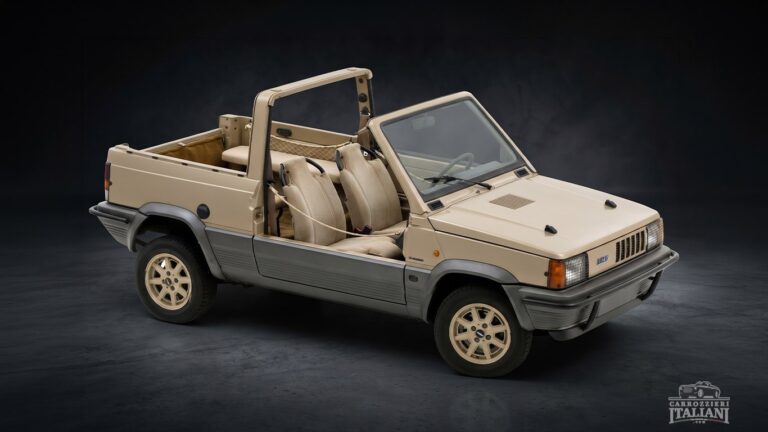
Fiat Panda Cabrio: The Italian Coachbuilders Who Opened Giugiaro’s Box
From Moretti’s Panda Rock to Italdesign’s experimental Strip, Maggiora’s four-wheel-drive convertible and Stola’s remarkable Destriero, the history of the open-top Panda reveals an unexpected chapter in Italian coachbuilding. When Giorgetto Giugiaro designed…
Read story
Gabriele d’Annunzio and the Cult of the Automobile
There was a time when the automobile had not yet become part of the landscape. It announced itself from afar through the beating of an engine, the smell of petrol and hot…
Read story
Fiat 1400: The Last Great Playground of the Carrozzieri
From Touring and Abarth to Farina, Ghia, Vignale, Boneschi, Bertone, Viotti and the smaller carrozzerie, the new Fiat quickly became one of the richest bases for Italian special bodies in the early…
Read story
How a Swiss Dealer Challenged Ferrari: The Story of Monteverdi
How Peter Monteverdi went from Swiss Ferrari dealer to creator of rare Frua and Fissore-bodied GTs, the Hai supercar and luxury off-roaders.
Read story
THE CONVERSATION
Comments 0
Share a memory, a period photograph or a documented detail about this story.