
THE VEHICLE AT A GLANCE
Model dossier
- Production period
- 1977
- Body style
- Berlina
- Engine
- Inline-4
- Type
- Mass
- Production
- 1600000
THE PEOPLE BEHIND THE CAR
Coachbuilding, design & conversions

PRICE & SALES RECORD
Vehicle value
- Original price
- Not documented
- Latest recorded sale
- Not documented
01 / THE STORY
History & context
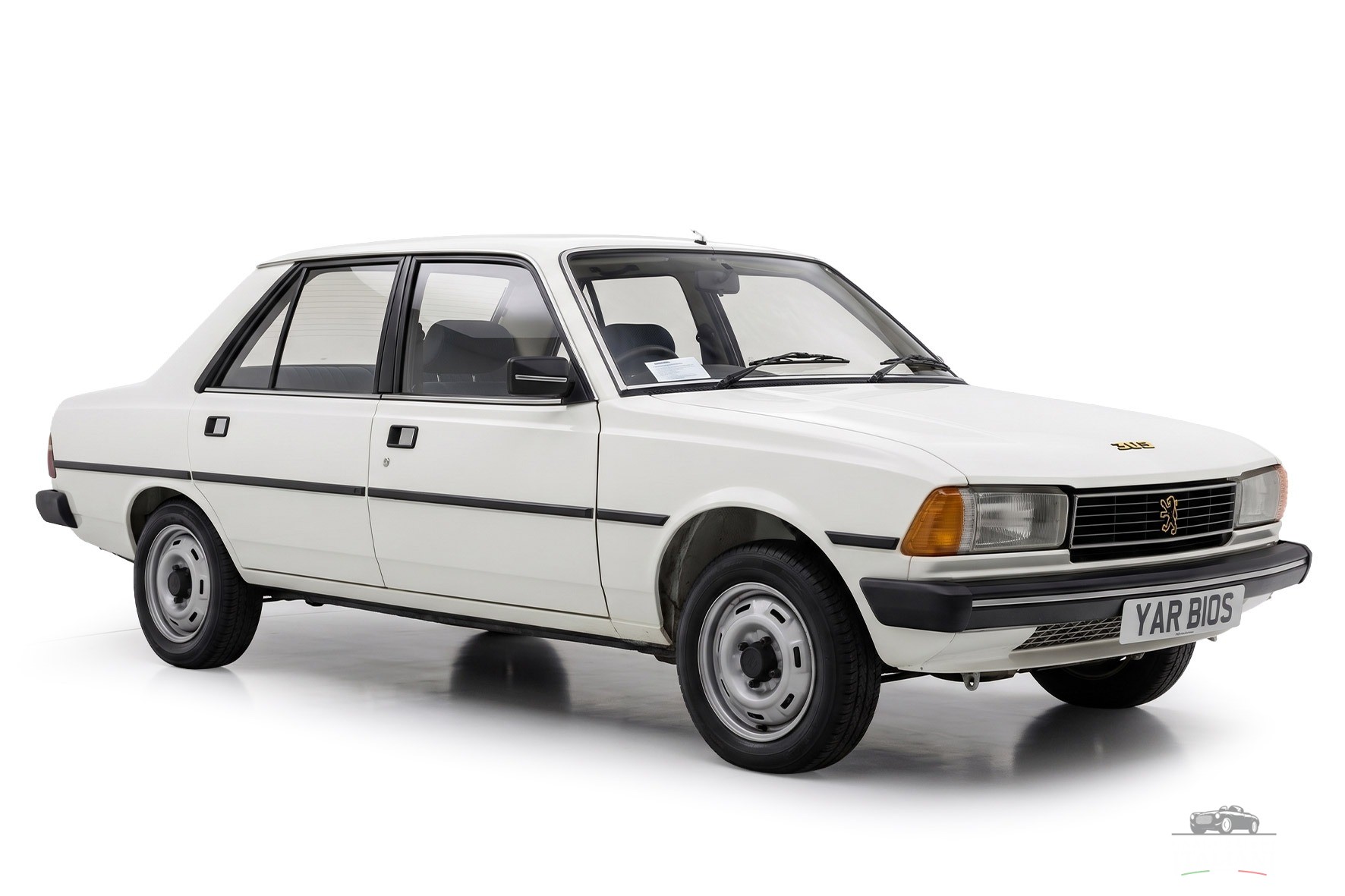
The Peugeot 305 was introduced at the 1977 Geneva Motor Show as a mid-size family sedan positioned between the compact 204/304 series and the larger Peugeot 504. Styled in collaboration with Pininfarina, the 305 followed a design language that emphasized clarity of lines, a low beltline, and aerodynamic efficiency. Its trapezoidal headlamps, long front overhang, and simple rear proportions reflected both aesthetic restraint and functional clarity. Although bearing some visual connection to the earlier 604, the 305 was not mechanically derived from it. At launch, the 305 was available as a four-door saloon, with the estate (Break) version following in 1980, revealed at the Paris Motor Show. A three-door van derivative appeared later to serve commercial needs. The interior was rationally laid out, with a focus on visibility and ergonomics, featuring a wide dashboard and thin pillars. Body structure included integrated crumple zones front and rear, an advanced feature in its class at the time. The mechanical configuration used a transverse-mounted front-engine, front-wheel-drive layout. Petrol engines included a 1.3-liter (65 hp) and a 1.5-liter (74 hp) unit, both four-cylinder designs. Diesel options were added in the early 1980s, starting with a 1.5-liter and followed by a 1.9-liter XUD engine producing 65 hp. These diesel variants were particularly popular in export markets. All models featured MacPherson front suspension, with most using a rear torsion beam axle. Gearboxes were four- or five-speed manuals, with some automatic options offered in later years. The 305 underwent a facelift in 1982, first shown at the Paris Salon that year. Updates included revised bumpers, headlamps, and a new grille. The interior was also refreshed. New engines, such as the 1.6-liter XU5 and 1.9-liter XU9, improved performance in higher-spec variants. Production continued until 1989, with over 1.6 million units built. The model was gradually replaced by the Peugeot 405. Though never a prestige model, the 305 played a central role in Peugeot’s range throughout the 1980s and served as a basis for many regional variations. It remains representative of Pininfarina’s understated design applied to a high-volume production vehicle.
IN THE ARCHIVE
Coachbuilders & design studios
02 / TECHNICAL IDENTITY
Specifications & construction
Production & construction
- Production
- 1600000
- Production type
- Mass
Engine & performance
- Engine configuration
- Inline-4
Dimensions & accommodation
- Length
- 4,240 mm
- Width
- 1,630 mm
- Height
- 1,400 mm
Design & manufacture
- Design Studio · Documented
- Pininfarina
- Manufacturer · Documented
- Peugeot
06 / EVENTS & AWARDS
Events & awards
No events or documented awards are currently recorded for this vehicle.
07 / THE VEHICLE IN DETAIL
Photo gallery 1 photographs
08 / FROM THE ARCHIVE
Archive
No publishable archival references are currently catalogued for this vehicle.
THE CONVERSATION
Comments 0
Share a memory, a period photograph or a documented detail about this car.