
Chrysler Norseman: The Concept Car That Sank with the Andrea Doria
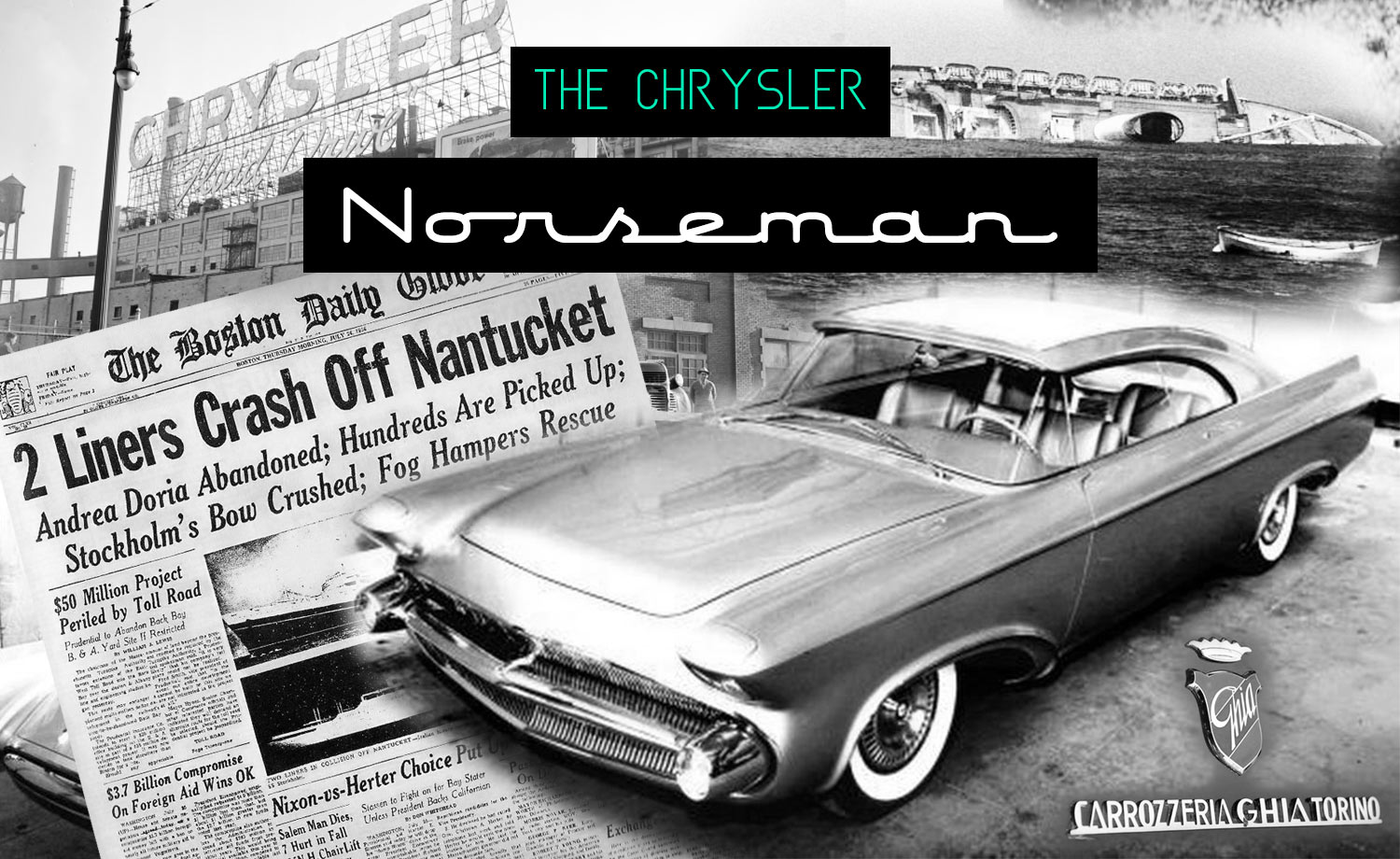
The mid-1950s felt hopeful. The war was over. Factories were busy again. People bought new homes, new clothes, new cars. In the United States, the automobile became a symbol of progress. Highways expanded. Chrome shined under bright dealership lights. Cars grew longer and lower each year.
At the same time, Italy rebuilt its industry and its confidence. Designers in Turin and Milan returned to careful proportions and clean lines. They worked by hand. They shaped metal like sculpture.
Out of this moment came a partnership between Chrysler and Carrozzeria Ghia. It was a serious collaboration, not just a styling exercise. Chrysler wanted fresh ideas. Ghia offered craftsmanship and a different way of thinking about form.
One of the most intriguing results of that partnership was the Chrysler Norseman. It was a concept car. It never reached a showroom. It never appeared at an auto show. And yet, its story has lasted for seventy years.
Virgil Exner and the Forward Look
The driving force behind Chrysler’s design revival was Virgil Exner. He believed American cars had grown heavy and dull after the war. He wanted tension in the lines. He wanted movement, even when the car was standing still.
🔗 Read more: Virgil Exner was the designer who taught Detroit to dream again
Exner’s “Forward Look” would later define Chrysler’s production models, especially with bold fins and sharp profiles. But in the mid-1950s, he was still experimenting. He used Ghia as a creative partner. Chrysler would send chassis and engineering components to Italy. Ghia would build complete show cars by hand.
This approach gave Exner freedom. He could try shapes that Detroit factories were not ready to produce. Some of these cars were dramatic. Others were restrained. The Norseman leaned toward restraint.
The Detroit – Turin Connection
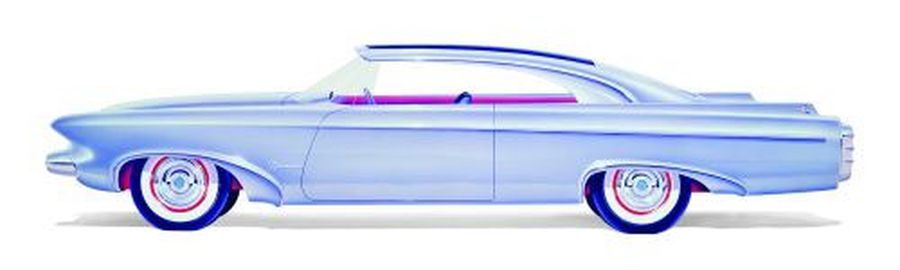
The Norseman began as drawings in Detroit. It was designed as a two-door hardtop coupe with clean sides and a long, flowing roof. Exner wanted the roof to appear almost unsupported. No visible B-pillar. Just glass and thin structure.
When the chassis arrived in Turin, Ghia’s craftsmen started from bare metal. They shaped each panel by hand. There were no automated presses. No large production tools. Just experience, skill, and time.
The body lines were smooth. The sides were almost flat compared to other cars of the era. The fins were modest. The proportions were careful. It looked modern, but not loud. It had presence without shouting for attention.
Inside, the materials matched the calm exterior. The cabin was elegant but not flashy. This was not a fantasy spaceship. It was a serious study in form and proportion. And the roof became the car’s defining feature.
Development of the Norseman
The project for the large four-seater experimental Coupé had started in October 1954 and a 1:4 scale model had been sent to Italy for Carrozzeria Ghia as reference for a running model for display. The complexity of the forms, of the technical and stylistic solutions occupied the workers who worked in Corso Unione Sovietica for almost 15 months; it is likely that Pietro Frua, then head of the Ghia style center, was kept out of the operation.
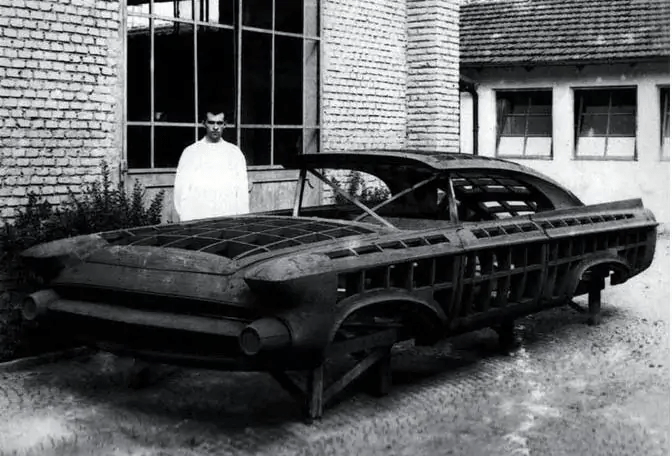
The Chrysler Norseman featured many innovative technical solutions for the time. All major body panels on the car were made of aluminum as a result of research in advanced structural techniques to reduce weight. It had a sharply sloping hood, upswept tail fins and a covered, smooth underbody for aerodynamic efficiency.
The chief designer of the technical office Sergio Coggiola was part of the working group of Ghia, who in 1966 founded its own company and to whom we owe the resolution of the biggest problem: that of creating a roof which had no posts or pillars. This was accomplished by means of structural cantilever archs which curved upward from the rear of the frame and over the passenger compartment of the car.
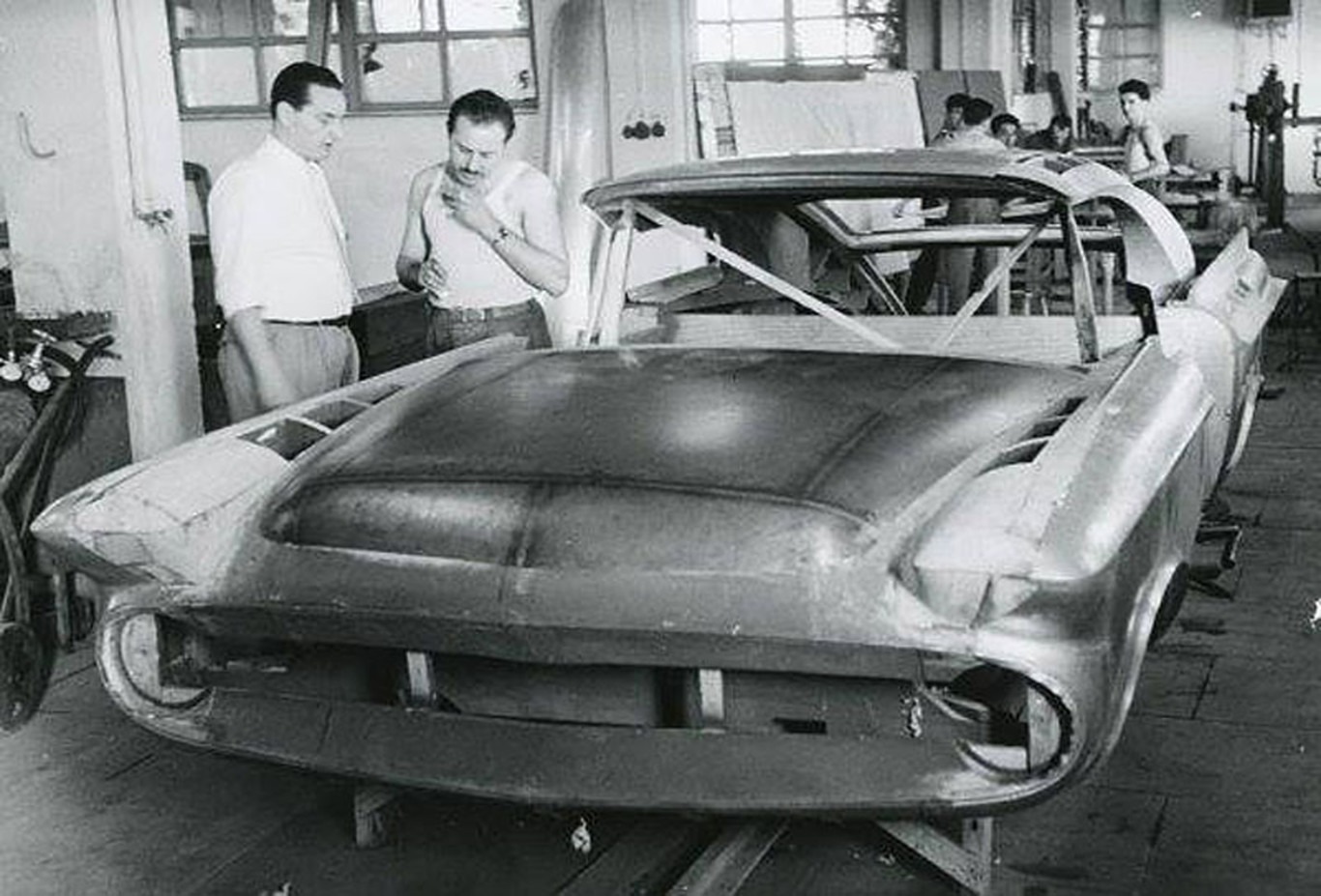
Glass surrounding the passenger compartment was uninterrupted (using the Vistotal system, already seen on Castagna’s models) with the exception of the two archs of steel curving upward in the rear. The same criticality was faced by Coggiola for the construction of the Ferrari 212 Inter “Uovo”, built by Carrozzeria Fontana for the driver Giannino Marzotto for the 1951 Mille Miglia. In addition there was a 12 square foot panel of glass in the roof that was power operated and slid forward leaving the roof over the rear seat area open.
Over-all the smoothness of the car was enhanced by concealed automatic headlights, door handles, and concealed trunk lid opening device. Other innovations modern for the time, were the powered adjustable seats, automatic petrol cap, the PowerFlite automatic gearbox with steering wheel controls used in all Imperial cars, interior lighting with diffused light and the radio integrated in the central tunnel of the dashboard. Color of the car was two-tone metallic green with a touch of red inside the flared wheel openings.
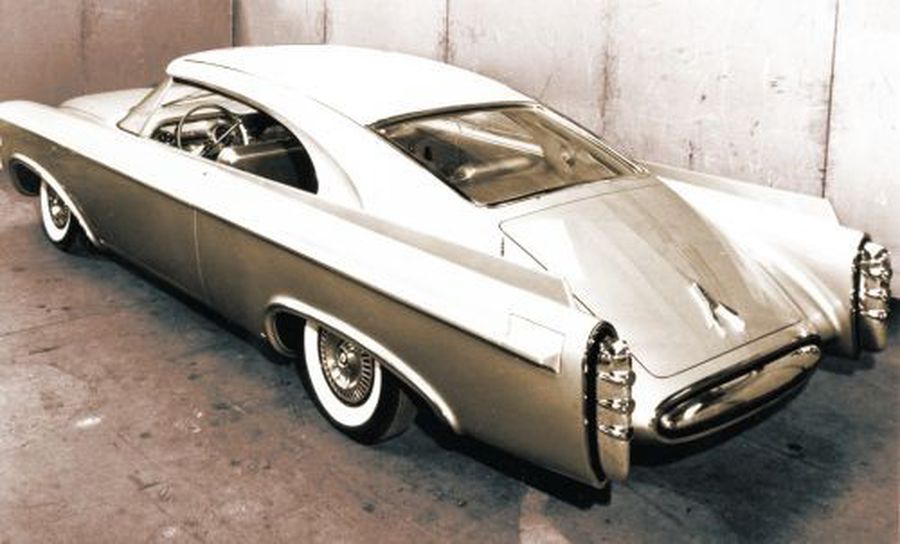
5.8 meters long, 2 wide and 1.4 high, the Chrysler Norseman did not boast major mechanical innovations, being equipped with a classic V8 Hemi of 5.4 liters and 235 hp similar to that mounted on the Chrysler 300C in 1957.
The disaster
The plan was simple. Ship the car to the United States. Present it at a major auto show. Let the public see what Chrysler and Carrozzeria Ghia had created together.
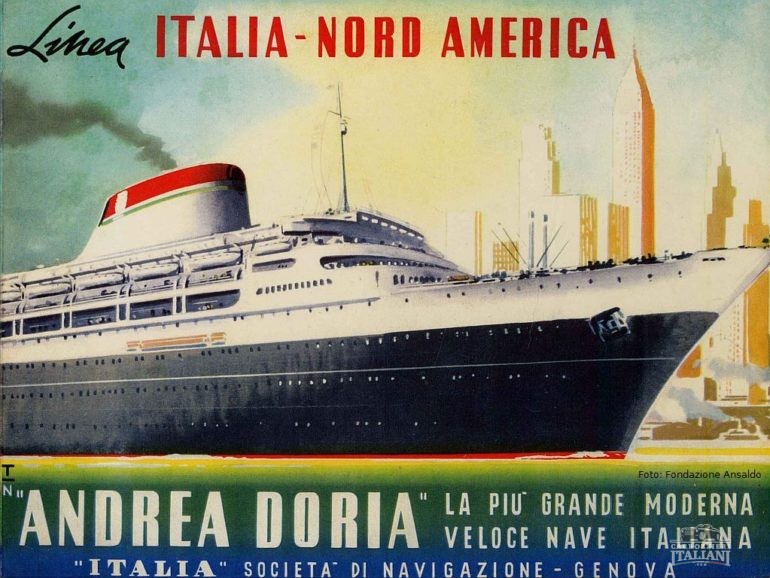
There is one important detail. The Norseman was never publicly displayed in finished form. It was photographed during development, but once complete, it was placed directly into a wooden crate for transport. Only a small circle of designers and craftsmen ever saw it fully assembled.The plan was simple. Ship the car to the United States. Show it at a major auto show. Let the public see what Chrysler and Ghia could do together.
🔗 Read more: The Partnership between Ghia & Chrysler
Like other Ghia-built Chrysler concept cars of the period, the Norseman had to cross the Atlantic by ship. In the 1950s, this was standard practice. Automobiles built in Italy for American shows routinely traveled by sea, most often along the established commercial corridor between Genoa and New York. It was a busy and well-used transatlantic route, carrying passengers, mail, and cargo on a regular schedule.
The crate containing the Norseman was loaded aboard the SS Andrea Doria, one of the Italian Line’s flagship vessels. The Andrea Doria regularly operated between Genoa and New York, with intermediate stops that often included Cannes and Gibraltar. She had already completed several successful crossings on this route. There was nothing unusual about the voyage.
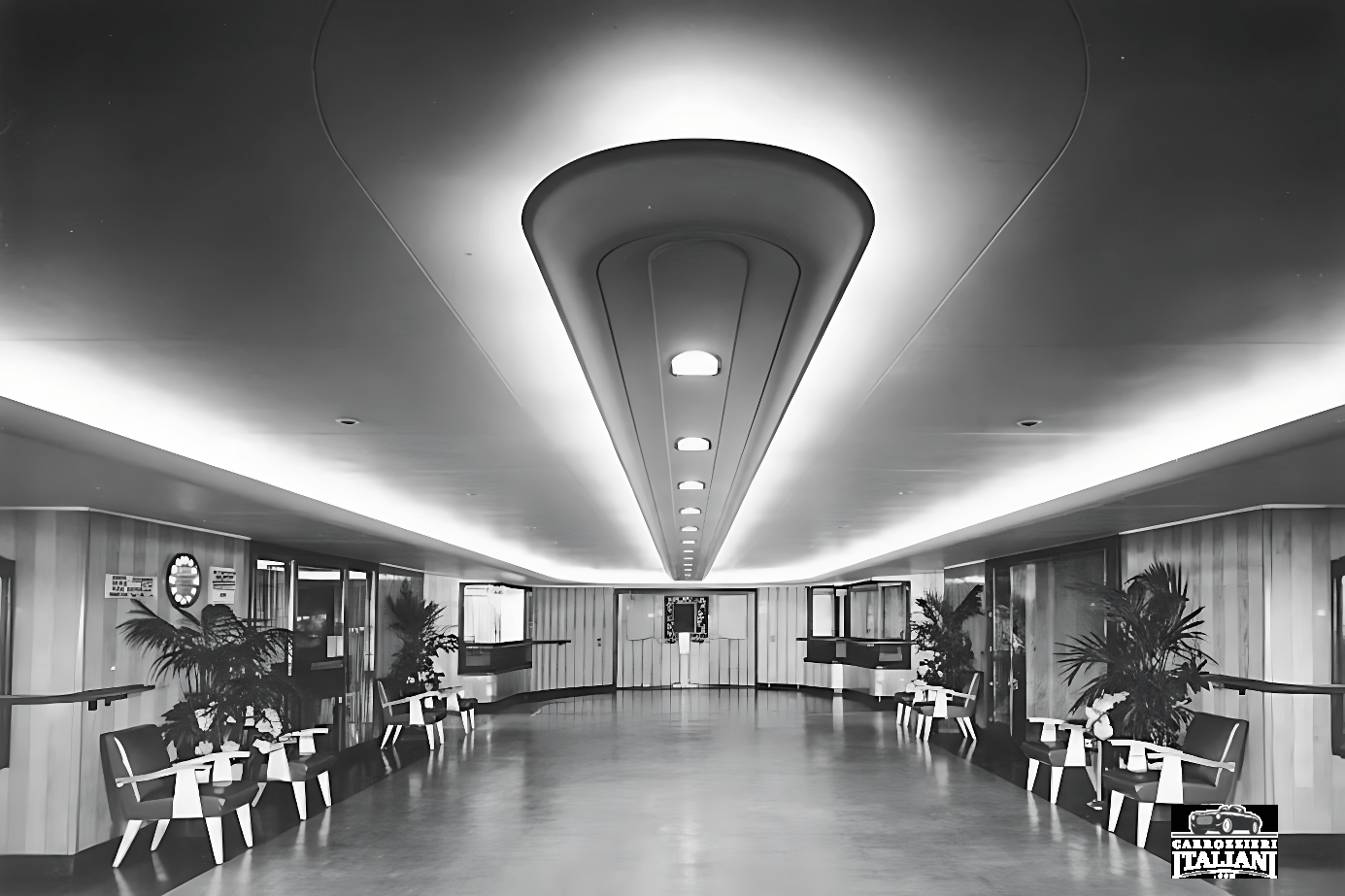
At the time, the Andrea Doria represented modern Italy at sea. She was elegant and carefully styled, with interiors that reflected the same postwar design confidence seen in Turin’s coachbuilding studios. She offered comfort and sophistication to her passengers, and she carried commercial cargo below decks.
On July 17, 1956, she departed Genoa once again for New York. Among her cargo, secured in a wooden crate deep in the hold, rested the Chrysler Norseman. It was expected to be a normal Atlantic crossing.
The disaster
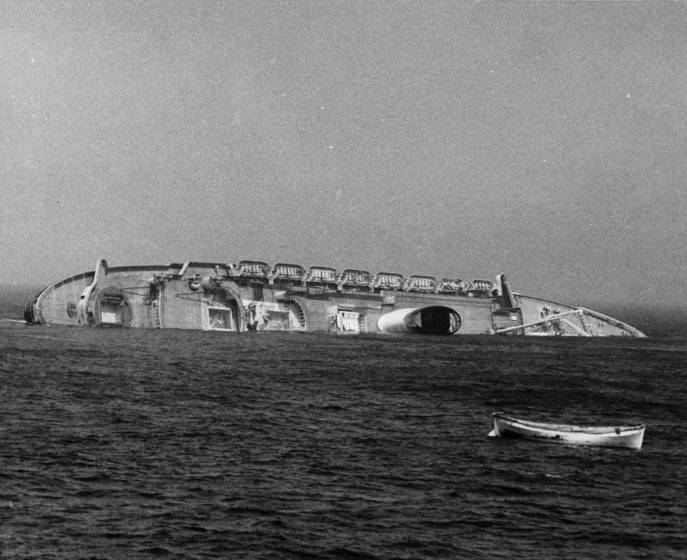
On July 26, the ocean liner Andrea Doria tragically sank after being rammed by the Swedish ship Stockholm, taking dozens of lives and the Chrysler Norseman concept car to the bottom of the sea. Chrysler issued an official statement the same day, mourning the loss of the car, which was never rebuilt or unveiled to the public, and was never put into production.
However, another concept car, the Ford Bimini, was spared from this fate. Though it was nearly loaded onto the Andrea Doria, it was not on the ship when it sank.
Turin coachbuilder Ghia in 1961 resumed its line and many of the technical solutions for the construction of the Dodge Flitewing and Chrysler TurboFlite concept cars.
But Chrysler never used the cantilevered roof design in any subsequent vehicle.
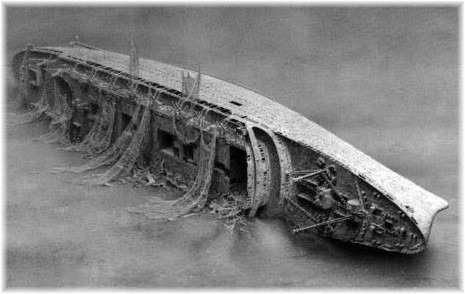
Despite numerous attempts to bring to the surface the treasures sunk with the Andrea Doria, it has not yet been possible to recover it from the hold of the wreck.
The Chrysler Norseman today
After almost 65 years, the Norseman is probably not there anymore, under 75 meters of water on the bottom of the Atlantic off the coast of Massachusetts (40 ° 30′N 69 ° 53′E / 40.5 -69.883).
A diver named Bright was one of the last people to pay homage to the Norseman in 1994. As he stated, the car was in cargo hold number 2 packed in a crate which had completely disintegrated, leaving the Norseman in very poor conditions. The tires were the only element which helped with the cars identification. Considering that 31 years have passed, no one else will be lucky enough to see the remains of this prototype involved in this tragedy.

ABOUT THE AUTHOR
Andreas Scheidl
Italian classic car enthusiast with German roots. Renowned as a respected figure in the classic car community, he serves as a jury member at various international concours d'elegance, including the Classic Gala Schwetzingen and Mantova. As a content creator, Andreas passionately shares his profound knowledge and appreciation for vintage automobiles. His heart beats for cars designed by Giovanni Michelotti, showcasing his discerning taste and dedication to preserving the timeless elegance of automotive history.
More stories by Andreas Scheidl ↗CONTINUE READING
Posts You Might Like
A Central Driving Position, a Rear-Mounted V8. Was This Really a Lancia?
In 1948, visitors to the Turin Motor Show could see an unusual Lancia on the stand of Carrozzeria Ghia. It was a large two-door coupé with a two-litre V8 mounted behind the…
Read story
Fioravanti F100: The Ferrari He Was Allowed to Imagine
Enzo Ferrari’s centenary, Leonardo Fioravanti’s independent studio and a supercar that explored air brakes, steel wheels and a new way of driving—without ever wearing the Cavallino.
Read story
Michelotti Shellette: When the Fiat 850 Became a Yacht
The yacht designer, the Turin stylist and the tiny coachbuilt car that crossed between the quay, the royal holiday house and the auction room. Some automobiles were conceived for the open road,…
Read story
Maserati A6 1500: A New Road for the Trident
When the doors of the Geneva Motor Show opened in March 1947, Maserati was a name that required little introduction to anyone who followed motor racing. What it did not yet possess…
Read story
THE CONVERSATION
Comments 0
Share a memory, a period photograph or a documented detail about this story.