
The Lamborghini 400 GT Monza by Nembo: the Missing Gem
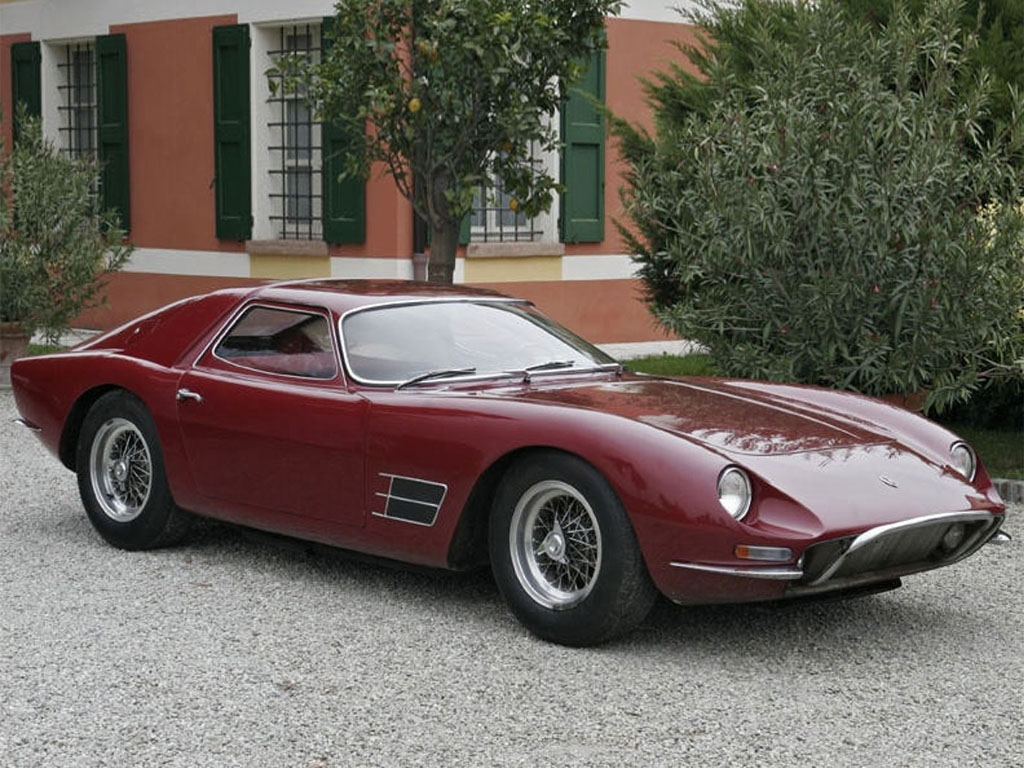
In the heady 1960s era of Italian sports-car ambition, Lamborghini dared to dream beyond its production models. One of the marque’s most intriguing creations was the 400 GT Monza – a one-off, two-seat grand tourer built in 1966 by the Modena coachbuilders Neri & Bonacini (the famed “Nembo” workshop). Little more than a prototype, the Monza combined Lamborghini mechanicals with custom aluminum bodywork. It was conceived as an alternate high-performance GT – possibly even for competition – yet almost immediately became a legend for vanishing from public view. As one blogger later noted, this unique Lamborghini “was hidden away for more than 30 years” and only resurfaced at auction in 2005. Today the 400 GT Monza remains a romantic mystery: an exotic hybrid of design influences, built on a rolling chassis numbered 01030 and powered by Lamborghini’s 3.9 L V12.
Origins: Lamborghini and the Nembo Workshop
Lamborghini’s story began in 1963 with Ferruccio Lamborghini’s challenge to Ferrari. He hired Modenese engineer Gian Paolo Dallara to design a chassis for his first prototype (the 350 GTV). That chassis was built by the newly-established firm of Giorgio Neri and Luciano Bonacini in Modena. Neri & Bonacini already ran a respected shop (nicknamed Nembo, a portmanteau of their names) that specialized in high-end race cars for Ferrari and Maserati.
In fact, they built Lamborghini’s very first car: the 350 GTV prototype of 1963. Throughout 1964–65 Neri & Bonacini continued to supply early Lamborghini chassis while series production ramped up. This early partnership – paired with their mastery of aluminum coachwork on Ferrari chassis – set the stage for the Monza. In short, Ferruccio knew he could trust Neri & Bonacini’s skills and vision.
The Concept of the 400 GT Monza
By 1965, Lamborghini had launched the 350 GT and was developing the 400 GT. Like many Italian marques of the era, it occasionally commissioned one-off specials to draw attention. Neri & Bonacini themselves decided to create their own interpretation of a Lamborghini GT on the new rolling chassis. Using a 350 GT frame (chassis no. 01030) and the more powerful 400 GT V12, they embarked on a bespoke two-seater berlinetta. The car was originally referred to as the “400 GT Neri & Bonacini,” but the name was soon shortened to simply “400 GT Monza” – a tribute to Italy’s famous racing circuit and a nod to racing heritage. (According to Neri, the full name “Monza Neri & Bonacini” was felt too cumbersome, so it was elegantly abbreviated to just Monza – a “romantic and suggestive” title.)
Contemporary accounts suggest the Monza may have been intended for an American customer, perhaps even to race at Le Mans. In interviews decades later, Giorgio Neri confirmed that the project likely began in 1963–64 “for an American client, possibly with the intention of racing at Le Mans,” although new FIA homologation rules never allowed it to compete. By June 1966 the unique coupé was complete. Ultimately, however, it was built simply as a stunning show car rather than a production model. (Homologation problems indeed prevented the Monza from ever racing, and its would-be American backer never formally took possession.)
Design and Styling
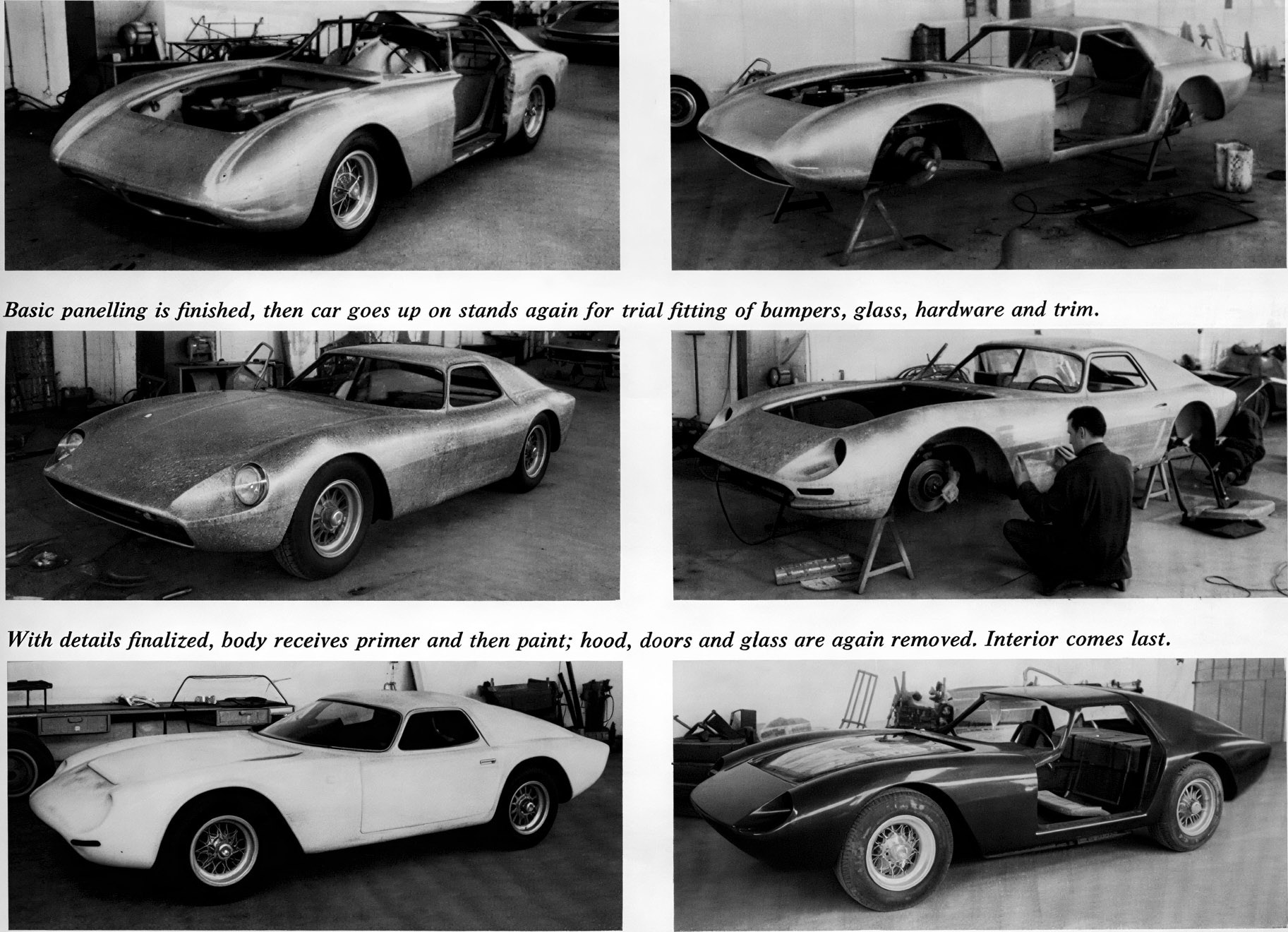
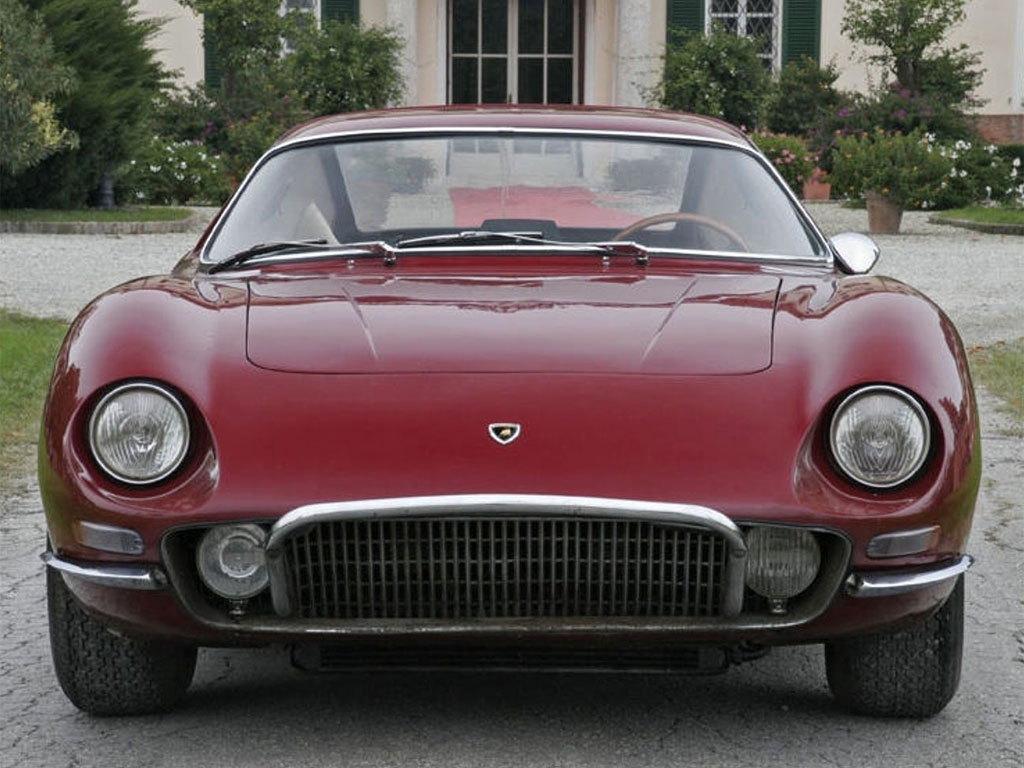
The Neri & Bonacini Monza fused the sleekness of an Italian GT with the aggression of a prototype racer. It was hand-formed in aluminum alloy, the body shaped on wooden bucks rather than by formal blueprints. In practice, Neri and Bonacini created a skeletal wire “buck” frame and draped alloy panels over it, iteratively adjusting the car’s curves and proportions by eye. The result was a low-slung, voluptuous fastback with an almost Ferrariesque front end: a wide, ground-hugging mouth and sharply raked windshield. In fact, the windshield was reportedly lifted straight from a 1964 Ferrari 250 GTO, contributing to the resemblance. Above the cockpit, a prominent “basket-handle” rollbar—fashioned as an integral part of the thick rear C-pillars—arches over the cabin. This roll bar gave the roof a distinctive canopy-like silhouette reminiscent of racing prototypes. The body tapers back into a truncated, almost horizontal Kamm tail (a flattened rear deck), capped by simple blade-like bumpers. The side profile is dominated by clean curves and a flowing roofline, with small horizontal louvres behind the front wheel arches recalling design cues from Ferrari. Neri & Bonacini even hand-applied “400 Monza” badging to the tail.
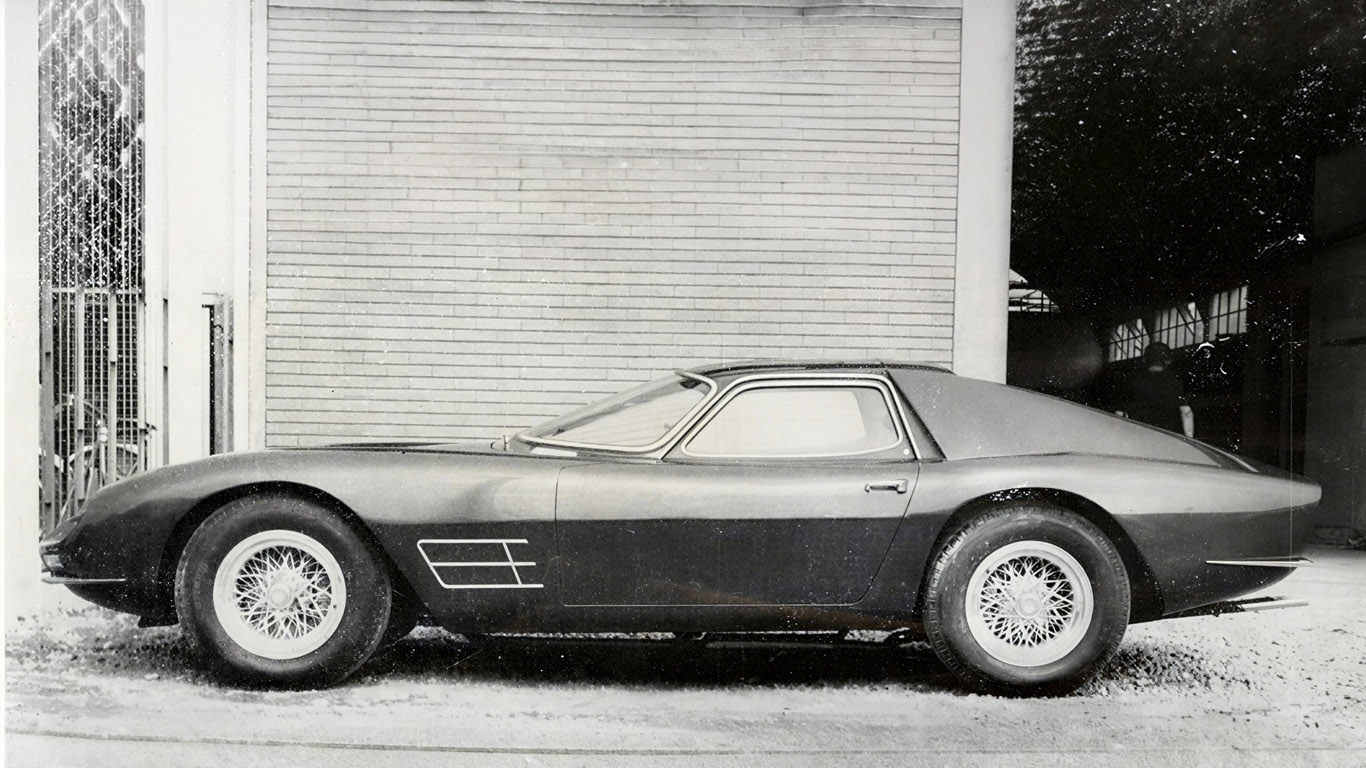
Car enthusiasts of the time noted the Monza’s striking appearance. Its shape blended cues from the hottest Ferraris and sports-racers. Indeed, one historian later commented that “this Monza 400 does not lack character” – praising its low-set cockpit, powerful stance and pure, unadorned form. (Ferruccio Lamborghini himself is said to have followed the project closely, hoping it might “bear greater fruit” than some previous coachbuilt experiments.) Today we still see echoes of other icons in its lines: there are hints of the mid-engine Miura, the Iso Grifo, and even Bizzarrini’s 5300GT Strada in the Monza’s elegant proportions and Ferrari-like flair. Regardless of comparisons, the Monza struck observers as both beautiful and aggressive – a graceful, low-profile coupé that looks nearly as if it were born on the racetrack.
Construction and Development
Behind its graceful skin, the 400 GT Monza was fundamentally a Lamborghini 400 GT internals. Underneath was a tubular steel chassis nearly identical to the standard 400 GT (built at Sant’Agata), and under the long hood sat the latest 3.9 L V12 with 320 bhp. Neri & Bonacini built the car around a reinforced version of a 350 GT production frame (chassis no. 01030) and all of its mechanicals. A five-speed ZF manual gearbox and Salisbury limited-slip differential transferred power to the rear wheels. All four corners used Girling disc brakes and independent wishbone suspension, largely borrowed from the production GTs.
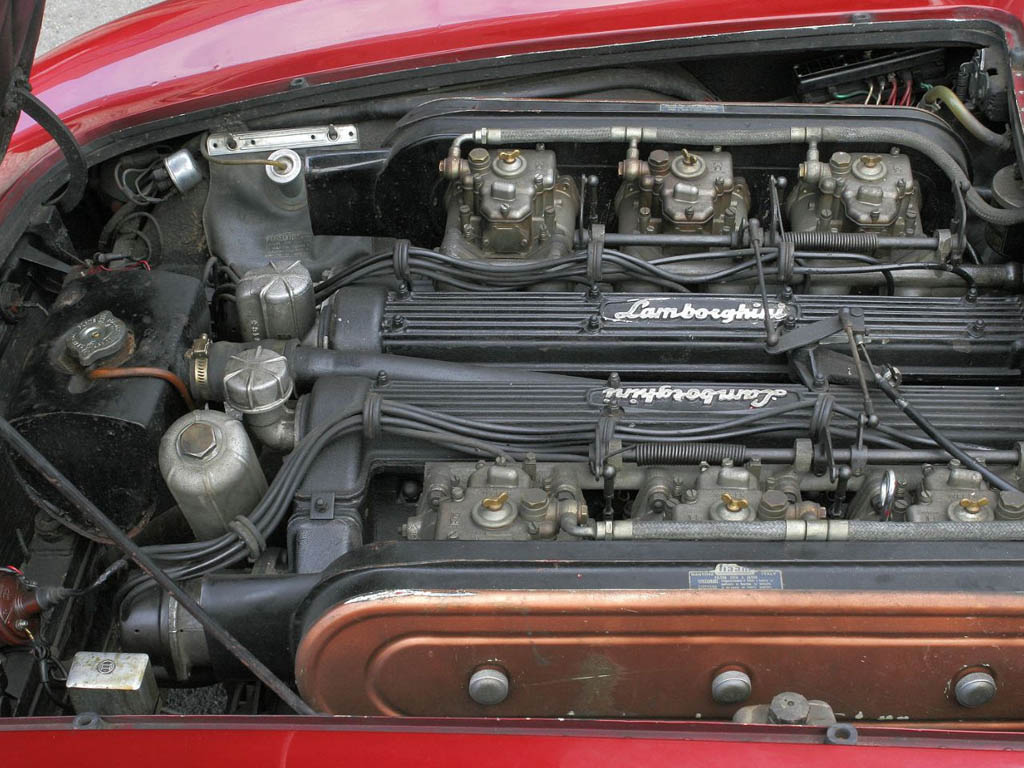
According to Neri, construction was labor-intensive: “it was simply a case of altering the proportions until it looked right,” without any formal drawings. The aluminum body was painstakingly hand-formed and trimmed through many revisions before the final shape emerged. By June 1966 the car was finished. Because of the rushed schedule and experimental nature, the Monza’s components were often hand-fitted – from the six twin-barrel Weber carburetors feeding the V12, to the hand-assembled bodywork. Even details like the headlight covers and stainless trim were custom-made. It was, in every sense, a one-off prototype.
🔗 Read more: The Lamborghini 350 GT: Ferruccio’s first street car
When it came time to race-prepare (if only hypothetically), Lamborghini’s new regulations posed an obstacle. The 400 GT Monza was never homologated for competition. In practice, that meant the project dead-ended as a road-going curiosity. As one source dryly noted, homologation “prevented the car from ever racing,” and the intended American customer never received it. Thus, instead of roaring at Le Mans, the Monza was relegated to the sidelines – destined to make its mark on history as a showpiece rather than a track warrior.
Barcelona 1967: Public Debut
After its quiet completion in 1966, the Monza finally stepped into the spotlight in spring 1967. Its first (and only) public appearance was at the Barcelona International Motor Show. There it sat on the stand of Amato Automóviles (Lamborghini’s Spanish importer) next to the new Miura – a striking contrast of styles. Contemporary reports describe the scene: Spanish press wrote of a “surprise” at the Jarama circuit launch event, where in addition to the Miura there appeared this previously-unseen Lamborghini berlinetta.
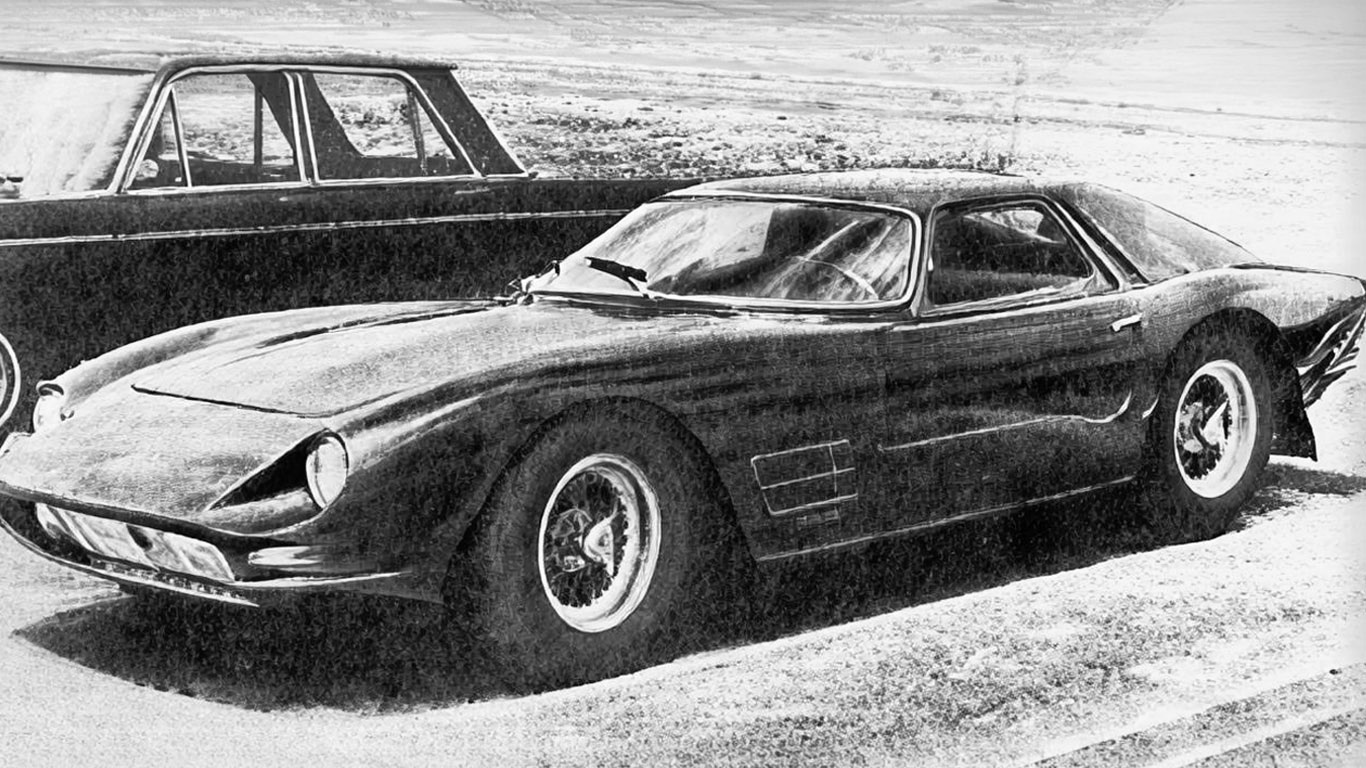
In fact, L’Automobile magazine hailed the coupé as an unexpected revelation: it called the prototype “Lamborghini ‘Jarama’” (its new nickname) and praised its “previously unseen silhouette,” adding that it had “nothing to envy” in elegance even when compared to the production models. In short, the Monza drew crowds. Its deep red paint and exotic coachwork turned many heads as the Miura roared alongside it.
A Spanish Collector and the “Jarama” Saga
The Monza’s Barcelona debut had a fairy-tale ending: a wealthy Spanish sportsman and amateur racer immediately fell for it. According to the lore, this gentleman already owned high-performance Porsches (906 and 908 race cars) and a tuned Mini, and he had also acquired a new Porsche 904. He had connections – essential in 1960s Spain under Franco’s regime – to import such an exotic car when normal rules would have forbade it.
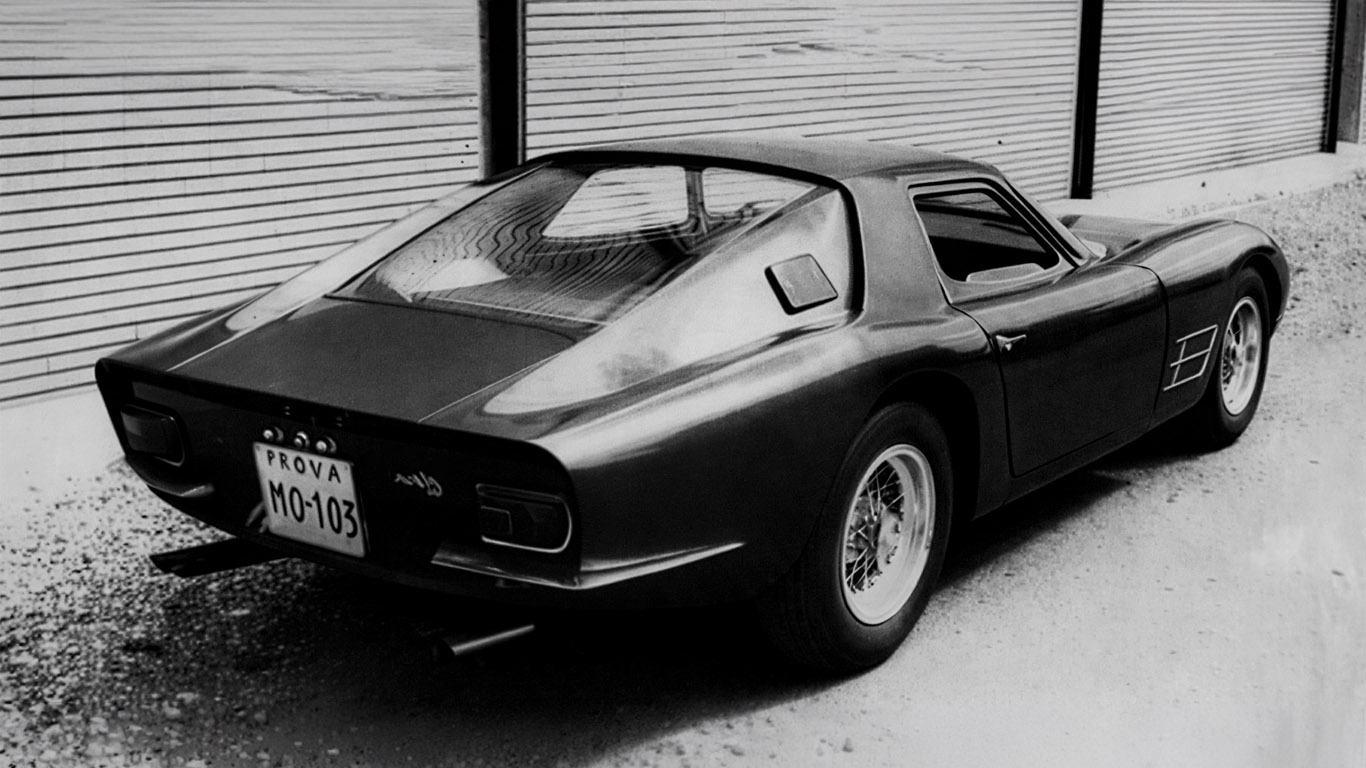
After a brief negotiation (and reportedly some help from high places), he purchased the Monza right there at the show. As a tribute to its new home, the owner immediately re-badged the coupé as the “Jarama”, after Spain’s recently-opened race circuit where the Miura had debuted. (Lamborghini itself would later use that name on a 1968 GT model, but this Spanish Monza was the first to wear it.)
🔗 Read more: Lamborghini Miura: The Bull That Launched the Supercar Era
With the Monza in his garage, the owner used it sparingly but appreciatively. By late 1970 the odometer showed only about 7,136 km – an average of a couple thousand per year. Then, in the early 1970s, the car was quietly parked. Whether due to changing tastes or simply storage constraints, the Lamborghini was bricked up at the back of a workshop and largely forgotten. It would remain hidden away for decades, its whereabouts the subject of whispered rumors among collectors.
Rediscovery and Legacy
For the next thirty years, the 400 GT Monza was essentially a “missing link” of Lamborghini history. Enthusiasts hunted for it without success. Finally in 1996 Bonhams (then known as Brooks) was asked to appraise some family cars – and there, in original, untouched condition, the Monza was found in storage. Its owner had passed away a short while before and the family had neither realized nor exploited the coupé’s rarity. Only after years of cajoling did they agree to sell.
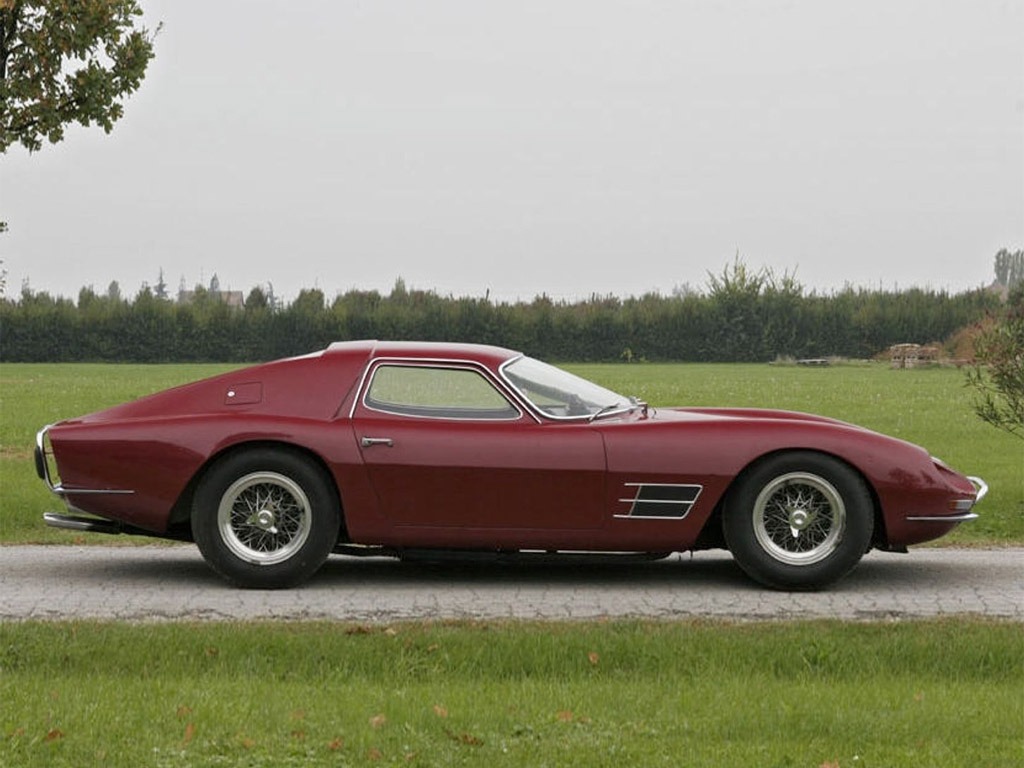
The Monza made headlines when it crossed the auction block in London on 5 December 2005. Bonhams catalogued it as “The property of a lady, 1966 Lamborghini 400 GT Monza” and noted its one-off status and storied past. Bidders recognized they were bidding on a unique piece of automotive lore: with buyer’s premium, the hammer fell at about $315,000 USD (approximately £177,500 at the time). The new owner – a collector – drove away with Lamborghini’s once-lost prototype.
In the years since, the Lamborghini 400 GT Monza has been seen only rarely. It is preserved in essentially the same state as at auction, a completely original time capsule. Today it remains very much a hidden gem. Unlike a production model, it has no place on official registries or road car lists. Its story survives in magazine articles and enthusiast lore, and the car itself stays in private hands.
Yet the 400 GT Monza’s story is well earned. It encapsulates the spirit of 1960s coachbuilding: a slice of innovation and imagination molded by hand. Though it never raced, this glittering prototype stands as a testament to Lamborghini’s early ambition and the artistry of Neri & Bonacini. It blends the power of a V12 GT with the flair of Italy’s design heritage. In the annals of Lamborghini history, chassis 01030 will always be the Monza – a lone, missing jewel of a bygone era.

ABOUT THE AUTHOR
Andreas Scheidl
Italian classic car enthusiast with German roots. Renowned as a respected figure in the classic car community, he serves as a jury member at various international concours d'elegance, including the Classic Gala Schwetzingen and Mantova. As a content creator, Andreas passionately shares his profound knowledge and appreciation for vintage automobiles. His heart beats for cars designed by Giovanni Michelotti, showcasing his discerning taste and dedication to preserving the timeless elegance of automotive history.
More stories by Andreas Scheidl ↗CONTINUE READING
Posts You Might Like
A Central Driving Position, a Rear-Mounted V8. Was This Really a Lancia?
In 1948, visitors to the Turin Motor Show could see an unusual Lancia on the stand of Carrozzeria Ghia. It was a large two-door coupé with a two-litre V8 mounted behind the…
Read story
Fioravanti F100: The Ferrari He Was Allowed to Imagine
Enzo Ferrari’s centenary, Leonardo Fioravanti’s independent studio and a supercar that explored air brakes, steel wheels and a new way of driving—without ever wearing the Cavallino.
Read story
Michelotti Shellette: When the Fiat 850 Became a Yacht
The yacht designer, the Turin stylist and the tiny coachbuilt car that crossed between the quay, the royal holiday house and the auction room. Some automobiles were conceived for the open road,…
Read story
Maserati A6 1500: A New Road for the Trident
When the doors of the Geneva Motor Show opened in March 1947, Maserati was a name that required little introduction to anyone who followed motor racing. What it did not yet possess…
Read story
THE CONVERSATION
Comments 0
Share a memory, a period photograph or a documented detail about this story.