
THE VEHICLE AT A GLANCE
Model dossier
- Production period
- 1963
- Body style
- Coupé
- Engine
- Longitudinal V12 DOHC
- Type
- One-off
- Production
- 1
- Displacement
- 3,497 cc
THE PEOPLE BEHIND THE CAR
Coachbuilding, design & conversions
PRICE & SALES RECORD
Vehicle value
- Original price
- Not documented
- Latest recorded sale
- Not documented
01 / THE STORY
History & context
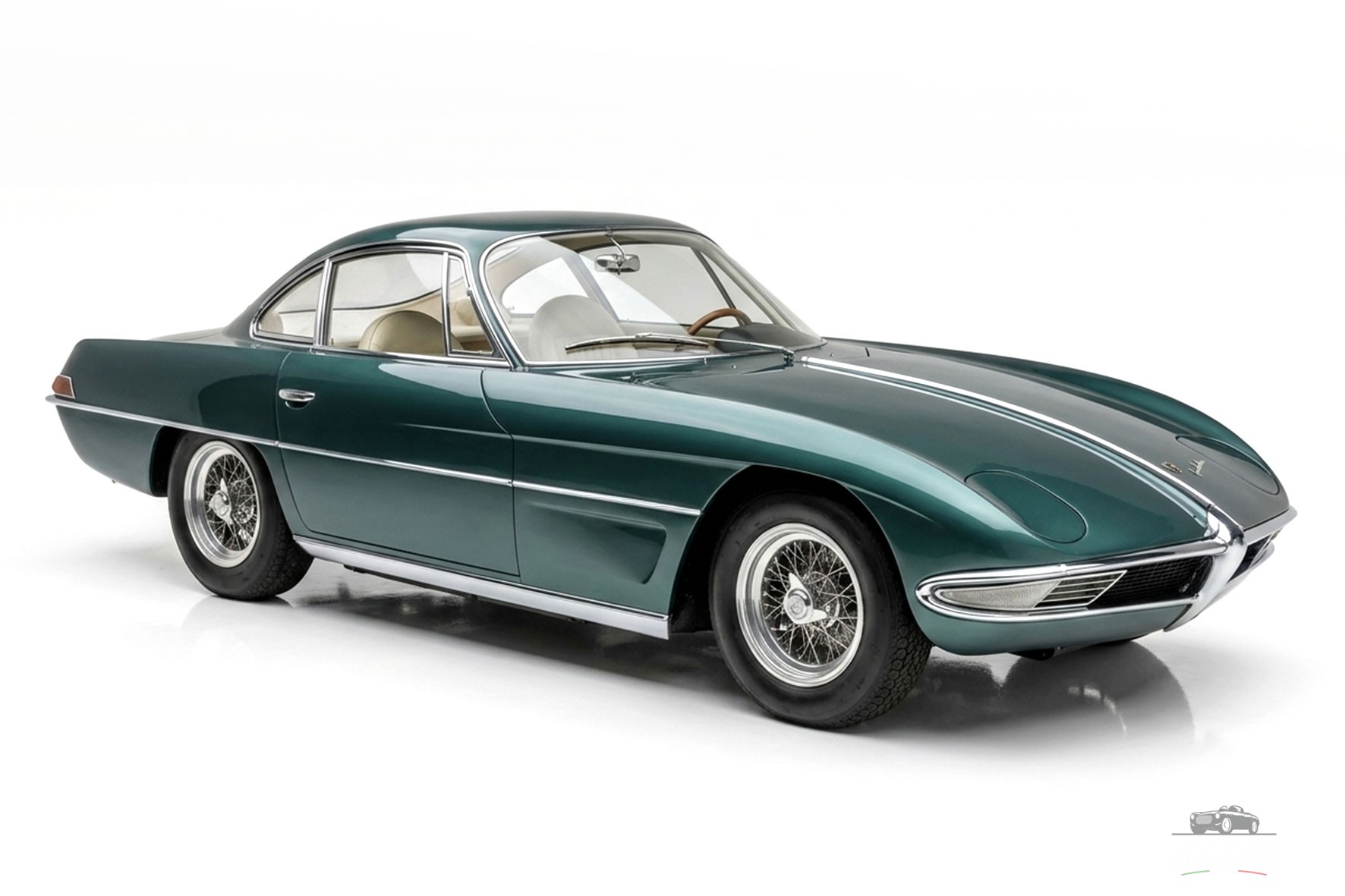
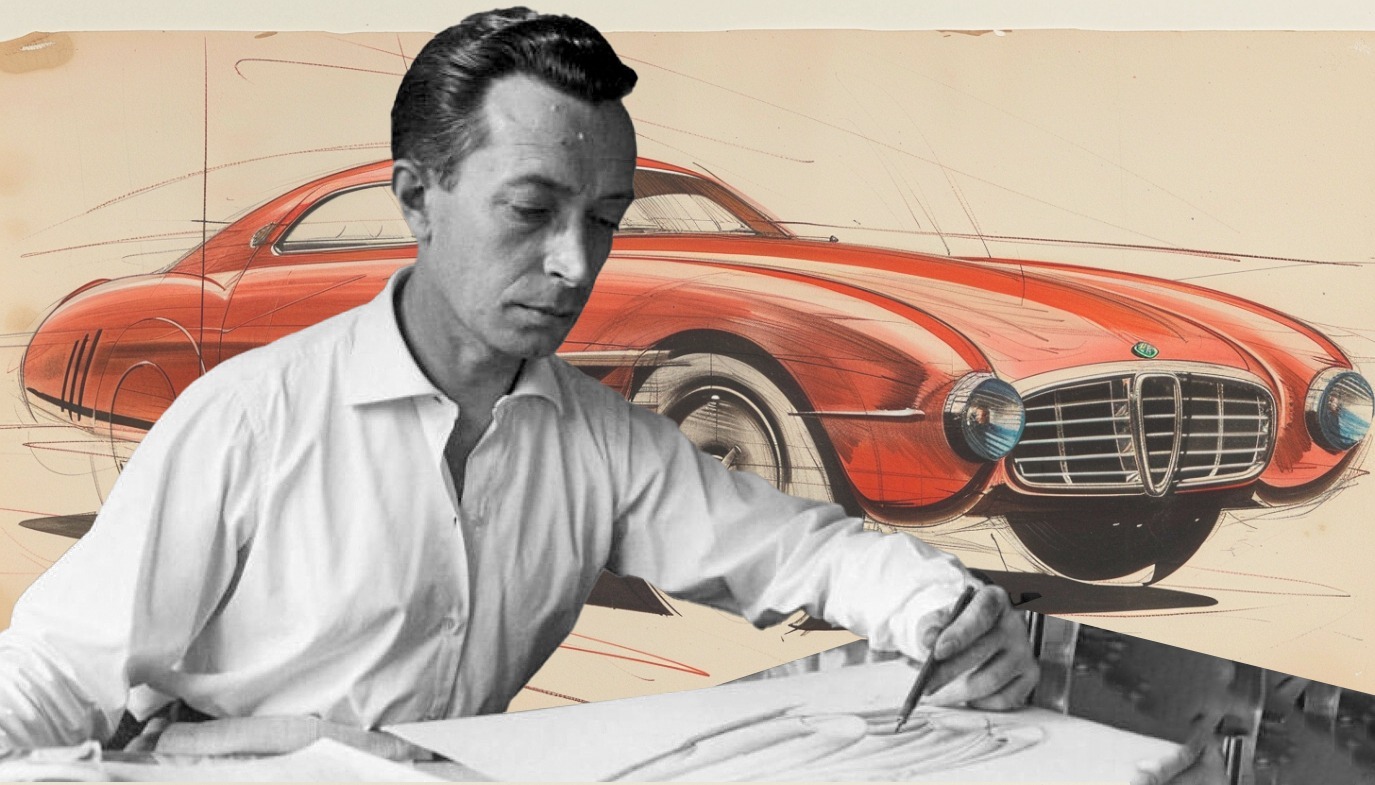
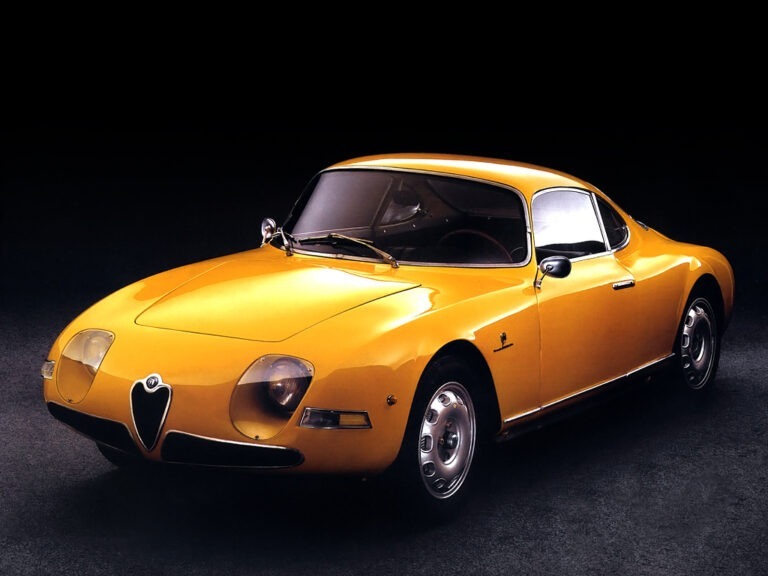
The Lamborghini 350 GTV ‘s name signified the 3.5 L displacement of the engine, the “GT” for grand tourer and the “V” for the Italian word “Veloce” (meaning “fast”). The 350 GTV body was designed by Franco Scaglione and built by Carrozzeria Sargiotto in Turin. Ferruccio Lamborghini’s opinion had a significant amount of influence on the design. He reportedly requested styling echoing the Aston Martin DB4’s tapering rear bodywork and the sleek front of the Jaguar E-type. The 350 GTV had many styling details that were unusual at the time of its introduction, including hidden headlamps and six exhaust tailpipes (three on each side of the car’s rear). The body was constructed of aluminum and steel. As workers at Sargiotto were primarily skilled in building molds for plastic products, the 350 GTV’s body had numerous fit and finish issues. Initially, Bizzarrini designed a racing-style tubular spaceframe chassis for the 350 GTV. Giorgio Neri and Luciano Bonacini built the tube frame chassis in Modena. This design was later reworked by Dallara into a more conventional, heavier design constructed of mostly square and rectangular section tubing that would be used in the production Lamborghini 350 GTV. Ferruccio Lamborghini commissioned Giotto Bizzarrini to develop the 350 GTV engine. This was the first iteration of the Lamborghini V12 series of engines, which would power future Lamborghini models up through the end of Murciélago production in 2010. Bizzarrini developed a 3.5 litre racing-specification V12 engine, with an output of 255 kW (347 PS; 342 bhp) at 8,000 rpm, and torque of 326 N?m (240 lbf?ft), using the DIN measurement standard. This design was derived from Bizzarrini’s plan for a 1.5 litre Formula One racing engine. Top speed was claimed by the factory to be 280 kilometres per hour (170 mph), although this was an estimate as the car was never driven or tested by the factory. This engine had a compression ratio of 9.5:1 and relatively aggressive valve timing compared to later versions of the Lamborghini V12. The higher redline, compression ratio and timing made the 350 GTV’s engine more suitable for competition use rather than as a comfortable road car. The Lamborghini 350 GTV engine was also equipped with six downdraft Weber carburetors and a dry sump lubrication system. The transmission was a 5 speed manual made by ZF. Power was directed to the rear wheels via a Salisbury self-locking differential. The independent suspension used triangular wishbones on the front and trapezoidal wishbones on the rear, with telescopic shock absorbers and coil springs at all four corners. Servo-controlled disc brakes were equipped on all four wheels. The Borrani center locking wire wheels were fitted with Pirelli Cinturato HS tires. The 350 GTV was never a complete, driveable car during its time as a Lamborghini prototype. During assembly, the workforce discovered that the body panels would not fit around the engine. Since he had no further plans for the Lamborghini 350 GTV beyond being a show car, Mr. Lamborghini had the engine bay ballasted with bricks and kept the bonnet shut throughout the Turin Auto Show. The incomplete show car also lacked brake calipers, foot pedals and windshield wipers.
02 / TECHNICAL IDENTITY
Specifications & construction
Production & construction
- Production
- 1
- Production type
- One-off
Engine & performance
- Engine configuration
- Longitudinal V12 DOHC
- Displacement
- 3,497 cc
- Specification notes
- Lamborghini's official history identifies the 350 GTV's longitudinal 3,497 cc V12 with double overhead camshafts as Bizzarrini's engineering work. No later 350 GT production output is retro-projected onto the prototype.
Design & manufacture
- Designer · Candidate
- Franco Scaglione
- Manufacturer · Documented
- Lamborghini
- Coachbuilder / Body Builder · Documented
- Sargiotto
06 / EVENTS & AWARDS
Events & awards
45° Salone Internazionale dell'Automobile – Torino General · legacy_preserved
- Date
- 1963
- Chassis
- General
Preserved CI 1.0 relation. Evidence field: _yoast_wpseo_primary_events. No award inferred.
The article dates completion and the Sant'Agata press debut to 26 October 1963 and the public Turin show to 30 October. It reports that a V12 was physically installed at the press debut but lacked pistons and crankshaft; at the Turin show a wooden box of floor tiles was used as substitute weight under the bonnet. General · Unreviewed
- Date
- 26 Oct 1963
- Chassis
- General
07 / THE VEHICLE IN DETAIL
Photo gallery 11 photographs
Show 5 more photographs Show fewer photographs
08 / FROM THE ARCHIVE
Archive
No publishable archival references are currently catalogued for this vehicle.


THE CONVERSATION
Comments 0
Share a memory, a period photograph or a documented detail about this car.