
Ferrari Made a Four-Door Once — The Untold Story of the Pinin
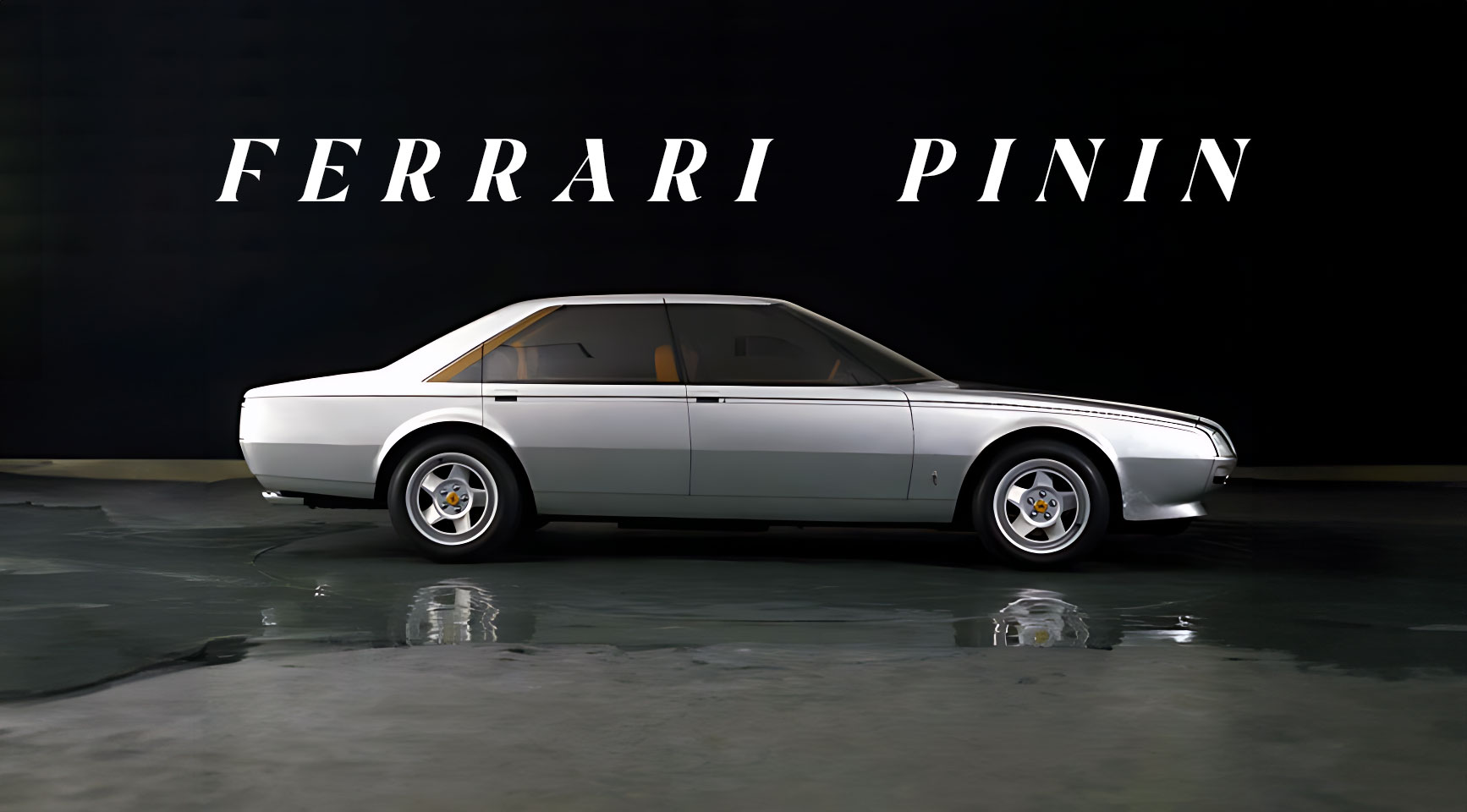
The Ferrari Pinin is a unique chapter in automotive history – a one-off four-door Ferrari sedan crafted by Pininfarina to celebrate the design house’s 50th anniversary. Unveiled in 1980, this elegant saloon was an audacious attempt to marry Ferrari’s performance pedigree with luxury sedan practicality. Although it never saw production, the Pinin’s journey from a show-stopping concept to a fully functional road car decades later has captivated design-savvy collectors and historians alike. In this article, we explore the full story of the Ferrari Pinin – from its ambitious inception and Turin Auto Show debut, through the internal challenges that halted its production, to its eventual resurrection as a road-legal one-off.
Background: Pininfarina’s Vision for a Four-Door Ferrari
In the late 1970s, Sergio Pininfarina sought to commemorate Carrozzeria Pininfarina’s 50th anniversary with a bold project that pushed the boundaries of Ferrari design. The idea was radical yet enticing: create a Ferrari luxury sedan to compete with the era’s high-end four-doors like the Jaguar XJ, Maserati Quattroporte, Aston Martin Lagonda, and Mercedes-Benz 450SEL. Up to that point, Ferrari had never produced a sedan – Ferraris were known only as sports cars or 2+2 GTs – but Pininfarina believed a four-door Ferrari could combine performance with comfort, tapping into a new market of plutocrats who wanted both speed and chauffeured luxury.
🔗 Read more: Pininfarina Through the Ages: The Complete History
Convincing Enzo Ferrari to entertain this idea was no small task. Enzo was a traditionalist about his brand’s racing DNA, yet circumstances made him receptive. At the time, Ferrari was under Fiat ownership, and Enzo himself was often driven in a humdrum Fiat 131 sedan – a far cry from the standards of Il Commendatore. According to Ferrari’s general manager Eugenio Alzati, Enzo found the 131 inadequate, so he “positively viewed a possible production Ferrari luxury sedan.” In fact, Enzo gave personal approval for Pininfarina to develop the concept, seeing it as an opportunity to have a proper Ferrari saloon as his executive transport. The project was nicknamed “Pinin” in honor of Battista “Pinin” Farina, the founder of Pininfarina – a poignant tribute woven into the car’s name.
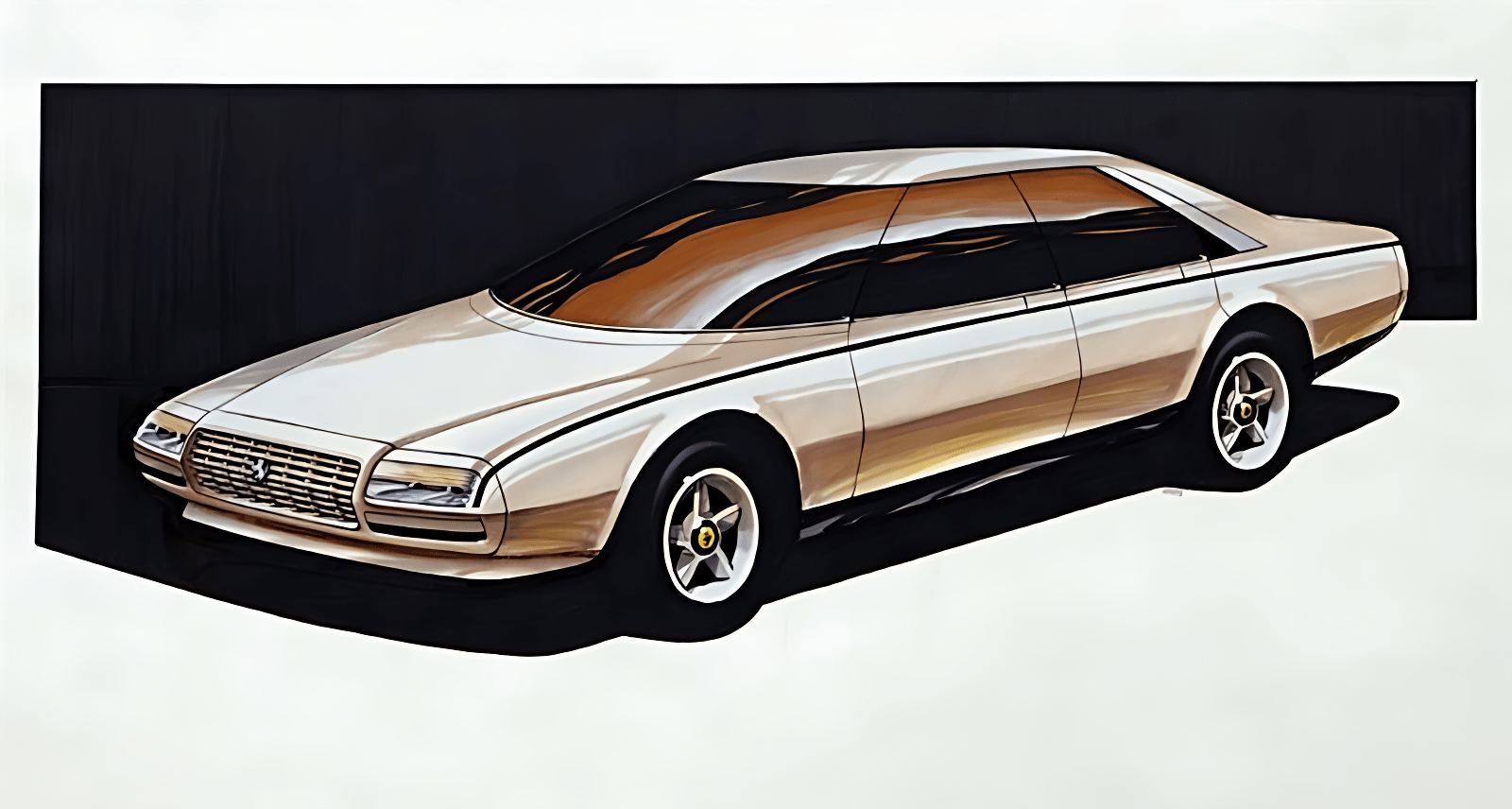
Thus, with Enzo’s blessing and Pininfarina’s determination, work began on designing a Ferrari like no other. Leonardo Fioravanti, Pininfarina’s renowned design director, led the styling team, and a young designer named Diego Ottina was chosen to craft the exterior lines of the sedan. The goal was clear: create a four-door Ferrari concept that could wow crowds at the upcoming Turin Motor Show and possibly persuade Ferrari’s brass to put it into production.
The 1980 Turin Motor Show Debut
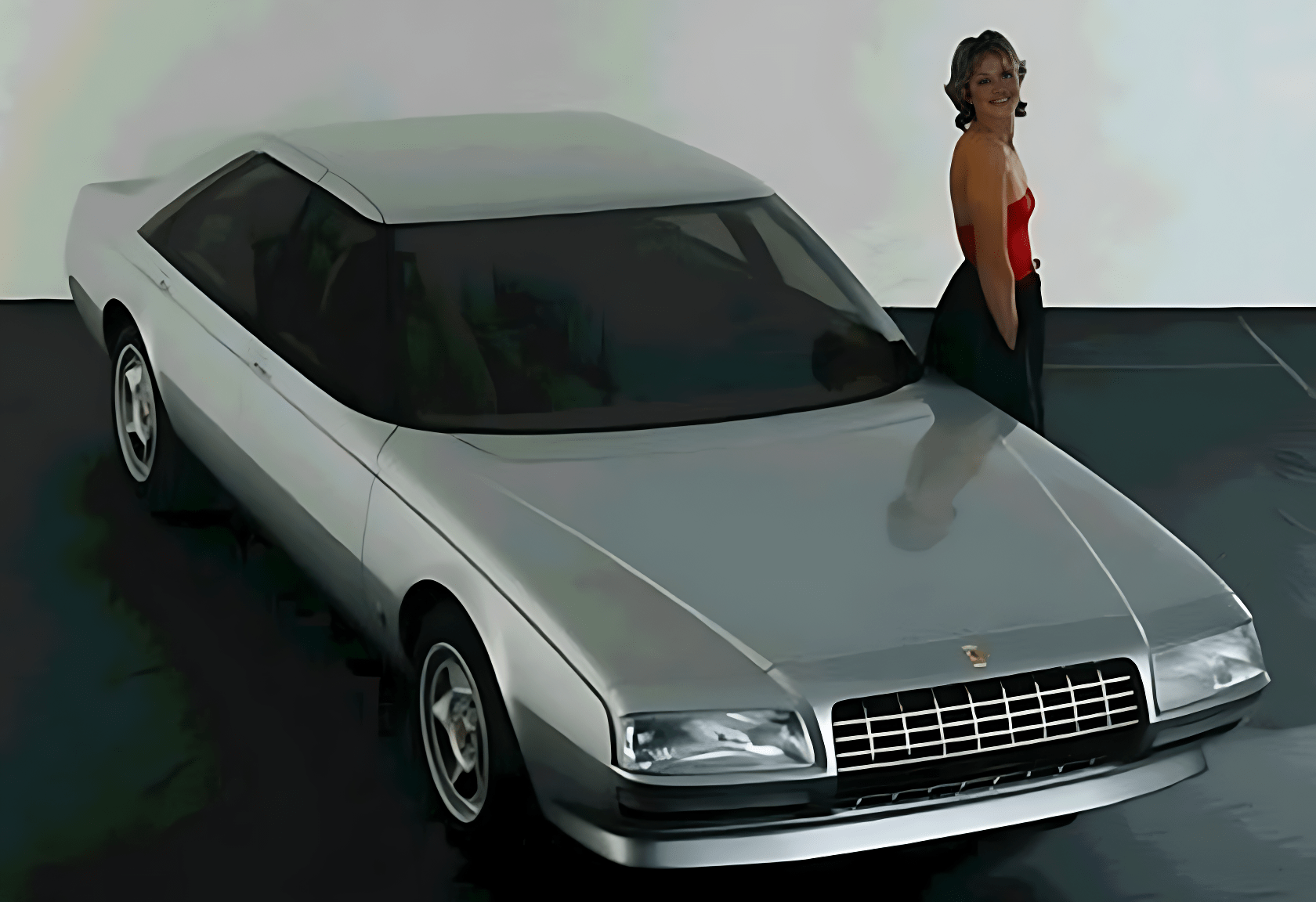
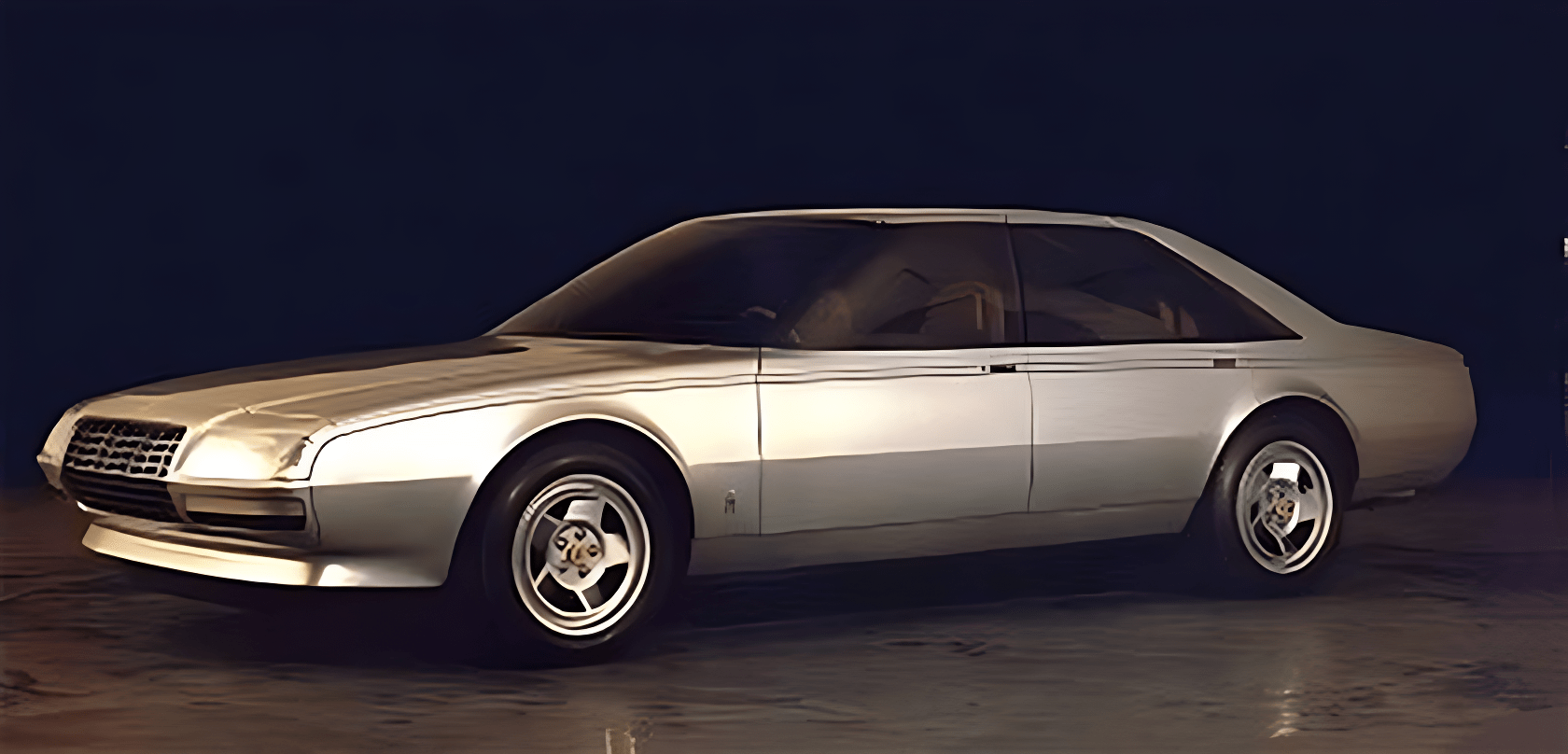
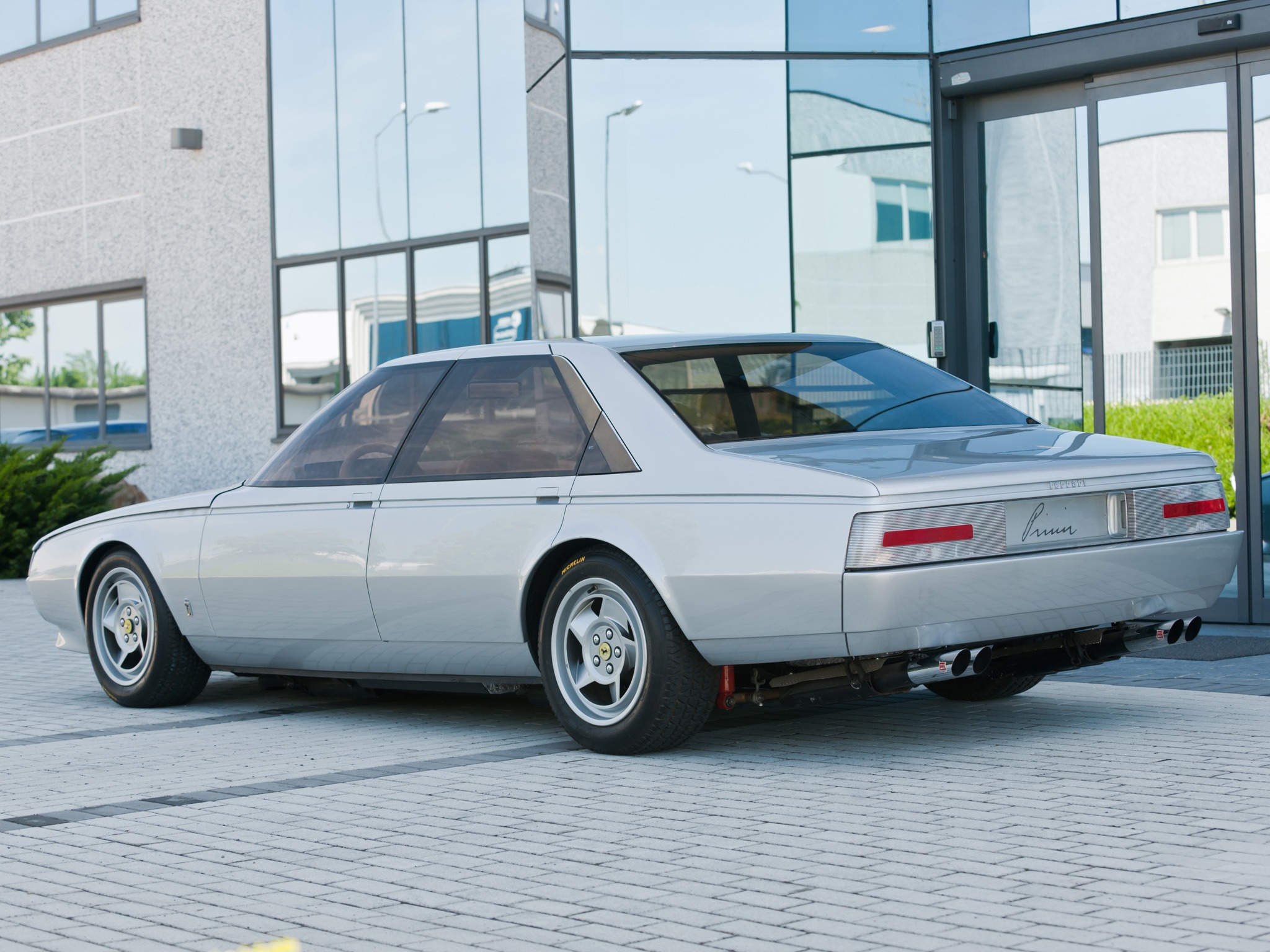
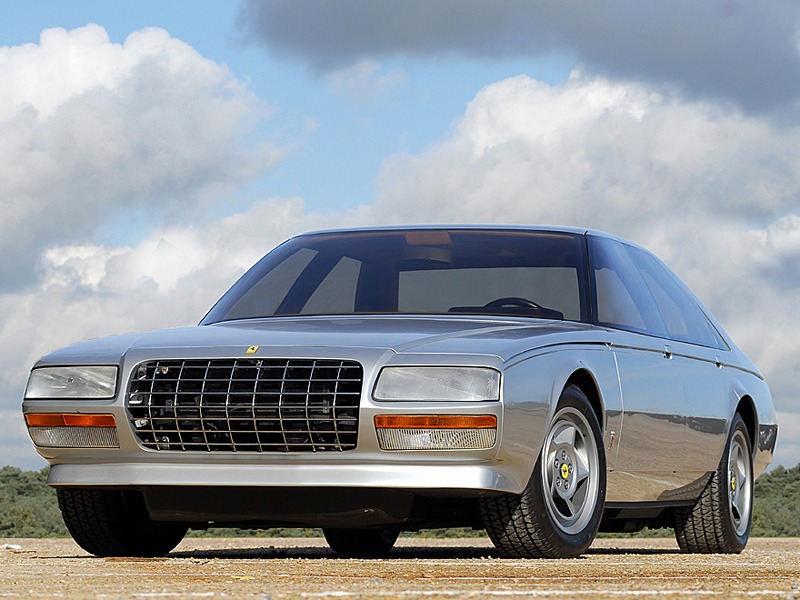
The Ferrari Pinin concept on display – an elegant silver four-door sedan bearing the prancing horse, unveiled at the 1980 Turin Auto Show. Its clean lines and flush glass surfaces were years ahead of their time.
The Ferrari Pinin made its public debut at the 1980 Turin Auto Show, immediately becoming the talk of the event. For the first time ever, enthusiasts laid eyes on a four-door Ferrari – a sight previously thought unimaginable. Pininfarina had kept the project under wraps, fueling months of rumors and anticipation in the automotive world. When the covers came off, the Pinin stunned onlookers with its futuristic yet understated design, demonstrating how a Ferrari sedan could look both luxurious and sporty.
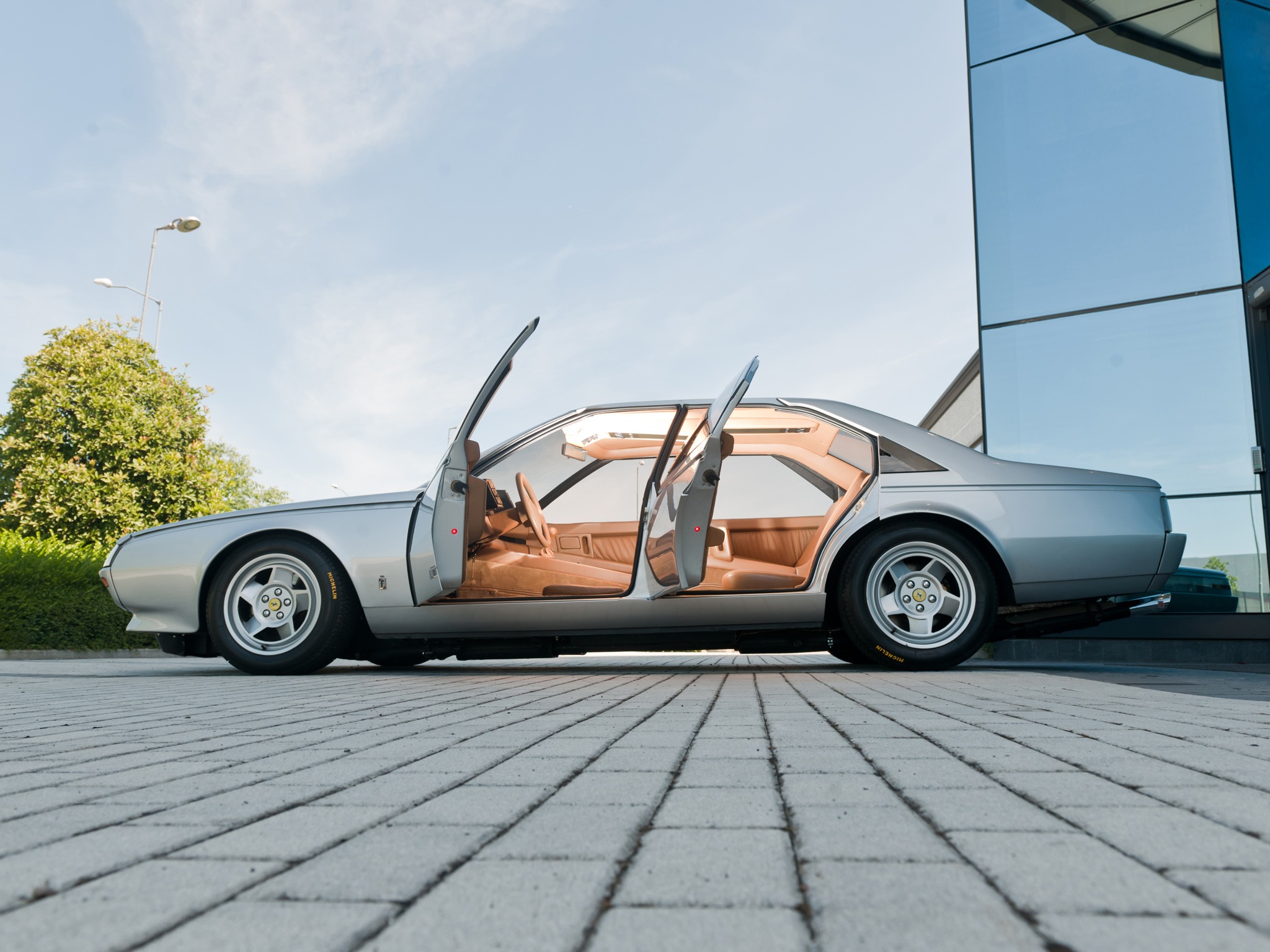
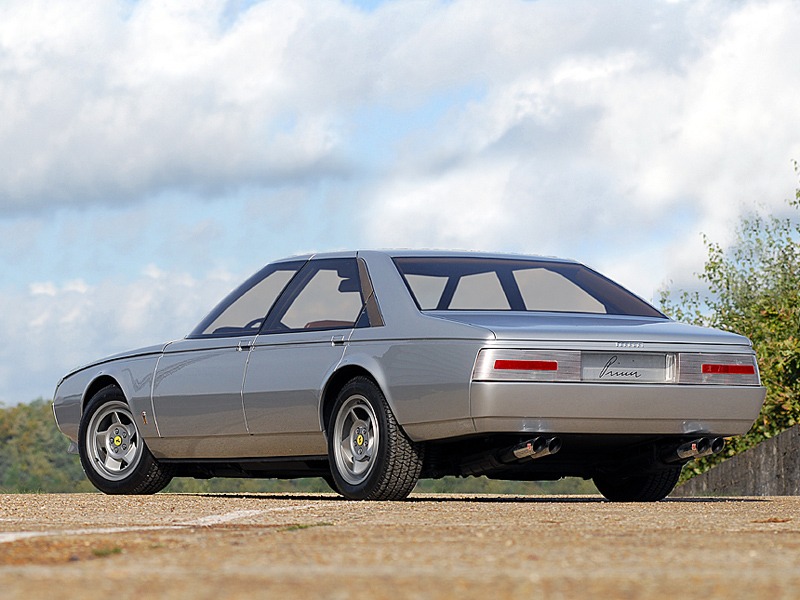
Under the lights of Turin, the Pinin’s proportions and details conveyed a forward-thinking design ethos. Its chassis was derived from a Ferrari 400 GT 2+2, stretched by about 5 cm to afford extra rear cabin space. The body measured just over 4.8 meters long – similar in wheelbase to a Mercedes-Benz S-Class of the day – yet it sat remarkably low and sleek for a four-door. The roofline was low-slung and flowed smoothly into the rear deck, emphasizing a coupe-like profile. In fact, Pininfarina cleverly disguised the B-pillars by using dark-tinted, flush-mounted glass from pillar to pillar, creating the illusion of a continuous band of glass around the cabin. This flush glazing not only looked aerodynamic, but also gave the Pinin a decidedly modern appearance – years ahead of its time (Audi’s landmark flush-glass 100 sedan would arrive a few years later, but the Pinin pioneered the concept).
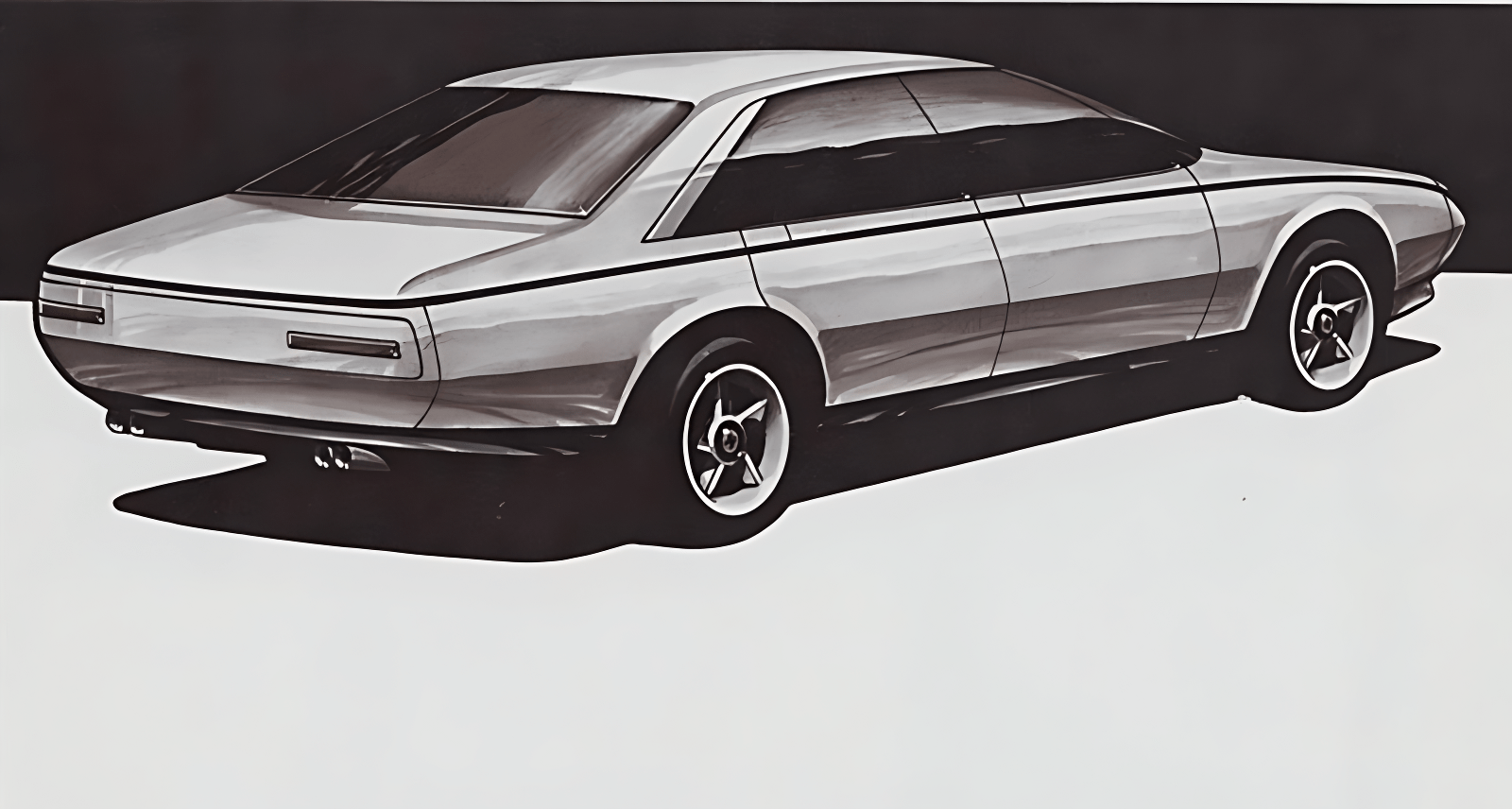
The front end featured a thin, rectangular egg-crate Ferrari grille flanked by innovative headlights. These were Lucas-developed “Homofocal” headlamps – low-profile units with multiple reflectors that allowed a much lower nose line than traditional round or pop-up headlights. The headlamps were arranged in a three-lens cluster, with the central section painted body-color, making them almost invisible when not illuminated. This design gave the Pinin a smooth, uncluttered face while still meeting lighting requirements. At the rear, Pininfarina continued the clean look with Carello-designed tail lamps that were hidden behind body-colored panels; when lit, the entire rear panel would glow red, an effect dubbed “High Contrast” illumination. These lighting elements were cutting-edge in 1980 and foreshadowed styling features that would become common decades later.
Other details underscored the concept’s blend of form and function. The door handles were almost invisible – neatly integrated into a recessed beltline groove along the sides, maintaining the body’s smooth contour. The windshield wipers tucked away beneath a retractable flap at the base of the windscreen when not in use, preserving the hood’s clean lines. Even the wheels were special: the Pinin sported five-spoke alloy wheels with a twist – each spoke was angled like a turbine blade to help draw cooling air onto the brakes. This subtle twist on Ferrari’s classic five-spoke wheel design added both visual flair and engineering purpose.
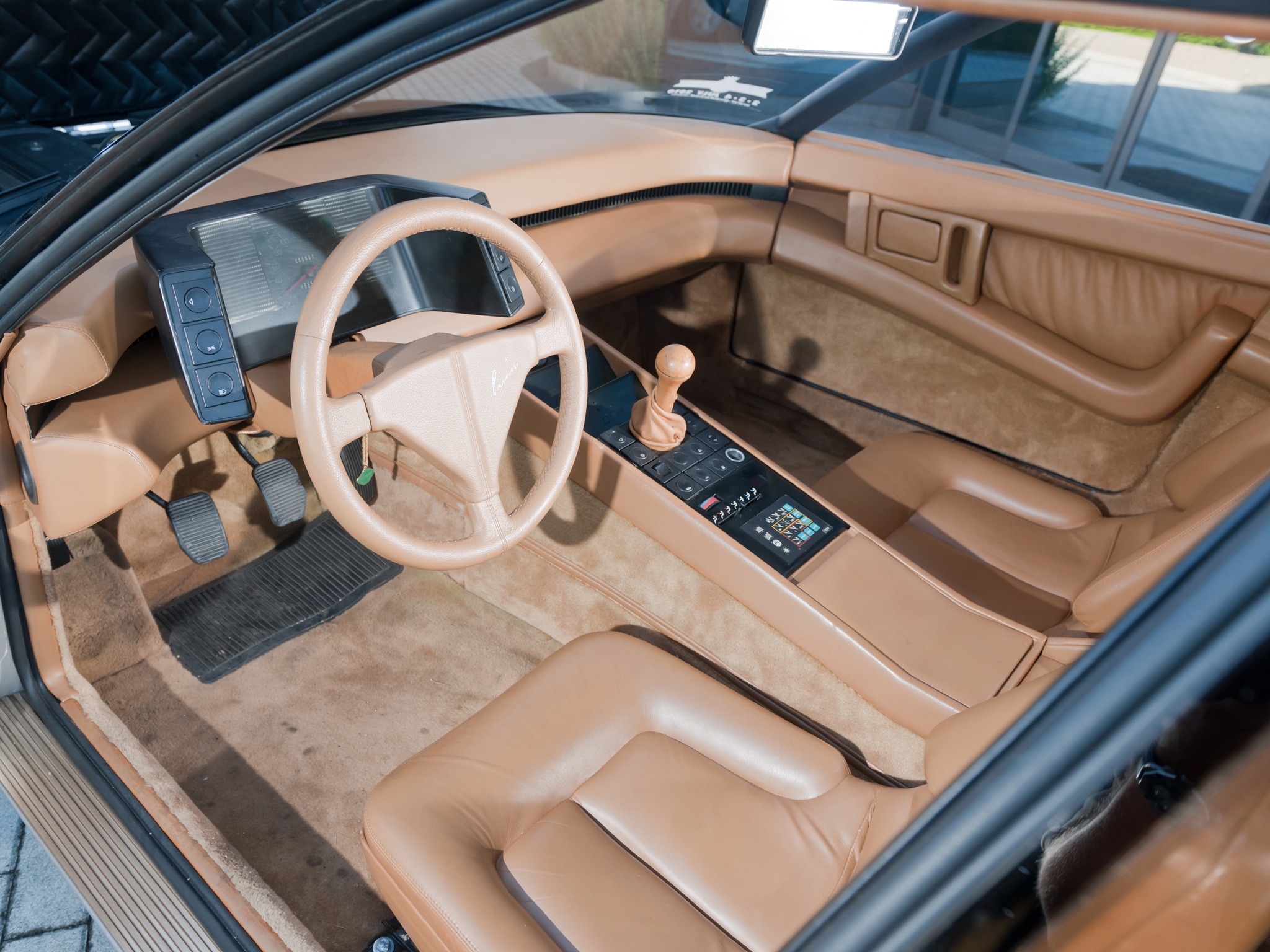
Inside, the Pinin was appointed like a true luxury saloon. The four-seat interior was lavishly trimmed in tan Connolly leather and featured amenities that were quite advanced for the era. The dashboard was famously high-tech: when the ignition was off, it appeared to be a glossy, featureless black panel, but once the car “powered up,” a full array of LED digital instrumentation and computer readouts sprang to life. This concept echoed the experimental digital dash of the Aston Martin Lagonda and emphasized the Pinin’s futuristic vibe. An on-board computer could calculate fuel consumption, average speed, and even give a countdown to a preset destination – almost unheard-of in 1980. In the rear, two individual seats offered generous legroom. Rear passengers had their own controls for amenities, including a secondary radio with headphones for private listening, as well as telephone and climate controls. Such features positioned the Pinin as an ultra-premium sedan, on par with (or ahead of) the best offerings from Rolls-Royce or Mercedes in terms of comfort and gadgetry.
Despite its fully realized appearance at the show, it’s worth noting that the Turin exhibit car was not mechanically functional. Pininfarina had built it as a design study – it had a mock-up flat-12 engine and basic rolling chassis, but no working drivetrain to drive under its own power. This is a common practice for wild show cars: the Pinin dazzled the public with its design and concept, even if it couldn’t yet roar like a proper Ferrari. The enthusiastic reception in Turin and later at the 1980 Los Angeles Auto Show proved that the idea of a Ferrari sedan was intriguing to many. However, turning this glamorous show car into a production reality would be an entirely different challenge – one that ultimately, Ferrari decided not to undertake at the time.
Designing the Pinin: Diego Ottina’s Elegant Silhouette
While the Pinin bore the unmistakable Pininfarina design language, much of its exterior flair can be credited to Diego Ottina, the lead exterior designer for the project. Under the supervision of the famed Leonardo Fioravanti (who had shaped many Ferrari icons of the ’60s and ’70s), Ottina was tasked with imagining how a Ferrari sedan could look modern, graceful, and yet still sporty. The result was an elegant, clean silhouette that managed to be both futuristic and subtly linked to Ferrari’s styling heritage.
Ottina’s vision is evident in the Pinin’s sleek profile and balanced proportions. By masking the car’s central door pillar (the B-pillar) behind the smoked glass, he achieved a continuous glasshouse effect that made the car appear as a seamless, pillarless coupe from the side. This not only enhanced the aesthetic – making the Pinin look lower and more aggressive – but also conveyed a sense of airy modernity. The side view was uncluttered by window frames, and the generous glass area flowed smoothly into the gently sloping C-pillars. The designers exaggerated the C-pillar thickness to give the roof a strong, coupe-like ending, further disguising the fact that there were rear doors at all. With these tricks, Ottina gave the Pinin a timelessly modern stance that wouldn’t look out of place even decades later.
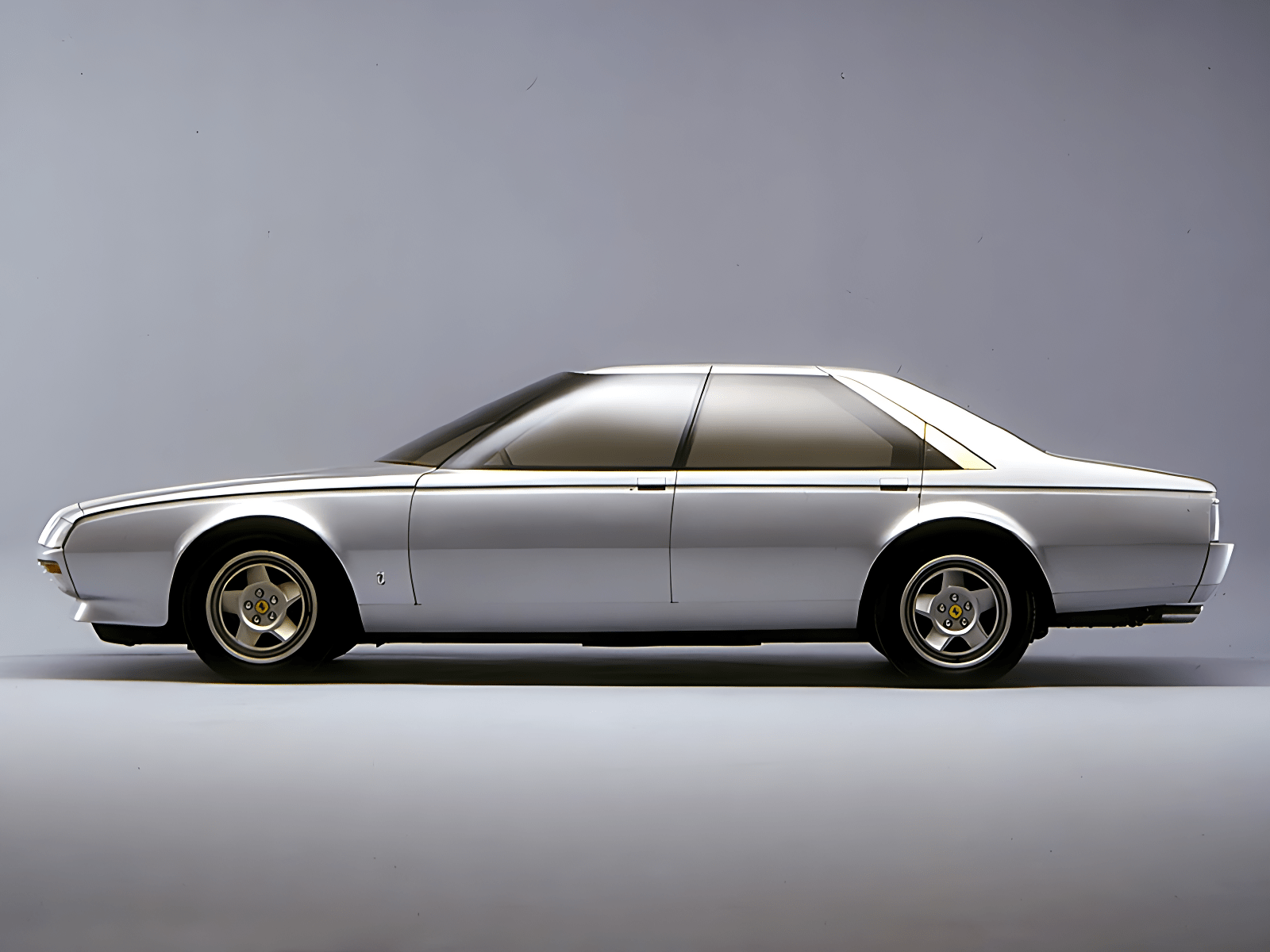
The body surfacing was characterized by straight lines and gentle curves, a departure from the exuberant wedges of 1970s supercars. Yet, it wasn’t a bland three-box shape – subtle radiuses on the fenders and a low beltline added sporting flair. In the front, aside from the classic Ferrari grille, there was little overt “Ferrari” ornamentation – no obvious side vents or strakes. This was intentional; Pininfarina wanted the design to look forward to a new era rather than echo past Ferraris. Ottina included only a few discrete nods to Ferrari’s identity: the prancing horse badges and those twist-spoke wheels reminiscent of Ferrari’s 5-spoke alloys. The overall aesthetic was refined and almost minimalist, emphasizing proportion and surface over decoration. This restraint in design is part of why the Pinin is considered such a masterpiece of automotive styling by many historians – it was futuristic but avoided the gaudy excesses that could have easily dated it.
🔗 Read more: The Cadillac Allanté: Meeting Italian Design Through an Airbridge
Ottina’s work on the Pinin left an enduring legacy. Although Ferrari did not produce this car, the design language of the Pinin influenced other production cars in the years that followed. Pininfarina applied similar themes of slim headlights, flush glazing, and crisp lines to several high-end sedans it designed for other manufacturers. Notably, elements of the Pinin’s silhouette and details can be seen in cars like the Peugeot 405/605 of the late 1980s and even the Cadillac Allanté and Seville STS – all of which carried Pininfarina styling cues reminiscent of the Pinin. In this way, Diego Ottina’s elegant four-door Ferrari silhouette served as a template for future luxury sedans, proving that good design transcends its original context. Today, Ottina is remembered among the ranks of Italian designers who dared to break mold – the Pinin stands as his most famous creation, an embodiment of Italian gran turismo spirit translated into a four-door form.
Ferrari’s Reluctance: Why the Pinin Never Reached Production
Despite the acclaim at its debut, the Ferrari Pinin would remain a one-off concept, never entering production. The reasons for this decision were a mix of corporate strategy, technical challenges, and philosophical reservations within Ferrari. Initially, Enzo Ferrari was impressed enough with the Pinin to discuss putting it into production – an extraordinary endorsement in itself. In the months after the Turin show, Pininfarina even took the car to the U.S. for private customer clinics, where select Ferrari clients gave positive feedback. There was genuine momentum behind the idea of a Ferrari sedan. However, by the end of 1980, at Ferrari’s annual board meeting, Enzo ultimately did not give the final go-ahead. The project stalled, and in the following years it quietly died despite Sergio Pininfarina’s persistent lobbying.
Ferrari executives and engineers cited several technical and logistical concerns that led to the Pinin’s rejection as a production model. Among the major challenges were:
Chassis Rigidity and Engineering: The Pinin was built on a modified Ferrari 400 GT chassis, which would have required significant reinforcement to maintain structural rigidity as a four-door. Removing the roof support for the rear doors (even with a hidden B-pillar) could introduce chassis flex that Ferrari’s engineers were not confident would meet their standards without a substantial redesign. The concept car on the show stand wasn’t a fully engineered vehicle – for example, when it was later converted to a runner, engineers had to strengthen the chassis and relocate engine mounts to accommodate the V12 engine. These structural modifications hinted at the engineering hurdles that a production Pinin would face.
Door Design and Sealing Issues: Pininfarina’s striking flush-window design, while great for aesthetics, posed a practical problem: the concept had no provision for opening side windows at all. In a road car, the doors would need functional windows with proper weather seals, likely requiring conventional window frames or complex mechanisms. Ferrari’s team was concerned that the frameless glass and bonded black pillars, as shown, would be hard to implement without wind noise or water leakage issues. The beautiful continuous glass look might have needed to be compromised for production, which could spoil the design’s purity. This “show car” solution was seen as a liability when it came to real-world usability and refinement.
Production Line Constraints: Building a four-door sedan was far outside Ferrari’s manufacturing wheelhouse in 1980. Ferrari’s factory in Maranello was geared toward low-volume production of two-door sports cars and exotics – it did not have a sedan assembly line, nor the tooling to produce a four-door body at scale. Essentially, Ferrari would have had to rely almost entirely on Pininfarina (or another coachbuilder) to build the bodies, and possibly even to assemble the cars. Internally, there was worry about becoming “completely dependent” on Pininfarina for this model, which clashed with Ferrari’s growing desire in the 1980s to bring more production in-house. Vittorio Ghidella, then president of Fiat (Ferrari’s parent company), also reportedly withheld support, seeing the Pinin as a distraction from more urgent projects to stabilize Fiat’s finances. In short, the logistics of production – from retooling the factory to managing outsourced assembly – were deemed too impractical and costly for the limited market the car would serve.
Brand Philosophy and Quality Concerns: Ferrari had built its name on exciting sports cars, not comfortable cruisers. There was an internal sentiment that a sedan, by nature, would have to prioritize refinement over raw performance, and this raised concerns. Leonardo Fioravanti himself noted that any Ferrari four-door would be judged against the finest luxury sedans (Mercedes, BMW, Rolls-Royce) in terms of build quality, ride comfort, and quietness – areas where Ferrari had little experience. In a sports car, Ferrari buyers might tolerate quirky ergonomics or a raucous ride in exchange for performance, but a sedan customer paying a projected ~$150,000 (a huge sum at the time) would expect the “most quiet and comfortable sedan on the market.” This quote from former Ferrari marketing manager Luca Matteoni encapsulated the dilemma: delivering that level of comfort “would simply have no longer been a Ferrari.” In other words, to meet luxury sedan expectations, Ferrari feared it might have to sacrifice the very character that made a Ferrari a Ferrari. This philosophical hesitation significantly dampened enthusiasm within Maranello for the Pinin project.
Ultimately, after about three years of debate and development, the project was formally canceled. Sergio Pininfarina had passionately advocated for it, even envisioning scenarios where Ferrari could use the sedan to chauffeur VIP clients from airports to Maranello (and likely sell a few cars in the process). But neither Ferrari nor Fiat could be convinced to divert resources to this niche experiment. By the early 1980s, Ferrari turned its focus back to upcoming sports models (like the 308/328 and Testarossa), while Fiat concentrated on high-volume cars (indeed, Fiat directed funds to the development of the popular Fiat Uno instead). The four-door Ferrari idea was shelved as an interesting “what if”.
Fiat’s influence cannot be understated – as majority owner, Fiat’s priorities leaned toward projects that would yield greater financial returns, and a limited-production Ferrari sedan did not fit that bill. Enzo Ferrari, known for his stubborn instincts, likely also realized that producing a sedan could dilute the brand’s image at a critical time (the 1980s supercar boom was on the horizon). Thus, the Ferrari Pinin remained a singular prototype, consigned to the Pininfarina museum collection as a fascinating might-have-been. While some Ferrari purists felt relief that a four-door never sullied the lineup, many enthusiasts were disappointed – the Pinin was undeniably beautiful, and it suggested an alternative direction that Ferrari could have taken. It would be nearly 40 more years until Ferrari built a production car with four doors (the 2022 Purosangue SUV), underscoring just how ahead of its time the Pinin was in concept.
A Second Life: Candrini’s Road-Legal Conversion
For decades after 1980, the Ferrari Pinin existed only as a static showpiece – first displayed in Pininfarina’s own collection and later stored by private owners. It couldn’t actually drive under its own power. That changed in the late 2000s, when a determined enthusiast named Gabriele Candrini decided to give the Pinin a second life as a fully functional automobile.
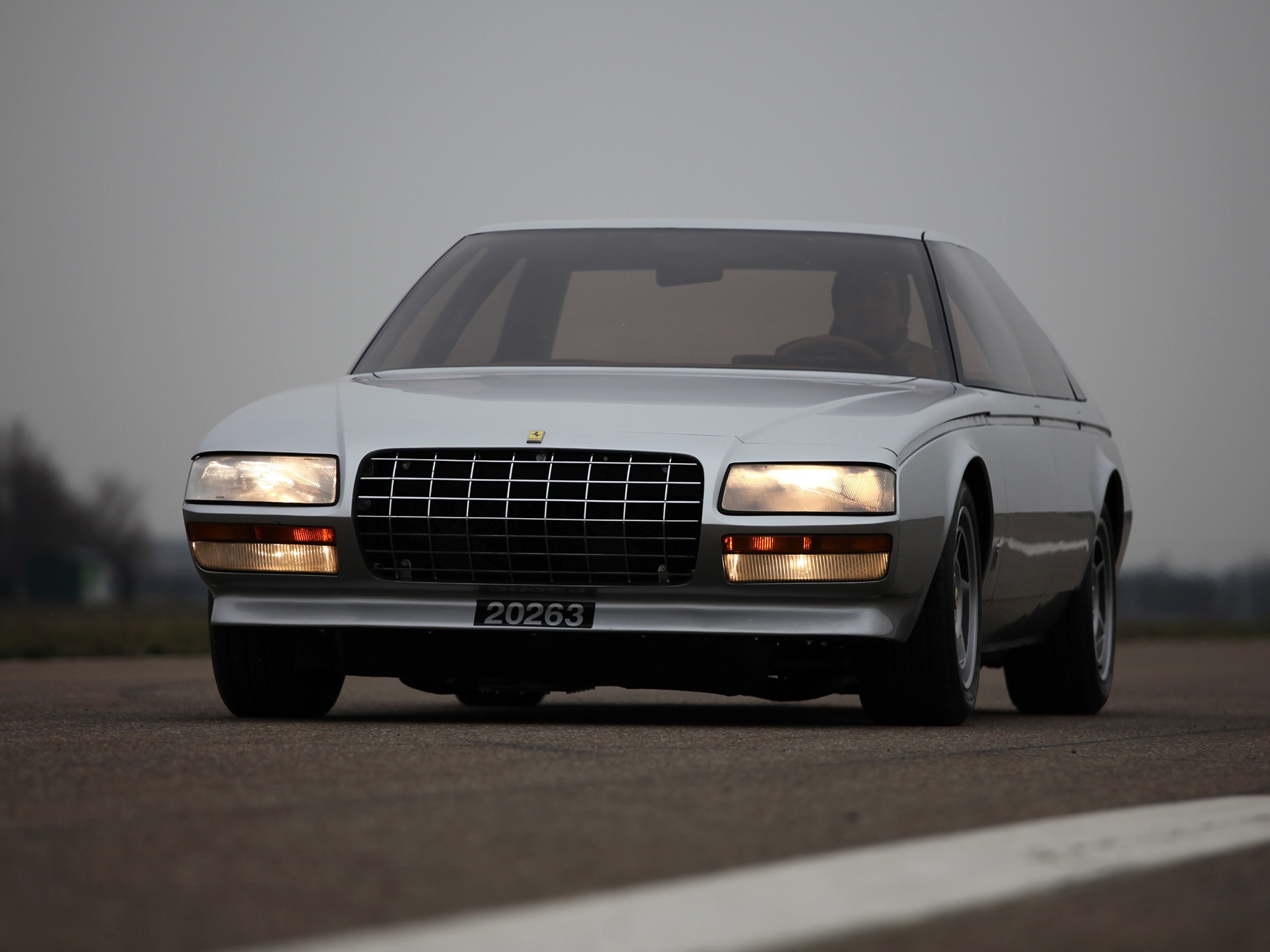
The Pinin’s journey into Candrini’s hands began with longtime Ferrari collector Jacques Swaters, who had acquired the car in the mid-1980s. Swaters was a Belgian Ferrari importer and racing team owner (Ecurie Francorchamps) as well as a close friend of Enzo. He treasured the Pinin as a piece of Ferrari history, even registering it for road use (it wore a Guernsey license plate “20263” in his ownership). However, Swaters never attempted to make it driveable – it remained a museum exhibit, admired but inert. In 2005 the Pinin was showcased at the Essen Motor Show for Pininfarina’s 75th anniversary, sparking new interest in the car. Eventually Swaters decided to sell, and in 2008 the Pinin went up for auction at the “Leggenda e Passione” Ferrari auction held by RM Auctions. There, Gabriele Candrini – an Italian Ferrari dealer and classic car specialist based near Modena – purchased the Pinin for €176,000.
For Candrini, buying the Pinin was just the beginning. He had a bold mission: turn the Ferrari Pinin into a fully driveable, road-legal Ferrari, as if it were a one-off production car. This undertaking would require significant engineering, fabrication, and of course funding. Candrini was well-positioned to tackle it – he was the manager of Maranello Purosangue (a firm dealing in rare Ferraris) and had connections to some of Ferrari’s engineering legends. He enlisted one such legend, Mauro Forghieri, to oversee the technical transformation. Forghieri, Ferrari’s former chief engineer during the 1960s and ’70s, had been responsible for numerous Ferrari race cars and engines. With his expertise, Candrini’s project had the best possible guidance.
Over the next year and a half, Candrini and Forghieri’s team (at Oral Engineering) performed an extensive conversion, essentially turning the concept into a functioning prototype. The major engineering modifications included:
🔗 Read more: Classic Car Restoration: The Ultimate Step-by-Step Guide for Beginners
Powertrain Installation: The Pinin was designed around a flat-12 engine layout, so the team sourced a 5.0-liter Ferrari flat-12 engine from a Testarossa (Ferrari’s 1980s flat-12 sports car) to install in the car. This engine was very similar to the 512 BB boxer engine the Pinin was originally intended to have. Fitting it was no trivial matter – the Pinin’s engine bay and hoodline were extremely low. The team ended up repositioning the engine slightly higher and further forward than a stock setup to make it fit. They also mated it to a 5-speed manual transaxle from a Ferrari 400 GT, since the 400’s transmission could be mounted at the rear (improving weight distribution) and work with a front-engine layout. A custom linkage was engineered to connect the front-mounted engine with the rear gearbox. Essentially, the Pinin now had the heart of a Ferrari Testarossa and the drivetrain layout of a Ferrari 400 – a unique configuration, but one true to the Ferrari lineage.
Chassis Reinforcement: To handle the weight and torque of the new V12 engine (and to make the car structurally sound for driving), the chassis was modified and strengthened significantly. The original concept’s engine bay had to be adapted – Forghieri’s team moved the engine mounting points up and forward on the frame. They reinforced the front section and other key areas to improve rigidity. In effect, they completed the engineering work that Ferrari might have done if developing a production Pinin, ensuring the frame could cope with real-world stresses. This reinforcement was crucial for safety and performance, given the concept’s origins as a display model.
Fuel System and Wiring: Since the concept car was never meant to run, it lacked many functional components. The team fabricated a bespoke fuel tank (around 120 liters capacity) from scratch and installed it within the chassis. They also designed and fitted a complete wiring loom to power the car’s electrical systems. All the lights, instruments, and new engine electronics had to be integrated. Effectively, the Pinin received the electrical and fuel systems of a real car, where previously it had only rudimentary show lighting. This was a complex task given the car’s unique layout and luxury features, but essential to make it roadworthy.
Suspension and Ride Height: The Pinin’s suspension was initially derived from the Ferrari 400 (double wishbone independent suspension front and rear), but as a static model it wasn’t fully functional. For road use, the team upgraded the suspension and adjusted the ride height. At the Turin show, the Pinin sat extremely low – so low that even rolling it was difficult without scraping the underbody. Oral Engineering increased the ground clearance to a practical level. They also addressed the self-leveling suspension that had been speculated in 1980. The concept had shocks capable of self-leveling, but they were never operational. Candrini insisted on making this feature work, so the suspension was equipped with functional self-leveling hydraulics to keep the car balanced and stable, especially with passengers. The team also replaced any non-functional springs or dampers that the show car had with real, tuned components. The end result was that the Pinin could drive comfortably and safely, with a ride quality befitting a high-performance luxury sedan.
After roughly 18 months of intensive work, by March 2010 the Ferrari Pinin fired up and moved under its own power for the first time – a full 30 years after its birth as a concept. The flat-12 engine sprang to life with the signature Ferrari growl, and the Pinin truly became a Ferrari sedan in fact, not just in appearance. Reports indicated the finished car produced about 360 bhp, in line with Ferrari’s flat-12 engines of the era, and had a top speed estimated around 160–180 mph. In testing, it could accelerate 0–100 km/h in roughly 6 seconds – impressive for a one-of-one luxury sedan from 1980.
Driving the Pinin was still a unique experience. Owing to the huge 180° V12 up front, the car had a “majestic” turning radius and some quirks (limited wheel lock, for instance). But it was fully functional – it could be registered, driven on public roads, and enjoyed like any classic Ferrari, complete with a five-speed manual gearbox and rear-wheel drive. Candrini had achieved what many thought impossible: the world’s only four-door Ferrari was now a roadgoing reality.
With the Pinin now complete, Candrini showcased it at a few events and then decided to pass it on to another caretaker. He put the car up for auction in late 2010, setting a hopeful reserve of €1 million. The auction (held by Bonhams in Dubai) did not meet the reserve – perhaps the price was ahead of the market’s appetite at the time. A subsequent attempt to auction it in 2011 (with a lower guide price around €480k–€550k) also did not result in a sale. Ultimately, Candrini sold the Pinin privately, and it found its way to a new owner in the United States.
The Pinin’s American owner, reported to be Ferrari collector Dr. Anthony Nobles as of 2018, has continued to share this unique car with the world. It appeared at prestigious venues such as the Goodwood Festival of Speed (2011) and the Concours d’Elegance in Trieste, and it was even displayed as part of a special Pininfarina exhibit at the Ferrari Museum in Maranello. Wherever it goes, the Ferrari Pinin draws crowds of curious onlookers – after all, it’s not every day you see a four-door Ferrari sedan, especially one that emanates such 1980s design charm. Thanks to Candrini’s vision and resources, the Ferrari Pinin today stands not just as a static piece of history, but as a living, driving legend – the only one of its kind.
Legacy: An Iconic “What-If” in Automotive Design History
The Ferrari Pinin occupies a unique place in automotive design history. It represents a bold experiment – a melding of Italian luxury sedan elegance with the soul of a Ferrari – that was never repeated. For Pininfarina, it was a rolling manifesto demonstrating their innovation at the dawn of the 1980s. For Ferrari, it became a legendary “what if” car – one that enthusiasts still talk about when pondering alternative paths the marque could have taken.
Among Ferrari enthusiasts and car design aficionados, the Pinin is often regarded with reverence. Many consider it one of the most beautiful sedans ever designed, period. Its clean lines and proportional grace have aged remarkably well, such that even over 40 years later the car doesn’t look outdated. At its occasional public appearances, the Pinin is met with admiration and curiosity – it’s not uncommon to hear comments like “I wish Ferrari had built this” whispered among the crowd. Indeed, the Pinin showed that a Ferrari could offer four-door practicality without losing the brand’s essence, something that seemed sacrilegious at the time but is more accepted now. In an era when brands like Porsche, Aston Martin, and Lamborghini have eventually made sedans or SUVs, the Pinin is often cited as Ferrari’s early foray into this territory (albeit only as a concept).
Design-wise, the Ferrari Pinin’s influence can be discerned in various cars that followed, especially those penned by Pininfarina. The late 1980s saw Pininfarina incorporate the Pinin’s lessons into production sedans: for example, the Peugeot 405/605 had flush-fitting glass and smooth styling that echoed the Pinin’s themes, and even the Cadillac Seville STS of the early ’90s bore a resemblance in its formal, crisp lines. These cars carried forward the idea that a sedan could be both aerodynamic and elegant. The Pinin also arguably paved the way for Ferrari’s own later openness to non-traditional models – while Ferrari would not produce a four-door sedan, it eventually did create a four-seat, four-door crossover (the Purosangue) decades later, indicating that the concept of a more practical Ferrari was never entirely off the table.
Historically, the Pinin is often remembered alongside other famed concept cars as a “fallen star” – a brilliant concept that, for one reason or another, didn’t reach production. Yet, unlike most concept cars that end up in warehouses or crushed, the Pinin survived and thrived. Its restoration to running condition has made it an even more important artifact: it’s now a fully functional example of what a Ferrari luxury sedan in 1980 could have been. This allows today’s collectors and historians to experience a slice of an alternate reality. Petrolicious, a publication that once got to test the Pinin, noted that driving it felt like slipping into a parallel universe where Ferrari had built a sedan – it was at once familiar (with that sonorous V12 up front) and entirely unique in feel.
Enthusiast reception of the Pinin has been overwhelmingly positive in retrospectives. Articles and forums brim with praise for its styling – some even call it “the best looking Ferrari I’ve ever seen”. This reaction underscores that Pininfarina truly achieved something special in the design. Collectors have also shown strong interest; the fact that it was offered around the $500k range in 2011 and later listed for ~$795k in 2015, eventually selling for a rumored seven-figure sum, indicates how coveted it is as a one-off piece of Ferrari lore.
In the end, the Ferrari Pinin’s legacy is one of bold innovation and enduring fascination. It remains a testament to the vision of Sergio Pininfarina and the creativity of designers like Diego Ottina who dared to stretch Ferrari’s design boundaries. The car symbolizes a bridge between Ferrari’s past and what could have been a very different product line. It also highlights Ferrari’s pragmatism – Maranello ultimately chose to preserve the purity of its sports car focus, perhaps wisely for the brand’s strength, but at the cost of sidelining this beautiful sedan.
For design-savvy car collectors and historians, the Ferrari Pinin will forever be an object of intrigue: a car that combined two worlds and yet belonged fully to neither. It reminds us that even the greatest marques sometimes explore roads not taken. And thanks to the dedication of its restorers, the Pinin today is not just a static display under museum lights – it’s out there, occasionally stretching its legs on quiet roads, giving us a glimpse of an automotive dream brought to life. In that sense, the Ferrari Pinin has achieved a sort of immortality, ensuring that its story and significance will continue to be celebrated for generations to come.

ABOUT THE AUTHOR
Andreas Scheidl
Italian classic car enthusiast with German roots. Renowned as a respected figure in the classic car community, he serves as a jury member at various international concours d'elegance, including the Classic Gala Schwetzingen and Mantova. As a content creator, Andreas passionately shares his profound knowledge and appreciation for vintage automobiles. His heart beats for cars designed by Giovanni Michelotti, showcasing his discerning taste and dedication to preserving the timeless elegance of automotive history.
More stories by Andreas Scheidl ↗CONTINUE READING
Posts You Might Like

A Central Driving Position, a Rear-Mounted V8. Was This Really a Lancia?
In 1948, visitors to the Turin Motor Show could see an unusual Lancia on the stand of Carrozzeria Ghia. It was a large two-door coupé with a two-litre V8 mounted behind the…
Read story
Fioravanti F100: The Ferrari He Was Allowed to Imagine
Enzo Ferrari’s centenary, Leonardo Fioravanti’s independent studio and a supercar that explored air brakes, steel wheels and a new way of driving—without ever wearing the Cavallino.
Read story
Michelotti Shellette: When the Fiat 850 Became a Yacht
The yacht designer, the Turin stylist and the tiny coachbuilt car that crossed between the quay, the royal holiday house and the auction room. Some automobiles were conceived for the open road,…
Read story
Maserati A6 1500: A New Road for the Trident
When the doors of the Geneva Motor Show opened in March 1947, Maserati was a name that required little introduction to anyone who followed motor racing. What it did not yet possess…
Read story
THE CONVERSATION
Comments 0
Share a memory, a period photograph or a documented detail about this story.